It freezes tissue.
Liquid nitrogen destroys selected tissue through freezing and thawing.
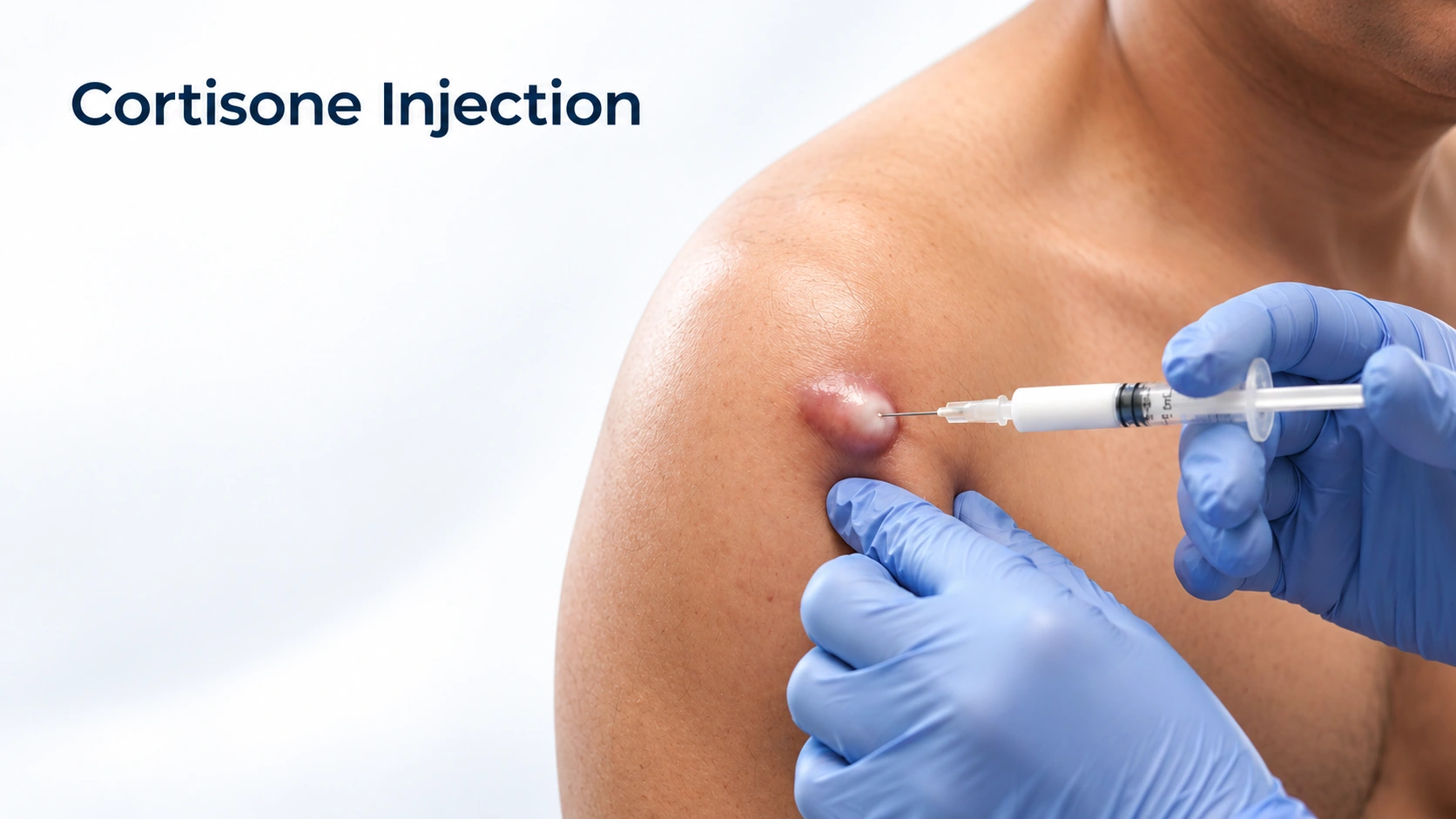
Cryotherapy: Liquid nitrogen is sprayed or dabbed onto a spot to freeze and destroy it. It is a standard treatment for warts, precancerous sun spots and some harmless growths. It commonly leaves a pale mark that does not fully come back.
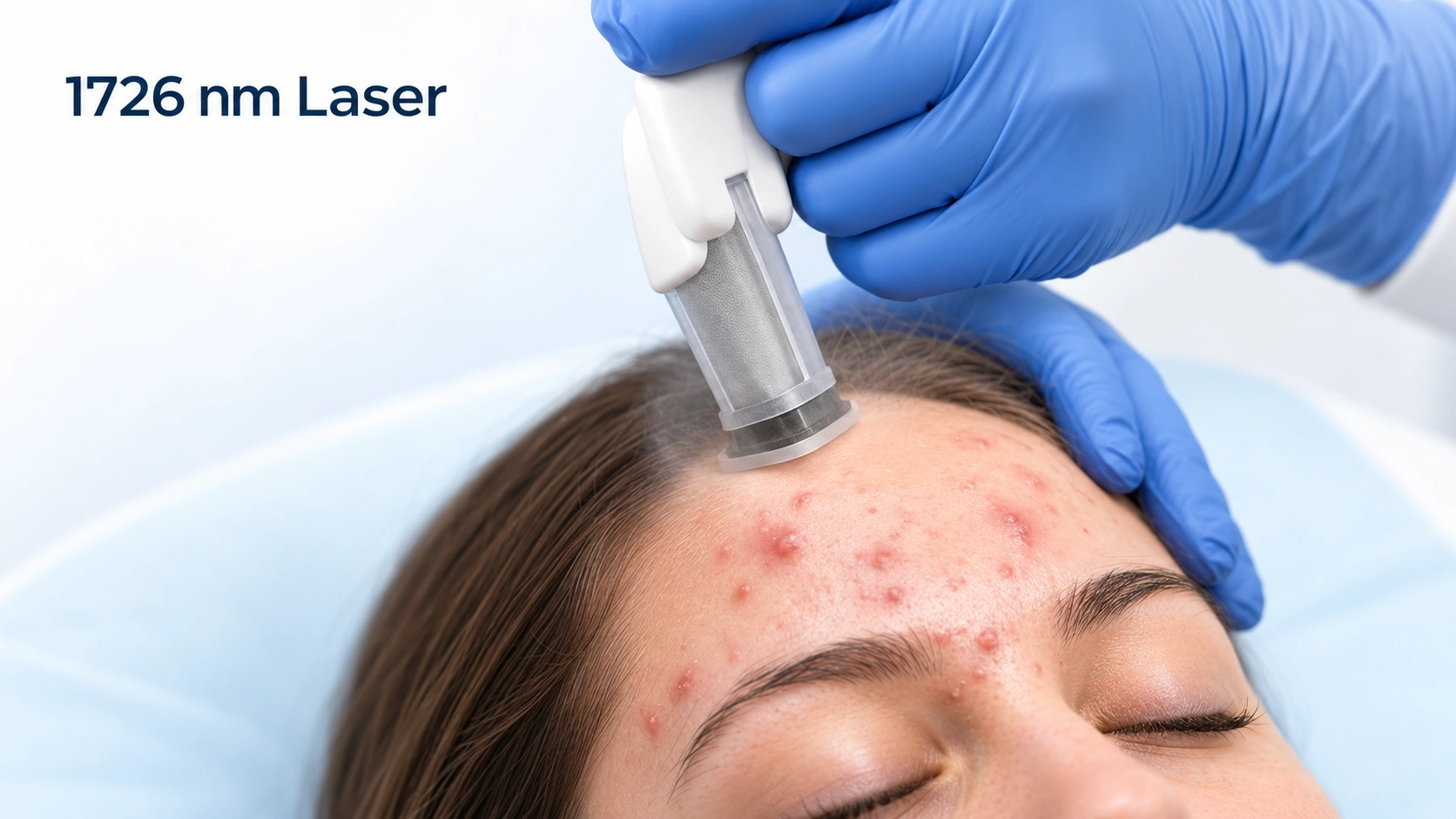
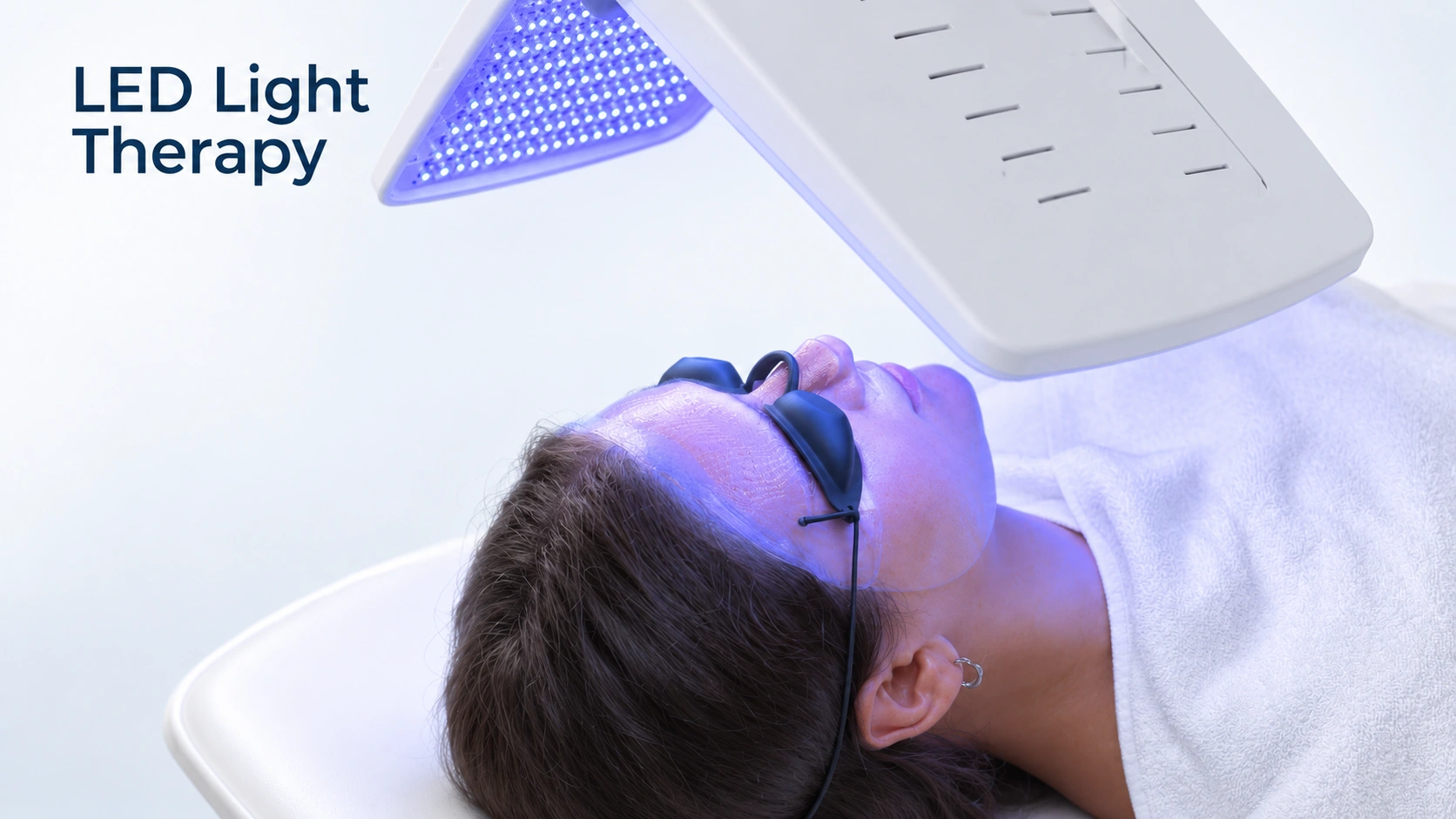
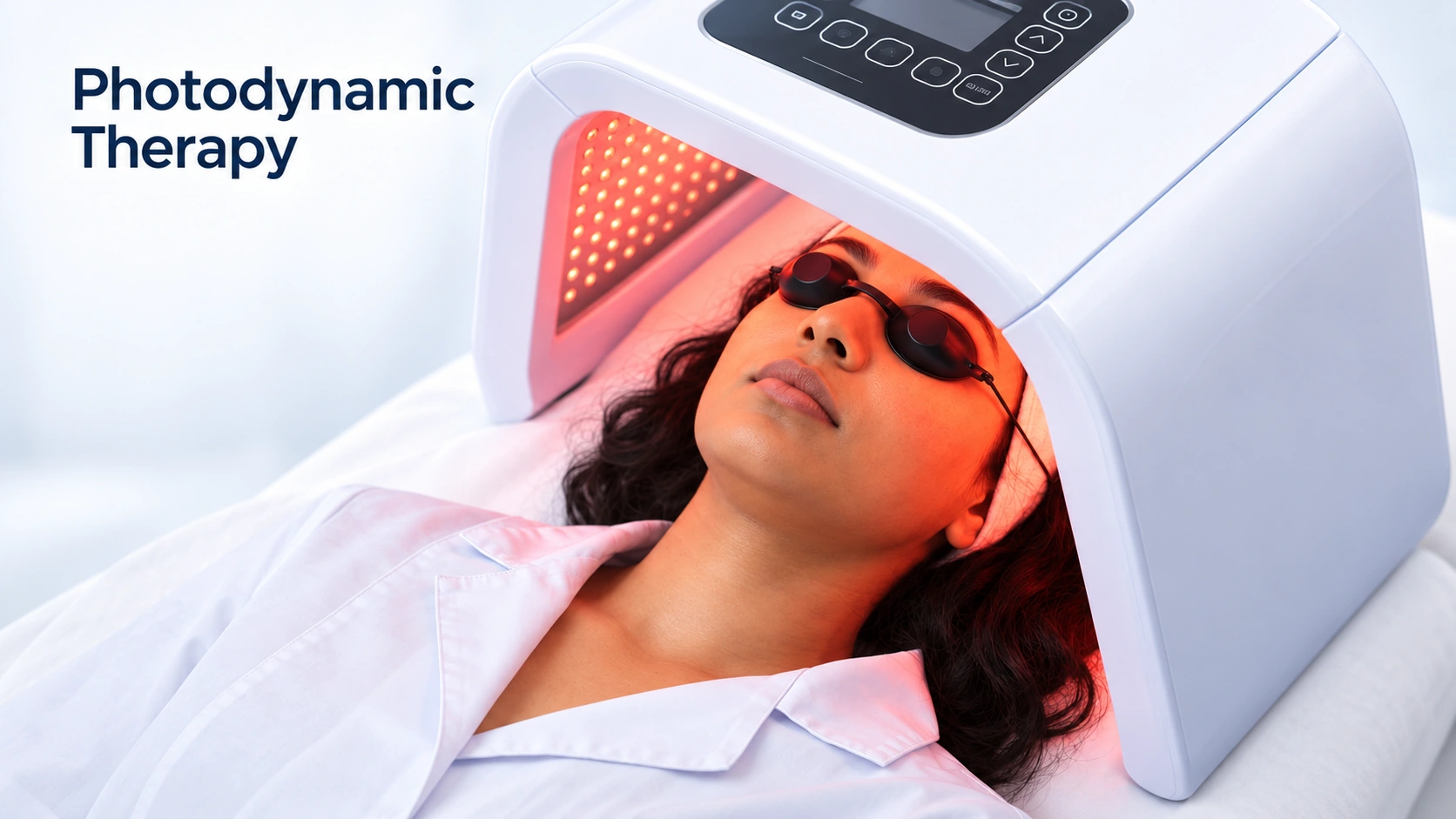
Photodynamic Therapy: A light-activated drug applied in the office, then switched on with a lamp or laser. It is the strongest non-drug option for inflammatory acne, and the downtime is a real week.
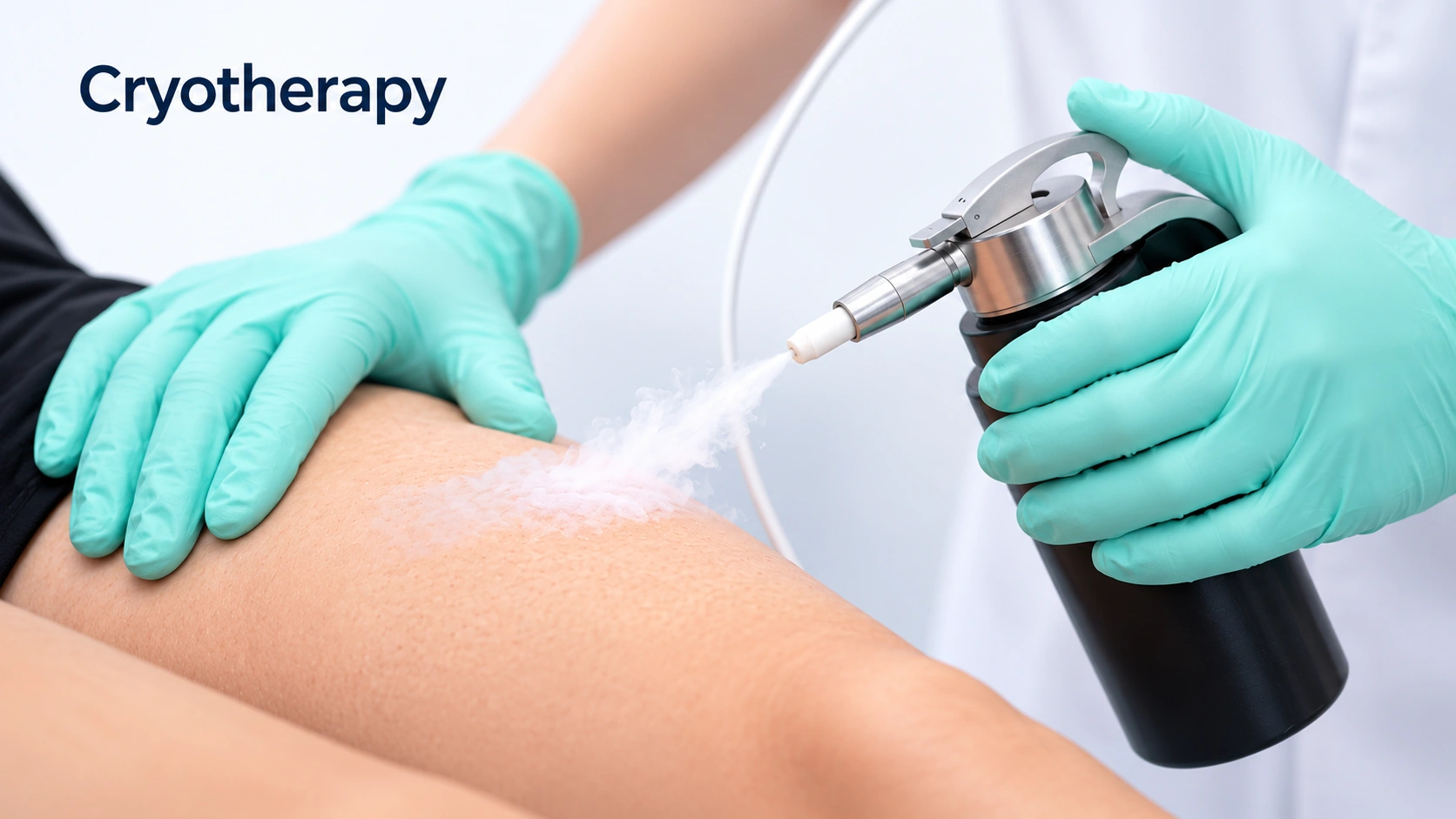
Choose for quick removal of warts, sun-damage spots or harmless growths — accepting a possible pale mark.
Choose to treat a whole area of sun damage at once — or as a strong non-drug option for stubborn acne — with a real week of downtime.
Can you have both?
Both treat actinic keratoses. Cryotherapy suits a few spots; photodynamic therapy treats a whole sun-damaged area. Sometimes thick spots are frozen before PDT.
Liquid nitrogen destroys selected tissue through freezing and thawing.
It is used for benign or precancerous spots.
Nothing remains for microscopic examination.
A diagnosis is needed first.
A photosensitizing medicine is activated by a set light exposure.
It is used for actinic keratoses and some superficial lesions.
It is not ordinary LED or UV treatment.
Sunscreen alone may not prevent activation.
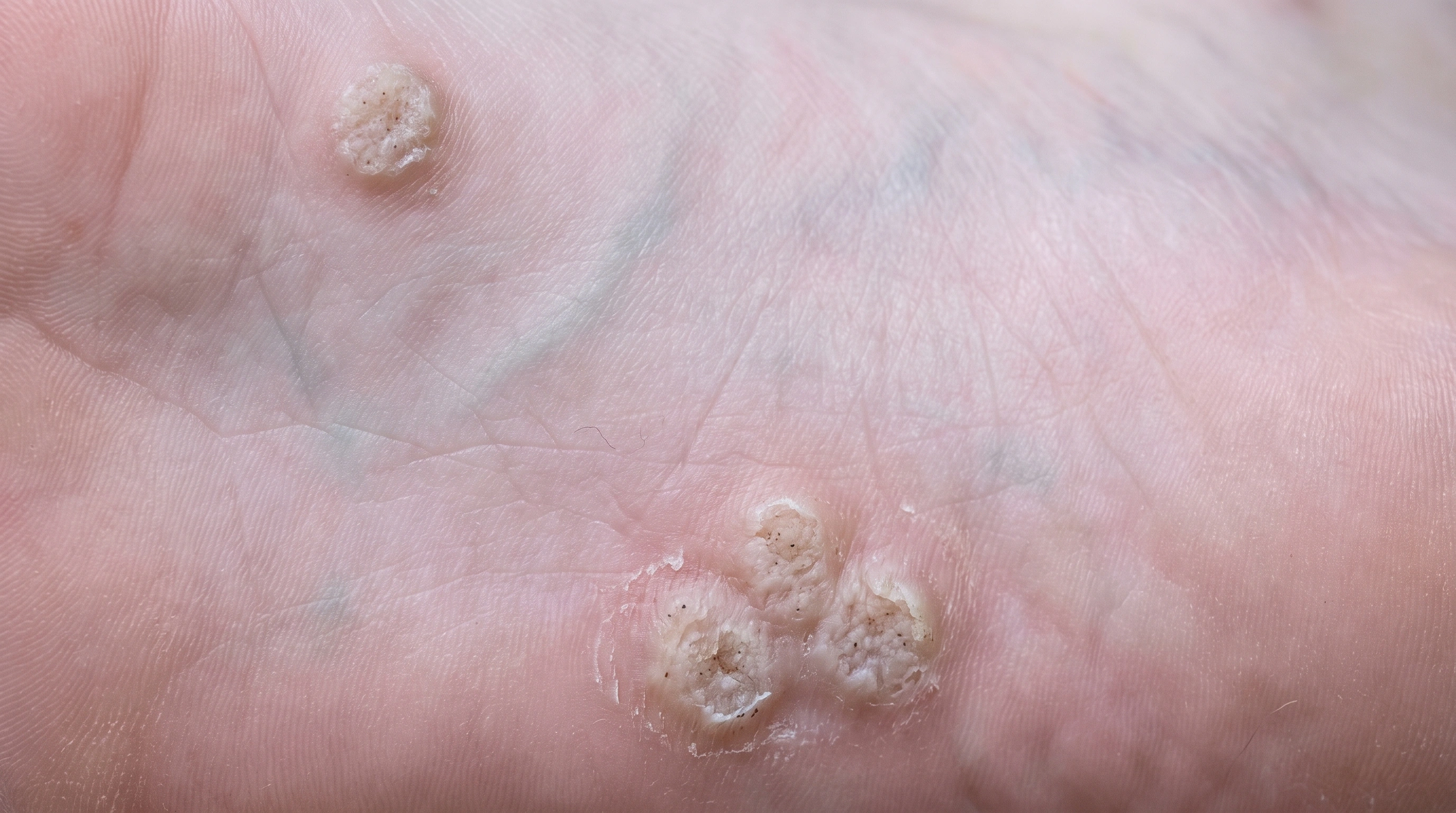
A first-line treatment.
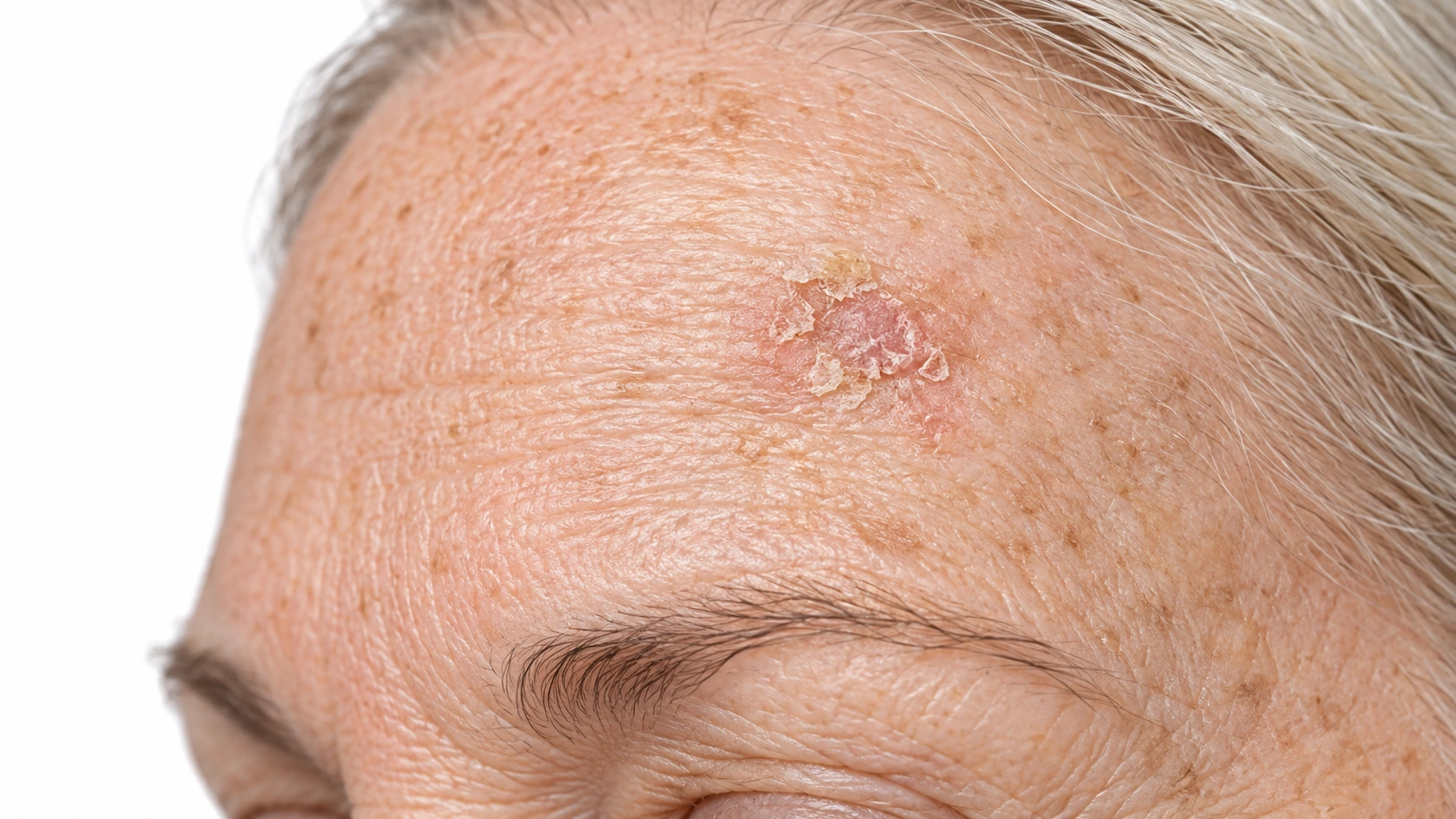
Clears precancers.
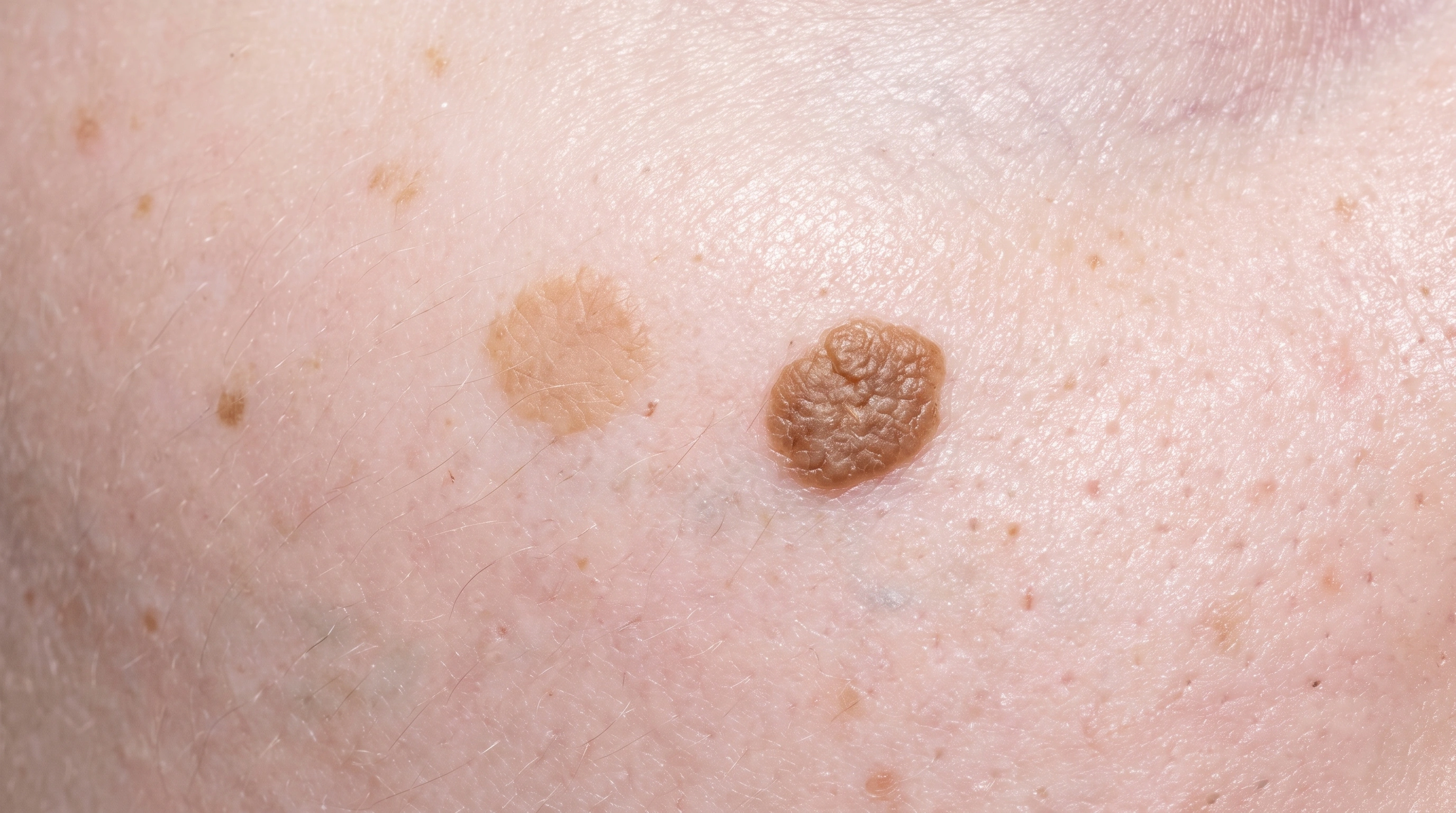
Removes growths.
Clears 75–90% of spots.
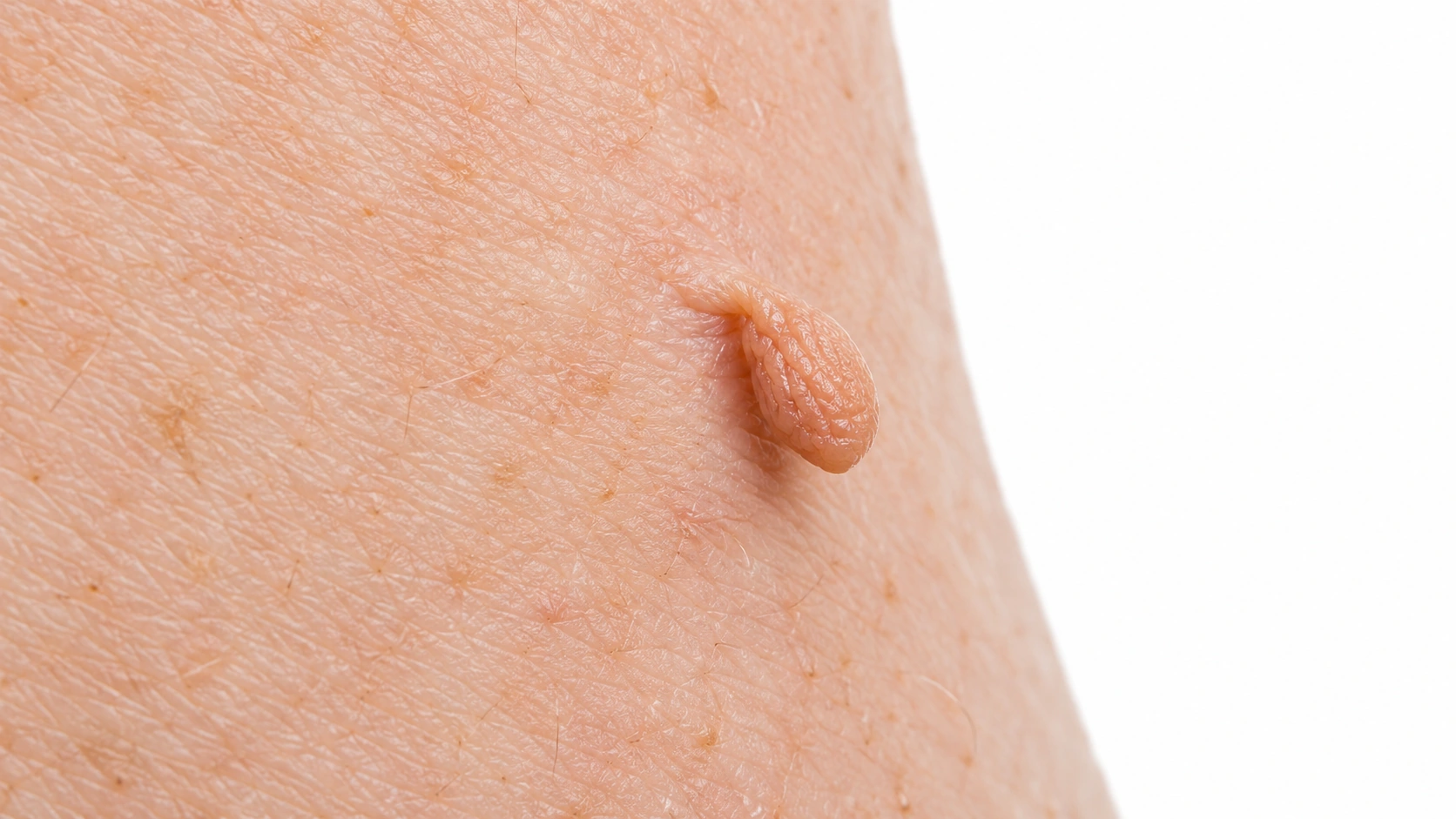
Freezes small tags.
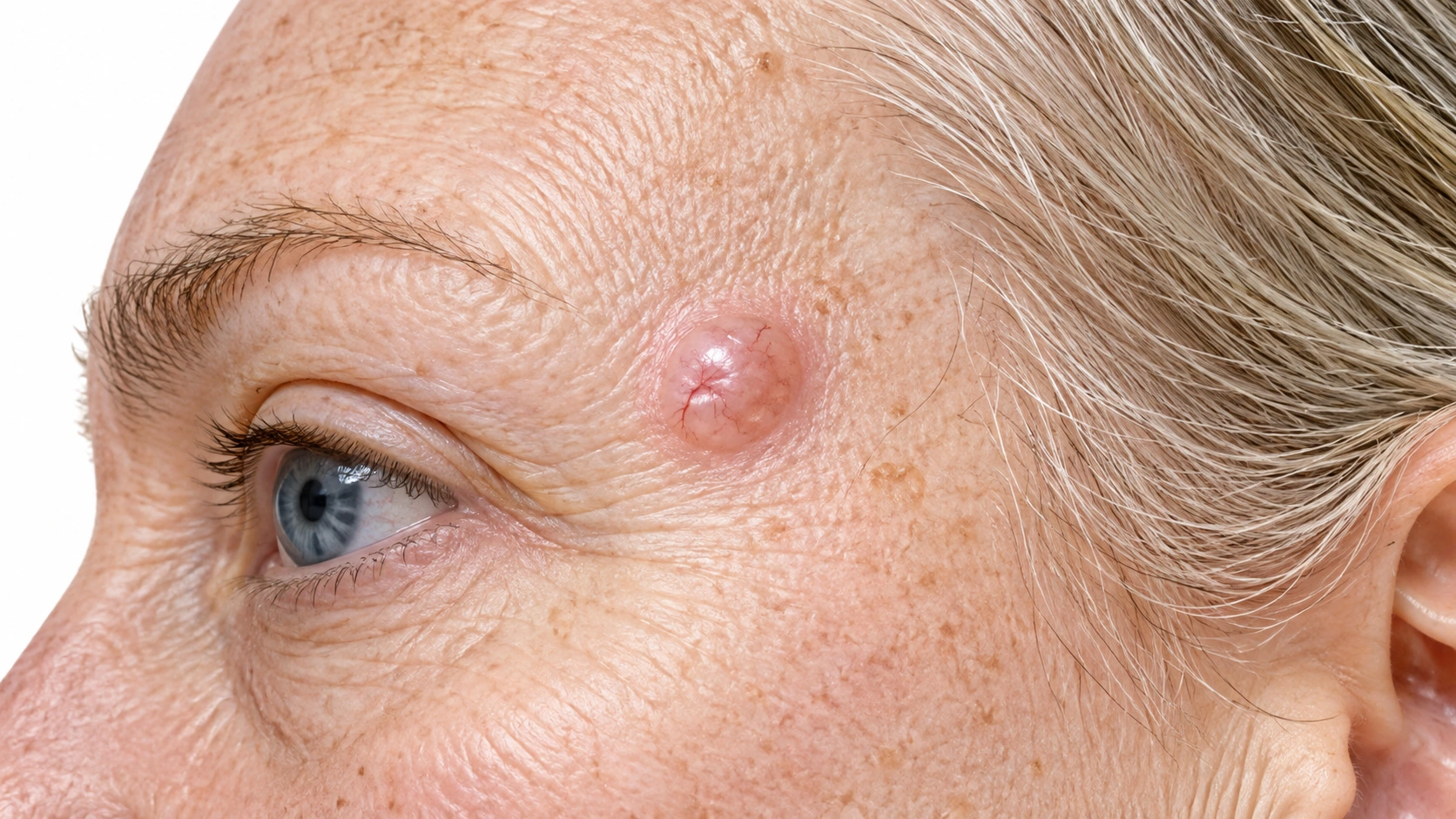
Treats superficial types.

Used for stubborn acne.
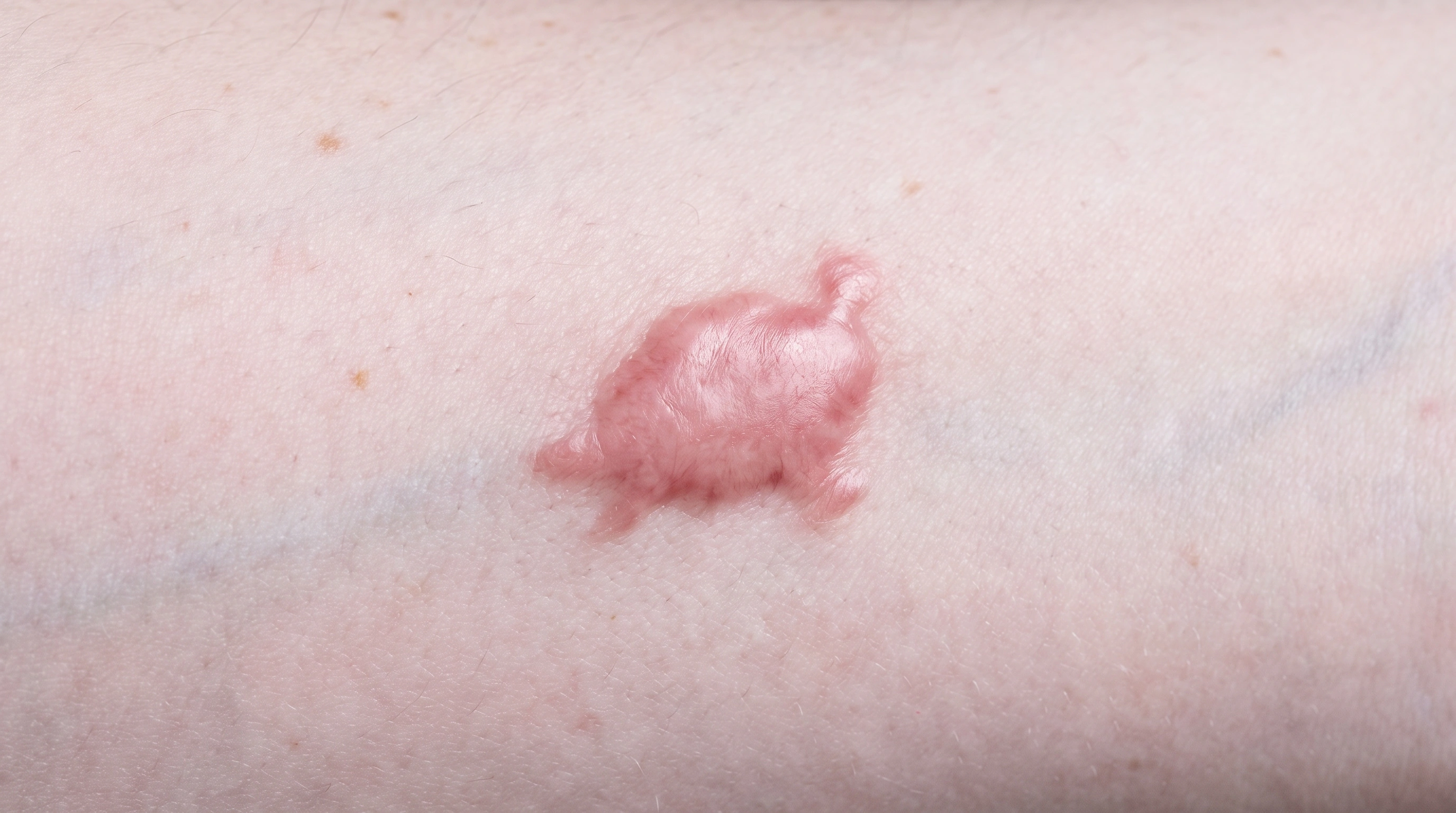
Injections work better.
Needs excision.
Needs excision.

Light can darken patches.
The specific lesion, scar or affected patch determines the treatment site; there is no fixed body distribution.
Face; the selected area depends on the concern and treatment plan.


A selected lesion is frozen: A clinician applies liquid nitrogen to the treatment area. Cold injures the tissue: A controlled freeze-thaw response damages the target. The treated area sheds and heals: A blister or crust may form; repeat treatment can be needed.
Schematic illustration. Technique and response vary. This explains a mechanism and does not specify treatment settings.
A photosensitizer is applied: The selected medicine accumulates in the prepared treatment area. Light activates the medicine: A matched light regimen produces reactive molecules. Selected cells are damaged: Inflammation and healing follow; treatment response varies.
Schematic illustration. Technique and response vary. This explains a mechanism and does not specify treatment settings.
2 weeks before: Sun and tanning: Avoid sun and tanning for 2 weeks.
Before you book: Time off: Clear several days, especially the 48 hours after, when you must stay out of sunlight and bright indoor light.
A few days before: Thick warts: Soaking and filing the wart with a pumice stone or emery board helps the freeze reach the wart, not the callus on top.
Ask your provider: Several spots: If more than one spot is planned, ask to start with one and see how the skin heals.
5 to 7 days before: Actives: Stop retinoids and exfoliating acids.
The spot is examined first — the most important part of the visit.
Photos, consent covering the off-label use and the downtime, and a medication review.
Liquid nitrogen is sprayed or dabbed on until a white frozen halo covers the spot and a small margin.
A sun spot takes seconds; a wart takes longer and is usually thawed and frozen again the same visit. It burns and stings, peaking as the skin thaws, then aches for a few hours. Fingertips, toes, soles and ears are sorest. Brief and unpleasant, not severe.
Skin is cleaned and degreased, sometimes with microdermabrasion or an acetone wipe, so the drug soaks in evenly.
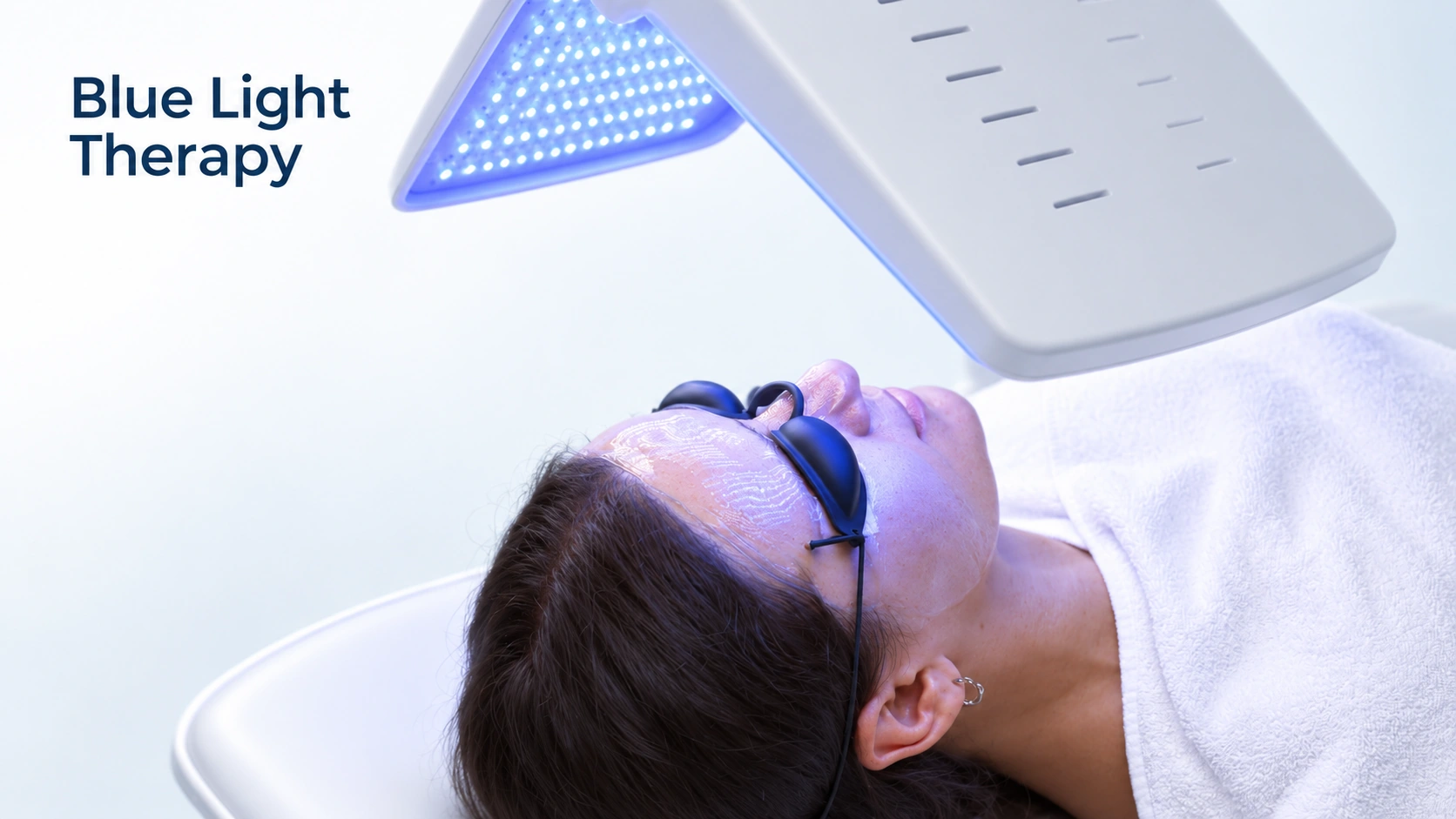
The solution goes on and you wait 20 minutes to 3 hours in a dim room. Then eye shields go on and you sit under a blue or red light for 8 to 20 minutes, or a laser or IPL is passed over. Stinging builds and peaks at the end; cold air helps.
Red, swollen and tender, sometimes blistering within the hour.
The least comfortable procedure on this list.
Days 1 to 3: A clear or blood-filled blister is expected, not a sign anything went wrong.
First 48 hours: Stay strictly out of sunlight and bright indoor light; daylight through a window can trigger a severe reaction.
Days 4 to 14: The blister dries into a dark crust with the growth on top, and lifts off on its own over one to two weeks.
Days 4 to 10: Peeling and flaking, sometimes in sheets.
Weeks 2 to 8: New skin is pink and delicate.
Weeks 1 to 2: An acne flare is common in the first week or two, before improvement starts.
1–3 weeks
2–4 weeks
Permanent for growths; warts may need repeats
Treated spots clear; new ones may form
Cosmetic prices vary a lot and are usually quoted per lesion or per visit, cheaper per spot when several are done at once.
In the US, PDT for acne generally costs about $400 to $1,500 per session, so a course commonly lands between $800 and $4,000.
In the US, freezing warts and precancerous sun spots is billed as medical treatment, so you pay your copay or whatever the deductible has not covered.
Insurance does not cover PDT for acne, because the approved indication is precancerous sun damage.
Often. Pigment cells die at milder cold than the growth, so most effective freezes take some color out. Some returns over months; a good part does not. The mark is usually a little wider than the spot and stands out far more on deeper skin tones — worth discussing before you agree.
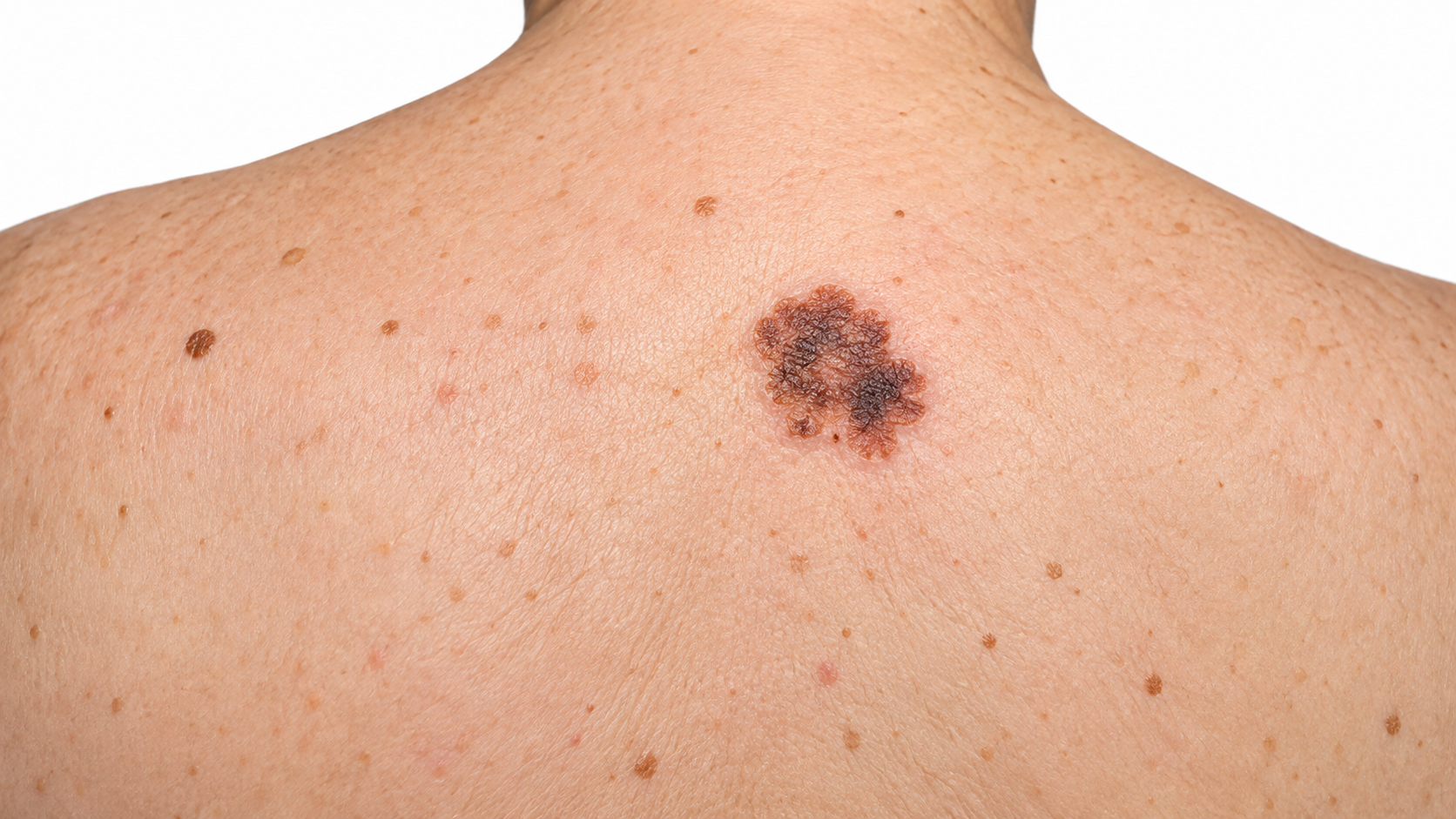
No. Freezing destroys the tissue without a diagnosis, so a skin cancer can heal over at the surface while it keeps growing underneath. Anything pigmented, new or changing gets examined and sampled, and moles that need removing are cut out and sent to a laboratory. Same for at-home freezing and mole removal pens.
A sharp burning sting for ten to thirty seconds during the freeze and the thaw, then an ache for a few hours. Fingers, toes, soles and ears are worst. Brief and genuinely unpleasant rather than severe, and ordinary painkillers are enough.
Normal, and it is how the treatment works — the skin separates and lifts the growth off with the blister roof. Leave it alone and cover it. If it is large, tense and painful, the clinic can drain it, which beats tearing the roof off yourself.
Usually several, every two to four weeks. Many clear over three to six treatments, some need more, and some never respond. Salicylic acid at home in between improves the odds. If nothing has changed after three or four sessions, ask about a different approach.
No. They use a propellant gas much warmer than liquid nitrogen and harder to aim, so they are weaker on thick and plantar warts. They can still blister and leave a pale mark. Not for the face, and never on a mole or an unexamined spot.
Not in the US. It is FDA-approved for precancerous sun spots; using it for acne is off-label. That is legal and common, but it means no standard protocol and results that vary between clinics.
Plan for 5 to 7 days of a visibly red, then swollen, then peeling face, with the worst in the first 48 hours. It is closer to a medium-depth peel than a laser facial.
The drug is still in your skin, and sunlight — including through a car or office window — activates it and can cause a severe burn. This is the most important instruction of the treatment.
No. Improvement typically lasts 6 to 12 months and repeat courses are often needed. It does not treat scars or existing brown marks.
It can be done, but the risk of lasting dark patches is meaningfully higher, because the treatment works by causing strong inflammation. A shorter incubation, a lower light dose and an experienced provider make a large difference.