Eczema vs Ringworm

Eczema is a group of long-term conditions in which the skin barrier leaks moisture and the immune system in the skin overreacts. Atopic dermatitis is the most common kind. The result is skin that is dry, itchy and inflamed, in flares that come and go. It is controlled rather than cured, and most of it responds well to treatment used properly. Ringworm is a common fungal skin infection that spreads outward in a scaly ring with a raised edge. There is no worm involved. It clears with antifungal treatment, as long as the treatment is used for long enough and steroid creams are kept away from it.

Reviewed by Dr. Schwarz, Board-Certified Dermatologist · Research updated 2026-10-23
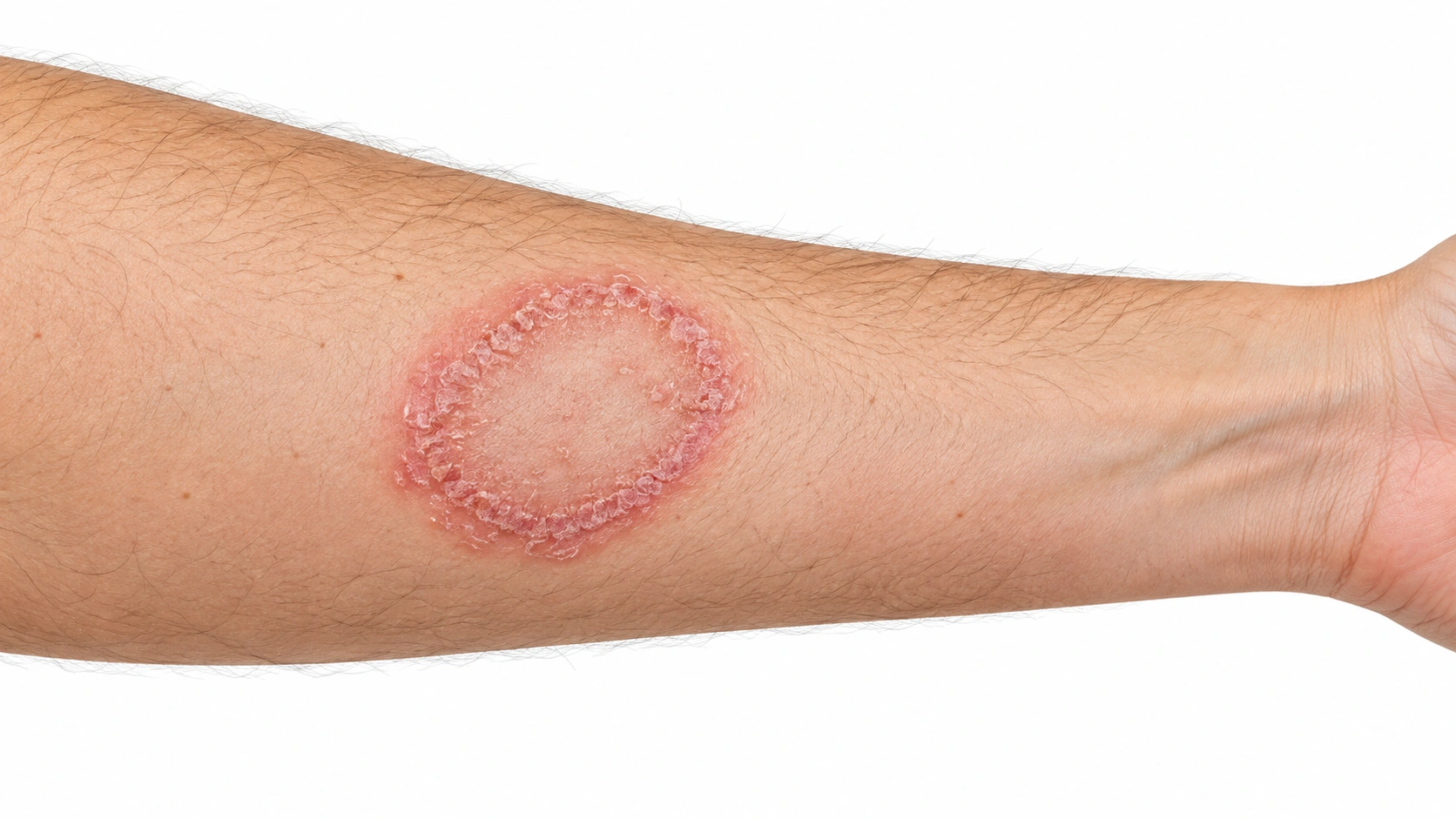
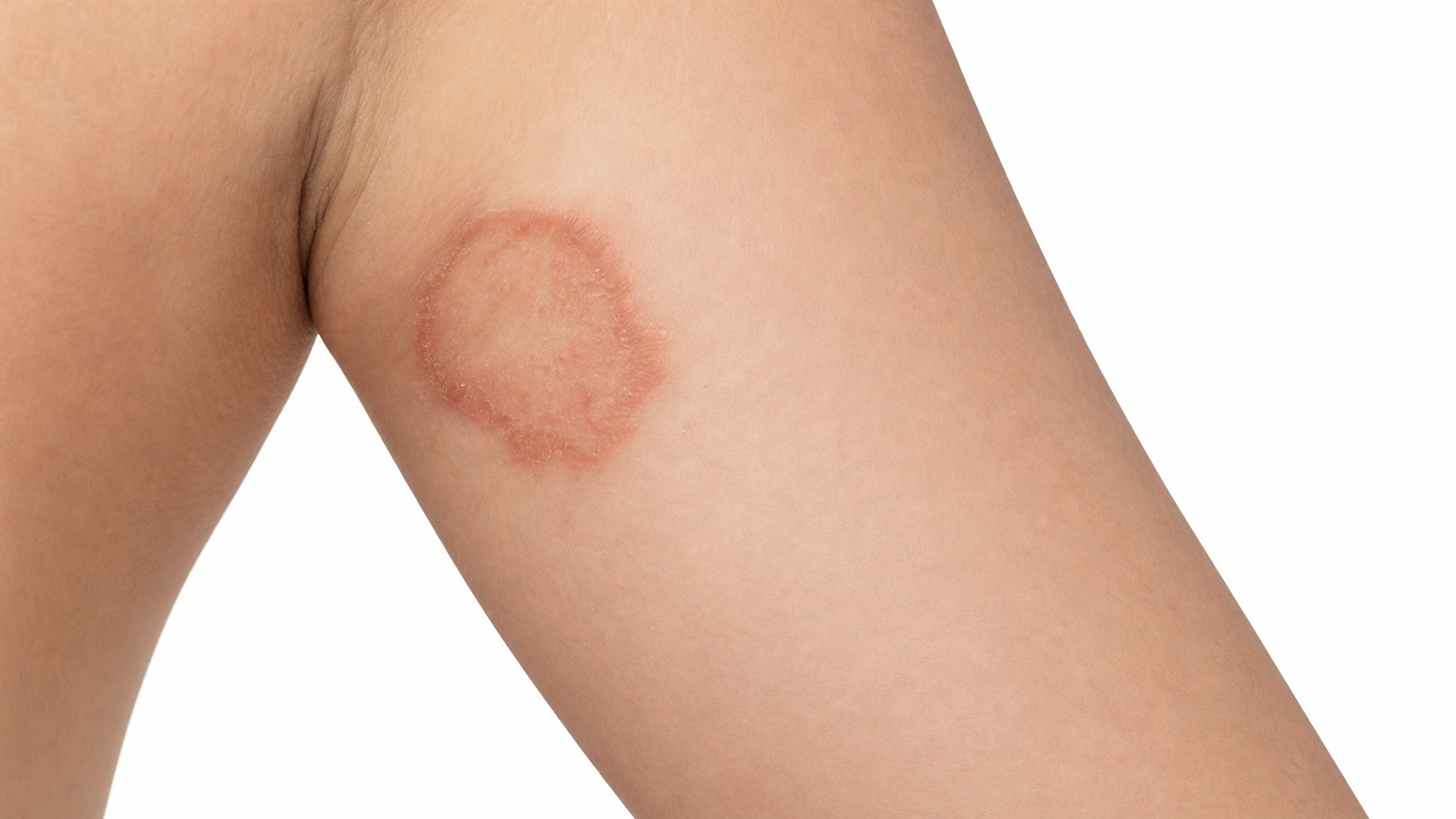
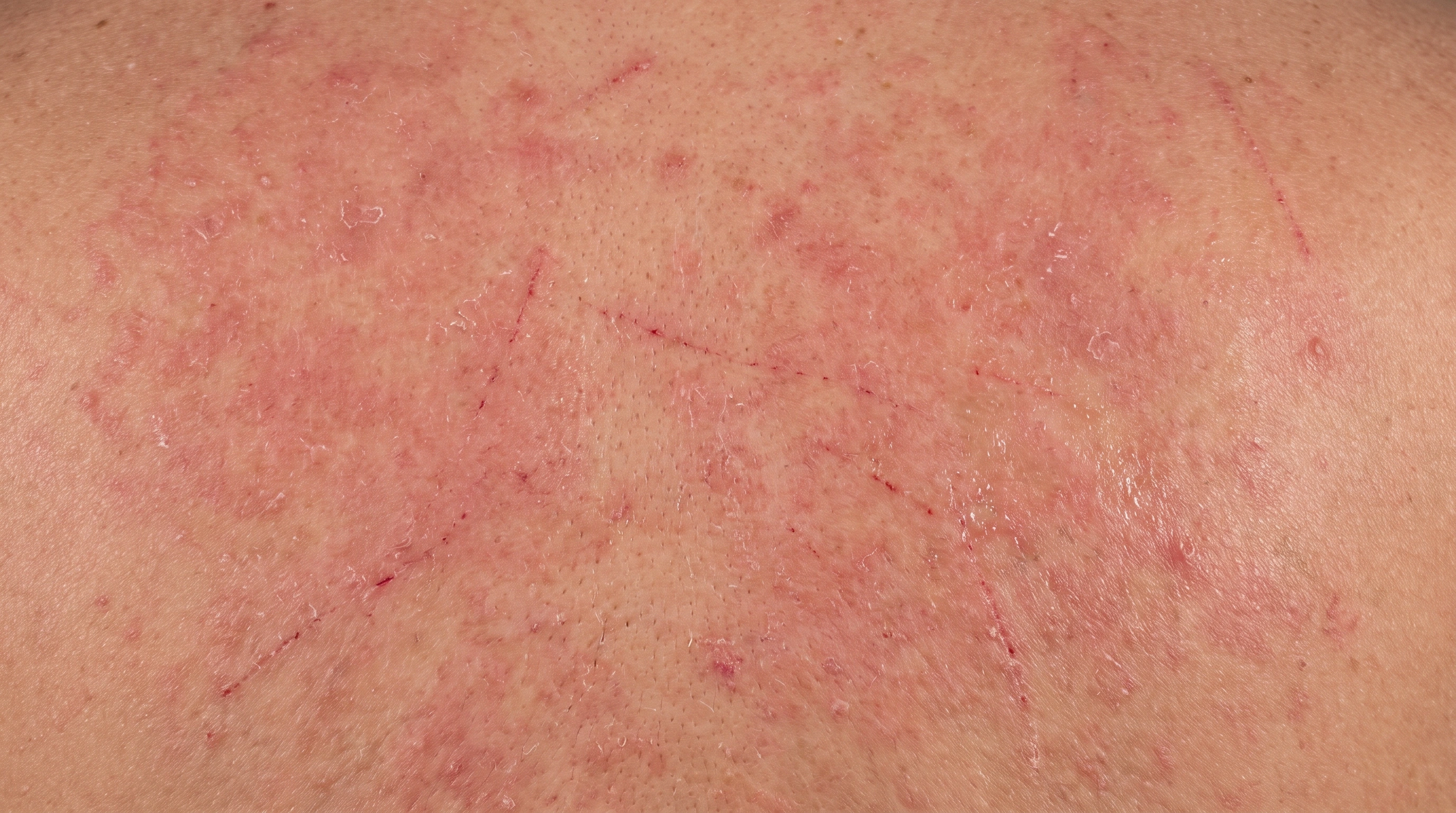
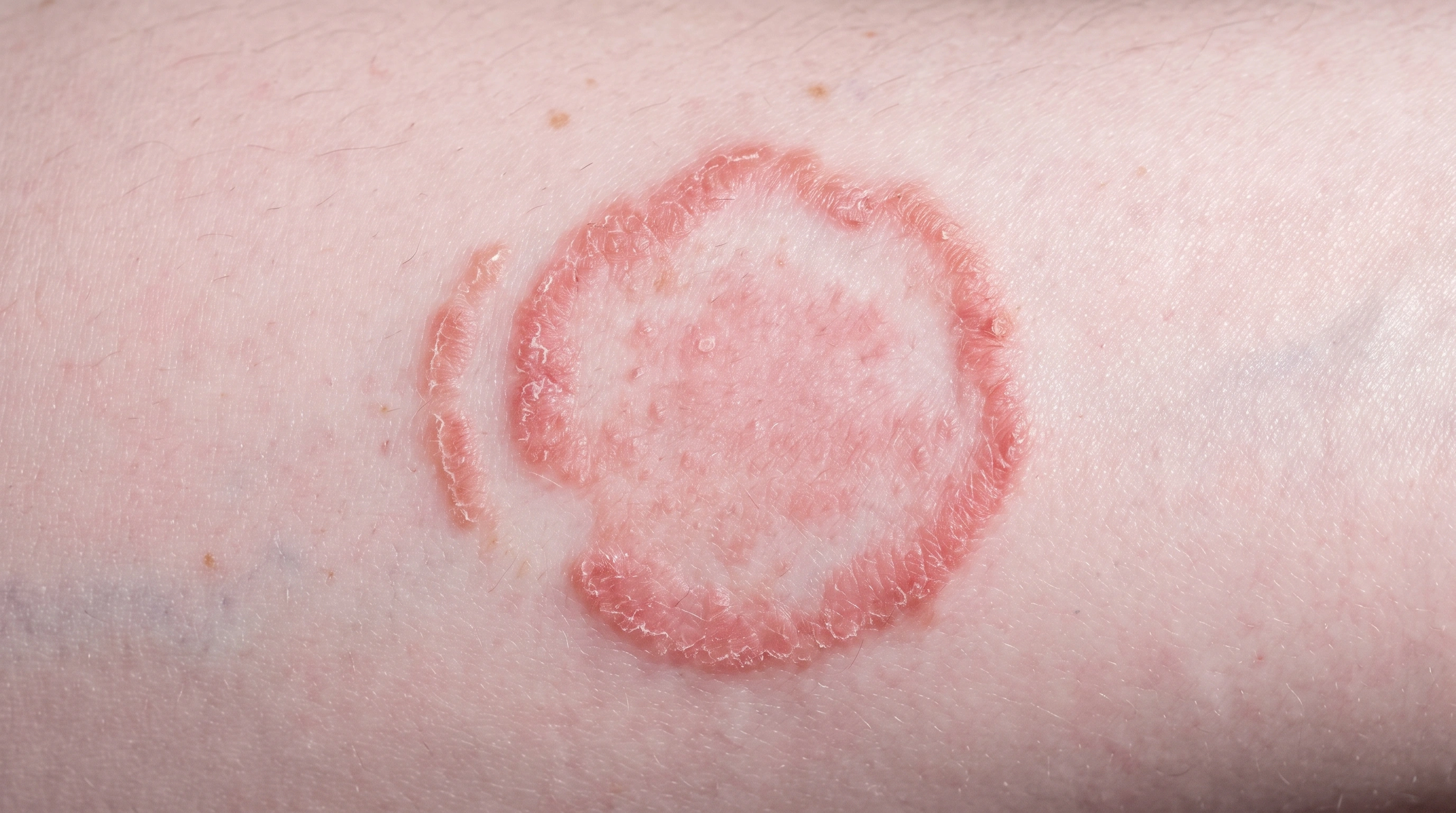
Extreme close-up of light skin in an active eczema flare, too close to tell which part of the body it is. Blotchy pink-red inflammation covers the whole frame with no clear edge, with small raised bumps, fine dry scale and a few fresh scratch marks.A round patch on a forearm on fair light skin, with a raised pink scaly border and a flatter, clearer middle.

Key differences

The same eight facts on every condition comparison.

Usual age
Infancy and childhood
Any age
Where
Elbow and knee creases, face, hands
Body, groin, feet, scalp
Main sign
Dry, itchy, inflamed patches
Ring with a scaly raised edge
Itch or pain
Very itchy
Itchy
Contagious
No
Yes
Long term
Comes and goes; often improves with age
Clears with antifungals
Scars
No
No
Who gets it
Family history of eczema, asthma, hay fever
Children, athletes, pet owners

What is it?

Eczema
Ringworm
What is it?

It is a recurring inflammatory condition.
Atopic eczema involves a vulnerable barrier and an itch–scratch cycle.

Several factors reinforce each other.
Dryness, irritants, inflammation and scratching feed one another.

It is not about cleanliness.
Vigorous cleansing can make eczema worse.

Care has two parts.
Emollients protect the barrier, while anti-inflammatory treatment settles active flares.

It is a fungal skin infection.
Tinea corporis is dermatophyte infection of body skin.

The ring is a clue only.
It may be absent, especially after steroid creams.

It is an umbrella term.
Related infections affect the scalp, nails and other sites.

Testing guides treatment.
Scrapings or culture confirm infection; scalp and nail infections need different care.

What it looks like

Eczema

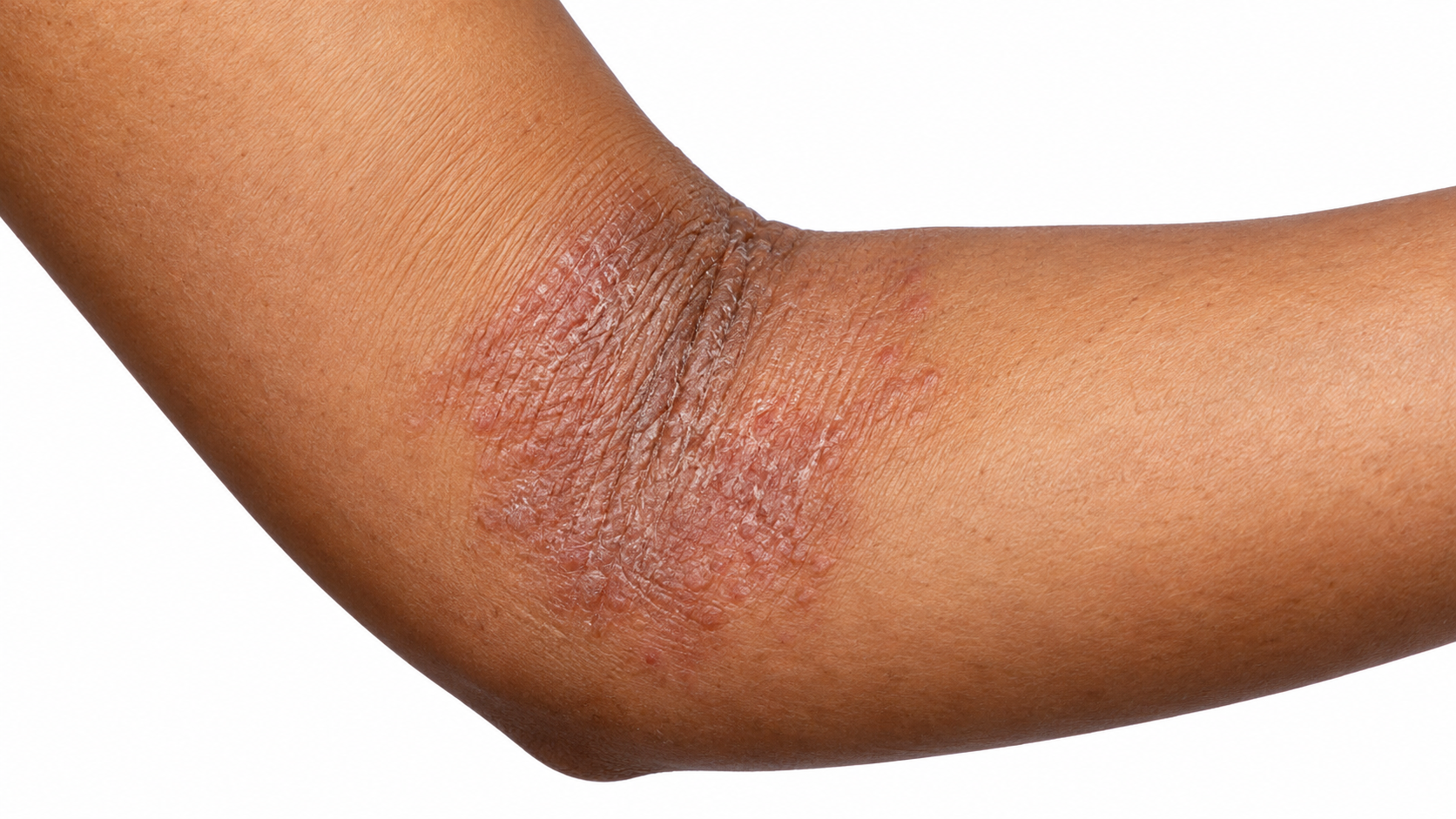
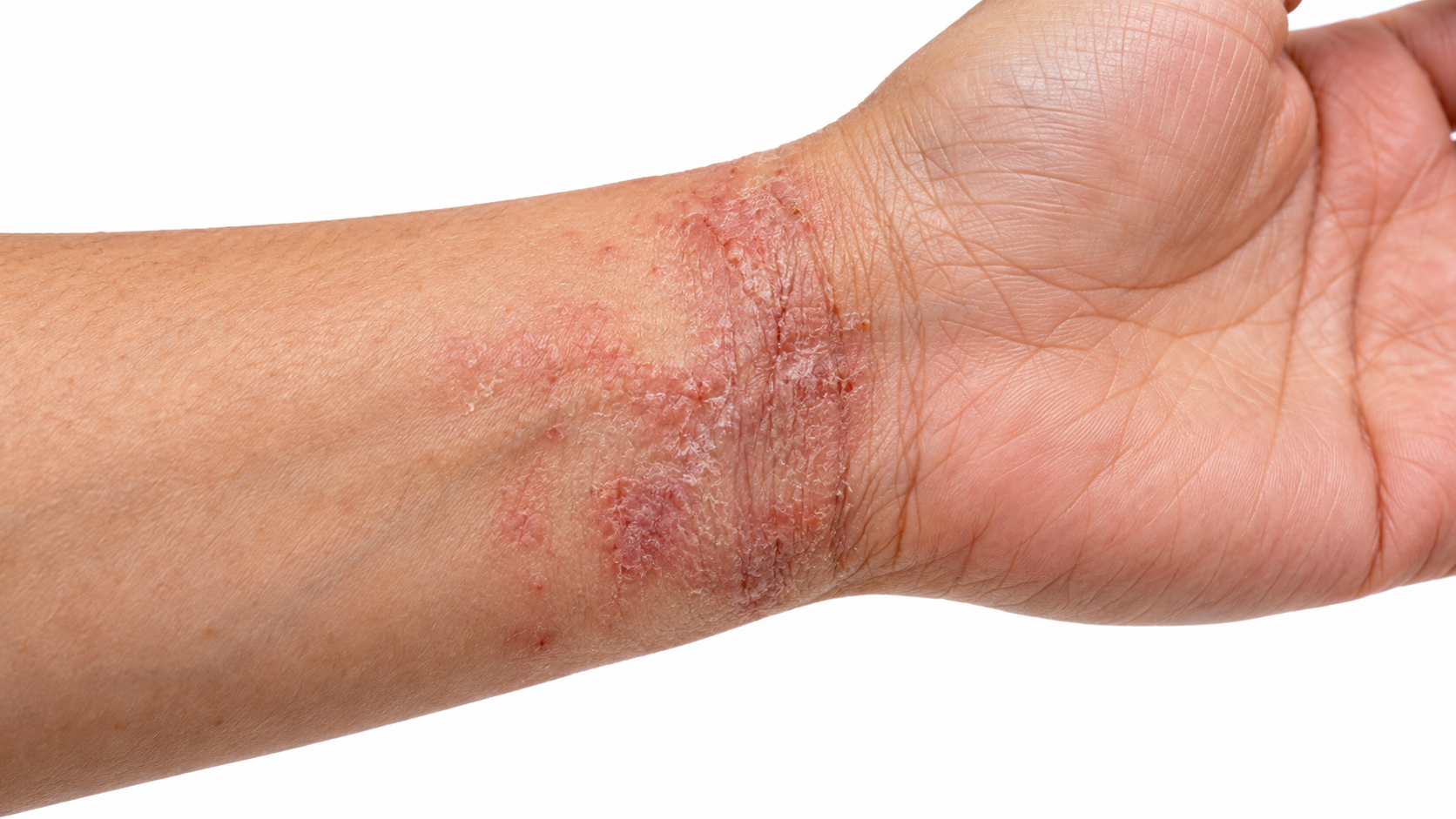
Eczema: Dry, itchy patches.

Atopic dermatitis Long-term, starts in childhood.

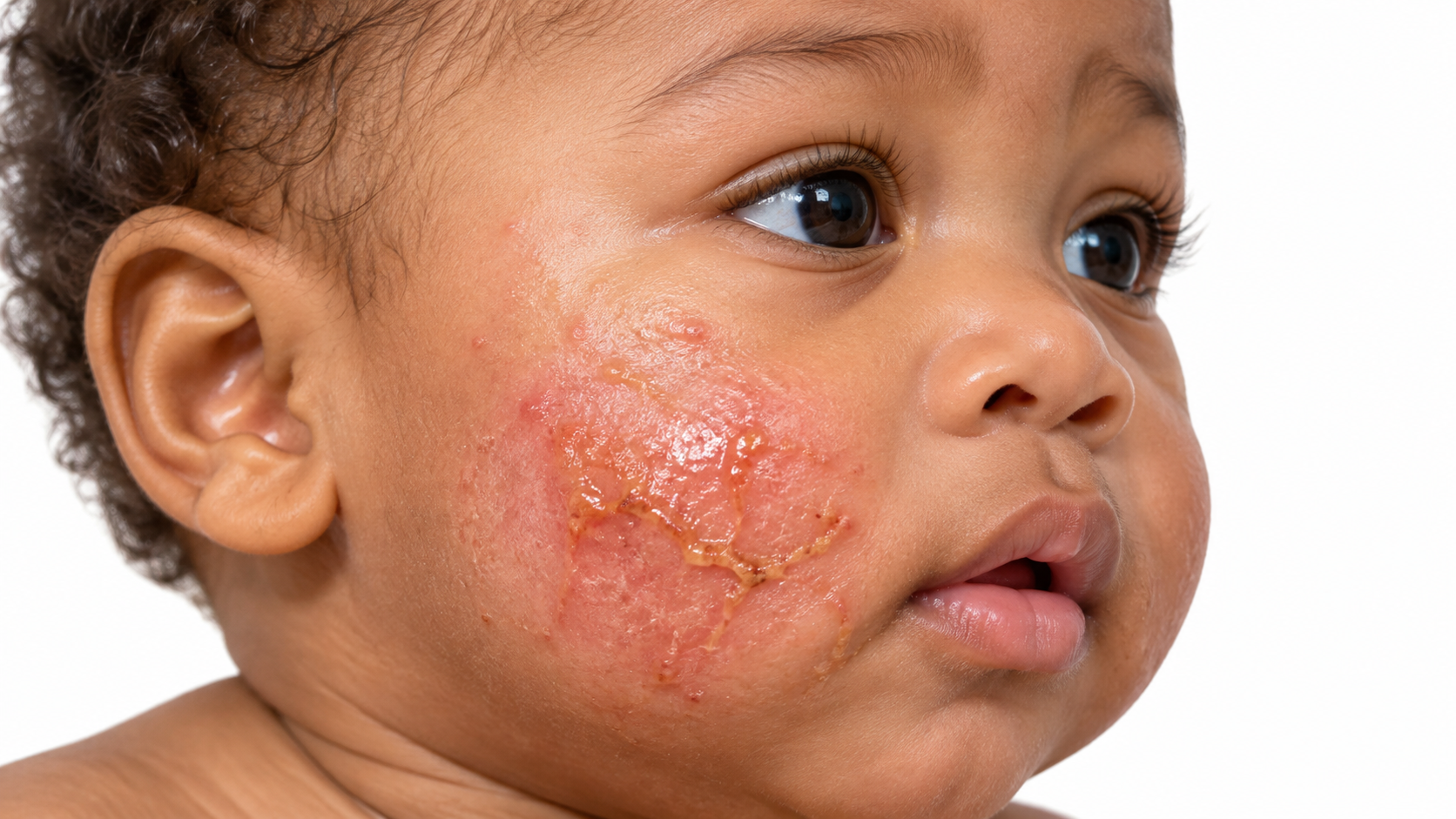
Inflamed, rough patches affect the cheeks.

Infant facial eczema Inflamed, rough patches affect the cheeks.

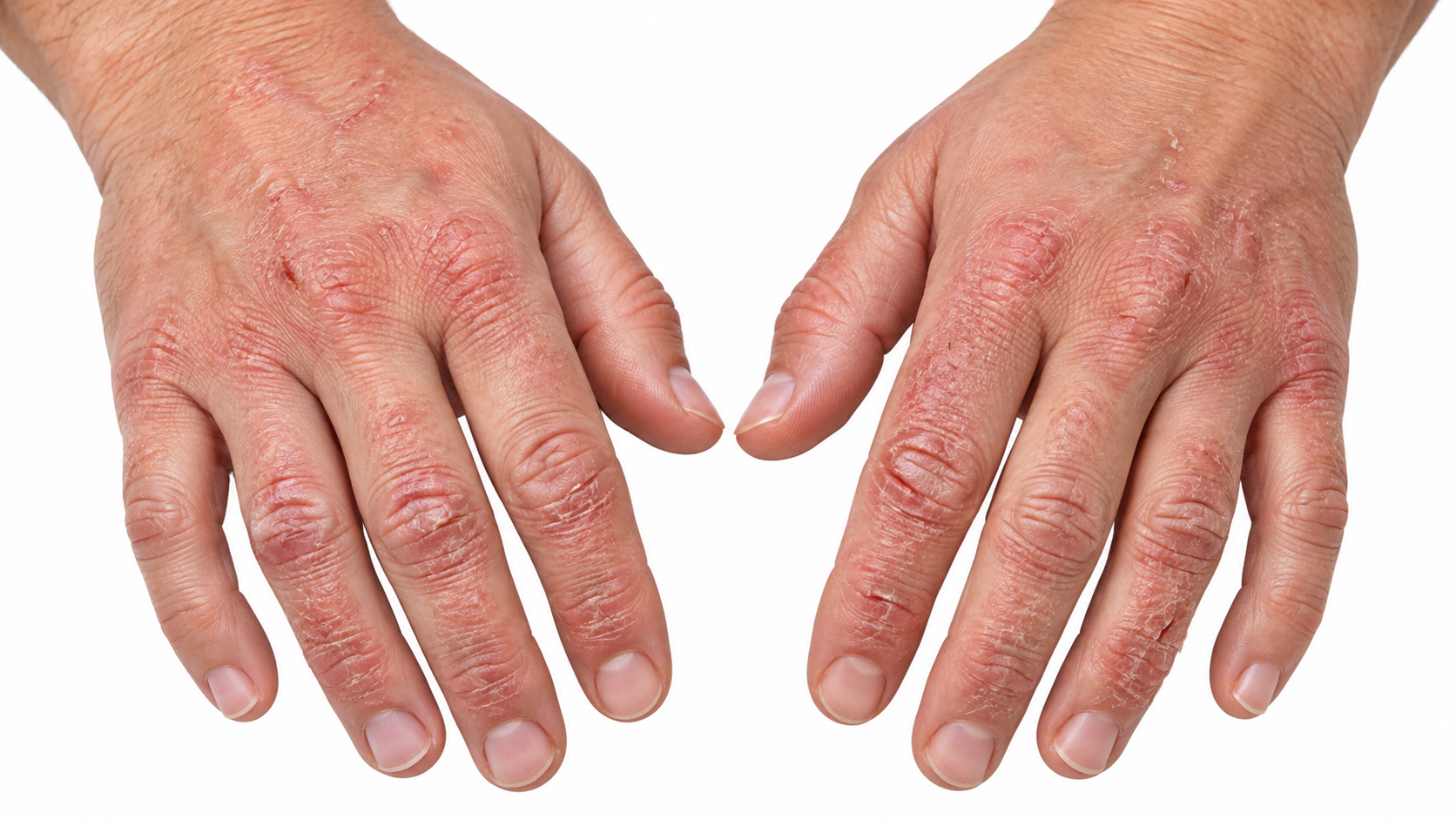
Eczema: Hand.

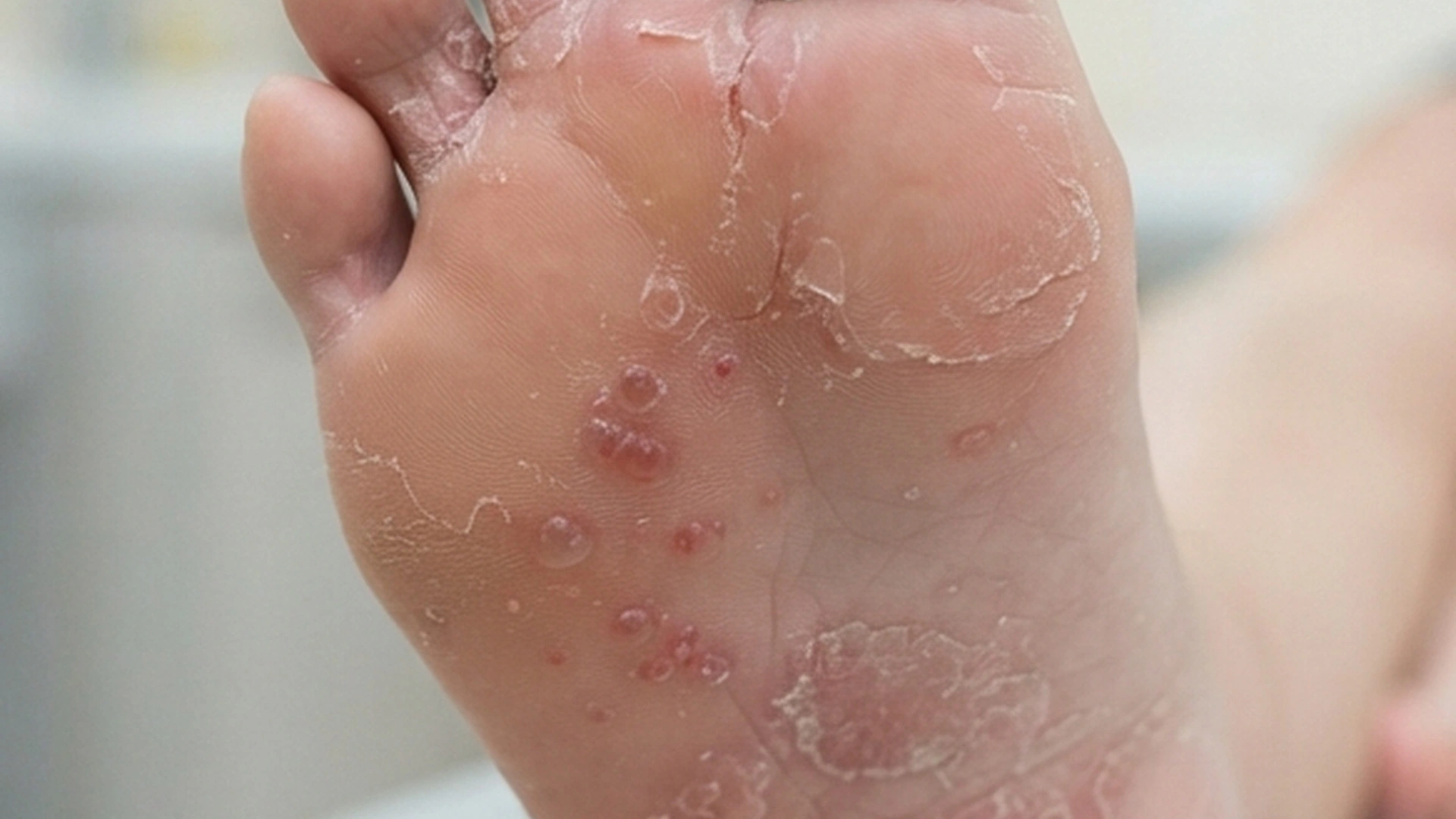
Hand eczema Dry, cracked or blistered hands.

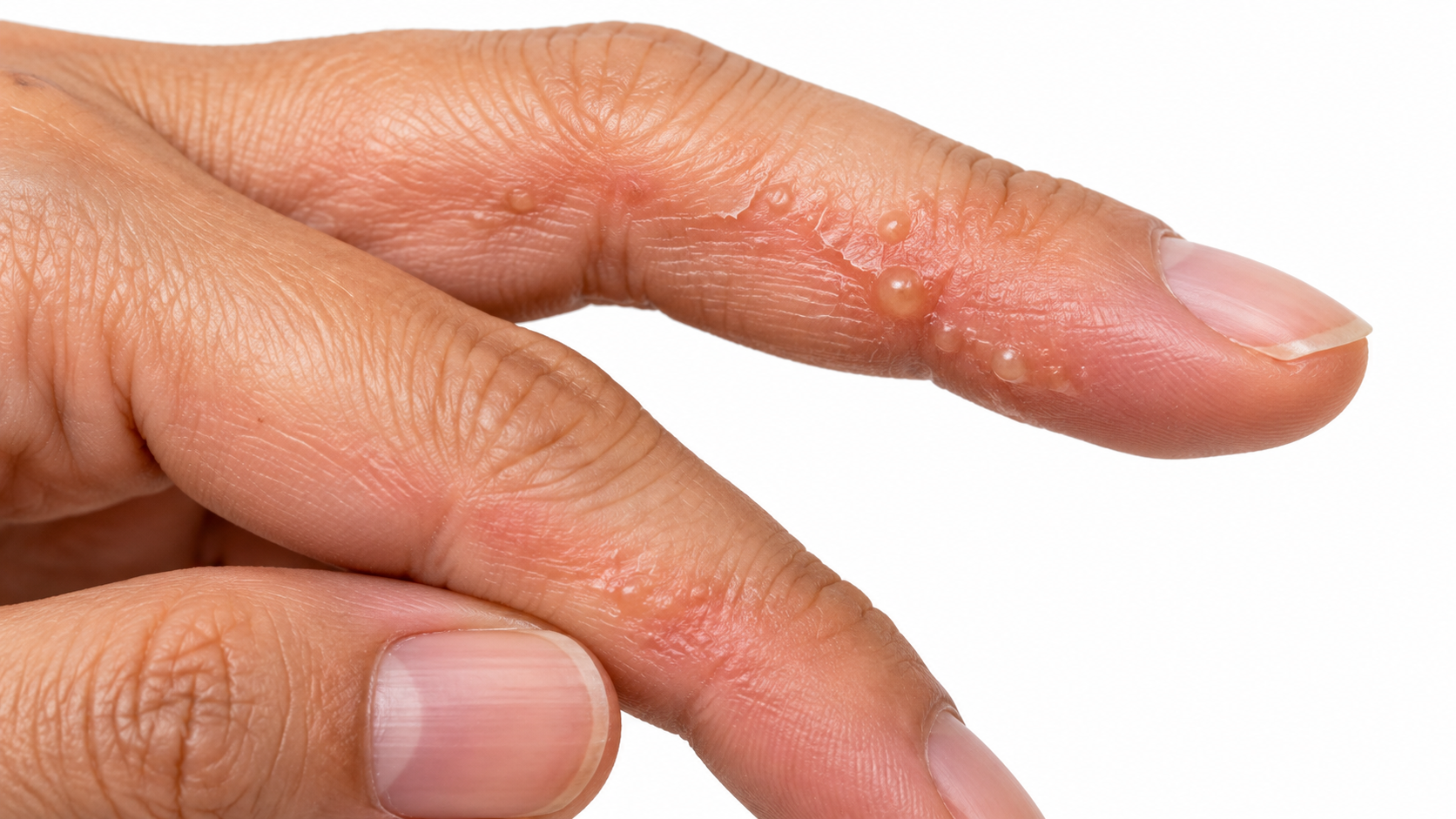
Eczema: Dyshidrotic.

Dyshidrotic eczema Tiny itchy blisters on fingers and palms.

Eczema: Nummular.

Nummular eczema Coin-shaped patches.

Eczema: Contact.

Contact dermatitis Triggered by something touching the skin.

Ringworm

Representative image of ringworm body. Reused for related Supporting concepts; it is not an exact depiction of every subtype, location or stage, or a diagnostic reference.

Tinea corporis (body ringworm) Rings on the body and limbs.

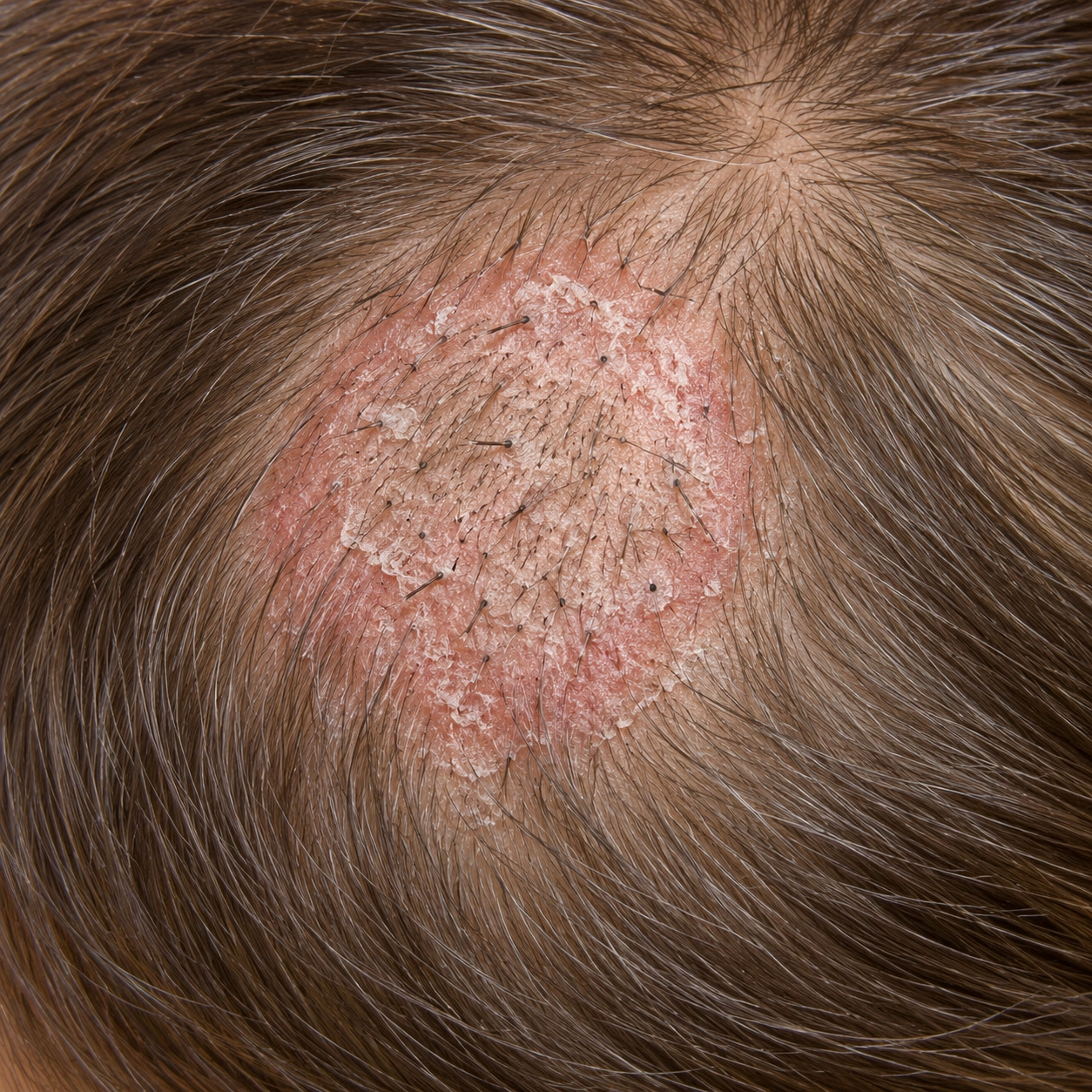
Generated image: Scaly patch with broken hairs on a child's scalp. Not a patient photograph.

Tinea capitis (scalp ringworm) Generated illustration. Scaly patches with hair loss.

A red annular scaly patch on the inner thigh with relative central clearing, representing ringworm.

Tinea cruris (jock itch) Jock itch in the inner thighs.

16:9 hero for Athlete's Foot. Never cropped: the tone strip and the corner logo depend on the full frame.

Tinea pedis (athlete’s foot) Athlete's foot.

Skin tones
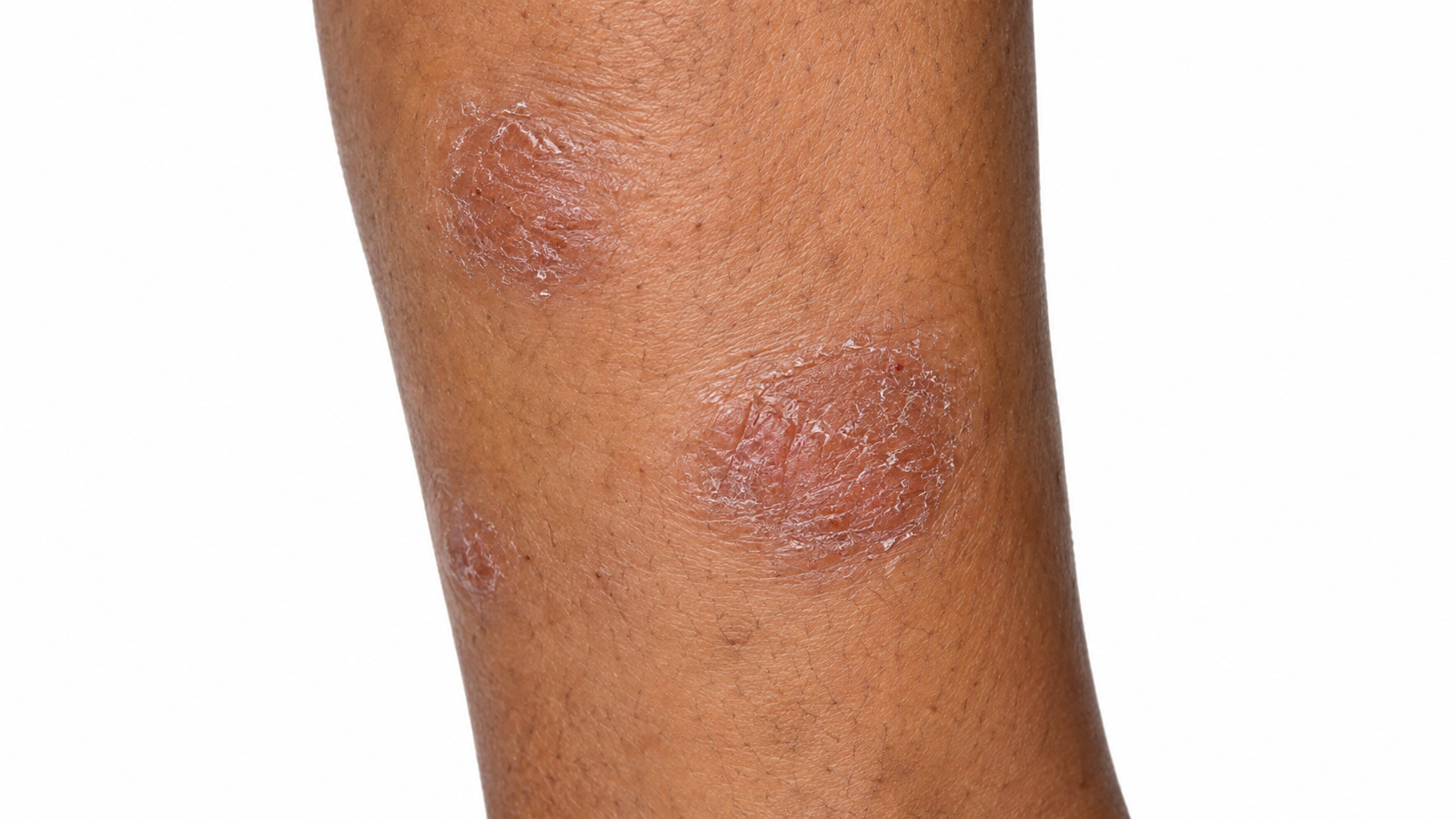
Extreme close-up of light skin in an active eczema flare, too close to tell which part of the body it is. Blotchy pink-red inflammation covers the whole frame with no clear edge, with small raised bumps, fine dry scale and a few fresh scratch marks.
Extreme close-up of medium, olive-toned skin in an active eczema flare, too close to tell which part of the body it is. Blotchy brick-red inflammation covers the whole frame with no clear edge, with small raised bumps, fine dry scale and a few fresh scratch marks.
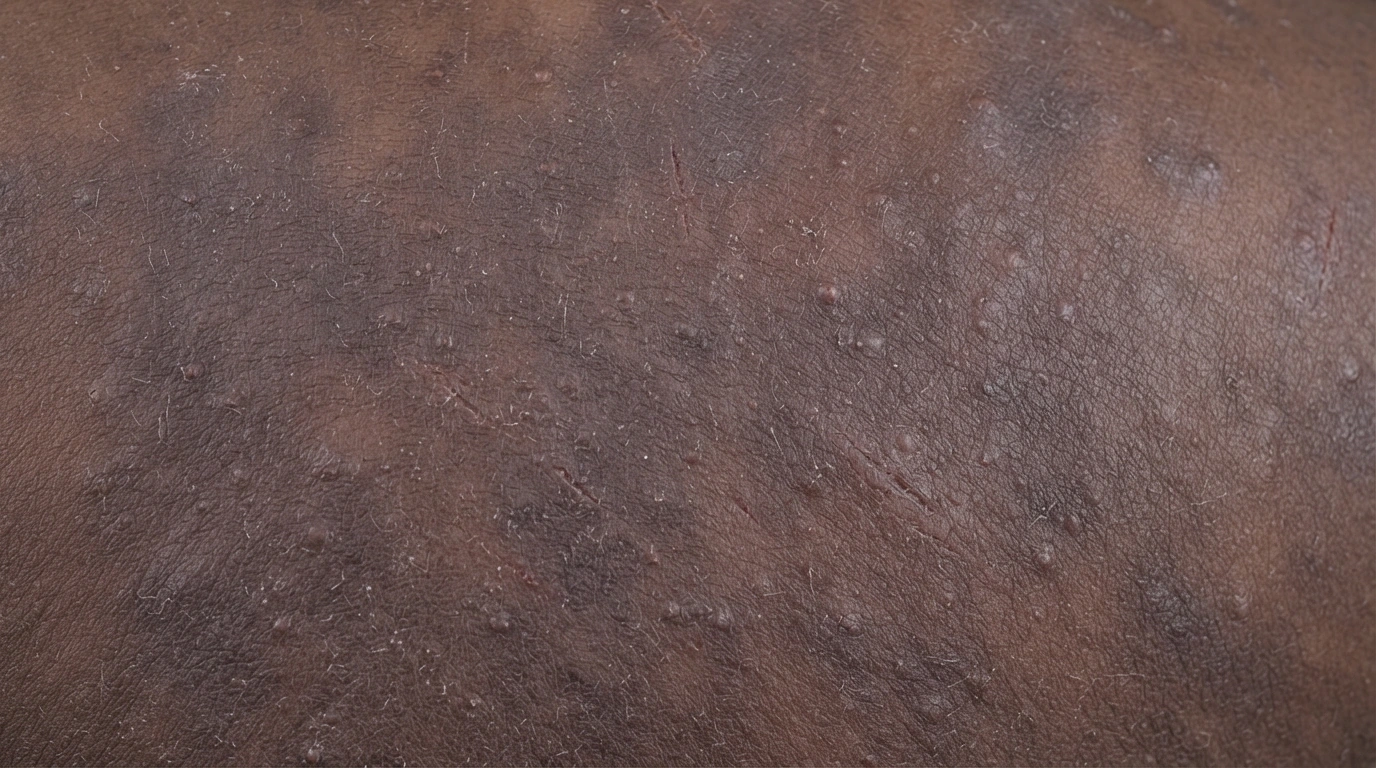
Extreme close-up of brown skin in an active eczema flare, too close to tell which part of the body it is. Blotchy violet-brown inflammation covers the whole frame with no clear edge, and the raised bumps and dry scale show more clearly than the color change does.
Extreme close-up of deep, dark brown skin in an active eczema flare, too close to tell which part of the body it is. Almost no redness is visible - the whole frame reads slightly darker and grayish, with raised bumps, dry scale and fresh scratch marks giving it away.
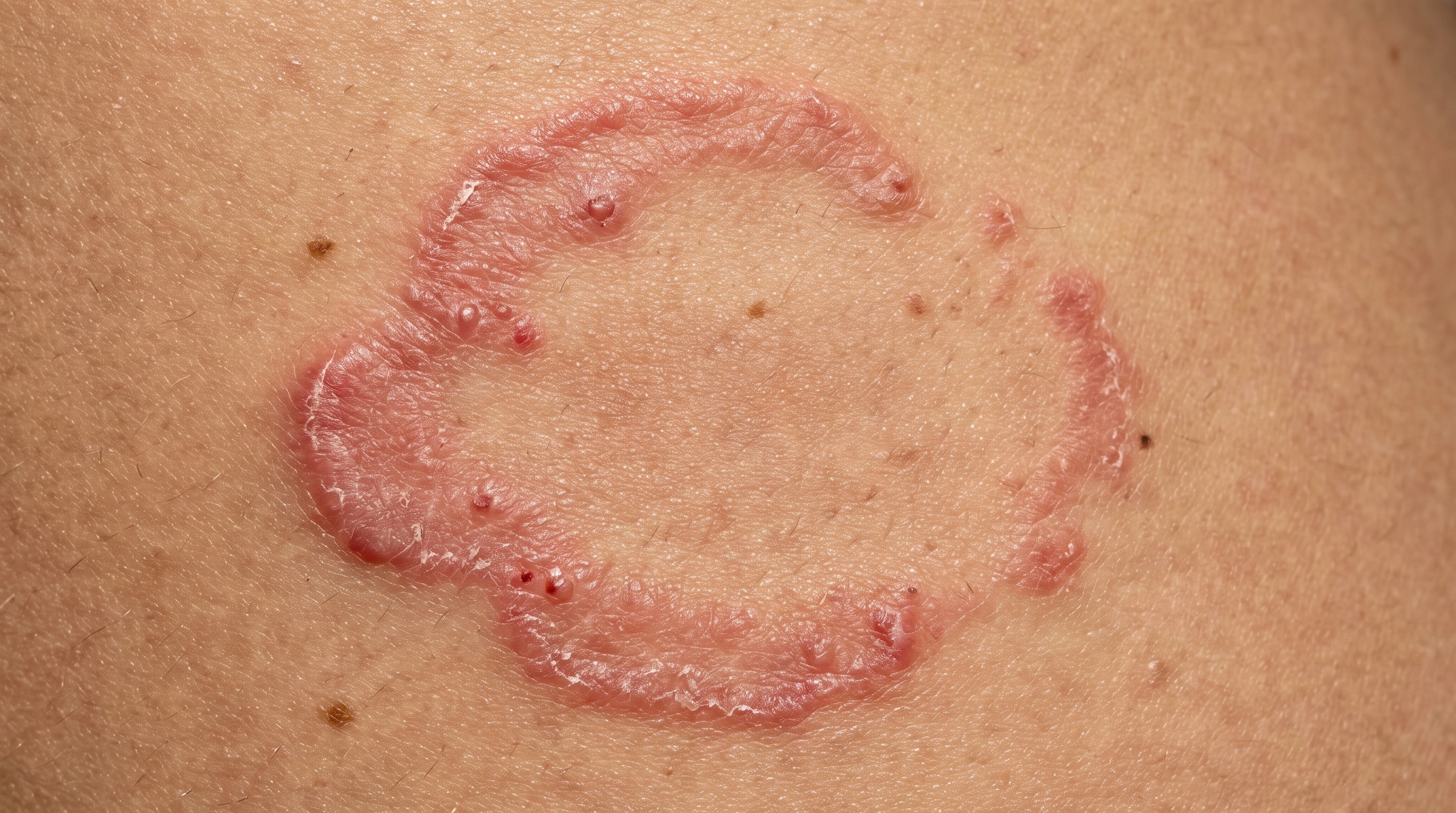
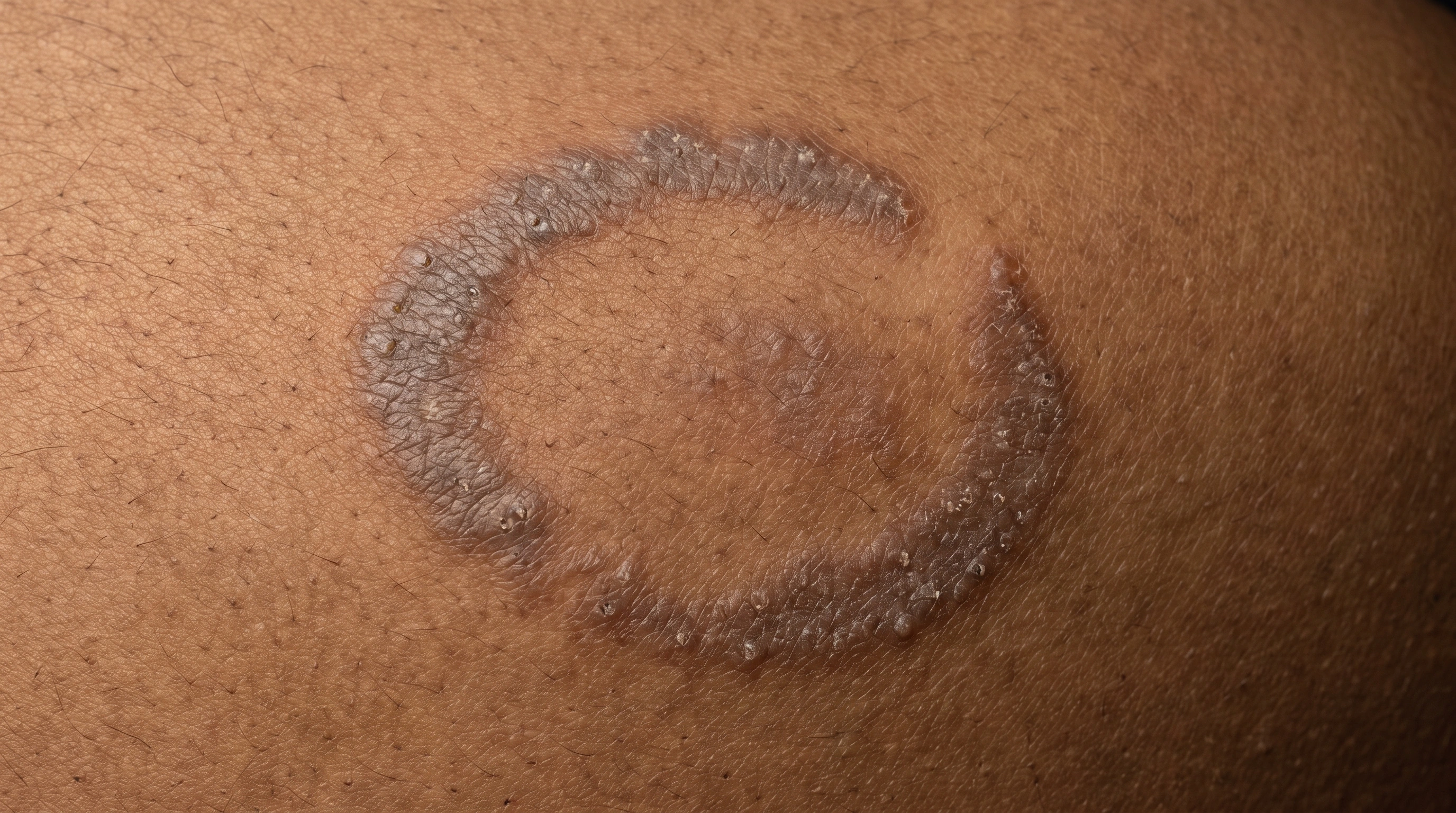
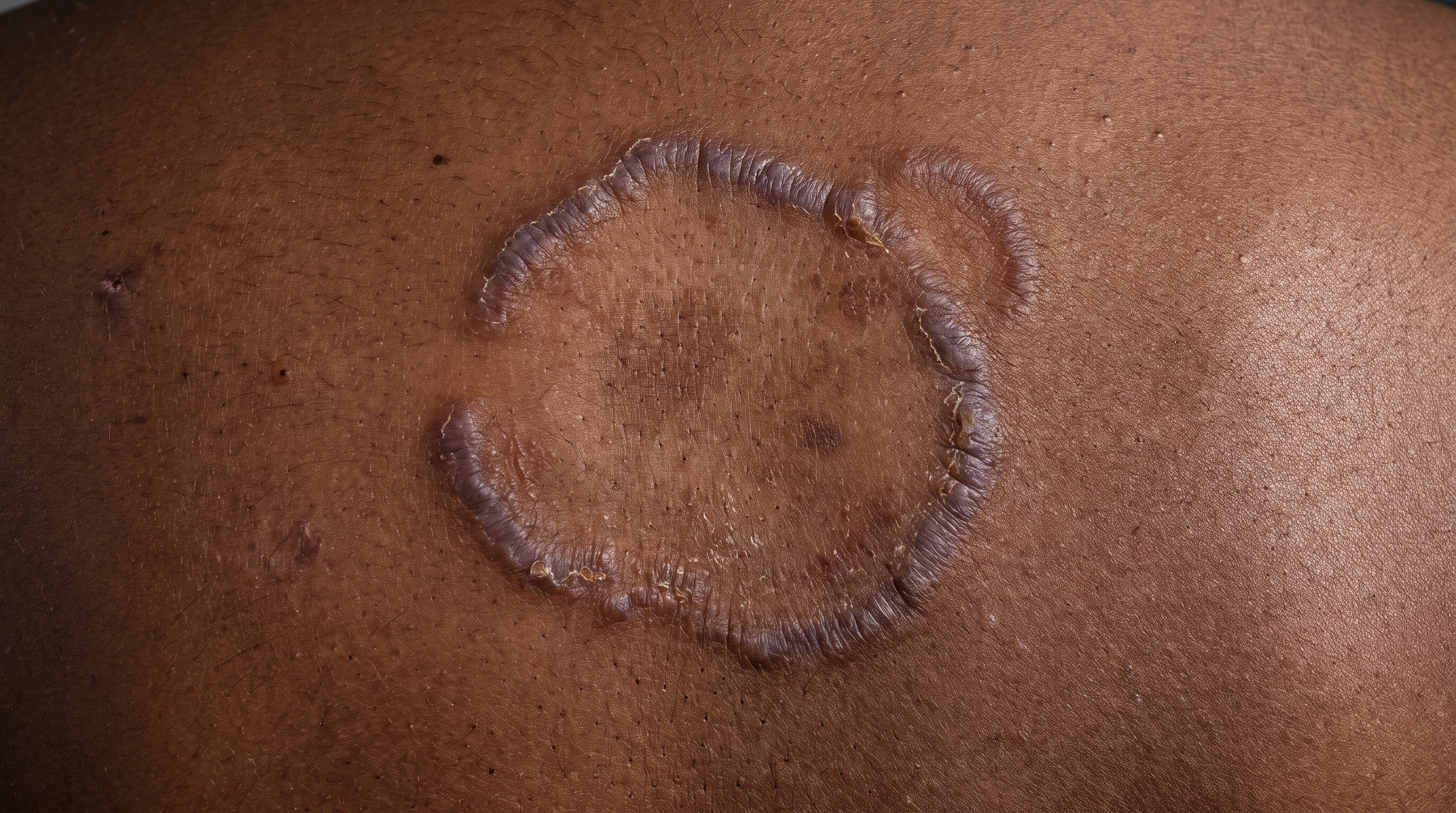
A round patch on a forearm on fair light skin, with a raised pink scaly border and a flatter, clearer middle.
A round patch on a forearm on medium olive-tan skin, with a raised tan-brown scaly border and a flatter middle. The color difference from the surrounding skin is slight.
A round patch on a forearm on brown skin, with a raised scaly border a shade darker and grayer than the surrounding skin and a flatter middle. There is no redness anywhere in the patch.
A round patch on a forearm on deep dark brown skin. The raised scaly border is barely darker than the skin around it, and the flatter middle is visible mainly by its smoother texture.
Diagram
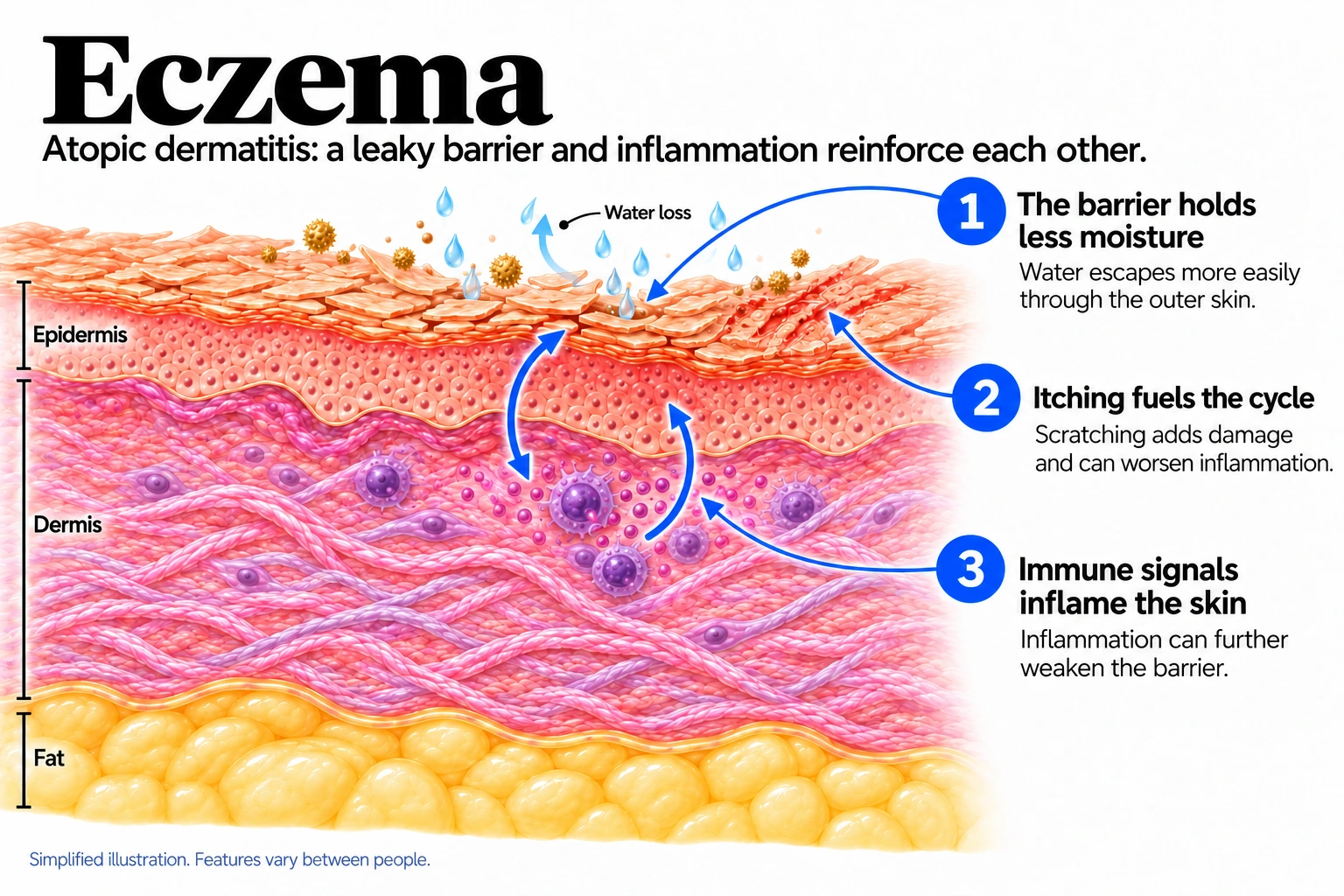
Atopic dermatitis showing water loss through a disrupted outer barrier, scratch damage, and inflammatory immune activity.
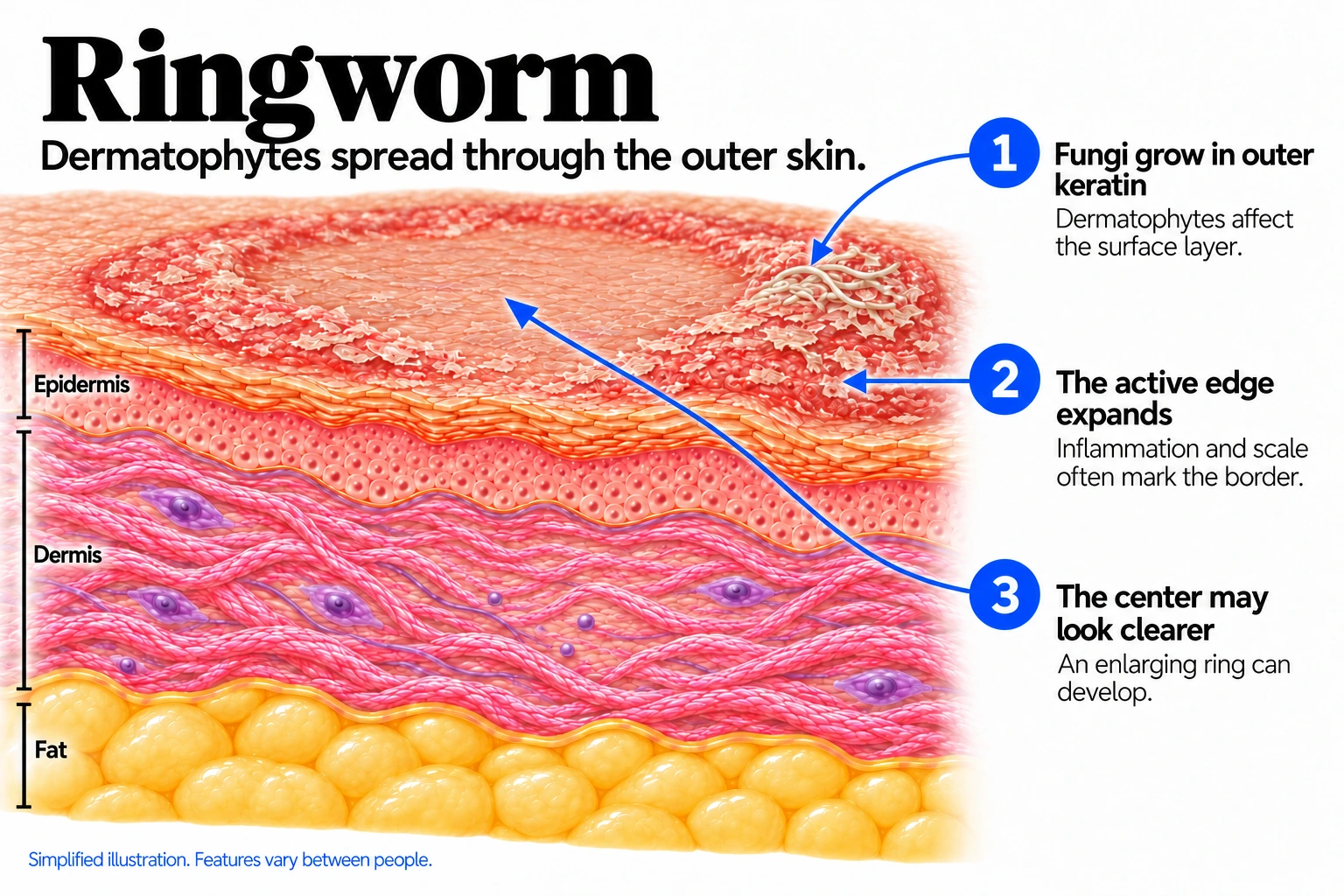
Ringworm mechanism diagram. Fungi grow in outer keratin: Dermatophytes affect the surface layer. The active edge expands: Inflammation and scale often mark the border. The center may look clearer: An enlarging ring can develop.
In the skin

In atopic dermatitis, a less effective skin barrier and overactive immune signals reinforce each other. Water escapes more easily, and itching and scratching can add damage and prolong inflammation.

Dermatophyte fungi grow in the keratin of the outer skin and spread outward. Inflammation and scale often concentrate at an expanding border, while the center may look clearer.

Where it shows up

A pattern that changes with age

Eczema often affects the inner elbows and backs of the knees. In adults, the hands, face and neck may also be involved.

Variable skin sites

When it usually starts

010203040506070+

Eczema. Often starts in infancy or childhood, though it can first develop in adulthood.

Ringworm. Can occur at any age after exposure to an infected person, animal or contaminated material.

Causes and triggers

Causes

Eczema comes from a weak skin barrier combined with an overactive immune response. Moisture escapes, irritants get in and the skin becomes itchy and inflamed.

Ringworm is a fungal infection of the skin's outer layer. It isn't caused by a worm; the name comes from the ring-shaped rash.

Family tendency

Changes in the filaggrin gene, which helps build the skin barrier, are a major risk. Eczema often runs in families with asthma and hay fever.

Risk factors
Family history of allergies, Asthma or hay fever, Living in cities or dry climates, Infancy
Children, Contact sports, Weakened immunity, Diabetes
How it spreads
  • Skin-to-skin contact — Well established
  • Infected pets, especially cats — Well established
  • Shared towels, combs and mats — Strong link
  • Damp, warm skin — Strong link
Trigger
● Eczema
● Ringworm
Dry air and cold weather
Well established
Not listed
Harsh soaps and fragrance
Well established
Not listed
Sweat and heat
Strong link
Not listed
Wool and rough fabrics
Strong link
Not listed
Stress
Strong link
Not listed
Dust mites and pet dander
Possible
Not listed

Daily Care

Eczema
Ringworm
Daily care

Habits that help

  • Moisturize generously, every day
    An artificial barrier.
  • Short, lukewarm showers
    Gentle cleanser, pat dry, moisturizer straight after.
  • A humidifier in winter
    If your eczema is seasonal.
  • Cool the skin
    Cool compresses and a cooler bedroom quiet it.
  • Short nails and gloves at night
    Limits scratching in your sleep.
  • Cotton and loose clothing
    Less triggering all day.
  • Use a clinician-agreed maintenance plan on recurrent eczema sites
    Twice a week on flare-prone spots lengthens the gaps.
  • Treat early
    A flare caught early takes far less treatment.
  • Injected and oral treatments
    For severe eczema, under a specialist.
  • Seek assessment for signs of skin infection
    New pain, spreading redness, fever or crusting may need assessment. Not every weeping eczema flare needs antibiotics.
  • Hypochlorous acid spray
    Lowers skin bacteria, does not sting.
  • Diluted bleach baths
    Only if your doctor recommends it.
  • Plan for nighttime itch
    Body heat rises, itch gets louder.
  • Seek assessment for new weeping, yellow crusts or worsening soreness
    These can signal infection but also occur with inflammation. Ask for assessment rather than automatically starting an antibiotic.

Avoid

  • Avoid: Scratching
    Tears the gaps wider.
  • Avoid: Long, hot showers
    Strip the fats holding the barrier.
  • Avoid: Soap and foaming cleansers
    Heavy foam strips barrier fats.
  • Avoid: Frequent handwashing
    The main driver of hand eczema.
  • Avoid: Dry indoor air in winter
    Heating drops indoor humidity.
  • Avoid: Fragrance
    A top irritant.
  • Avoid: Sweat and overheating
    A very reliable itch trigger.
  • Avoid: Wool and rough fabrics
    Set the itch off directly.
  • Avoid: Stress and poor sleep
    Raise existing inflammation.
  • Avoid: Dust mites, pollen, pet dander
    Matter if you have hay fever or asthma.
  • Avoid: Stopping moisturizer
    The top reason a flare returns.
  • Avoid: Stopping treatment early
    Undertreated flares return faster.

Habits that help

  • Wash and separate towels and bedding
    Hot wash, no sharing until it clears.
  • Have the pet checked
    Animal ringworm often shows as thin or crusty fur.
  • Shower and change soon after sport
    The single best habit if you train.
  • Keep the area dry
    Dry thoroughly, change sweaty clothes, wear loose cotton.
  • Treat the feet and nails too
    Otherwise they reseed it.
  • An over-the-counter antifungal cream
    Terbinafine, clotrimazole, miconazole, ketoconazole.
  • Apply the antifungal over the recommended margin and complete the labeled course
    Cover the affected area and the margin directed on the label. Duration differs between products and sites.

Avoid

  • Avoid: Sharing household items
    Towels, bedding, clothes or hairbrushes pass it on.
  • Avoid: Walking barefoot
    Communal showers and pool areas are a classic route.
  • Avoid: Contact sport before it is treated
    Very transmissible skin to skin.
  • Avoid: Staying in damp clothes
    Fungi need moisture. The easiest thing here to fix.
  • Avoid: Tight, occlusive clothing over the patch
    Traps heat and sweat over the fungus.
  • Avoid: Scratching
    Breaks the skin and carries fungus to new sites.
  • Avoid: Not treating the pet
    If an animal is the source, treating only people means it returns.
  • Avoid: Untreated athlete's foot or nail fungus
    A permanent source for the body.
  • Avoid: Stopping treatment when it looks clear
    Skin clears before the fungus does.
  • Avoid: Hydrocortisone 1%
    It takes the itch away for a few days, and that is exactly the problem. Steroid cream damps down the immune reaction that was holding the fungus at the edge, so the infection spreads while the rash looks better. What returns is bigger, shapeless and harder to recognize. Do not put it on an undiagnosed rash.
  • Avoid: Steroid–antifungal combinations
    Creams that mix an antifungal with a strong steroid are widely prescribed and are a poor choice for ringworm. The steroid part lets the fungus spread and thins the skin, particularly in the groin, and cure rates are lower than with an antifungal alone. If you have one at home, check the label before using it here.

Treatment differences

Evidence labels come from each condition’s own treatment list.

Treatment
● Eczema
● Ringworm
Filter by type
Eczema type

Select one or more.

Ringworm location

Select one or more.

Over-the-counter
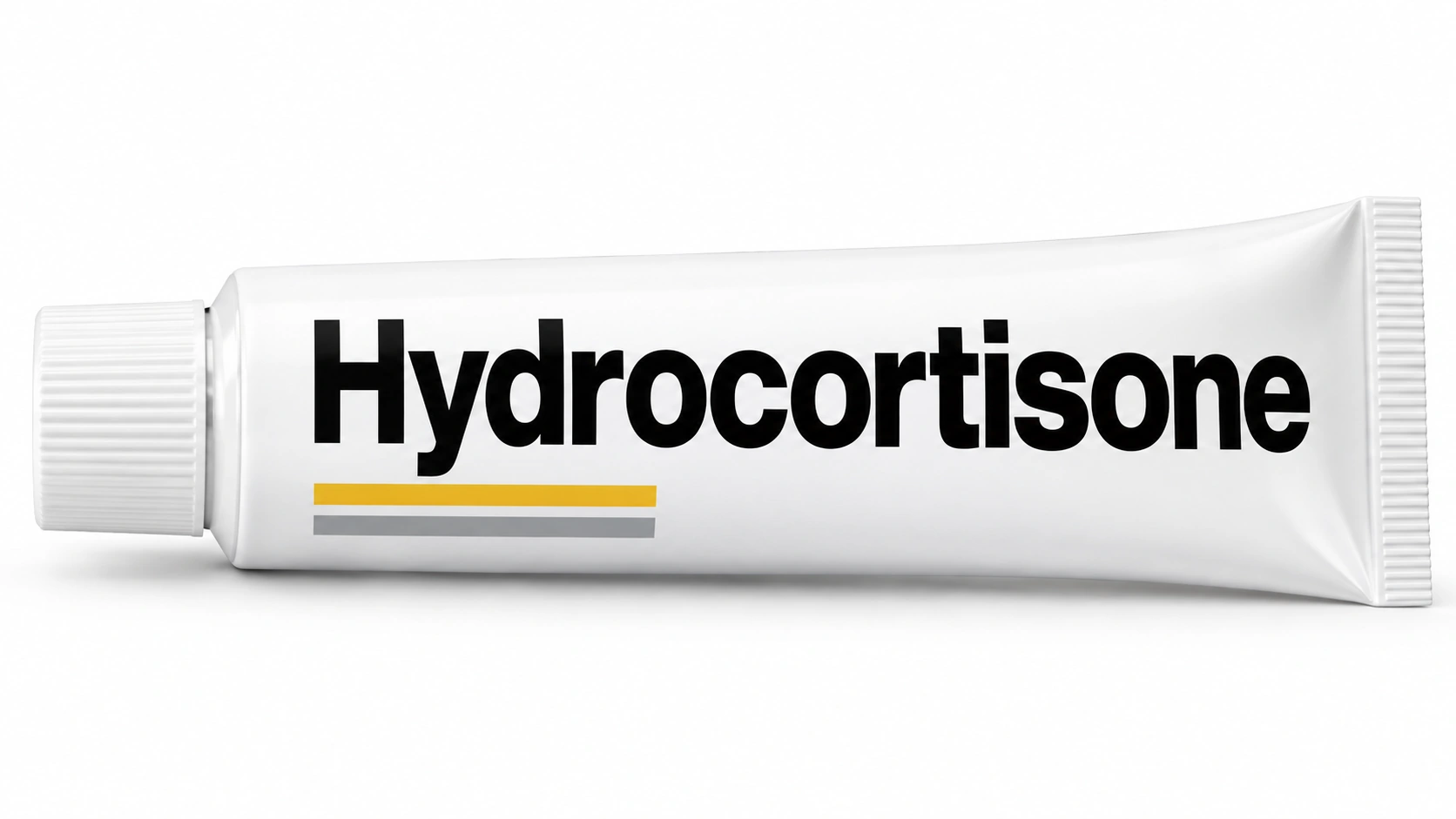
A plain white ointment tube lying on its side, labeled Hydrocortisone with a blue swoosh.

Hydrocortisone 1%

Moderate evidence

The one steroid you can buy without a prescription, and the only step in this routine that treats rather than protects. A thin layer twice a day on the itchy patches, for up to two weeks at a time. Mild enough for the face and the eyelids for a few days, and too mild for skin that has gone thick and leathery.

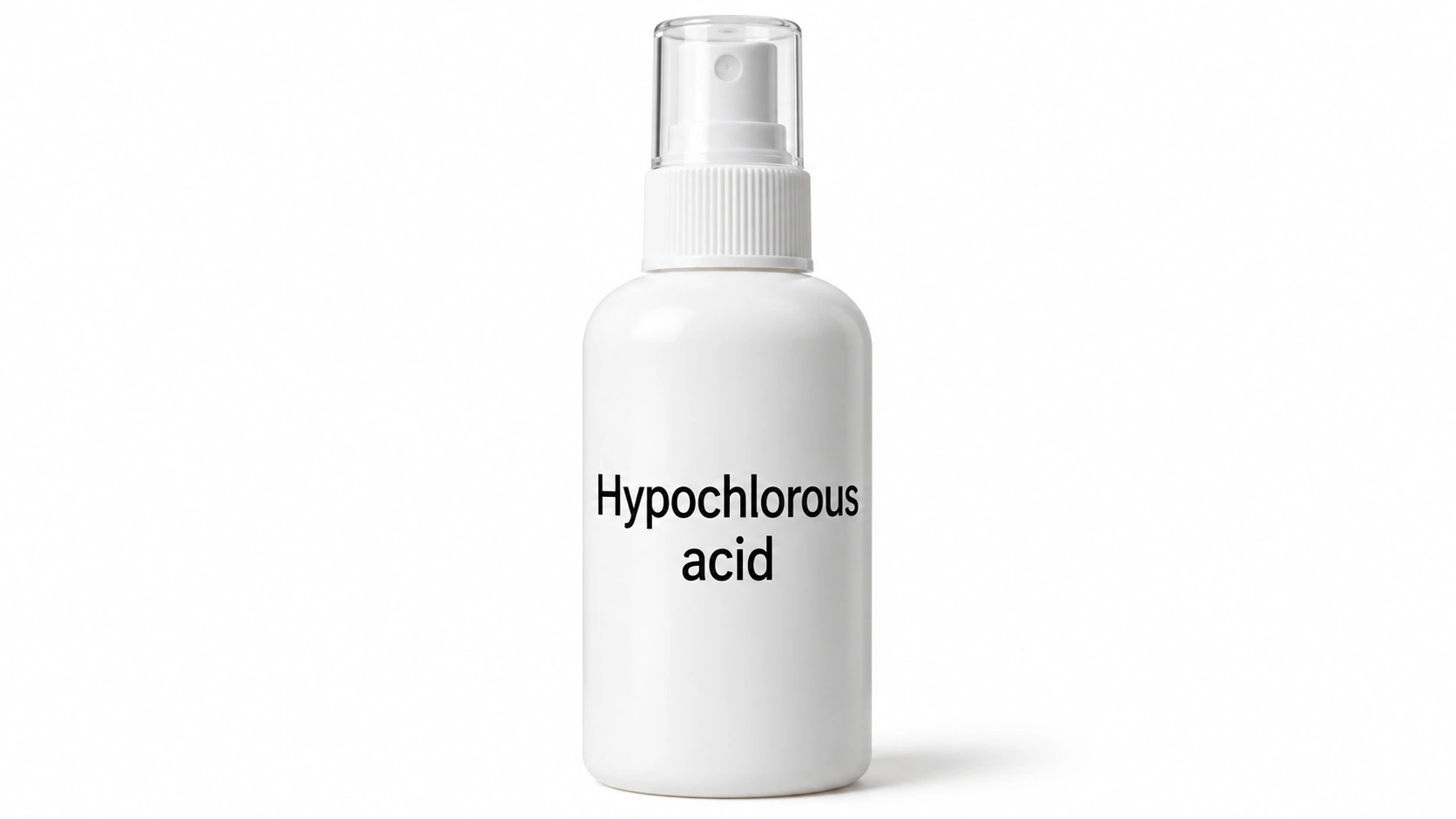
Existing illustration of Hypochlorous acid spray.

Hypochlorous acid spray

Limited evidence

A spray that lowers the amount of staph sitting on eczema skin, aimed at step four rather than at the inflammation itself. It does not sting, which makes it easier on children than a bleach bath. It is a helper for skin that keeps getting infected, not a treatment for the flare.

Illustration: Generic oral tablet bottle and tablets.

A sedating antihistamine at night

Limited evidence

Taken at bedtime it helps you sleep through the itch, which is the honest reason to use it. It does not treat the itch of eczema — that comes from immune signals rather than histamine — so a non-drowsy antihistamine in the daytime does very little. Ask your doctor before using one in a young child.

Four ointments on white: CeraVe Healing Ointment, a Vaseline jar, a petroleum jelly tube and Aquaphor

Petrolatum

Strong evidence

Plain ointment, over damp skin, as the moisturizer rather than beside it. It seals water in rather than adding any. It is the one thing that is safe to put on eyelids as often as you like, and on a weeping flare it is usually the best thing on the shelf.

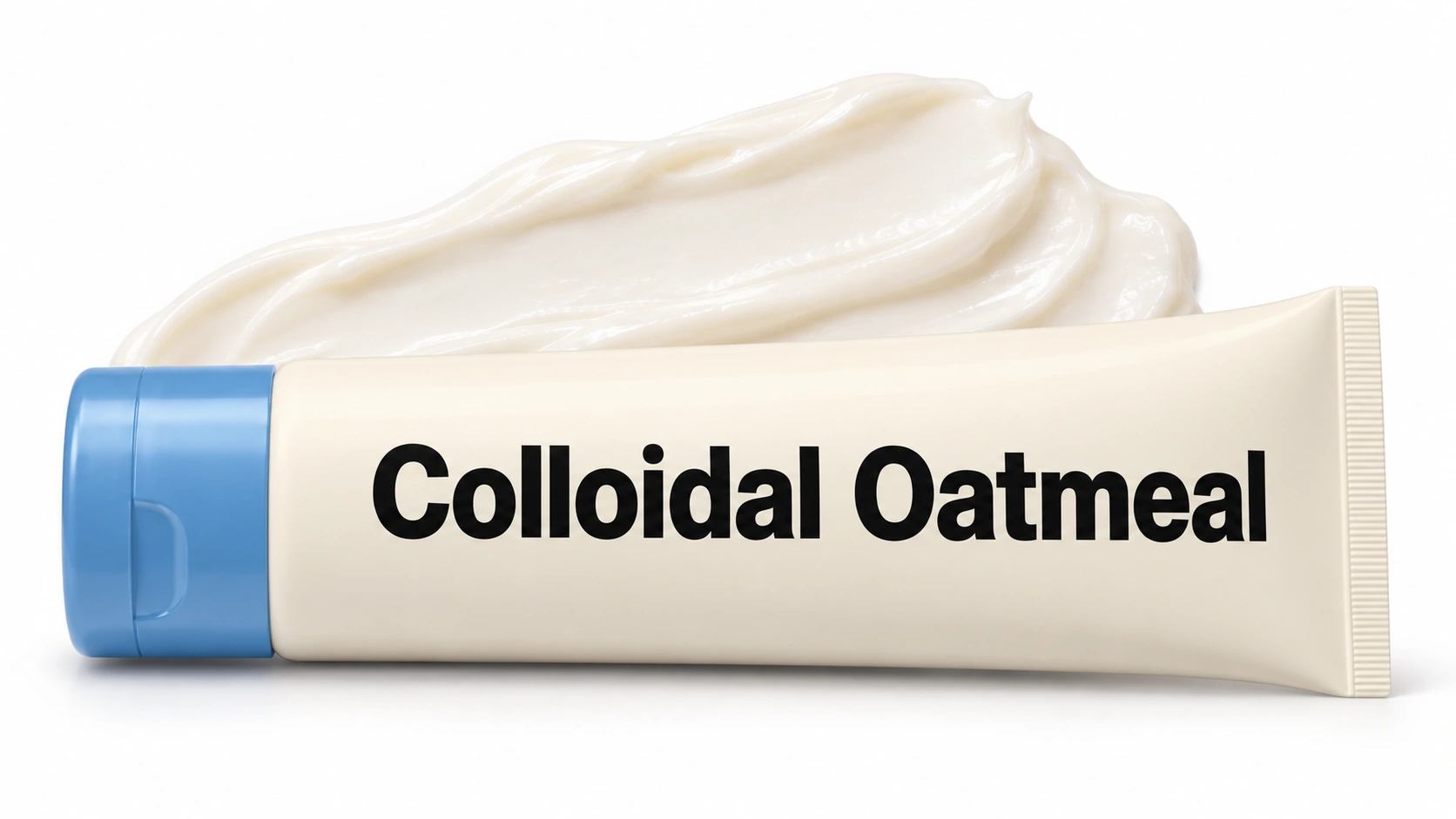
Five colloidal oatmeal eczema products lined up on white: tubes, a jar and a pump lotion

Colloidal Oatmeal

Moderate evidence

An old remedy that holds up. It calms itch and helps the barrier, in a cream or in a lukewarm bath. It will not clear a flare, and it is a sensible everyday moisturizer for skin that is calm but easily set off.

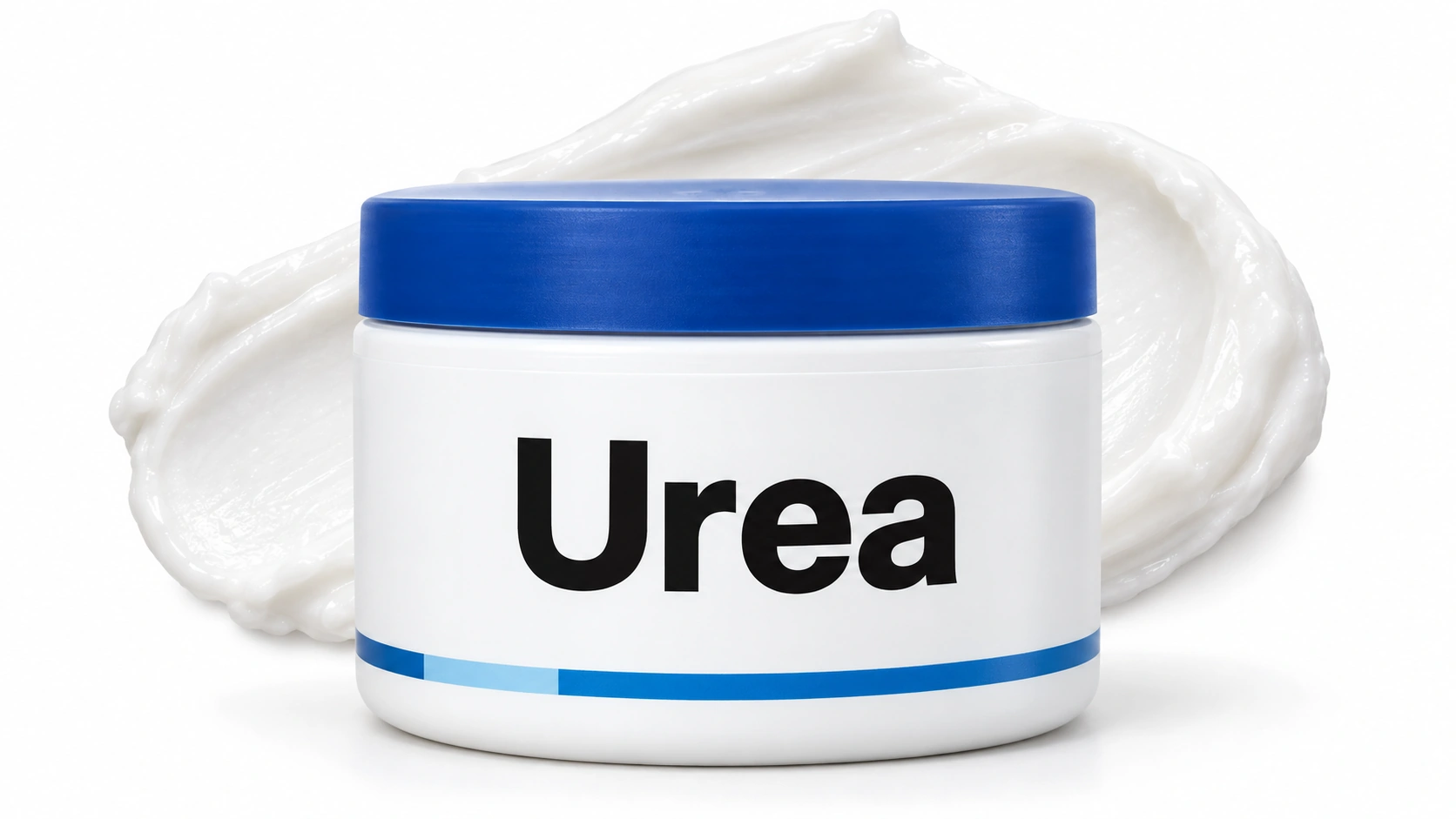
Five white jars of 40% urea cream lined up, several also listing 2% salicylic acid

Urea

Moderate evidence

A moisturizer with urea in it, for patches that have gone thick and leathery from years of scratching. 10% and above. It stings on raw or weeping skin, so it belongs to the dry, cracked stage rather than the sore one.

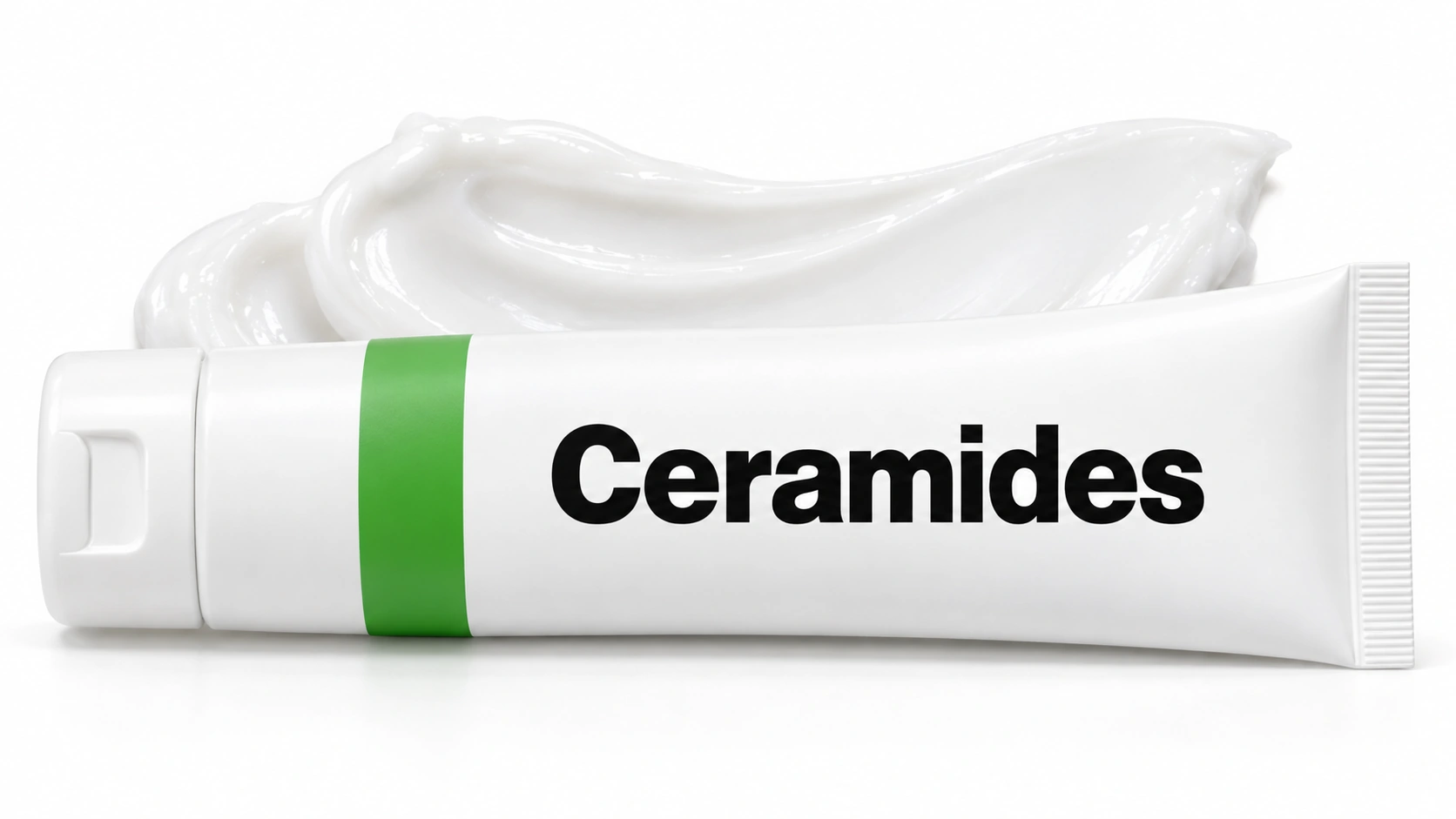
Four ceramide moisturizers lined up on white: two tubes, a CeraVe tub and a blue jar

Ceramides

Moderate evidence

The fats that hold the outer wall of the skin together, and the ones eczema skin is short of. A ceramide cream used daily reduces how often flares happen and how much prescription cream you end up needing over a year. It will not clear an active flare on its own — it is the maintenance step, used on calm skin as much as on sore skin.

Existing educational treatment illustration: Spinosad

Terbinafine cream

Strong evidence

The most effective cream you can buy for ringworm on the body, and it kills the fungus rather than just stopping it growing, so the course is shorter — often one to two weeks. Take it a couple of centimetres past the visible edge. It does not work on the scalp or the nails, where the fungus sits out of reach.

Clotrimazole or miconazole.

Clotrimazole or miconazole

Strong evidence

The familiar azole creams, sold everywhere and cheap. They work well on body ringworm, but they stop the fungus growing rather than killing it, so they are used twice a day for two to four weeks and for one to two weeks after the skin looks clear. Stopping at the point it looks better is the usual reason it returns.

Tolnaftate.

Tolnaftate

Moderate evidence

An older antifungal, most often sold as a powder or spray. It works on body and foot ringworm but more slowly than terbinafine, and it is weaker on stubborn patches. Its real use is keeping the feet and shoes dry after treatment, since untreated feet are what reseed the rest of the skin.

Five dark glass tea tree essential oil bottles with glass droppers and one green box on white

Tea Tree Oil

Avoid

It does have some antifungal activity, and it is the home remedy people ask about most. The trouble is that it clears ringworm far less reliably than a pharmacy cream, it commonly irritates the skin, and weeks spent on it are weeks the patch keeps spreading. There is no reason to choose it over a proven cream that costs about the same.

Prescription topicals
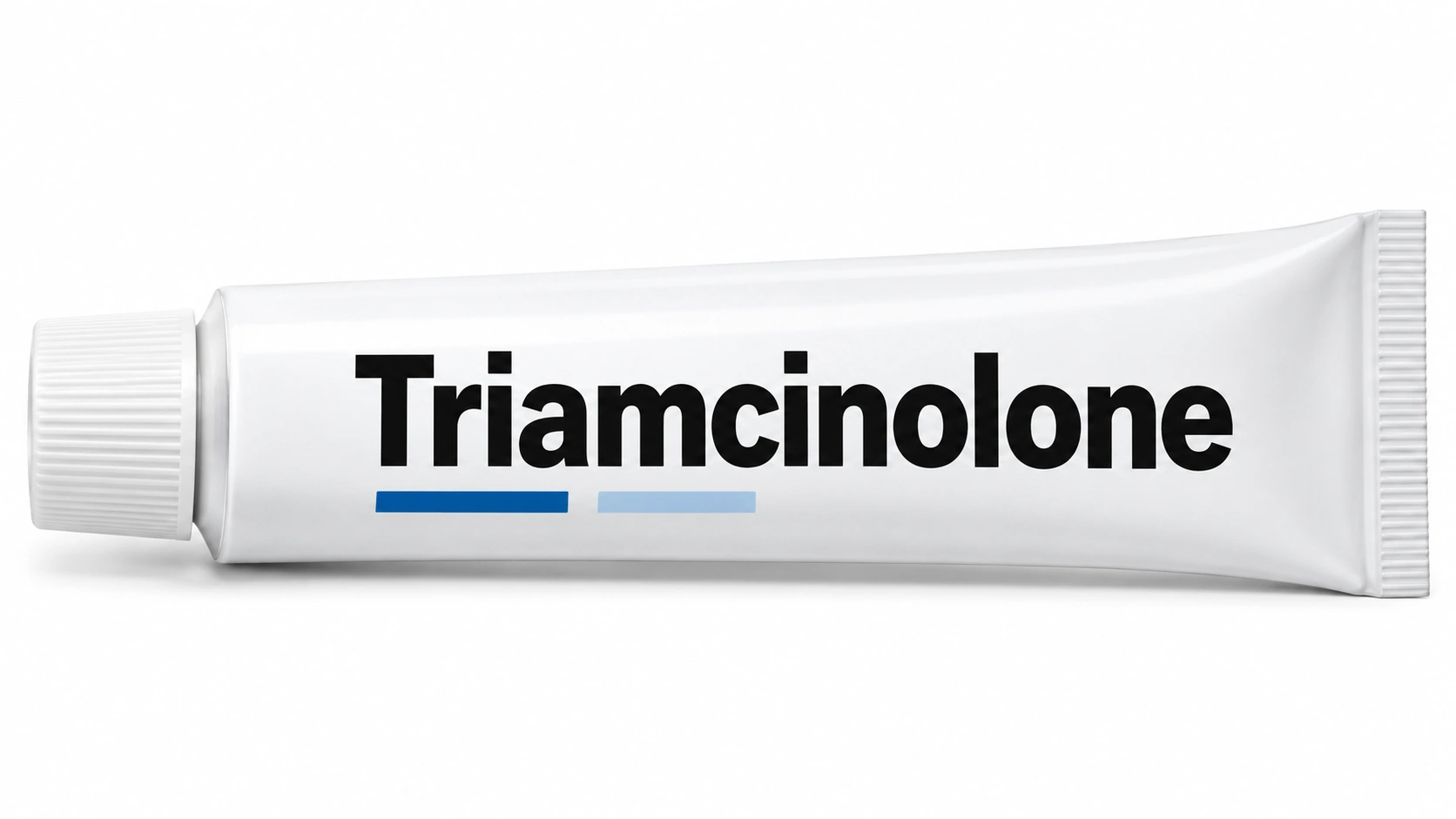
Representative medication packaging labelled Triamcinolone, lying sideways on a white background.

Triamcinolone Acetonide

Strong evidence

Triamcinolone. A mid-strength steroid ointment, twice a day for one to two weeks. It is the usual next step when hydrocortisone is not enough. Not for the face, the eyelids or the armpits - the skin there is thin already.

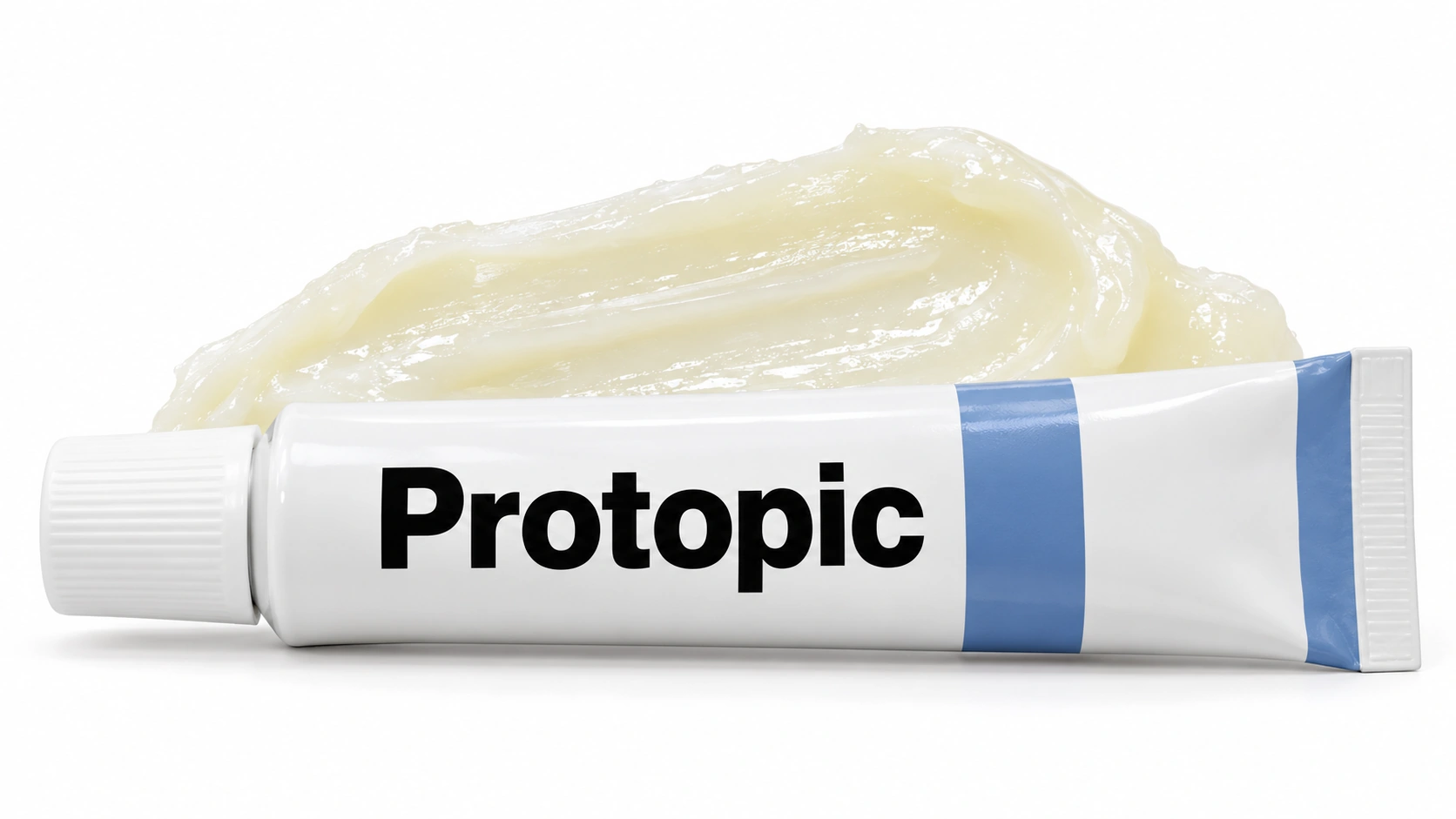
Protopic — Header Image

Protopic

Strong evidence

Protopic. An ointment that calms the same immune signal a steroid does, without being one. It does not thin skin, so it suits the eyelids, the face and the folds, and it can be used twice a week to stop flares coming back. Expect stinging for the first week or so.

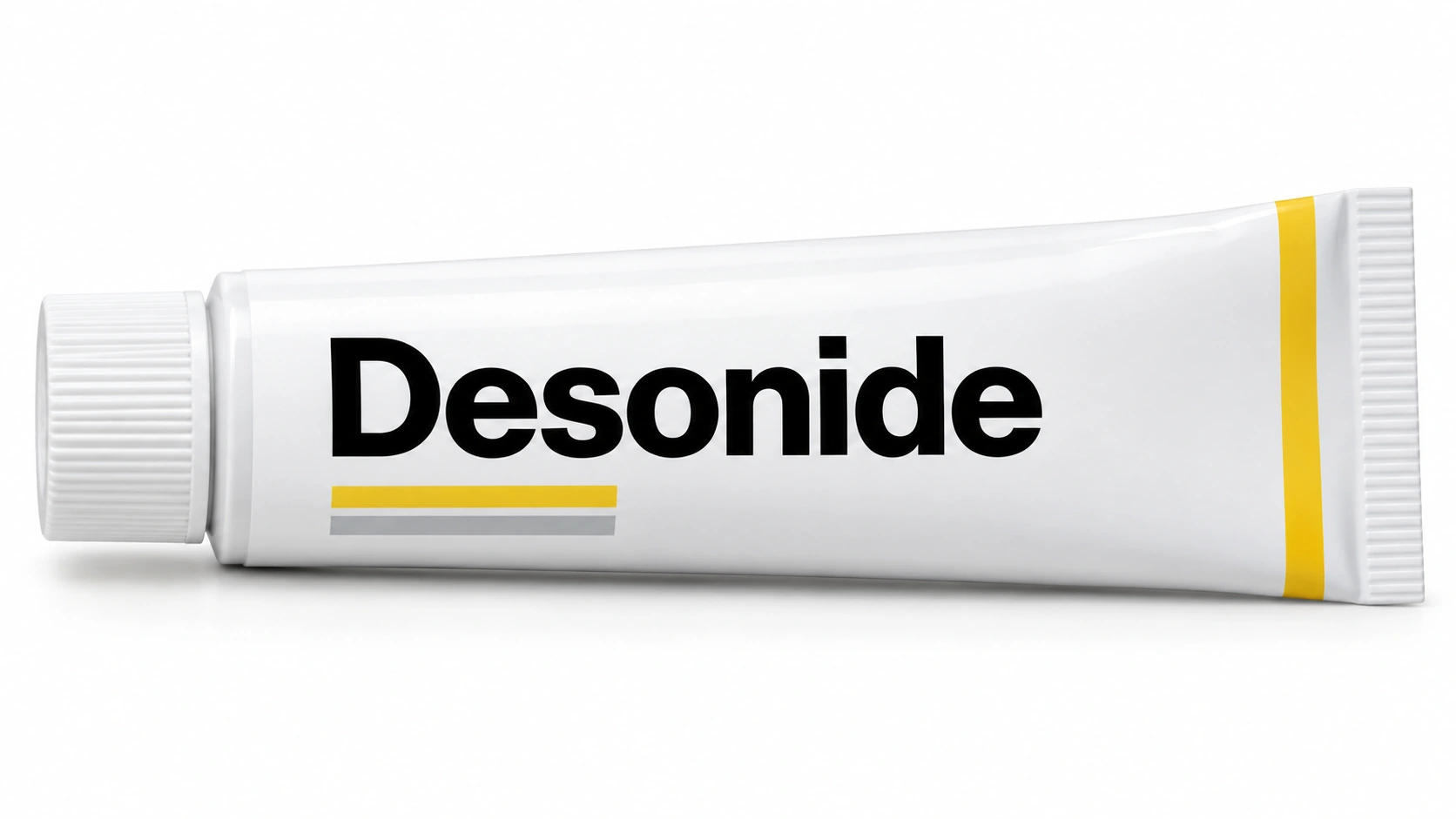
16:9 hero for Desonide. Never cropped: the tone strip and the corner logo depend on the full frame.

Desonide

Strong evidence

A low-strength steroid made for thin skin - the face, the eyelids, the folds, and young children. Twice a day for a week or two.

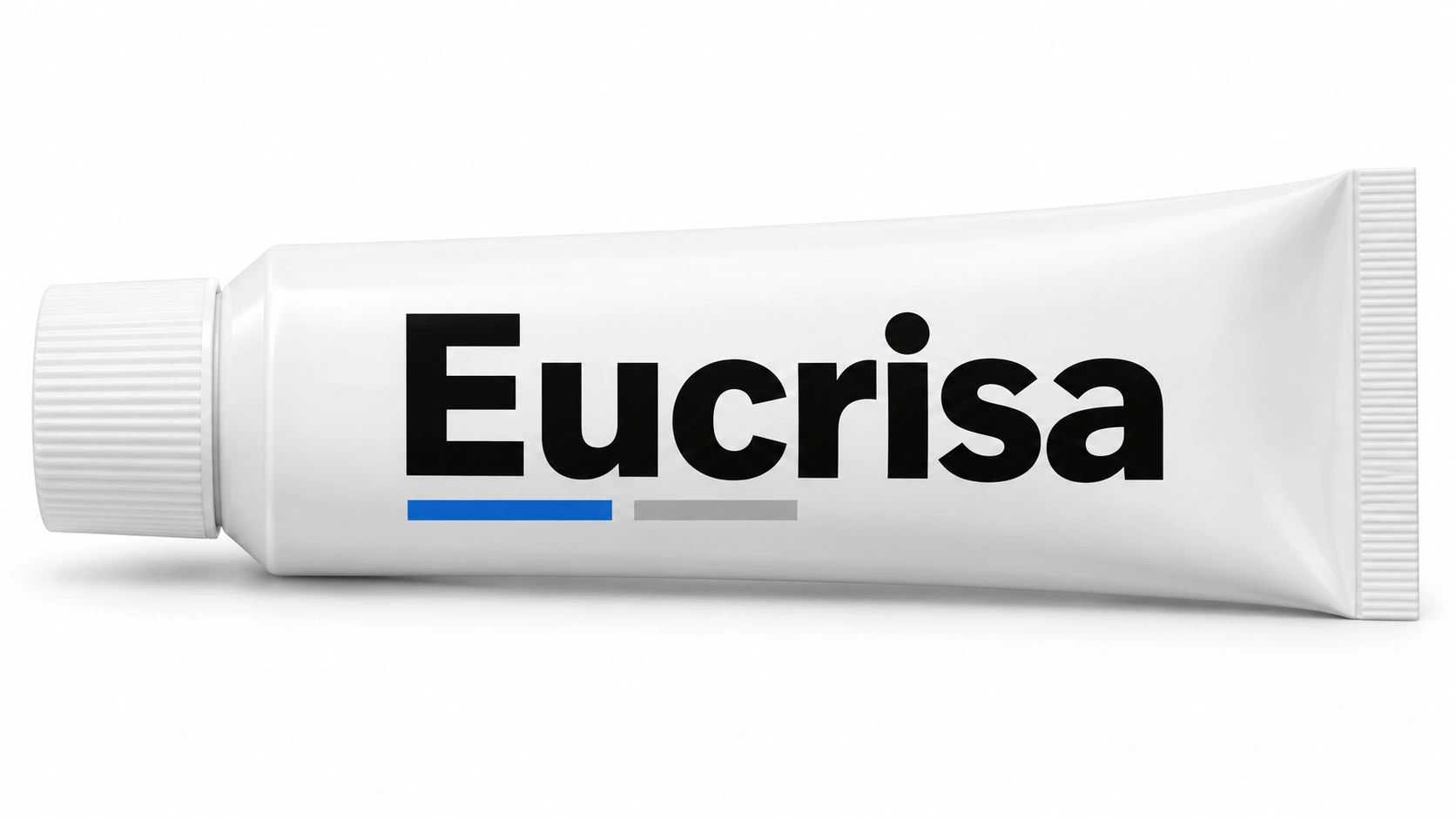
Representative medication packaging labelled Eucrisa, lying sideways on a white background.

Eucrisa

Strong evidence

Eucrisa. A steroid-free ointment for mild to moderate eczema, approved down to three months old. It burns on application for some people, which is the main reason it gets abandoned.

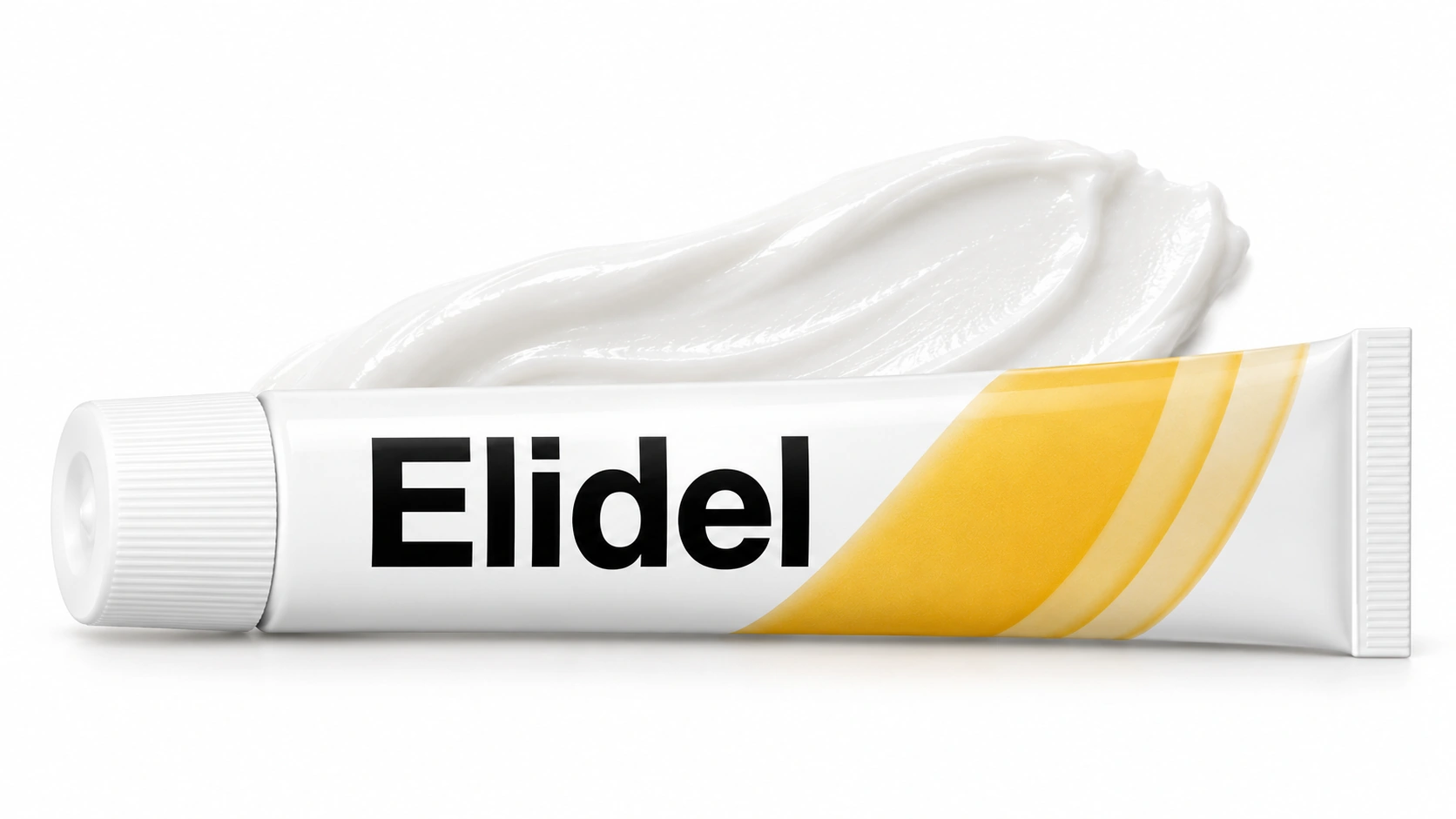
16:9 hero for Elidel. Never cropped: the tone strip and the corner logo depend on the full frame.

Elidel

Strong evidence

Elidel. The gentler cousin of tacrolimus, in a cream rather than an ointment. Suited to mild eczema on the face and the eyelids. It stings less, and it does less.

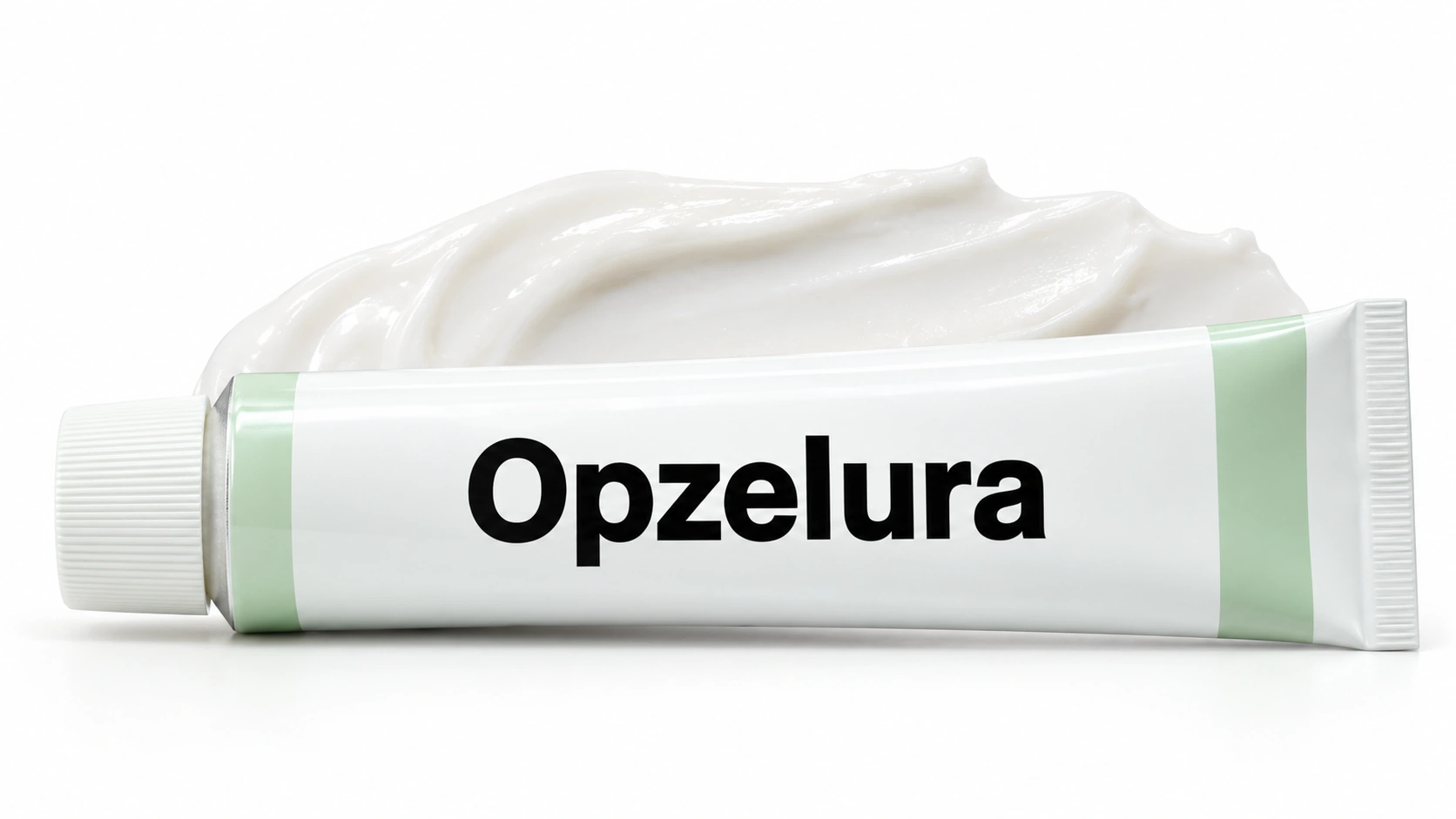
Opzelura shown in recognizable white topical cream squeeze tube with muted green bands.

Opzelura

Strong evidence

Opzelura. A newer steroid-free cream that takes the itch down quickly. It is meant for short courses on a limited area of the body, and it carries the warnings that come with the JAK class.

Clobetasol — Header Image

Clobetasol

Strong evidence

One of the strongest steroids there is, kept for thick, stubborn patches and for palms and soles. Two weeks at a time, then a break. Long stretches thin the skin.

Vtama — Header Image

Vtama

Moderate evidence

A steroid-free cream applied once a day, approved for eczema down to two years old. It calms the inflammation without thinning skin, and in trials the improvement often held for a while after stopping. Folliculitis — small spots around the hair openings — and headache are the side effects that come up, and it is newer and more expensive than a steroid.

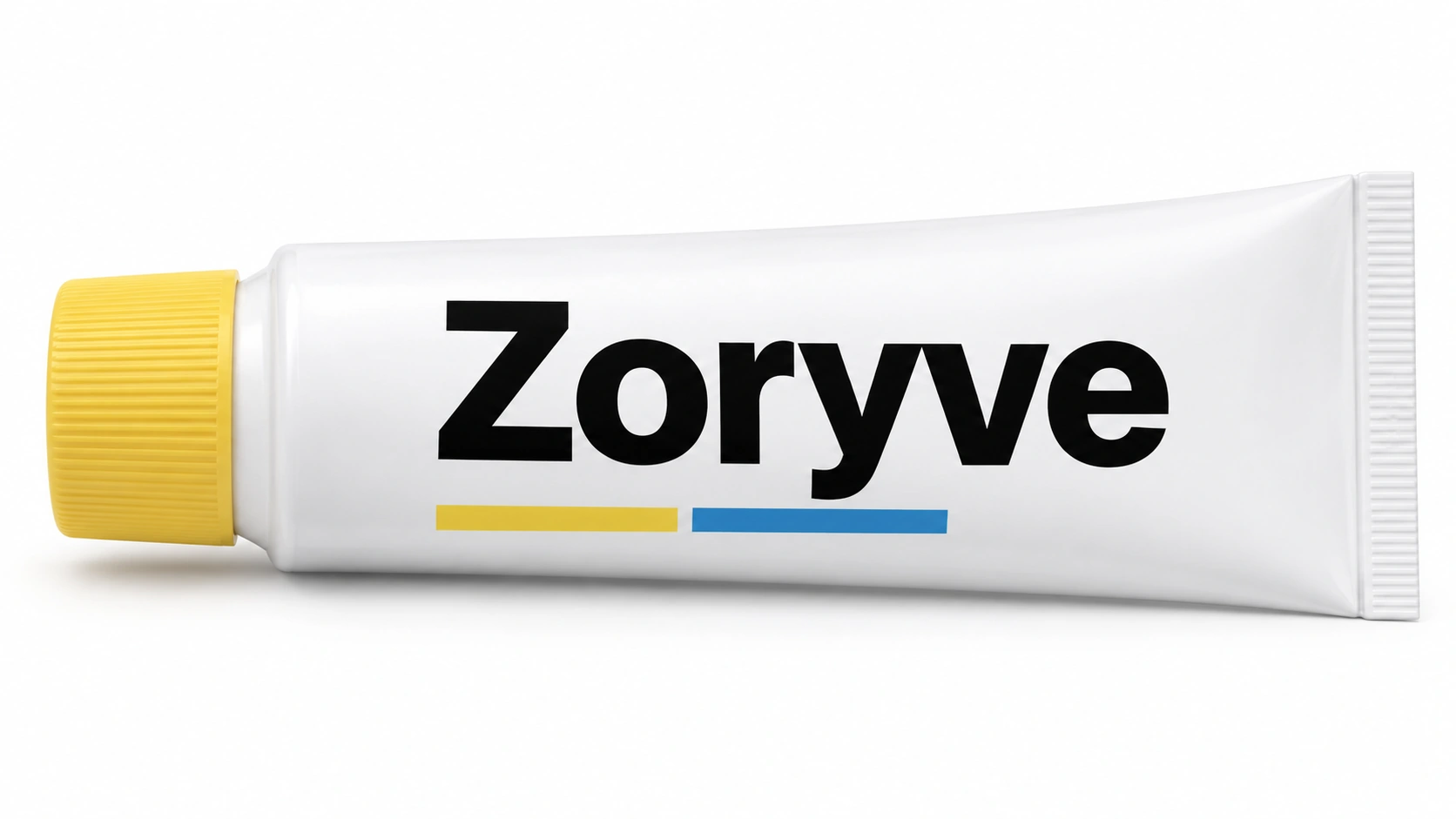
Representative medication packaging labelled Zoryve, lying sideways on a white background.

Zoryve

Moderate evidence

Zoryve. Another steroid-free once-daily cream, approved for eczema down to six years old. It is well tolerated on the face and the folds, and it does not sting the way tacrolimus does in the first week. Like the other newer creams, the barrier is cost and coverage rather than whether it works.

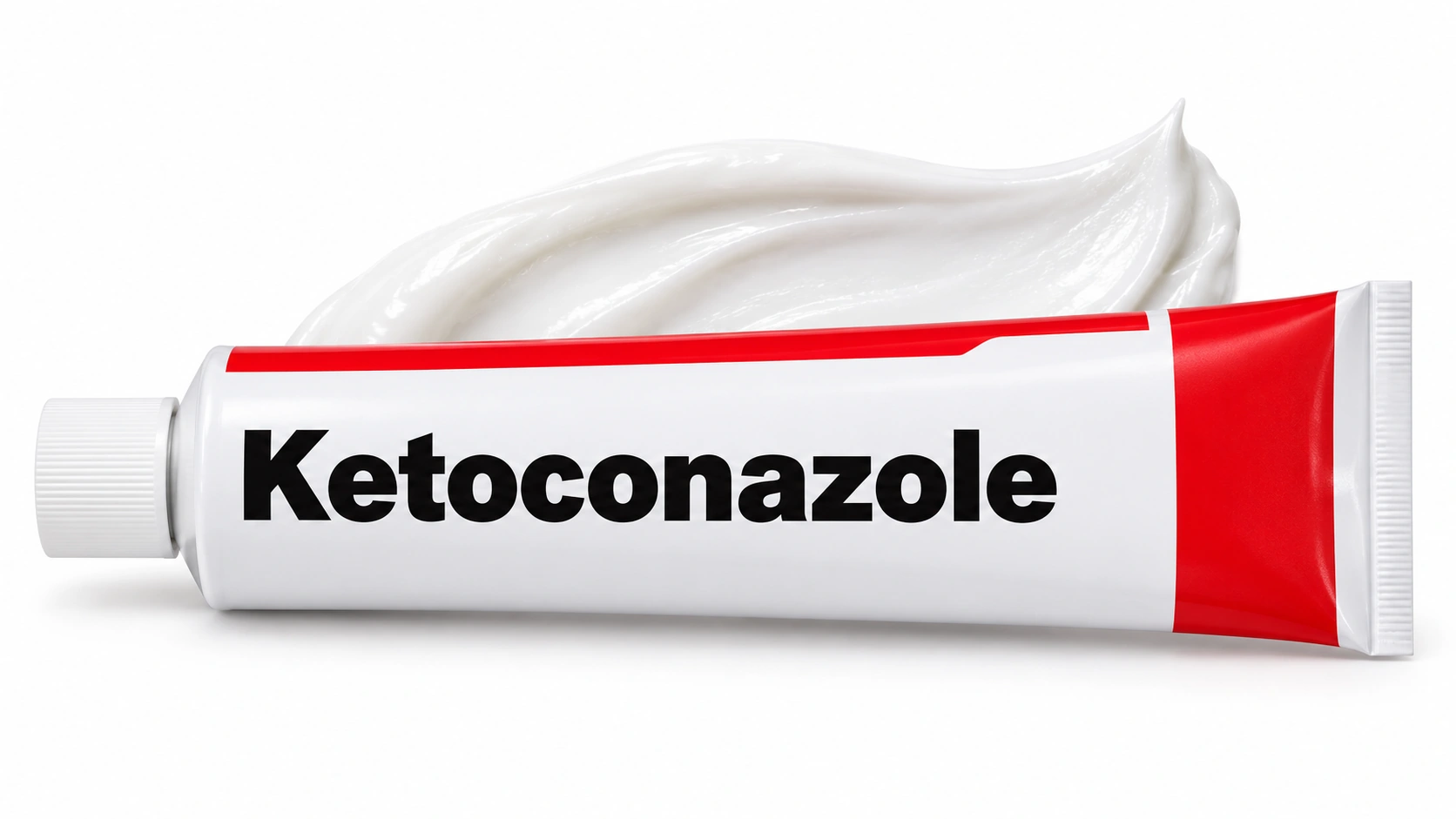
Ketoconazole — Header Image

Ketoconazole

Strong evidence

Ketoconazole 2% cream. The prescription strength of a familiar antifungal, used for body ringworm that has not cleared on an over-the-counter cream, and for larger patches. It is applied once or twice a day for two to four weeks. Like every cream, it is the wrong tool for the scalp and nails.

Ciclopirox

Strong evidence

Ciclopirox cream. A broad antifungal that also settles inflammation a little, which suits an angry, very itchy patch. It is a reasonable choice when azole creams have not worked or have irritated the skin. It still needs the full course and the same treating past the edge.

Econazole

Strong evidence

Econazole cream. A prescription azole cream used much like clotrimazole, applied once daily for two to four weeks. It has some activity against bacteria as well, which is occasionally useful in a moist fold or between the toes where both are present.

Prescription pills
Existing representative illustration of Rinvoq medicine packaging and tablets.

Oral JAK inhibitors

Strong evidence

Tablets for severe eczema that has not answered creams — they work fast, often taking the itch down within days. They need blood tests, and the class carries warnings about infection, blood clots and heart problems, so they are prescribed with a proper discussion of who they suit. Usually considered alongside the injections rather than before them.

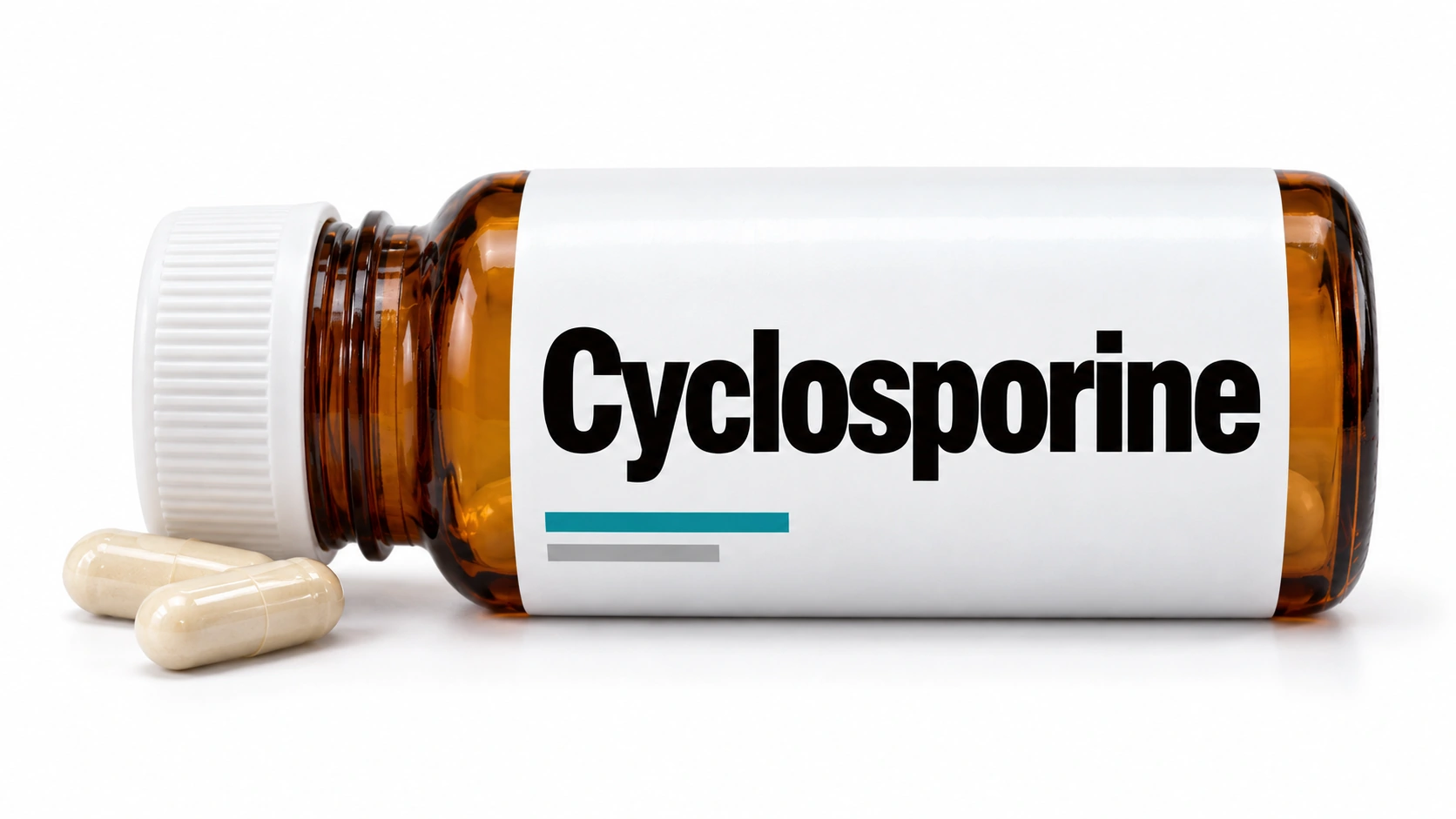
An amber pill bottle labeled Cyclosporine tipped over with white tablets spilling out

Cyclosporine

Moderate evidence

Works fast on a severe flare, which is what it is for - weeks to months, not years. It raises blood pressure and strains the kidneys, so both are checked while you are taking it.

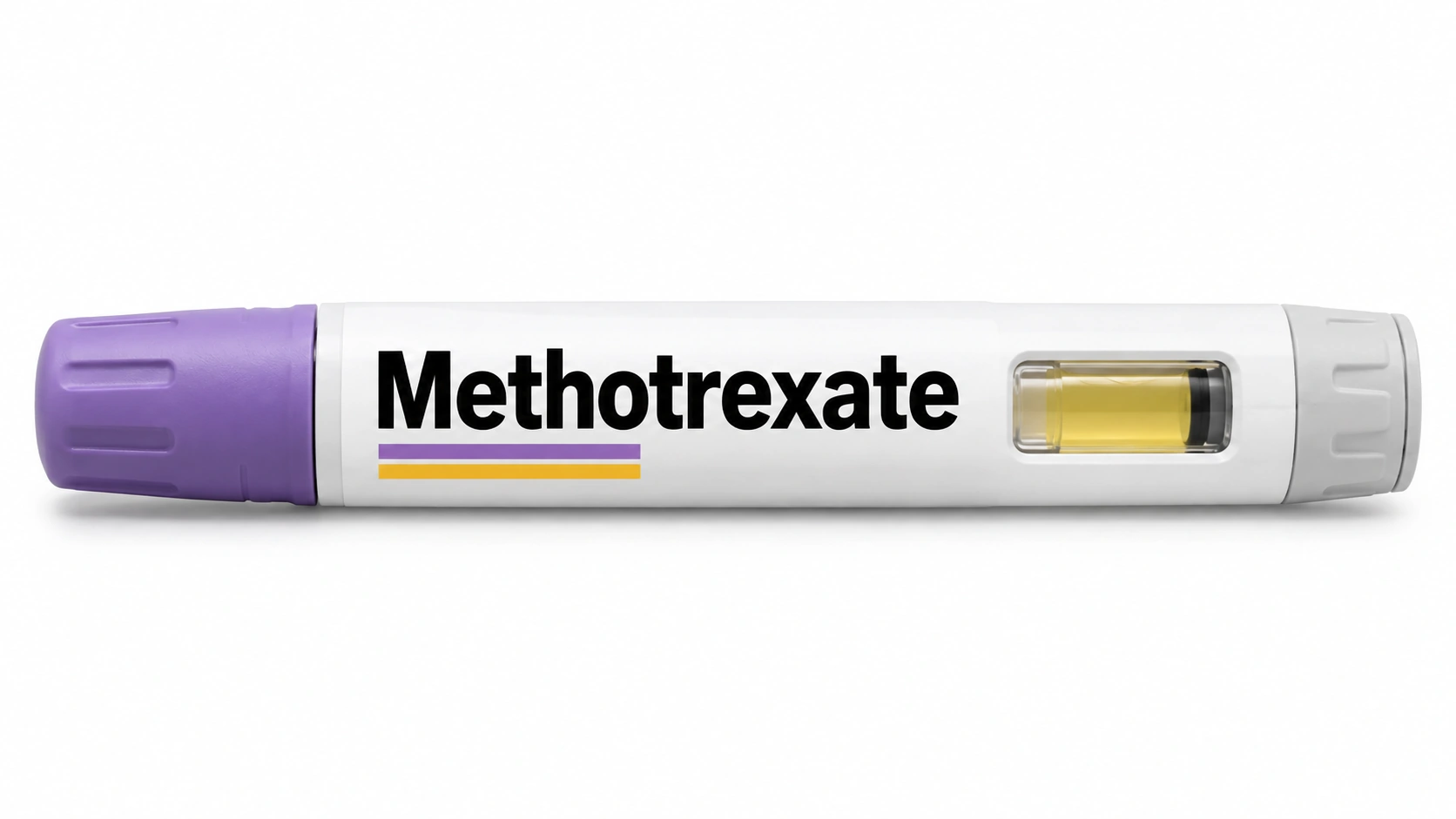
16:9 hero for Methotrexate. Never cropped: the tone strip and the corner logo depend on the full frame.

Methotrexate

Moderate evidence

A weekly tablet for long-running eczema. Cheaper than the injections and slower to work, with blood tests every few months. Ask your doctor about it before trying to conceive, and if you are pregnant or breastfeeding.

Prednisone — Header Image

Prednisone

Avoid

Oral steroids clear eczema quickly and it usually returns worse within weeks of stopping. Most dermatologists avoid them for that reason, and use them only to break a severe flare while something slower is started.

Antibiotics for infected eczema

Antibiotics for infected eczema

Listed

A short course when a flare is weeping or carrying golden-yellow crusts, which usually means staph has taken hold. It clears the infection so the eczema treatment can work again. It is not a treatment for eczema itself, and taking it for every flare is how resistance builds, so it is used when there is something to treat.

Terbinafine — Header Image

Terbinafine

Moderate evidence

Terbinafine tablets. The usual tablet for ringworm that cream cannot reach — scalp infections, nails, widespread patches and stubborn cases. Typically two to four weeks for the scalp and several months for nails, because the nail has to grow out. Liver blood tests are checked for longer courses, and it interacts with a number of other medicines.

Representative medication packaging labelled Itraconazole, lying sideways on a white background.

Itraconazole

Moderate evidence

An equally effective alternative, often used for nails, for widespread infection and for cases that have not responded to terbinafine. It is sometimes given in pulses of one week a month. It interacts with a long list of common medicines, including statins and some heart drugs, so bring your full list to the appointment.

Illustration: Generic oral tablet bottle and tablets.

Griseofulvin

Moderate evidence

The oldest scalp treatment and still a first choice in children for some species of fungus. It needs six to twelve weeks, and it is absorbed much better when taken with a fatty meal. Newer tablets work faster, so which one is used depends on the species the lab identifies.

16:9 hero for Fluconazole. Never cropped: the tone strip and the corner logo depend on the full frame.

Fluconazole

Moderate evidence

A once-weekly tablet, used mainly when terbinafine and itraconazole do not suit. It clears dermatophyte infections less reliably than either, so it is a second-line option here rather than a first choice, even though it is the antifungal most people have heard of.

Injections
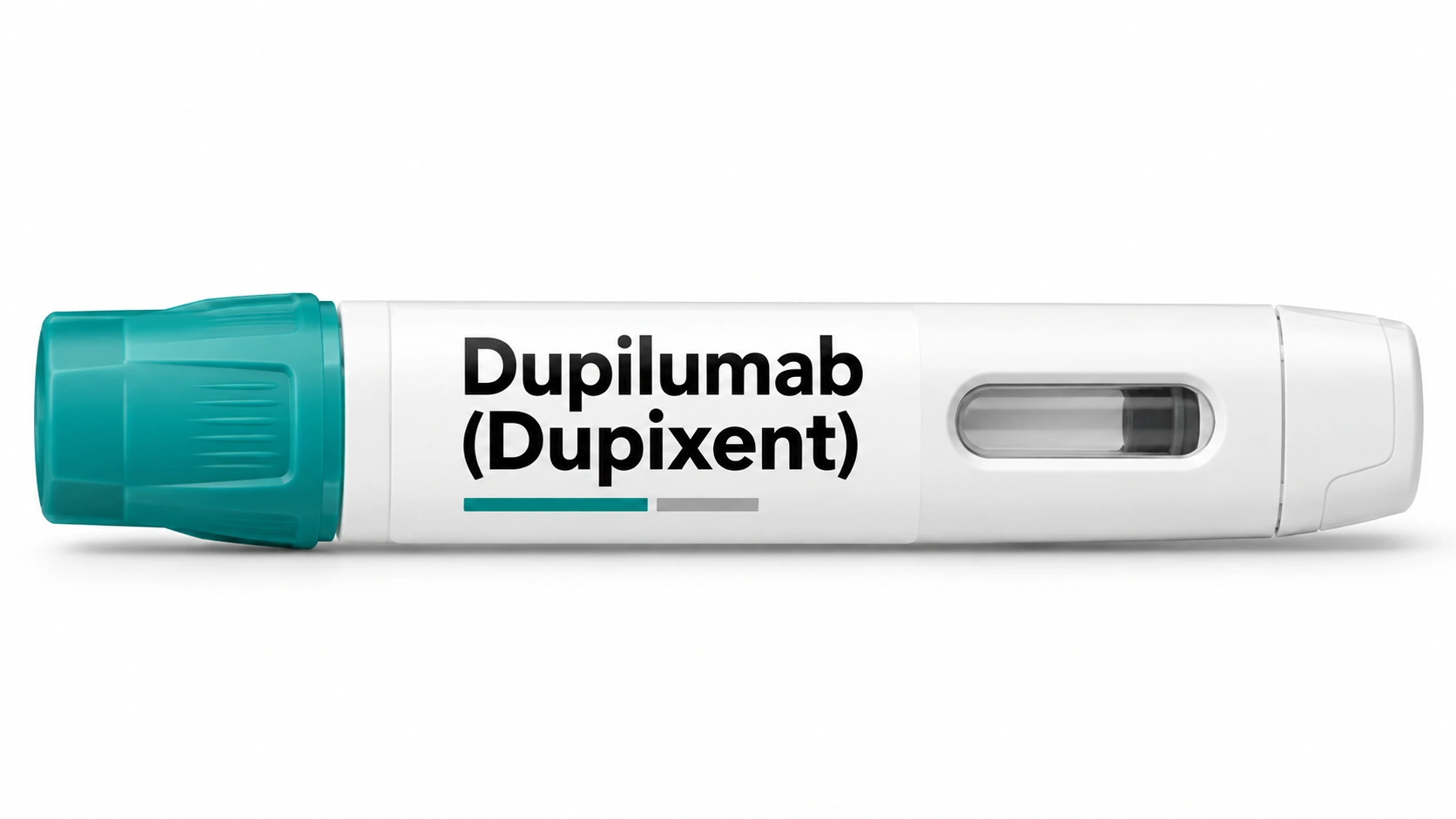
A white and green autoinjector pen labeled Dupixent lying on a plain pale background

Dupixent

Strong evidence

Dupixent. An injection every two weeks, for eczema that covers a lot of skin and has not answered creams. It is not a steroid and it needs no blood monitoring. Eye irritation is the side effect people actually get.

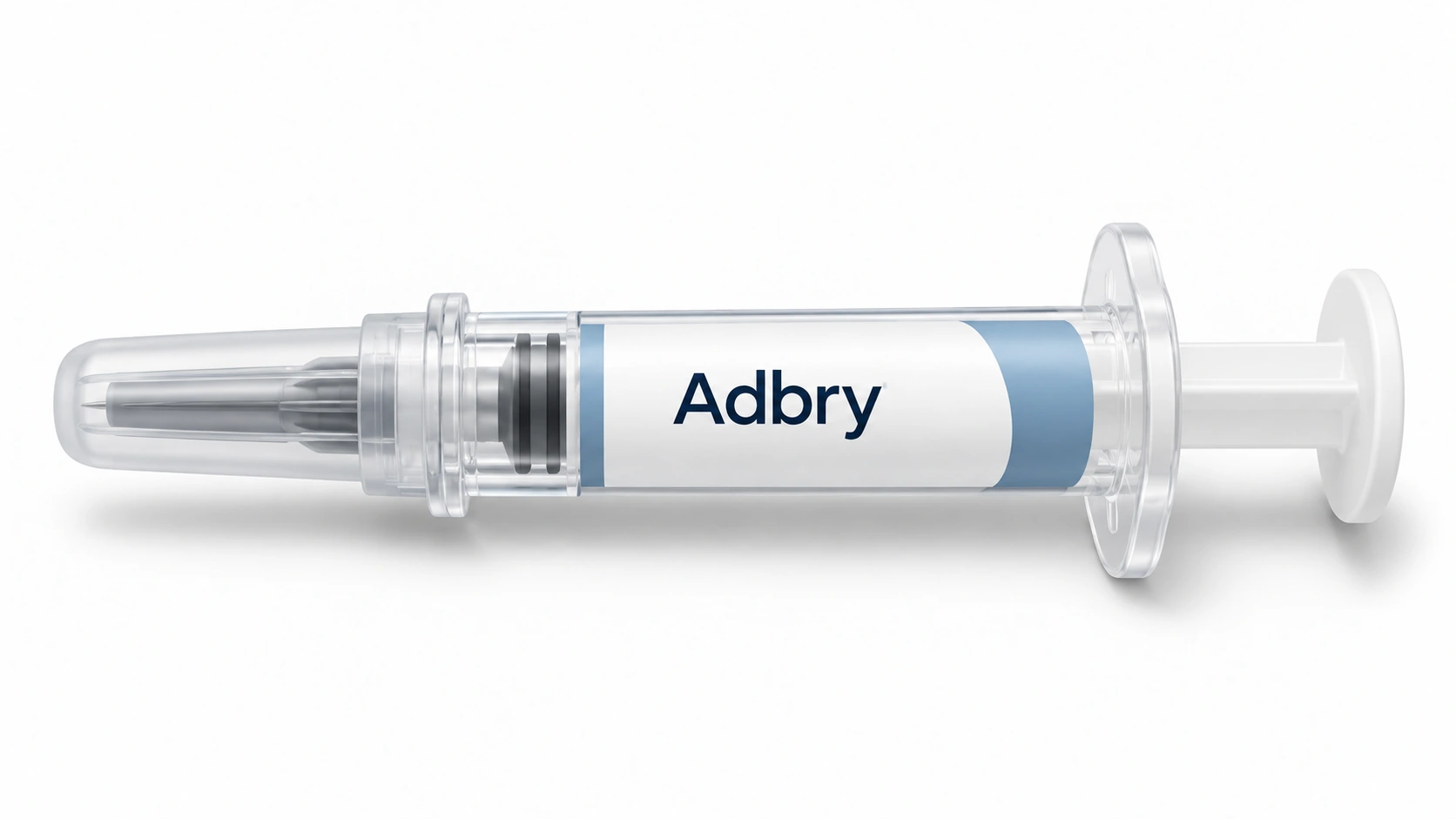
An illustrative capped prefilled syringe labeled Adbry; packaging is conceptual.

Adbry

Strong evidence

An injection every two weeks for moderate to severe eczema, blocking one of the same immune signals Dupixent does. It is the usual next thing to try when Dupixent has not worked well enough or has not been tolerated. No blood monitoring, and eye irritation is the side effect to know about, as with Dupixent.

None listed
Procedures
Editorial illustration for Phototherapy, based on the entry’s treatment or equipment reference.

Phototherapy

Moderate evidence

Measured doses of ultraviolet light in a booth, two or three times a week for a couple of months. It works. The cost is time, because it means getting to the office that often.

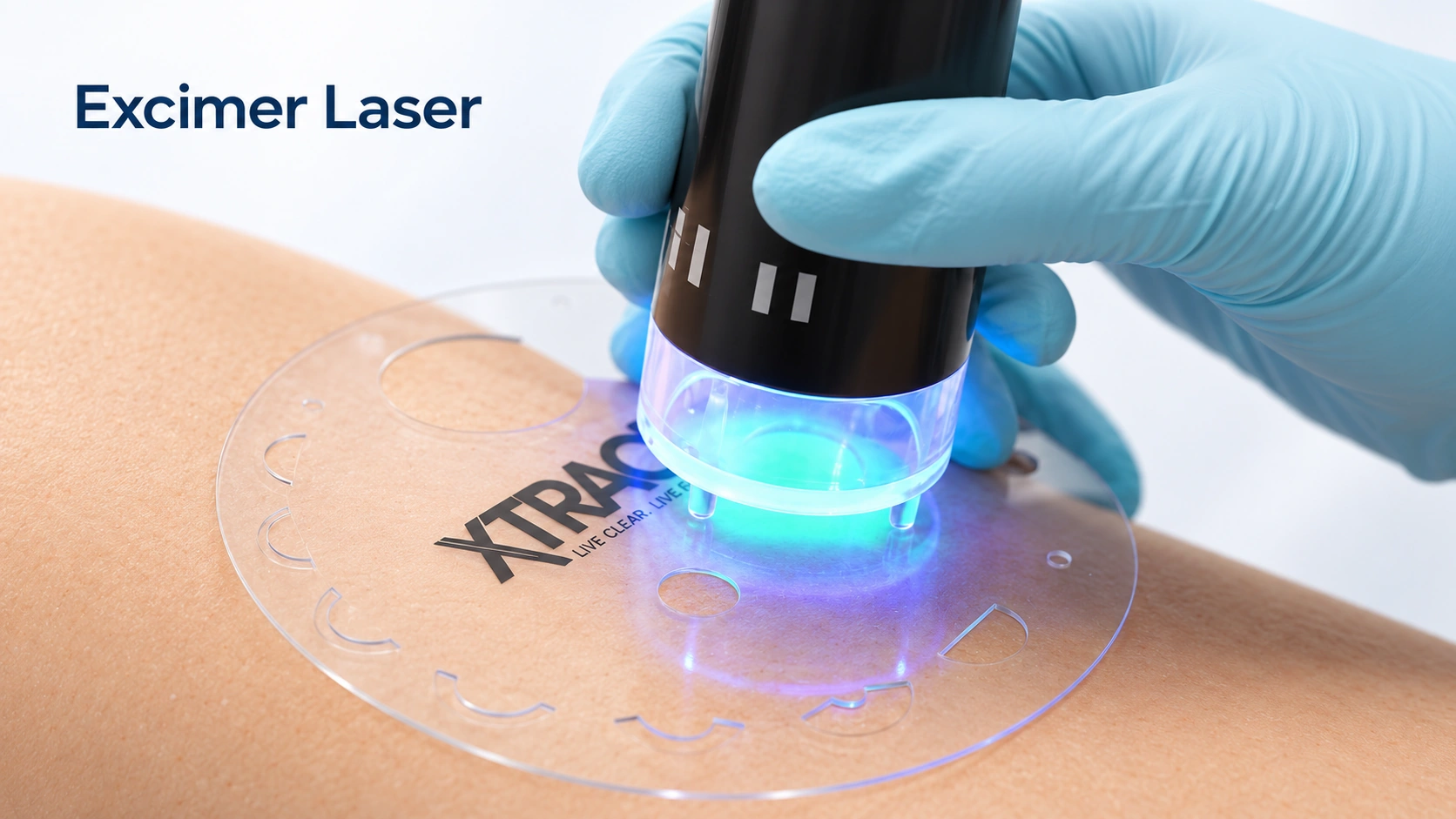
Editorial illustration for Excimer Laser, based on the entry’s treatment or equipment reference.

Excimer Laser

Limited evidence

The same idea as the light booth, aimed at one patch instead of the whole body. Useful when a few stubborn areas are all that is left.

None listed

Outlook

Long term

Eczema comes in flares - calm skin, then days or weeks of itching and inflammation, then calm. Most people eventually name their own pattern: the season, the stress, the job, the week before a period. Underneath that, it follows a longer arc.

Untreated, ringworm expands slowly rather than resolving. Treated, it is predictable. Scalp and nail infections run much longer and need tablets — weeks for the scalp, months for nails, which have to grow out.

Complications

Possible complications
  • Impetigo
  • Sleep loss, fatigue and low mood
  • Thickened, leathery skin
  • Dark or light marks after a flare
  • New allergies to products
  • Eye problems
  • Hand eczema that gets in the way of work
  • The atopic march in children
More details

Impetigo
Bacteria getting into skin that scratching has broken open. It shows as weeping and golden-yellow crusts sitting on top of an eczema patch, and it can turn a settled flare much worse in a day or two. It needs an antibiotic alongside the usual eczema treatment - more moisturizer will not clear it.

Sleep loss, fatigue and low mood
Itch is at its worst at night, so eczema costs sleep - for the person who has it, and often for the rest of the house. Months of broken sleep bring daytime fatigue and poor concentration, and anxiety and depression are more common in people with moderate or severe eczema. It is worth telling your doctor. Treating the eczema properly is usually what fixes the sleep.

Thickened, leathery skin
Months of rubbing and scratching the same patch thicken it into leathery skin with the normal lines cut deeper. Doctors call it lichenification. It itches on its own, and it takes far longer to settle than a fresh flare - stopping the scratching is the only thing that reverses it.

Dark or light marks after a flare
Settled patches often leave flat marks that are darker than the skin around them, and sometimes lighter patches where pigment has dropped out. Neither is a scar, and neither is caused by the treatment. They fade on their own, but over months rather than weeks, and they are more noticeable and longer-lasting on deeper skin tones.

New allergies to products
Broken skin meets far more of whatever is put on it, so people with eczema pick up contact allergies more easily - to preservatives, fragrance, and sometimes to the eczema creams themselves. Suspect it when a treatment that used to work starts to sting or spread the rash. Patch testing is how it is confirmed.

Eye problems
Eyelid eczema and constant rubbing lead to itchy, swollen lids and red, irritated eyes. In severe, long-standing eczema, a change in the shape of the cornea called keratoconus and early cataracts are uncommon but recognized. If the eyes are involved often, it is worth an eye check.

Hand eczema that gets in the way of work
Cracked, sore hands are hard to hide and hard to rest. In wet work - healthcare, food, cleaning, hairdressing, childcare - it can mean time off or a change of job. Treating it early and protecting the hands through the working day is what keeps it from getting that far.

The atopic march in children
Children with eczema are more likely than other children to go on to develop asthma, hay fever and food allergy, often in that order. Doctors call the pattern the atopic march. It is a tendency, not a certainty - most children with eczema do not get all of it.

  • Kerion and permanent hair loss
  • Ringworm hidden by steroid cream
  • Nail Fungus
More details

Kerion and permanent hair loss
Scalp ringworm can turn into a kerion — a boggy, tender, pus-oozing swelling where the immune reaction has gone deep around the hair follicles. It happens mostly in children, and it can destroy follicles and leave a permanently bald scar. Oral antifungal tablets started early are what prevent it, which is why scalp involvement is never treated with cream.

Ringworm hidden by steroid cream
Steroid cream calms the itch and flattens the edge while the fungus keeps spreading underneath. What comes back is larger, shapeless and much harder to recognize, and it is often treated as eczema for months. If a rash improved on a steroid and then grew, say so at the appointment — it changes both the diagnosis and the test.

Nail Fungus
Ringworm that reaches the nails thickens and discolors them and lifts the nail from its bed. It matters twice over: creams cannot reach fungus under a nail, so it needs months of tablets, and until it is treated it acts as a reservoir that reseeds the feet, groin and body again and again. This is one of the most common reasons ringworm keeps coming back.

When to get help

When to get help

Seek help for sleep-disrupting itch, recurrent flares or infection. Rapidly worsening painful skin with clustered blisters, fever or eye involvement needs urgent care.

Seek care for widespread, recurrent or uncertain rash, or scalp involvement. Steroid cream alone can disguise and worsen a fungal infection.

Common questions

Eczema:Will my child grow out of eczema?

Many children improve a great deal by school age, and more through the teenage years. Complete, permanent clearance happens but is not the rule. What usually remains is dry, easily irritated skin that can flare again later, often on the hands. Treating it well in childhood does not guarantee it goes, but it means fewer flares, less scratching, less thickened skin.

Eczema:Are topical steroids safe for my child?

Used as prescribed, yes. The rules are simple - mild strengths on the face, eyelids and skin folds, stronger ones for the body and limbs, and courses that run the length of a flare rather than indefinitely. Thinned skin and stretch marks come from strong steroids on thin skin for months without review. If you are using one more or less continuously, go back and ask about a non-steroid option.

Eczema:Is a food causing this?

Usually not, and this is a common wrong turn. Food allergy is more common in children with eczema, but because both come from the same atopic tendency, not because food drives the rash. Removing foods rarely clears eczema, and long elimination diets can cause nutritional problems and even make a true allergy more likely. A clear, repeatable reaction within a couple of hours is worth investigating. A vague suspicion is not.

Eczema:Why is it so much worse at night?

Several things line up after dark. Body temperature rises in the evening, and heat triggers itch directly. The distractions that kept you from noticing it are gone. Cortisol, which damps inflammation, is at its lowest overnight. And scratching in your sleep is unconscious, so damage piles up unchecked. A cooler bedroom, moisturizer right before bed, short nails and cotton layers help more than they sound.

Eczema:Can I use the same cream on my face?

Not always. Facial skin, eyelid skin especially, is much thinner and absorbs more of what you put on it. A steroid strong enough for your shins can thin the skin around your eyes within weeks. Face and eyelid eczema is treated with a mild steroid for a short stretch, or a non-steroid cream that can be used long term. Ask before moving a body prescription to your face.
Eczema:Do I still need moisturizer when the skin looks normal?

Yes. This is the single habit that separates people who flare four times a year from people who flare monthly. Skin that looks normal in eczema is still leaky - the barrier defect is there whether or not there is a rash. Daily moisturizer on calm skin keeps the next flare further off and smaller. It is maintenance, not first aid.

Ringworm:Is there actually a worm?

No. Ringworm is a fungal infection of the outer layer of skin, related to athlete's foot. The name describes the rash, named long before the cause was understood.

Ringworm:How long am I contagious?

For most body infections, much less so after a day or two of treatment. Contact sports set their own rules — wrestling commonly requires around 72 hours of treatment and the area covered. Check with your club or school rather than guessing.

Ringworm:Did my cat give it to me?

Possibly. Kittens and puppies are common sources, often with only a small patch of thin or crusty fur, or nothing. If a new pet arrived shortly before the rash, ask a vet to check it. Treating people and not the animal is a common reason it keeps returning.

Ringworm:Can I use athlete's foot cream on my body?

Yes. Same medicines — terbinafine, clotrimazole, miconazole — and the same infection elsewhere. The exception is the scalp and nails, where creams do not work whatever the tube says.

Ringworm:Why does it keep coming back?

Usually one of three reasons: treatment stopped as soon as the skin looked clear, an untreated reservoir such as athlete's foot or fungal toenails, or a steroid cream somewhere in the routine. Occasionally an infection really is resistant, which needs testing and a prescription.

Ringworm:Do I need tablets?

Not for a small patch on the body, which almost always responds to cream. Tablets are needed for scalp and nail infections, and widespread, deep or stubborn cases. That needs a doctor, partly because some oral antifungals interact with other medicines.

Sources

Sources and further reading

  1. DermNet
  2. DermNet
Dermapedia on YouTube