It is a nonablative fractional laser.
Fraxel heats microscopic zones while sparing skin in between.
Fraxel: A laser that heats thousands of microscopic columns in the skin and leaves the skin between them untouched. Used for sun damage, acne scars, and rough texture. It takes a course of treatments and a few days of looking sunburned each time.
IPL: A broad-spectrum flashlamp, not a laser, used mainly for brown sun spots and facial redness. It is effective for those two problems on lighter skin, and it is not safe on deeper skin tones.
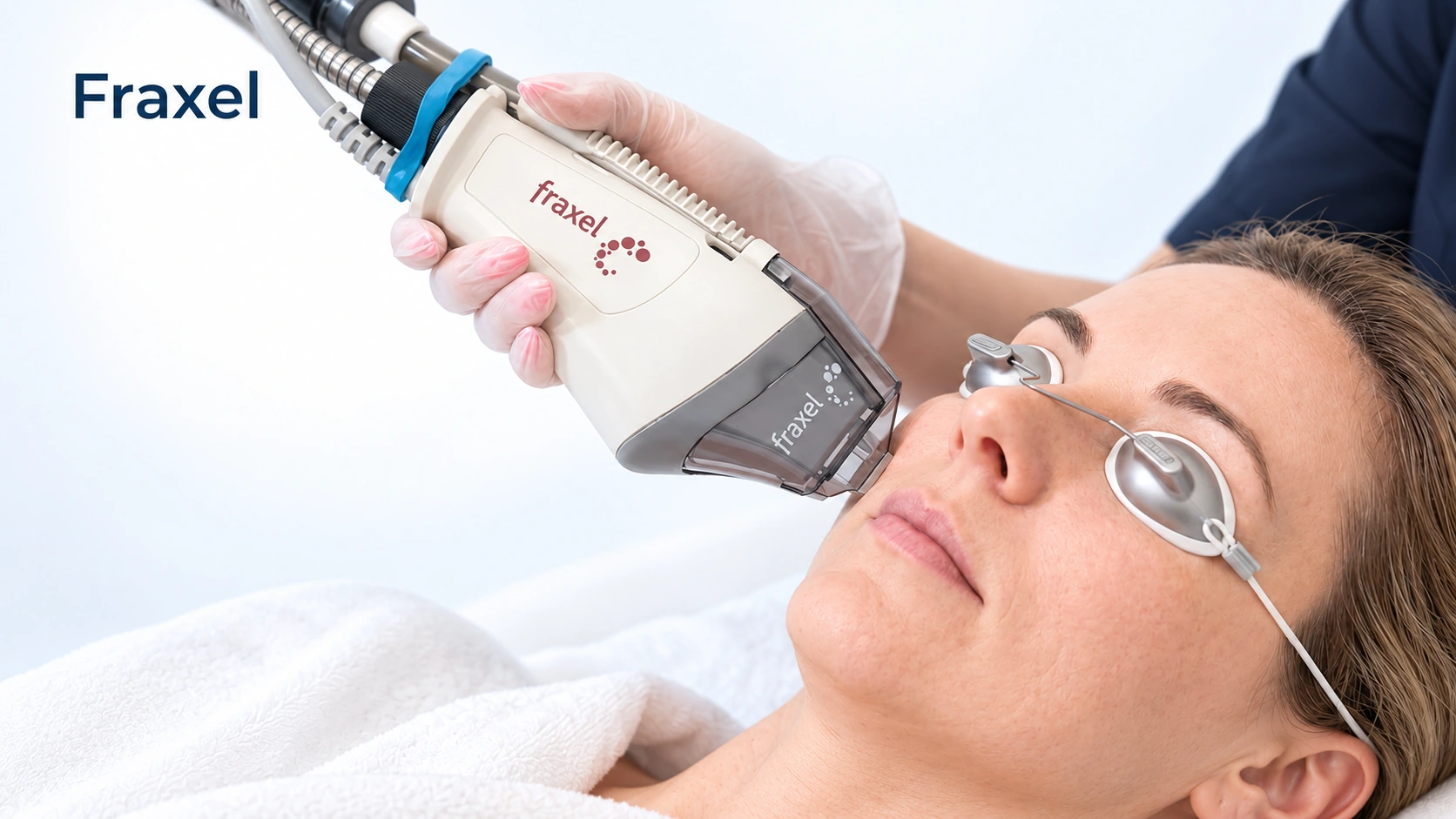
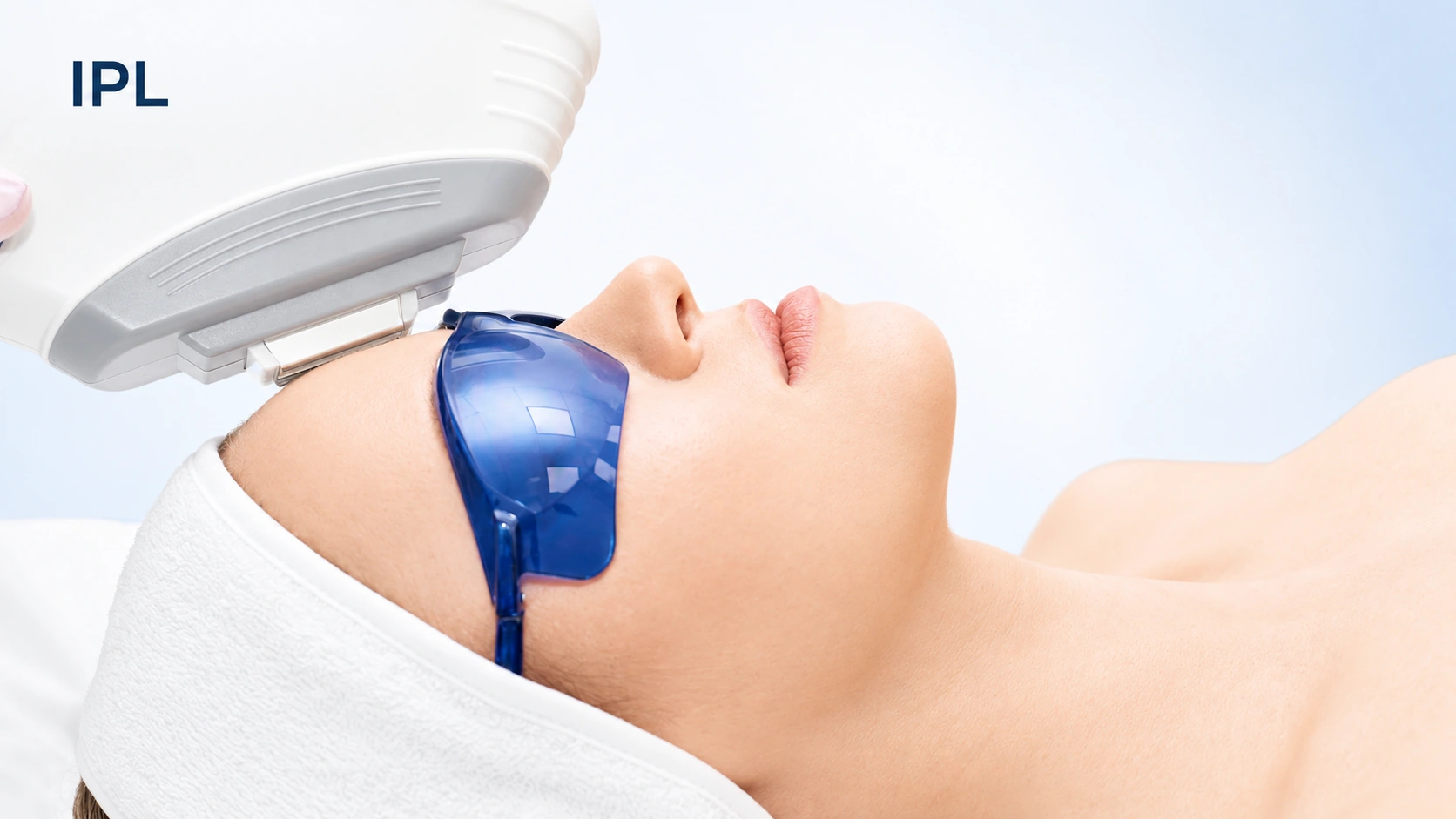
Choose for acne scars or sun damage with a few days of downtime per session instead of the week-plus of ablative lasers.
Choose for sun spots and facial redness on lighter skin — it is not safe on deeper skin tones.
Can you have both?
They treat different things: IPL for redness and spots, Fraxel for texture and fine lines. Space them about 4 weeks apart.
Fraxel heats microscopic zones while sparing skin in between.
Wavelength and device determine the treatment.
It is less intensive than ablative lasers.
Burns, redness and pigment changes can occur.
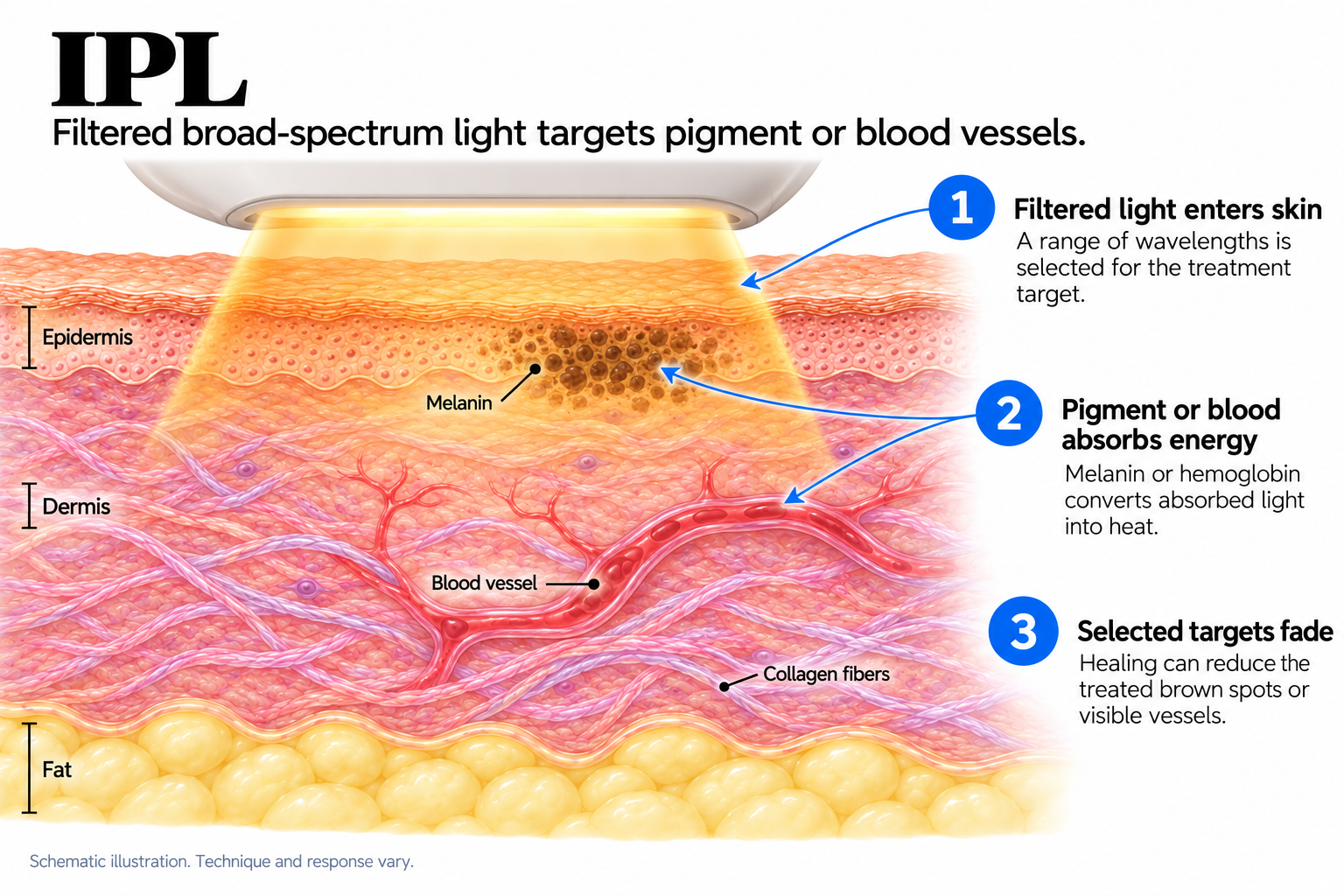
IPL uses filtered pulses across a range of wavelengths, not a laser.
It treats redness, benign pigmentation and unwanted hair.
A brown spot should be assessed before fading.
Tanning, darker skin and medicines raise the risk of burns or pigment change.

Improves rolling and boxcar scars.
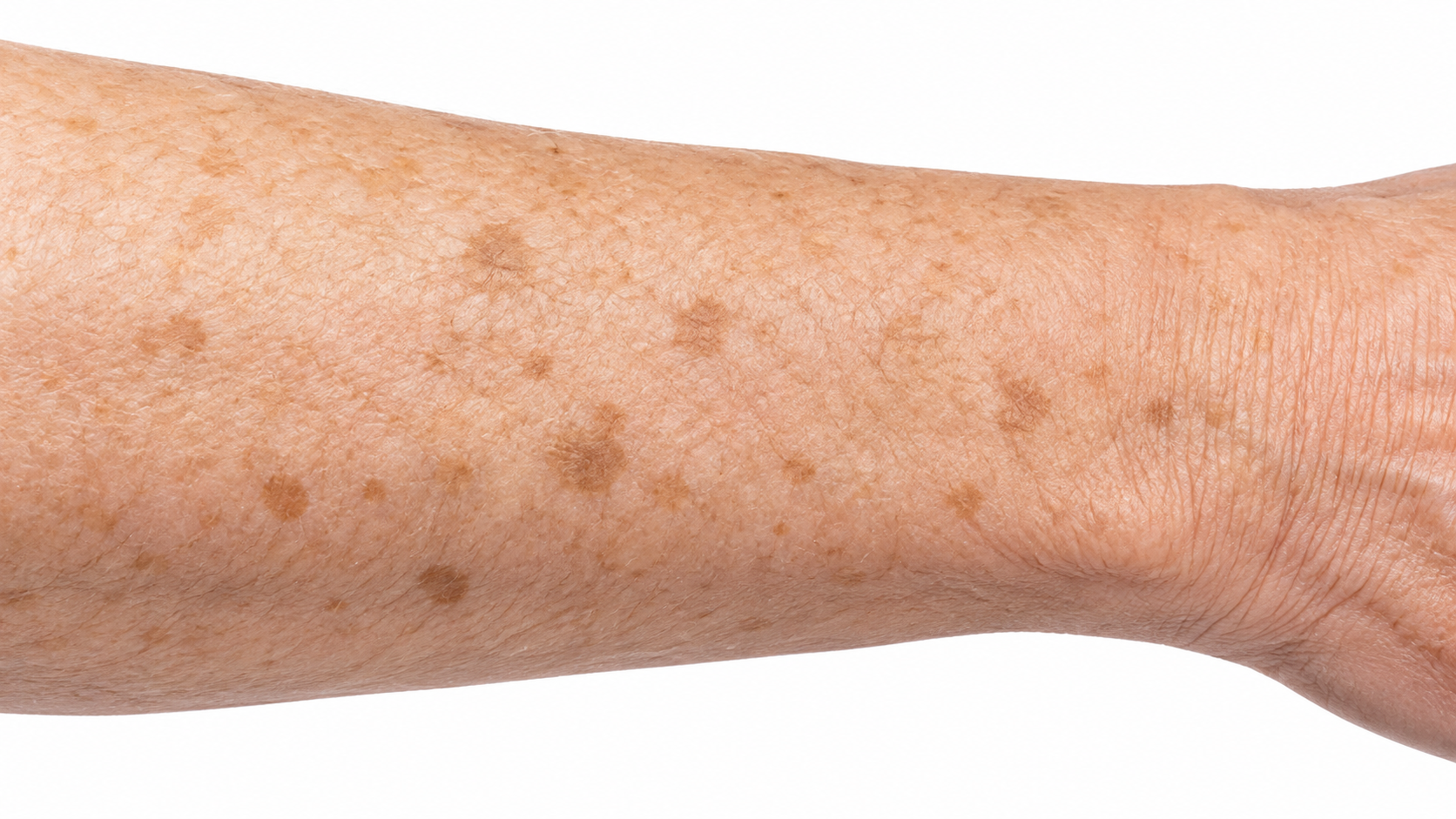
Clears sun damage.

Reduces redness and vessels.
Darkens spots that then flake off.

Smooths texture.
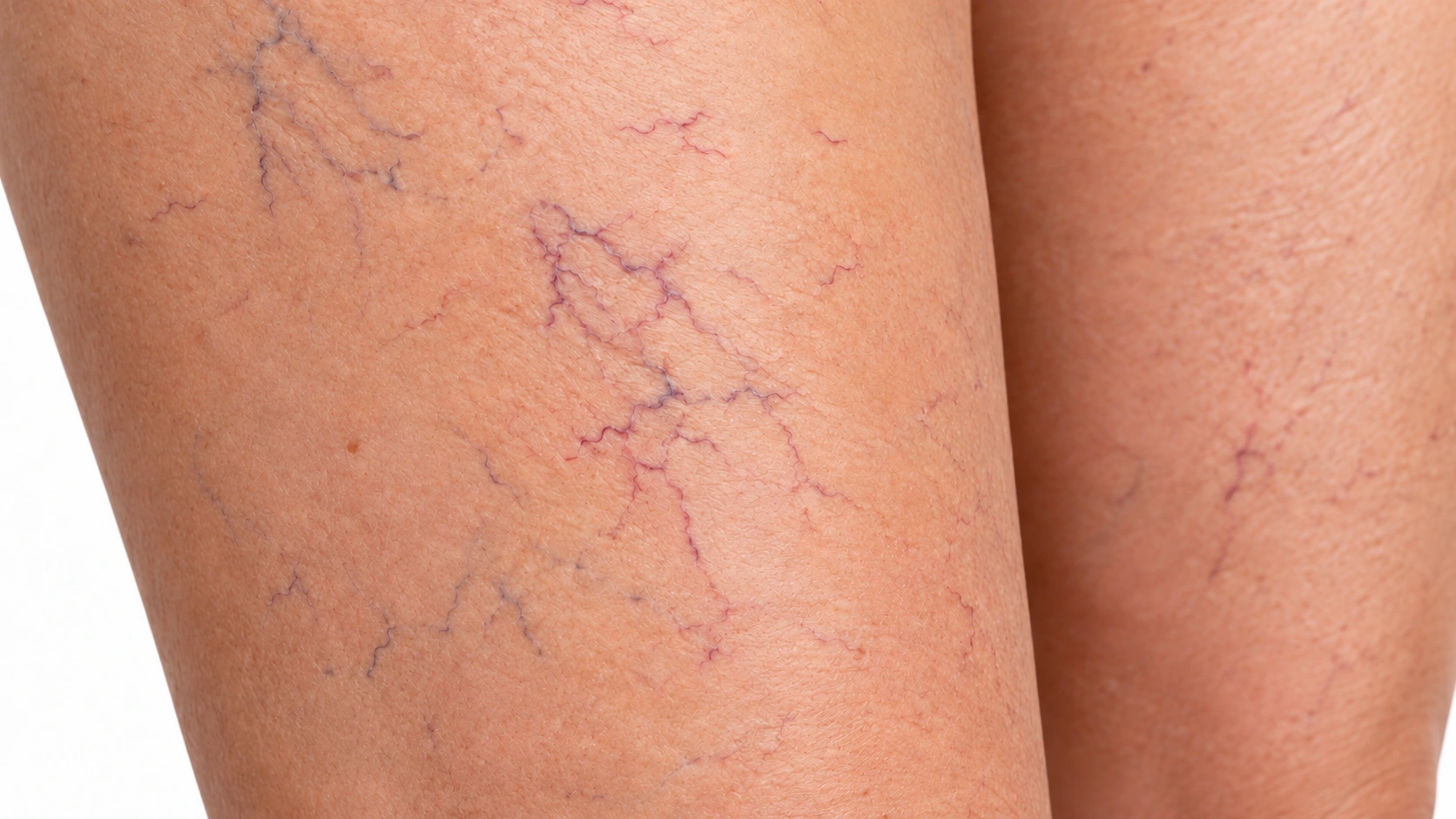
Clears small facial vessels.
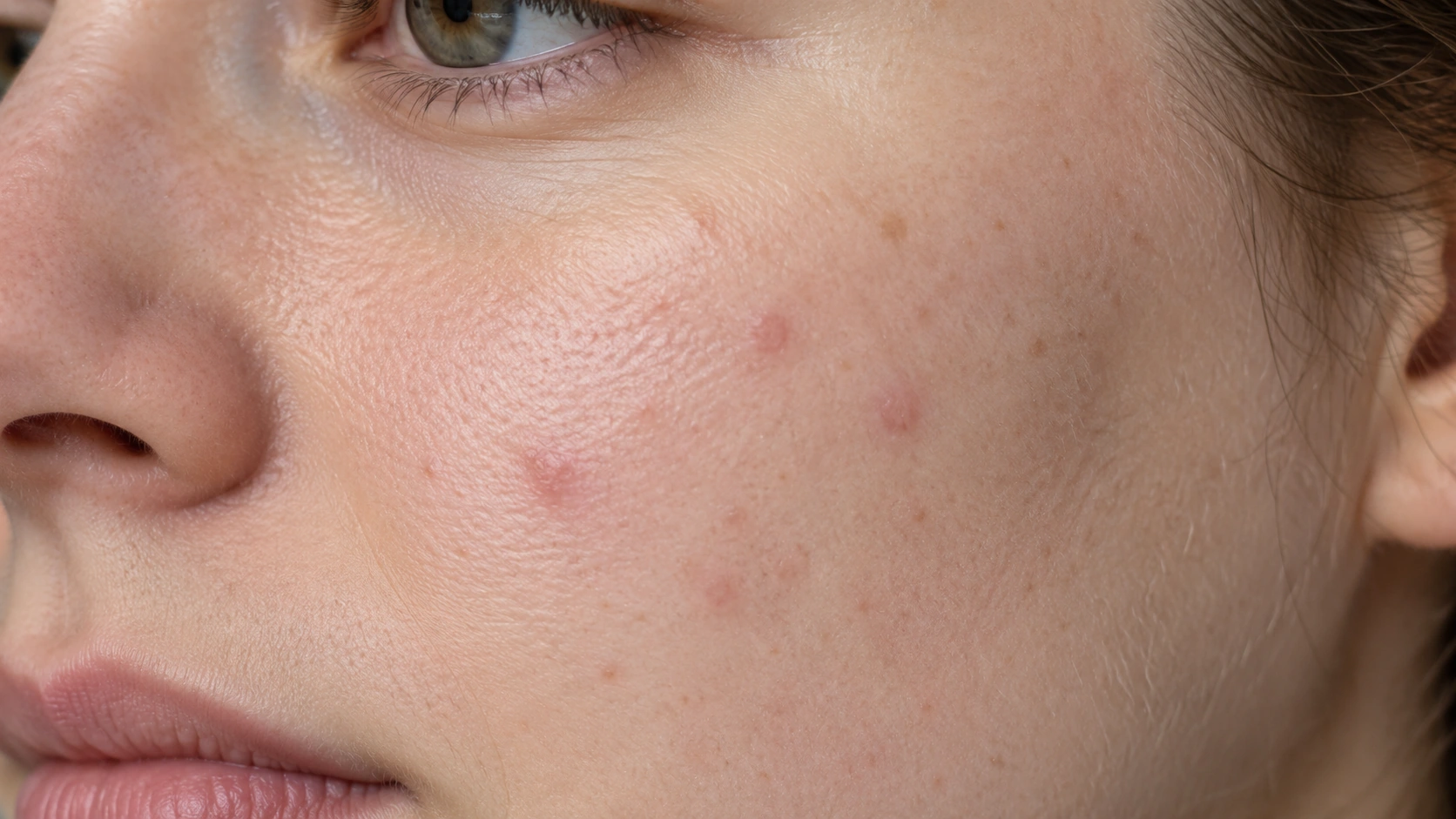
Fades red marks.

Low settings may help some.
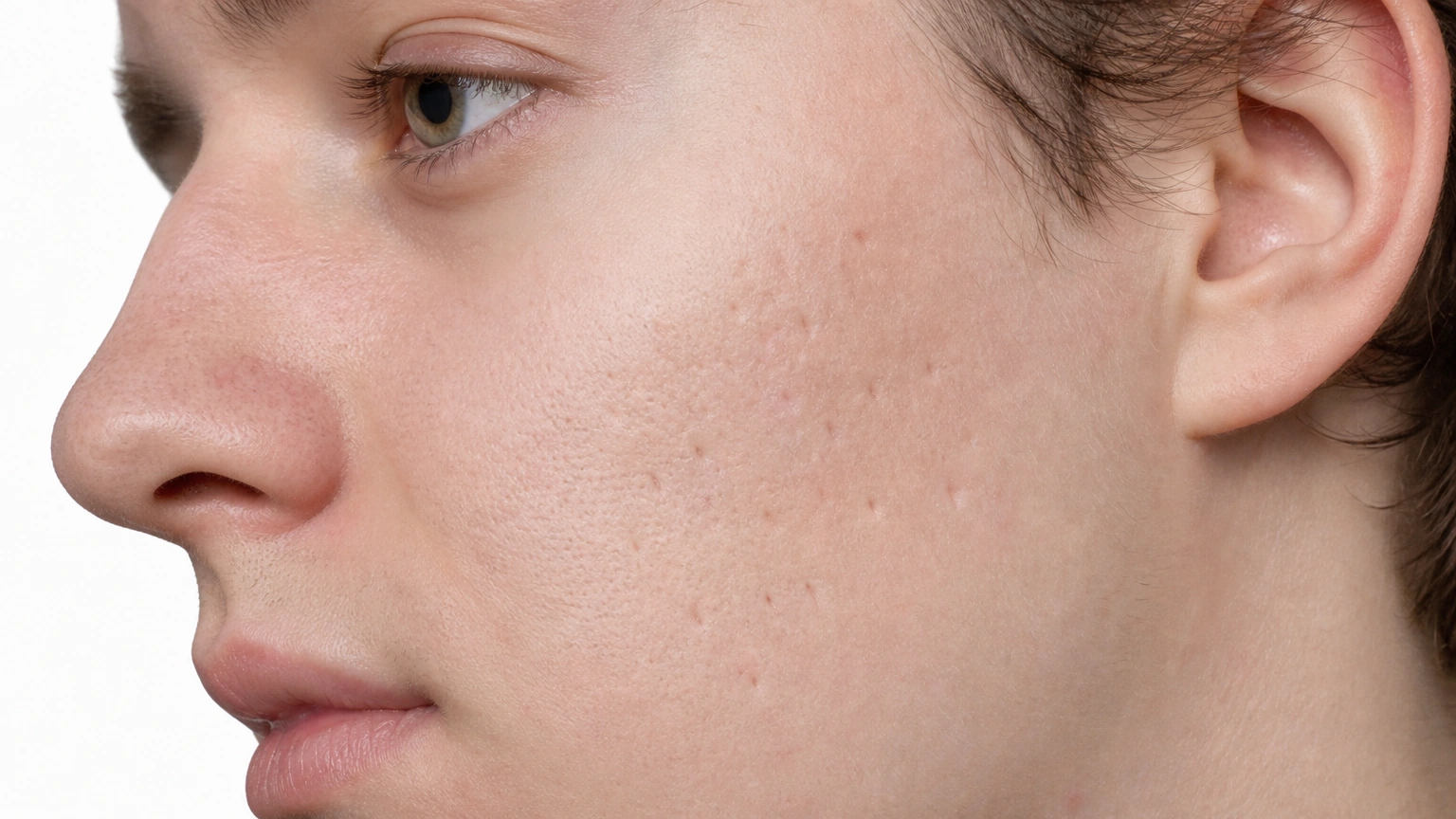
Too deep for most sessions.
Doesn't change texture.
Can worsen redness.
Patches often rebound darker.
Face and hands.
Face, neck, chest and hands.

Fractional heat zones leave surrounding tissue untreated. Superficial 1927 nm treatment helps fade uneven pigmentation; deeper 1550 nm treatment triggers repair and collagen remodeling.
Schematic illustration. Technique and response vary. This explains a mechanism and does not specify treatment settings.
Filtered light enters skin: A range of wavelengths is selected for the treatment target. Pigment or blood absorbs energy: Melanin or hemoglobin converts absorbed light into heat. Selected targets fade: Healing can reduce the treated brown spots or visible vessels.
Schematic illustration. Technique and response vary. This explains a mechanism and does not specify treatment settings.
4 weeks before: Sun: Avoid tanning, self-tanner and sunburn.
Pigment preparation: For deeper skin tones, providers may prescribe a pigment-lowering cream for 2–4 weeks and test near the ear.
4 weeks before: Sun and tanning: No sun, sunbeds or self-tanner.
2 weeks before: Hair removal: No waxing, threading or hair removal cream.
Cold sores: Tell your provider; preventive antiviral medicine often starts the day before.
Hair removal: Stop waxing, threading and hair-removal creams.
Actives: Stop retinoids, retinol and acids 3–7 days before.
3 to 5 days before: Actives and clean skin: Stop retinoids and exfoliating acids.
Arrive with clean skin and no makeup.
Arrange a ride if you will have strong settings or oral pain medicine.
Skin is cleaned and photographed. Numbing cream stays on for 45–60 minutes.
Skin tone: A good provider will ask, and will decline if IPL is wrong for your skin.
Skin tone: Be direct about your skin tone and how easily you tan.
Skin is cleaned and examined, and the provider checks your skin tone and recent sun.
The laser passes over the skin while cold air cools it.
Expect prickly heat that builds with each pass, often strongly uncomfortable—especially on the forehead and around the mouth.
Opaque goggles go over your eyes and stay on; that is not optional.
The handpiece is pressed on the skin and fired in overlapping shots. You see a bright flash through closed eyelids. Each pulse feels like a hot rubber band snap, hottest over brown spots and hair, and stops as it ends. A full face takes about 20 minutes.
Skin feels hot, red and swollen. Ice packs and a bland ointment are usually applied.
Skin looks pink and feels warm, like mild sunburn.
Days 1–2: Redness and swelling, especially around the eyes.
Days 1 to 2: Redness fades.
Days 3–7: Rough, bronzed skin flakes away. Do not scrub or pick.
Days 3 to 14: Treated spots darken into fine brown flecks like coffee grounds, then flake away, leaving more even skin.
Weeks 2 to 6: Vessels and background redness clear gradually, and keep improving over later sessions.
1–3 months: Time to results.
Scar improvement can last years; sun damage can return with sun exposure.
1–2 weeks per session
Months to years; new spots with sun
About $900–1,500 for a full face in the US. Smaller areas cost less.
In the US a full-face session usually runs about $300 to $600.
Several thousand dollars. Packages may reduce the per-session price.
Cosmetic treatment is not covered. Coverage for surgical or injury scars is uncommon.
Insurance does not cover cosmetic pigment or redness treatment.
Three to five, two to four weeks apart. Sun damage sometimes needs fewer, acne scars usually need the full course, and deeper skin tones are treated at lower settings, which means more sessions.
It improves them rather than removing them. Studies of nonablative fractional lasers show partial improvement in scar depth and appearance over a course. Deep icepick scars respond least and are often better treated by combining the laser with subcision or filler.
Plan for a week. Two days of redness and swelling, then a few days of rough, bronzed skin that flakes off. Most people cover it with makeup from day three and look normal by day seven.
With an hour of numbing cream and cold air, most people call it hot and strongly uncomfortable rather than unbearable, and it stops as soon as the laser does. The forehead and around the mouth are the worst.
It can be done, but differently. The main risk is temporary dark patches. Lower settings, more sessions, pre-treatment creams and strict sun protection all lower that risk, and the provider experience with your skin tone matters more than the device.
No, though one device sold under the Fraxel brand is a carbon dioxide laser. The Fraxel most people mean is nonablative, heating the skin without removing the surface. A carbon dioxide laser removes tissue, does more per session, and brings one to two weeks of downtime and more pigment risk.
No. Broadband light is absorbed by all the pigment in its path, including the pigment that gives skin its color. On deeper skin tones that means burns and light or dark patches, and pale patches can be permanent. For pigment, ask about prescription creams and superficial peels. For hair, a 1064 nm Nd:YAG laser.
No. The skin tone chart supplied with home devices exists because the technology injures skin with more pigment, and most are labeled unsuitable for deeper skin tones and tanned skin. Many refuse to fire. The risk is the same as a clinic device, with nobody present to spot a problem early.
Usually not, and it commonly makes melasma worse: better for a few weeks, then darker and wider. If you have brown patches on the cheeks, forehead or upper lip, get a diagnosis before any light-based treatment.
That is what is meant to happen. Treated sun spots darken into fine brown flecks over the first few days, then flake off over one to two weeks. Do not scrub or pick.
Usually three to five for the face, three to four weeks apart, then maintenance once or twice a year. Brown spots improve faster than redness. Hair reduction takes six to ten or more.
No. IPL works on color: brown pigment and red vessels. Wrinkles, texture, pores and indented scars need a fractional laser or microneedling.