Psoriasis
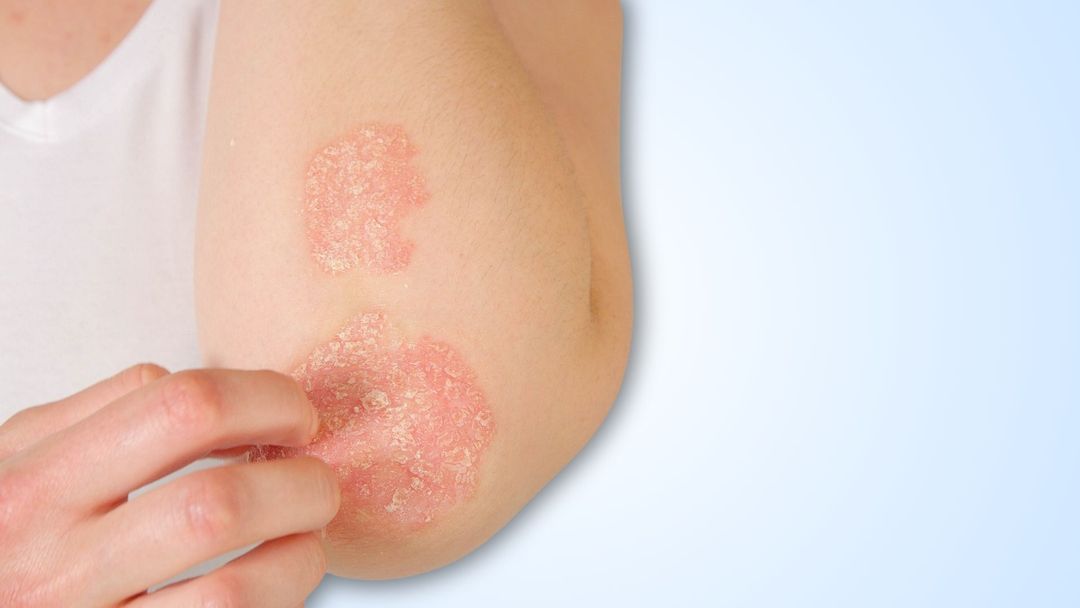
Psoriasis often forms thicker patches with clear edges and scale. Eczema often has less defined edges and may look dry, cracked or weepy. Both can itch, and their appearance varies with skin tone.
Compare texture, borders and location together. The pictures below explain common patterns; they cannot confirm which condition you have.
Last Updated: October 15, 2026
| The difference | Psoriasis | Eczema |
|---|---|---|
| What is it? | A long-term immune-mediated skin disease. This comparison mainly describes plaque psoriasis, its most common form. | An umbrella term for inflamed, itchy skin. This comparison focuses on atopic dermatitis, a common recurring form. |
| What they look like | Defined edges and thicker scale | Less defined edges; dry or weepy skin |
| How it feels | Itchy, but also sore | Very itchy |

Psoriasis
A long-term immune-mediated skin disease. This comparison mainly describes plaque psoriasis, its most common form.
Eczema
An umbrella term for inflamed, itchy skin. This comparison focuses on atopic dermatitis, a common recurring form.
Psoriasis
Defined edges and thicker scale
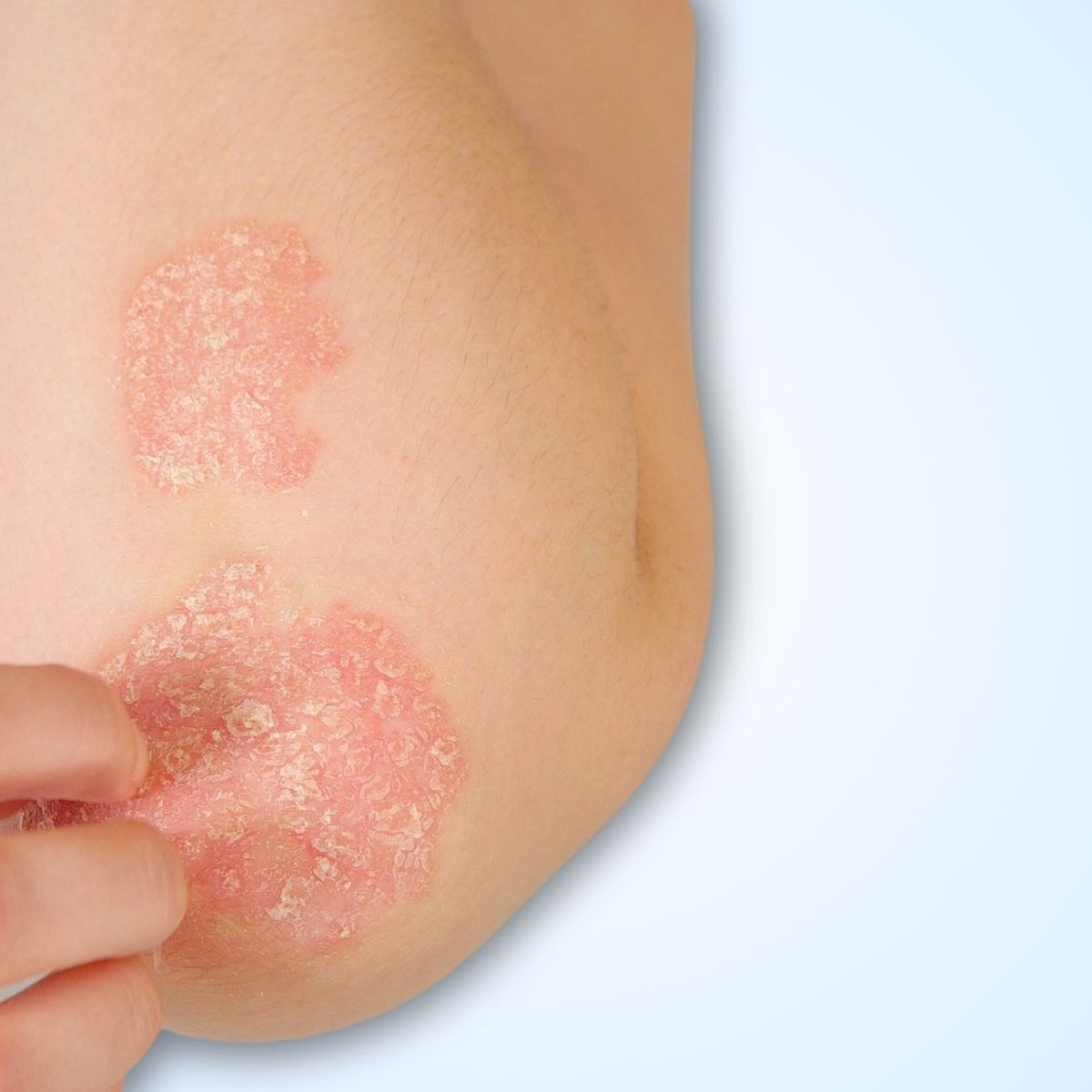
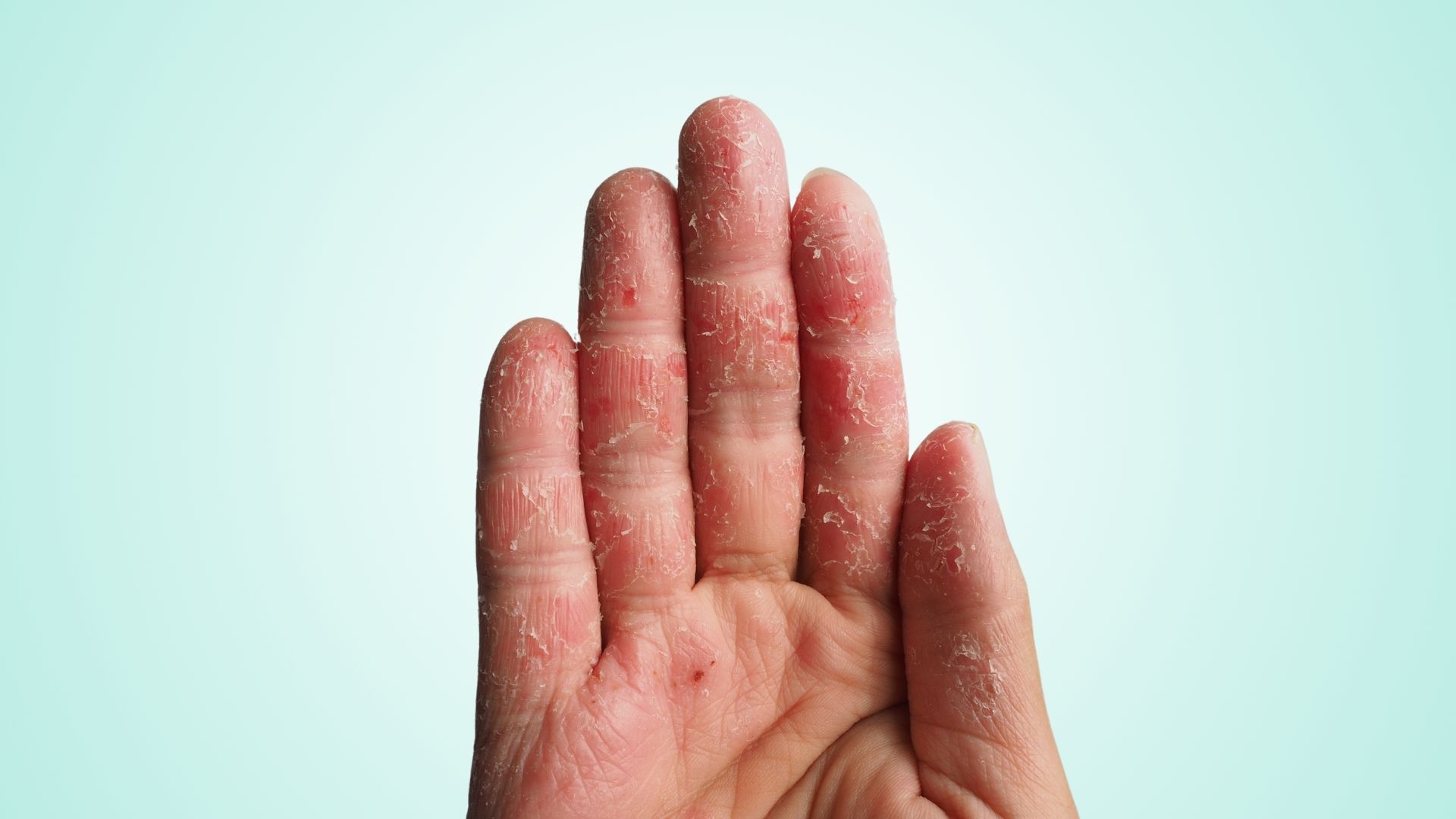
Look for a raised patch with a distinct border and surface scale. These are common plaque-psoriasis clues, not a diagnosis.
Look at the defined plaque edges and the scale on the surface. These can suggest psoriasis, but a photograph alone cannot establish a diagnosis.
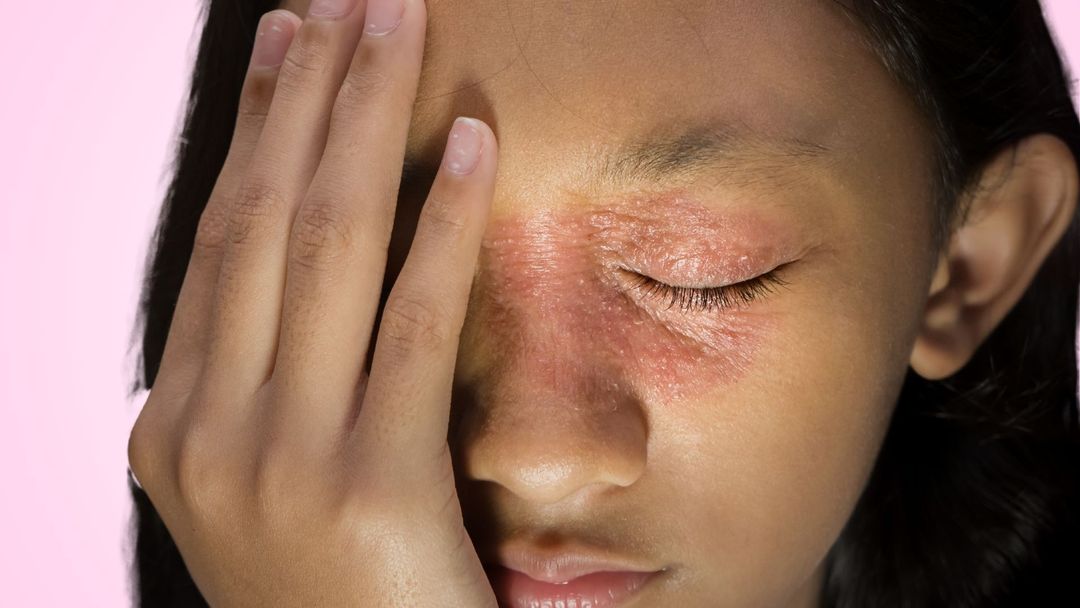
Eczema

Less defined edges; dry or weepy skin
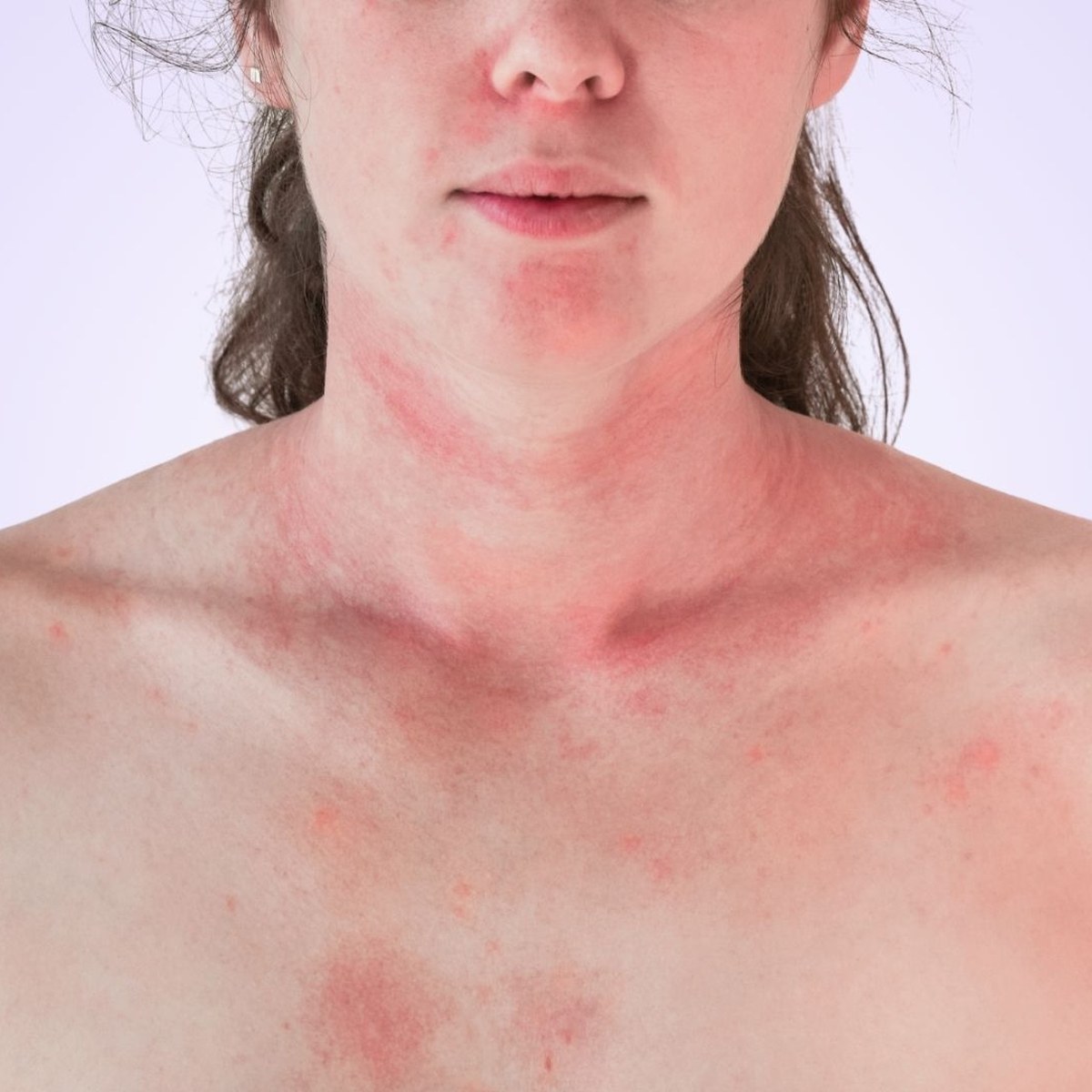
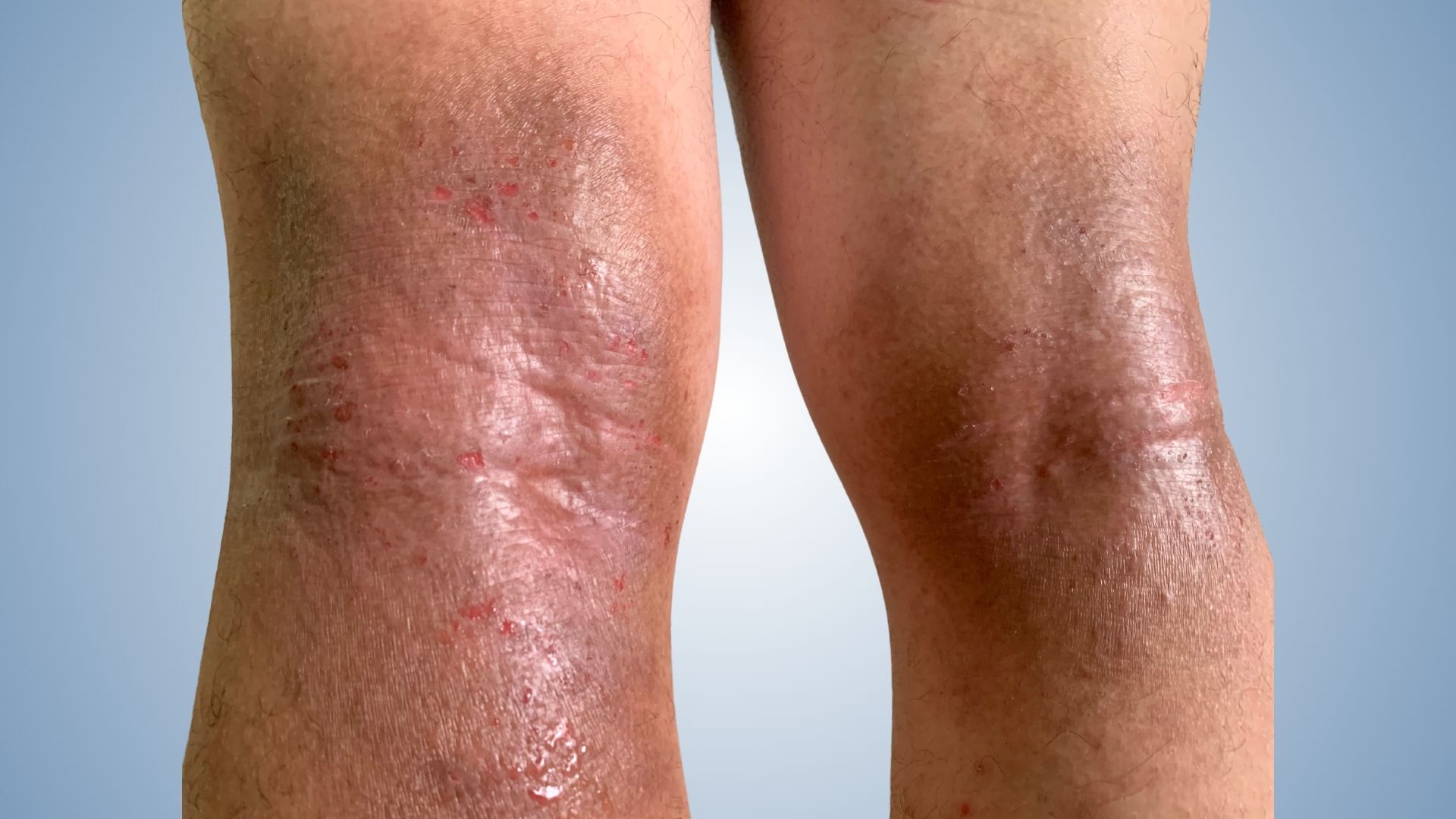
Look for a patch that blends into the surrounding skin. Eczema may be dry and cracked or weep during a flare.
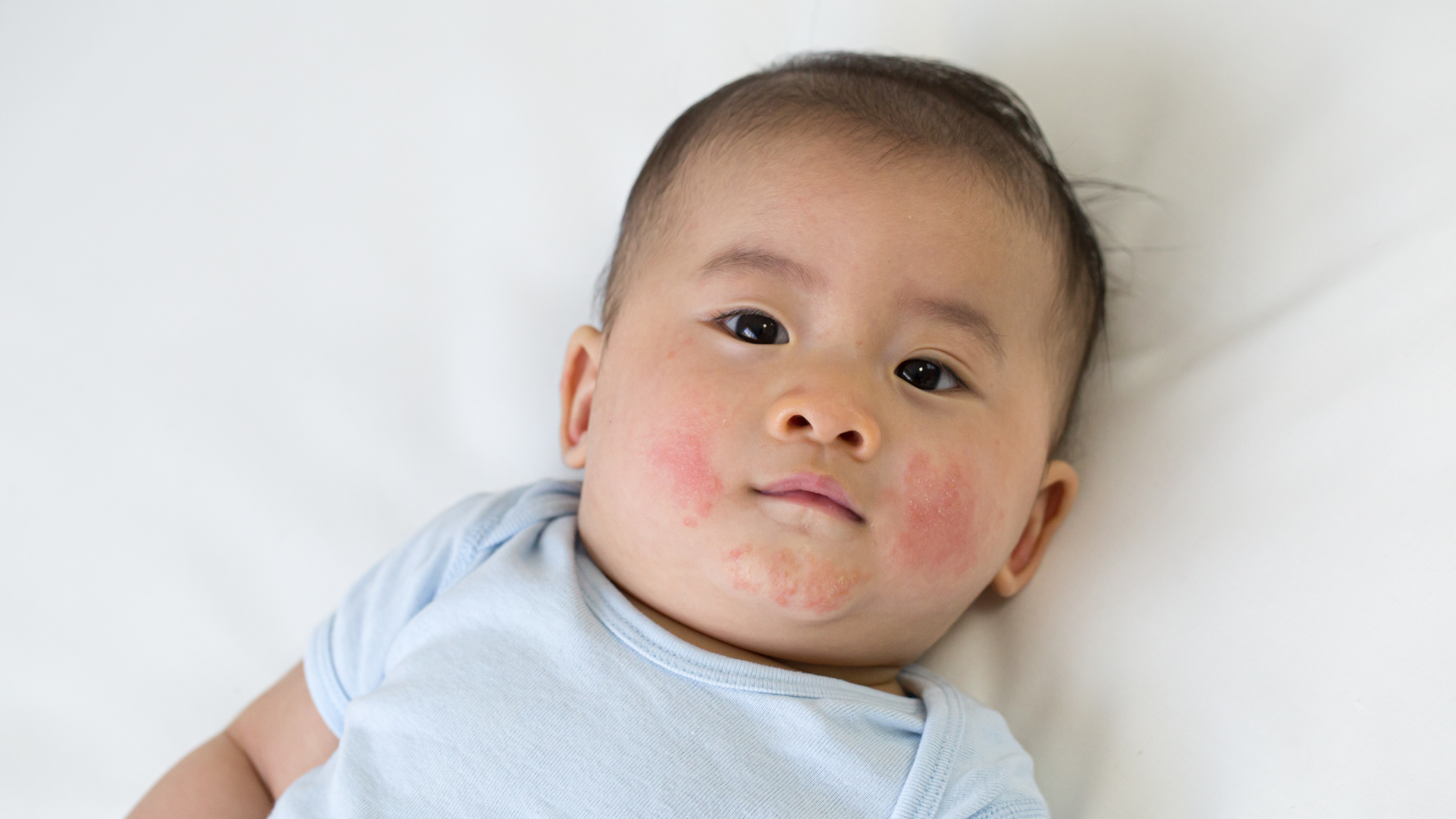
Look at the areas of inflammation across the face, neck and chest. Compare the texture and edges with the psoriasis picture; redness alone does not distinguish them.
Bright red, swollen skin that may weep, blister or crust, and itches enough to disturb sleep. It usually appears in the elbow and knee creases, the neck and the hands. In deeper skin tones the redness can read as purple, gray or simply darker than the surrounding skin.
Skin that has been rubbed and scratched for months becomes thickened, leathery and marked with deeper lines. It often itches without looking dramatic. Breaking the scratch cycle matters as much as treating the rash.
The most common type, and the one most people mean by eczema. It usually starts in childhood, runs in families alongside asthma and hay fever, and sits in the elbow and knee creases, the neck, the wrists and the hands. It comes in flares on a background of dry, easily irritated skin.
Psoriasis

Light

Medium

Brown

Deep
Psoriasis appears pink or red on lighter skin. On brown and deep skin, they may look violet, gray-brown or dark brown; the scale and raised edges can stand out more than the color.
Eczema

Light
Medium

Brown
Deep
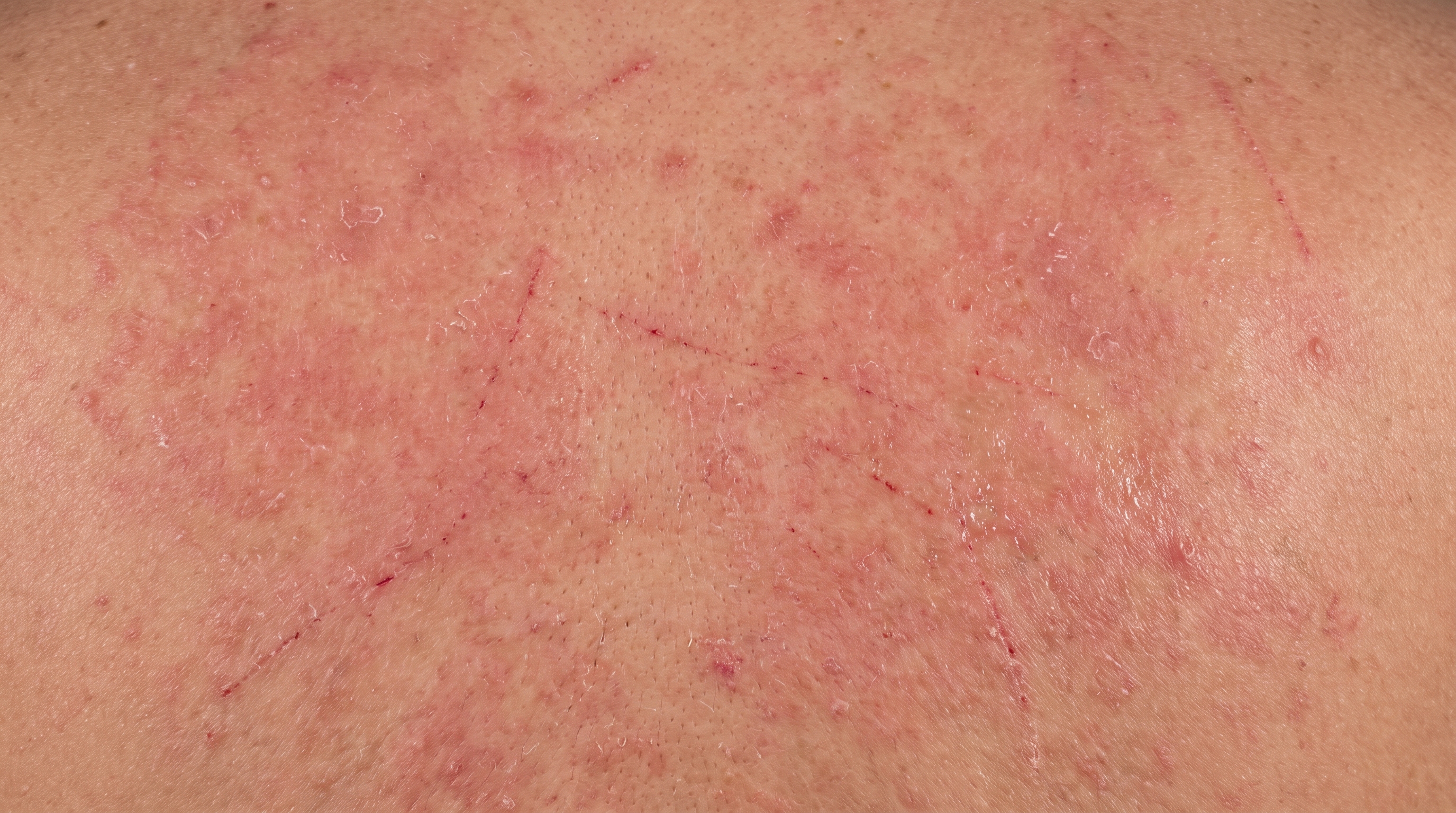
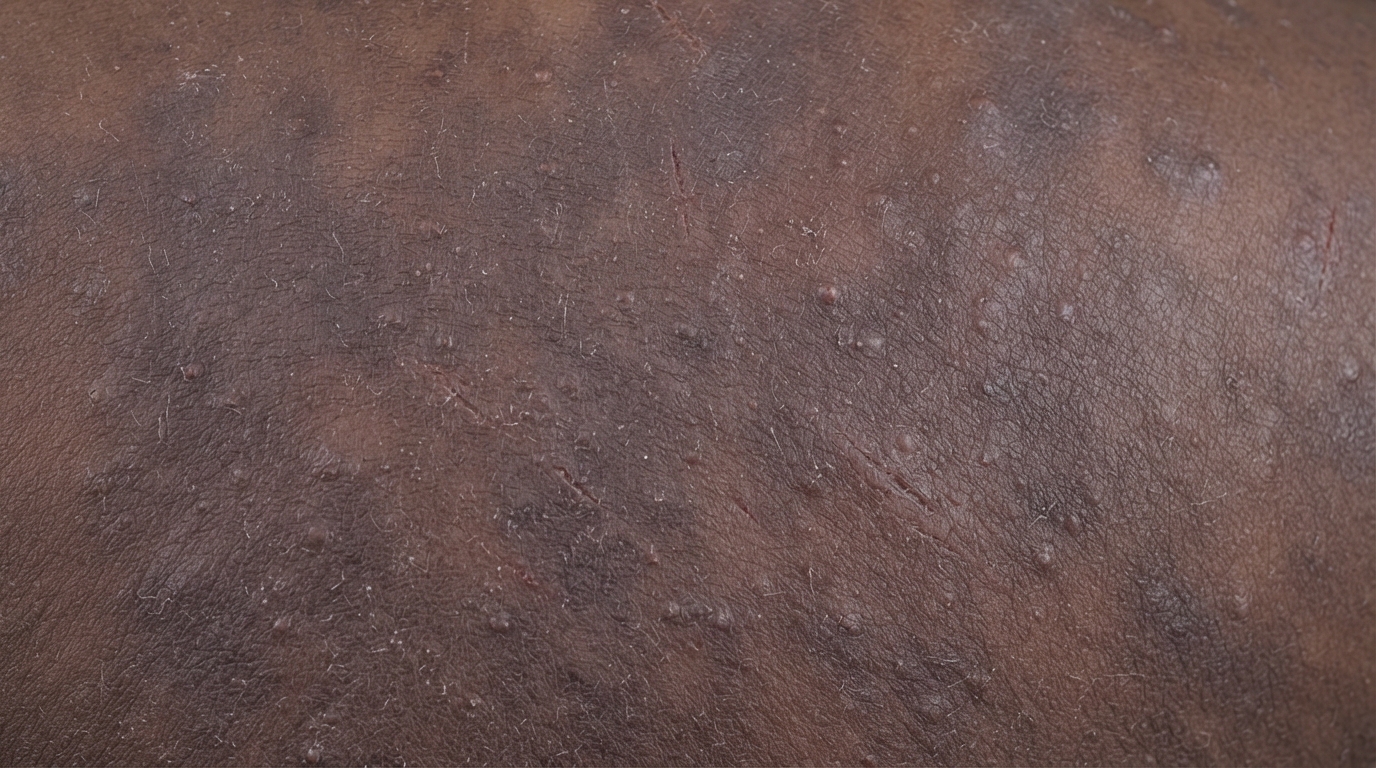
Eczema may look pink or red on lighter skin, and violet, gray or dark brown on deeper skin. Dryness, roughness and small bumps can be more noticeable than redness.
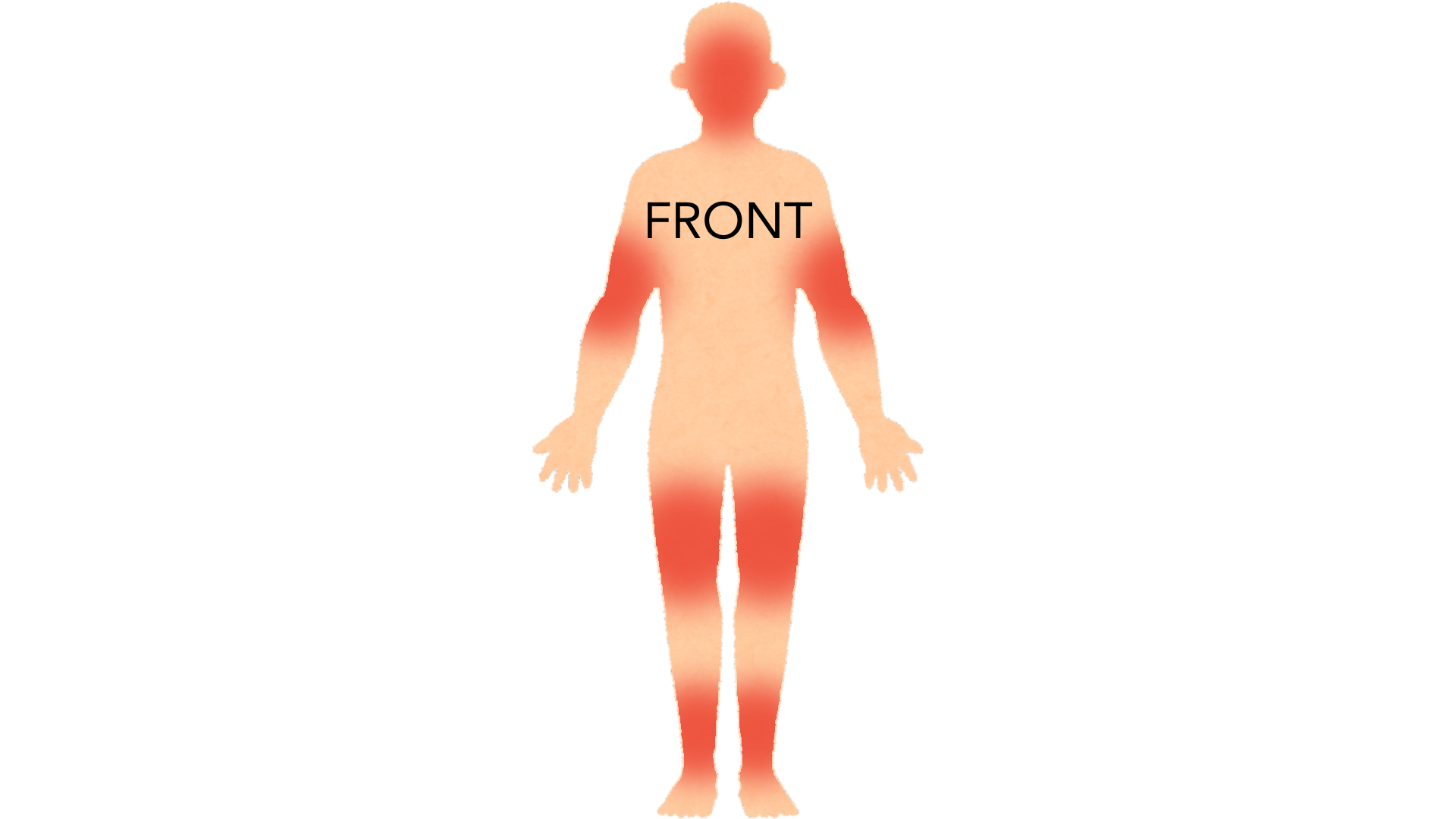
Psoriasis
Outside the bends
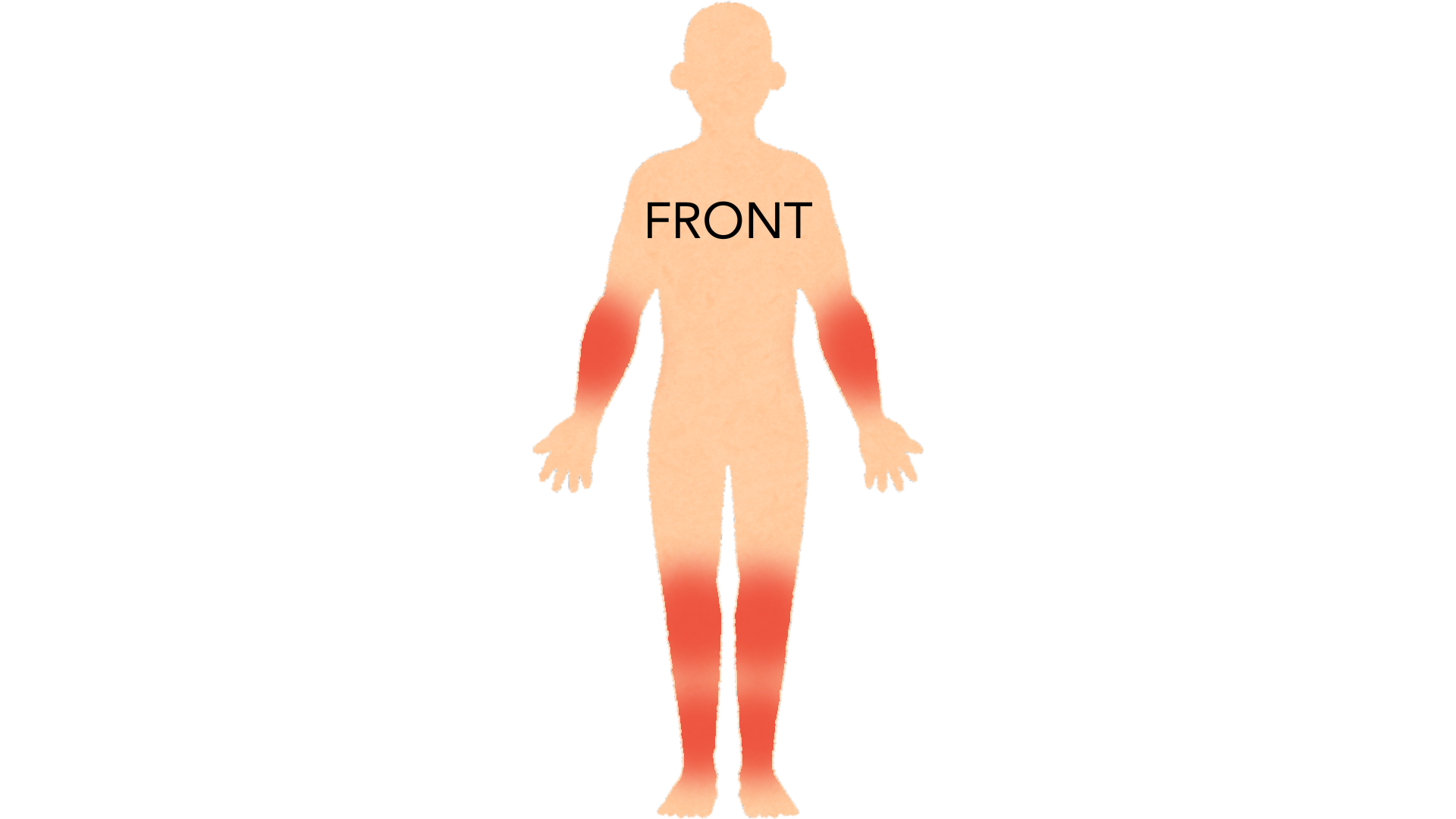
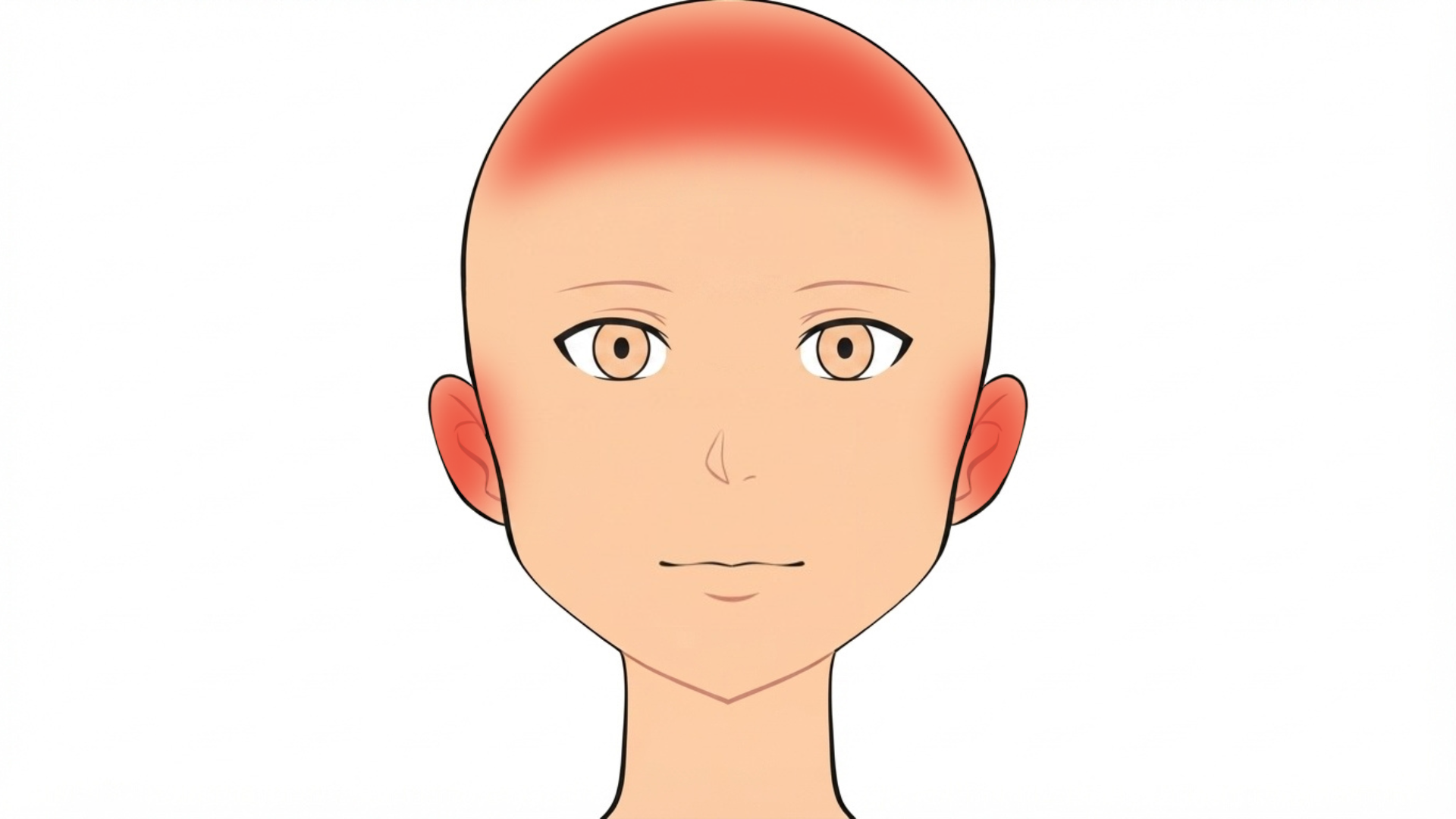
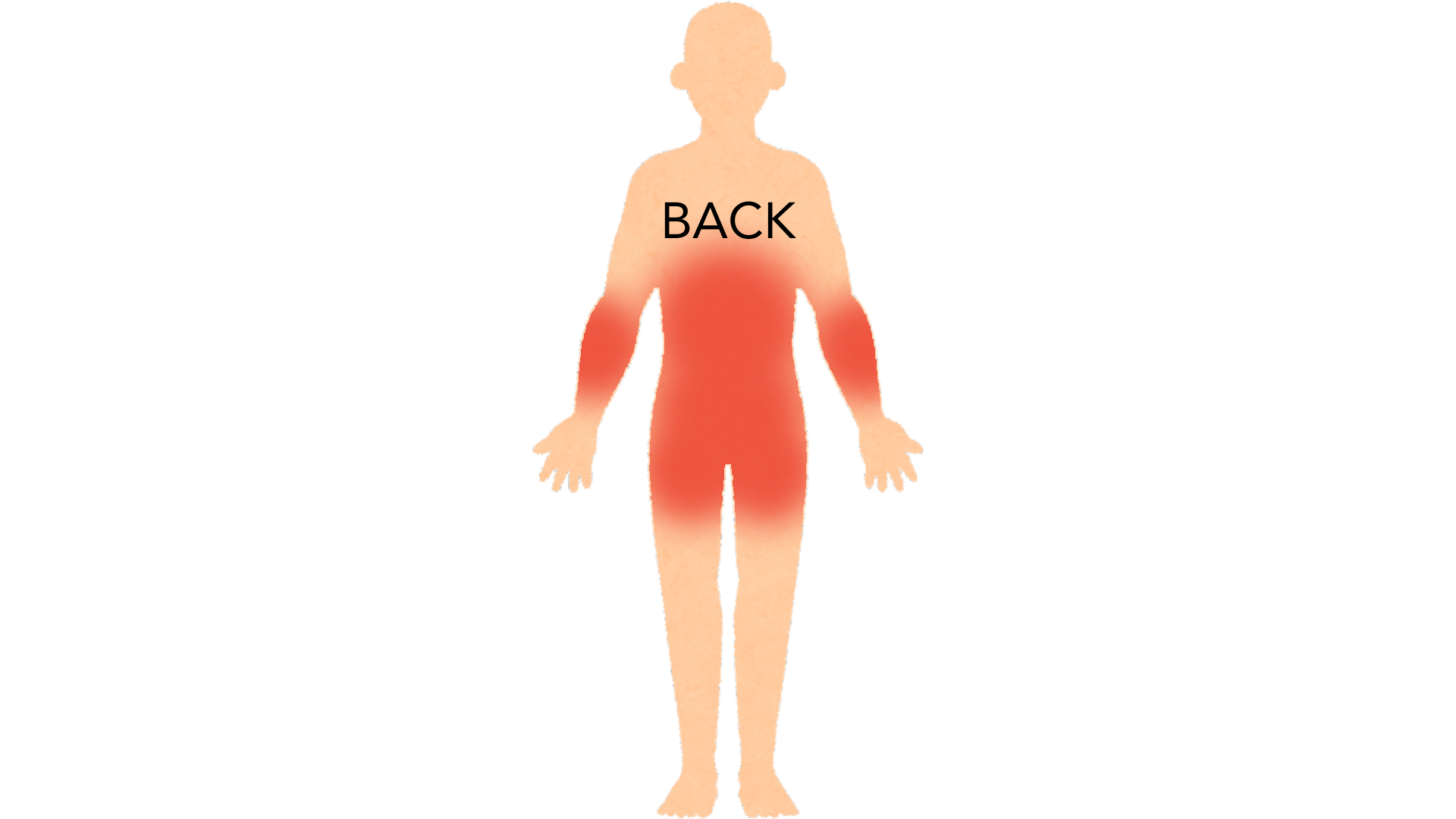
Outside the elbow, front of the knee, the scalp, the lower back, the belly button.
The classic sites, and the way it sits is part of the diagnosis: on the outside of the joint, not in the crease. Eczema does the opposite. It is usually symmetrical, so if one elbow is involved the other normally is too.
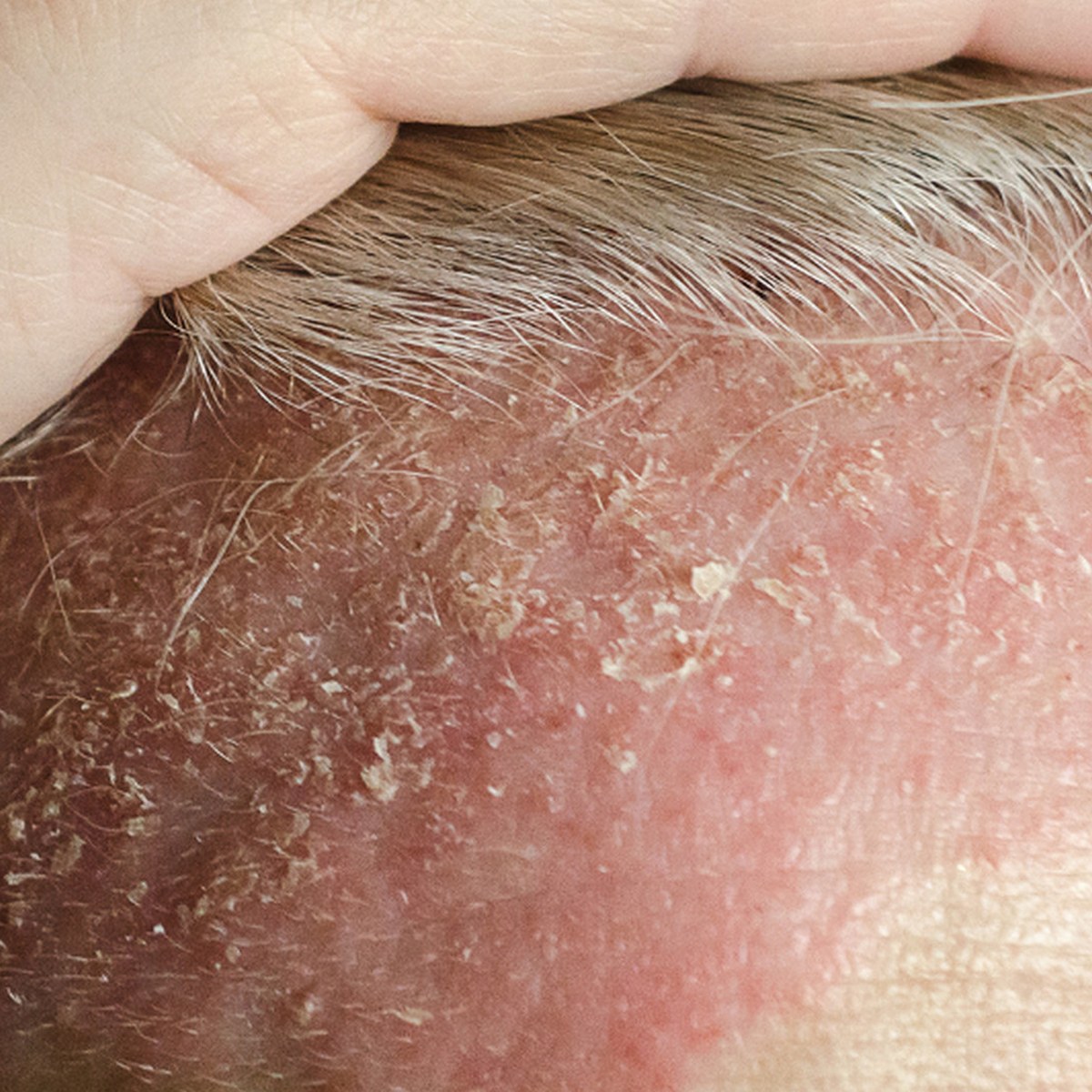
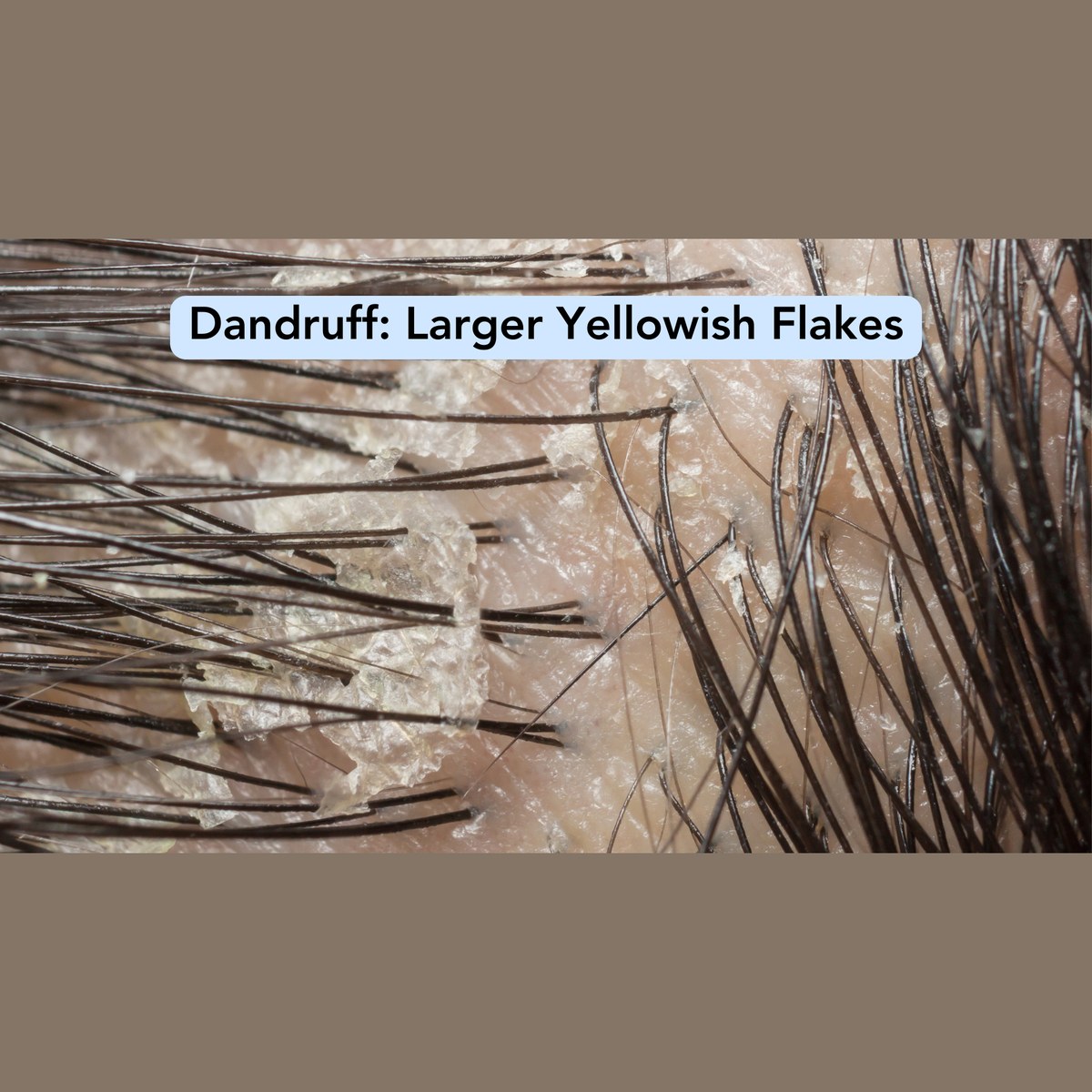
The scalp is involved in about half of people, and the plaques often run past the hairline onto the forehead and behind the ears — which is one of the things that separates it from dandruff, and the reason a hairline edge is worth looking at.
The lower back and the crease between the buttocks are common and easily missed. So are the folds, the palms, the soles, the face and the genitals — those sites matter more than their size suggests, because they affect daily life out of proportion to the area involved. Nails are affected in a large share of cases.
Eczema
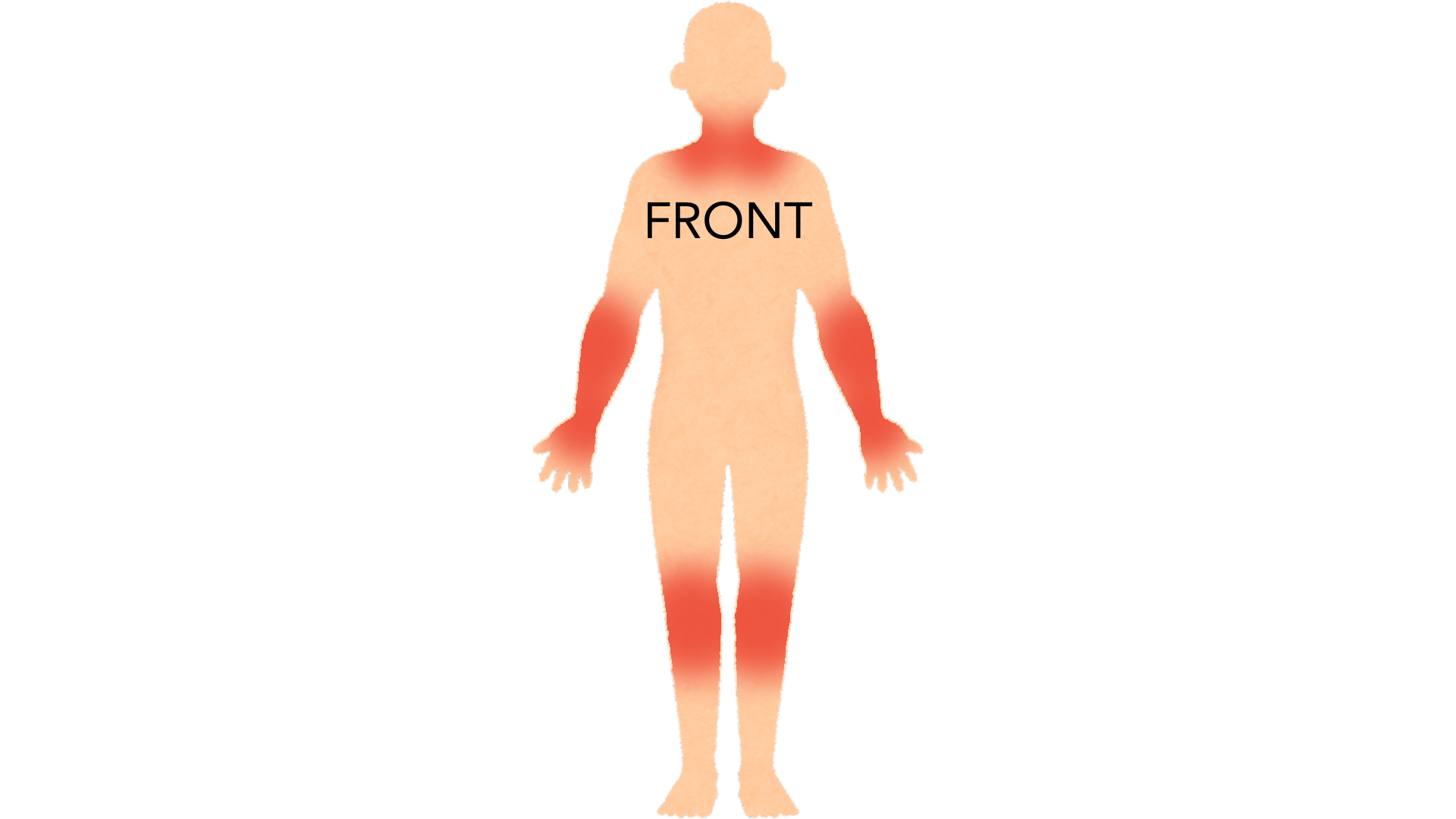
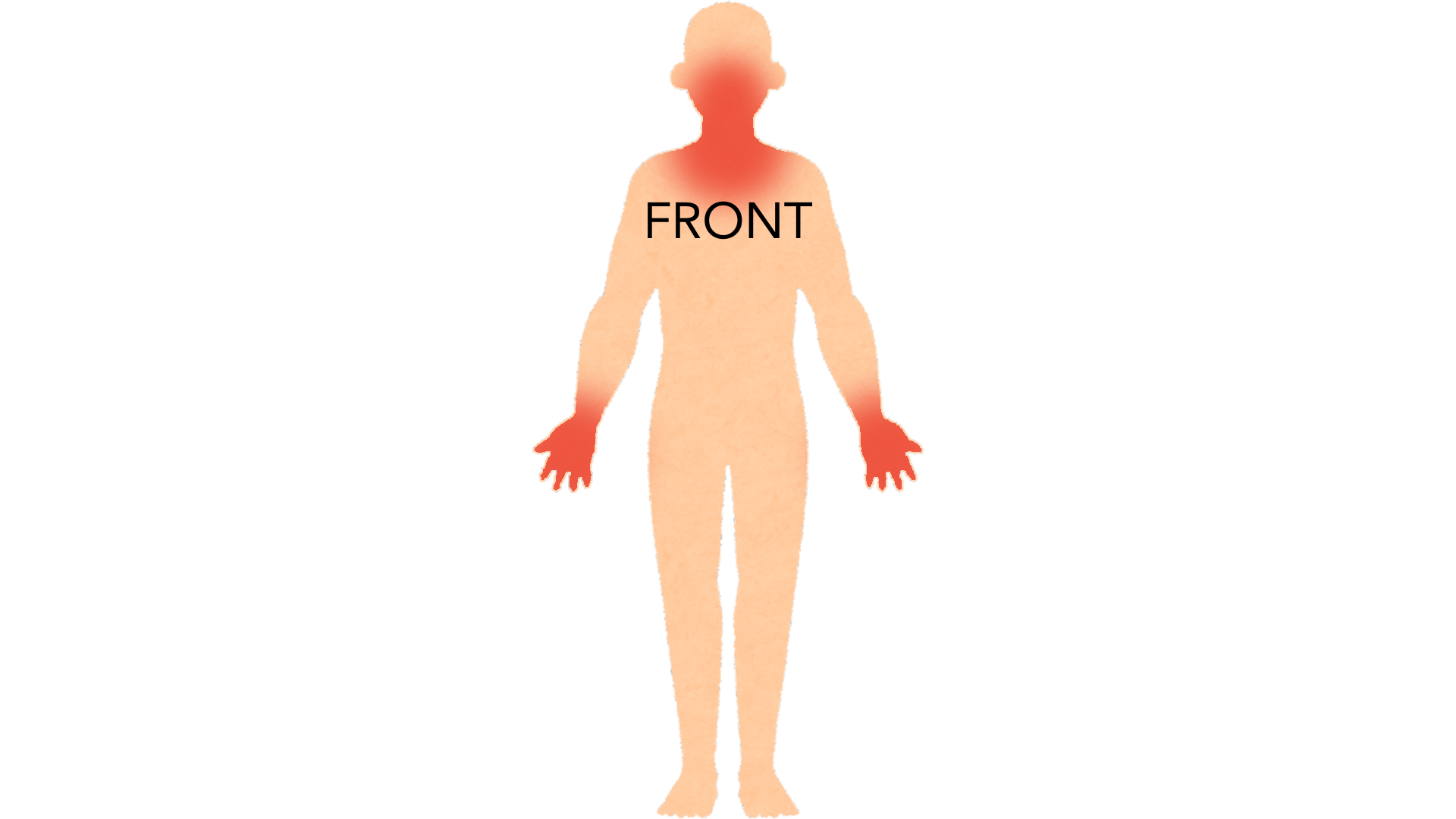
Inside the bends
Inside the elbow, behind the knee, the neck, the hands, the eyelids. In babies, the cheeks and the outside of the arms and legs.
The baby and toddler pattern. It favors the cheeks and scalp first, then the outer surfaces of the arms and legs. The diaper area is usually spared, because it stays damp.
The pattern from about age two onward, and the one most people picture. Skin folds trap heat and sweat, and they are the easiest places to reach and scratch.
The adult pattern. Hands take the most washing, gloving and wet work, and the thin skin of the eyelids and lips reacts to whatever the hands carry up to the face.
Eyelid skin is the thinnest on the body, so eczema here looks dry, flaky and puffy, with fine wrinkling and stinging rather than an obvious rash. It is often set off by something the hands carried up to the face - shampoo, nail polish, a cleanser or an eye cream. Only mild steroids or the non-steroid creams belong on eyelids, and only for short stretches.
Dryness, cracking and painful splits across the fingers and palms, sometimes with deep, very itchy blisters along the sides of the fingers. Frequent handwashing, gloves and wet work keep it going, which is why it is common in healthcare, food and cleaning jobs. It is the version of eczema most likely to carry on into adult life.
Psoriasis


Skin cells made too fast
The immune system speeds up skin cell production. The extra cells pile up on the surface as thick scale.
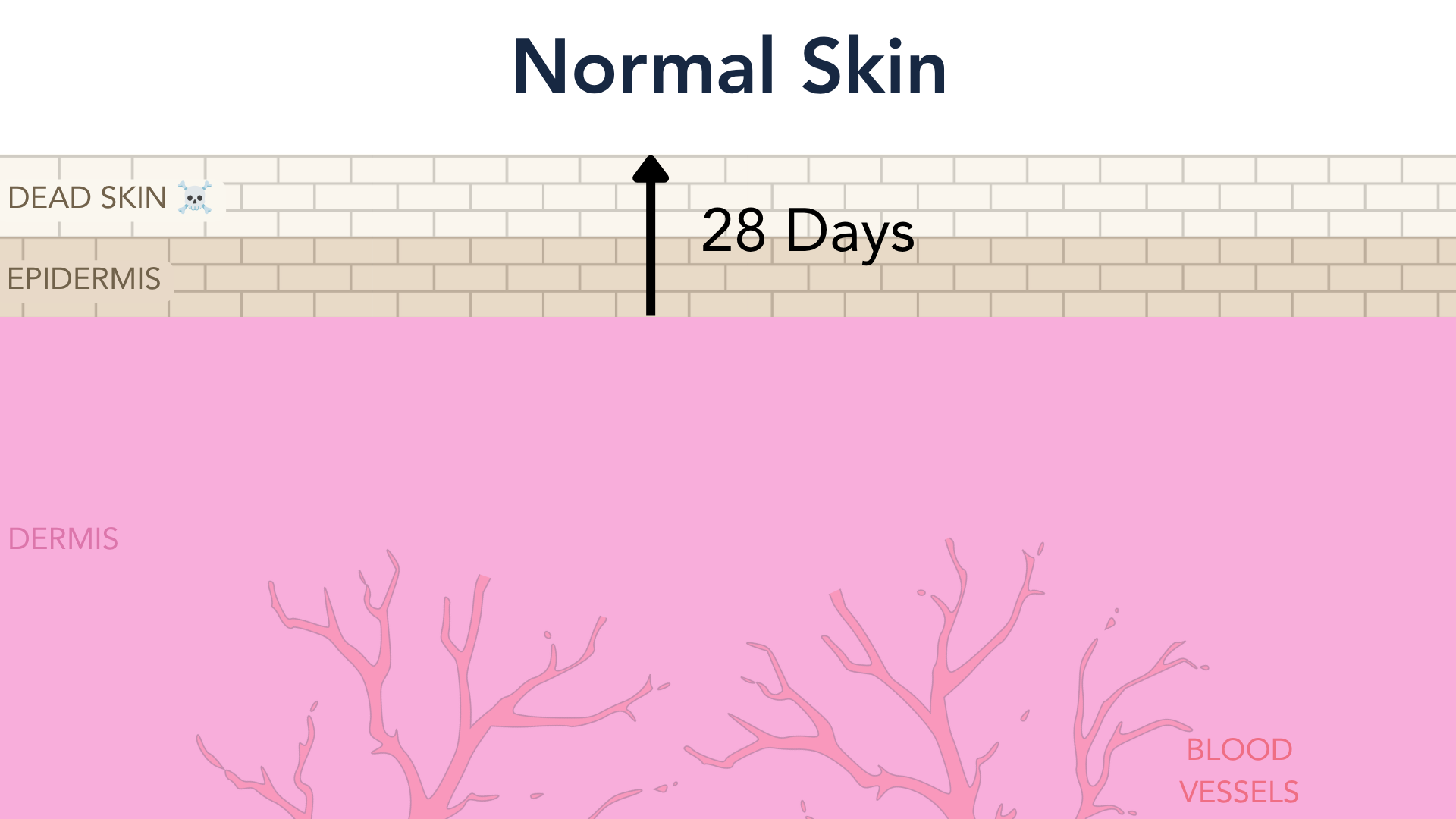
In healthy skin, a cell made at the base of the epidermis takes about a month to reach the surface. By the time it arrives it is flat and dead, and it sheds one cell at a time, so nothing piles up. The immune system stays quiet unless there is something to fight.
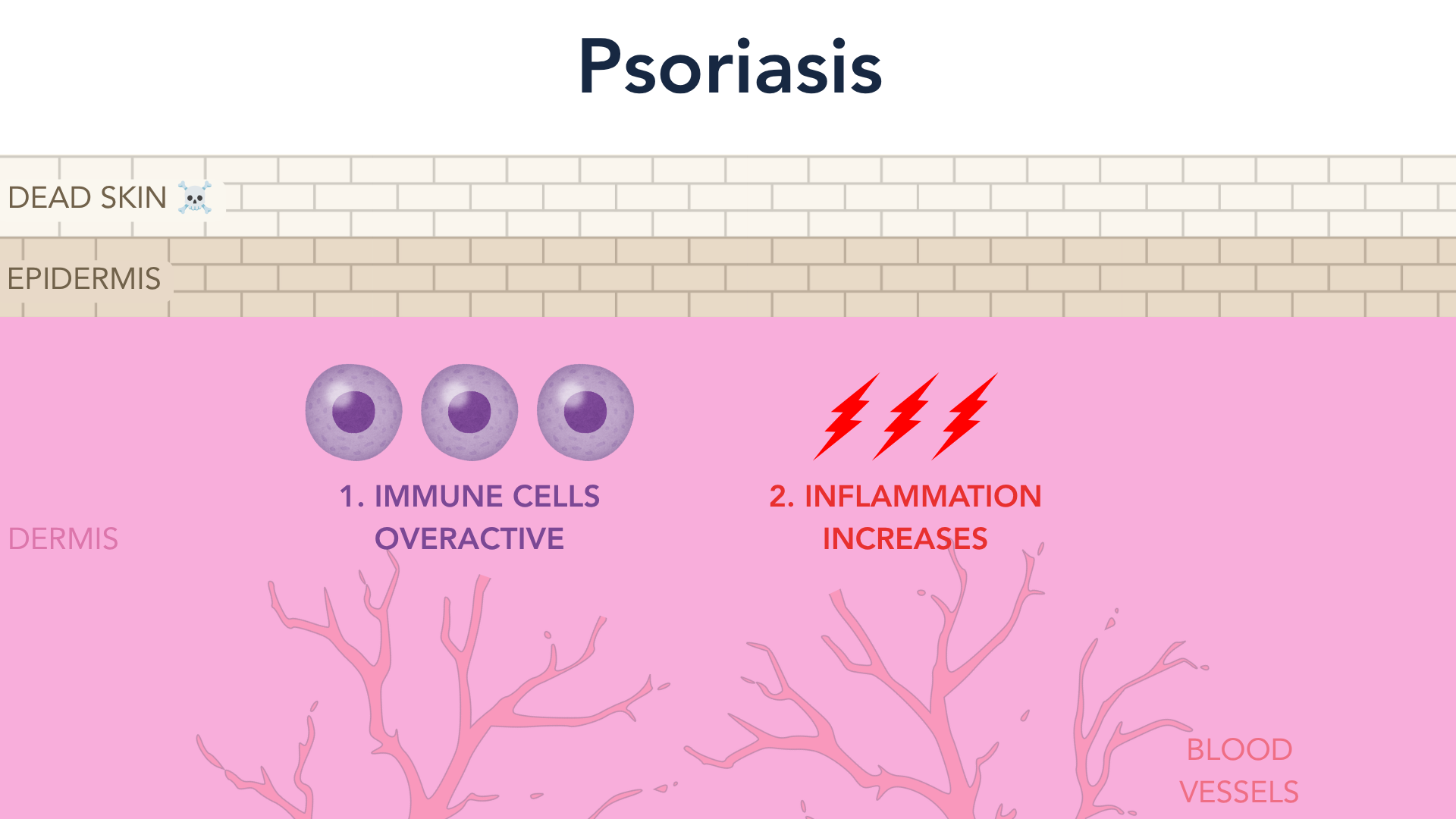
Immune cells in the skin switch on when there is nothing to fight and release signals such as TNF, interleukin-17 and interleukin-23. These are the messages that tell the skin it is under attack, and they are what biologic injections are built to block.
Inflammation brings increased blood flow to the area.
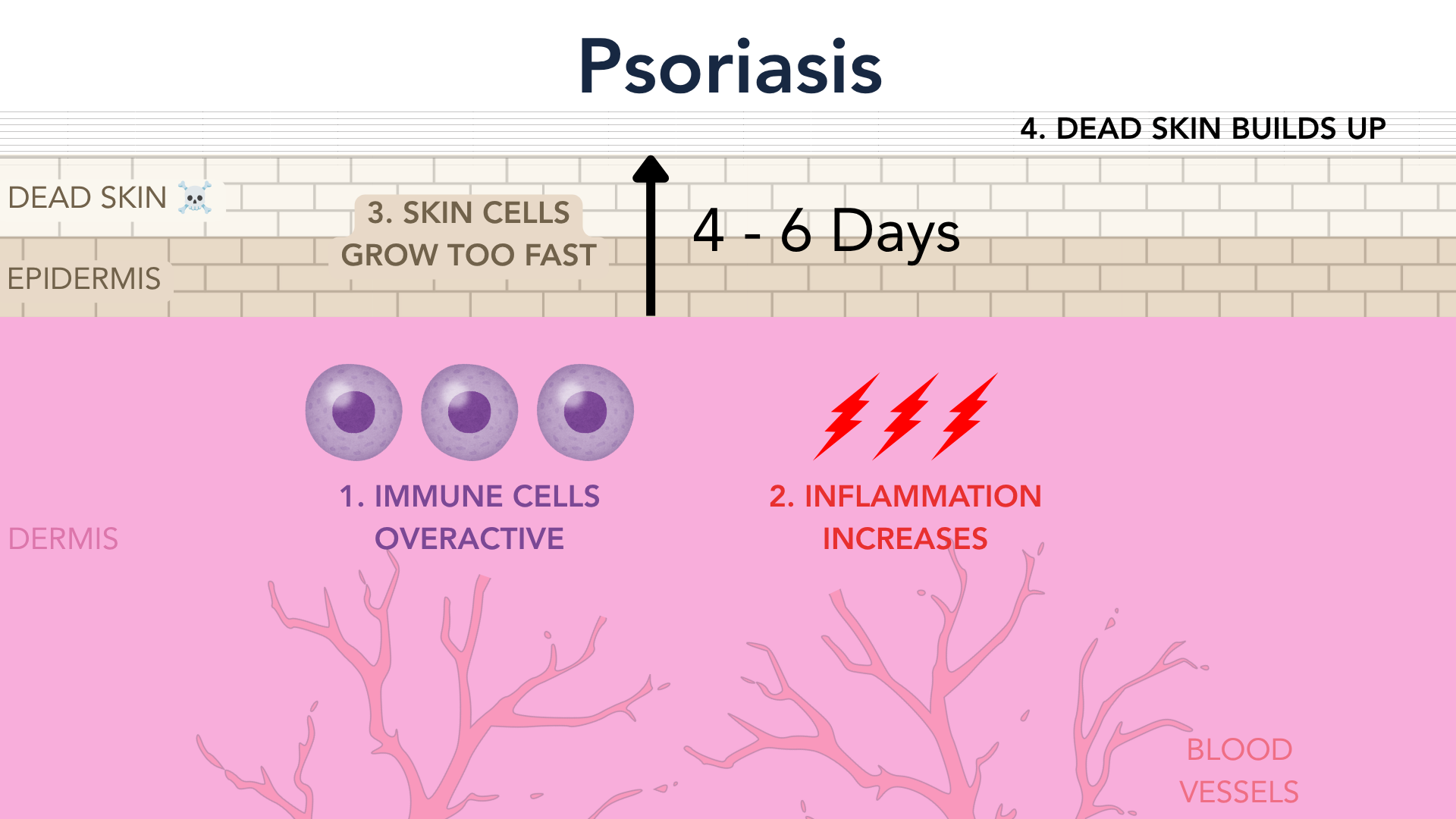
Told to behave as though the skin is injured, cells at the base of the epidermis divide far faster than normal. A journey to the surface that should take about a month is finished in a few days, so the cells arrive immature and still stuck together.
The immature cells pile up instead of shedding invisibly, which builds the raised plaque and the silvery scale. Blood vessels underneath multiply and widen, which is why picking the scale off leaves pinpoint bleeding, and why plaques crack over joints.
Eczema


A weak skin barrier
The skin does not hold water well. It dries out, cracks, and reacts to things that would not bother other people.
In healthy skin the outer layer is a tight wall of flat cells held together by fats. It keeps water in and keeps irritants, allergens and bacteria out, and the living skin underneath stays calm.
In eczema that wall is built loosely and has gaps in it. Many people carry a change in filaggrin, one of the proteins the wall is made from. Water escapes through the gaps, so the skin is dry, and things from outside get in.
With the wall broken, soap, sweat, dust and rough fabric reach the living skin underneath. Things that would not bother anyone else set it off - and scratching pulls the gaps wider still, which is what makes the cycle repeat.
The immune system reacts to everything getting through. Blood vessels widen and immune signals pour out, which is what makes the skin swollen, warm and discolored. Those same signals act on nerve endings, which is why eczema itches before there is much to see.
Staphylococcus aureus sits harmlessly on most people's skin, but broken eczema skin lets it multiply. It drives the inflammation up again, which is why a flare can turn much worse over a day or two.
Psoriasis
Runs in families
The same few patches come back in the same few places for years. A parent or sibling often has it too.
Eczema
Runs with allergies
Dry, sensitive skin for life, flaring with soap, weather, stress or sweat. Often comes with asthma, hay fever or food allergies.
Psoriasis
Itchy, but also sore
More often described as burning or stinging. Picking the scale off can leave tiny bleeding dots.
Eczema
Very itchy
Often worst at night. Scratching makes the patch spread and thicken.
Psoriasis
Teens to thirties
Psoriasis has two common starting windows. Most cases begin between the late teens and the thirties, and a second, smaller group starts after age 50.
Eczema
Early childhood
About 85% of eczema starts before age 5, and about half of it starts in the first year of life. Many children improve a lot as they grow, though it can return later.