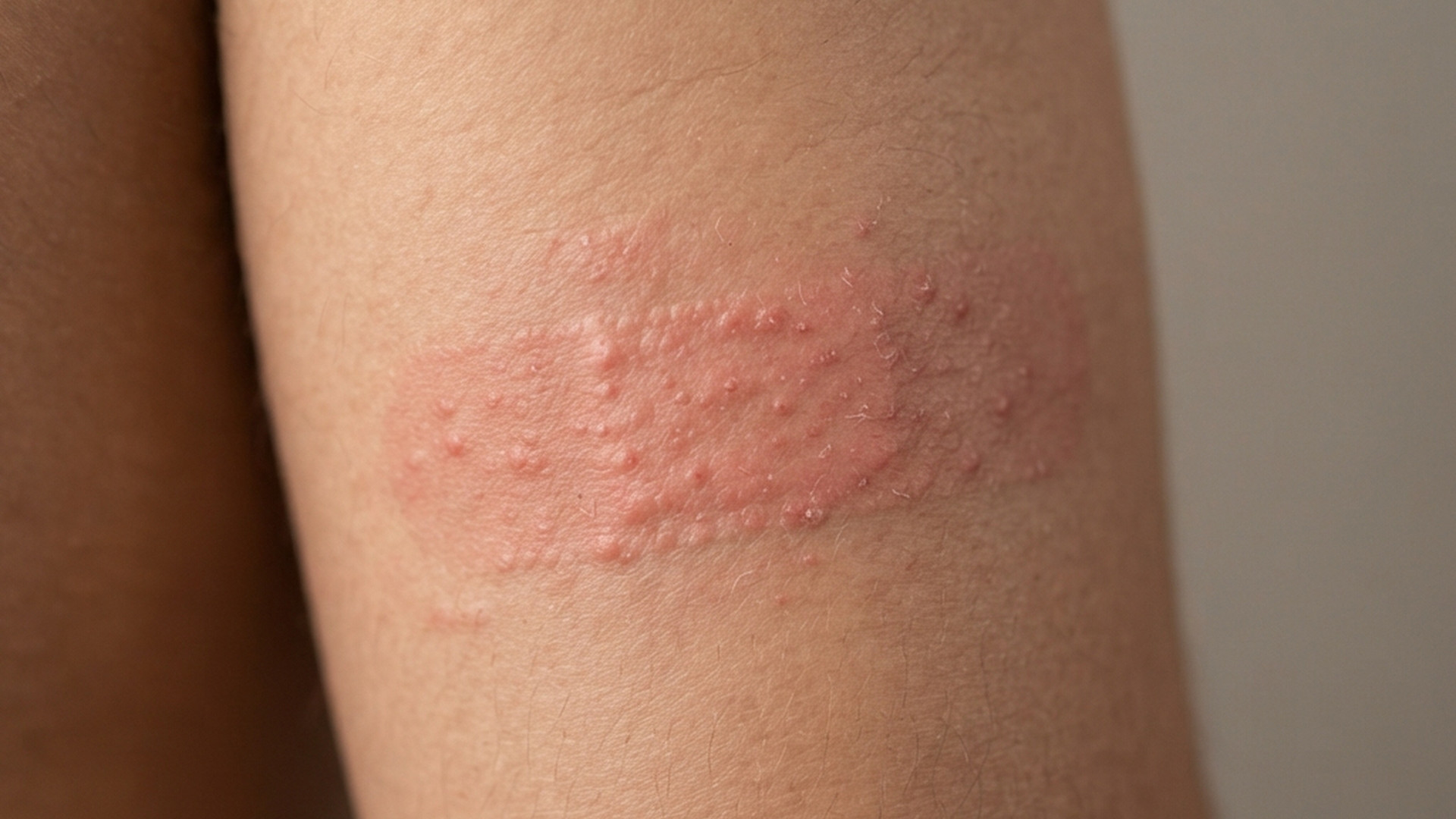
Abscess

An abscess is pus trapped in one walled-off pocket. It has a firm edge and a soft centre, and it usually has to be opened and drained. Antibiotics alone often will not fix it, because the drug struggles to get inside the wall. Cellulitis is bacteria spreading through the skin itself. There is no pocket and nothing to drain, so it is treated with antibiotics.
Last Updated: October 15, 2026
| The difference | Abscess | Cellulitis |
|---|---|---|
| What they look like | A defined lump | No lump |
| How treatment differs | Drain it | Antibiotics |
Abscess
A defined lump
There is an edge. Press the middle and it gives — soft and boggy, like a small water balloon.
An abscess has an edge you can trace and a centre that gives when you press it. That soft, boggy middle is the pus, and it is the sign that points to drainage rather than antibiotics alone.
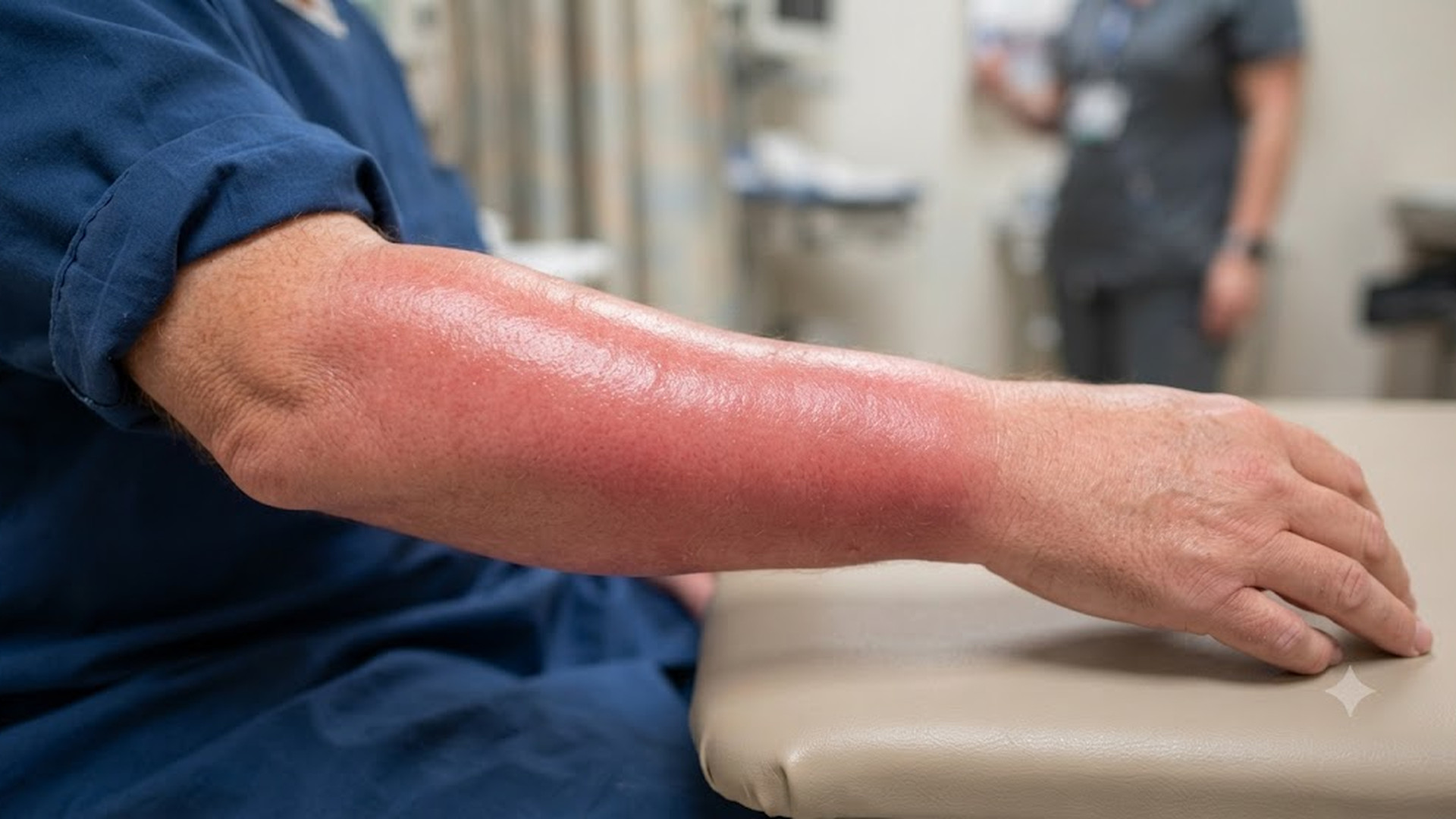
Cellulitis
No lump
Skin that is red, warm, swollen and tender, but firm all through. Nothing to press into.
Cellulitis has no edge and nothing to drain. The redness fades gradually into normal skin and the whole area is firm rather than boggy. This is the appearance that needs antibiotics — and the reason clinicians draw a pen line around the border, to see whether it is still spreading an hour later.
Abscess
Cellulitis

Light

Medium

Brown

Deep
Abscess
Anywhere
Especially armpits, groin, buttocks, and around hair follicles.
Cellulitis

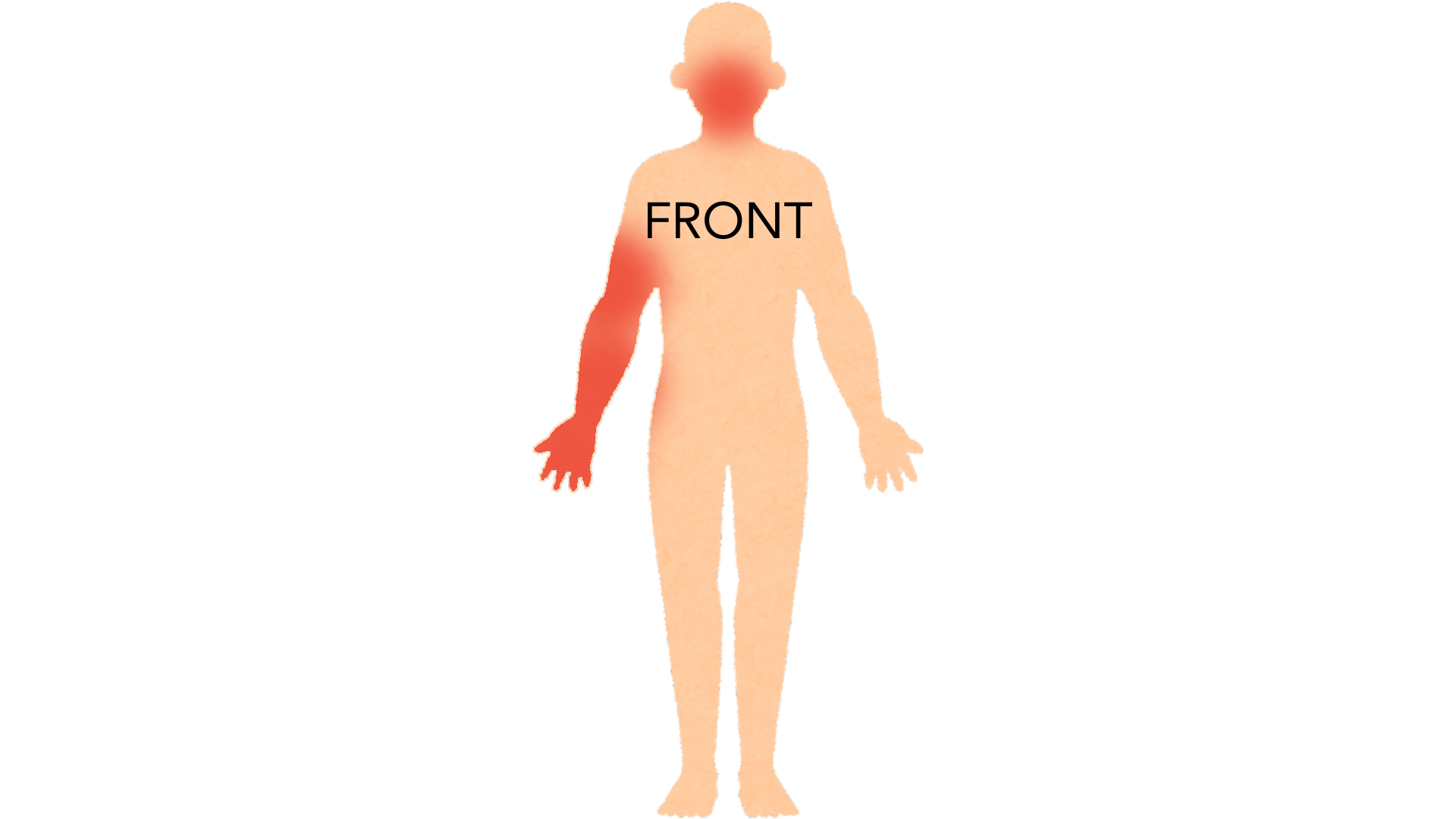
Most often the lower leg
Also the arms and face. It usually starts where the skin was broken — a cut, a bite, a graze, or athlete's foot between the toes.
About eight in ten cases are in a lower leg, and one leg alone is the pattern. Both legs red at once is usually something else. Where it lands normally follows where the skin was broken — a cut, a bite, a crack between the toes or a patch of athlete's foot.
It can also affect an arm, most often one that swells after lymph node surgery. On the face it usually takes one cheek or the skin around one eye, and swelling near an eye is treated urgently.
Abscess
Cellulitis


Healthy skin is an unbroken sheet laid over the living layer and the fat beneath it. Bacteria sit on that surface all the time and cause no trouble there. Nothing reaches the deeper layer while the surface stays closed.
Something opens the barrier. It is usually small and easy to miss - cracked, peeling skin between the toes from athlete's foot, a graze, an insect bite, a cracked heel, a patch of eczema or a leg ulcer.
Bacteria that already live on normal skin, usually streptococci, pass through that opening into the deeper living layer. This is why cellulitis is not caught from another person.
In the deeper layer the bacteria multiply and move outward in every direction rather than staying in one spot. There is no wall to stop them, which is why the edge is blurred and why the area grows over hours.
Fluid sitting in a swollen limb keeps immune cells away and gives bacteria room to travel, and the infection damages lymph channels, which makes the limb swell more. That loop is why episodes repeat, and nearly everything on the lists below is aimed at it.
Abscess
Sometimes
More likely with larger ones.
Cellulitis
Common
Fever, chills and feeling generally unwell are more typical with cellulitis. They mean it should be checked urgently.
Abscess
Grows, then points
Builds over days and may come to a yellow or white head.
Right after drainage
Relief is usually immediate once the pus is out.
Cellulitis
Spreads outward
Expands across the skin rather than upward.
24 to 72 hours on antibiotics
It often looks slightly worse on the first day before it turns. No change after two to three days means it needs another look.
Abscess
Cellulitis
Abscess
Drain it
Numbed, opened, and the pus released. Antibiotics are added in some cases, not all.
Cellulitis
Antibiotics
Usually tablets. Sometimes given into a vein if it is severe or not settling. There is nothing to drain.
Cellulitis vs abscess — what is the difference? Cellulitis is a bacterial infection spreading through the skin, with no pocket and no clear border, and it is treated with antibiotics. An abscess is pus trapped in one walled-off pocket with a soft centre, and it has to be drained. The two often occur together, which is why this is a same-day call for a clinician rather than a guess at home.
Why does the difference matter? The treatments are opposites. An abscess needs draining, and antibiotics alone often will not clear it. Cellulitis needs antibiotics, and there is nothing to drain.
Can you have both at the same time? Yes, frequently. That is one reason this needs someone with hands on the skin rather than a decision made at home.
How do I know if it is spreading? Draw a line around the edge of the redness with a pen. If the redness passes that line within a few hours, it is spreading and needs to be seen now.
How fast should cellulitis improve on antibiotics? Usually 24 to 72 hours. It often looks slightly worse in the first day before it turns. No improvement at all after two to three days means it needs reassessing.
Where does cellulitis usually start? Most often the lower leg, through a break in the skin — a cut, a bite, a graze, or untreated athlete's foot between the toes. That last one is a common and easily missed entry point.
When is this an emergency? Pain much worse than the skin looks, skin turning dusky or purple, blistering, rapid change, or a fever with spreading redness. Also anything around the eye. Those go to emergency care, not a routine appointment.
Why does my cellulitis keep coming back in the same leg? Usually an ongoing entry point or limb swelling. Treating athlete's foot properly, moisturising cracked skin, and managing swelling are what prevent the next episode.