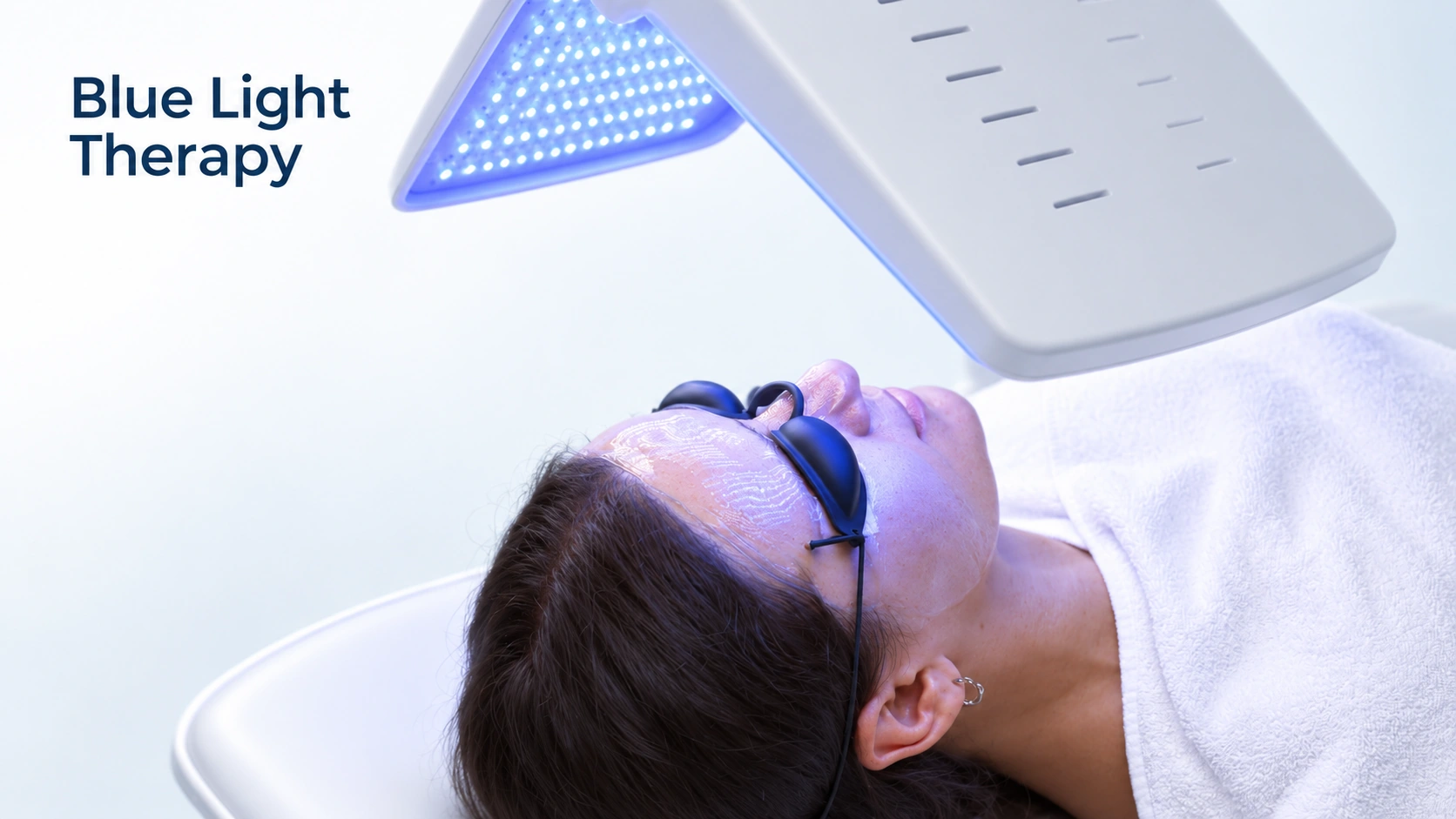
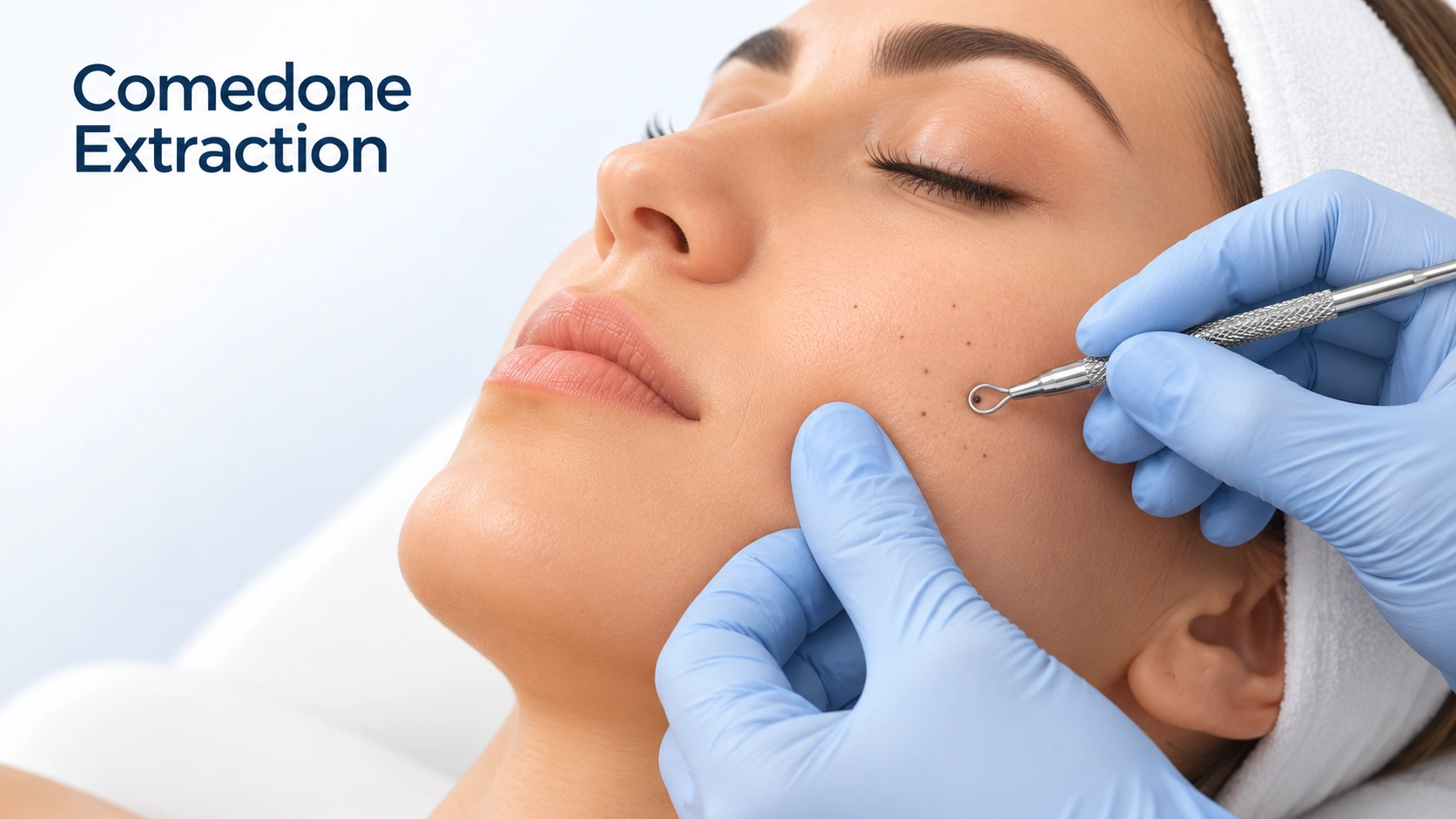
It pairs medicine with light.
A photosensitizing medicine is activated by a set light exposure.
Photodynamic Therapy: A light-activated drug applied in the office, then switched on with a lamp or laser. It is the strongest non-drug option for inflammatory acne, and the downtime is a real week.
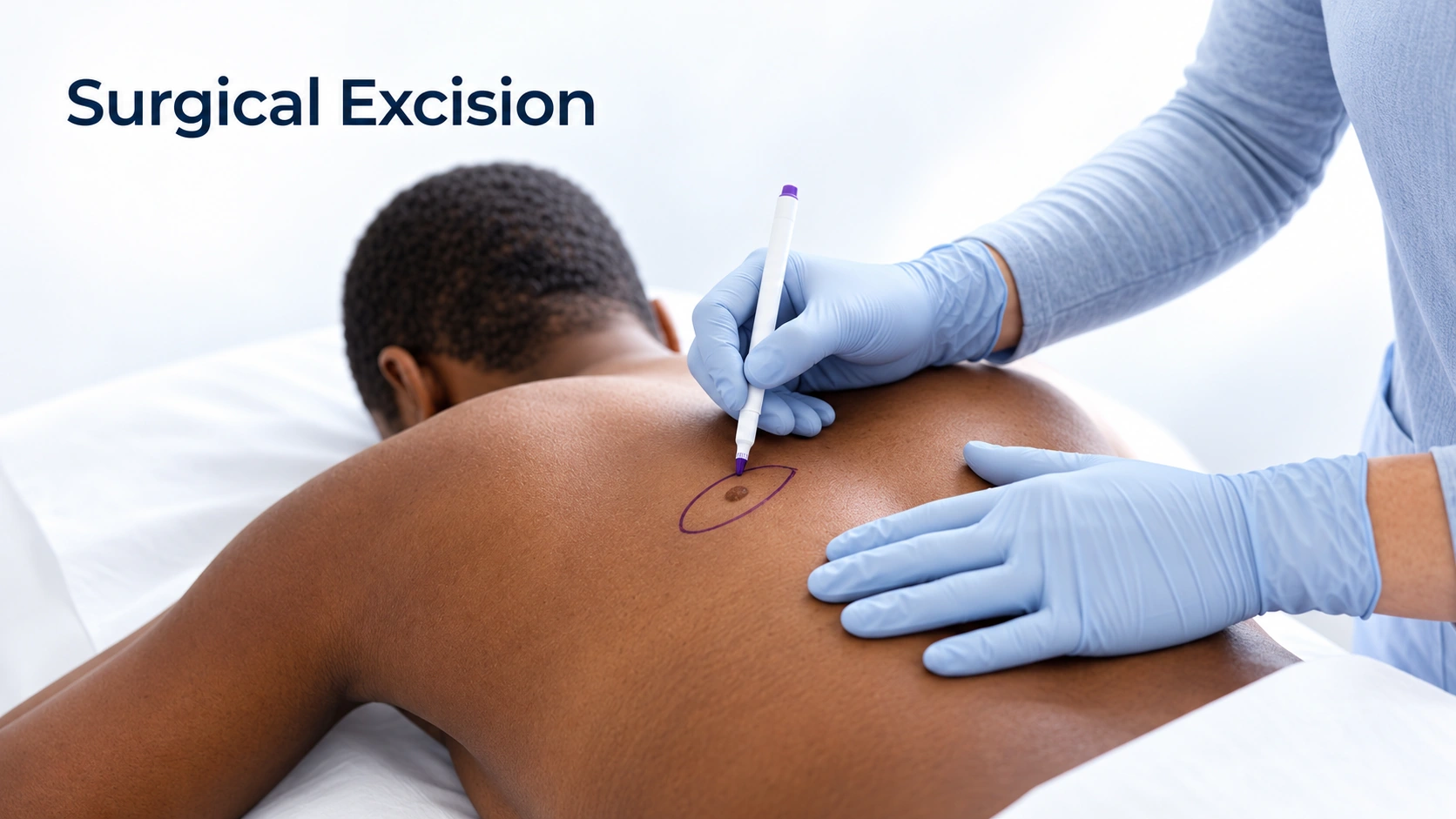
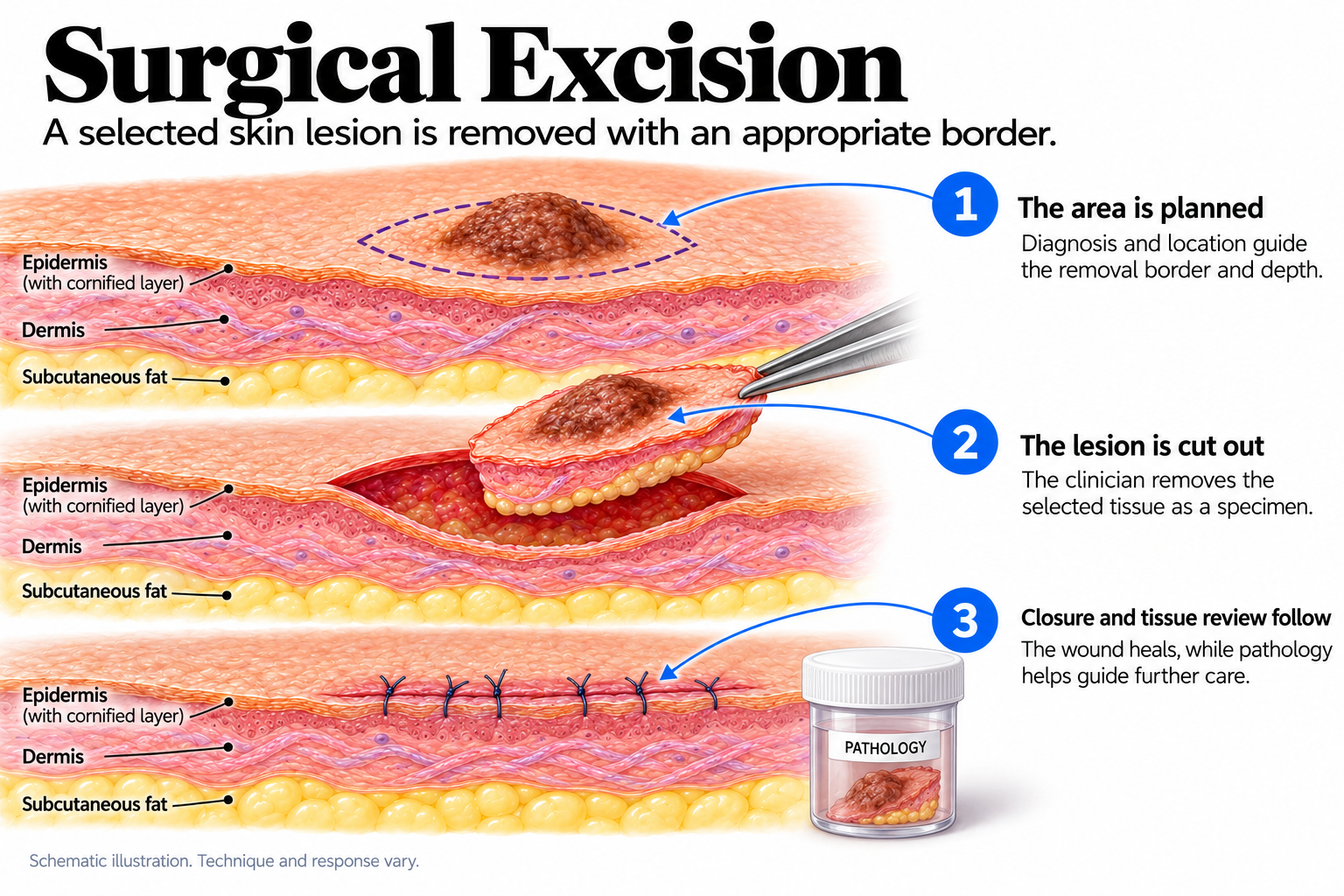
Surgical Excision: The growth is cut out along with a measured border of normal-looking skin, and the wound is stitched closed. The whole piece goes to a laboratory and the result comes back in about a week. The scar is a line, and it is longer than the spot was.
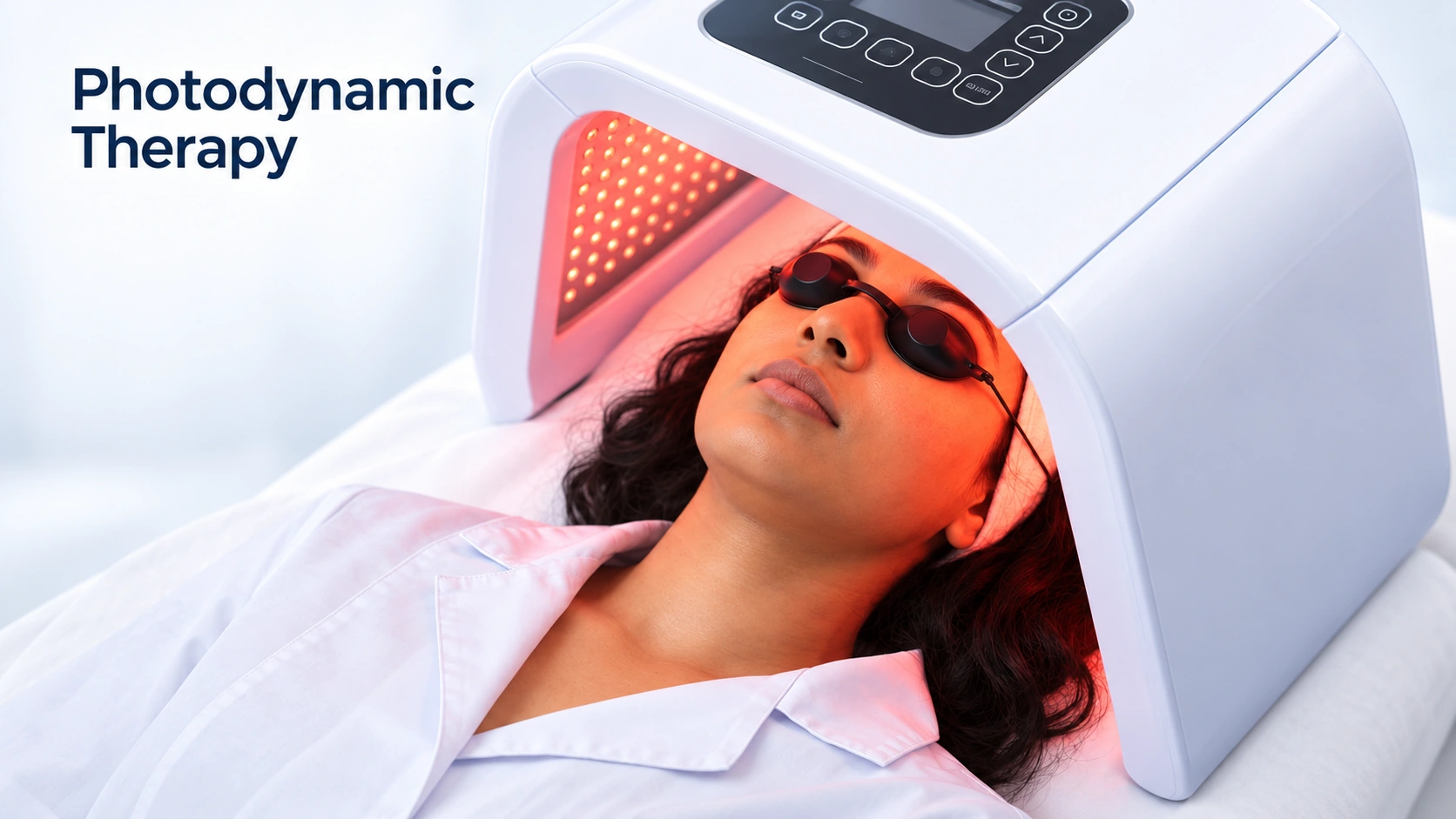
Choose to treat a whole area of sun damage at once — or as a strong non-drug option for stubborn acne — with a real week of downtime.
Choose to remove a skin cancer or suspicious growth completely with lab-checked edges — the scar is a line, longer than the spot.
Can you have both?
They suit different problems. PDT treats a wide area of precancerous change; excision removes a single growth or cancer.
A photosensitizing medicine is activated by a set light exposure.
It is used for actinic keratoses and some superficial lesions.
It is not ordinary LED or UV treatment.
Sunscreen alone may not prevent activation.
A planned incision removes the lesion and a rim of tissue.
It provides tissue or removes a known lesion.
They should not be chosen from a generic chart.
Standard excision and Mohs assess tissue differently.
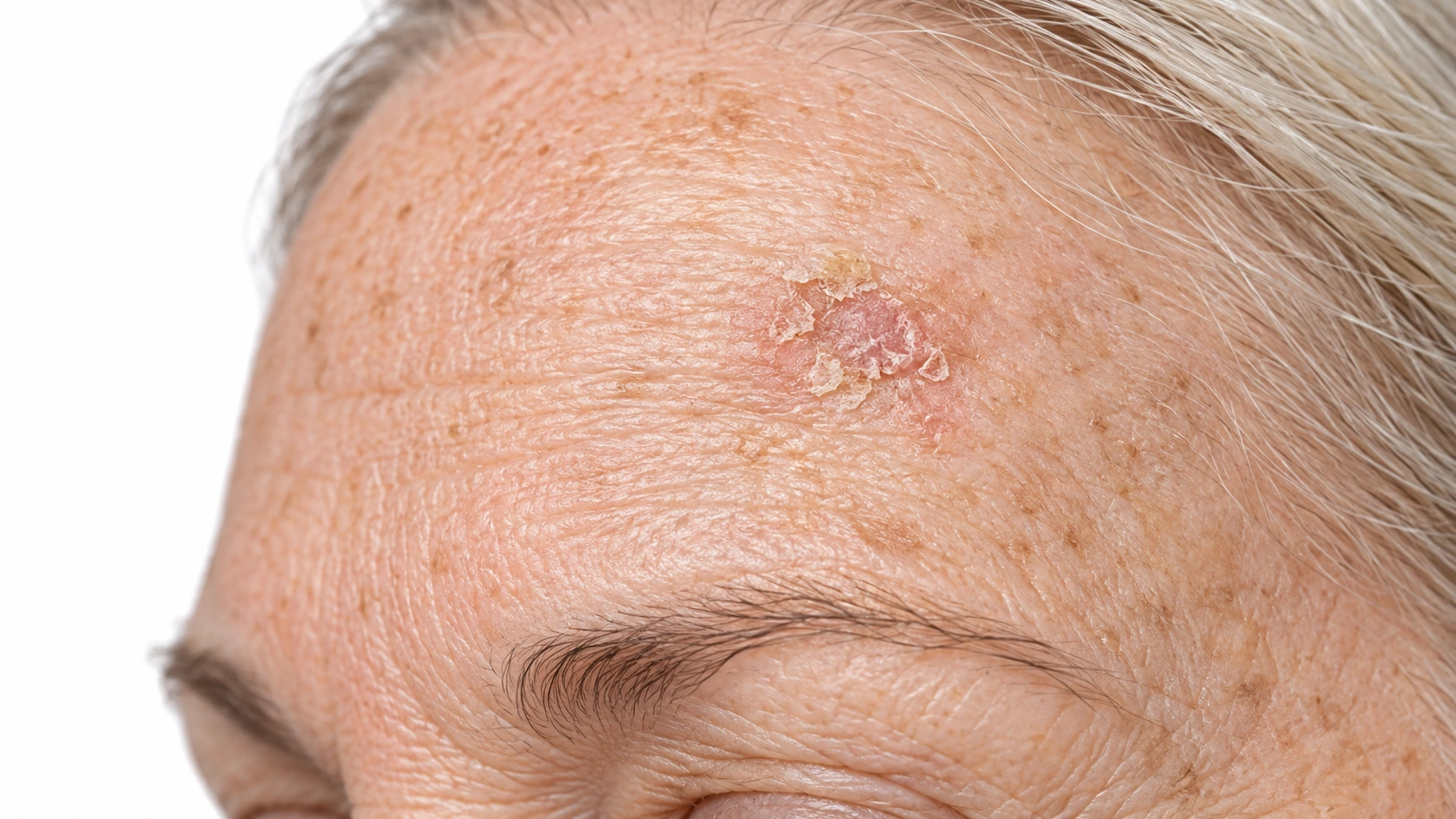
Clears 75–90% of spots.
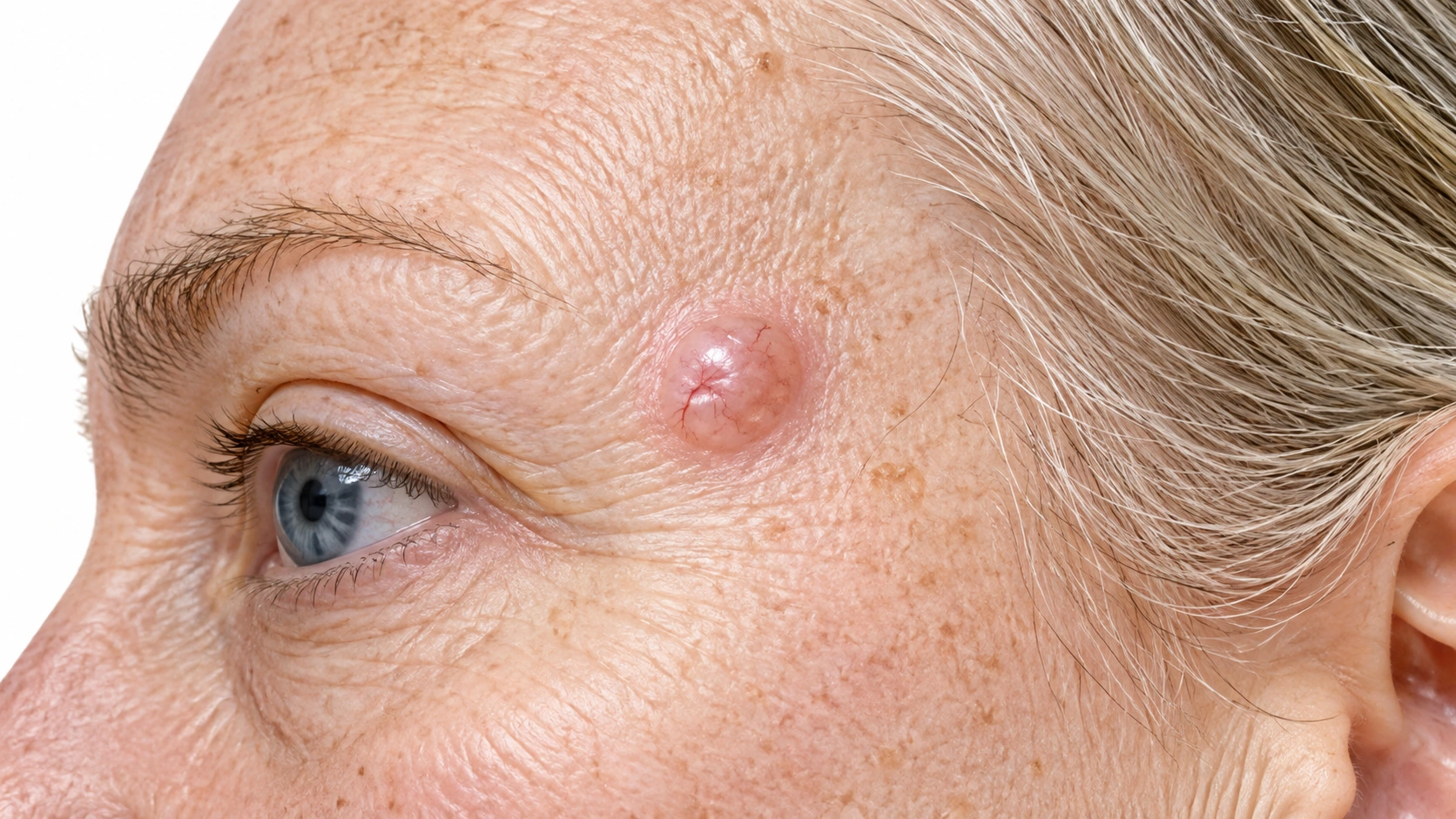
High cure rates.
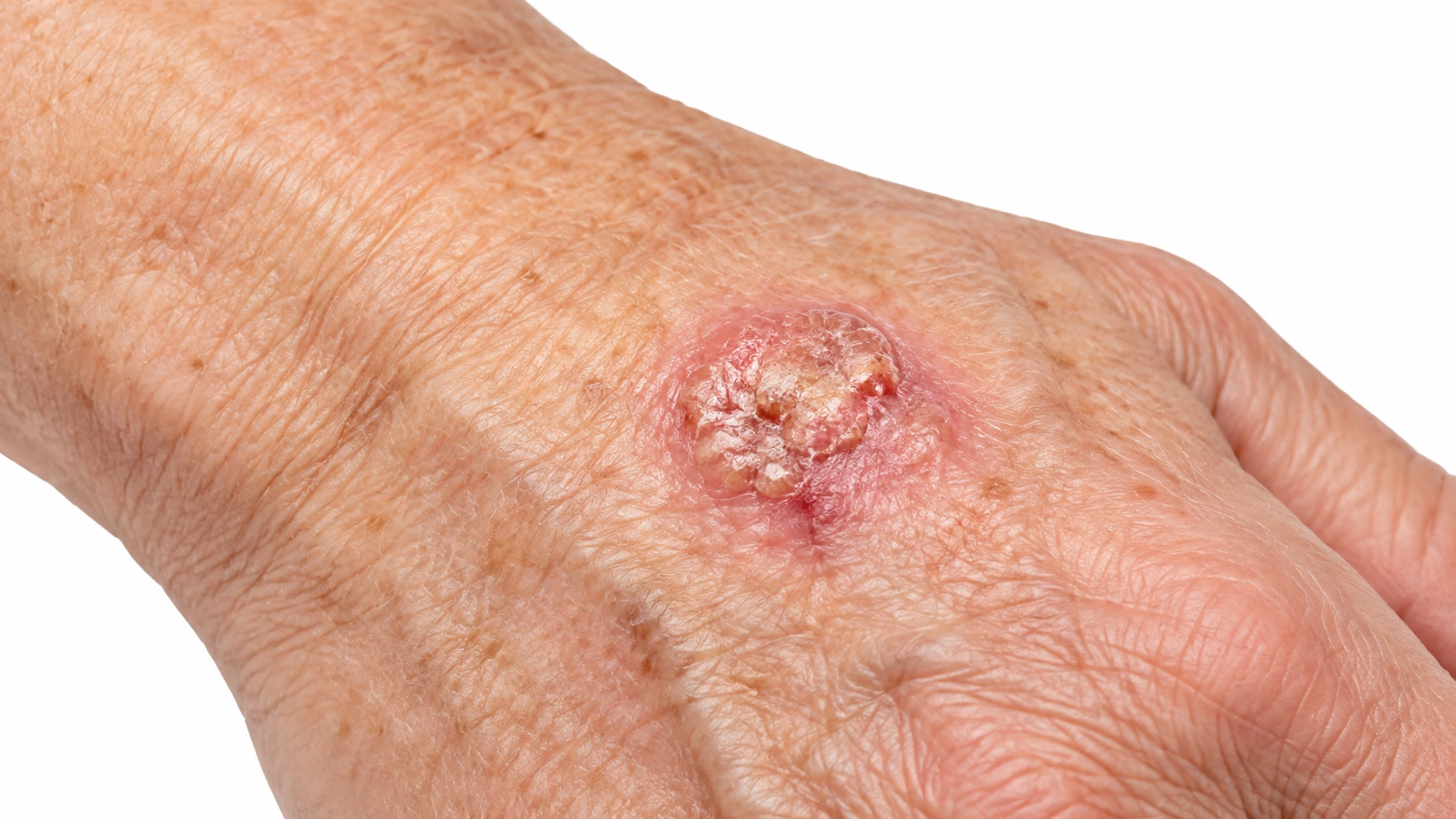
Removes the cancer with margins.
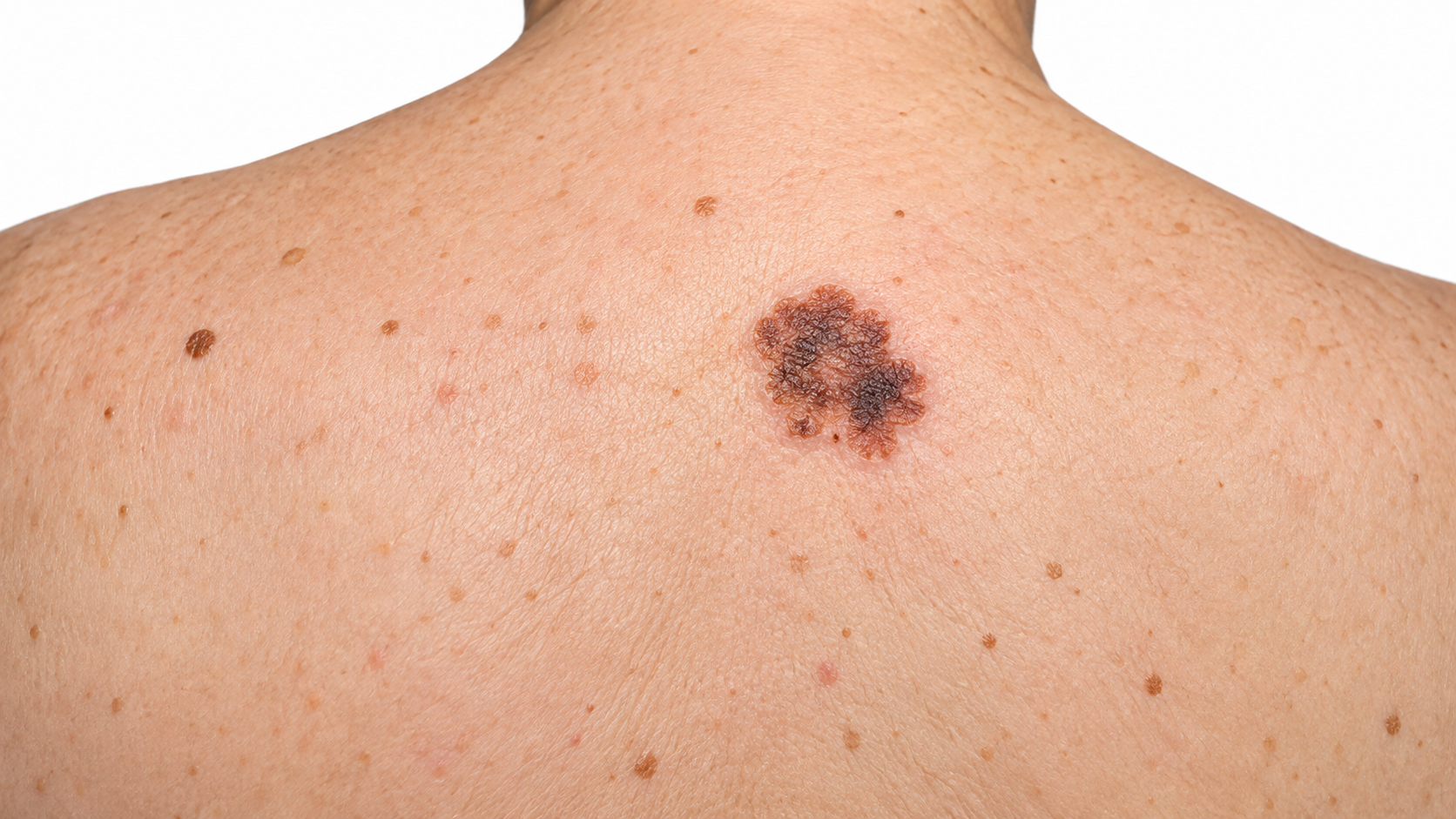
The main treatment.
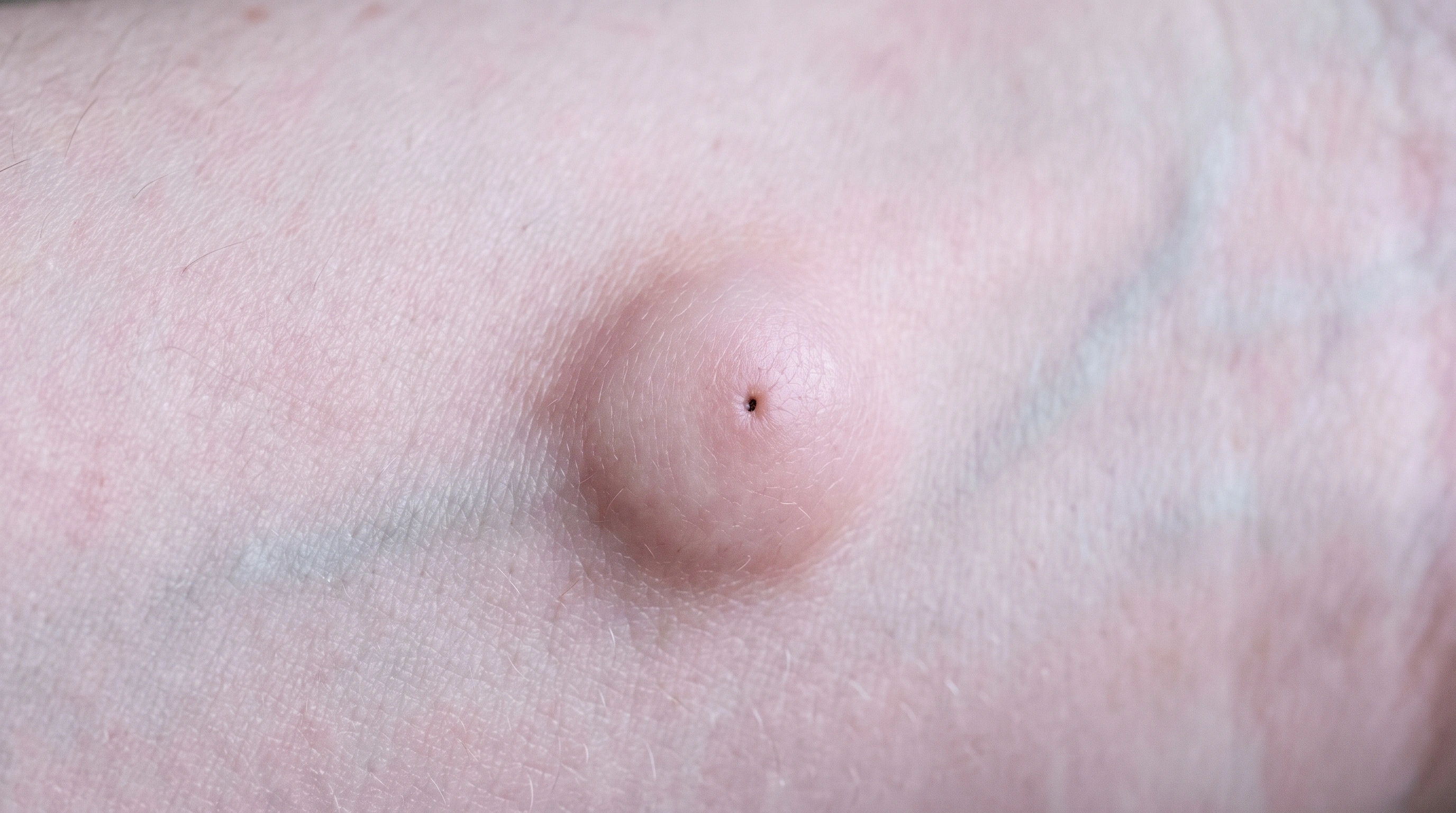
Removes the sac.
Treats superficial types.

Used for stubborn acne.
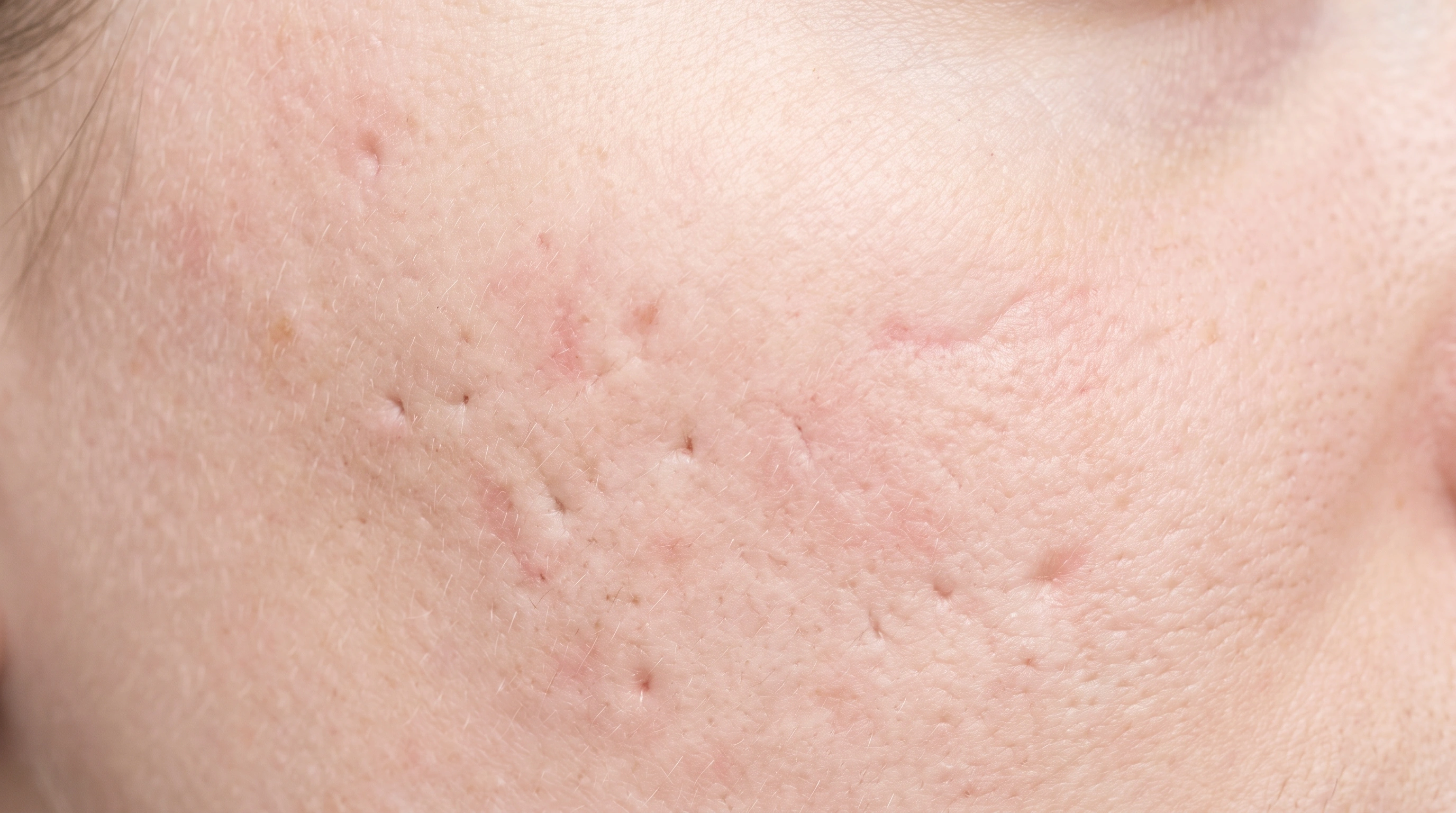
Punch excision is used for small scars instead.
Needs excision.
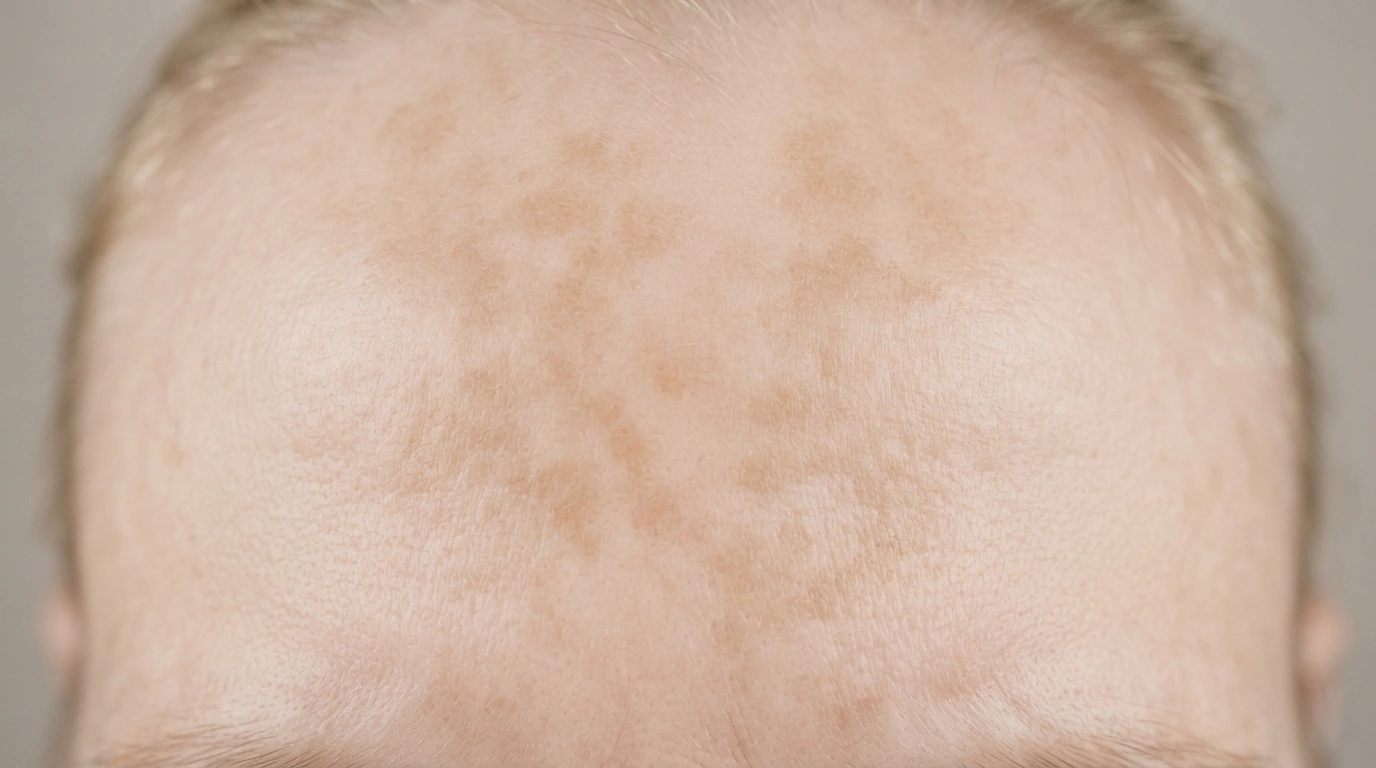
Light can darken patches.
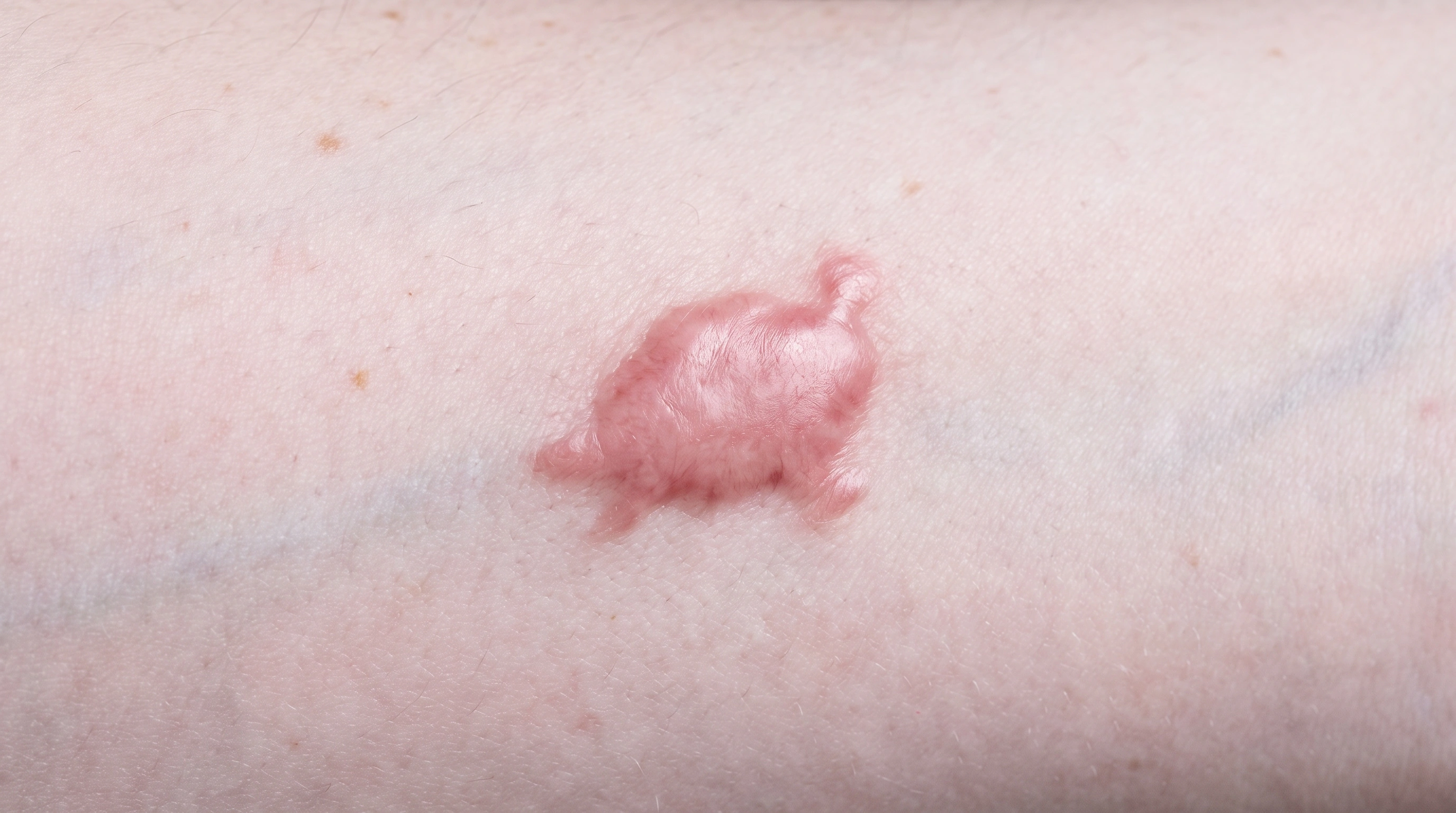
Keloids often return larger alone.
Face; the selected area depends on the concern and treatment plan.
The specific lesion, scar or affected patch determines the treatment site; there is no fixed body distribution.

A photosensitizer is applied: The selected medicine accumulates in the prepared treatment area. Light activates the medicine: A matched light regimen produces reactive molecules. Selected cells are damaged: Inflammation and healing follow; treatment response varies.
Schematic illustration. Technique and response vary. This explains a mechanism and does not specify treatment settings.
The area is planned: Diagnosis and location guide the removal border and depth. The lesion is cut out: The clinician removes the selected tissue as a specimen. Closure and tissue review follow: The wound heals, while pathology helps guide further care.
Schematic illustration. Technique and response vary. This explains a mechanism and does not specify treatment settings.
2 weeks before: Sun and tanning: Avoid sun and tanning for 2 weeks.
Before you book: Time off: Clear several days, especially the 48 hours after, when you must stay out of sunlight and bright indoor light.
5 to 7 days before: Actives: Stop retinoids and exfoliating acids.
Supplements and alcohol: Non-essential blood thinners such as fish oil, vitamin E and ginkgo are commonly stopped about a week before, and alcohol the night before.
Smoking and vaping: Stop for a week before and two weeks after if you can.
Eating and clothes: Eat normally and take your usual morning medicines.
Photos, consent covering the off-label use and the downtime, and a medication review.
The site is confirmed against the biopsy report and you point to it yourself.
Skin is cleaned and degreased, sometimes with microdermabrasion or an acetone wipe, so the drug soaks in evenly.
The solution goes on and you wait 20 minutes to 3 hours in a dim room. Then eye shields go on and you sit under a blue or red light for 8 to 20 minutes, or a laser or IPL is passed over. Stinging builds and peaks at the end; cold air helps.
The surgery: The skin is cleaned and draped.
The surgery: The ellipse is cut out in one piece, bleeding points sealed, and the edges freed so they meet without tension. Closing is in layers — dissolving stitches deep, stitches on the surface. You feel pressure and tugging and hear instruments, but nothing sharp. Most take 20 to 45 minutes, and the site feels tight afterward rather than sore.
The least comfortable procedure on this list.
A dressing, written wound care, a stitch removal appointment, and a plan for how the pathology result reaches you.
First 48 hours: Stay strictly out of sunlight and bright indoor light; daylight through a window can trigger a severe reaction.
Days 4 to 10: Peeling and flaking, sometimes in sheets.
First week: Keep the dressing dry and in place for 24 to 48 hours, then start daily care — gentle wash, petrolatum, non-stick dressing.
Days 5 to 14: Stitches come out — face at 5 to 7 days, trunk and arms at 10 to 14, legs and back sometimes longer.
Weeks 1 to 2: An acne flare is common in the first week or two, before improvement starts.
From week 2: The scar is hardest, pinkest and most raised at around three to six weeks.
2–4 weeks
Lab result in about a week
Treated spots clear; new ones may form
Permanent
In the US, PDT for acne generally costs about $400 to $1,500 per session, so a course commonly lands between $800 and $4,000.
An excision costs more than a scrape-and-burn and less than Mohs surgery.
Insurance does not cover PDT for acne, because the approved indication is precancerous sun damage.
In the US the surgical charge is priced by the size of the excision and the body site, with a separate charge for a more complex layered closure.
Not in the US. It is FDA-approved for precancerous sun spots; using it for acne is off-label. That is legal and common, but it means no standard protocol and results that vary between clinics.
Plan for 5 to 7 days of a visibly red, then swollen, then peeling face, with the worst in the first 48 hours. It is closer to a medium-depth peel than a laser facial.
The drug is still in your skin, and sunlight — including through a car or office window — activates it and can cause a severe burn. This is the most important instruction of the treatment.
No. Improvement typically lasts 6 to 12 months and repeat courses are often needed. It does not treat scars or existing brown marks.
It can be done, but the risk of lasting dark patches is meaningfully higher, because the treatment works by causing strong inflammation. A shorter incubation, a lower light dose and an experienced provider make a large difference.
Because a round hole cannot be closed flat. The piece taken out is an ellipse roughly three times as long as it is wide, so the edges meet evenly instead of puckering at each end. A spot the size of a pencil eraser becomes a line an inch or more long. It is geometry, not technique, and no surgeon avoids it.
Usually 3 to 10 days, depending on the laboratory. Ask before you leave how and when you will be told, and call if you have heard nothing after about two weeks.
A further procedure — a re-excision with a wider border, or a referral for Mohs surgery — usually within a few weeks. It is not a mistake. It is the reason the specimen went to a laboratory in the first place.
About 2 weeks for most sites, longer for the back, shoulder and shin. The visible stitches come out sooner, and the deep stitches are still carrying the tension. Lifting or straining is what stretches or splits a wound.
On the face, particularly the nose, eyelids, ears and lips, or for a tumor that is large, has vague borders, has an aggressive subtype on the biopsy, or has come back before, Mohs is often better. For a small low-risk cancer on the trunk or limbs, an excision achieves the same result in a fraction of the time and cost. Ask which category yours is in.
It flattens and pales substantially over about a year, with most of the change in the first six months. Keeping it out of the sun and using silicone gel or sheeting once it is closed are the two things with reasonable evidence behind them. Scars on the chest, shoulders and upper back stay red and raised longest and are the likeliest to widen.