Cherry Angioma vs Spider Angioma

A common harmless small growth formed from blood vessels. A small central vessel with radiating fine branches, also called spider telangiectasis.
Research updated 2026-10-23
Cherry AngiomaSpider Angioma

Key differences

The same eight facts on every condition comparison.

Usual age
Over 30
Any age
Where
Trunk and limbs
Face, neck, chest, hands
Main sign
Small bright red dots
Red dot with spidery branches
Itch or pain
No
Neither
Contagious
No
No
Long term
Harmless; more appear with age
Often fades in children
Scars
No
No
Who gets it
Most adults
Children, pregnancy, liver disease

What is it?

Cherry Angioma
Spider Angioma
What is it?
  • What it is
    A common harmless small growth formed from blood vessels.
  • What it is
    A small central vessel with radiating fine branches, also called spider telangiectasis.

What it looks like

Cherry Angioma

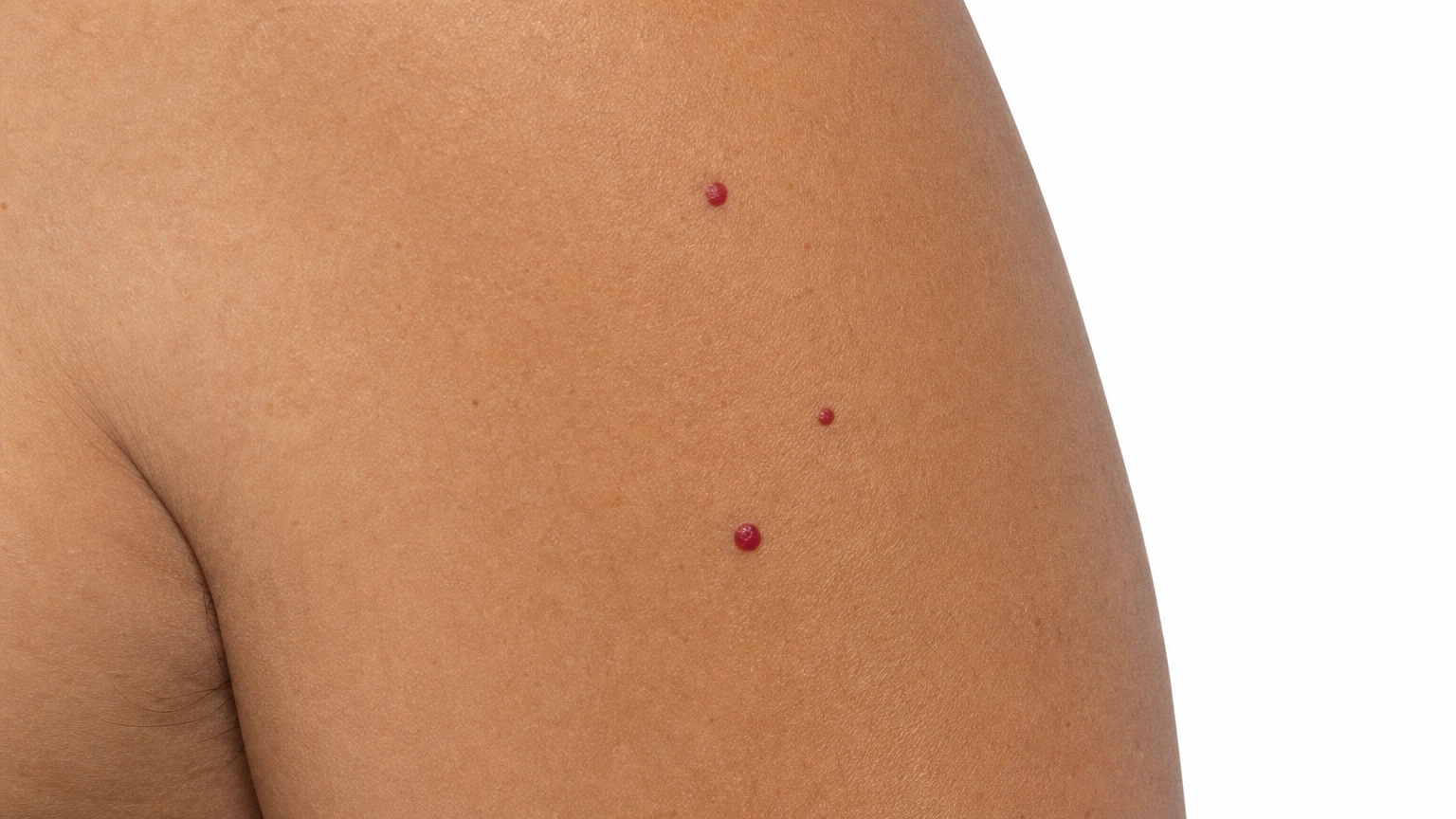
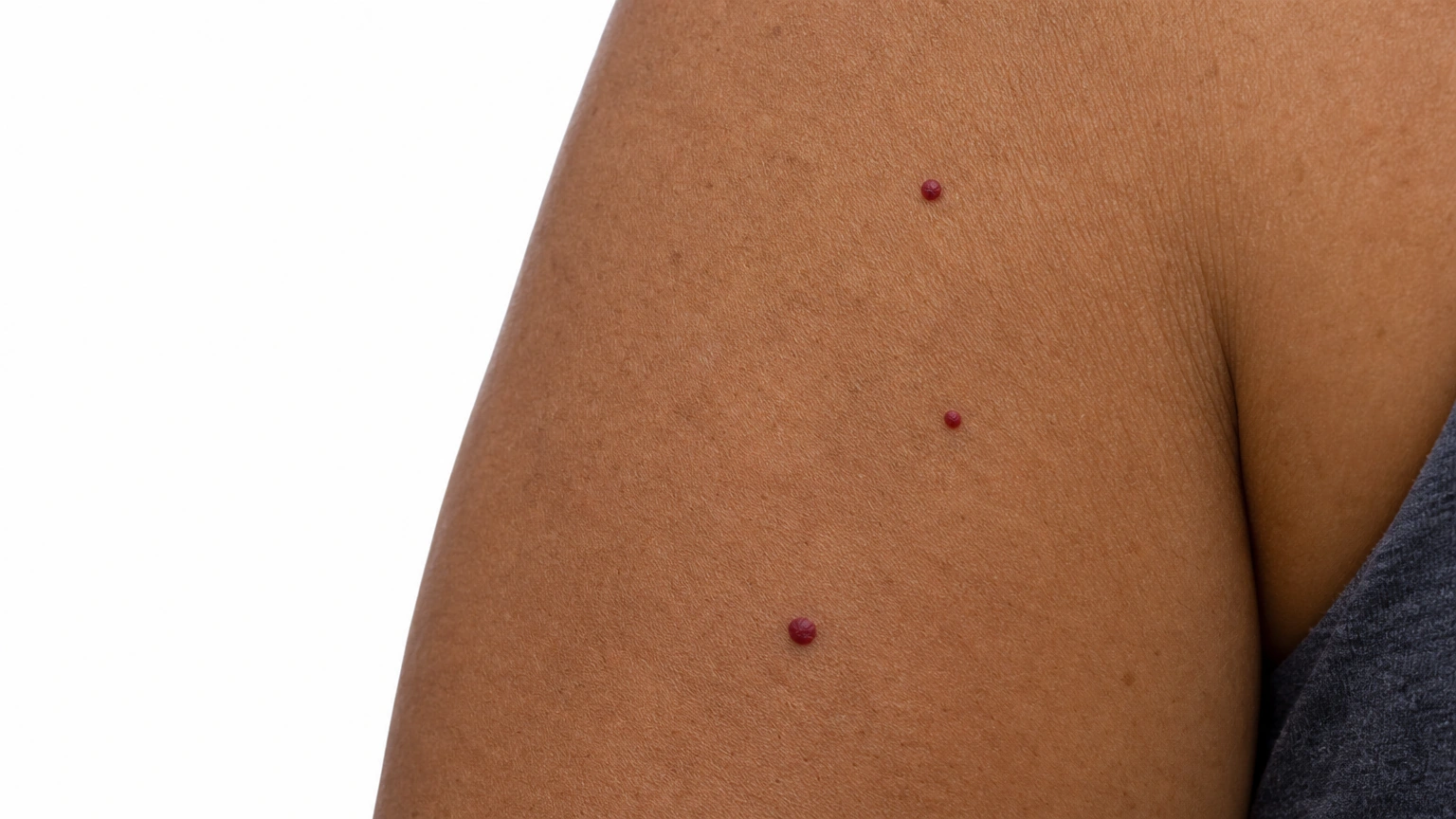
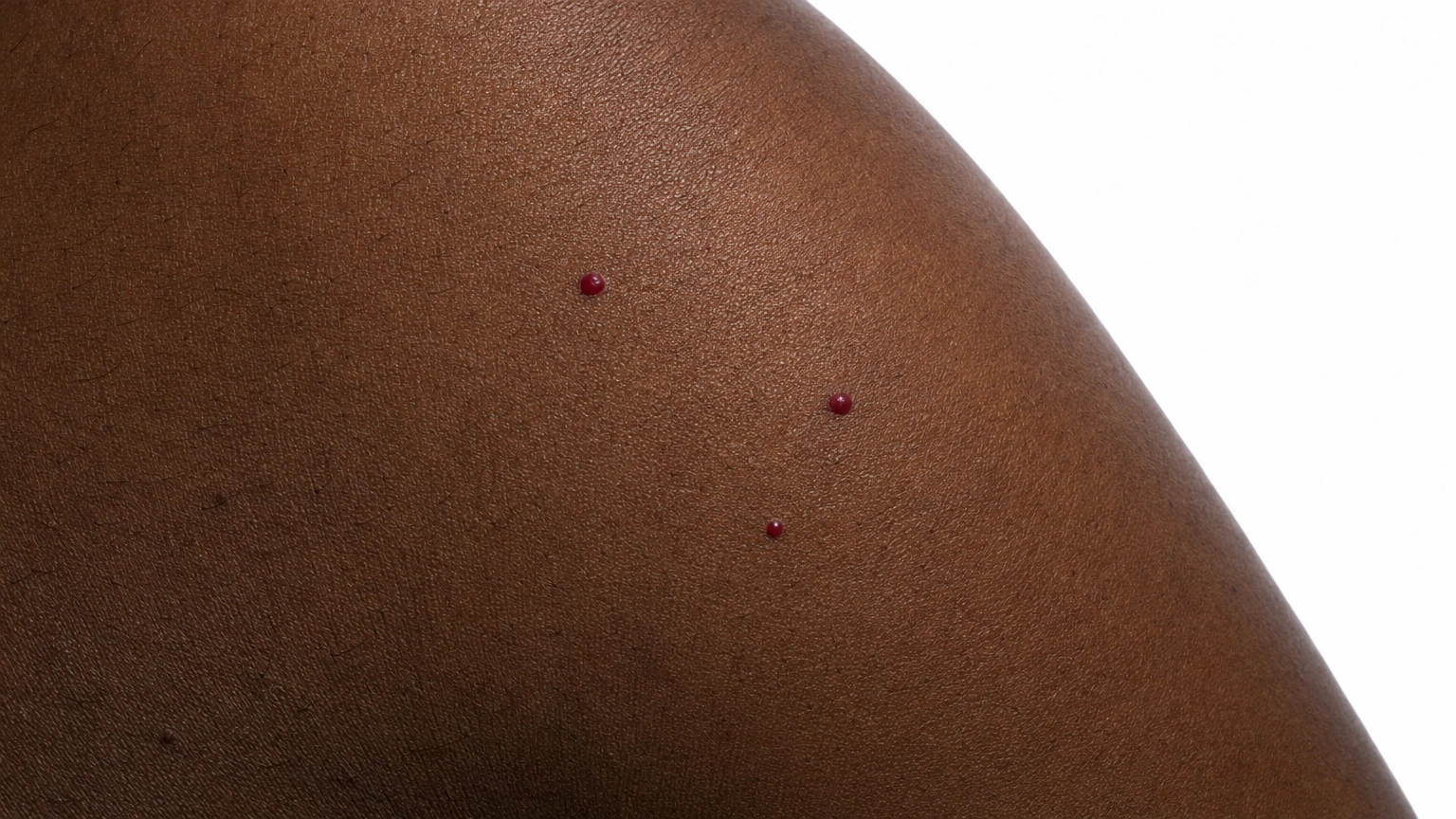
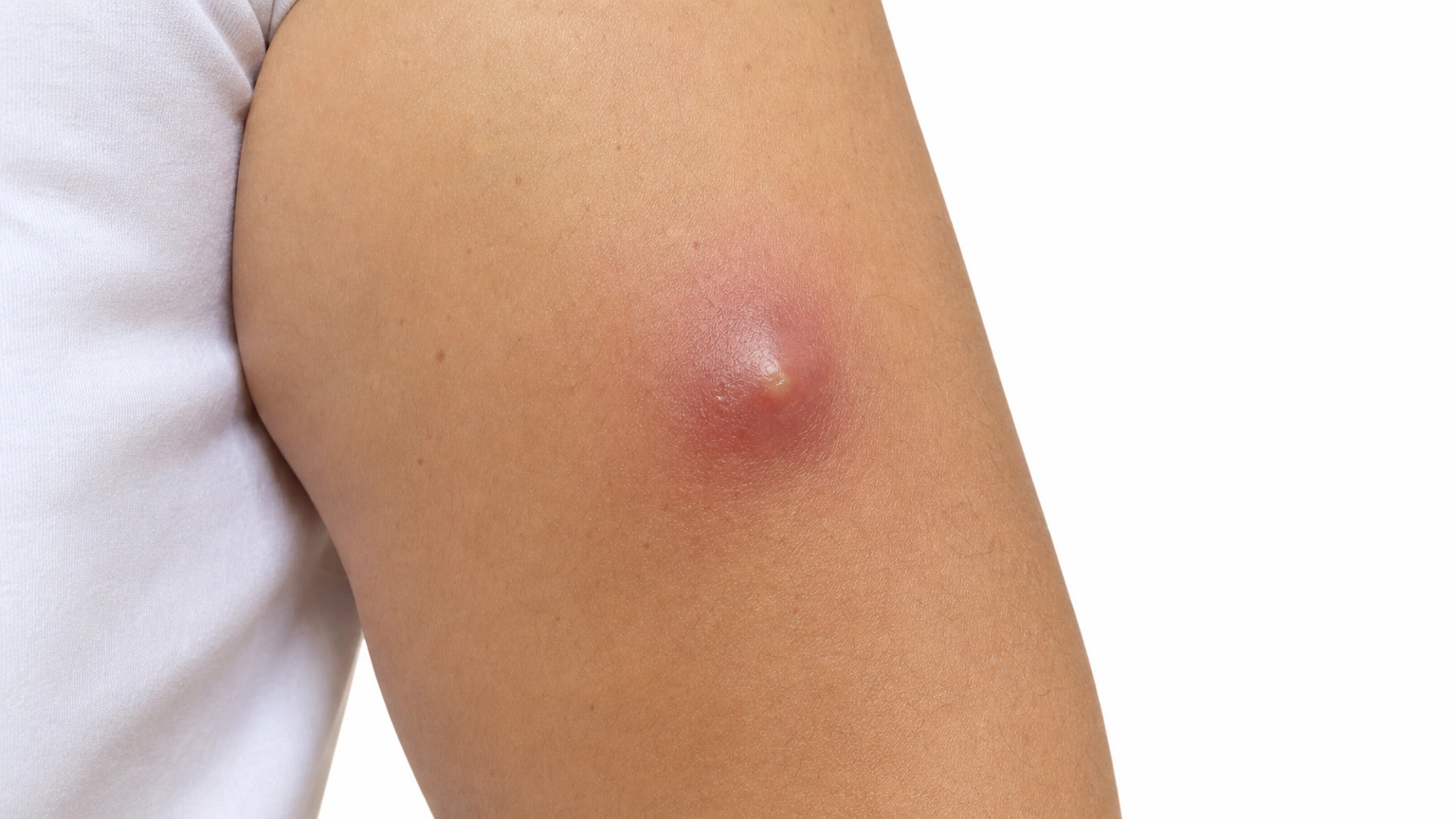
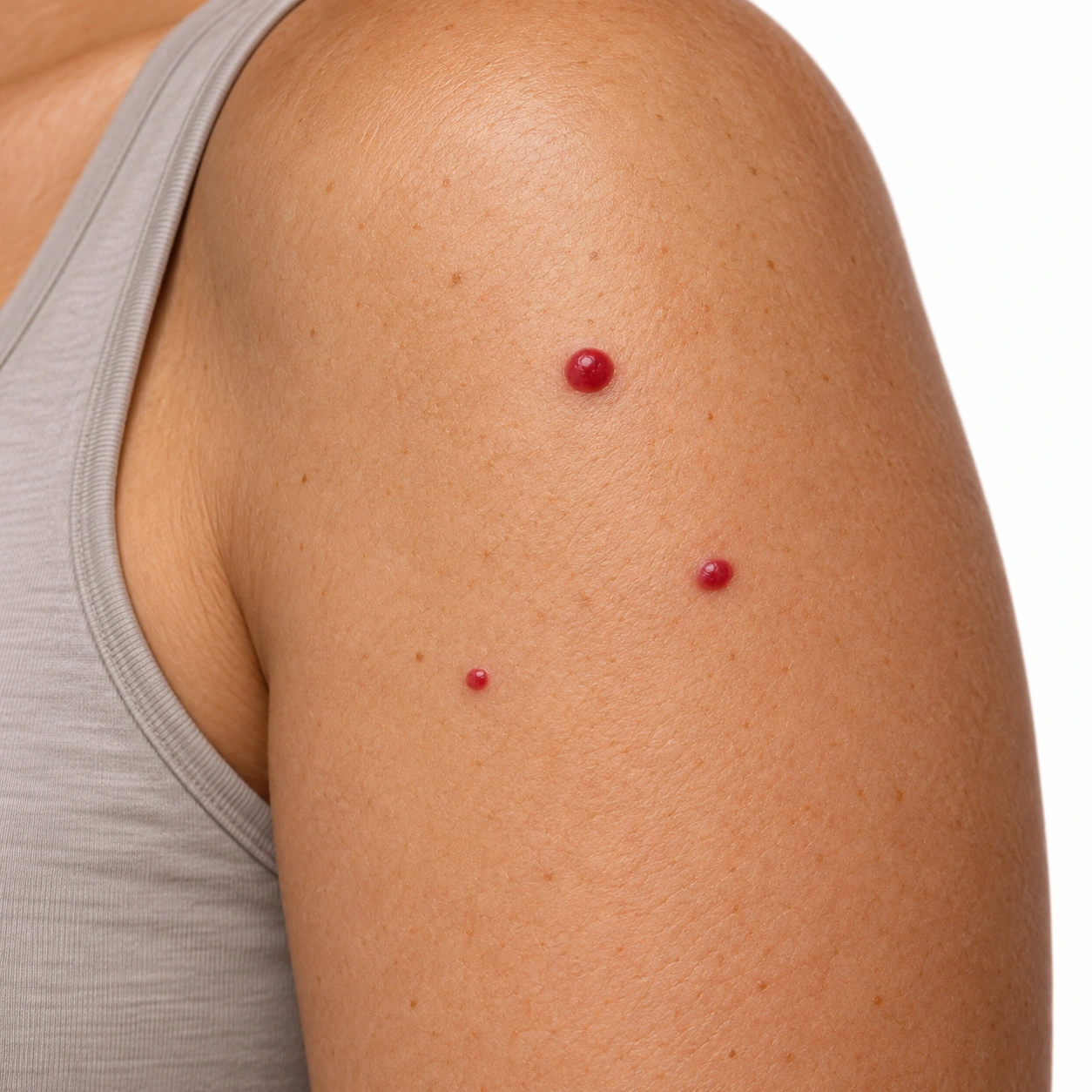
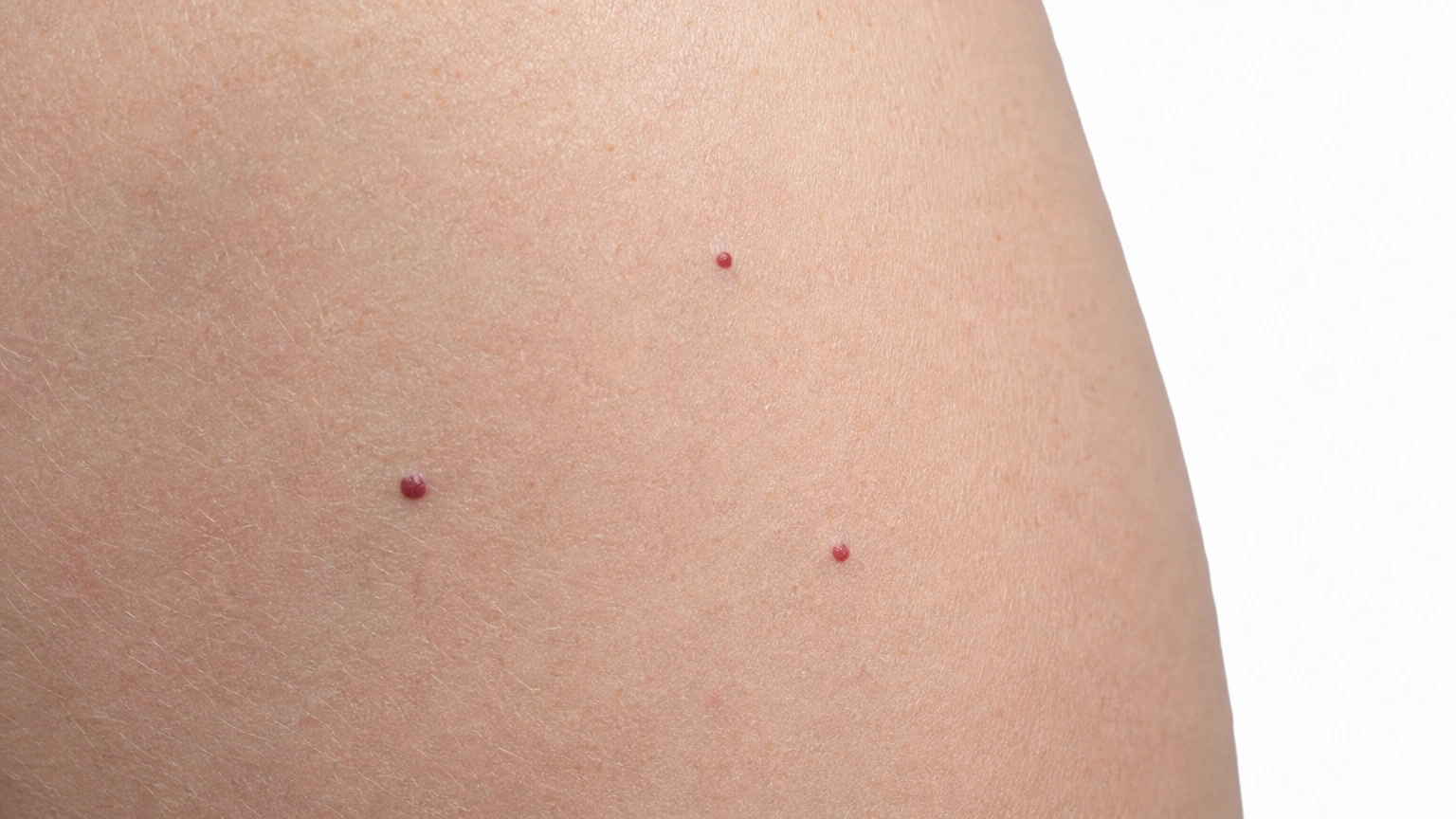
An upper arm with three small rounded red bumps.

Cherry Angioma Several smooth red bumps stand out on the upper arm.

Spider Angioma

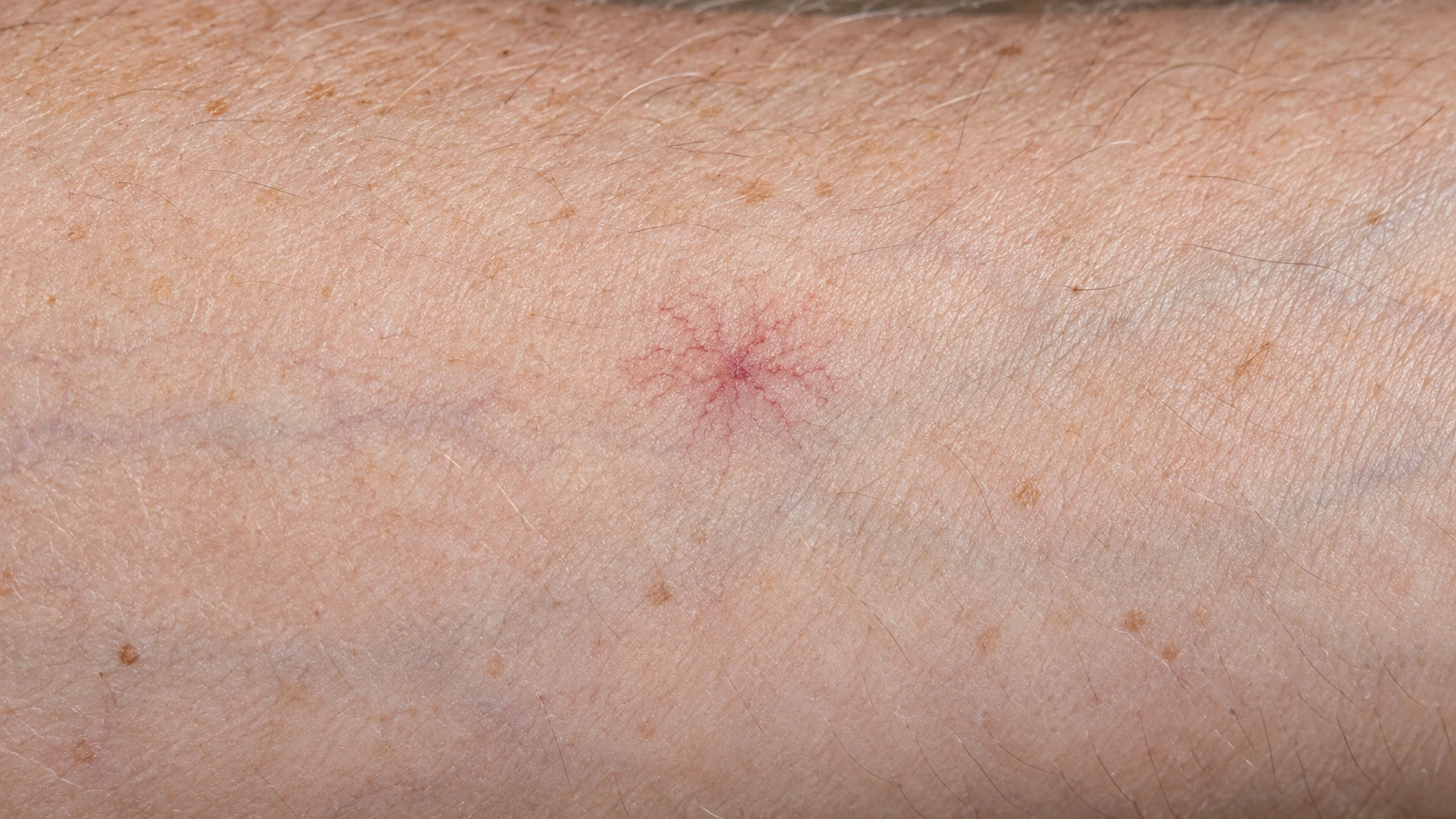
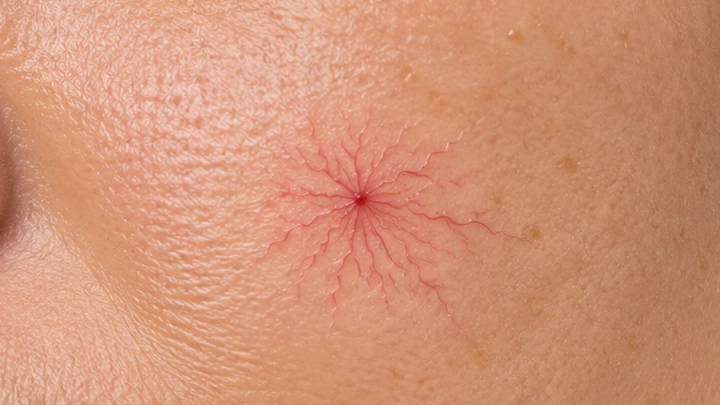
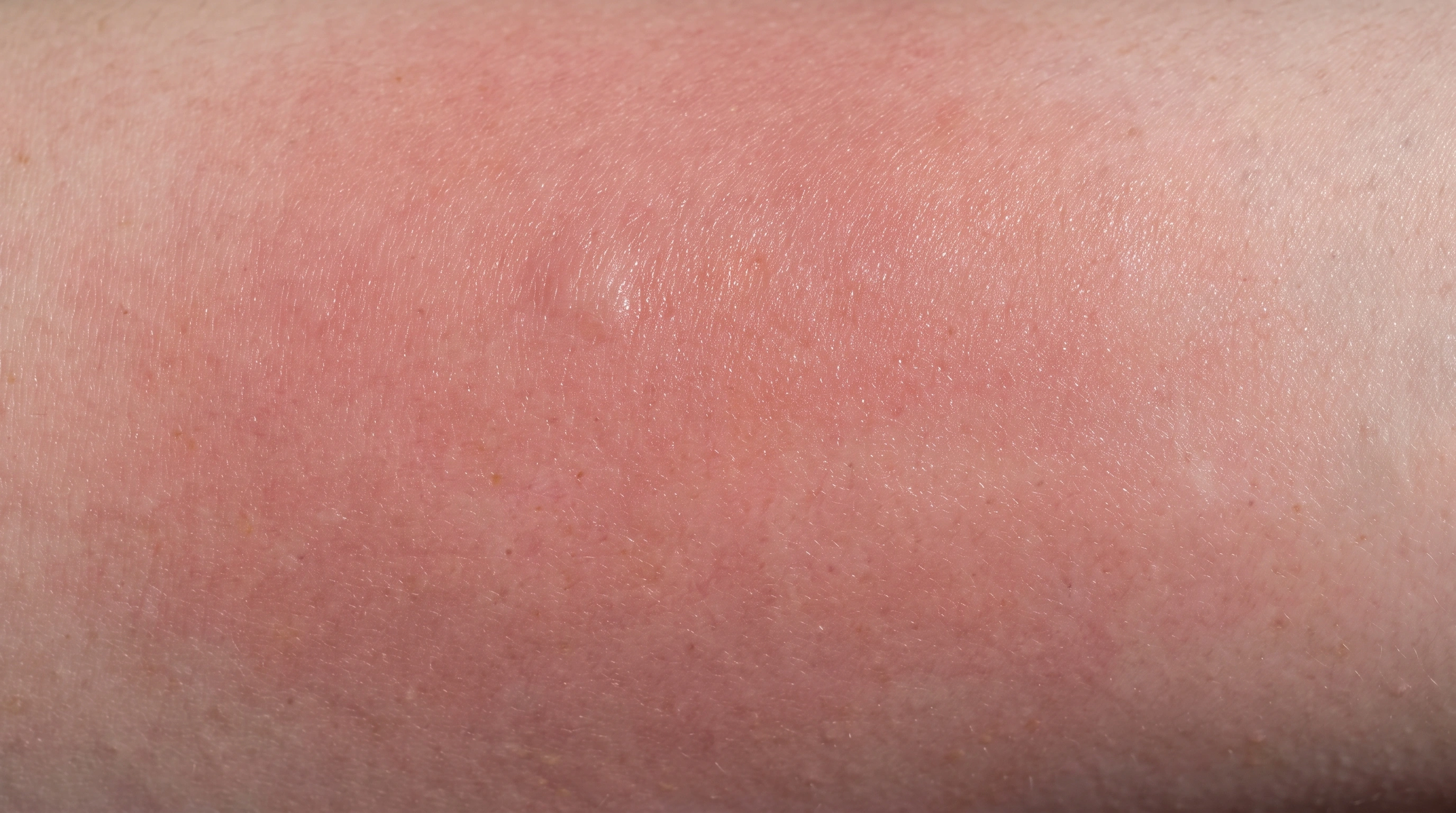
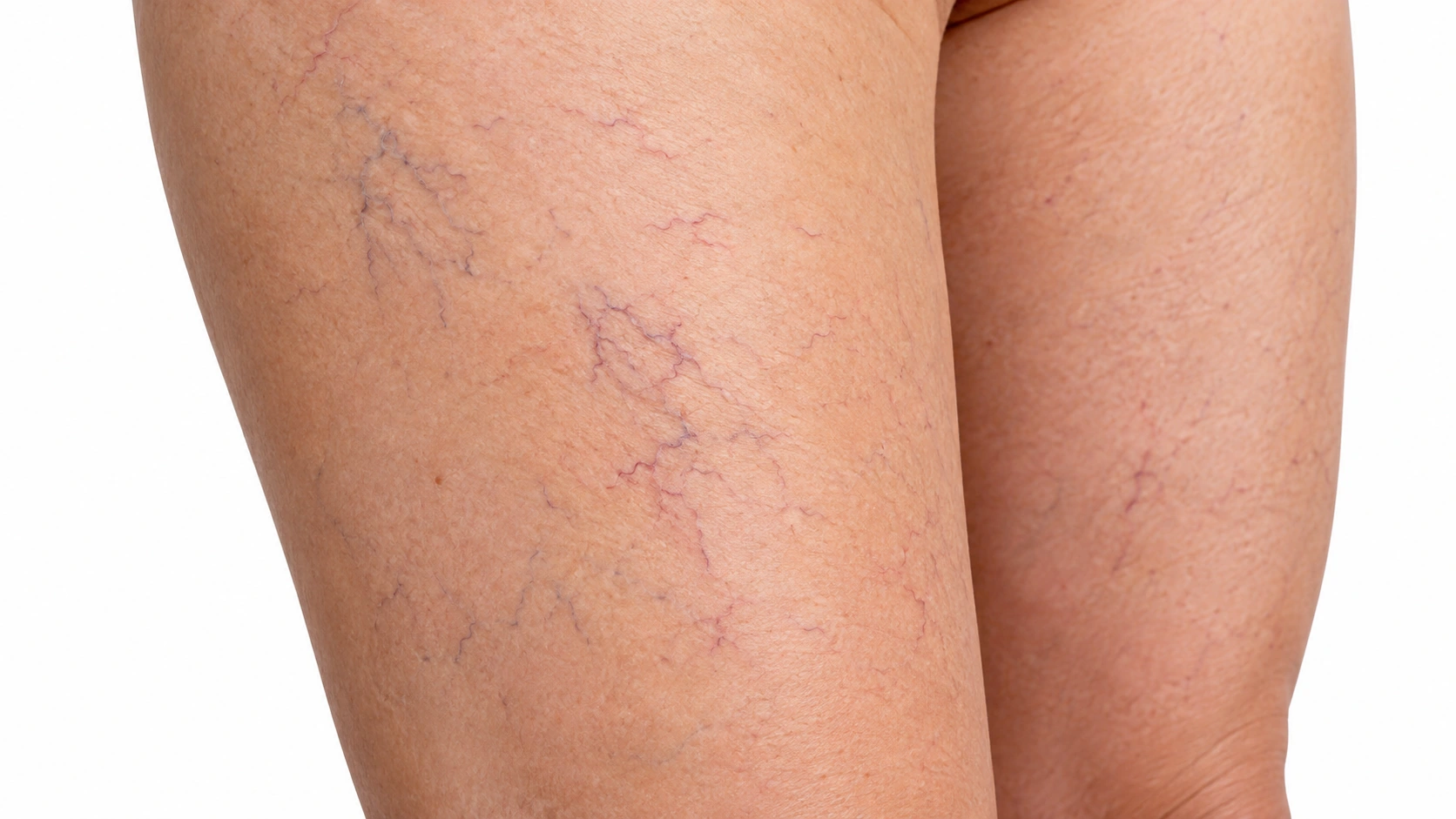
A cheek with a bright red central dot and tiny branching vessels radiating from it.

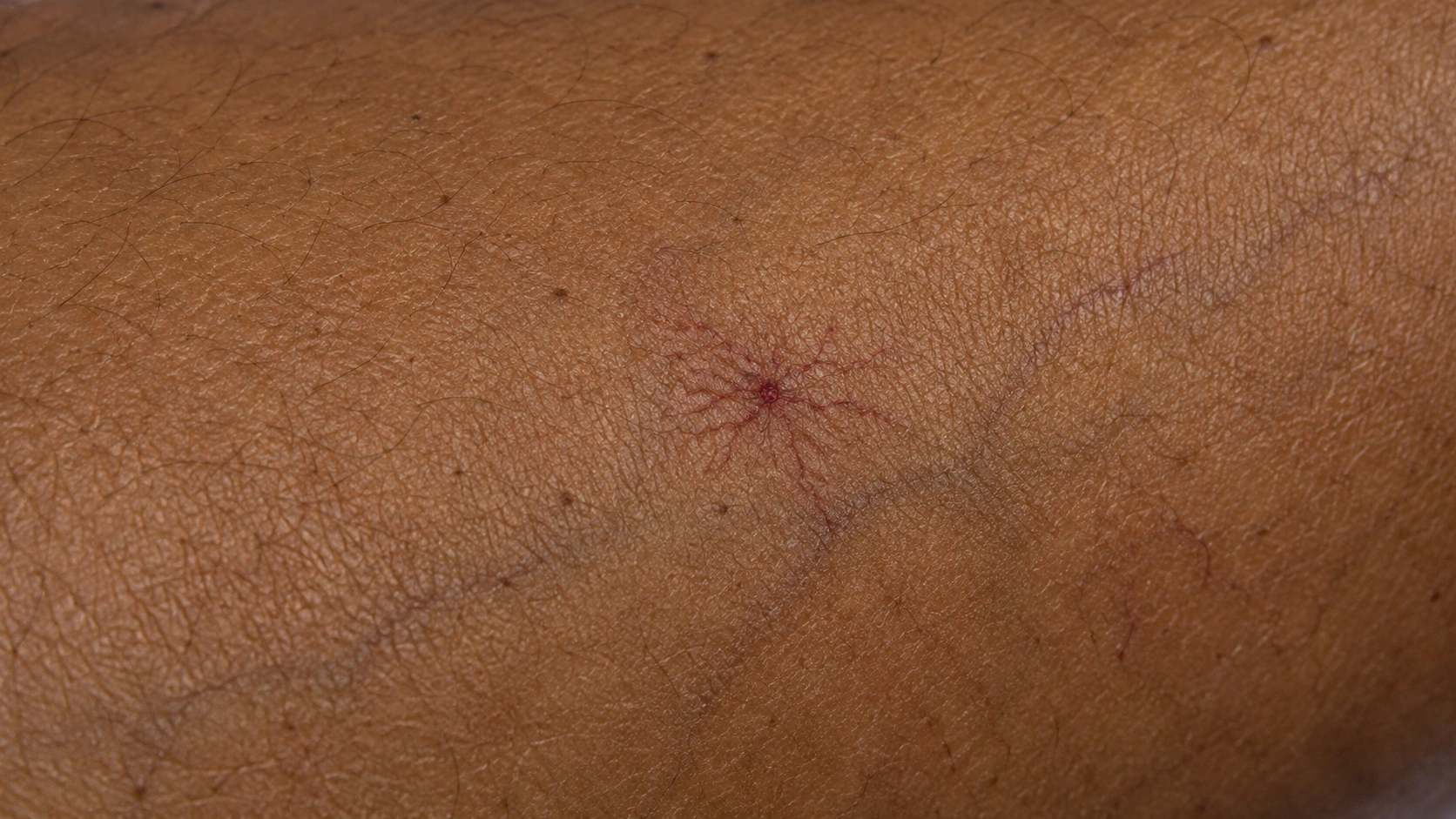
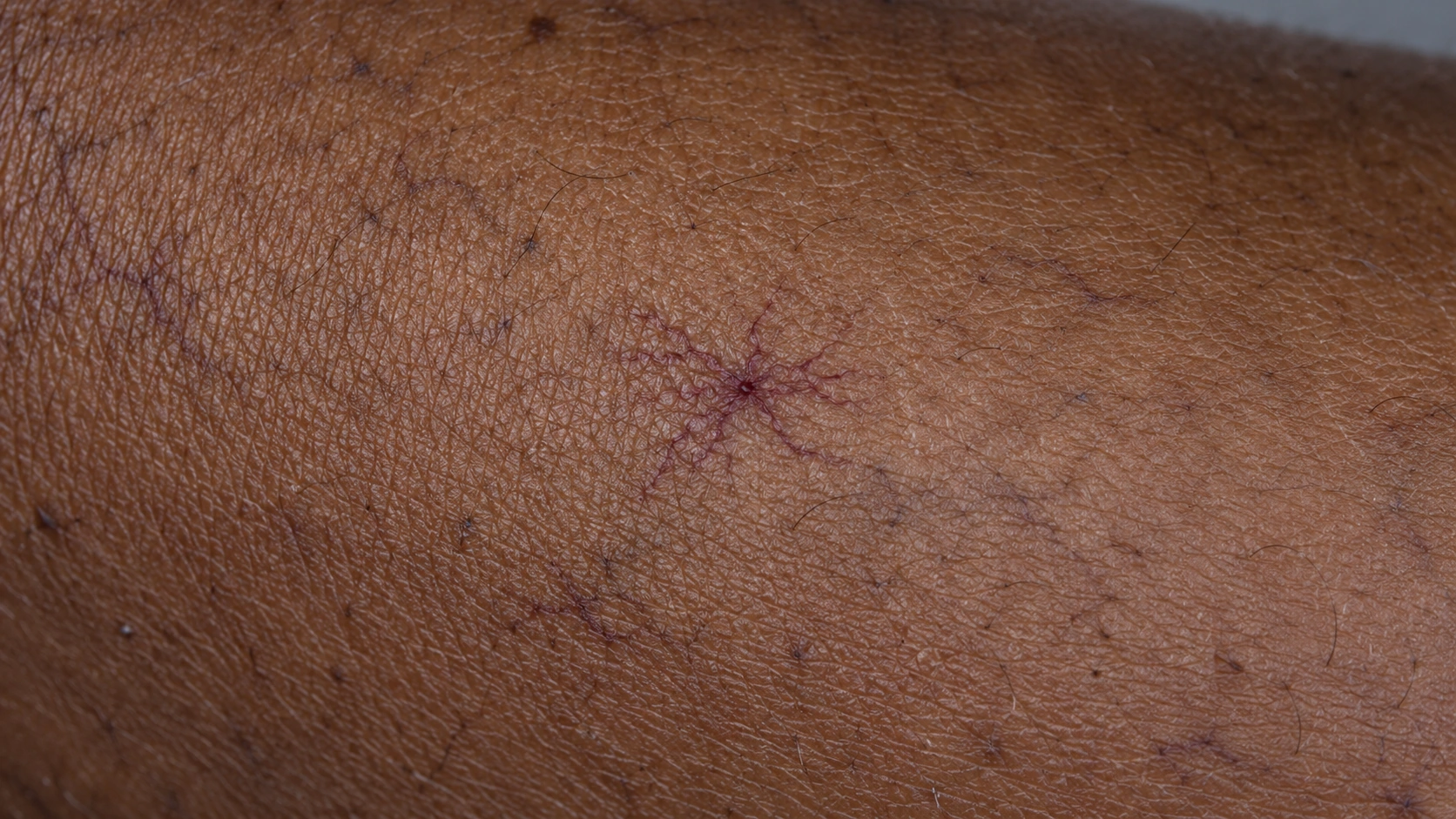
Spider Angioma Fine red lines spread outward from a small central spot.
Skin tones
Educational illustration of small smooth red vascular papules on an upper arm on light skin.
Educational illustration of small smooth red vascular papules on an upper arm on medium skin.
Educational illustration of small smooth red vascular papules on an upper arm on brown skin.
Educational illustration of small smooth red vascular papules on an upper arm on deep skin.
Spider Angioma.
Spider Angioma on medium skin.
Spider Angioma.
Spider Angioma.
In the skin

A benign collection of small blood vessels forms within the skin. The clustered vessels create a small red or purple bump.

A small central artery and its superficial branches become dilated. Blood in these connected vessels creates a central red point with radiating lines.

When it usually starts

010203040506070+

Cherry Angioma. More common with increasing adult age.

Spider Angioma. Can appear in children or adults.

Causes and triggers

Causes

Benign proliferation of small blood vessels forms a papule.

Dilation of a central arteriole and its branches creates the pattern.

Risk factors
Increasing age
Pregnancy, Oestrogen exposure, Liver disease in some cases
Trigger
● Cherry Angioma
● Spider Angioma
No established short-term flare trigger
Not a typical trigger

Daily Care

Cherry Angioma
Spider Angioma
Daily care

Habits that help

  • Leave a stable, clinician-confirmed benign lesion alone
    It may not need treatment if it is comfortable and not changing.
  • Reduce rubbing from clothing, shaving or hair tools
    Repeated injury can make a harmless lesion sore or cause bleeding.
  • Notice meaningful changes without repeatedly squeezing it
    Arrange examination for rapid growth, persistent bleeding or a change in appearance.
  • Protect exposed skin from sun damage
    Sunscreen supports general skin health; it does not remove an angioma.

Avoid

  • Avoid: Cutting, burning, freezing or acid removal at home
    Home removal can cause infection, scarring and delay the correct diagnosis.

Habits that help

  • Leave a stable, clinician-confirmed benign lesion alone
    It may not need treatment if it is comfortable and not changing.
  • Reduce rubbing from clothing, shaving or hair tools
    Repeated injury can make a harmless lesion sore or cause bleeding.
  • Notice meaningful changes without repeatedly squeezing it
    Arrange examination for rapid growth, persistent bleeding or a change in appearance.
  • Ask about new or numerous lesions
    Some occur with hormonal changes or underlying conditions; scrubbing cannot remove the central vessel.

Avoid

  • Avoid: Cutting, burning, freezing or acid removal at home
    Home removal can cause infection, scarring and delay the correct diagnosis.

Treatment differences

Evidence labels come from each condition’s own treatment list.

Treatment
● Cherry Angioma
● Spider Angioma
Procedures

Vascular laser or electrosurgery

Listed

May remove a troublesome lesion after diagnosis; do not destroy an uncertain pigmented spot at home.

Vascular laser or electrocautery

Listed

May reduce a lesion; multiple new lesions can warrant evaluation before cosmetic treatment.

Outlook

Long term

Confirmed cherry angiomas are harmless and often remain unless removed. More may appear with age; a changing or repeatedly bleeding spot should be checked rather than assumed to be an angioma.

Some spider angiomas fade, particularly when related to pregnancy, while others persist. Cosmetic treatment can help; new numerous lesions or other health symptoms warrant assessment.

Complications

Possible complications

A secure diagnosis matters because other lesions can look similar.

An isolated lesion is often harmless; many new lesions can warrant assessment for an underlying cause.

When to get help

When to get help

Have a new, growing, bleeding, painful or otherwise changing lesion examined.

Have a new, growing, bleeding, painful or otherwise changing lesion examined.

Common questions

Cherry Angioma:What is Cherry Angioma?

A common harmless small growth formed from blood vessels.

Cherry Angioma:What can I do day to day?

Avoid picking or home removal. Protect exposed skin from the sun.

Cherry Angioma:When should I get medical advice?

Have a new, growing, bleeding, painful or otherwise changing lesion examined.

Spider Angioma:What is Spider Angioma?

A small central vessel with radiating fine branches, also called spider telangiectasis.

Spider Angioma:What can I do day to day?

Avoid picking or home removal. Protect exposed skin from the sun.

Spider Angioma:When should I get medical advice?

Have a new, growing, bleeding, painful or otherwise changing lesion examined.

Sources
Sources and further reading

  1. Cherry angioma
  2. Spider telangiectasis
Dermapedia on YouTube