Accutane vs Aczone

Accutane: A high-dose oral vitamin A drug for severe or scarring acne. It is the only acne treatment that can produce lasting remission after a fixed course. Aczone: An anti-inflammatory gel for red, tender acne. It is not a retinoid and not a standard antibiotic, so it suits skin that cannot tolerate either.
Reviewed by Dr. Schwarz, Board-Certified Dermatologist
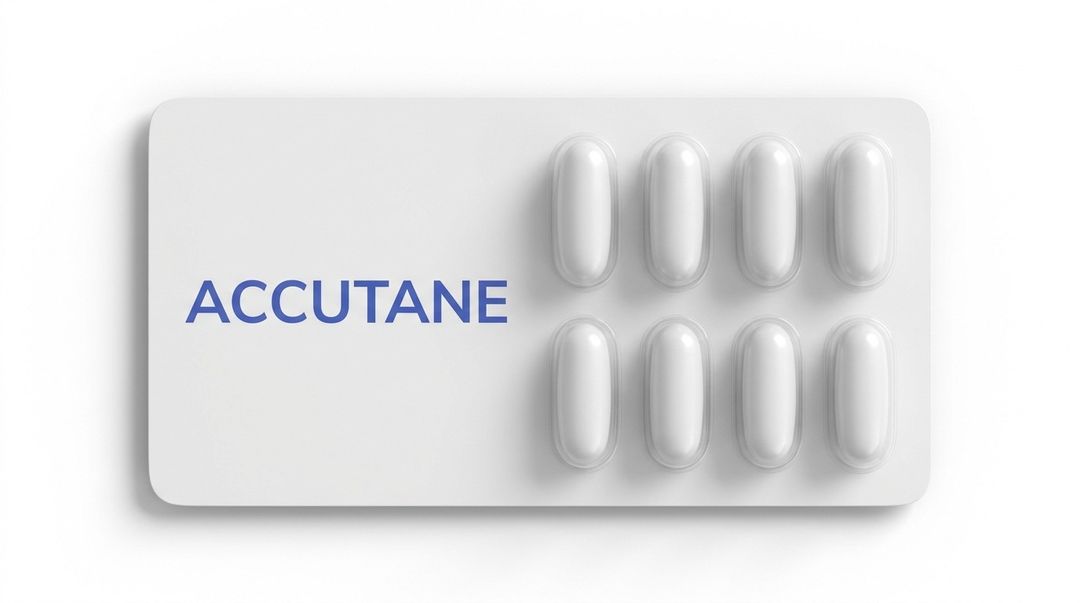
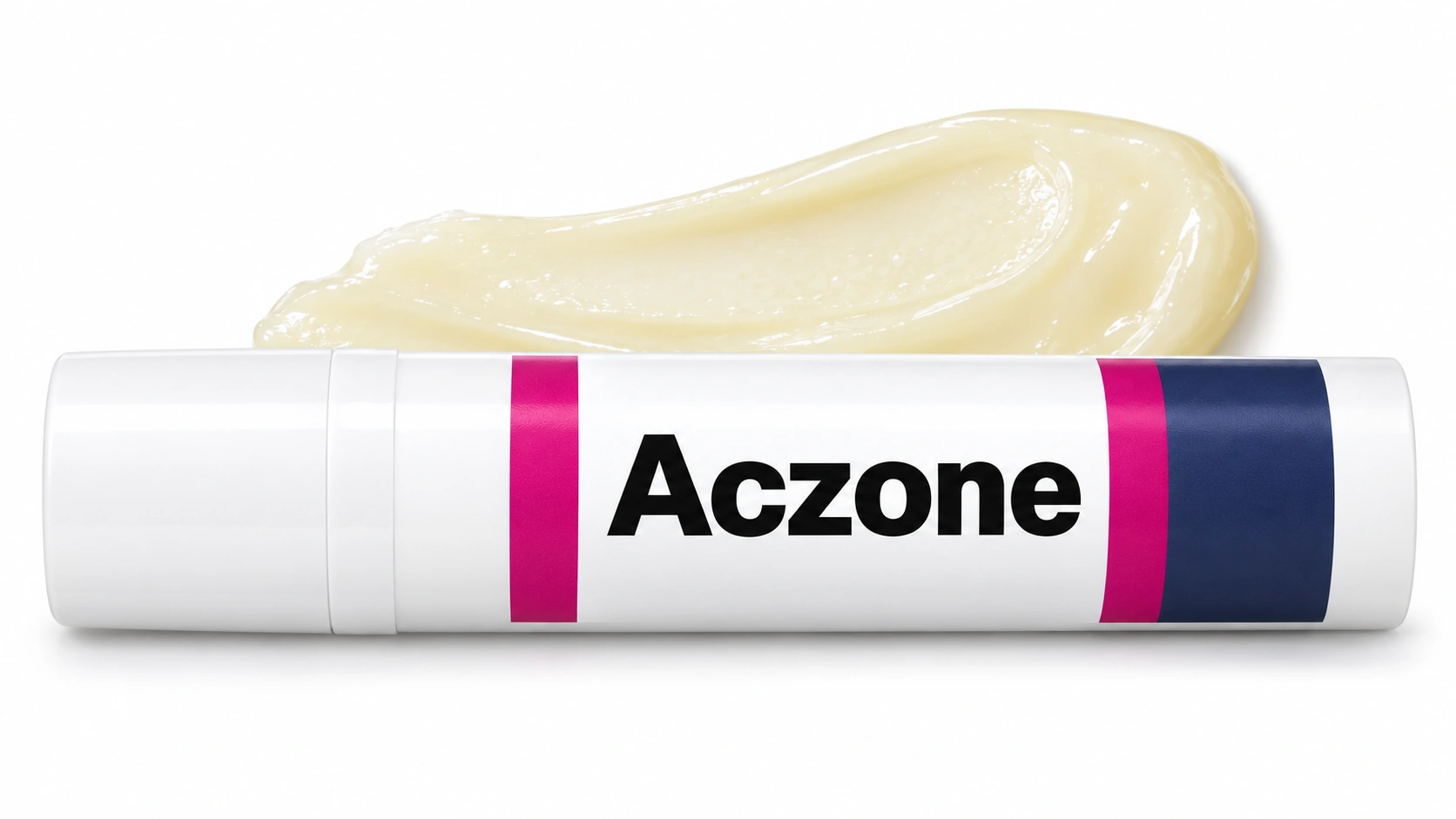
A white blister pack photographed flat on a white background, holding eight white oblong capsules in two rows of four under clear domes. ACCUTANE is printed in blue capitals on the empty left half of the foil.Aczone — Header Image

Which one is right for you?

Choose Accutane if…

Choose for severe, scarring or stubborn acne that keeps coming back after other treatments. It is the only acne medicine that can give lasting remission after one course.

  • Nodules or cysts, or acne leaving scars
  • Antibiotics and creams have not held it
  • You can commit to monthly visits and blood tests

Choose Aczone if…

Choose for red, tender acne when skin can't tolerate a retinoid or you want to avoid a standard antibiotic.

  • Inflamed spots rather than blackheads
  • Sensitive skin that reacts to retinoids
  • You want a morning step that sits well under makeup
Alternatives, not combined

Can you take them together?

Aczone is usually stopped once Accutane starts, because isotretinoin treats all the same acne pathways on its own. Aczone can be useful again for maintenance after the course.

At a glance

● Accutane
● Aczone
Type
Oral retinoid (isotretinoin)
Topical anti-inflammatory (dapsone gel)
What it does
Shrinks oil glands and stops pores clogging
Calms red, tender acne spots
Best for
Severe or scarring acne
Inflamed acne
Prescription
Yes, through the iPLEDGE program
Yes
Form
Capsule
Gel, 5% or 7.5%
How often
Once or twice daily with a fatty meal
7.5% once daily; 5% twice daily
Course length
5–8 months
Ongoing
Time to results
Steady clearing from about week 4
4–12 weeks
Main side effect
Dry lips and skin
Mild dryness
Blood tests
Liver and cholesterol
None for the gel
Pregnancy
Never
Check with your clinician
Cost
Moderate; generic available

What it treats

Compare uses by strength of evidence. Evidence level describes confidence in a benefit, not its size.

Evidence level
Accutane
Aczone
Strong evidenceMost established uses
Inflamed acne on light skin. The spots sit in a patch of pink, and the ring of redness around each one is easy to see. A few have a yellow-white head, and the skin between them is dry and flaking.

Acne

Clears severe and stubborn acne.
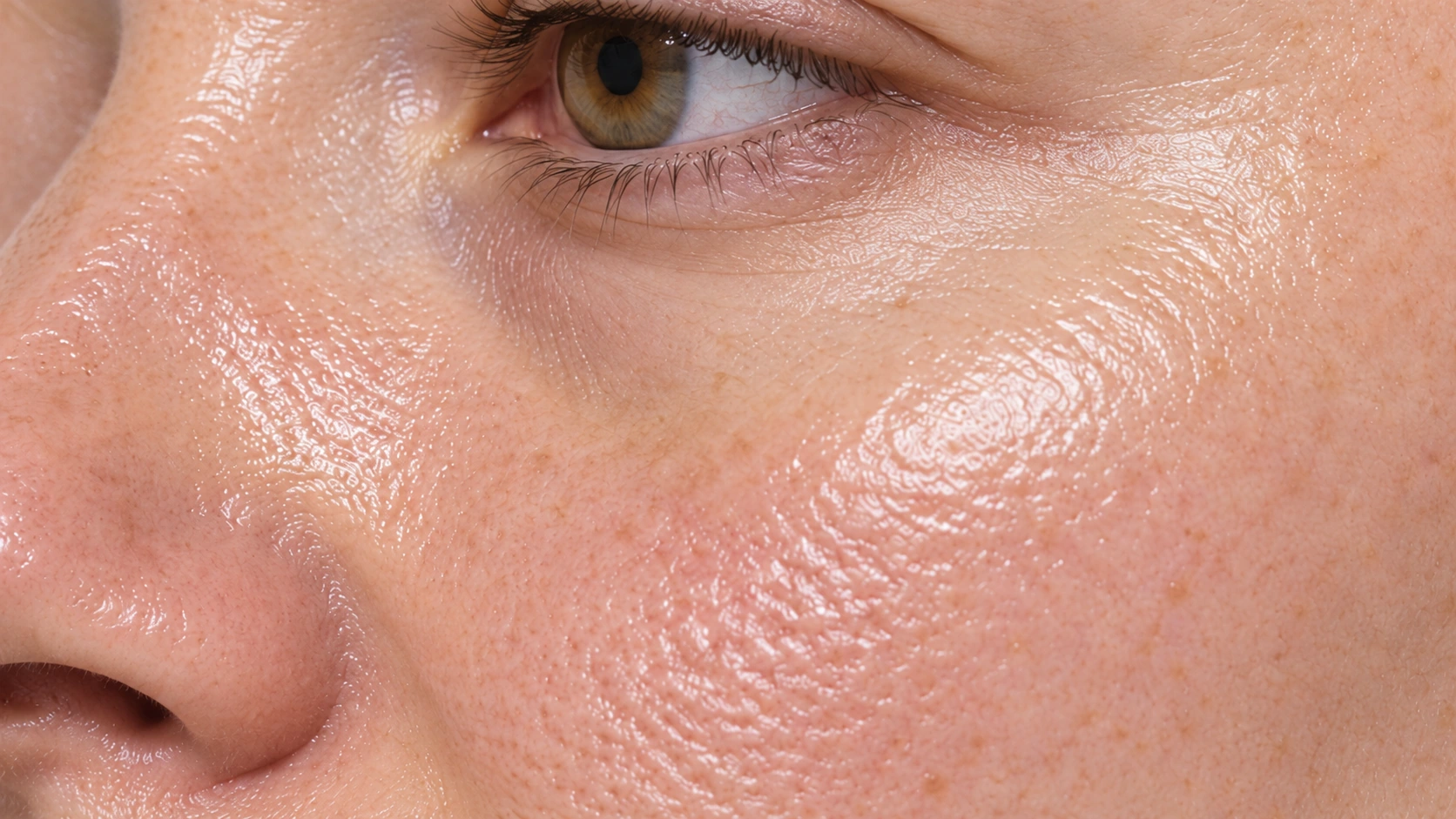
Visible sebum shine and natural pores on the nose and cheek.

Oily Skin

Sharply reduces oil.
Inflamed acne on light skin. The spots sit in a patch of pink, and the ring of redness around each one is easy to see. A few have a yellow-white head, and the skin between them is dry and flaking.

Acne

Reduces inflamed breakouts in large trials.
Moderate evidenceSome supportive research
Redness and fine superficial vessels across a light-skinned cheek and nose.

Rosacea

Low doses help stubborn bumps.
—
Limited evidenceEarly or small studies
—
Redness and fine superficial vessels across a light-skinned cheek and nose.

Rosacea

Small studies show fewer bumps.
Little evidence
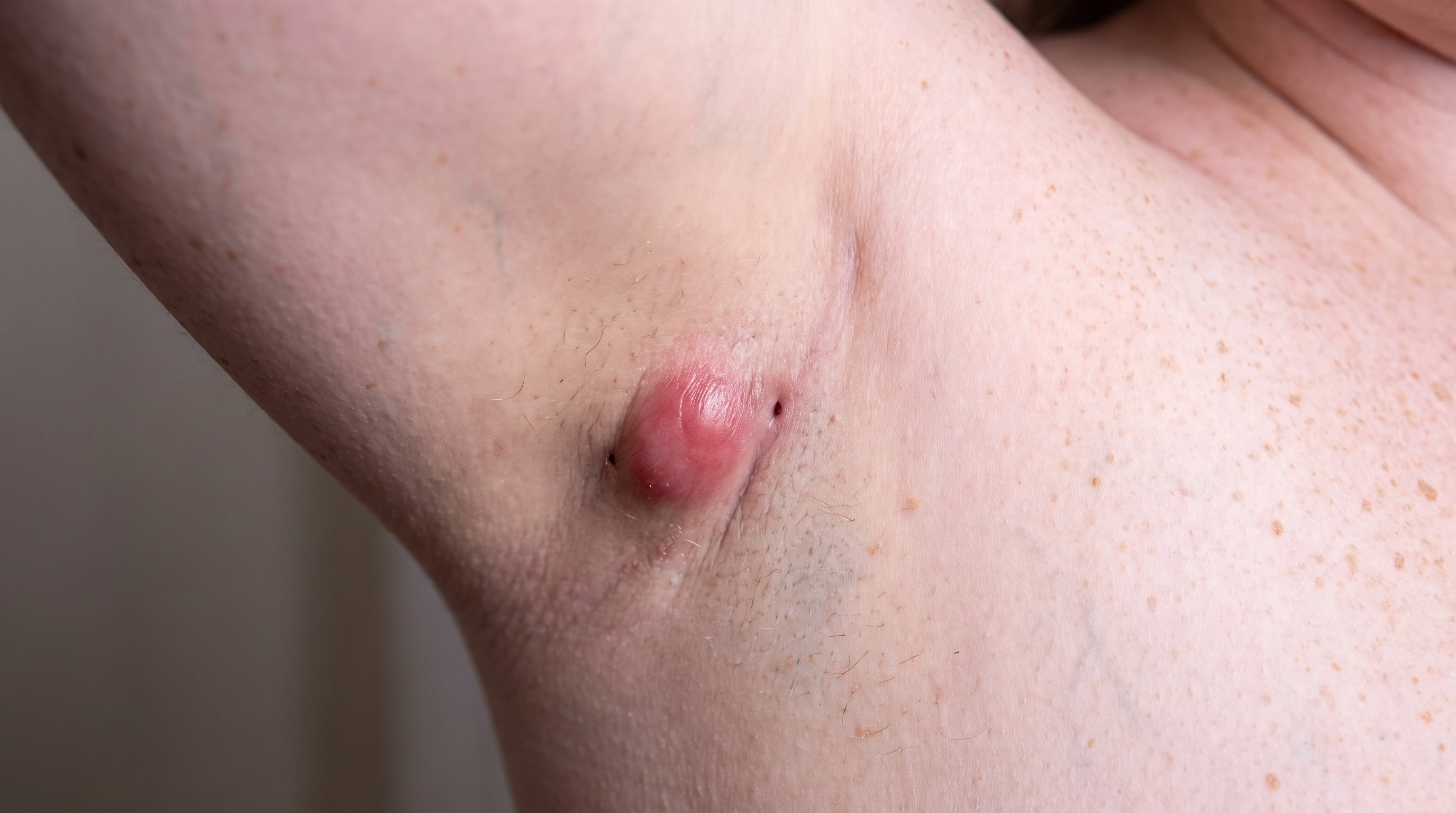
An inflamed lump in the armpit on fair skin. The skin over it is swollen, shiny and red, with a pair of small blackhead-like openings in the skin beside it.

Hidradenitis Suppurativa

Usually not helpful.
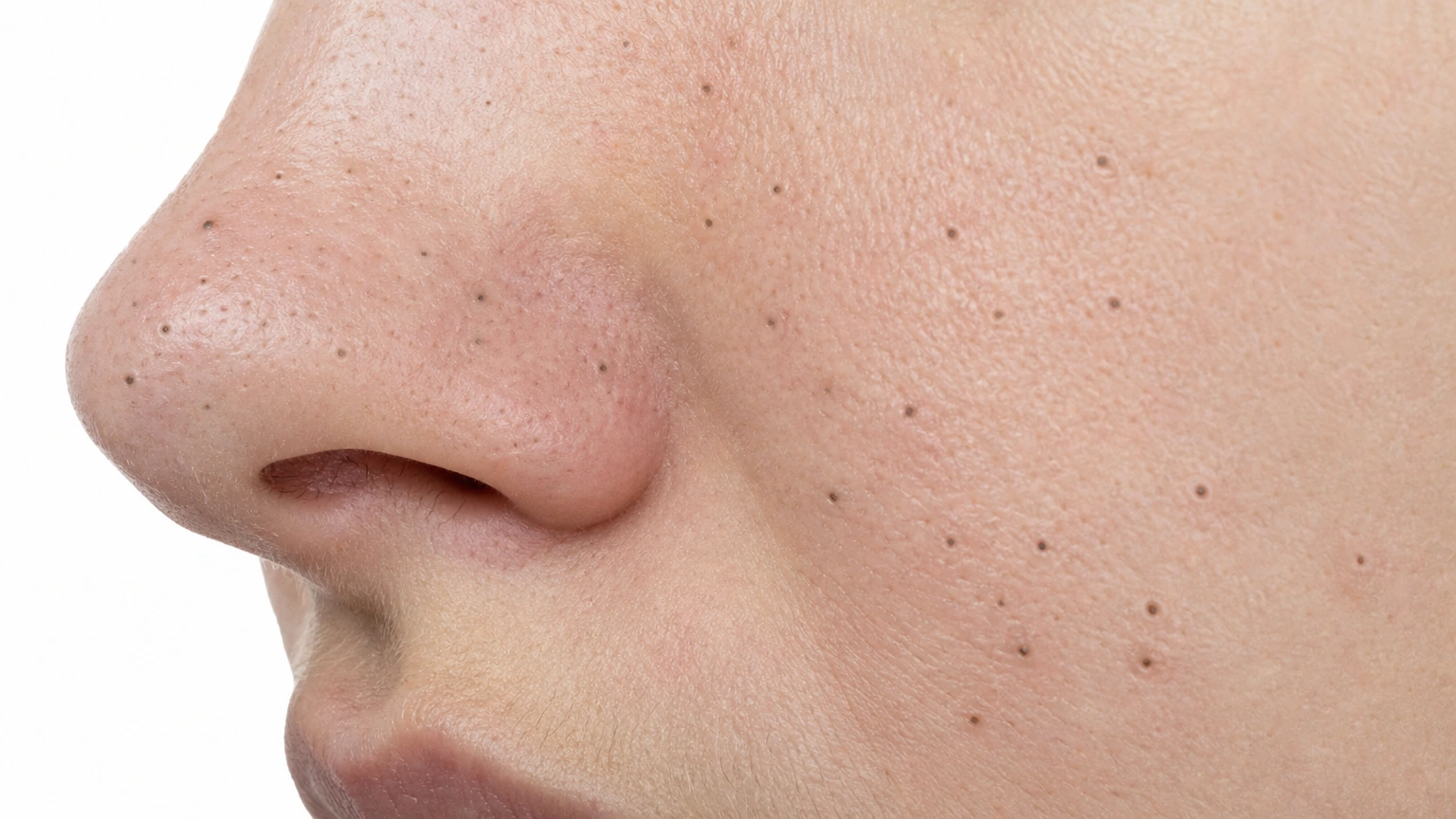
dark keratin plugs in dilated pores on the nose and adjacent left cheek, with the face turned to the person’s right on light skin.

Blackheads

Weaker on clogged pores than retinoids.
Not effective
Acne scarring on light skin. Small sharply cut pits and broad shallow dips across a cheek, several sitting inside faint flat pink marks, with no active spots.

Acne Scarring

Doesn't treat existing scars.
Acne scarring on light skin. Small sharply cut pits and broad shallow dips across a cheek, several sitting inside faint flat pink marks, with no active spots.

Acne Scarring

Doesn't change scars.
Can make it worse
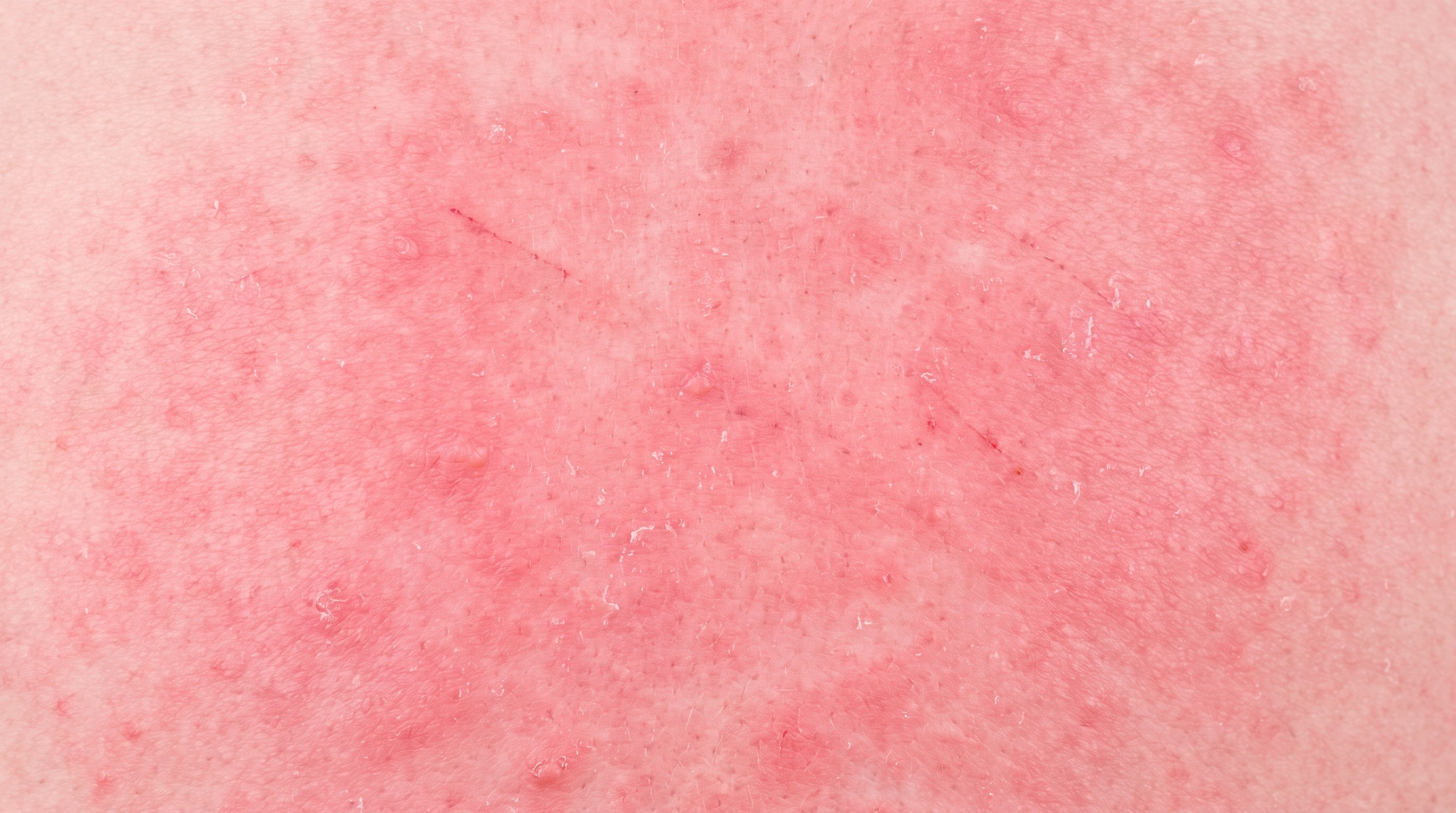
Extreme close-up of light skin in an active eczema flare, too close to tell which part of the body it is. Blotchy pink-red inflammation covers the whole frame with no clear edge, with small raised bumps, fine dry scale and a few fresh scratch marks.

Eczema

Severe dryness can trigger flares.
—
How it works

Accutane

Isotretinoin mechanism diagram. Reduces pore clogging: Helps normalize cell buildup inside follicles. Reduces acne bacteria: Less oil makes follicles less favorable for C. acnes. Makes less oil: Shrinks oil glands and reduces their oil output. Calms inflammation: Dampens immune responses involved in acne.
Open full-size diagram
Diagram explanation and sources

Reduces pore clogging: Helps normalize cell buildup inside follicles. Reduces acne bacteria: Less oil makes follicles less favorable for C. acnes. Makes less oil: Shrinks oil glands and reduces their oil output. Calms inflammation: Dampens immune responses involved in acne.

Oral isotretinoin mechanism overview. Reduced C. acnes is an indirect effect of a changed follicular environment, not antibiotic action. The complete mechanism is not known. Gland outline is conceptual, not a measured size reduction or permanent cure.
Source 1 · Source 2 · Source 3 · Source 4

Aczone

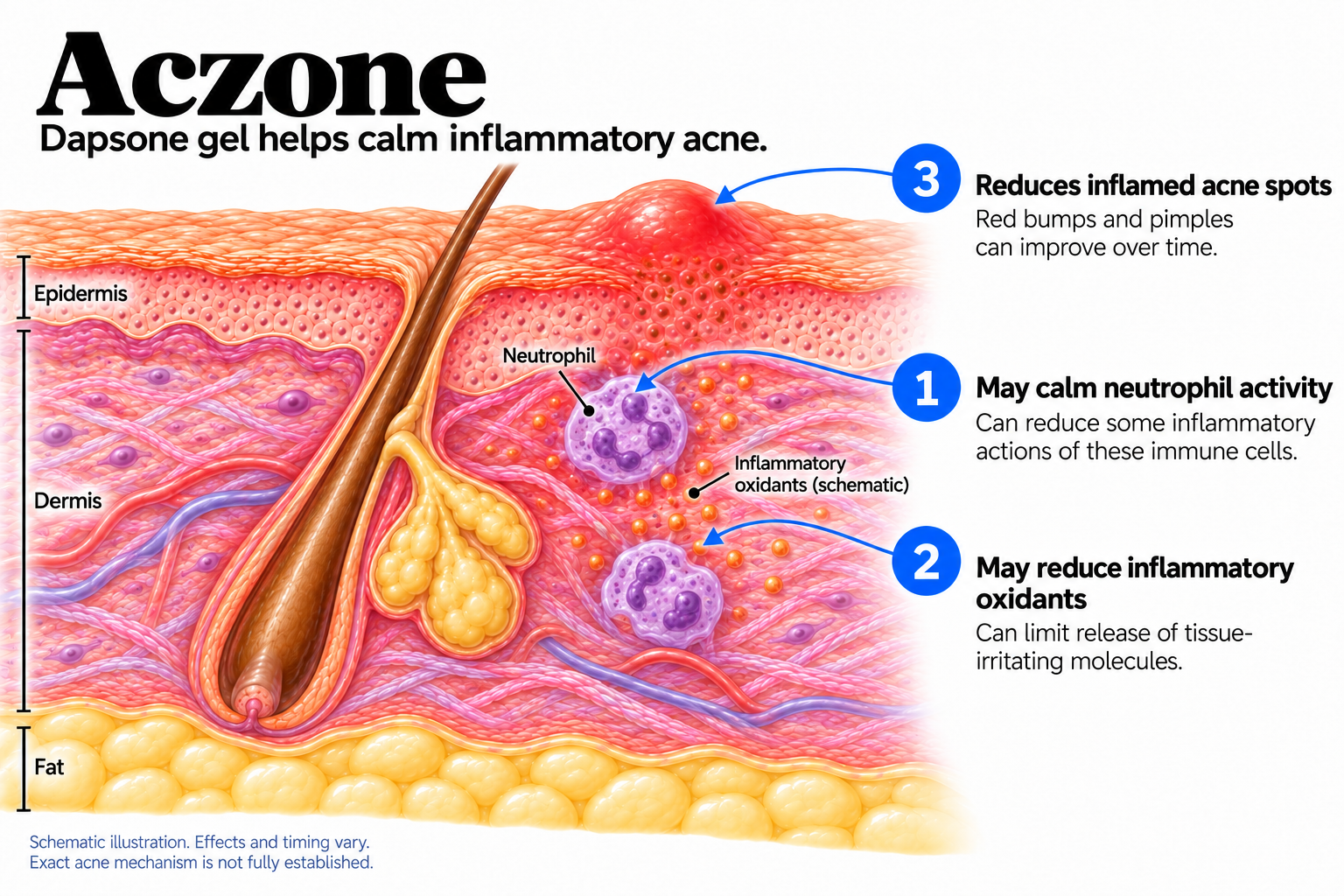
Aczone. Dapsone gel helps calm inflammatory acne. 1. May calm neutrophil activity: Can reduce some inflammatory actions of these immune cells. 2. May reduce inflammatory oxidants: Can limit release of tissue-irritating molecules. 3. Reduces inflamed acne spots: Red bumps and pimples can improve over time.
Open full-size diagram
Diagram explanation and sources

May calm neutrophil activity: Can reduce some inflammatory actions of these immune cells. May reduce inflammatory oxidants: Can limit release of tissue-irritating molecules. Reduces inflamed acne spots: Red bumps and pimples can improve over time.

The acne mechanism is unknown. Neutrophil and oxidant explanations are proposed based on experimental studies, not established as the cause of topical clinical benefit.

Source 1 · Source 2 · Source 3

How you take it

Treatment plan

Dose is set by body weight, and the total across the whole course matters more than any single day.

Starting dose: Often about 0.5 mg/kg a day, sometimes lower to ease into the side effects. Not the target.
Going up: Usually raised after the first month or two if blood tests and side effects allow, commonly to about 1 mg/kg a day.
Usual dose: About 0.5 to 1 mg/kg daily for most of the course.
Total course: Judged by cumulative dose, usually about 120 to 150 mg/kg of body weight. Reaching that total is what cuts relapse. Most people need five to eight months.

When to Apply: Clean dry skin, whole affected area. The 7.5% gel once a day, the 5% gel twice, usually in the morning so the night is free for a retinoid.

How to Start: Full strength from day one. It dries clear and sits well under makeup and sunscreen.

If It Irritates: Uncommon — usually mild dryness a moisturizer settles. With benzoyl peroxide at the same moment it can turn skin temporarily orange-brown, which is harmless and avoided by using the two at different times of day.

If It’s Not Working: Give it twelve weeks. There is no step up in strength, so the next move is adding or changing a drug.

When to take it

With a fatty meal, unless you have the formulation made to work without food. Absorption of standard capsules roughly doubles with fat, so an empty stomach lowers your dose. Splitting the daily amount into two doses with meals is common.

Not covered in this guide yet
If you miss a dose

Take it with your next meal if it is the same day, otherwise skip it. Do not double up. The total over months is what counts, and the missed dose moves to the end of the course.

Not covered in this guide yet
Monitoring

Liver enzymes and triglycerides are checked before you start and again during the course, usually in the early months and after a dose increase. Cholesterol and triglycerides commonly rise, then settle afterwards.

Anyone who can become pregnant is enrolled in iPLEDGE, a federal safety program requiring two forms of contraception or documented abstinence, a pregnancy test before starting, monthly tests during, and pickup inside set time windows. Miss a window and that month starts again.

Nobody stays on this drug. The course ends, and the effect on the oil gland lasts, so most people need nothing more than a topical retinoid. A smaller group needs a second course.

No routine blood tests for the gel. Unlike dapsone tablets, you do not need G6PD testing first, because so little is absorbed.

You can stay on this for years, and nothing accumulates. Review is clinical, at about twelve weeks and then yearly.

When you’ll see results

Approximate windows, not promises.

● Accutane
● Aczone
Weeks 1 to 4

Weeks 1 to 4Dry lips first, almost always. Skin dries. Acne may flare.

Weeks 1 to 4Red, tender spots calm down. Blackheads and whiteheads look unchanged.

Weeks 4 to 12

Weeks 4 to 12Steady clearing. Dryness peaks and stays.

Months 4 to 6

Months 4 to 6Most people are clear or nearly clear.

After the course

After the courseSkin keeps improving for a few months, and dryness clears within weeks to a couple of months.

Weeks 4 to 8

Weeks 4 to 8Fewer new inflamed spots.

After 12 weeks

After 12 weeksIf inflamed acne has not improved, move on. Judge it on red spots only — it was never going to fix clogs.

Side effects

Sorted by what to do about them.

Accutane

Aczone

Common
Common
  • Dry, cracked lips (almost everyone)
  • Dry skin, eyes and nose; nosebleeds
  • Acne may flare in the first month
Common
  • Mild dryness or oiliness
  • Orange tint if used with benzoyl peroxide at the same time
Tell your doctor
Tell your doctor
  • Low mood, anxiety or feeling not yourself
  • Joint or muscle aches that limit exercise
  • Trouble seeing at night
Tell your doctor
  • Irritation that doesn't settle
Stop and get care
Stop and get care
  • Severe headache with blurred vision
  • Severe stomach pain or yellowing skin
  • Thoughts of self-harm
Stop and get care
  • A spreading rash or blisters
  • Breathlessness, pale skin or blue-tinged lips

Safety and who should avoid it

Pregnancy
Never
Causes severe birth defects. Anyone who can become pregnant is enrolled in iPLEDGE: two forms of contraception or documented abstinence, and monthly pregnancy tests.
Ask first
Discuss with your clinician.
Breastfeeding
Avoid
Not recommended.
Ask first
Discuss with your clinician.
Children
Teens OK
Commonly used from about age 12.
9 and older
Approved from age 9 (7.5%) or 12 (5%).
Monitoring
Required
Liver enzymes and triglycerides before starting and during the course, plus monthly visits.
None routine
Unlike dapsone tablets, no blood tests.
Key interactions
Check
Tetracycline antibiotics (raised pressure around the brain) and vitamin A supplements.
Check
Benzoyl peroxide at the same time (orange tint); oral dapsone.
Other cautions
Discuss
Tell your doctor about any history of depression or mood problems.
Avoid
Allergy to dapsone or sulfones.

Cost and getting it

Getting it and cost

Generic isotretinoin is moderately priced; the formulations that absorb without food cost much more. The real obstacle is not cost but iPLEDGE, with monthly appointments and pickup windows to plan travel and work around.

Generic dapsone gel comes in both strengths and costs far less than it used to, though still more than generic clindamycin or benzoyl peroxide. Some plans want prior authorization, usually after a retinoid.

When you stop

Comes back?
Most stay clear or much improved. About one in five needs a second course, more likely with early-teen onset, very oily skin, hormonal acne, or stopping short of the target dose.
Yes. Red spots come back within weeks to a couple of months.
Taper needed?
No. There is no withdrawal and no taper — the course ends once you reach the target total dose.
No rebound and no taper.
After the last dose
Dryness clears over weeks to a couple of months, and skin often keeps improving for three to six months. Pregnancy precautions continue for one month after the last capsule.
Inflammation returns to its old level.

Common questions

Accutane:Does isotretinoin cause depression?

The label warns about mood changes and some people report them. Large studies have not shown that isotretinoin causes depression, and severe acne itself is strongly linked to low mood. Mood is asked about at every visit, and any change should be reported.

Accutane:Does it cause inflammatory bowel disease?

The concern came from case reports, and larger studies have not shown a clear causal link. Severe abdominal pain or bloody diarrhea still needs assessment.

Accutane:Why do I need pregnancy tests if I am not sexually active?

iPLEDGE applies the same rules to everyone who can become pregnant. A program rule, not a judgement about you.

Accutane:Will one course be enough?

For most people, yes. About one in five needs a second, and stopping short of the cumulative target is the most avoidable reason.

Accutane:Can I drink on it?

Occasional drinking is usually fine. Heavy drinking adds to the liver and triglyceride effects already being monitored.

Accutane:Why did my acne get worse at the start?

An early flare is common in the first few weeks, especially with more severe acne. It is managed, not a reason to stop.

Aczone:Why did my face turn orange?

Benzoyl peroxide and dapsone applied together can leave a temporary orange-brown tint on skin and light-colored facial hair. It washes off and is harmless. Use them hours apart.

Aczone:Do I need a G6PD test first?

Not for the gel. That belongs to dapsone tablets, where far more of the drug reaches the bloodstream.

Aczone:Will it clear my blackheads?

No. It works on inflammation. Blackheads need a retinoid.

Aczone:Is it an antibiotic?

No. It is a sulfone with anti-inflammatory action, which is why resistance is not the same concern.
Dermapedia on YouTube