Subungual Melanoma vs Subungual Hematoma

Melanoma of the nail unit is a potentially serious cancer that may resemble a bruise. A collection of blood beneath a nail after injury or repeated pressure.
Research updated 2026-10-23
Subungual MelanomaSubungual Hematoma

Key differences

The same eight facts on every condition comparison.
Usual age
50 and over
Any age
Where
Thumb or big toe nail
Fingernails or toenails
Main sign
Dark nail streak that widens
Dark red to black under the nail
Itch or pain
Usually painless
Throbbing at first
Contagious
No
No
Long term
Serious if not treated early
Grows out over months
Scars
After surgery
No
Who gets it
Adults; all skin tones
Anyone after an injury; runners

What is it?

Subungual Melanoma
Subungual Hematoma
What is it?
  • What it is
    Melanoma of the nail unit is a potentially serious cancer that may resemble a bruise.
  • What it is
    A collection of blood beneath a nail after injury or repeated pressure.

What it looks like

Subungual Melanoma

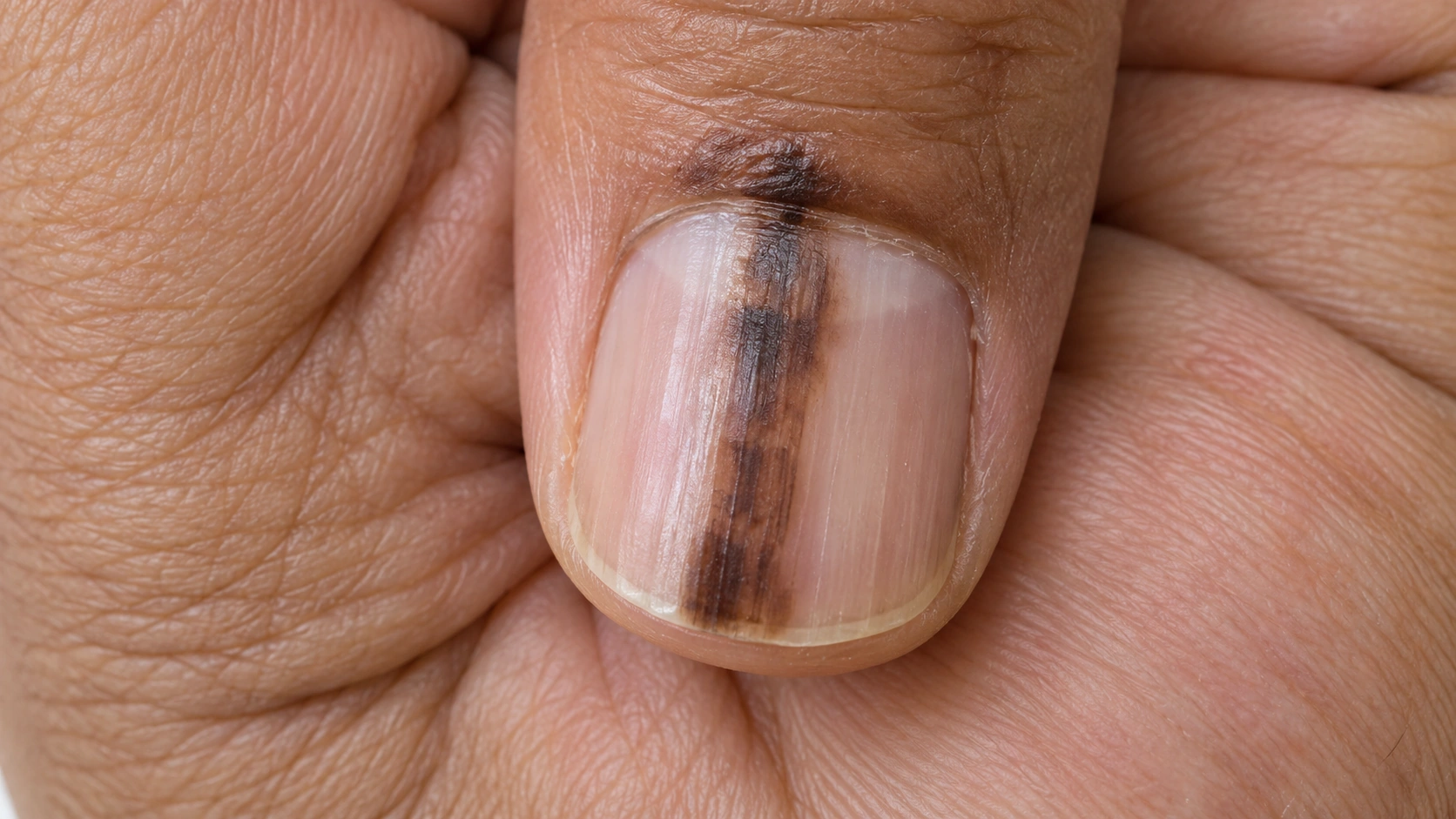
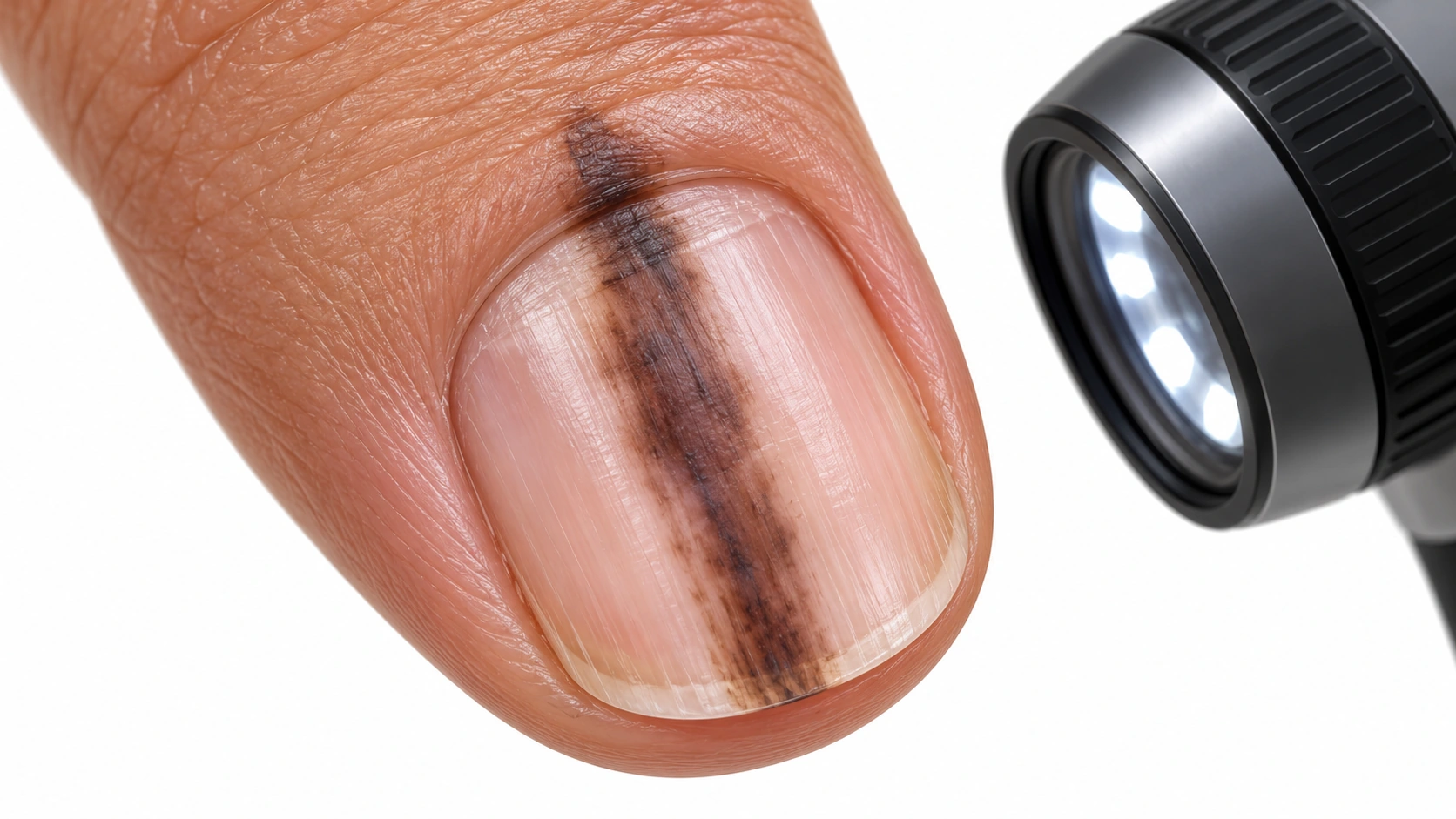
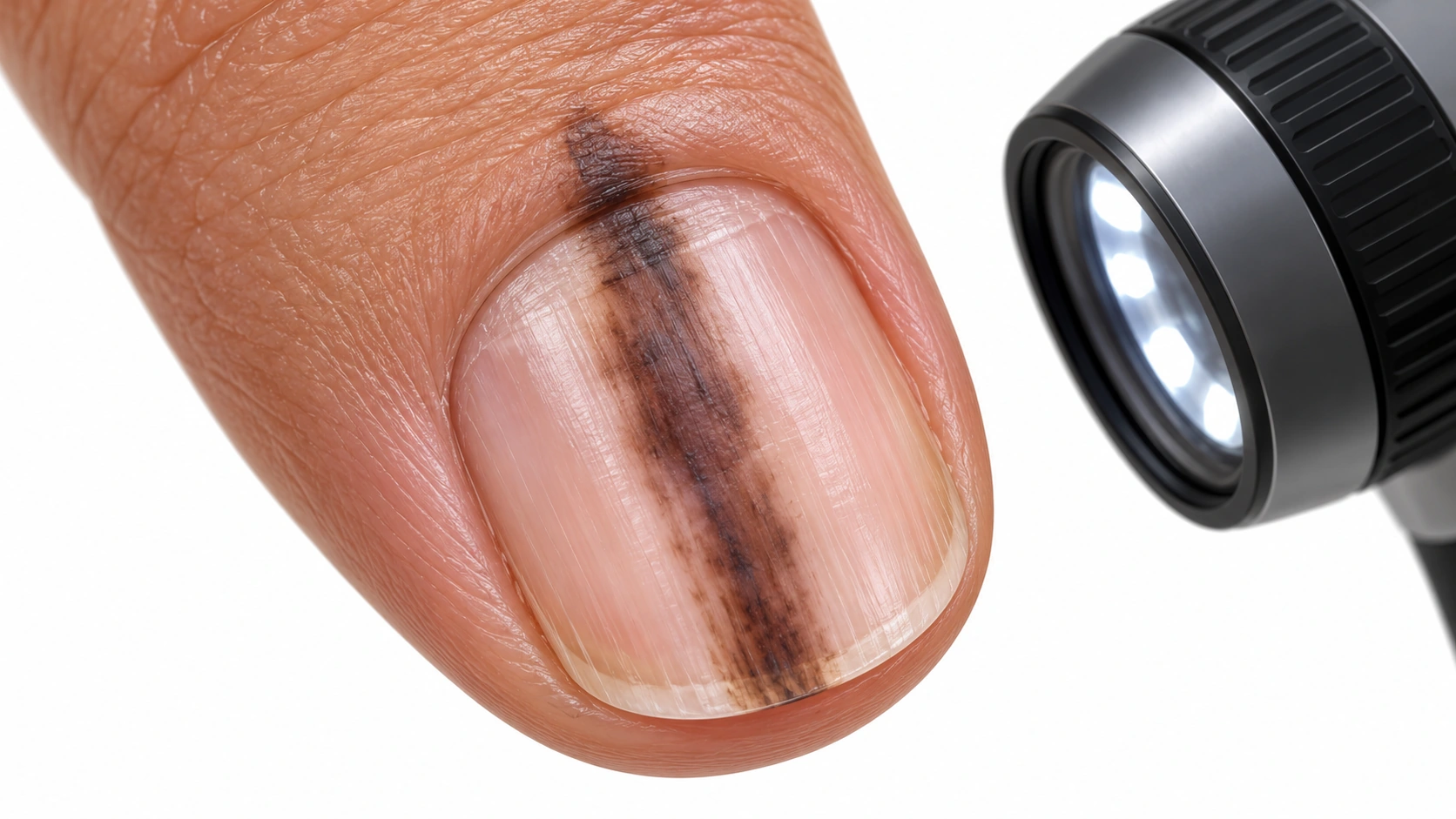
A fingernail with a dark longitudinal band extending onto the skin near the nail base, beside an examination light.

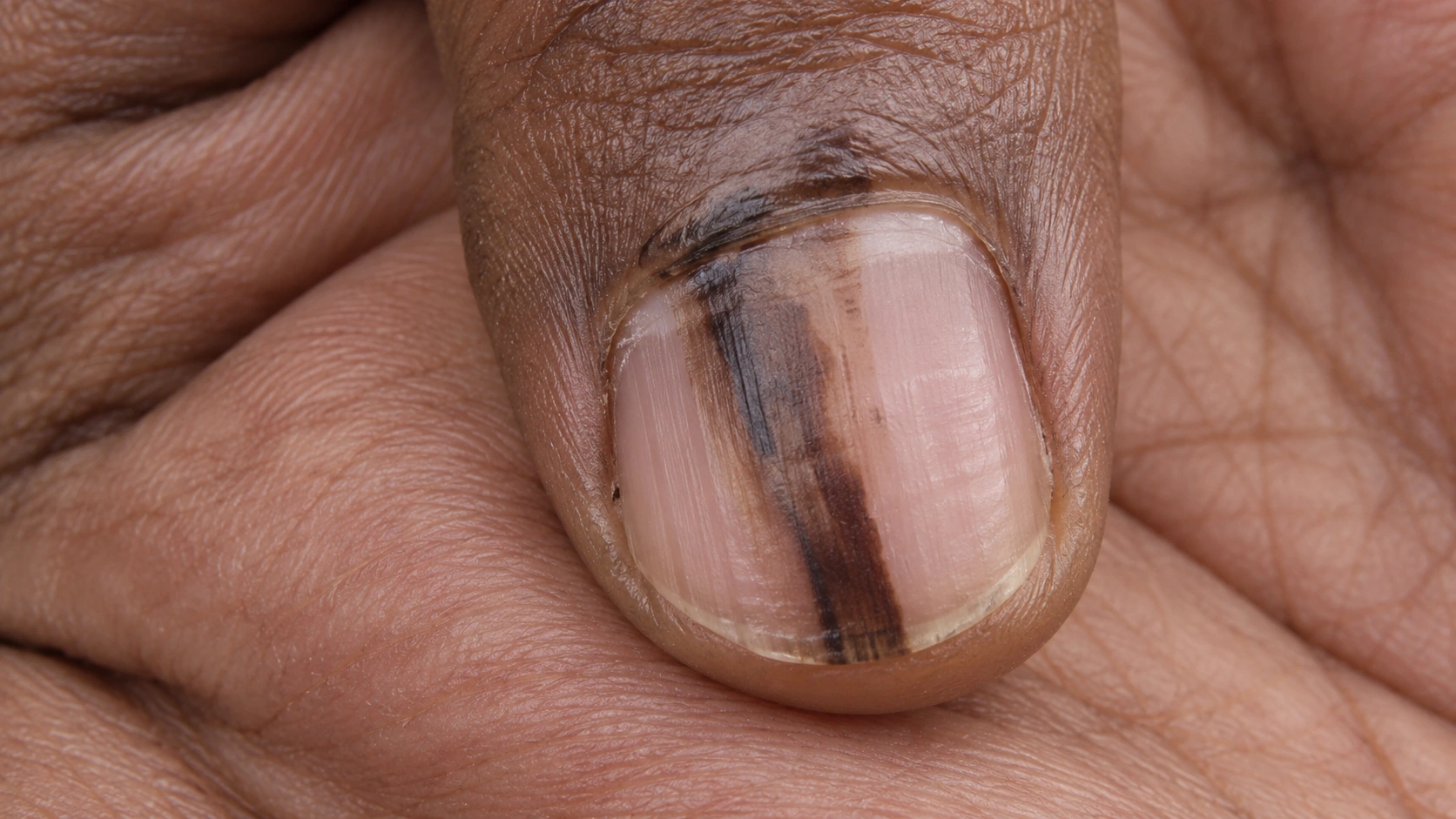
Subungual Melanoma A broad brown-black stripe extends lengthwise through the nail.

Subungual Hematoma

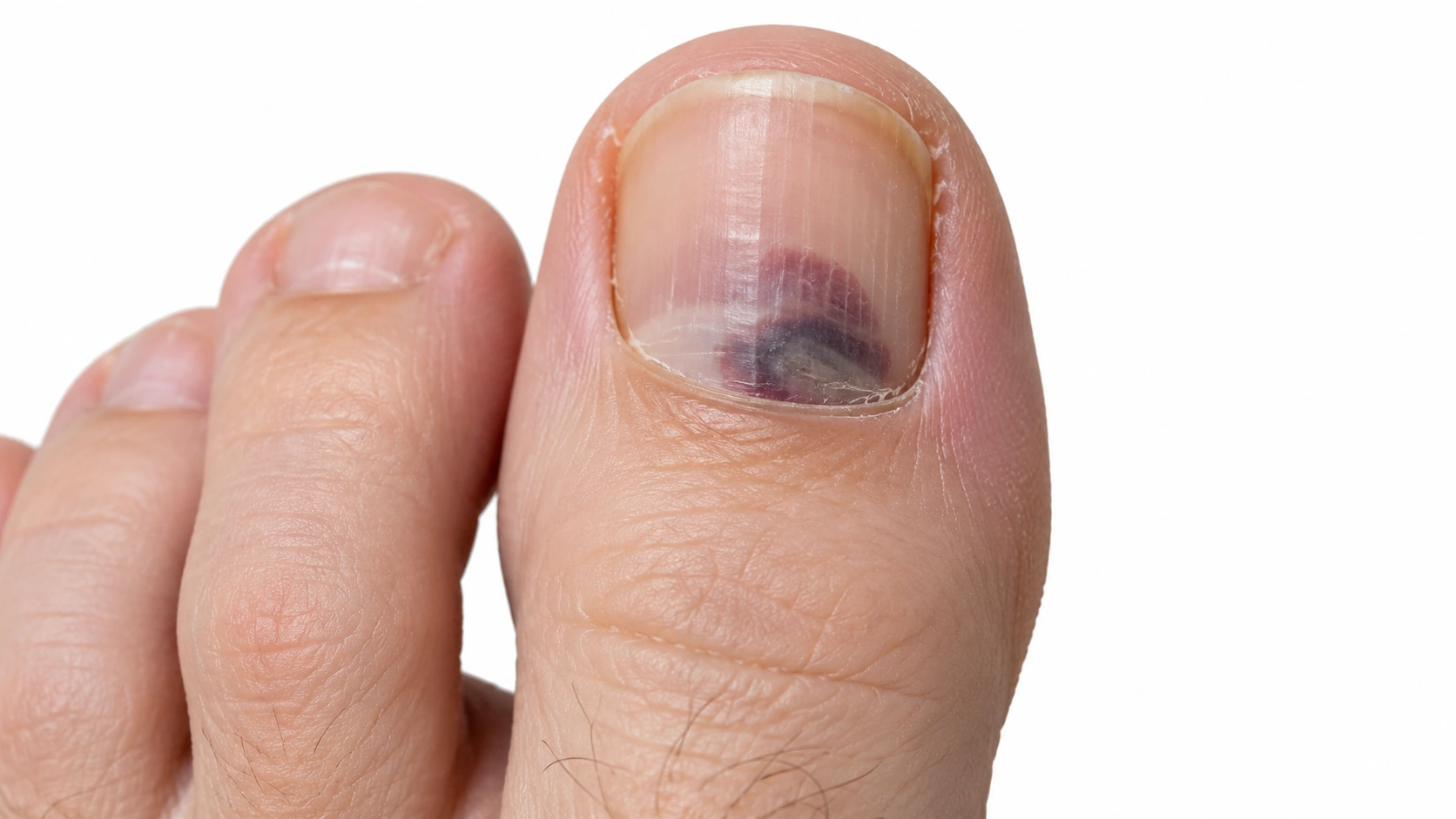
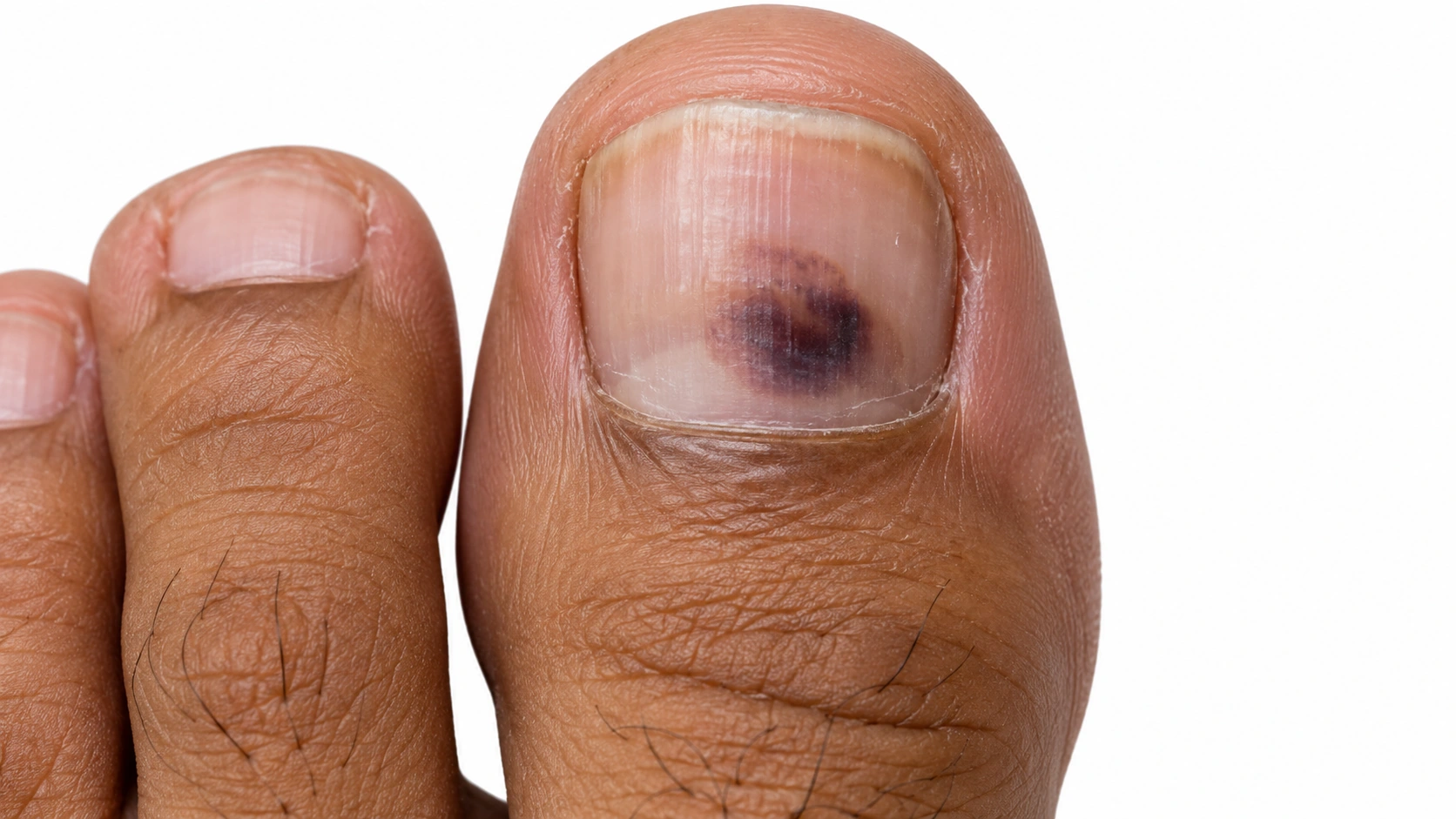
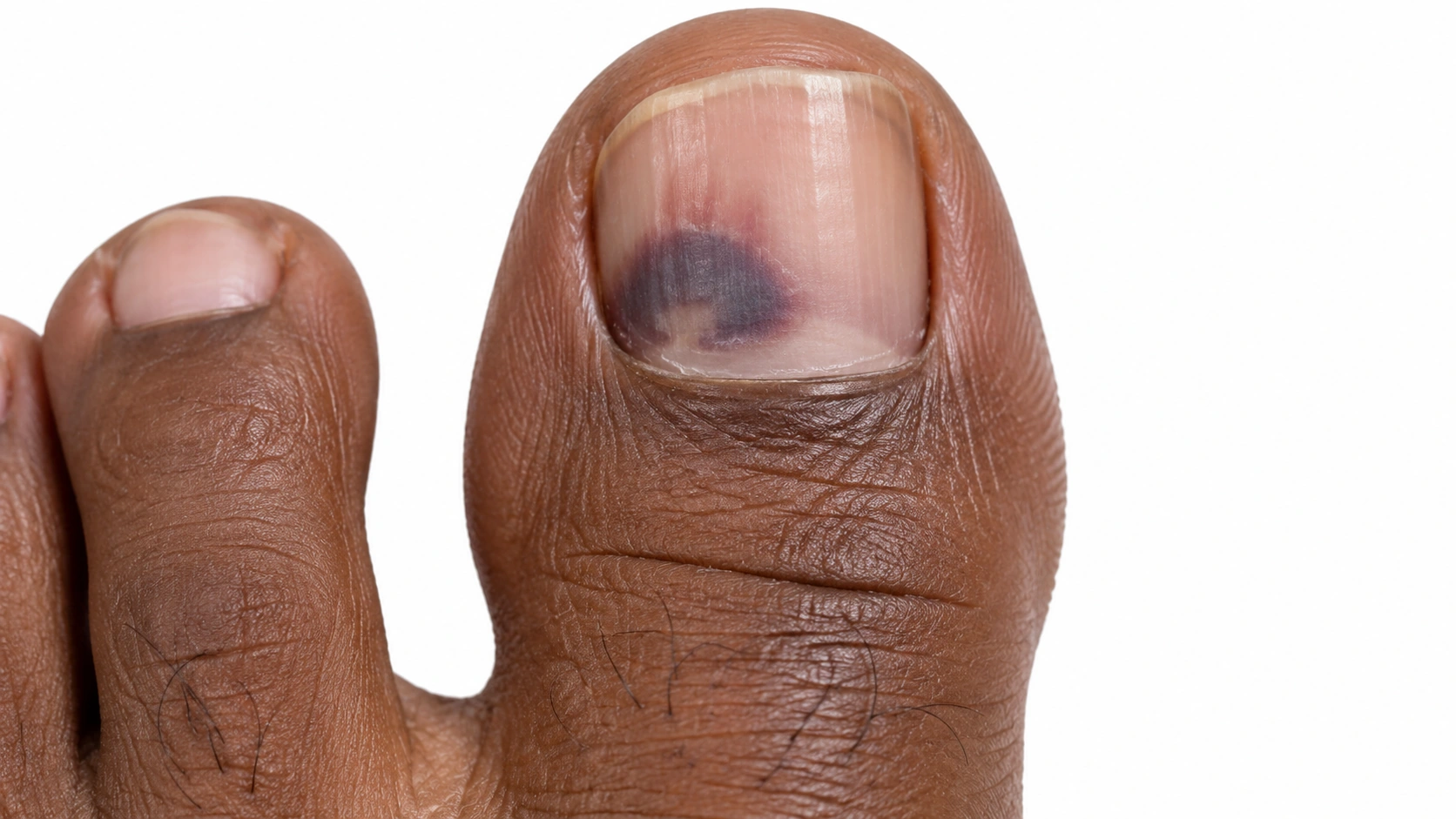
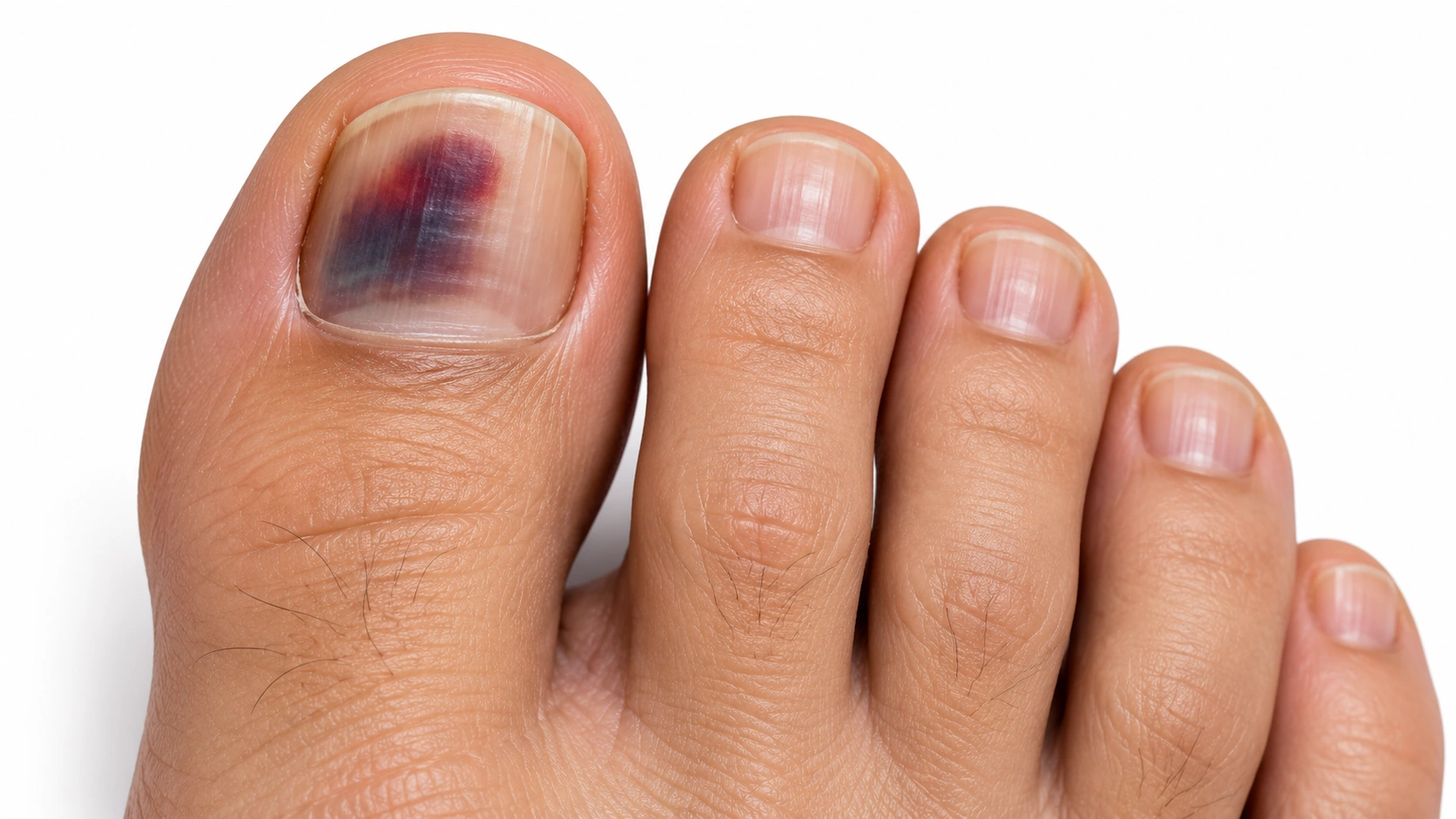
A big toe with a dark purple patch beneath the nail plate.

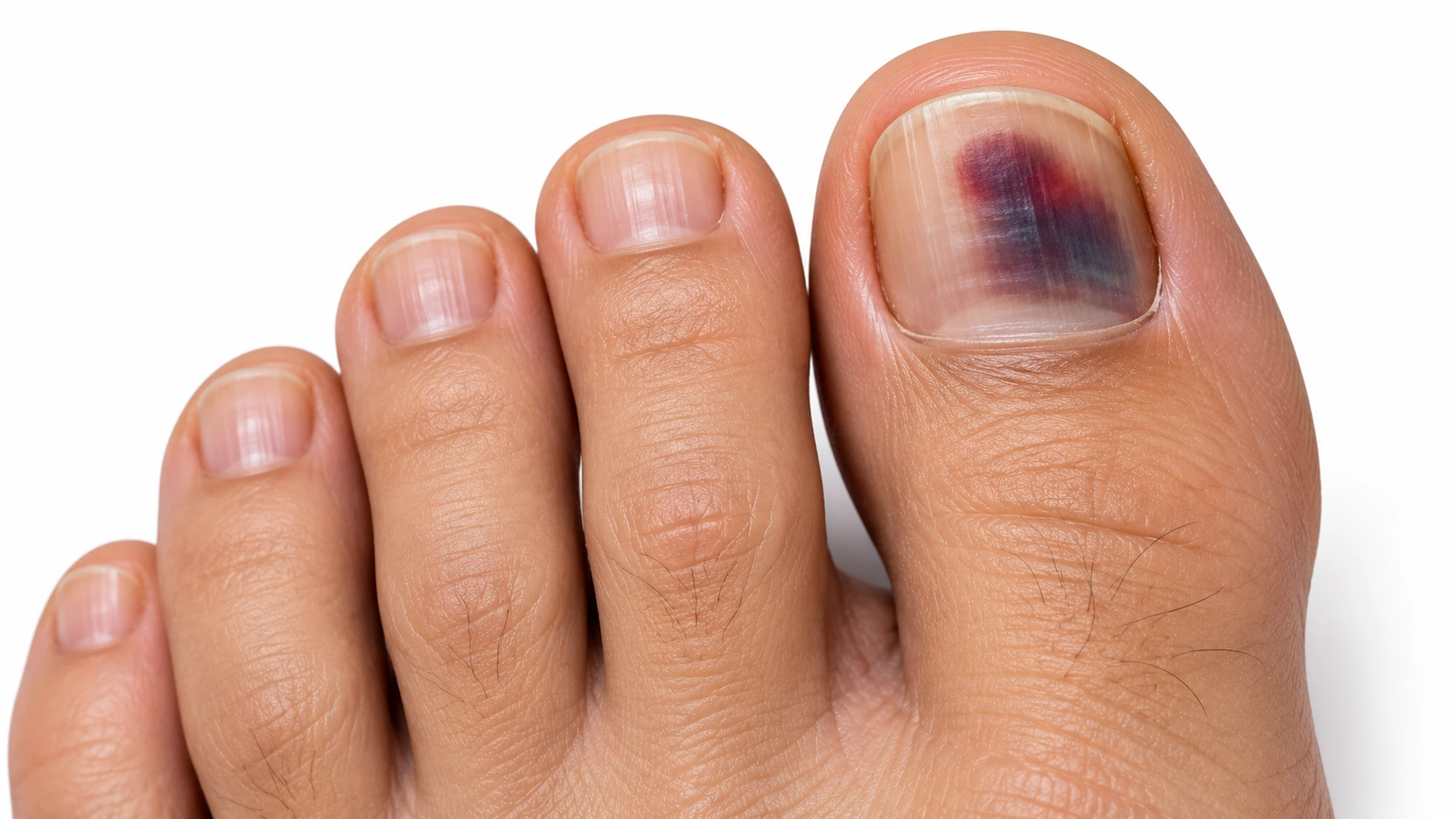
Subungual Hematoma A purple-black patch is visible under part of the large toenail.

Skin tones
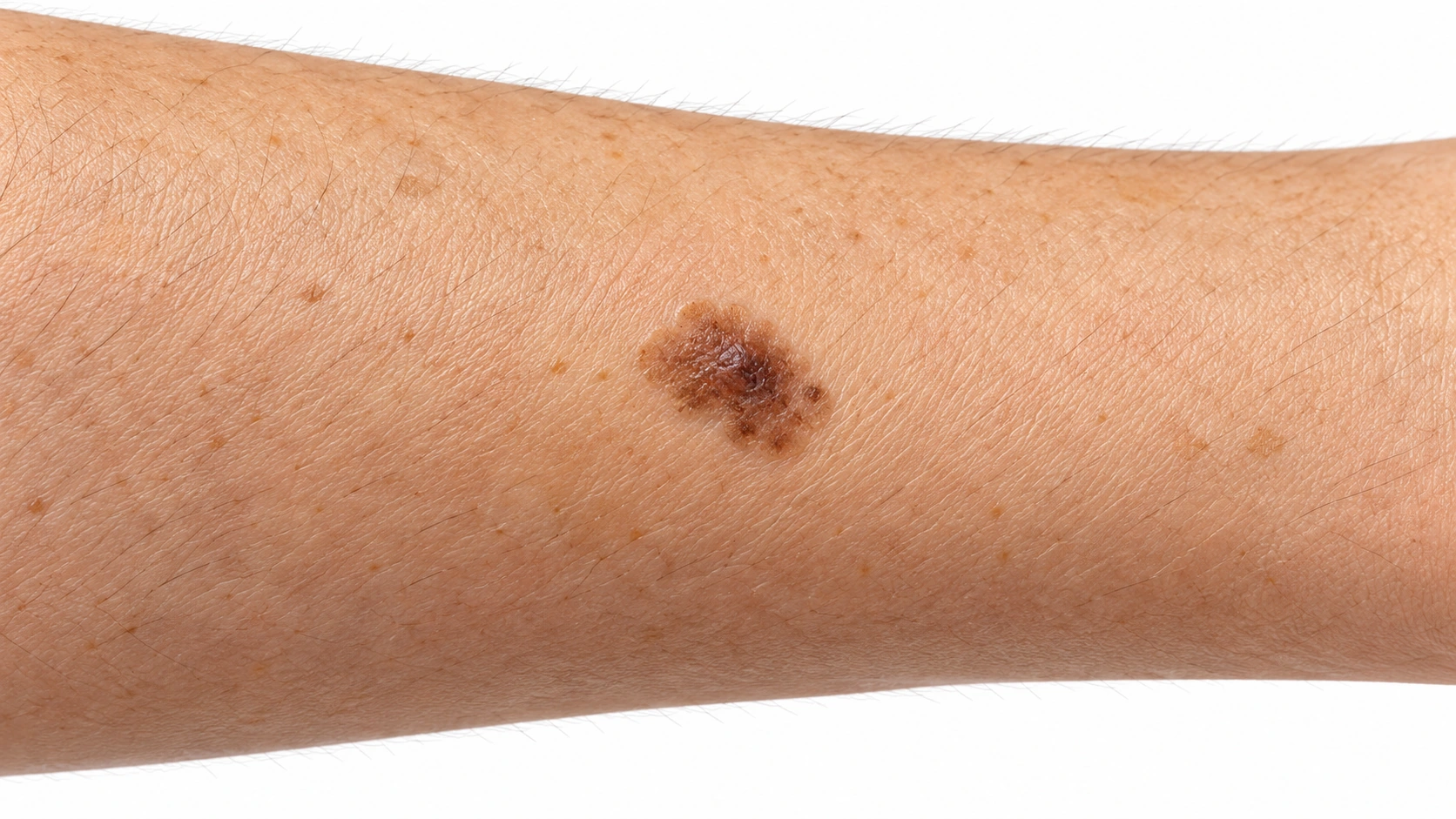
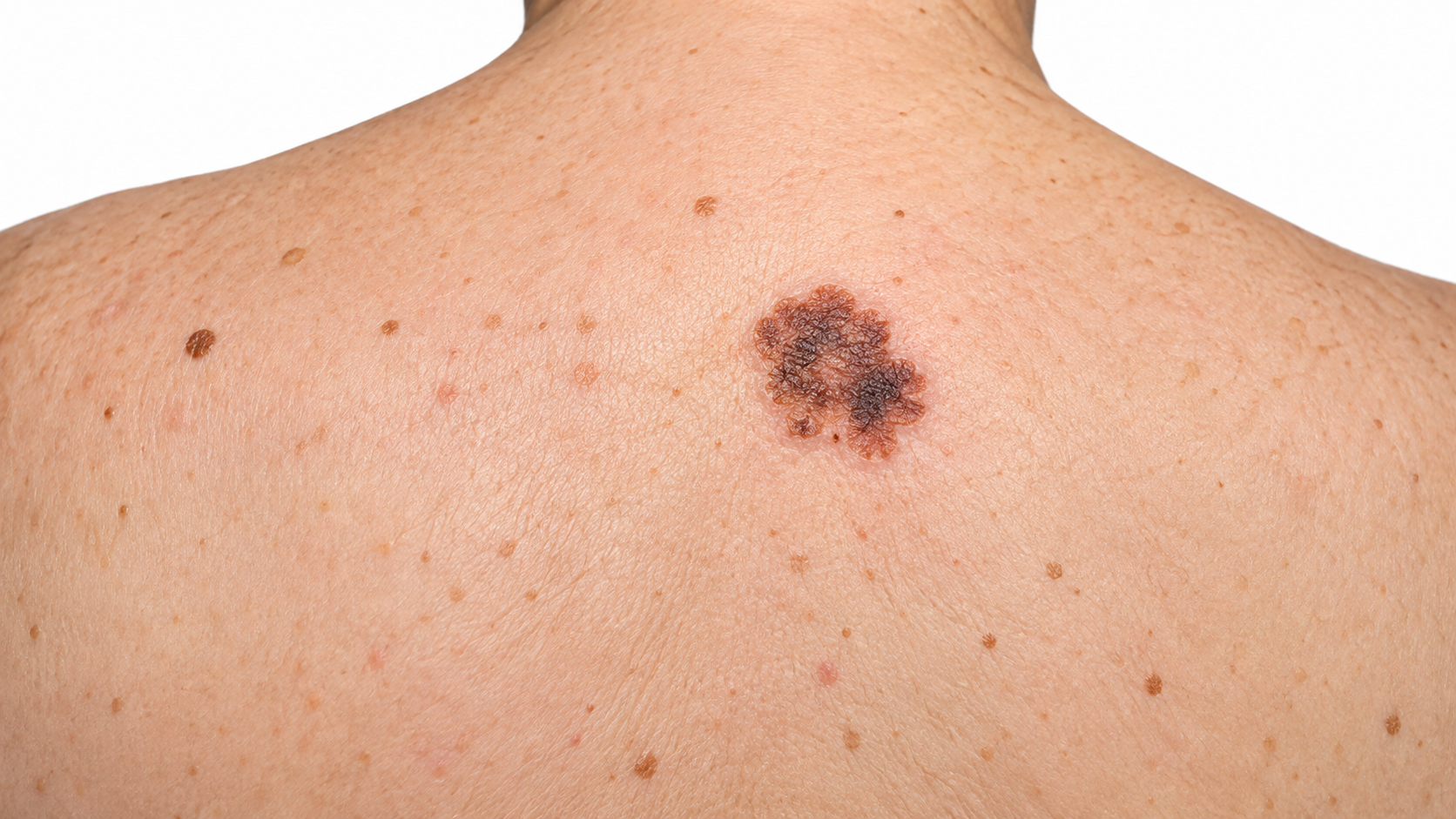
Subungual Melanoma.
Subungual Melanoma.
Subungual Melanoma on brown skin.
Subungual Melanoma.
Subungual Hematoma, representative educational image.
Subungual Hematoma on medium skin.
Subungual Hematoma, representative educational image.
In the skin

Malignant pigment cells multiply within the nail unit. Their growth can affect the nail plate, nearby tissue or the pigment visible through the nail.

Impact or repeated pressure damages small blood vessels beneath the nail. Blood collects between the nail plate and its bed, creating a dark patch that can be painful.

When it usually starts

010203040506070+

Subungual Melanoma. Usually diagnosed in adults, but an unexplained changing nail lesion needs assessment at any age.

Subungual Hematoma. Can occur at any age after injury.

Causes and triggers

Causes

Malignant pigment cells grow within the nail unit.

Impact, pressure or repetitive injury damages the nail unit.

Risk factors
Personal or family melanoma history, Unexplained changing nail lesion
Crush injury, Tight footwear, Repeated sports pressure
Trigger
● Subungual Melanoma
● Subungual Hematoma
No established short-term flare trigger
Not a typical trigger
Not listed
Trauma
Not listed
Can contribute
Repeated shoe pressure
Not listed
Can contribute

Daily Care

Subungual Melanoma
Subungual Hematoma
Daily care

Habits that help

  • Arrange prompt professional assessment
    A suspicious skin or nail change cannot be safely diagnosed or treated through home care.
  • Take a clear dated photograph without delaying the appointment
    Record when the change appeared and whether it is growing or bleeding.
  • Protect the area from repeated injury
    Use a clean dressing if needed for a fragile or bleeding surface.
  • Keep recommended biopsy and follow-up appointments
    Diagnosis and treatment depend on examination and, when indicated, tissue testing.
  • Remove nail polish before the nail assessment
    Tell the clinician about a new dark band, pigment spreading onto nearby skin or a changing nail.
  • Discuss cancer treatment planning
    Confirmed melanoma needs stage-appropriate specialist management.

Avoid

  • Avoid: Burning, freezing, cutting or applying acids at home
    Destroying the surface can delay diagnosis and damage tissue needed for testing.
  • Avoid: Waiting for pain before seeking help
    Melanoma and other skin cancers can be painless.

Habits that help

  • Protect the nail from further knocks and pressure
    Use roomy footwear for an injured toenail and avoid activities that keep striking it.
  • Keep broken skin gently clean and covered
    Follow any dressing instructions after nail-bed repair or drainage.
  • Raise the injured hand or foot if swollen
    A wrapped cool pack may help after a recent injury; avoid direct ice on skin.
  • Allow the nail to grow out without pulling it off
    Trim only a loose free edge if it catches, and leave attached nail in place.
  • Arrange review for unexplained or persistent nail pigment
    Do not assume every dark nail is a bruise, especially without a clear injury.
  • Protection and pain relief
    Protect the nail and use suitable labelled pain relief if needed.
  • Discuss nail-bed and pressure assessment
    Severe pressure pain, a crush injury or an open wound may need drainage, repair or imaging by a clinician.

Avoid

  • Avoid: Drilling, burning or piercing the nail yourself
    Severe pressure pain or a significant crush injury may need prompt professional care.

Treatment differences

Evidence labels come from each condition’s own treatment list.

Treatment
● Subungual Melanoma
● Subungual Hematoma
Treatment approach
—

Protect a mildly injured nail and use suitable pain relief if needed. Severe pressure pain, a crush injury or an open wound may need prompt professional assessment; do not drill or burn a hole in the nail yourself.

Procedures

Nail-unit biopsy

Listed

A specialist determines how to obtain a diagnostic sample; cosmetics or antifungals must not delay assessment.

None listed

Outlook

Long term

The outlook depends on the cancer's thickness and stage when diagnosed. Prompt assessment and appropriate treatment matter; an unexplained changing nail band should not be watched indefinitely as a presumed bruise.

The dark area should gradually move toward the nail tip as the nail grows. This takes months and is slower in toenails; unexplained pigment or pigment that does not grow out needs assessment.

Complications

Possible complications

It can invade and spread; early biopsy-based diagnosis is important.

A significant injury may include a fracture or nail-bed wound.

When to get help

When to get help

Seek prompt specialist assessment for a changing dark nail band, pigment spreading onto skin, bleeding or unexplained nail destruction.

Get care for severe pain, a crush injury, an open wound or unexplained pigment that does not move with nail growth.

Common questions

Subungual Melanoma:What is Subungual Melanoma?

Melanoma of the nail unit is a potentially serious cancer that may resemble a bruise.

Subungual Melanoma:What can I do day to day?

Photograph changes and arrange examination. Do not rely on a remembered injury to exclude melanoma.

Subungual Melanoma:When should I get medical advice?

Seek prompt specialist assessment for a changing dark nail band, pigment spreading onto skin, bleeding or unexplained nail destruction.

Subungual Hematoma:What is Subungual Hematoma?

A collection of blood beneath a nail after injury or repeated pressure.

Subungual Hematoma:What can I do day to day?

Protect the nail, use roomy footwear and do not drill or burn a hole in it yourself.

Subungual Hematoma:When should I get medical advice?

Get care for severe pain, a crush injury, an open wound or unexplained pigment that does not move with nail growth.

Sources
Sources and further reading

  1. Melanoma of the nail unit
  2. Subungual haemorrhage
Dermapedia on YouTube