Hot Tub Folliculitis vs Heat Rash
A follicular eruption after exposure to water contaminated with Pseudomonas bacteria. Miliaria is an itchy or prickly eruption caused by blocked sweat ducts.

Key differences
The same eight facts on every condition comparison.
What is it?
- What it is
A follicular eruption after exposure to water contaminated with Pseudomonas bacteria.
- What it is
Miliaria is an itchy or prickly eruption caused by blocked sweat ducts.
What it looks like
Hot Tub Folliculitis
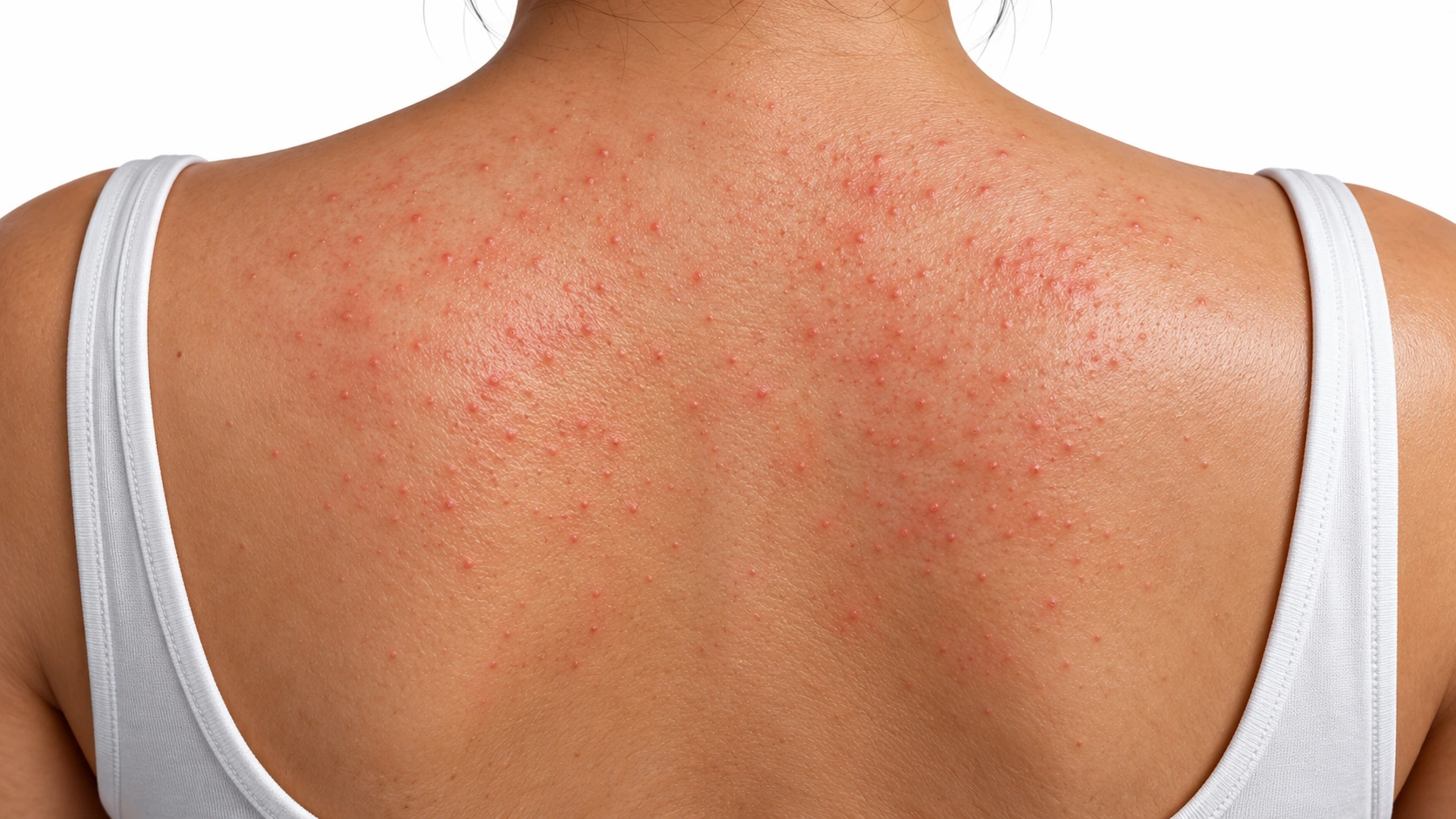
Hot Tub Folliculitis Numerous pink spots are scattered over the upper chest and shoulder.
Heat Rash
Heat Rash Many tiny bumps are scattered over a broad pink area.
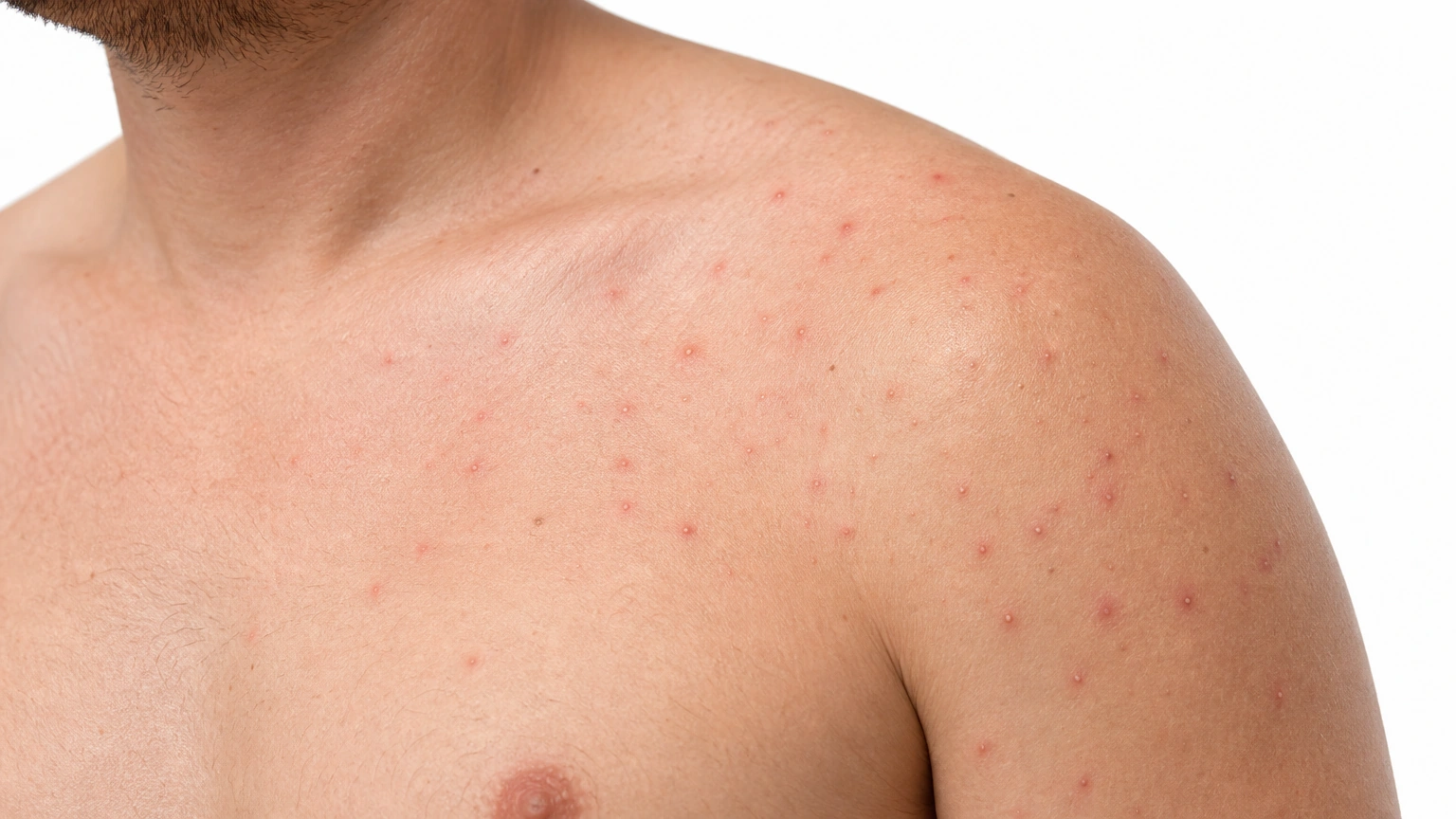
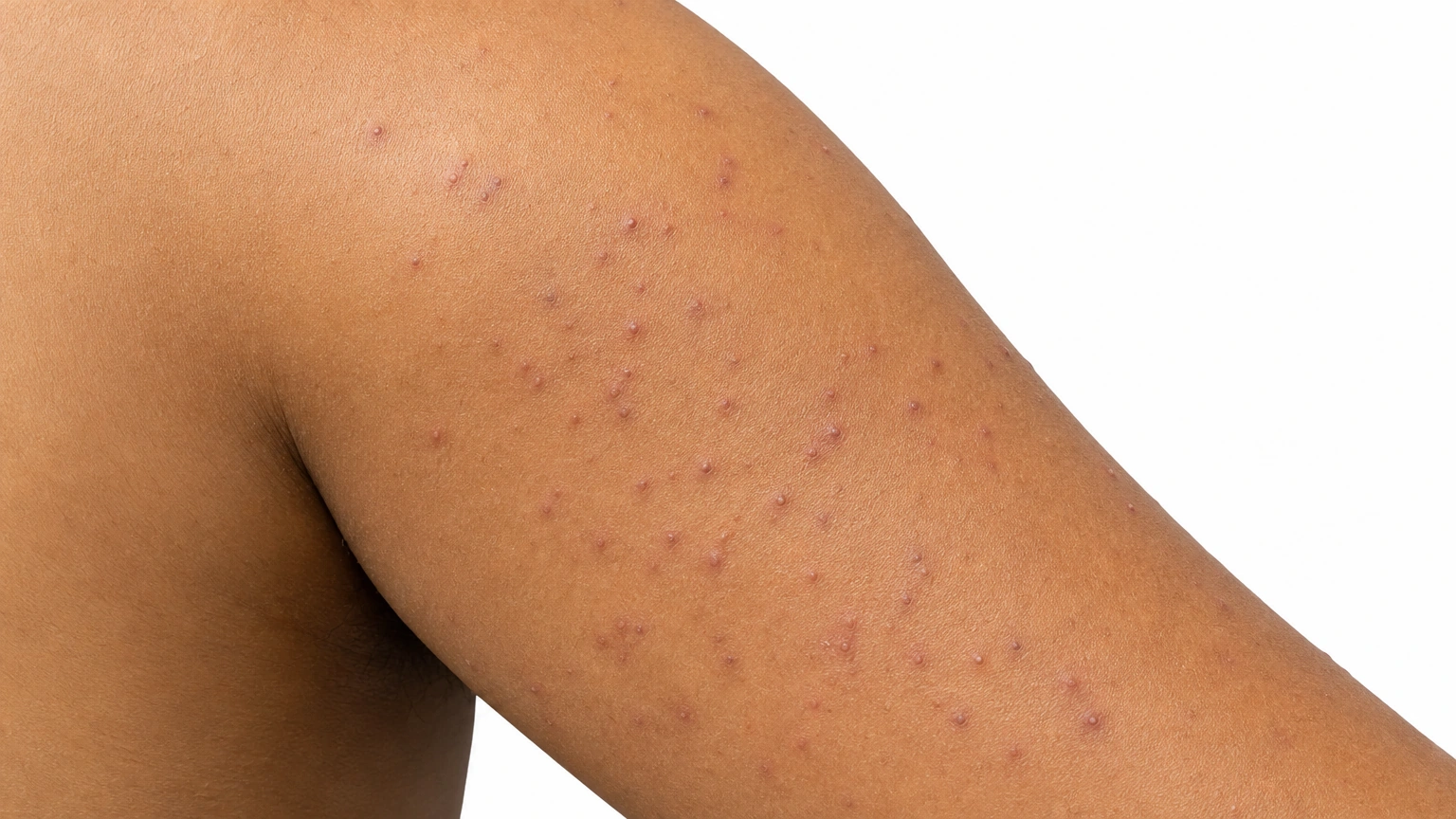
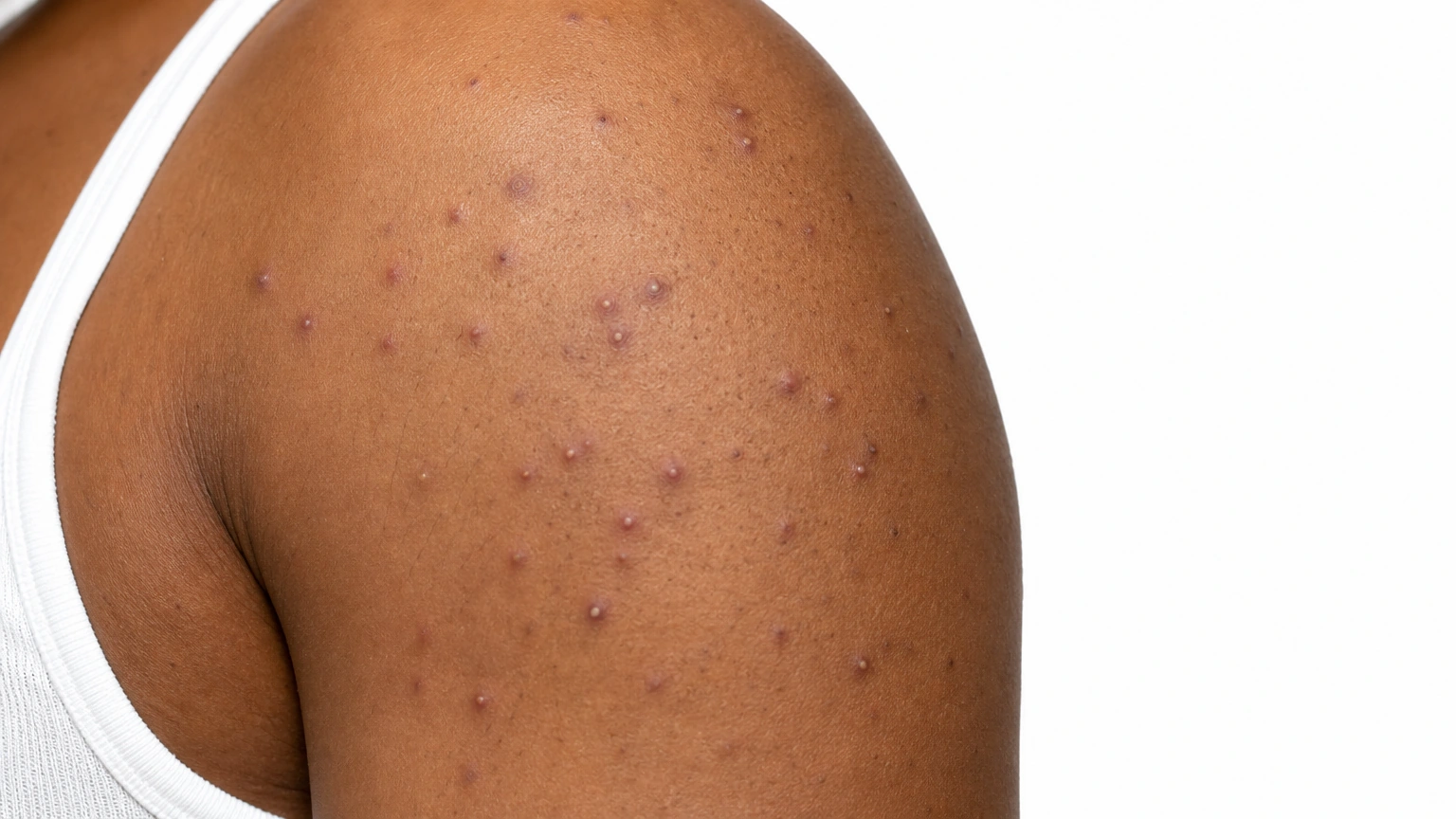
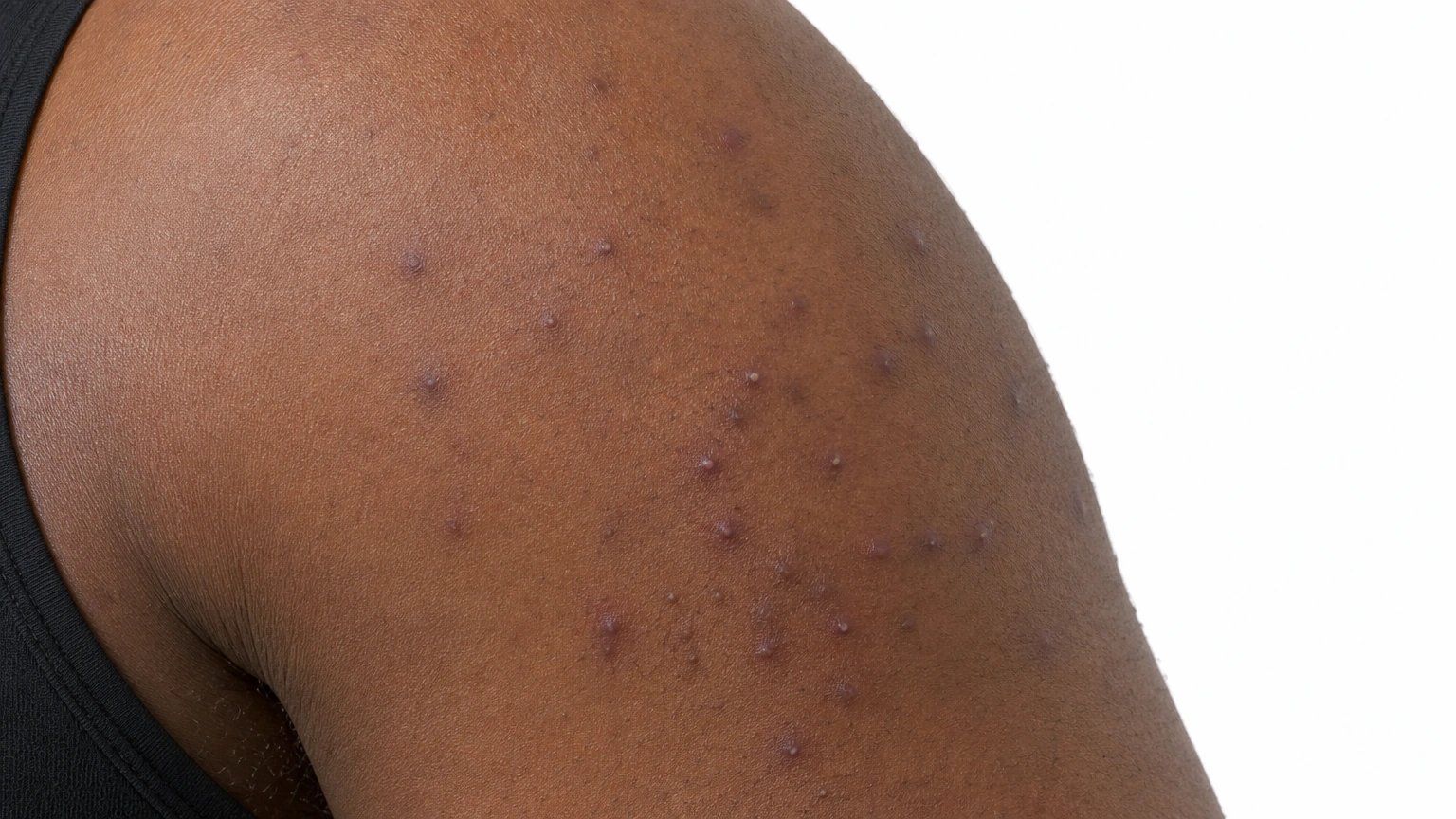
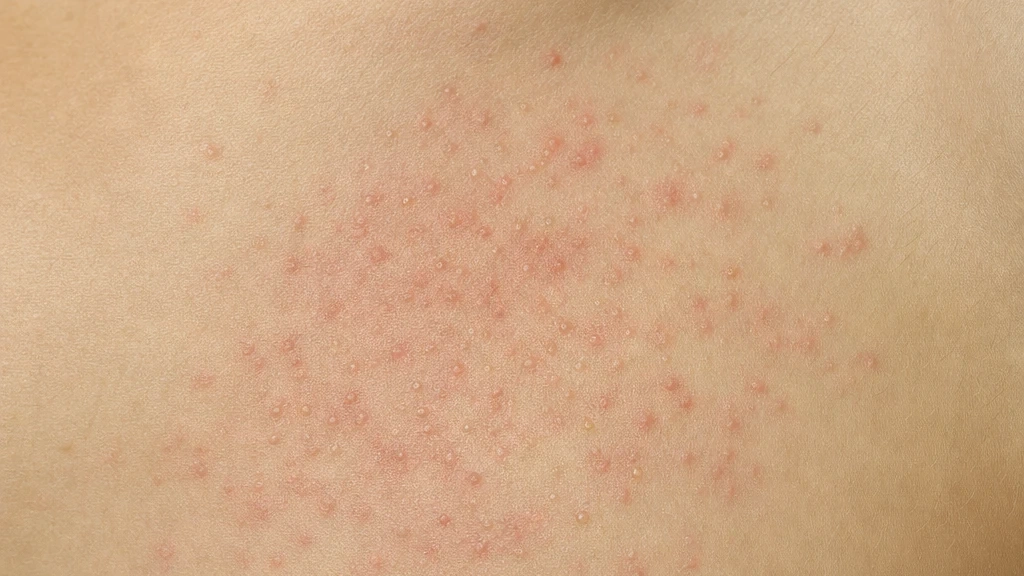
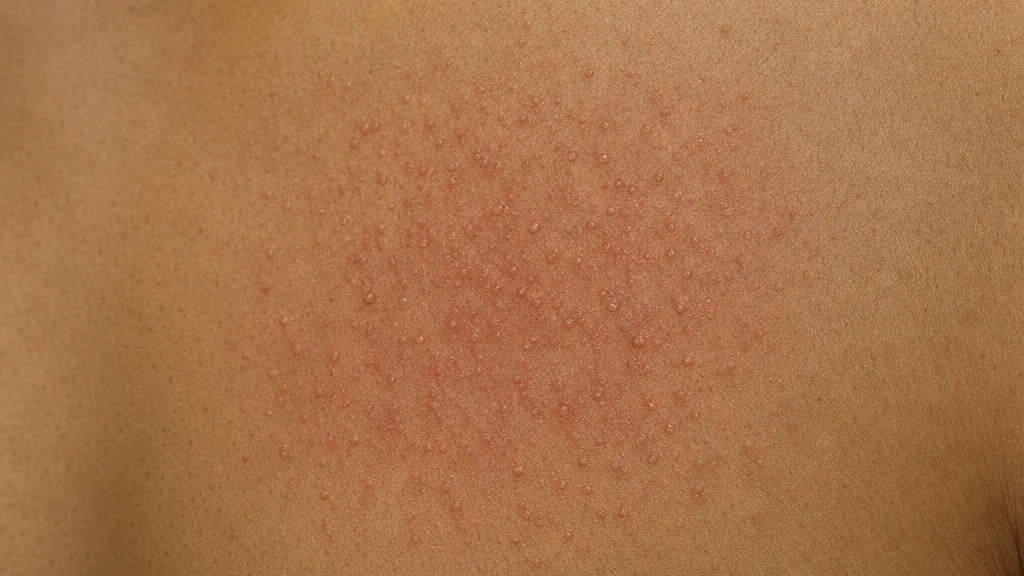
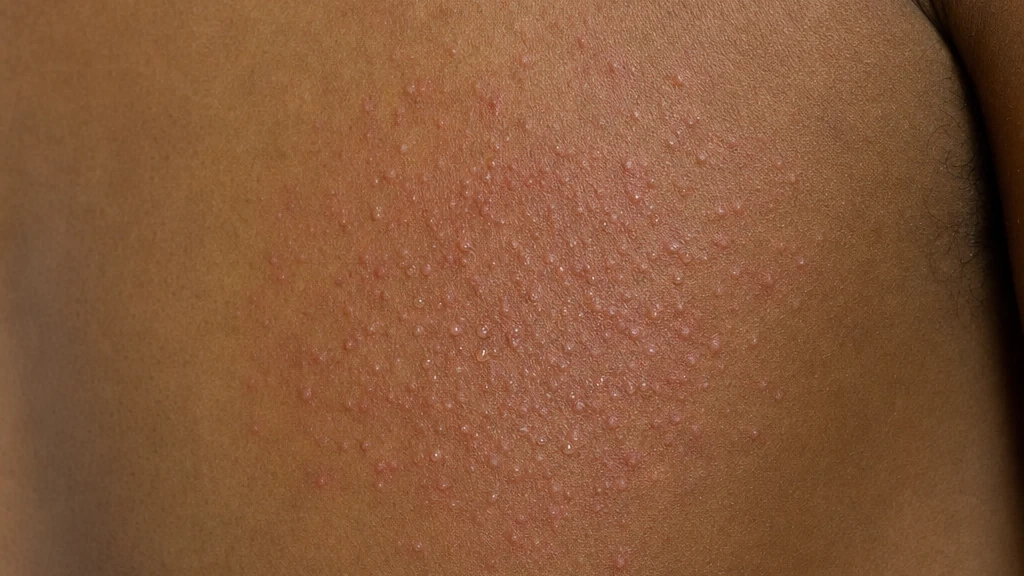
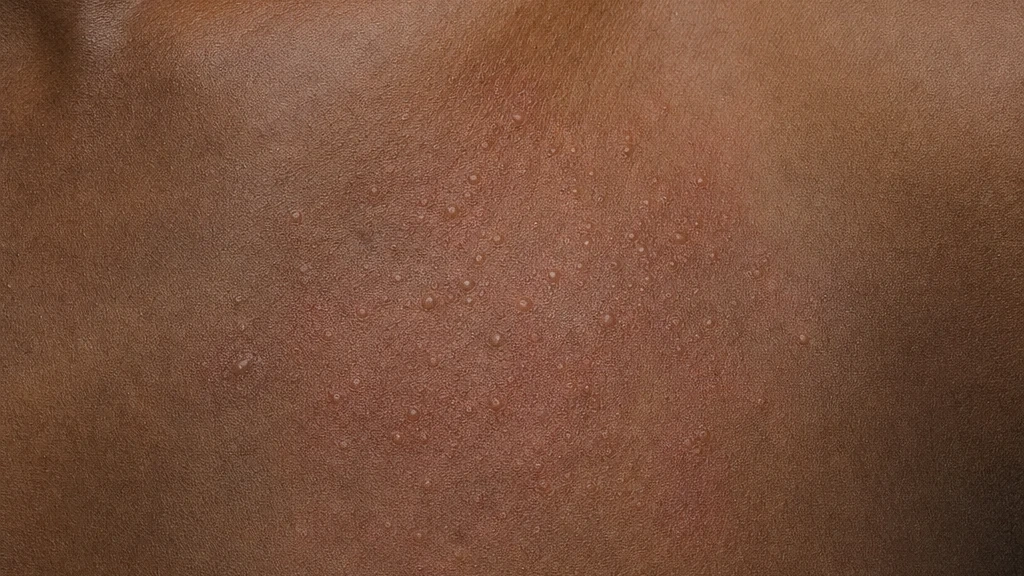
Bacteria in contaminated water enter hair follicles. Local inflammation develops around the follicles and can produce small bumps or pustules.
Blocked sweat ducts prevent sweat from reaching the surface normally. Trapped sweat irritates surrounding tissue at different levels of the skin.
When it usually starts
Hot Tub Folliculitis. Can occur at different ages after a relevant exposure or follicular inflammation.
Heat Rash. Any age; infants are particularly susceptible.
Causes and triggers
Contaminated water introduces bacteria into follicles.
Blocked sweat ducts trap sweat at different levels of the skin.
Daily Care
Habits that help
- Stop using the suspected pool or hot tub
Return only when it has been appropriately cleaned and maintained. - Remove wet swimwear and shower after swimming
Wash the swimwear and let it dry fully before reusing it. - Keep affected skin cool and clothing loose
Reduce rubbing and prolonged moisture over the bumps. - Wash gently and leave the spots alone
A mild cleanser is less irritating than scrubbing. - Seek review for worsening illness or a rash that does not settle
Fever, significant pain or immune suppression changes the need for assessment.
Avoid
- Avoid: Squeezing bumps or shaving across the rash
This can worsen irritation and introduce another infection.
Habits that help
- Move to a cooler, less humid space
Cooling reduces sweating and helps the rash settle. - Wear loose, breathable clothing and lighter bedding
Change damp clothing promptly and avoid wrapping too warmly. - Use a cool bath or cool damp compress
Pat dry gently rather than rubbing the irritated skin. - Keep skin care light and simple
Wash gently and stop products that aggravate the rash.
Avoid
- Avoid: Heavy ointments and tight occlusive clothing
These can trap heat and sweat against the skin. - Avoid: Continuing strenuous activity while overheated or unwell
Rest and cool down; dizziness, confusion or other heat-illness symptoms need urgent help.
Treatment differences
Cooling the skin, reducing sweating and avoiding heavy occlusive products are the main measures. Persistent or severe symptoms need assessment rather than adding multiple creams.
Outlook
Most uncomplicated cases clear within about two weeks. Another exposure to contaminated water can cause recurrence; fever, worsening illness or immune suppression warrants medical advice.
Heat rash usually settles after the skin cools and sweating is reduced. It may recur in hot or humid conditions; fever, marked pain or failure to improve needs review.
Complications
Scratching can cause crusting and secondary infection.
Scratching can damage the skin; overheating is especially important in infants.
When to get help
Seek care for fever, worsening pain, immune suppression or a rash that does not settle.
Get care for fever, pus, persistent rash or signs that an infant is overheating or unwell.
Common questions
Hot Tub Folliculitis:What is Hot Tub Folliculitis?
A follicular eruption after exposure to water contaminated with Pseudomonas bacteria.
Hot Tub Folliculitis:What can I do day to day?
Leave the contaminated water, remove wet swimwear, shower and wash the swimwear.
Hot Tub Folliculitis:When should I get medical advice?
Seek care for fever, worsening pain, immune suppression or a rash that does not settle.
Heat Rash:What is Heat Rash?
Miliaria is an itchy or prickly eruption caused by blocked sweat ducts.
Heat Rash:What can I do day to day?
Move to a cool environment, wear breathable clothing and avoid heavy occlusive products.
Heat Rash:When should I get medical advice?
Get care for fever, pus, persistent rash or signs that an infant is overheating or unwell.
Sources
Sources and further reading
Keep exploring.

Folliculitis vs Heat Rash
Hot Tub Folliculitis vs Folliculitis
Hot Tub Folliculitis vs Fungal Acne
Hot Tub Folliculitis vs Insect Bites
Baby Acne vs Heat Rash
Fungal Acne vs Heat Rash
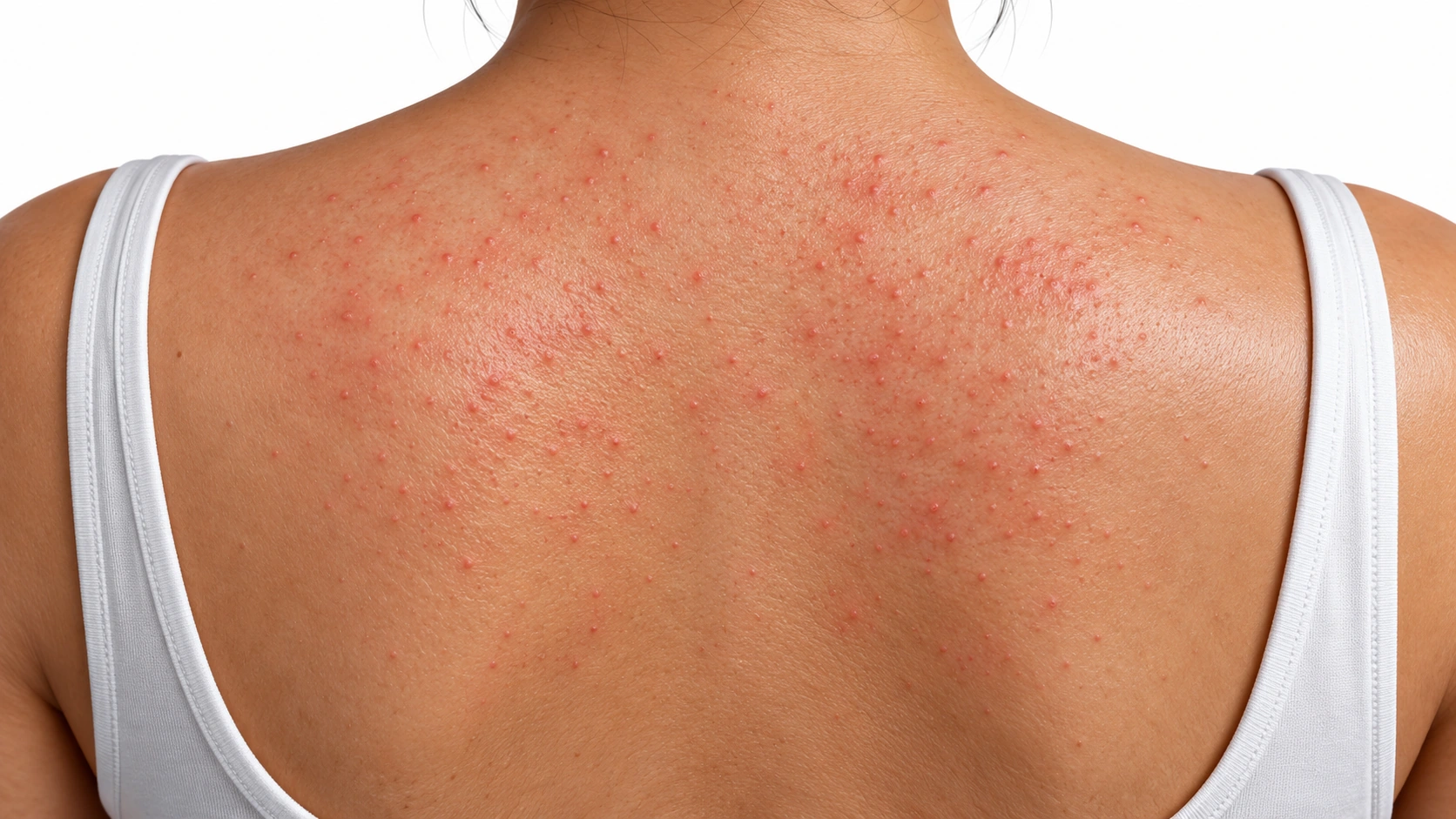

Heat Rash vs Eczema
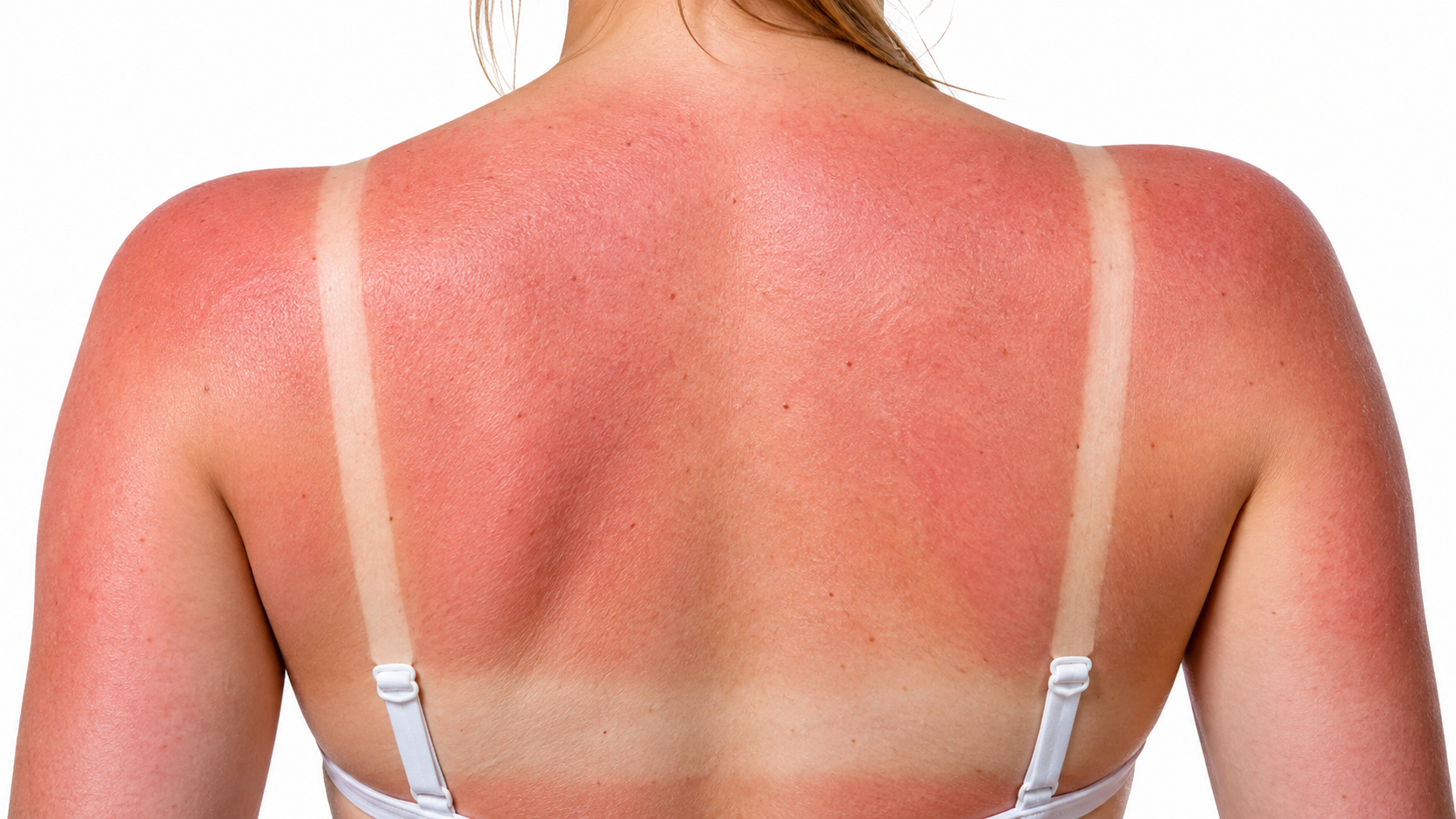
Heat Rash vs Sunburn

Hives vs Heat Rash
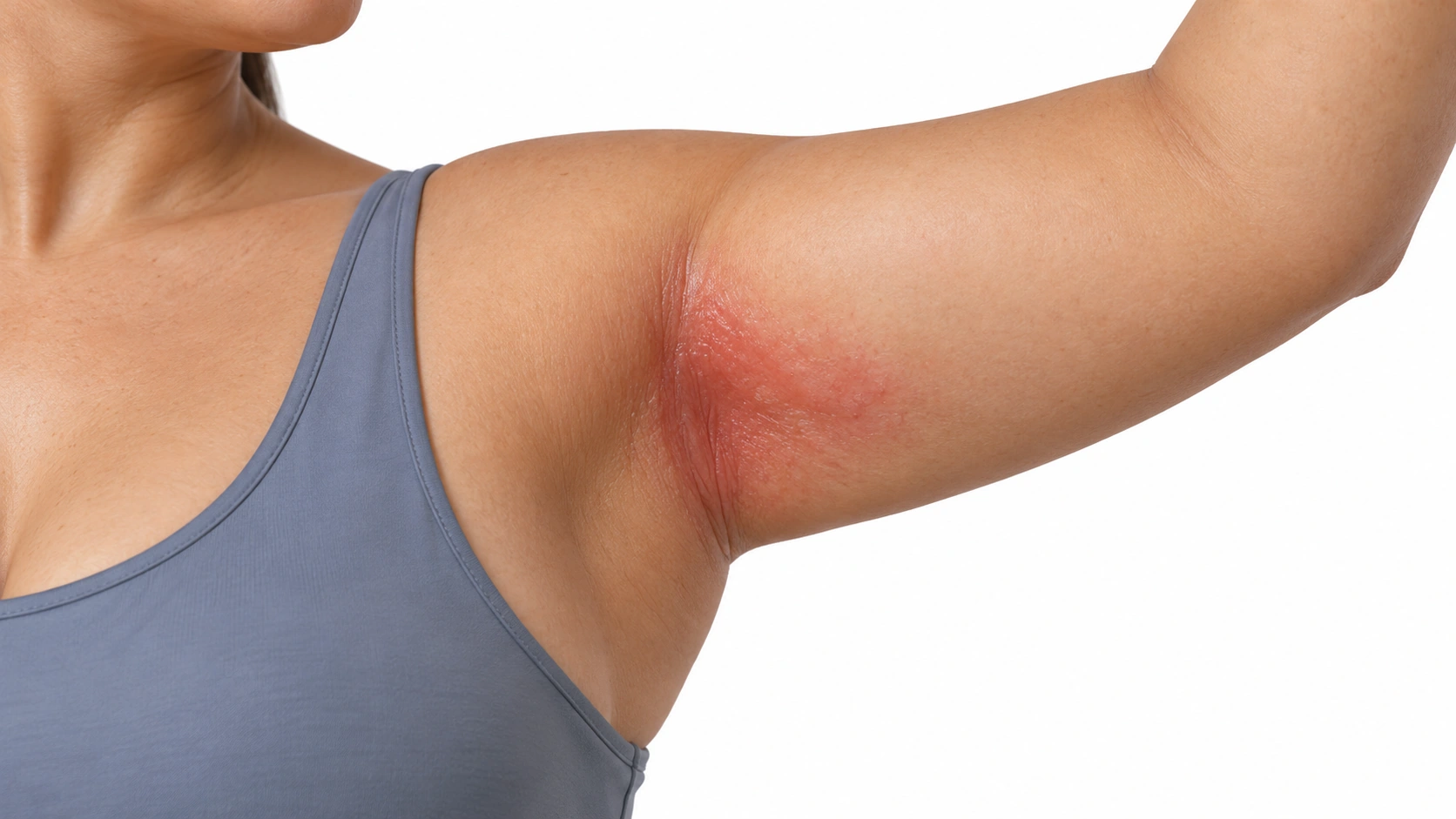
Intertrigo vs Heat Rash
Folliculitis
