Heat Rash vs Eczema
Miliaria is an itchy or prickly eruption caused by blocked sweat ducts. Eczema is a group of long-term conditions in which the skin barrier leaks moisture and the immune system in the skin overreacts. Atopic dermatitis is the most common kind. The result is skin that is dry, itchy and inflamed, in flares that come and go. It is controlled rather than cured, and most of it responds well to treatment used properly.

Key differences
The same eight facts on every condition comparison.
What is it?
- What it is
Miliaria is an itchy or prickly eruption caused by blocked sweat ducts.
- It is a recurring inflammatory condition.
Atopic eczema involves a vulnerable barrier and an itch–scratch cycle. - Several factors reinforce each other.
Dryness, irritants, inflammation and scratching feed one another. - It is not about cleanliness.
Vigorous cleansing can make eczema worse. - Care has two parts.
Emollients protect the barrier, while anti-inflammatory treatment settles active flares.
What it looks like
Heat Rash
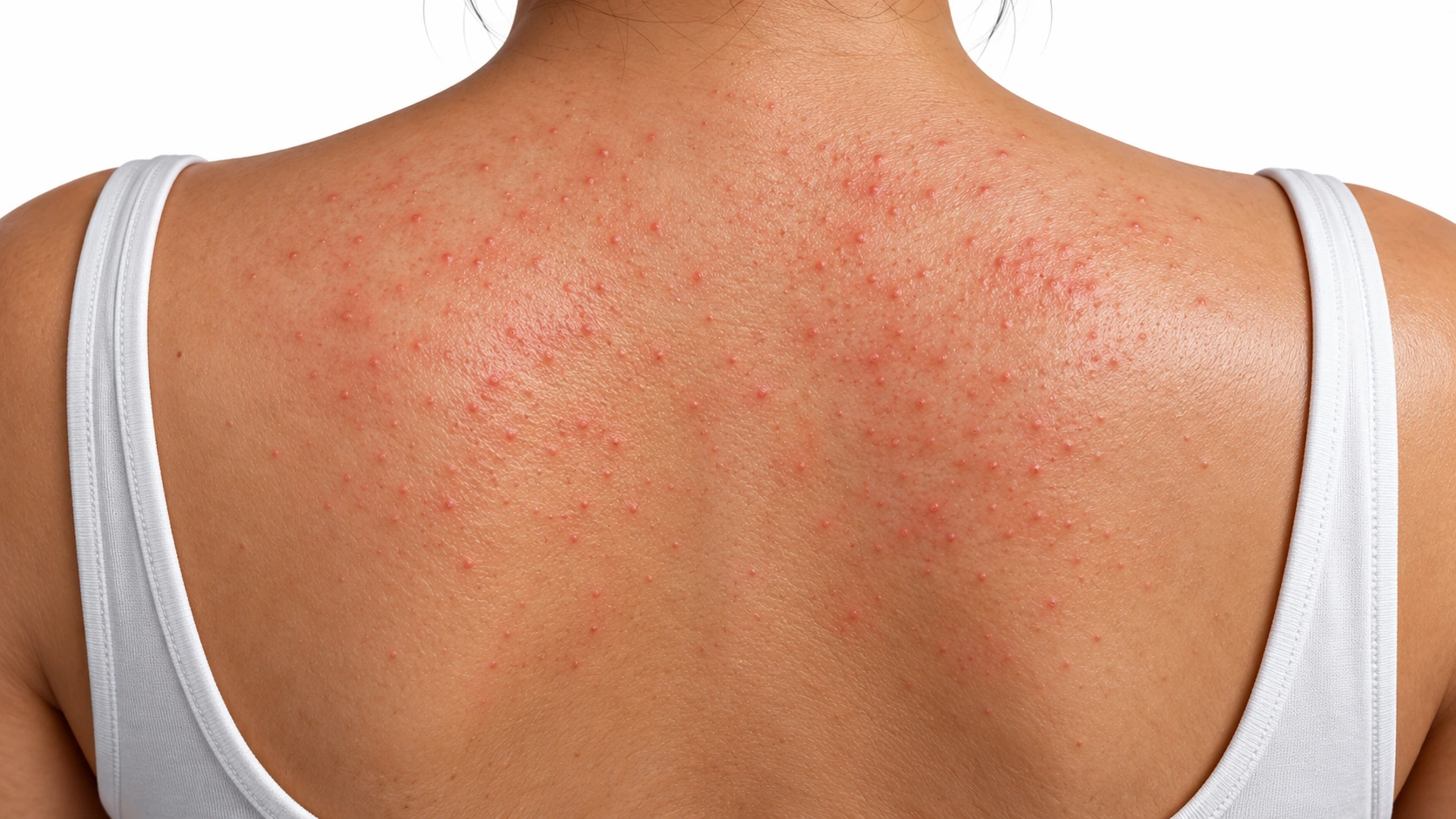
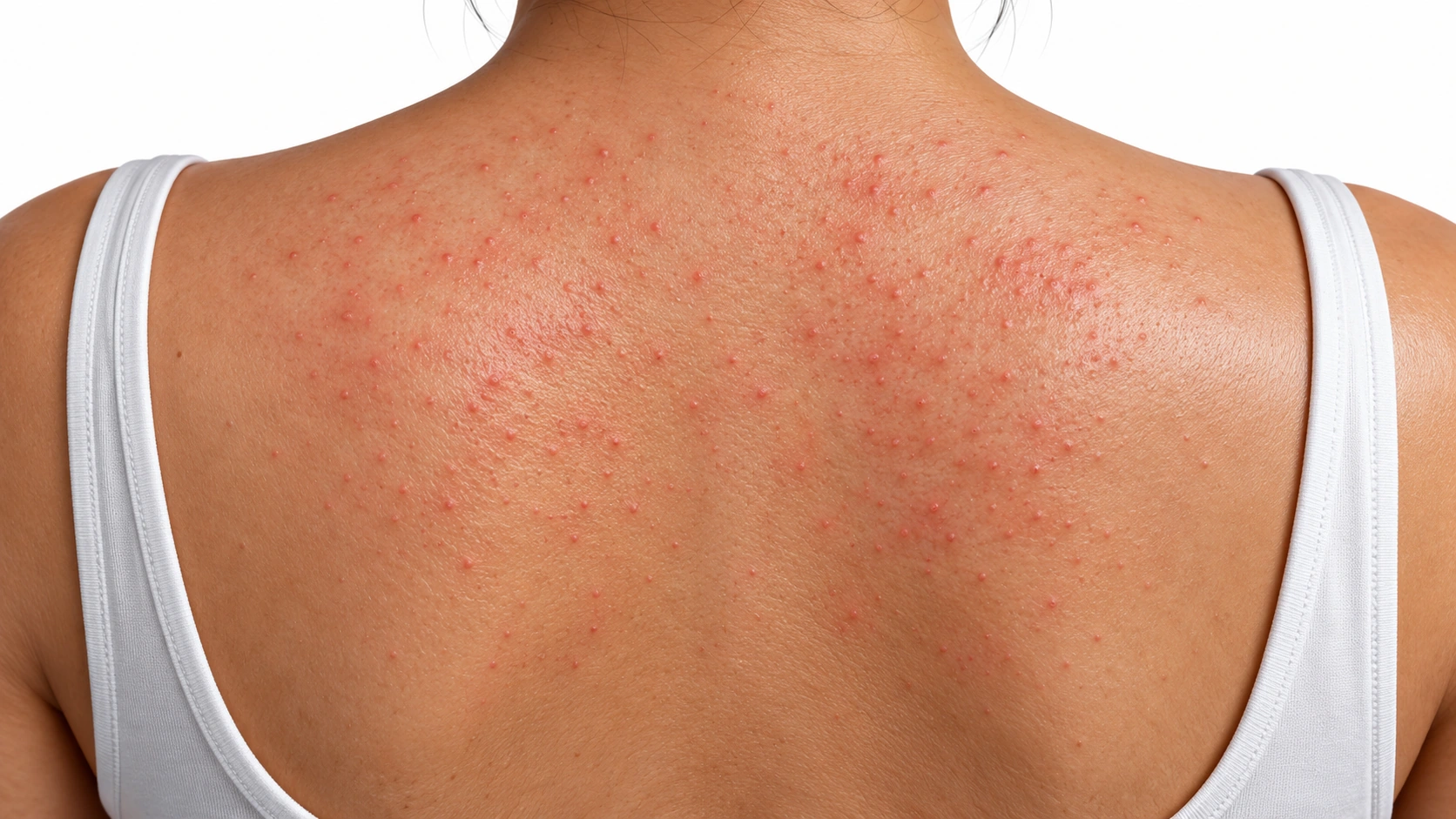
Heat Rash Many tiny bumps are scattered over a broad pink area.
Eczema
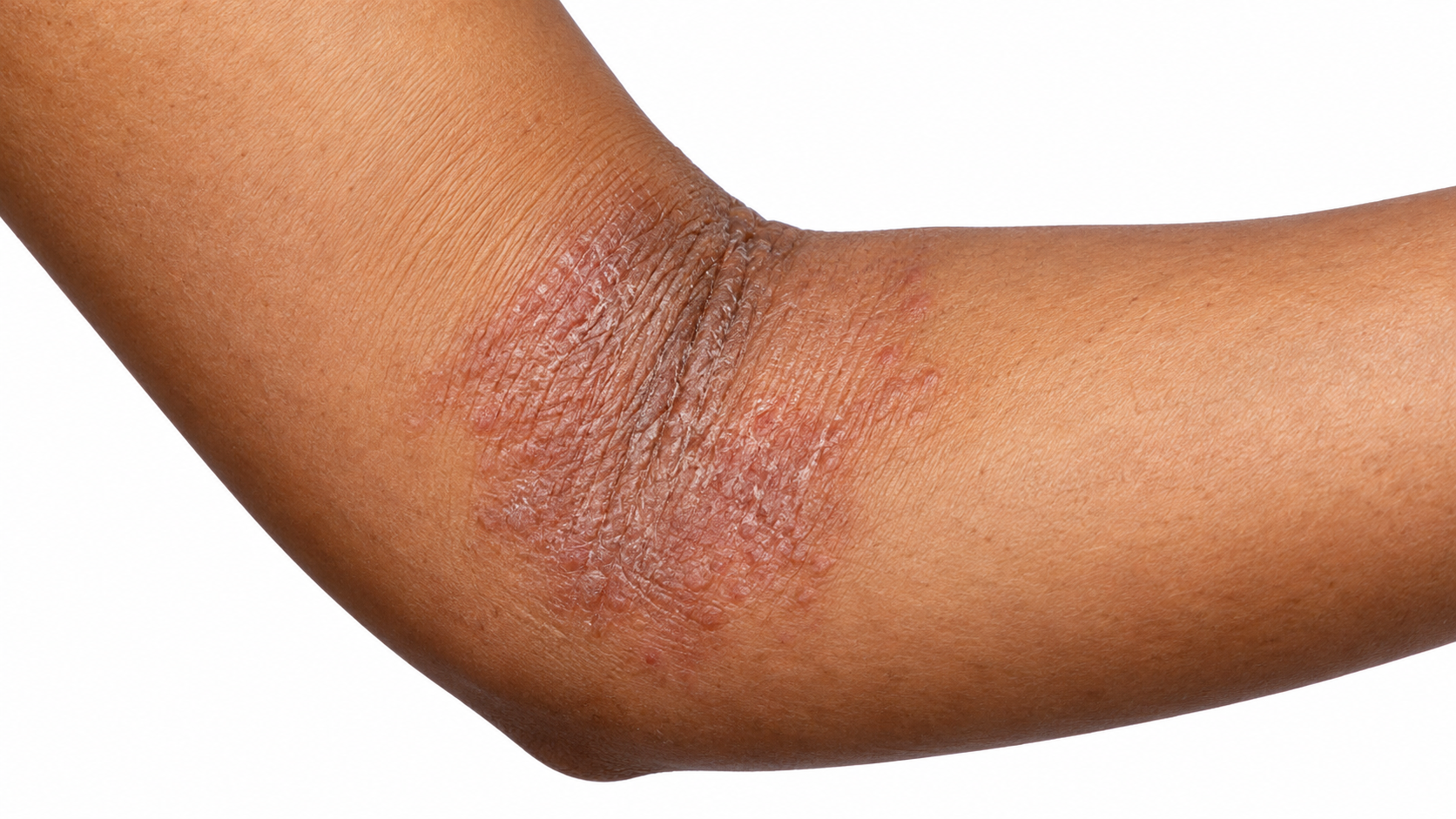
Atopic dermatitis Long-term, starts in childhood.
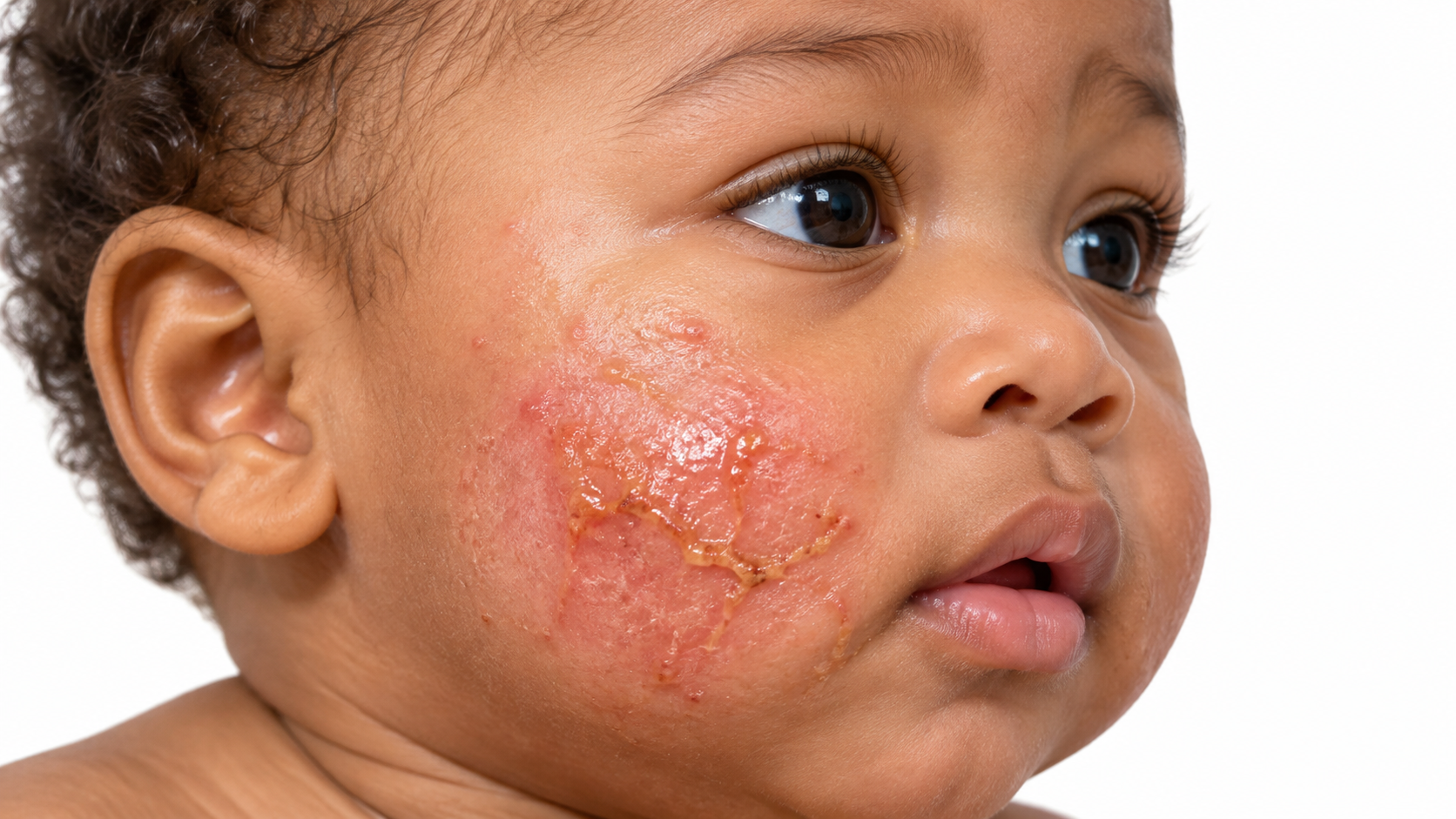
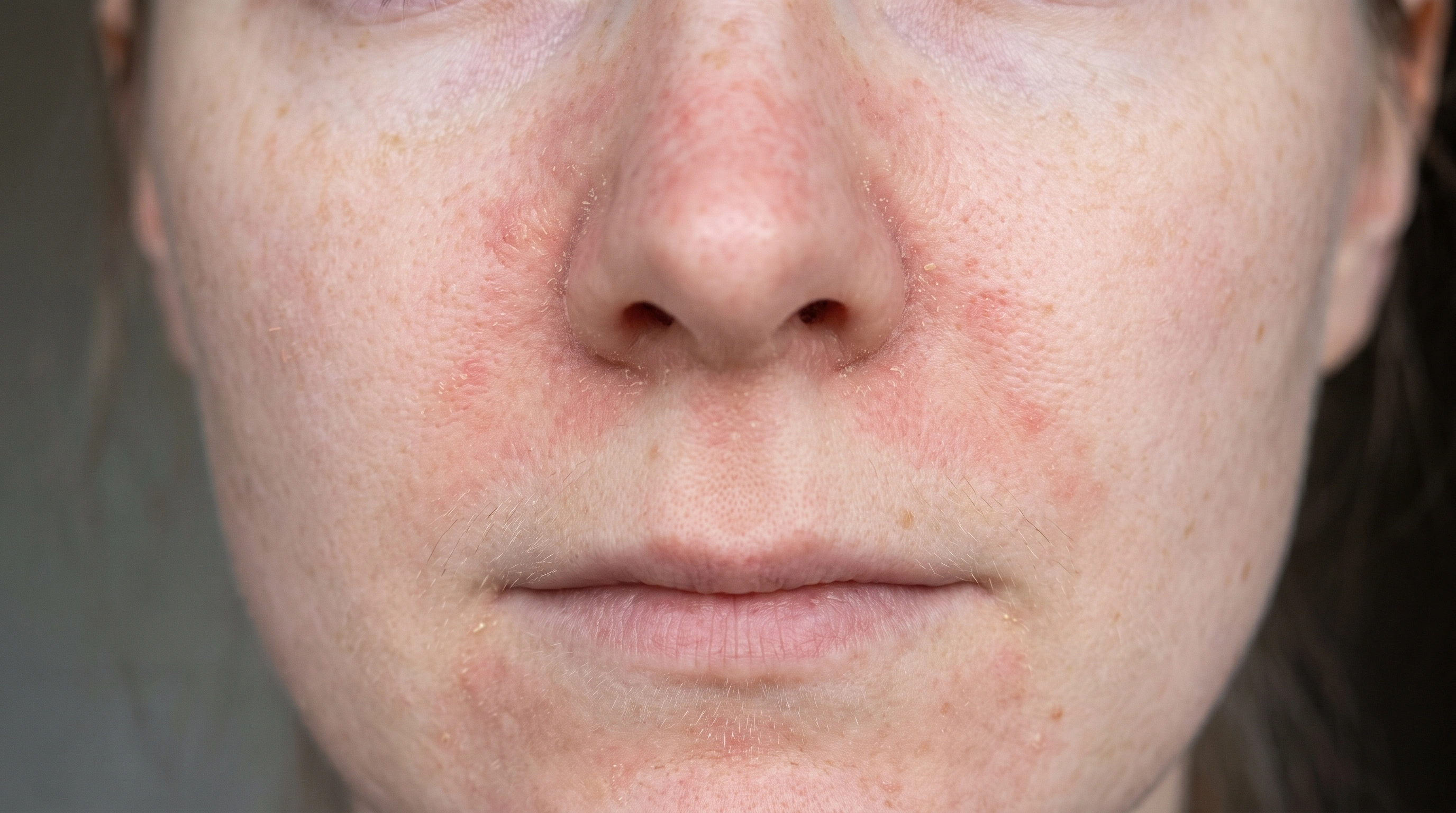
Infant facial eczema Inflamed, rough patches affect the cheeks.
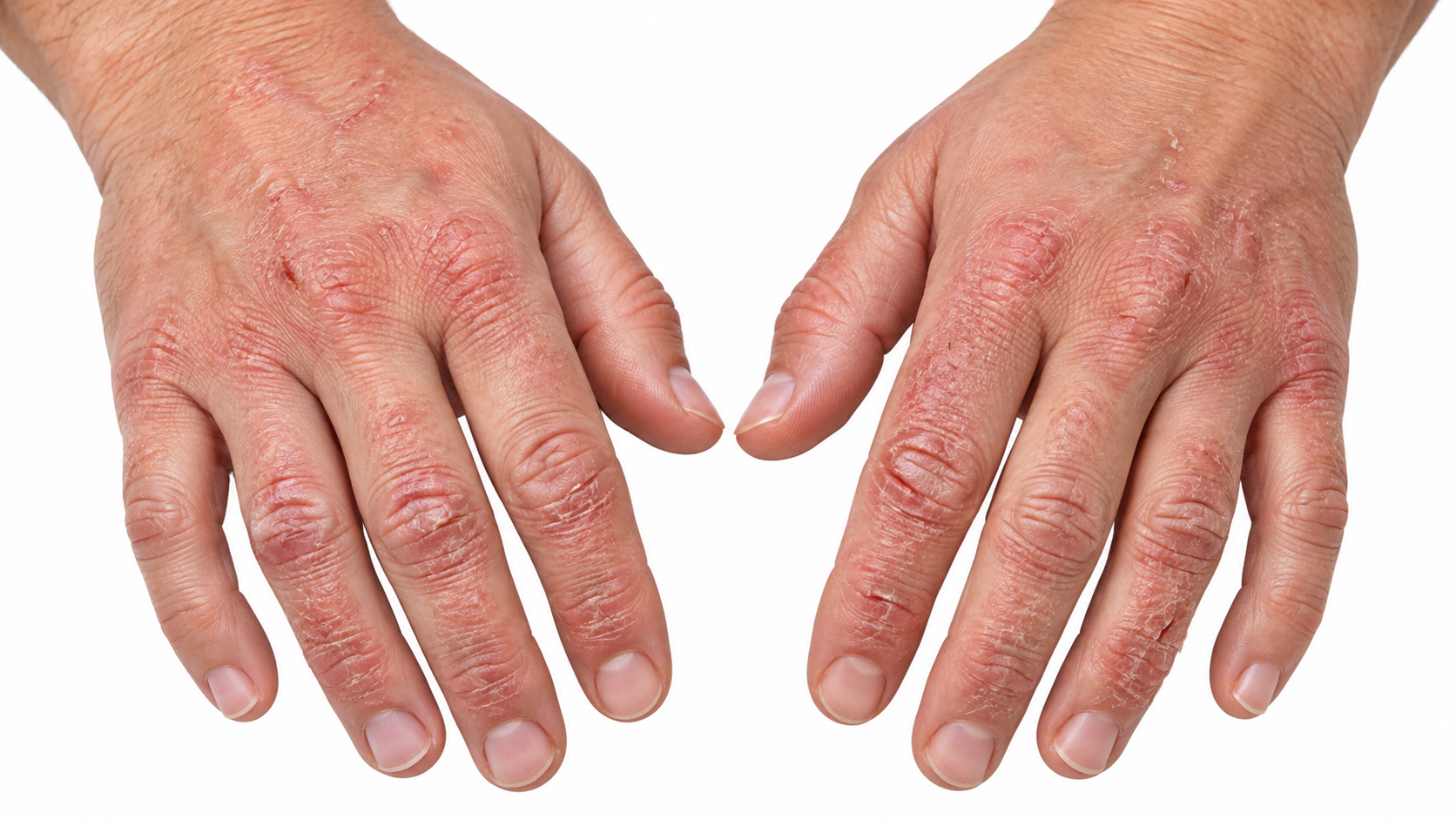
Hand eczema Dry, cracked or blistered hands.
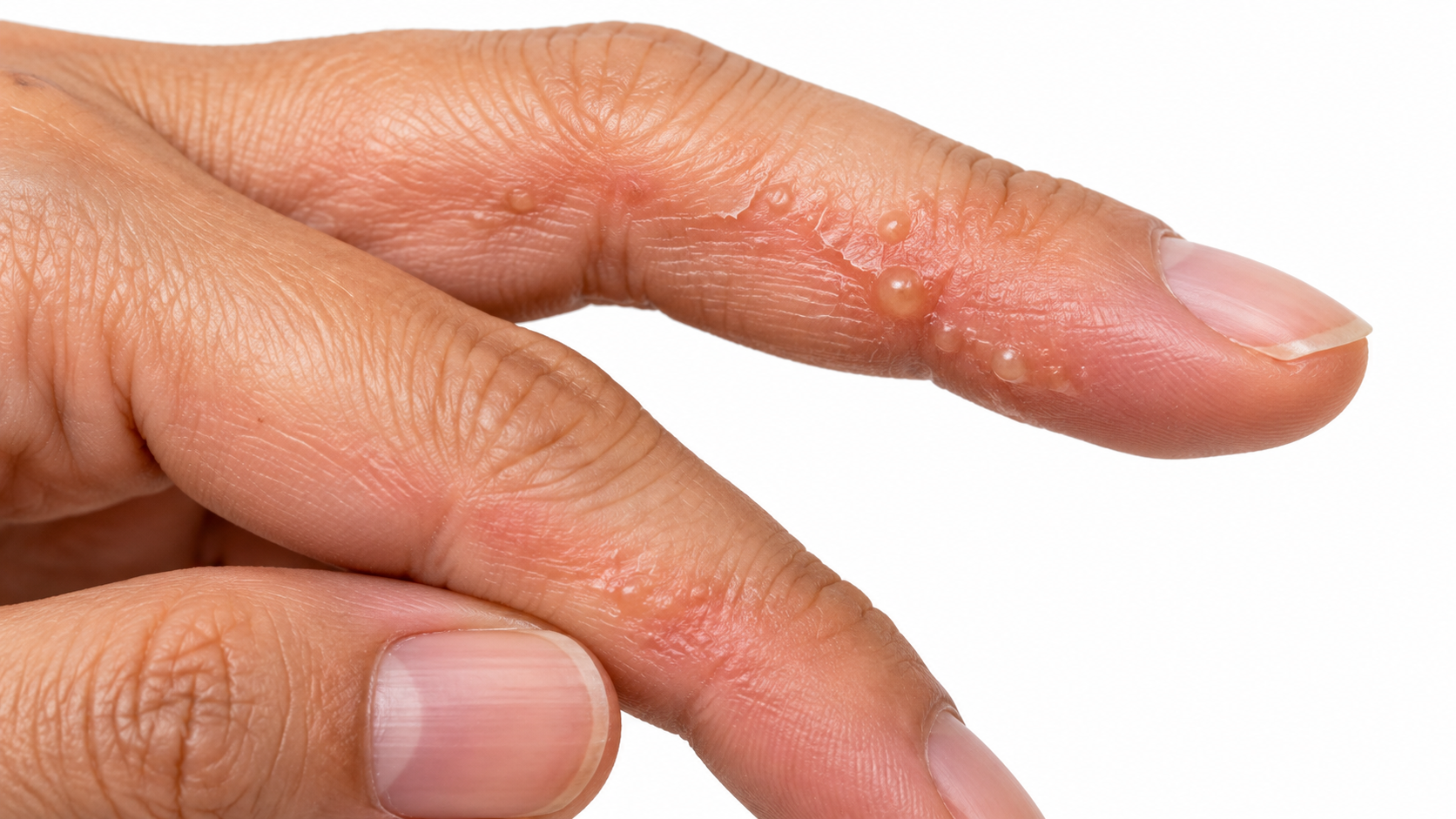
Dyshidrotic eczema Tiny itchy blisters on fingers and palms.
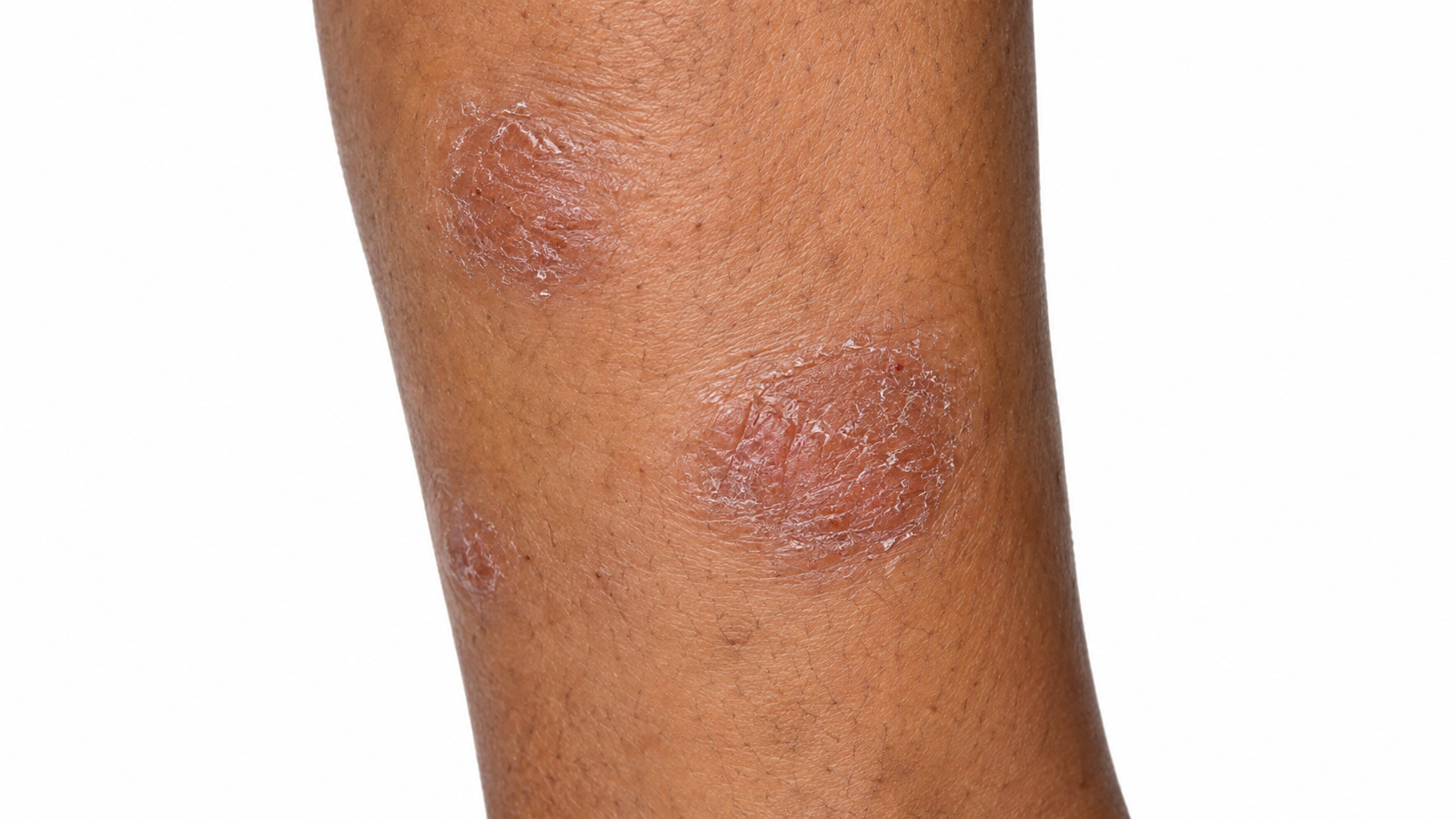
Nummular eczema Coin-shaped patches.
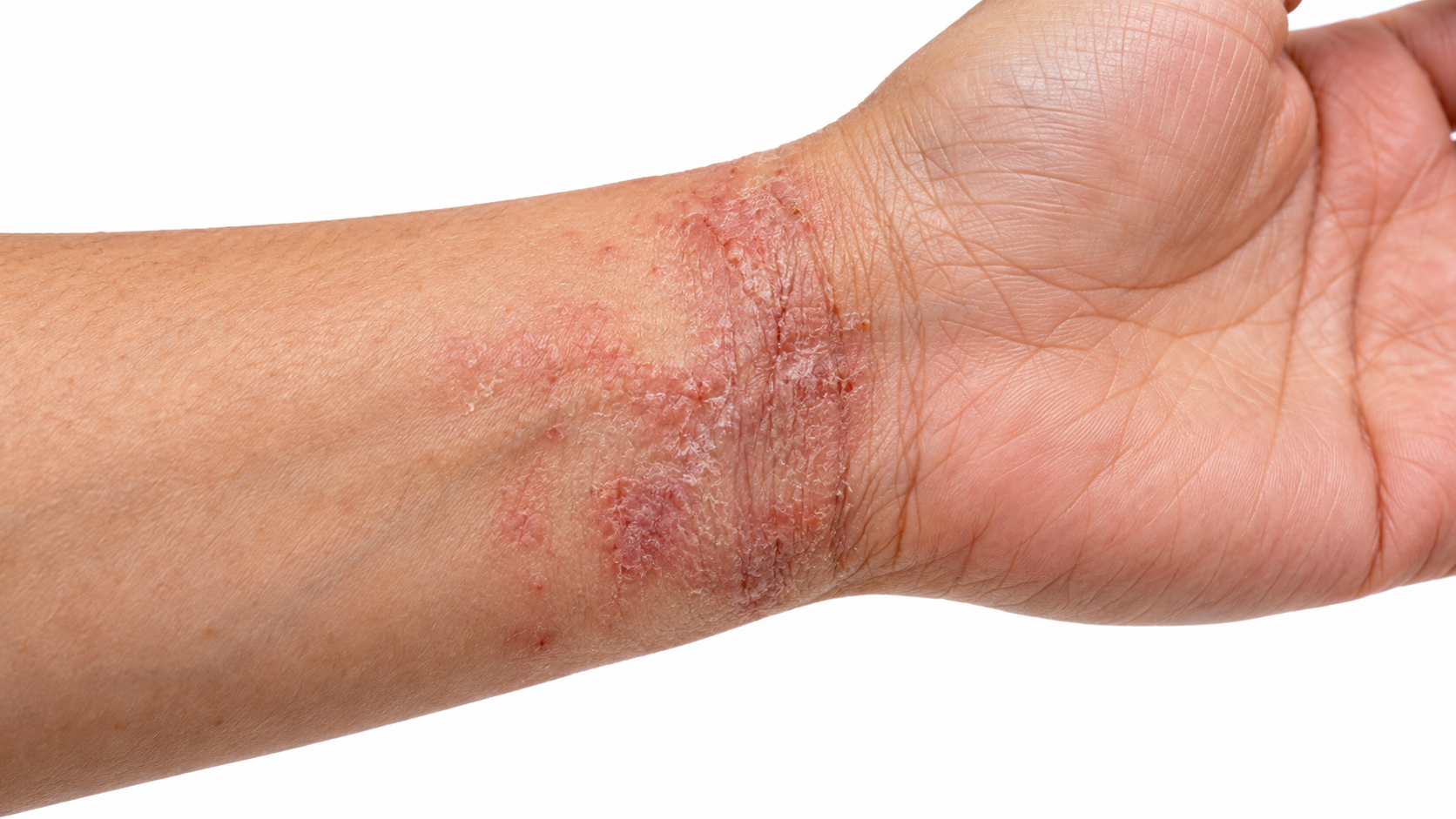
Contact dermatitis Triggered by something touching the skin.
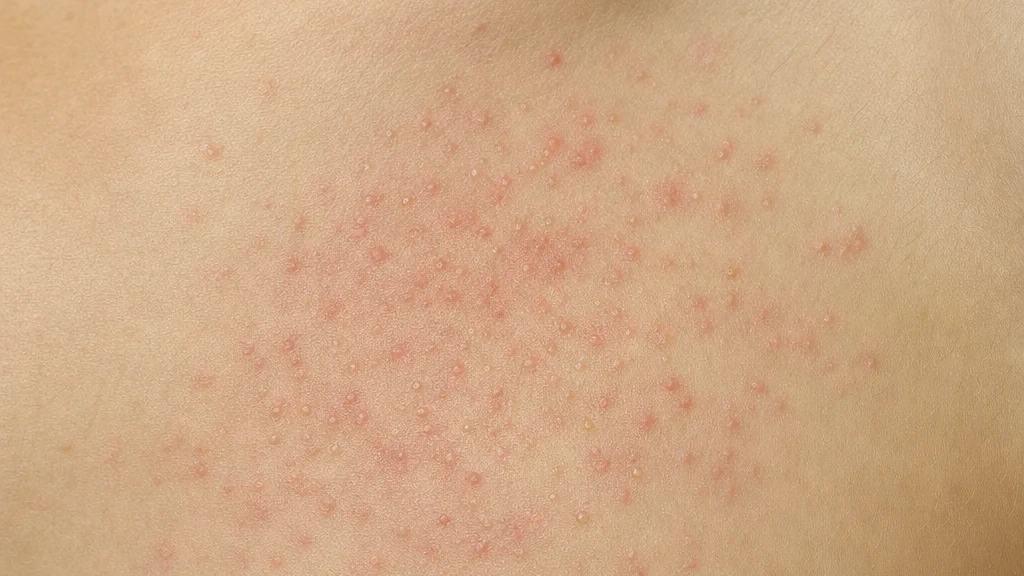
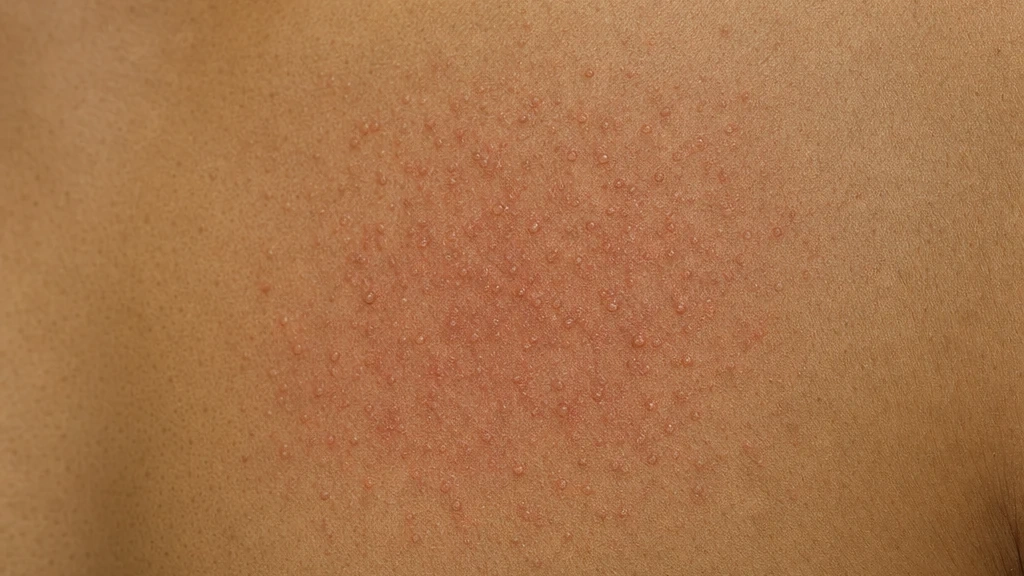
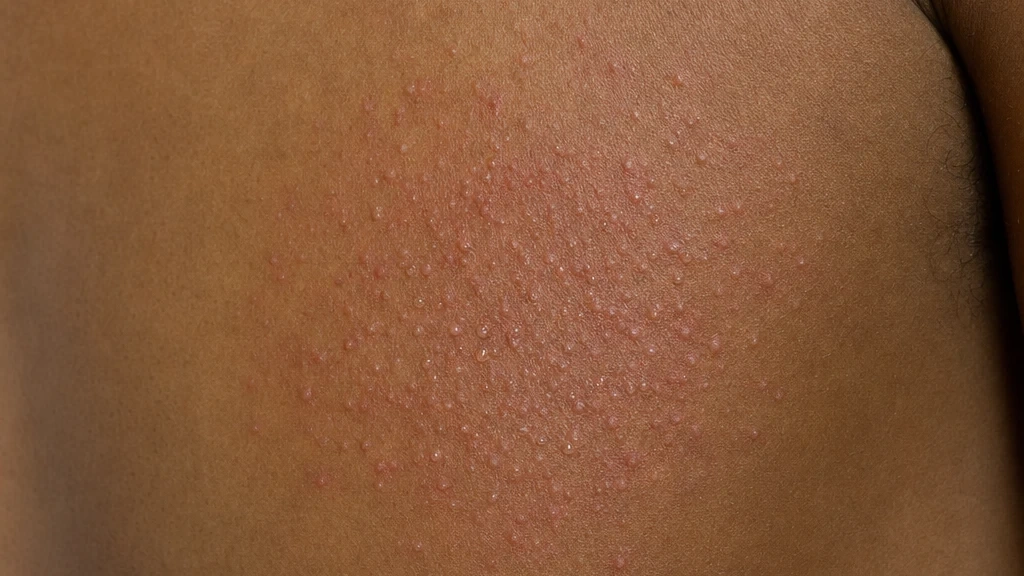
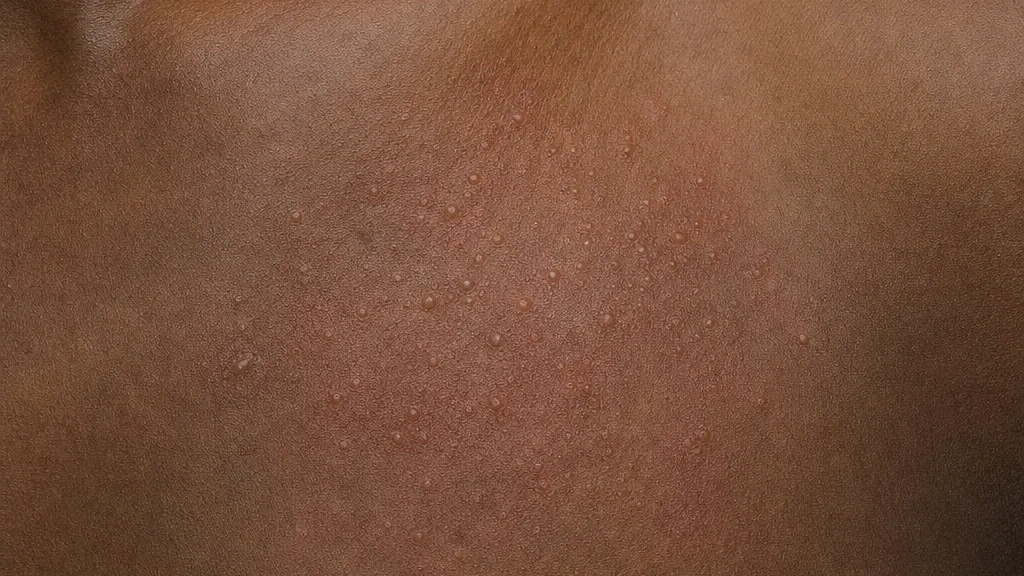
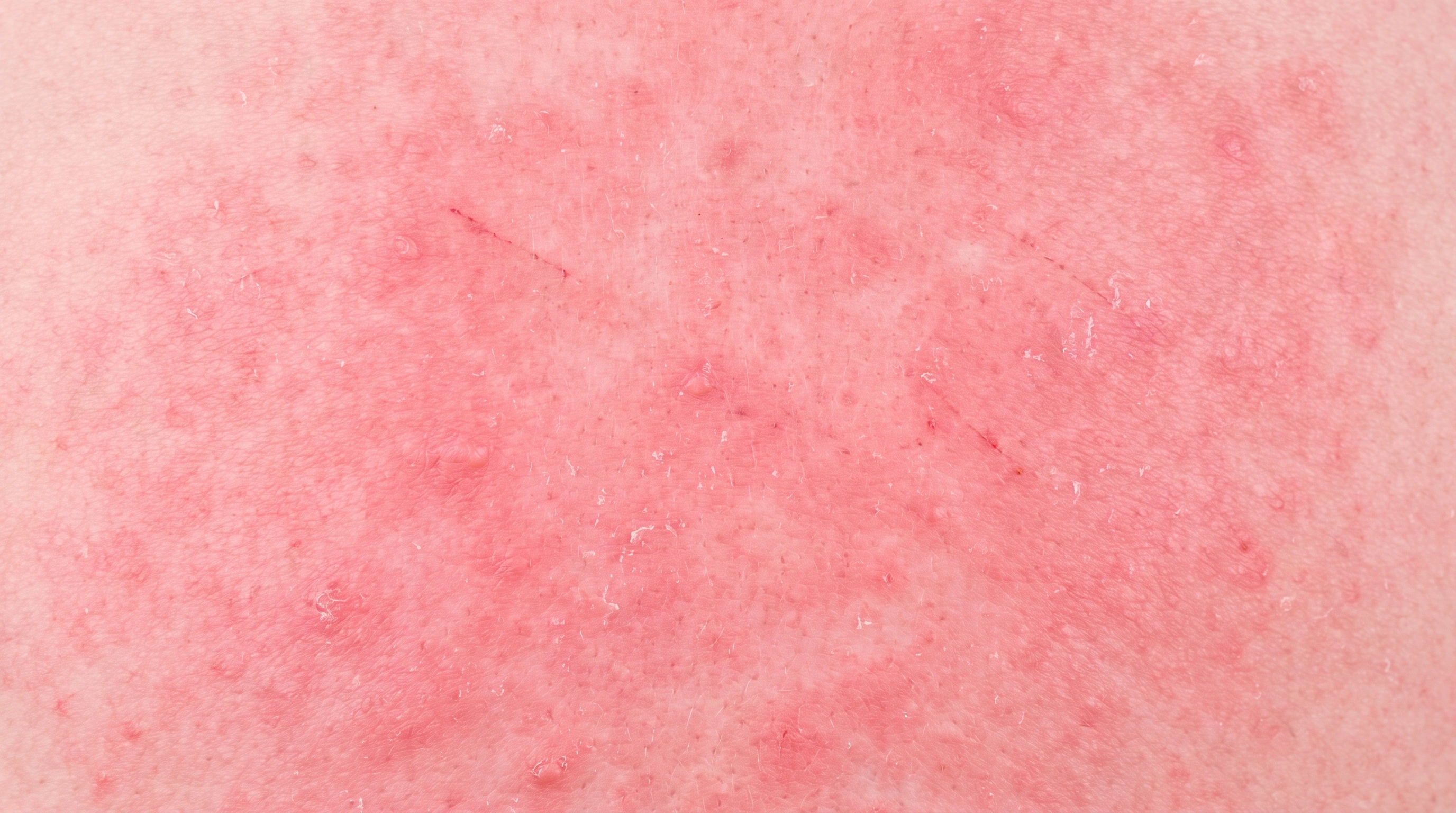
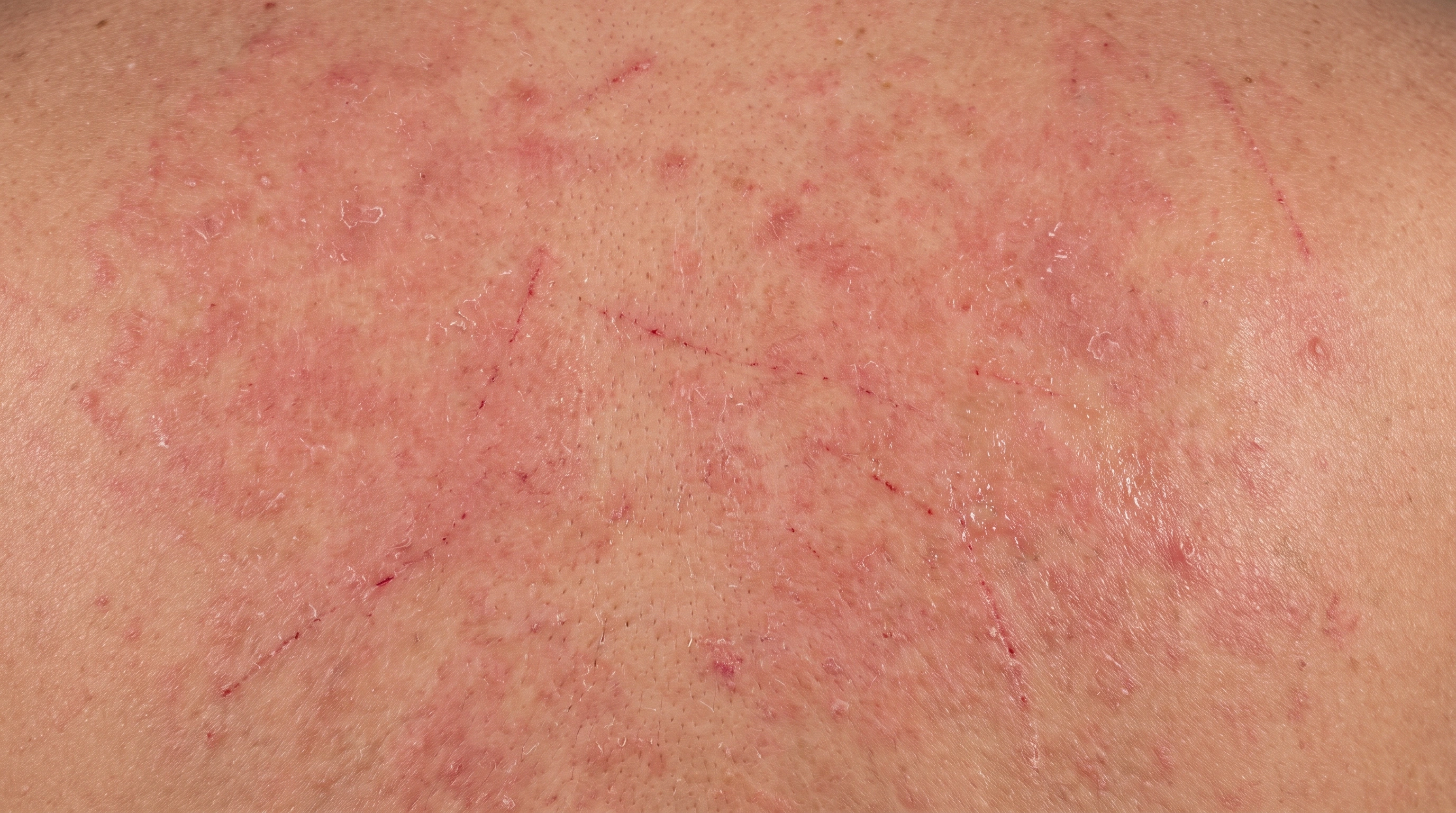
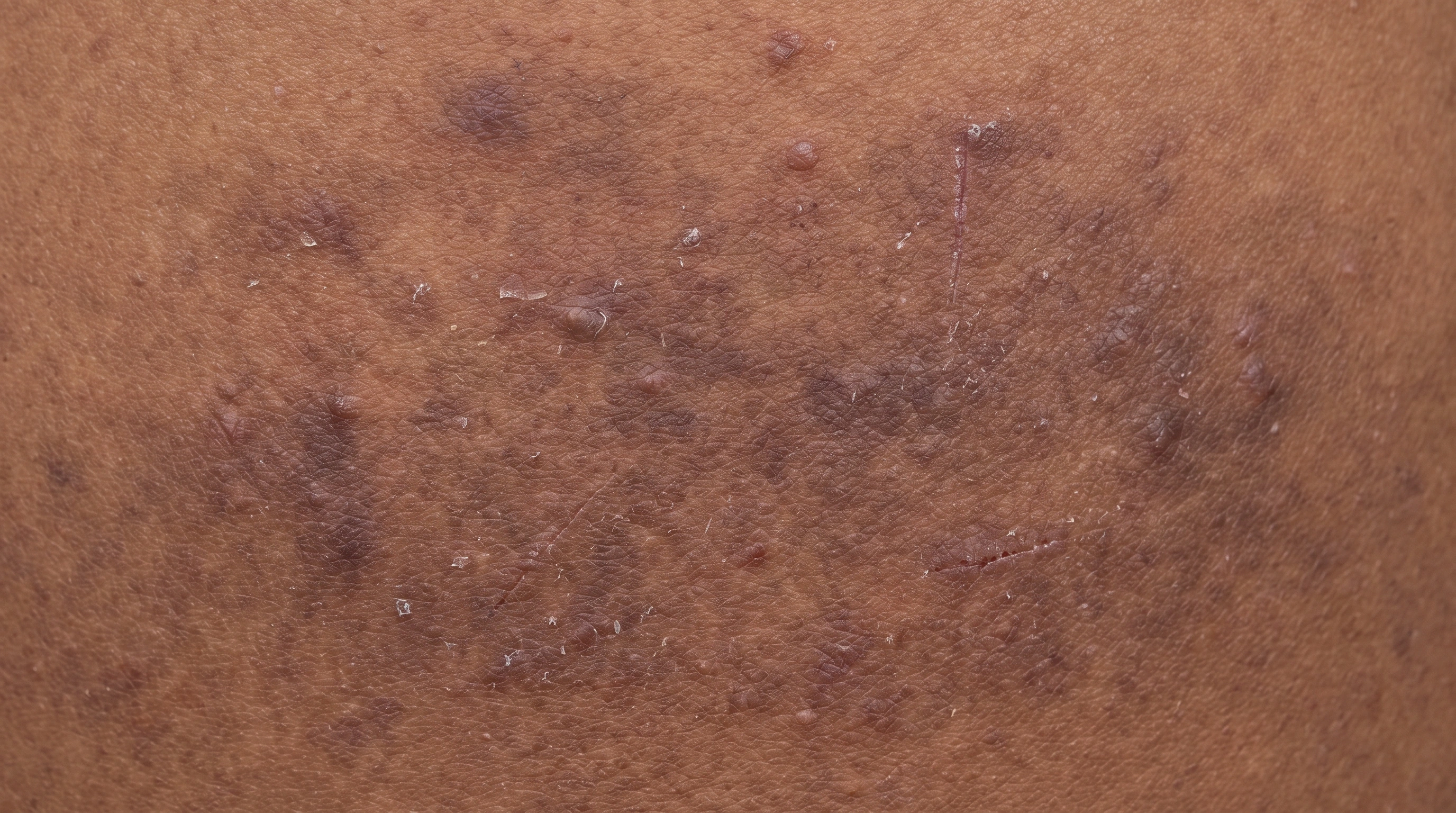
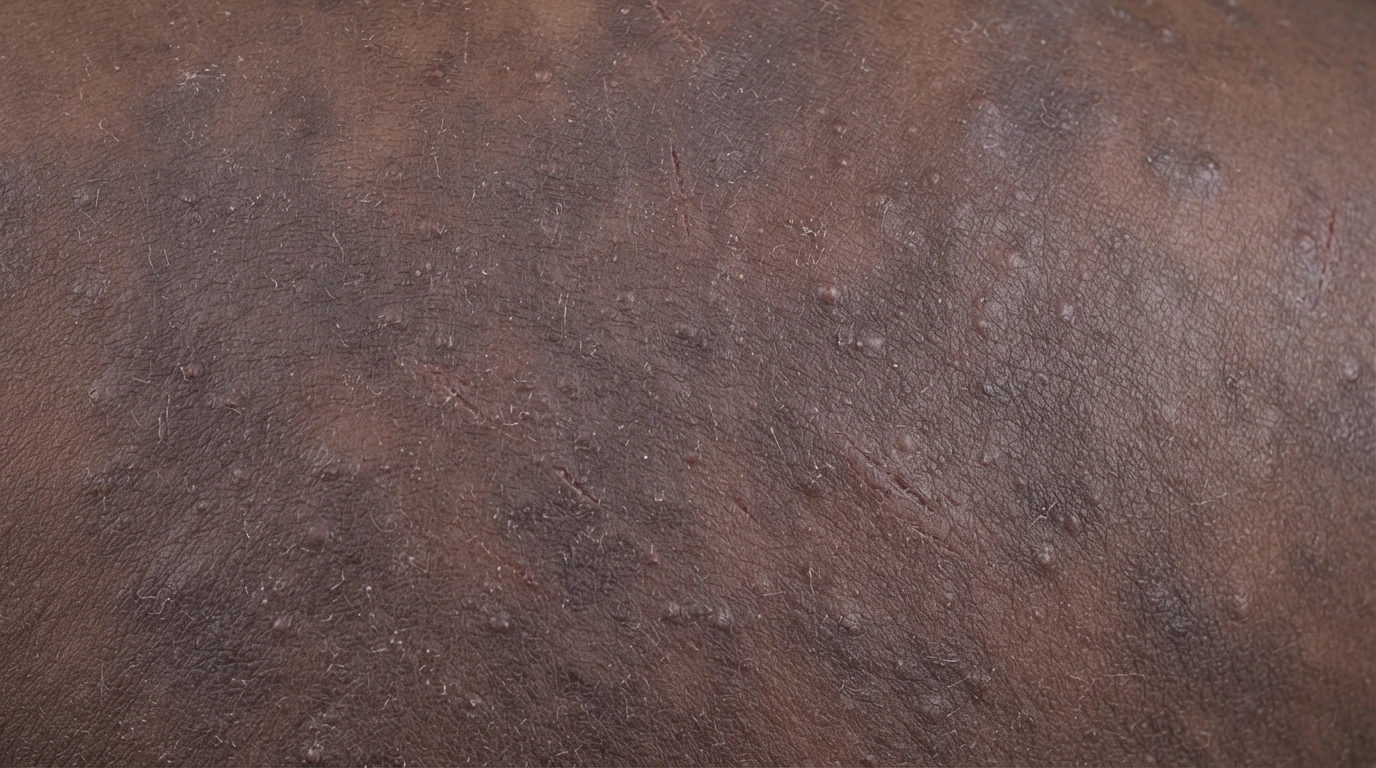
Blocked sweat ducts prevent sweat from reaching the surface normally. Trapped sweat irritates surrounding tissue at different levels of the skin.
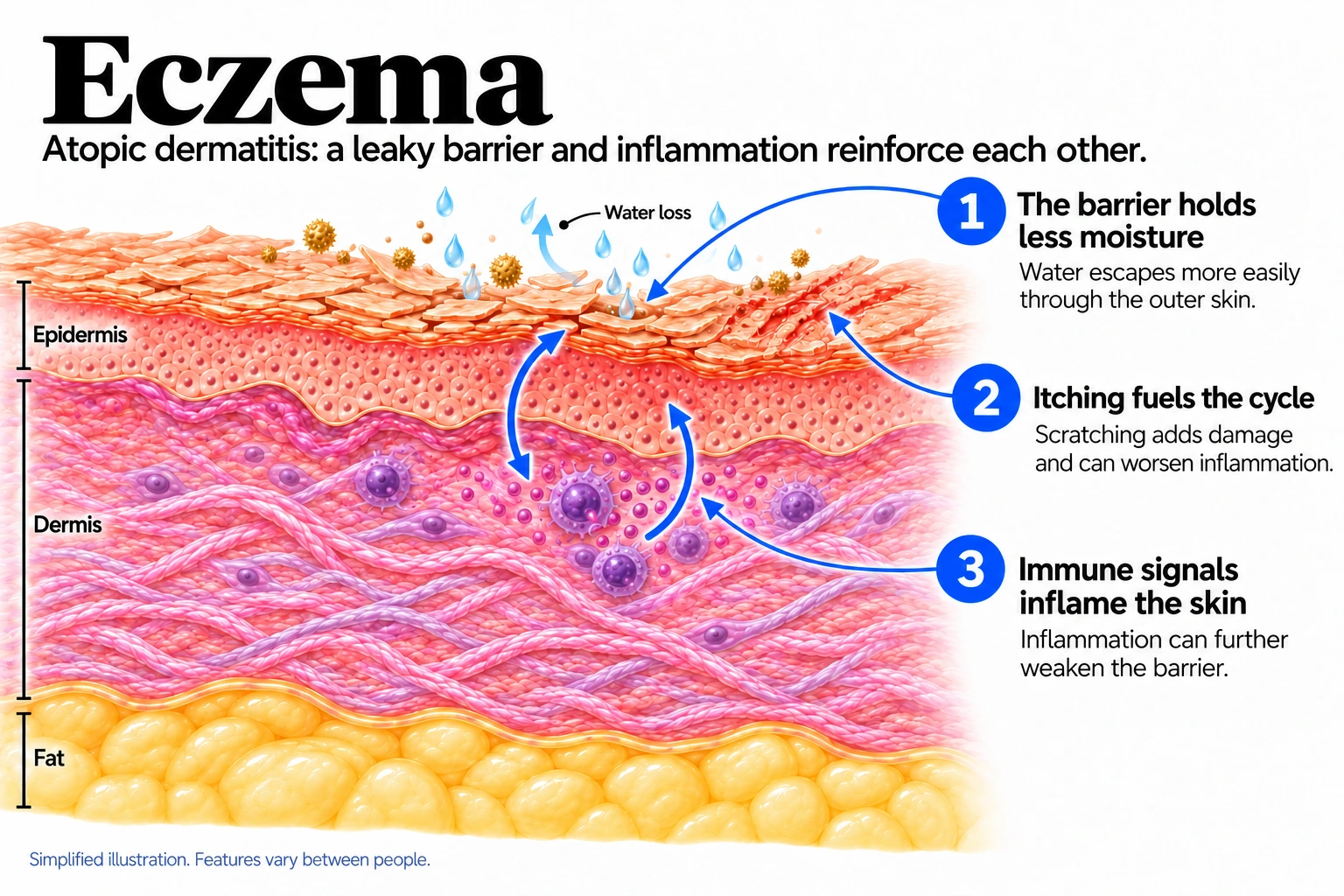
In atopic dermatitis, a less effective skin barrier and overactive immune signals reinforce each other. Water escapes more easily, and itching and scratching can add damage and prolong inflammation.
When it usually starts
Heat Rash. Any age; infants are particularly susceptible.
Eczema. Often starts in infancy or childhood, though it can first develop in adulthood.
Causes and triggers
Blocked sweat ducts trap sweat at different levels of the skin.
Eczema comes from a weak skin barrier combined with an overactive immune response. Moisture escapes, irritants get in and the skin becomes itchy and inflamed.
Changes in the filaggrin gene, which helps build the skin barrier, are a major risk. Eczema often runs in families with asthma and hay fever.
Daily Care
Habits that help
- Move to a cooler, less humid space
Cooling reduces sweating and helps the rash settle. - Wear loose, breathable clothing and lighter bedding
Change damp clothing promptly and avoid wrapping too warmly. - Use a cool bath or cool damp compress
Pat dry gently rather than rubbing the irritated skin. - Keep skin care light and simple
Wash gently and stop products that aggravate the rash.
Avoid
- Avoid: Heavy ointments and tight occlusive clothing
These can trap heat and sweat against the skin. - Avoid: Continuing strenuous activity while overheated or unwell
Rest and cool down; dizziness, confusion or other heat-illness symptoms need urgent help.
Habits that help
- Moisturize generously, every day
An artificial barrier. - Short, lukewarm showers
Gentle cleanser, pat dry, moisturizer straight after. - A humidifier in winter
If your eczema is seasonal. - Cool the skin
Cool compresses and a cooler bedroom quiet it. - Short nails and gloves at night
Limits scratching in your sleep. - Cotton and loose clothing
Less triggering all day. - Use a clinician-agreed maintenance plan on recurrent eczema sites
Twice a week on flare-prone spots lengthens the gaps. - Treat early
A flare caught early takes far less treatment. - Injected and oral treatments
For severe eczema, under a specialist. - Seek assessment for signs of skin infection
New pain, spreading redness, fever or crusting may need assessment. Not every weeping eczema flare needs antibiotics. - Hypochlorous acid spray
Lowers skin bacteria, does not sting. - Diluted bleach baths
Only if your doctor recommends it. - Plan for nighttime itch
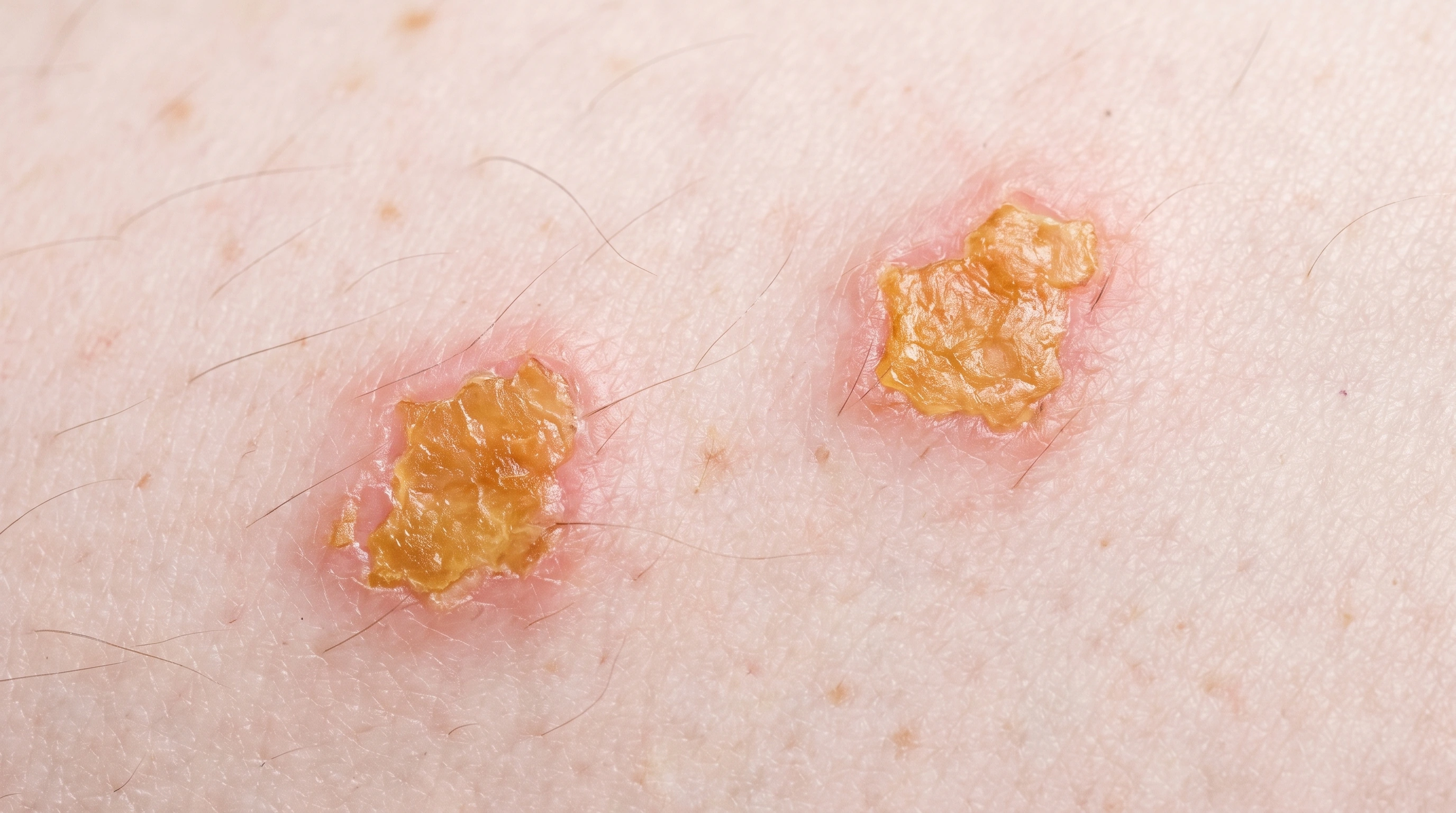
Body heat rises, itch gets louder. - Seek assessment for new weeping, yellow crusts or worsening soreness
These can signal infection but also occur with inflammation. Ask for assessment rather than automatically starting an antibiotic.
Avoid
- Avoid: Scratching
Tears the gaps wider. - Avoid: Long, hot showers
Strip the fats holding the barrier. - Avoid: Soap and foaming cleansers
Heavy foam strips barrier fats. - Avoid: Frequent handwashing
The main driver of hand eczema. - Avoid: Dry indoor air in winter
Heating drops indoor humidity. - Avoid: Fragrance
A top irritant. - Avoid: Sweat and overheating
A very reliable itch trigger. - Avoid: Wool and rough fabrics
Set the itch off directly. - Avoid: Stress and poor sleep
Raise existing inflammation. - Avoid: Dust mites, pollen, pet dander
Matter if you have hay fever or asthma. - Avoid: Stopping moisturizer
The top reason a flare returns. - Avoid: Stopping treatment early
Undertreated flares return faster.
Treatment differences
Cooling the skin, reducing sweating and avoiding heavy occlusive products are the main measures. Persistent or severe symptoms need assessment rather than adding multiple creams.
Outlook
Heat rash usually settles after the skin cools and sweating is reduced. It may recur in hot or humid conditions; fever, marked pain or failure to improve needs review.
Eczema comes in flares - calm skin, then days or weeks of itching and inflammation, then calm. Most people eventually name their own pattern: the season, the stress, the job, the week before a period. Underneath that, it follows a longer arc.
Complications
Scratching can damage the skin; overheating is especially important in infants.
- Impetigo
- Sleep loss, fatigue and low mood
- Thickened, leathery skin
- Dark or light marks after a flare
- New allergies to products
- Eye problems
- Hand eczema that gets in the way of work
- The atopic march in children
More details
Impetigo
Bacteria getting into skin that scratching has broken open. It shows as weeping and golden-yellow crusts sitting on top of an eczema patch, and it can turn a settled flare much worse in a day or two. It needs an antibiotic alongside the usual eczema treatment - more moisturizer will not clear it.
Sleep loss, fatigue and low mood
Itch is at its worst at night, so eczema costs sleep - for the person who has it, and often for the rest of the house. Months of broken sleep bring daytime fatigue and poor concentration, and anxiety and depression are more common in people with moderate or severe eczema. It is worth telling your doctor. Treating the eczema properly is usually what fixes the sleep.
Thickened, leathery skin
Months of rubbing and scratching the same patch thicken it into leathery skin with the normal lines cut deeper. Doctors call it lichenification. It itches on its own, and it takes far longer to settle than a fresh flare - stopping the scratching is the only thing that reverses it.
Dark or light marks after a flare
Settled patches often leave flat marks that are darker than the skin around them, and sometimes lighter patches where pigment has dropped out. Neither is a scar, and neither is caused by the treatment. They fade on their own, but over months rather than weeks, and they are more noticeable and longer-lasting on deeper skin tones.
New allergies to products
Broken skin meets far more of whatever is put on it, so people with eczema pick up contact allergies more easily - to preservatives, fragrance, and sometimes to the eczema creams themselves. Suspect it when a treatment that used to work starts to sting or spread the rash. Patch testing is how it is confirmed.
Eye problems
Eyelid eczema and constant rubbing lead to itchy, swollen lids and red, irritated eyes. In severe, long-standing eczema, a change in the shape of the cornea called keratoconus and early cataracts are uncommon but recognized. If the eyes are involved often, it is worth an eye check.
Hand eczema that gets in the way of work
Cracked, sore hands are hard to hide and hard to rest. In wet work - healthcare, food, cleaning, hairdressing, childcare - it can mean time off or a change of job. Treating it early and protecting the hands through the working day is what keeps it from getting that far.
The atopic march in children
Children with eczema are more likely than other children to go on to develop asthma, hay fever and food allergy, often in that order. Doctors call the pattern the atopic march. It is a tendency, not a certainty - most children with eczema do not get all of it.
When to get help
Get care for fever, pus, persistent rash or signs that an infant is overheating or unwell.
Seek help for sleep-disrupting itch, recurrent flares or infection. Rapidly worsening painful skin with clustered blisters, fever or eye involvement needs urgent care.
Common questions
Heat Rash:What is Heat Rash?
Miliaria is an itchy or prickly eruption caused by blocked sweat ducts.
Heat Rash:What can I do day to day?
Move to a cool environment, wear breathable clothing and avoid heavy occlusive products.
Heat Rash:When should I get medical advice?
Get care for fever, pus, persistent rash or signs that an infant is overheating or unwell.
Eczema:Will my child grow out of eczema?
Many children improve a great deal by school age, and more through the teenage years. Complete, permanent clearance happens but is not the rule. What usually remains is dry, easily irritated skin that can flare again later, often on the hands. Treating it well in childhood does not guarantee it goes, but it means fewer flares, less scratching, less thickened skin.
Eczema:Are topical steroids safe for my child?
Used as prescribed, yes. The rules are simple - mild strengths on the face, eyelids and skin folds, stronger ones for the body and limbs, and courses that run the length of a flare rather than indefinitely. Thinned skin and stretch marks come from strong steroids on thin skin for months without review. If you are using one more or less continuously, go back and ask about a non-steroid option.
Eczema:Is a food causing this?
Usually not, and this is a common wrong turn. Food allergy is more common in children with eczema, but because both come from the same atopic tendency, not because food drives the rash. Removing foods rarely clears eczema, and long elimination diets can cause nutritional problems and even make a true allergy more likely. A clear, repeatable reaction within a couple of hours is worth investigating. A vague suspicion is not.
Eczema:Why is it so much worse at night?
Several things line up after dark. Body temperature rises in the evening, and heat triggers itch directly. The distractions that kept you from noticing it are gone. Cortisol, which damps inflammation, is at its lowest overnight. And scratching in your sleep is unconscious, so damage piles up unchecked. A cooler bedroom, moisturizer right before bed, short nails and cotton layers help more than they sound.
Eczema:Can I use the same cream on my face?
Not always. Facial skin, eyelid skin especially, is much thinner and absorbs more of what you put on it. A steroid strong enough for your shins can thin the skin around your eyes within weeks. Face and eyelid eczema is treated with a mild steroid for a short stretch, or a non-steroid cream that can be used long term. Ask before moving a body prescription to your face.
Eczema:Do I still need moisturizer when the skin looks normal?
Yes. This is the single habit that separates people who flare four times a year from people who flare monthly. Skin that looks normal in eczema is still leaky - the barrier defect is there whether or not there is a rash. Daily moisturizer on calm skin keeps the next flare further off and smaller. It is maintenance, not first aid.
Sources
Sources and further reading
Keep exploring.
Eczema
Allergic Contact Dermatitis vs Eczema
Baby Acne vs Eczema
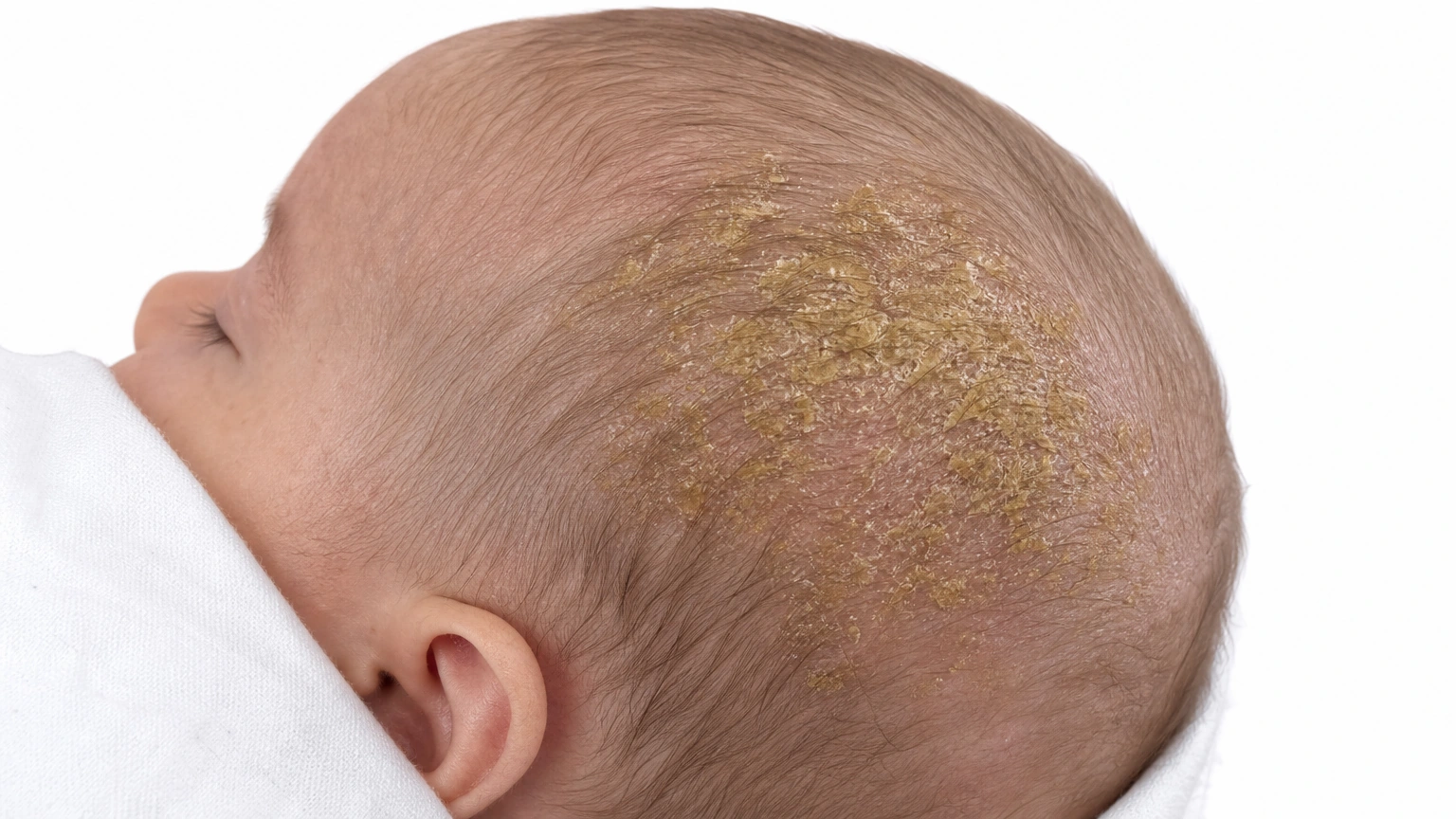
Cradle Cap vs Eczema
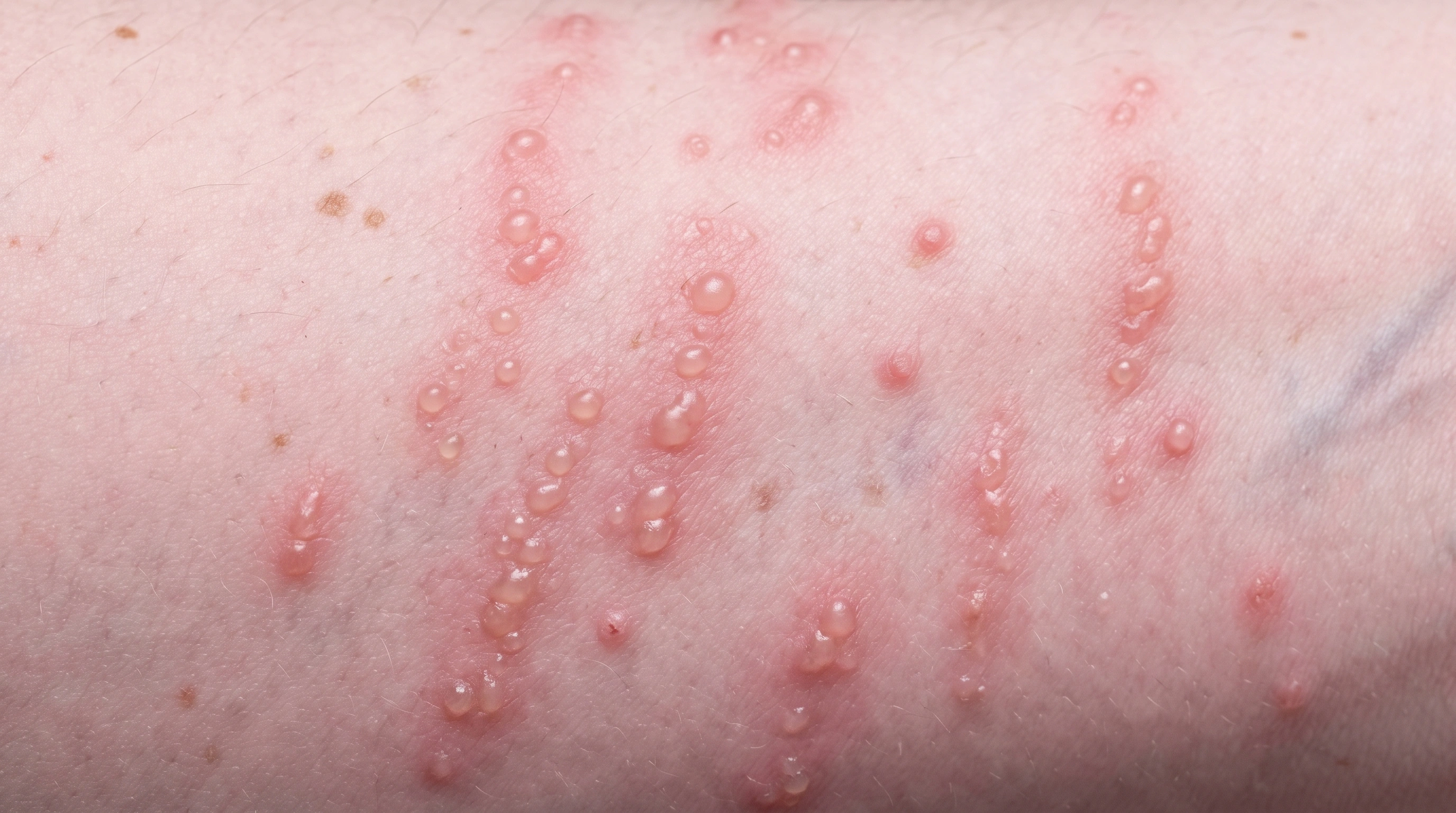
Eczema vs Contact Dermatitis
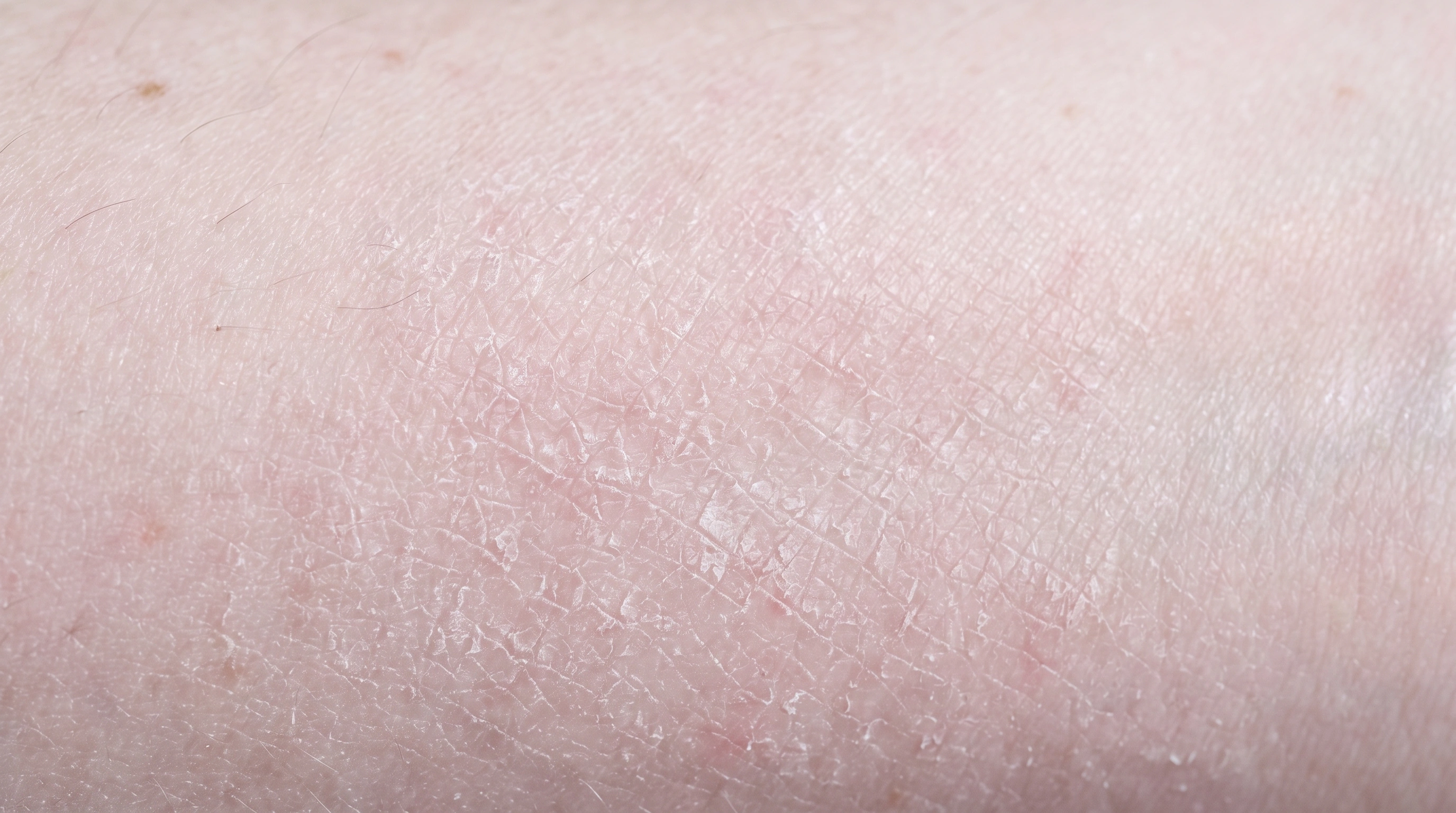
Eczema vs Dry Skin

Eczema vs Hives
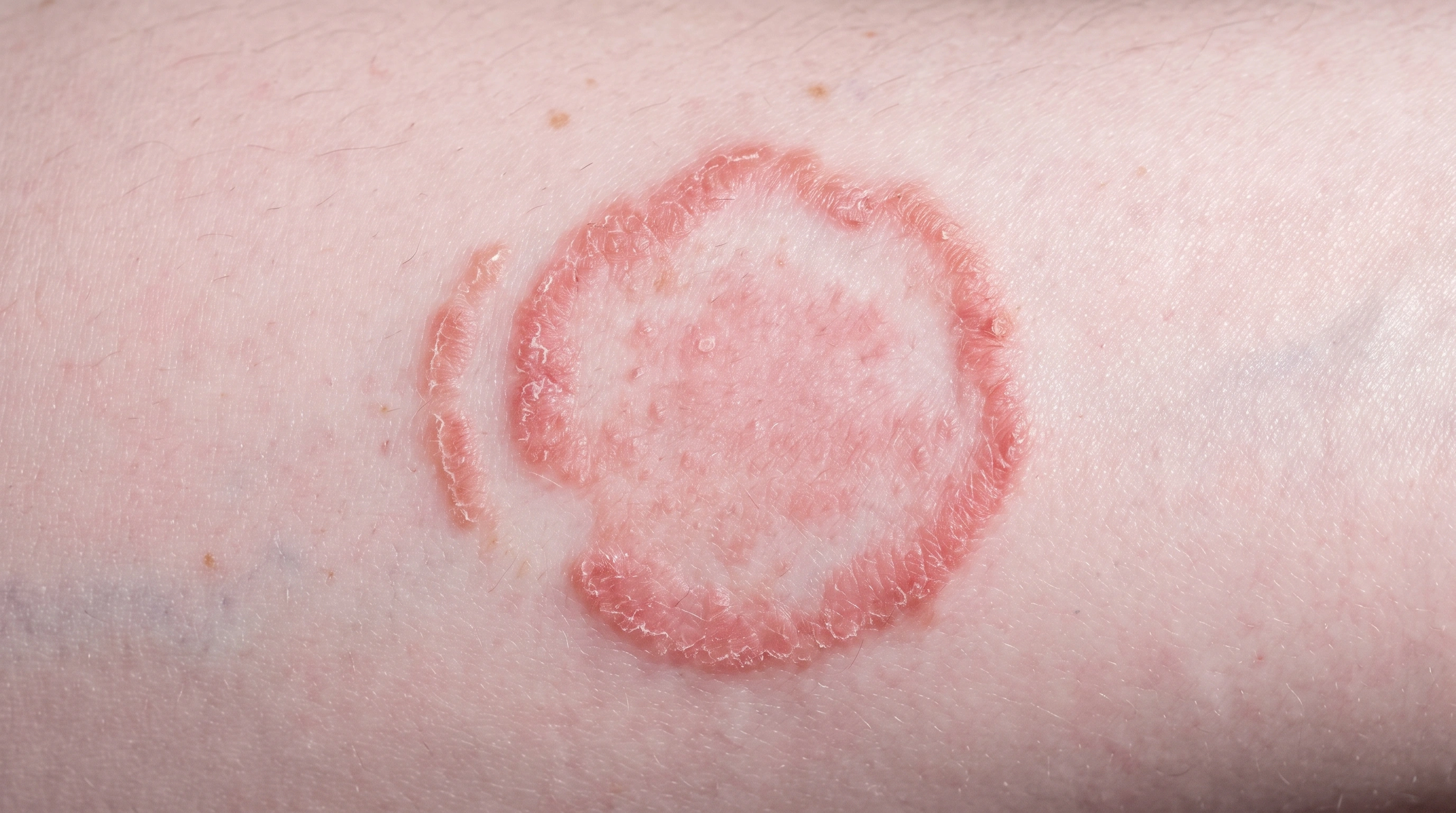
Eczema vs Ringworm

Eczema vs Scabies
Eczema vs Seborrheic Dermatitis
Facial Psoriasis vs Eczema