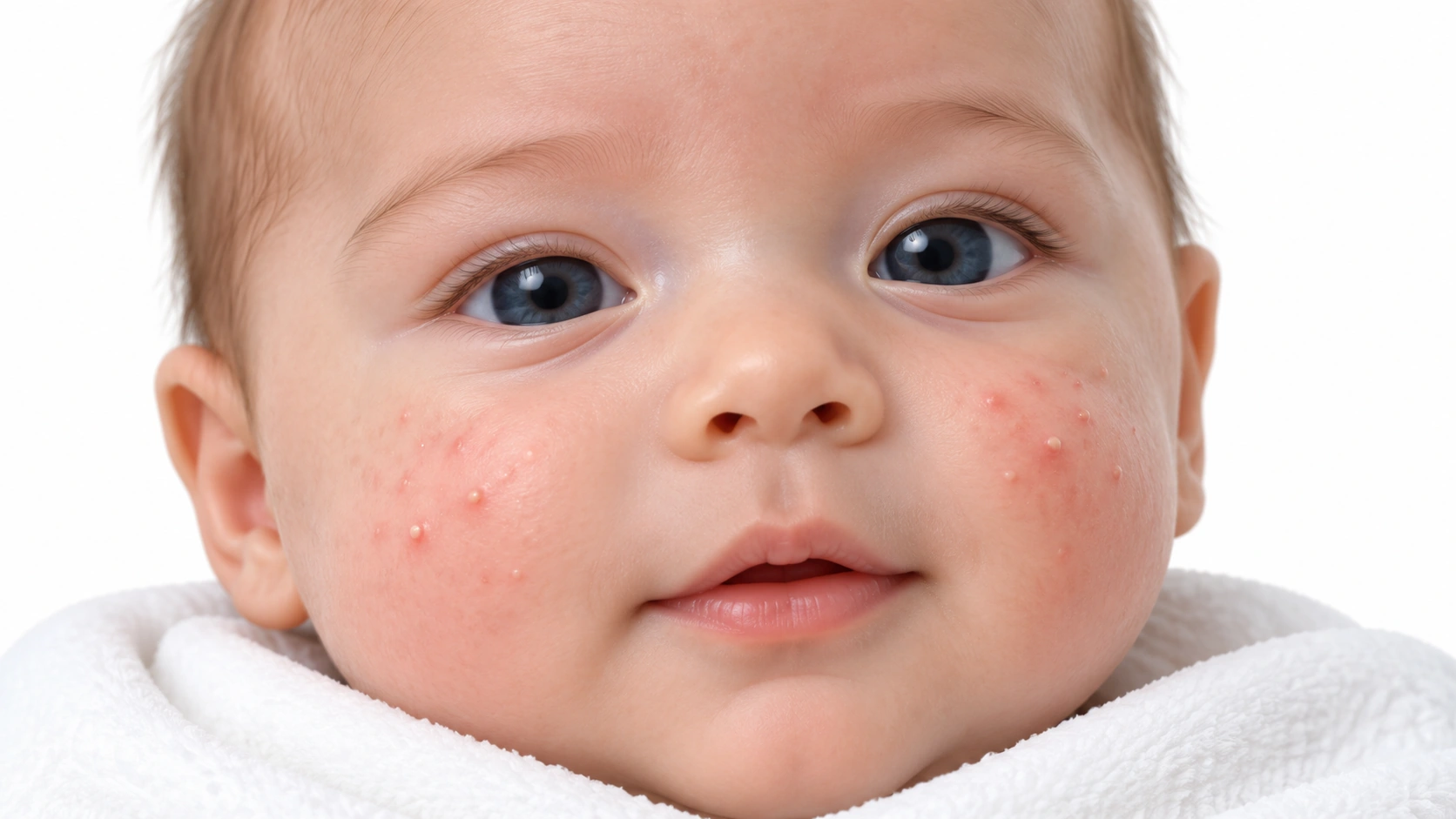
Fungal Acne vs Heat Rash
Miliaria is an itchy or prickly eruption caused by blocked sweat ducts.
Key differences
The same eight facts on every condition comparison.
What is it?
- It is a yeast-driven follicle eruption.
Malassezia, which normally lives on skin, can multiply inside follicles. - It has a typical pattern.
Small itchy bumps cluster on the upper trunk, shoulders, neck or hairline. - The nickname misleads.
Conventional acne treatments may not address the yeast. - It can coexist with acne.
Blackheads, whiteheads and mixed lesion sizes point to acne vulgaris as well. - Overview
Also called Malassezia folliculitis: inflammation around hair follicles linked to yeast. It often produces small, similar-looking, itchy bumps rather than blocked pores.
- What it is
Miliaria is an itchy or prickly eruption caused by blocked sweat ducts.
What it looks like
Fungal Acne
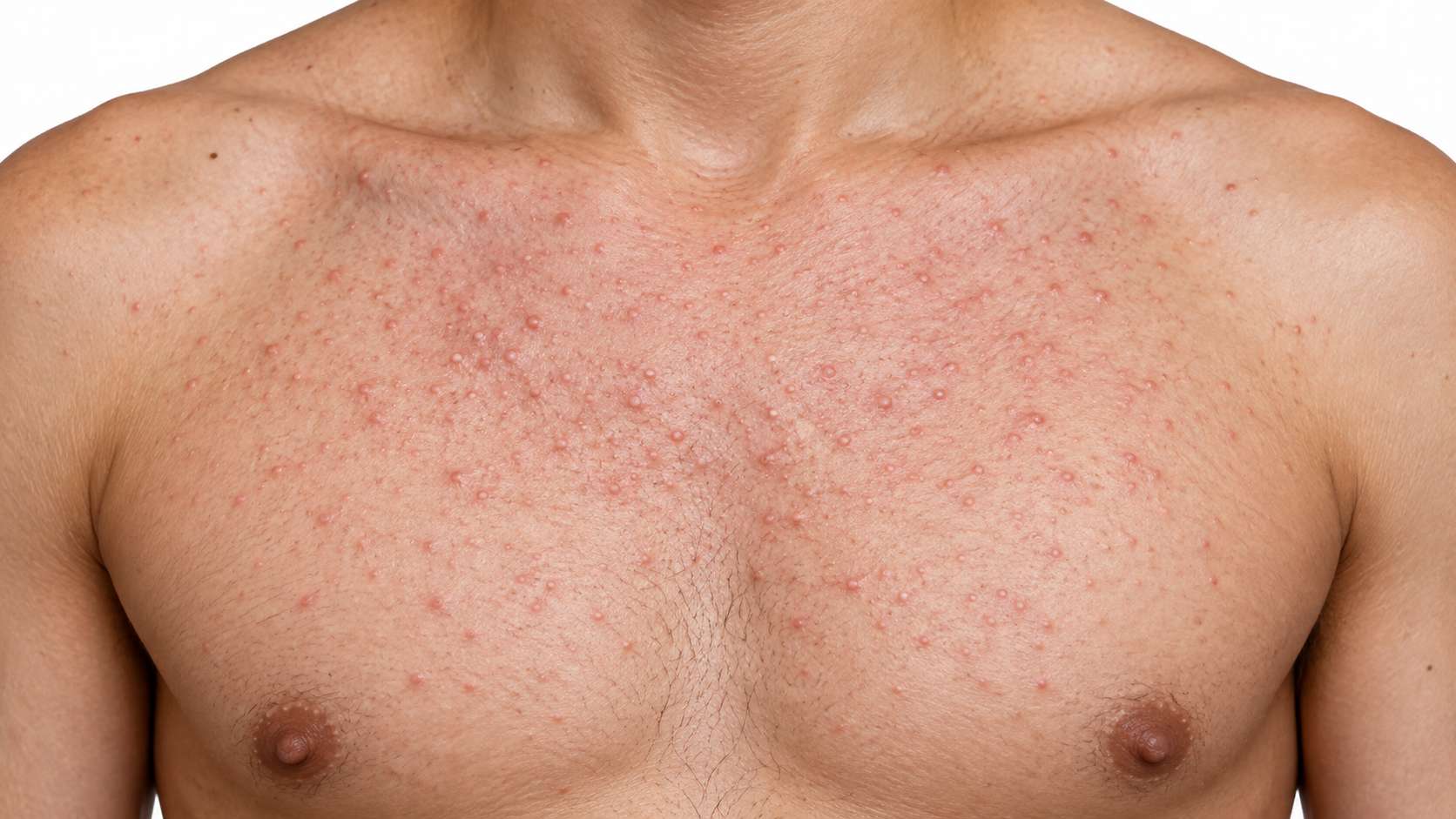
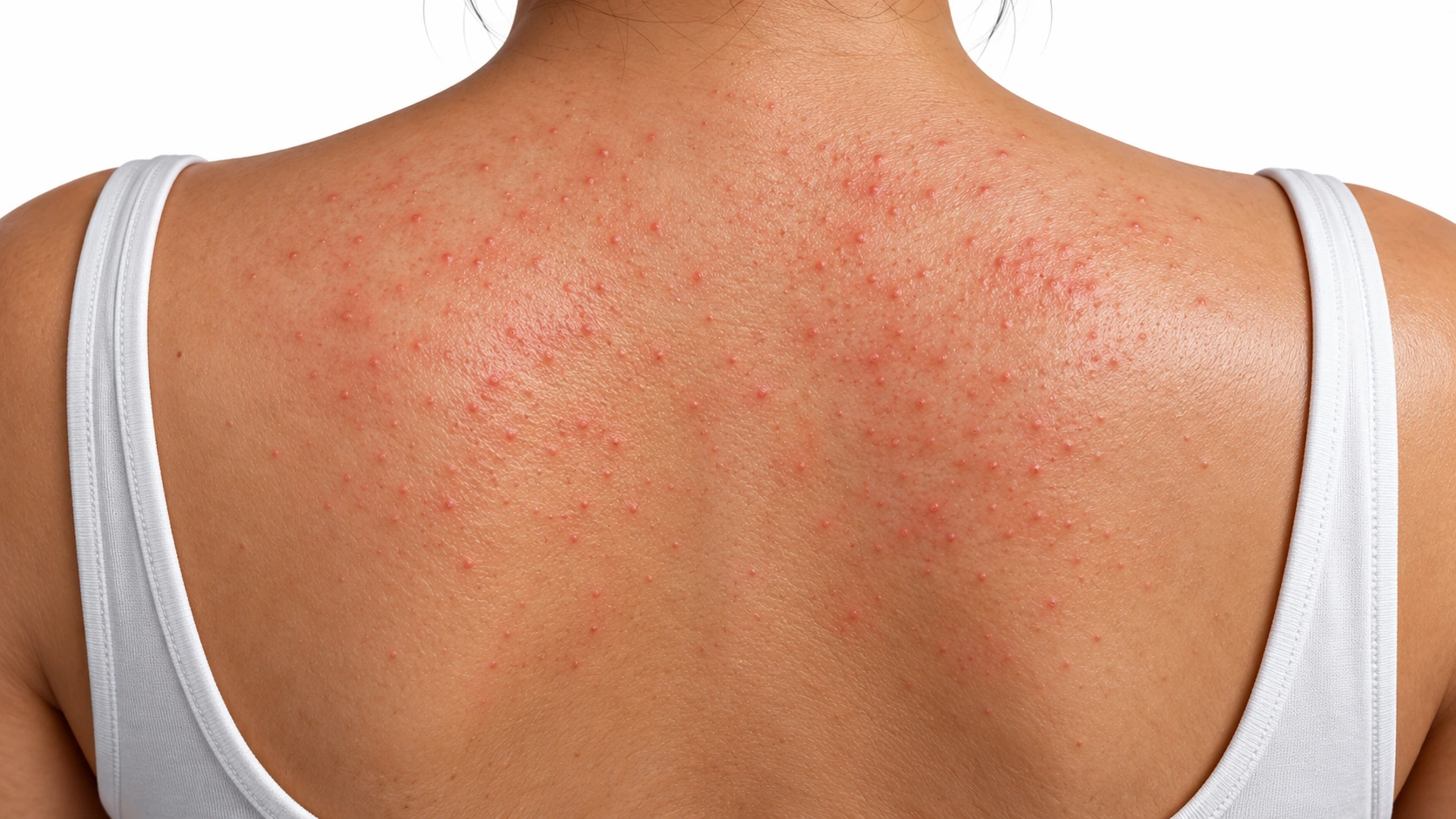
Uniform bumps Small bumps all the same size.
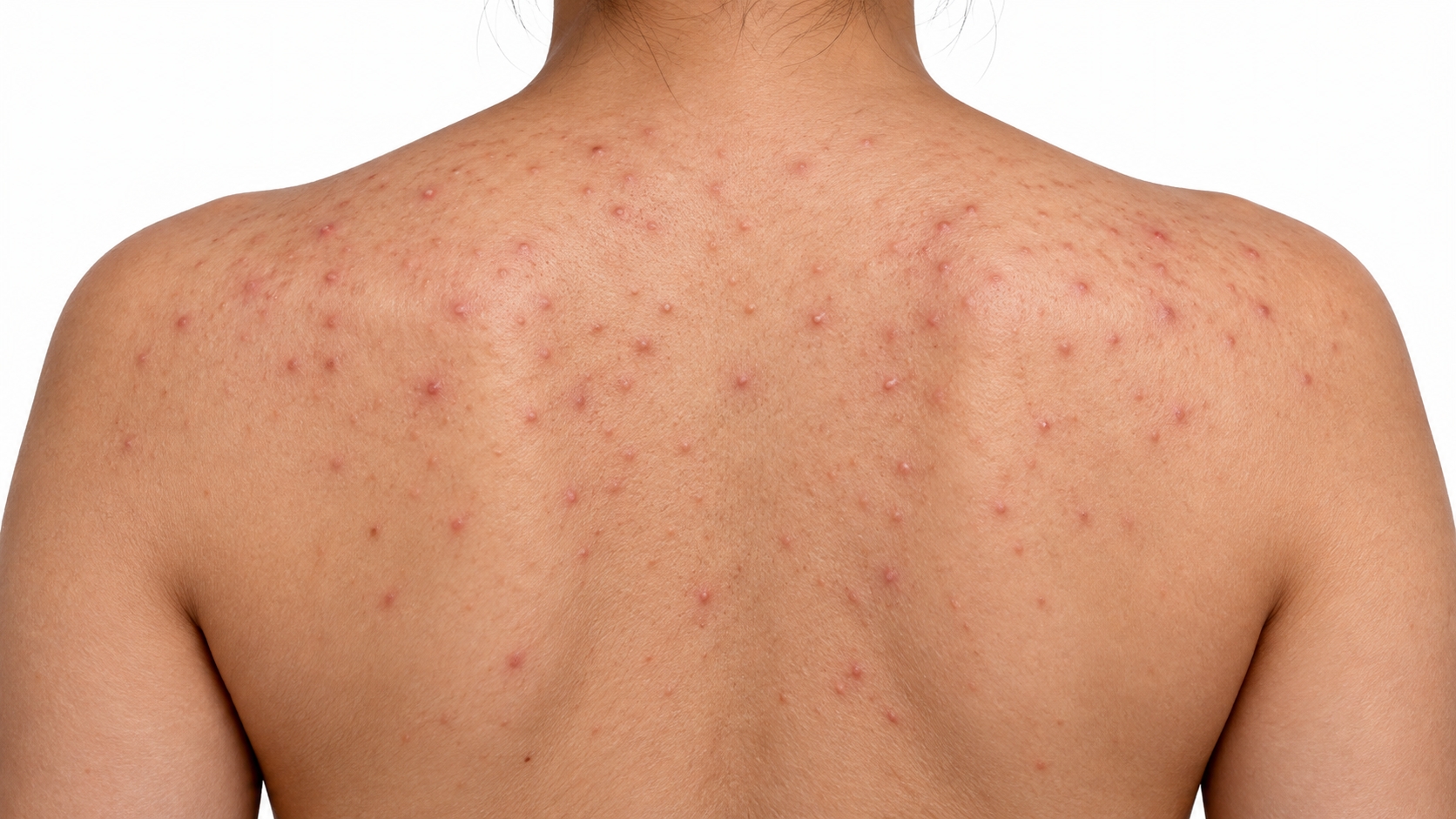
Upper back A common site.

Forehead Clusters along the hairline.
Heat Rash
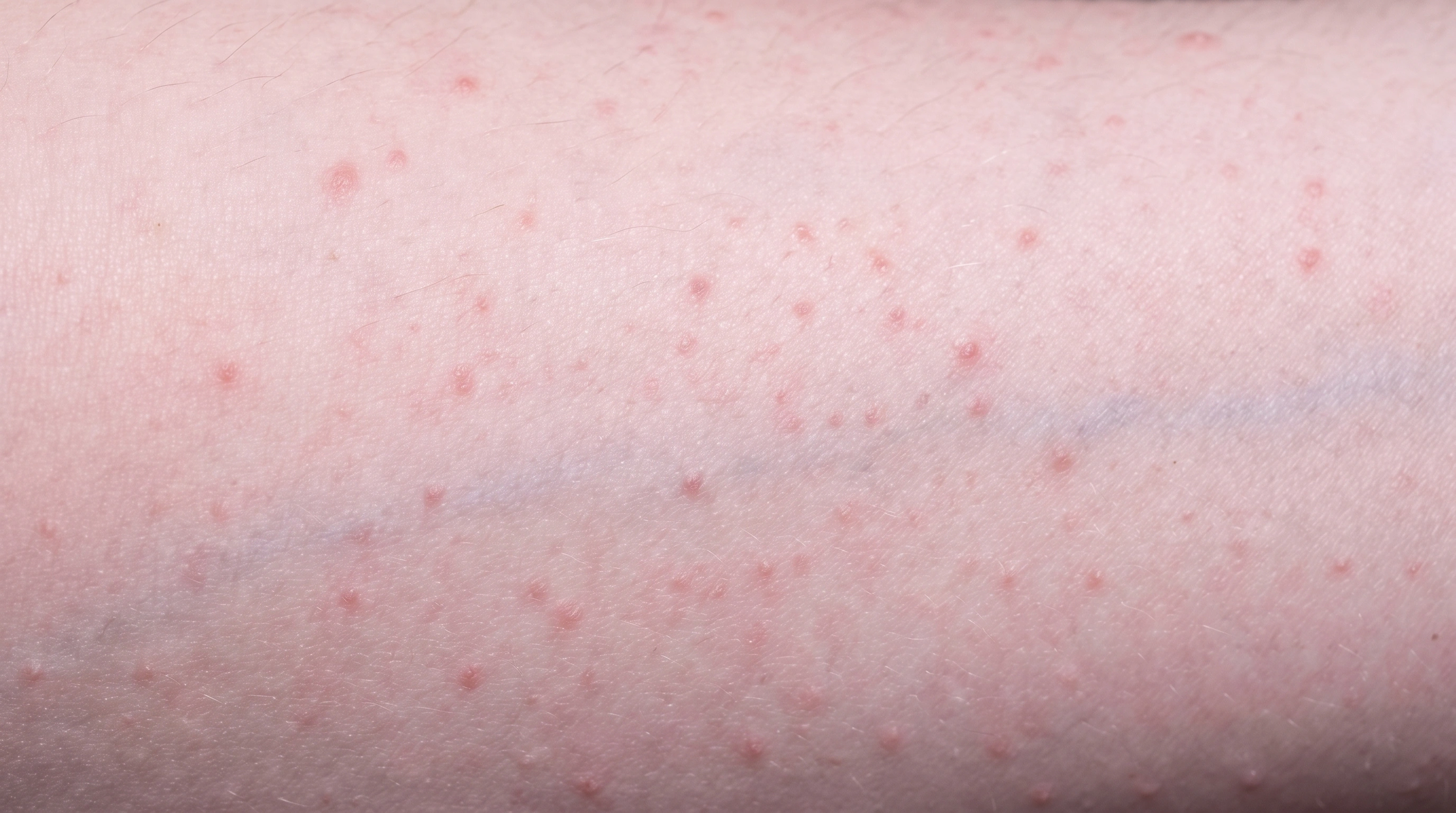
Heat Rash Many tiny bumps are scattered over a broad pink area.
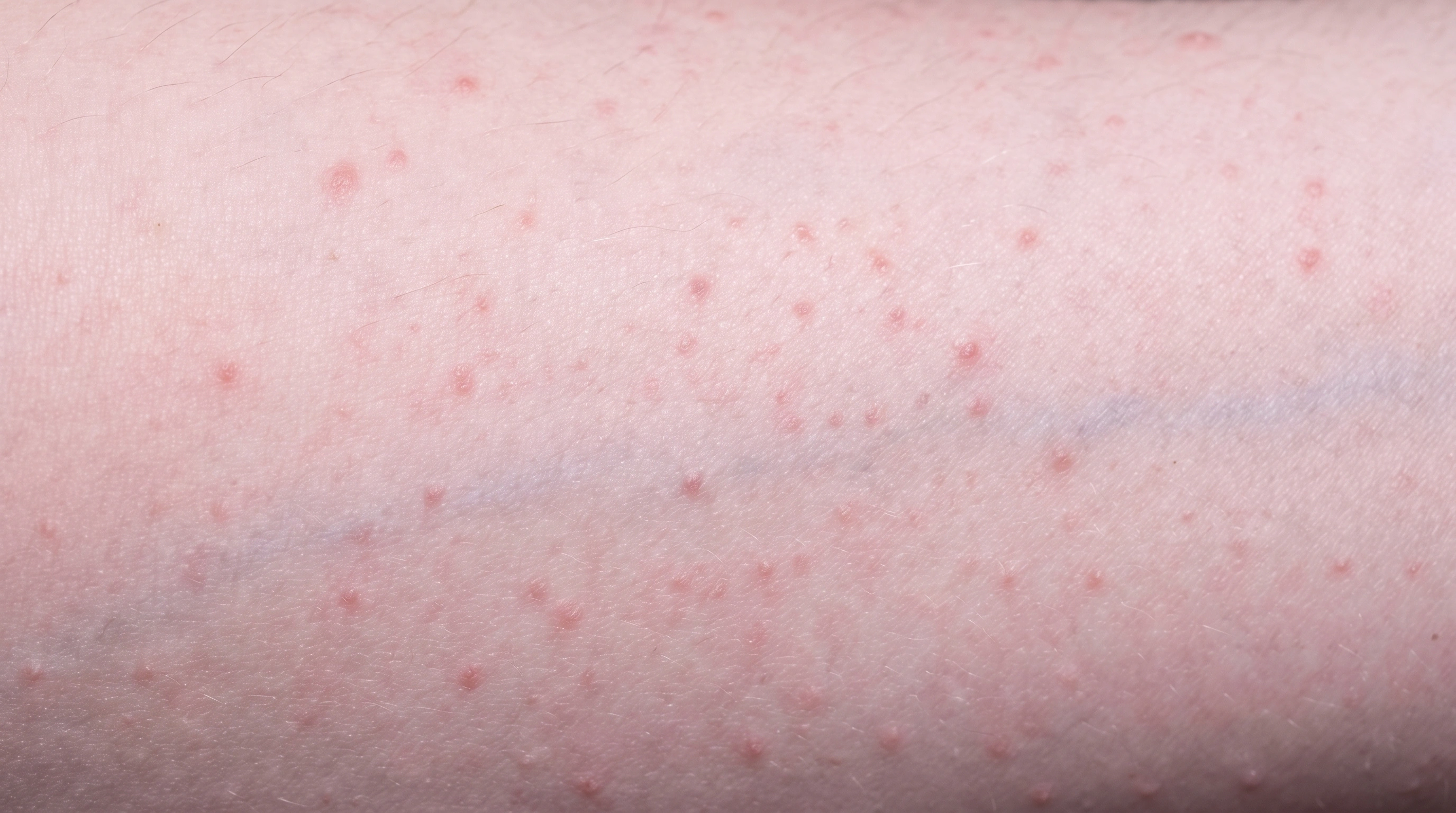
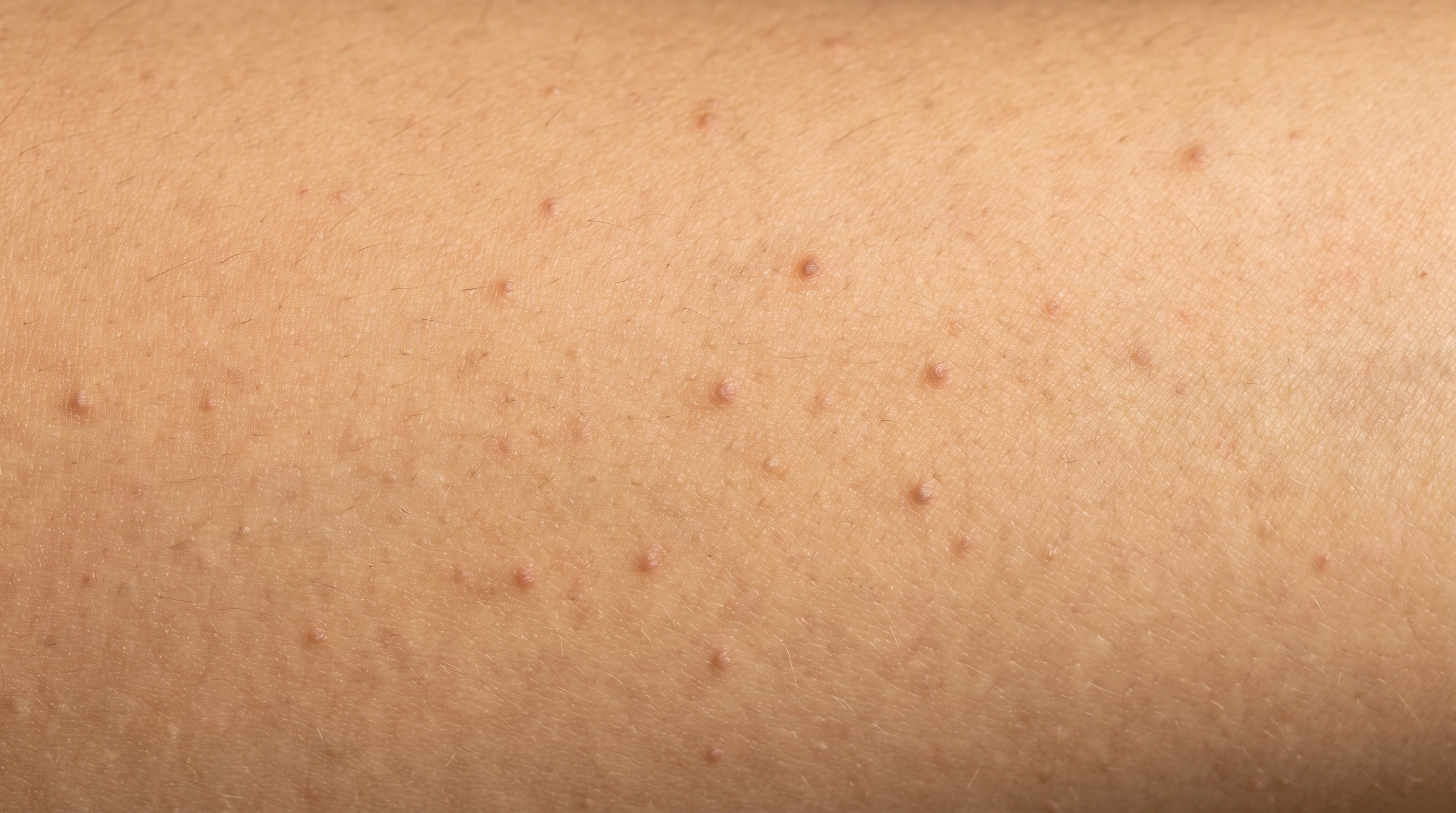
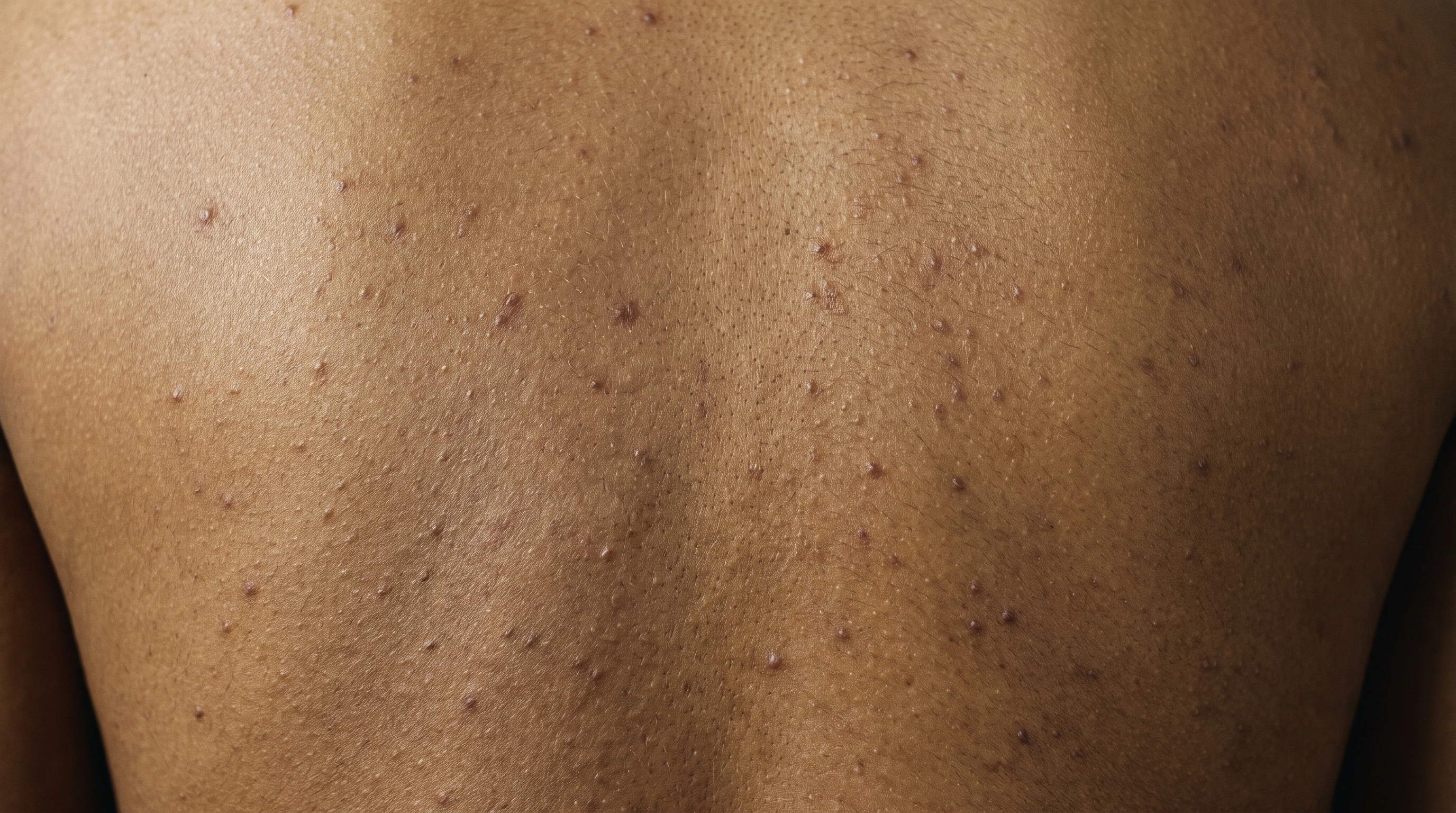
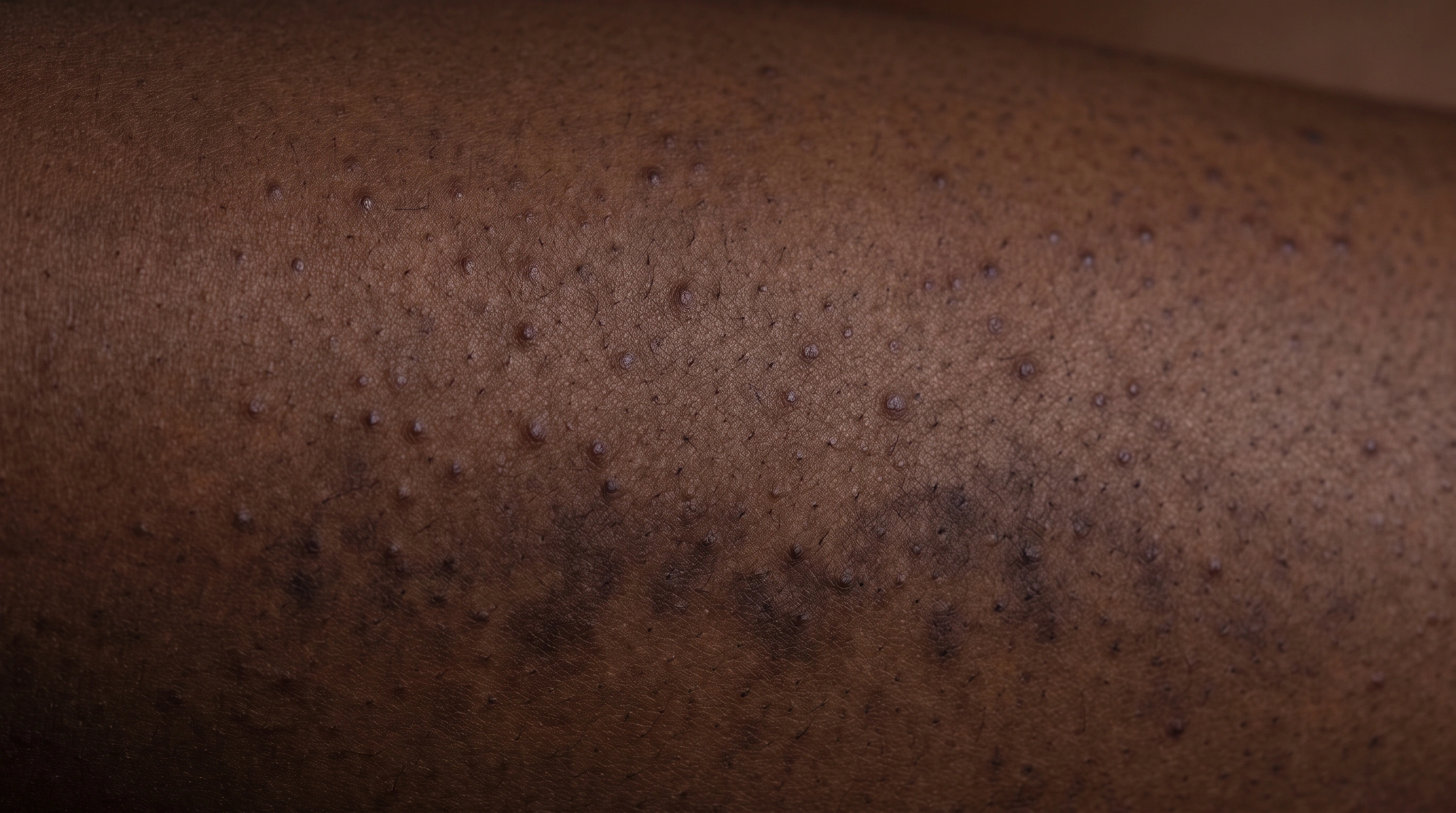
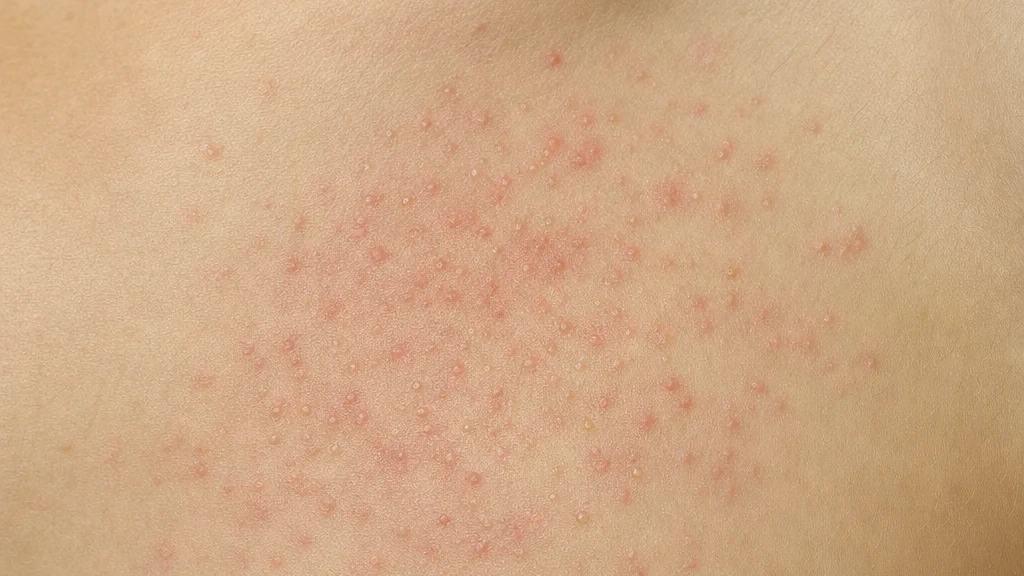
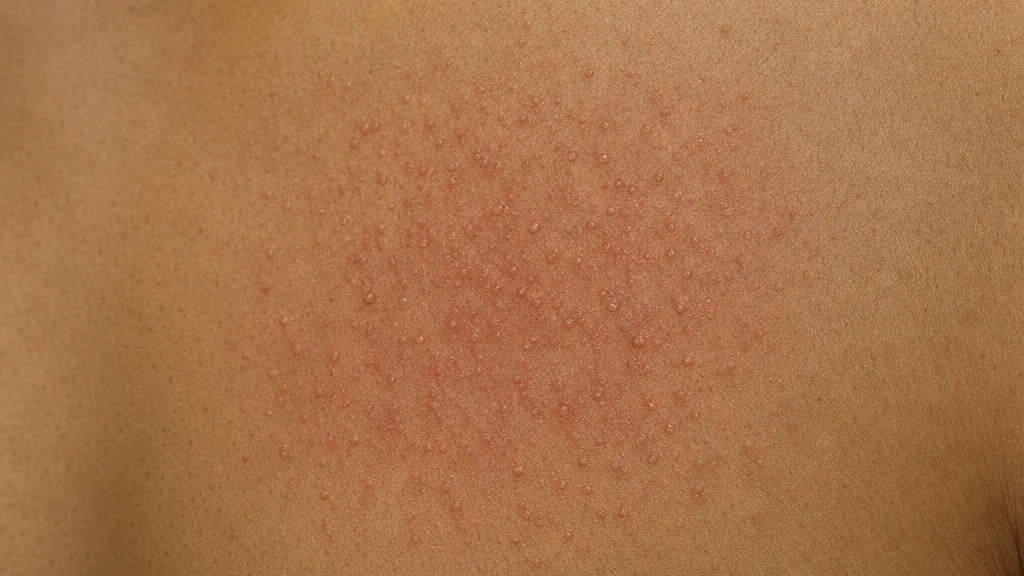
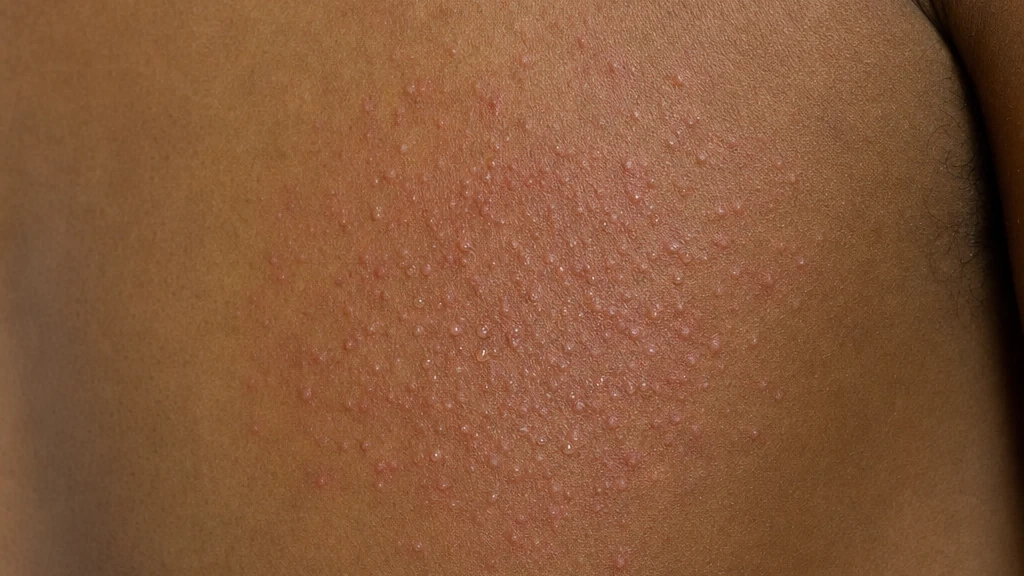
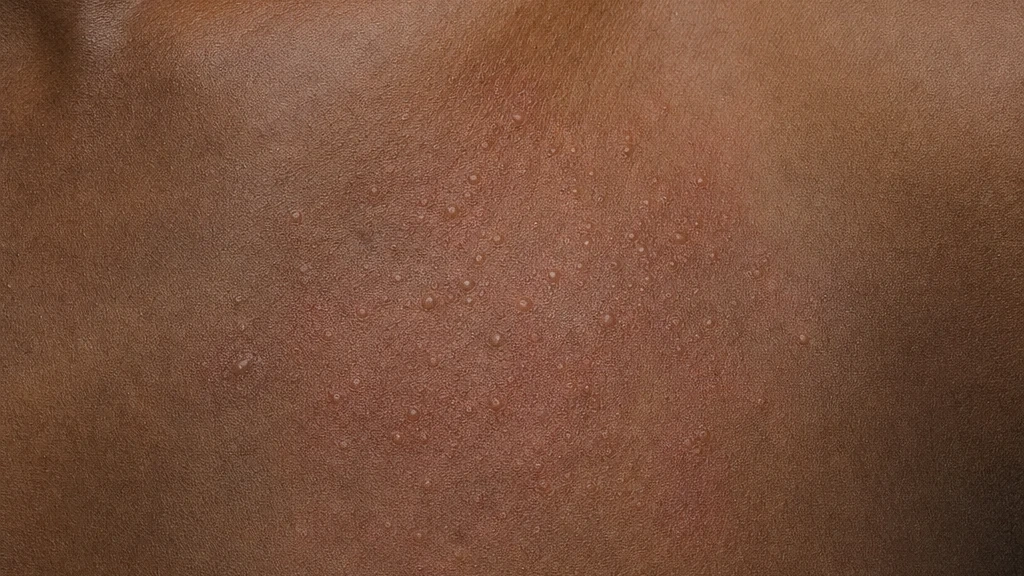

Malassezia yeast can overgrow inside hair follicles and trigger inflammation. This produces similar-looking itchy bumps and differs from the plugged pores that form blackheads and whiteheads.
Blocked sweat ducts prevent sweat from reaching the surface normally. Trapped sweat irritates surrounding tissue at different levels of the skin.
When it usually starts
Fungal Acne. Fungal Acne Often teens and young adults Malassezia folliculitis is more common in adolescents and young adults, but it can occur at other ages. A new rash after heat, sweating, antibiotics or immune suppression can be a useful clue; timing cannot confirm the diagnosis.
Heat Rash. Any age; infants are particularly susceptible.
Causes and triggers
Fungal acne is caused by an overgrowth of Malassezia yeast inside hair follicles. The yeast normally lives on skin but grows too much in warm, oily, sweaty conditions.
An overgrowth of normally present Malassezia yeast within follicles, followed by inflammation. Malassezia normally lives on skin. Finding surface yeast or noticing itch alone does not confirm that it is causing the rash.
Blocked sweat ducts trap sweat at different levels of the skin.
This is not usually considered an inherited disorder. Oily skin and other individual factors can influence susceptibility.
Daily Care
Habits that help
- Shower and change after sweating
The habit that prevents recurrence. - Breathable clothing, changed promptly
Loose cotton or moisture-wicking, not a fitted top. - Keeping the routine simple
A gentle cleanser, light moisturizer and sunscreen. - Sunscreen on exposed areas
It stops the dark marks from deepening. - An antifungal shampoo as a body wash
Ketoconazole, selenium sulfide or zinc pyrithione, over the counter. - A topical antifungal cream
Ketoconazole or clotrimazole for limited patches. - Reduce prolonged heat and dampness when possible
Cases rise every summer. People who clear in winter flare again.
Avoid
- Avoid: Staying in damp workout clothes
Sweat held against skin is what the yeast needs. - Avoid: Occlusive clothing, straps and gear
The bumps follow what was worn. - Avoid: Heavy oils and butters
They add the fats the yeast lives on and hold heat in. - Avoid: Scratching
Turns bumps into marks that last months. - Avoid: Long gaps before showering
The delay matters more than the sweating. - Avoid: Stacking more acne actives
A fourth product adds irritation, not clearance. - Avoid: Treating it as acne
Retinoids and salicylic acid target blocked pores. This is not one. - Avoid: Stopping treatment early
Stop the moment it looks clear and it returns within weeks.
Habits that help
- Move to a cooler, less humid space
Cooling reduces sweating and helps the rash settle. - Wear loose, breathable clothing and lighter bedding
Change damp clothing promptly and avoid wrapping too warmly. - Use a cool bath or cool damp compress
Pat dry gently rather than rubbing the irritated skin. - Keep skin care light and simple
Wash gently and stop products that aggravate the rash.
Avoid
- Avoid: Heavy ointments and tight occlusive clothing
These can trap heat and sweat against the skin. - Avoid: Continuing strenuous activity while overheated or unwell
Rest and cool down; dizziness, confusion or other heat-illness symptoms need urgent help.
Treatment differences
Cooling the skin, reducing sweating and avoiding heavy occlusive products are the main measures. Persistent or severe symptoms need assessment rather than adding multiple creams.
Outlook
Fungal acne appears over a short period rather than gradually, and the right treatment works quickly. It comes back if the conditions return.
Heat rash usually settles after the skin cools and sweating is reduced. It may recur in hot or humid conditions; fever, marked pain or failure to improve needs review.
Complications
- The bumps multiply but stay small
More details
The bumps multiply but stay small
They stay small rather than growing. The itch bothers most people more than the bumps.
Scratching can damage the skin; overheating is especially important in infants.
When to get help
<span class="trigger-dash">—</span>
Seek help for a persistent itchy, uniform rash, repeated relapses, or bumps that have not improved with acne treatment. A skin sample may help distinguish causes.
Fever, spreading painful redness, or rapidly worsening bumps need prompt assessment, especially if your immune system is suppressed.
Get care for fever, pus, persistent rash or signs that an infant is overheating or unwell.
Common questions
Fungal Acne:How do I know if it is fungal acne rather than acne?
Three things separate them. Fungal acne itches; acne usually does not. Fungal acne has no blackheads or whiteheads. And the bumps are all the same small size, in a sheet across the chest, shoulders, upper back and hairline, not a mix of sizes on the face. A start after antibiotics, steroids or a hot sweaty stretch adds to the case.
Fungal Acne:Can I have both at the same time?
Yes, often. Many people have ordinary acne on the face and Malassezia folliculitis on the chest and back, treated in parallel. A routine aimed only at acne leaves half the problem untouched.
Fungal Acne:Is it contagious?
No. The yeast already lives on almost everyone's skin. Nobody gave it to you and you cannot pass it on.
Fungal Acne:Do I really need fungal-acne-safe products?
The idea rests on something real — this yeast cannot make its own fats and takes them from its surroundings. But the ingredient lists online are more confident than the evidence. Avoid heavy oils, butters and occlusive products on the affected areas while it is active, and treat the yeast directly rather than rebuilding a routine.
Fungal Acne:Why does it keep coming back?
Because the conditions return — heat, sweat and occlusion, usually every summer. That is not treatment failure. Most people who stay clear use the antifungal wash once or twice a week through the warm months.
Fungal Acne:Will it leave marks or scars?
Scars are uncommon. Flat dark marks are very common, and because the bumps arrive in large numbers they cover a wide area and take months to fade, particularly on deeper skin tones. Not scratching and treating early reduce them most, and daily sunscreen helps them fade faster.
Heat Rash:What is Heat Rash?
Miliaria is an itchy or prickly eruption caused by blocked sweat ducts.
Heat Rash:What can I do day to day?
Move to a cool environment, wear breathable clothing and avoid heavy occlusive products.
Heat Rash:When should I get medical advice?
Get care for fever, pus, persistent rash or signs that an infant is overheating or unwell.
Sources
Sources and further reading
Keep exploring.
Fungal Acne

Acne vs Fungal Acne
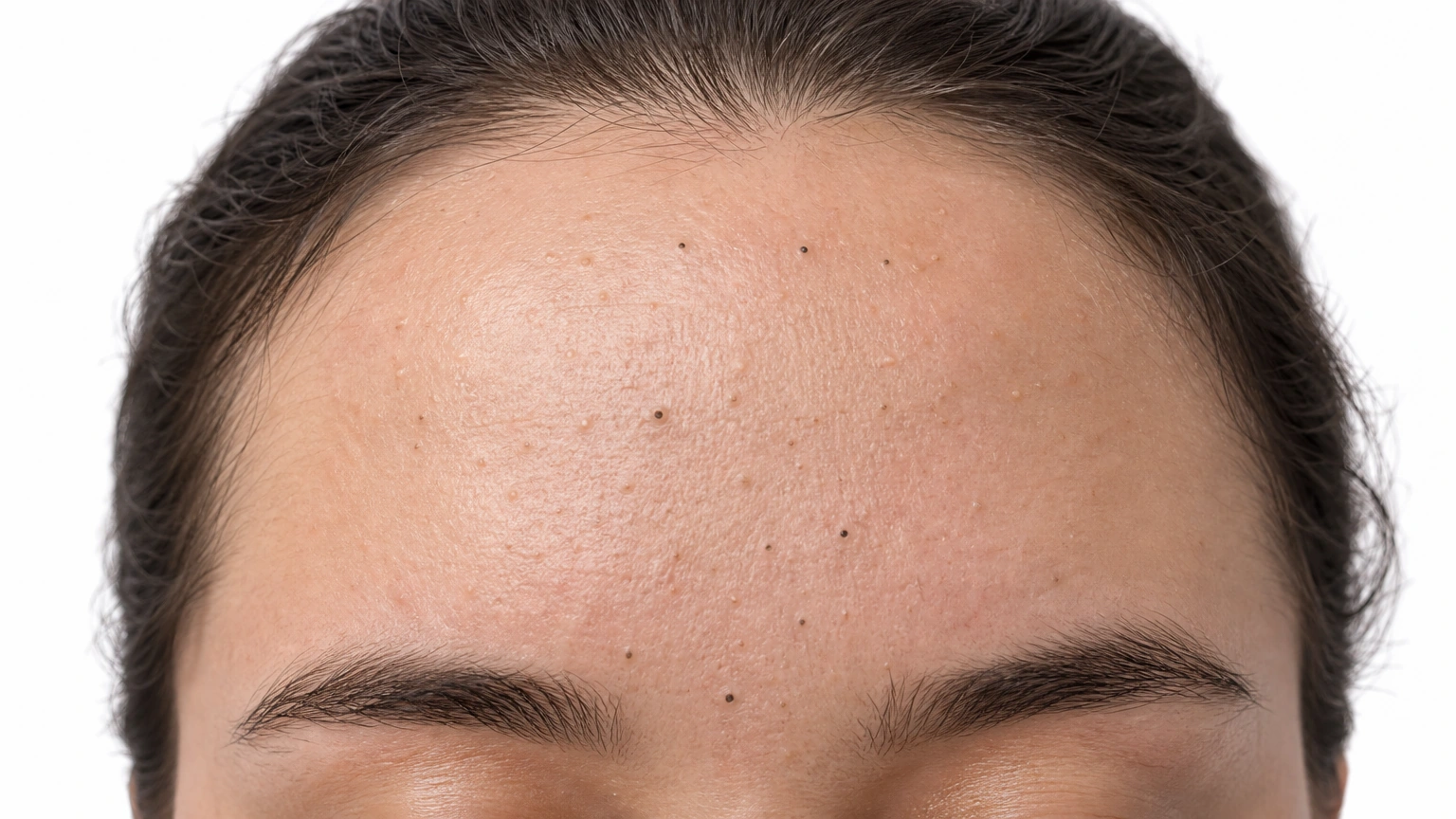
Comedonal Acne vs Fungal Acne
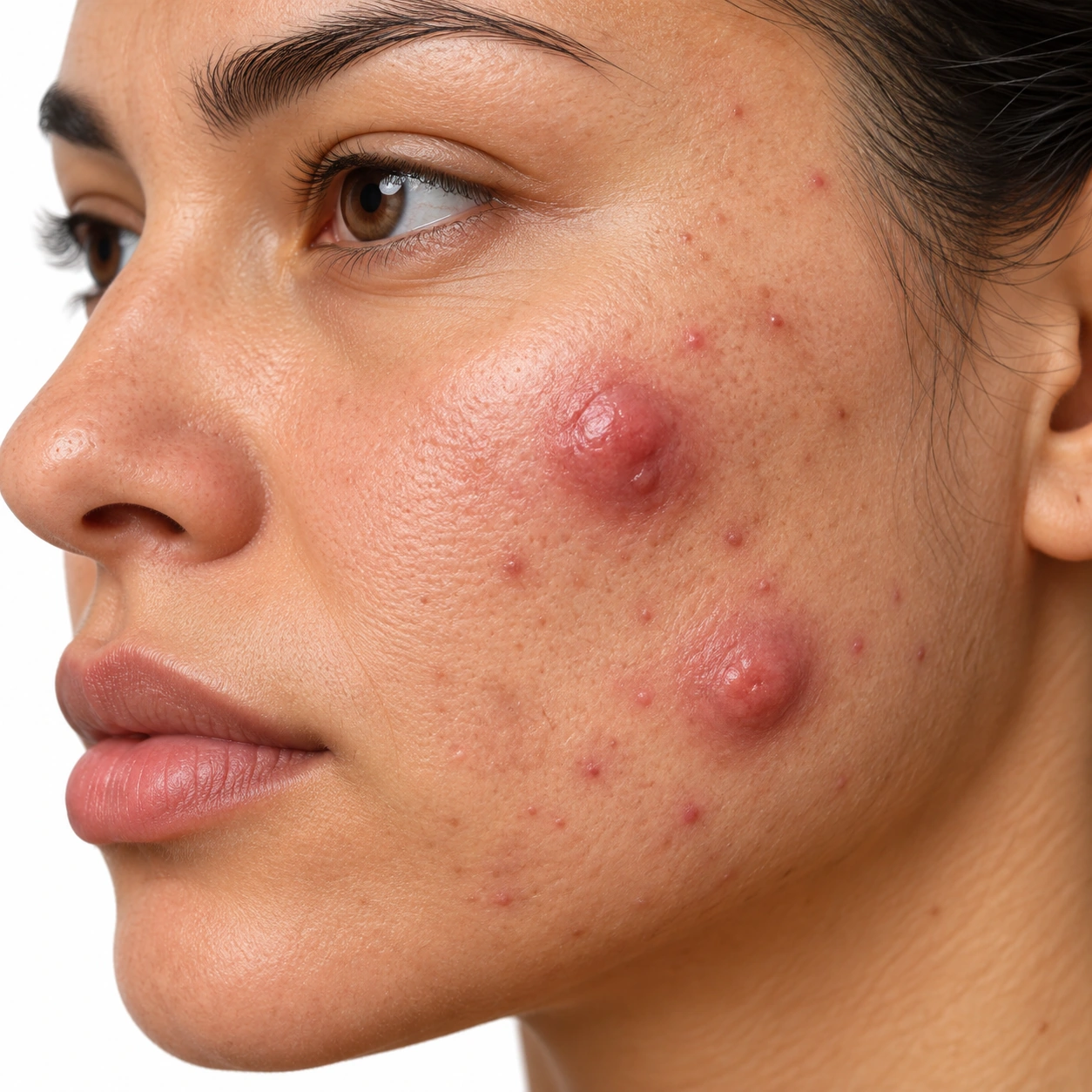
Cystic Acne vs Fungal Acne

Fungal Acne vs Folliculitis
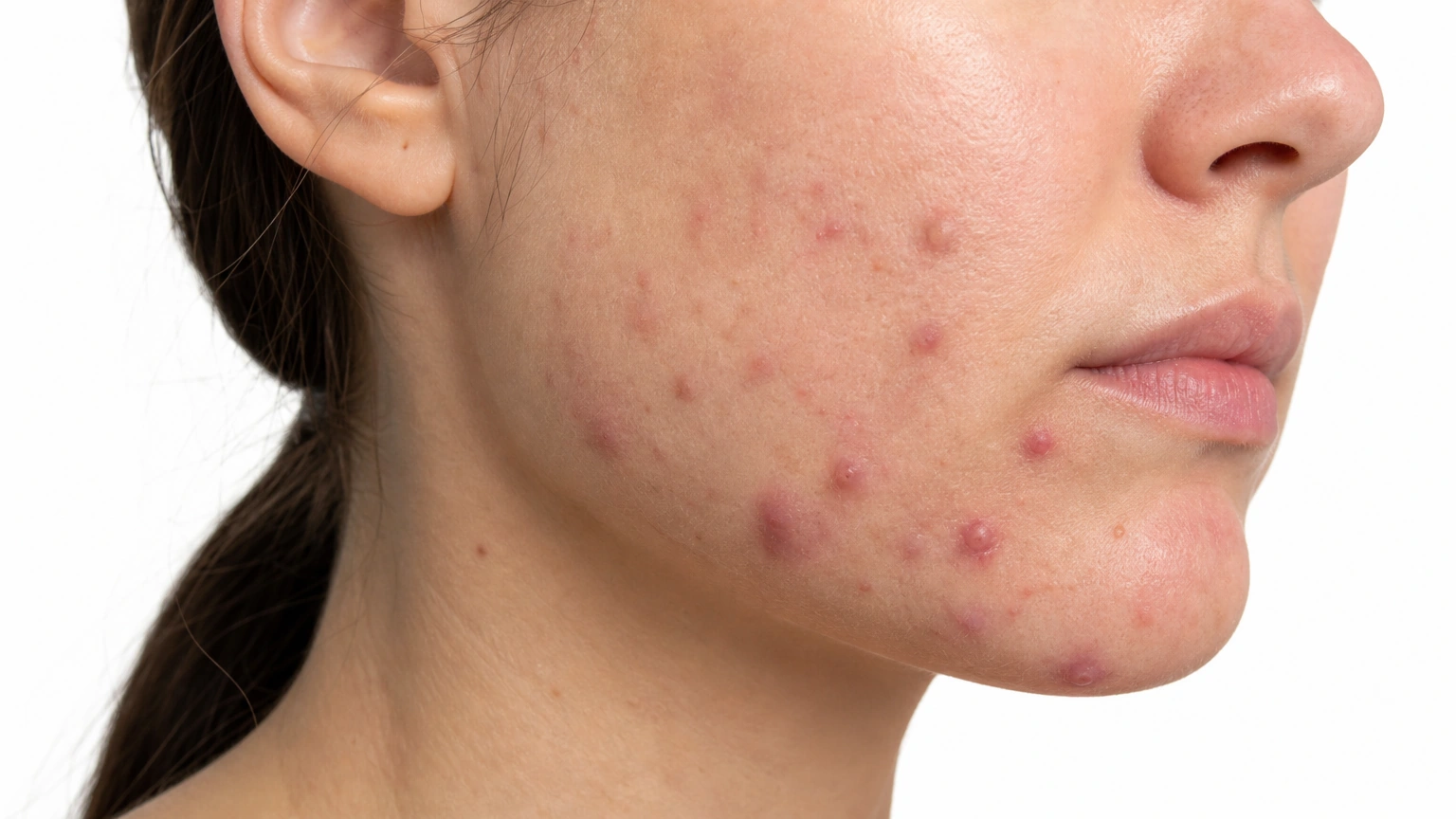
Fungal Acne vs Hormonal Acne
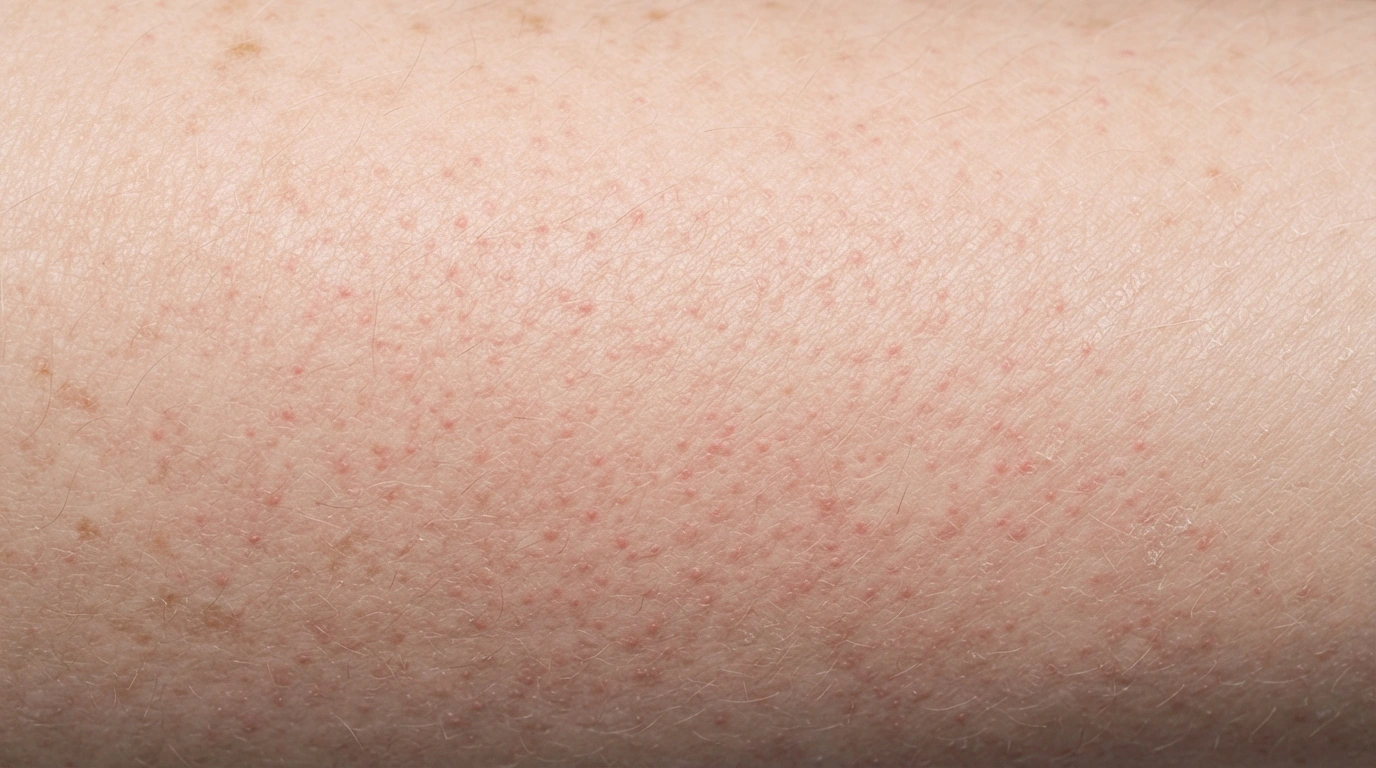
Fungal Acne vs Keratosis Pilaris

Hot Tub Folliculitis vs Fungal Acne
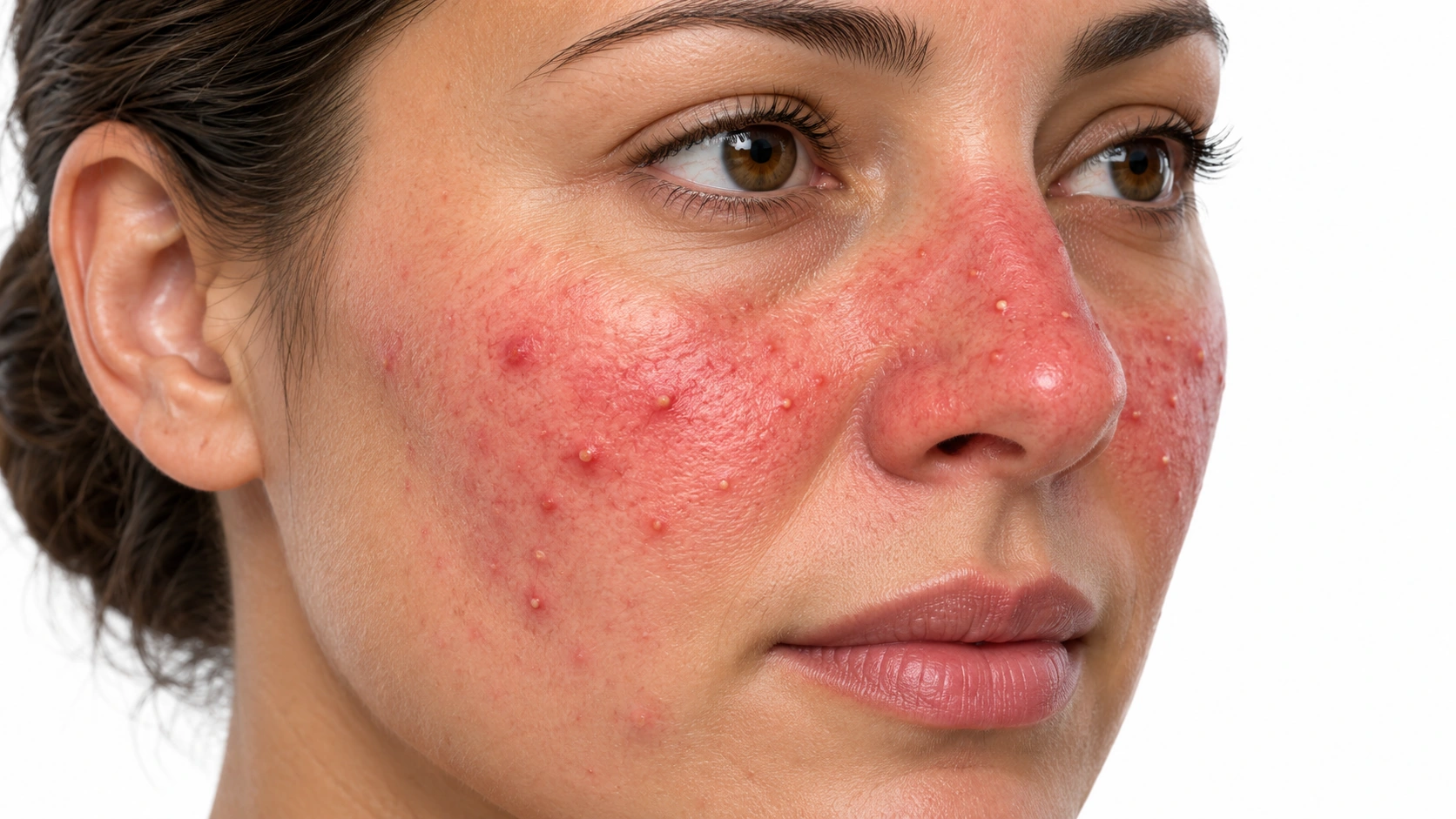
Rosacea (Breakouts) vs Fungal Acne
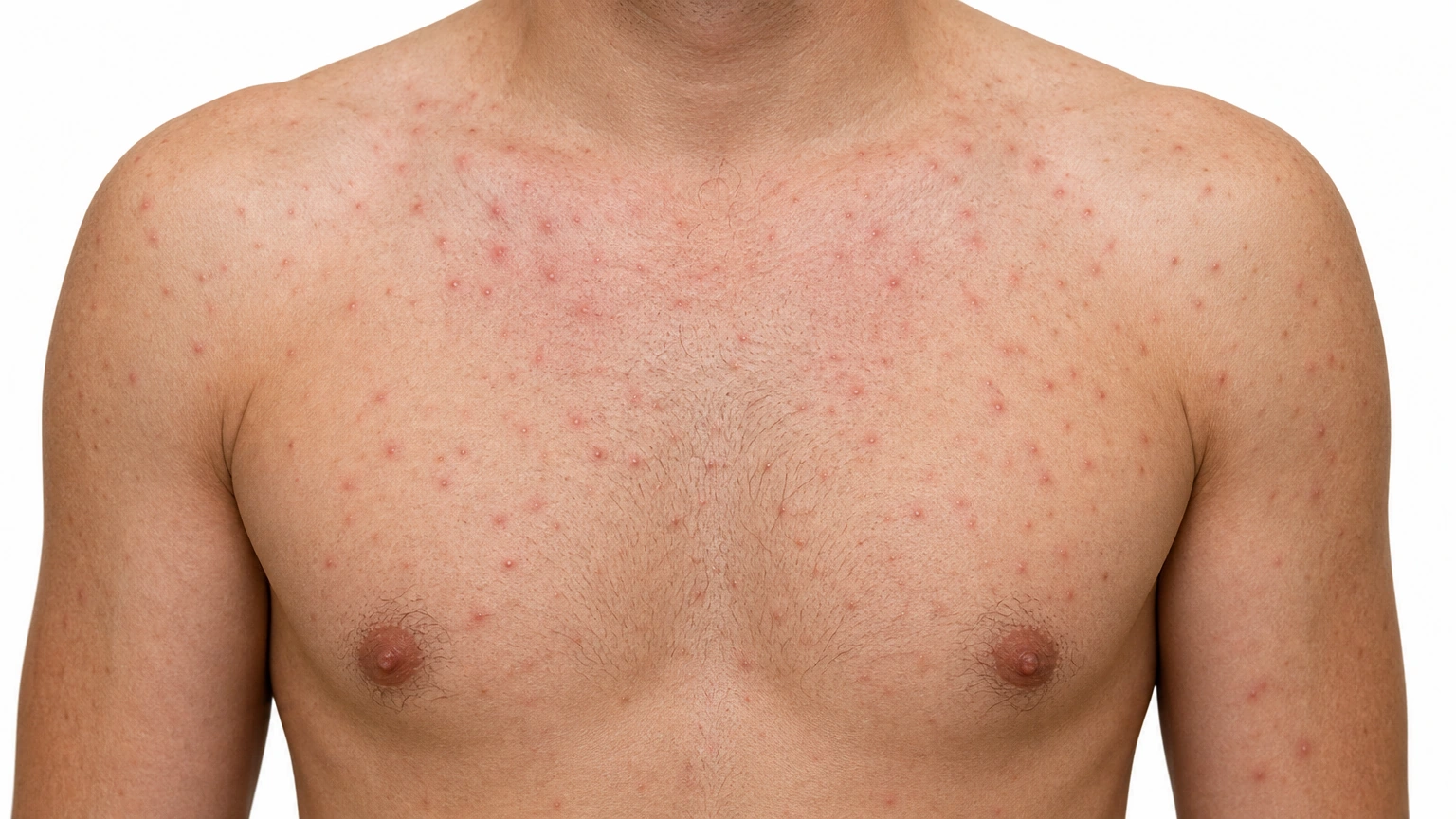
Steroid Acne vs Fungal Acne
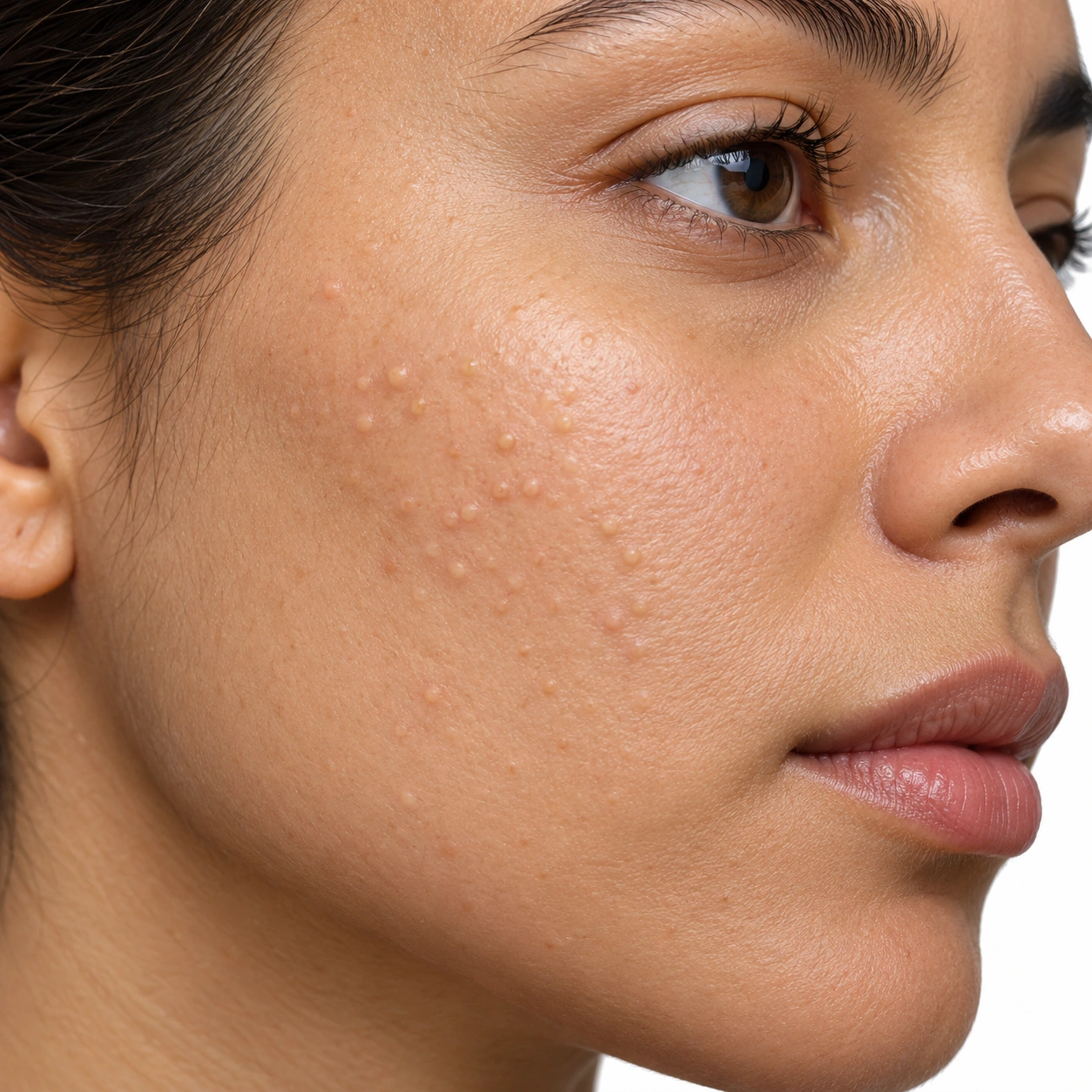
Whiteheads vs Fungal Acne