Folliculitis vs Heat Rash
Miliaria is an itchy or prickly eruption caused by blocked sweat ducts.

Key differences
The same eight facts on every condition comparison.
What is it?
- It is inflammation of hair follicles.
It can be superficial or deeper. - It ranges in severity.
A small pustule can sit around a hair, while deeper infection can form a boil. - Not every case is infection.
Irritation after hair removal or reactions to products can look similar. - Scalp scarring needs attention.
Some follicle disorders can permanently damage hair. - Overview
Inflammation around hair follicles can produce itchy or sore bumps and pustules. Bacteria, yeast, irritation and occlusion are among the causes. This broad category includes Malassezia folliculitis; the cause determines treatment. Inflammation around hair follicles can produce itchy or sore bumps and pustules. Bacteria, yeast, irritation and occlusion are among the causes. This broad category includes Malassezia folliculitis; the cause determines treatment.
- What it is
Miliaria is an itchy or prickly eruption caused by blocked sweat ducts.
What it looks like
Folliculitis
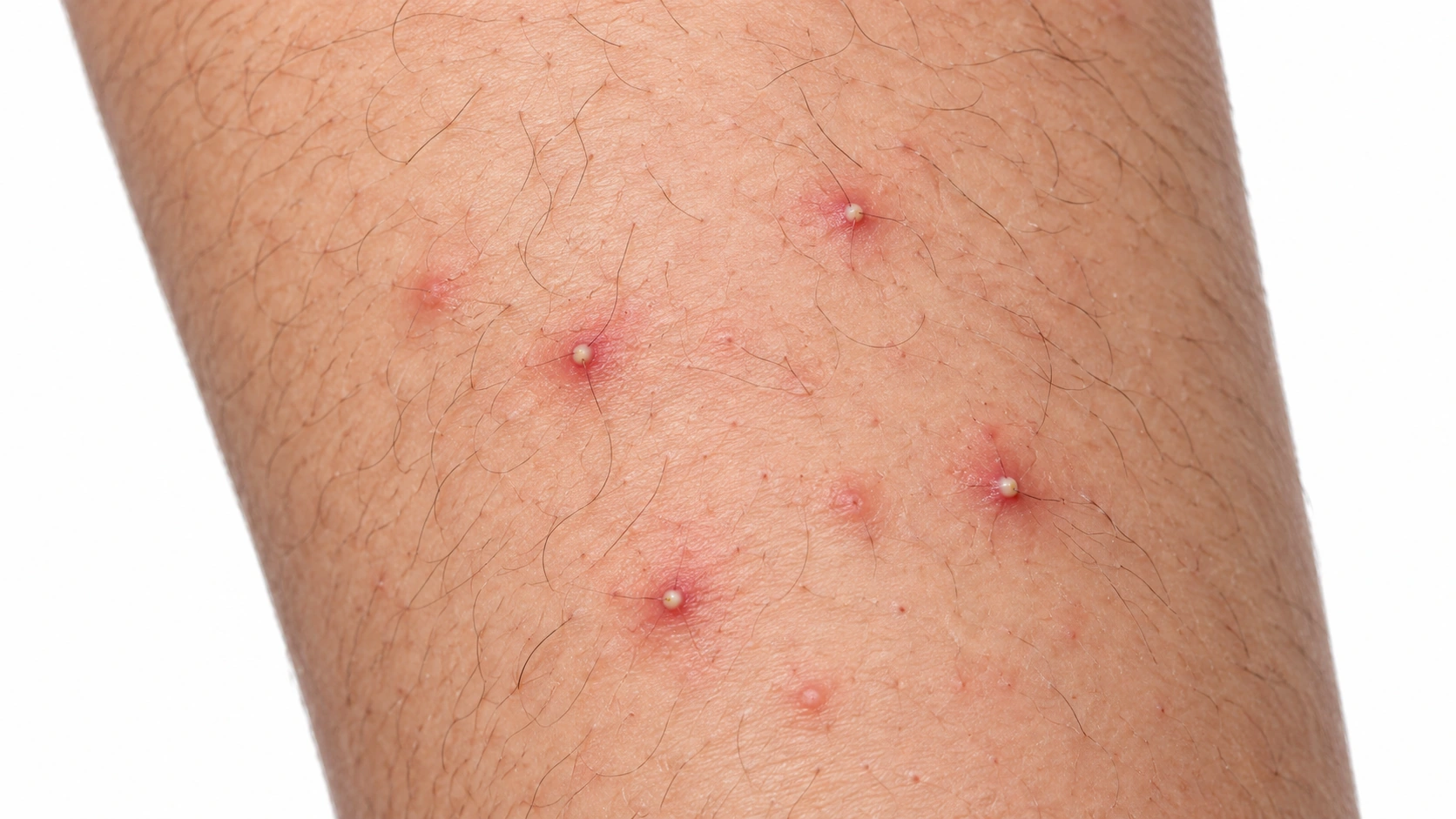
Bacterial folliculitis Staph infection, the most common.
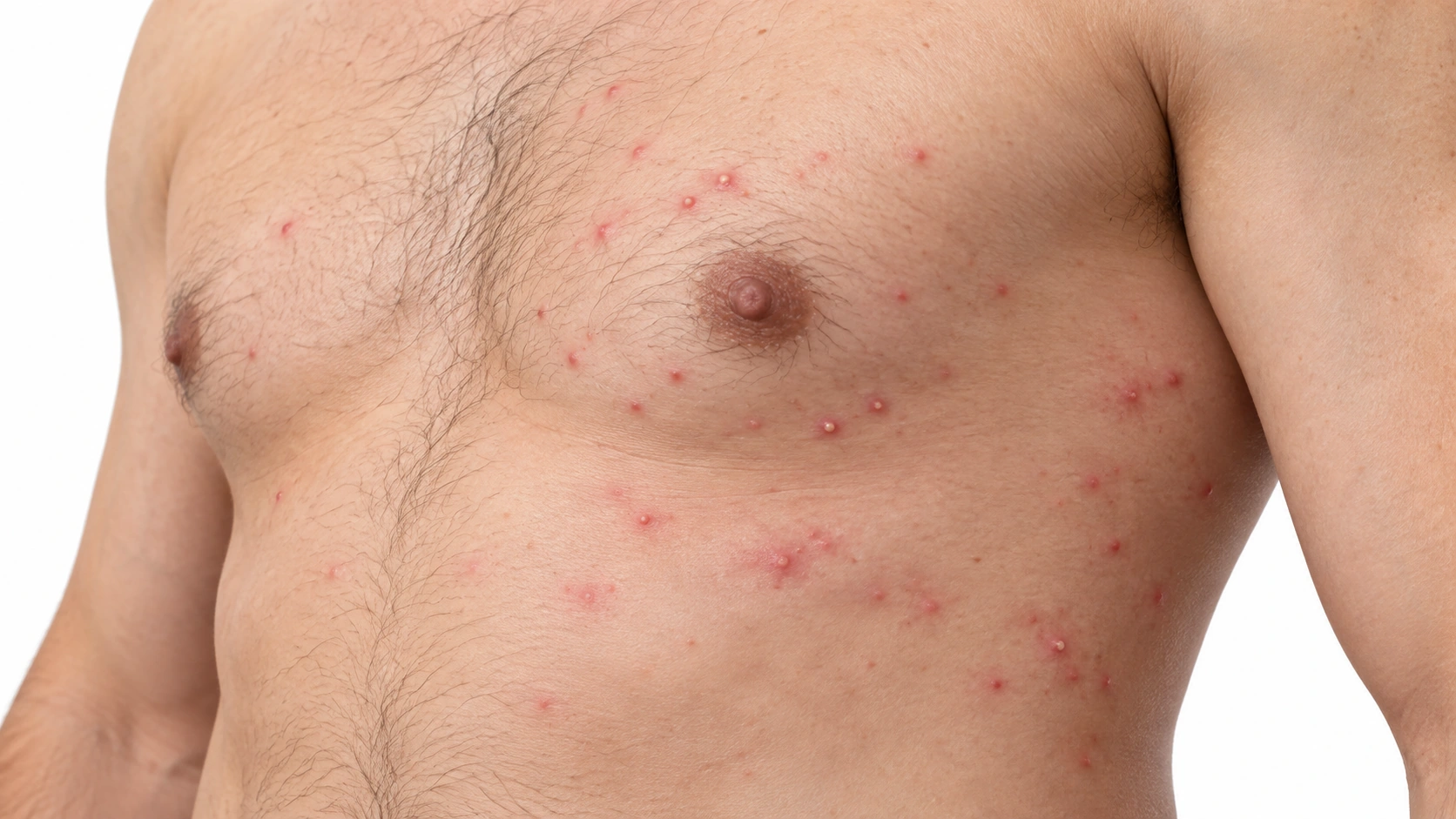
Hot-tub folliculitis From bacteria in poorly treated water.
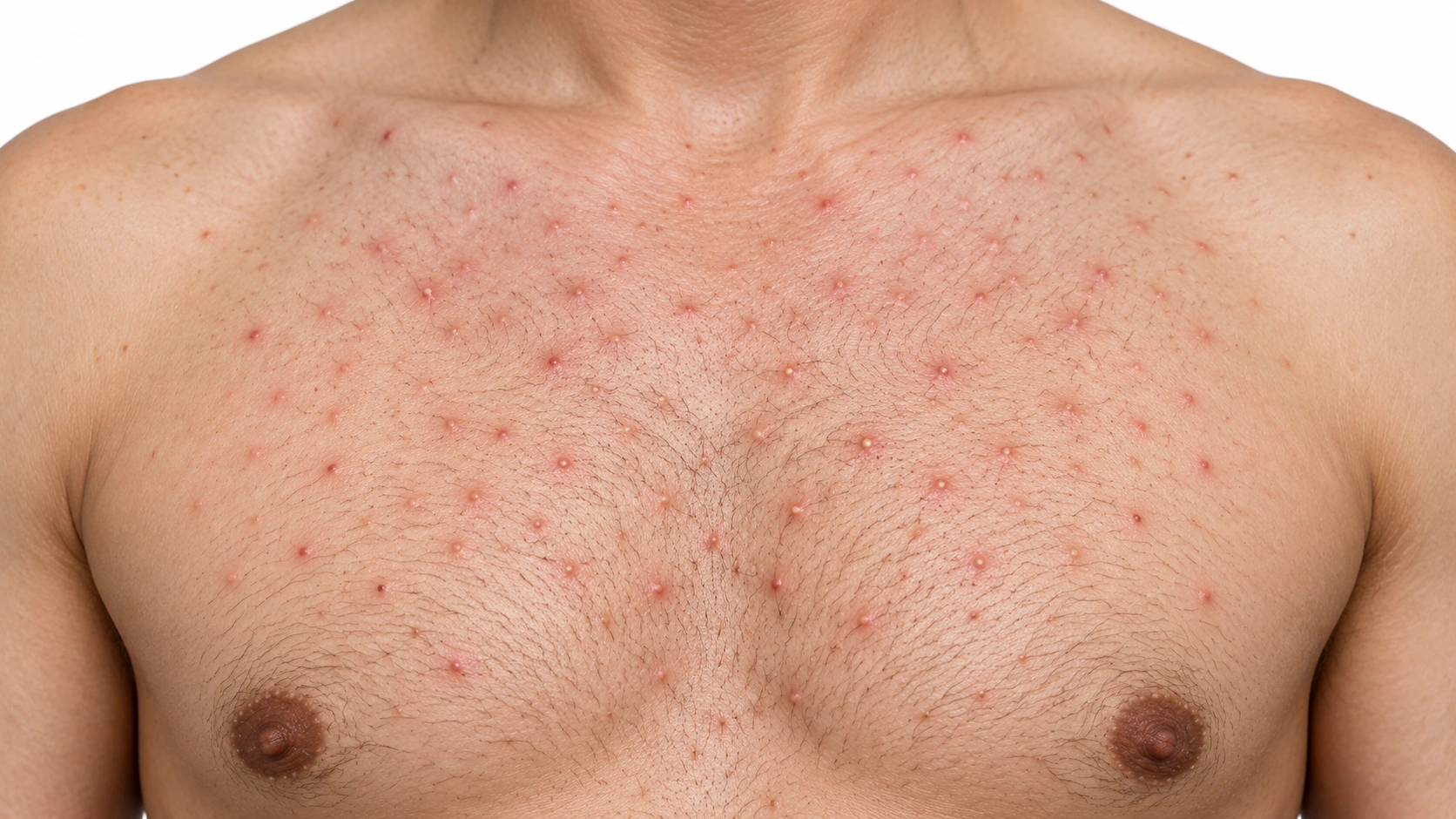
Yeast folliculitis Uniform itchy bumps on chest and back.
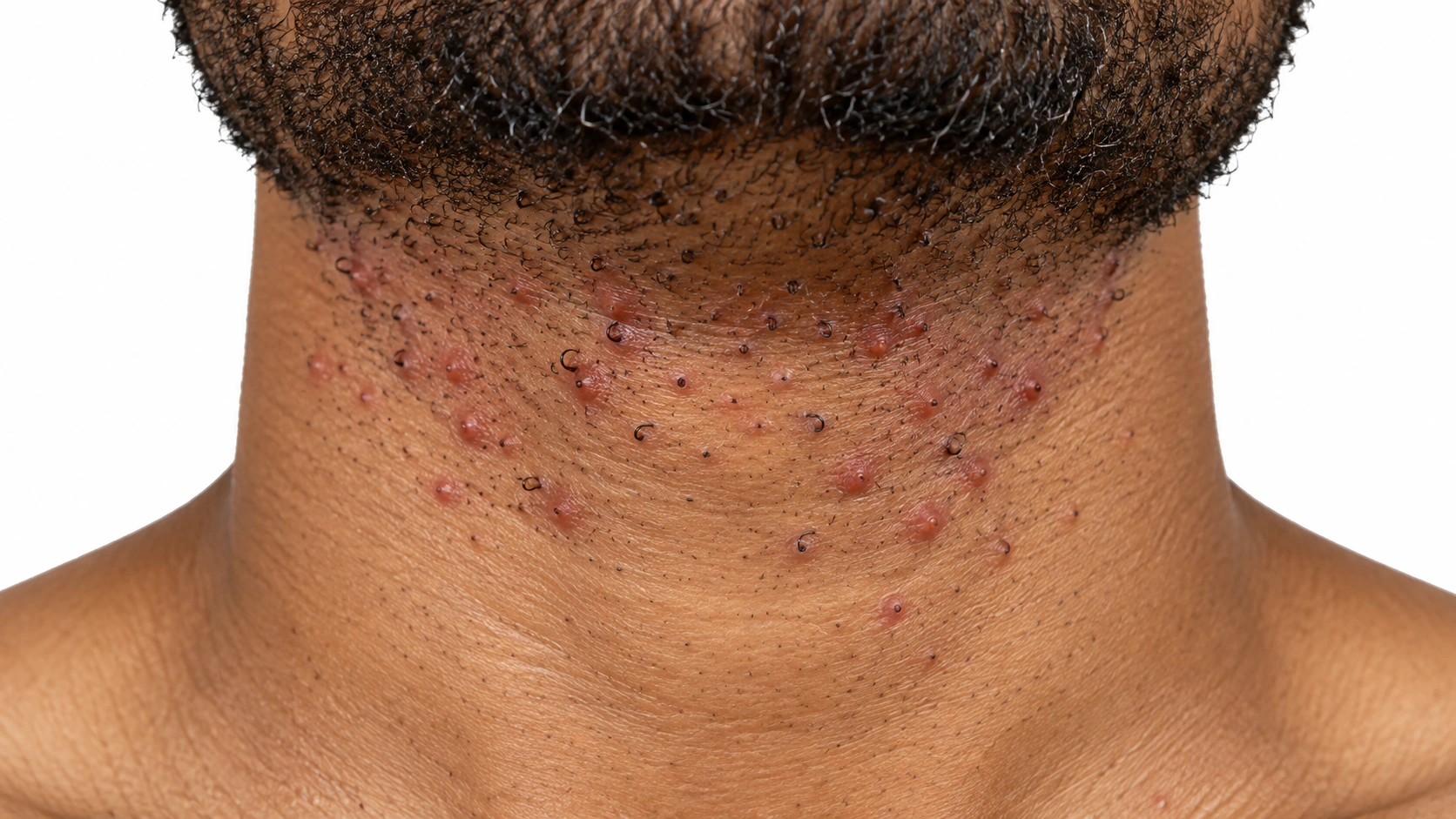
Razor bumps (pseudofolliculitis) From hairs curling into skin.
Heat Rash
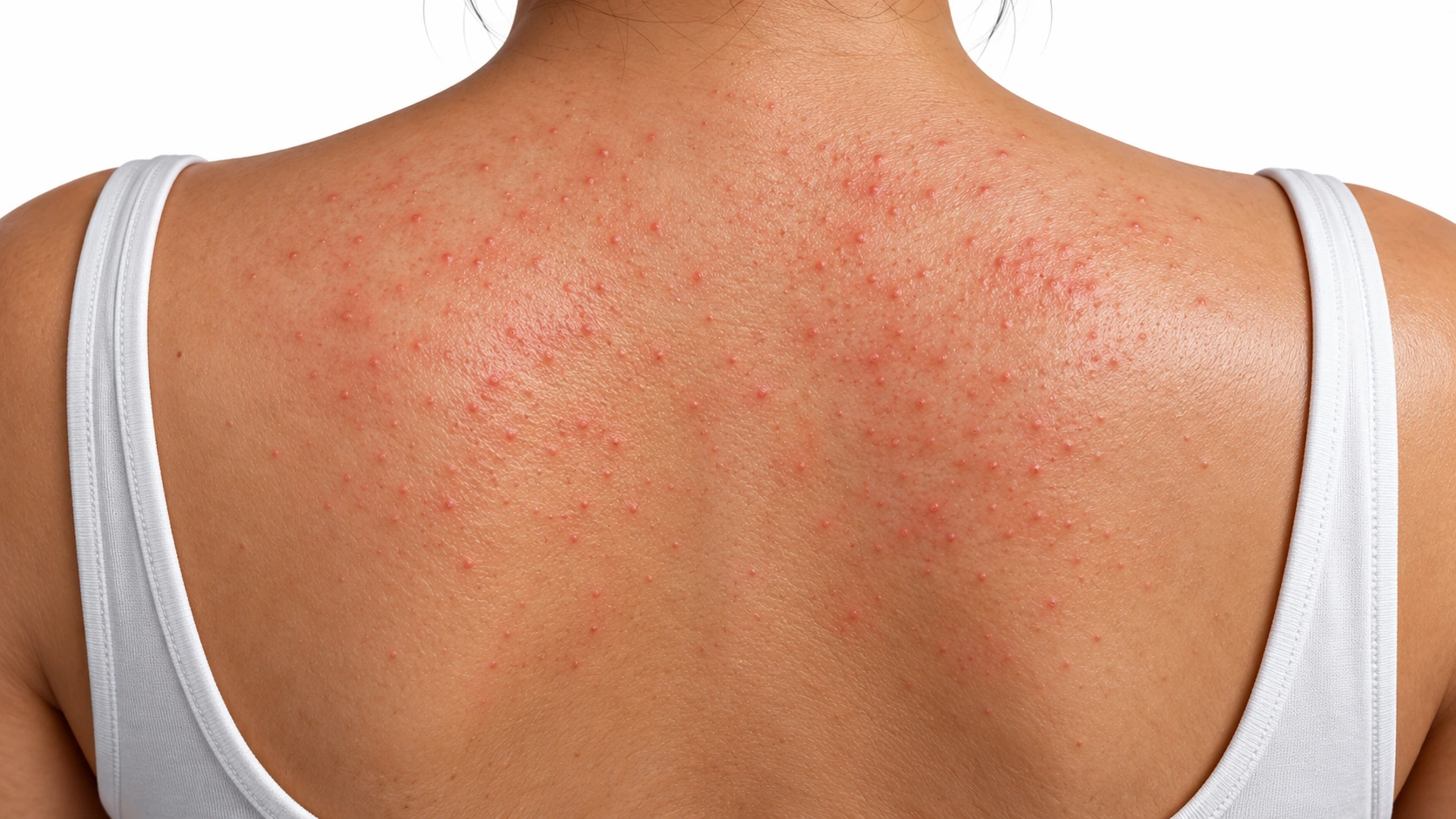
Heat Rash Many tiny bumps are scattered over a broad pink area.
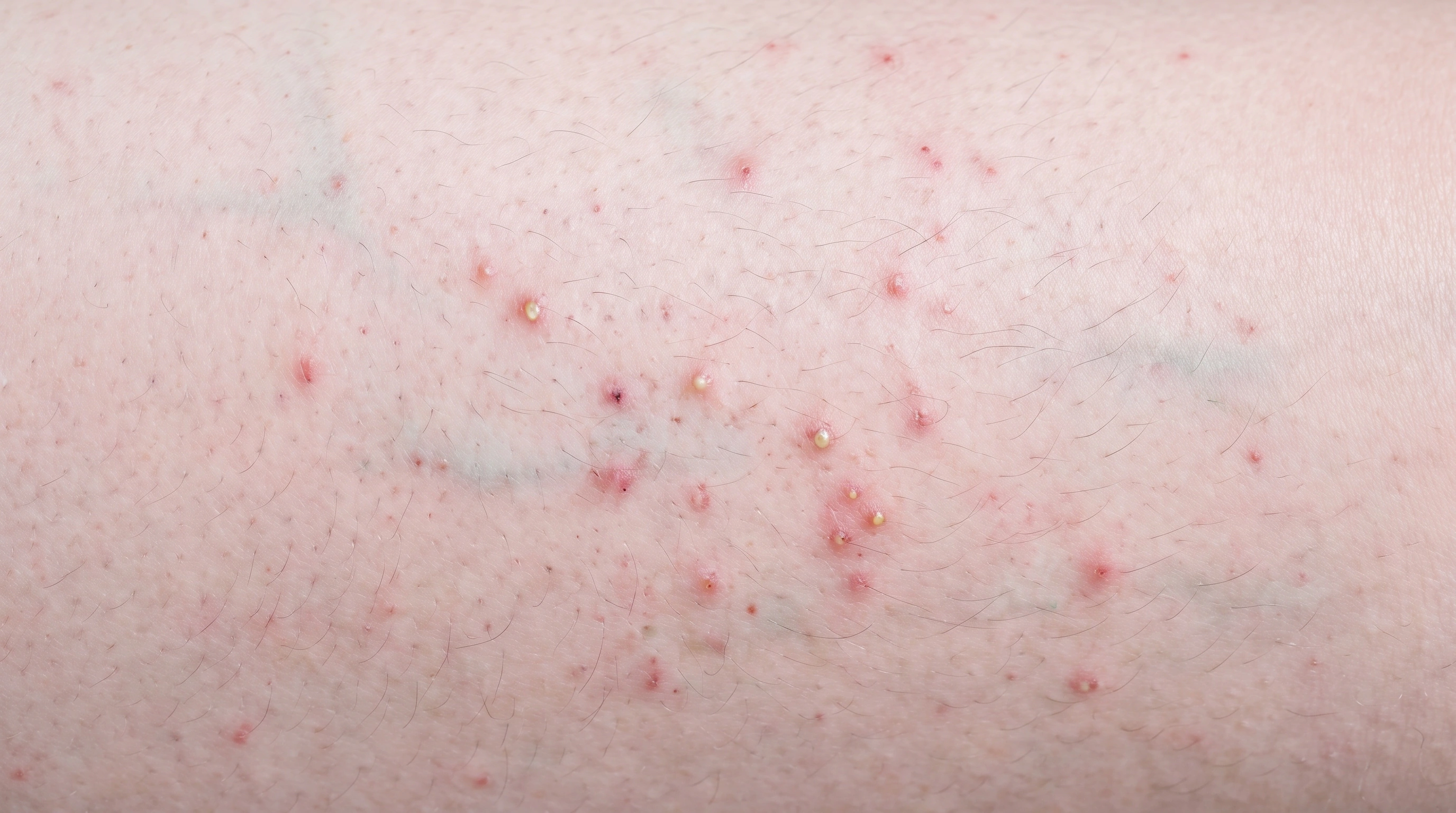
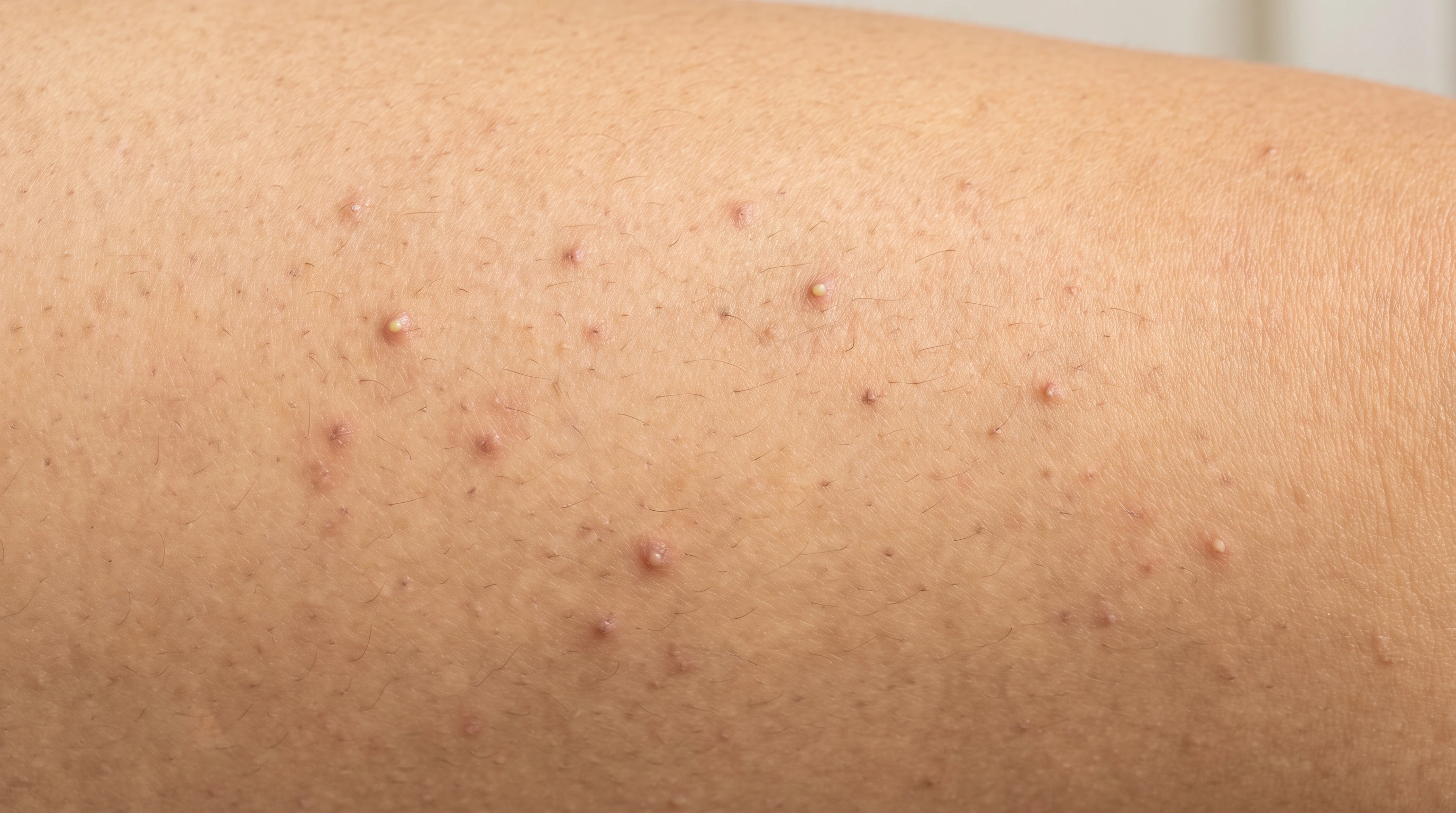
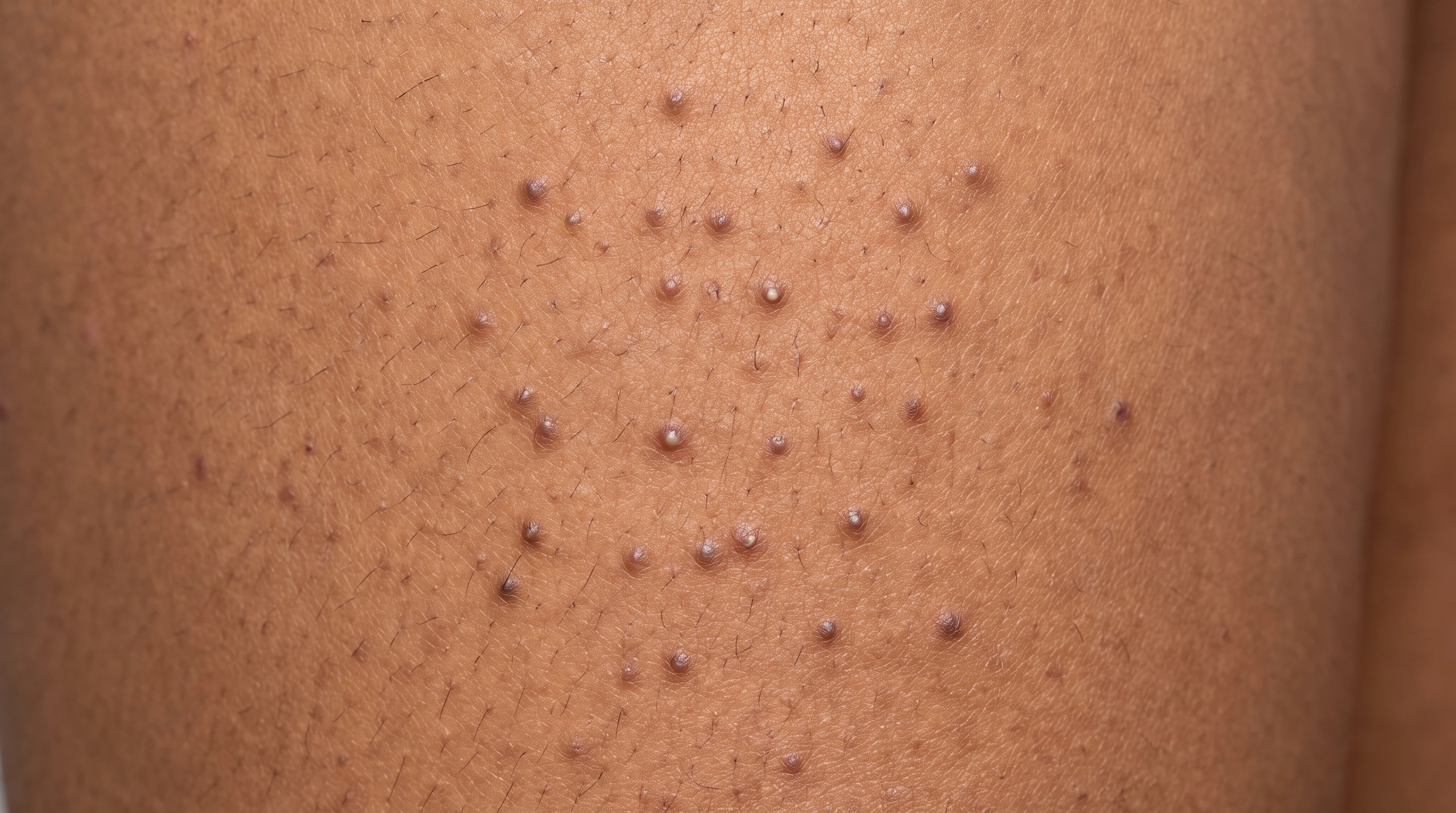
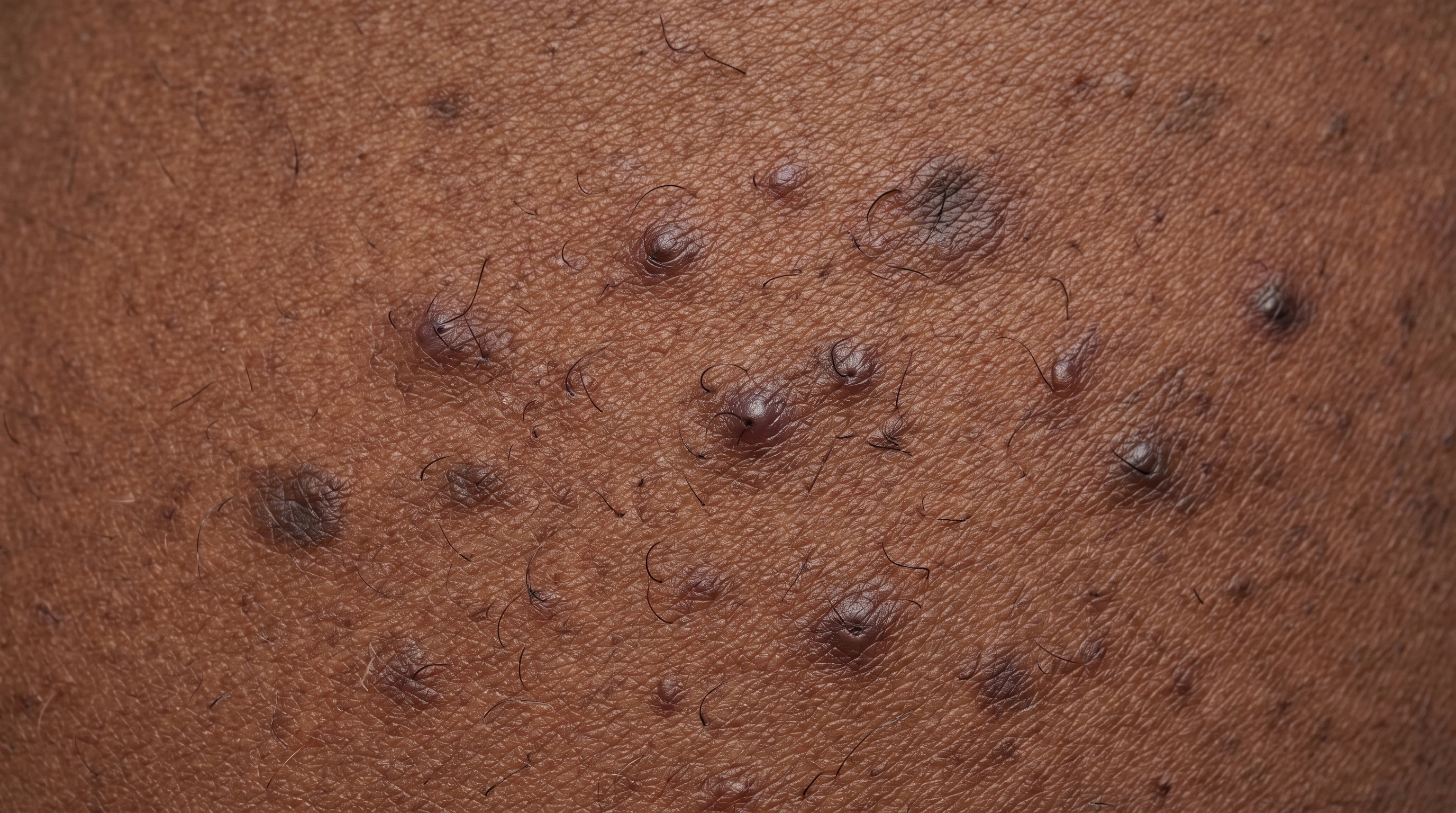
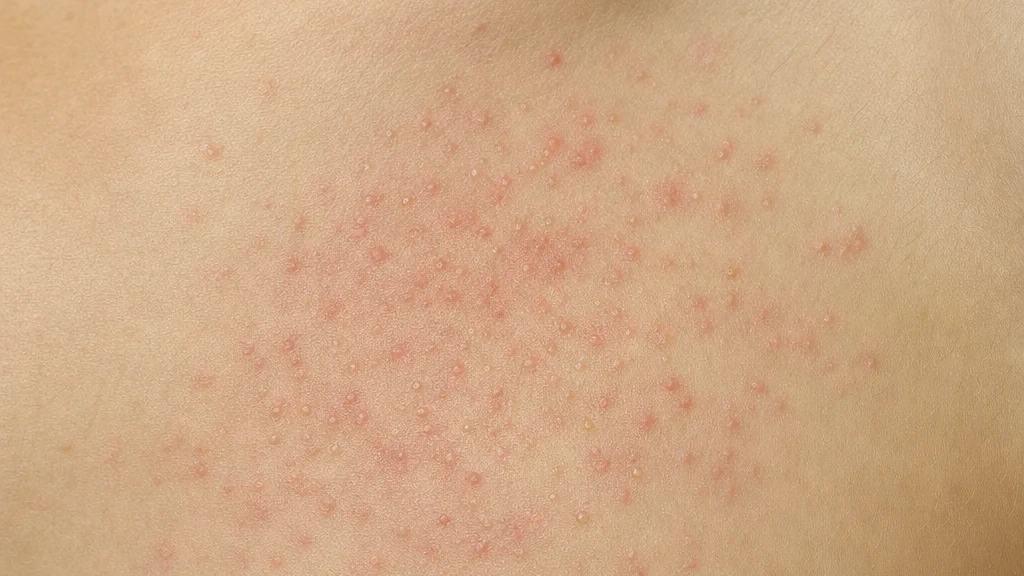
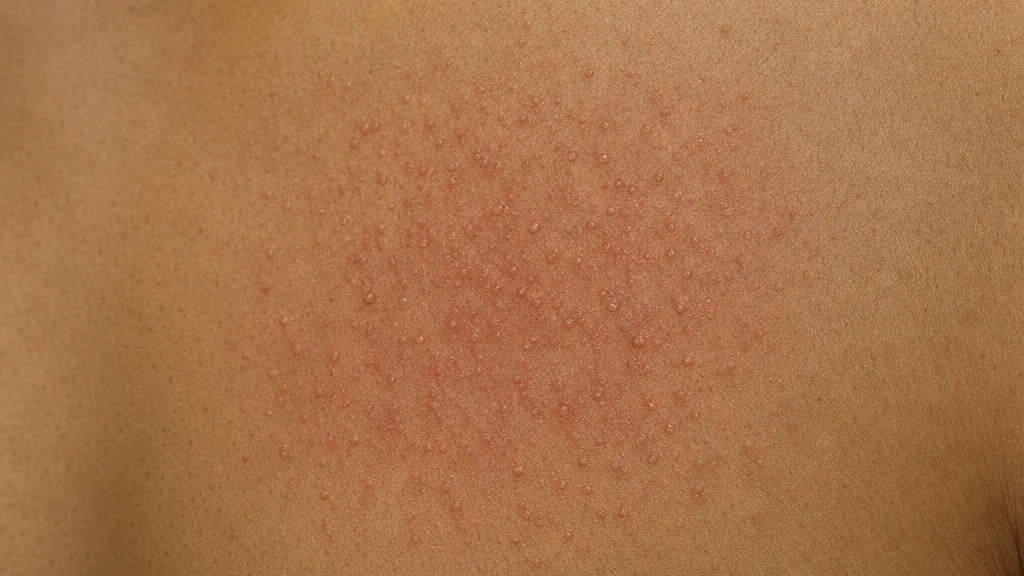
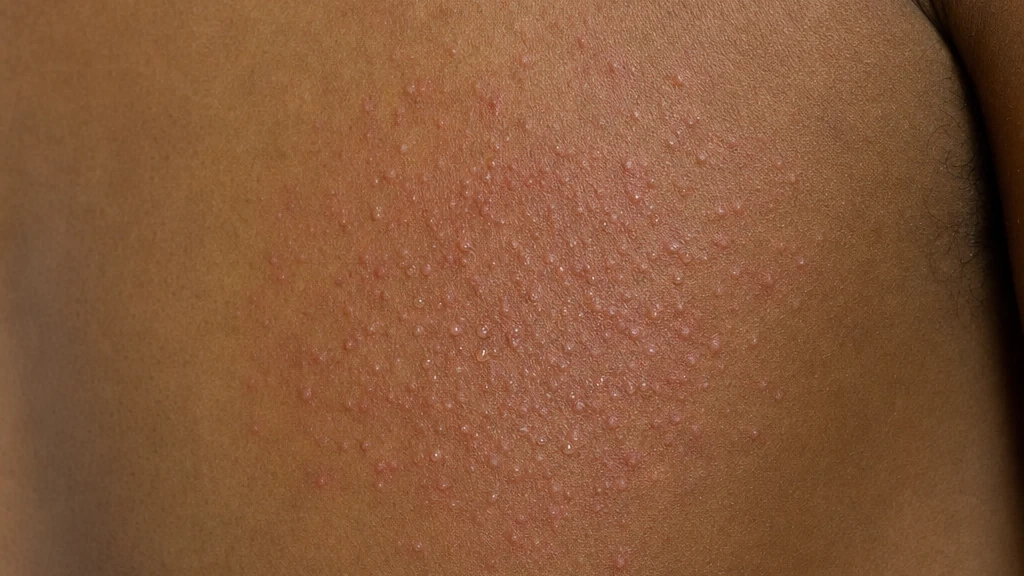
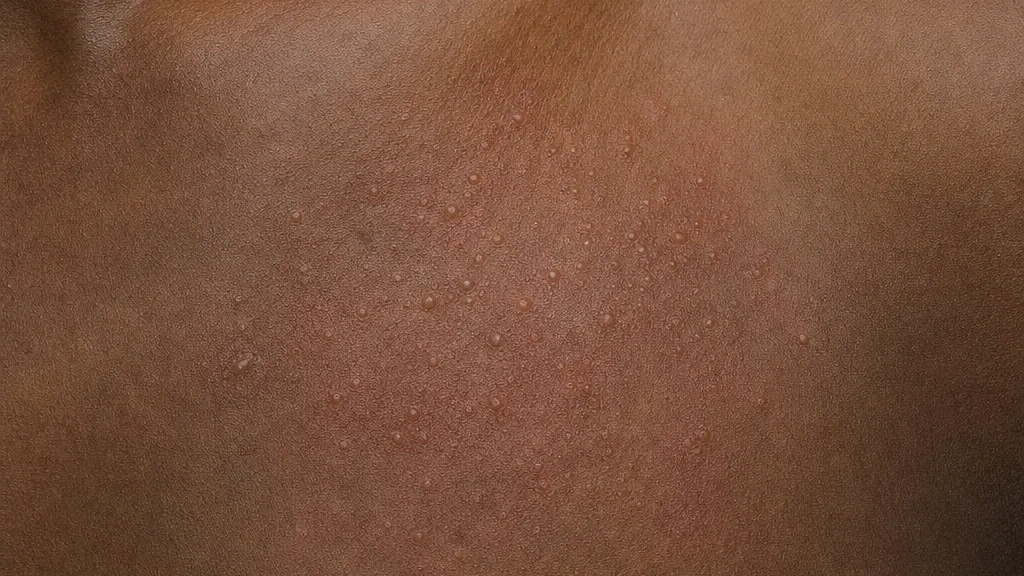

Infection, irritation or blockage can cause inflammation around a hair follicle. The response may produce a small tender bump or pustule around the follicular opening.
Blocked sweat ducts prevent sweat from reaching the surface normally. Trapped sweat irritates surrounding tissue at different levels of the skin.
When it usually starts
Folliculitis. Folliculitis Any age There is no single typical starting-age range. Bumps can follow shaving, friction, sweating or hot-tub exposure. Recurrent or unexplained episodes deserve an assessment of the cause.
Heat Rash. Any age; infants are particularly susceptible.
Causes and triggers
Folliculitis is inflammation of hair follicles, usually from bacteria, yeast or irritation.
Folliculitis describes a pattern of inflammation rather than one organism. Damaged or occluded follicles may become infected; shaving-related irritation can produce similar bumps without infection.
Blocked sweat ducts trap sweat at different levels of the skin.
Most everyday folliculitis is not considered an inherited disorder. Skin conditions and individual susceptibility can influence risk.
Daily Care
Habits that help
- Change how you shave
Fresh single blade, with the grain, with gel, days off when sore. - Shower and change after sweating
The most effective habit for trunk, buttocks and thighs. - Warm compresses on a tender lump
Help a boil come to a head and drain. - A gentle cleanser and moisturizer
An intact barrier means fewer inflamed follicles. - Loose clothing over the area
Remove the occlusion and mild folliculitis often settles. - An antifungal shampoo as a body wash
The standard approach for Malassezia yeast. - Prescription treatment when needed
The wrong class is a common reason for failure.
Avoid
- Avoid: Close shaving with a dull razor
Cutting below the surface damages the follicle. - Avoid: Shaving against the grain
Stretching the skin does the same. - Avoid: Dry shaving
More drag, more nicks, more inflamed follicles. - Avoid: Staying in damp workout clothes
A reliable way to bring on a crop. - Avoid: Tight, non-breathable fabrics
Trap heat and sweat over the follicles. - Avoid: Squeezing and picking
Pushes infection deeper, turning a spot into a boil. - Avoid: Scrubbing and exfoliating
Damages the follicle openings and the barrier. - Avoid: Heavy oils and pomades
Especially under clothing or a hat. - Avoid: Poorly maintained hot tubs and pools
Weak disinfection lets Pseudomonas survive. - Avoid: Sharing razors and towels
Moves Staphylococcus aureus around.
Habits that help
- Move to a cooler, less humid space
Cooling reduces sweating and helps the rash settle. - Wear loose, breathable clothing and lighter bedding
Change damp clothing promptly and avoid wrapping too warmly. - Use a cool bath or cool damp compress
Pat dry gently rather than rubbing the irritated skin. - Keep skin care light and simple
Wash gently and stop products that aggravate the rash.
Avoid
- Avoid: Heavy ointments and tight occlusive clothing
These can trap heat and sweat against the skin. - Avoid: Continuing strenuous activity while overheated or unwell
Rest and cool down; dizziness, confusion or other heat-illness symptoms need urgent help.
Treatment differences
Cooling the skin, reducing sweating and avoiding heavy occlusive products are the main measures. Persistent or severe symptoms need assessment rather than adding multiple creams.
Outlook
Many superficial cases settle with appropriate care, but repeated episodes need assessment for an ongoing contributor such as shaving, friction or infection. The course depends on the type; deeper inflammation can take longer to heal and may scar.
Heat rash usually settles after the skin cools and sweating is reduced. It may recur in hot or humid conditions; fever, marked pain or failure to improve needs review.
Complications
- Boils and carbuncles
- Cellulitis
- Keloid scars
More details
Boils and carbuncles
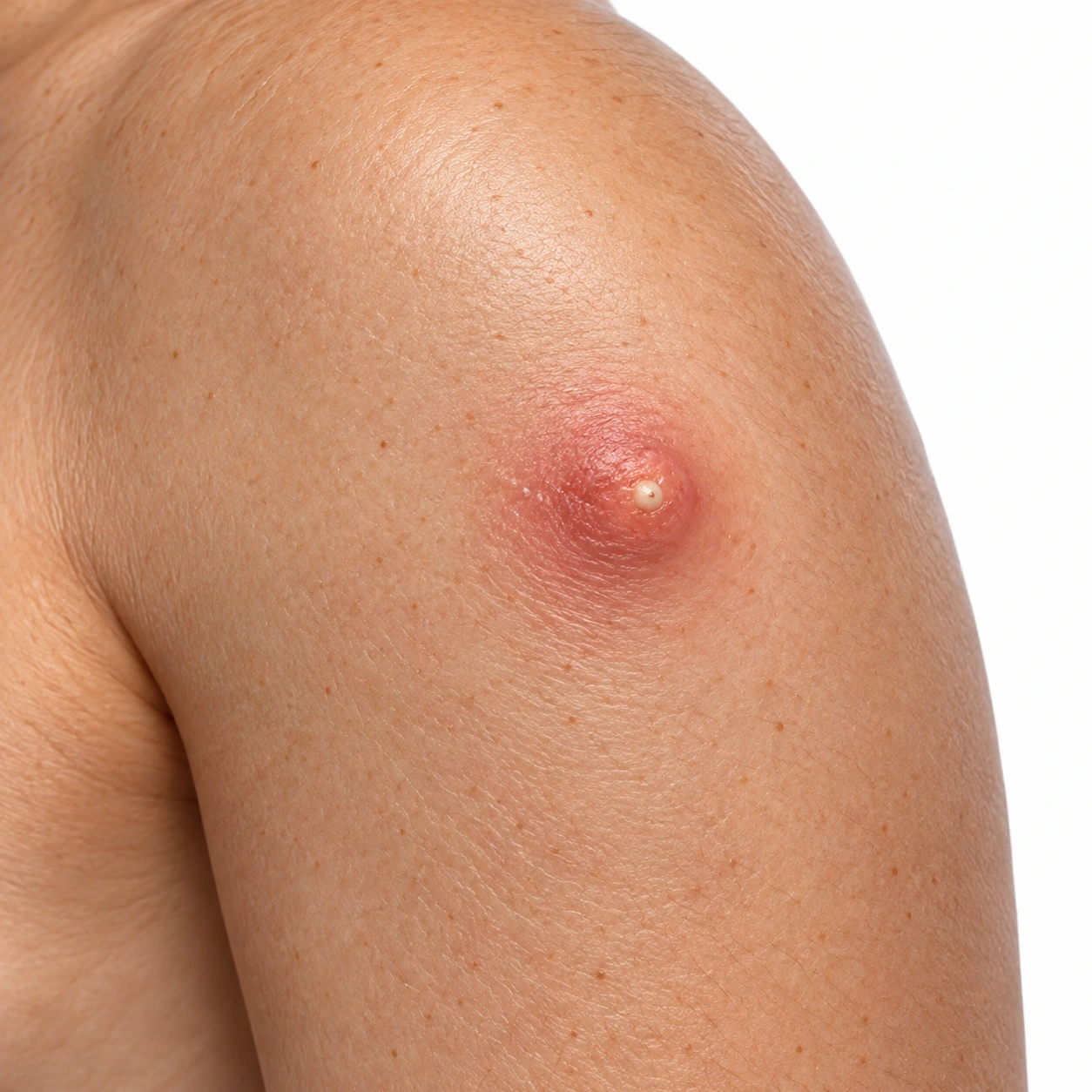
When the infection goes further down the follicle it becomes a boil: a tender, swollen lump that comes to a head over several days. Several joined together are called a carbuncle. Squeezing is what turns a surface bump into one of these, so warm compresses and leaving it alone are the right first move. Boils often need draining or oral antibiotics, and they can leave a scar.
Cellulitis
Sometimes the infection leaves the follicle and spreads into the surrounding skin. The signs are redness, swelling and warmth spreading outward from the spot rather than staying in it, sometimes red streaks running away from it, and often a fever. That is a same-day problem needing oral antibiotics, and it is more likely in people with diabetes or a weakened immune system.
Keloid scars
Deep folliculitis on the chest, shoulders, jawline and the back of the neck can heal into raised, thickened scars, and that risk is higher on deeper skin tones. At the nape there is a specific pattern, acne keloidalis nuchae, where the bumps become firm and permanent and the hair in that patch is lost. It responds far better to early treatment than to waiting, so firm bumps building at the back of the neck are a reason to be seen rather than to keep treating at home.
Scratching can damage the skin; overheating is especially important in infants.
When to get help
Arrange assessment if the rash persists, keeps returning, is extensive or has not responded to treatment. A pustule swab may help distinguish bacteria and guide treatment.
Seek prompt medical care for fever, rapidly spreading redness or warmth, worsening pain, a large deep lump, or feeling unwell. Seek care earlier if your immune system is suppressed.
Bumps around the eye with eye pain, swelling, light sensitivity or vision change need prompt assessment. Do not apply body washes or skin medicines into the eye.
Get care for fever, pus, persistent rash or signs that an infant is overheating or unwell.
Common questions
Folliculitis:How do I tell folliculitis from acne?
Look for blackheads and whiteheads. Acne has them, folliculitis does not. Folliculitis bumps are all the same size, each sits at a hair, they itch more than they hurt, and they appear where you shave, sweat or rub - thighs, buttocks, beard, chest, back. Acne sits on the face, chest and upper back, has spots of different sizes, and is not itchy.
Folliculitis:Is it contagious?
Mostly not in ordinary contact. The bacteria can pass through shared razors, towels, unwashed sports gear and close skin contact - avoid those while it is active. Yeast folliculitis and razor bumps are not caught.
Folliculitis:Why does it keep coming back in the same place?
Because the cause is still there - the shaving method, friction, damp clothes, or a yeast cause treated as bacterial. Some people also carry Staphylococcus aureus long term, which can be tested and treated.
Folliculitis:Can I still shave?
Yes, but change how. A fresh single-blade or safety razor, with the grain, with gel, and no stretching the skin. Take days off while the skin is inflamed. For persistent razor bumps, laser hair reduction is a longer-term option.
Folliculitis:Should I use hydrocortisone on the itch?
Not on undiagnosed bumps. Steroid creams calm the itch for days while the infection carries on underneath, and the rash comes back more widespread. If itch is the main problem, a medicated wash and cool compresses are safer.
Folliculitis:Will it scar?
Superficial folliculitis heals without scarring, though flat dark marks take months to fade on deeper skin tones. Deep folliculitis and boils can scar, and firm raised bumps at the back of the neck can scar permanently - reasons to be seen early rather than keep treating at home.
Heat Rash:What is Heat Rash?
Miliaria is an itchy or prickly eruption caused by blocked sweat ducts.
Heat Rash:What can I do day to day?
Move to a cool environment, wear breathable clothing and avoid heavy occlusive products.
Heat Rash:When should I get medical advice?
Get care for fever, pus, persistent rash or signs that an infant is overheating or unwell.
Sources
Sources and further reading
Keep exploring.
Folliculitis

Acne vs Folliculitis
Folliculitis vs Boils
Folliculitis vs Ingrown Hairs
Folliculitis vs Keratosis Pilaris
Fungal Acne vs Folliculitis
Genital Herpes vs Folliculitis
Hidradenitis Suppurativa vs Folliculitis
Hormonal Acne vs Folliculitis

Hot Tub Folliculitis vs Folliculitis
Impetigo vs Folliculitis