Corns vs Calluses
Small focal areas of thickened skin with a painful central core. Broad protective areas of thickened skin from repeated pressure or rubbing.
Key differences
The same eight facts on every condition comparison.
What is it?
- What it is
Small focal areas of thickened skin with a painful central core.
- What it is
Broad protective areas of thickened skin from repeated pressure or rubbing.
What it looks like
Corns
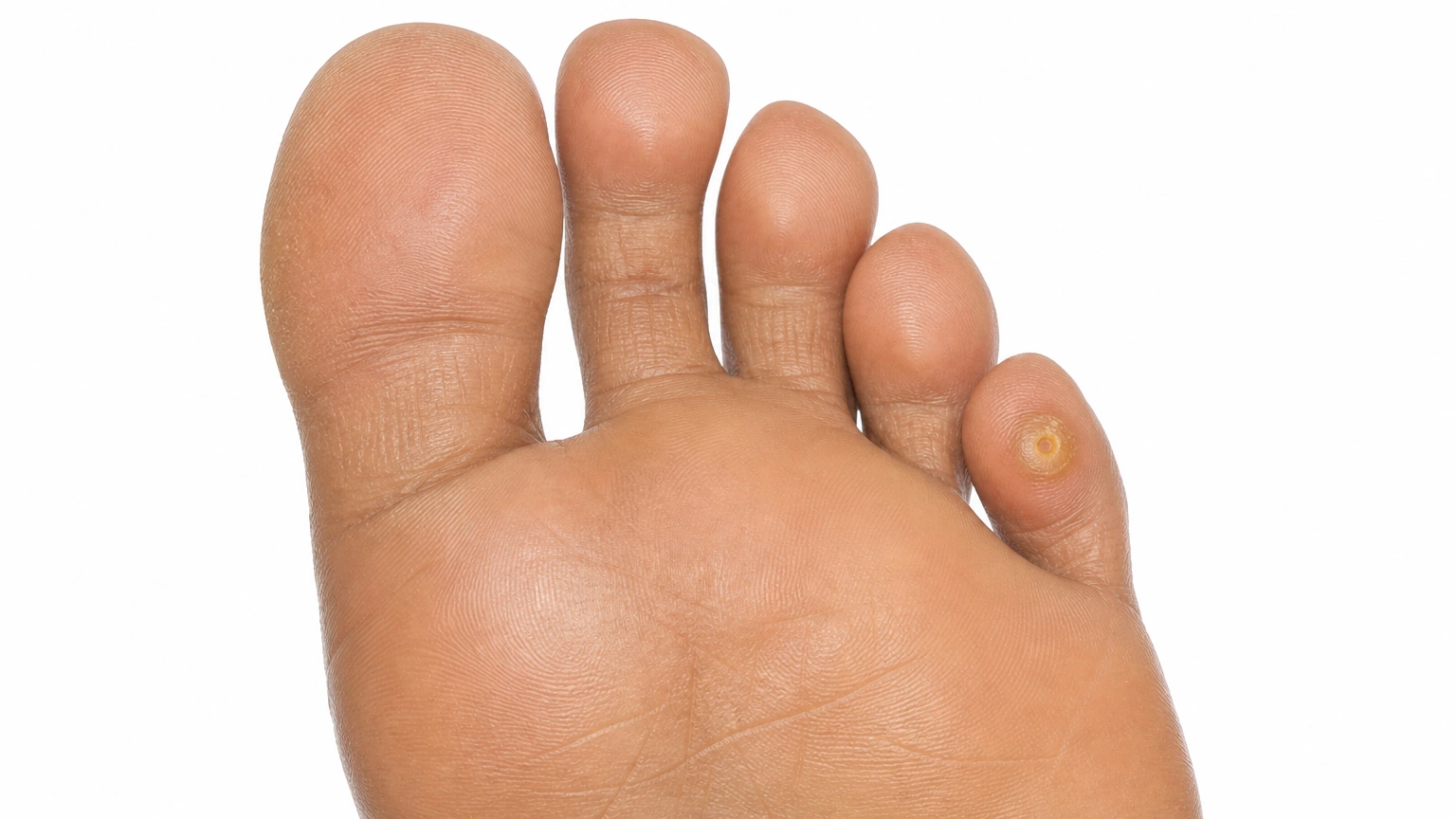
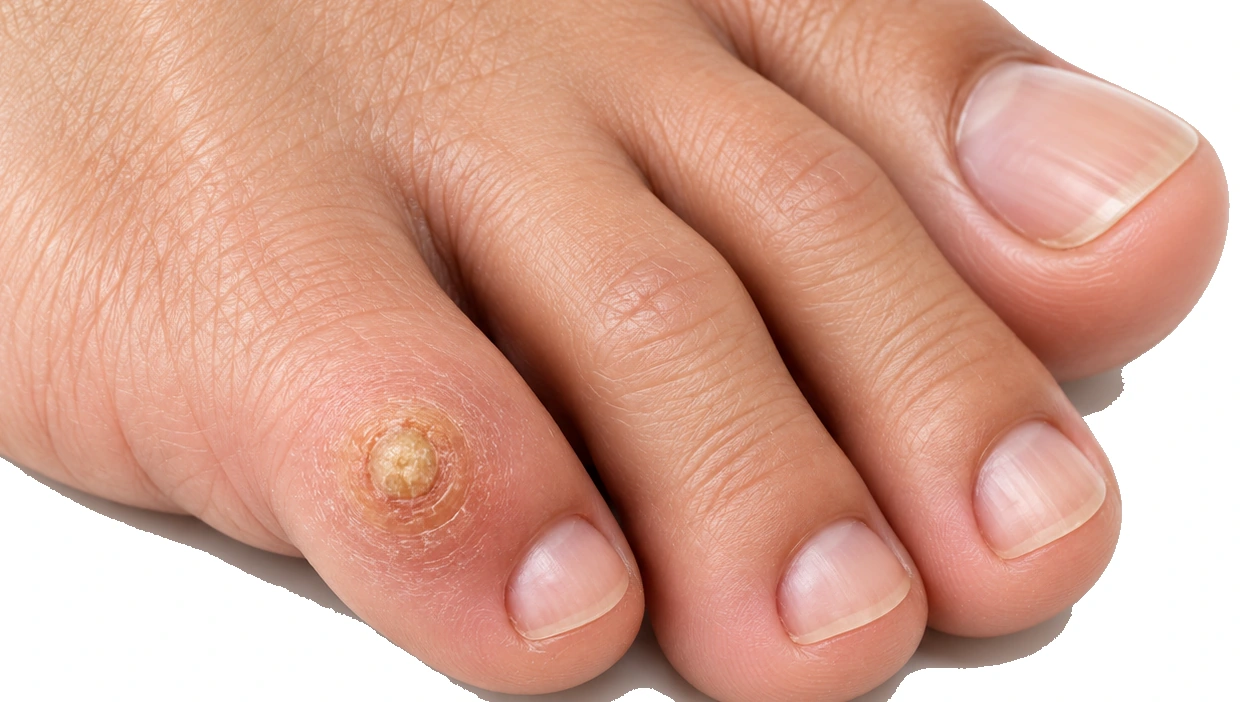
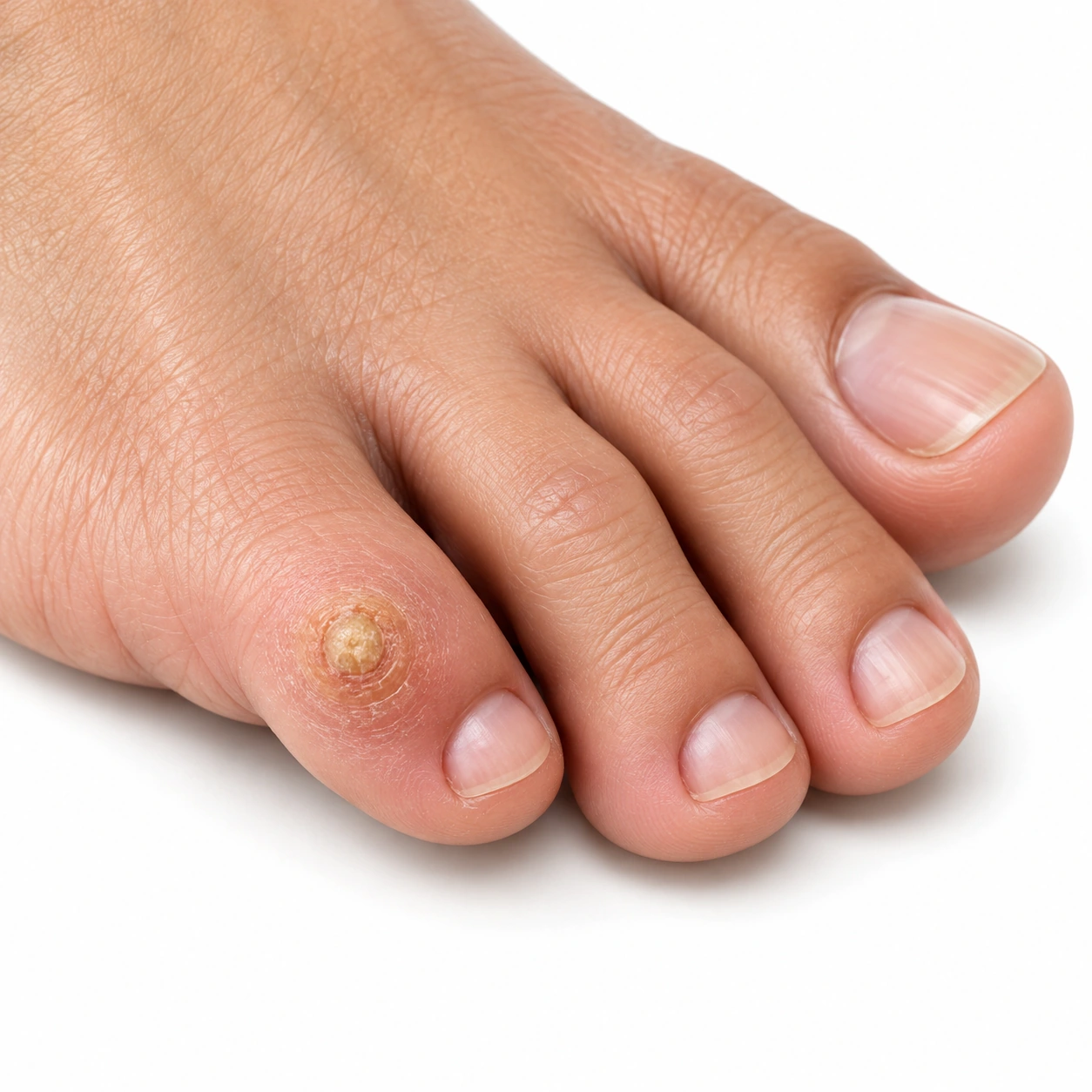
Corns A round area of thickened skin sits on the outer side of the little toe.
Calluses
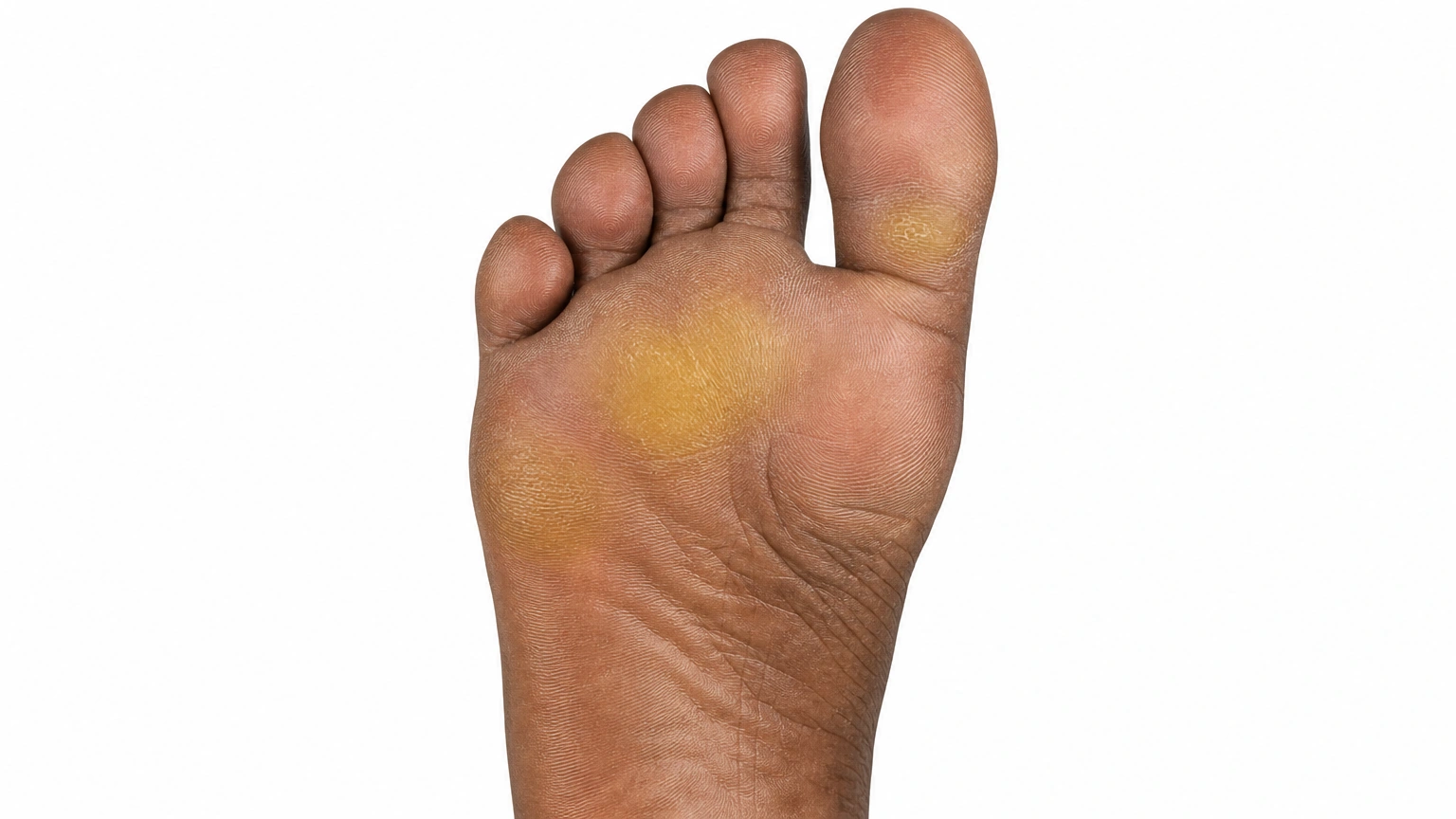
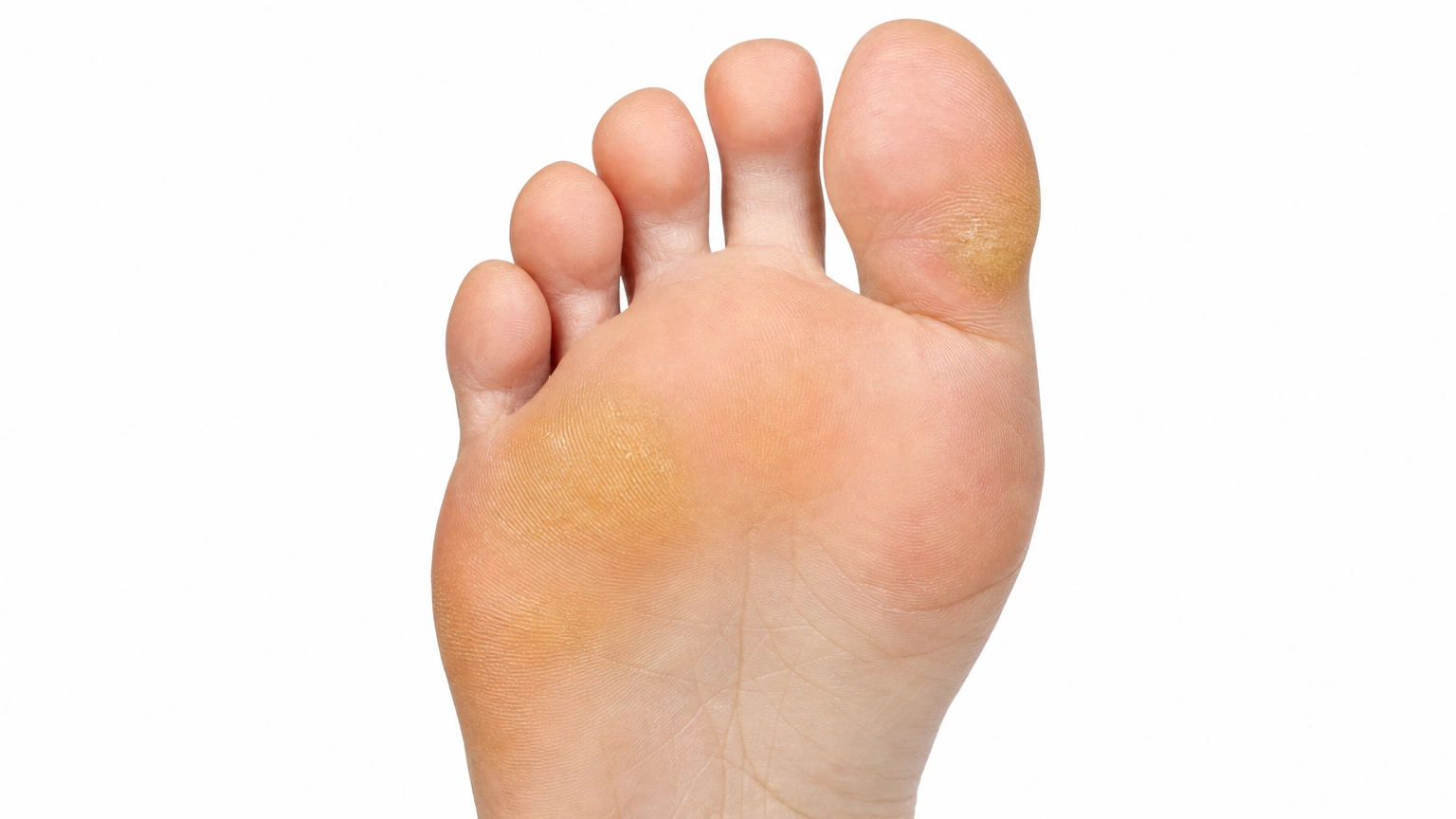
Calluses A broad yellowish patch lies beneath the ball of the foot.
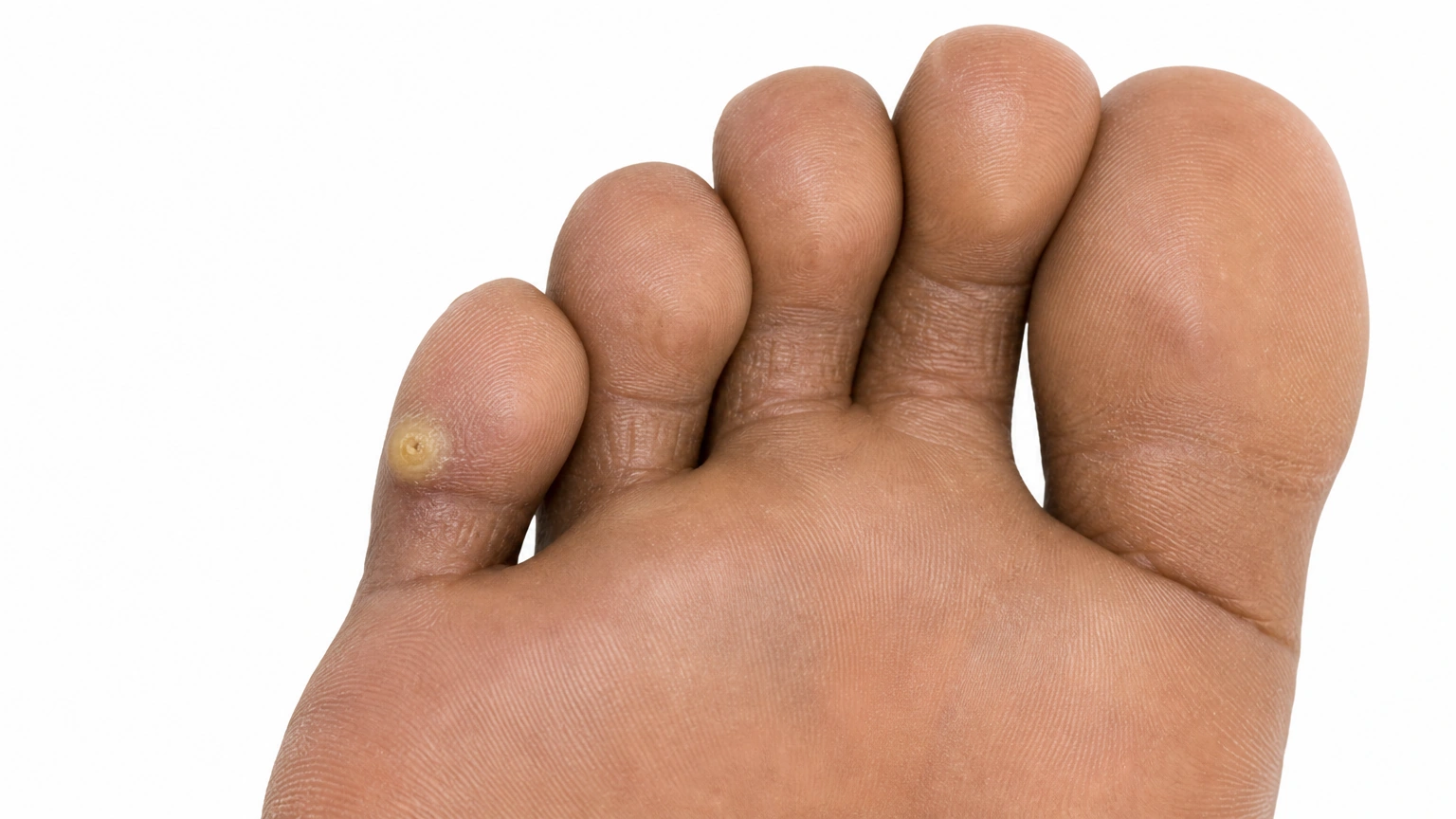
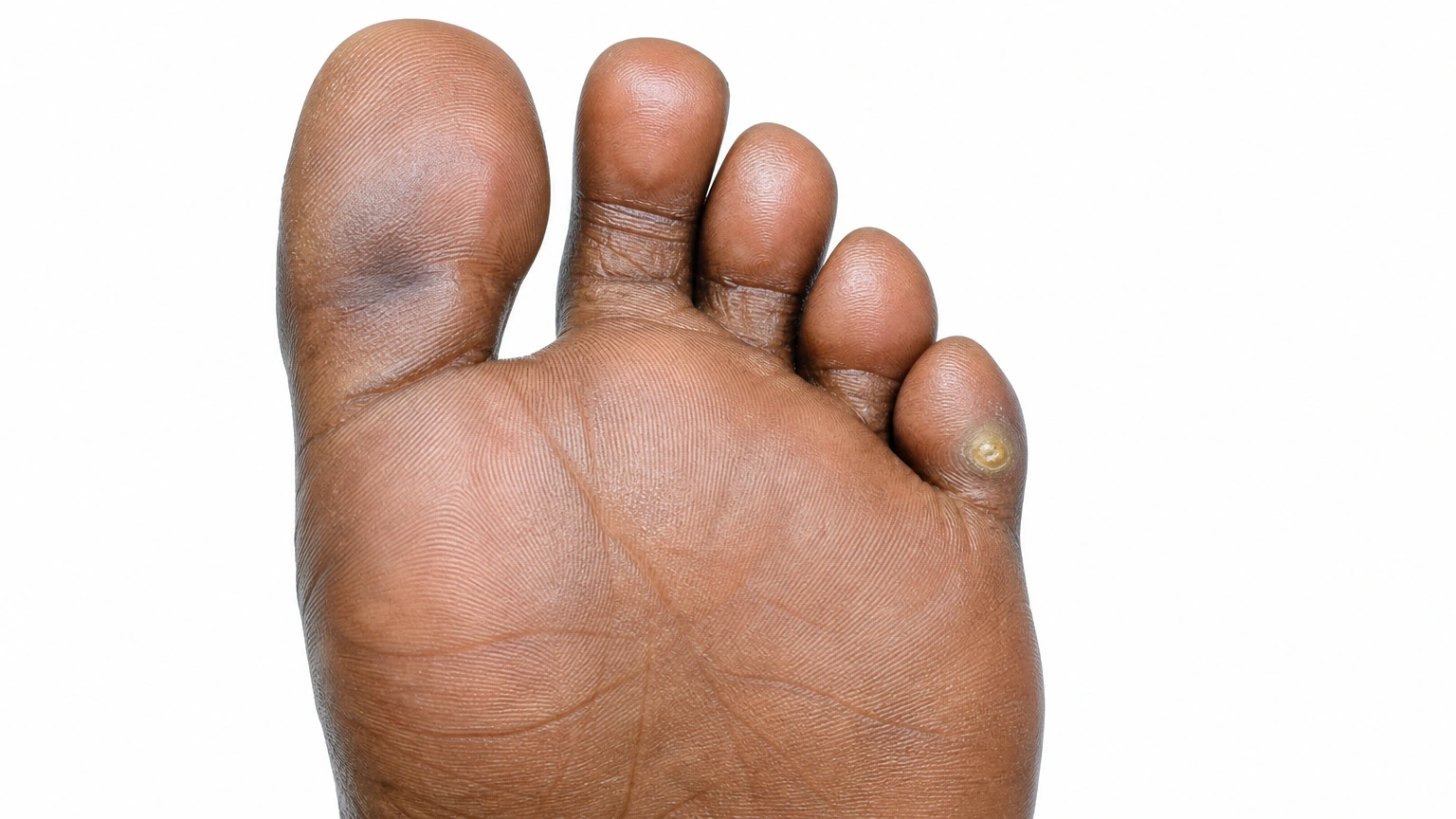
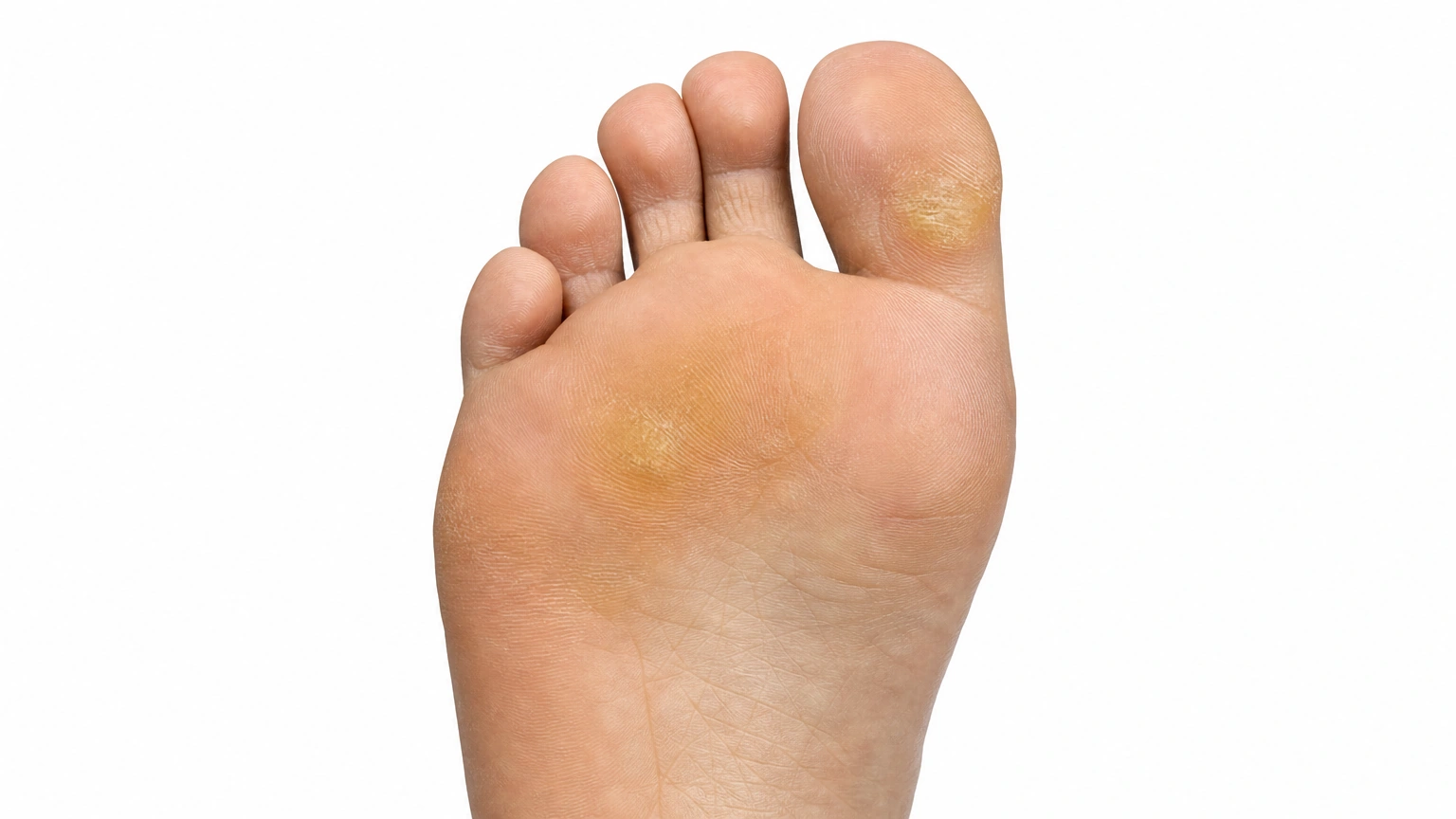
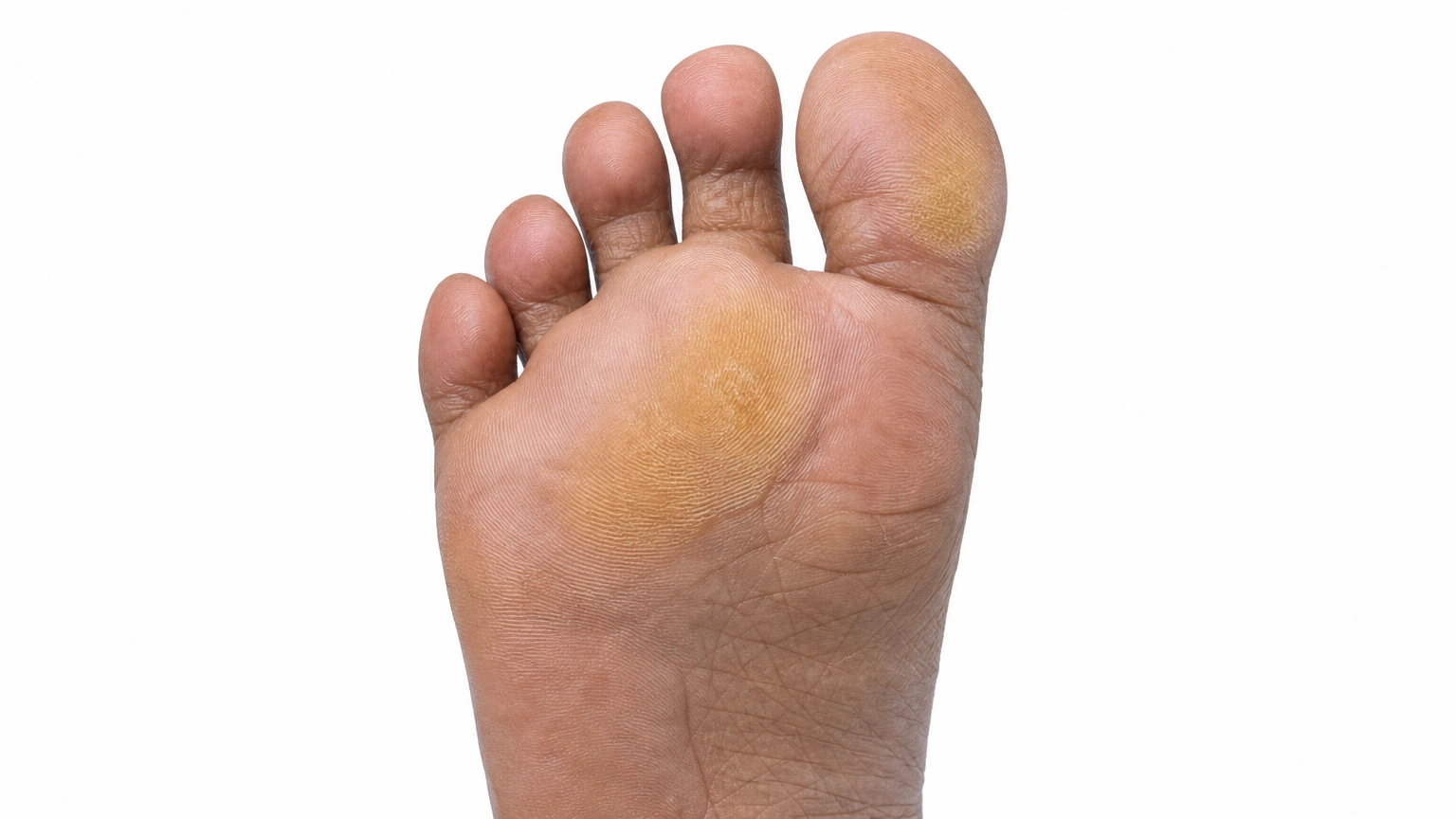
Repeated pressure or rubbing stimulates a focused buildup of outer skin. The dense central core can press into nearby tissue and cause discomfort.
Repeated pressure or rubbing stimulates protective thickening of the outer skin. The thickened area can become dry and less flexible, sometimes leading to cracks.
When it usually starts
Corns. Can occur at any age with repeated mechanical stress.
Calluses. Can occur at any age with repeated mechanical stress.
Causes and triggers
Repeated pressure or rubbing injures the skin or stimulates protective thickening.
Repeated pressure or rubbing injures the skin or stimulates protective thickening.
Daily Care
Habits that help
- Reduce pressure with well-fitting shoes or task-appropriate gloves
Address the rubbing that caused the thick skin. - Use a plain cushioning pad if it improves comfort
Padding should redistribute pressure without squeezing the area. - Moisturize dry thickened skin regularly
A plain cream or clinician-recommended foot product may soften the surface. - Ask for foot-care advice if the area stays painful
Diabetes, poor circulation or reduced sensation makes professional care particularly important. - Discuss podiatry assessment
A clinician can confirm the diagnosis, reduce thick skin safely and address footwear or deformity.
Avoid
- Avoid: Cutting thick skin with blades or scissors
A small cut can become an ulcer or infection. - Avoid: Medicated corn acids on broken or high-risk skin
Seek advice before using them if you have diabetes, poor circulation or uncertain diagnosis.
Treatment differences
Evidence labels come from each condition’s own treatment list.
Reduce pressure through suitable footwear and, when needed, podiatry care. Avoid cutting the corn yourself; ask before using medicated acids if you have diabetes, poor circulation or reduced sensation.
Address pressure and friction through suitable footwear or other protection. Professional reduction may help troublesome thick skin; avoid blades and seek advice before acids on high-risk feet.
Outlook
Corns can return if pressure or friction continues. Appropriate footwear and professional foot care can improve comfort; high-risk feet should be assessed before self-treatment.
Calluses can lessen when repeated pressure is reduced, but often return if the cause remains. Diabetes, reduced sensation or poor circulation makes professional foot care particularly important.
Complications
Open cracks or blisters can become infected; diabetes or poor circulation requires extra care.
Open cracks or blisters can become infected; diabetes or poor circulation requires extra care.
When to get help
Seek care for infection, a painful open wound, diabetes, reduced sensation or poor circulation.
Seek care for infection, a painful open wound, diabetes, reduced sensation or poor circulation.
Common questions
Corns:What is Corns?
Small focal areas of thickened skin with a painful central core.
Corns:What can I do day to day?
Reduce pressure and friction with suitable footwear. Do not cut skin with a blade.
Corns:When should I get medical advice?
Seek care for infection, a painful open wound, diabetes, reduced sensation or poor circulation.
Calluses:What is Calluses?
Broad protective areas of thickened skin from repeated pressure or rubbing.
Calluses:What can I do day to day?
Reduce pressure and friction with suitable footwear. Do not cut skin with a blade.
Calluses:When should I get medical advice?
Seek care for infection, a painful open wound, diabetes, reduced sensation or poor circulation.
Sources
Sources and further reading
Keep exploring.
Plantar Warts vs Calluses
Plantar Warts vs Corns
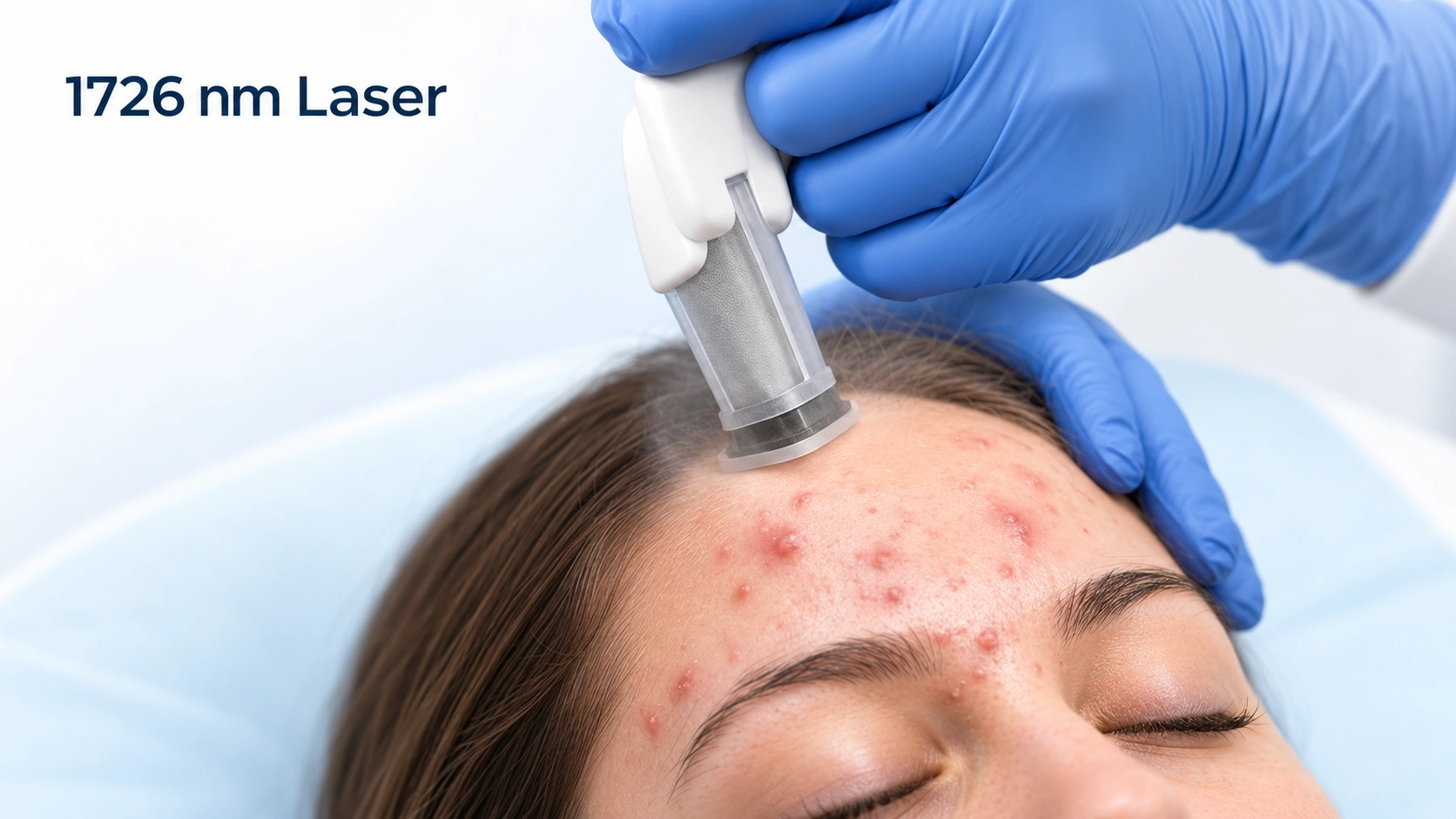
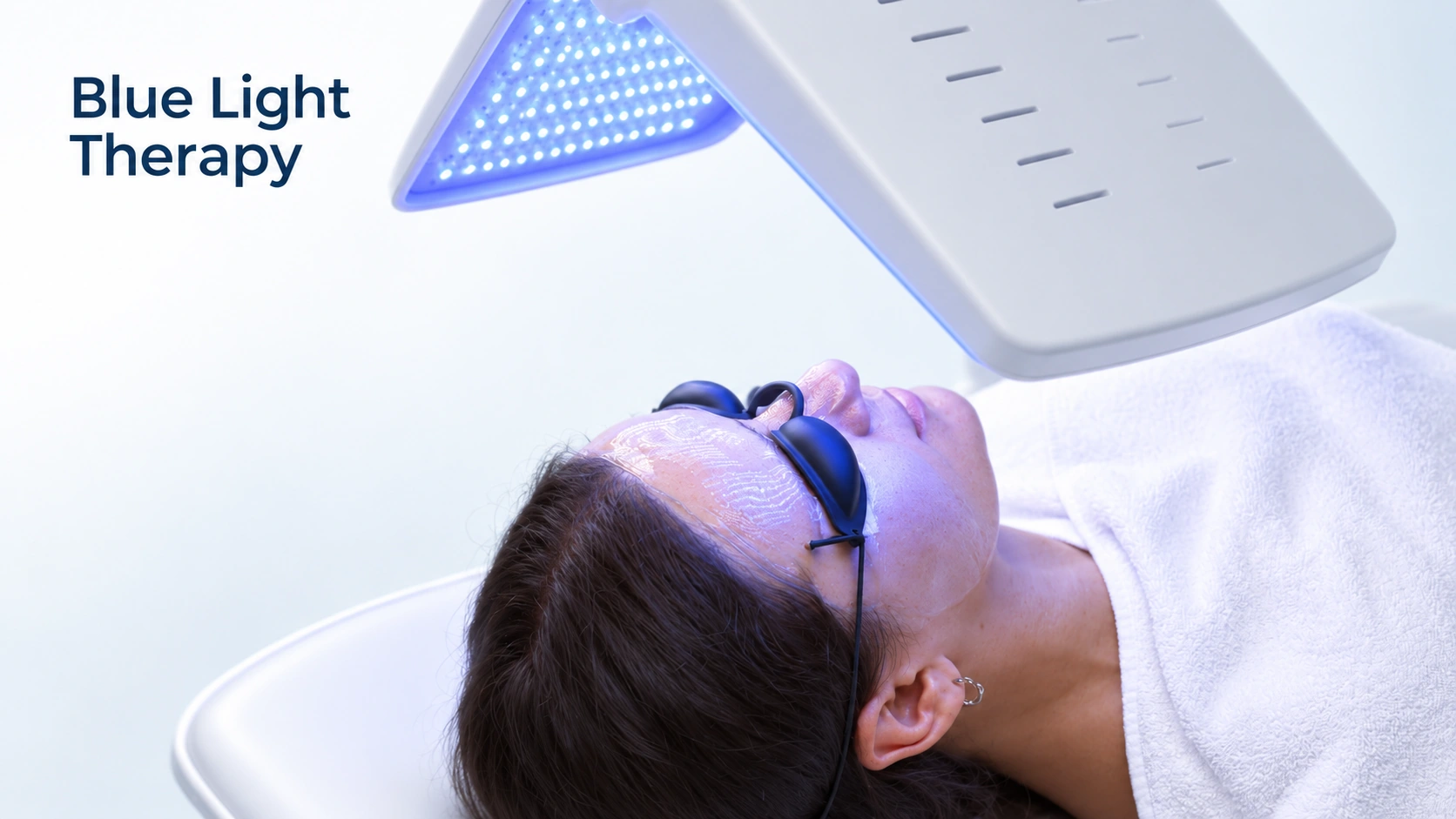
1726 nm Laser vs Blue Light Therapy

1726 nm Laser vs Chemical Peel
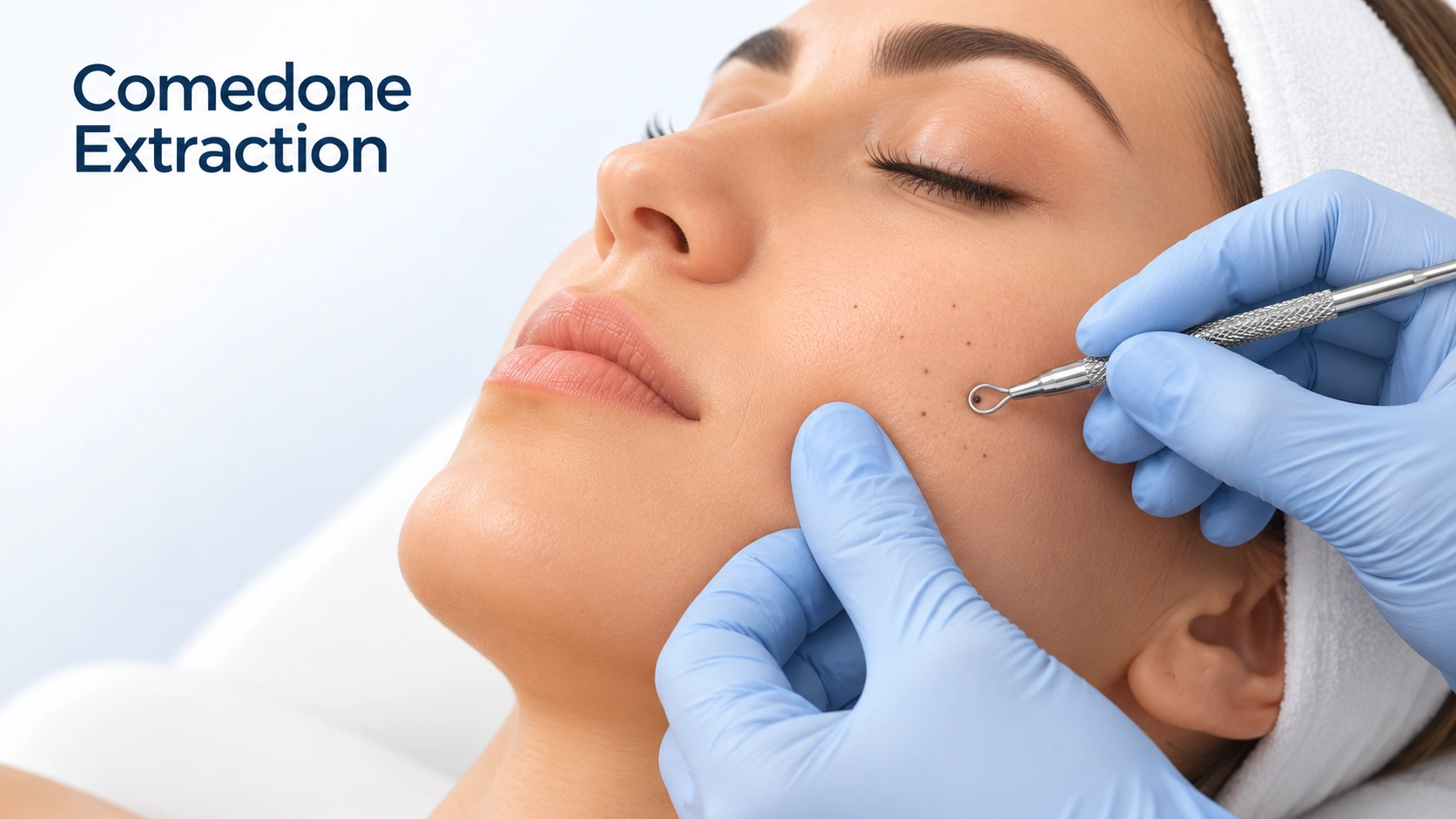
1726 nm Laser vs Comedone Extraction
1726 nm Laser vs Cortisone Injection
1726 nm Laser vs Glycolic Acid Peel
1726 nm Laser vs LED Light Therapy
1726 nm Laser vs Photodynamic Therapy
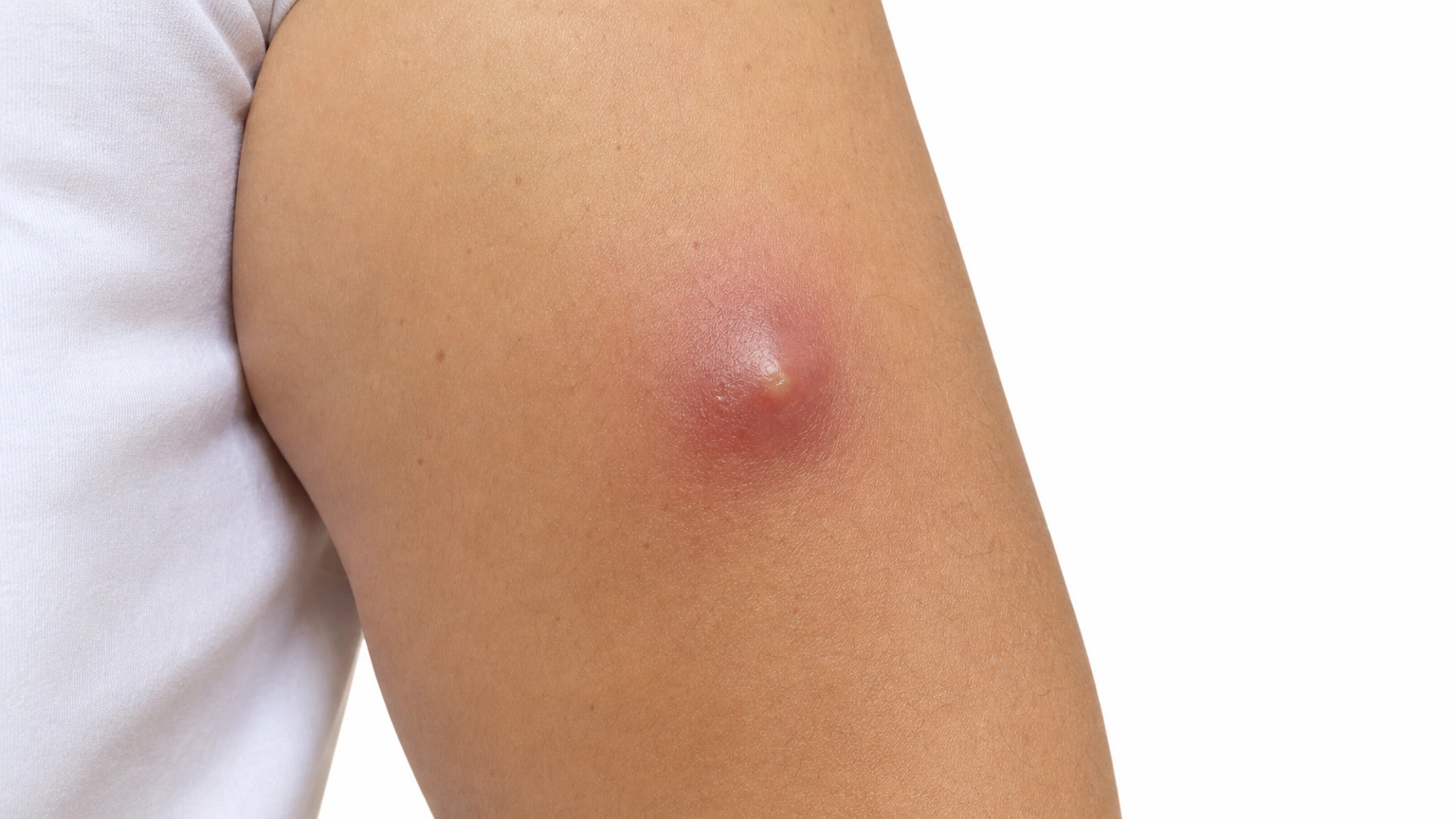
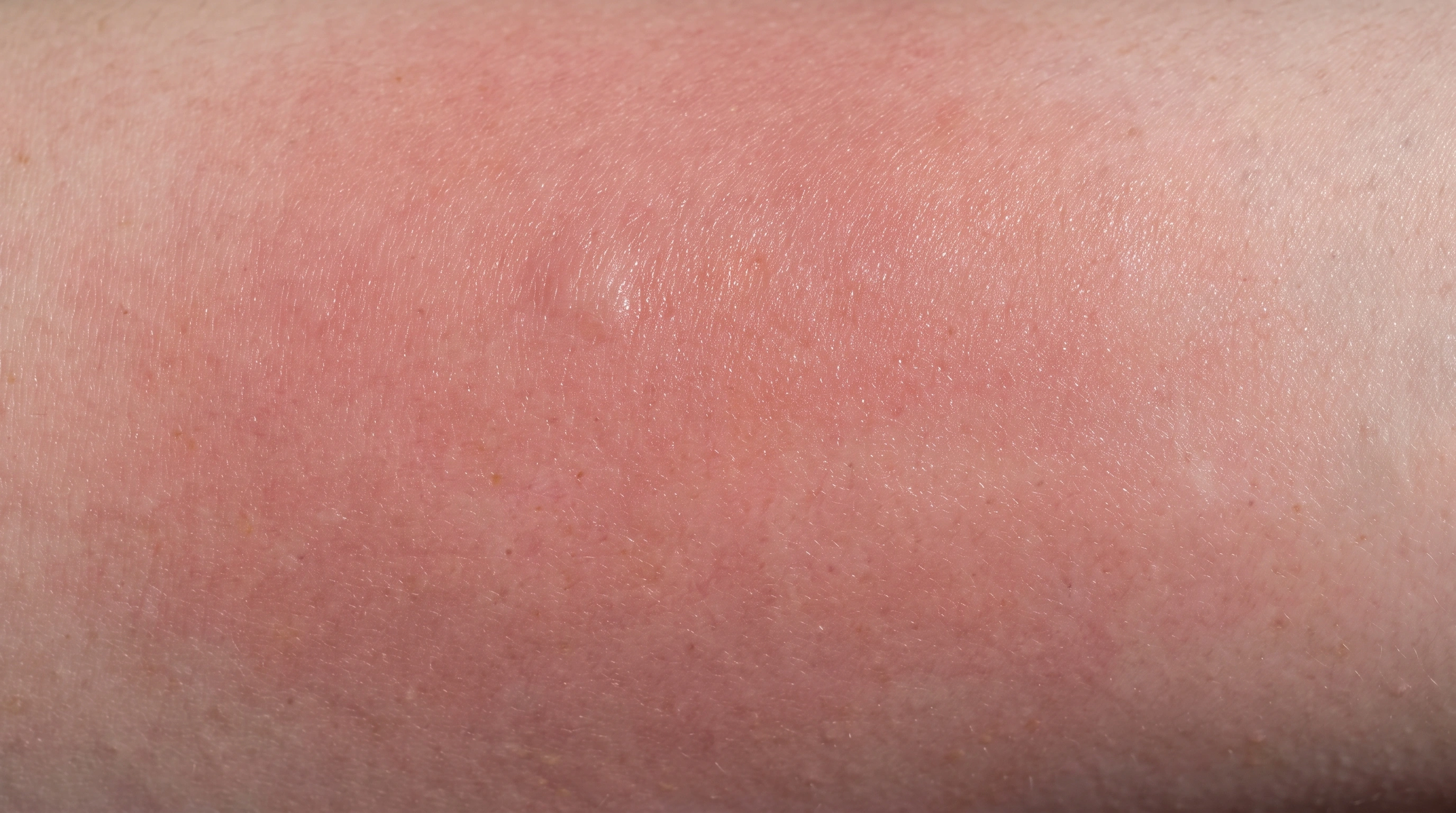
Abscess vs Cellulitis
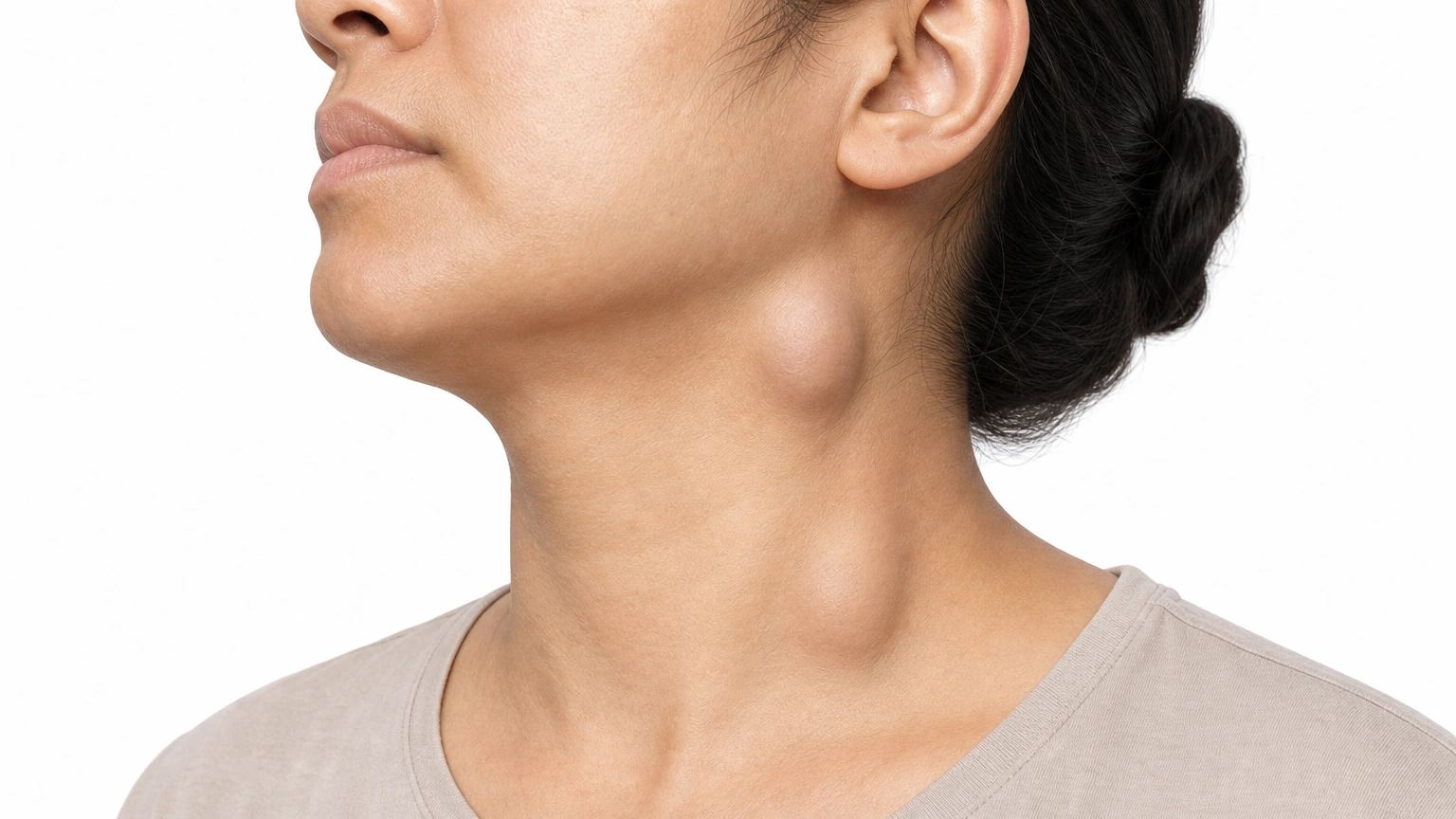
Abscess vs Swollen Lymph Node