Plantar Warts vs Calluses

Plantar warts are warts on the sole of the foot. Body weight presses them flat and inward, which is why they often feel like a stone in the shoe and why they are the slowest warts to treat. Broad protective areas of thickened skin from repeated pressure or rubbing.

Research updated 2026-10-23
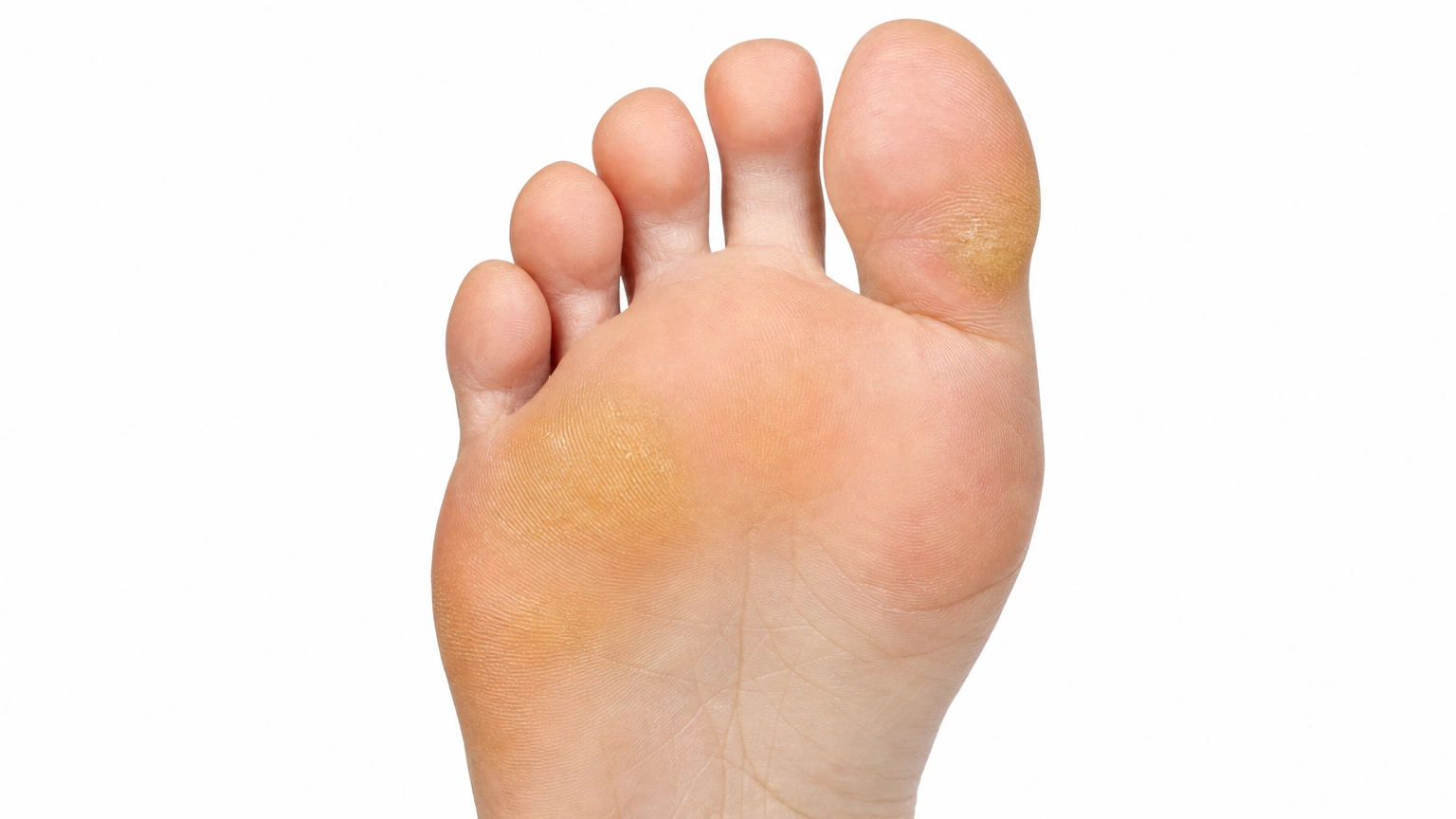
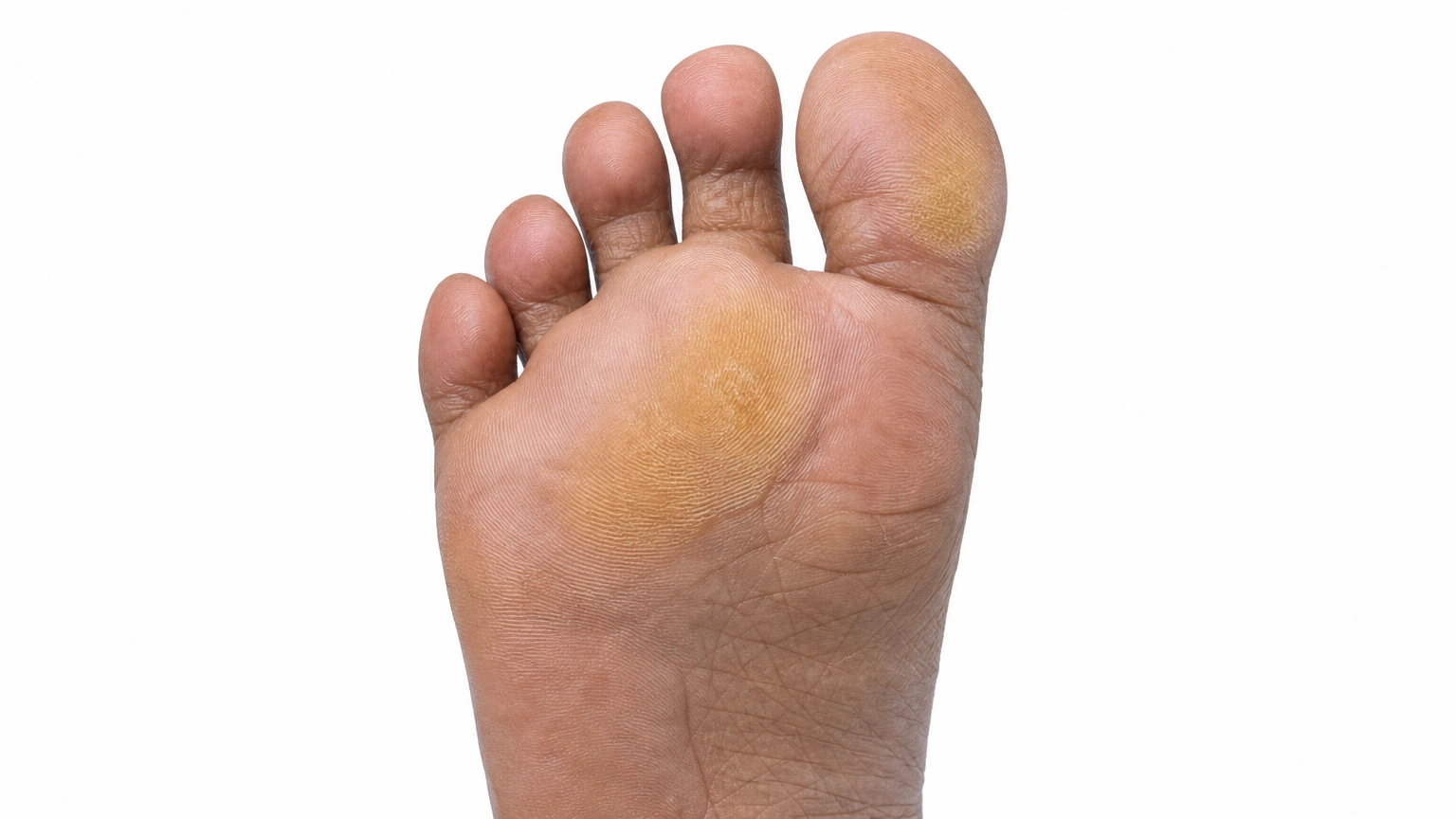
A thickened yellow-tan lump on the ball of the foot on fair light skin, with a faint pink ring around it and several tiny black dots in the middle.Educational illustration of thickened pressure skin under the ball of a foot, with the sole facing the viewer and toes pointing up on light skin.

Key differences

The same eight facts on every condition comparison.

Usual age
5 to 20
Any age
Where
Soles of the feet
Soles and palms
Main sign
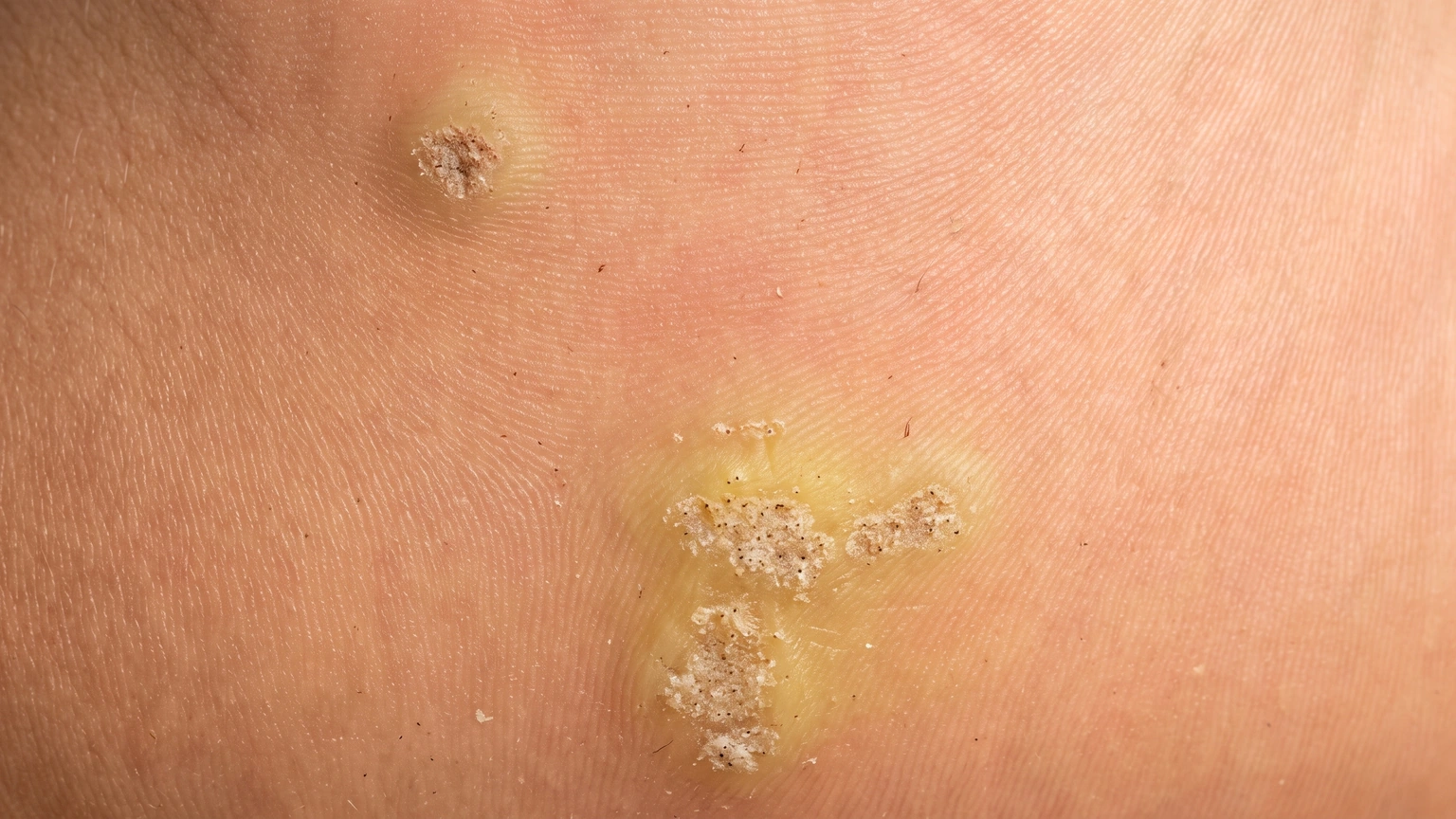
Hard flat spot with black dots
Broad, thick, hard skin
Itch or pain
Painful to walk on
Usually painless
Contagious
Yes, mildly
No
Long term
Often clears in 1 to 2 years
Returns with pressure
Scars
No
No
Who gets it
Children; pool and gym users
Anyone with repeated rubbing

What is it?

Plantar Warts
Calluses
What is it?
  • They are HPV growths on the soles.
    Plantar warts are wart-virus growths on the feet.
  • Pressure pushes them inward.
    They sit beneath thickened skin and can hurt when walking.
  • Some form clusters.
    Broad clusters are called mosaic warts.
  • They are mistaken for corns.
    Interrupted skin lines and capillary dots help tell them apart.
  • What it is
    Broad protective areas of thickened skin from repeated pressure or rubbing.

What it looks like

Plantar Warts

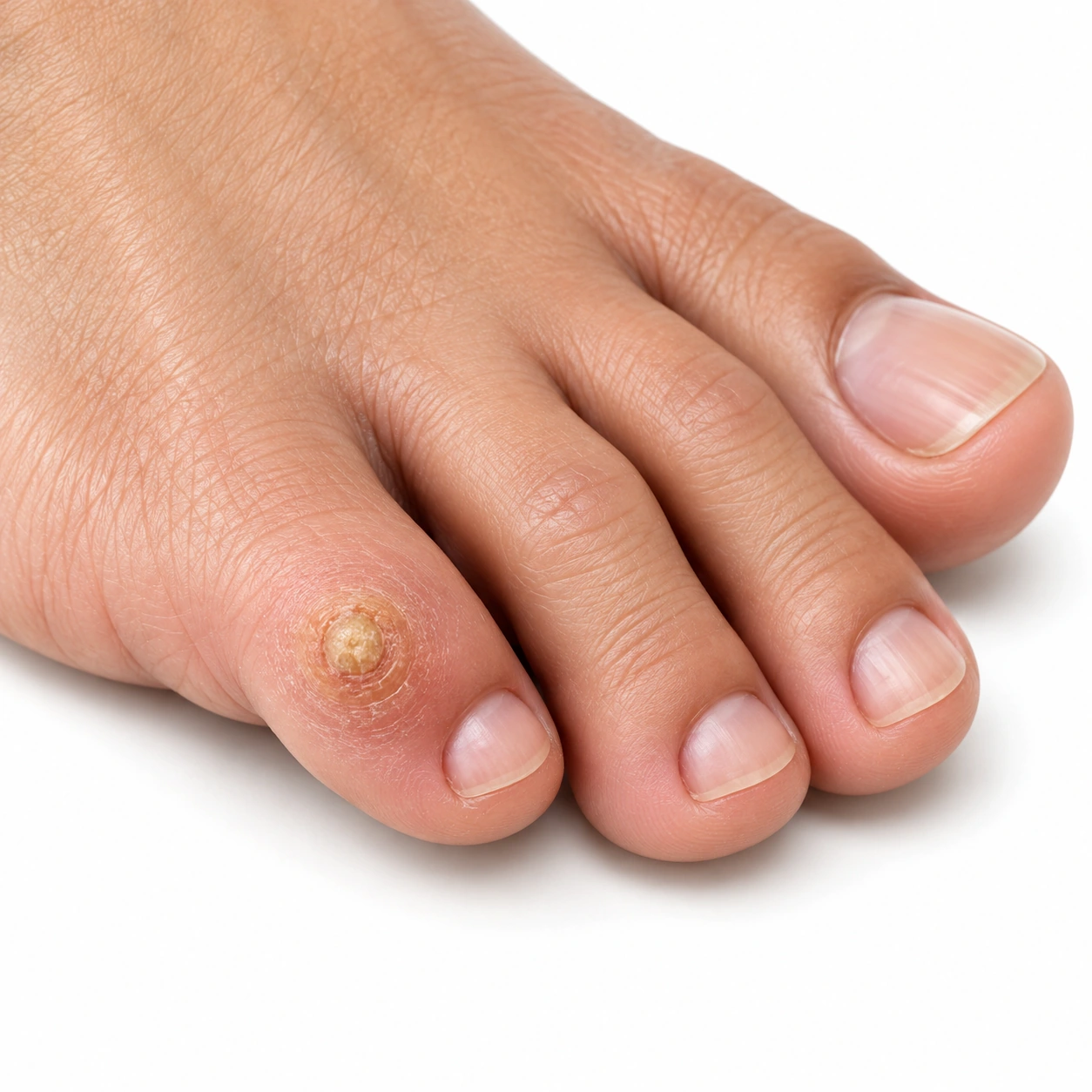
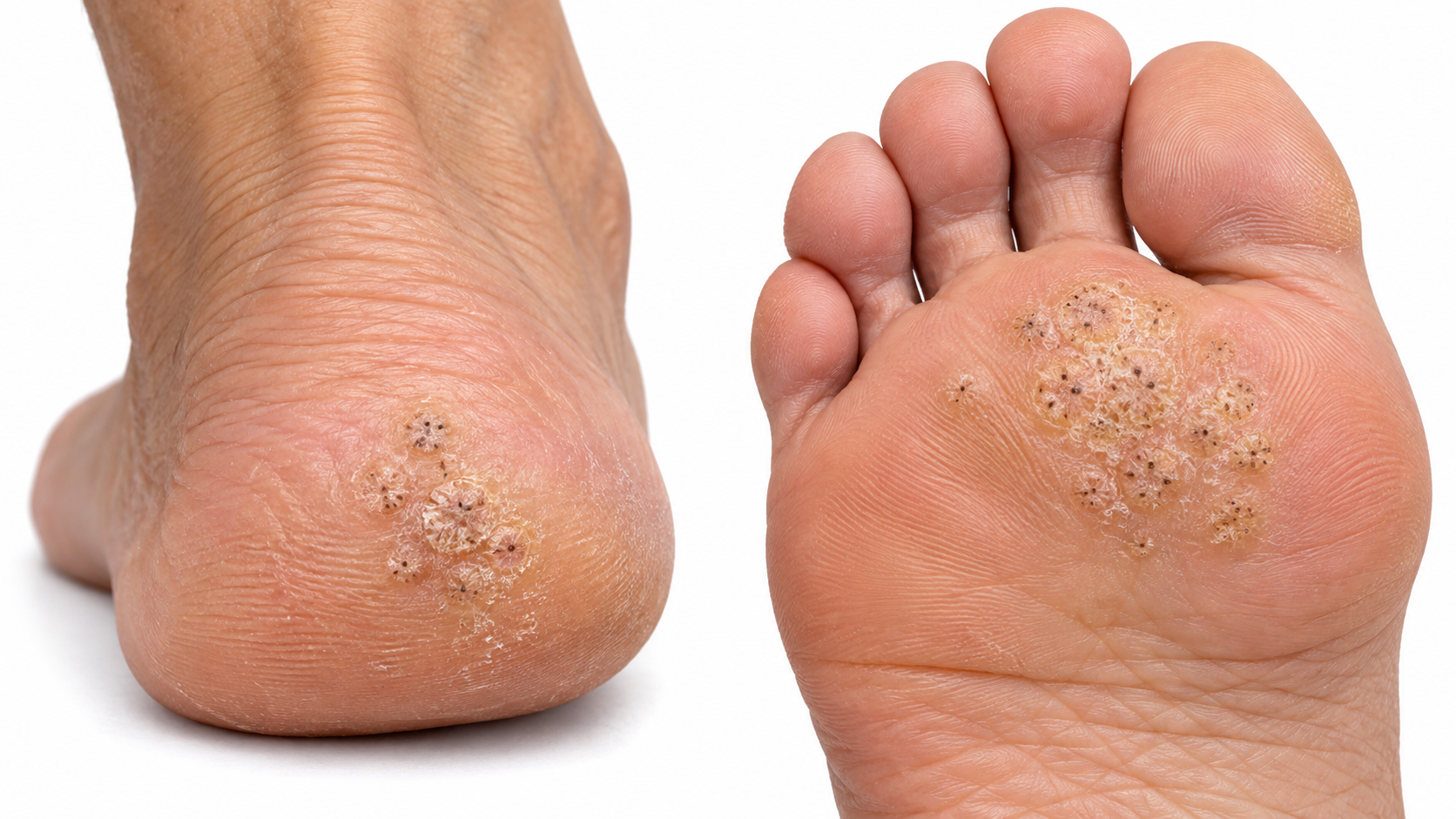
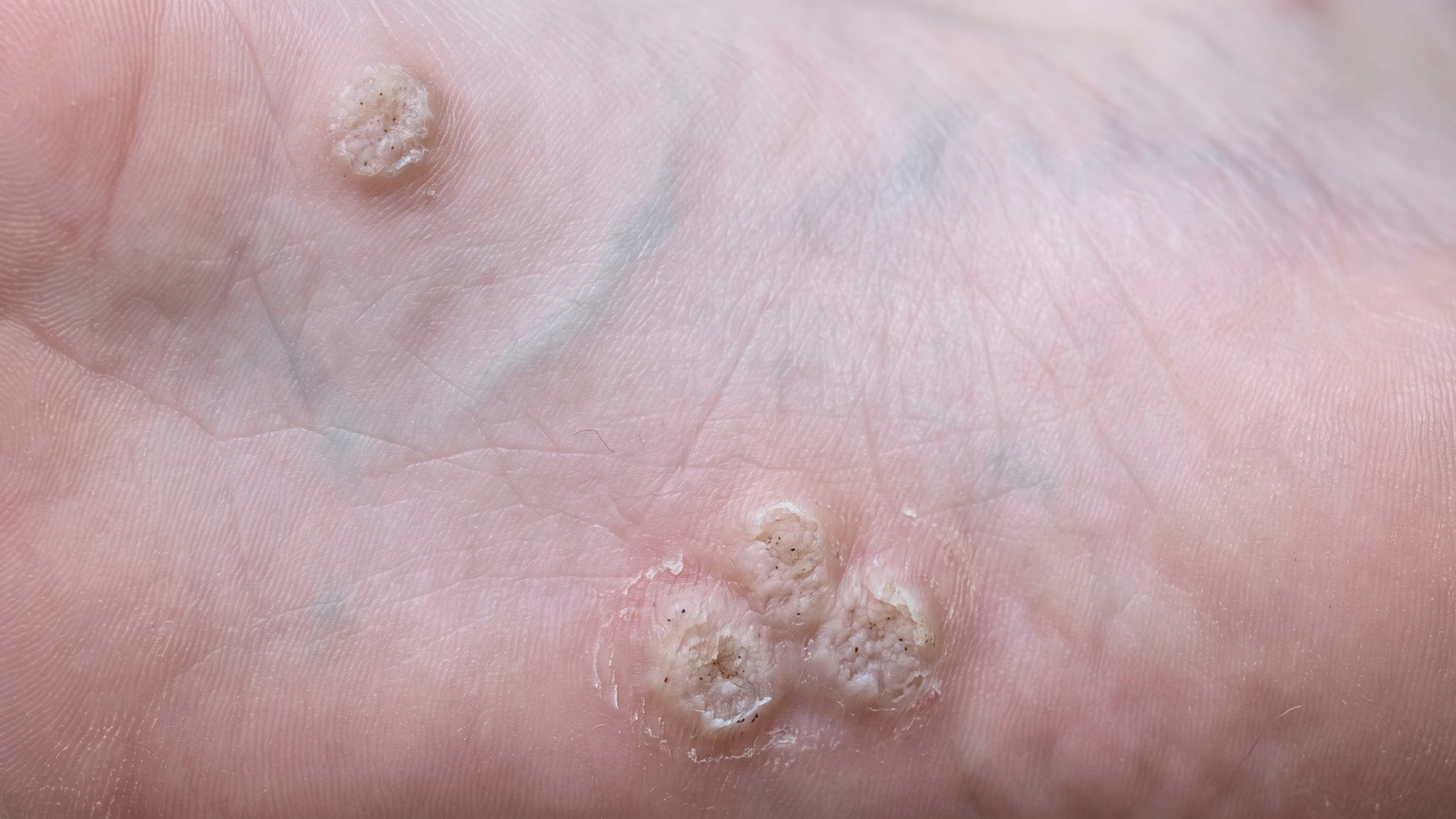
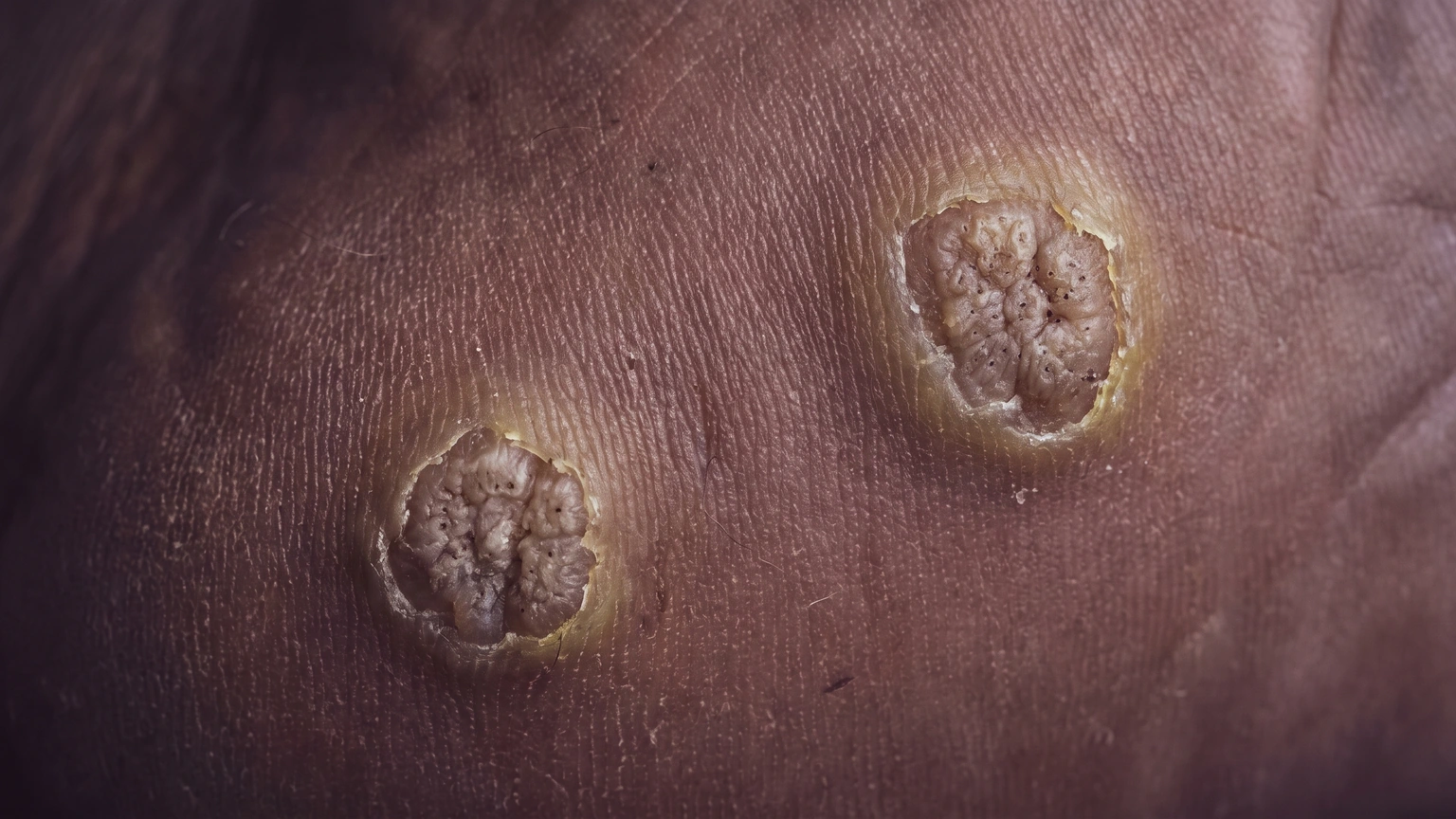
Plantar Warts: Black dots.

Single plantar wart A single deep, painful wart.

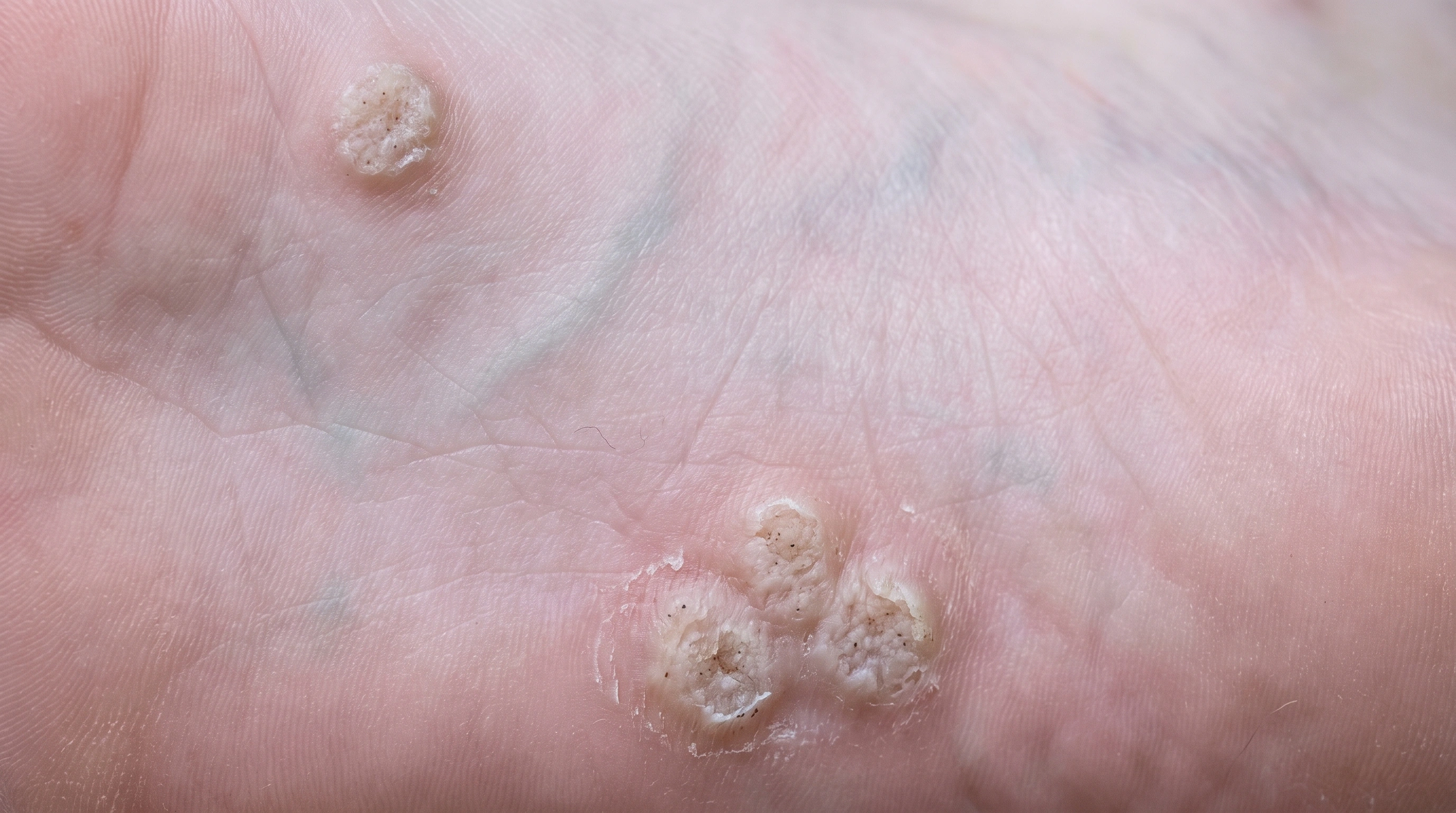
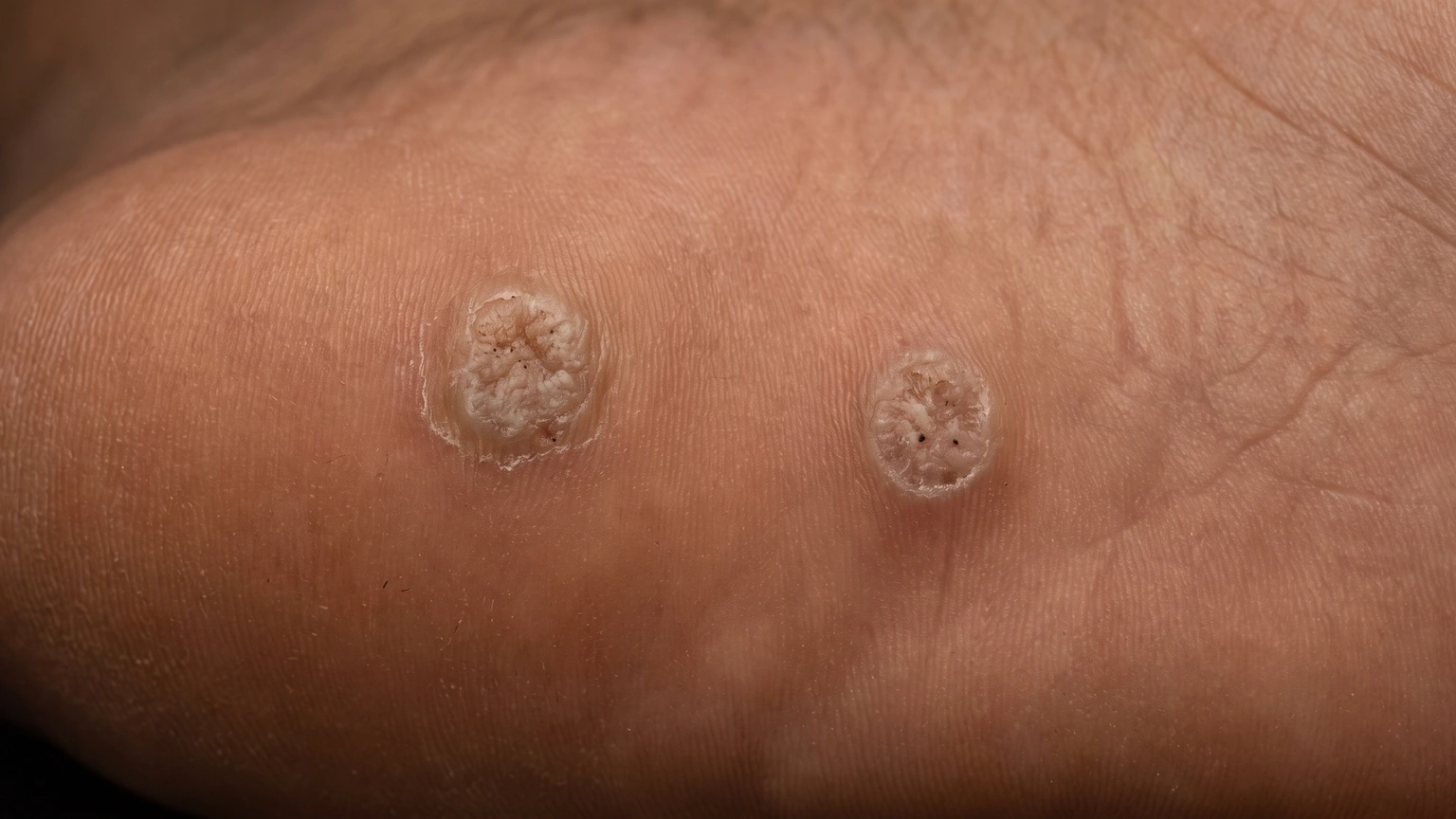
Plantar Warts: Mosaic cluster; Mosaic.

Mosaic plantar warts A cluster of shallow warts.

Calluses

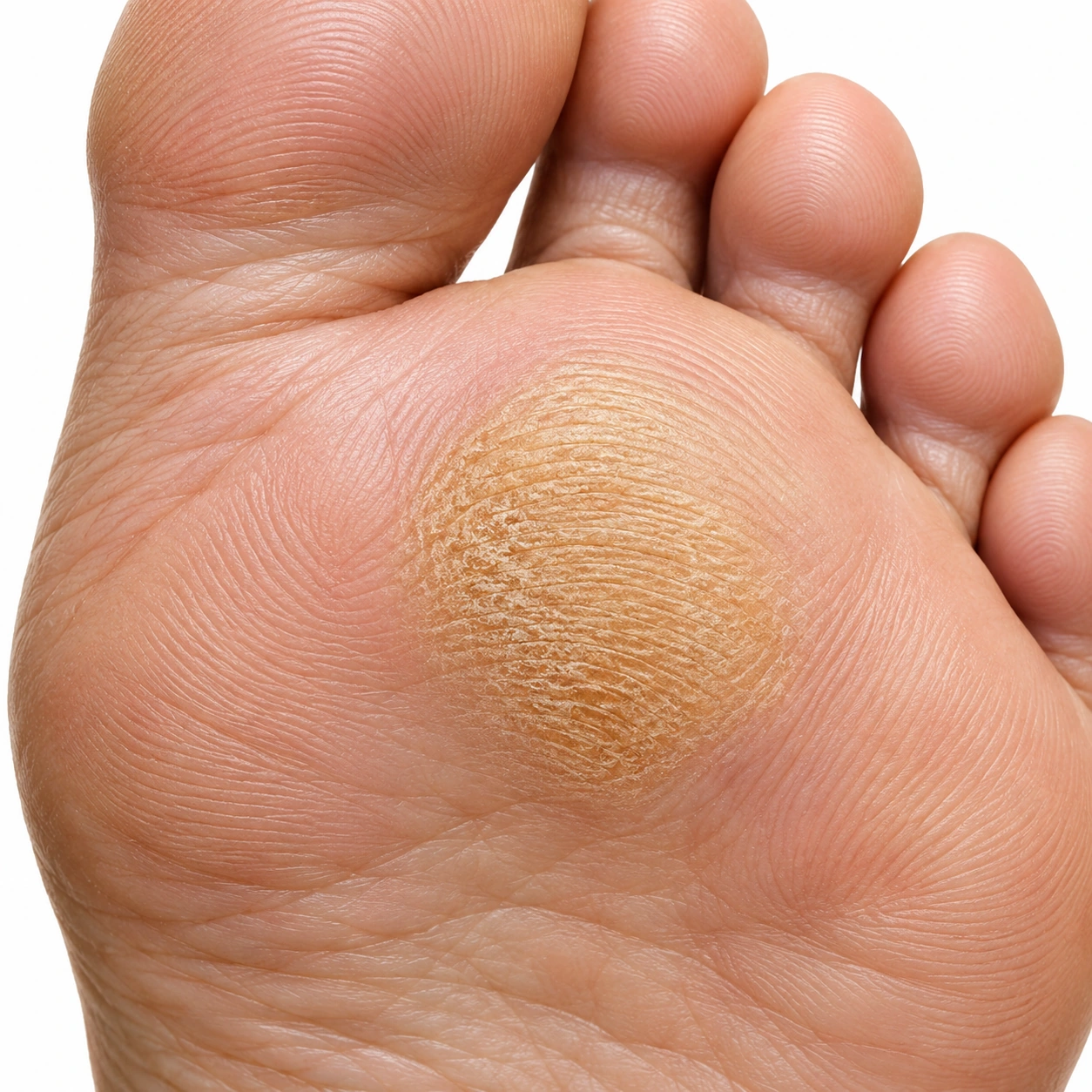
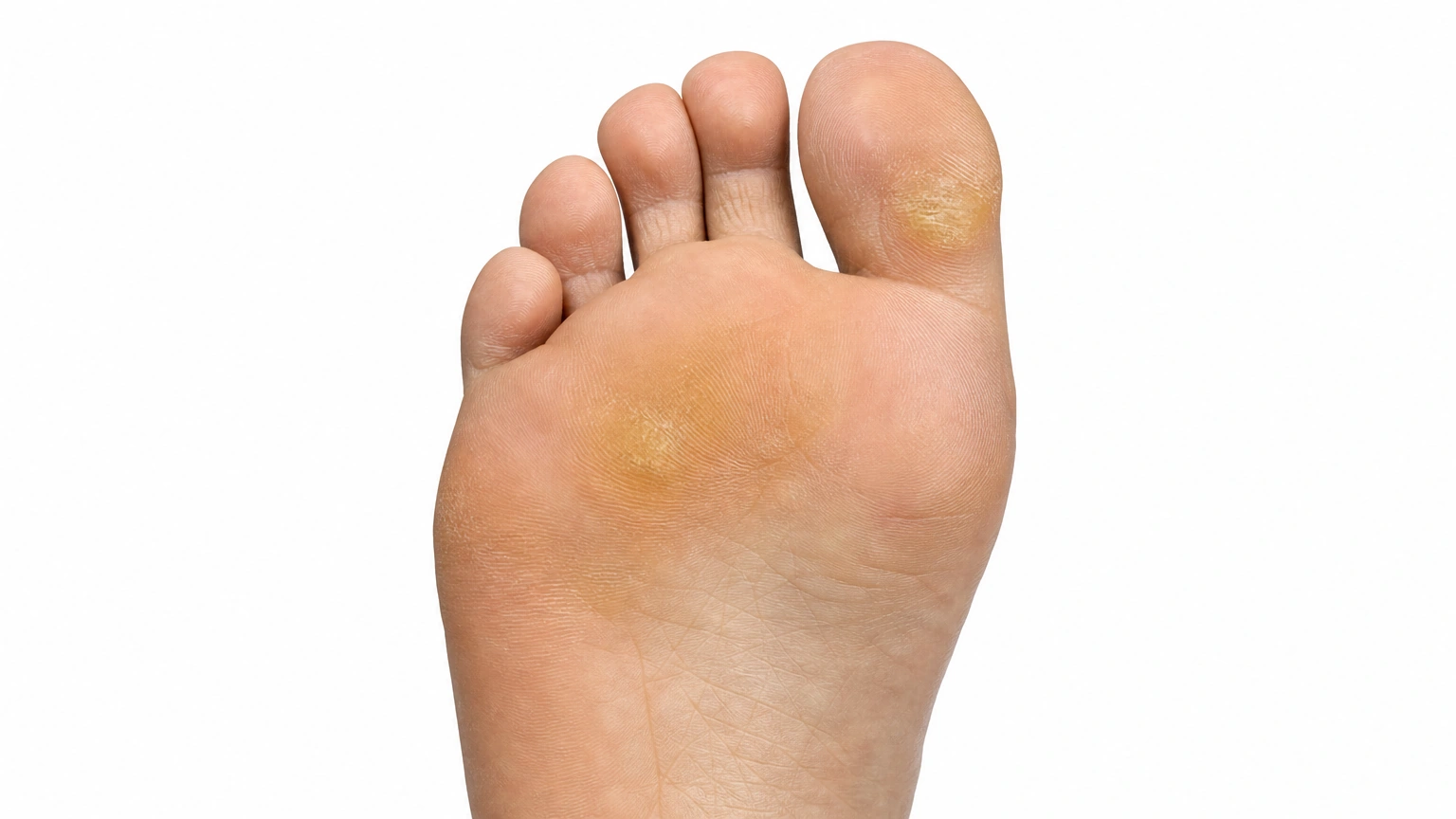
The underside of a foot with a large rough yellow patch below the toes.

Calluses A broad yellowish patch lies beneath the ball of the foot.

Skin tones
A thickened yellow-tan lump on the ball of the foot on fair light skin, with a faint pink ring around it and several tiny black dots in the middle.
A thickened tan-gray lump on the ball of the foot on medium olive-tan skin. The pink ring is faint, the black dots are small, and the fine skin lines of the sole stop at the edge of the lump.
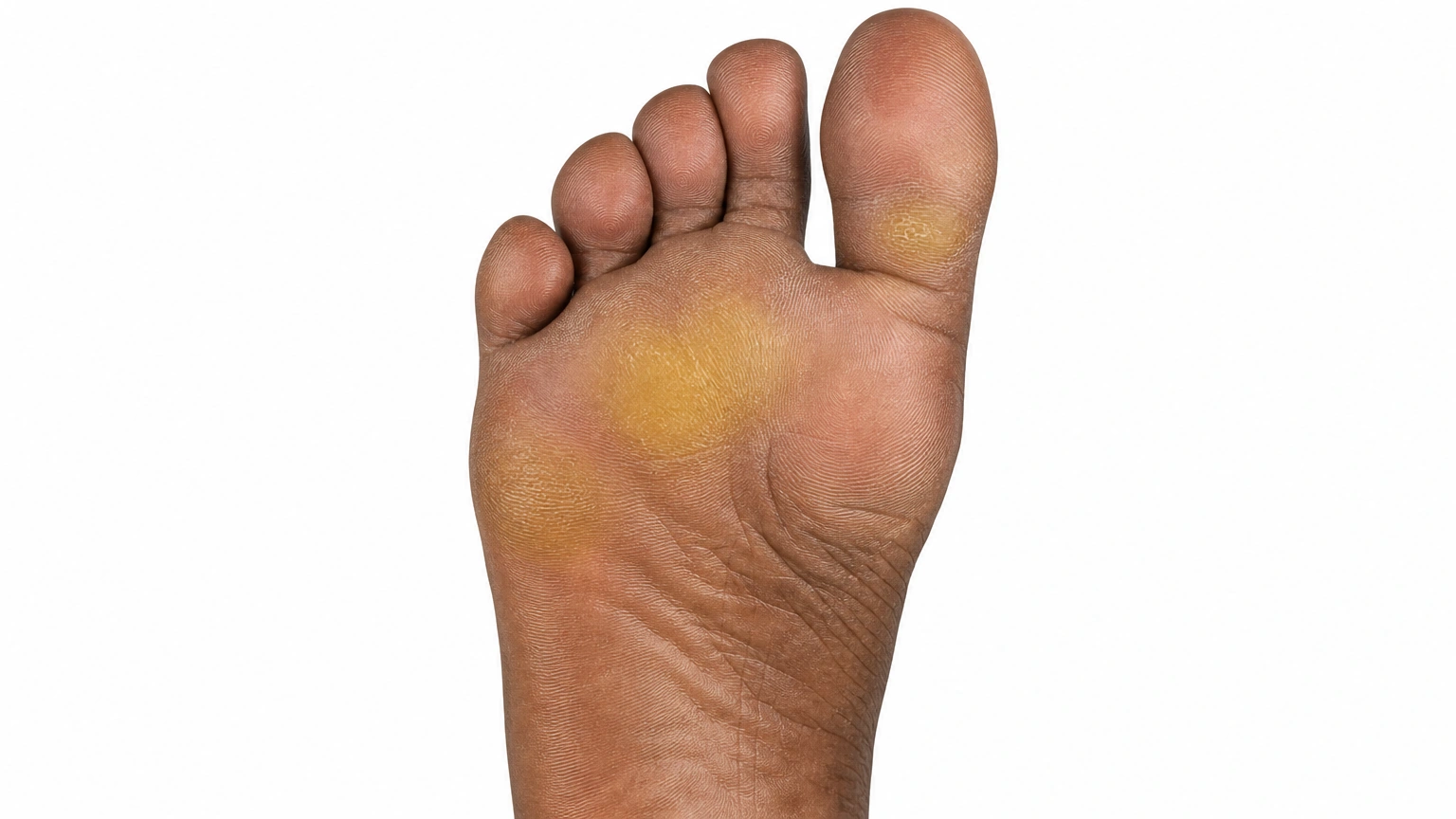
A thickened gray-brown lump on the ball of the foot on brown skin, only slightly different in color from the surrounding sole, with no visible ring of redness around it.
A thickened gray lump on the ball of the foot on deep dark brown skin, almost the same color as the sole around it, with the black dots barely visible.
Educational illustration of thickened pressure skin under the ball of a foot, with the sole facing the viewer and toes pointing up on light skin.
Educational illustration of thickened pressure skin under the ball of a foot, with the sole facing the viewer and toes pointing up on medium skin.
Educational illustration of thickened pressure skin under the ball of a foot, with the sole facing the viewer and toes pointing up on brown skin.
Educational illustration of thickened pressure skin under the ball of a foot, with the sole facing the viewer and toes pointing up on deep skin.
Diagram
Plantar Warts mechanism diagram. Pressure pushes the growth inward: Weight-bearing skin can develop a thick rim. HPV infects surface cells: The virus enters through tiny skin breaks. Tiny vessels may form dark dots: Capillary changes help create the speckled look.
In the skin

Human papillomavirus infects surface cells of the sole and causes a thickened growth. Pressure from walking can push the wart inward, while small blood vessels may appear as dark dots.

Repeated pressure or rubbing stimulates protective thickening of the outer skin. The thickened area can become dry and less flexible, sometimes leading to cracks.

When it usually starts

010203040506070+

Plantar Warts. Common in children and teenagers, although adults can develop them too.

Calluses. Can occur at any age with repeated mechanical stress.

Causes and triggers

Causes

Plantar warts are caused by the human papillomavirus. It enters the skin of the sole through tiny cuts or cracks.

Repeated pressure or rubbing injures the skin or stimulates protective thickening.

Risk factors
Children and teens, Weakened immunity, Past warts
Poorly fitting shoes, Repeated friction, Foot deformity
How it spreads
  • Barefoot on shared floors — Well established
  • Cracked or broken skin on the feet — Strong link
  • Picking or shaving a wart — Strong link
Trigger
● Plantar Warts
● Calluses
Pressure
Not listed
Can contribute
Friction
Not listed
Can contribute

Daily Care

Plantar Warts
Calluses
Daily care

Habits that help

  • Covering the wart during the day
    Stops spread and stops you picking.
  • A padded ring or offloading insole
    Cushion the area to reduce pressure while walking; padding does not treat the wart.
  • Dry feet
    Changed socks, rotated shoes, flip-flops in shared showers.
  • Follow the specific wart-treatment instructions and protect surrounding skin
    The wrong order is why treatment stalls.
  • Follow safe filing instructions for wart treatment; avoid injured or high-risk feet
    Use only gentle removal of dead surface skin when advised; never cut or file to pain or bleeding. High-risk feet need professional advice.
  • Paring in clinic
    A blade shaves the callus down painlessly.
  • Immune-based treatments
    Imiquimod and candida antigen recruit the immune system.
  • Treat athlete's foot and cracked heels
    Intact skin is much harder to infect.
  • Allow the treatment-specific course and review if it is not helping
    The required course varies by treatment. Stop for injury and get advice if the diagnosis is uncertain or the foot is high risk.
  • Review immune-suppressing medicines with the prescriber; do not stop them yourself
    Immune suppression can affect infection persistence. Tell the treating clinician and do not stop a prescribed medicine on your own.
  • Follow safe wart preparation advice; do not file to pain or bleeding
    Use only gentle removal of dead surface skin when the product recommends it. Never file to live, painful or bleeding skin. Do not share files; get advice for diabetes, poor circulation or reduced sensation.
  • Follow label advice for gentle dead-skin removal; never file to bleeding
    Preparation depends on the treatment. Never pare a wart with a blade at home or remove live skin.

Avoid

  • Avoid: Going barefoot in shared showers and gyms
    Where most start.
  • Avoid: Feet that stay damp all day
    Sweat softens the skin until it stops sealing.
  • Avoid: Picking at the wart
    Moves virus to your fingers and the rest of the foot.
  • Avoid: Sharing foot tools and linen
    A file carries virus to the next thing it touches.
  • Avoid: Walking on the side of the foot
    Loads the knee and hip, does nothing.
  • Avoid: Cutting or digging at it at home
    There is no root, so it leaves a wound.
  • Avoid: Stopping as soon as the pain goes
    Pain settles before the virus is gone.
  • Avoid: Broken skin on the feet
    Athlete's foot and cracked heels are the way in.

Habits that help

  • Reduce pressure with well-fitting shoes or task-appropriate gloves
    Address the rubbing that caused the thick skin.
  • Use a plain cushioning pad if it improves comfort
    Padding should redistribute pressure without squeezing the area.
  • Moisturize dry thickened skin regularly
    A plain cream or clinician-recommended foot product may soften the surface.
  • Ask for foot-care advice if the area stays painful
    Diabetes, poor circulation or reduced sensation makes professional care particularly important.
  • Discuss podiatry assessment
    A clinician can confirm the diagnosis, reduce thick skin safely and address footwear or deformity.

Avoid

  • Avoid: Cutting thick skin with blades or scissors
    A small cut can become an ulcer or infection.
  • Avoid: Medicated corn acids on broken or high-risk skin
    Seek advice before using them if you have diabetes, poor circulation or uncertain diagnosis.

Treatment differences

Evidence labels come from each condition’s own treatment list.

Treatment
● Plantar Warts
● Calluses
Treatment approach
—

Address pressure and friction through suitable footwear or other protection. Professional reduction may help troublesome thick skin; avoid blades and seek advice before acids on high-risk feet.

Over-the-counter
Existing illustration of Home cautery pens and freeze-off kits.

Home freezing kits

Limited evidence

The sprays sold in pharmacies do not get as cold as the liquid nitrogen used in clinic, and on the sole they usually cannot get through the callus at all. They are more useful on hands than on feet. If you try one, file the surface down first and do not use it on a foot with reduced feeling.
Existing Dermapedia illustration of duct tape.

Duct tape

Limited evidence

Covering the wart with tape between treatments is cheap and harmless, and the trials of it are mixed at best. It keeps the surface soft and stops picking, which may be most of the benefit. Reasonable to add, especially for a child, but not a replacement for acid and filing.

Paula's Choice 2% BHA exfoliant, La Roche-Posay Effaclar cleanser and a CeraVe psoriasis cream pump

Salicylic Acid

Strong evidence

The best-evidenced treatment you can buy, and for the sole it is used at foot strength, far higher than the acne version. The order matters: soak the foot, file the surface, apply, cover. Applied to an unfiled callus it never reaches the infected skin, which is the usual reason it seems not to work. Twelve weeks of nightly use is a fair trial.

None listed
Prescription topicals

Fluorouracil

Limited evidence

5-fluorouracil cream. A chemotherapy cream used at low strength, applied under tape to a wart that has not responded to salicylic acid. It kills the rapidly dividing infected cells. It stings, it needs the callus filed down to work, and it is avoided in pregnancy.

Illustration: Generic topical cream tube and white cream.

Imiquimod

Limited evidence

Imiquimod cream. This one works by asking the immune system to notice the infection rather than by destroying the wart, which is the step the foot is stuck on. Most of its evidence is in warts elsewhere, and on the thick skin of the sole it is usually combined with filing or with salicylic acid. Expect redness and soreness while it is working.

Urea Cream

Limited evidence

Urea 40% cream. Not a wart treatment. It dissolves hard callus, so it is used under a dressing to thin the pad over a wart that is too thick to file comfortably, and to treat the cracked heels that let the virus in. It makes the other treatments reach further.

None listed
Prescription pills
An illustrative bottle labeled Cimetidine beside plain tablets.

Cimetidine

Limited evidence

Cimetidine tablets. A stomach medicine that also nudges the immune system, sometimes tried in children with many warts because it is easy to take and well tolerated. Controlled trials have not shown it beats a dummy tablet. It is a reasonable add-on if you want to try something painless, not a treatment to rely on.

None listed
Injections
Editorial illustration for Candida Antigen Injection, based on the entry’s treatment or equipment reference.

Candida Antigen Injection

Limited evidence

Candida antigen injections. A small amount of a yeast protein is injected into the wart to make the immune system react in that spot and, in doing so, recognize the virus. It is one of the better options for stubborn or multiple foot warts, and warts elsewhere sometimes clear at the same time. It takes a course of injections a few weeks apart, and it aches for a day or two afterwards.

Bleomycin Injection

Bleomycin Injection

Limited evidence

Bleomycin injections. A chemotherapy drug injected directly into a wart that has failed everything else, usually a deep single one on the sole. Clearance rates are good. It is painful, the area turns black and forms a crust, and it is kept for stubborn cases in specialist hands. It is not used in pregnancy.

None listed
Procedures
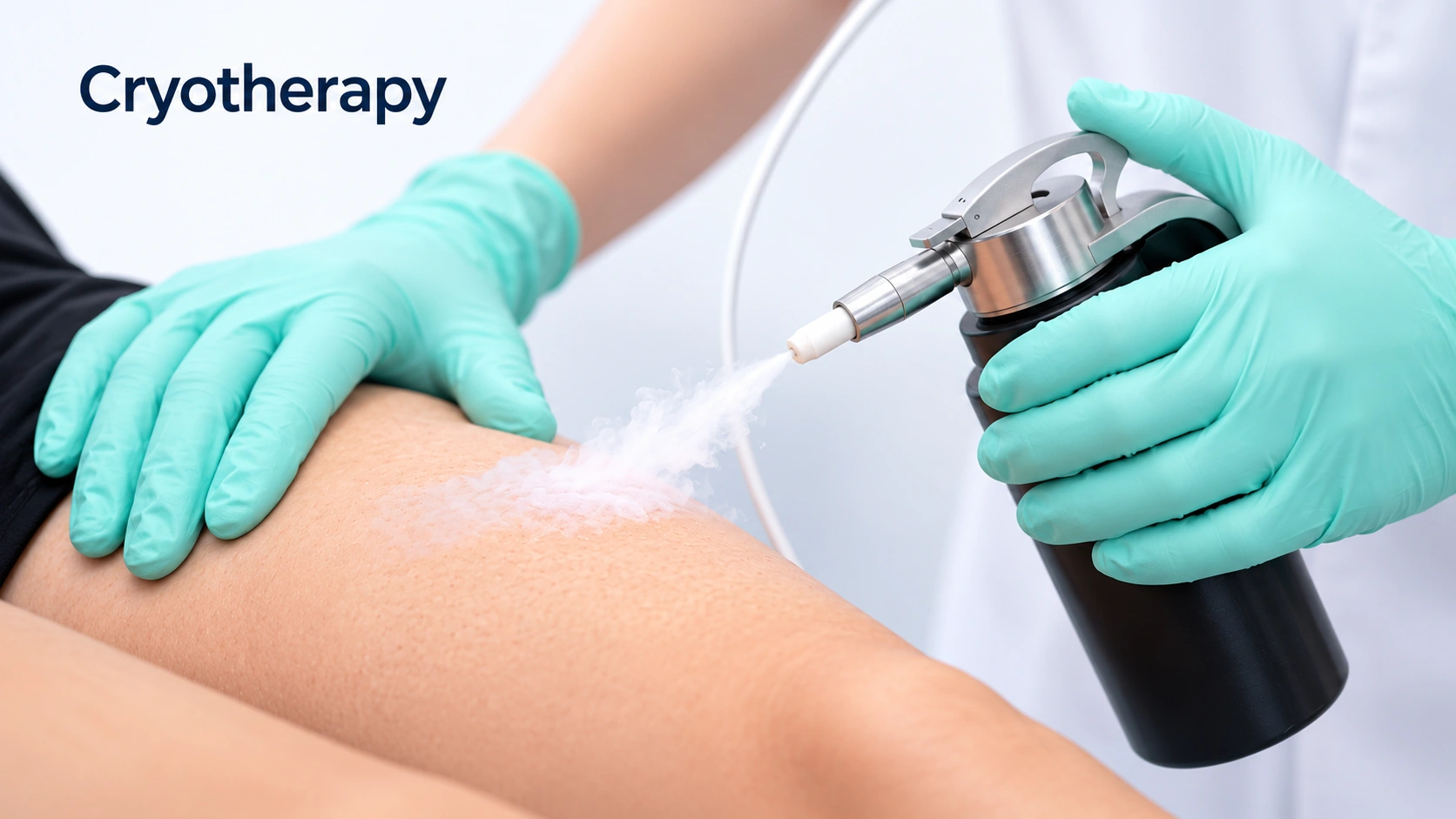
Editorial illustration for Cryotherapy, based on the entry’s treatment or equipment reference.

Cryotherapy

Moderate evidence

Freezing in clinic, repeated every two to three weeks. Over several months the results are broadly similar to salicylic acid used properly, so it is one reasonable option rather than the top of a ladder. On the sole it is more painful than elsewhere, walking is sore for a day or two, and it works far better if the callus is pared first.

Paring

Limited evidence

Paring the callus in clinic. Shaving the dead top layer off with a sterile blade. It does not hurt, because that layer has no nerve supply. It confirms the diagnosis by revealing the black dots, it takes the pain away on the day by removing the hard pad, and it lets every other treatment reach the wart. Most visits for a plantar wart start here.

Editorial illustration for Cantharidin, based on the entry’s treatment or equipment reference.

Cantharidin

Limited evidence

A blistering liquid painted on in clinic and washed off a few hours later, which lifts the wart away from the skin beneath. It is painless to apply, which makes it a common choice for children. The blister that follows can be sore to walk on for a few days, and on the thick skin of the sole it often needs repeating.

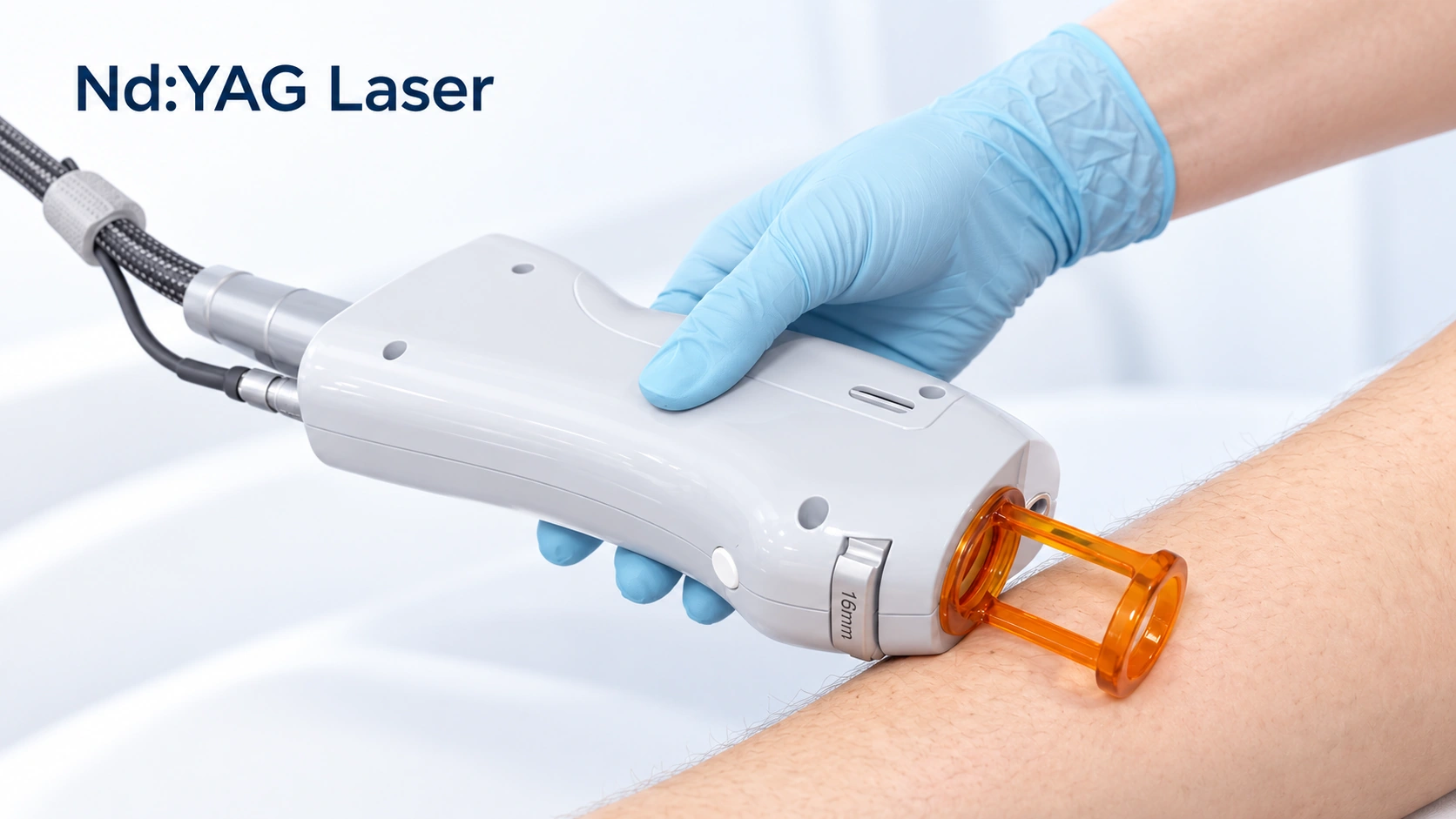
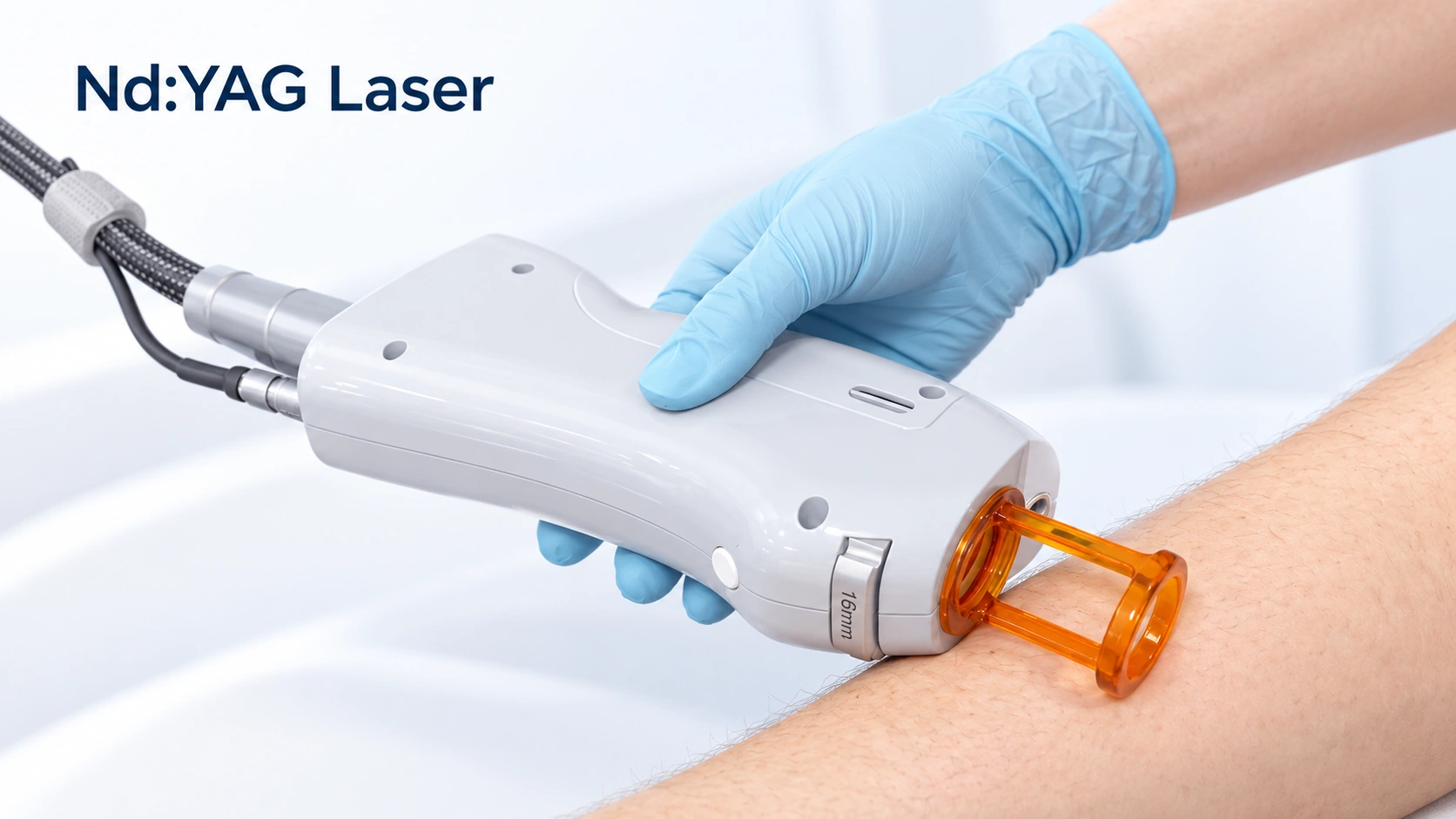
Editorial illustration for Nd:YAG Laser, based on the entry’s treatment or equipment reference.

Nd:YAG Laser

Limited evidence

A laser that heats the blood vessels feeding the wart and cuts off its supply, used for foot warts that have failed simpler treatments. It reaches deeper than freezing does. It is done with local anesthetic, it is sore for several days afterwards, and it usually takes more than one session.

Editorial illustration for Electrodesiccation and Curettage, based on the entry’s treatment or equipment reference.

Electrodesiccation and Curettage

Limited evidence

Burning and scraping the wart out under local anesthetic. It clears the visible wart in one go, which is why people ask for it. On the sole it leaves a wound that takes weeks to heal and can leave a scar you then walk on, and the wart can still return, so it is a late option rather than an early one.

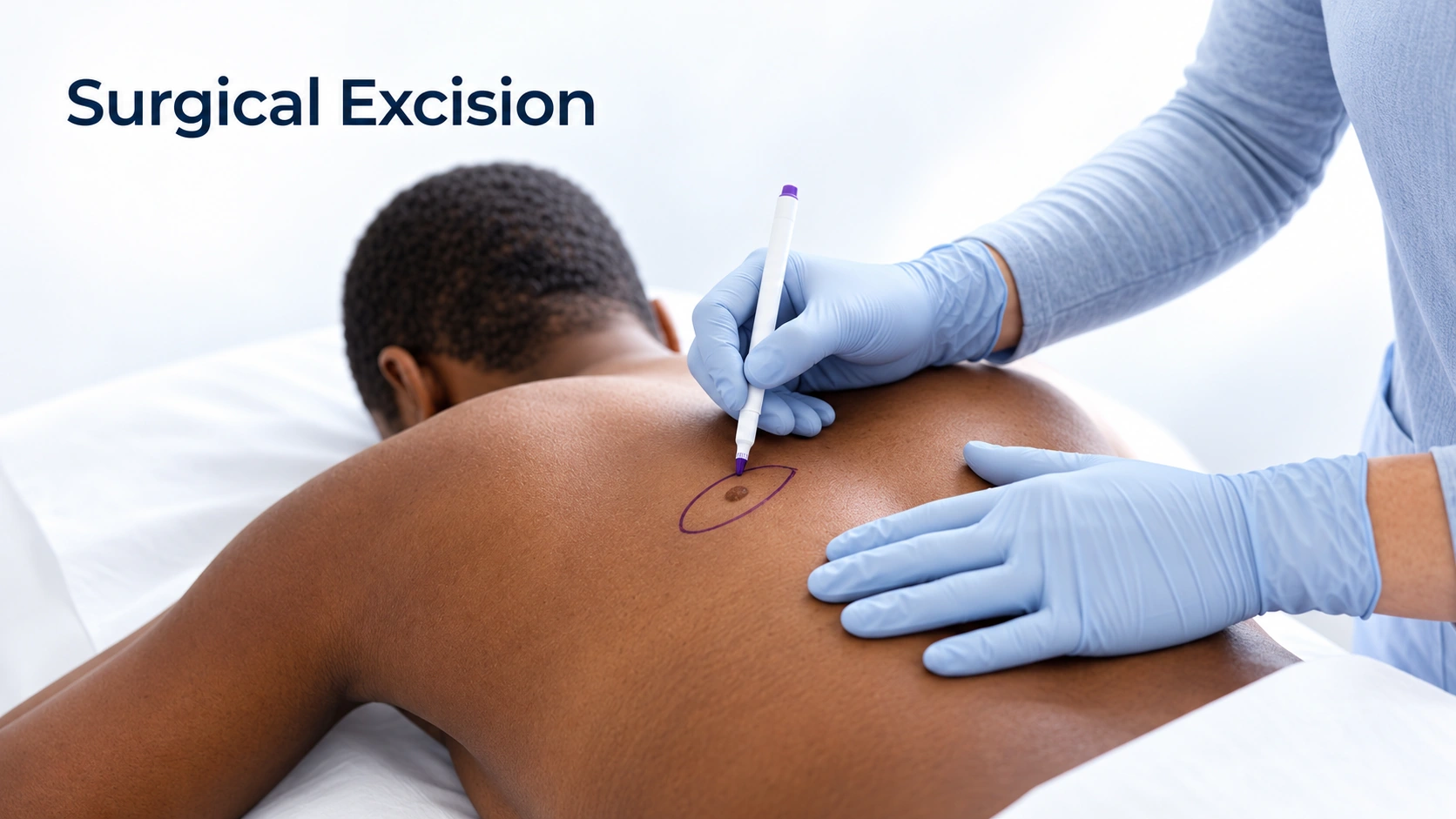
Editorial illustration for Surgical Excision, based on the entry’s treatment or equipment reference.

Surgical Excision

Limited evidence

Cutting a plantar wart out is generally avoided. There is no root to remove, so surgery takes healthy tissue with it, and it leaves a scar on a weight-bearing surface that can hurt more than the wart did. Recurrence around the scar is common. It is used for a growth that needs sending to the laboratory, not to get rid of an ordinary wart.

None listed

Outlook

Long term

Plantar warts do clear on their own, but slowly. In children most go within about two years untreated. In adults it takes longer and is less predictable, and warts sitting for years are the least likely to go.

Calluses can lessen when repeated pressure is reduced, but often return if the cause remains. Diabetes, reduced sensation or poor circulation makes professional foot care particularly important.

Complications

Possible complications
  • It spreads across the foot
  • An ulcer in a foot that is numb
  • Walking differently to avoid it
More details

It spreads across the foot
One wart often seeds the skin around it over months, and several small ones can merge into one flat plaque, called a mosaic wart. Once that happens the whole area is harder to treat than the single spot would have been. Keeping it covered, not picking at it, and not sharing files or pumice stones is most of the prevention.

An ulcer in a foot that is numb
Acid and blades on a foot that does not register pain normally can burn through more skin than intended and leave an open sore that is slow to heal. That is a far bigger problem than the wart was. If you have diabetes, nerve damage in the feet, poor circulation in the legs or any reduced feeling, this is treated by a clinician and not at home.

Walking differently to avoid it
A wart under a weight-bearing area hurts with every step, and people quietly shift their weight to the side of the foot to keep off it. Months of walking that way causes aching in the other foot, the knee and the hip. Thinning the callus, or a padded ring that takes the weight off, usually fixes the walking long before the wart is gone.

Open cracks or blisters can become infected; diabetes or poor circulation requires extra care.

When to get help

When to get help

Get a painful or uncertain growth assessed. Seek advice before self-treatment if you have diabetes, poor circulation, reduced sensation or weakened immunity.

Seek care for infection, a painful open wound, diabetes, reduced sensation or poor circulation.

Common questions

Plantar Warts:How do I know it is a wart and not a callus?

Look at the fine skin lines. They run straight through a callus and curve around a wart. A wart hurts more pinched from the sides than pressed from above, and pared down it shows tiny black dots. Paring in clinic answers it in a minute.

Plantar Warts:Why does it hurt so much for something so small?

Because you stand on it. The foot lays thick callus over the wart, and that pad presses on sensitive skin with every step. Thinning it takes the pain away well before the wart is gone.

Plantar Warts:How long will this take?

Longer than you want. Plantar warts are the slowest to treat, and three months of nightly treatment is a fair trial, not a long one. Some take six months or more, and untreated ones last a year or two.

Plantar Warts:Can I still swim and go to the gym?

Yes. Cover the wart with a waterproof plaster, wear flip-flops in the changing room and shower, and dry your feet afterwards. No reason to stop training.

Plantar Warts:Will it spread to my family?

It can, mainly through shared shower floors, bath mats, towels and files. Keeping it covered, wearing something on your feet in shared bathrooms, and not sharing pumice stones covers most of it.

Plantar Warts:Can I cut it out myself?

No. There is no root to remove, so cutting takes out healthy tissue without removing all the virus and leaves an open wound on a surface you walk on. That invites infection and a scar, and the wart usually grows back. Paring is done in clinic with a sterile blade.

Calluses:What is Calluses?

Broad protective areas of thickened skin from repeated pressure or rubbing.

Calluses:What can I do day to day?

Reduce pressure and friction with suitable footwear. Do not cut skin with a blade.

Calluses:When should I get medical advice?

Seek care for infection, a painful open wound, diabetes, reduced sensation or poor circulation.

Sources

Sources and further reading

  1. DermNet
  2. Corn and callus
Dermapedia on YouTube