Primary Hyperhidrosis vs Night Sweats

Excessive sweating without an identified underlying disease or medicine cause. Sweating during sleep that is excessive for the room temperature and bedding.
Research updated 2026-10-23
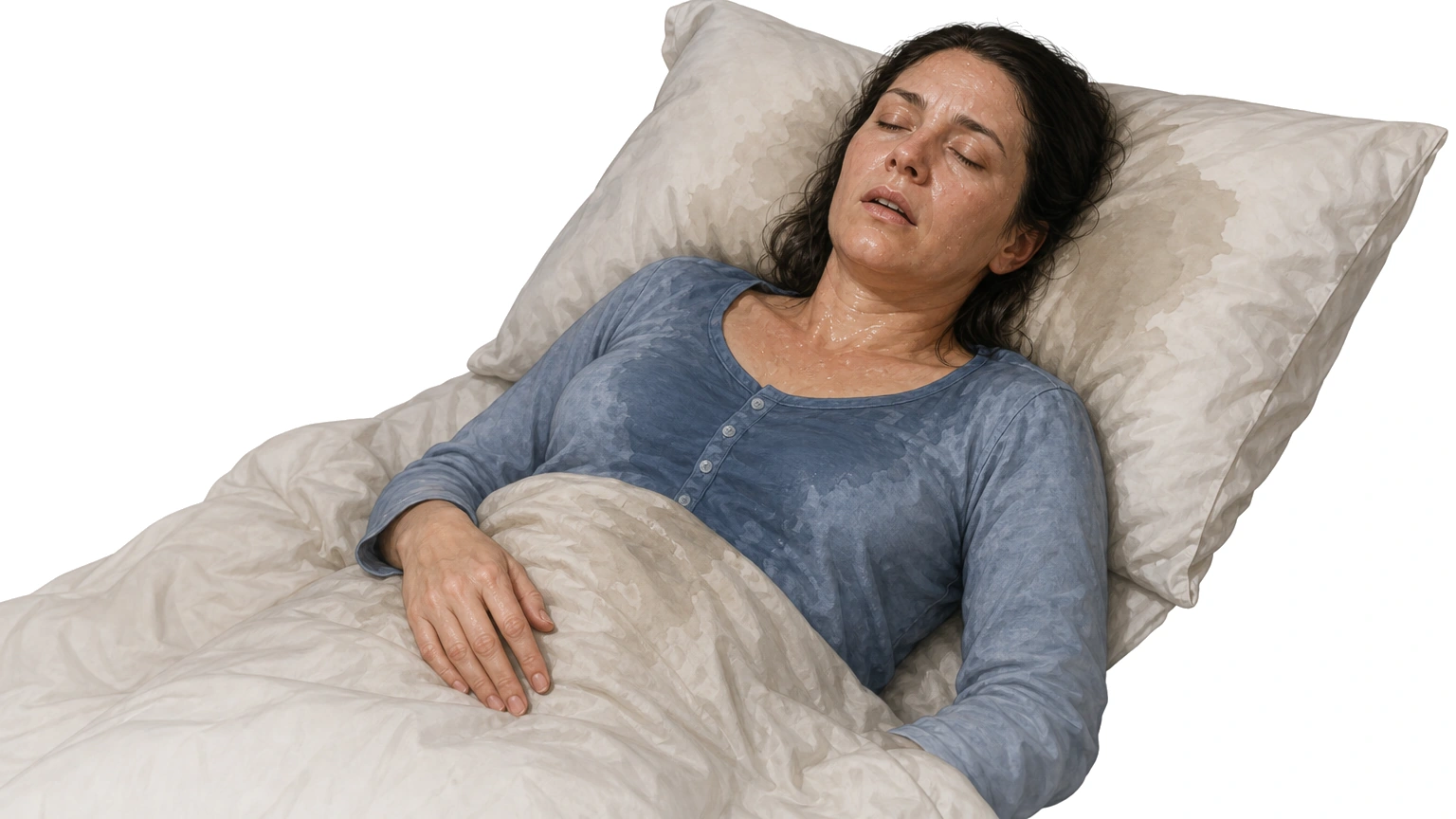
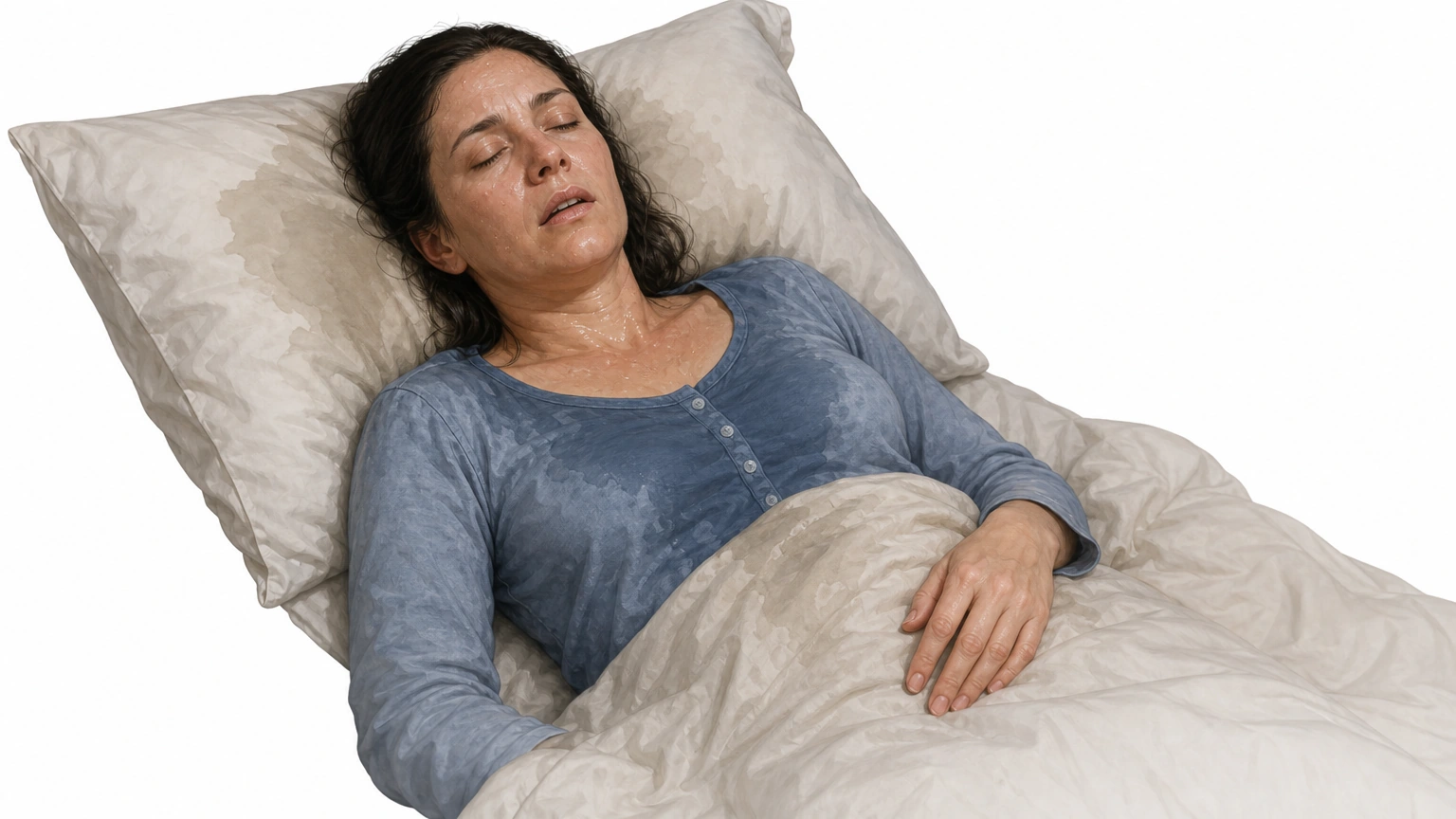
Primary HyperhidrosisAI-generated educational illustration: An adult in bed with perspiration and damp pajama fabric, representing night sweats.

Key differences

The same eight facts on every condition comparison.

Usual age
Childhood or teens
Any age
Where
Palms, soles, armpits, face
Whole body, during sleep
Main sign
Heavy sweating, both sides
Soaking sweat at night
Itch or pain
Neither
Neither
Contagious
No
No
Long term
Long-term
Depends on the cause
Scars
No
No
Who gets it
About 1 in 20; runs in families
Anyone; persistent cases need a check-up

What is it?

Primary Hyperhidrosis
Night Sweats
What is it?
  • What it is
    Excessive sweating without an identified underlying disease or medicine cause.
  • What it is
    Sweating during sleep that is excessive for the room temperature and bedding.

What it looks like

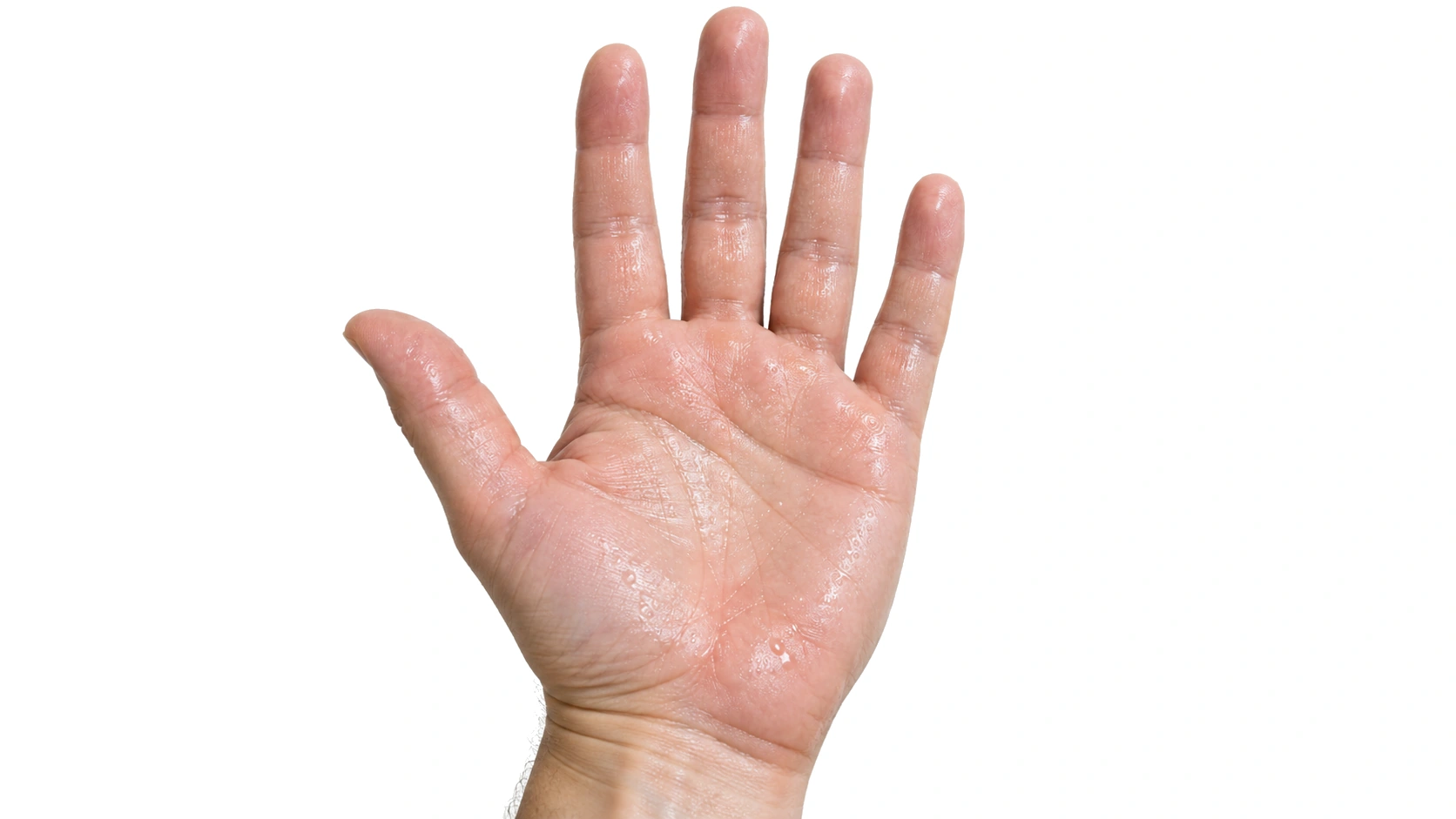
Primary Hyperhidrosis

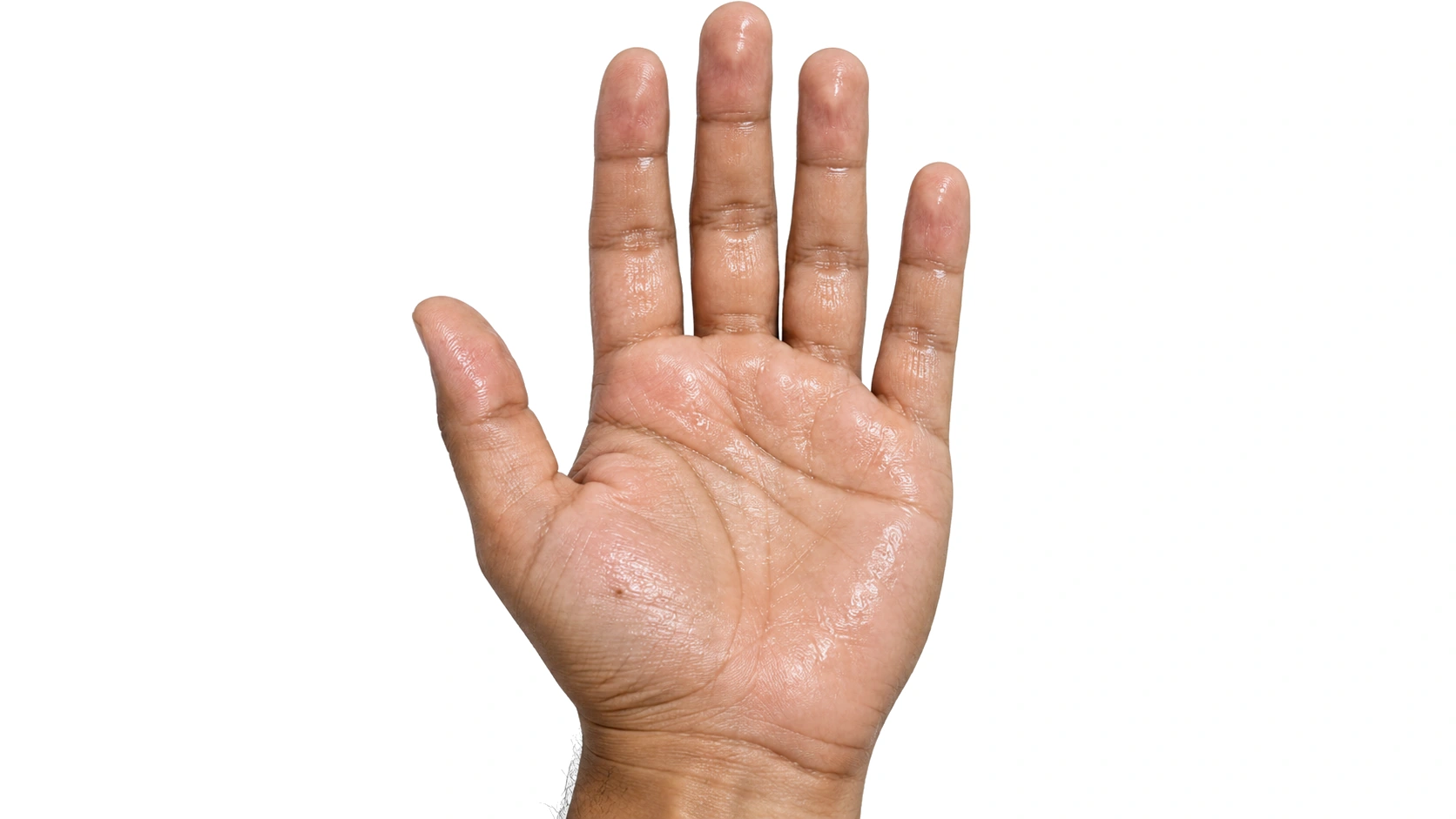
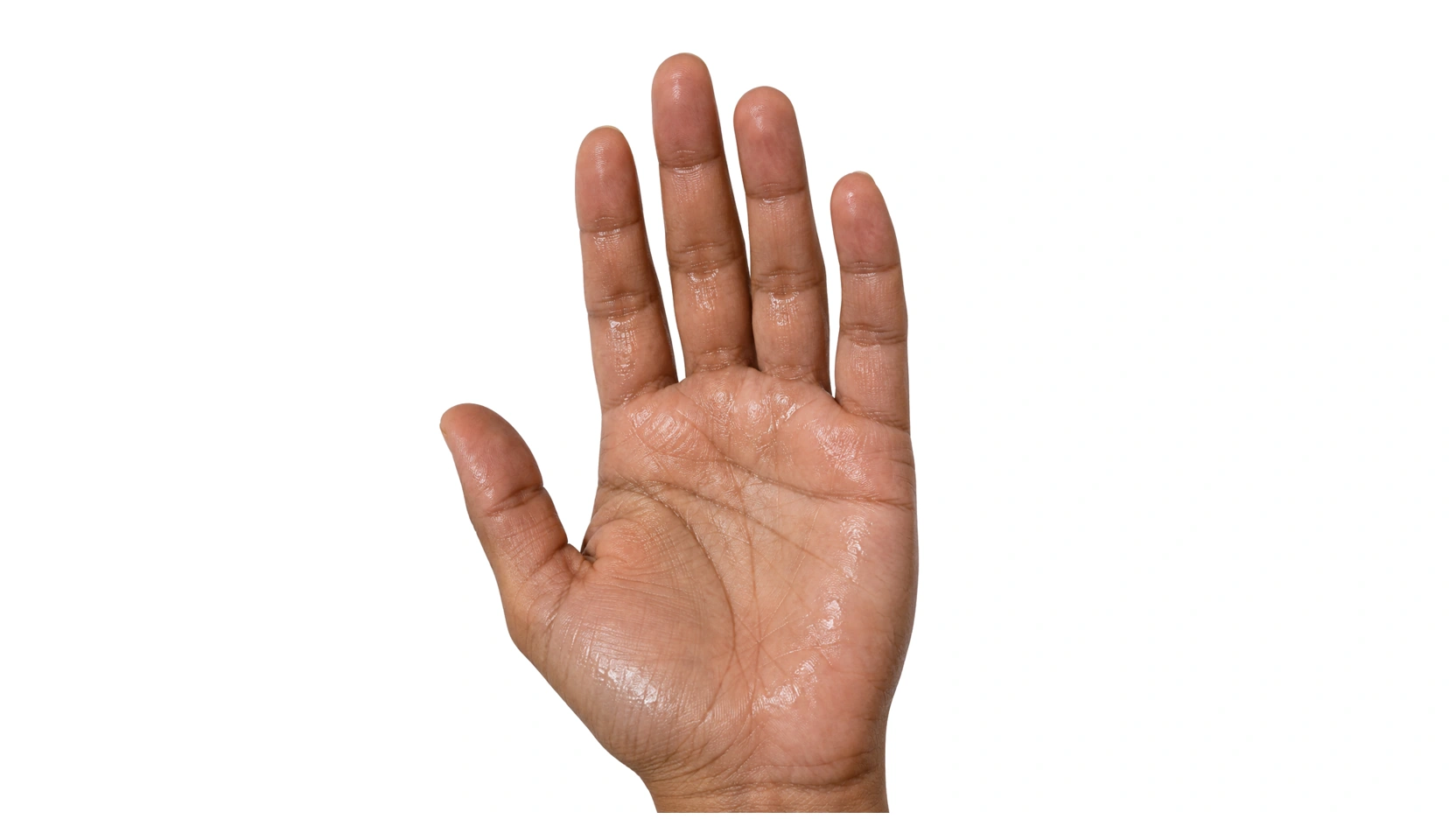
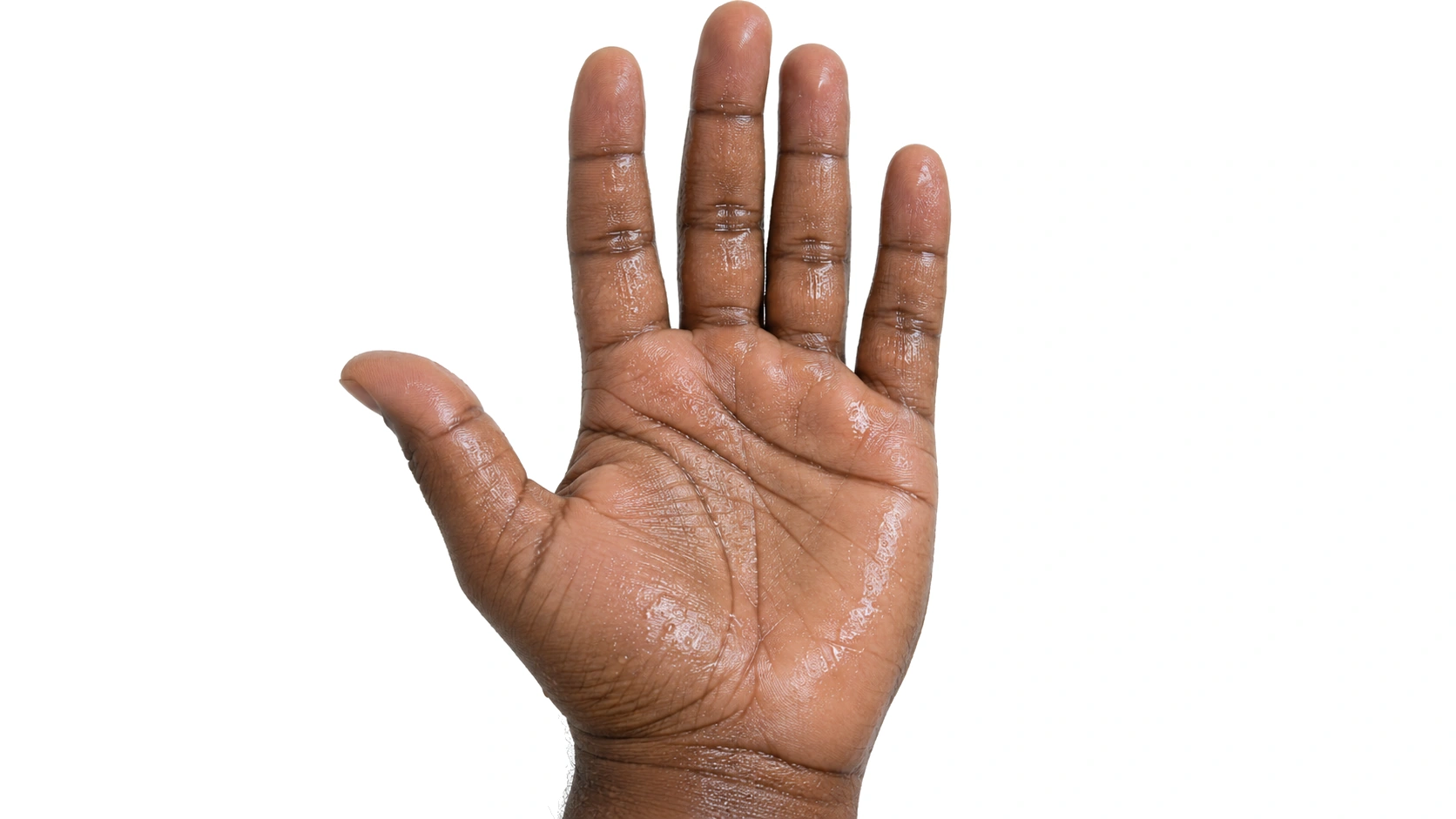
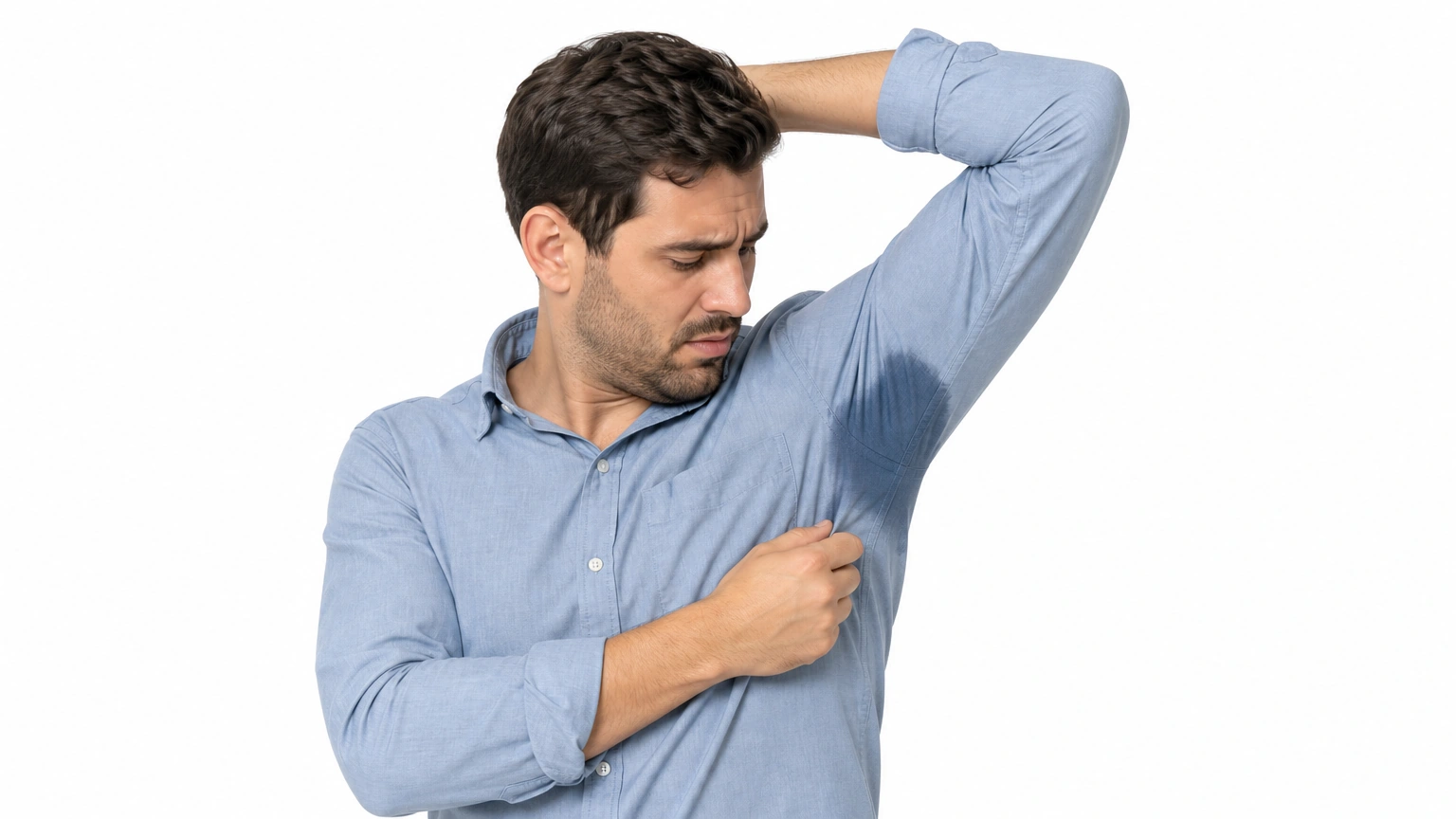
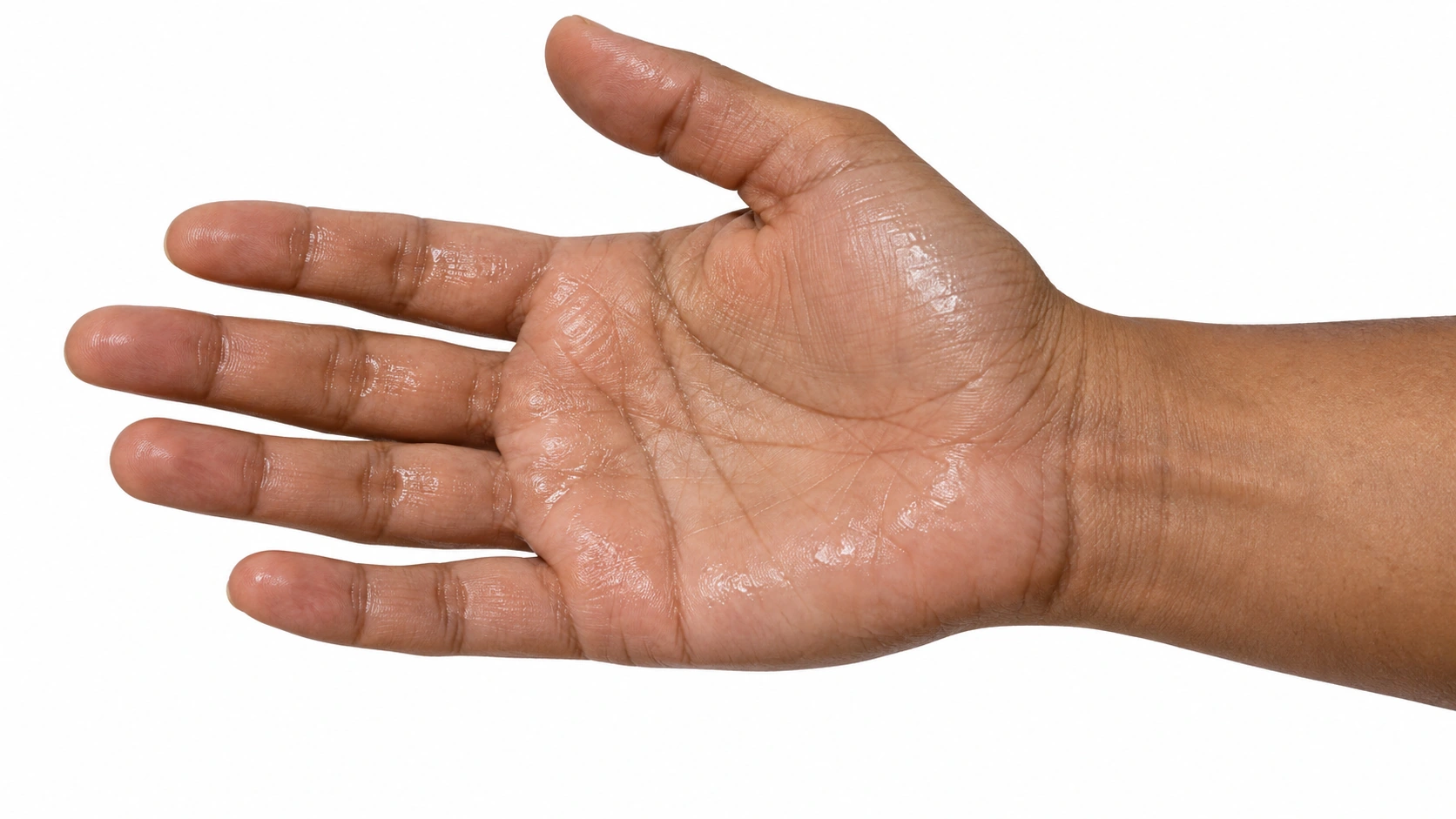
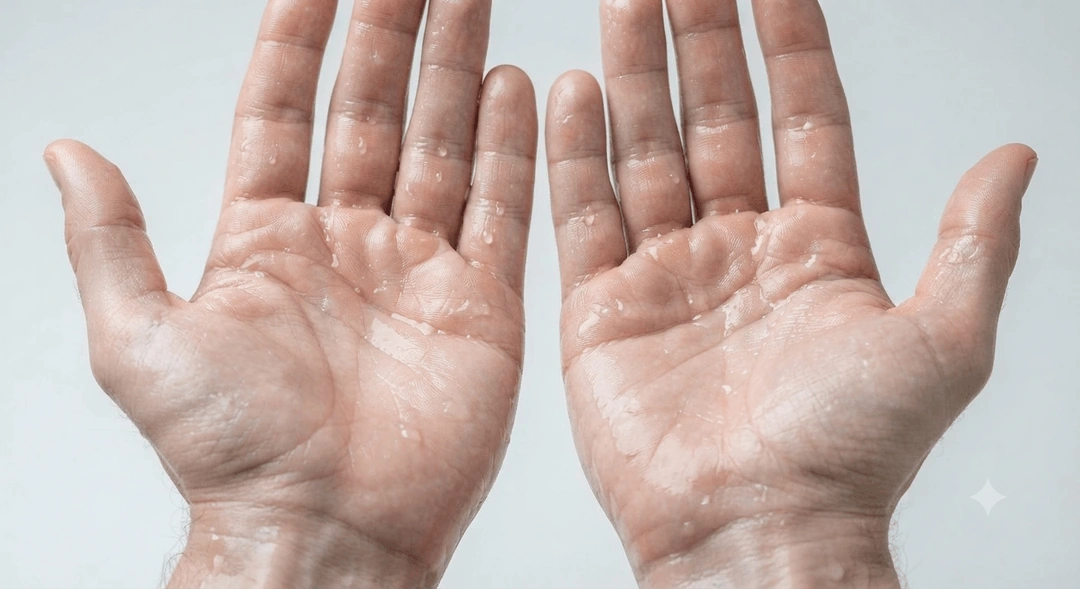
An open hand with beads of moisture across the palm and fingers.

Primary Hyperhidrosis The palm and fingers have a wet, shiny surface.

Night Sweats

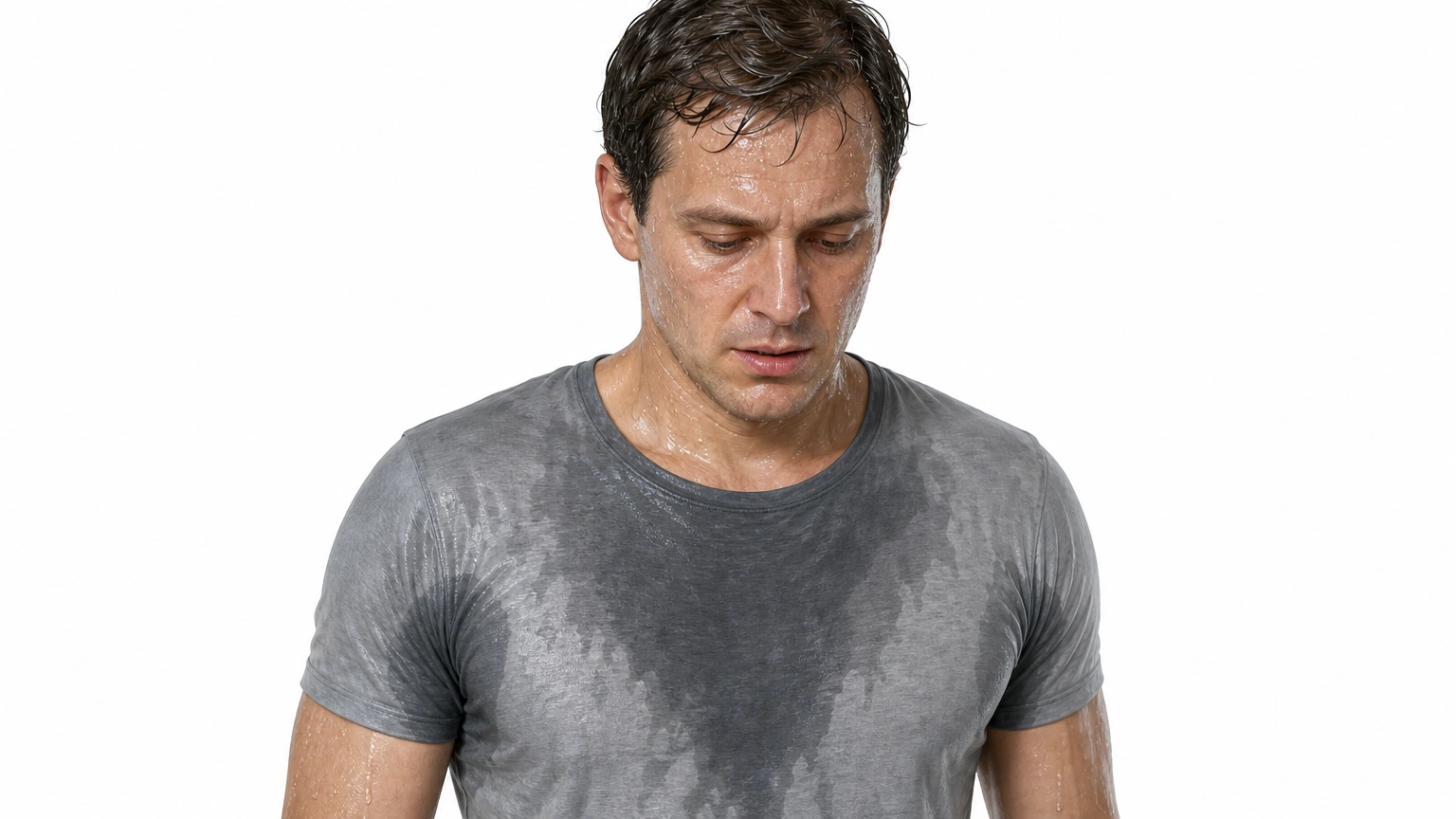
A person lying in bed with a damp shirt and moisture visible on the face.

Night Sweats The scene shows damp clothing and bedding during a night in bed.
Skin tones
Primary Hyperhidrosis.
A person resting in bed with damp clothing and bedding.
In the skin

Nerve signals stimulate sweat glands more strongly than cooling requires. The glands produce excess sweat even when the body does not need to lose heat.

Temperature regulation, hormones, medicines or illness can increase sweat-gland activity during sleep. The sweating reflects a response with several possible causes rather than one specific skin disease.

When it usually starts

010203040506070+

Primary Hyperhidrosis. Usually begins in childhood or adolescence; typical primary focal sweating often stops during sleep.

Night Sweats. Can occur at any age; persistent unexplained episodes warrant assessment.

Causes and triggers

Causes

Sweat-gland activity is over-responsive rather than simply a hygiene problem.

Temperature, hormonal changes, medicines, infections or other conditions can alter nighttime sweating.

Risk factors
Family tendency
Hot sleep environment, Medicines, Hormonal or systemic causes
Trigger
● Primary Hyperhidrosis
● Night Sweats
Heat
Can contribute
Not listed
Emotional stress
Can contribute
Not listed
Overheating
Not listed
Can contribute
Underlying illness
Not listed
Can contribute
Medicine exposure
Not listed
Can contribute

Daily Care

Primary Hyperhidrosis
Night Sweats
Daily care

Habits that help

  • Choose breathable clothing and change damp garments
    Spare layers can improve comfort and reduce prolonged skin wetness.
  • Change damp socks and let shoes dry between wears
    Moisture held against the feet encourages maceration and fungal infection.
  • Keep the sleeping or working space comfortably cool
    Use lighter bedding or a fan if heat worsens symptoms.
  • Track when sweating happens and any new medicines
    A short record helps distinguish triggers from symptoms needing investigation.
  • Apply antiperspirant according to its label or your clinician’s plan
    Many stronger products work best on completely dry, unbroken skin; reduce use and seek advice if irritation occurs.

Avoid

  • Avoid: Abruptly stopping prescribed medicines
    Discuss suspected medicine-related sweating with the prescriber.
  • Avoid: Ignoring new unexplained or drenching sweats
    Sweating with fever, weight loss or other illness needs medical assessment.

Habits that help

  • Choose breathable clothing and change damp garments
    Spare layers can improve comfort and reduce prolonged skin wetness.
  • Change damp socks and let shoes dry between wears
    Moisture held against the feet encourages maceration and fungal infection.
  • Keep the sleeping or working space comfortably cool
    Use lighter bedding or a fan if heat worsens symptoms.
  • Track when sweating happens and any new medicines
    A short record helps distinguish triggers from symptoms needing investigation.
  • Discuss underlying-cause assessment
    Review medicines and associated symptoms; treatment targets the cause rather than assuming primary hyperhidrosis.

Avoid

  • Avoid: Abruptly stopping prescribed medicines
    Discuss suspected medicine-related sweating with the prescriber.
  • Avoid: Ignoring new unexplained or drenching sweats
    Sweating with fever, weight loss or other illness needs medical assessment.

Treatment differences

Evidence labels come from each condition’s own treatment list.

Treatment
● Primary Hyperhidrosis
● Night Sweats
Treatment approach
—

Treatment depends on the underlying cause. Review associated symptoms and medicines with a clinician; do not assume night sweats should be treated as primary hyperhidrosis.

Over-the-counter

Aluminum antiperspirant

Listed

Often used on completely dry skin; follow the label and reduce use if irritated.

None listed

Outlook

Long term

Primary hyperhidrosis can continue for years, although it may ease with age. Treatments usually control sweating rather than permanently remove the tendency, and maintenance may be needed.

The outlook depends on the cause rather than the amount of sweating alone. New drenching sweats, especially with fever, weight loss or enlarged glands, need medical assessment.

Complications

Possible complications

Sweating can affect daily activities and increase local skin irritation.

Drenching sweats with unexplained fever, weight loss or enlarged nodes need investigation.

When to get help

When to get help

Seek assessment for a new adult onset, generalised pattern, night sweats or other symptoms.

Arrange care for persistent or recurrent drenching sweating or associated systemic symptoms.

Common questions

Primary Hyperhidrosis:What is Primary Hyperhidrosis?

Excessive sweating without an identified underlying disease or medicine cause.

Primary Hyperhidrosis:What can I do day to day?

Wear breathable clothing, change damp garments and keep a record of symptoms and medicines.

Primary Hyperhidrosis:When should I get medical advice?

Seek assessment for a new adult onset, generalised pattern, night sweats or other symptoms.

Night Sweats:What is Night Sweats?

Sweating during sleep that is excessive for the room temperature and bedding.

Night Sweats:What can I do day to day?

Wear breathable clothing, change damp garments and keep a record of symptoms and medicines.

Night Sweats:When should I get medical advice?

Arrange care for persistent or recurrent drenching sweating or associated systemic symptoms.

Sources
Sources and further reading

  1. Hyperhidrosis
  2. Hyperhidrosis
Dermapedia on YouTube