Dry Scalp vs Product Buildup
A descriptive term for a dry or flaky scalp; eczema, dandruff and product irritation can look similar. Residue from scalp or hair products that can resemble dandruff.
Key differences
The same eight facts on every condition comparison.
What is it?
- What it is
A descriptive term for a dry or flaky scalp; eczema, dandruff and product irritation can look similar.
- What it is
Residue from scalp or hair products that can resemble dandruff.
What it looks like
Dry Scalp
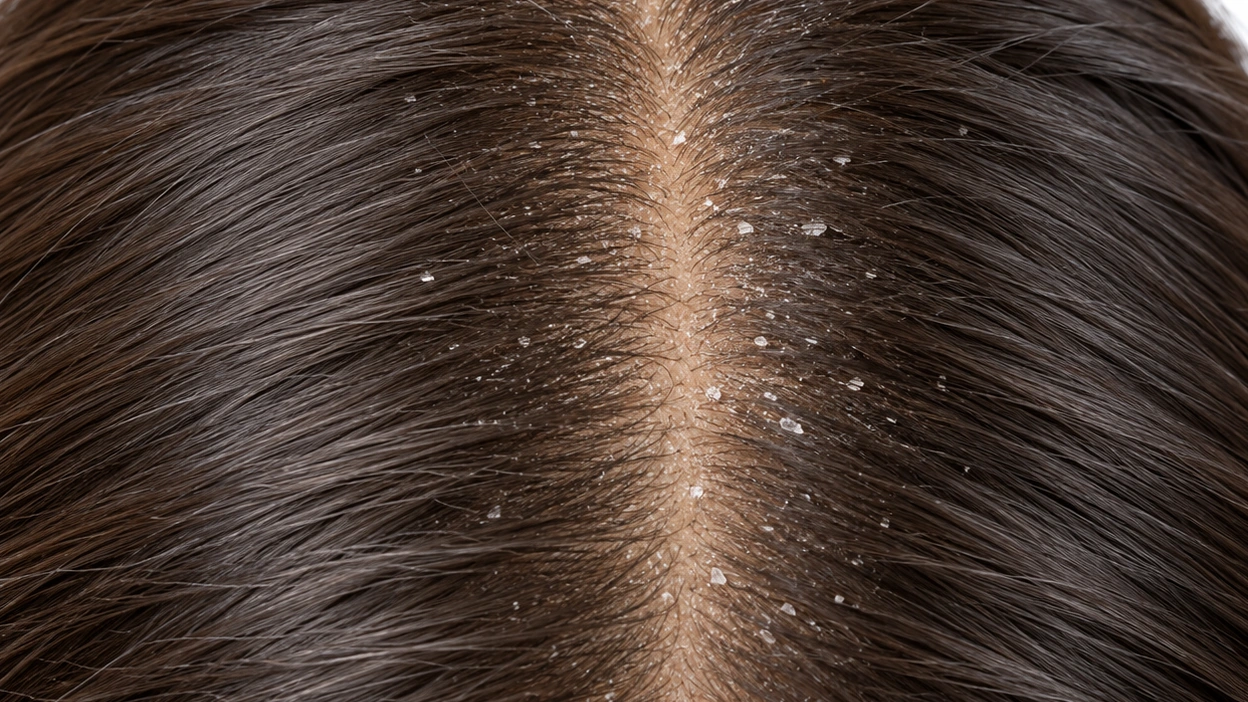
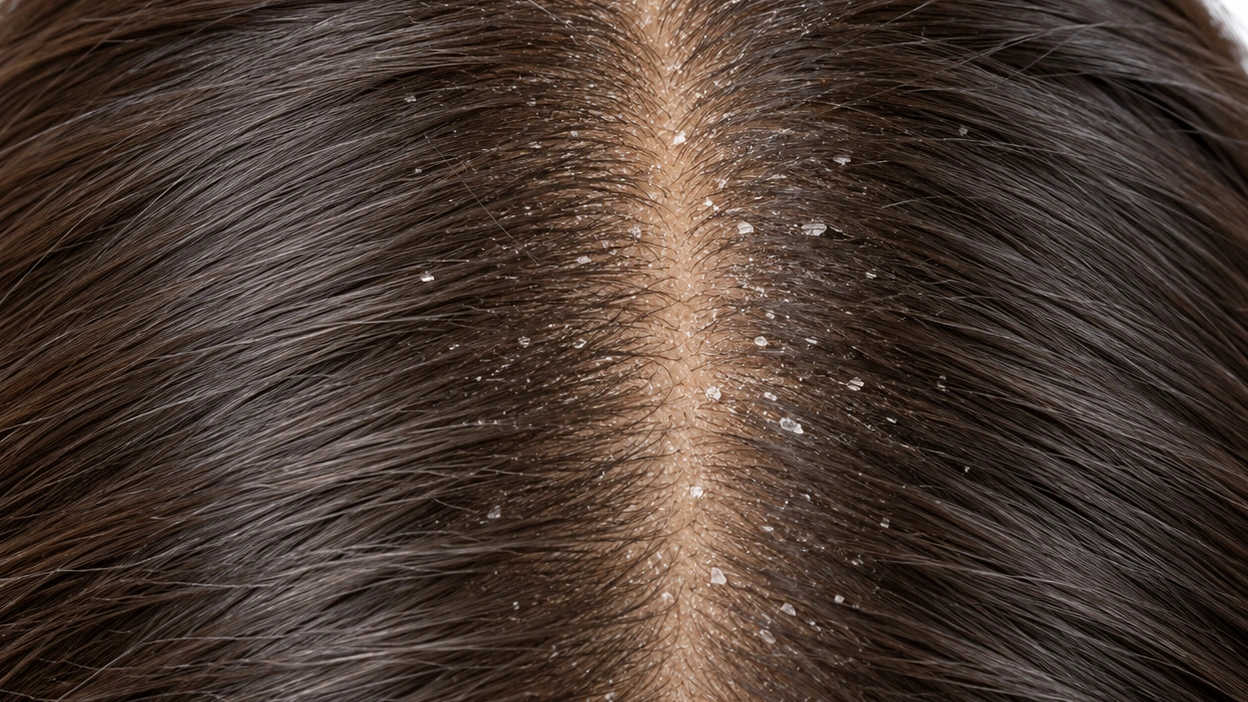
Dry Scalp Small pale flakes sit on the exposed scalp and nearby hairs.
Product Buildup
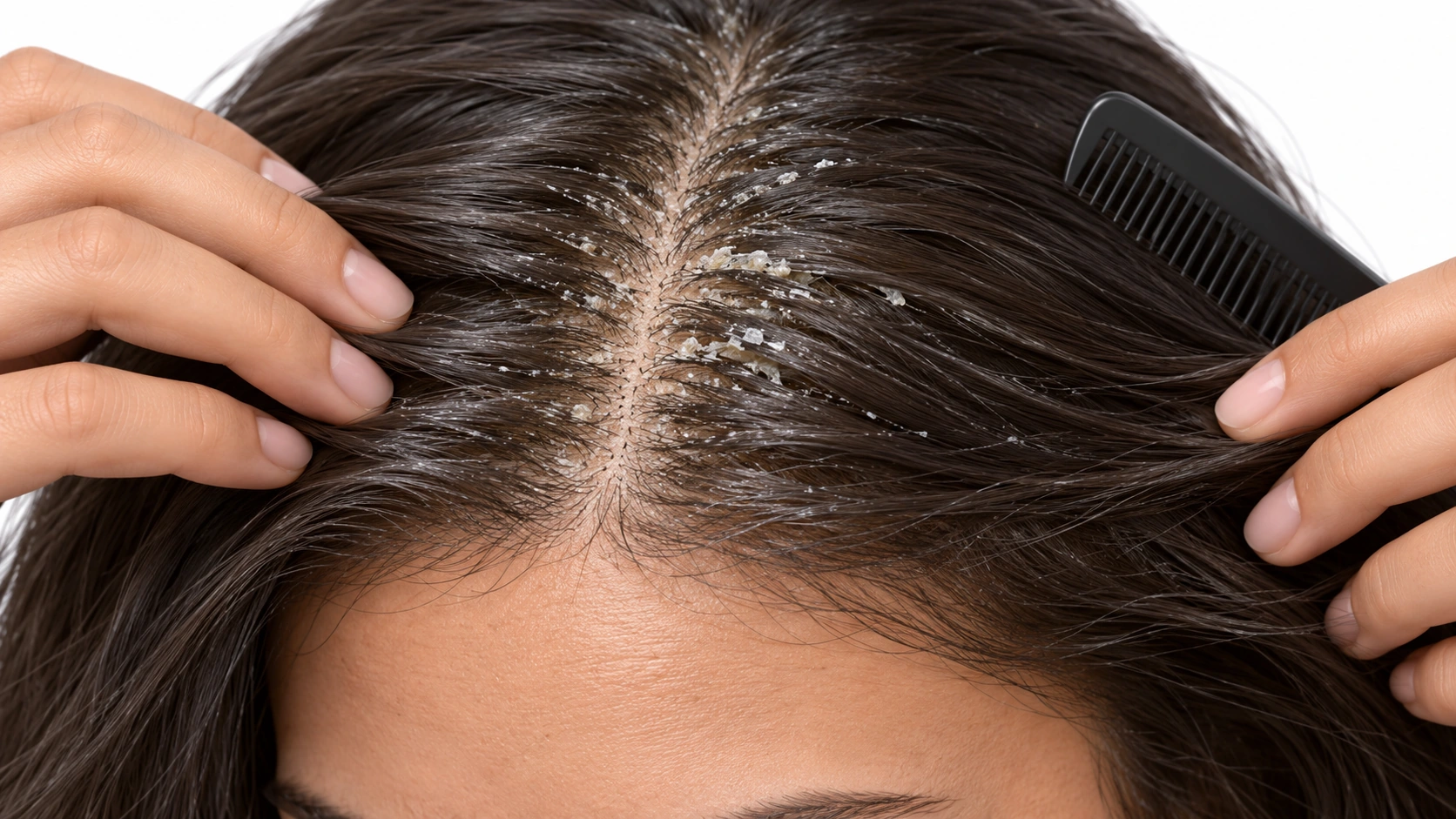
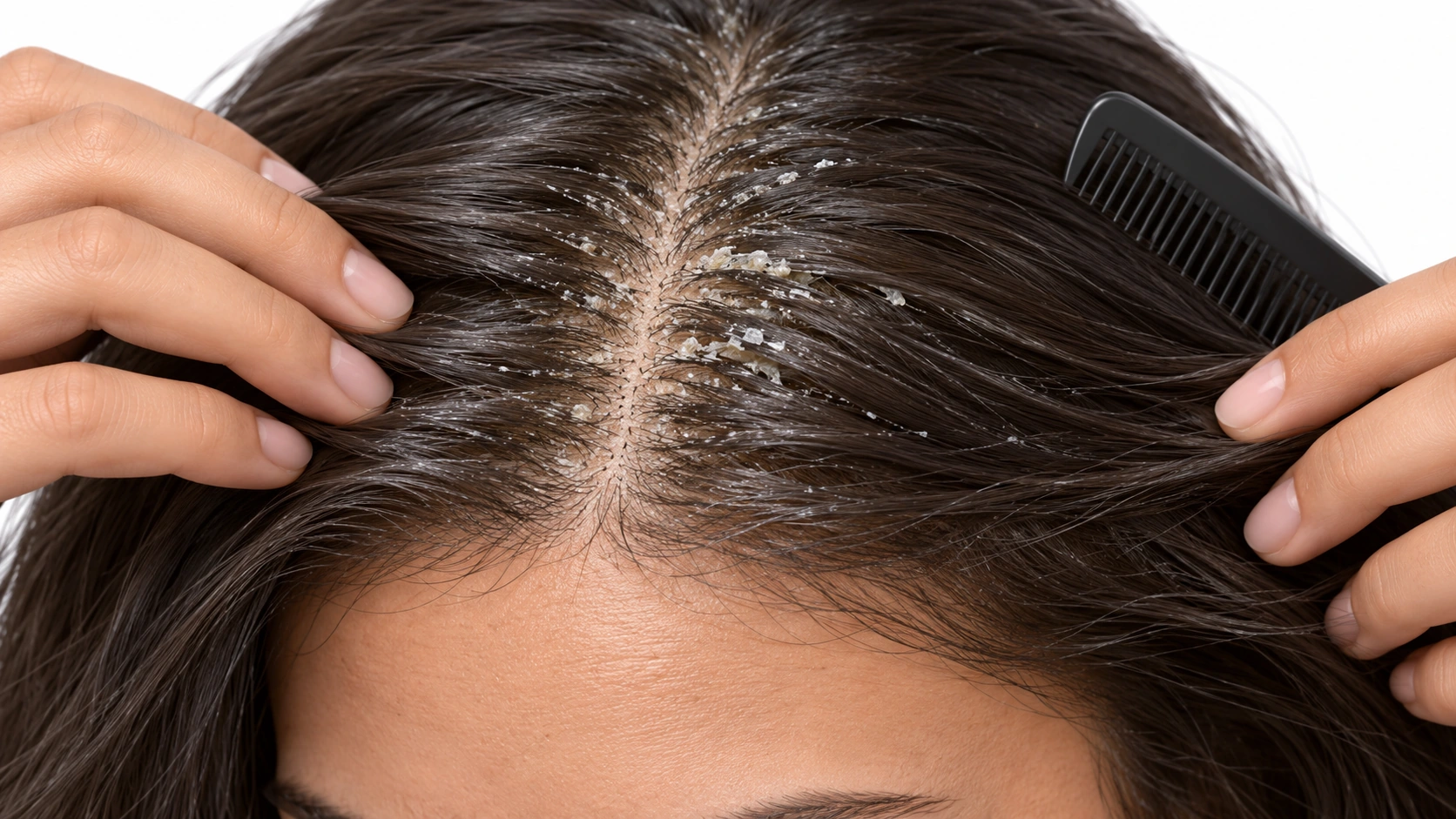
Product Buildup Pale flakes and residue collect along the hair part and nearby strands.
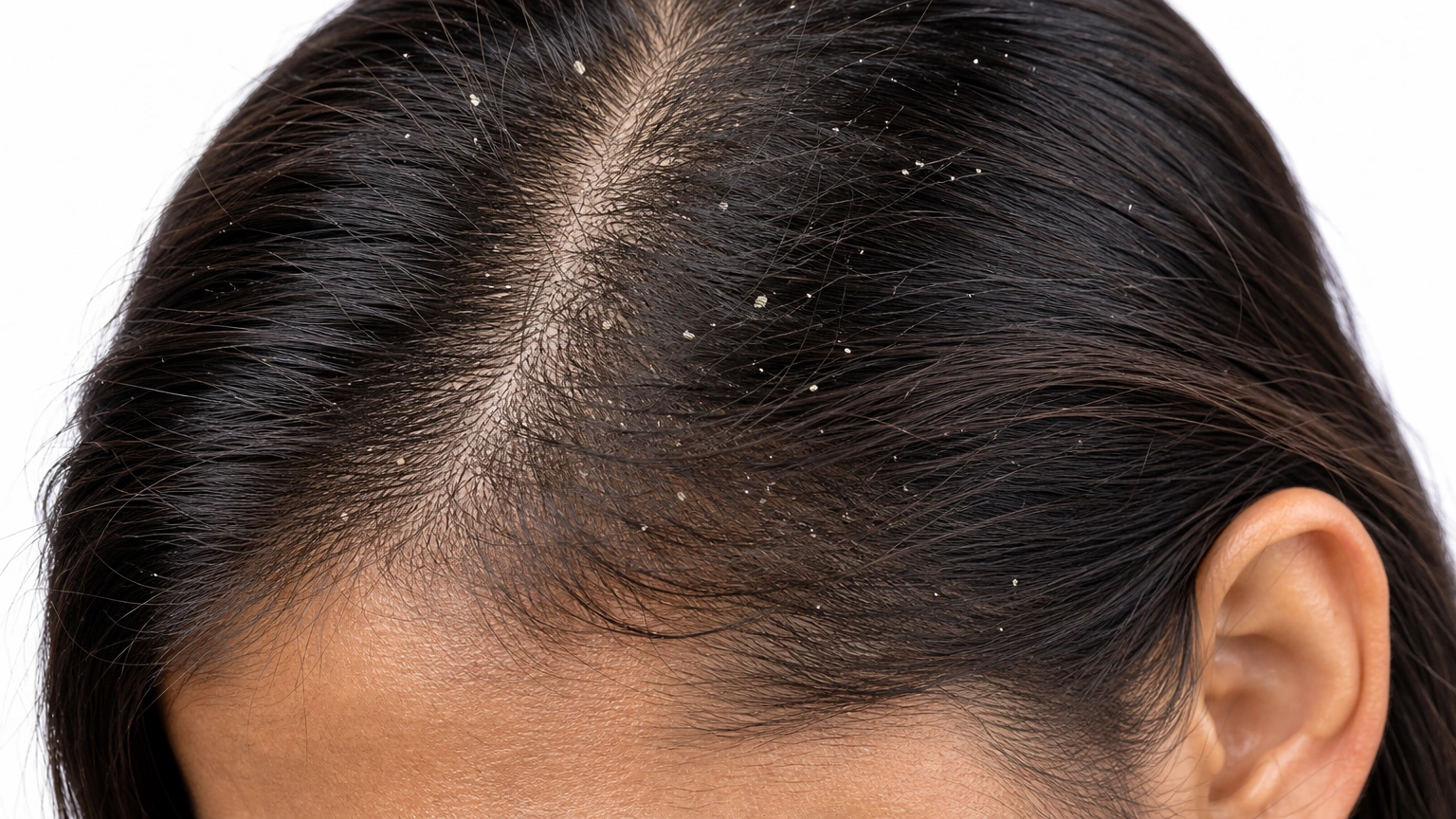
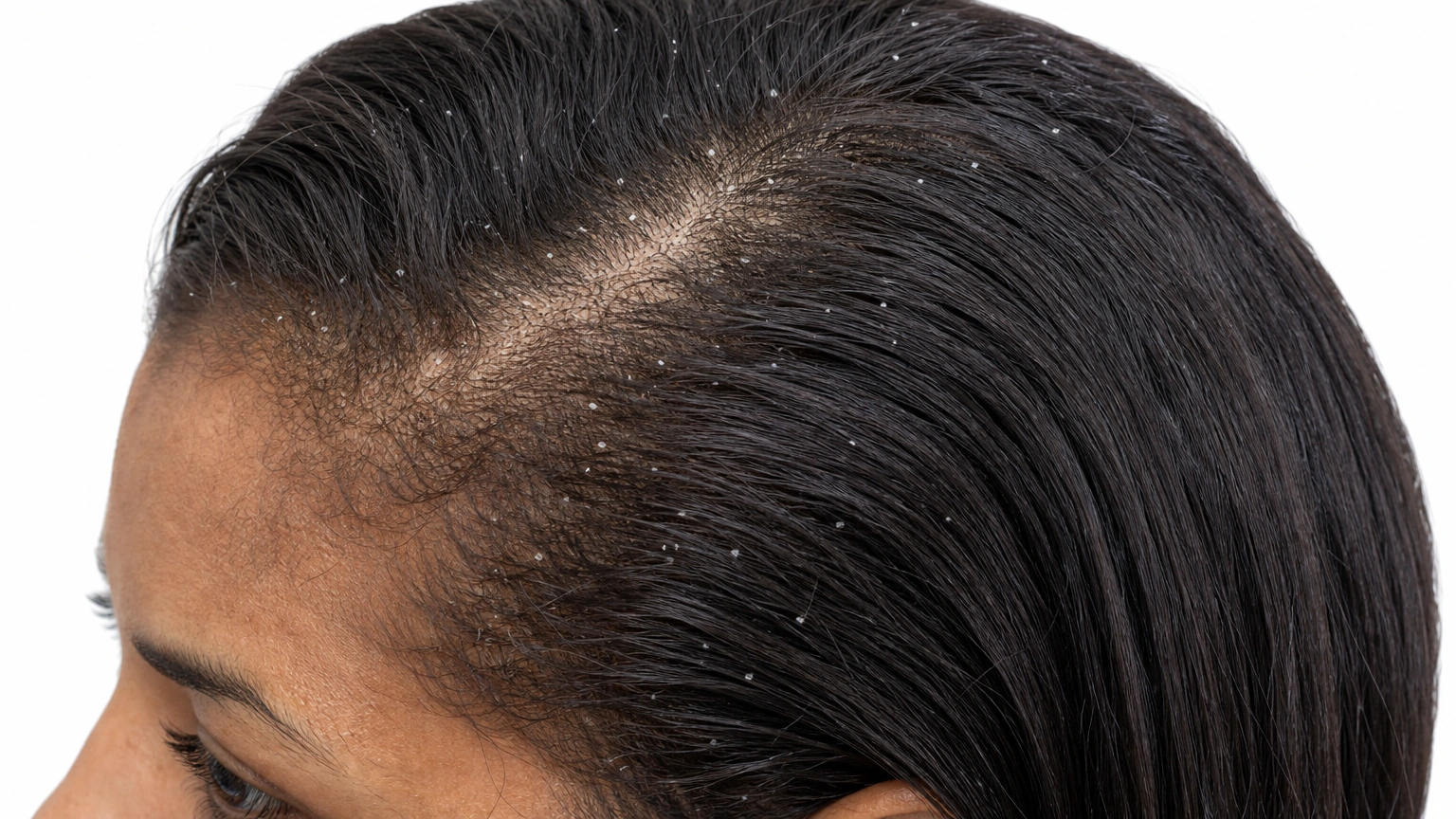
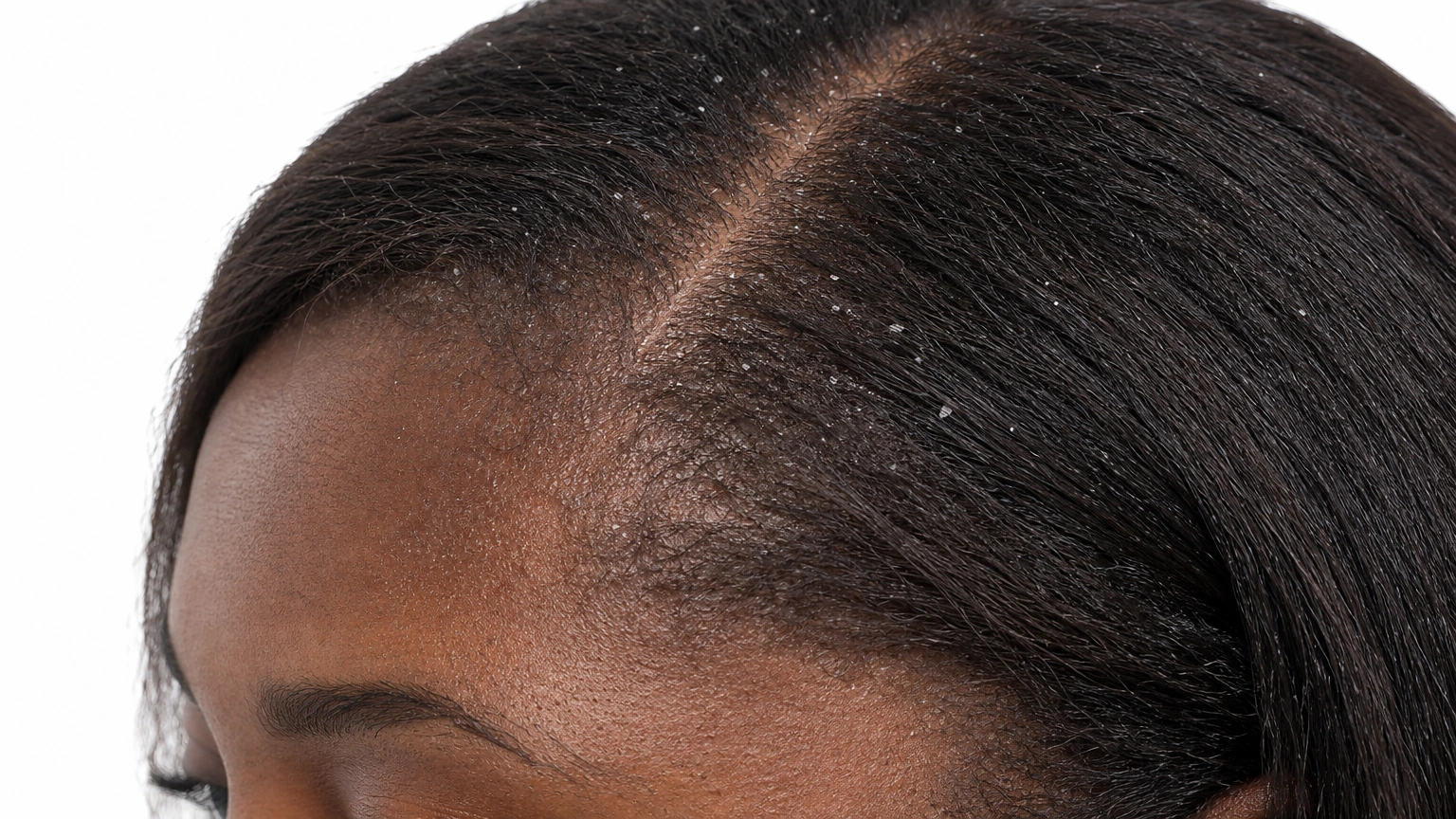
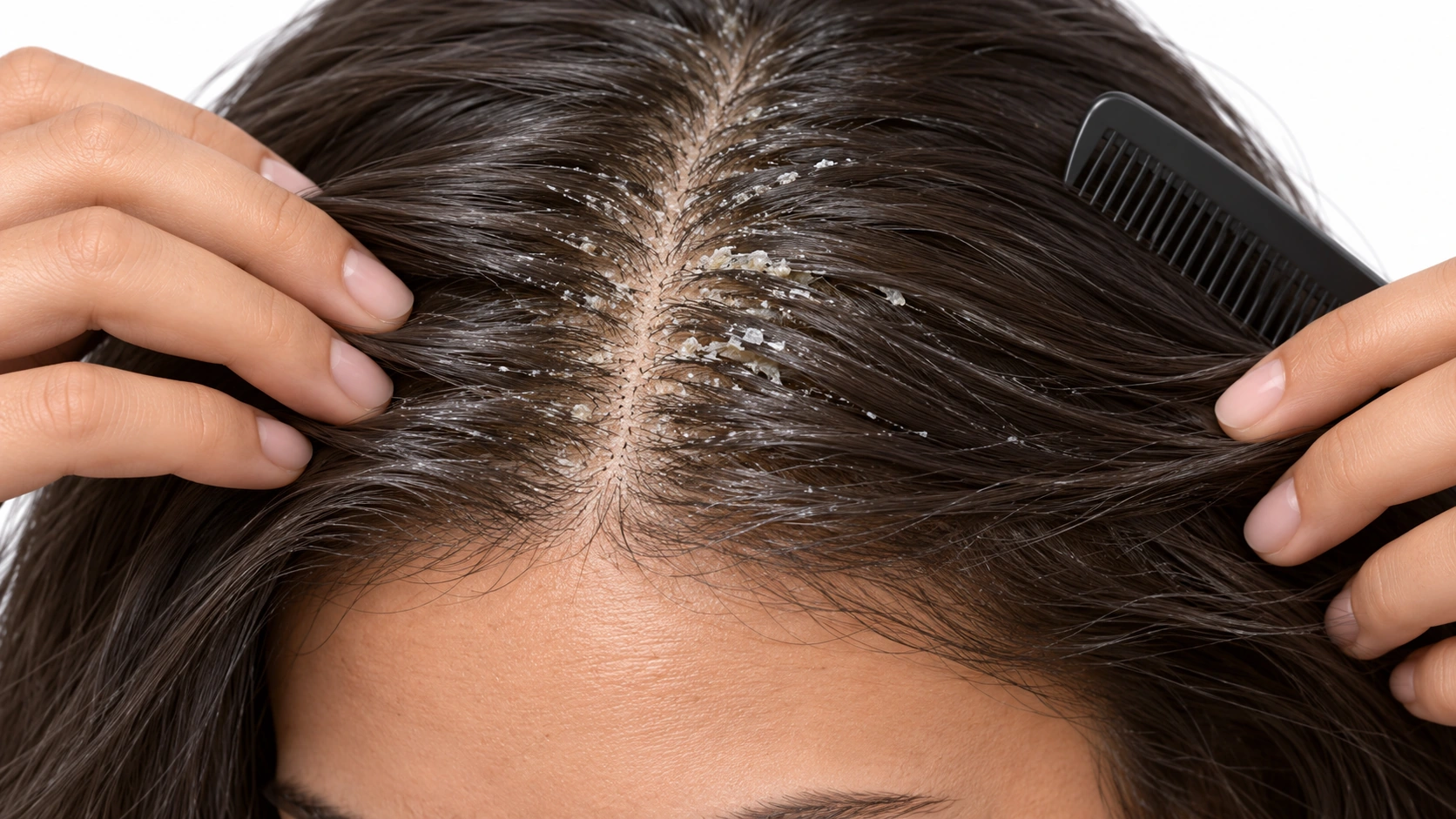
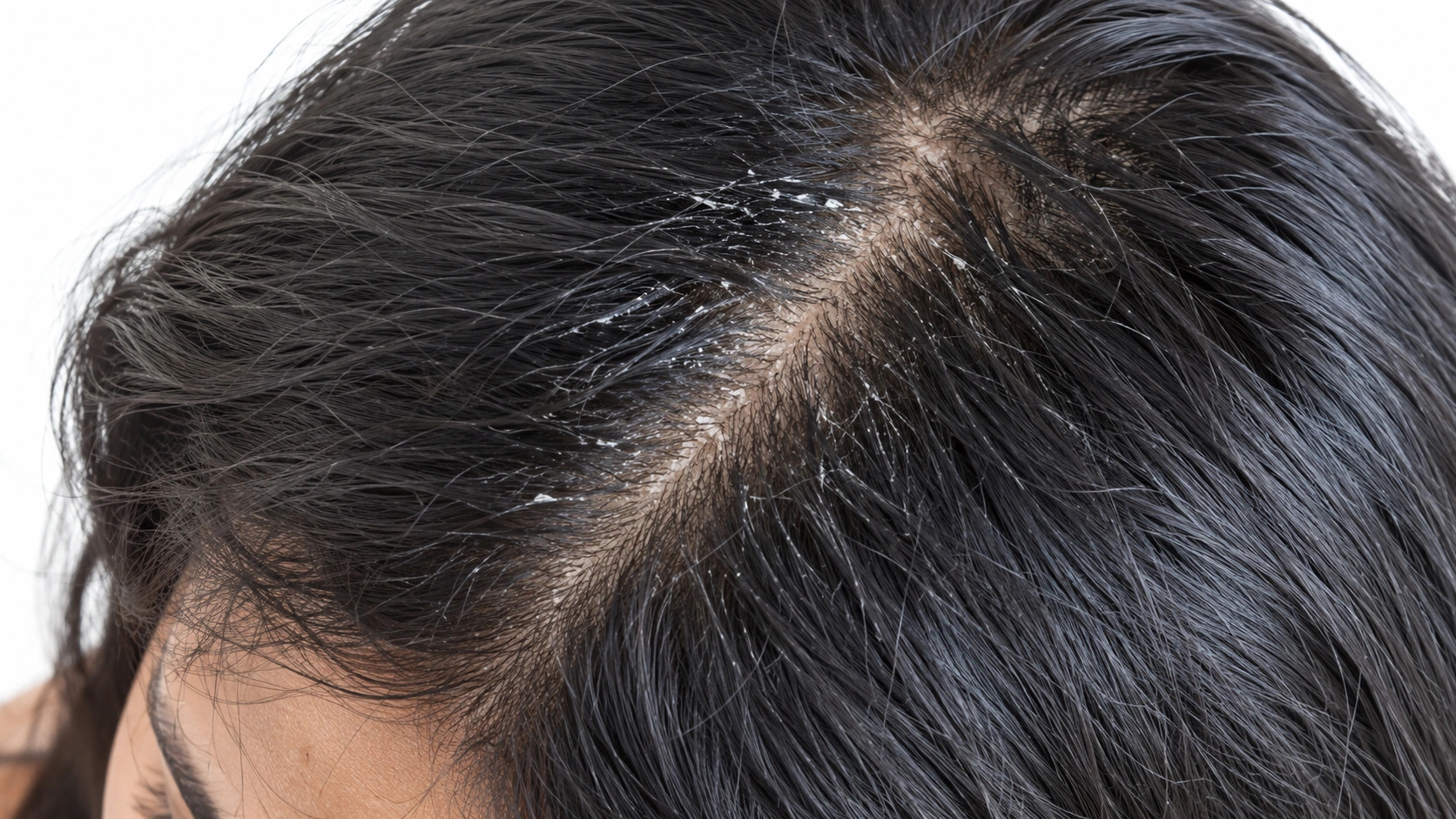

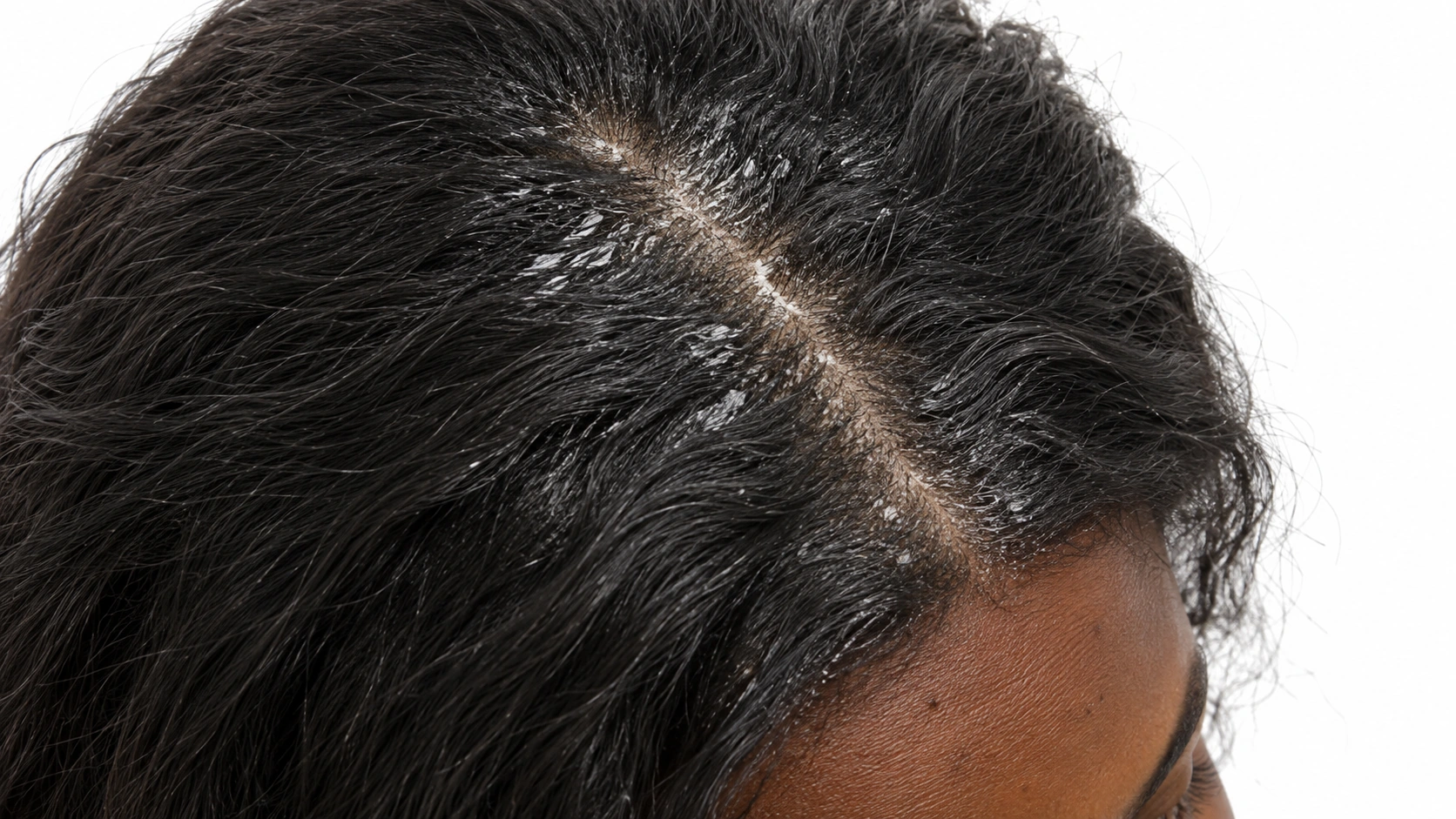
Reduced moisture retention or irritation can weaken the scalp's surface barrier. This process differs from yeast-associated dandruff, although visible flaking can overlap.
Hair or skincare products can remain on the surface when they are not fully washed away. This residue may coexist with scalp irritation or dermatitis, which has its own inflammatory process.
When it usually starts
Dry Scalp. Can occur at any age.
Product Buildup. Can occur with product use at any age.
Causes and triggers
Barrier dryness or irritation may contribute; the cause should be distinguished from yeast-related dandruff.
Products accumulate rather than washing away fully; scalp dermatitis may coexist.
Daily Care
Habits that help
- Wash the scalp gently and rinse thoroughly
Use lukewarm water and a shampoo suited to your scalp and hair type. - Adjust washing frequency to oil, sweat and scalp comfort
Avoid leaving heavy residue in place, but do not wash repeatedly until the scalp feels raw. - Keep styling products off irritated scalp
Reduce layers of dry shampoo, waxes or oils if they worsen itch or scale. - Handle hair and scalp gently while drying
Pat rather than scratch and limit very hot air.
Avoid
- Avoid: Scraping flakes off with nails or sharp tools
This can break the skin and cause infection. - Avoid: Assuming persistent inflamed scale is only dryness
Redness, pain, hair loss or ongoing flakes may need assessment for another scalp condition.
Treatment differences
Gentler washing and fewer irritating products may help simple dryness. Persistent dandruff, inflammation or hair loss needs assessment so any medicated treatment targets the actual cause.
Adjust washing and reduce products that leave persistent residue. Inflamed scale, pain or hair loss needs a diagnosis before adding medicated scalp treatments.
Outlook
The course depends on whether dryness, irritation, dandruff or another condition is responsible. Gentle care may help simple dryness, but persistent inflamed flakes or hair loss needs assessment.
Residue should lessen with appropriate washing and fewer layers of styling products. Persistent inflamed scale, pain or hair loss suggests a problem beyond simple buildup and needs assessment.
Complications
Persistent scale with broken hairs or hair loss may have another cause.
Persistent inflamed scale should not automatically be attributed to residue.
When to get help
Have persistent itch, thick scale, broken hairs or hair loss assessed.
Seek assessment if cleansing does not resolve the problem or there is pain, hair loss or crusting.
Common questions
Dry Scalp:What is Dry Scalp?
A descriptive term for a dry or flaky scalp; eczema, dandruff and product irritation can look similar.
Dry Scalp:What can I do day to day?
Use gentle shampoo and avoid scratching or heavy product layering.
Dry Scalp:When should I get medical advice?
Have persistent itch, thick scale, broken hairs or hair loss assessed.
Product Buildup:What is Product Buildup?
Residue from scalp or hair products that can resemble dandruff.
Product Buildup:What can I do day to day?
Reduce product layers and rinse thoroughly with a gentle shampoo.
Product Buildup:When should I get medical advice?
Seek assessment if cleansing does not resolve the problem or there is pain, hair loss or crusting.
Sources
Sources and further reading
Keep exploring.
Dandruff vs Dry Scalp
Dandruff vs Product Buildup
Dry Scalp vs Contact Dermatitis
Scalp Psoriasis vs Dry Scalp
Dandruff
Eczema
Athlete's Foot vs Dry Feet
Athlete's Foot vs Dry Skin
Cradle Cap vs Scalp Psoriasis

Dry Lips vs Allergic Contact on Lips
Dry Lips vs Irritant Contact on Lips
