Scalp Psoriasis vs Dry Scalp
Scalp psoriasis is psoriasis on the head. It causes thick, sharply edged patches with silvery scale that often itch and flake. It is the most common place for psoriasis to start, and it treats well - but the treatment has to reach the skin through the hair, which is where most people go wrong. A descriptive term for a dry or flaky scalp; eczema, dandruff and product irritation can look similar.
Key differences
The same eight facts on every condition comparison.
What is it?
- It is psoriasis of the scalp.
Plaques can extend beyond the hairline. - Severity varies.
Plaques may be thick and scaly or limited but very itchy. - Lookalikes are common.
Dandruff, seborrheic dermatitis and fungal infection can resemble it. - Small area, real burden.
Limited involvement can still cause significant symptoms.
- What it is
A descriptive term for a dry or flaky scalp; eczema, dandruff and product irritation can look similar.
What it looks like
Scalp Psoriasis
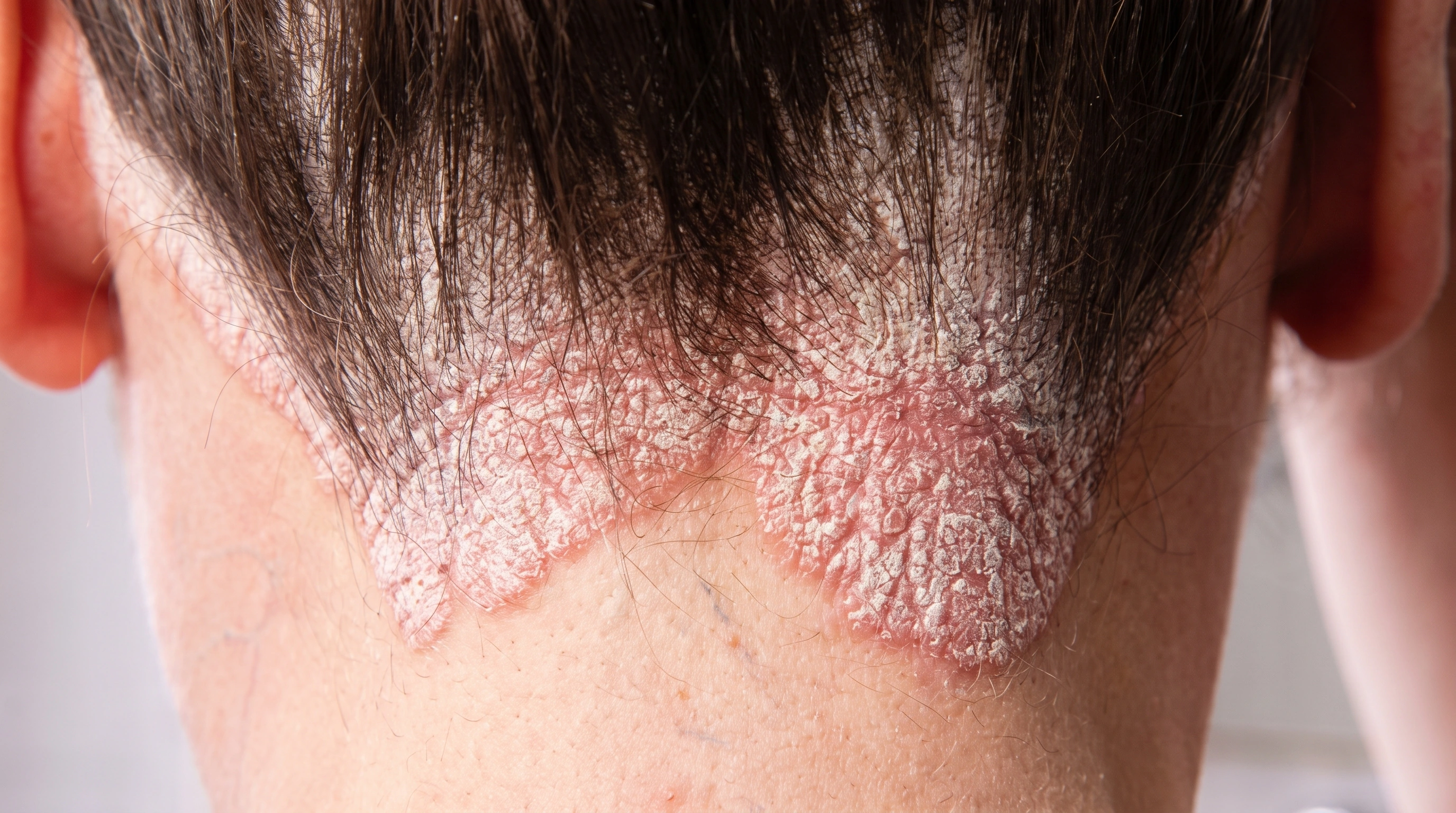
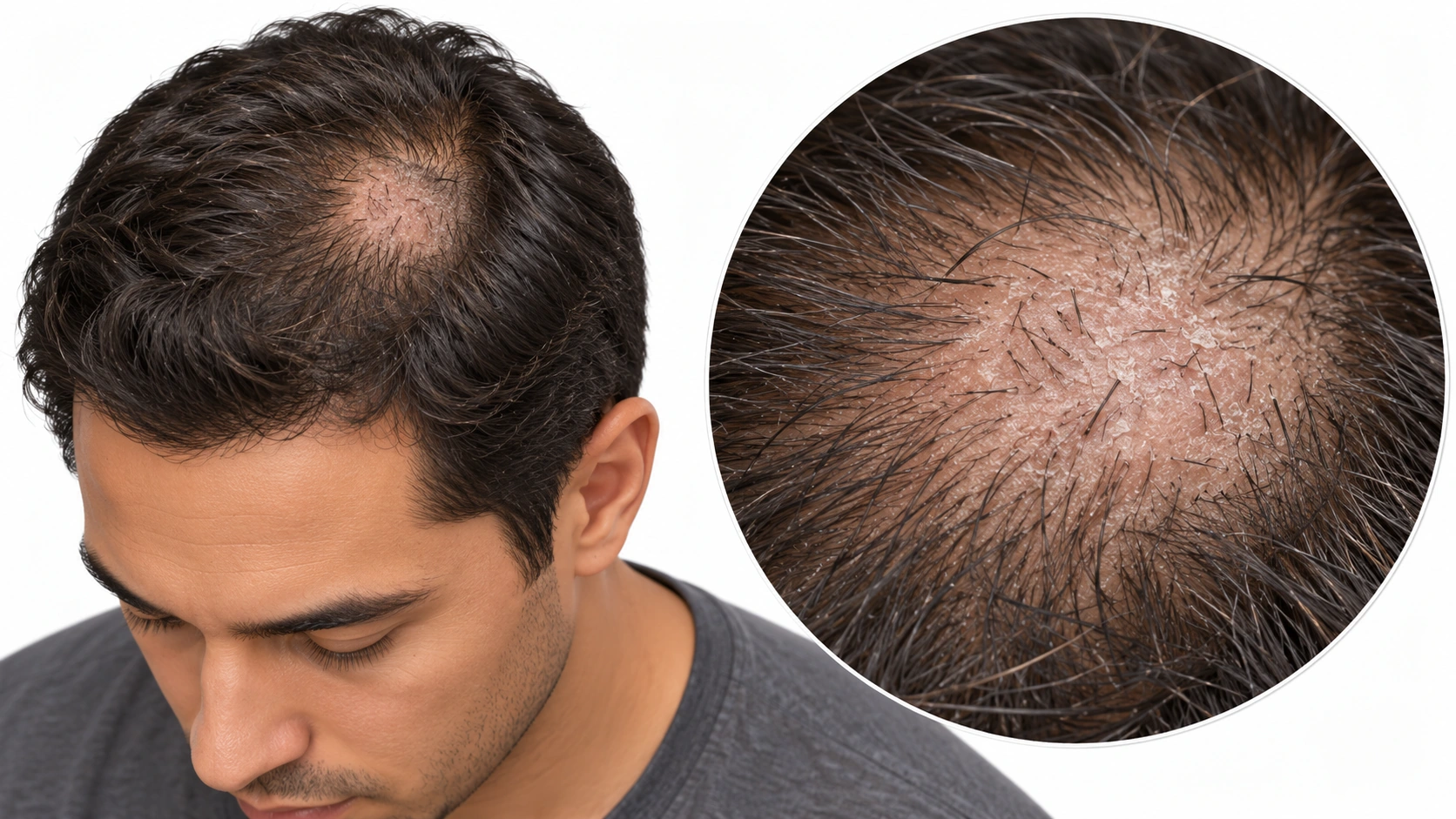
Thick scale Silvery patches on the scalp.
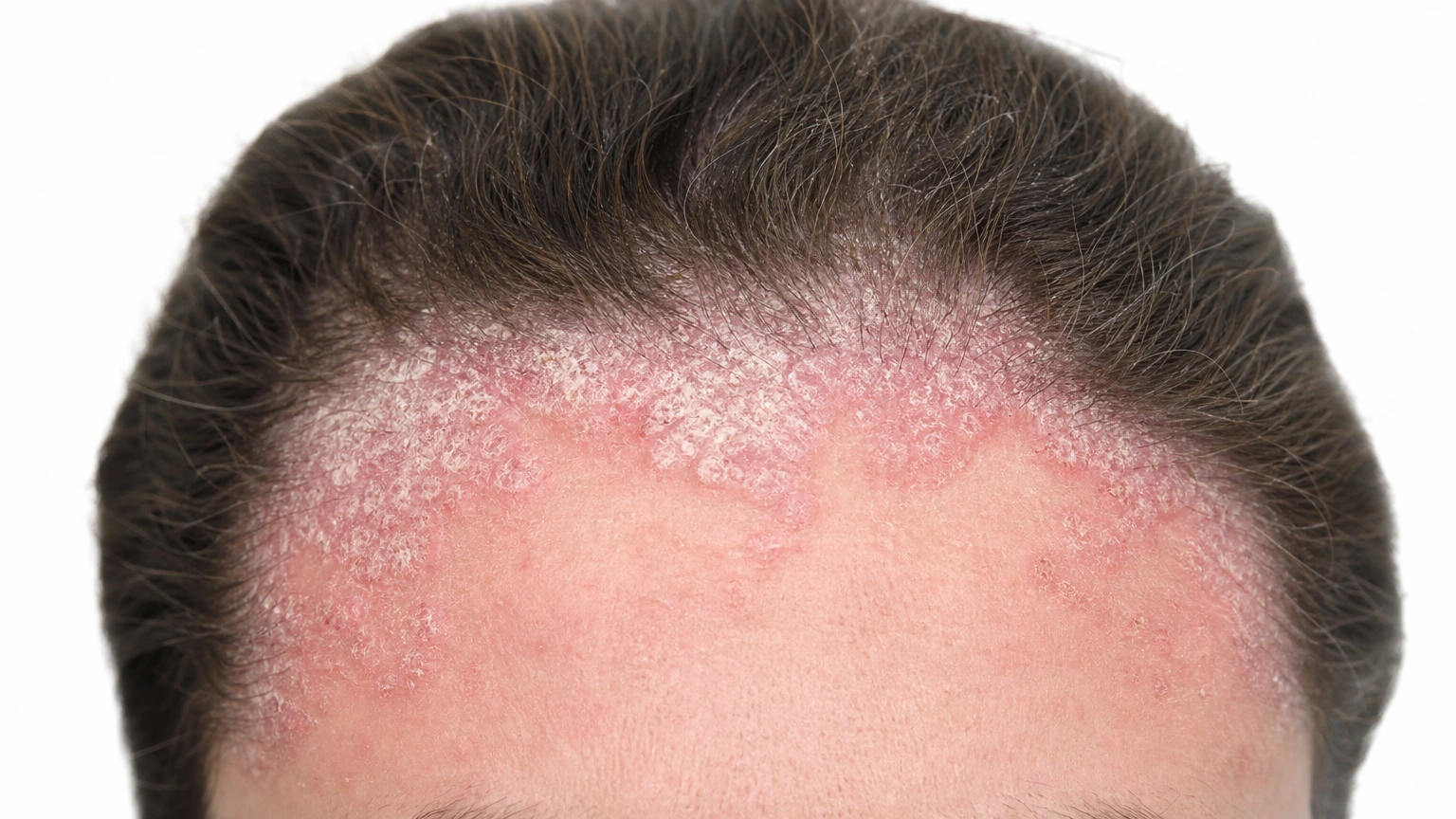
Past the hairline Spreads onto the forehead.
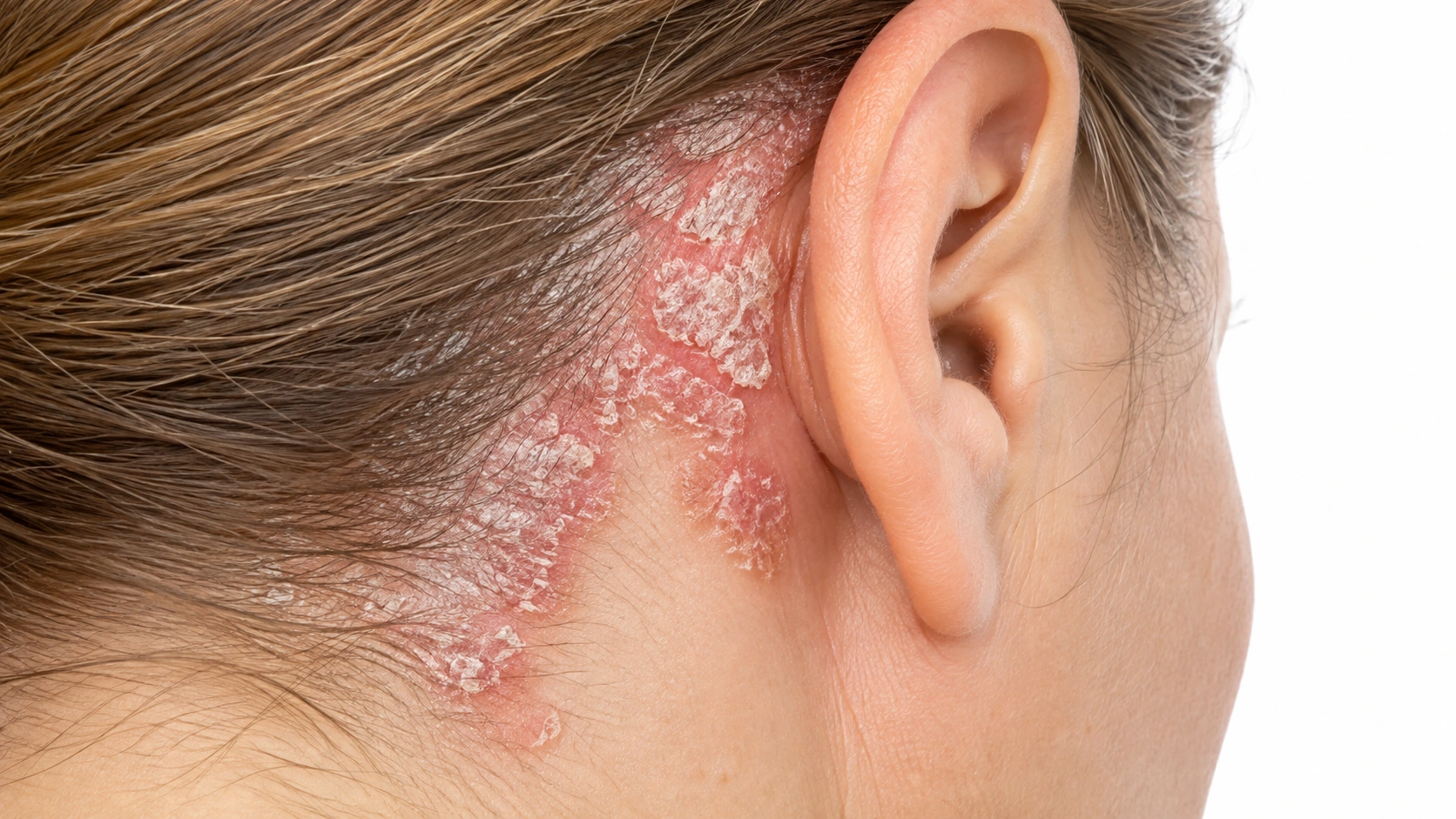
Behind the ears Scale and redness.
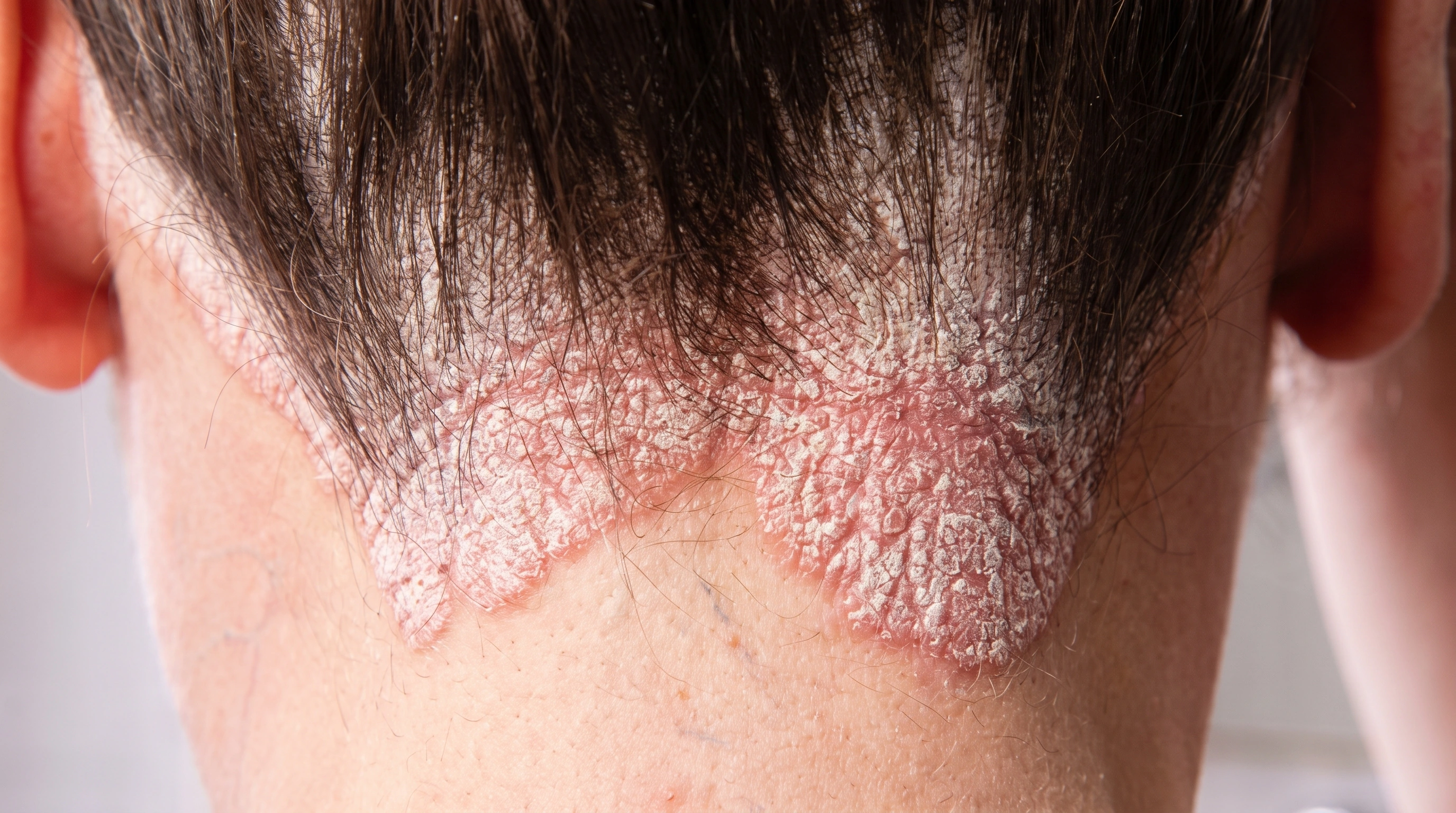
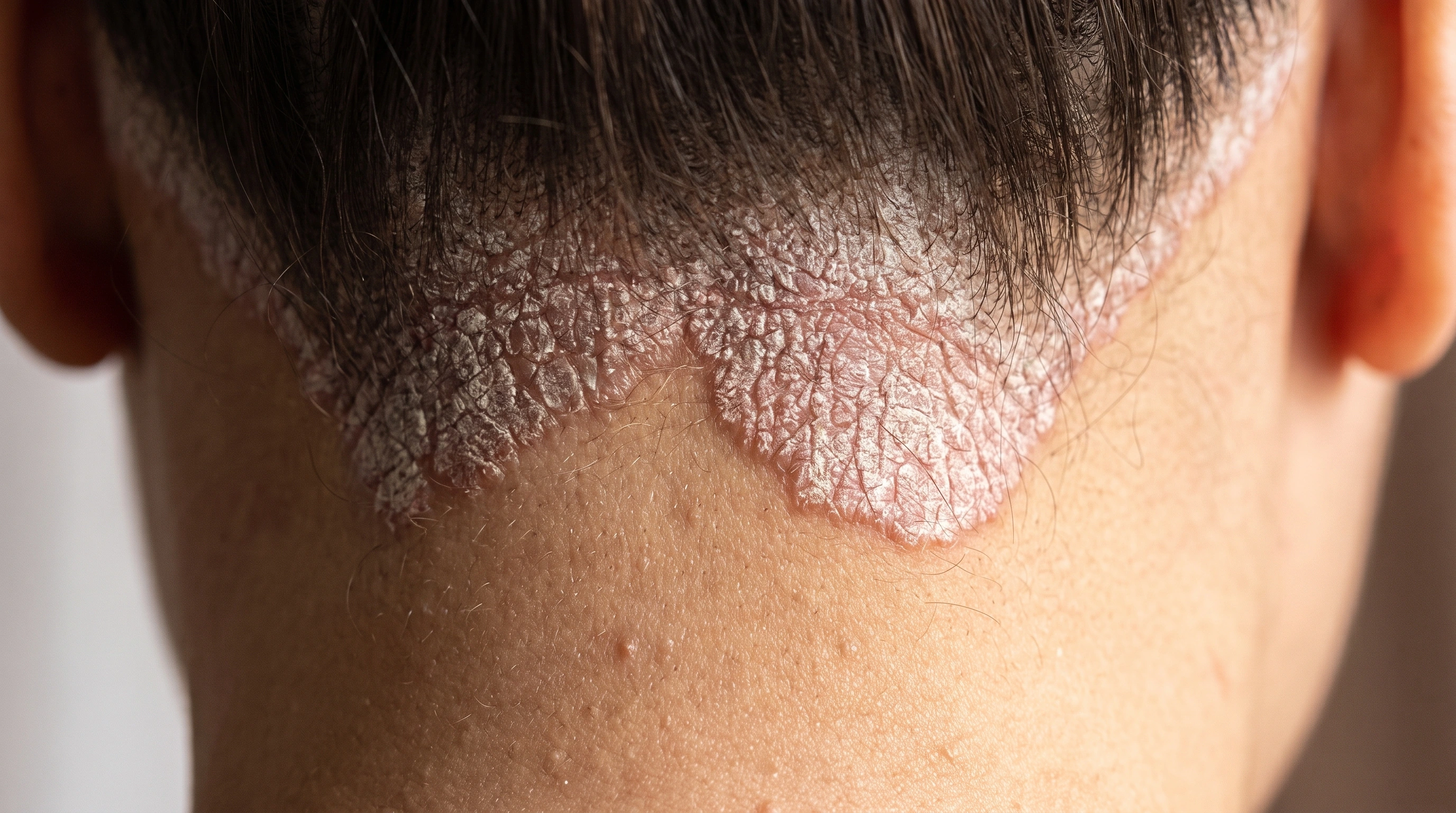
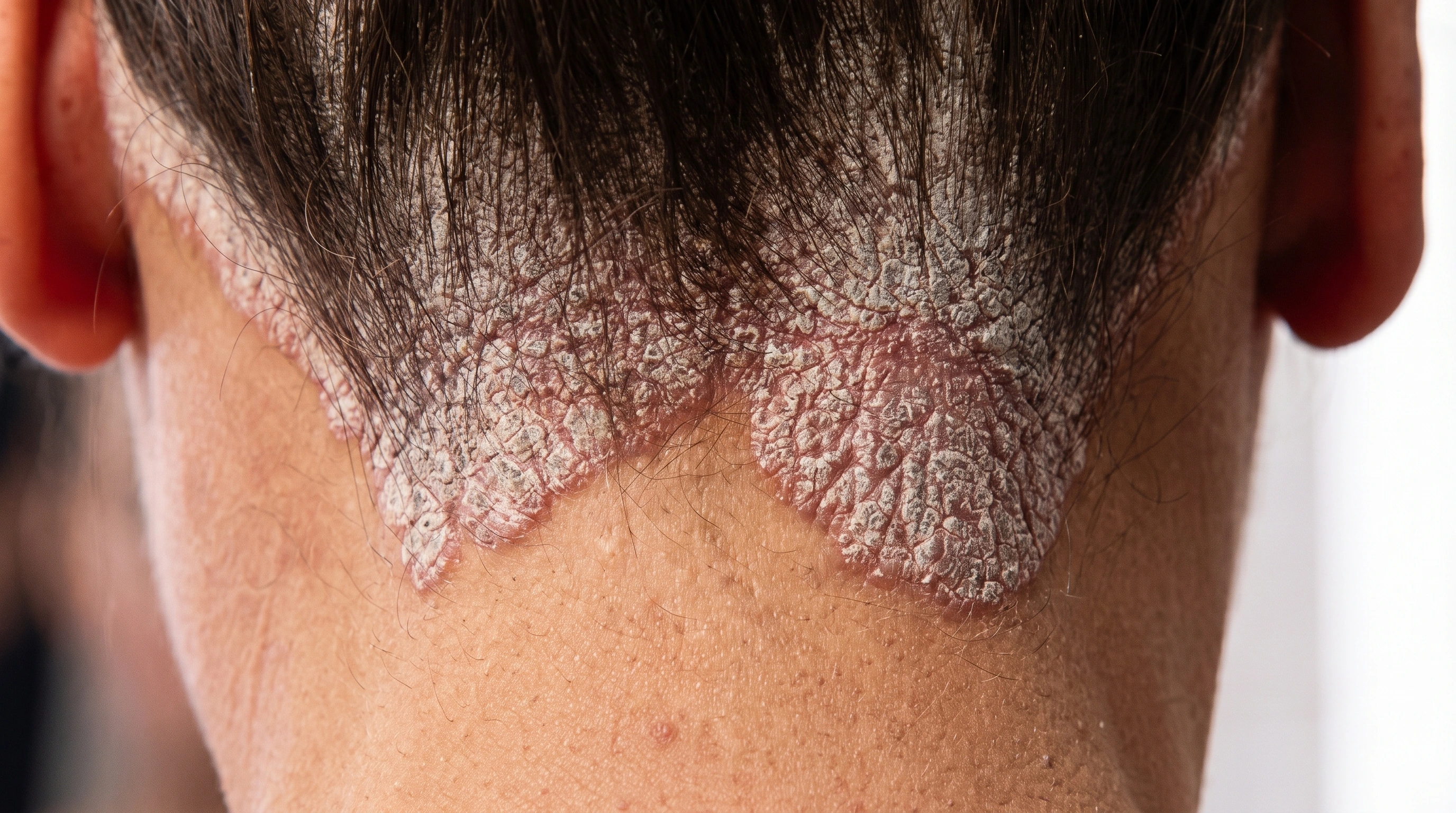
Dry Scalp
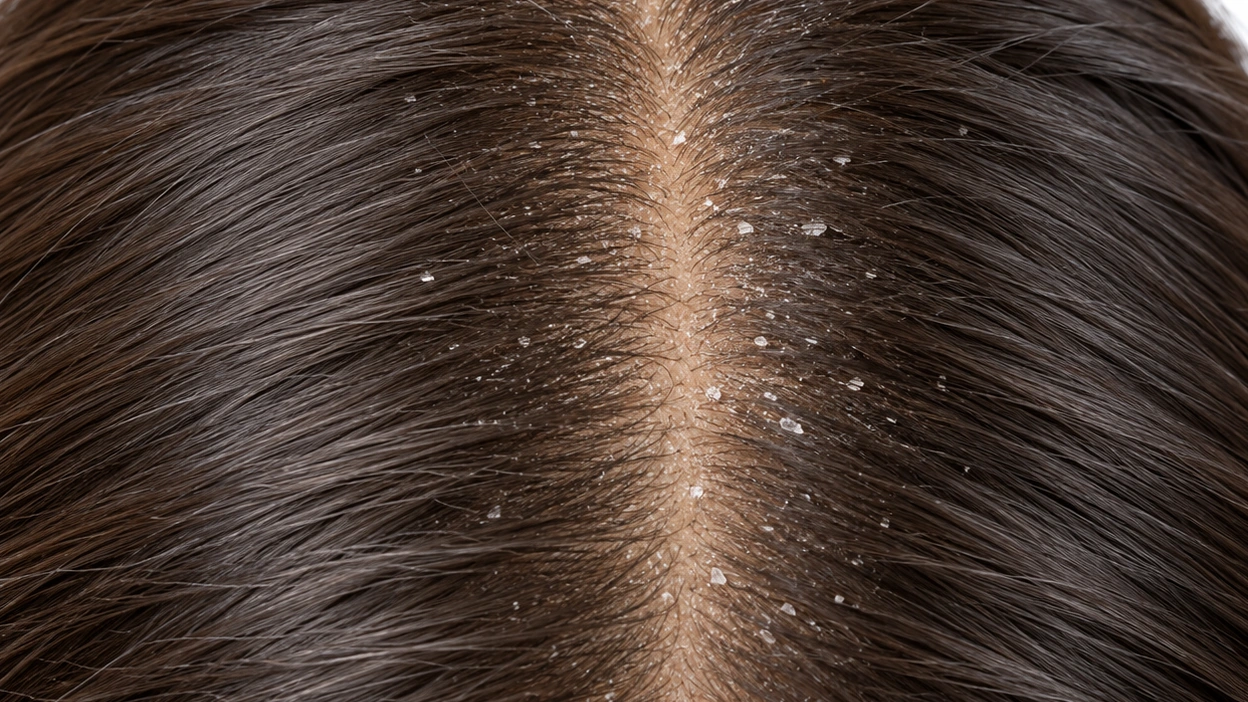
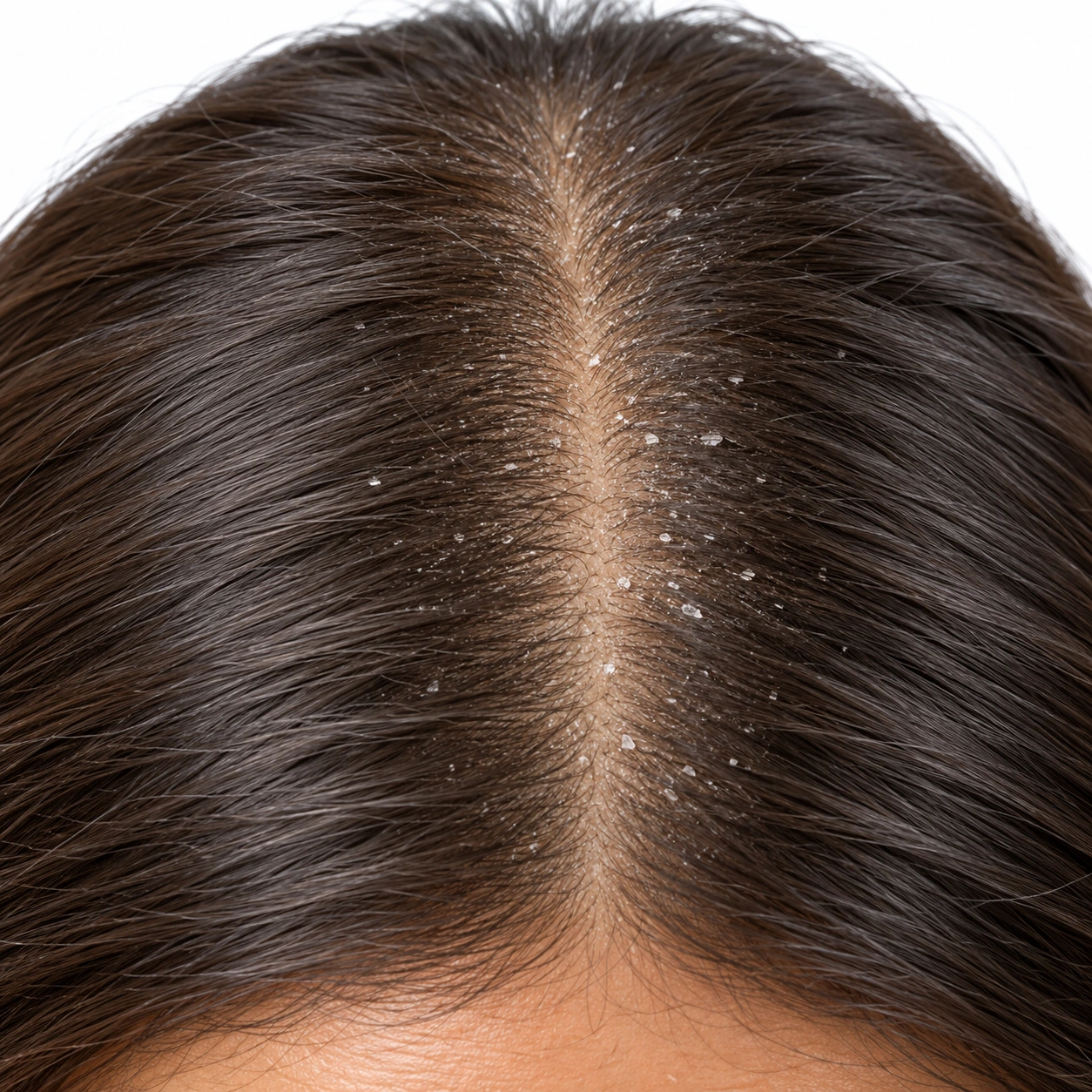
Dry Scalp Small pale flakes sit on the exposed scalp and nearby hairs.
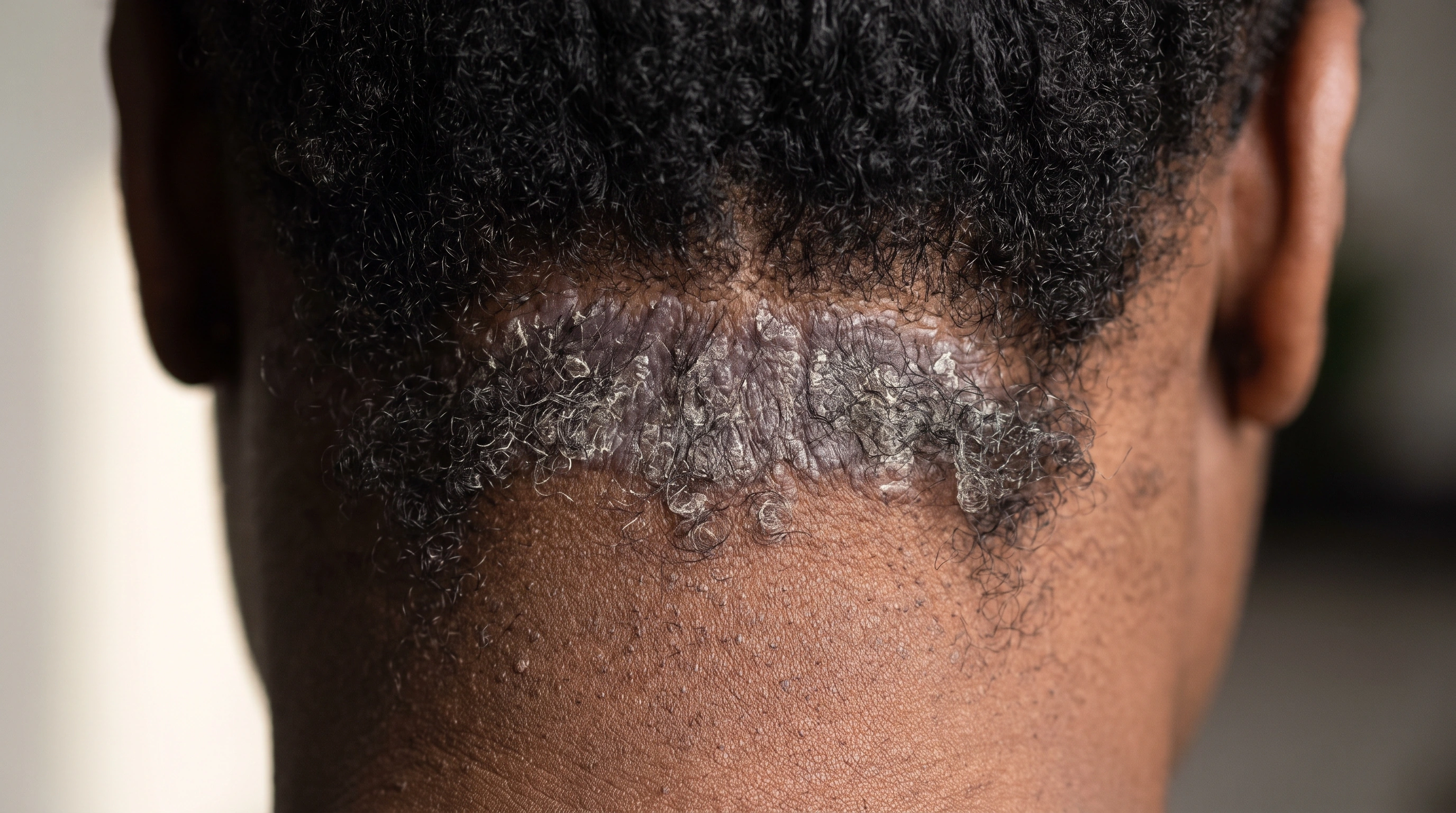
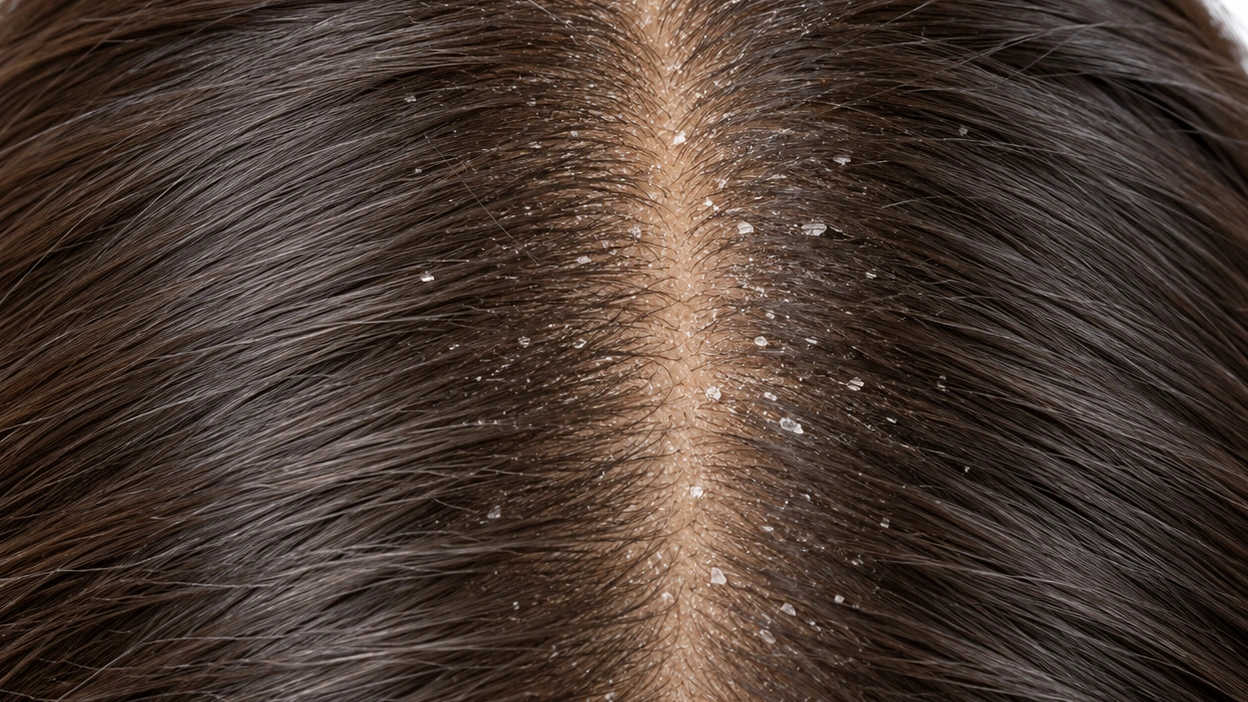
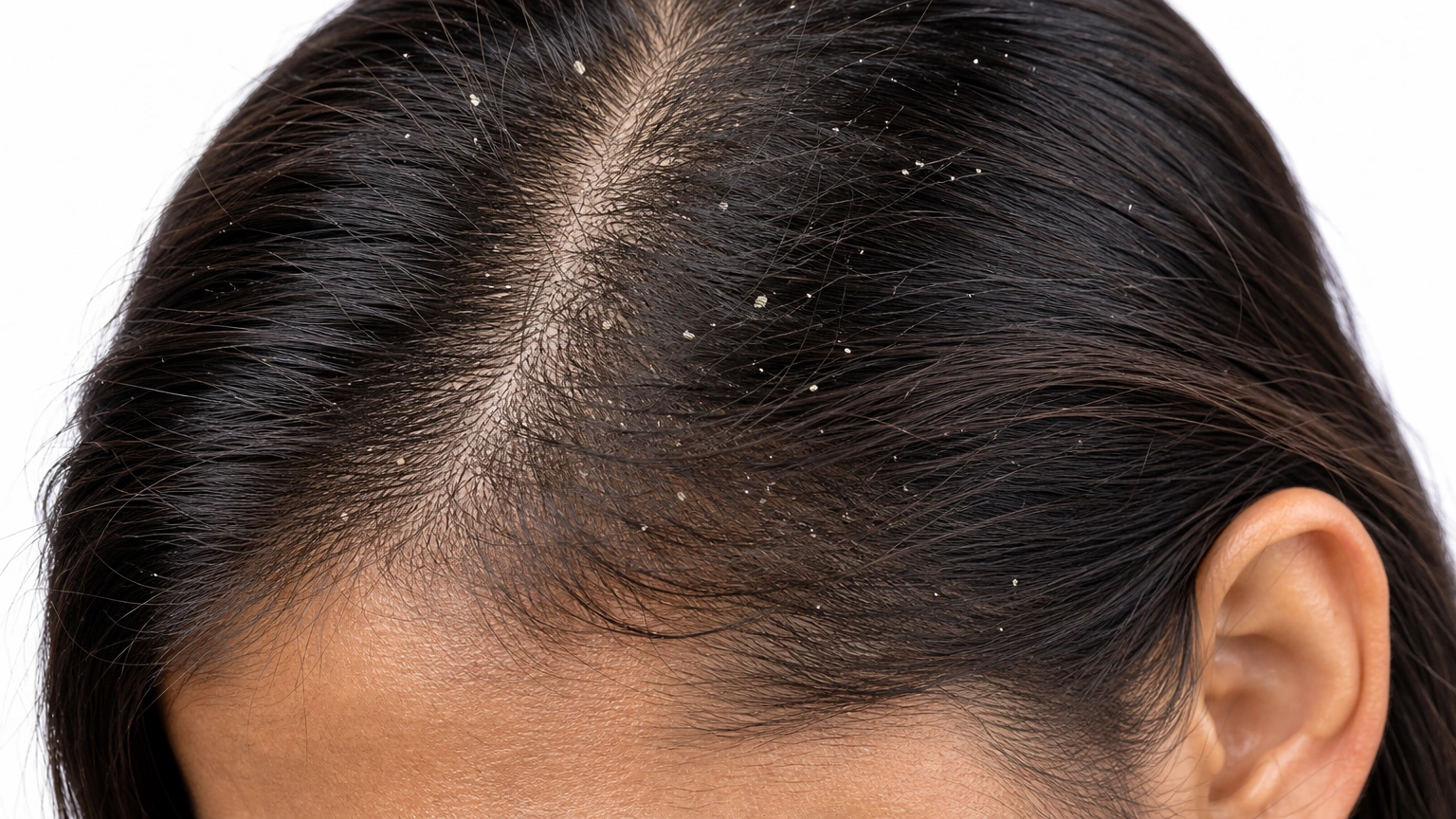
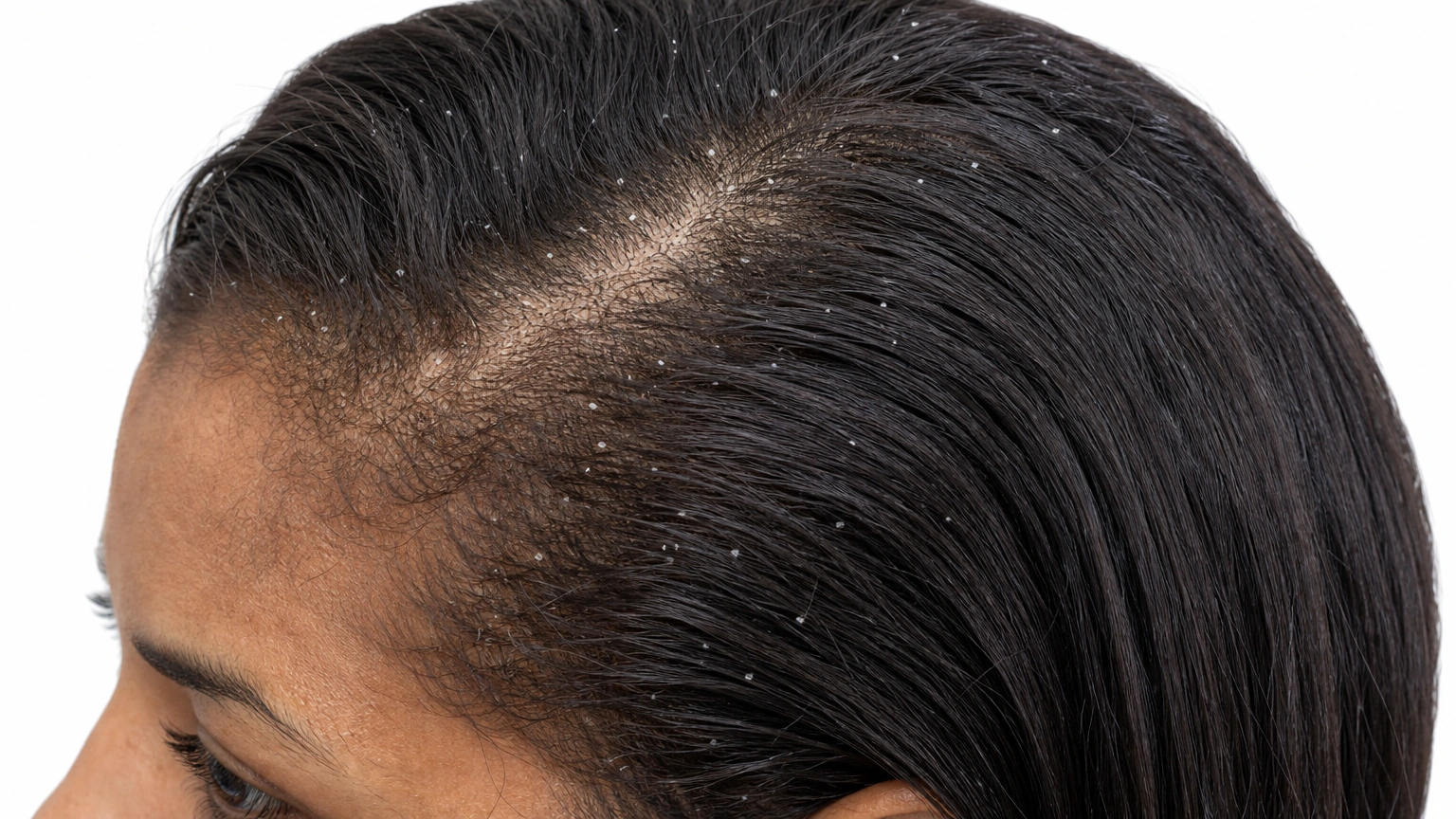
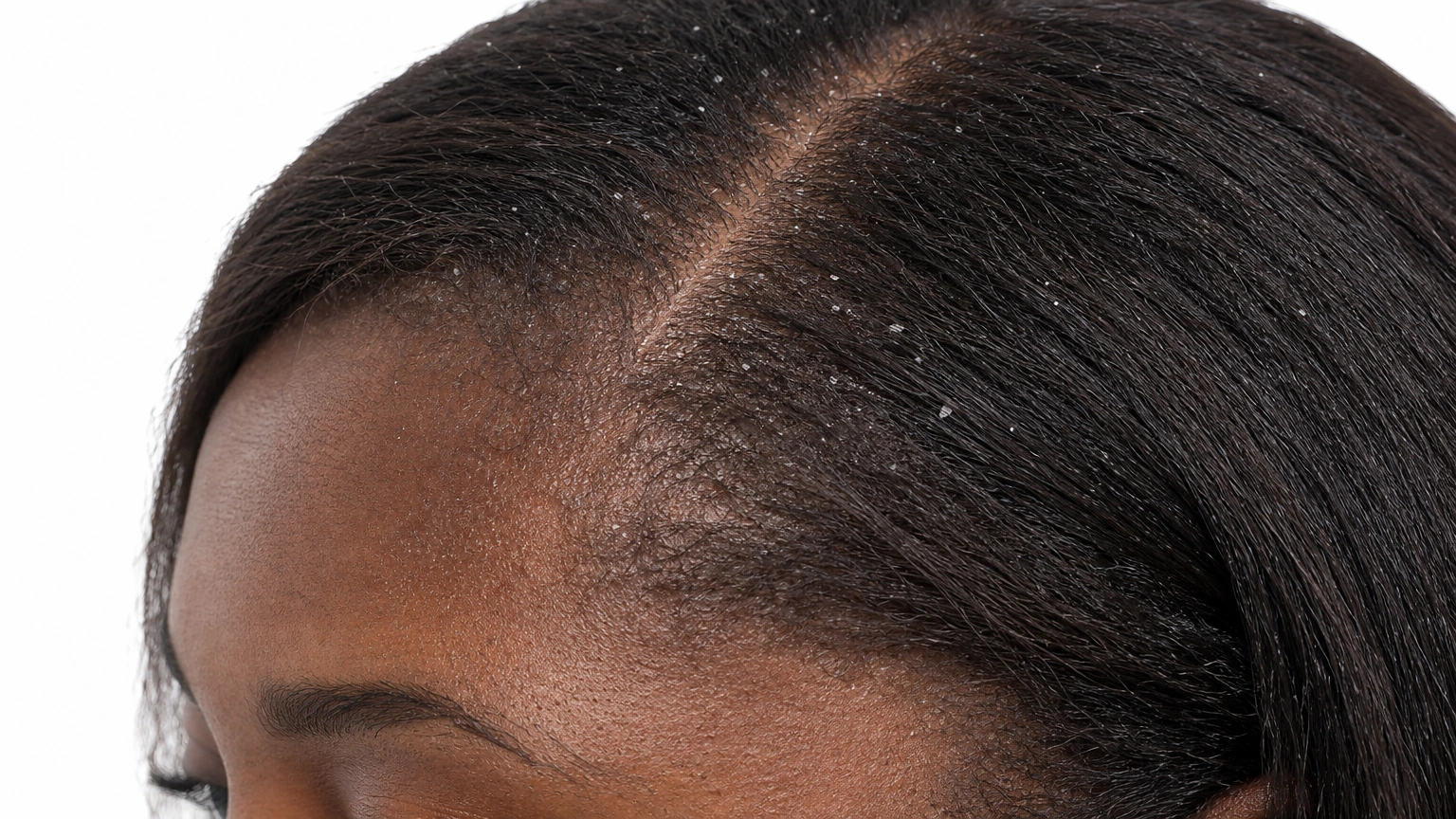

Overactive immune signals speed up the production of scalp skin cells. The cells accumulate in thickened plaques with scale that can collect around hairs and extend beyond the hairline.
Reduced moisture retention or irritation can weaken the scalp's surface barrier. This process differs from yeast-associated dandruff, although visible flaking can overlap.
When it usually starts
Scalp Psoriasis. Can begin at any age as part of psoriasis; the scalp may be the first affected site.
Dry Scalp. Can occur at any age.
Causes and triggers
Scalp psoriasis is psoriasis on the scalp. The immune system speeds up skin growth there, building thick, scaly patches.
Barrier dryness or irritation may contribute; the cause should be distinguished from yeast-related dandruff.
It shares the same inherited tendency as other psoriasis.
Daily Care
Habits that help
- Moisturize the scalp
Reduces tightness and the itch that drives scratching. - Cool it instead of scratching
A cold, damp cloth. - Calcipotriene, a vitamin D treatment
Slower than a steroid, usable for longer. - Soften the scale before you treat
Oil or salicylic acid loosens it. - Leave medicated shampoo on for the product-specific contact time
Contact time depends on the formulation; follow the label or prescription rather than using one fixed time for every product. - Report symptoms of throat or other infections
A recognized flare trigger. - Review possible medicine triggers with the prescriber; do not stop medicines yourself
Lithium, beta blockers, antimalarials — never stop one yourself. - Adjust moisturizing and indoor humidity during dry weather
Dry air thickens scale. - Allow the label’s contact time before rinsing medicated shampoo
Follow the product-specific contact time. Longer exposure is not always better and may irritate.
Avoid
- Avoid: Stress
A consistently reported flare trigger. - Avoid: Smoking
More severe disease, weaker treatment response. - Avoid: Heavy alcohol use
More severe psoriasis, poorer response. - Avoid: Picking and lifting the scale off
Tears skin, takes hair with it. - Avoid: Scratching
Psoriasis appears where skin has been injured. - Avoid: Fine-tooth combs and hard brushing
Picking, spread wider. - Avoid: Chemical processing during a flare
Relaxers and dyes burn inflamed skin; burns bring patches. - Avoid: Tight braids, weaves and extensions
Constant pull on an inflamed scalp. - Avoid: Stopping treatment when it looks clear
Controlled, not cured. - Avoid: Only shampooing the hair, not the scalp
Medicated shampoo works on skin.
Habits that help
- Wash the scalp gently and rinse thoroughly
Use lukewarm water and a shampoo suited to your scalp and hair type. - Adjust washing frequency to oil, sweat and scalp comfort
Avoid leaving heavy residue in place, but do not wash repeatedly until the scalp feels raw. - Keep styling products off irritated scalp
Reduce layers of dry shampoo, waxes or oils if they worsen itch or scale. - Handle hair and scalp gently while drying
Pat rather than scratch and limit very hot air.
Avoid
- Avoid: Scraping flakes off with nails or sharp tools
This can break the skin and cause infection. - Avoid: Assuming persistent inflamed scale is only dryness
Redness, pain, hair loss or ongoing flakes may need assessment for another scalp condition.
Treatment differences
Gentler washing and fewer irritating products may help simple dryness. Persistent dandruff, inflammation or hair loss needs assessment so any medicated treatment targets the actual cause.
Outlook
Scalp psoriasis commonly alternates between flares and quieter periods. Treatment can control scale, itch and inflammation, but symptoms may return when treatment stops. Ongoing scalp care and a maintenance plan can help sustain improvement.
The course depends on whether dryness, irritation, dandruff or another condition is responsible. Gentle care may help simple dryness, but persistent inflamed flakes or hair loss needs assessment.
Complications
- Psoriatic arthritis
- Nail Psoriasis
- Infection in a cracked scalp
More details
Psoriatic arthritis
A joint condition that develops in some people with psoriasis, often years after the skin. Scalp and nail involvement are both linked to a higher chance of it. The signs are joint pain, swelling, morning stiffness lasting more than half an hour, or a whole finger or toe swelling up. Report them early rather than waiting, because treating it early is what protects the joints.
Nail Psoriasis
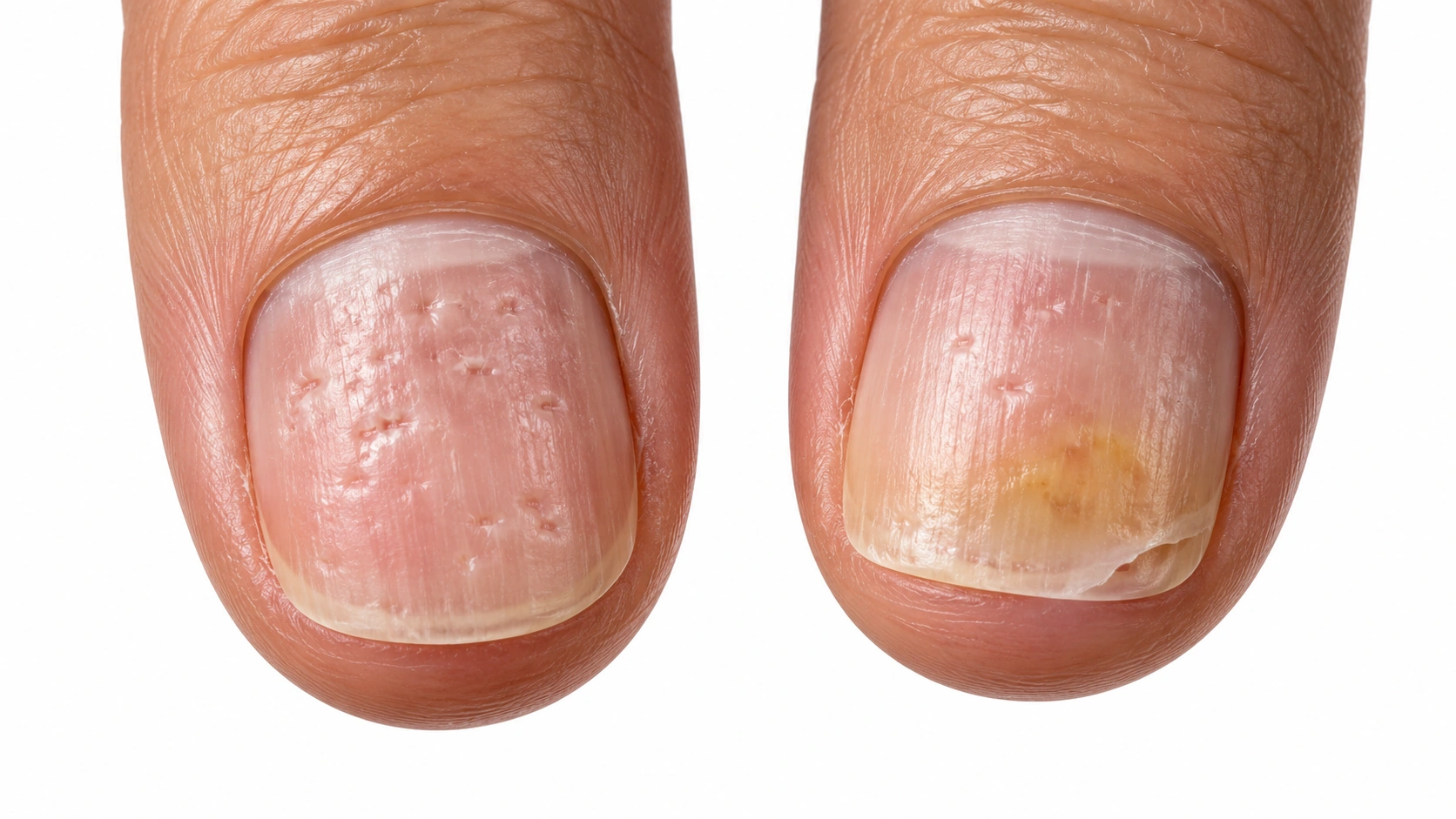
Psoriasis often turns up in the nails of people who have it on the scalp. The nail develops small pits like pinpricks, yellow-brown patches like a drop of oil under the plate, crumbling, or lifting away from the nail bed. It is worth pointing out at an appointment, because nail changes are also linked to a higher chance of joint disease.
Infection in a cracked scalp
A plaque that has been picked, scratched or split can let bacteria in. The signs are weeping, honey-colored crust, a sore hot area, or swollen glands in the neck. It is uncommon and it treats easily with antibiotics, but it needs to be looked at rather than covered with more steroid. Softening the scale instead of lifting it off is what prevents it.
Persistent scale with broken hairs or hair loss may have another cause.
When to get help
Seek help for persistent thick scale, bleeding, sleep-disrupting itch or hair loss. Joint symptoms should also be assessed.
Have persistent itch, thick scale, broken hairs or hair loss assessed.
Common questions
Scalp Psoriasis:Will my hair grow back?
In almost all cases, yes. Hair thins over an active patch because thick scale lifts hairs out as it sheds and scratching breaks them. Once the inflammation and scale are treated, the follicles are intact and hair regrows over the following months. Scarring hair loss is rare, and more likely in a long-picked patch.
Scalp Psoriasis:How do I tell scalp psoriasis from dandruff?
Look at the edges and the color. Psoriasis makes a patch you can feel the border of, with dry silvery-white scale, and it commonly runs past the hairline onto the forehead or behind the ears. Dandruff makes softer, greasier, yellower flakes that fade into normal skin. If both are present, which is common, treatment needs to cover both.
Scalp Psoriasis:Can I dye or relax my hair?
When the scalp is calm, usually yes. When it is flaring, cracked or sore, chemical processing can burn inflamed skin, and burned skin is exactly where new psoriasis appears. Wait until it settles, tell your stylist what is going on, and ask for a patch test.
Scalp Psoriasis:Do I have to use the shampoo forever?
Not at flare-level intensity, but most people do better on maintenance. A shampoo once or twice a week keeps a scalp clear far more comfortably than clearing a thick flare every few months. It is ongoing management, not a course you finish.
Scalp Psoriasis:Why does it come back as soon as I stop?
Treatment controls the immune signal driving the disease, it does not switch it off. Stop the treatment and the signal is still there. That is expected, not failure, and it is why dermatologists step treatment down rather than stopping it.
Scalp Psoriasis:Does having it on my scalp mean I will get it elsewhere?
It raises the chance without guaranteeing it - plenty of people have scalp psoriasis and nothing else for decades. Scalp and nail involvement are both linked to a higher chance of psoriatic arthritis, so joint pain, swelling or morning stiffness lasting more than half an hour should be mentioned to a doctor.
Dry Scalp:What is Dry Scalp?
A descriptive term for a dry or flaky scalp; eczema, dandruff and product irritation can look similar.
Dry Scalp:What can I do day to day?
Use gentle shampoo and avoid scratching or heavy product layering.
Dry Scalp:When should I get medical advice?
Have persistent itch, thick scale, broken hairs or hair loss assessed.
Sources
Sources and further reading
Keep exploring.
Scalp Psoriasis
Cradle Cap vs Scalp Psoriasis
Scalp Psoriasis vs Contact Dermatitis
Scalp Psoriasis vs Dandruff
Scalp Psoriasis vs Seborrheic Dermatitis
Tinea Capitis vs Scalp Psoriasis
Dandruff vs Dry Scalp
Dry Scalp vs Contact Dermatitis
Dry Scalp vs Product Buildup
Dandruff
Seborrheic Dermatitis