Athlete’s Foot vs Dry Skin

Athlete's foot is a fungal infection of the outer layer of skin on the feet. It causes itching, peeling and cracking, most often between the toes. It clears with antifungal creams from a pharmacy, and it comes back easily if the shoes, socks and toenails are not dealt with as well. Dry skin is skin that has lost the oils and water it needs to stay soft and sealed. It looks dull or flaky, feels tight, and often itches. Most of it improves within a couple of weeks with a change in washing habits and a good moisturizer, though stubborn cases sometimes point to another condition underneath.

Reviewed by Dr. Schwarz, Board-Certified Dermatologist · Research updated 2026-10-23
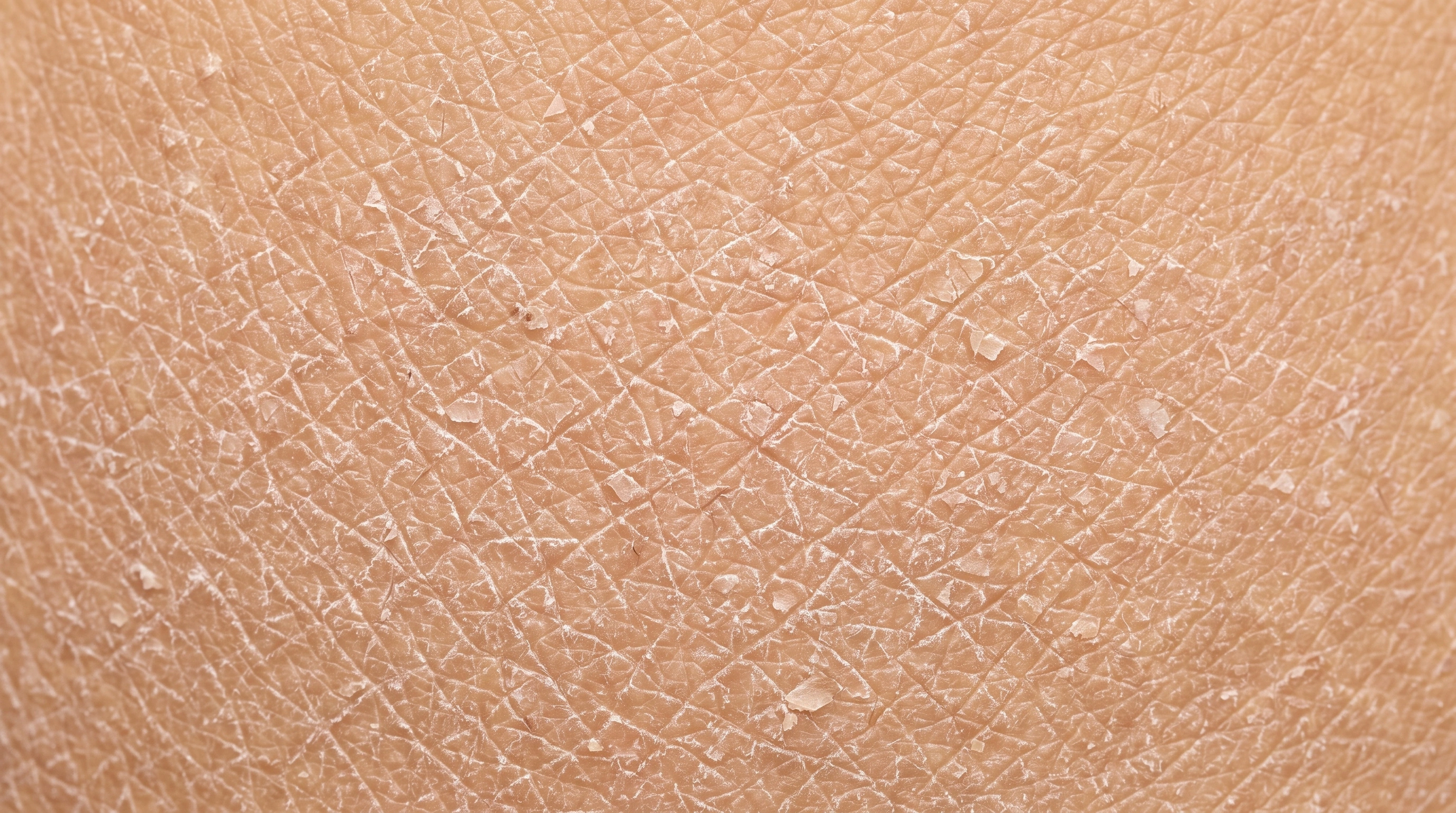
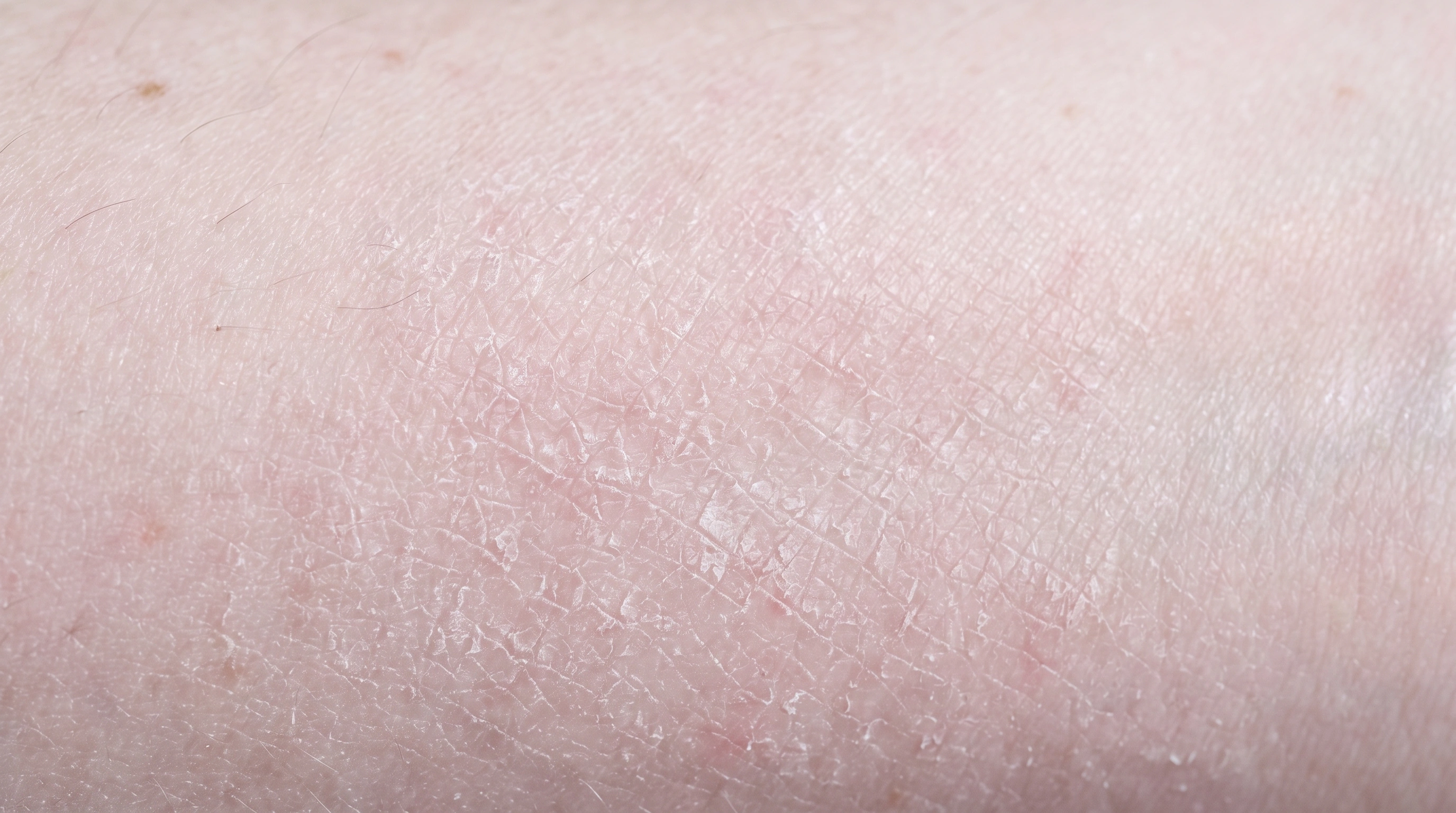
Athlete’s Foot: 1. Athlete’s Foot Header — Light Skin; Lighter skin.The front of one shin on pale skin. The surface is pink with fine white flaking and a few shallow cracks, and the skin around it is even in tone.

Key differences

The same eight facts on every condition comparison.

Usual age
Teens and adults
Any age; more in older adults
Where
Between toes, soles
Arms, lower legs, hands
Main sign
Itchy, peeling, cracked skin
Rough, flaky, tight skin
Itch or pain
Itchy
Often itchy
Contagious
Yes, on shared floors
No
Long term
Clears with cream; often returns
Improves in weeks with moisturizer
Scars
No
No
Who gets it
Sweaty feet, shared showers
Older adults, winter, hot showers

What is it?

Athlete’s Foot
Dry Skin
What is it?

It is a fungal infection.
Tinea pedis is infection of the outer foot skin by dermatophyte fungi.

It takes several forms.
It can cause peeling between toes, scale across the sole or itchy blisters.

Not every peeling foot is fungal.
Eczema, contact allergy and psoriasis can look similar.

Some people should act early.
People with diabetes, poor circulation or reduced immunity should seek advice early for skin breaks.

The skin lacks hydration.
Xerosis means the outer skin cannot hold adequate water.

The barrier holds moisture.
Natural water-binding substances and lipids help retain water; when disrupted, skin feels tight, rough, flaky or itchy.

It is not about drinking water.
Dry skin is not simply proof that someone is drinking too little.

Moisturizers work two ways.
Humectants such as glycerin attract water, while occlusives such as petrolatum reduce evaporation.

What it looks like

Athlete’s Foot

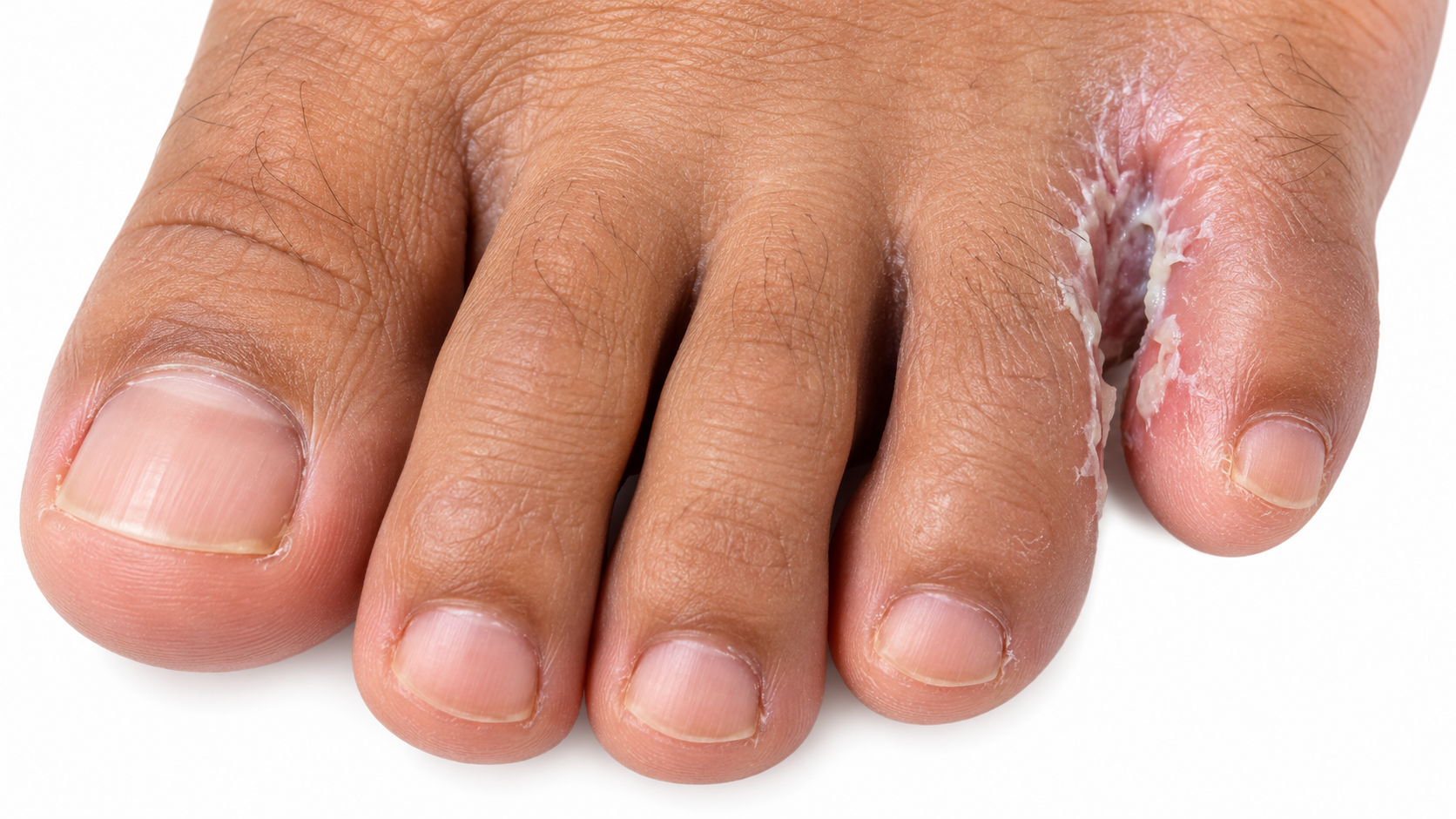
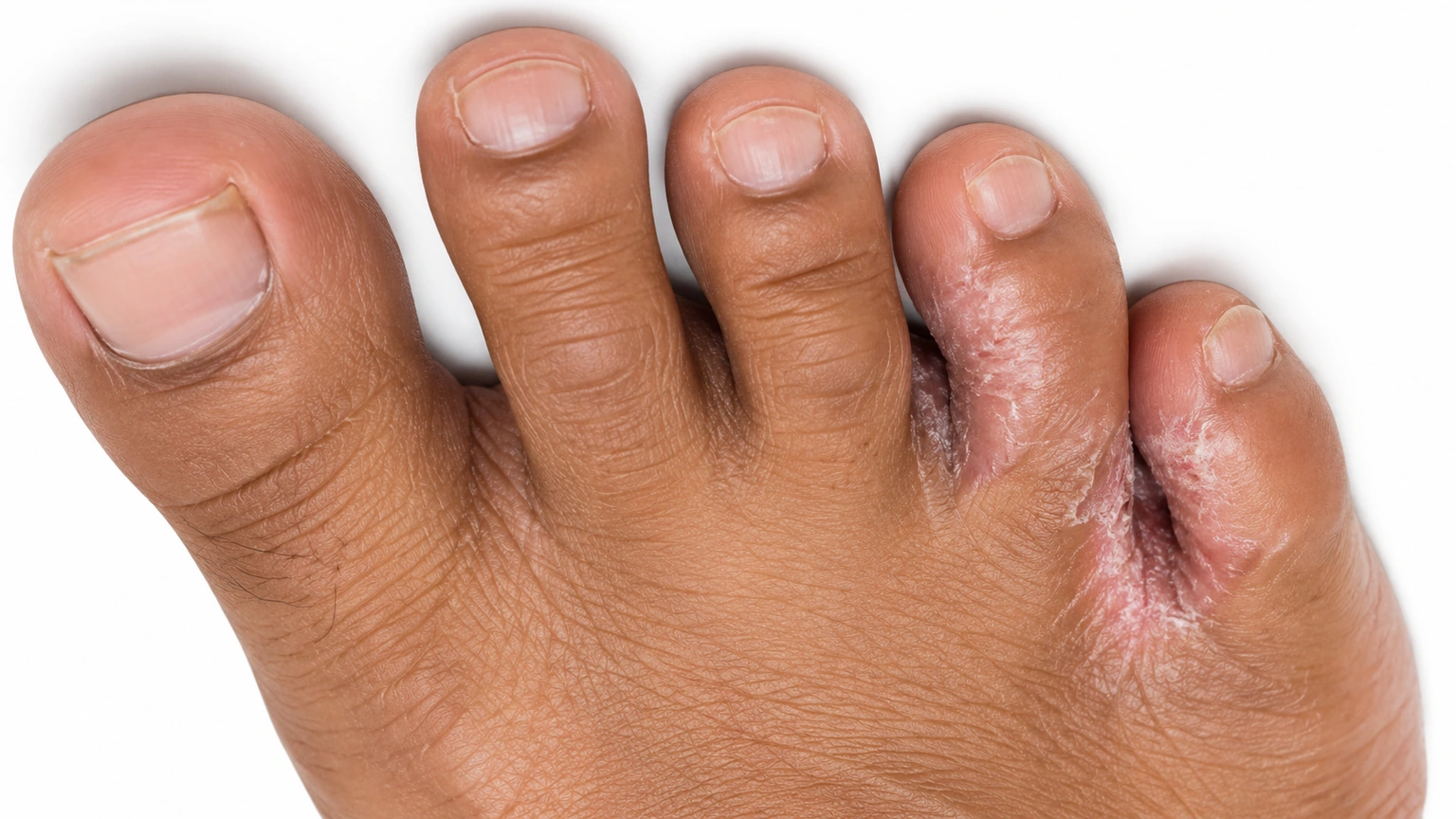
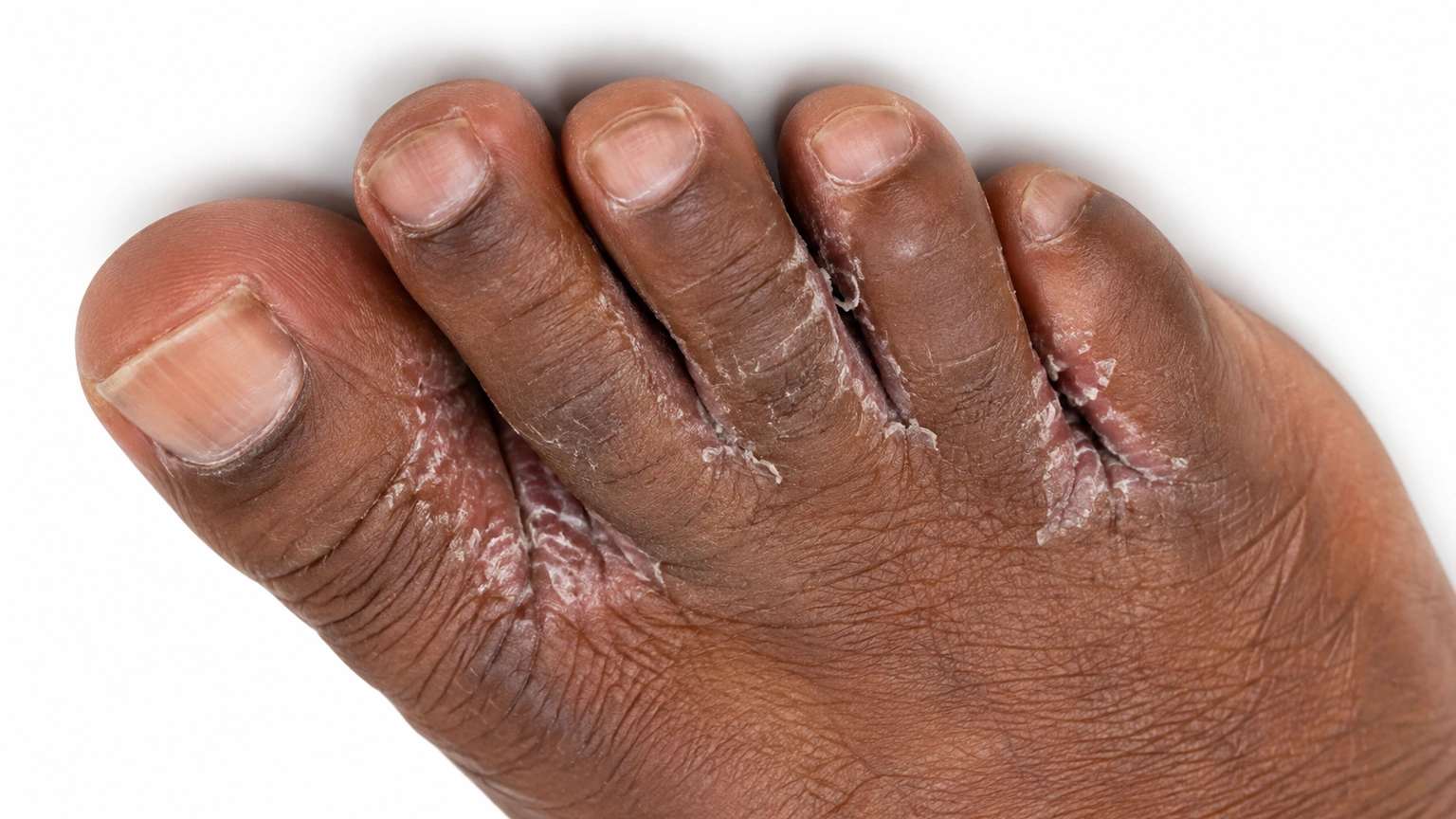
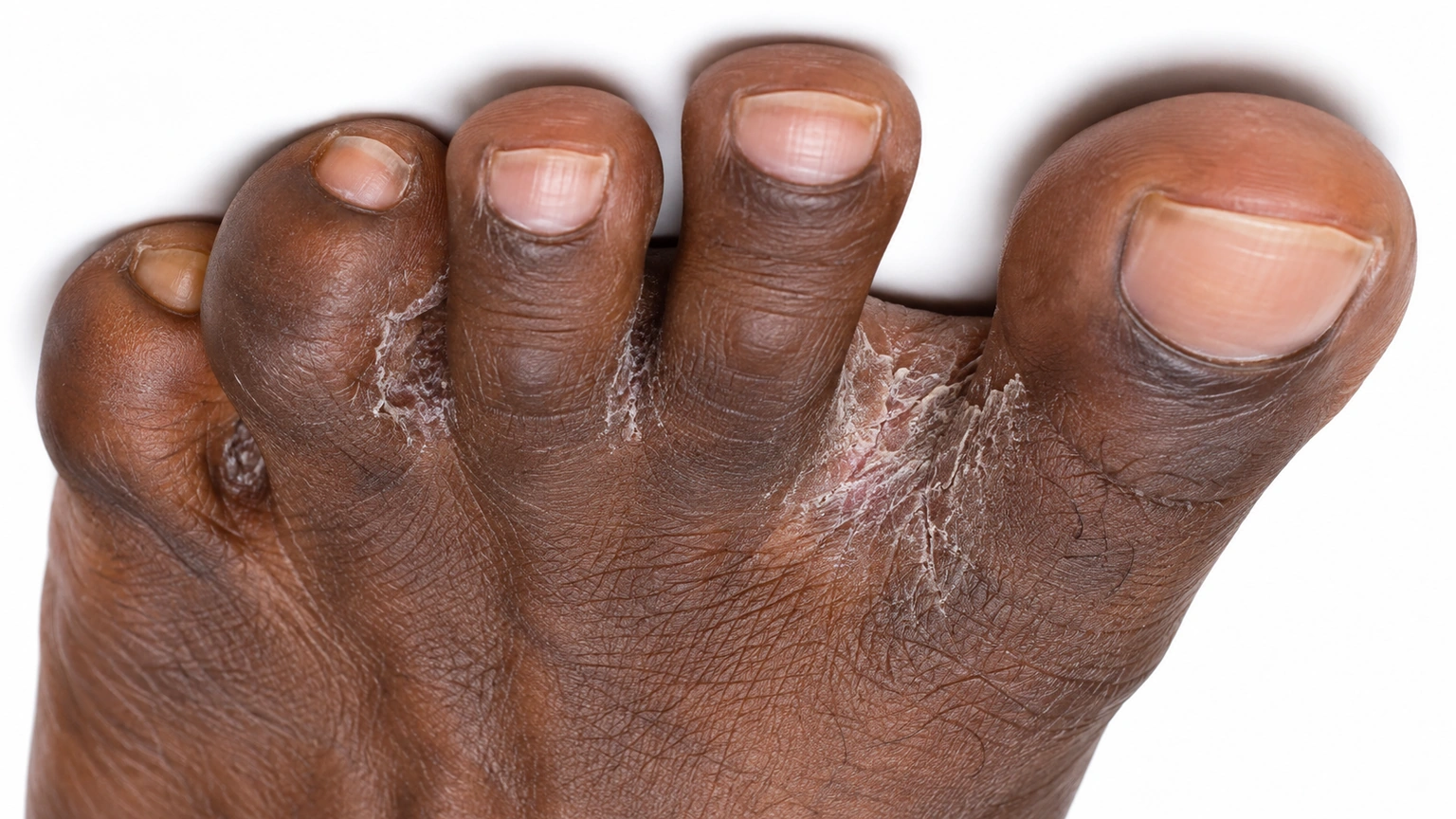
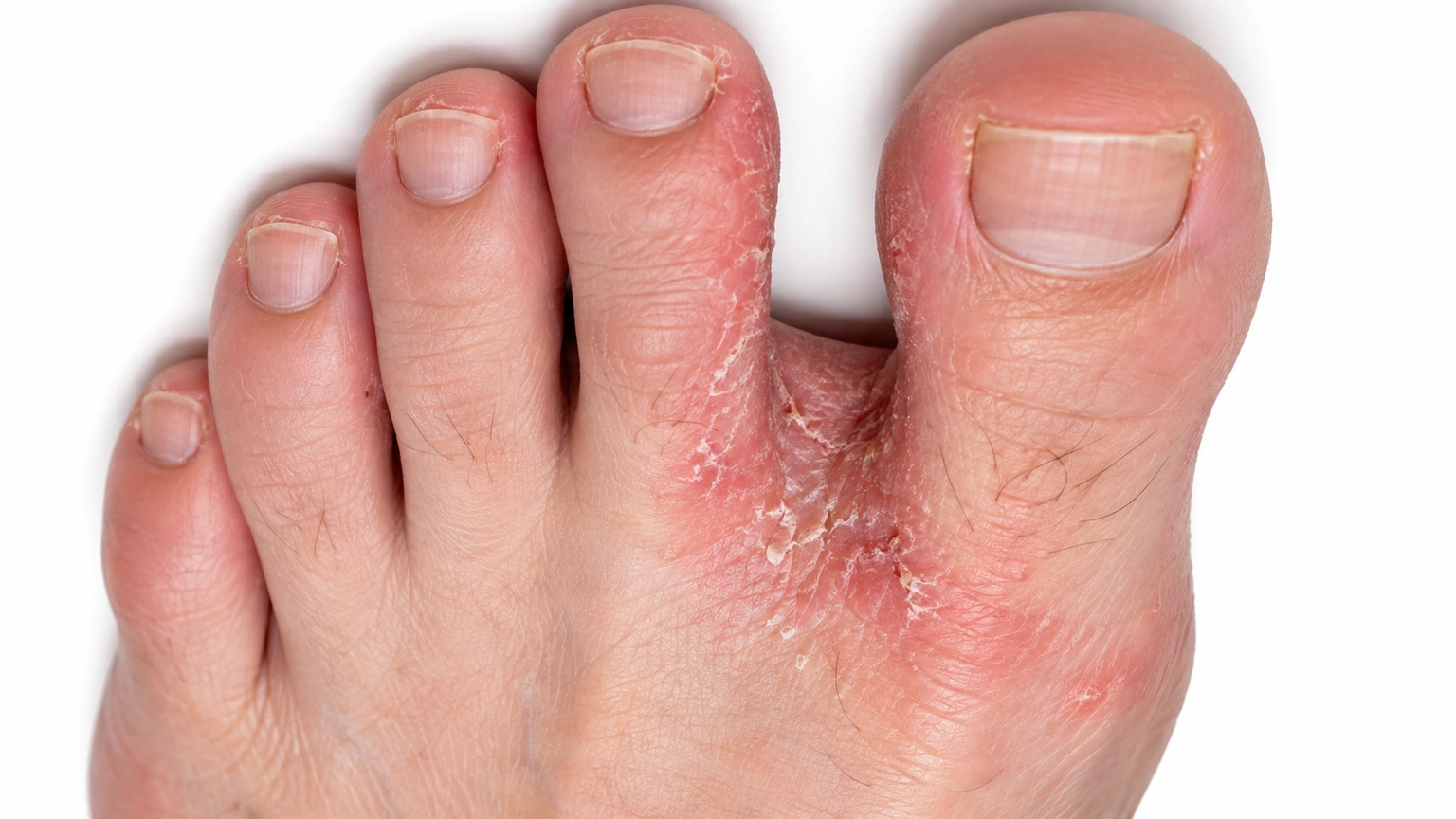
Athlete’s Foot: Between the toes; Interdigital.

Interdigital athlete’s foot Between the toes; the most common type.

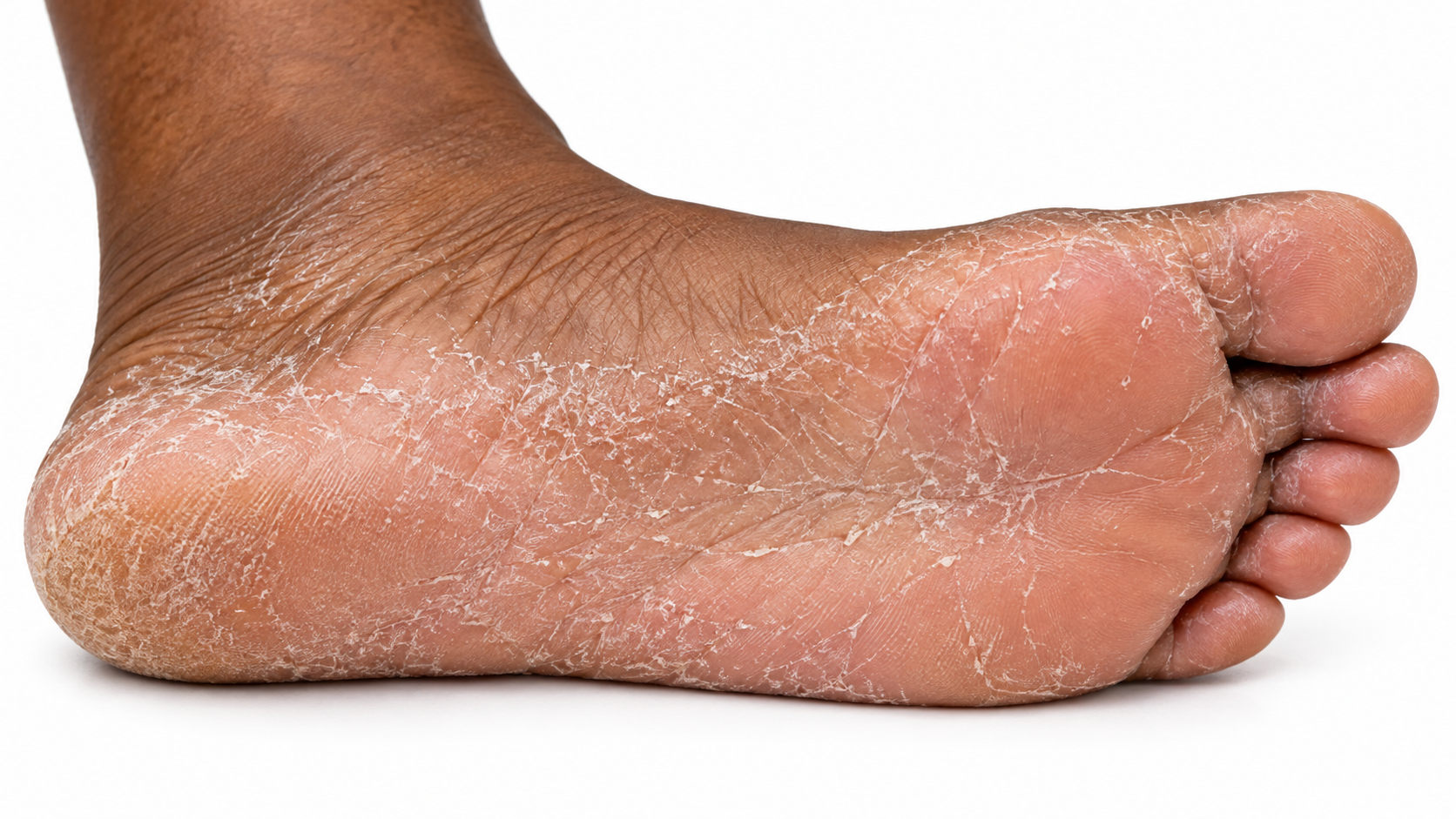
Athlete’s Foot: Moccasin scale; Moccasin.

Moccasin-type athlete’s foot Dry, thick scale on the sole and sides.

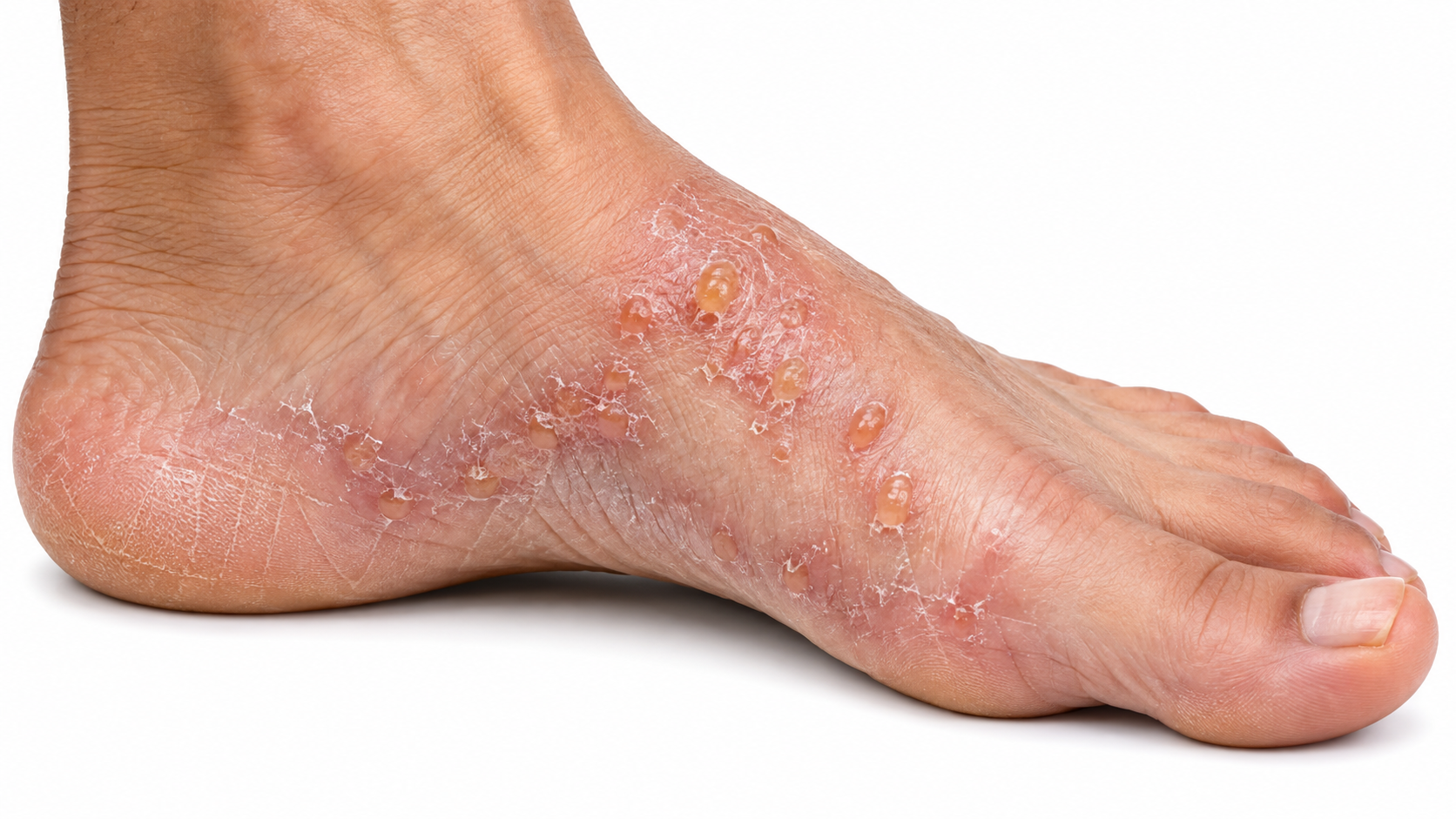
Athlete’s Foot: Blisters; Vesicular.

Vesicular athlete’s foot Small blisters, usually on the arch.

Dry Skin

Fine dry white flakes on the skin of the lower leg.

Flaky skin Fine white flakes.

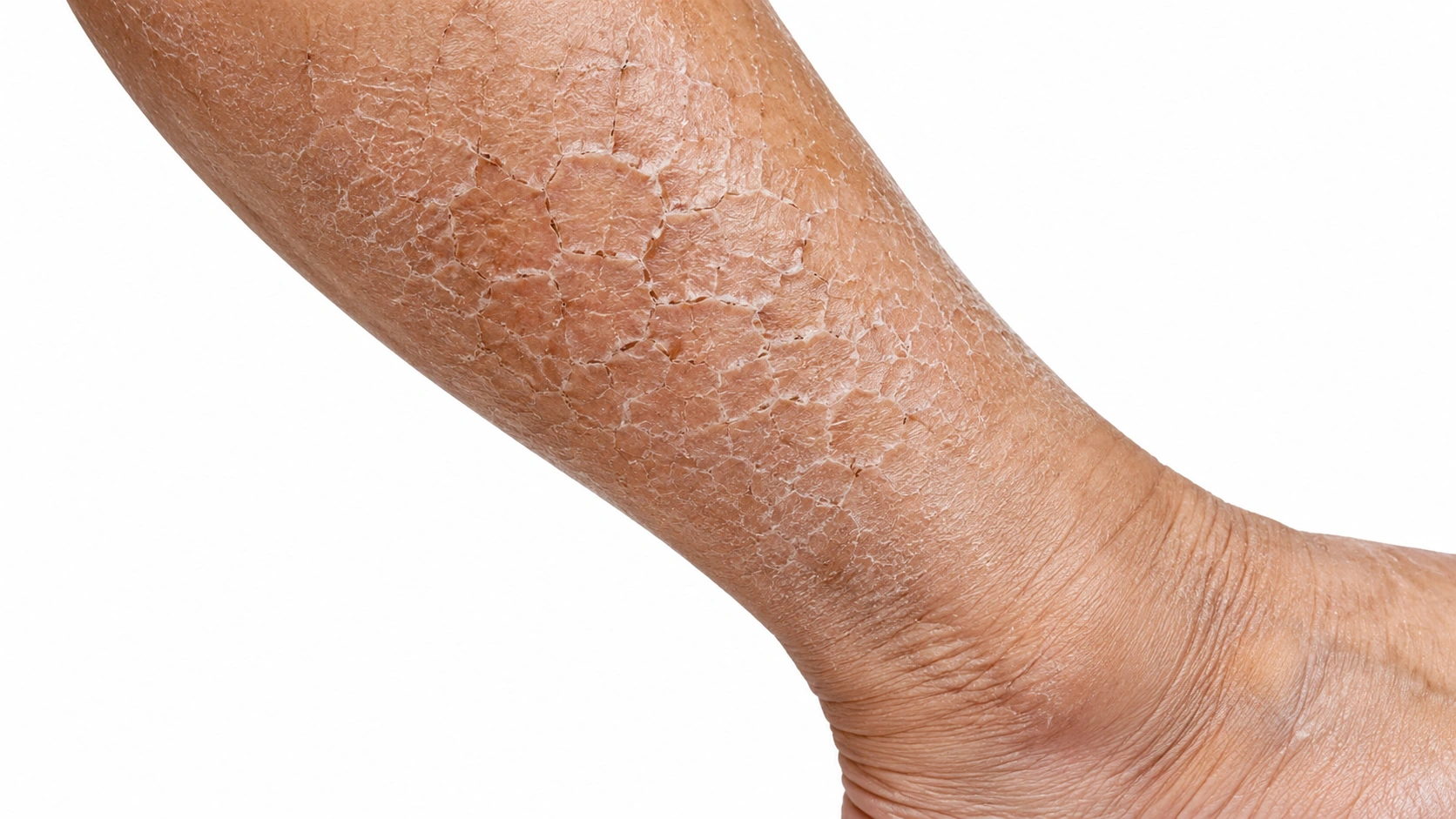
Cracked crazy-paving pattern on the lower leg.

Cracked skin Crazy-paving cracks.

Rough dry skin and mild redness on the backs of both hands.

Rough hands Dry, tight, chapped skin.

Skin tones
Athlete’s Foot: 1. Athlete’s Foot Header — Light Skin; Lighter skin.
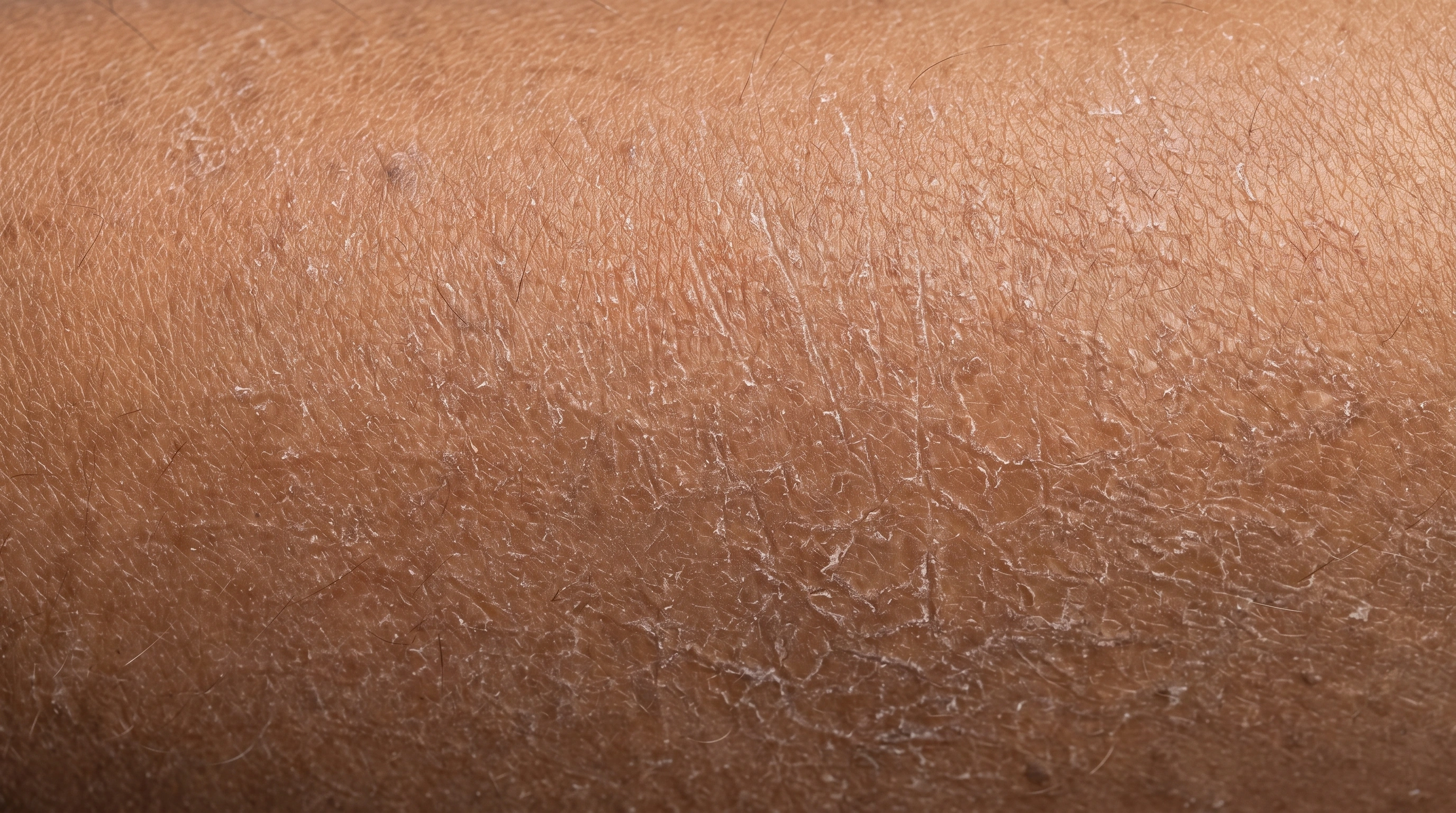
Athlete’s Foot: 2. Athlete’s Foot Header — Medium Skin; Medium skin.
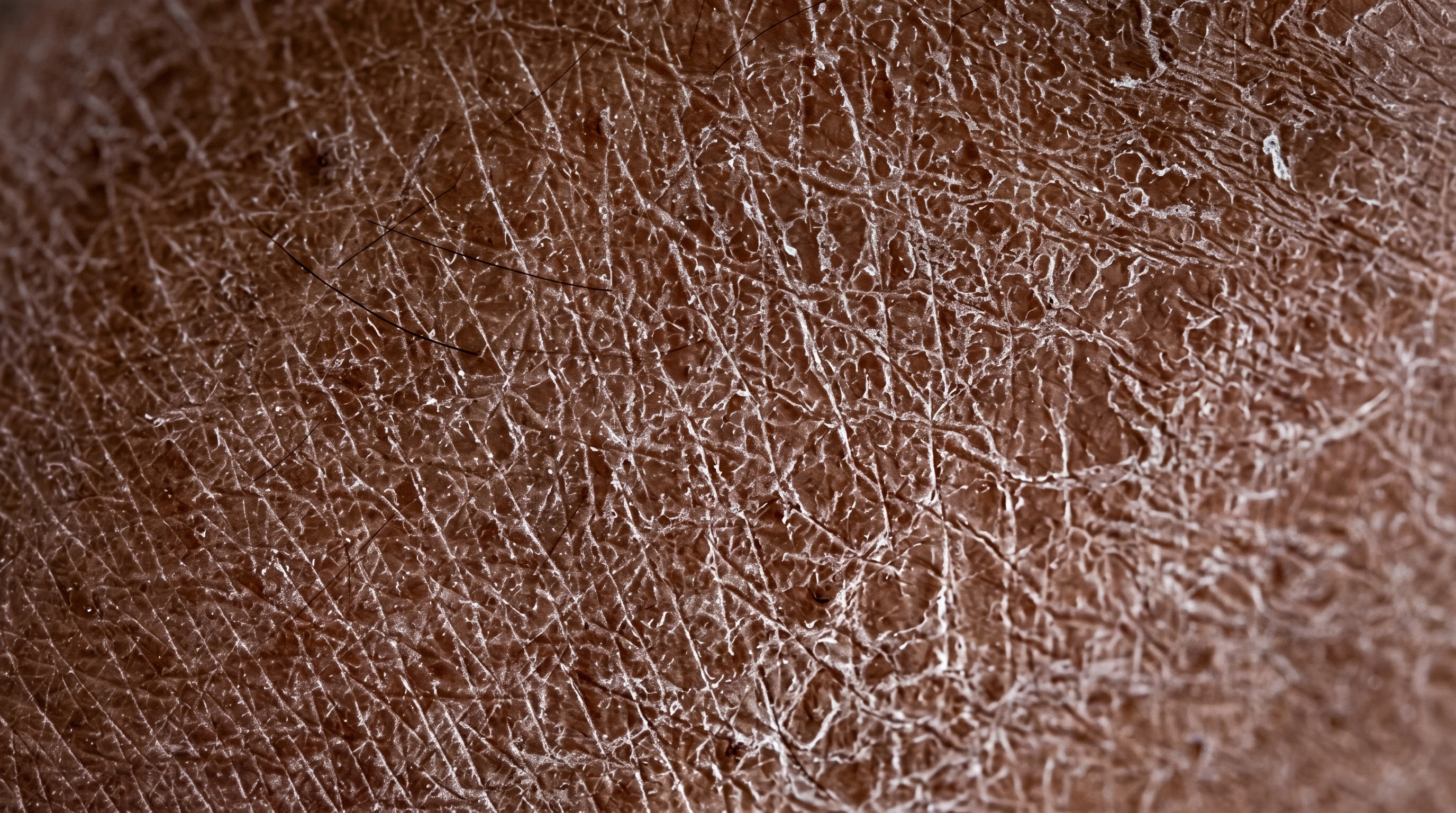
Athlete’s Foot: 3. Athlete’s Foot Header — Brown Skin; Brown skin.
Athlete’s Foot: 4. Athlete’s Foot Header — Deep Skin; Darker skin.
The front of one shin on pale skin. The surface is pink with fine white flaking and a few shallow cracks, and the skin around it is even in tone.
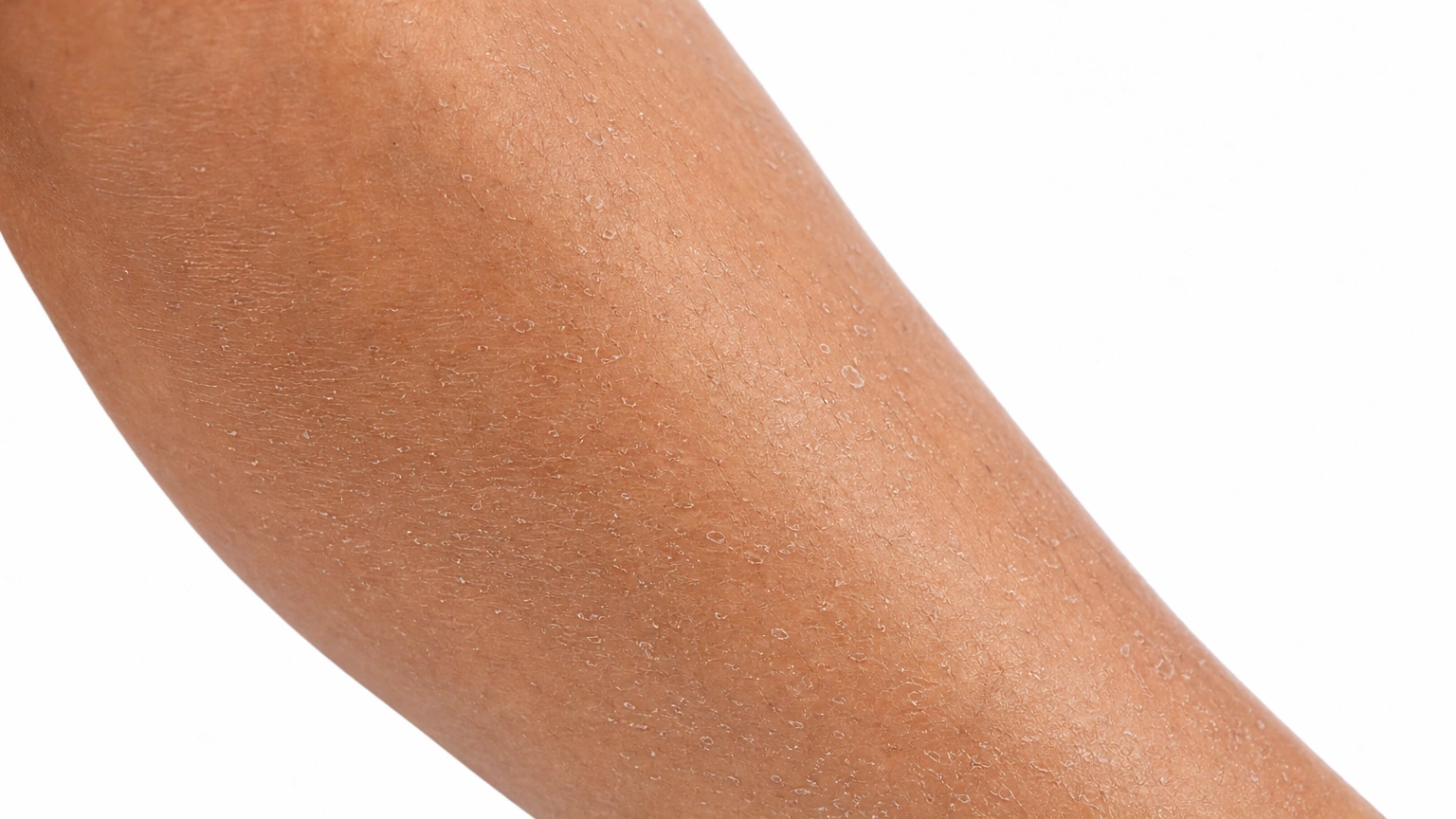
The front of one shin on medium olive skin. The surface has a dull, dusty gray cast with fine scale over an even skin tone.
The front of one shin on mid-brown skin, covered in a gray-white ashy cast with fine pale scale that stands out sharply against the surrounding even-toned skin.
The front of one shin on deep brown skin with a gray-white ashy cast and fine scale, and flat darker brown marks where the skin has been scratched.
Diagram
Athlete’s Foot mechanism diagram. Fungi reach the surface: Dermatophytes spread through contact. They grow in keratin: The fungi live in the outer skin layer. Skin flakes and becomes irritated: Moisture can encourage cracking and peeling.
Dry Skin mechanism diagram. Less moisture is retained: The outer layer loses its flexibility. The barrier becomes less effective: Changes in skin fats allow more water loss. Flaking and cracks appear: Dry surface cells shed unevenly.
In the skin

Dermatophyte fungi grow in the keratin of the outer skin of the feet. Moisture favors their growth, and the resulting irritation can cause itching, peeling and cracks.

The outer skin does not retain enough water when its barrier becomes less effective. Changes in skin fats and moisture reduce flexibility and can lead to roughness, flaking or cracks.

Where it shows up

Between the toes and on the feet
Arms, legs and hands

When it usually starts

010203040506070+

Athlete’s Foot. More common after puberty and in adults, especially with persistently damp feet.

Dry Skin. Can occur at any age and becomes more common in older adults.

Causes and triggers

Causes

Athlete's foot is caused by fungi that thrive in warm, damp places. They grow in the skin between the toes and on the soles.

Dry skin happens when the skin loses water faster than it can hold it, usually because its outer barrier is weakened.

Family tendency

Some people inherit a weaker barrier, often linked to eczema.

Risk factors
Sweaty feet, Tight, closed shoes, Diabetes, Weakened immunity
Age over 60, Eczema, Diabetes and thyroid disease, Wet work
How it spreads
  • Barefoot in locker rooms and pools — Well established
  • Shared towels and shoes — Strong link
  • Damp socks worn all day — Strong link
Trigger
● Athlete’s Foot
● Dry Skin
Cold, dry air
Not listed
Well established
Hot showers
Not listed
Well established
Harsh soaps
Not listed
Well established
Indoor heating
Not listed
Strong link

Daily Care

Athlete’s Foot
Dry Skin
Daily care

Habits that help

  • Dry between the toes deliberately
    A separate corner of the towel, or a cool hairdryer.
  • Change socks when they are damp
    The number of changes beats the fabric.
  • Alternate two pairs of shoes
    Drying time makes the inside less hospitable.
  • Wear sandals on communal floors
    Where most reinfection starts.
  • Wash socks, towels and mats hot
    Cuts the fungus circulating at home.
  • Complete the antifungal course specified for your product
    Treatment length differs between antifungals. Complete the product-specific course rather than extending every medicine for a fixed extra period.
  • Treat heavy foot sweating
    An antiperspirant made for feet treats the cause.
  • Reduce prolonged heat and dampness when possible
    Recurrences cluster in summer.

Avoid

  • Avoid: Wearing the same shoes every day
    Shoes need about 24 hours to dry inside.
  • Avoid: Closed, non-breathable footwear
    Boots and heavy trainers hold sweat against the skin.
  • Avoid: Not drying between the toes
    Wet web spaces are what the fungus wants.
  • Avoid: Leaving damp socks on
    Keeps the skin softened for hours.
  • Avoid: Walking barefoot on wet floors
    Where most people meet it.
  • Avoid: Sharing towels, shoes and clippers
    How it spreads and reinfects a treated foot.
  • Avoid: Picking and peeling loose skin
    Tears the barrier open and spreads it.
  • Avoid: Strong home soaks
    Bleach and vinegar damage skin more reliably than fungus.
  • Avoid: Putting underwear on before socks
    A known way of moving fungus to the groin.
  • Avoid: Stopping the cream when itching stops
    The itch goes long before the fungus.
  • Avoid: Treating the skin, not the nails
    Nails reseed the skin with every sock.
  • Avoid: Untreated feet in the household
    The shared bathroom floor keeps it going.
  • Avoid: Vinegar and bleach soaks
    Avoid harsh home soaks that irritate and crack the skin.
  • Avoid: Hydrocortisone
    A steroid cream calms the itch, so it feels like it is helping, while the fungus spreads underneath with less to show for it. The rash it leaves is harder to recognize and harder to treat, and it makes a later scraping unreliable. Do not put a steroid on an undiagnosed foot rash.
  • Avoid: Steroid-antifungal creams
    Combination creams that mix a steroid with an antifungal are still prescribed for itchy foot rashes. The steroid takes the itch away quickly and lets the fungus spread wider and deeper, which is a common route to a longer, harder-to-treat infection. A plain antifungal is the better choice on a foot.

Habits that help

  • Moisturize on damp skin
    Within three minutes of the shower.
  • Cream or ointment, not lotion
    Lotions are mostly water.
  • A gentle, fragrance-free cleanser
    Only where it is needed.
  • Shorter, cooler showers
    Five to ten minutes, warm not hot, once a day.
  • Ointment under gloves overnight
    Apply a plain ointment and use comfortable gloves to protect dry hands overnight.
  • A humidifier in the bedroom
    Works on the air, not the skin.
  • Wear gloves
    For washing up, cleaning and cold weather.
  • Take an oatmeal bath
    Modest relief for itch, gentle on broken skin.
  • Cold rather than hot for itch
    A cool compress settles itch; a hot shower worsens it.
  • Keep nails short
    Limits damage while the barrier rebuilds.

Avoid

  • Avoid: Long, hot showers and baths
    Heat dissolves skin oils.
  • Avoid: Bar soap and foaming cleansers
    Squeaky skin means the oils went.
  • Avoid: Washing the whole body every day
    Water alone suffices for limbs and trunk.
  • Avoid: Indoor heating and air conditioning
    Dry air pulls water out.
  • Avoid: Wind and cold air on exposed skin
    Faces, hands and lips go fastest.
  • Avoid: Scrubs, loofahs and brushes
    Strips the barrier holding water in.
  • Avoid: Alcohol-based toners and witch hazel
    They remove the little oil left.
  • Avoid: Strong actives on dry skin
    Retinoids, acids and benzoyl peroxide increase water loss.
  • Avoid: Fragranced products on cracked skin
    Cracks let fragrance deeper.
  • Avoid: Scratching and rubbing
    Damages the layer holding water in.
  • Avoid: Wool and rough fabrics
    An irritant on skin that lost its cushion.
  • Avoid: Waiting to moisturize
    Cream on damp skin traps water already there.
  • Avoid: Stopping as soon as it looks better
    The barrier rebuilds slower than flaking clears.

Treatment differences

Evidence labels come from each condition’s own treatment list.

Treatment
● Athlete’s Foot
● Dry Skin
Filter by type
Athlete’s foot type

Select one or more.

All types
Over-the-counter
Existing educational treatment illustration: Spinosad

Terbinafine cream

Strong evidence

The most effective thing you can buy for athlete's foot, and the shortest course: once or twice a day for one to two weeks between the toes. It kills the fungus rather than just stopping it growing, which is why it works faster than the older creams. It will not clear an infected toenail, and it will not clear thick sole scale on its own.

Clotrimazole or miconazole cream.

Clotrimazole or miconazole cream

Strong evidence

The cheap, widely available option, applied twice a day for four weeks. It works well, it just takes longer than terbinafine, so the temptation to stop early is greater. Cover the whole foot and both feet, and carry on for one to two weeks after the skin looks normal.

Ketoconazole cream.

Ketoconazole cream

Strong evidence

Another azole cream, sold over the counter in some places and on prescription in others. It is a reasonable alternative if clotrimazole or miconazole has irritated the skin. It is no faster than they are, and the same four-week discipline applies.

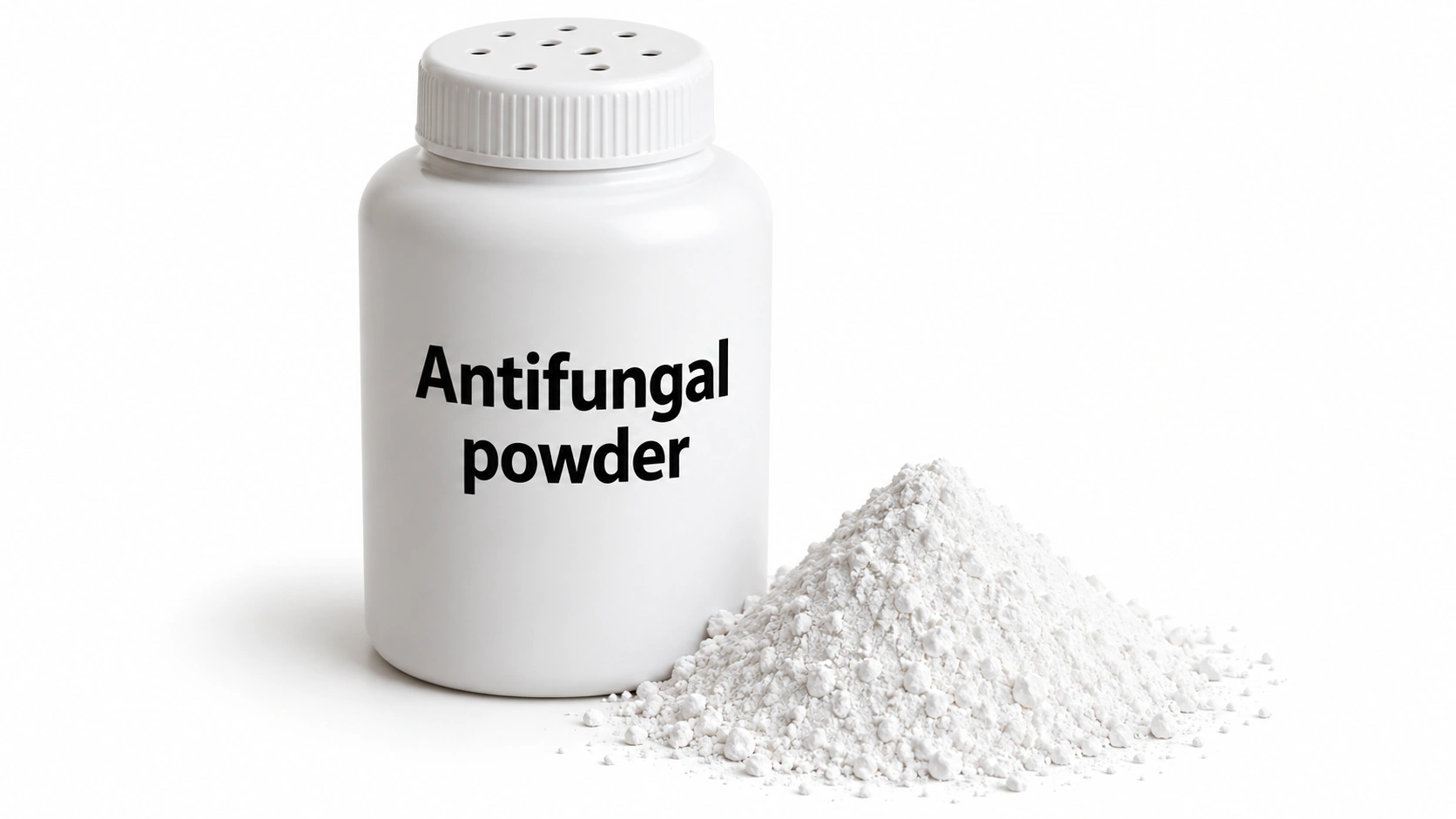
Existing illustration of Antifungal powder.

Antifungal powder and sprays

Limited evidence

Powder keeps feet and the inside of shoes dry and lowers the amount of fungus you put back on your foot each morning. It is prevention, and it is good at it. It is not strong enough to clear an established infection, so use a cream to clear it and powder to keep it away.

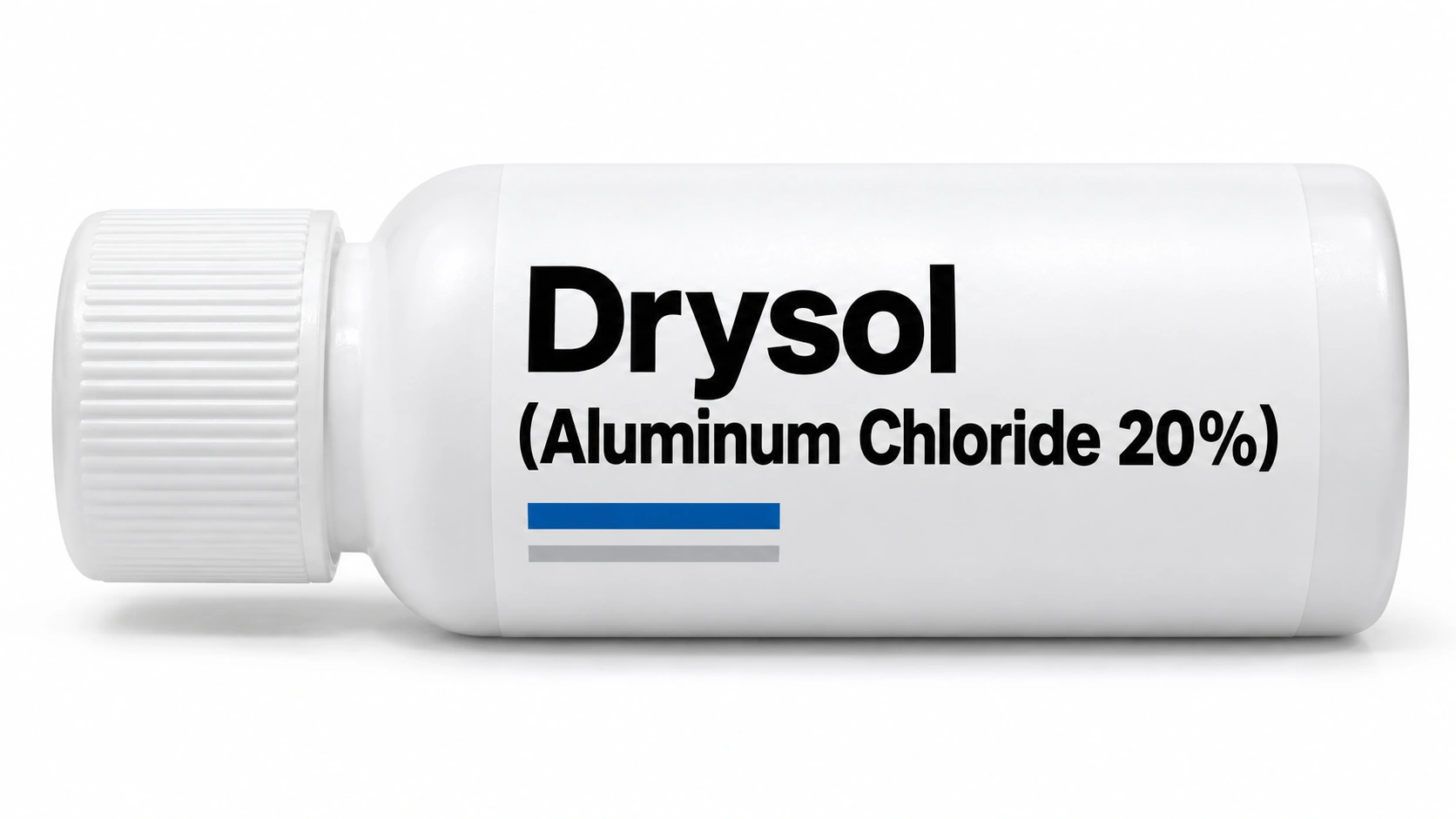
A white small dropper bottle on a white background, with a plain white label reading Aluminum Chloride and a blue swoosh beneath it.

Foot antiperspirant

Limited evidence

An aluminum-based antiperspirant made for feet cuts the sweating that keeps the skin soft and the shoe damp. It treats the cause of recurrence rather than the infection itself. Useful for people who clear it every time and get it back every summer.

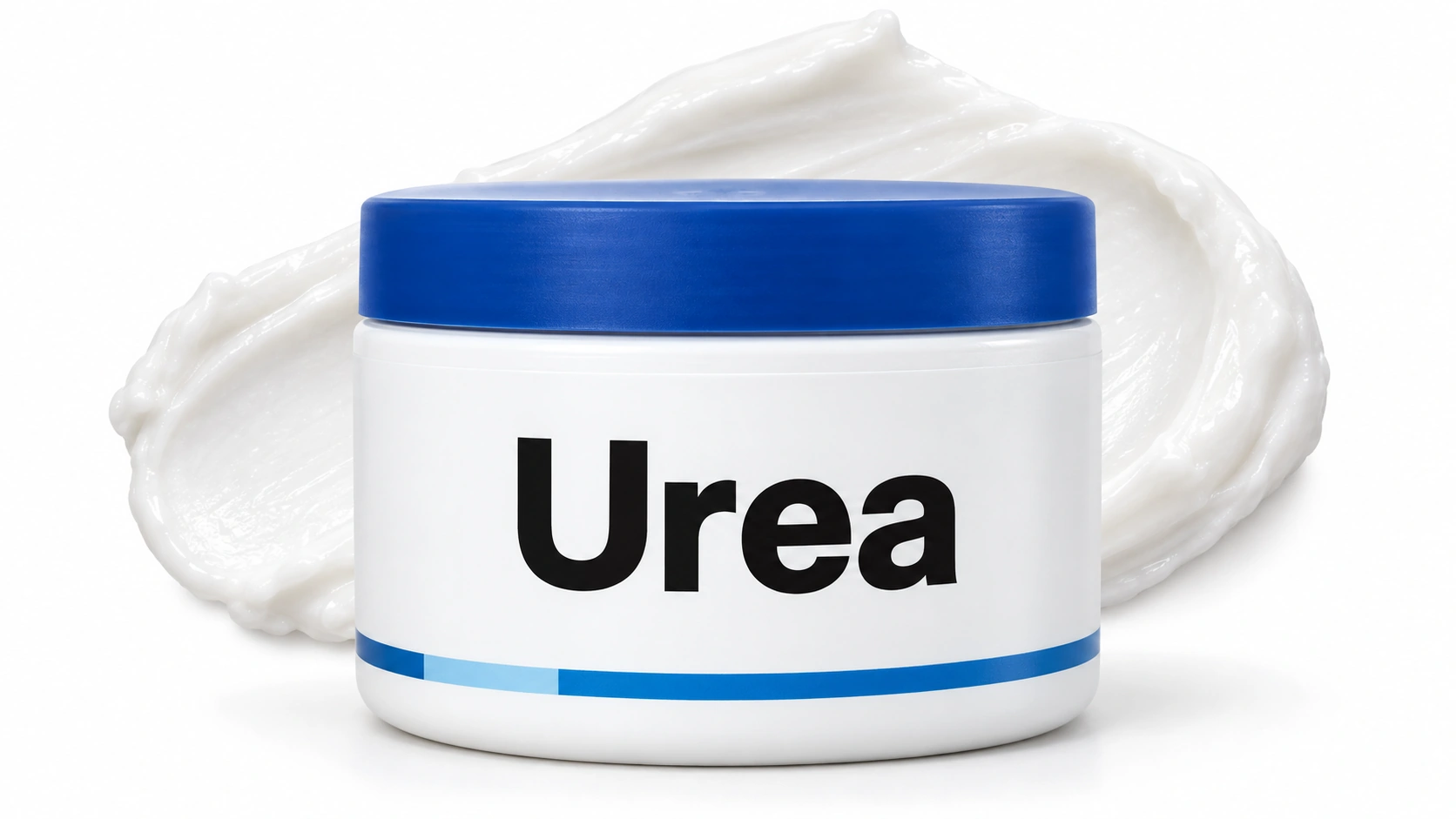
Five white jars of 40% urea cream lined up, several also listing 2% salicylic acid

Urea

Limited evidence

A urea or salicylic acid cream thins the hard scale on the sole so an antifungal can actually reach the skin underneath. It is a helper, not a treatment: on its own it does nothing to the fungus. It is worth adding for the dry moccasin pattern, where cream otherwise sits on top of the thickened surface.

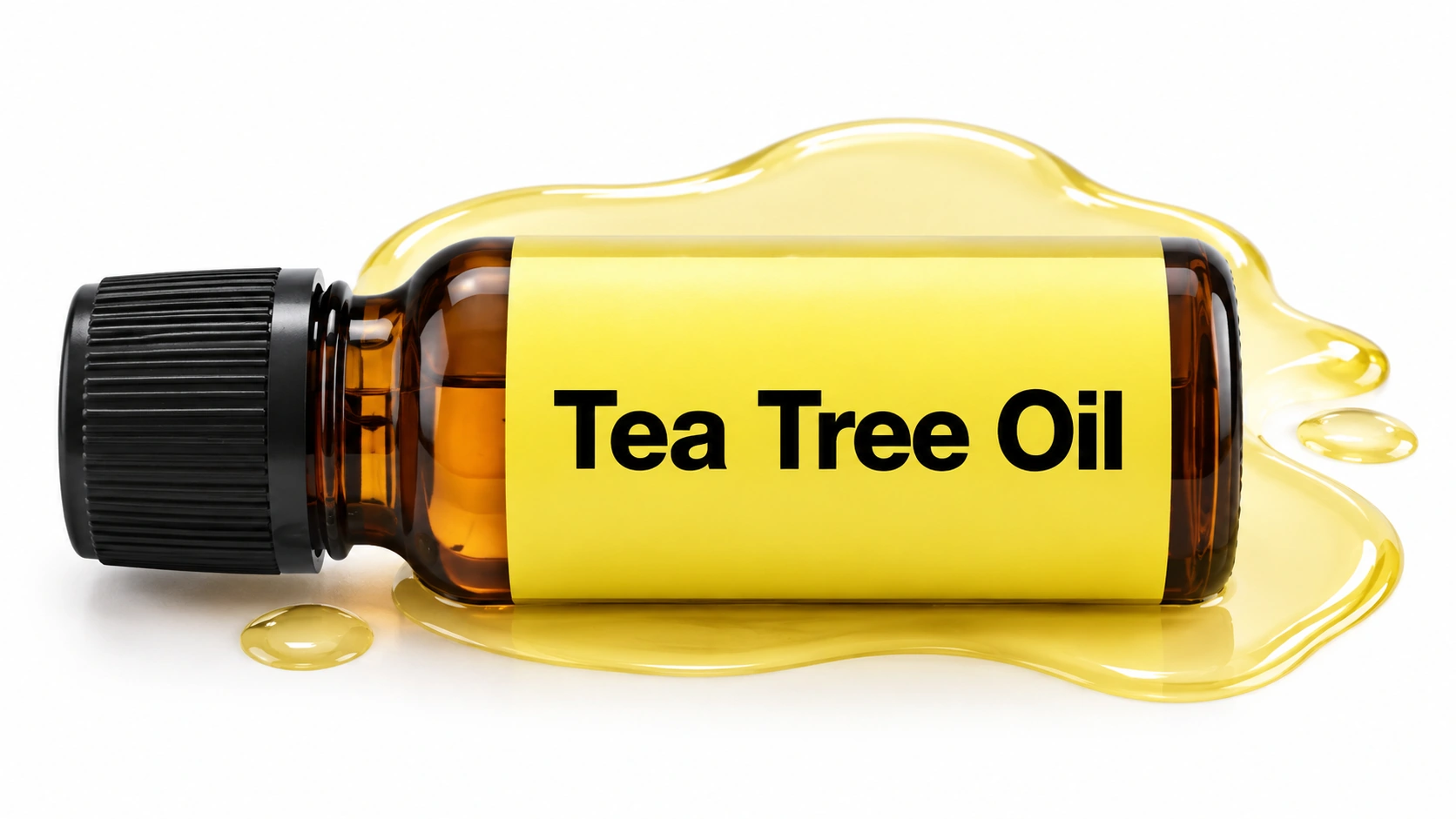
Five dark glass tea tree essential oil bottles with glass droppers and one green box on white

Tea Tree Oil

Limited evidence

Tea tree oil has some antifungal activity and a few small studies behind it, but it clears fewer infections than the pharmacy creams and takes longer. It also causes allergic reactions on the feet often enough to matter. An antifungal cream costs about the same and works.

Five white jars of 40% urea cream lined up, several also listing 2% salicylic acid

Urea

Strong evidence

The best choice for thick, scaly skin on heels, shins and elbows, because it softens and dissolves the scale as well as holding water. Ten to twenty percent for general dryness, forty percent for hard heel skin. It is the alternative to scrubbing, which removes the barrier along with the flakes. It stings on cracked or broken skin, so heal the cracks first.

A thick, fragrance-free cream

A thick, fragrance-free cream

Moderate evidence

A cream or ointment from a tub, not a lotion from a pump — lotions are mostly water and evaporate. Put it on damp skin within three minutes of the shower, and again before bed. Timing matters more than which one you buy, and several of the most effective are inexpensive drugstore creams. Give any of them two weeks before deciding.

A plain white ointment tube lying on its side, labeled Hydrocortisone with a blue swoosh.

Hydrocortisone 1%

Limited evidence

A few days of over-the-counter steroid cream can break the itch-scratch cycle when dry skin has turned red and itchy and moisturizer alone is not holding it. Use it twice a day for no more than a week, on the itchy patches only, with the moisturizer continuing around it. If you need it repeatedly, that is a reason to be seen rather than to keep buying it.

Four ointments on white: CeraVe Healing Ointment, a Vaseline jar, a petroleum jelly tube and Aquaphor

Petrolatum

Moderate evidence

The most effective sealer there is, cutting water loss from the outer layer by more than any other single ingredient. It works best as the last step over a cream, and under cotton gloves or socks overnight it does more for cracked hands and heels in three nights than a cream does in three weeks. It is greasy, which is the only real objection to it.

Four ceramide moisturizers lined up on white: two tubes, a CeraVe tub and a blue jar

Ceramides

Moderate evidence

Ceramides are part of the fatty glue that dry skin has lost, so a cream containing them replaces the actual missing material rather than just covering it. They are the ingredient with the most evidence behind them for rebuilding the barrier over weeks, and they are the reason certain inexpensive drugstore creams are recommended so often. They are slow rather than dramatic, and they belong in your everyday cream.

Five moisturizer bottles containing glycerin lined up on white, including a bottle of pure vegetable glycerin

Glycerin

Moderate evidence

Pulls water into the outer layer and holds it there, which is why almost every good moisturizer has it high on the list. It works best paired with something that seals, such as petrolatum or dimethicone, because water drawn in with nothing over the top simply leaves again. In very dry indoor air, glycerin alone is not enough.

Five lactic acid serums lined up on white, from The Ordinary, Glytone, Paula's Choice and Prequel

Lactic Acid

Moderate evidence

Loosens stuck-together flakes chemically and draws water in at the same time, so it suits rough, bumpy dryness on the arms and legs. It is gentler than urea on large areas but stings more on cracks and on freshly shaved skin. Use it two or three times a week alongside a plain cream, not instead of one.

Five colloidal oatmeal eczema products lined up on white: tubes, a jar and a pump lotion

Colloidal Oatmeal

Moderate evidence

A lukewarm oatmeal bath gives modest but genuine relief from the itch, and it is gentle enough for broken and cracked skin, which most itch treatments are not. Ten to fifteen minutes, then straight into a cream on damp skin. It settles the itch for a few hours; it does not repair the barrier that caused it.

Three cream tubes on white: Nurture Valley Barrier Cream, Secura Dimethicone Protectant and Medline Remedy Moisturize

Dimethicone

Limited evidence

A silicone that forms a breathable seal over the skin, so it holds water in without the greasiness of petrolatum. That makes it the practical option for hands during the day and for anywhere clothes have to go straight back on. It seals but replaces nothing, so it works best in a cream that also contains ceramides or glycerin.

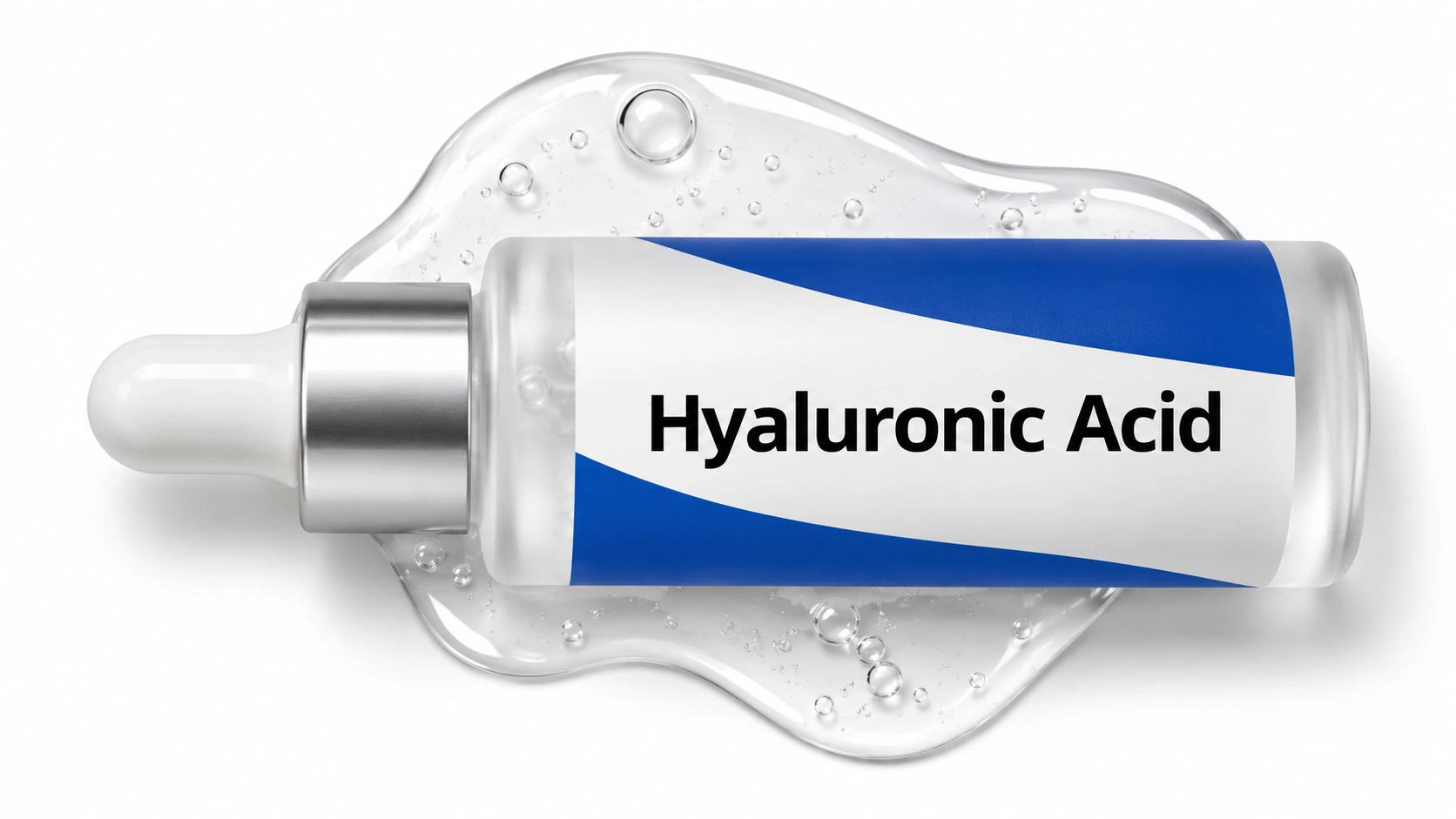
Five hyaluronic acid serums lined up on white, pump bottles and dropper bottles with their boxes

Hyaluronic Acid

Limited evidence

Holds a great deal of water, which makes skin look plumper straight away, but it seals nothing. In dry indoor air or a cold winter it can pull water up out of the deeper skin and let it evaporate, leaving the surface tighter than before. It is only useful here applied to damp skin with a cream over the top.

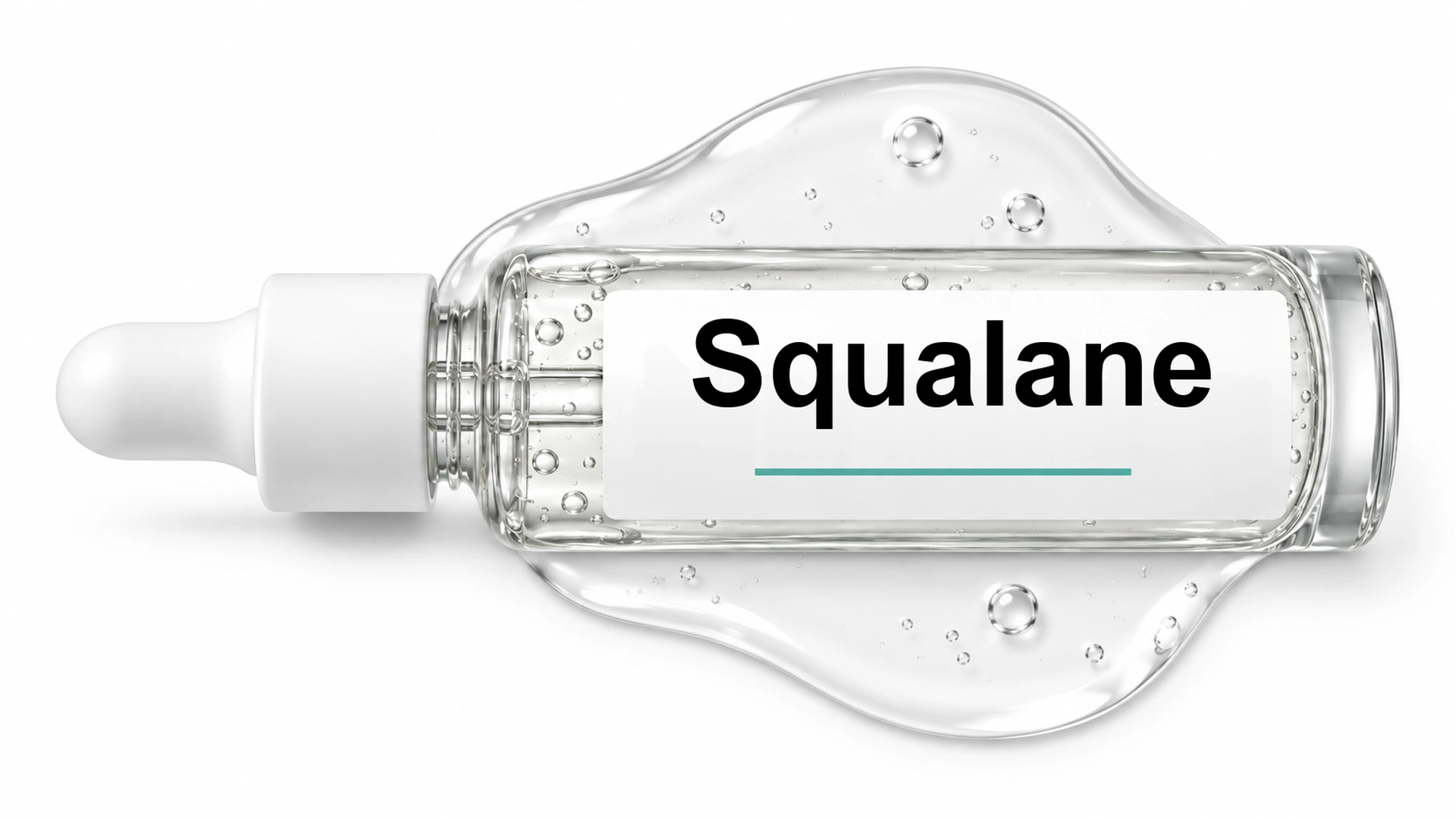
Five squalane oils with two boxes on white, from Timeless, Good Molecules, Natural Outcome, Pure'am and The Ordinary

Squalane

Limited evidence

A light oil that is close to one the skin makes itself, so it sits comfortably on the face and rarely causes spots. It softens and adds a little seal. It replaces very little of what dry skin has actually lost, so it works as a finishing layer over a ceramide cream rather than as the moisturizer itself.

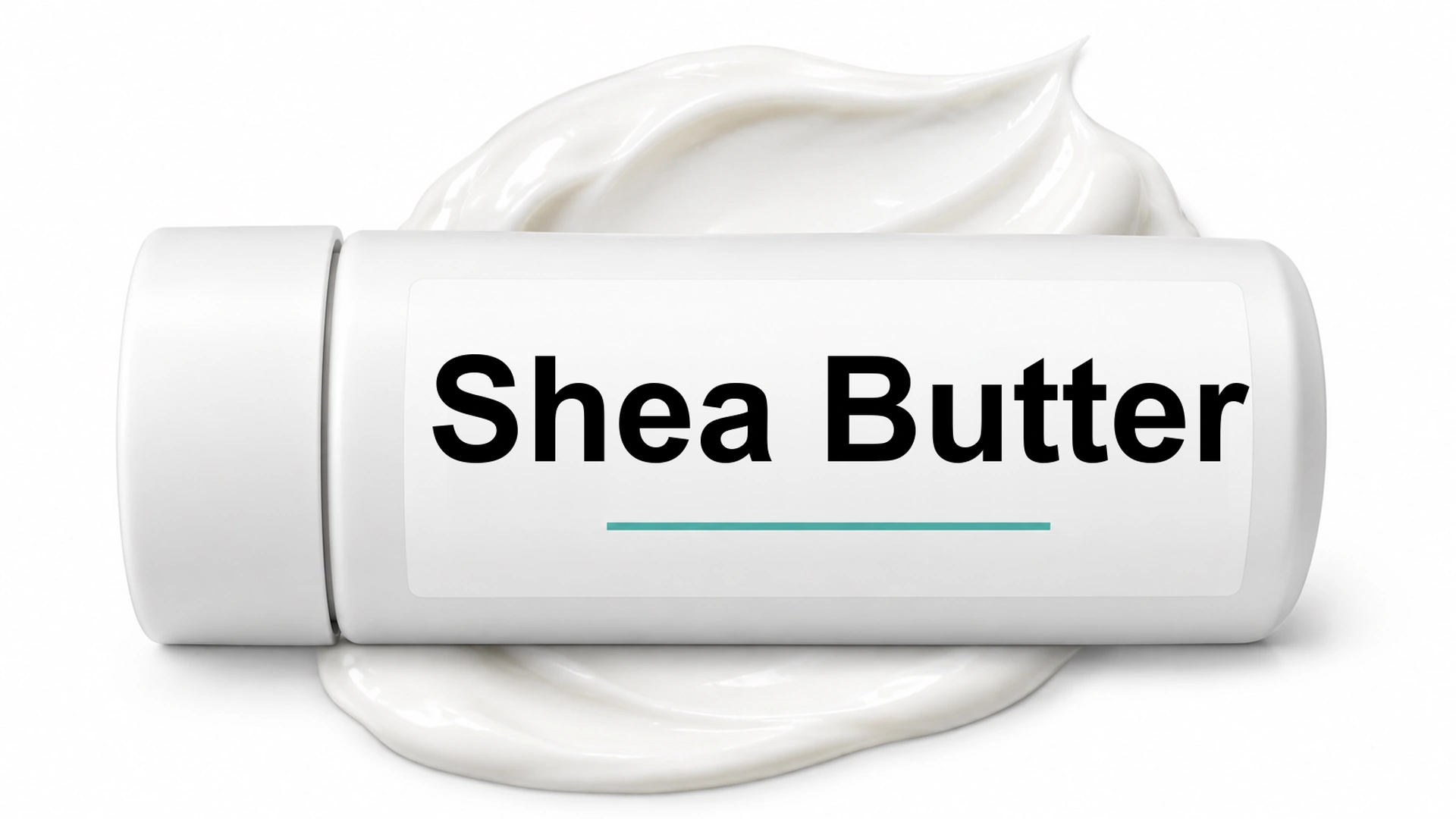
Five tubs of body cream on white, including Karité shea butter, CeraVe, Nivea, Vaseline Radiant and Palmer's

Shea Butter

Limited evidence

Rich and pleasant on ashy shins and elbows, and thick enough to stay where it is put. It seals reasonably well and replaces some fatty acids, but it does not contain the ceramides the barrier is short of. Unrefined versions carry a natural scent that can irritate cracked skin, so a fragrance-free formulation is the safer pick.

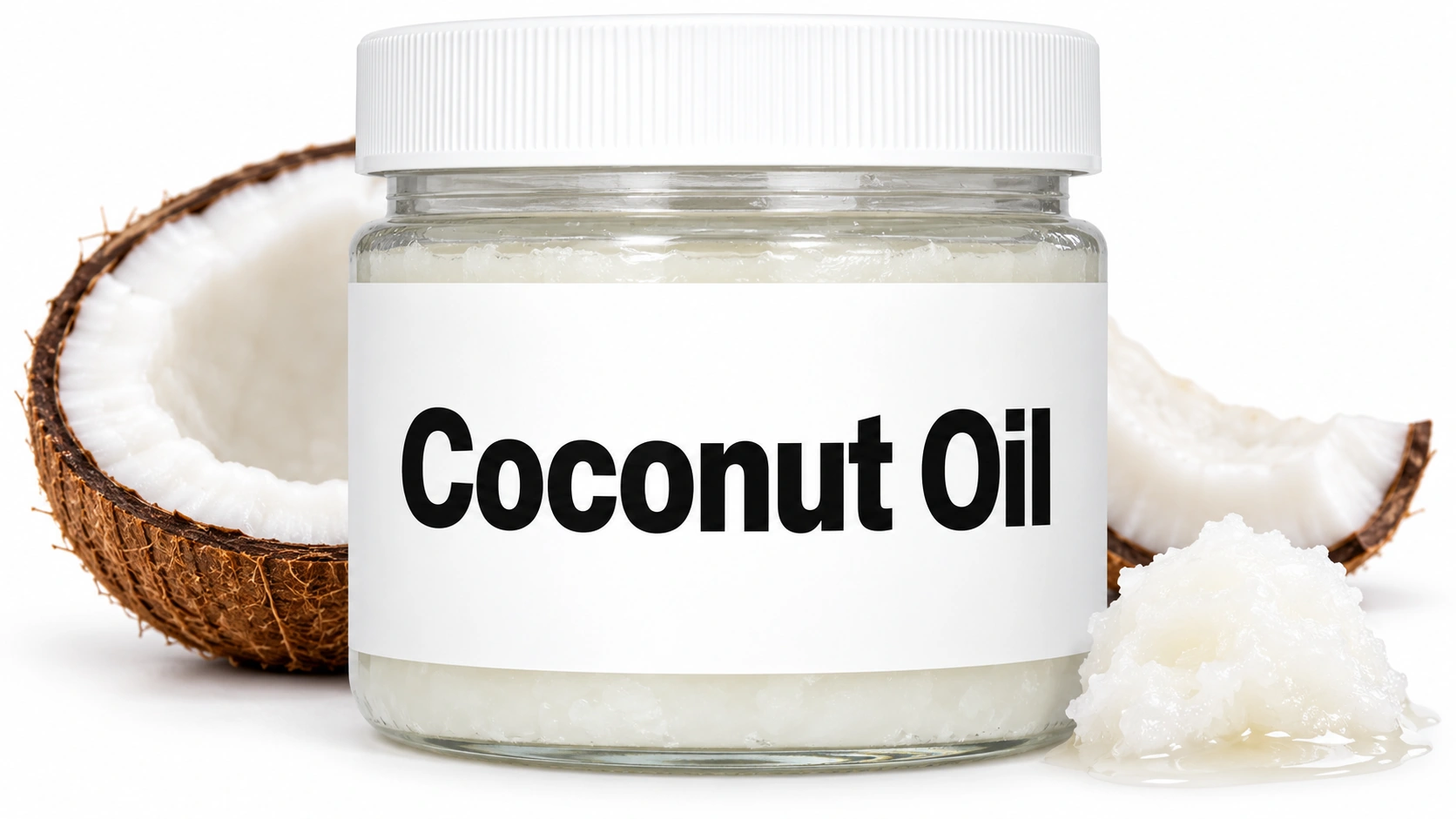
Five coconut oil bottles and a jar on white, most labeled fractionated or organic virgin coconut oil

Coconut Oil

Limited evidence

It seals reasonably and it feels good, and that is most of what it does. It replaces very little of what the skin lost, it clogs pores in some people, and on the face and back it can cause spots. If you like it, use it over a cream rather than instead of one — it is a lid, not a repair.

Prescription topicals

Ciclopirox

Strong evidence

Ciclopirox nail lacquer. An older nail lacquer, applied daily for up to a year with the build-up removed weekly. It clears only a small share of infected nails on its own. It is worth knowing about, but if the nails are the reason your feet keep flaring, tablets are the conversation to have.

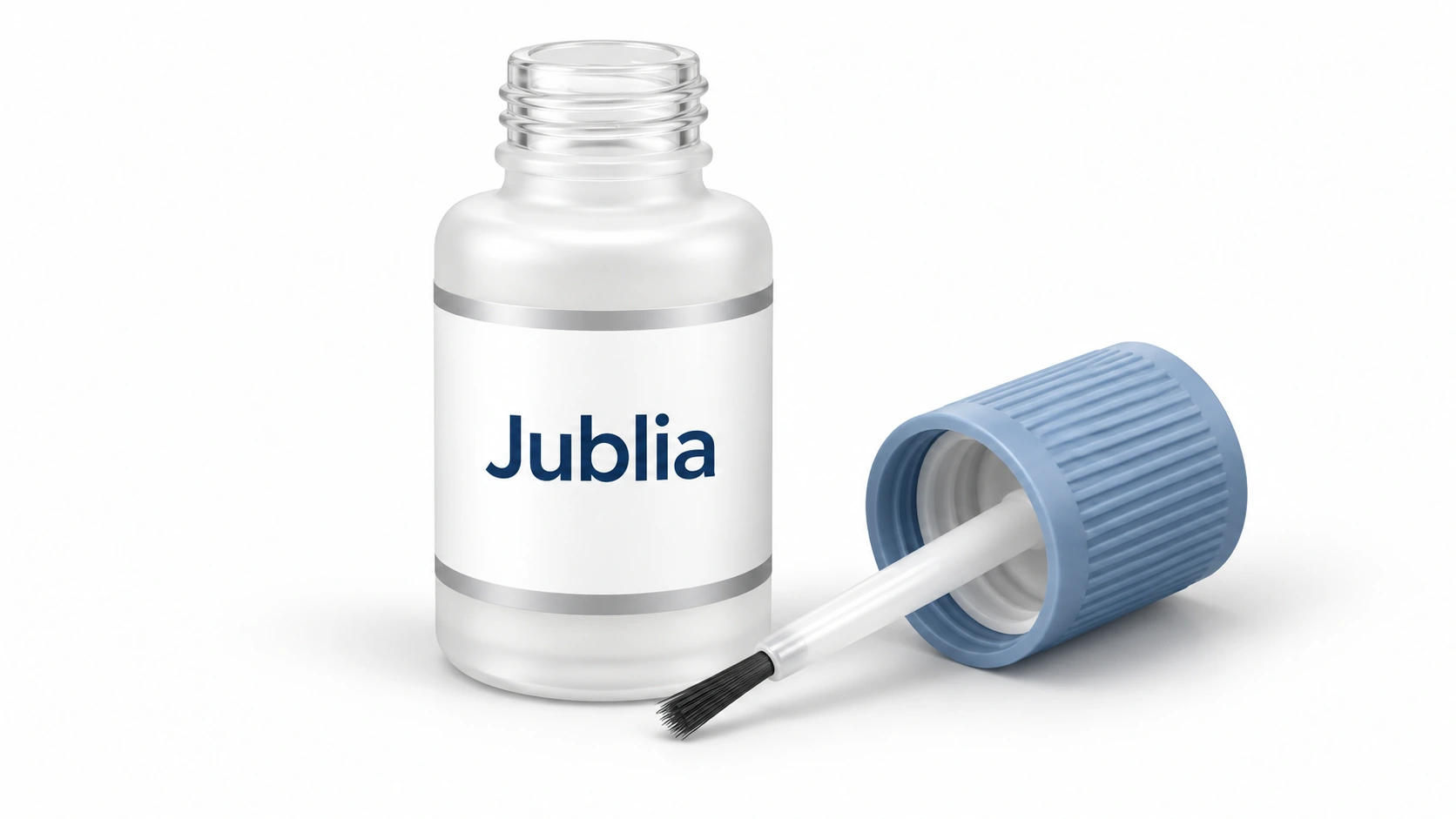
An illustrative Jublia nail-solution bottle with brush applicator.

Jublia

Limited evidence

Efinaconazole nail solution. A liquid painted on infected toenails daily for about a year, for people who cannot take antifungal tablets. It matters here because an untreated nail is the usual reason foot skin keeps getting reinfected. Cure rates are well below tablets, and it works best on nails that are only mildly affected.

Representative medication packaging labelled Triamcinolone, lying sideways on a white background.

Triamcinolone Acetonide

Moderate evidence

A mid-strength steroid ointment for dry skin that has tipped into inflammation — the red-cracked plates of asteatotic eczema on the shins, or thickened patches that are being scratched nightly. Two weeks usually settles it, and the moisturizer carries on underneath and afterward. It is not for plain dryness, and it is not for open cracks or anything that might be infected.

16:9 hero for Desonide. Never cropped: the tone strip and the corner logo depend on the full frame.

Desonide

Moderate evidence

A gentler steroid used where the skin is thin or the person is small — the face, the eyelids, the neck, the folds, and children. It suits a child whose dry skin is itchy enough to wake them, alongside a heavy ointment. Short courses only, and the aim is always to get back to moisturizer alone.

Mupirocin — Header Image

Mupirocin

Limited evidence

An antibiotic ointment for a single cracked fingertip or heel that has become yellow-crusted and sore. It treats the infection sitting in the crack, not the dryness that opened it, so the cream and the ointment both continue. If redness is spreading up the limb, this is not enough and antibiotic tablets are needed instead.

Prescription pills
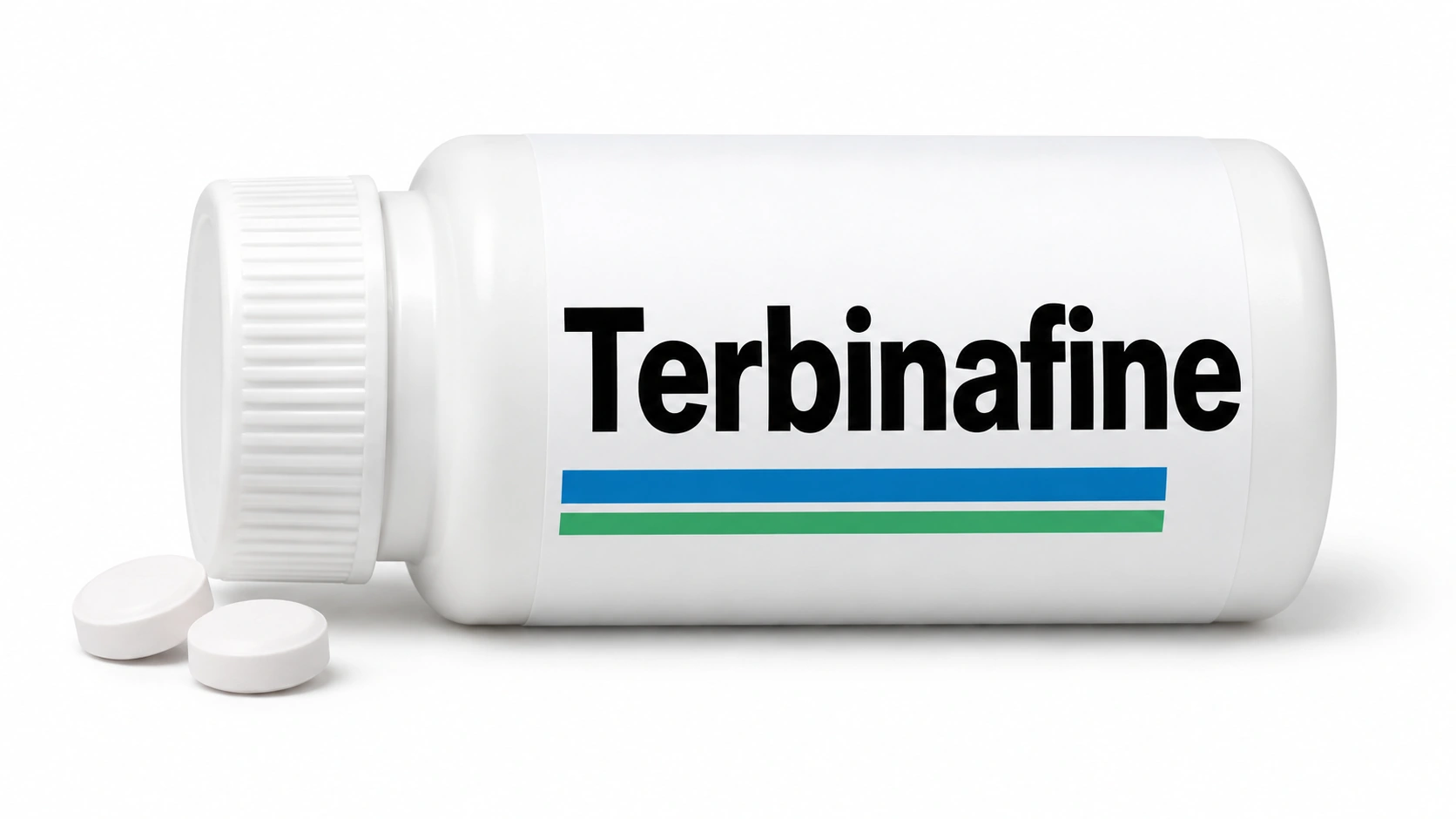
Terbinafine — Header Image

Terbinafine

Moderate evidence

Terbinafine tablets. The first-choice tablet for athlete's foot that cream cannot reach: the thick moccasin pattern, widespread infection, and infected toenails. Two weeks usually clears the skin; nails need three months and most of a year to grow out. Liver blood tests are sometimes checked, and it interacts with several common medicines, so the doctor needs your full list.

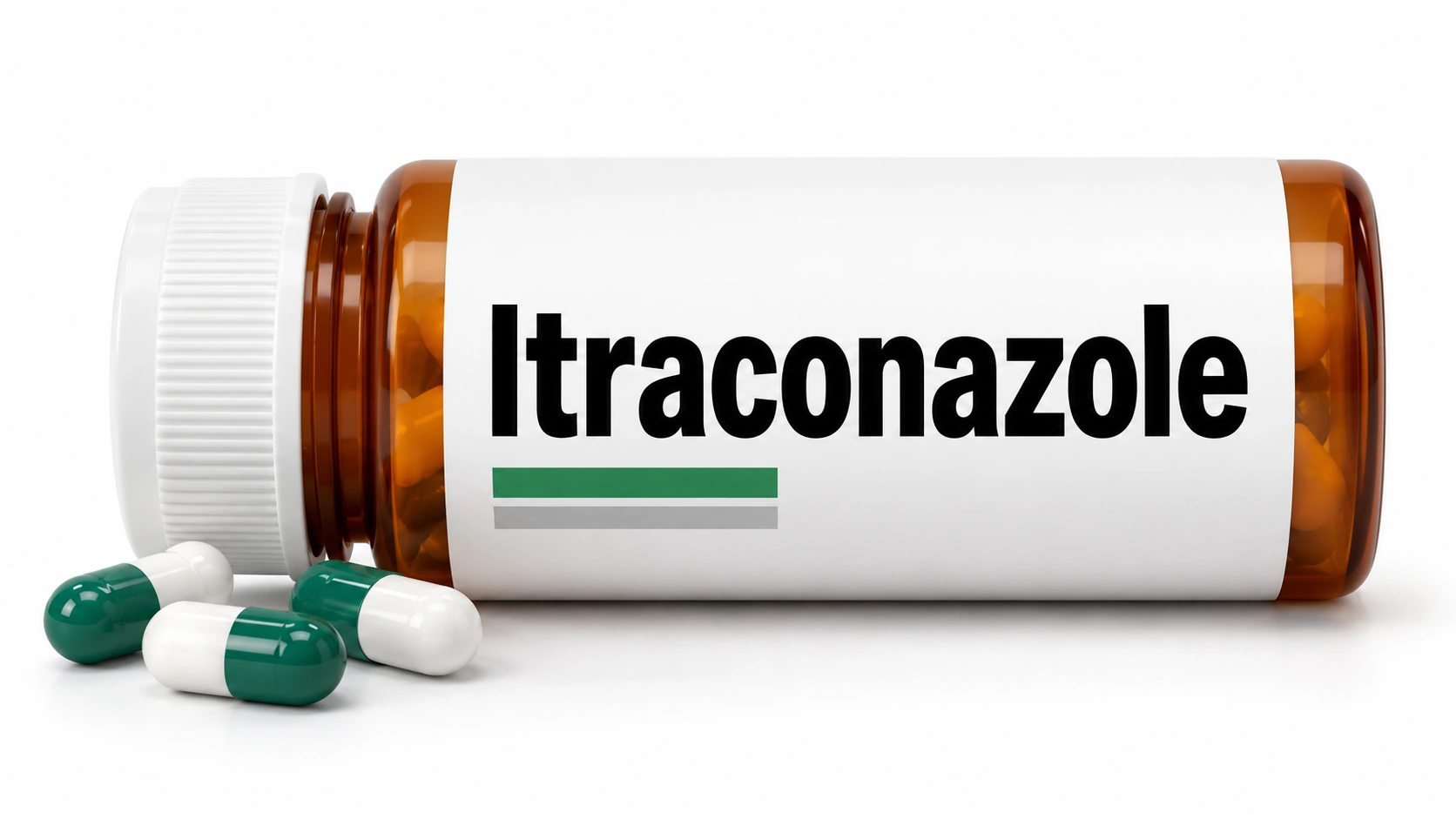
Representative medication packaging labelled Itraconazole, lying sideways on a white background.

Itraconazole

Moderate evidence

An equally effective alternative, often given as short pulses rather than daily. It is chosen when terbinafine does not suit or has not worked. It interacts with a long list of other medicines, including some heart and cholesterol drugs, so it needs a proper medication review first.

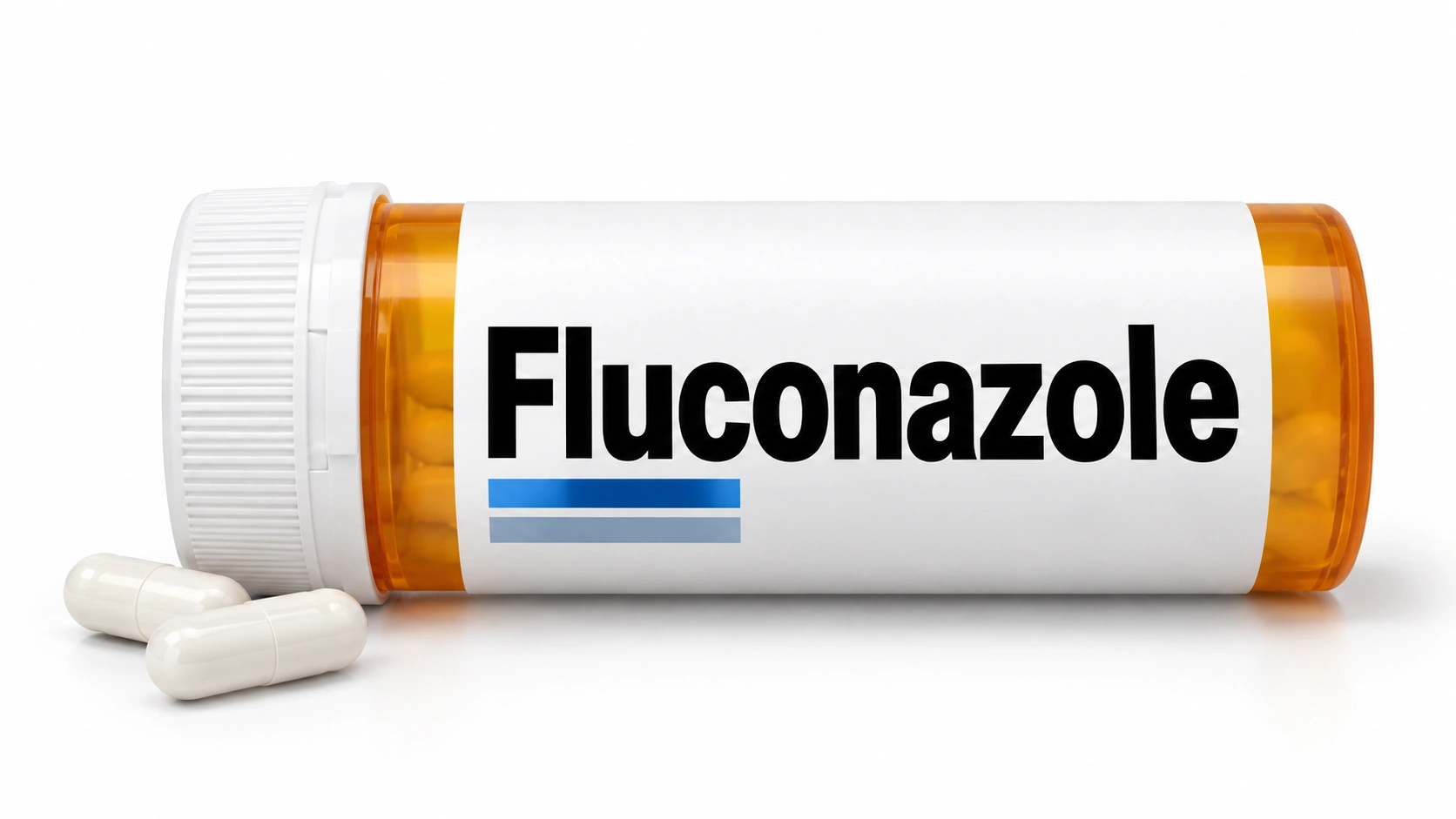
16:9 hero for Fluconazole. Never cropped: the tone strip and the corner logo depend on the full frame.

Fluconazole

Moderate evidence

A once-weekly tablet, used for skin infection that has not cleared with cream when the other two do not suit. It is less effective than terbinafine for the dermatophytes that cause athlete's foot, and slower for nails. If you are pregnant or breastfeeding, ask the doctor managing your pregnancy before taking any antifungal tablet.

Illustration: Generic oral tablet bottle and tablets.

Griseofulvin

Limited evidence

The oldest antifungal tablet. It still works, but it needs months rather than weeks, has to be taken with fatty food, and clears fewer infections than terbinafine. It is now mostly reserved for cases where the newer tablets cannot be used.

None listed

Outlook

Long term

Athlete's foot does not clear on its own. Left alone it becomes a low-grade infection that flares in hot weather, and it spreads across the sole, onto the top of the foot, into the toenails, and sometimes to the groin or hands. Treated, it behaves well.

Dry skin slides predictably if nothing changes, and reverses predictably once it does. Most people notice a difference within days, flaking settles in one to two weeks, and cracks on hands and heels take several weeks. The pattern is seasonal - maintenance, not a course.

Complications

Possible complications
  • Cellulitis
  • Nail Fungus
  • The Itchy Hand Rash
More details

Cellulitis
Cracks between the toes are a well-recognized way for bacteria to get into the leg, causing a hot, swollen, spreading redness that needs antibiotics. It is uncommon in healthy feet and much more likely in people with diabetes, poor circulation or a swollen leg. Treating athlete's foot promptly in those groups is mostly about closing that door.

Nail Fungus
The same fungus moves into the toenails, which become thick, crumbly and yellow-brown. Cream cannot get through a nail, so an infected nail keeps putting fungus back on the skin every time a sock goes on. It is the usual answer to why athlete's foot keeps coming back, and it takes tablets and most of a year to fix.

The Itchy Hand Rash
Some people get an itchy blistering rash on the palms or the sides of the fingers while their feet are flaring. There is no fungus in the hand rash. It is an allergic reaction to the fungus on the feet, which is why antifungal cream on the hands does nothing, and it settles once the feet are treated.

  • The surface breaks up
  • Needs treatment
More details

The surface breaks up
The skin breaks into a fine network of cracks. On the shins this can become the red-bordered, cracked-porcelain pattern of asteatotic eczema. Cracks here can be deep and painful.

Needs treatment
A crack breaks the skin. Yellow crust, spreading redness, warmth, swelling or pus mean a bacterial infection needing treatment.

When to get help

When to get help

Seek care if antifungal treatment does not help, or sooner with diabetes, poor circulation, spreading redness, swelling or pain.

Seek help if dryness persists despite moisturizers, itch disrupts sleep or the skin cracks and becomes infected. Sudden widespread dryness may need assessment for another cause.

Common questions

Athlete’s Foot:How long does it take to clear?

The itch settles in a few days. The skin takes two to four weeks, depending on the cream and how thick the scale is. Keep treating for one to two weeks after it looks clear, because the fungus outlasts the symptoms. If nothing has changed after four weeks of proper use, the question is whether it is really fungus, not whether you need something stronger.

Athlete’s Foot:Do I need to throw away my shoes?

Usually not. Shoes hold fungus, so alternate two pairs to let each dry fully for a day, and use an antifungal powder or spray inside them. Shoes you cannot clean or dry - old fabric trainers you wore through a long infection - are reasonable to replace.

Athlete’s Foot:Do I have to treat my toenails too?

If they are thick, crumbly, lifting or discolored, yes, and that is usually why it keeps coming back. Fungus inside a nail is out of reach of creams, so the nail is a permanent source that reinfects the skin. Treatment usually means tablets for several months, and the nail only looks normal once healthy nail has grown all the way out.

Athlete’s Foot:Can I give it to my family?

Yes, though it is not highly contagious. It spreads through shared floors, bath mats, towels, shoes and nail clippers. Use your own towel, wear something on your feet in the bathroom while it is active, wash mats and socks hot, and do not share footwear. If someone else has itchy feet, treat both of you at once.

Athlete’s Foot:Why do I keep getting it back?

Three usual reasons, all fixable. You stopped treating when it looked better rather than a week or two after. Your toenails are infected and reseeding the skin. Or your feet sit in a warm damp shoe all day.

Athlete’s Foot:Why did my hands break out when my feet were bad?

Most likely an id reaction - an allergic response elsewhere on the body to fungus on the feet. The hand rash has no fungus in it, which is why antifungal cream there does nothing, and it settles once the feet are treated. There is also a separate pattern where two feet and one hand are genuinely infected, typically the hand used to pick at the toes. A scraping tells them apart.

Dry Skin:Will drinking more water help my dry skin?

Not in any way you will notice, unless you are genuinely dehydrated. The water content of the outer layer depends on how well it seals itself, not on how much you drink. Fix the seal - shorter warm showers, a gentle cleanser, a cream on damp skin.

Dry Skin:What is the best moisturizer?

No single best one, and the ones with most evidence are usually inexpensive. Look for a fragrance-free cream in a tub with ceramides and glycerin, plus petrolatum or dimethicone. Applying it to damp skin twice a day for two weeks matters more than which one.

Dry Skin:Why is my skin itchy at night?

Several things line up in the evening. Body temperature rises, a warm shower has just stripped the skin, nothing distracts you, and scratching in your sleep goes unchecked. Moisturizing before bed, a cool bedroom and a humidifier all help.

Dry Skin:Is dry skin the same as eczema?

No, though they overlap. Dry skin is a state the skin is in. Eczema is a condition where the skin is inherently leaky and inflamed, with itchy, poorly defined patches that come and go, usually from childhood and often with asthma or hay fever. Dry skin that keeps turning red or weeping in the same places is worth a look.

Dry Skin:Should I be exfoliating the flakes off?

Not with a scrub. Scrubbing removes the barrier with the flakes and the dryness returns worse. For thick scale on heels, shins or elbows, a cream with urea or lactic acid softens it.

Dry Skin:Can dry skin be a sign of something serious?

Usually not. But an underactive thyroid, kidney disease, diabetes and some medicines cause it, and generalized itch without a rash occasionally reflects a problem elsewhere. Worth checking is dryness or itch that starts suddenly in an adult, covers the body, disturbs sleep, or comes with fatigue or weight change.
Sources

Sources and further reading

  1. DermNet
  2. DermNet
Dermapedia on YouTube