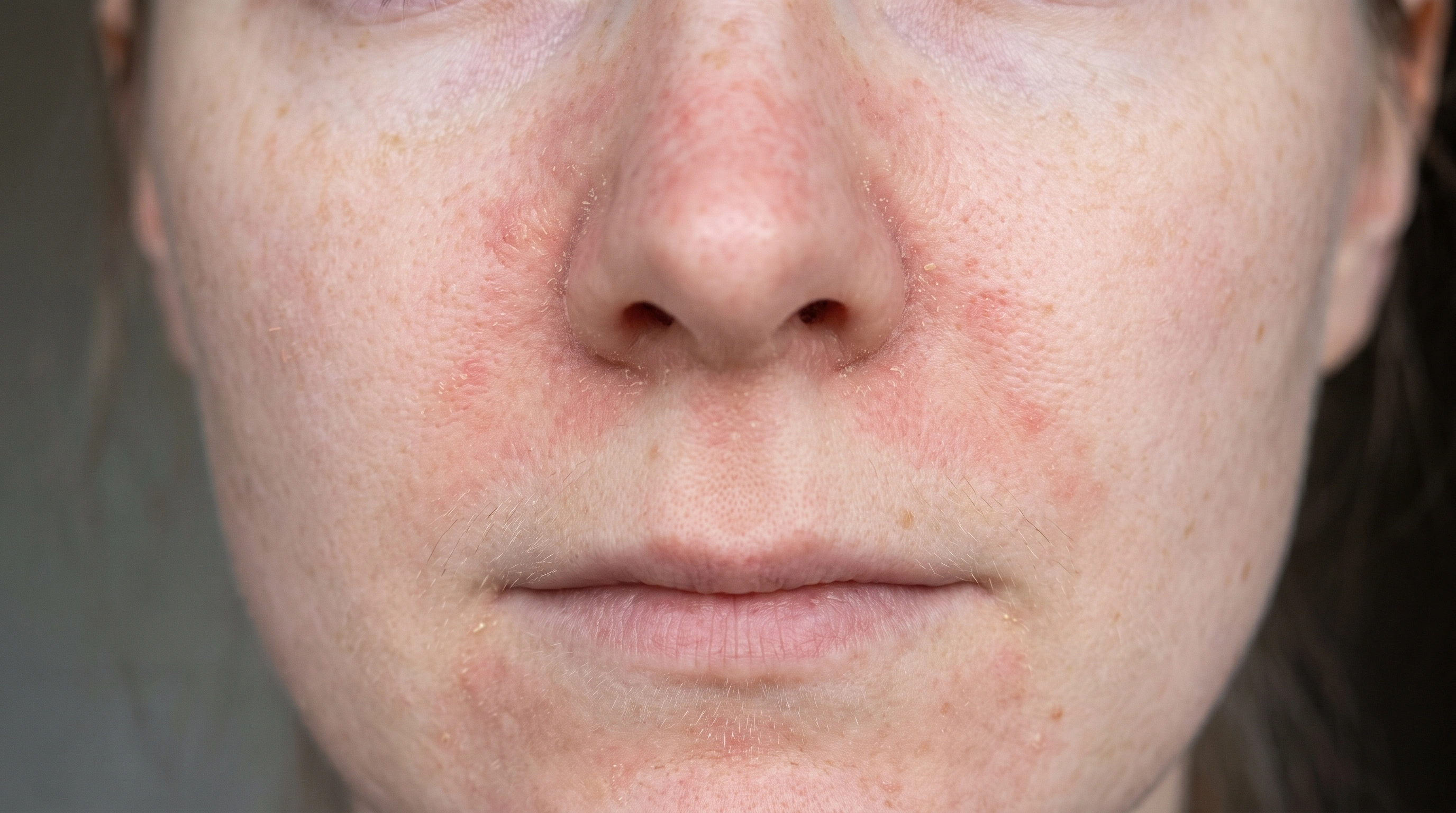
Dandruff vs Product Buildup
Dandruff is flaking and itching of the scalp caused by low-grade inflammation. It is the mildest form of seborrheic dermatitis. It is not caused by a dirty or a dry scalp, and it settles quickly with the right shampoo used the right way. Residue from scalp or hair products that can resemble dandruff.
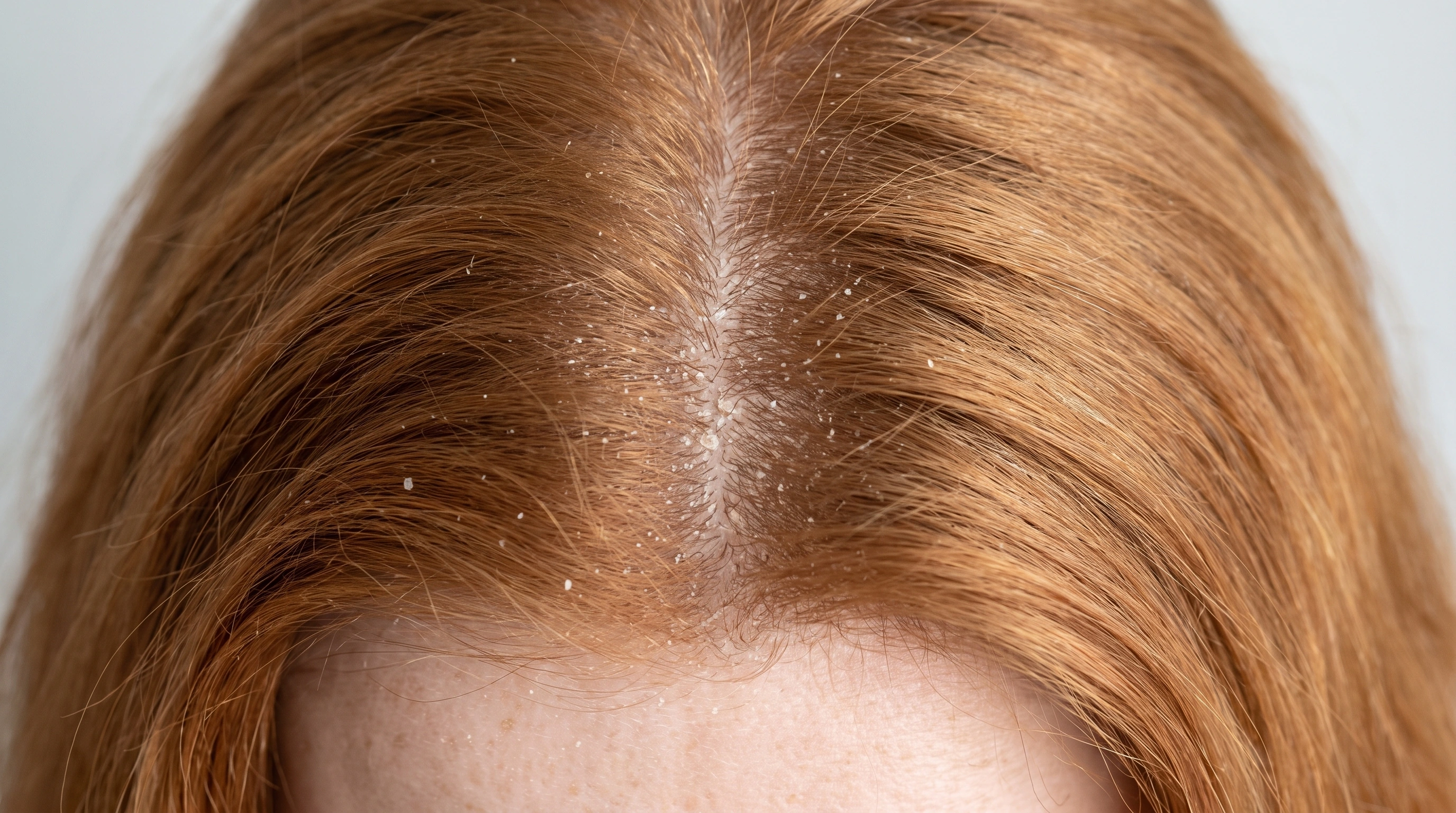
Key differences
The same eight facts on every condition comparison.
What is it?
- It is excessive scalp flaking.
Dandruff can come with itch. - It sits within seborrheic dermatitis.
It is often seen as a mild, scalp-only form. - Several factors contribute.
Malassezia, barrier changes, sebum and susceptibility all play a part. - Medicine must reach the scalp.
Treatment works on the scalp, not the hair lengths.
- What it is
Residue from scalp or hair products that can resemble dandruff.
What it looks like
Dandruff
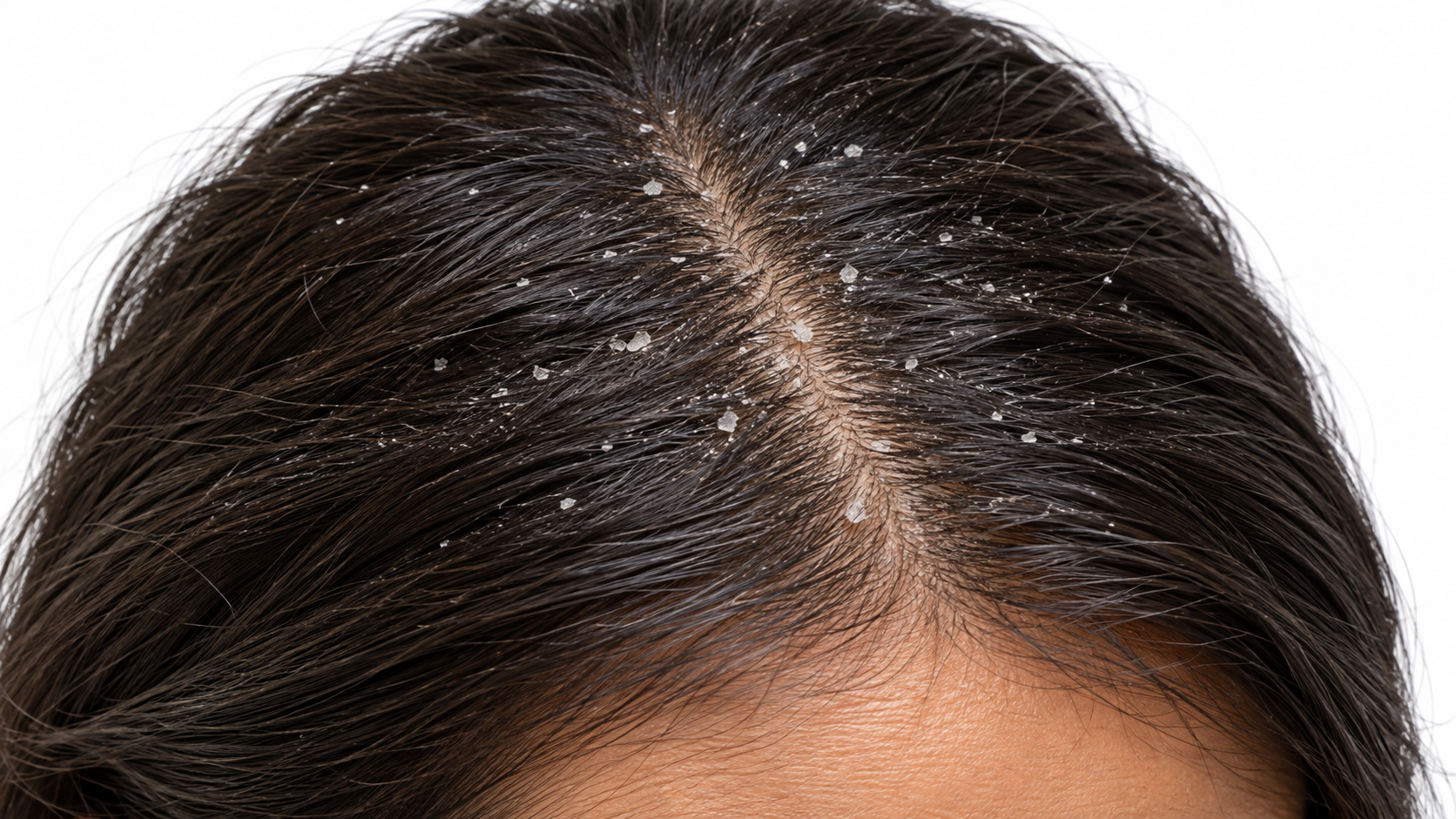
White flakes Loose flakes on the scalp.
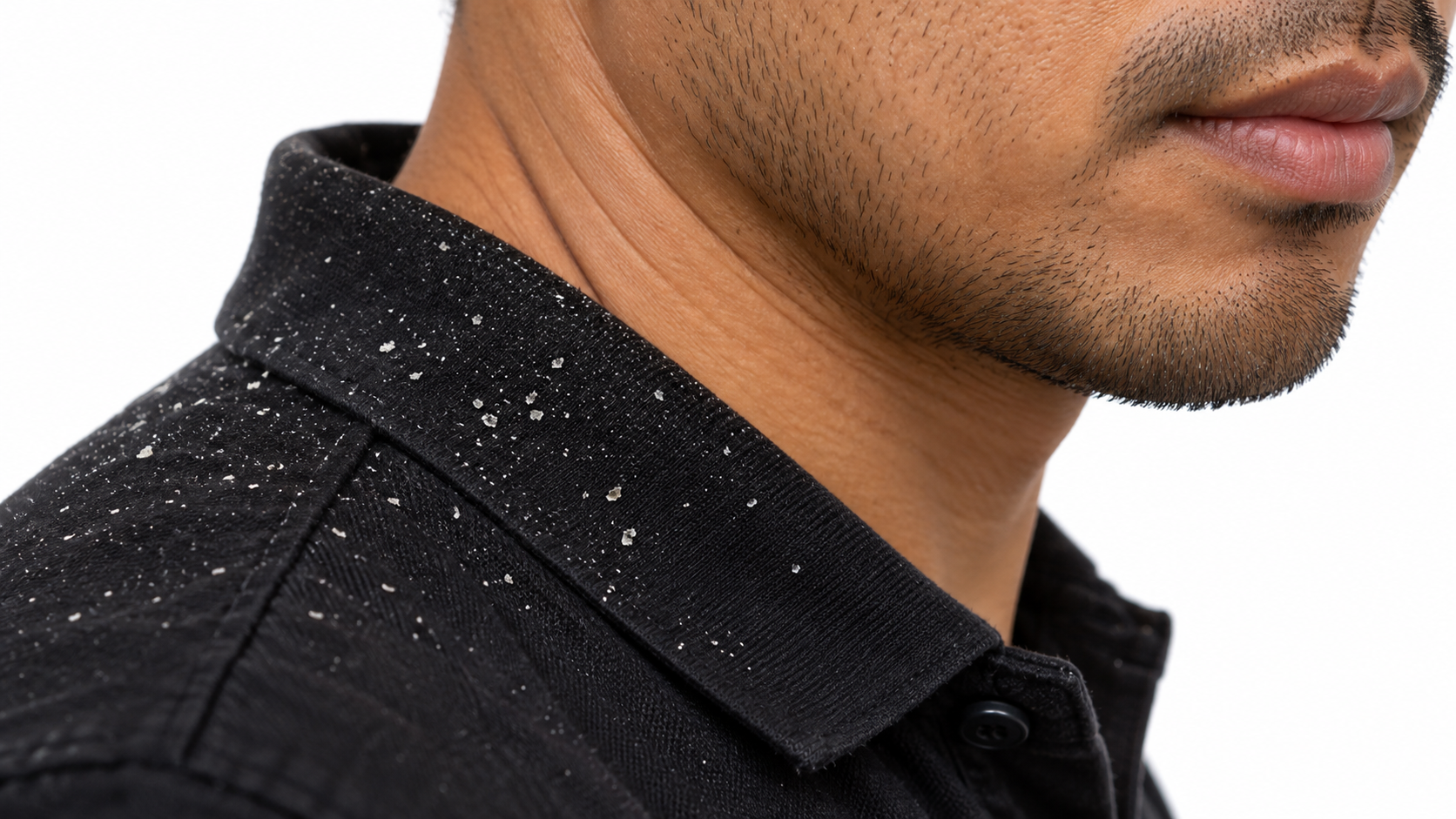
Flakes on clothing Visible on dark shoulders.
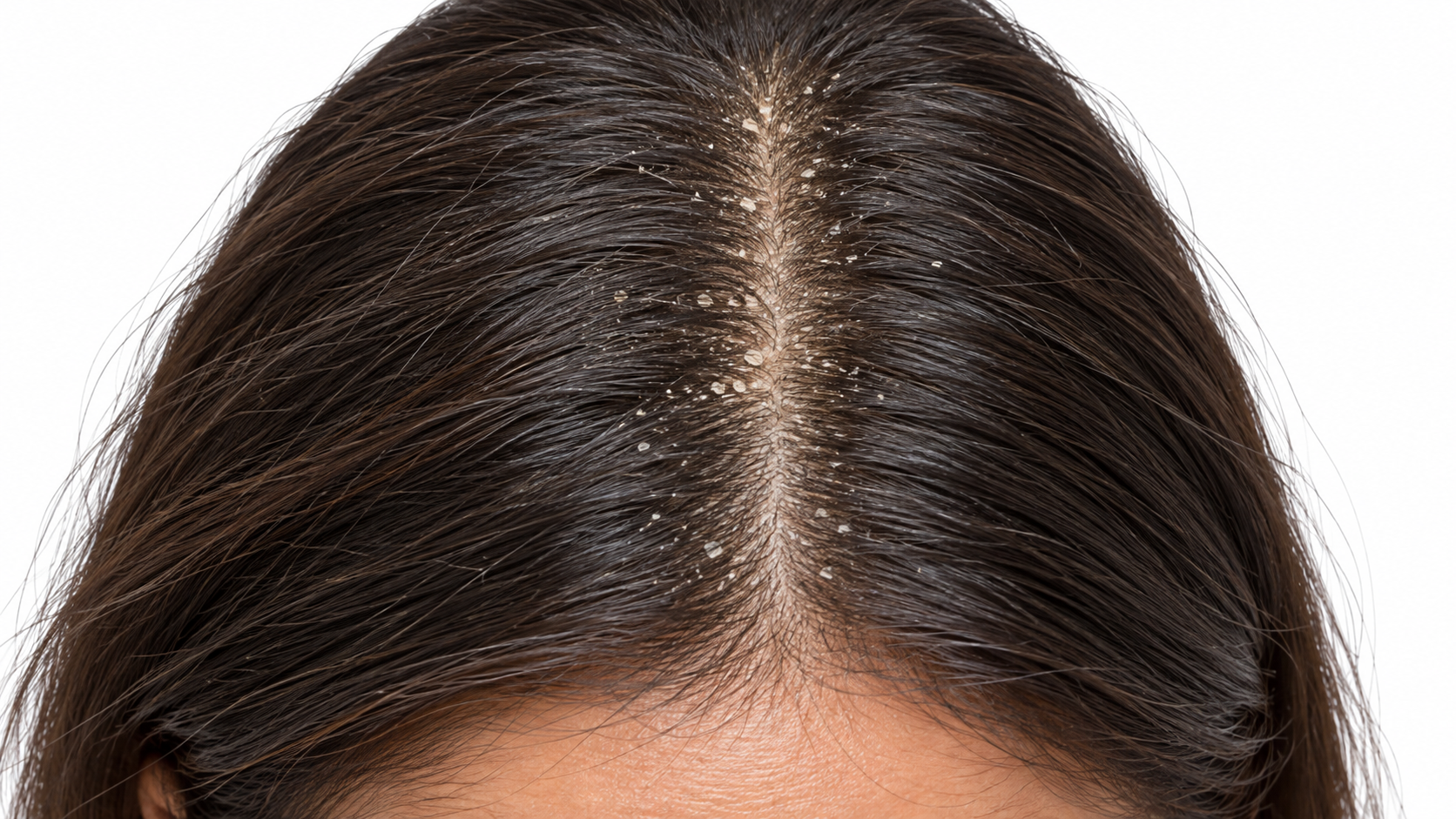
Itchy scalp Mild itch, no rash.
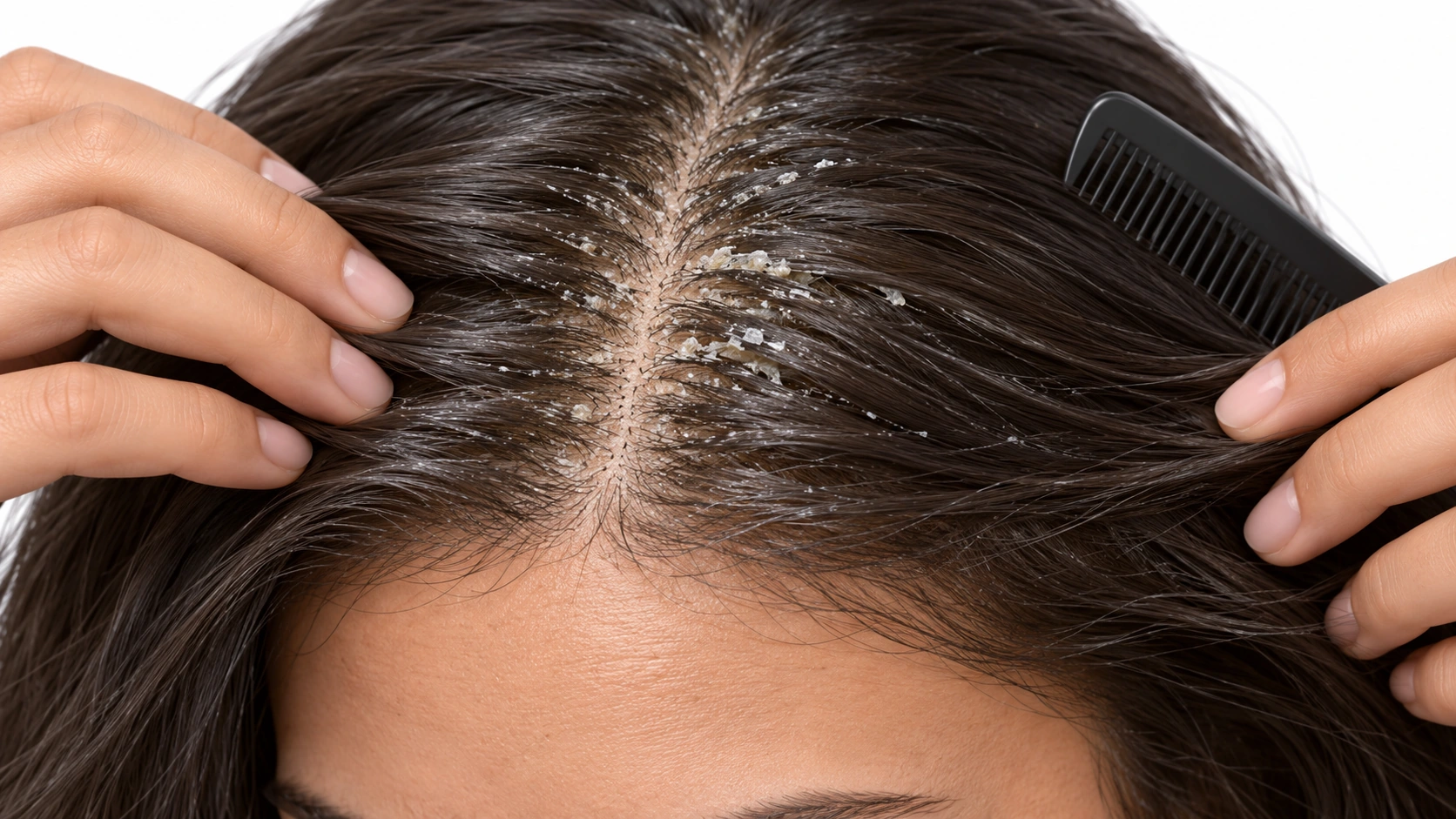
Product Buildup
Product Buildup Pale flakes and residue collect along the hair part and nearby strands.
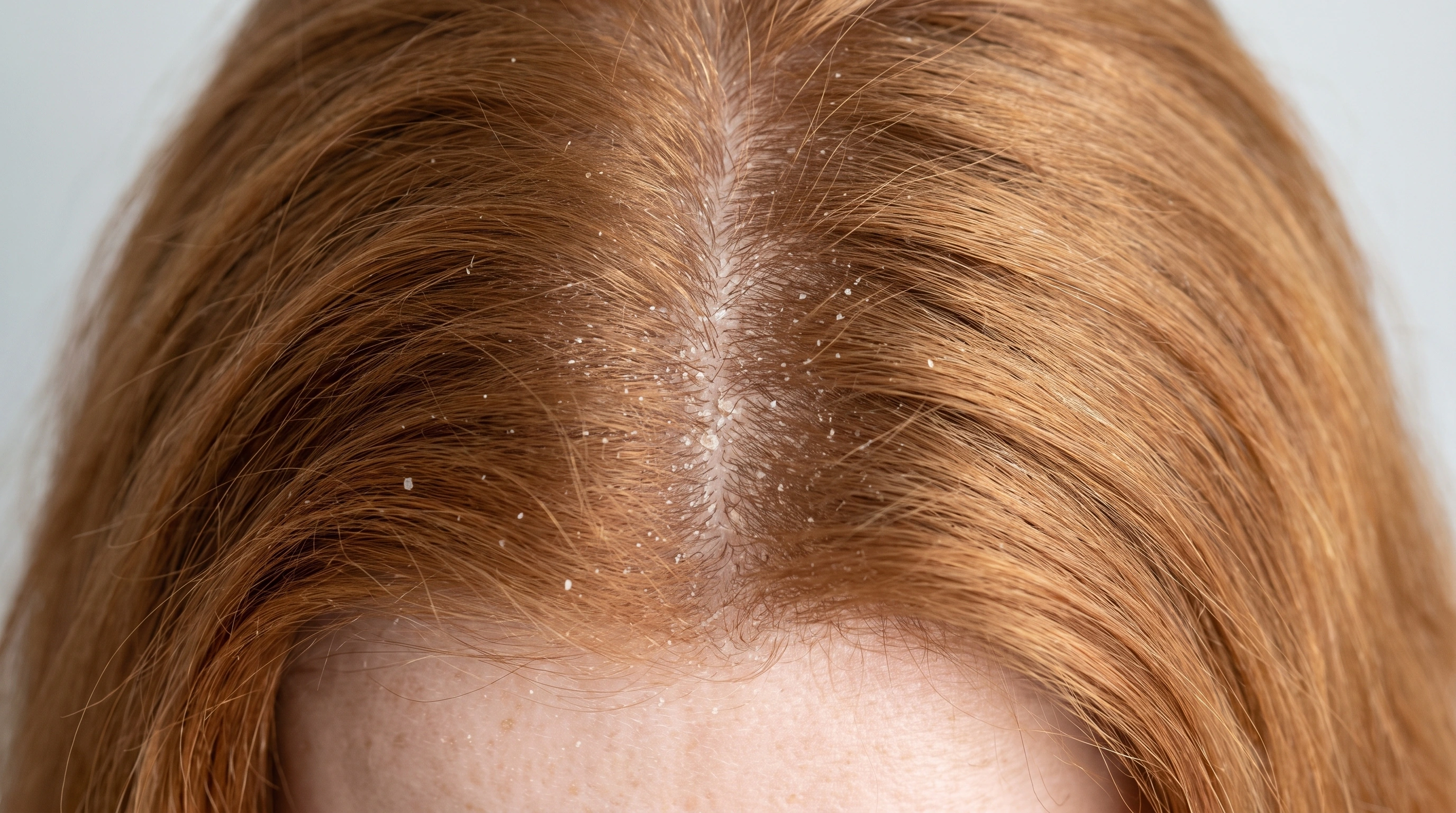
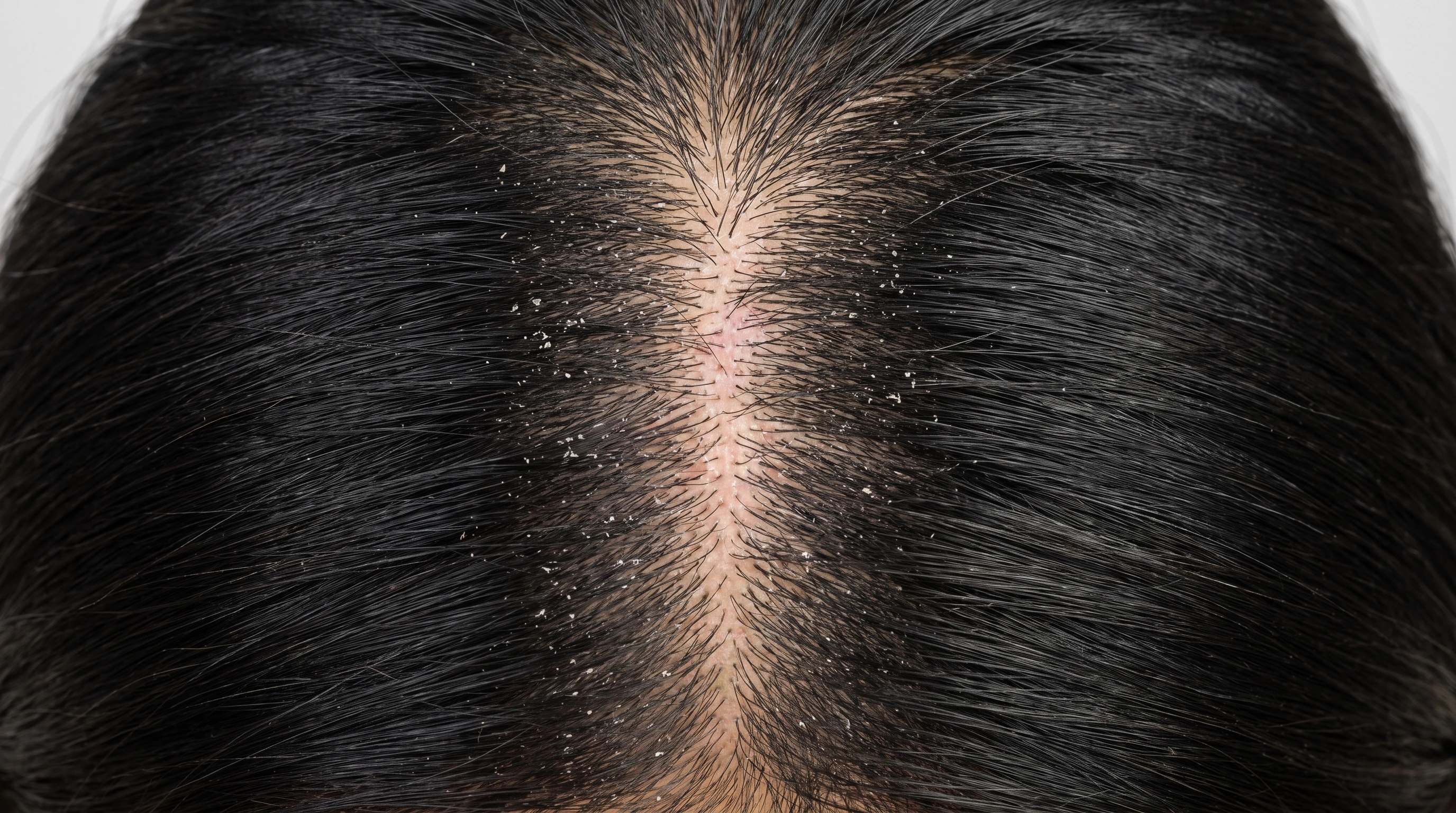
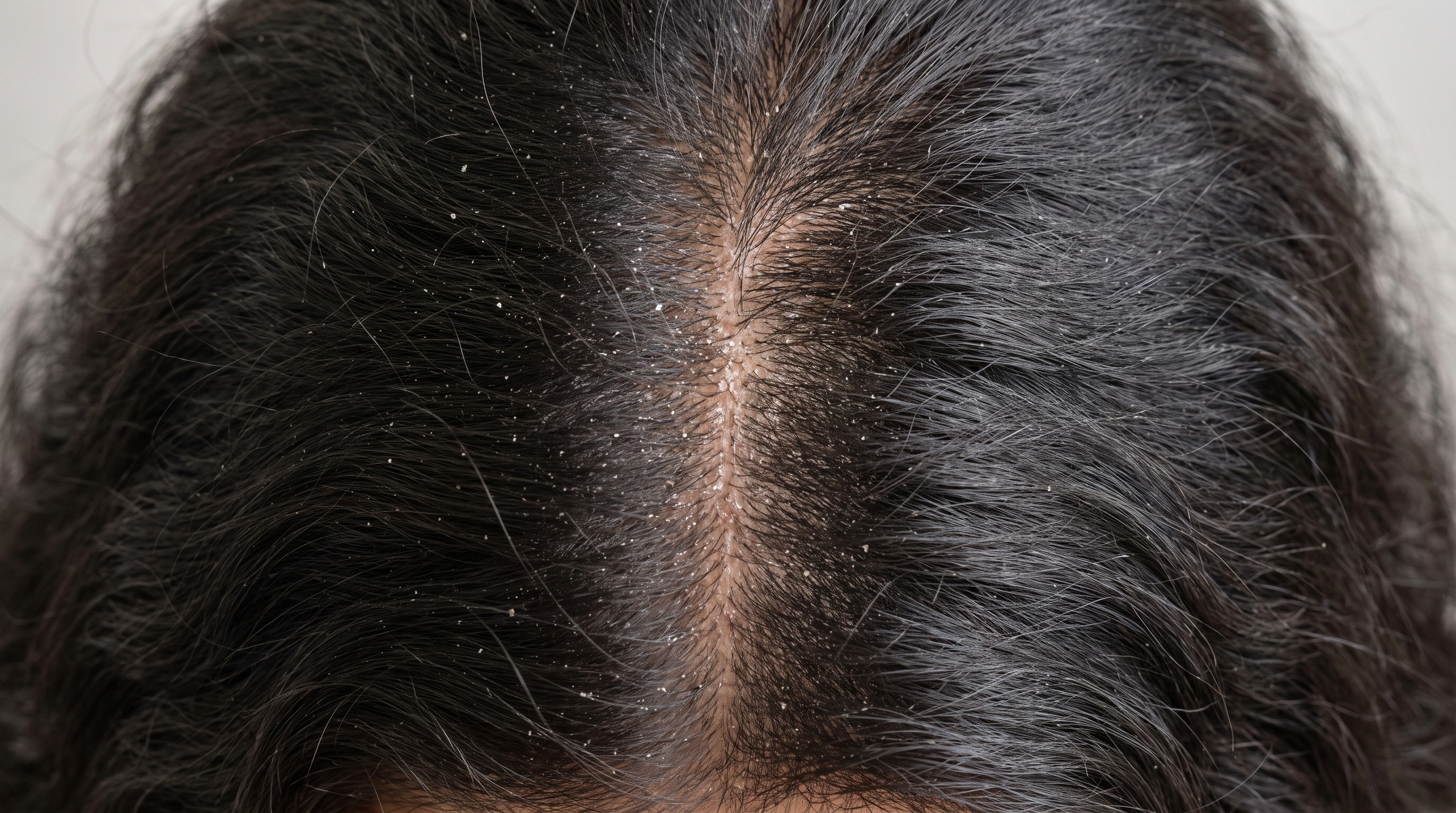
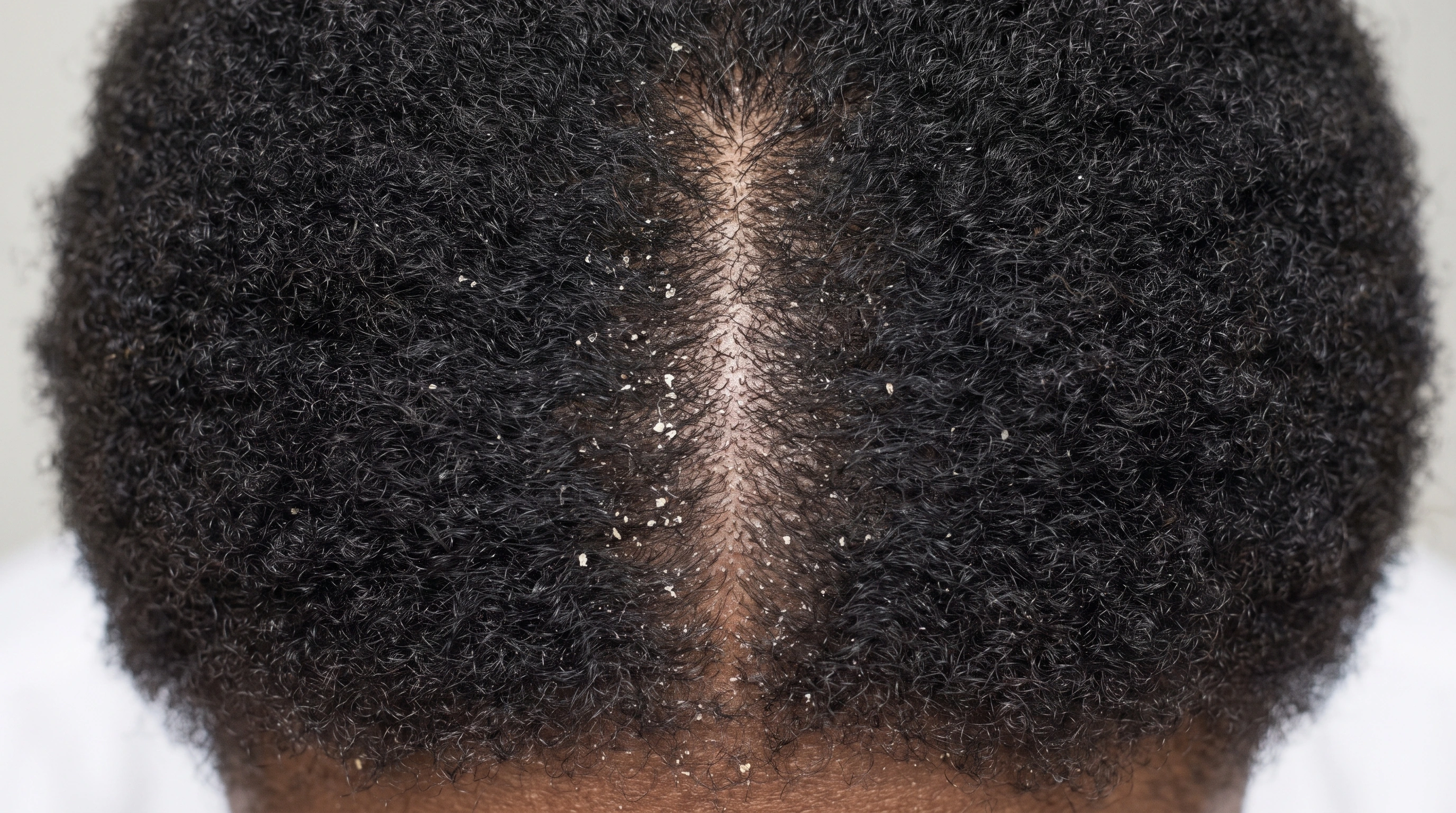
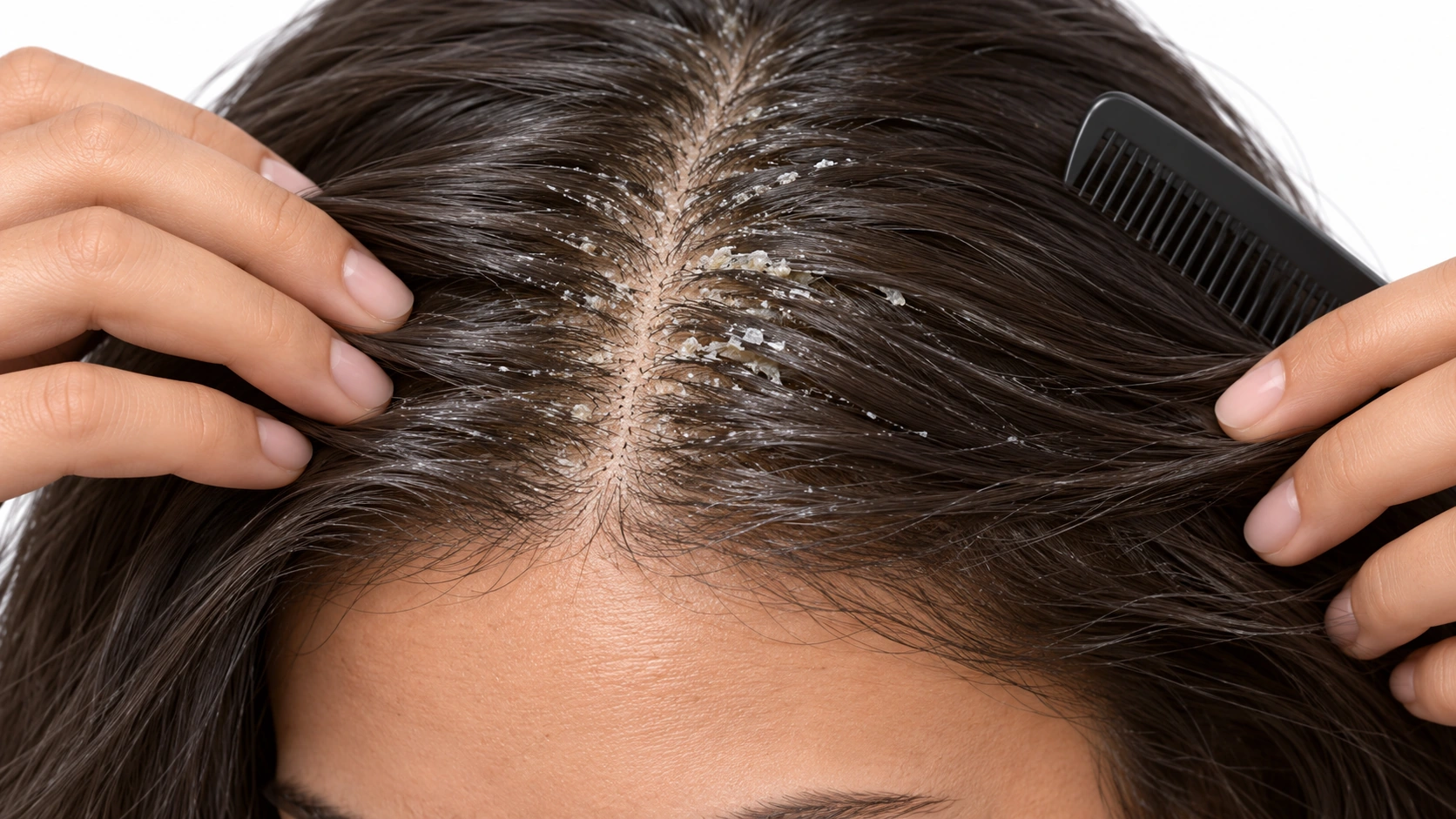
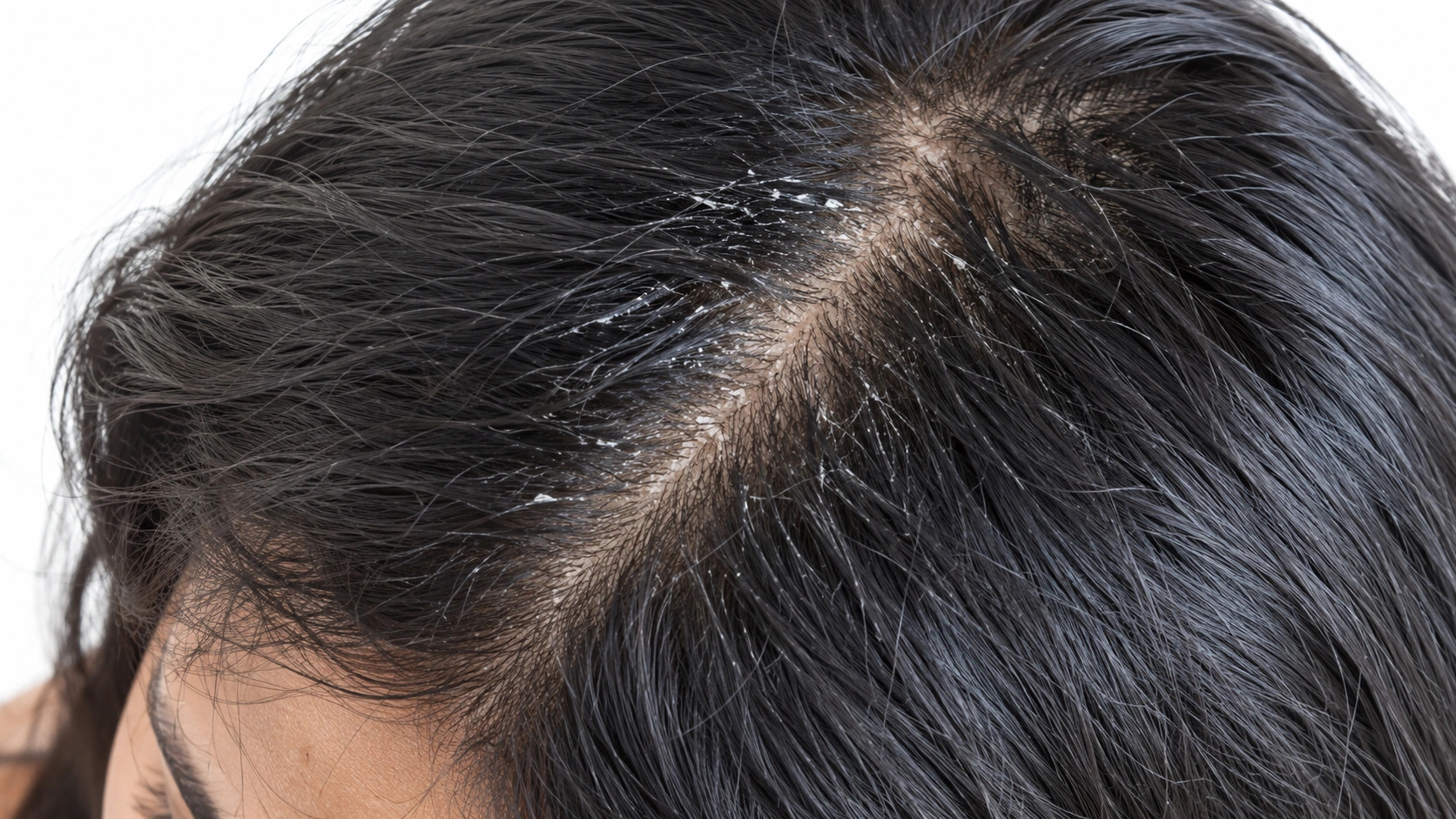

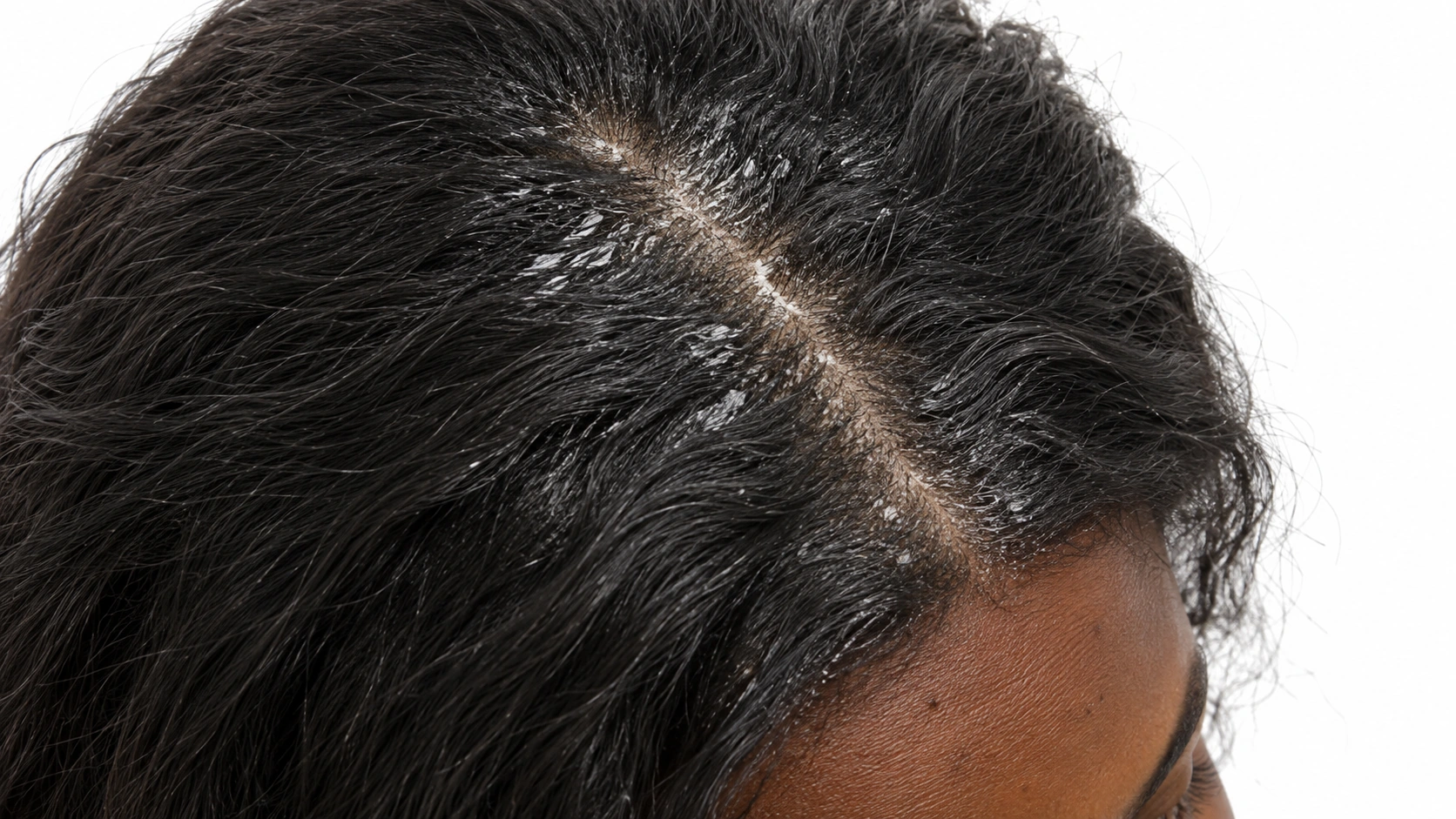
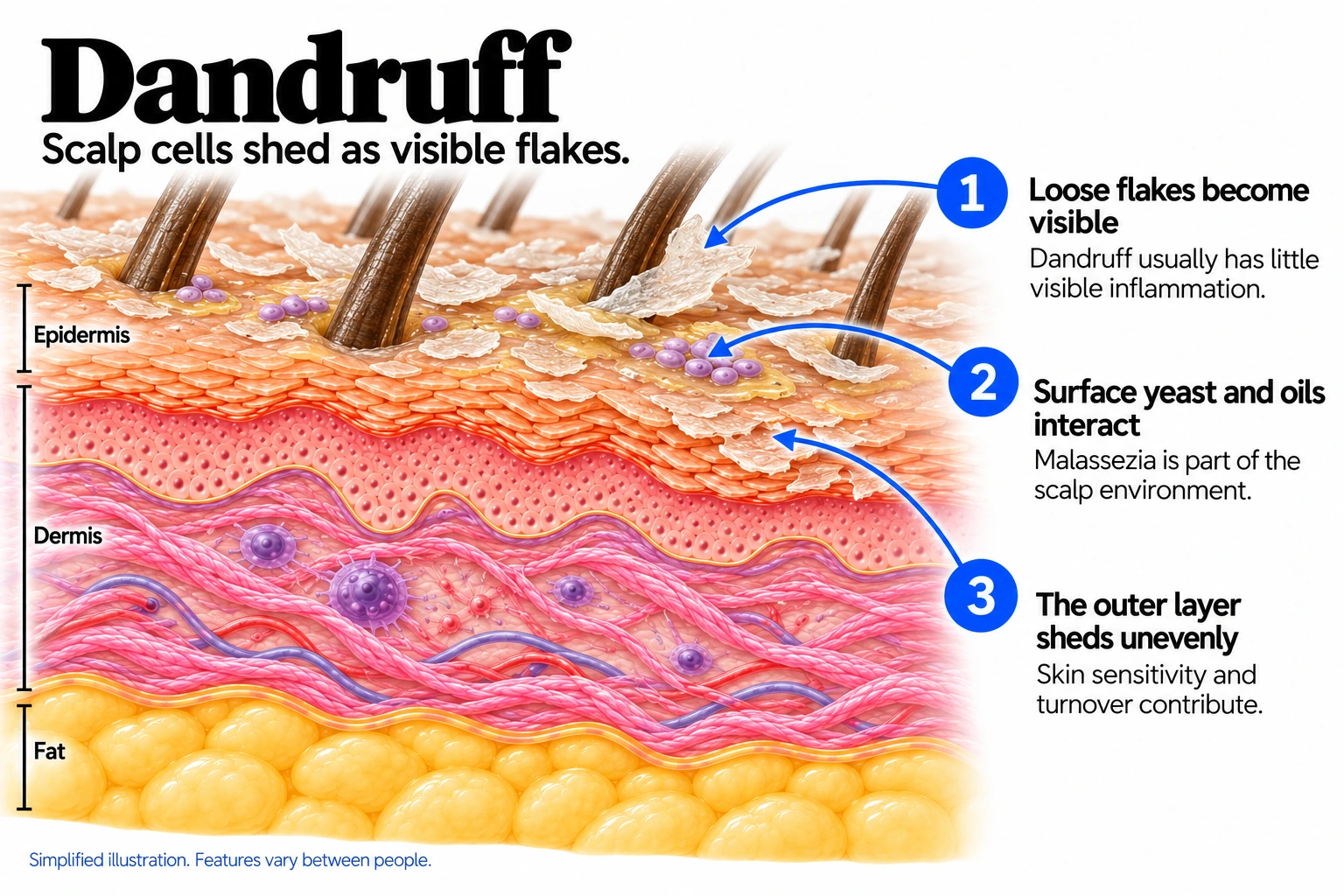
Dandruff involves uneven shedding of the scalp's outer skin cells. The interaction between scalp oils, Malassezia yeast and individual skin sensitivity contributes to visible flakes, usually with little obvious inflammation.
Hair or skincare products can remain on the surface when they are not fully washed away. This residue may coexist with scalp irritation or dermatitis, which has its own inflammatory process.
When it usually starts
Dandruff. Usually begins after puberty and may come and go through adult life.
Product Buildup. Can occur with product use at any age.
Causes and triggers
Dandruff is flaking caused by an overgrowth of Malassezia, a yeast that lives on everyone's scalp, and the scalp's reaction to it.
Products accumulate rather than washing away fully; scalp dermatitis may coexist.
Daily Care
Habits that help
- Wash more often during a flare
Removing oil removes the yeast's food. - Soften thick scale before treating it
An oil or salicylic acid for an hour lifts it. - Adjust moisturizing and indoor humidity during dry weather
Dry air makes flaking obvious. - Allow the label’s contact time before rinsing medicated shampoo
Follow the product-specific contact time. Longer exposure is not always better and may irritate.
Avoid
- Avoid: Washing less often when it flares
More oil means more yeast. - Avoid: Heavy oils, pomades and greases
They feed the yeast. - Avoid: Scratching and picking off scale
Damages the barrier, restarts the itch. - Avoid: Sweat, hats and helmets
Trapped heat and moisture. - Avoid: Product build-up
Dry shampoo and styling products mix with oil. - Avoid: Stress, illness and poor sleep
Not a cause, but flares track them. - Avoid: Harsh scrubbing and very hot water
Leaves the scalp sore, the yeast untouched. - Avoid: Stopping the shampoo as soon as it works
Maintenance, not a course.
Habits that help
- Wash the scalp gently and rinse thoroughly
Use lukewarm water and a shampoo suited to your scalp and hair type. - Adjust washing frequency to oil, sweat and scalp comfort
Avoid leaving heavy residue in place, but do not wash repeatedly until the scalp feels raw. - Keep styling products off irritated scalp
Reduce layers of dry shampoo, waxes or oils if they worsen itch or scale. - Handle hair and scalp gently while drying
Pat rather than scratch and limit very hot air.
Avoid
- Avoid: Scraping flakes off with nails or sharp tools
This can break the skin and cause infection. - Avoid: Assuming persistent inflamed scale is only dryness
Redness, pain, hair loss or ongoing flakes may need assessment for another scalp condition.
Treatment differences
Adjust washing and reduce products that leave persistent residue. Inflamed scale, pain or hair loss needs a diagnosis before adding medicated scalp treatments.
Outlook
Dandruff comes in waves - quiet stretches broken by flares. It can carry on for decades without getting steadily worse, and it follows a rough arc through life.
Residue should lessen with appropriate washing and fewer layers of styling products. Persistent inflamed scale, pain or hair loss suggests a problem beyond simple buildup and needs assessment.
Complications
Dandruff is a mild scalp form of seborrhoeic dermatitis. Itching and flaking can recur; marked inflammation or persistent symptoms may indicate a condition needing a different treatment.
Persistent inflamed scale should not automatically be attributed to residue.
When to get help
Seek assessment for persistent symptoms despite dandruff shampoo, marked redness, pain, crusting or patchy hair loss.
Seek assessment if cleansing does not resolve the problem or there is pain, hair loss or crusting.
Common questions
Dandruff:Is dandruff caused by a dry scalp?
Usually not. It is commonest on oily scalps, and the yeast behind it feeds on that oil. The scalp can feel dry and tight because it is inflamed and the barrier is disrupted, which is not the same as being short of moisture. Treating it as dryness makes it worse.
Dandruff:How often should I wash my hair if I have dandruff?
More often than you otherwise would, at least during a flare, because washing removes the oil the yeast lives on. If frequent washing damages your hair, change how you wash rather than how often - medicated shampoo straight onto the scalp, five minutes, condition only the lengths.
Dandruff:Does dandruff cause hair loss?
Not permanently. A very itchy, inflamed scalp that gets scratched or picked sheds more hair for a while, and that recovers once the inflammation settles. Thinning or bald patches need their own assessment, not a stronger shampoo.
Dandruff:Why did my shampoo stop working?
Usually one of two things. Either contact time slipped and it is being rinsed straight out again, or the scalp has stopped responding to that active. Rotating two medicated shampoos, such as zinc pyrithione and ketoconazole, tends to keep working.
Dandruff:Is dandruff related to the flaky redness around my nose and eyebrows?
Yes - the same condition in a different place. Seborrheic dermatitis affects the oily areas of the body, and the scalp is the most obvious one. The face usually responds to a gentle antifungal cream or a short course of a mild anti-inflammatory prescribed for that area, not to shampoo left on the skin.
Dandruff:Can I use medicated shampoo on colored or chemically treated hair?
Generally yes, but the active matters. Selenium sulfide and coal tar can discolor light, gray, relaxed or color-treated hair. Zinc pyrithione and ketoconazole are the usual choices, and conditioning the lengths limits drying of the hair shaft.
Product Buildup:What is Product Buildup?
Residue from scalp or hair products that can resemble dandruff.
Product Buildup:What can I do day to day?
Reduce product layers and rinse thoroughly with a gentle shampoo.
Product Buildup:When should I get medical advice?
Seek assessment if cleansing does not resolve the problem or there is pain, hair loss or crusting.
Sources
Sources and further reading
Keep exploring.
Dandruff
Dandruff vs Contact Dermatitis
Dandruff vs Head Lice
Scalp Psoriasis vs Dandruff
Dandruff vs Dry Scalp
Dry Scalp vs Product Buildup
Seborrheic Dermatitis
Selenium Sulfide
Coal Tar
Ketoconazole
Salicylic Acid