Dandruff

Dandruff on the scalp. The flakes are large and yellowish and sit in greasy sheets stuck to the skin, rather than lifting off as loose dust.
Dandruff is an oil problem, not a dryness problem. A yeast that lives on every scalp feeds on skin oil, the skin reacts, and the flakes come off larger, yellowish and slightly greasy.
A dry scalp is short of oil and water. Its flakes are small, white and powdery, and the skin on your arms and legs is usually dry too.
The two need opposite treatments, so the wrong product can make either one worse.
| The difference | Dandruff | Dry Scalp |
|---|---|---|
| What is causing it | Scalp oil plus a yeast | Not enough oil or water |
| What the flakes look like | Larger, yellowish, slightly greasy | Small, white, powdery |
| What the scalp itself looks like | Oily, sometimes pink underneath | Normal colour, tight and dull |
| Does washing help or hurt | Washing more often helps | Washing too often hurts |
Dandruff on the scalp. The flakes are large and yellowish and sit in greasy sheets stuck to the skin, rather than lifting off as loose dust.
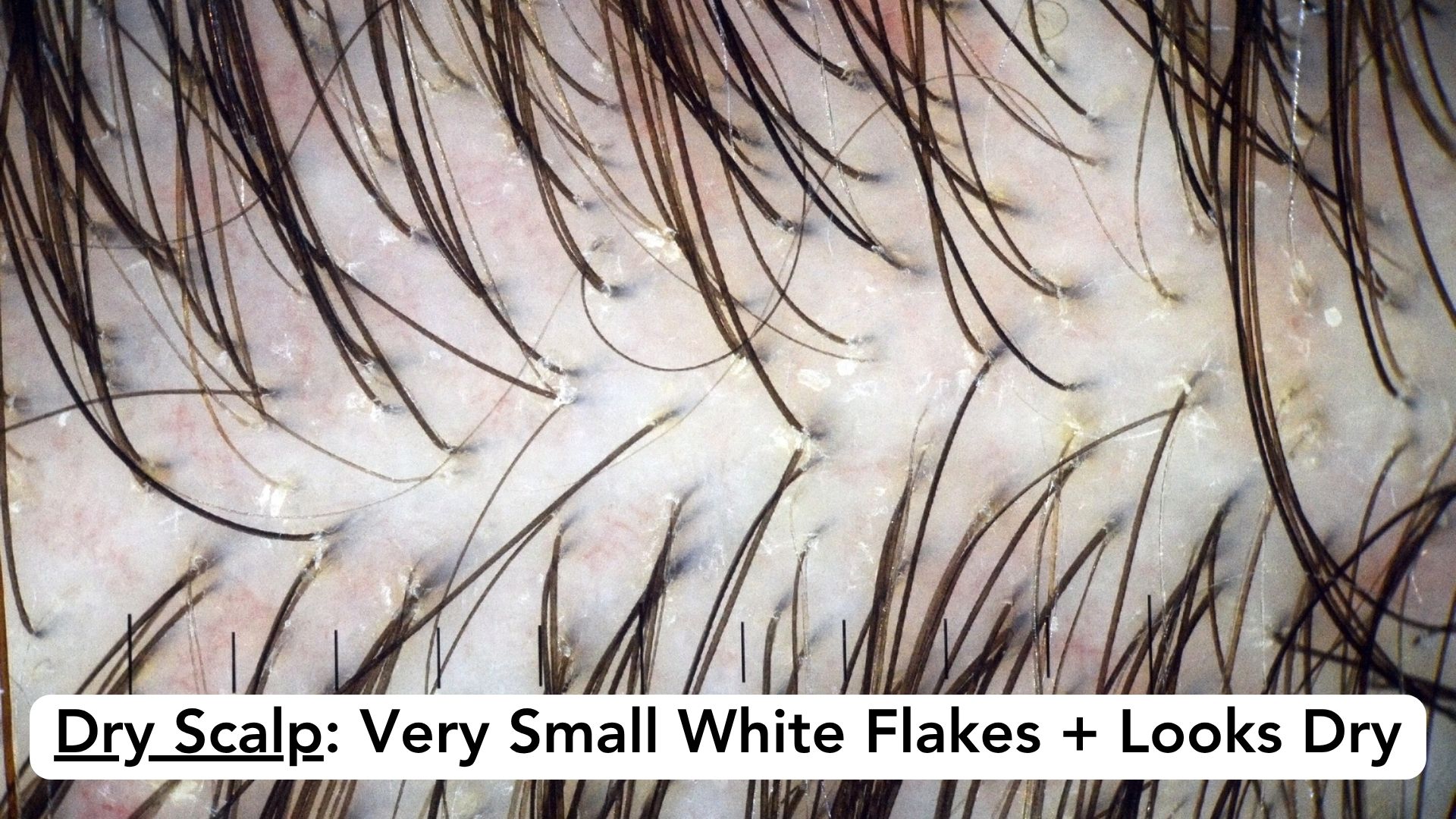
A dry scalp. The flakes are tiny and white, and the skin underneath looks dull and dry rather than oily — that is the difference to look for.
Side by side
Dandruff
Scalp oil plus a yeast
A yeast called Malassezia lives on nearly everyone's scalp. It breaks scalp oil down into fatty acids. In some people the skin reacts to those fatty acids, sheds faster than normal, and flakes.
Dry Scalp
Not enough oil or water
The outer layer of skin has lost oil and water. It stiffens, cracks at the surface, and sheds in small pieces.

Every hair follicle on the scalp has an oil gland attached to it, feeding a thin film of sebum onto the surface. The dead cells at the top of the skin come away one at a time, far too small to see. That oil is normal and the scalp needs it, and there is more of it after puberty.

Glands in the scalp produce sebum, which is normal and necessary. There is simply more of it after puberty, and more of it on some people than others, and that is the fuel for everything that follows.

A yeast called Malassezia lives on almost everyone's skin. It feeds on that oil and breaks it down, leaving free fatty acids behind on the scalp. Nothing here is abnormal yet — this is the same on people who never flake.

In some people the skin responds to those breakdown products with low-grade inflammation. This is the step that decides who gets dandruff and who does not — it is how strongly you react, not how much yeast you carry.

Irritated skin cells are pushed to the surface faster than they should be, so instead of falling away invisibly they come off in clumps big enough to see. The barrier is disrupted at the same time, which is why it itches and why scrubbing makes it worse. Everything on the lists below is pushing on this step.
Dandruff
Larger, yellowish, slightly greasy
They clump together and cling to the hair instead of falling free.
Dry Scalp
Small, white, powdery
Fine and dry. They drop onto your shoulders easily.

This is the version most people picture: white or gray flakes along the part, sitting on scalp skin that looks pink underneath. On the face it turns up in the eyebrows and the creases beside the nose. The trap on light skin is that the pinkness looks like nothing much, so people treat the flakes with an ordinary shampoo and never treat the inflammation making them.

On medium and olive skin the scalp reads dull pink to light brown rather than clearly red, and the greasy yellow-white scale is easier to see than the inflammation under it. Around the nose and brows it often takes a ring or petal shape. That shape is regularly mistaken for eczema, rosacea or a stubborn dry patch.

On brown skin the redness is muted or missing, and the condition often shows up as lighter patches instead. Because redness is what most people look for, dandruff here is regularly judged milder than it is and given weaker treatment. Scale, itch, and pale or dark patches are the more reliable things to go on.

What lasts on deep skin is the pale patches. Once the inflammation settles, pigment can drop out along the hairline, at the temples and behind the ears, and for many people that is more upsetting than the flaking was. They are not scars and they do come back on their own, but it usually takes months. Getting the inflammation under control early is what keeps them small.
Dandruff
Oily, sometimes pink underneath
It can look shiny a day or two after washing, with pink skin under the scale.
Dry Scalp
Normal colour, tight and dull
No shine and no oil. It may feel tight after a shower.
Dandruff
Oily face, chest and nose creases
Dandruff often comes with flaking on the sides of the nose, the eyebrows and the chest. Those are the oiliest areas of the body.
Dry Scalp
Dry arms, legs and hands
Dryness elsewhere on the body, and worse in winter.
Dandruff
Cold months, stress, illness
Flares are common in winter and during stressful or run-down stretches.
Dry Scalp
Winter, indoor heat, hot showers
Anything that pulls water out of skin.
Dandruff
Washing more often helps
Washing removes the oil the yeast feeds on. In one study, people who washed more often had milder dandruff.
Dry Scalp
Washing too often hurts
Frequent washing with a stripping shampoo removes the little oil that is left.

The workhorse dandruff shampoo: it reduces the yeast and calms the scalp, and it is gentle enough to keep using for years. Part the hair, work it into the skin rather than the lengths, and leave it on for five minutes. It is a good choice for color-treated, gray or relaxed hair because it does not discolor.
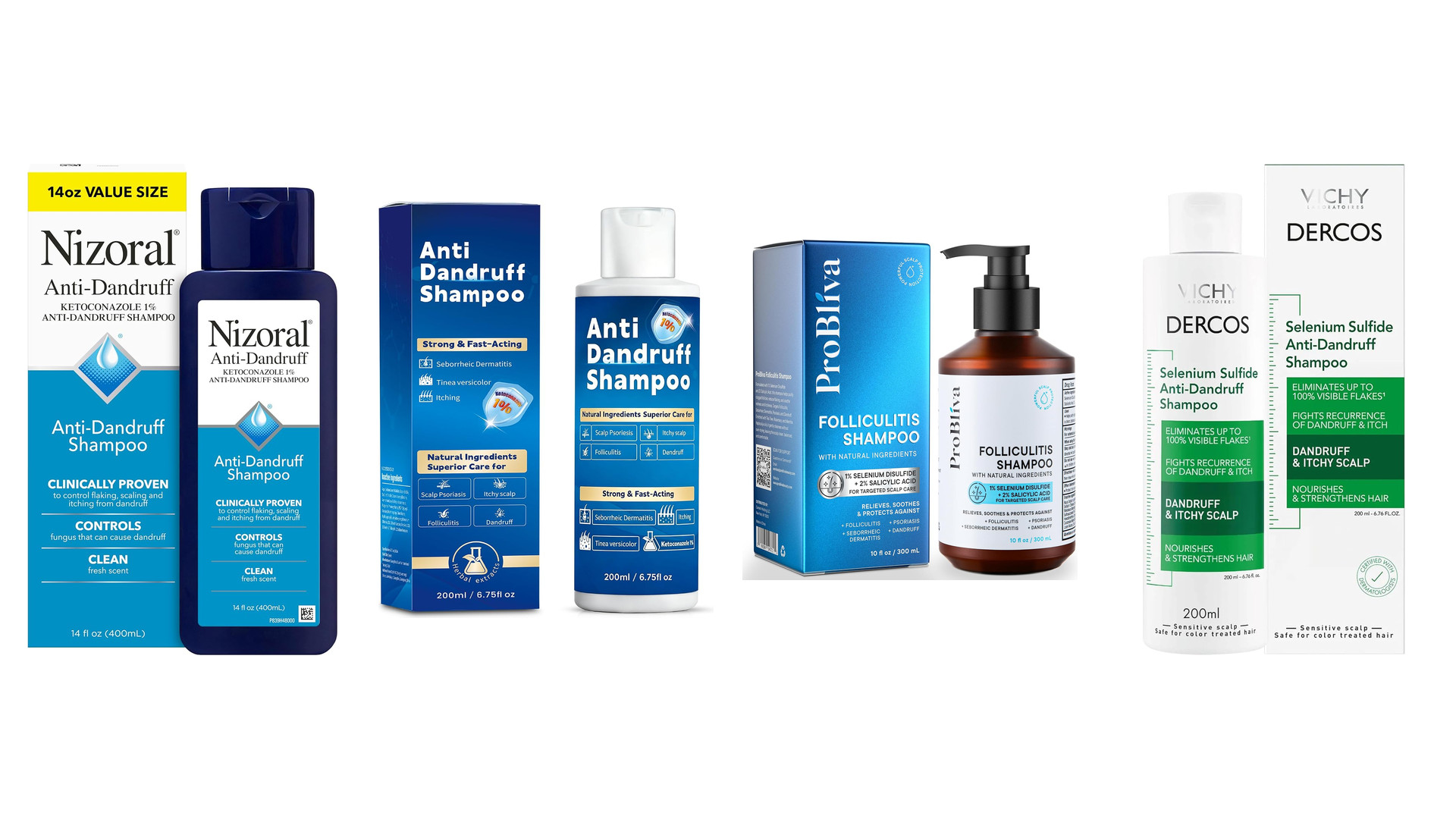
The 1 percent shampoo on the shelf is a proper antifungal and one of the most effective things you can buy for dandruff. Twice a week during a flare, then once a week to hold it. Pairing it with zinc pyrithione and alternating the two tends to keep working better over months than either one used alone.
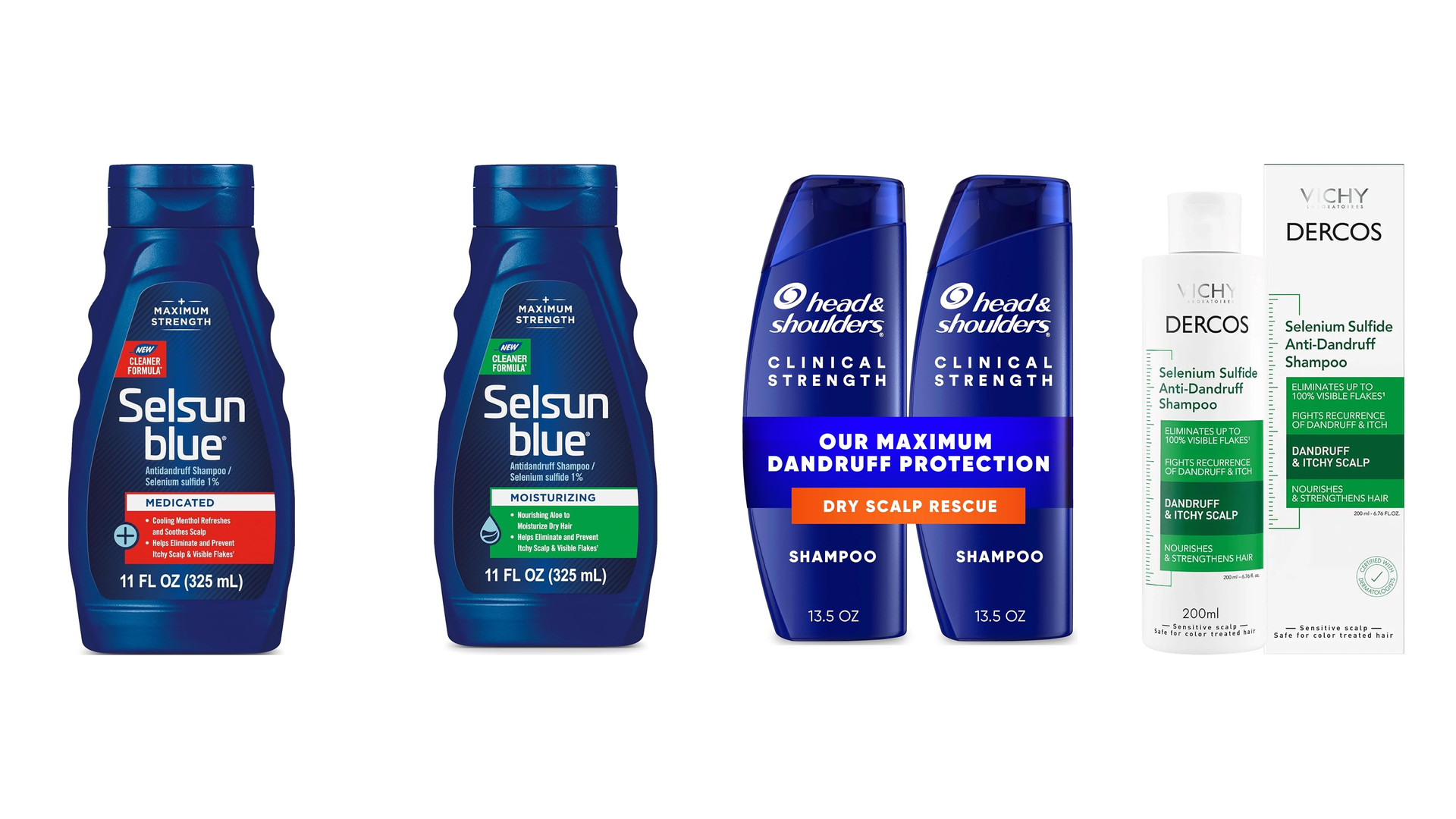
Reduces the yeast and also slows how fast scalp cells shed, which makes it useful when the flaking is heavy. Rinse it thoroughly. The catch is color: it can discolor light, gray, relaxed or color-treated hair, so zinc pyrithione or ketoconazole is usually the better pick for those.
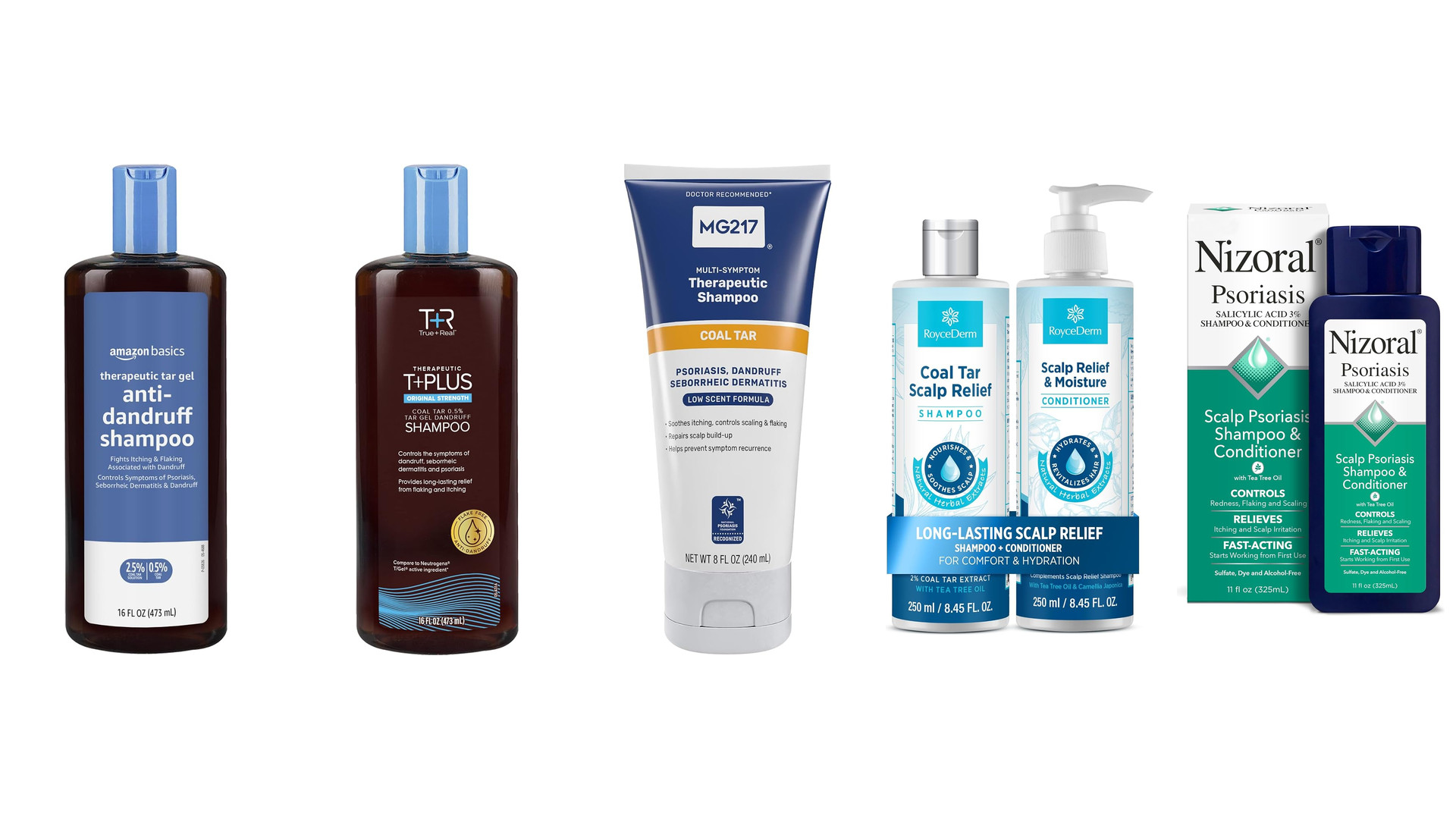
Works by slowing the shedding rather than by treating the yeast, so it suits thick, heavy flaking more than a mildly itchy scalp. It smells strongly and it stains light hair and fabric, which is why most people use it only during a flare. It is also useful when scalp psoriasis is in the picture too.

This one lifts scale rather than treating the cause. It is the right choice when the scale is thick and stuck down and other shampoos cannot reach the skin underneath. Use it first to clear the way, then follow with an anti-yeast shampoo — on its own it will not stop the dandruff coming back.

A 5 percent tea tree shampoo did beat a plain shampoo in one small trial, so it is not nothing. It is weaker than the standard actives and there is much less behind it. It is also a common cause of allergic contact dermatitis, so if the scalp becomes more itchy and irritated on it, that is a reason to stop rather than to persist.
Coconut oil, castor oil and vinegar rinses come up constantly and none of them treat dandruff. An oil left on the scalp gives the yeast more of exactly what it grows on. There is one genuine use: an oil applied for an hour before washing softens thick, stuck-down scale so it lifts without scraping — then it gets washed out.
An antifungal tablet, occasionally used for a short course when seborrheic dermatitis is severe, widespread, or not responding to anything applied to the skin. Ordinary dandruff never needs it. It also does not keep it away — shampoo maintenance still has to carry on afterwards — and it interacts with a number of common medicines.
Double the strength of the version on the shelf, and the usual first prescription when a month of over-the-counter shampoo has not shifted it. Twice a week for a month, five minutes on the scalp each time. Once it is clear, most people drop back to an over-the-counter shampoo for maintenance rather than staying on this.
A potent steroid, prescribed for the scalp as a solution, foam or shampoo, that settles a red, sore, intensely itchy flare within days. It is for short bursts of two to four weeks, not for keeping on hand. It does nothing about the yeast, so the medicated shampoo carries on alongside it and takes over afterwards.
A newer non-steroid foam approved for seborrheic dermatitis, used once a day on the scalp and face. It calms the inflammation without the thinning that comes with long-term steroid use, which makes it a reasonable option for people who keep needing steroid courses. Cost and insurance are usually the limiting factor.

A different antifungal, and the usual next step when ketoconazole has stopped working or was never tolerated. It is used two or three times a week in the same way, with contact time on the scalp. Rotating it with a zinc pyrithione shampoo is a common way to keep a stubborn scalp under control.
A non-steroid ointment used mainly where dandruff has spread onto the face — the eyebrows, the creases beside the nose, behind the ears. It calms the same inflammation without thinning that thin skin, which matters when the area needs treating on and off for years. It stings for the first few days. It is awkward to apply in hair, so it is rarely the choice for the scalp itself.
Dandruff
Medicated shampoo, left on
Look for one of these on the label: zinc pyrithione, selenium sulfide, ketoconazole, salicylic acid, sulfur or coal tar. Zinc pyrithione, selenium sulfide and ketoconazole act on the yeast. Salicylic acid, sulfur and coal tar mostly loosen and slow the scale. Leave the lather on for as long as the label says. Ketoconazole 2% asks for 5 minutes, selenium sulfide for 2 to 3 minutes. Rinsing straight away is the most common reason people think a shampoo failed.
Dry Scalp
Gentle wash, then moisture
A mild shampoo, cooler and shorter showers, and a light scalp oil or leave-in conditioner. Skip the medicated shampoo. Antifungal actives target a yeast that is not driving your flaking, so there is nothing for them to fix. The bigger problem is the wash itself: shampoo detergents lift oil and water-holding molecules out of the skin surface, which is exactly the damage a dry scalp already has.
Dandruff
Two to four weeks
Dandruff is controlled rather than cured. Most people keep using the shampoo once or twice a week to hold it steady.
Dry Scalp
Days to a week
Dryness usually settles once the washing routine changes.
Dandruff
Ketoconazole 2% shampoo beat zinc pyrithione 1% in a four-week trial of 343 people with severe dandruff. Both helped. Ketoconazole cleared more scale and held the result longer after treatment stopped.
Dandruff
A bad reaction to an anti-dandruff shampoo is useful information. It usually points to one of two things.
Dandruff
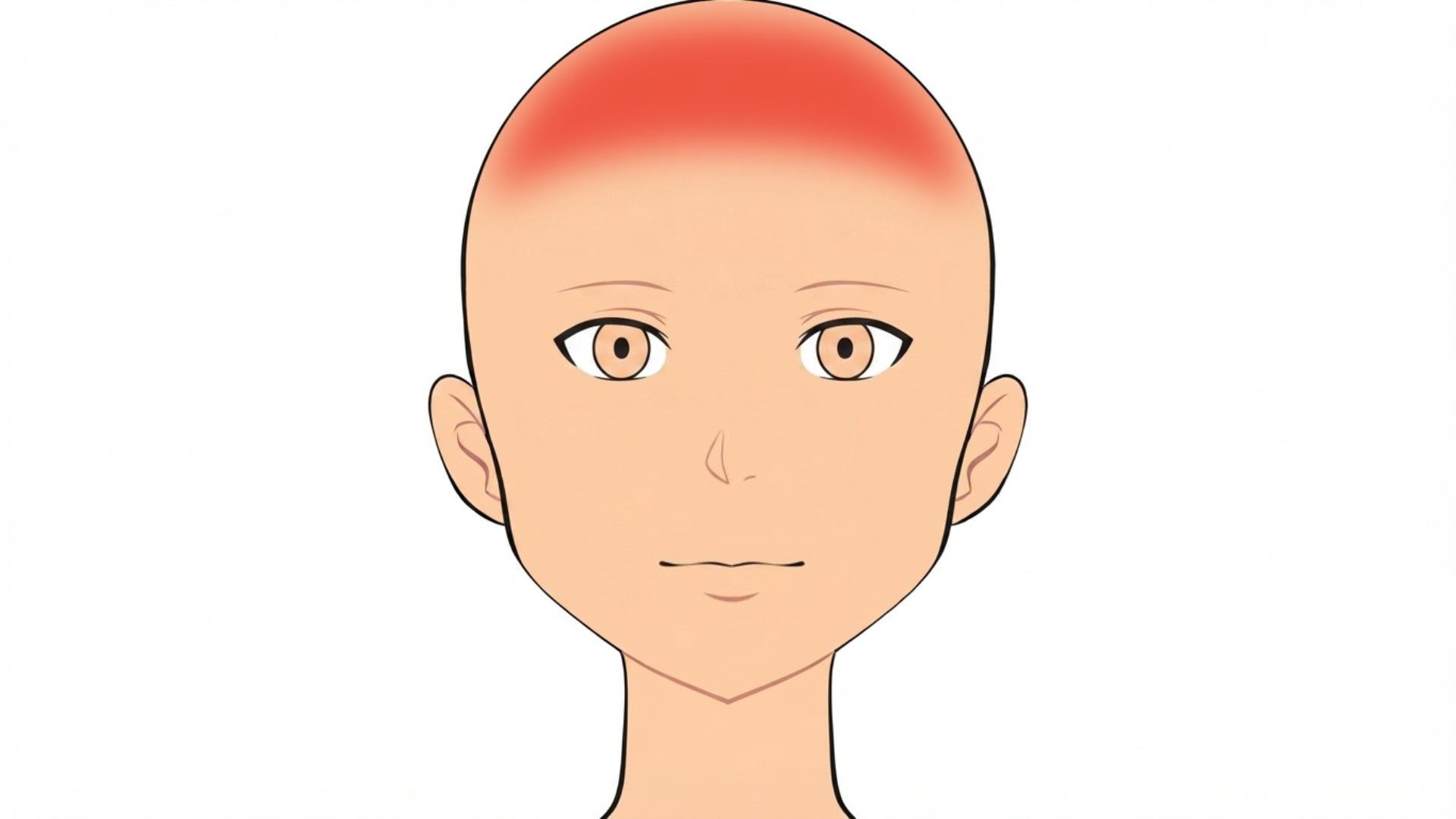
Dandruff is spread across the whole scalp rather than sitting in patches, and it is often heaviest at the crown and along the part. Flakes on the shoulders come from the scalp above them. If flaking runs past the hairline onto the face and ears, that is usually seborrheic dermatitis rather than plain dandruff.
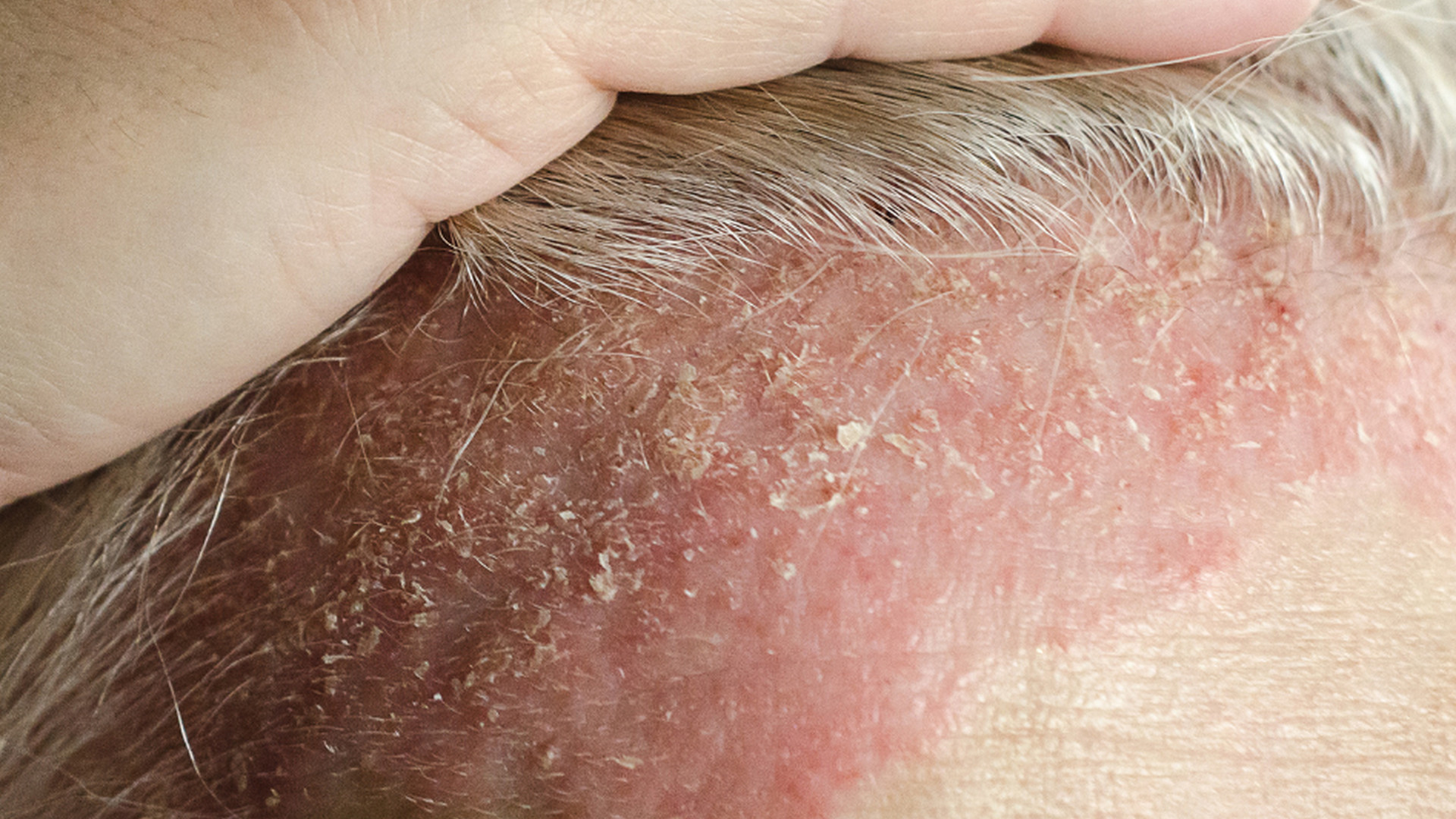
Both flake, both itch, and both sit on the scalp, so scalp psoriasis is mistaken for stubborn dandruff for years at a time. Psoriasis makes thicker plaques with a sharp, clearly drawn border and silvery-white scale, and they often carry on past the hairline onto the forehead, behind the ears or down the back of the neck. Dandruff has soft, ill-defined edges and stays on the scalp. It matters, because psoriasis rarely clears with an anti-yeast shampoo alone.
Common questions