Scalp Psoriasis
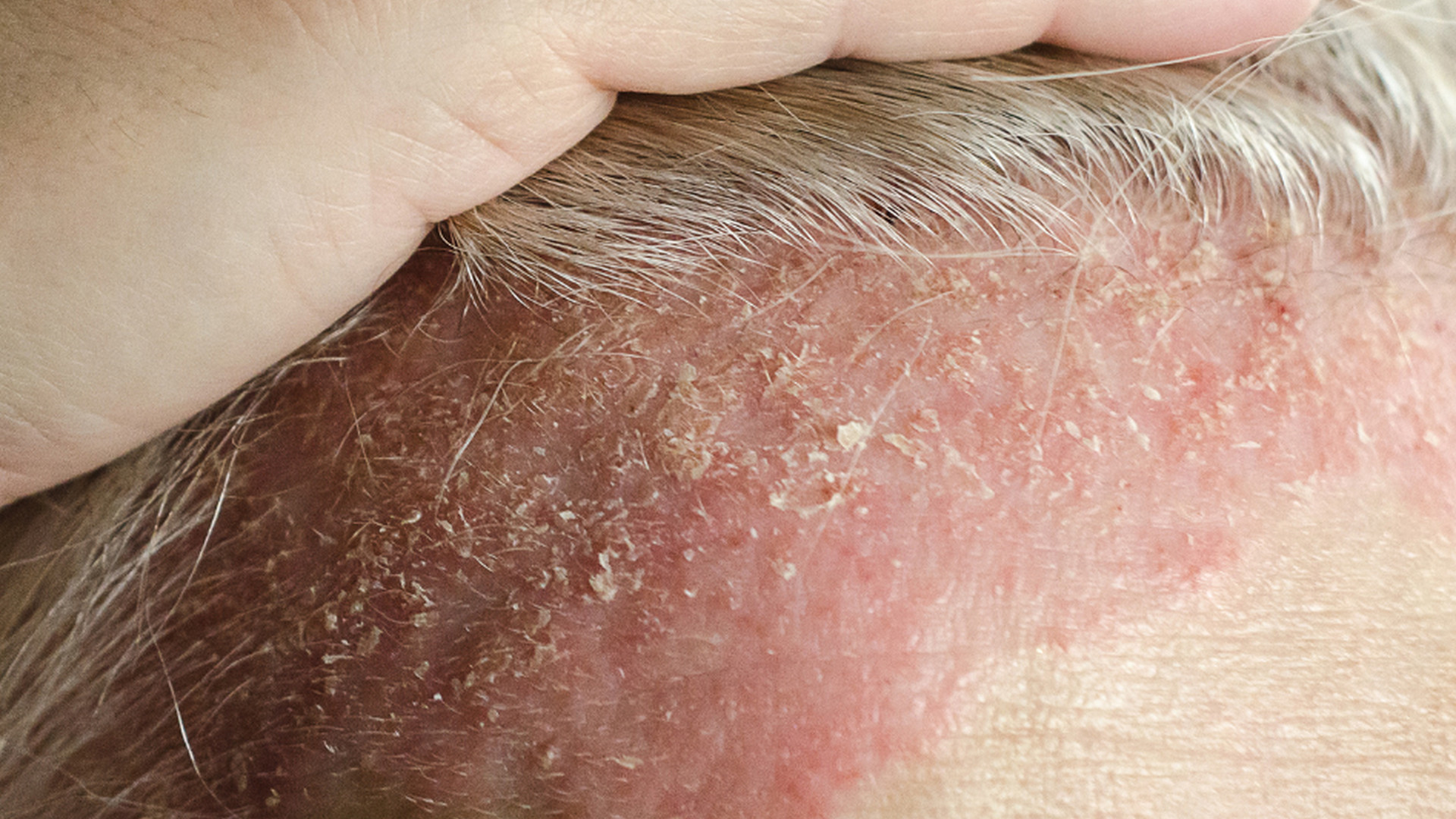
A plaque at the front hairline, with a border that carries on past it.
The edge of the patch tells you which one it is. Scalp psoriasis builds thick, silvery scale on a raised patch with a border you can feel, and it often carries on past the hairline. Dandruff makes finer, greasier flakes that fade into normal scalp with no edge at all. Psoriasis is the immune system making skin cells too fast. Dandruff is a reaction to a yeast that lives on everyone's skin.
| The difference | Scalp Psoriasis | Dandruff |
|---|---|---|
| What it is | Skin cells made too fast | A reaction to yeast |
| What the flakes look like | Thick, dry, silvery | Fine, greasy, yellowish |
| What actually treats it | Lift the scale, then treat the skin | An antifungal shampoo, used properly |
A plaque at the front hairline, with a border that carries on past it.

Loose white flakes scattered through the hair, with no defined patch.
Side by side
Scalp Psoriasis
Skin cells made too fast
The immune system speeds up skin cell production. Cells pile up before the old ones shed, which builds a raised plaque. It runs in families. It is not caused by anything you did or did not wash.
Dandruff
A reaction to yeast
A yeast called Malassezia lives on everyone's scalp. In some people the skin reacts to what it produces, and that reaction causes flaking, redness and itch. Dandruff is the mild end of this. The more inflamed version is called seborrheic dermatitis.

On a healthy scalp the skin replaces itself over about a month. New cells move up slowly and the old ones shed as flakes too small to see. The immune cells sitting in the skin stay quiet unless there is something real to fight.

Immune cells in the scalp switch on when there is nothing to fight and release signals, mainly interleukin 17 and interleukin 23, that tell the skin underneath to speed up.

Skin that normally replaces itself over about a month does it in a few days, so cells reach the surface before they are ready and before the old ones have shed.

Those unshed cells stack into a thick silvery plate around the hairs. This is the step that defeats treatment, because medicine cannot pass through the scale to reach the skin below it.

The plaque itches and feels tight, scratching and combing injure the skin, and psoriasis appears wherever skin has been damaged — so the patch spreads rather than settles. Almost everything on the lists below is pushing on this loop.

Every hair follicle on the scalp has an oil gland attached to it, feeding a thin film of sebum onto the surface. The dead cells at the top of the skin come away one at a time, far too small to see. That oil is normal and the scalp needs it, and there is more of it after puberty.

Glands in the scalp produce sebum, which is normal and necessary. There is simply more of it after puberty, and more of it on some people than others, and that is the fuel for everything that follows.

A yeast called Malassezia lives on almost everyone's skin. It feeds on that oil and breaks it down, leaving free fatty acids behind on the scalp. Nothing here is abnormal yet — this is the same on people who never flake.

In some people the skin responds to those breakdown products with low-grade inflammation. This is the step that decides who gets dandruff and who does not — it is how strongly you react, not how much yeast you carry.

Irritated skin cells are pushed to the surface faster than they should be, so instead of falling away invisibly they come off in clumps big enough to see. The barrier is disrupted at the same time, which is why it itches and why scrubbing makes it worse. Everything on the lists below is pushing on this step.
Scalp Psoriasis
Thick, dry, silvery
Scale sits in layers on top of the patch. It is dry and silvery-white, and often lifts off in a sheet rather than a dusting. A-img: https://cdn.prod.website-files.com/6a4860b7b9c763be6cba6fca/6a6d33c2ba99b370be146880_scalp-psoriasis-vs-dandruff-a-flakes.webp "Thick white scale sitting on visibly red skin." | Close-up of a scalp with psoriasis: red, inflamed skin under thick, dry, silvery-white scale packed between the hairs.
Dandruff
Fine, greasy, yellowish
Flakes are smaller and looser. They look slightly oily or yellow-tinged, and they fall easily onto clothes. B-img: https://cdn.prod.website-files.com/6a4860b7b9c763be6cba6fca/6a6d33c3dc3c138e97f61a91_scalp-psoriasis-vs-dandruff-b-flakes.webp "Looser, yellow-tinged flakes on skin that is not obviously red." | Close-up of a scalp with dandruff: pale skin with larger, loose, yellowish flakes that look slightly oily around the hairs.

On light skin the patch reads as bright pink or salmon red under the scale, and the border is easy to see. Lifting the scale can leave tiny pinpoint bleeding spots. This is the version most textbooks show, which is part of why the condition is recognized faster here than on deeper tones.

On medium skin the base under the scale looks dusky pink to light brown rather than bright red, and the silvery scale is the first thing most people notice. The sharp border is still easy to feel with a finger, which is the clue that separates it from dandruff.

On brown skin the patch usually reads as violet, gray or dark brown rather than red, so the silvery scale and the sharp edge do the work of telling you what it is. This is where it is most often mistaken for dandruff or seborrheic dermatitis, sometimes for years before anyone names it.

On deep skin tones there is often no redness at all — the patch looks gray-violet or almost black, and the scale can look grayish rather than silver. After it clears it usually leaves a flat mark, darker or lighter than the skin around it, that takes months to even out. That mark is not active psoriasis, and it does not need more steroid.

This is the version most people picture: white or gray flakes along the part, sitting on scalp skin that looks pink underneath. On the face it turns up in the eyebrows and the creases beside the nose. The trap on light skin is that the pinkness looks like nothing much, so people treat the flakes with an ordinary shampoo and never treat the inflammation making them.

On medium and olive skin the scalp reads dull pink to light brown rather than clearly red, and the greasy yellow-white scale is easier to see than the inflammation under it. Around the nose and brows it often takes a ring or petal shape. That shape is regularly mistaken for eczema, rosacea or a stubborn dry patch.

On brown skin the redness is muted or missing, and the condition often shows up as lighter patches instead. Because redness is what most people look for, dandruff here is regularly judged milder than it is and given weaker treatment. Scale, itch, and pale or dark patches are the more reliable things to go on.

What lasts on deep skin is the pale patches. Once the inflammation settles, pigment can drop out along the hairline, at the temples and behind the ears, and for many people that is more upsetting than the flaking was. They are not scars and they do come back on their own, but it usually takes months. Getting the inflammation under control early is what keeps them small.
Scalp Psoriasis
Sharp and raised
You can trace where the patch stops. Run a finger over it and there is a clear step up onto thickened skin.
Dandruff
Blurry and flat
The flaking fades into normal scalp with no clear border. The skin underneath is not raised.
Scalp Psoriasis
Front hairline, crown, behind the ears
It also turns up on the back of the head. Psoriasis picks places and holds them, and normal scalp sits in between. Plaques often carry on onto the forehead, behind the ears and down the neck.
Dandruff
Crown and sides, spread out
Dandruff is a wash rather than a set of patches. It covers a broad area and fades out. It also turns up wherever skin is oily — the eyebrows, the creases beside the nose, inside the ears, and the middle of the chest. Those are separate spots, not one patch spilling over the hairline.
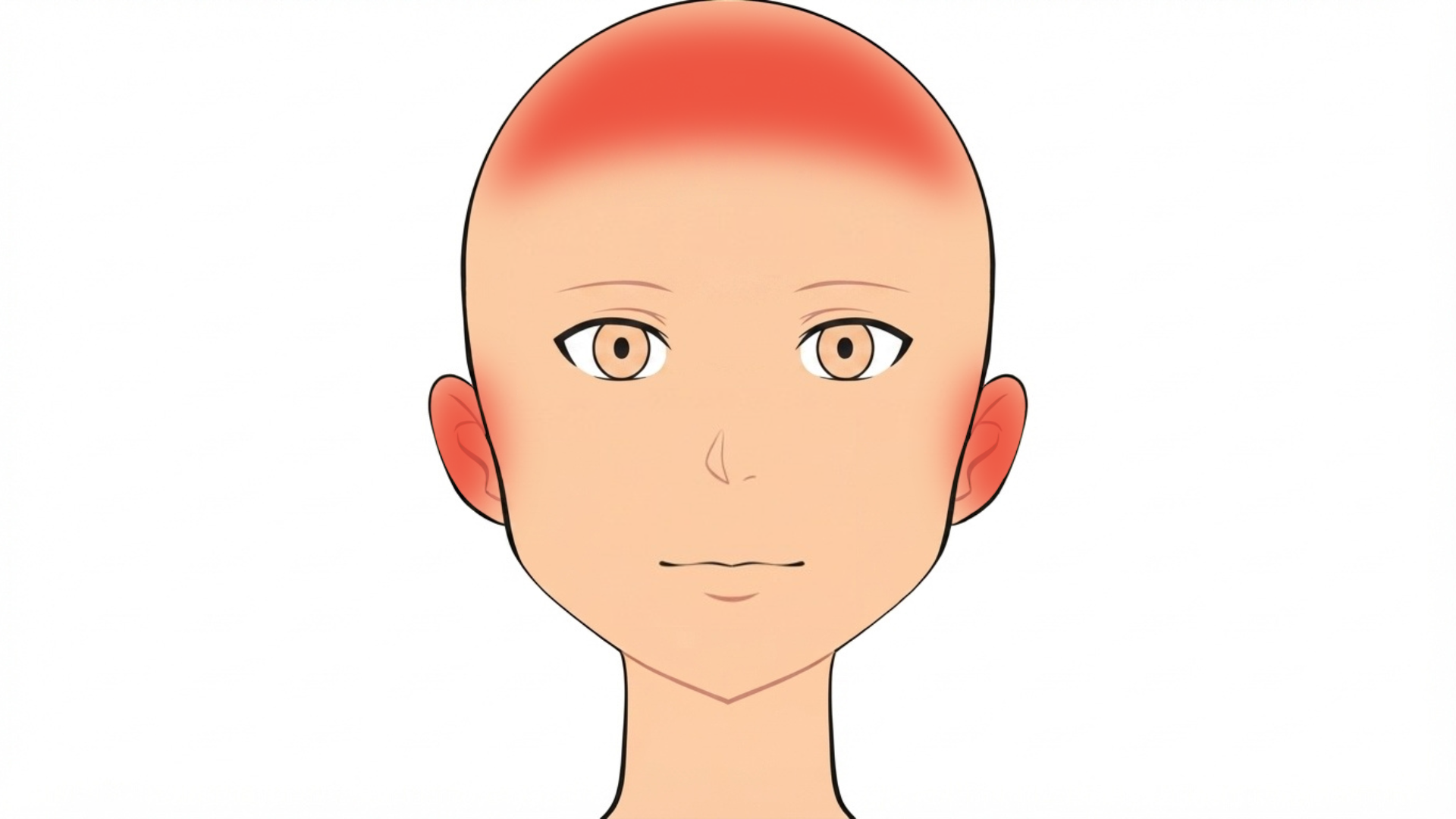
Plaques can cover the whole scalp or sit as a few thick patches. The giveaway is that they do not stop at the hair — they run past the hairline onto the forehead, behind the ears and into the ear canal. Dandruff stays on the scalp; this does not.

The back of the head and the nape of the neck are commonly involved and are the parts you cannot see, so they often go untreated. Thick scale at the nape is also the part that shows above a collar.
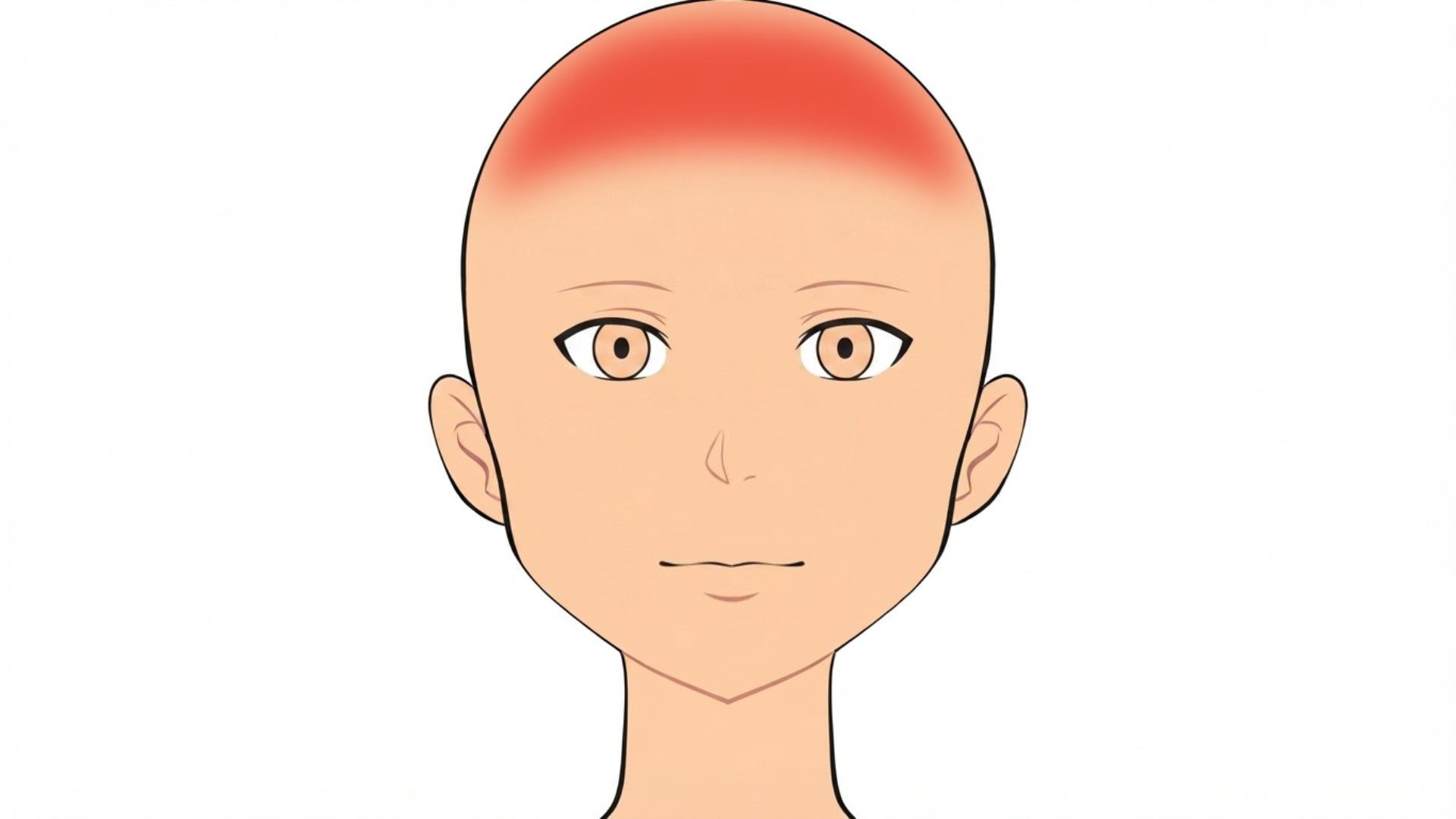
Dandruff is spread across the whole scalp rather than sitting in patches, and it is often heaviest at the crown and along the part. Flakes on the shoulders come from the scalp above them. If flaking runs past the hairline onto the face and ears, that is usually seborrheic dermatitis rather than plain dandruff.
Scalp Psoriasis
Elbows, knees, lower back and nails
Psoriasis rarely stays in one place. Look for the same silvery patches elsewhere. Check your nails for small pits, an oily-looking brown spot under the nail, or a nail lifting from its bed. Nail changes are close to a giveaway.
Dandruff
Only the greasy areas
There is nothing to find on the elbows, knees or nails. Seborrheic dermatitis stays in the oily zones — scalp, face, ears, chest.
Scalp Psoriasis
About 3 in 100 people
That is how many have psoriasis of any kind. Around 8 in 10 of them get scalp involvement at some point.
Dandruff
Very common
Dandruff itself is very common. The inflamed form, seborrheic dermatitis, affects roughly 5 in 100 people.
Scalp Psoriasis
Lift the scale, then treat the skin
Thick scale blocks medication. So treatment usually starts with a salicylic acid or coal tar shampoo to soften it. Then a prescription steroid solution, foam or shampoo goes onto the skin underneath. A combination of calcipotriol and betamethasone is a common next step, and works better than either alone. Stubborn or widespread psoriasis has tablet and injection options.
Dandruff
An antifungal shampoo, used properly
Ketoconazole, zinc pyrithione, selenium sulfide or ciclopirox. Lather it in and leave it on the scalp for several minutes before rinsing. Use it two or three times a week.
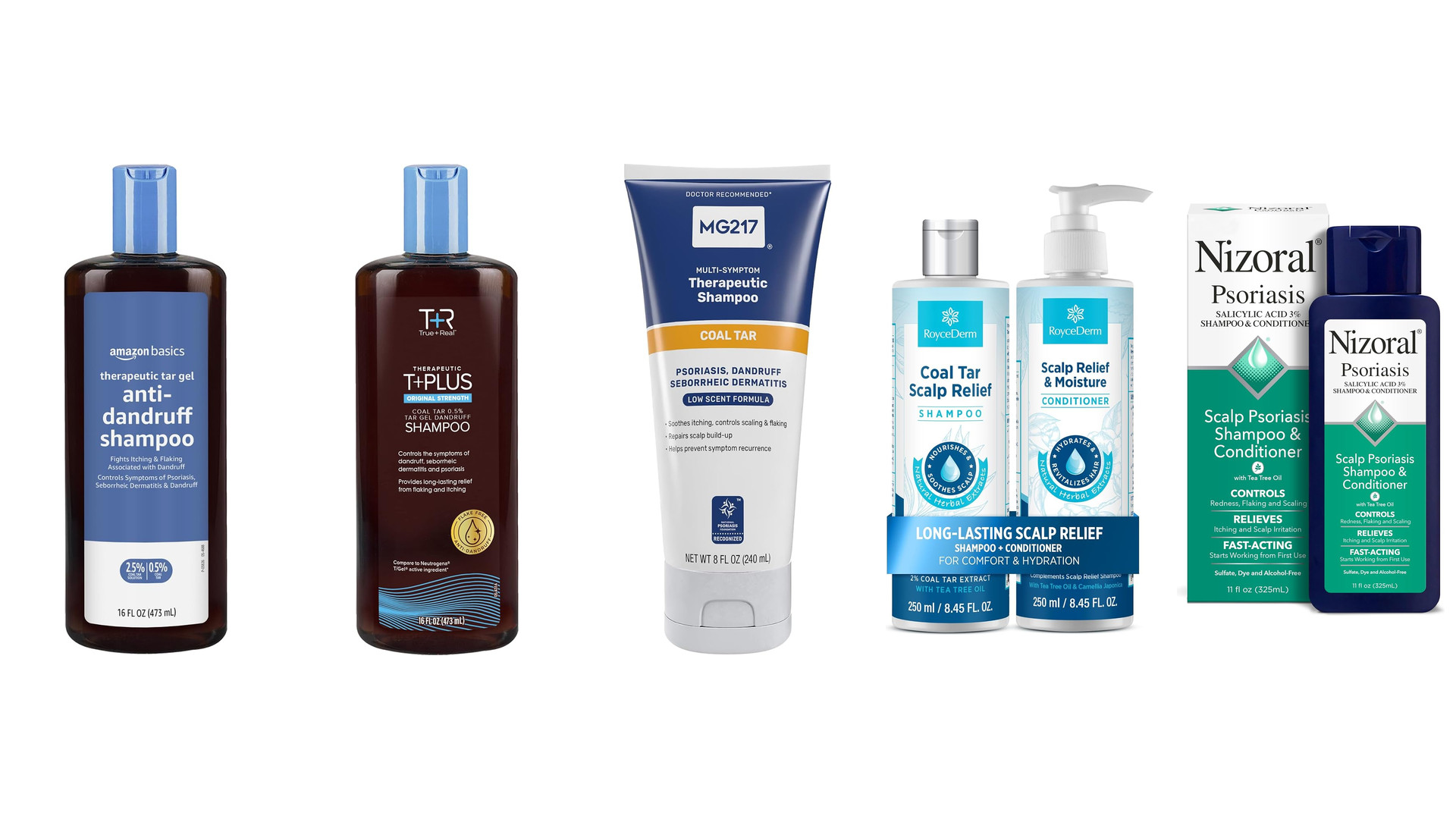
The most useful thing on the shelf for scalp psoriasis. It slows the overactive cell turnover and takes down scale and itch, which no other over-the-counter option does. Apply it to the parted scalp rather than the hair, leave it five to ten minutes, and expect a smell and possible staining of light hair and towels.

A descaler, not a treatment. It dissolves the bonds holding the plate of scale together so that medicine can reach the skin underneath, which is the step most people skip. Use it before the active treatment, not instead of it, and go easy on large areas because it can make hair brittle.
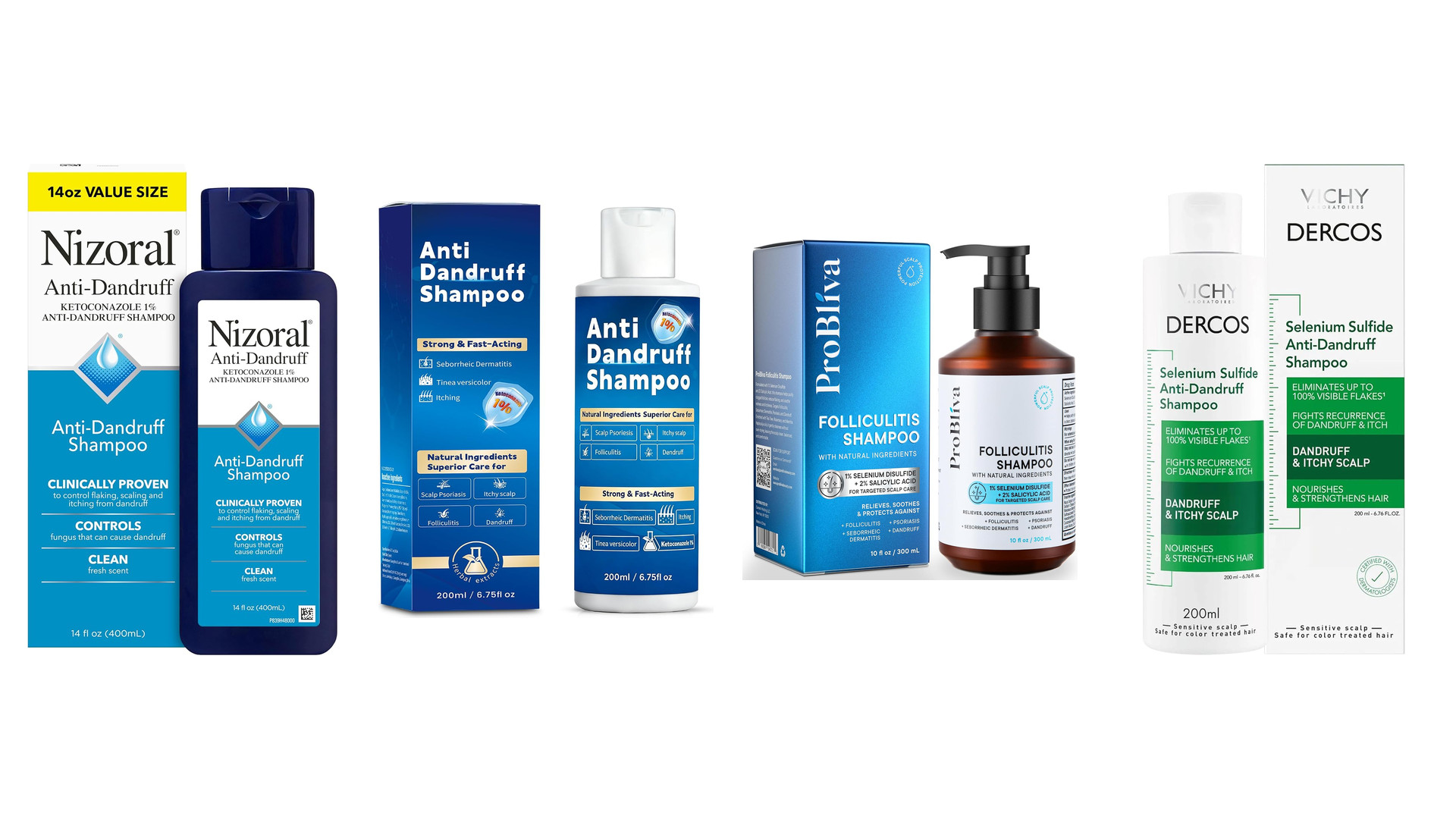
An antifungal shampoo that does nothing to psoriasis itself but clears the seborrheic flaking sitting on top of it, which many people with scalp psoriasis also have. It is worth adding when the flakes are greasy and yellow as well as dry and silvery. If your scale is purely psoriasis, it will not help.

Warm oil left on the scalp for an hour, or overnight under a cap, softens thick scale so it lifts in the wash instead of tearing. That is a real and useful job. It does nothing about the immune inflammation underneath, so on its own it manages the flakes and leaves the disease running.

The active ingredient in most ordinary anti-dandruff shampoos. It is gentler than coal tar and can settle light flaking, but it was designed for the yeast behind dandruff rather than for psoriasis. If patches are thick or sharply bordered, this is not the one to keep trying.

Narrowband UVB delivered by a hand-held comb that parts the hair to reach the scalp skin. It suits people who would rather not take tablets, and it fits with the way many people find their psoriasis improves in summer. It means clinic visits two or three times a week for a couple of months, which is the main reason people stop.
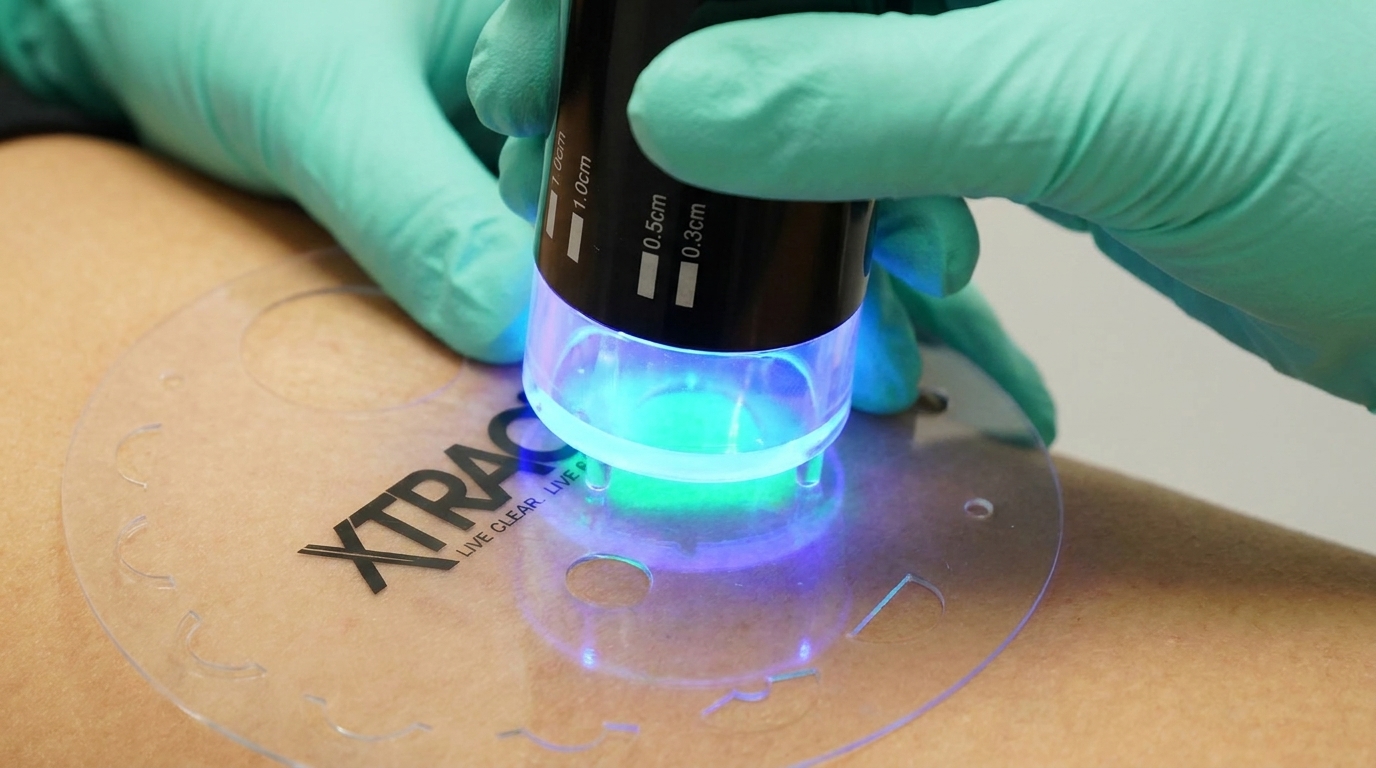
A focused ultraviolet beam aimed at individual patches, useful when only a few areas of scalp or hairline are involved. It treats the patch without exposing the rest of the skin. Hair blocks the beam, so it works best on the hairline and on thinner, shorter hair.
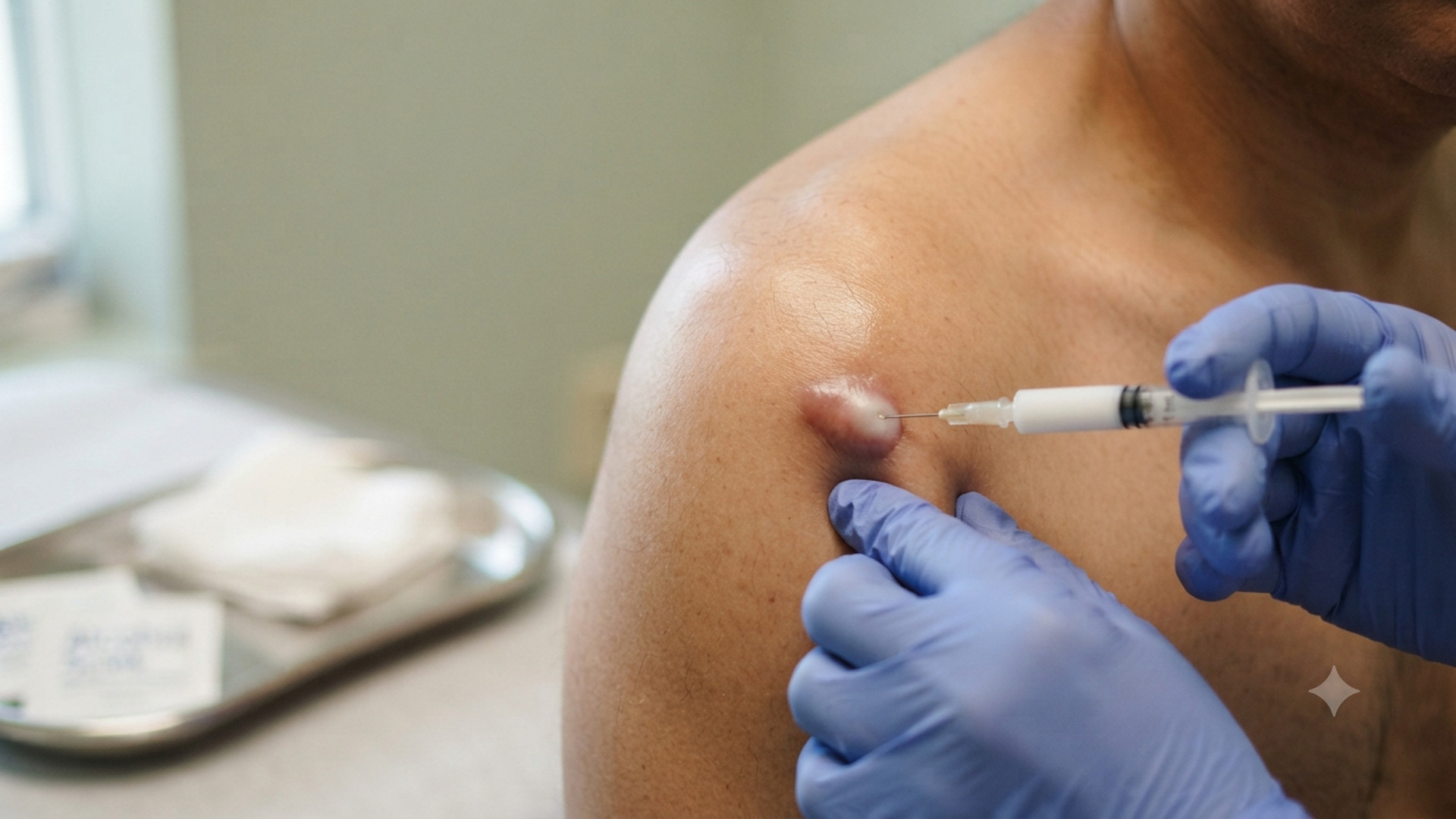
Steroid injected directly into one or two thick patches that have refused everything applied on top. It flattens them within a few weeks. It is done in clinic, it stings, and it is not a plan for a whole scalp — repeated injections in the same spot can leave a dent in the skin.
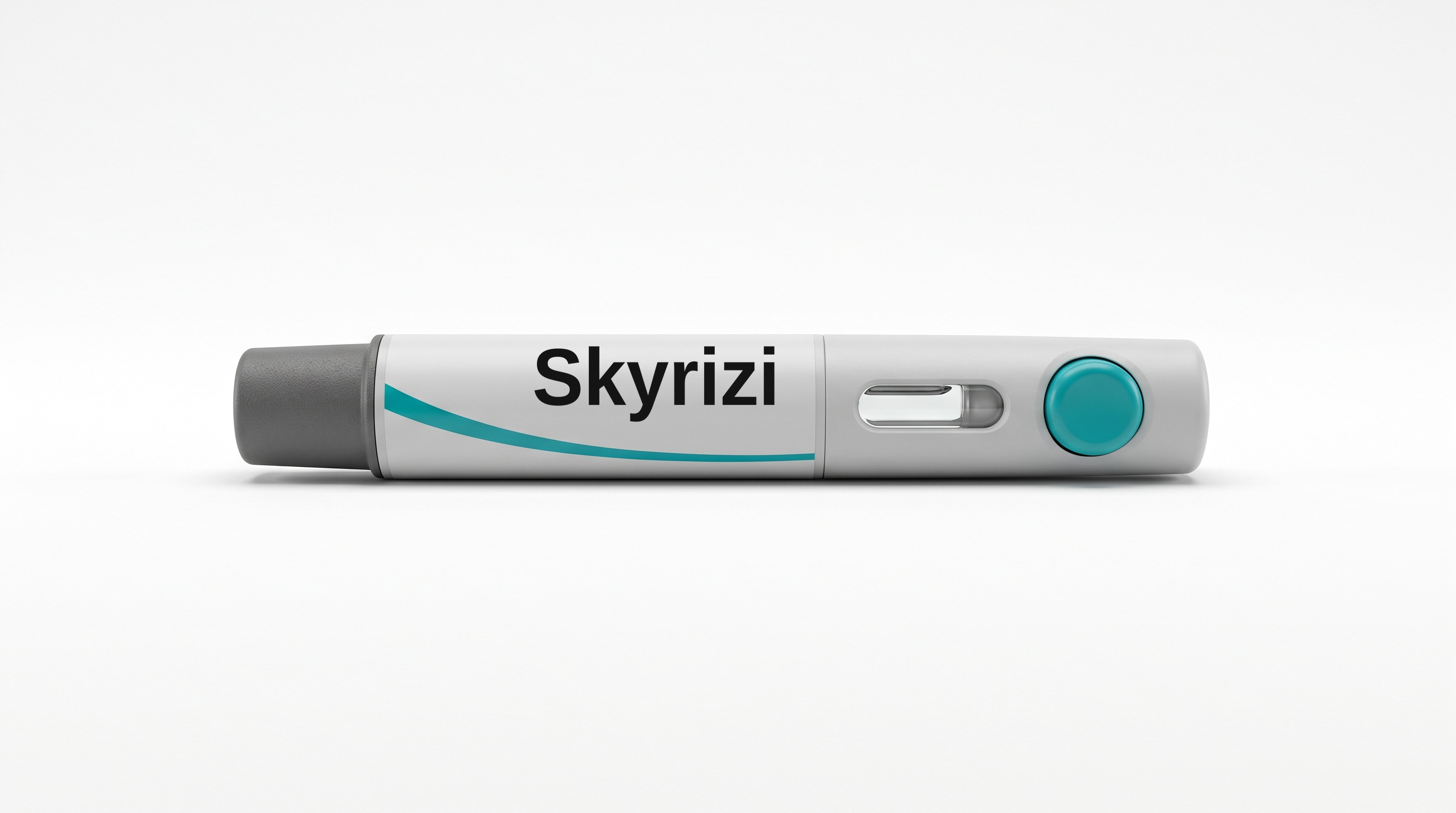
A biologic injection that blocks interleukin 23, one of the two signals named at the top of this page. Given every twelve weeks after the starting doses, it clears most people's psoriasis including the scalp. It is for severe or stubborn disease, needs screening for tuberculosis first, and slightly raises the risk of infections.

An older biologic, injected at home every other week, and often the first one insurance will cover. It treats psoriatic arthritis as well as the skin, which makes it a good fit when joints are involved. It needs tuberculosis screening and periodic blood tests, and some people gradually stop responding to it.
A tablet with trial evidence specifically in scalp psoriasis, which is unusual — most tablets are tested on the body and assumed to help the scalp. It needs no blood monitoring, which suits people who would rather not have regular tests. Nausea, loose stools and headache are common in the first fortnight and usually settle.
A long-established weekly tablet for psoriasis that is widespread, or scalp disease that has not budged on foams and solutions. It also treats psoriatic arthritis, which makes it a sensible choice when the joints are involved too. It needs regular blood tests, and it must not be taken in pregnancy.

A daily tablet that blocks one of the immune signals driving psoriasis, with scalp improvement recorded in its trials. It is generally better tolerated than methotrexate and needs less monitoring. It is newer and expensive, so it usually comes after other options have been tried.

Works faster than anything else in tablet form and is used to rescue a severe flare. It is a short-term measure only — usually a few months — because it raises blood pressure and can affect the kidneys over time. Something steadier is normally started underneath it.
A vitamin A tablet used mainly for thick, scaly psoriasis, sometimes alongside light treatment. It works slowly and causes dry lips, dry eyes and hair thinning, which makes it an awkward fit when the complaint is the scalp. It must never be taken in pregnancy, and it stays in the body for a long time afterwards.
Steroid tablets clear psoriasis quickly and then it commonly comes back worse as the course finishes, occasionally in a severe form. For that reason they are avoided in psoriasis. If you are already on a course for something else, do not stop it yourself — ask the doctor who prescribed it.
The workhorse for an active scalp flare, as a foam, solution or shampoo made to spread through hair onto skin. It usually calms itch within days and clears patches over two to four weeks. It is used in short courses, because strong steroids used continuously thin the skin — so it breaks the flare and something gentler holds it.
A combined foam containing a vitamin D treatment and a steroid, applied once a day. It is the most effective single scalp product most people will be given, because it works on the immune signal and the fast cell turnover at once. It is expensive and often needs the pharmacy chased, which is worth knowing before you start.
A vitamin D treatment that slows the skin cells down. It is slower than a steroid, taking six to eight weeks, but it can be used for far longer without thinning the skin, so it is often what keeps a scalp clear after a steroid has broken the flare. It can sting on cracked skin.
A newer non-steroid foam approved for scalp and body plaque psoriasis, used once a day. It suits people who do not want to keep returning to strong steroids, or who have been on them a long time. It is costly, and coverage is often the deciding factor rather than the medicine.
A mid-strength steroid lotion, used where clobetasol is more than the situation needs or for the thinner skin behind the ears and along the hairline. It is also a common step-down after a flare has settled. Like all steroids it is for courses, not for indefinite daily use.
The workhorse dandruff shampoo: it reduces the yeast and calms the scalp, and it is gentle enough to keep using for years. Part the hair, work it into the skin rather than the lengths, and leave it on for five minutes. It is a good choice for color-treated, gray or relaxed hair because it does not discolor.
The 1 percent shampoo on the shelf is a proper antifungal and one of the most effective things you can buy for dandruff. Twice a week during a flare, then once a week to hold it. Pairing it with zinc pyrithione and alternating the two tends to keep working better over months than either one used alone.
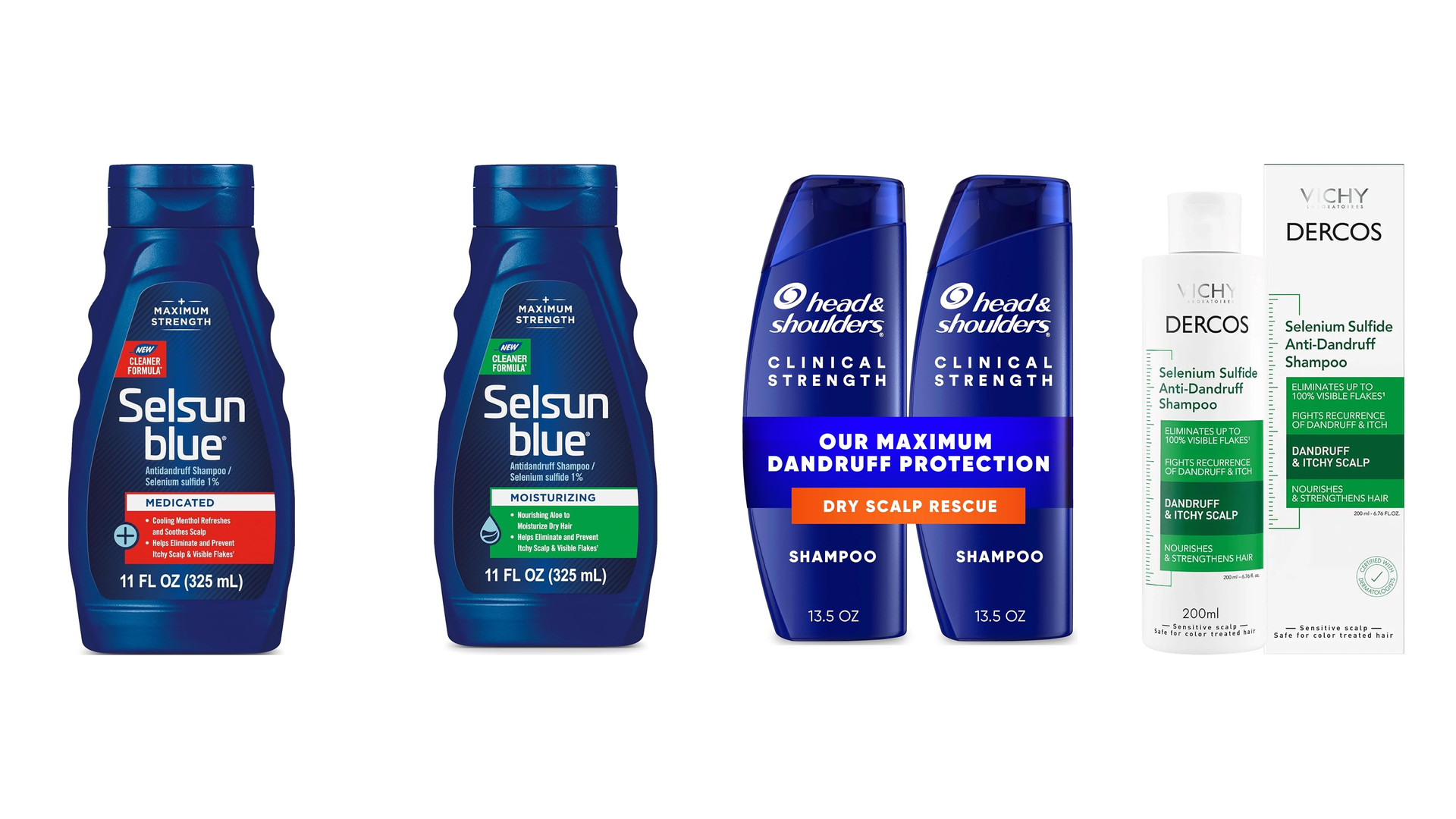
Reduces the yeast and also slows how fast scalp cells shed, which makes it useful when the flaking is heavy. Rinse it thoroughly. The catch is color: it can discolor light, gray, relaxed or color-treated hair, so zinc pyrithione or ketoconazole is usually the better pick for those.
Works by slowing the shedding rather than by treating the yeast, so it suits thick, heavy flaking more than a mildly itchy scalp. It smells strongly and it stains light hair and fabric, which is why most people use it only during a flare. It is also useful when scalp psoriasis is in the picture too.
This one lifts scale rather than treating the cause. It is the right choice when the scale is thick and stuck down and other shampoos cannot reach the skin underneath. Use it first to clear the way, then follow with an anti-yeast shampoo — on its own it will not stop the dandruff coming back.

A 5 percent tea tree shampoo did beat a plain shampoo in one small trial, so it is not nothing. It is weaker than the standard actives and there is much less behind it. It is also a common cause of allergic contact dermatitis, so if the scalp becomes more itchy and irritated on it, that is a reason to stop rather than to persist.

Coconut oil, castor oil and vinegar rinses come up constantly and none of them treat dandruff. An oil left on the scalp gives the yeast more of exactly what it grows on. There is one genuine use: an oil applied for an hour before washing softens thick, stuck-down scale so it lifts without scraping — then it gets washed out.
An antifungal tablet, occasionally used for a short course when seborrheic dermatitis is severe, widespread, or not responding to anything applied to the skin. Ordinary dandruff never needs it. It also does not keep it away — shampoo maintenance still has to carry on afterwards — and it interacts with a number of common medicines.
Double the strength of the version on the shelf, and the usual first prescription when a month of over-the-counter shampoo has not shifted it. Twice a week for a month, five minutes on the scalp each time. Once it is clear, most people drop back to an over-the-counter shampoo for maintenance rather than staying on this.
A potent steroid, prescribed for the scalp as a solution, foam or shampoo, that settles a red, sore, intensely itchy flare within days. It is for short bursts of two to four weeks, not for keeping on hand. It does nothing about the yeast, so the medicated shampoo carries on alongside it and takes over afterwards.
A newer non-steroid foam approved for seborrheic dermatitis, used once a day on the scalp and face. It calms the inflammation without the thinning that comes with long-term steroid use, which makes it a reasonable option for people who keep needing steroid courses. Cost and insurance are usually the limiting factor.

A different antifungal, and the usual next step when ketoconazole has stopped working or was never tolerated. It is used two or three times a week in the same way, with contact time on the scalp. Rotating it with a zinc pyrithione shampoo is a common way to keep a stubborn scalp under control.
A non-steroid ointment used mainly where dandruff has spread onto the face — the eyebrows, the creases beside the nose, behind the ears. It calms the same inflammation without thinning that thin skin, which matters when the area needs treating on and off for years. It stings for the first few days. It is awkward to apply in hair, so it is rarely the choice for the scalp itself.
Scalp Psoriasis
Usually yes
Hair can shed from a thick plaque, or from scratching and picking. It normally regrows once the plaque settles. Permanent loss is rare, and comes from years of severe untreated disease.
Dandruff
Yes
Dandruff is not a hair loss condition. Any shedding comes from scratching, not from the flaking itself.
Scalp Psoriasis
Dandruff
Both flake, and both itch, so scalp psoriasis is very often treated as stubborn dandruff for years. Dandruff makes loose, soft, yellowish flakes spread thinly over the whole scalp with no patch you can feel the edge of. Psoriasis builds a raised plaque with a border you can trace with a finger, and it does not usually clear on an ordinary anti-dandruff shampoo.
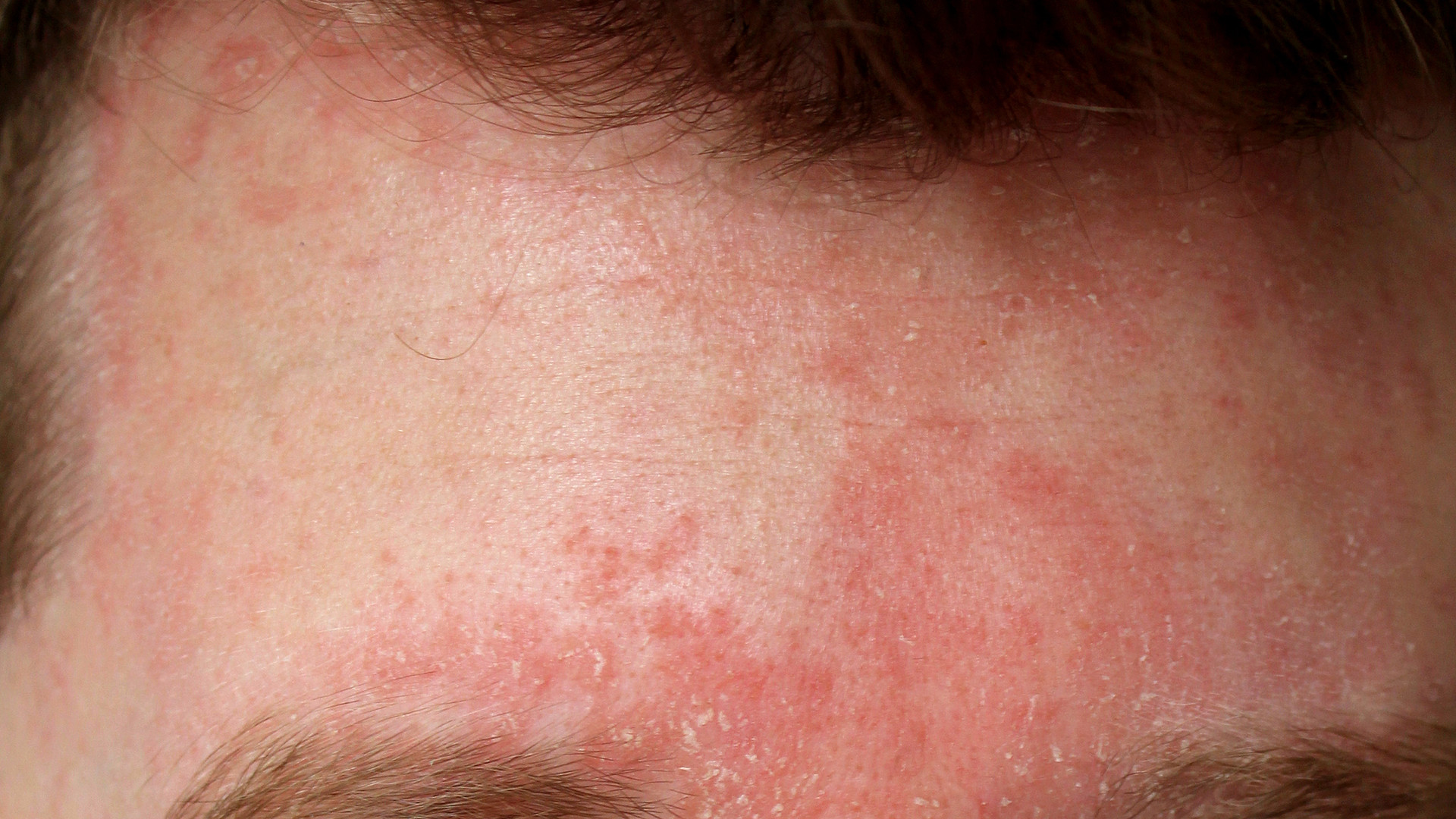
The fuller version of dandruff, and the hardest one to separate from psoriasis. Its scale is greasy and yellowish, the edges of the patches fade into normal skin, and it usually also sits in the eyebrows, the creases beside the nose and the ears. Psoriasis scale is dry and silvery and stops at a sharp line. The two can also run on the same scalp at once, which is why some treatment plans cover both.
Both flake, both itch, and both sit on the scalp, so scalp psoriasis is mistaken for stubborn dandruff for years at a time. Psoriasis makes thicker plaques with a sharp, clearly drawn border and silvery-white scale, and they often carry on past the hairline onto the forehead, behind the ears or down the back of the neck. Dandruff has soft, ill-defined edges and stays on the scalp. It matters, because psoriasis rarely clears with an anti-yeast shampoo alone.
Common questions