Urea moisturizer
ListedCan soften thick dry scale; avoid irritating open fissures.
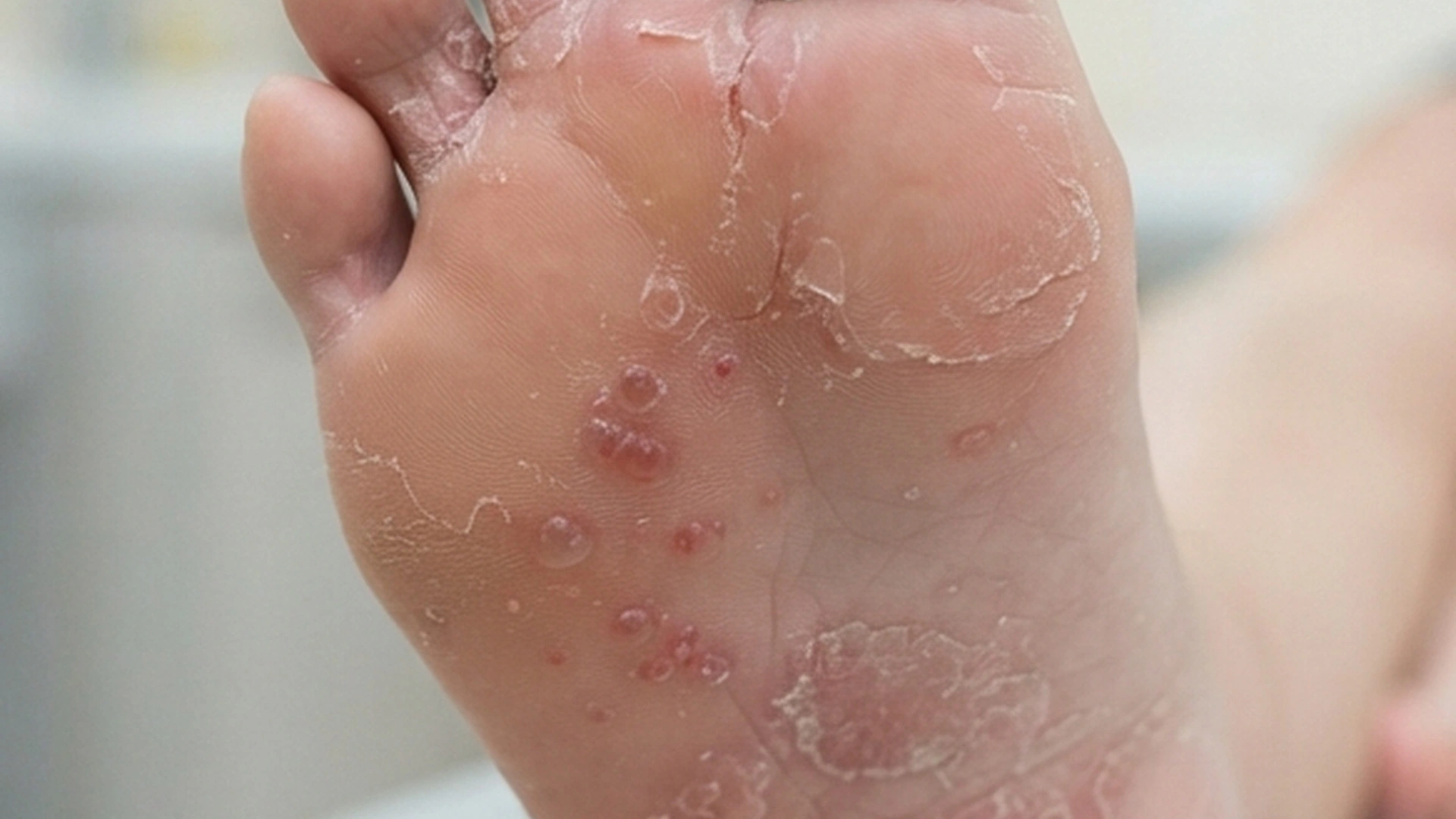
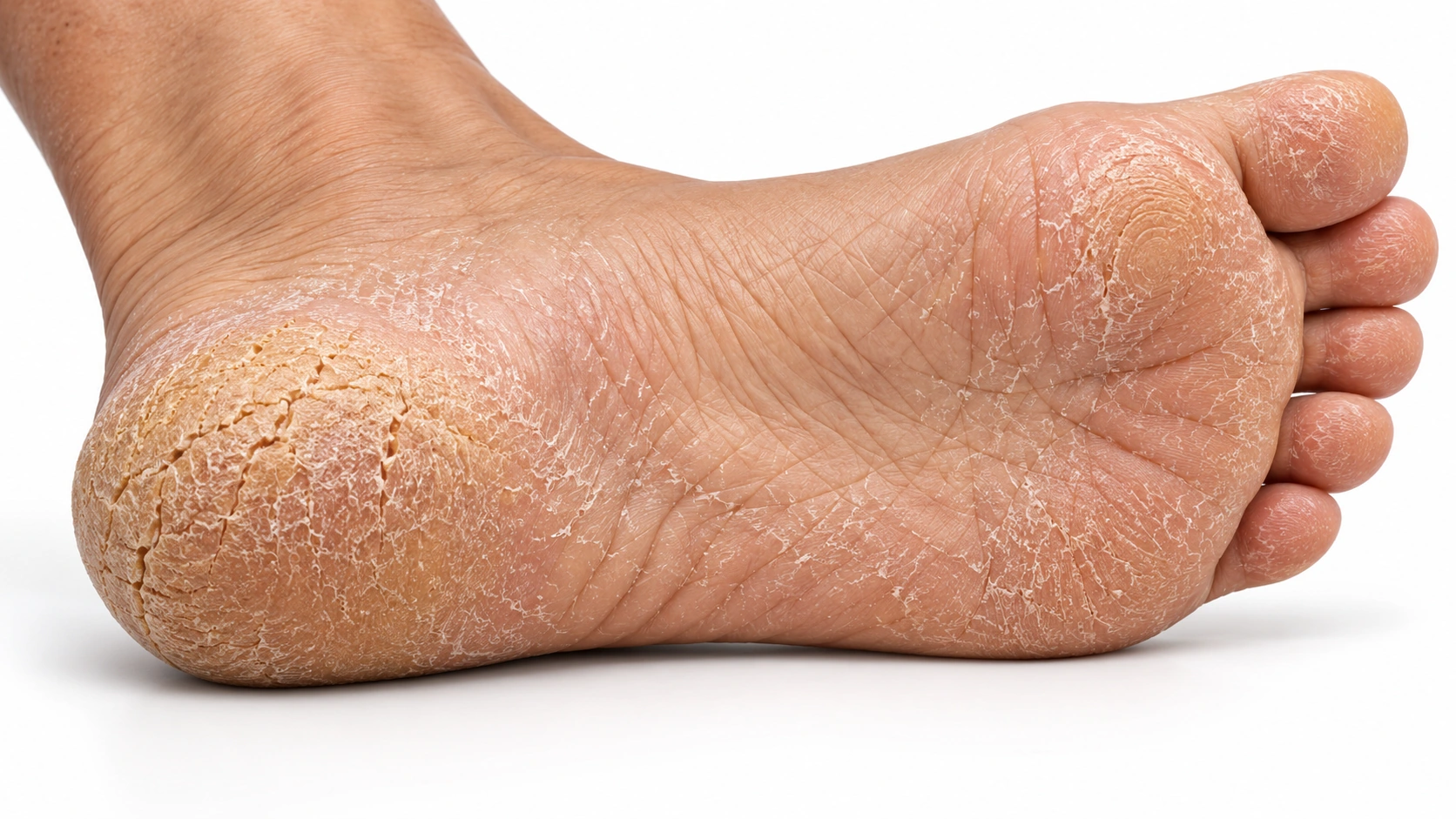
Psoriasis affecting the palms or soles, where thick scale and cracking can be disabling. Athlete's foot is a fungal infection of the outer layer of skin on the feet. It causes itching, peeling and cracking, most often between the toes. It clears with antifungal creams from a pharmacy, and it comes back easily if the shoes, socks and toenails are not dealt with as well.
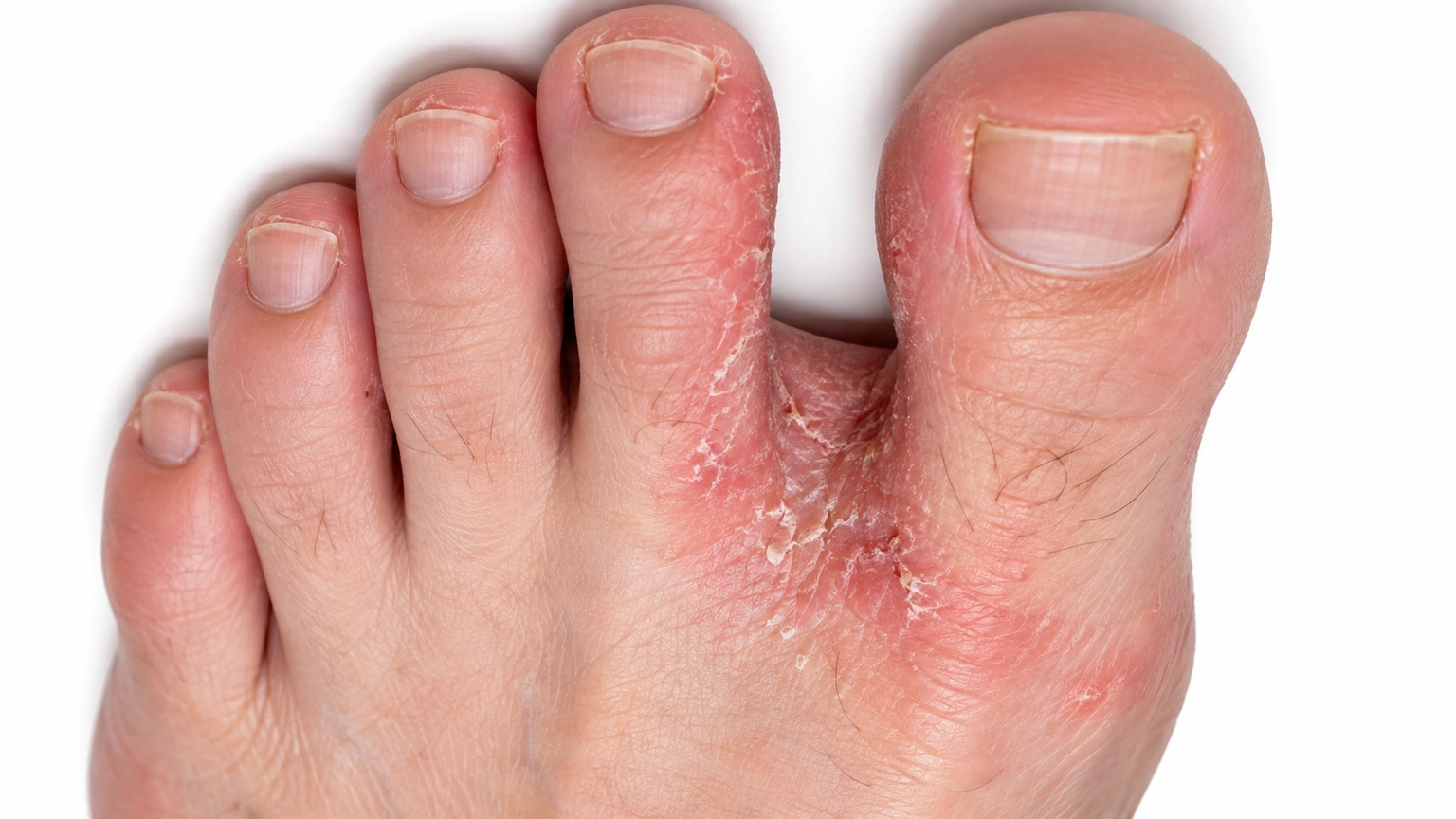
The same eight facts on every condition comparison.
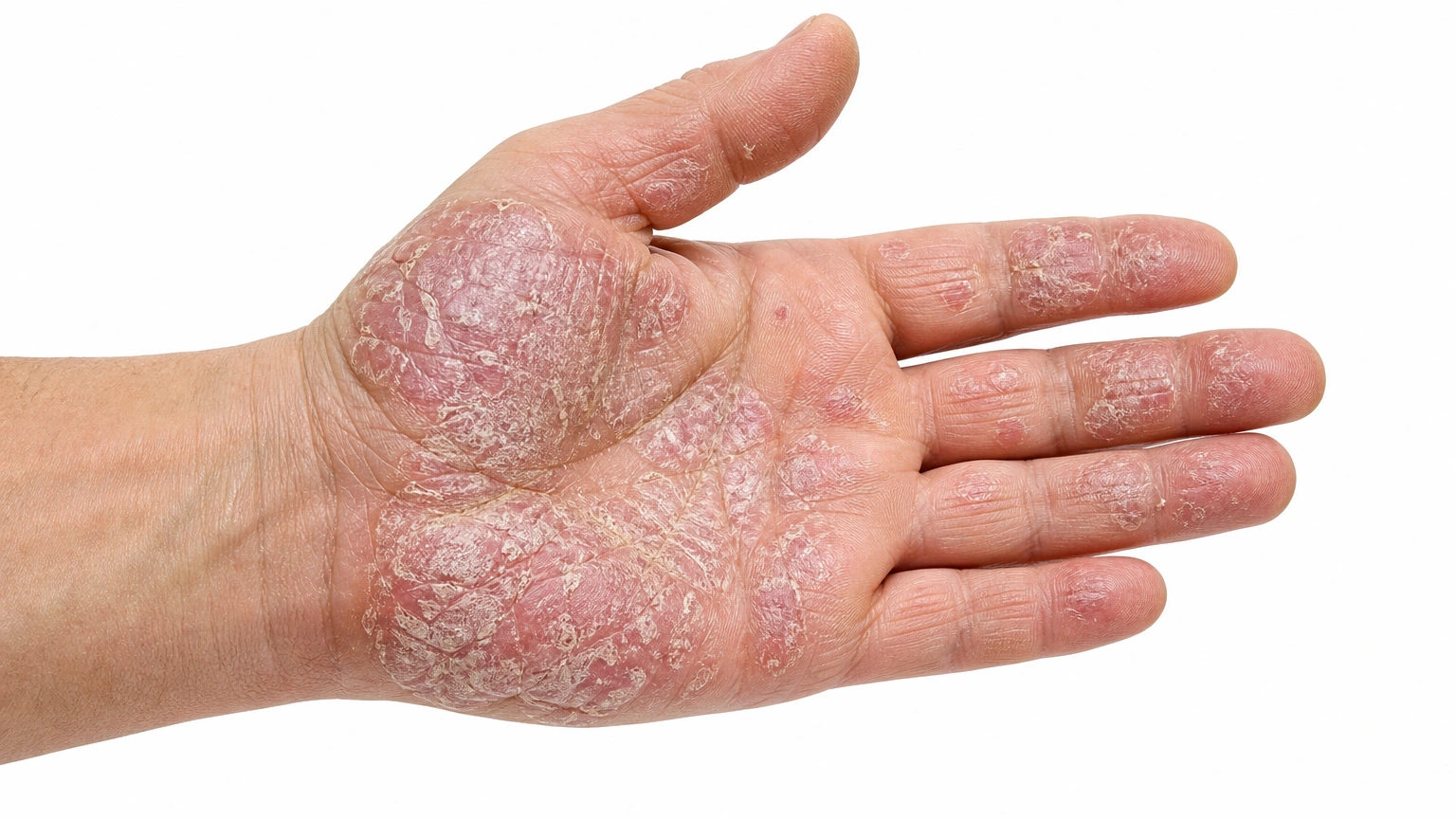
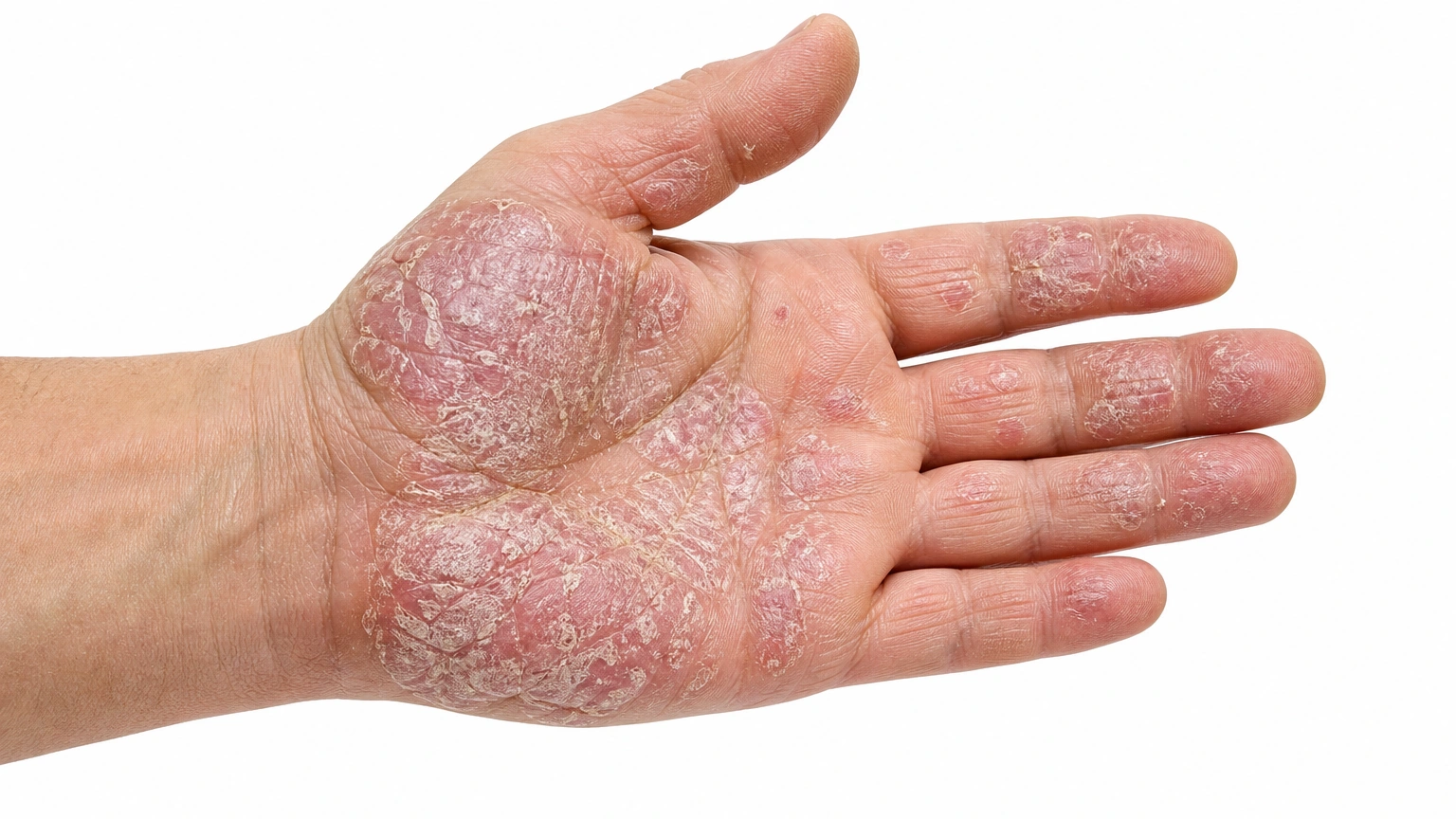
Palmoplantar Psoriasis Red patches and heavy scale cover much of the palm and parts of the fingers.
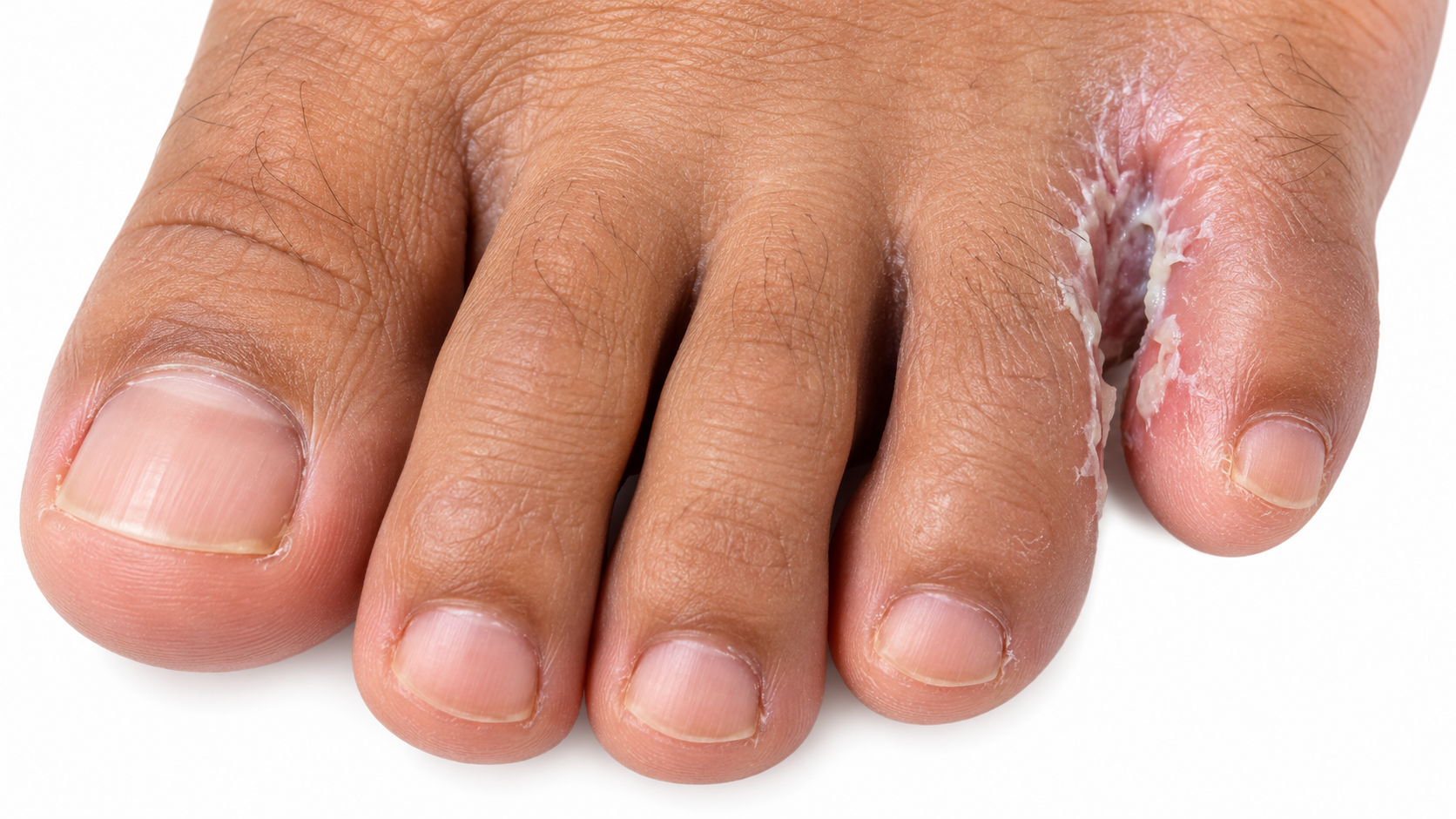
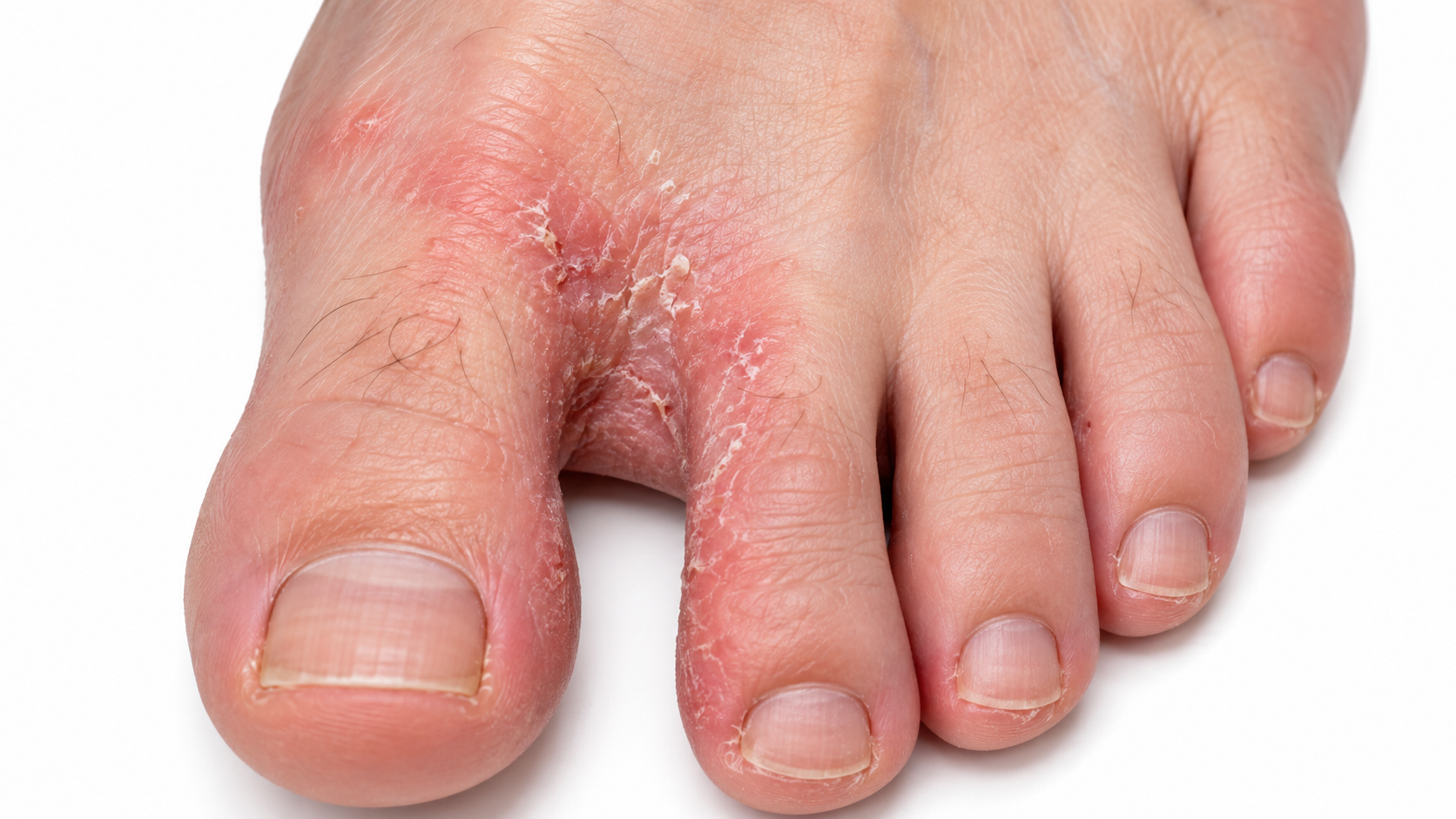
Interdigital athlete’s foot Between the toes; the most common type.
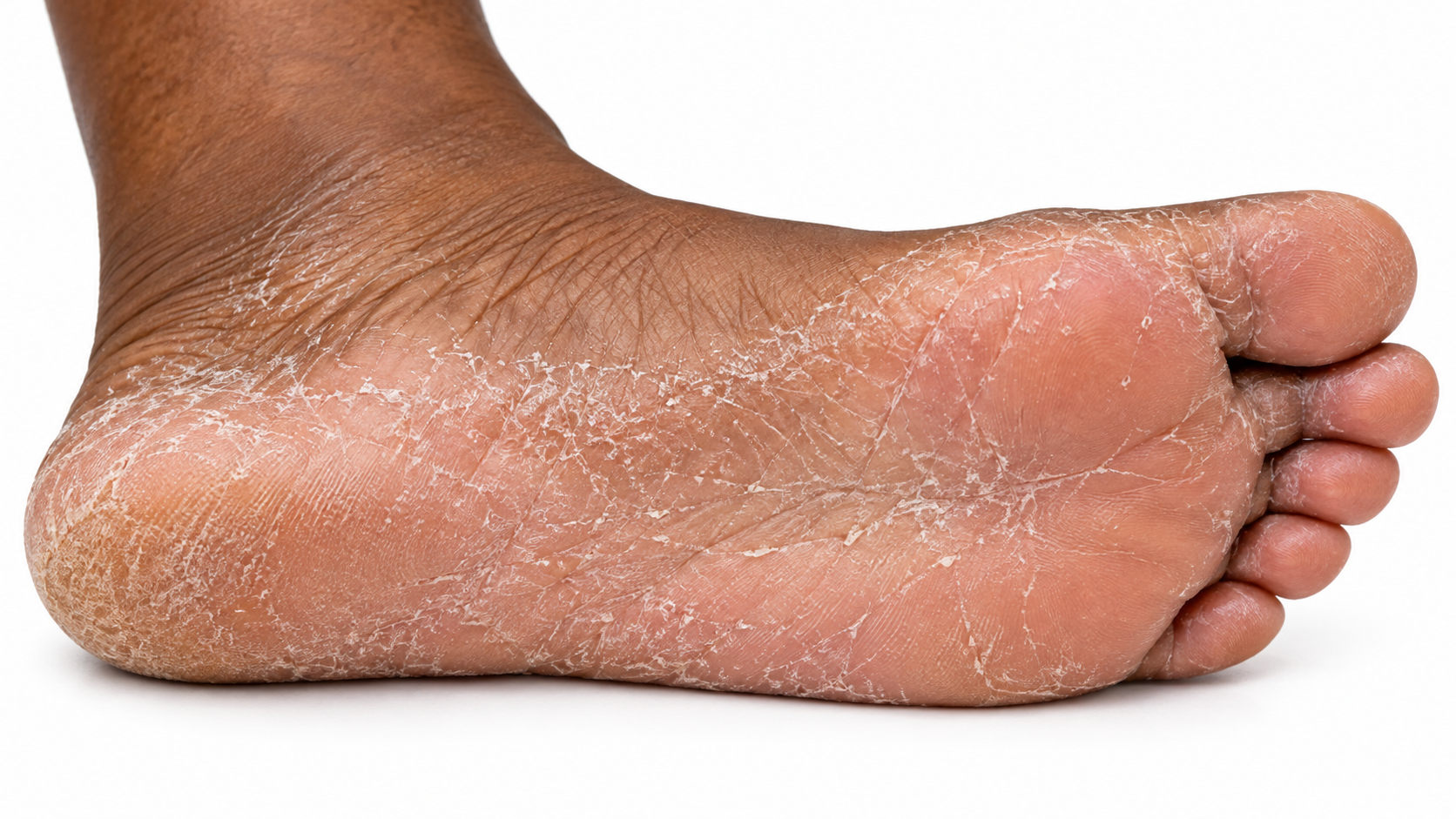
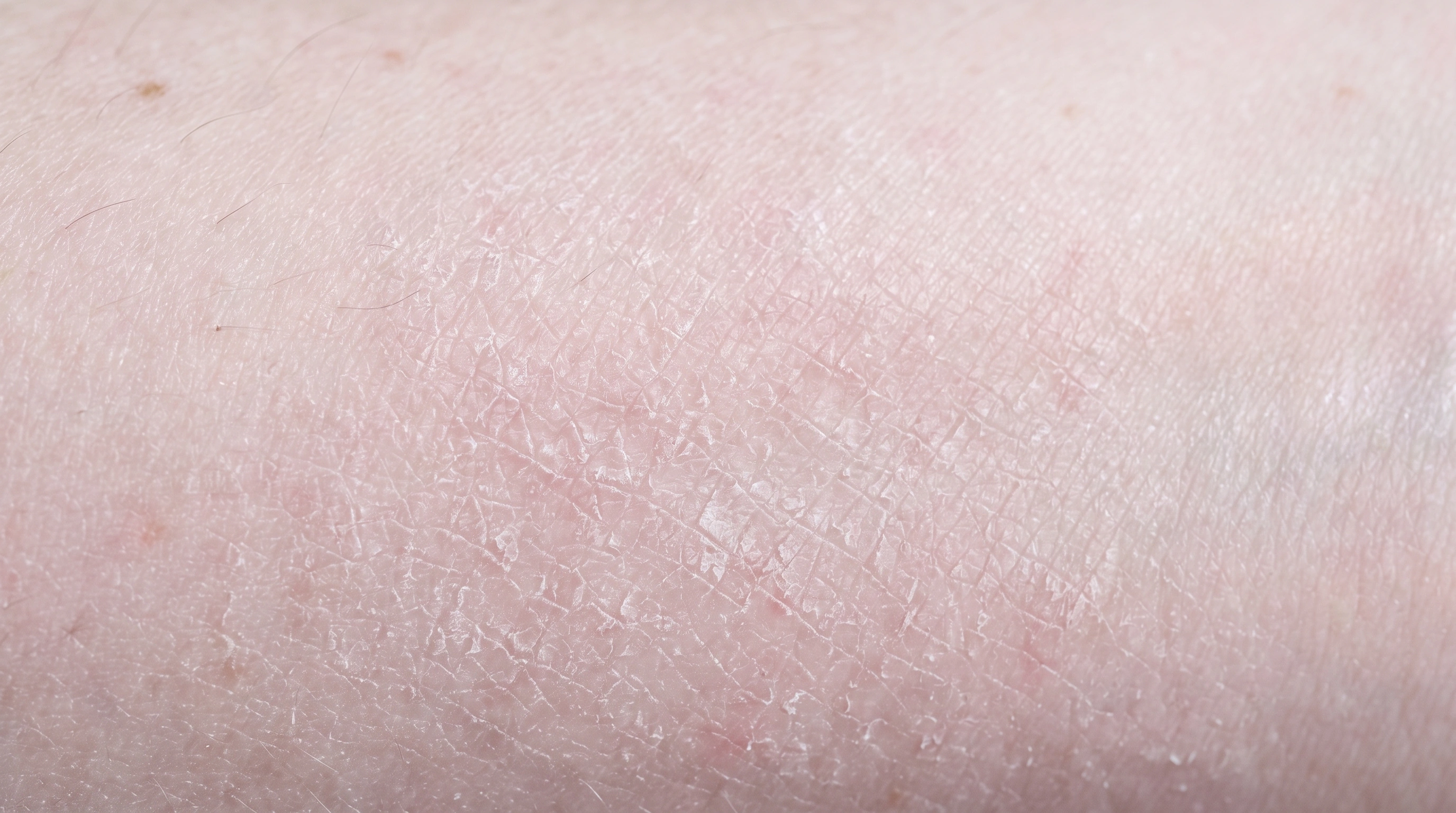
Moccasin-type athlete’s foot Dry, thick scale on the sole and sides.
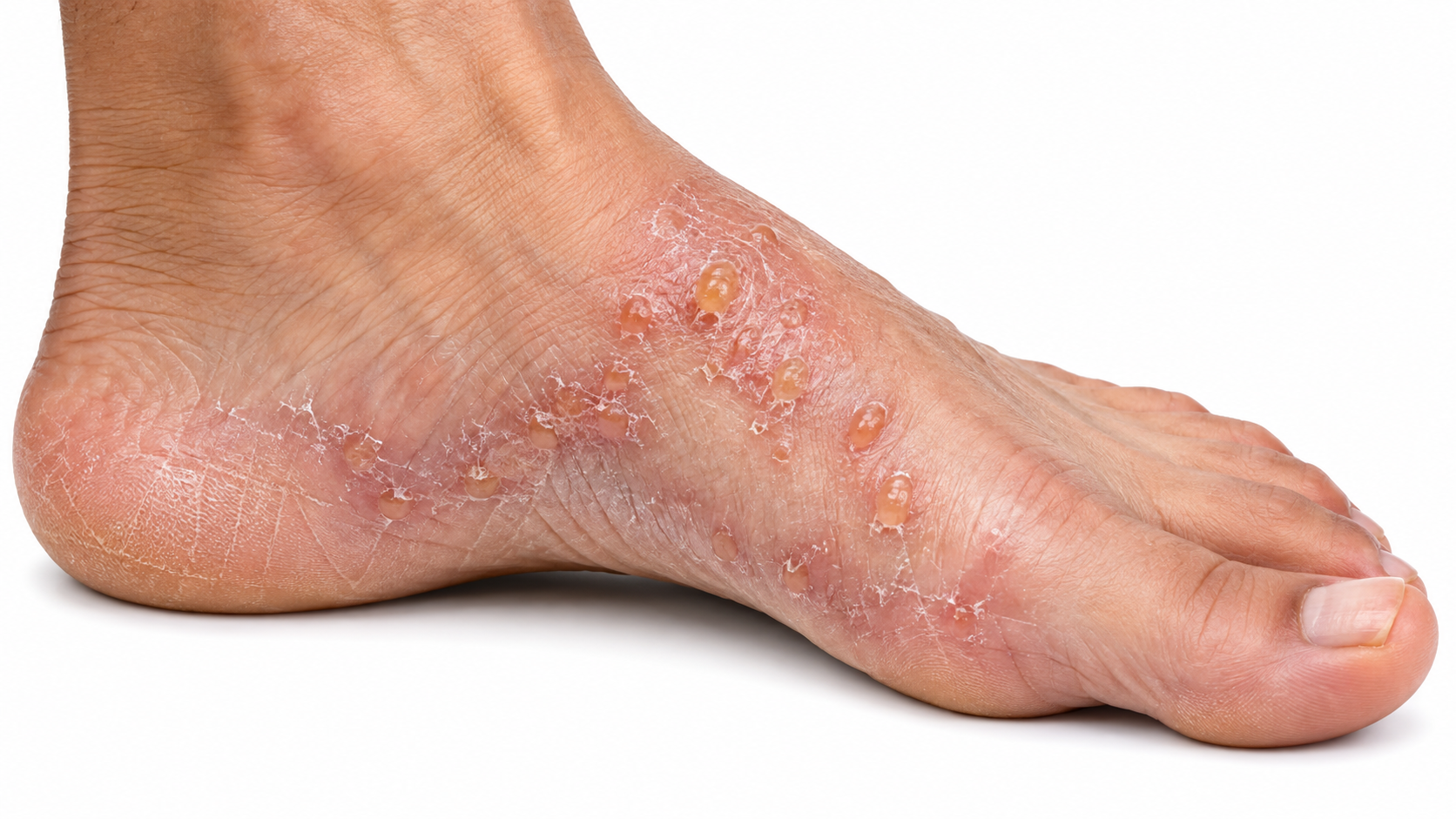
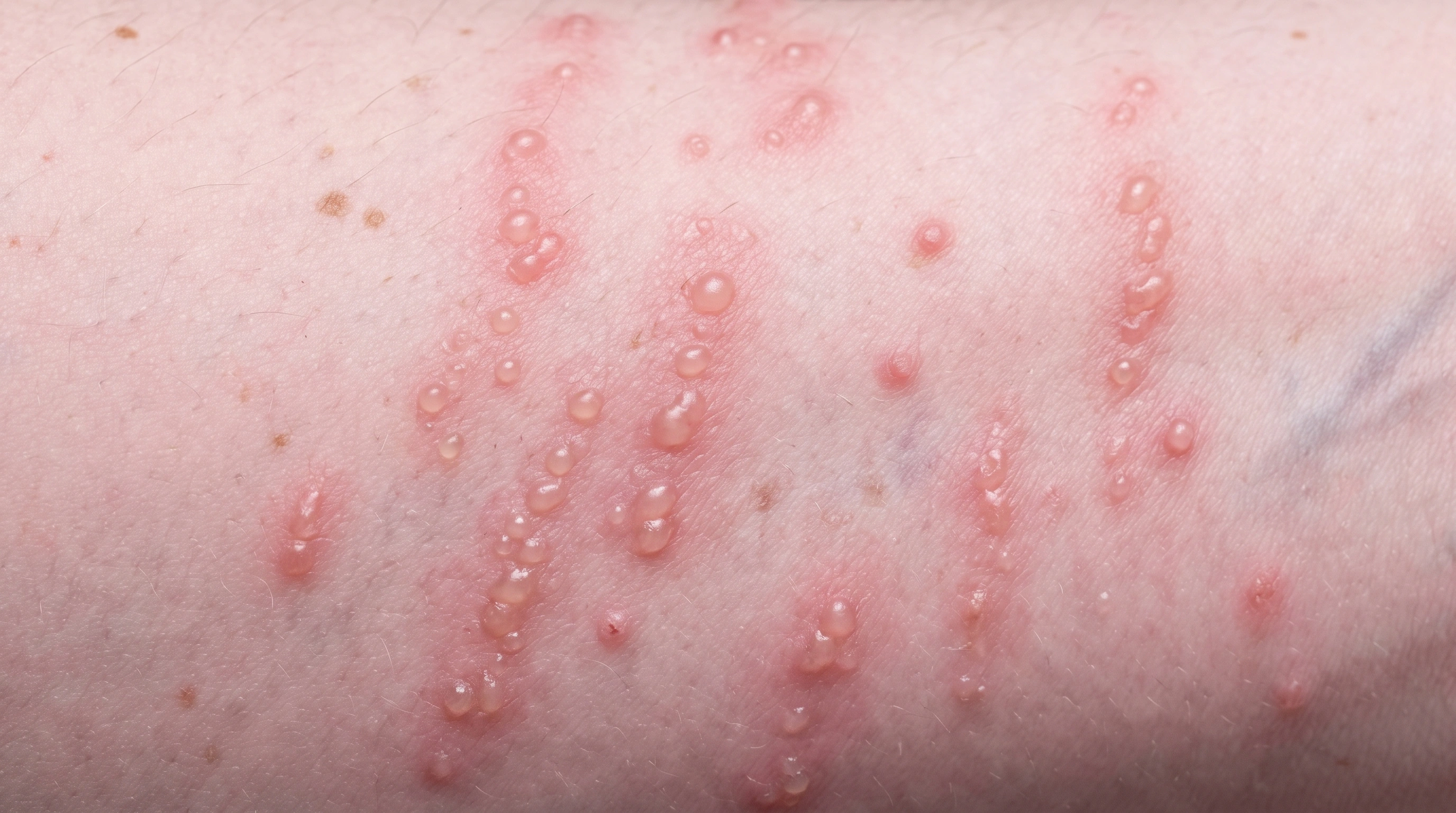
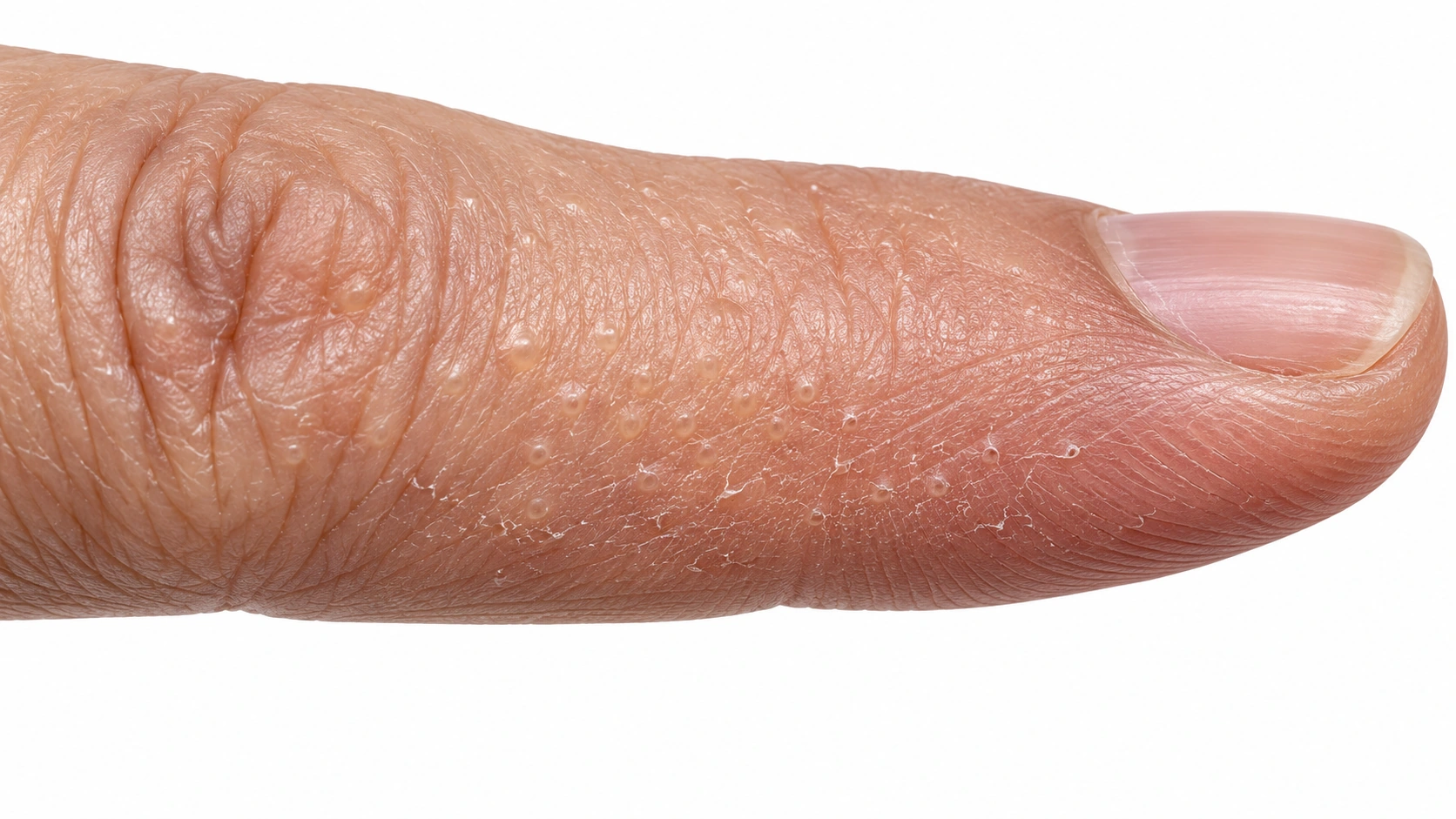
Vesicular athlete’s foot Small blisters, usually on the arch.
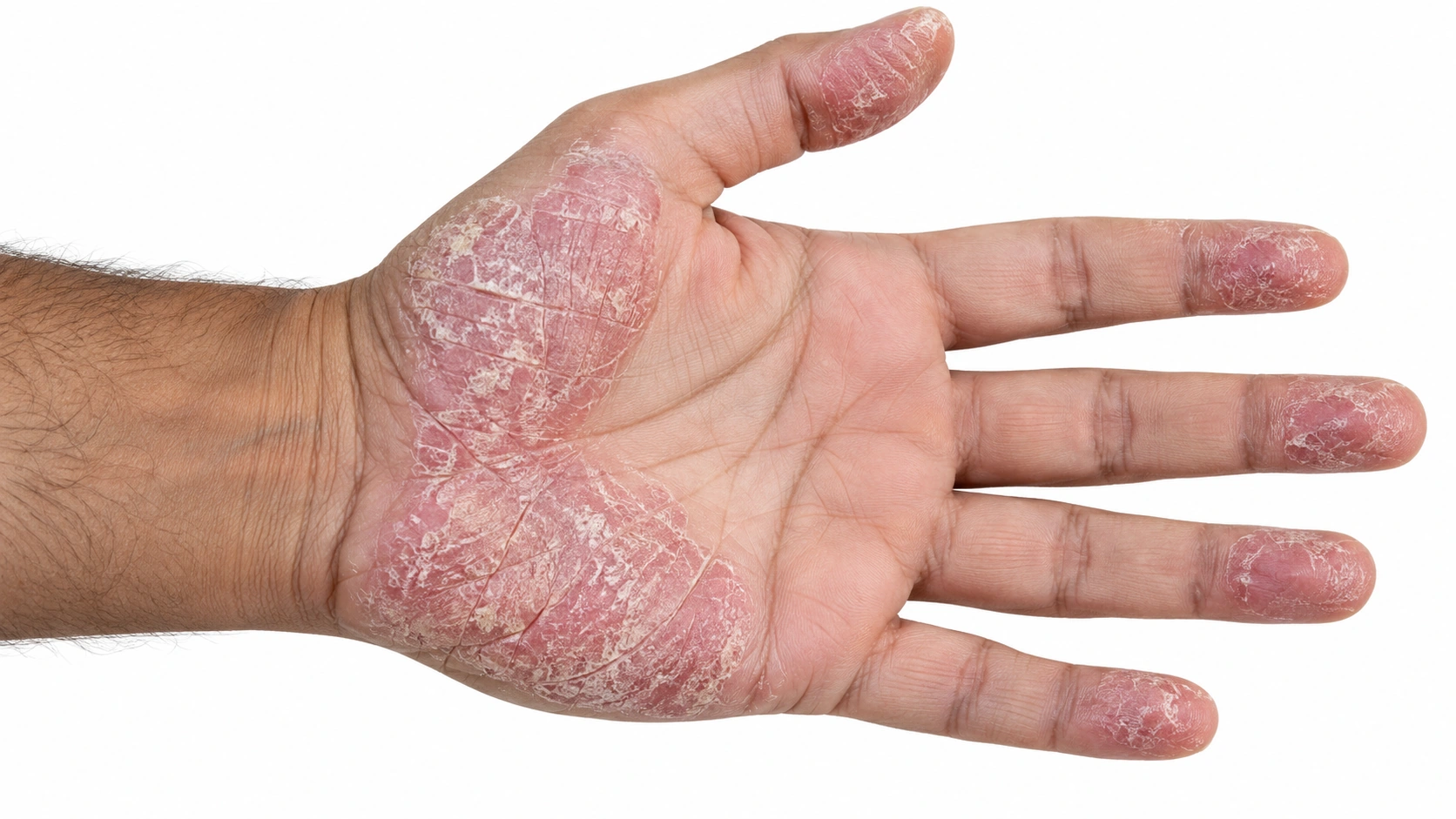
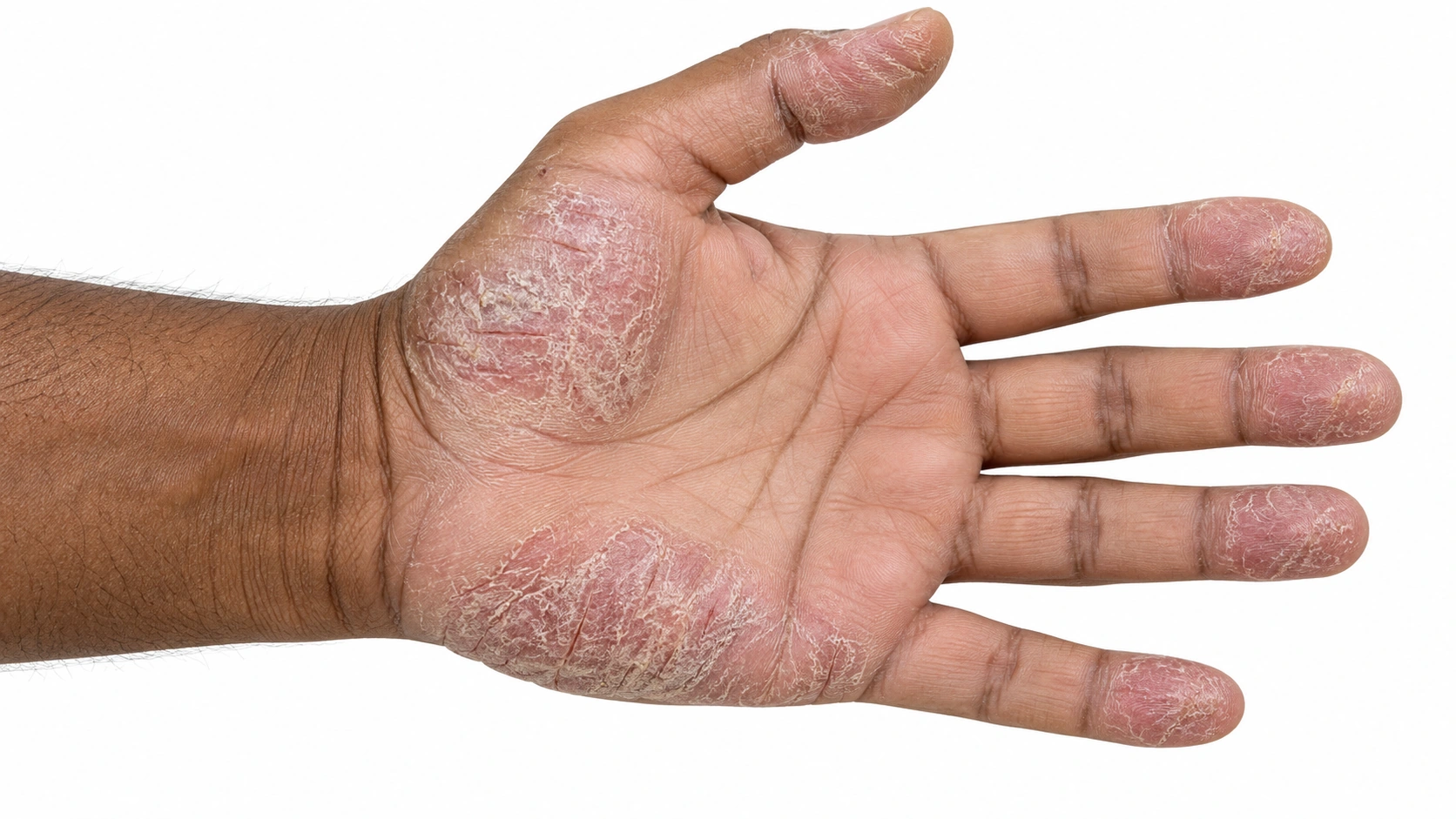
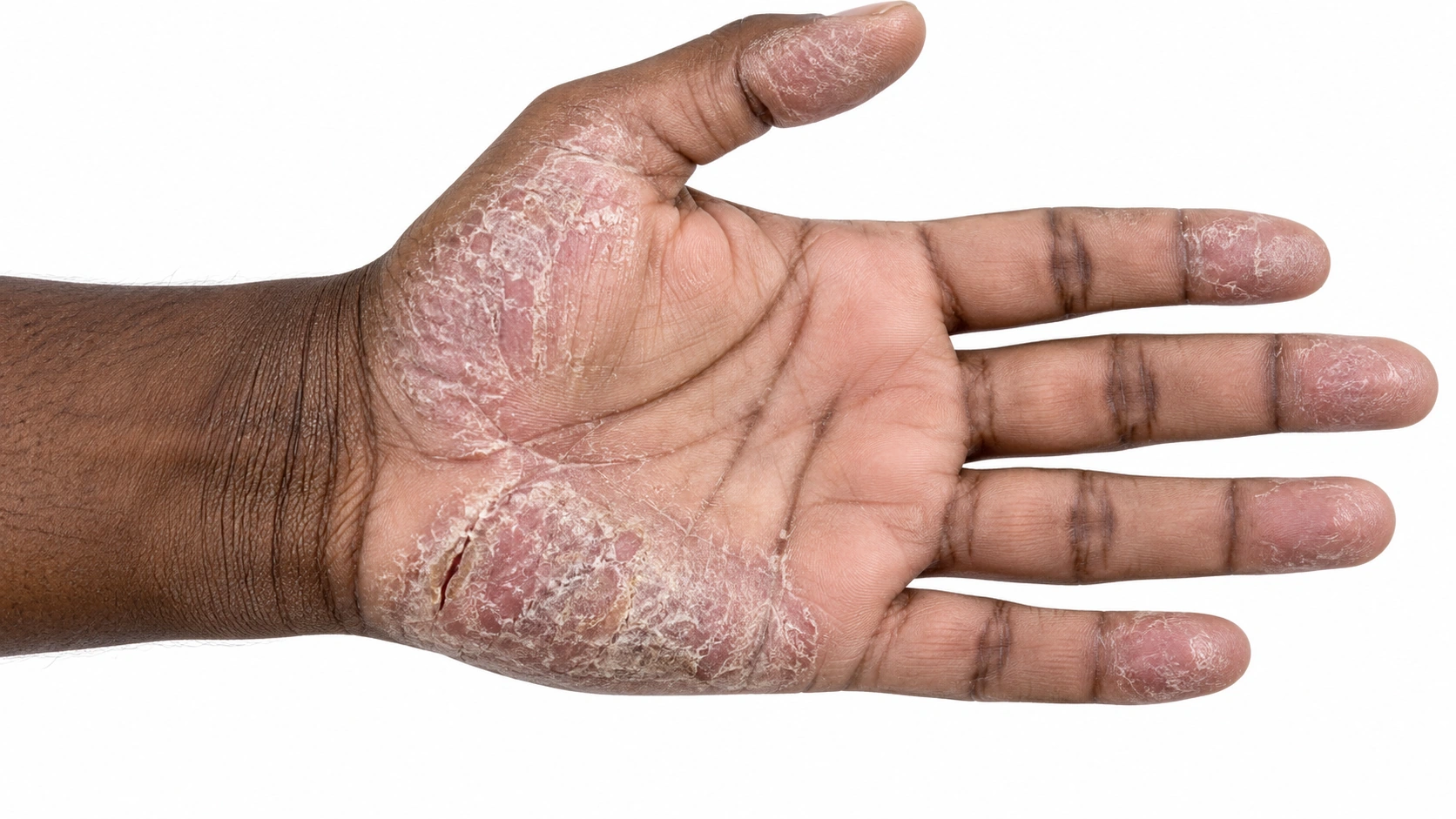
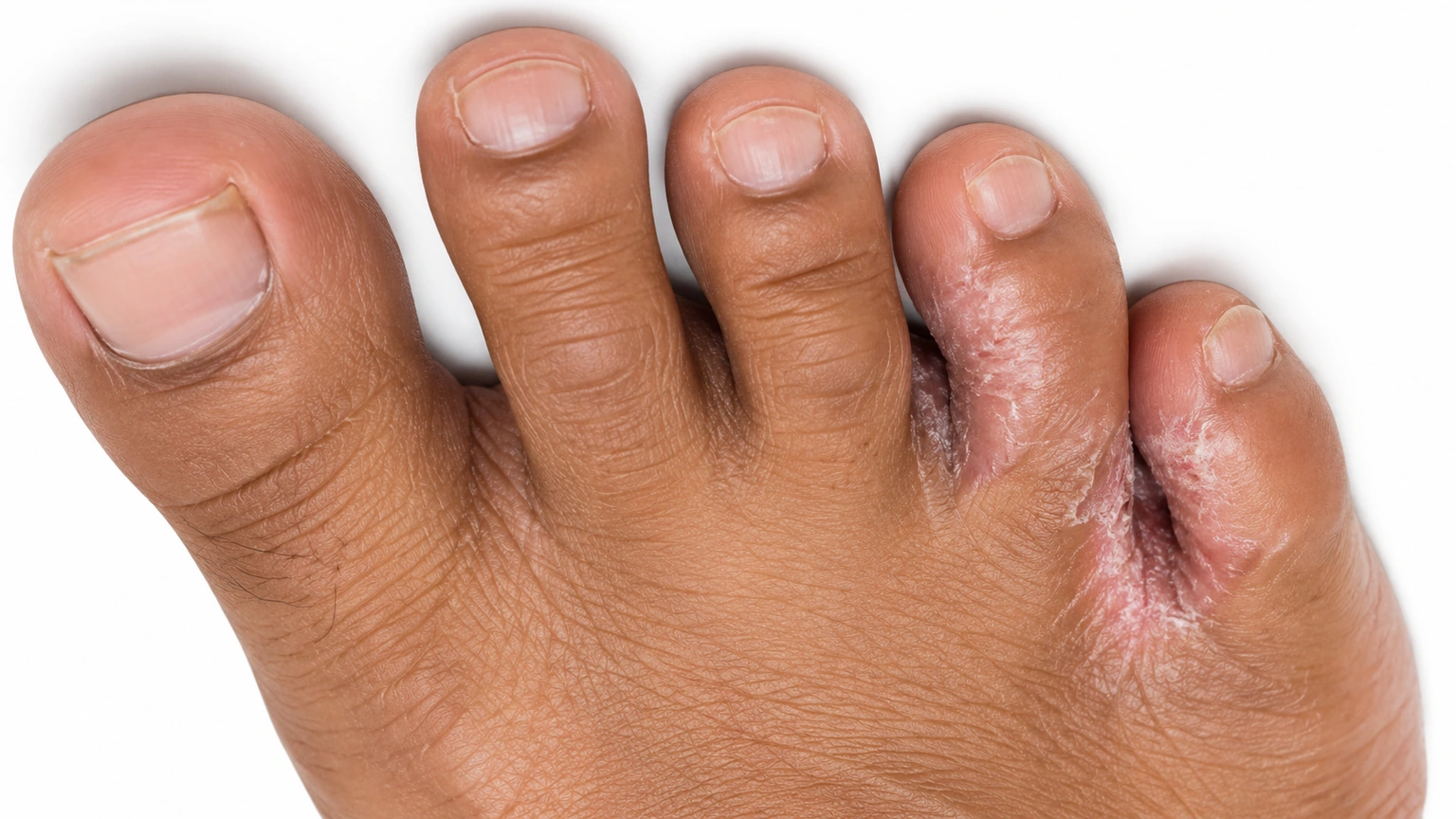
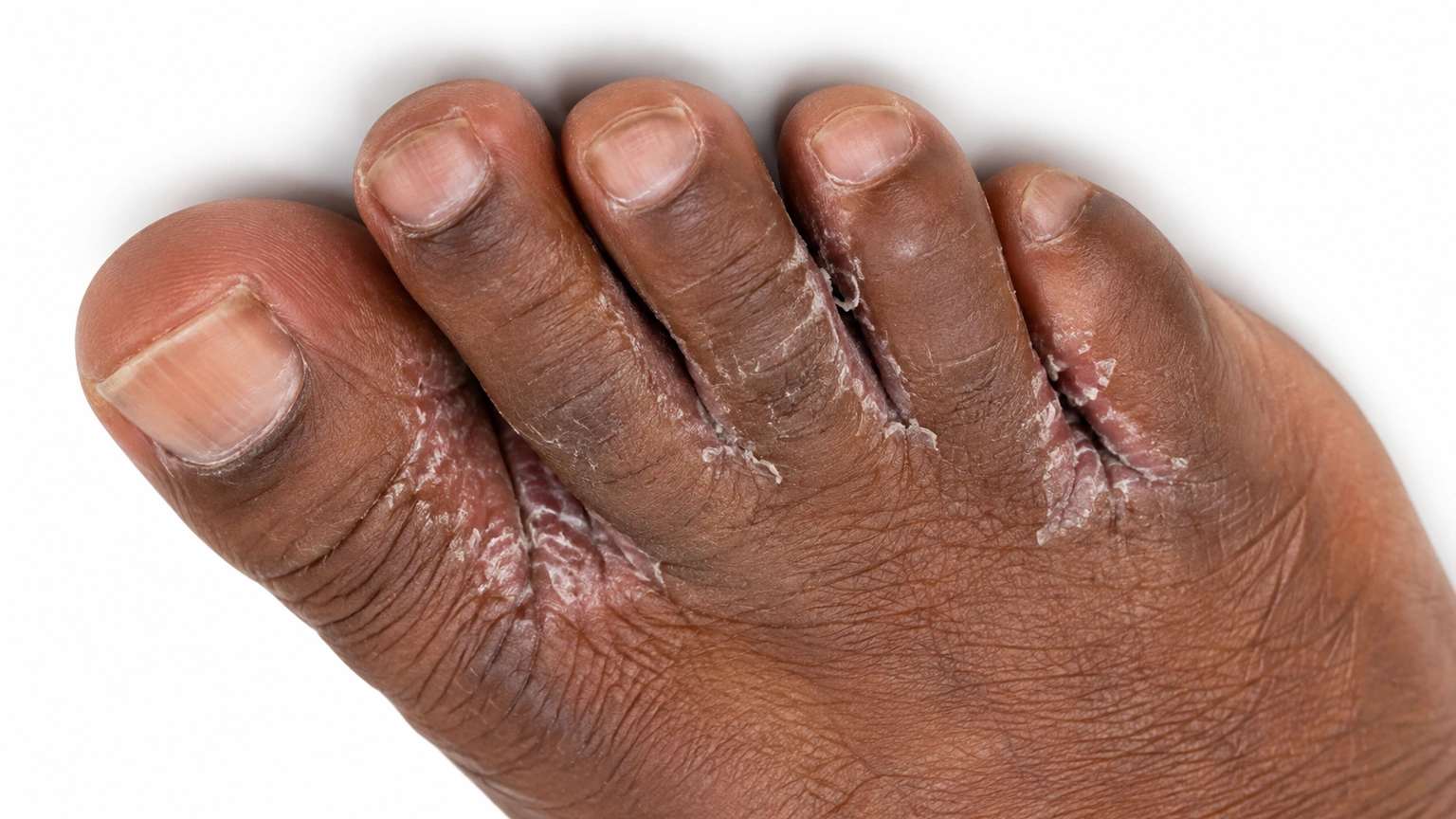
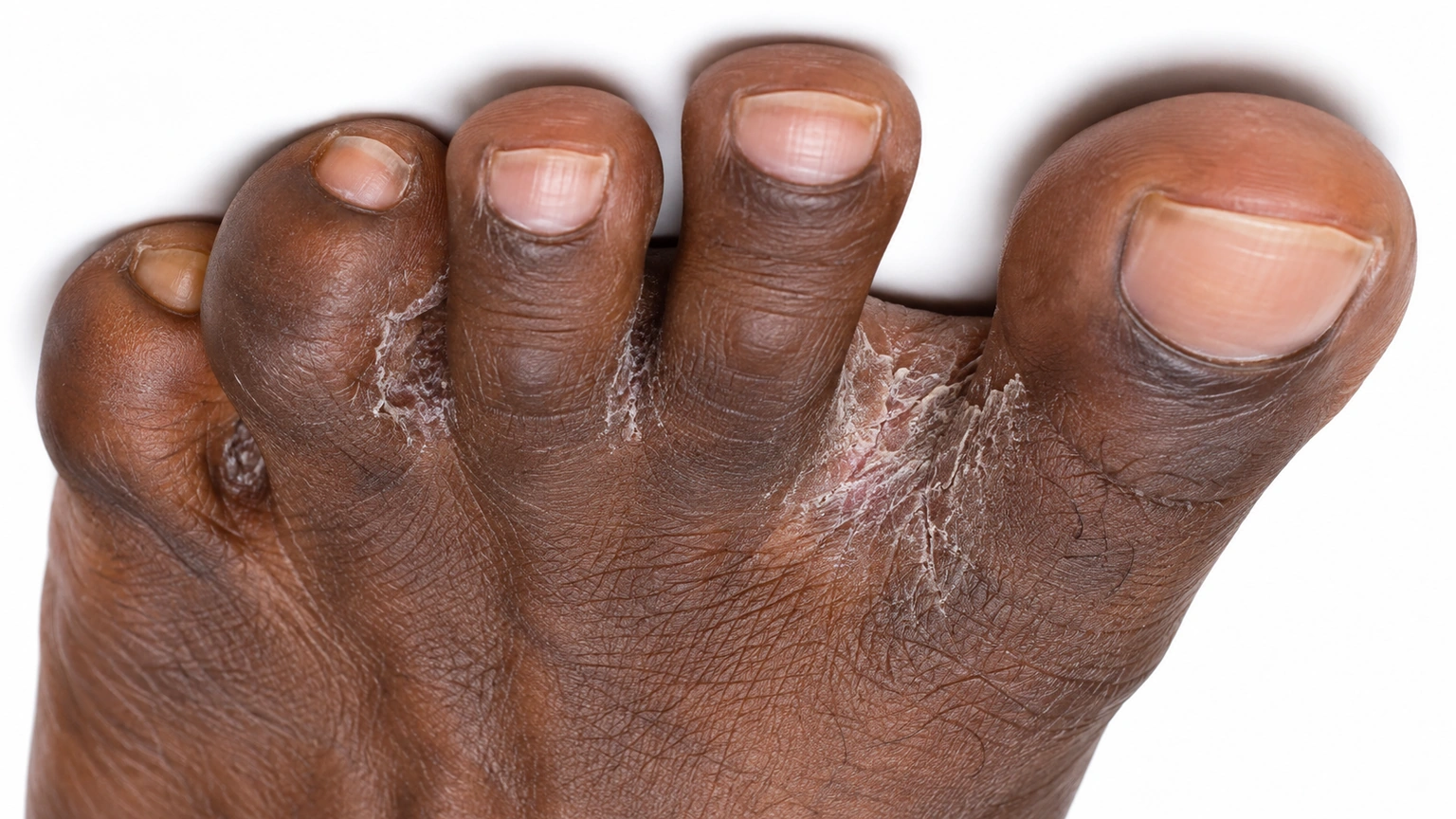

Immune inflammation speeds skin-cell production on the palms or soles. Cells accumulate in thickened patches that may develop scale or cracks.
Dermatophyte fungi grow in the keratin of the outer skin of the feet. Moisture favors their growth, and the resulting irritation can cause itching, peeling and cracks.
Palmoplantar Psoriasis. Can start at any age, with different patterns at different life stages.
Athlete’s Foot. More common after puberty and in adults, especially with persistently damp feet.
Immune inflammation speeds skin-cell turnover; psoriasis is not contagious.
Athlete's foot is caused by fungi that thrive in warm, damp places. They grow in the skin between the toes and on the soles.
Evidence labels come from each condition’s own treatment list.
Can soften thick dry scale; avoid irritating open fissures.
The most effective thing you can buy for athlete's foot, and the shortest course: once or twice a day for one to two weeks between the toes. It kills the fungus rather than just stopping it growing, which is why it works faster than the older creams. It will not clear an infected toenail, and it will not clear thick sole scale on its own.
The cheap, widely available option, applied twice a day for four weeks. It works well, it just takes longer than terbinafine, so the temptation to stop early is greater. Cover the whole foot and both feet, and carry on for one to two weeks after the skin looks normal.
Another azole cream, sold over the counter in some places and on prescription in others. It is a reasonable alternative if clotrimazole or miconazole has irritated the skin. It is no faster than they are, and the same four-week discipline applies.
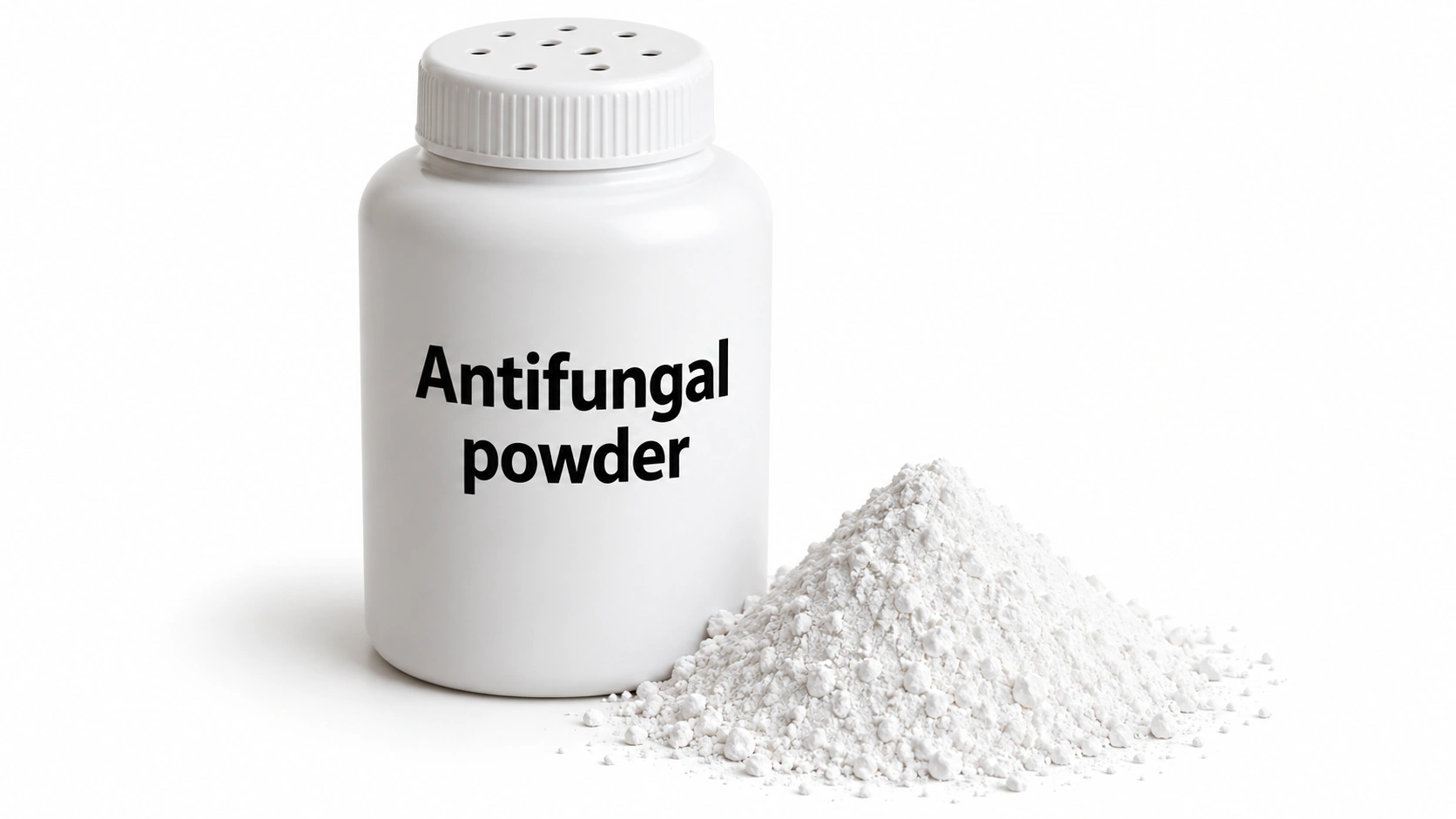
Powder keeps feet and the inside of shoes dry and lowers the amount of fungus you put back on your foot each morning. It is prevention, and it is good at it. It is not strong enough to clear an established infection, so use a cream to clear it and powder to keep it away.
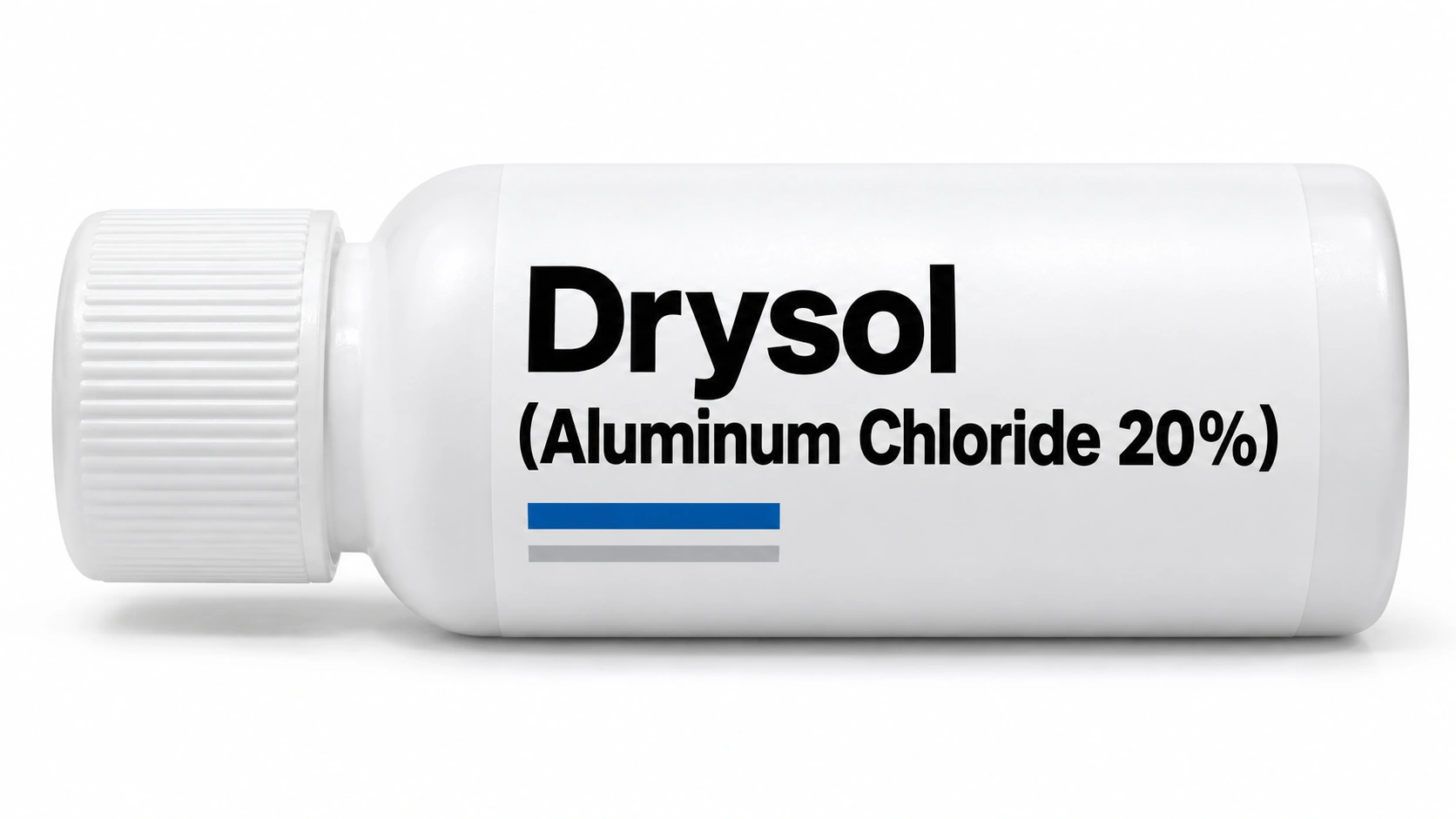
An aluminum-based antiperspirant made for feet cuts the sweating that keeps the skin soft and the shoe damp. It treats the cause of recurrence rather than the infection itself. Useful for people who clear it every time and get it back every summer.
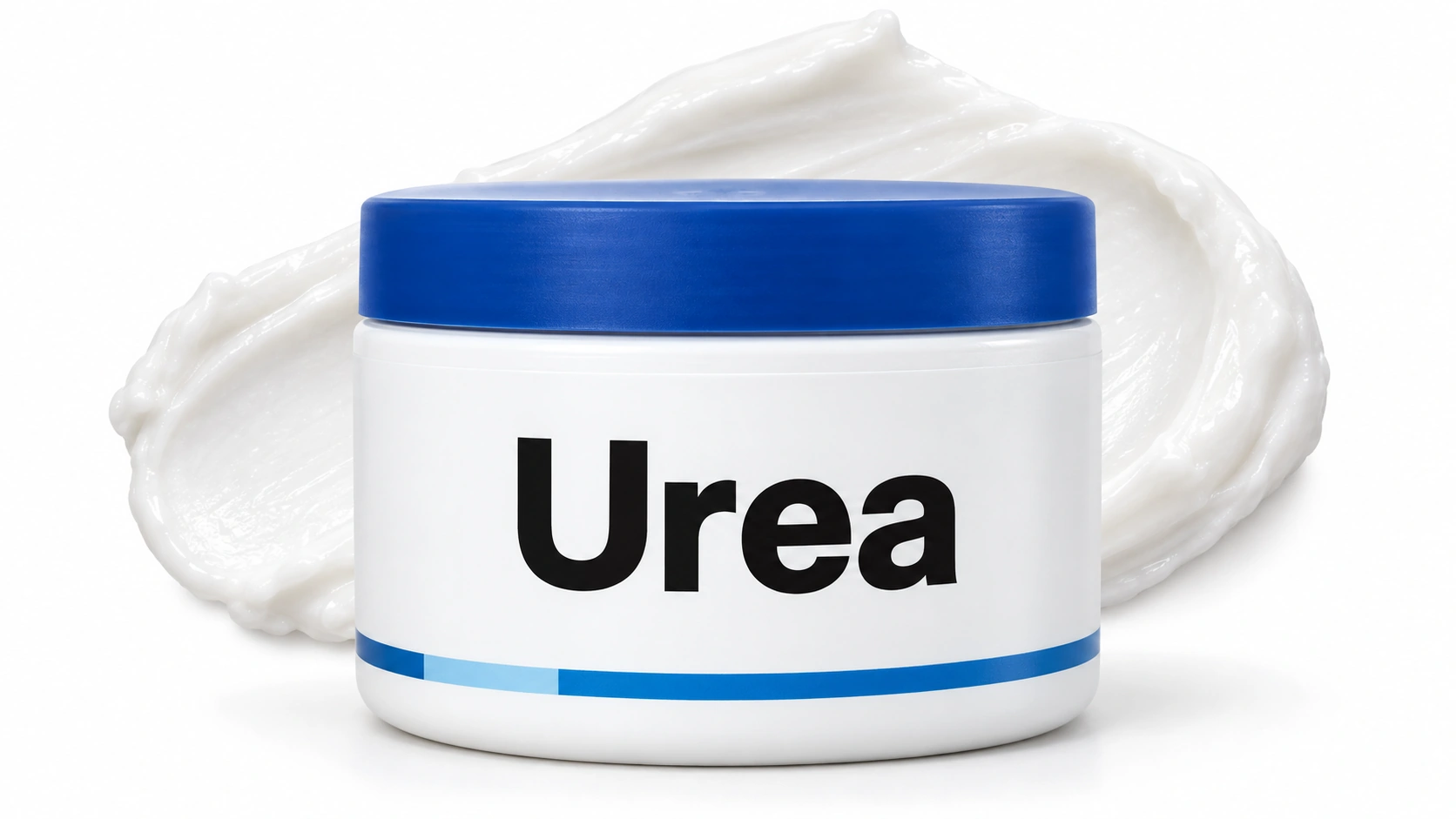
A urea or salicylic acid cream thins the hard scale on the sole so an antifungal can actually reach the skin underneath. It is a helper, not a treatment: on its own it does nothing to the fungus. It is worth adding for the dry moccasin pattern, where cream otherwise sits on top of the thickened surface.

Tea tree oil has some antifungal activity and a few small studies behind it, but it clears fewer infections than the pharmacy creams and takes longer. It also causes allergic reactions on the feet often enough to matter. An antifungal cream costs about the same and works.
Thick palm or sole psoriasis may need a carefully supervised course and escalation if function is impaired.
Ciclopirox nail lacquer. An older nail lacquer, applied daily for up to a year with the build-up removed weekly. It clears only a small share of infected nails on its own. It is worth knowing about, but if the nails are the reason your feet keep flaring, tablets are the conversation to have.
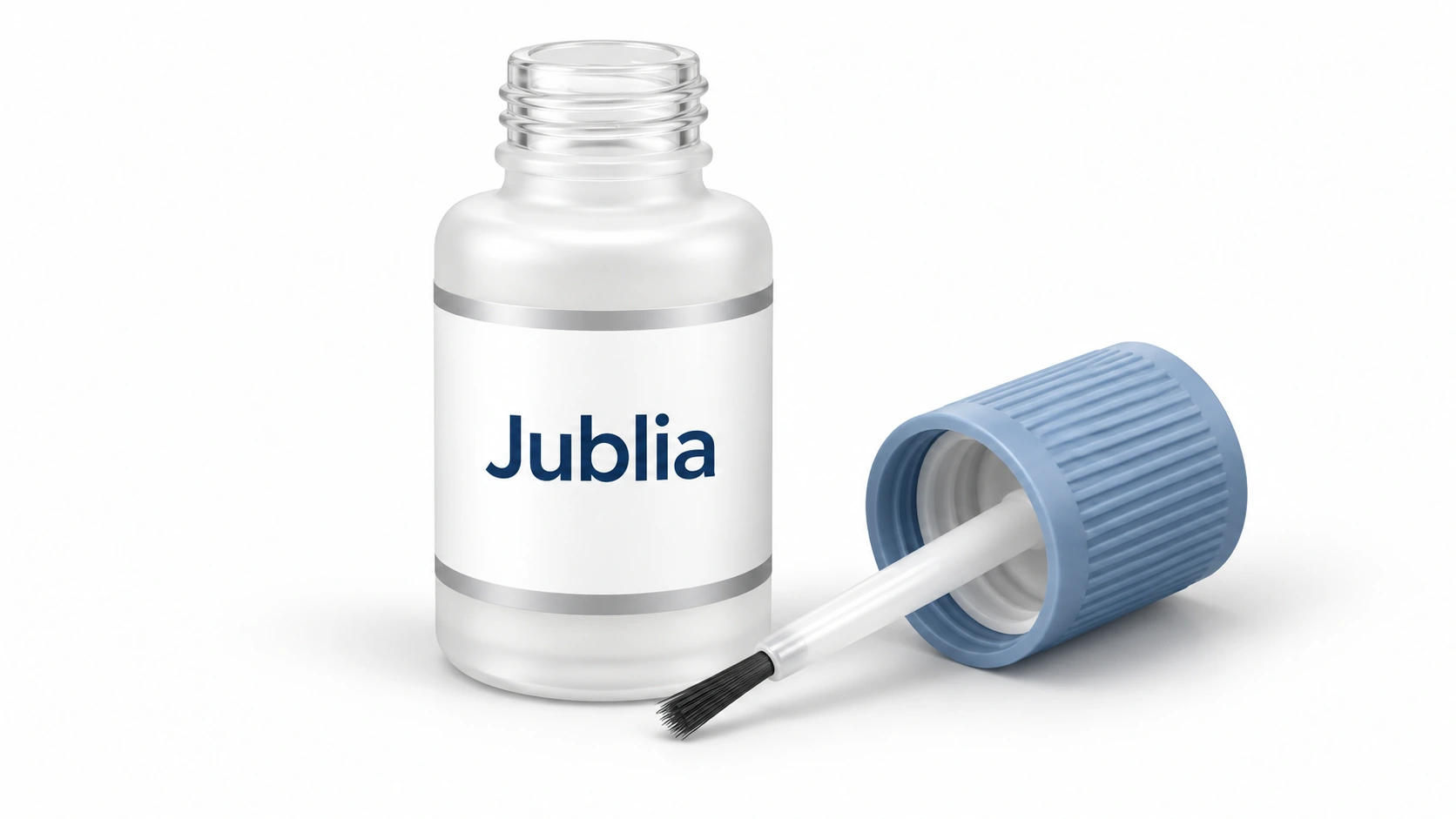
Efinaconazole nail solution. A liquid painted on infected toenails daily for about a year, for people who cannot take antifungal tablets. It matters here because an untreated nail is the usual reason foot skin keeps getting reinfected. Cure rates are well below tablets, and it works best on nails that are only mildly affected.
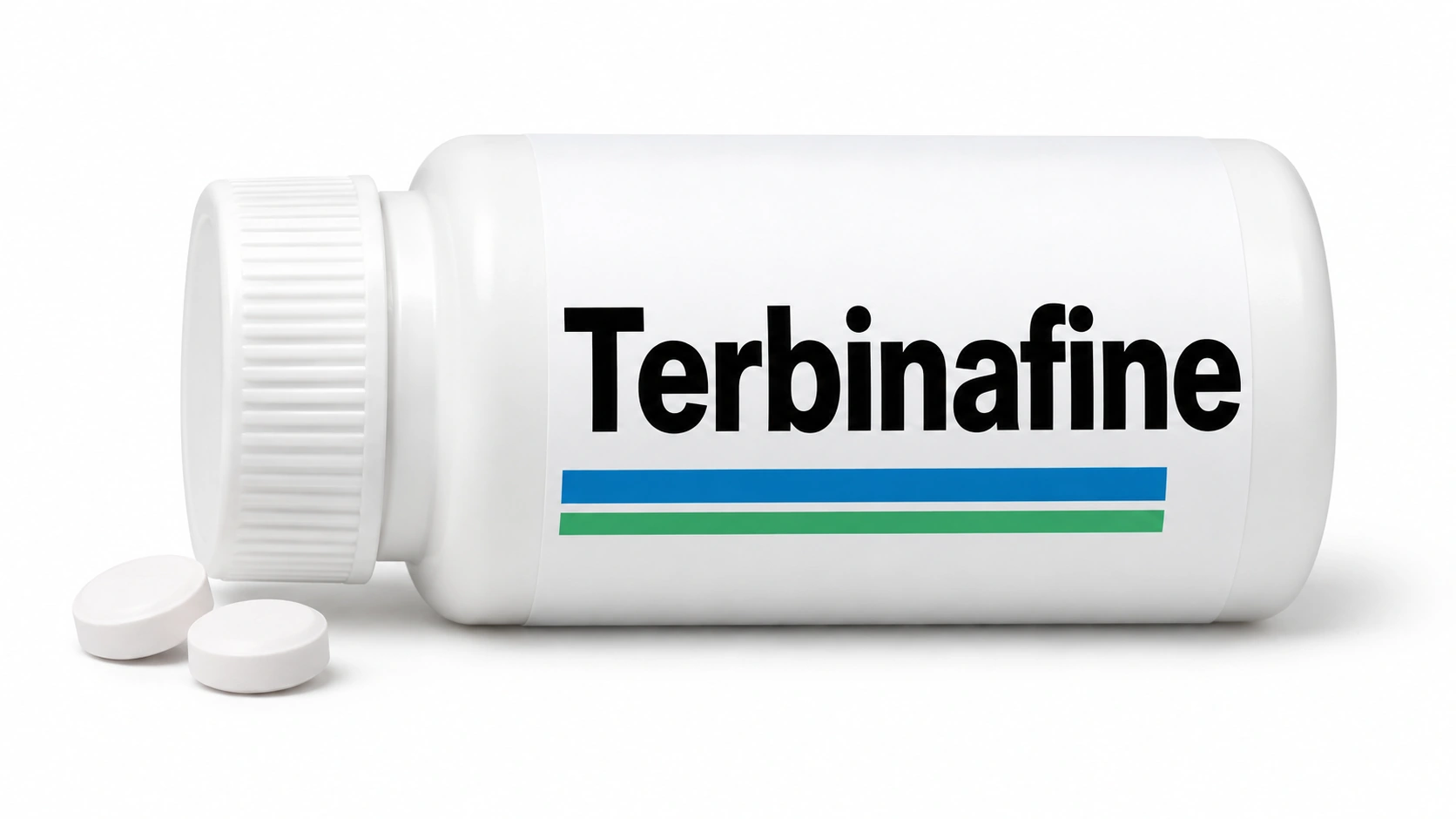
Terbinafine tablets. The first-choice tablet for athlete's foot that cream cannot reach: the thick moccasin pattern, widespread infection, and infected toenails. Two weeks usually clears the skin; nails need three months and most of a year to grow out. Liver blood tests are sometimes checked, and it interacts with several common medicines, so the doctor needs your full list.
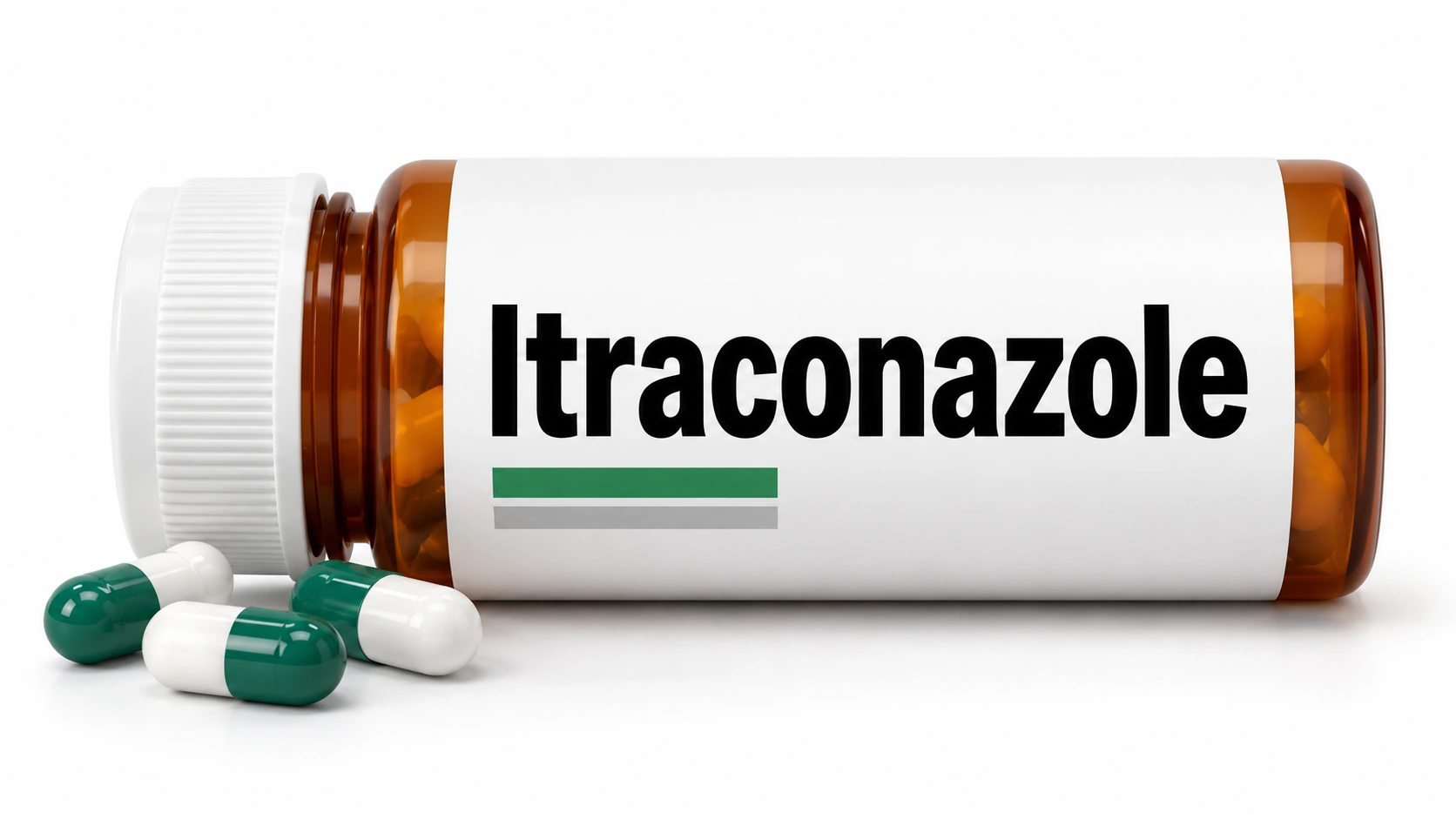
An equally effective alternative, often given as short pulses rather than daily. It is chosen when terbinafine does not suit or has not worked. It interacts with a long list of other medicines, including some heart and cholesterol drugs, so it needs a proper medication review first.
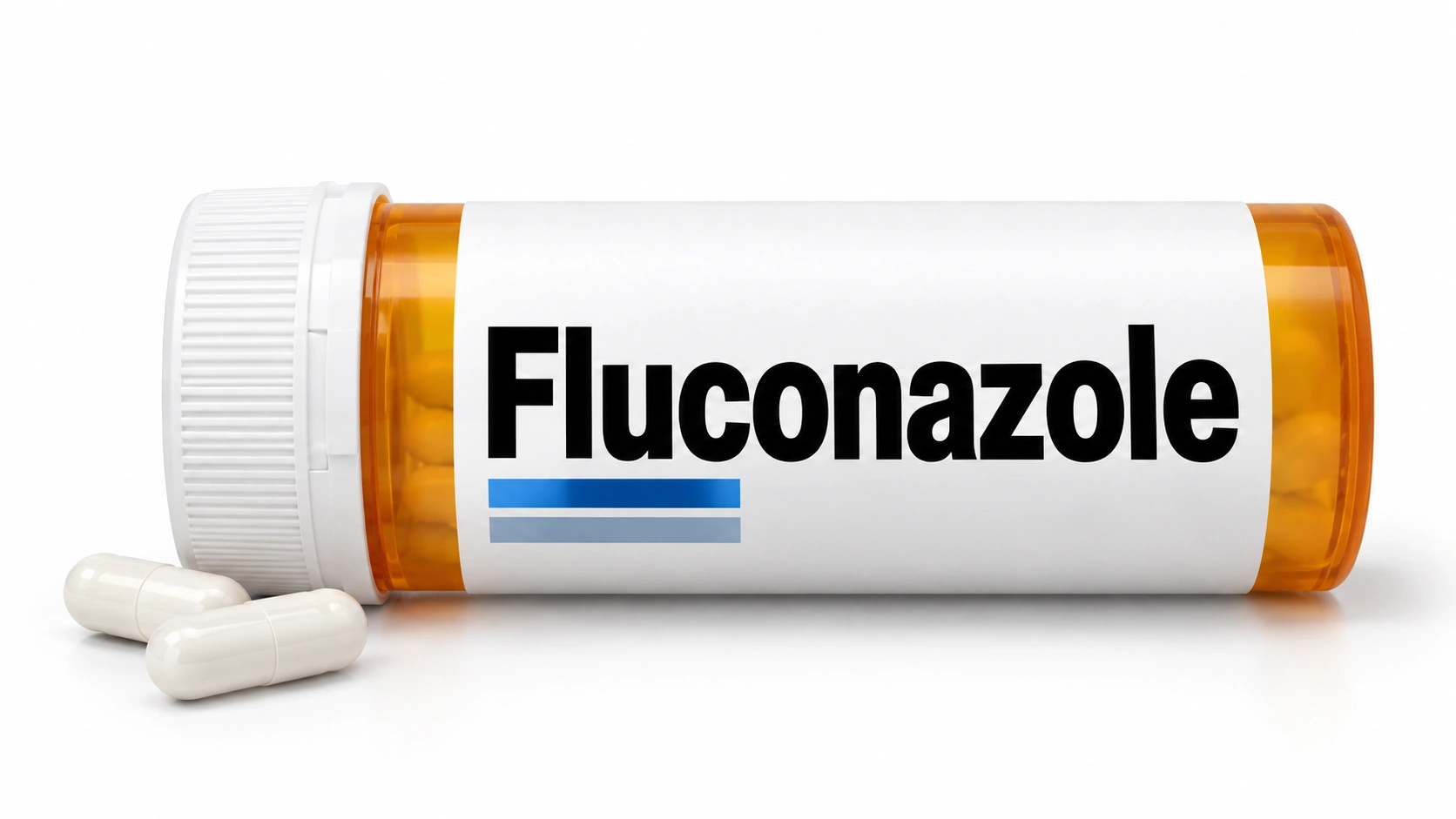
A once-weekly tablet, used for skin infection that has not cleared with cream when the other two do not suit. It is less effective than terbinafine for the dermatophytes that cause athlete's foot, and slower for nails. If you are pregnant or breastfeeding, ask the doctor managing your pregnancy before taking any antifungal tablet.

The oldest antifungal tablet. It still works, but it needs months rather than weeks, has to be taken with fatty food, and clears fewer infections than terbinafine. It is now mostly reserved for cases where the newer tablets cannot be used.
Palm and sole psoriasis can be persistent and may flare again after improvement. Treatment aims to reduce thickening, cracks and pain while preserving hand and foot function.
Athlete's foot does not clear on its own. Left alone it becomes a low-grade infection that flares in hot weather, and it spreads across the sole, onto the top of the foot, into the toenails, and sometimes to the groin or hands. Treated, it behaves well.
Psoriasis can accompany inflammatory joint disease. Report persistent joint stiffness or swelling.
Cellulitis
Cracks between the toes are a well-recognized way for bacteria to get into the leg, causing a hot, swollen, spreading redness that needs antibiotics. It is uncommon in healthy feet and much more likely in people with diabetes, poor circulation or a swollen leg. Treating athlete's foot promptly in those groups is mostly about closing that door.
Nail Fungus
The same fungus moves into the toenails, which become thick, crumbly and yellow-brown. Cream cannot get through a nail, so an infected nail keeps putting fungus back on the skin every time a sock goes on. It is the usual answer to why athlete's foot keeps coming back, and it takes tablets and most of a year to fix.
The Itchy Hand Rash
Some people get an itchy blistering rash on the palms or the sides of the fingers while their feet are flaring. There is no fungus in the hand rash. It is an allergic reaction to the fungus on the feet, which is why antifungal cream on the hands does nothing, and it settles once the feet are treated.
Seek care for painful cracks, widespread flares, joint symptoms or uncertain diagnosis.
Seek care if antifungal treatment does not help, or sooner with diabetes, poor circulation, spreading redness, swelling or pain.
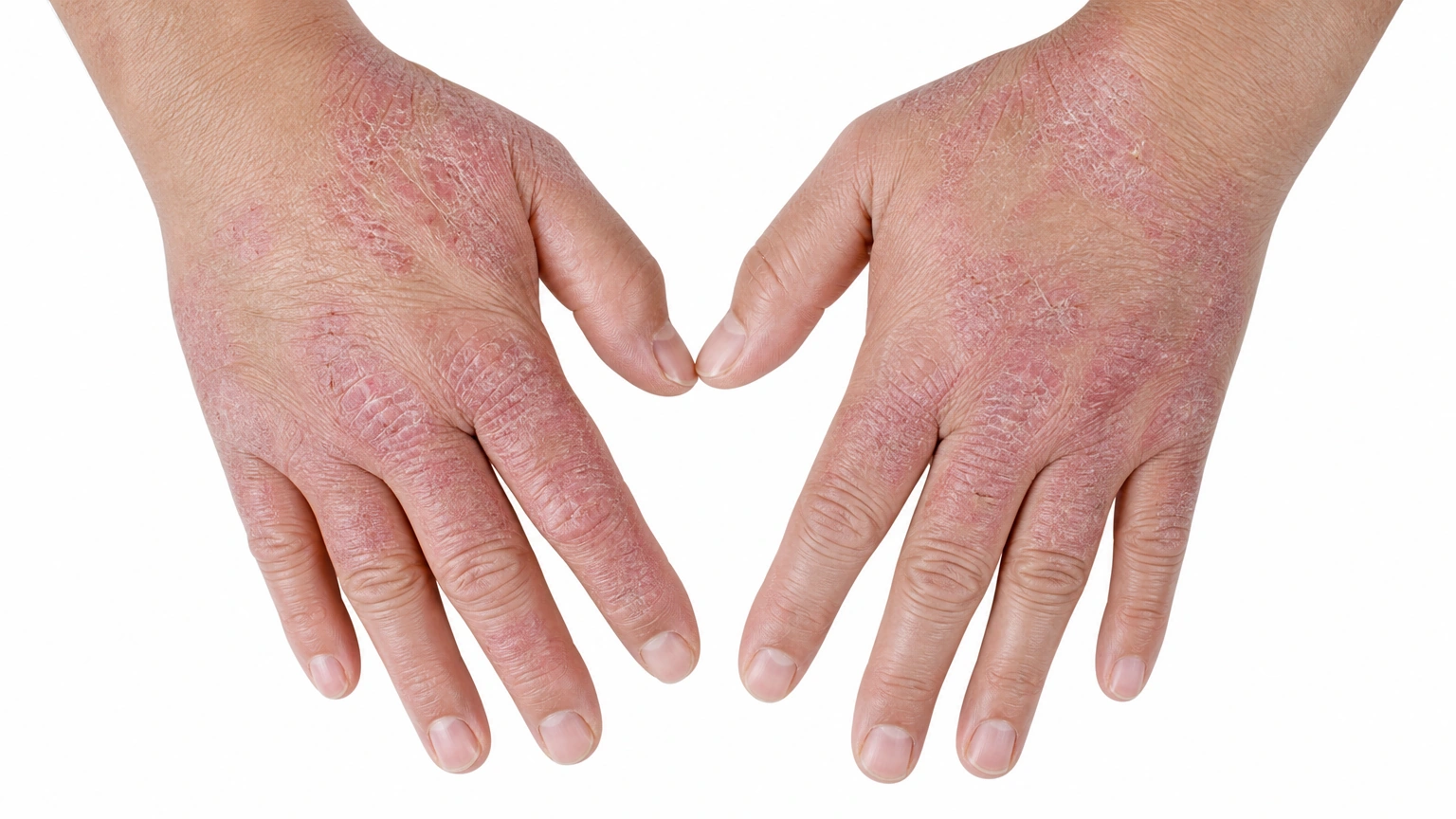
Psoriasis affecting the palms or soles, where thick scale and cracking can be disabling.
Use thick emollient, protect fissures and reduce repeated friction. Treatment must account for thick skin.
Seek care for painful cracks, widespread flares, joint symptoms or uncertain diagnosis.
The itch settles in a few days. The skin takes two to four weeks, depending on the cream and how thick the scale is. Keep treating for one to two weeks after it looks clear, because the fungus outlasts the symptoms. If nothing has changed after four weeks of proper use, the question is whether it is really fungus, not whether you need something stronger.
Usually not. Shoes hold fungus, so alternate two pairs to let each dry fully for a day, and use an antifungal powder or spray inside them. Shoes you cannot clean or dry - old fabric trainers you wore through a long infection - are reasonable to replace.
If they are thick, crumbly, lifting or discolored, yes, and that is usually why it keeps coming back. Fungus inside a nail is out of reach of creams, so the nail is a permanent source that reinfects the skin. Treatment usually means tablets for several months, and the nail only looks normal once healthy nail has grown all the way out.
Yes, though it is not highly contagious. It spreads through shared floors, bath mats, towels, shoes and nail clippers. Use your own towel, wear something on your feet in the bathroom while it is active, wash mats and socks hot, and do not share footwear. If someone else has itchy feet, treat both of you at once.
Three usual reasons, all fixable. You stopped treating when it looked better rather than a week or two after. Your toenails are infected and reseeding the skin. Or your feet sit in a warm damp shoe all day.
Most likely an id reaction - an allergic response elsewhere on the body to fungus on the feet. The hand rash has no fungus in it, which is why antifungal cream there does nothing, and it settles once the feet are treated. There is also a separate pattern where two feet and one hand are genuinely infected, typically the hand used to pick at the toes. A scraping tells them apart.
Sources