Athlete's Foot

Athlete's foot causes scaling and small blisters. It often starts between the toes.
Athlete's foot is a fungal infection. It usually starts in the gap between the toes, it itches, it spreads, and one foot is often ahead of the other. Psoriasis on the feet is the immune system making skin too fast. It builds thick plaques with edges you can feel, usually on both soles, and it comes and goes for years.
| The difference | Athlete's Foot | Psoriasis |
|---|---|---|
| What it is | A fungus feeding on the skin | Skin cells made too fast |
| What it looks like | White soggy skin, or fine scale | Thick plaques with silvery scale |
| What actually treats it | An antifungal cream | Soften the scale, then treat the skin |
Athlete's foot causes scaling and small blisters. It often starts between the toes.
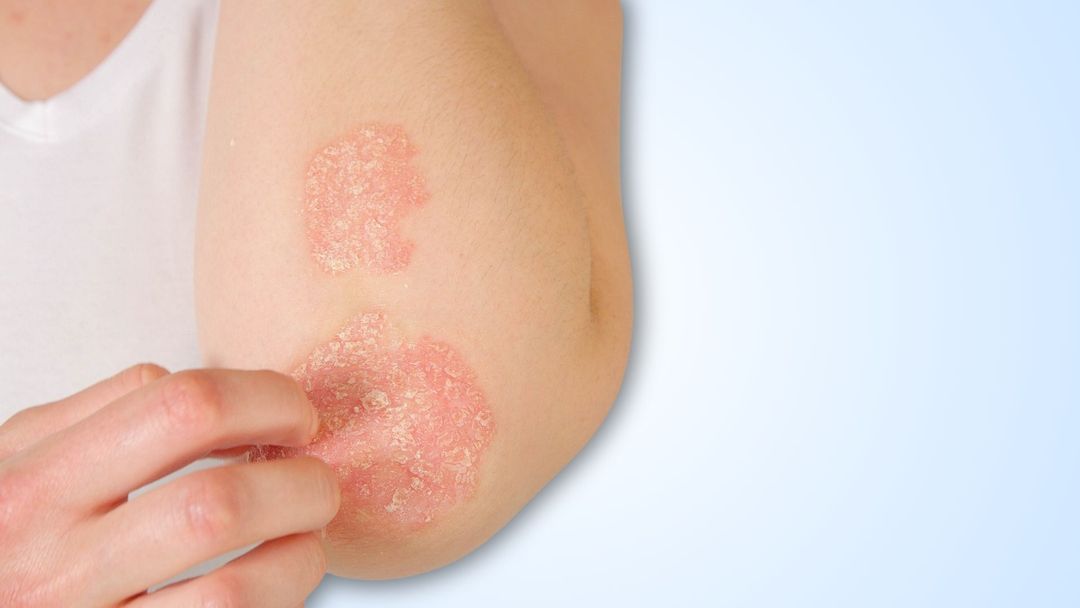
Psoriasis forms thick plaques with clear edges and silvery scale. Elbows and knees are common spots.
Side by side
Athlete's Foot
A fungus feeding on the skin
Dermatophytes live on keratin in the top layer of skin. They come from damp floors, shared towels and shoes, and sweaty closed shoes let them settle.
Psoriasis
Skin cells made too fast
The immune system speeds up skin cell production. Cells pile up before the old ones shed, which builds a thick raised plaque. It runs in families and you did not catch it.

Dry, intact skin between the toes. The outer layer is a poor place for anything to grow.

Shoes, socks and sweat keep the skin between the toes wet for hours. Softened skin is what the fungus needs.

Dermatophytes feed on keratin, so they live in the dead outer layer and go no deeper. That is why an antifungal cream reaches them.

The barrier breaks down into peeling, cracking and itching, and those cracks let bacteria in. Untreated it spreads to the soles and the nails, and the nails are what reinfect the skin later.

In healthy skin, a cell made at the base of the epidermis takes about a month to reach the surface. By the time it arrives it is flat and dead, and it sheds one cell at a time, so nothing piles up. The immune system stays quiet unless there is something to fight.

Immune cells in the skin switch on when there is nothing to fight and release signals such as TNF, interleukin-17 and interleukin-23. These are the messages that tell the skin it is under attack, and they are what biologic injections are built to block.

Inflammation brings increased blood flow to the area.

Told to behave as though the skin is injured, cells at the base of the epidermis divide far faster than normal. A journey to the surface that should take about a month is finished in a few days, so the cells arrive immature and still stuck together.

The immature cells pile up instead of shedding invisibly, which builds the raised plaque and the silvery scale. Blood vessels underneath multiply and widen, which is why picking the scale off leaves pinpoint bleeding, and why plaques crack over joints.
Athlete's Foot
White soggy skin, or fine scale
Between the toes the skin goes white, soft and split. On the sole it can be fine dry scale over the heel and up the sides, like a slipper.
Psoriasis
Thick plaques with silvery scale
Well-defined red or dark patches with dry silvery scale on top. The skin underneath is thickened, and cracks often open across the heel and the ball of the foot.

This is the presentation most people picture. The skin reads pink to dull red under a layer of fine white scale, driest across the sole and the sides of the foot. The trap on light skin is that the pink is faint in the moccasin pattern, so it gets called winter dry skin and moisturized for years. The edge is what tells them apart. Plain dry skin fades out gradually. This stops at a line along the side of the foot, and the toenails are usually scaly or thickened too.

On medium skin the pink base is muted, so scale becomes the main clue and the rash is often mistaken for something else. Fine gray-white flaking on the sole gets treated as callus or eczema, and the raised scaling edge creeping onto the top of the foot gets treated as a ring of dry skin. Two checks help. Look between the fourth and fifth toes for white soggy skin or a split, and look at the toenails. Nail involvement almost always means the fungus is the cause.

On brown skin the pink or red base is usually not visible at all, so redness is a poor thing to go by. Everything else still works: fine dry scale, white soggy skin in the web spaces, splits at the base of the toes, and a raised scaling edge moving onto the top of the foot. Because the redness appears to be missing, these infections are regularly judged milder than they are and treated for too short a time.

After the fungus is gone, deep skin often keeps a flat dark mark where the skin was inflamed. That is post-inflammatory hyperpigmentation, a stain left by the inflammation rather than infection that is still there, and it can take several months to fade. It is a common reason people keep applying antifungal cream long after the fungus has cleared. The test is simple. Still scaling, itching or peeling means the infection is active. Flat, smooth and simply darker is a mark, and time is what fixes it.

On light skin plaques are the textbook salmon-pink to red, with silvery-white scale on top and a sharp border. The trap here is a faint plaque on naturally ruddy skin, where the pink blends in and only the scale gives it away. Scale on the scalp or the elbows often gets called dry skin or dandruff for a long time before anyone calls it psoriasis.

On medium skin the same plaques read dusky pink to pink-brown, and the silvery scale stands out more than the color underneath does. The sharp border and the thickness are still easy to feel. This is where judging severity by redness alone starts to go wrong, because a plaque that looks quiet can still be thick, scaly and widespread.

On brown skin plaques are frequently violet or gray-brown instead of pink, and the scale looks silvery-gray against them. Because severity scores were built around how red skin looks, psoriasis here is routinely rated milder than it is and treated less firmly. Thickness, the amount of scale, how much of the body is covered and how much it affects daily life are the more reliable measures, and it is fair to ask whether severity was judged on redness alone.

On deep skin a plaque can be dark brown and close to the color of the skin around it, so the scale and the raised edge are what mark it out. Diagnosis is often delayed, and by then more of the body is involved, with the scalp usually the most extensive. After clearing, flat dark marks are common in the same outlines and can take six to twelve months to even out. That is normal healing, not treatment failing, and daily sunscreen helps them fade faster.
Athlete's Foot
Faded, with an active rim
The border blurs into normal skin, but the outer rim is often redder and scalier than the middle, because that is where the fungus is growing.
Psoriasis
Sharp, and you can feel it
You can trace where the plaque stops. Run a finger across and there is a clear step up onto thicker skin.
Athlete's Foot
Usually yes
Itching and burning, worst between the toes and worst when the shoes come off.
Psoriasis
Sometimes, and it often hurts more
Itch varies. The bigger complaint is soreness from deep cracks in a thickened sole, which can make walking uncomfortable.
Athlete's Foot
Toe webs first, then the sole
Most often the gap between the fourth and fifth toes. It also thrives on the sole and the sides, where shoes hold moisture.
Psoriasis
Soles, heels and the arch
Weight-bearing skin, and often the palms as well. It usually leaves the gaps between the toes alone.
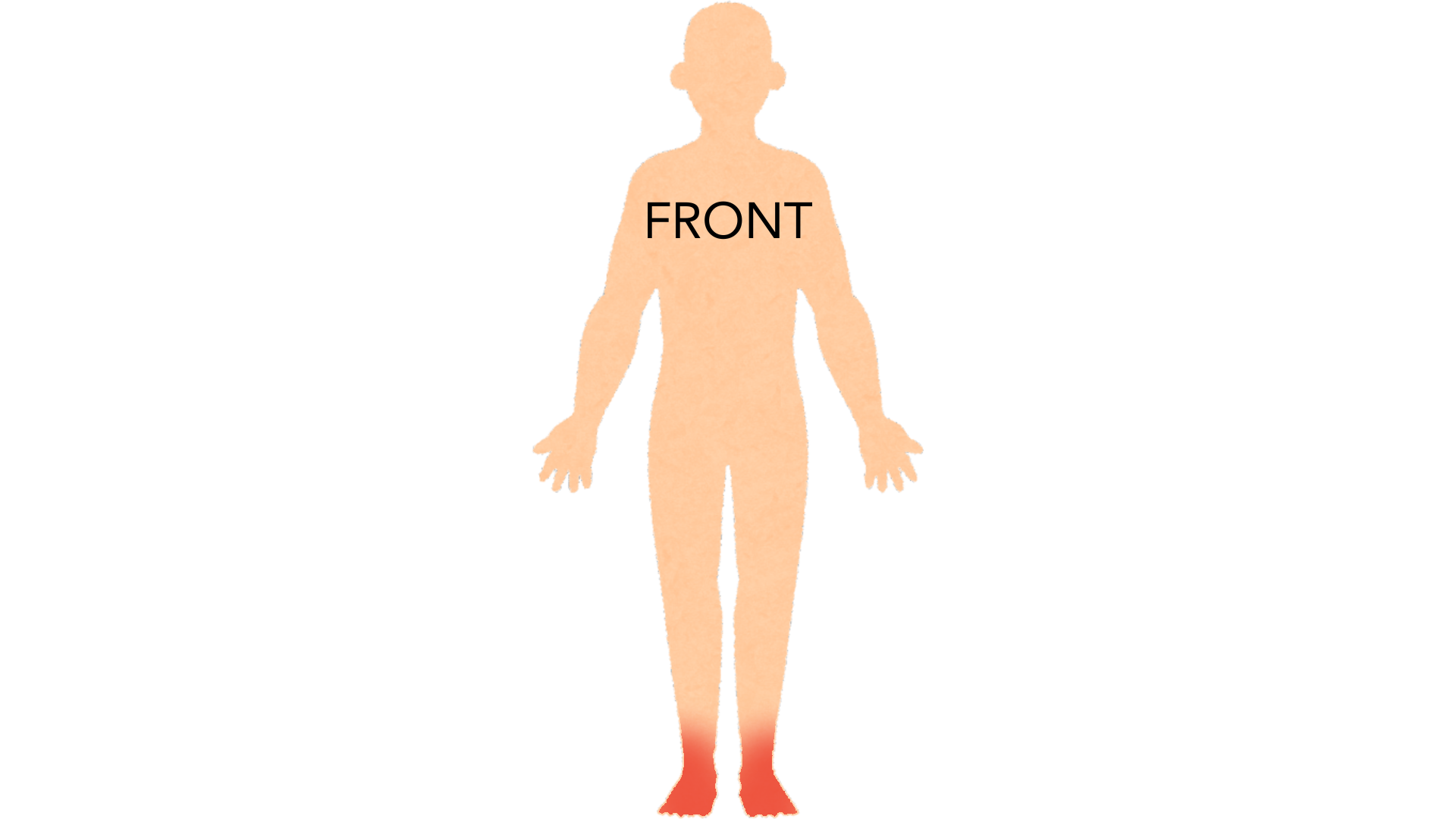
It starts between the toes, most often in the tight web beside the little toe, and spreads to the sole, the heel and the sides of the foot. It can move to the toenails. If a hand is involved it is usually only one, from scratching the feet.
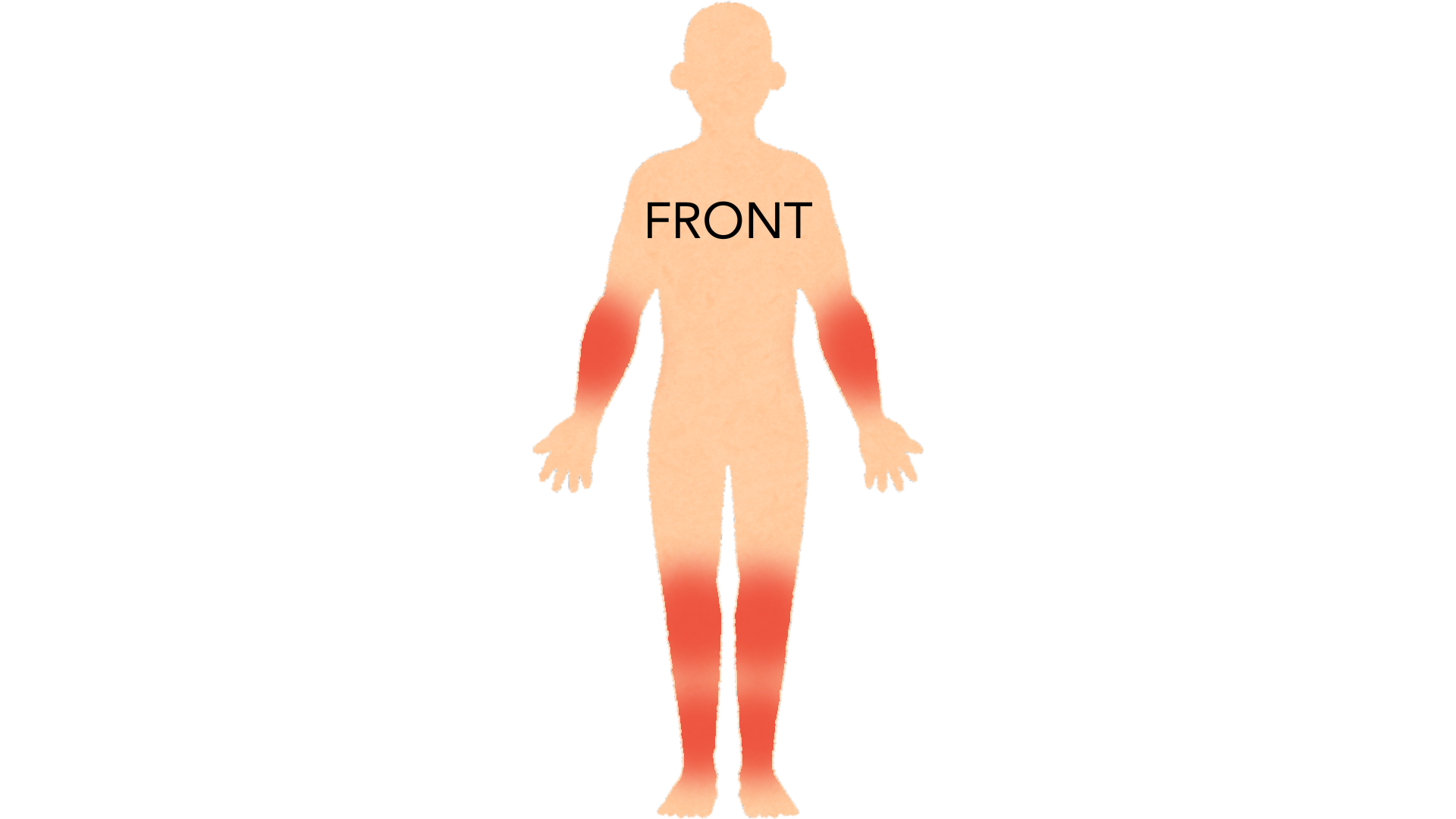
The classic sites, and the way it sits is part of the diagnosis: on the outside of the joint, not in the crease. Eczema does the opposite. It is usually symmetrical, so if one elbow is involved the other normally is too.
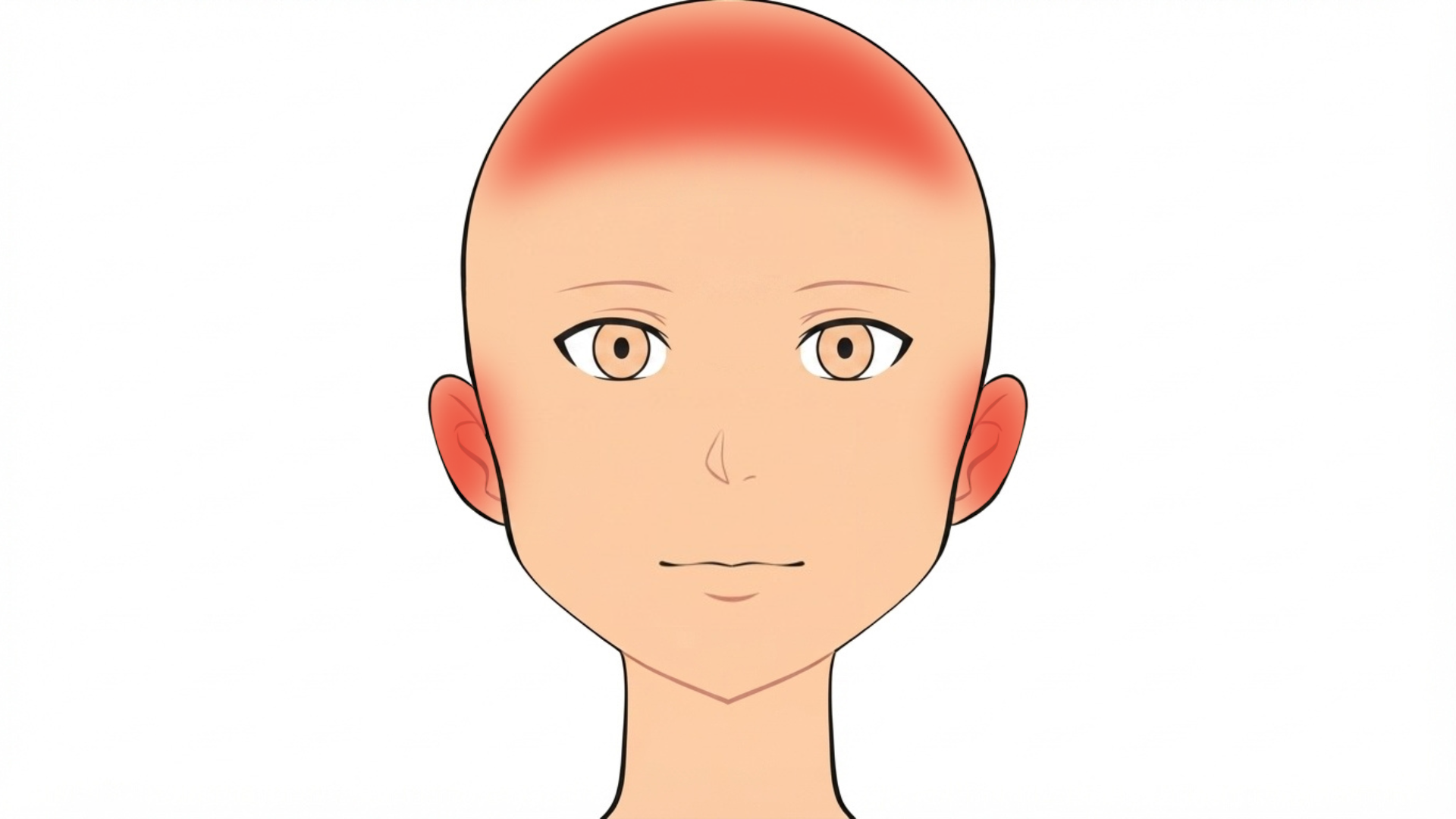
The scalp is involved in about half of people, and the plaques often run past the hairline onto the forehead and behind the ears — which is one of the things that separates it from dandruff, and the reason a hairline edge is worth looking at.
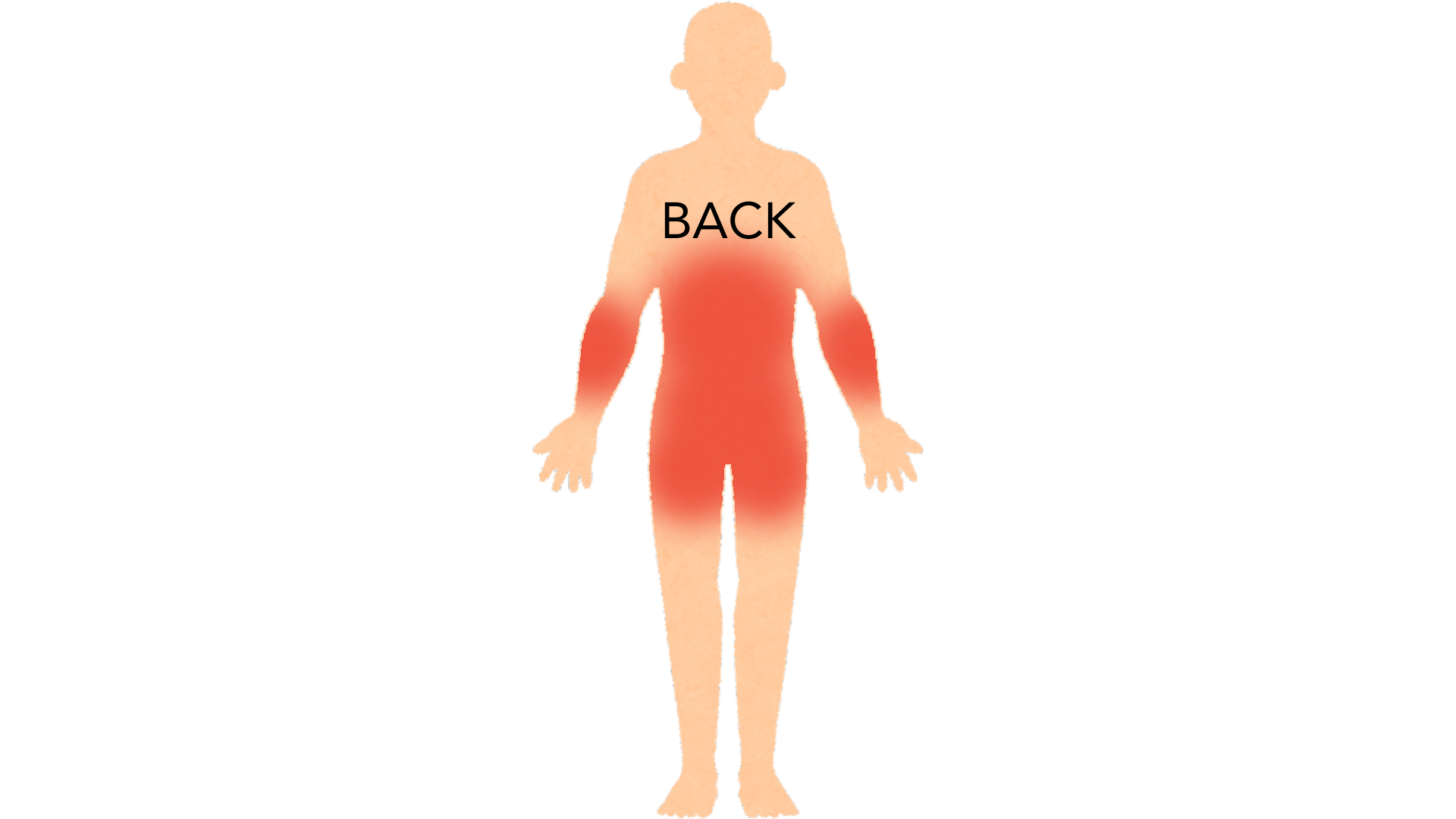
The lower back and the crease between the buttocks are common and easily missed. So are the folds, the palms, the soles, the face and the genitals — those sites matter more than their size suggests, because they affect daily life out of proportion to the area involved. Nails are affected in a large share of cases.
Athlete's Foot
Often one is ahead
A fungal infection spreads from where it landed, so one foot is commonly worse for weeks or months.
Psoriasis
Both, fairly symmetrically
Psoriasis turns up on both feet in a matching pattern, because it is coming from the immune system rather than the floor.
Athlete's Foot
Toenails and the other foot
Nails go thick, crumbly and yellow-brown, starting at the free edge. A hand can be involved too, usually only one.
Psoriasis
Elbows, knees, scalp, nails
Look for the same scaly patches on the elbows, knees, lower back or scalp. Then check the nails for small pits, an oily brown spot, or a nail lifting from its bed.
Athlete's Foot
An antifungal cream
Terbinafine or clotrimazole from the drugstore, twice a day. Terbinafine clears more infections and does it in about a week, where clotrimazole takes around four.
Psoriasis
Soften the scale, then treat the skin
Thick scale blocks medication, so treatment usually starts with a urea or salicylic acid cream. A prescription steroid, often with a vitamin D cream, goes on underneath. Stubborn cases have tablet and injection options.
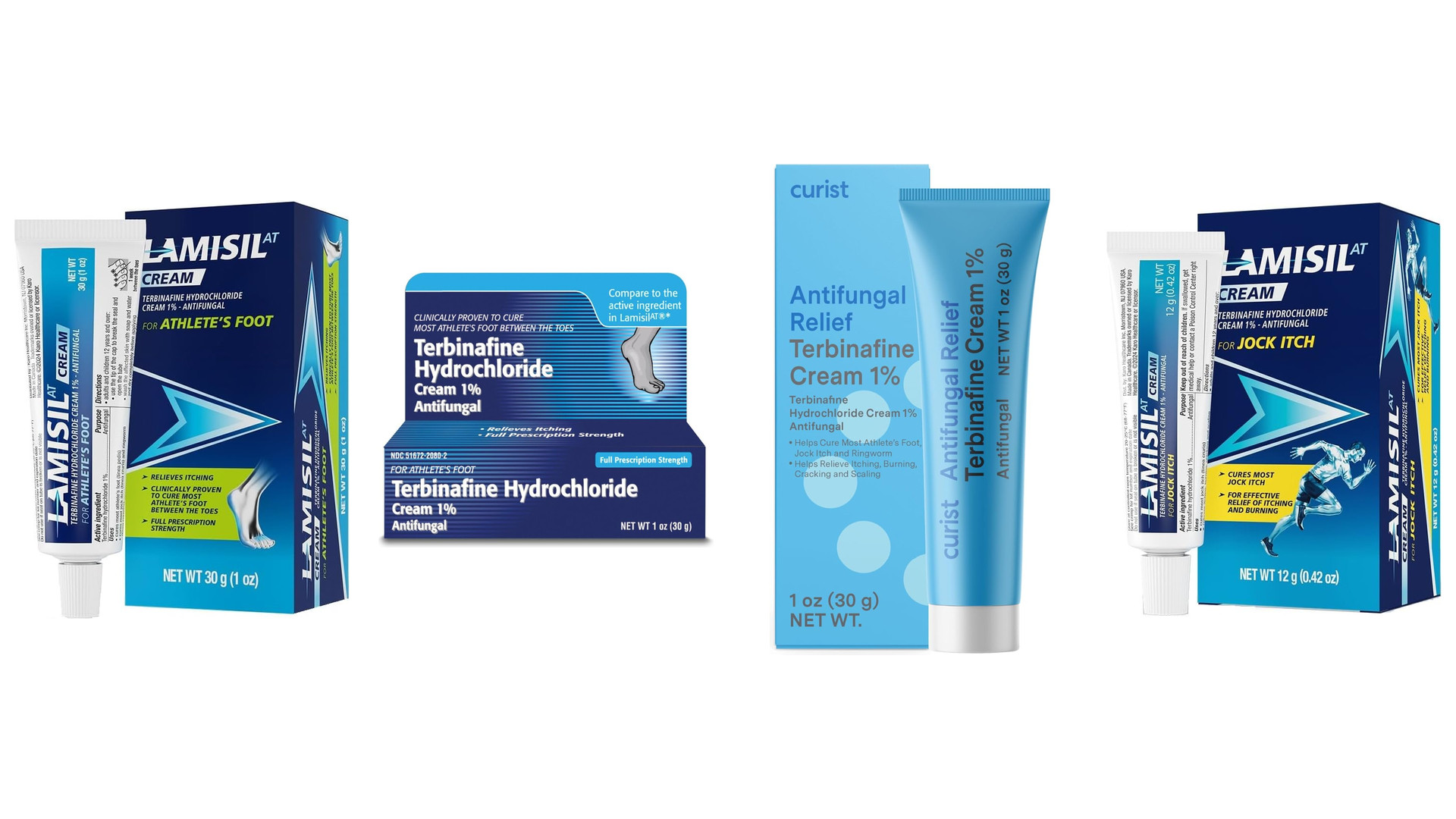
The most effective thing you can buy for athlete's foot, and the shortest course: once or twice a day for one to two weeks between the toes. It kills the fungus rather than just stopping it growing, which is why it works faster than the older creams. It will not clear an infected toenail, and it will not clear thick sole scale on its own.

The cheap, widely available option, applied twice a day for four weeks. It works well, it just takes longer than terbinafine, so the temptation to stop early is greater. Cover the whole foot and both feet, and carry on for one to two weeks after the skin looks normal.
Another azole cream, sold over the counter in some places and on prescription in others. It is a reasonable alternative if clotrimazole or miconazole has irritated the skin. It is no faster than they are, and the same four-week discipline applies.
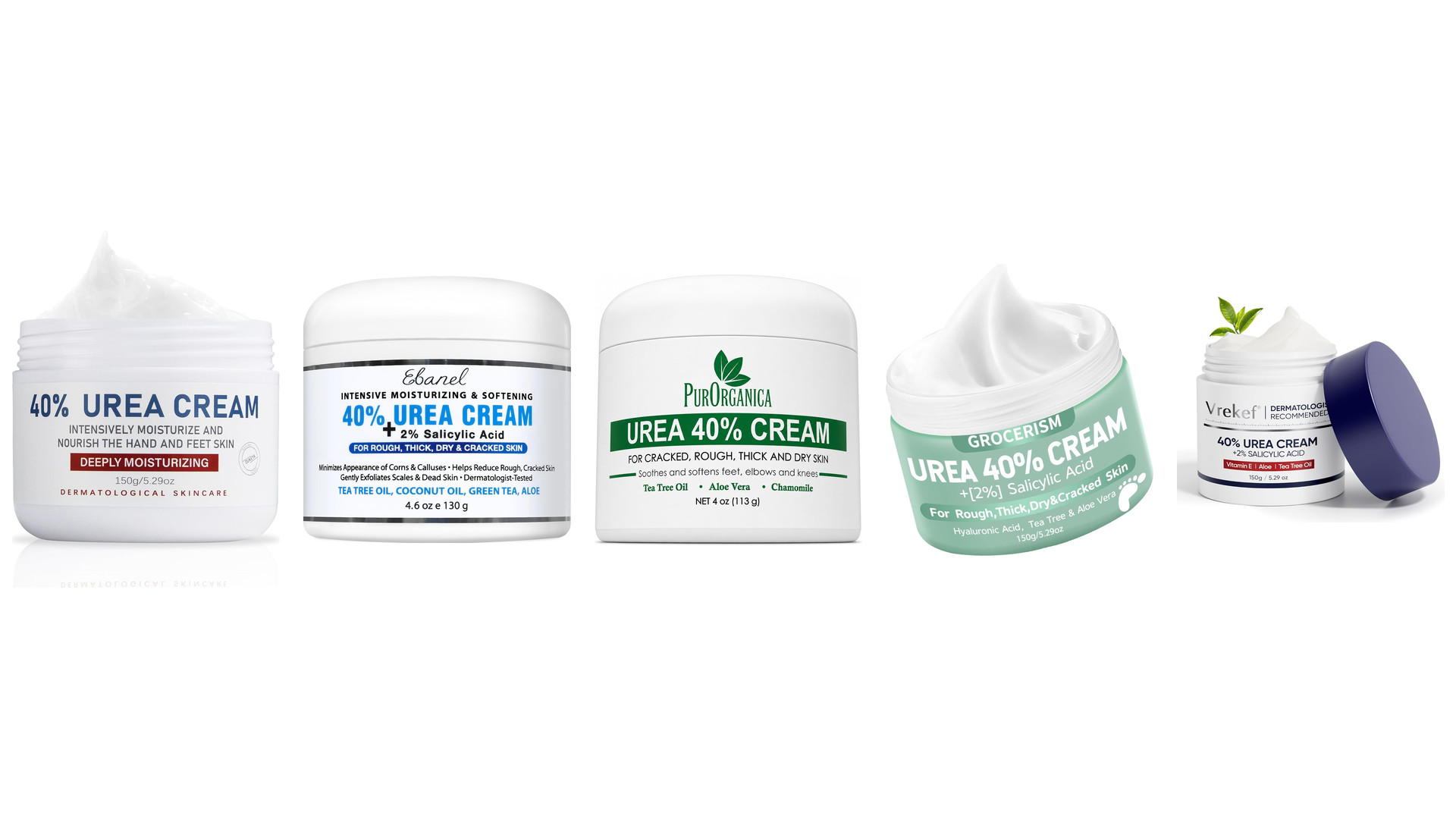
A urea or salicylic acid cream thins the hard scale on the sole so an antifungal can actually reach the skin underneath. It is a helper, not a treatment: on its own it does nothing to the fungus. It is worth adding for the dry moccasin pattern, where cream otherwise sits on top of the thickened surface.

Powder keeps feet and the inside of shoes dry and lowers the amount of fungus you put back on your foot each morning. It is prevention, and it is good at it. It is not strong enough to clear an established infection, so use a cream to clear it and powder to keep it away.
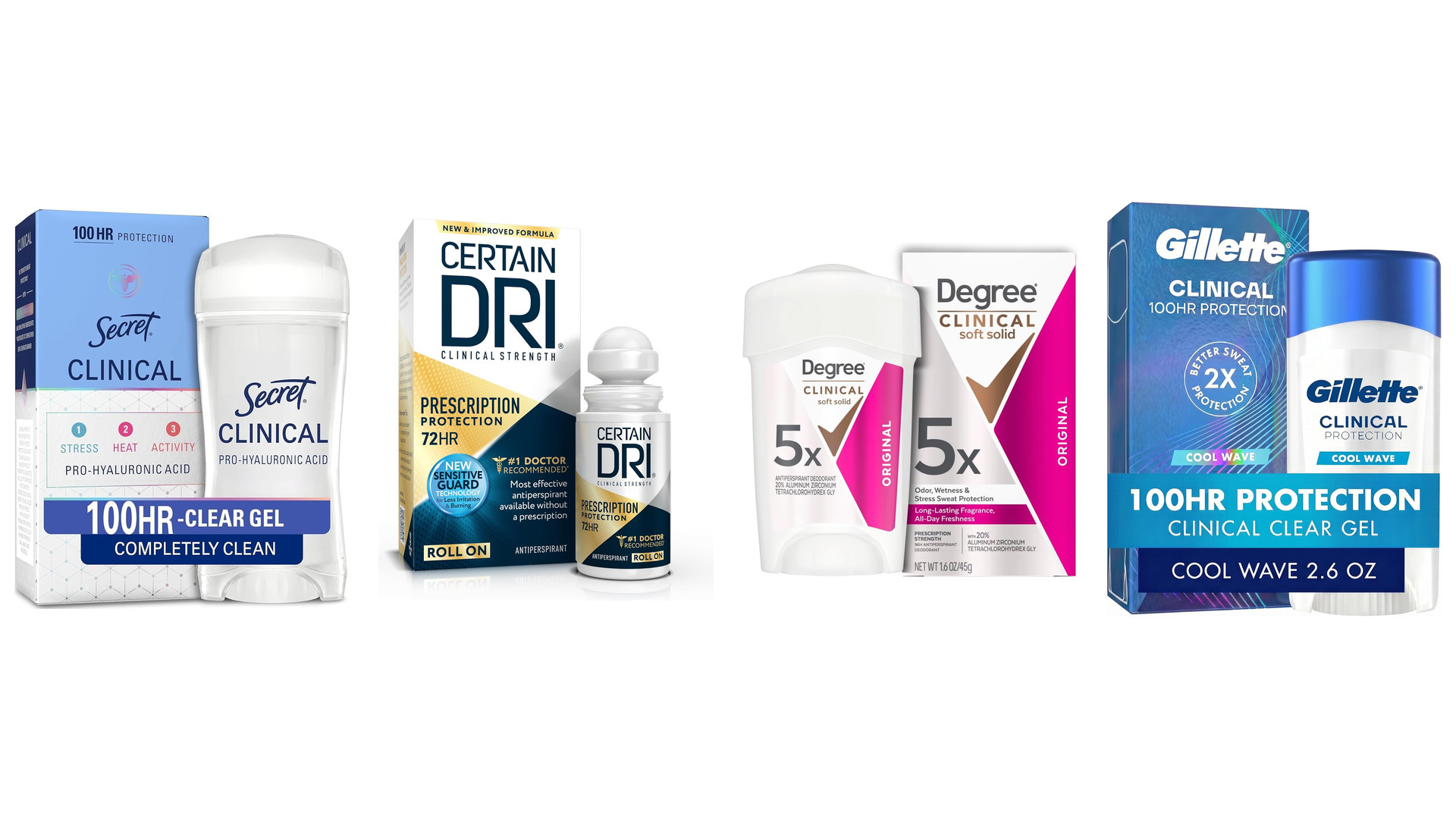
An aluminum-based antiperspirant made for feet cuts the sweating that keeps the skin soft and the shoe damp. It treats the cause of recurrence rather than the infection itself. Useful for people who clear it every time and get it back every summer.

Tea tree oil has some antifungal activity and a few small studies behind it, but it clears fewer infections than the pharmacy creams and takes longer. It also causes allergic reactions on the feet often enough to matter. An antifungal cream costs about the same and works.

Both slow fungal growth in a dish, and neither reliably clears an infection on a foot. What they do reliably is dry out and damage the skin, and cracked skin on a foot is the entry point for bacteria. This is one to skip rather than to try first.
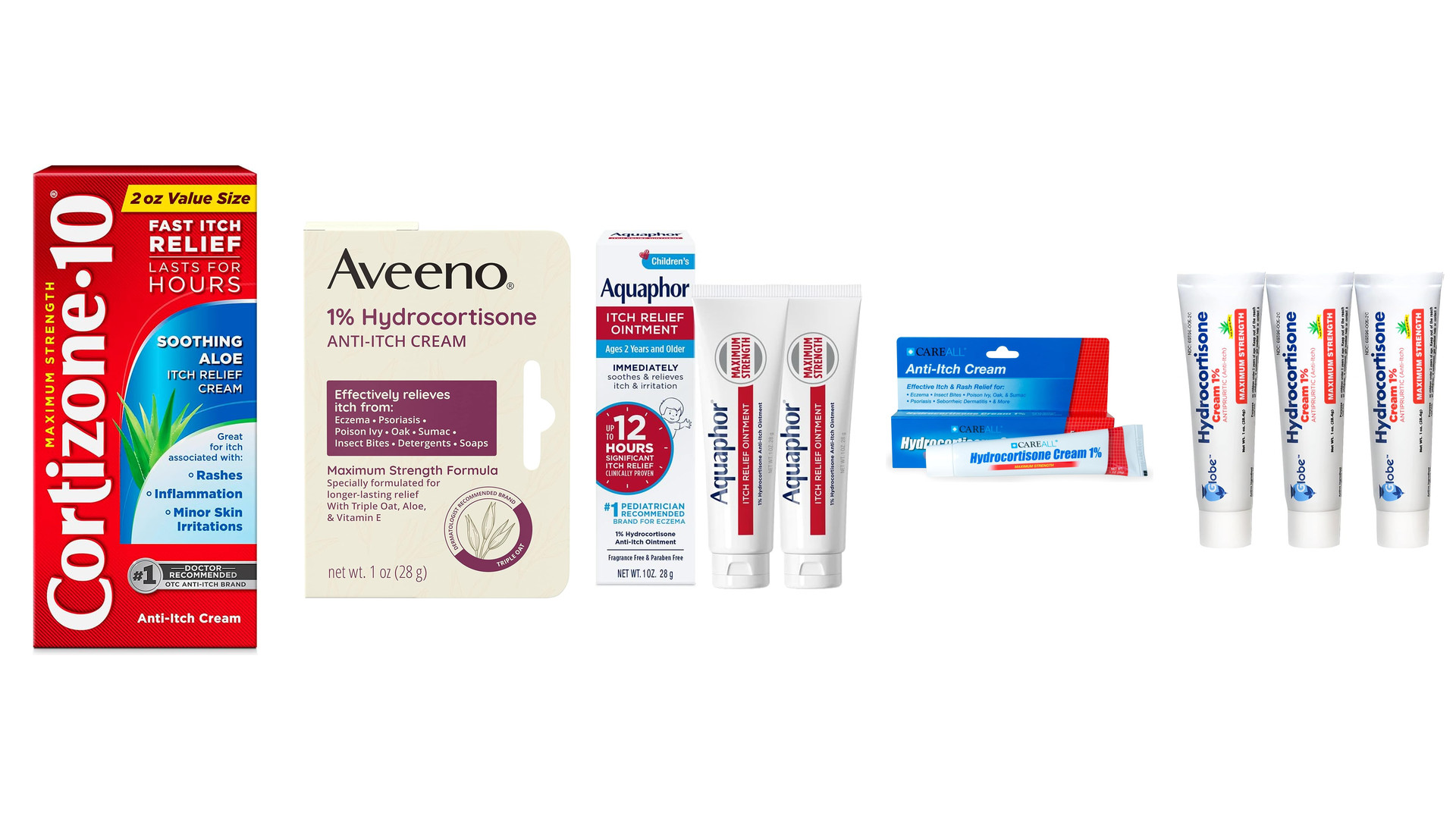
A steroid cream calms the itch, so it feels like it is helping, while the fungus spreads underneath with less to show for it. The rash it leaves is harder to recognize and harder to treat, and it makes a later scraping unreliable. Do not put a steroid on an undiagnosed foot rash.
The first-choice tablet for athlete's foot that cream cannot reach: the thick moccasin pattern, widespread infection, and infected toenails. Two weeks usually clears the skin; nails need three months and most of a year to grow out. Liver blood tests are sometimes checked, and it interacts with several common medicines, so the doctor needs your full list.
An equally effective alternative, often given as short pulses rather than daily. It is chosen when terbinafine does not suit or has not worked. It interacts with a long list of other medicines, including some heart and cholesterol drugs, so it needs a proper medication review first.
A once-weekly tablet, used for skin infection that has not cleared with cream when the other two do not suit. It is less effective than terbinafine for the dermatophytes that cause athlete's foot, and slower for nails. If you are pregnant or breastfeeding, ask the doctor managing your pregnancy before taking any antifungal tablet.
The oldest antifungal tablet. It still works, but it needs months rather than weeks, has to be taken with fatty food, and clears fewer infections than terbinafine. It is now mostly reserved for cases where the newer tablets cannot be used.
A prescription antifungal that works differently from terbinafine and the azoles, so it is a useful option when one of those has irritated the skin or has not cleared it. Applied twice a day for up to four weeks. It is no more powerful, just different.
A liquid painted on infected toenails daily for about a year, for people who cannot take antifungal tablets. It matters here because an untreated nail is the usual reason foot skin keeps getting reinfected. Cure rates are well below tablets, and it works best on nails that are only mildly affected.
An older nail lacquer, applied daily for up to a year with the build-up removed weekly. It clears only a small share of infected nails on its own. It is worth knowing about, but if the nails are the reason your feet keep flaring, tablets are the conversation to have.

Combination creams that mix a steroid with an antifungal are still prescribed for itchy foot rashes. The steroid takes the itch away quickly and lets the fungus spread wider and deeper, which is a common route to a longer, harder-to-treat infection. A plain antifungal is the better choice on a foot.

Lifts and dissolves the scale on top of a plaque. That matters because no medicated cream can reach the skin through a thick crust, so this is often the step that makes everything else work. It does nothing to the immune signal underneath, and on large areas it should not be used long term.
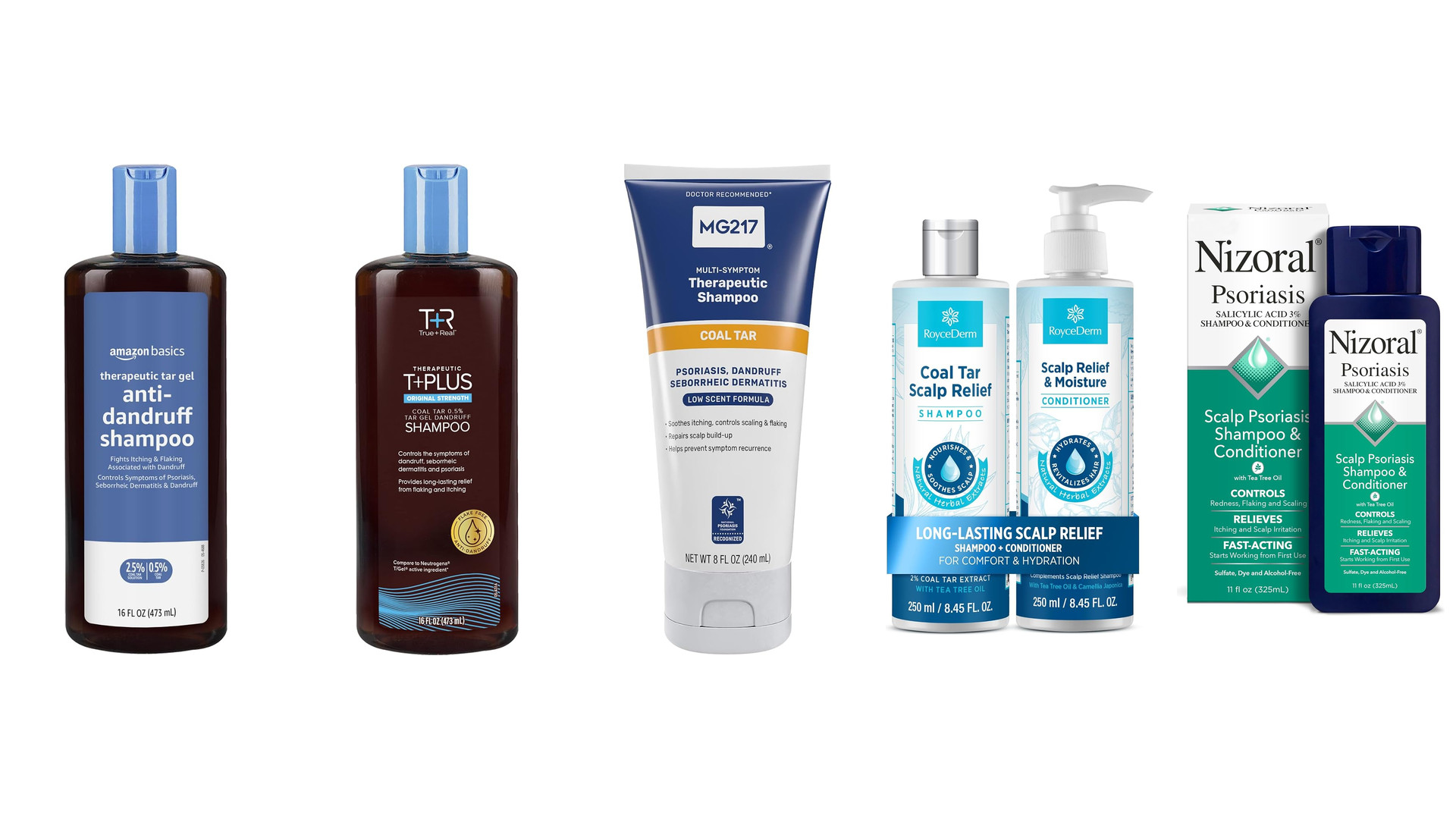
An old treatment that genuinely still works, slowing the overactive turnover of skin cells. It is most useful as a scalp shampoo left on for several minutes, and on stubborn plaques on the body. The reasons people give it up are the smell and the staining of clothes and bedding rather than the results.
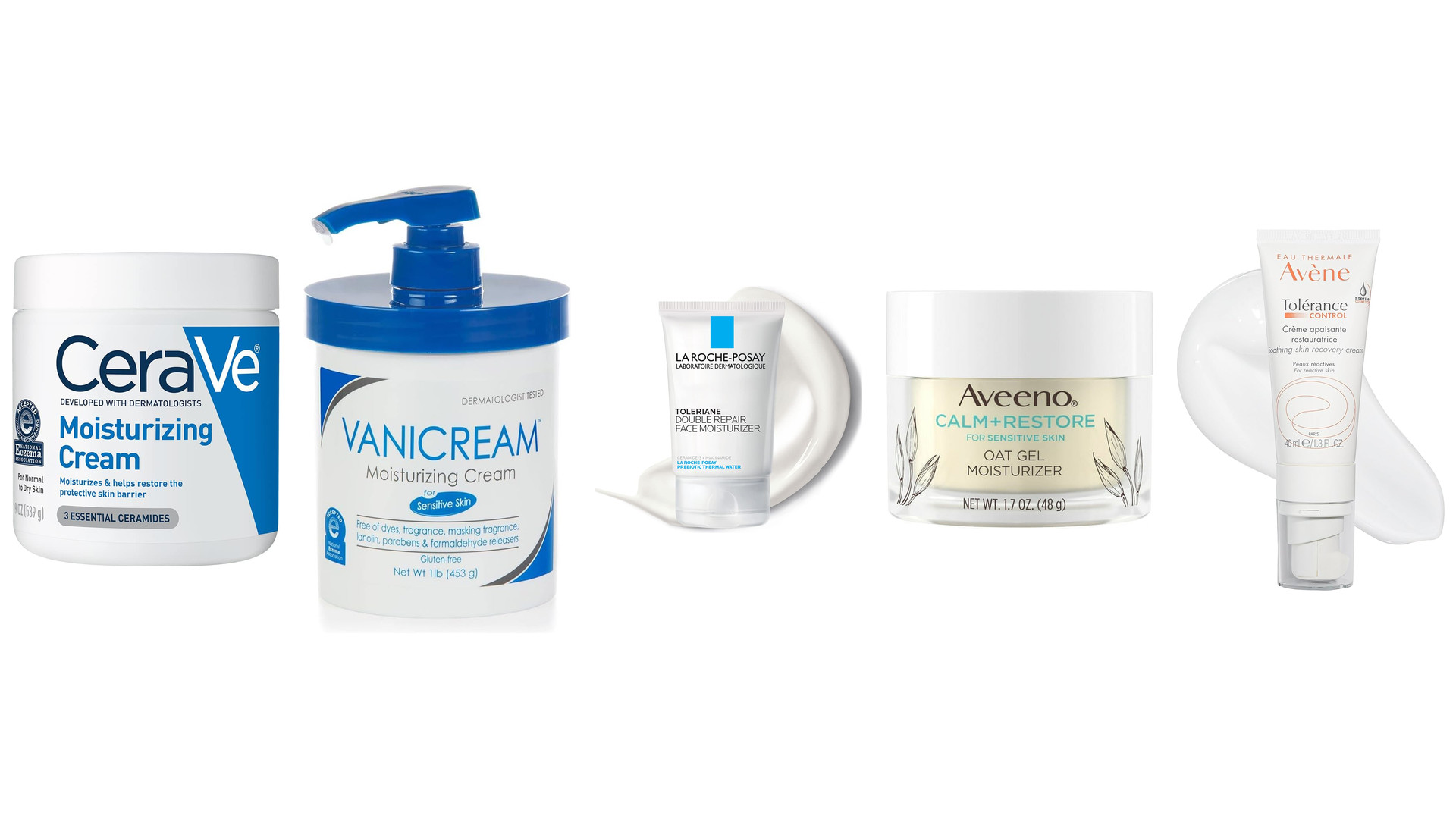
Plain petroleum jelly or a thick unscented ointment, used daily, reduces cracking, itching and scale and helps prescription creams absorb. Apply it after a bath while the skin is still damp. It will not clear a plaque on its own — this is the base everything else is built on, not the treatment.
Softens hard, thickened skin and helps shift scale, which makes it useful on the palms, soles and the thickest plaques. Higher strengths work better here than the low ones sold for dry skin. It can sting on cracked skin, so it goes on intact plaques rather than open fissures.
The mildest steroid you can buy, and it is honestly too weak for a thick plaque on an elbow or knee. Where it does help is thin skin — the face, the eyelids and the body folds — used for short stretches. If nothing has changed after two weeks, the answer is a stronger prescription rather than more of this.

Narrowband UVB, given two or three times a week in a clinic, is one of the most effective options for psoriasis that covers too much skin for creams. It suppresses nothing in the rest of the body, which is why it suits pregnancy and people who cannot take systemic medicines. The commitment is the difficulty: it means repeated trips over two to three months.
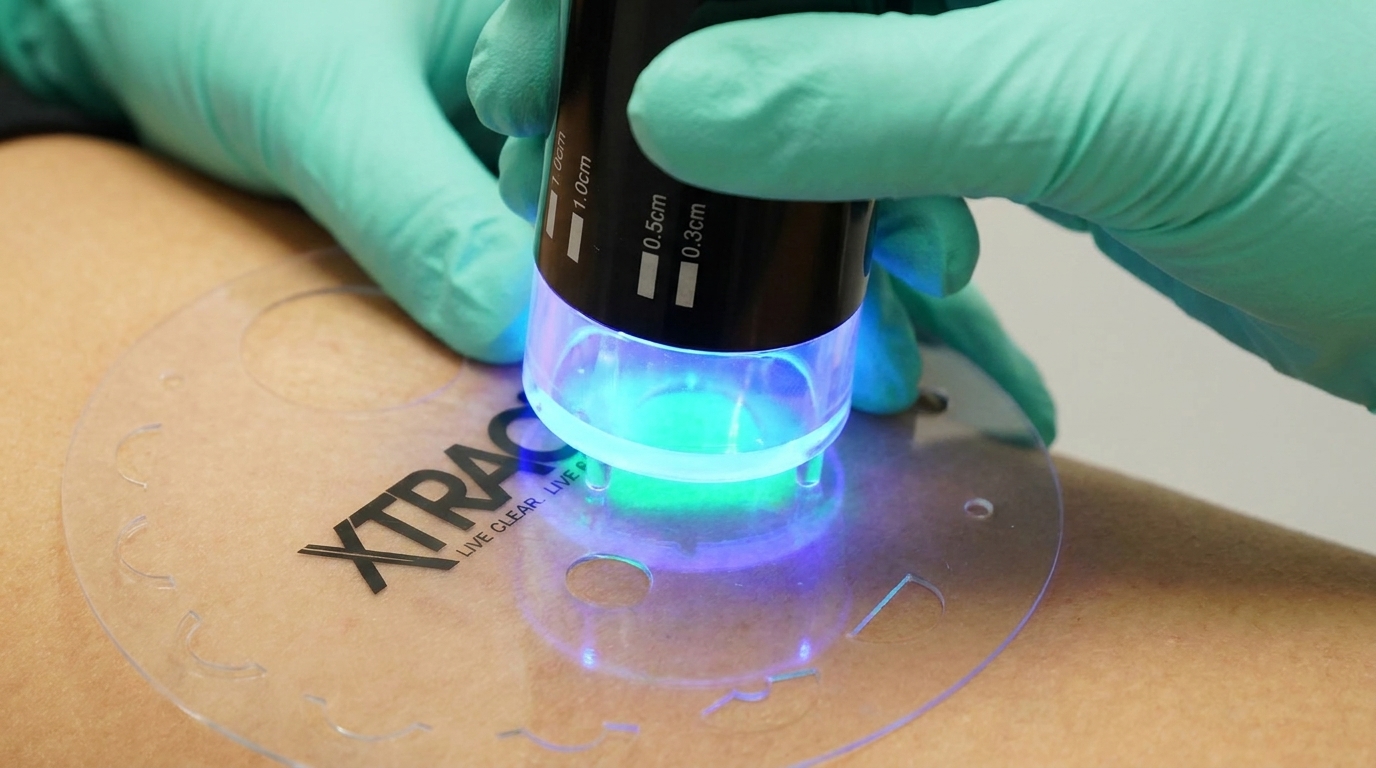
Delivers the same kind of UVB light, but aimed only at the plaques, so a higher dose can be used and normal skin is spared. It suits a handful of stubborn patches, or psoriasis on the scalp, elbows and knees, rather than widespread disease. It usually takes several short sessions.
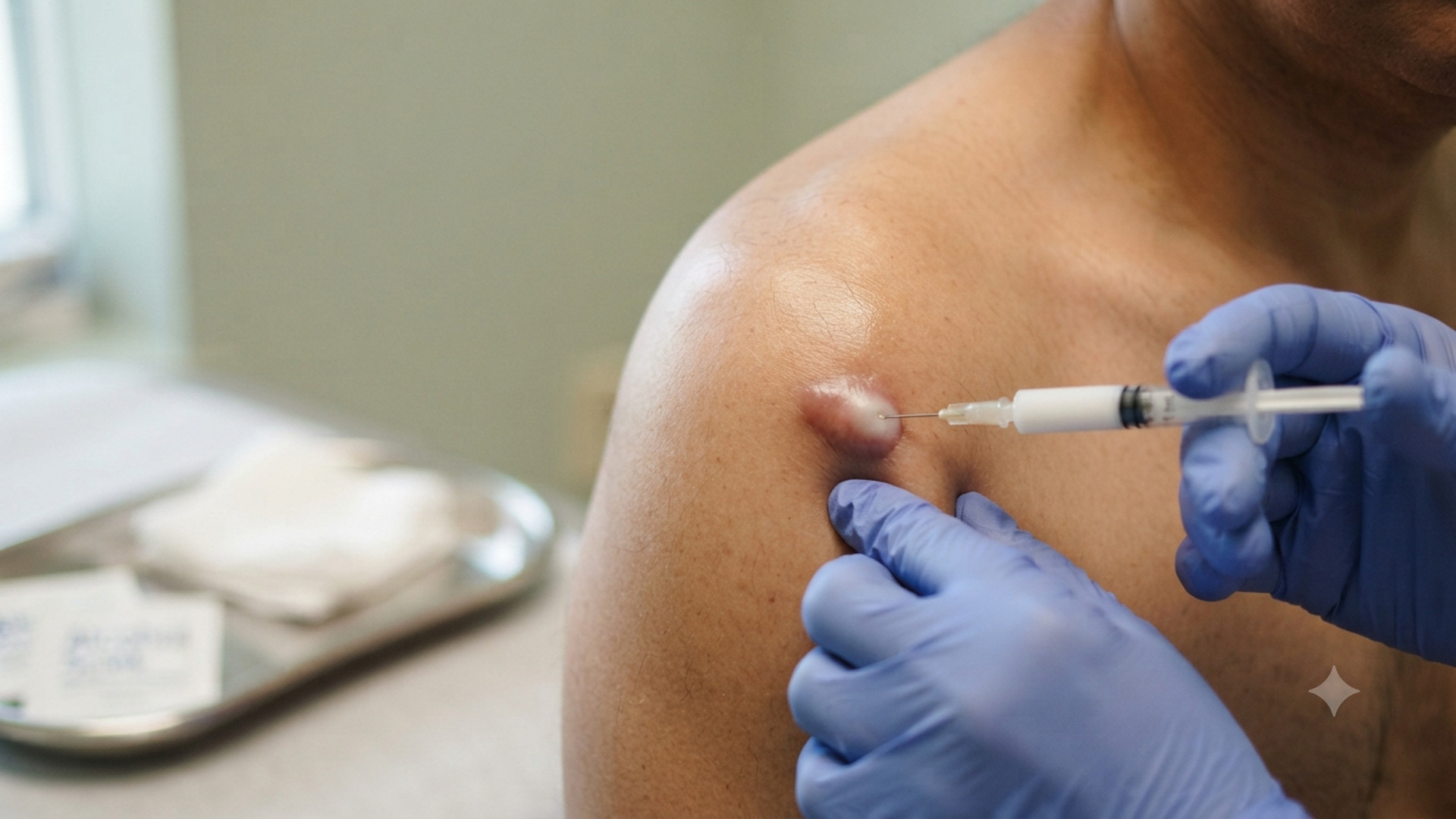
A small amount of steroid injected directly into one thick plaque that has refused to shift, or into the nail fold for nail psoriasis. It works where cream cannot get through. It is used sparingly, because repeated injections can leave a dent or a pale mark in the skin, and it is not a treatment for anything widespread.
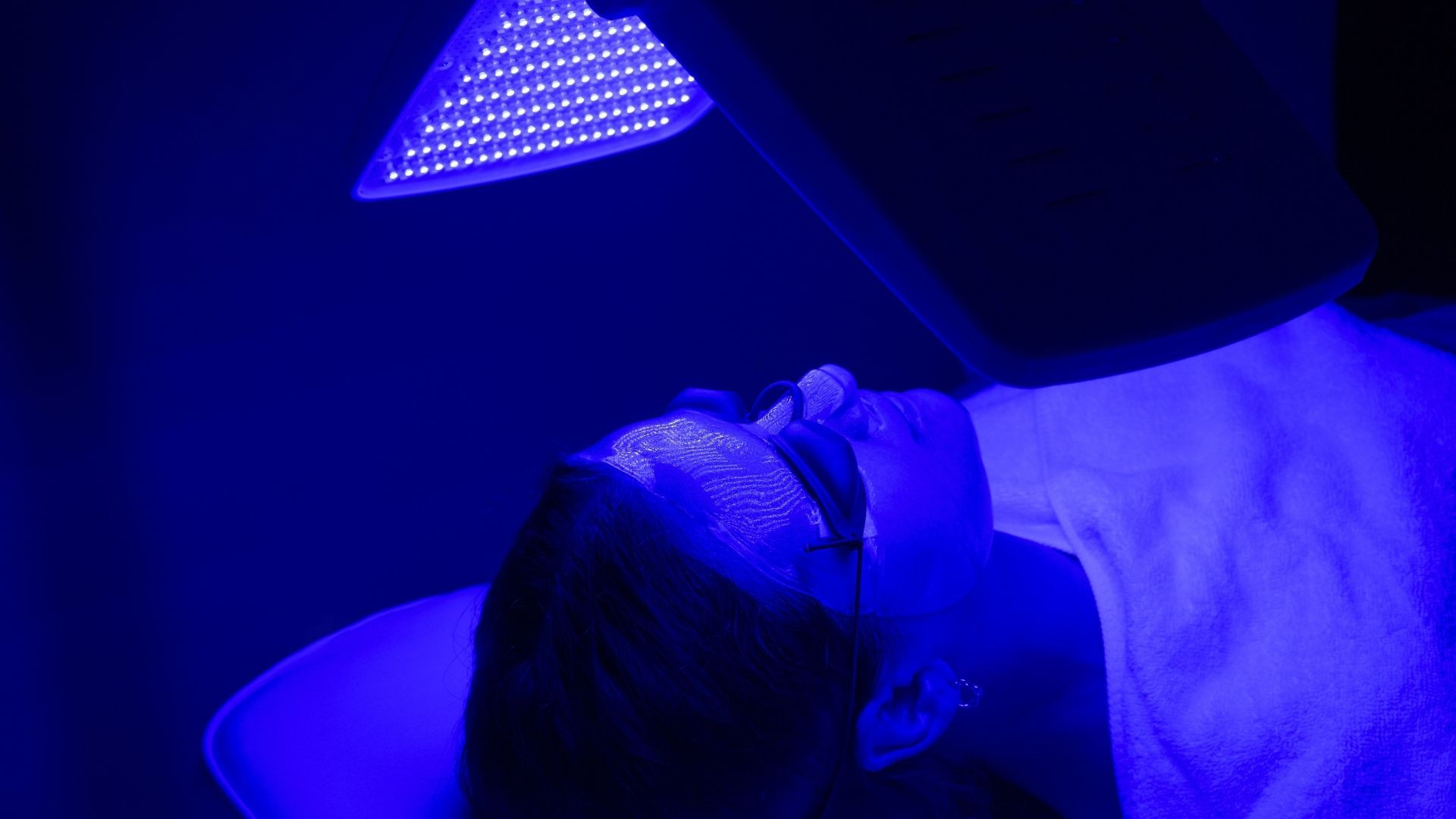
Home red and blue LED devices are not the same thing as narrowband UVB, and there is little evidence they clear plaques. Tanning beds are not a substitute either, and they carry a skin cancer risk. If light treatment is the right direction, the version worth having is the medical one, prescribed and dosed.
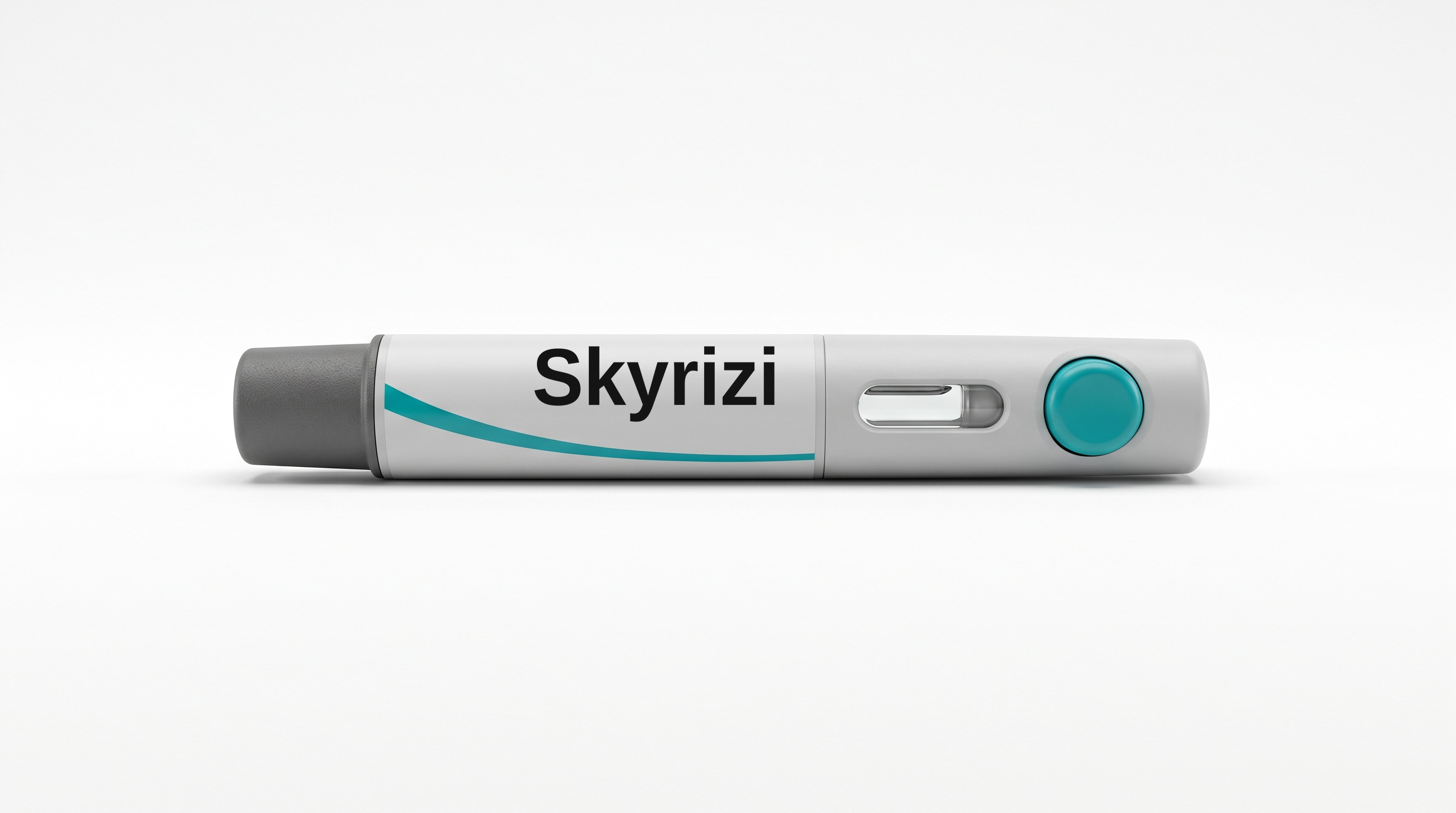
A biologic that blocks interleukin-23, given as four injections a year once the starting doses are done. It is where most people begin now: it clears skin as completely as anything available, it holds that clearance over years, and the dosing is the easiest of the group to live with. Tuberculosis and hepatitis screening happens before starting, and there is a real but modest increase in some infections.

Blocks interleukin-17A and interleukin-17F, two signals instead of one. In head-to-head trials it leaves more people with completely clear skin, and gets there faster, than any other biologic it has been tested against. The trade-off is oral thrush, which is common enough that it is discussed before starting, and like the other interleukin-17 drugs it is avoided in inflammatory bowel disease.

Blocks interleukin-17A, and it clears skin fast — often within weeks rather than months. Ixekizumab (Taltz) works the same way, and the choice between the two is mostly practical. Either is a common pick when the scalp, palms, soles or nails are badly affected, and both treat psoriatic arthritis, but they are avoided in inflammatory bowel disease, which they can worsen.
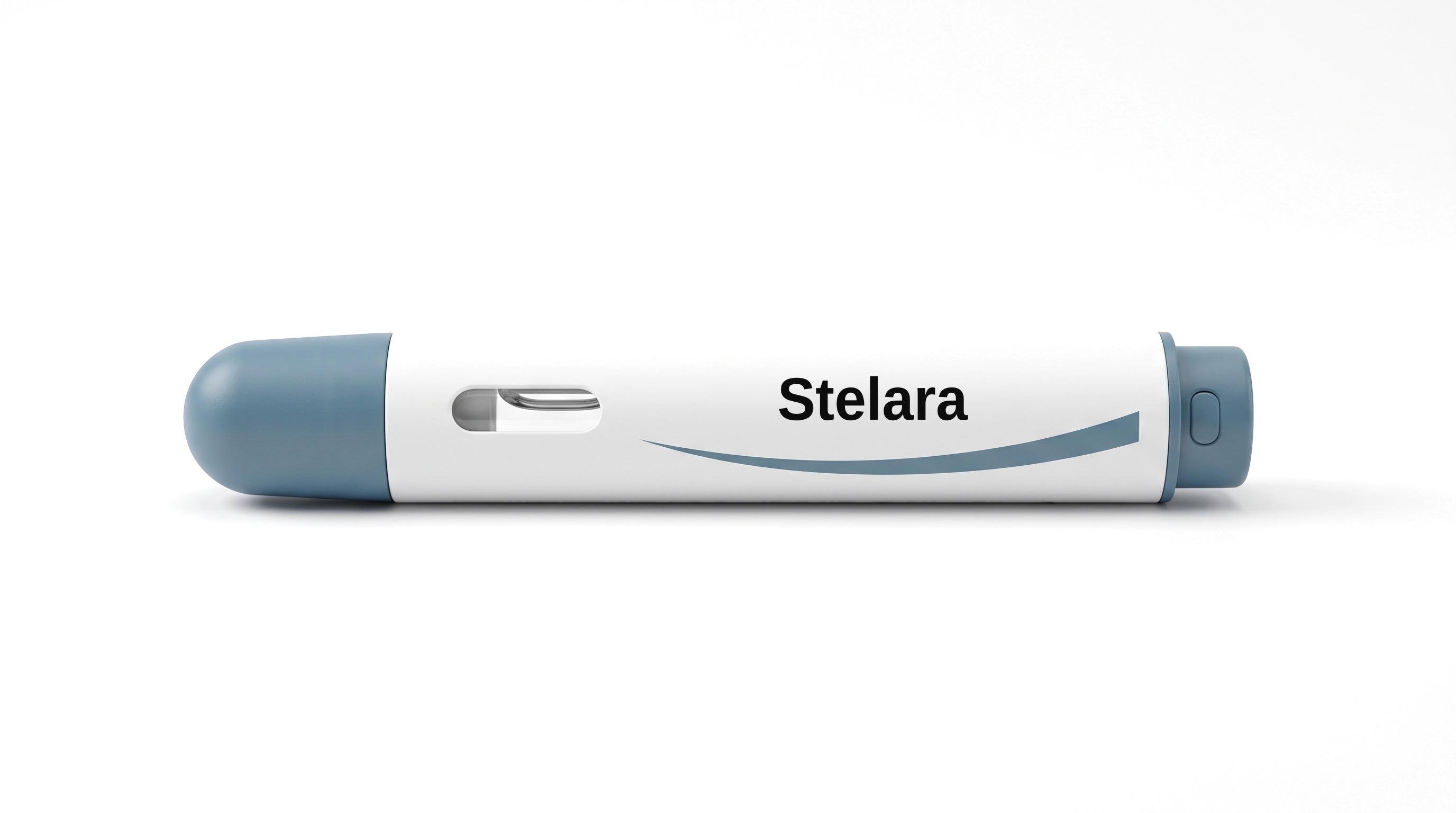
An older biologic that blocks interleukin-12 and interleukin-23, given four times a year. It does not clear skin as completely as the newer options, which is why it is seldom first choice now, but it has the longest safety record of the group and biosimilar versions have made it one of the cheapest ways to be on a biologic at all.

The oldest of the group, blocking TNF, injected every two weeks. Newer options clear skin more completely, so it is rarely the first choice for skin alone, but it has decades of safety data behind it, it treats psoriatic arthritis well, and biosimilar versions have made it cheap. Screening for tuberculosis and hepatitis is done before starting.

A once-daily tablet that blocks one specific step in the psoriasis signal. It clears skin better than the older oral options and needs no routine blood monitoring, which is why it is increasingly chosen when creams are not enough. It is not a biologic injection, and it does not treat joint disease as well as they do.
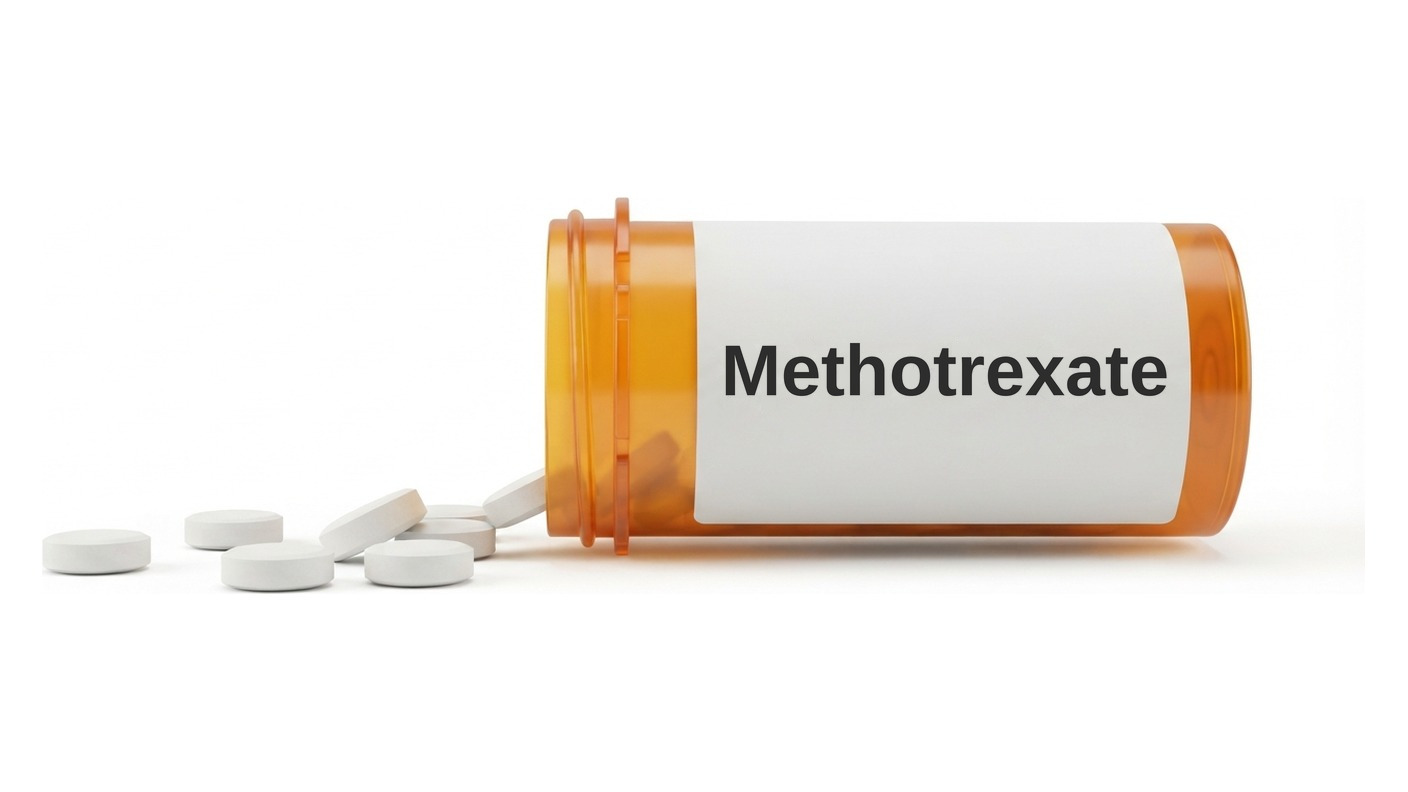
A long-established once-weekly tablet that damps down the immune overactivity, and it treats psoriatic arthritis at the same time, which is often why it is chosen. It needs regular blood tests for the liver and blood count, and folic acid alongside it. Alcohol is limited, and it is not used in pregnancy — ask your doctor.

The fastest-acting option, which makes it the rescue treatment for a severe flare or erythrodermic psoriasis. It works within weeks. It is deliberately short-term, usually under a year, because it raises blood pressure and can damage the kidneys, and both are checked throughout.
A twice-daily tablet that clears skin less completely than the newer options but needs no blood monitoring at all, which suits people who cannot or will not have regular tests. It is often used for scalp, palm and sole psoriasis. Nausea, loose stools and headache are common in the first few weeks and usually settle.
An oral retinoid, most useful for pustular psoriasis on the palms and soles and often combined with light treatment. It does not suppress the immune system, which suits people who cannot take something that does. It causes dry lips and eyes and raised cholesterol, and it must not be used by anyone who could become pregnant for three years afterward.
Steroid tablets clear psoriasis quickly and then it comes back worse, sometimes as the pustular form, when they are stopped. For that reason they are not used to treat psoriasis. They are on this list because they are still occasionally prescribed for a flare, and because you should never stop a course on your own — ask the doctor who prescribed it.
The standard first prescription for plaques: a vitamin D analog that slows the fast cell turnover, combined with a steroid that settles the inflammation. The two together work better than either alone and allow less steroid overall. It comes as an ointment, a foam or a scalp solution, and it is usually used once a day.
A very strong steroid for thick, stubborn plaques on the elbows, knees, palms, soles and scalp, where milder ones simply do not get through. It is used in short bursts of two to four weeks, not continuously. It should never go on the face, the eyelids or the body folds, where it thins the skin quickly.
A once-daily steroid-free cream that calms the immune signal in the plaque. Its appeal in psoriasis is that it can be used on the face and folds and for long stretches without the skin thinning, and improvement often lasts a while after stopping. It can cause folliculitis and itching where it is applied.
Another steroid-free once-daily cream, and one of the few licensed for the body folds, where inverse psoriasis is smooth, sore and difficult to treat safely. It is not greasy, which suits scalp and visible areas. Cost and insurance cover are the usual obstacles rather than how well it works.

A mid-strength steroid for plaques on the trunk, arms and legs — the everyday workhorse between hydrocortisone and clobetasol. It is often alternated with a vitamin D cream so that the steroid is not used every day. Plaques usually return within weeks of stopping, which is why maintenance is planned rather than improvised.

A retinoid gel that thins the plaque and reduces scale, and its benefit tends to hold longer after stopping than a steroid's does. It is irritating on its own, so it is usually paired with a steroid or used every other night. It is not used if you are pregnant or planning to be — ask your doctor.
A steroid-free ointment used on the face, eyelids, genitals and body folds, where psoriasis is thin and smooth and steroids cannot be used for long. It does not thin the skin. It stings or feels warm for the first week or so, which settles, and it works less well on thick plaques elsewhere.
A mild prescription steroid for psoriasis on the face and in the folds when hydrocortisone is not enough. It is used for short courses and then stepped down to a steroid-free option for maintenance. On elbows, knees and scalp it is too weak to do much.
Athlete's Foot
Four weeks with no change
Also spreading redness up the foot, or nails that have turned thick and crumbly.
Psoriasis
Thick plaques or painful cracks
Foot psoriasis rarely clears with drugstore products, and cracks deep enough to change how you walk are worth treating properly.
Psoriasis
Psoriasis rarely stays on the feet. Before you decide, check your elbows, your knees, your lower back, your scalp and the crease between your buttocks. Matching scaly patches with a sharp edge in any of those places makes psoriasis much more likely.
Then look at your fingernails and toenails. Small pits like pinpricks, an oily brown-yellow patch under the nail, or a nail lifting away from its bed all point to psoriasis. Nails that are thick, crumbly and yellow from the outer edge inwards point to a fungal infection instead.
Nail changes are close to a giveaway on both sides, and they take ten seconds to check.
Athlete's Foot
A steroid cream on athlete's foot lets the fungus spread. It turns down the immune response that had been limiting the infection. The itch settles for a few days, then the rash comes back wider with a fainter, harder-to-read edge.
So a combined steroid and antifungal cream is a poor first choice. It is the wrong answer for a foot rash nobody has named yet.
Psoriasis
A steroid cream is a normal part of psoriasis treatment. It calms the overactive immune response, and a plaque usually flattens over a few weeks.
Psoriasis
Psoriasis on your feet does not protect you from a fungal infection. Cracked psoriatic skin is easier for a fungus to get into.
The clue is a change in pattern. Long-standing symmetrical plaques that suddenly go asymmetric, or start itching in the toe webs, are worth a scraping rather than a stronger steroid.
Treating both at once is routine, and the order matters: clear the fungus, then keep treating the psoriasis.
Athlete's Foot
Athlete's foot follows moisture. Gyms, pools, communal showers, and shoes that never dry out. Drying between the toes, rotating shoes and changing damp socks prevents most repeats.
Psoriasis
Psoriasis follows the immune system. Flares often follow an infection, a stressful stretch, a skin injury, smoking or stopping a treatment. Pressure and friction on the soles can also trigger a plaque in the exact spot that took the rubbing.
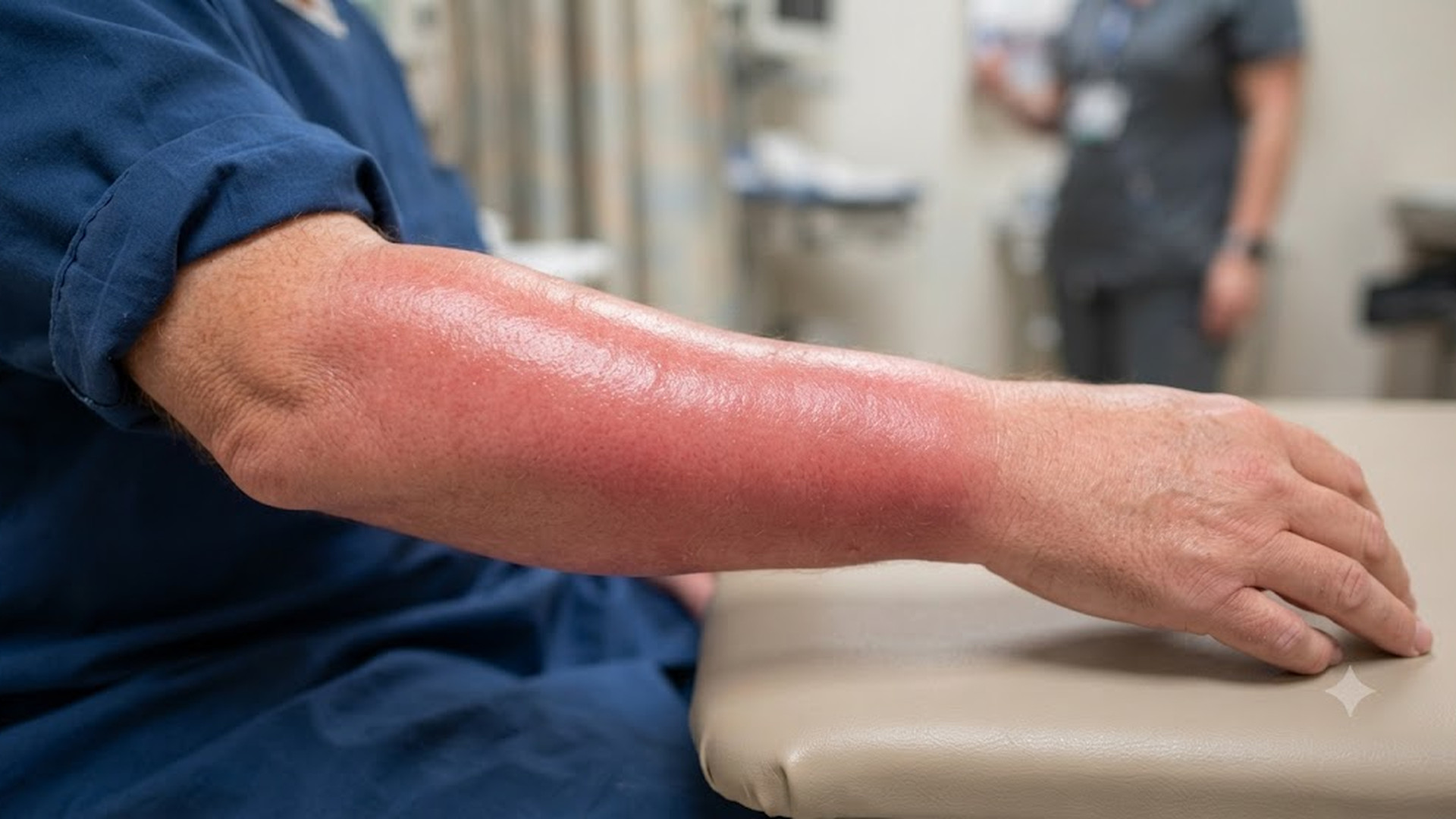
Cracks between the toes are a well-recognized way for bacteria to get into the leg, causing a hot, swollen, spreading redness that needs antibiotics. It is uncommon in healthy feet and much more likely in people with diabetes, poor circulation or a swollen leg. Treating athlete's foot promptly in those groups is mostly about closing that door.

The same fungus moves into the toenails, which become thick, crumbly and yellow-brown. Cream cannot get through a nail, so an infected nail keeps putting fungus back on the skin every time a sock goes on. It is the usual answer to why athlete's foot keeps coming back, and it takes tablets and most of a year to fix.

Eczema on the feet blisters on the sides of the toes and the arch, which is exactly where the blistering kind of athlete's foot appears. Eczema is usually on both feet evenly, spares the web spaces, and often shows up on the hands at the same time. Athlete's foot tends to favor one foot first, starts between the outer toes, and has a scaling edge. A scraping settles it, and treating eczema as fungus wastes weeks.
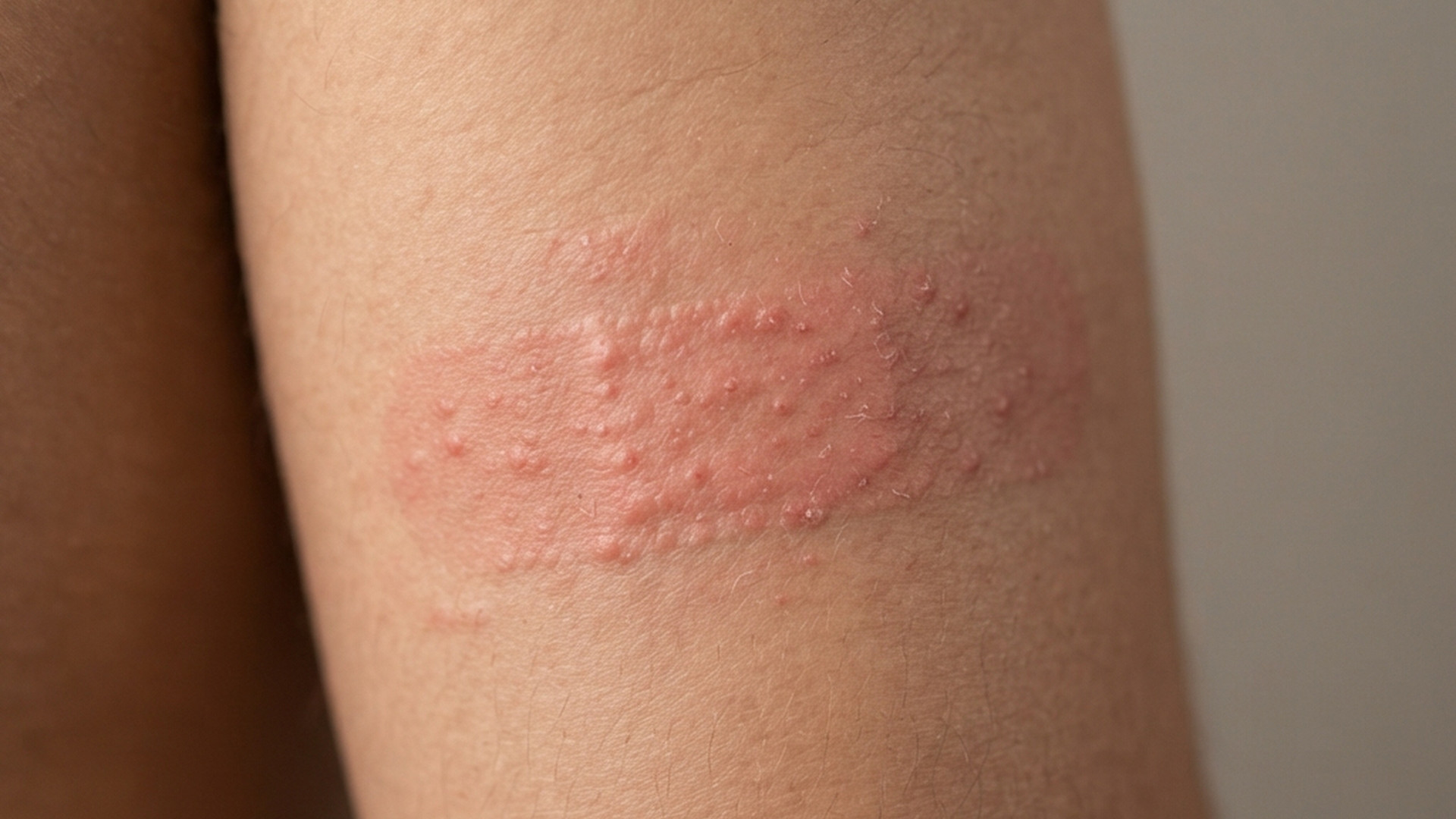
An allergy to rubber, glue or dye in a shoe makes an itchy, scaly rash that is easily called athlete's foot. The giveaway is the shape: it sits on the top of the foot in the outline of the shoe, matches on both feet, and leaves the web spaces between the toes untouched. Athlete's foot works the other way round, starting between the toes and on the sole.
Psoriasis on the sole is dry and scaly across the whole weight-bearing area, so it reads as the moccasin kind of athlete's foot. Psoriasis scale is thicker and silvery, the edge is sharply drawn, and there is usually psoriasis somewhere else, on the elbows, knees or scalp. It also does not respond to antifungal cream, which is often the moment the question gets asked.
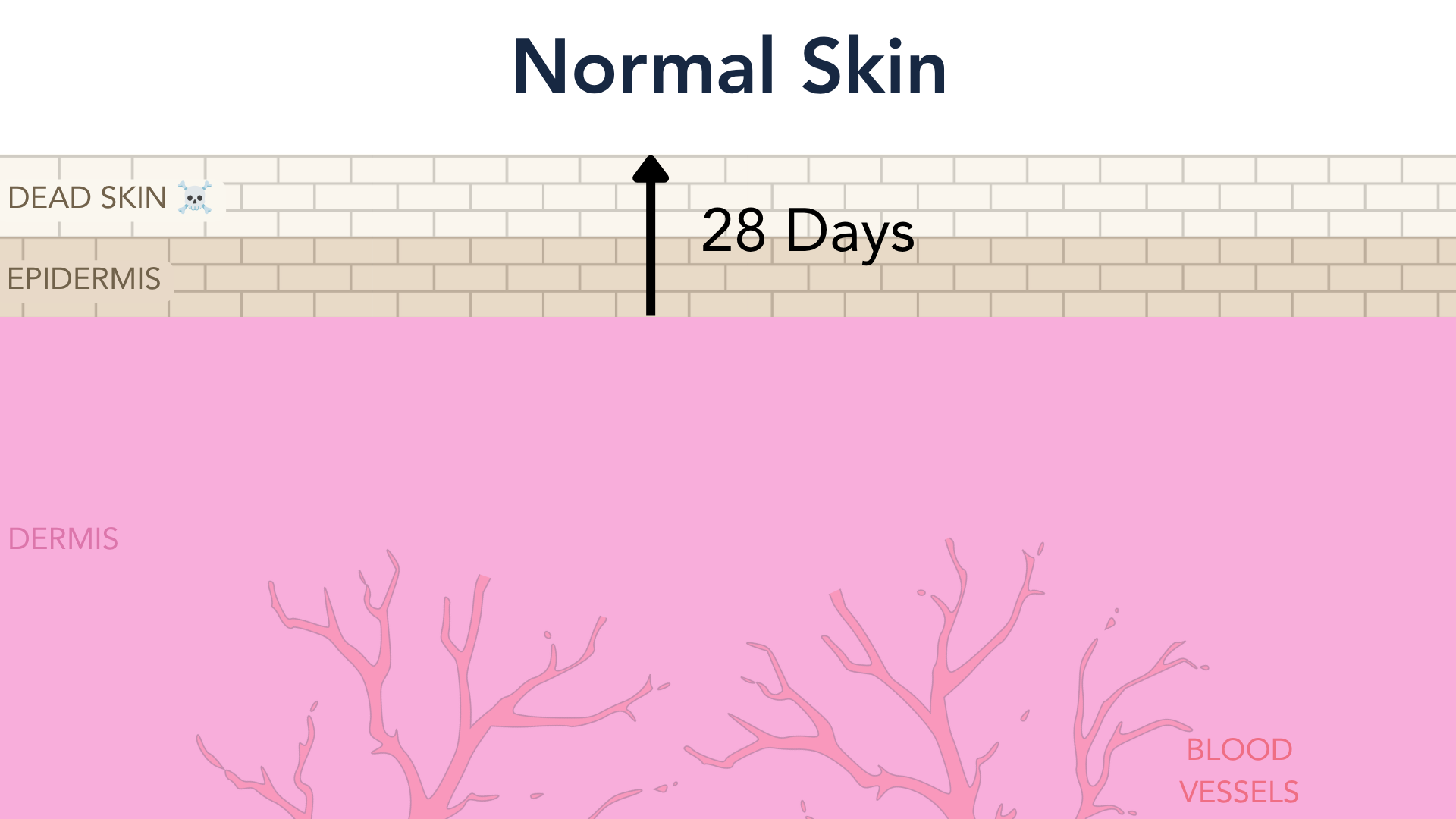
In healthy skin, a cell made at the base of the epidermis takes about a month to reach the surface. By the time it arrives it is flat and dead, and it sheds one cell at a time, so nothing piles up. The immune system stays quiet unless there is something to fight.

Immune cells in the skin switch on when there is nothing to fight and release signals such as TNF, interleukin-17 and interleukin-23. These are the messages that tell the skin it is under attack, and they are what biologic injections are built to block.
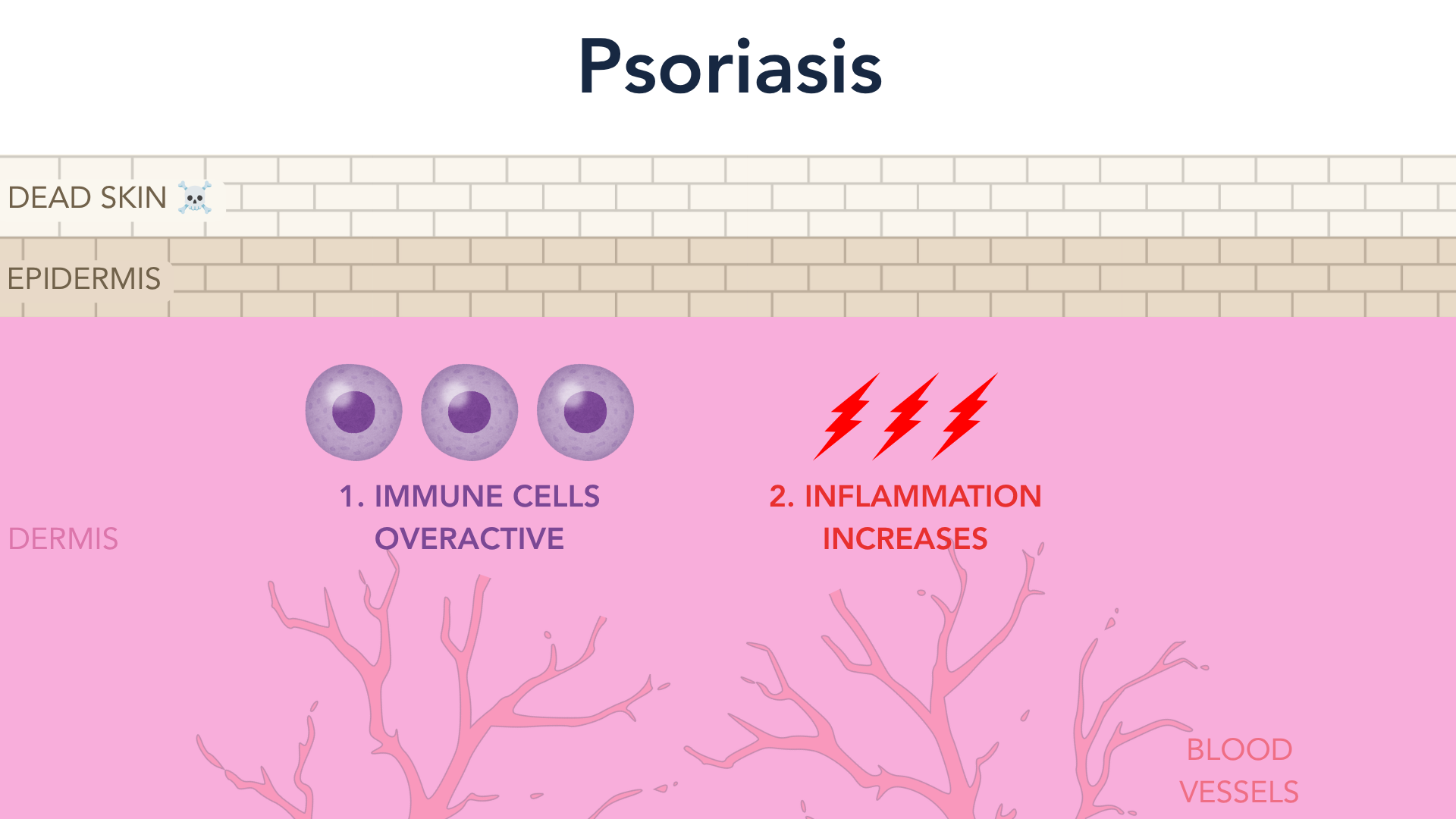
Inflammation brings increased blood flow to the area.

Told to behave as though the skin is injured, cells at the base of the epidermis divide far faster than normal. A journey to the surface that should take about a month is finished in a few days, so the cells arrive immature and still stuck together.
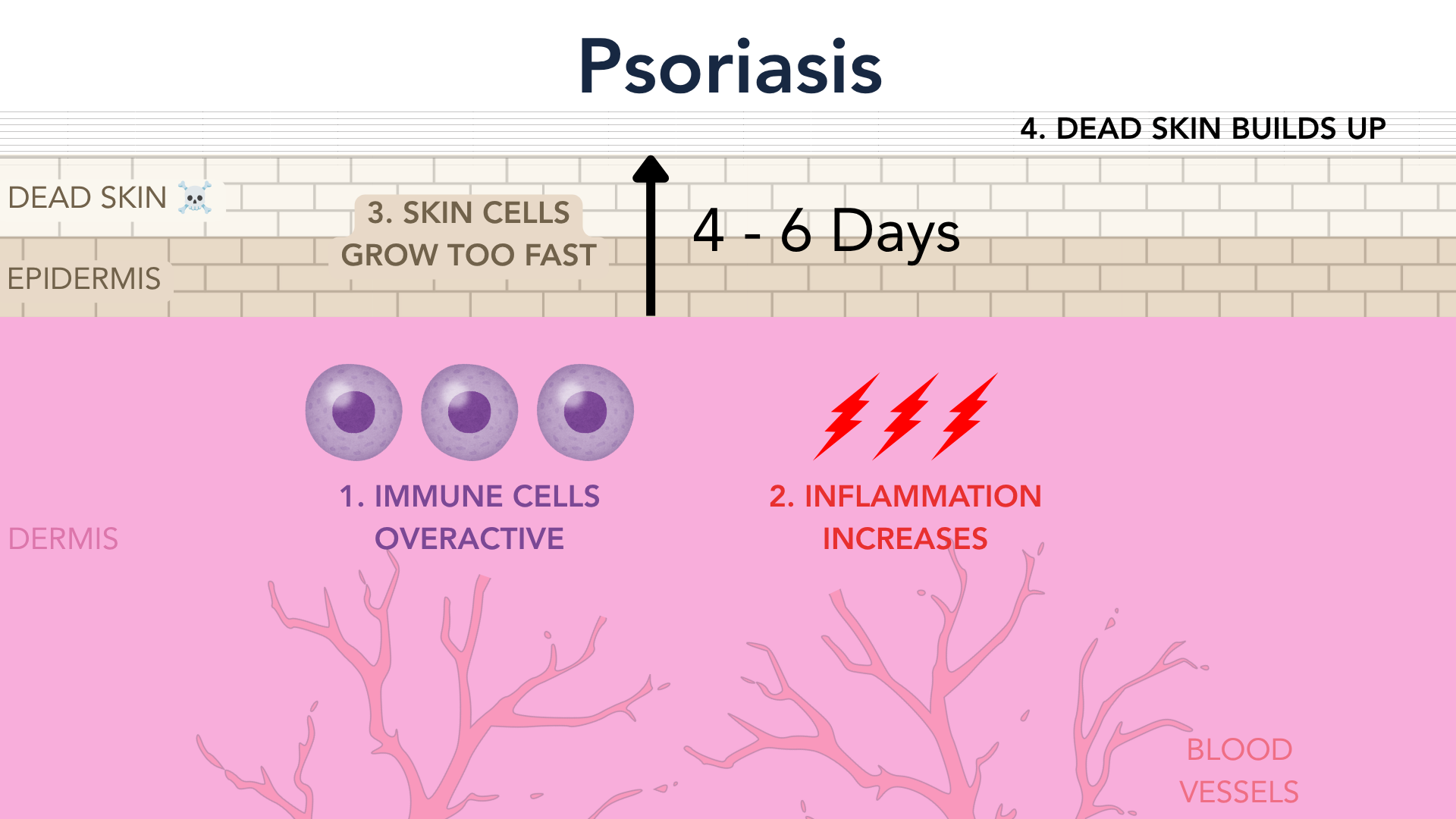
The immature cells pile up instead of shedding invisibly, which builds the raised plaque and the silvery scale. Blood vessels underneath multiply and widen, which is why picking the scale off leaves pinpoint bleeding, and why plaques crack over joints.
Both are itchy, scaly and long-running, and both turn up on the arms and legs. Eczema has soft, blurred edges, often weeps or crusts, and prefers the inside of the elbows and behind the knees. Psoriasis has sharp borders and thicker silvery scale, and sits on the outside of the same joints. Eczema almost always itches; only about half of psoriasis does.
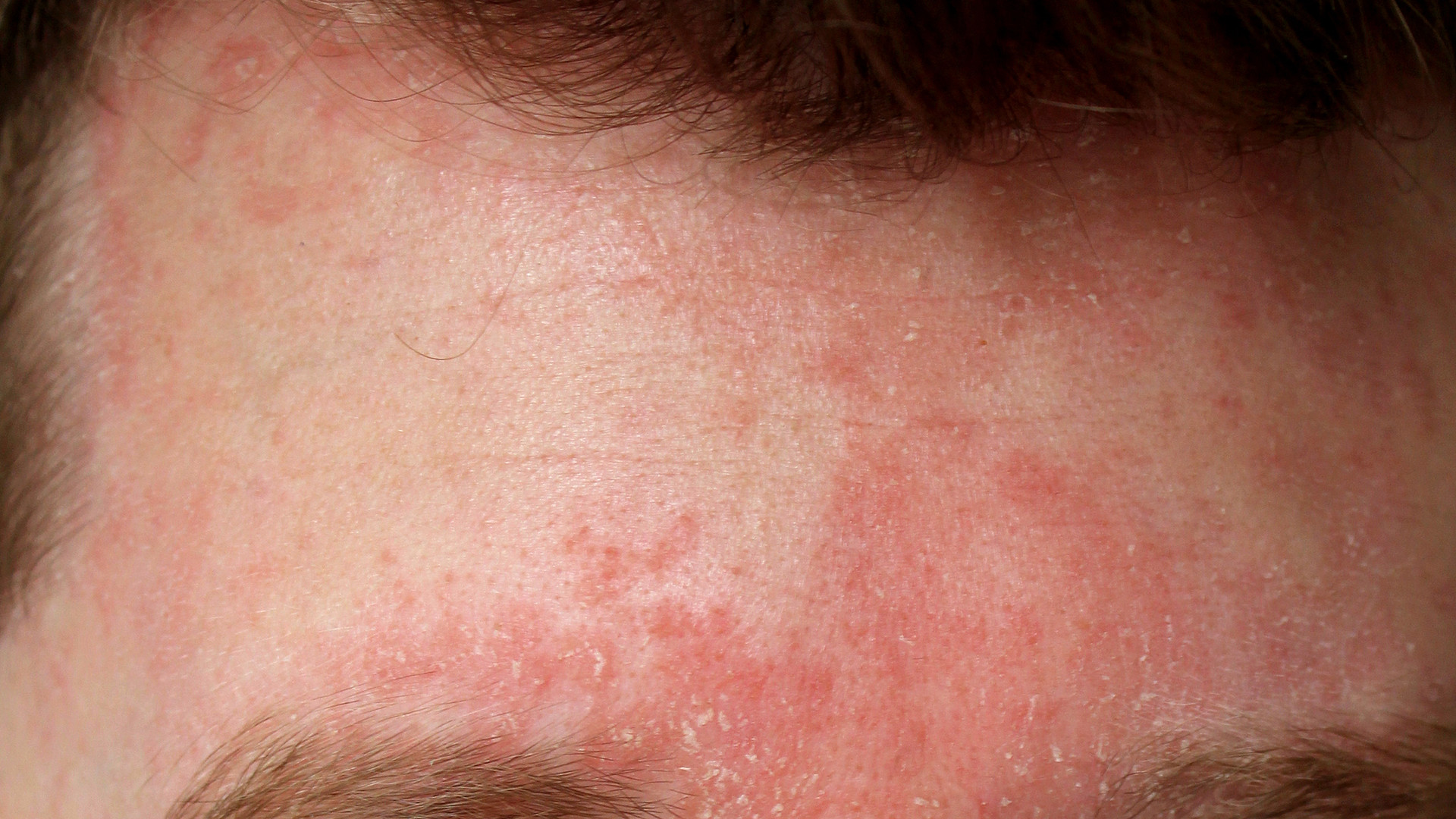
On the scalp the two are hardest to separate, and some people have both. Seborrheic dermatitis is greasy yellow scale with a soft edge, and it favors the sides of the nose, the eyebrows and the middle of the chest. Scalp psoriasis is thicker, drier, silvery-white, sharply bordered, and it crosses past the hairline onto the forehead and behind the ears.
Common questions
Check the edge and the symmetry. Psoriasis makes thick plaques with a sharp border you can feel, usually on both soles. Athlete's foot starts between the toes, itches, and is often worse on one foot.
Sometimes, but soreness is the bigger complaint. Thick psoriatic skin cracks, and those cracks hurt when you walk.
No. Psoriasis is an immune condition with no fungus to kill, so an antifungal has nothing to act on.
Yes. Steroids quiet the immune response that was limiting the infection, so the itch settles briefly and then the rash spreads with a fainter edge.
Psoriasis makes small pits, oily brown patches under the nail, or a nail lifting from its bed. A fungal nail turns thick, crumbly and yellow from the outer edge inwards.
Yes. Cracked psoriatic skin is easier for a fungus to enter. A pattern that suddenly becomes one-sided or itchy in the toe webs is worth a skin scraping.