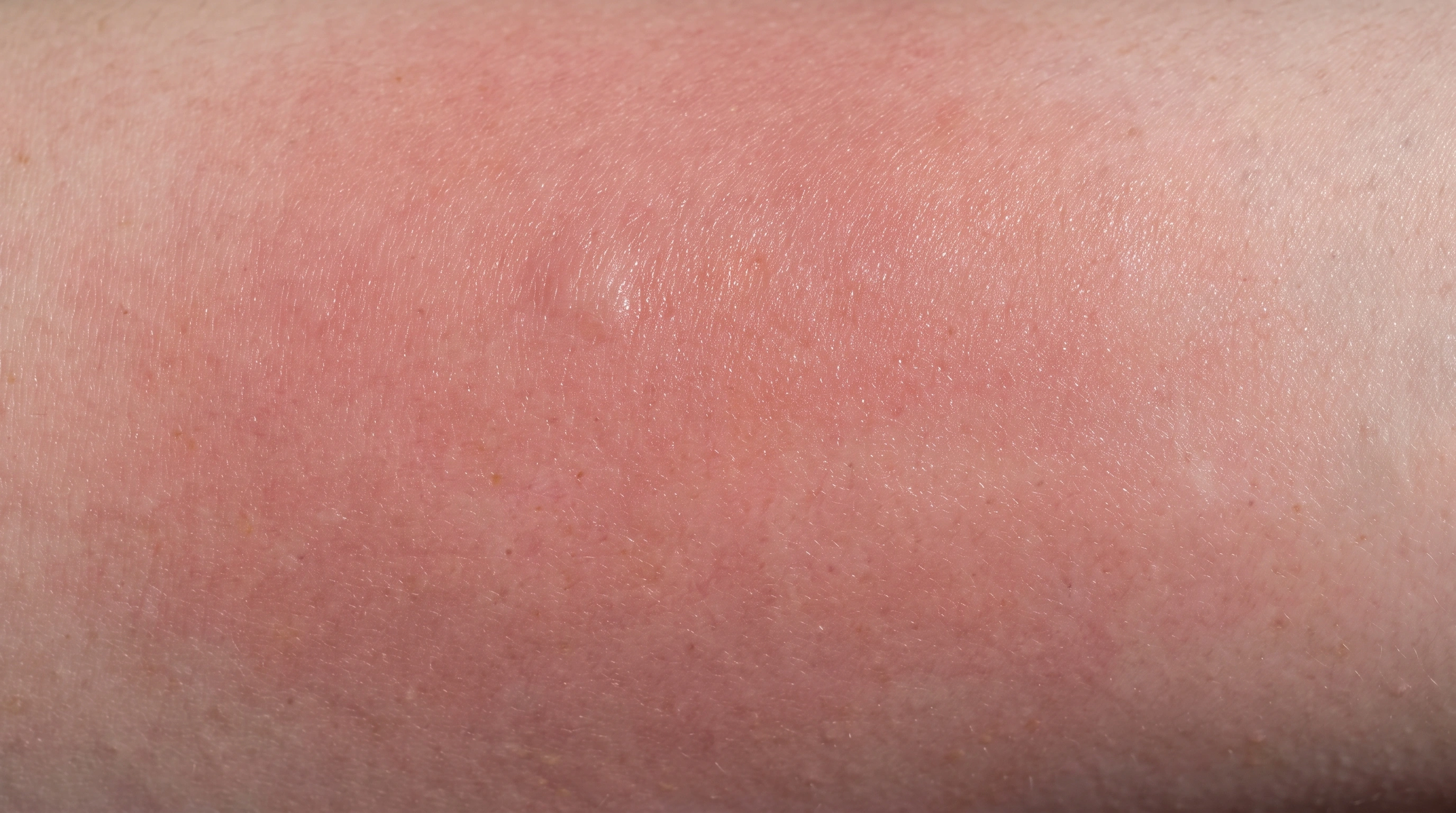
Lipoma vs Swollen Lymph Node

A benign lump formed from fat cells beneath the skin. An enlarged lymph node is a response to infection or other immune activity, not a skin cyst.
Research updated 2026-10-23
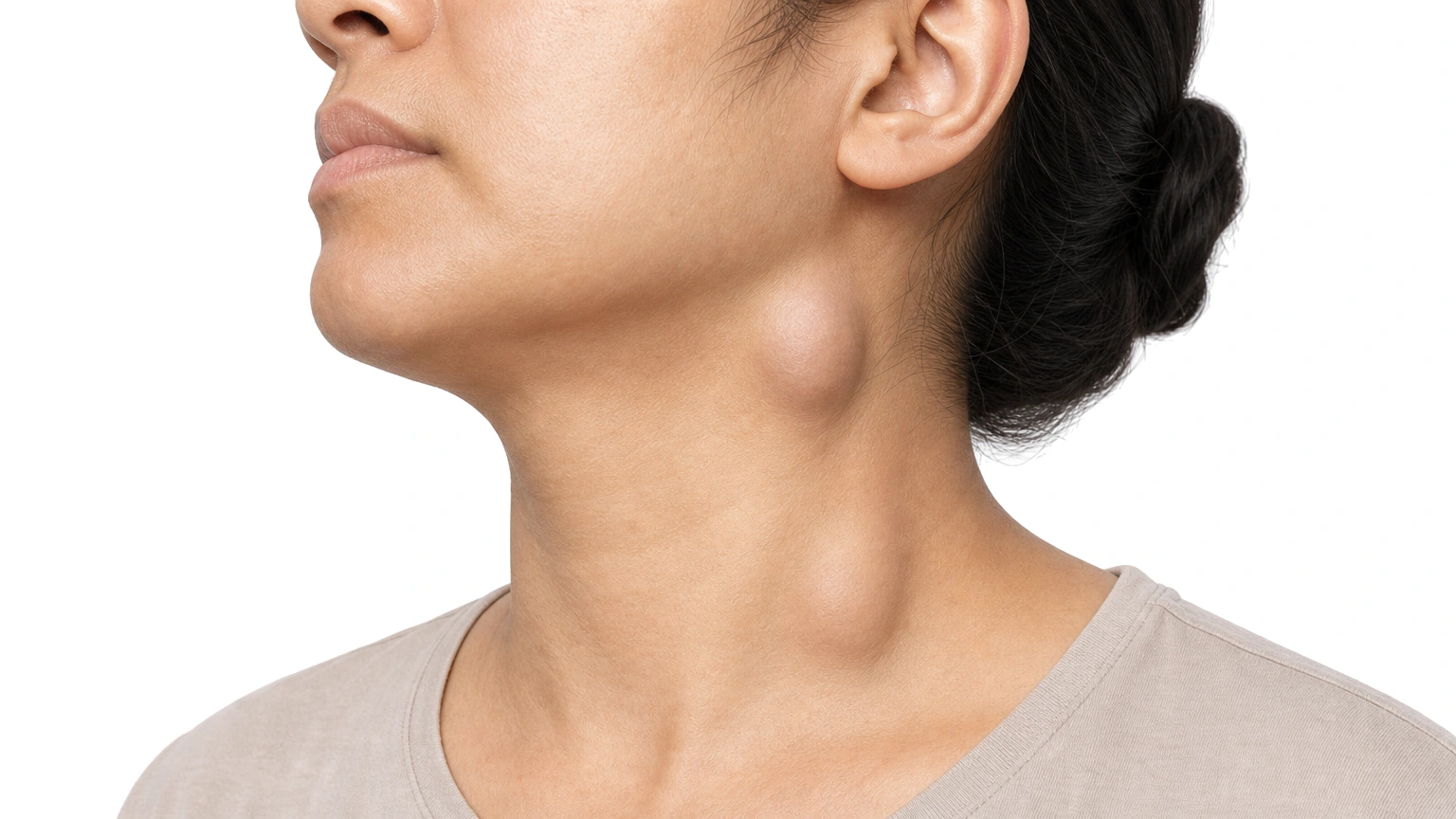
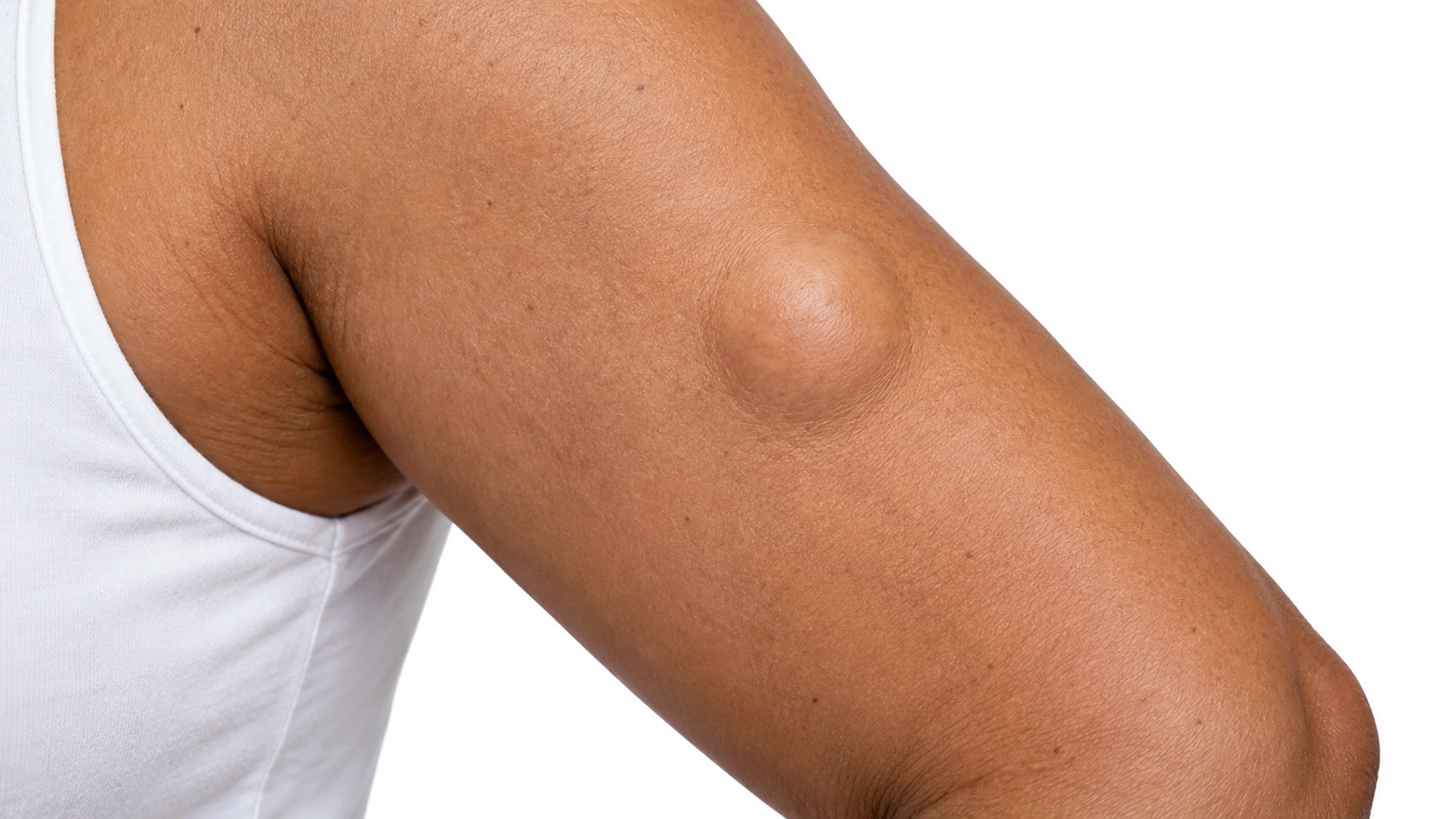
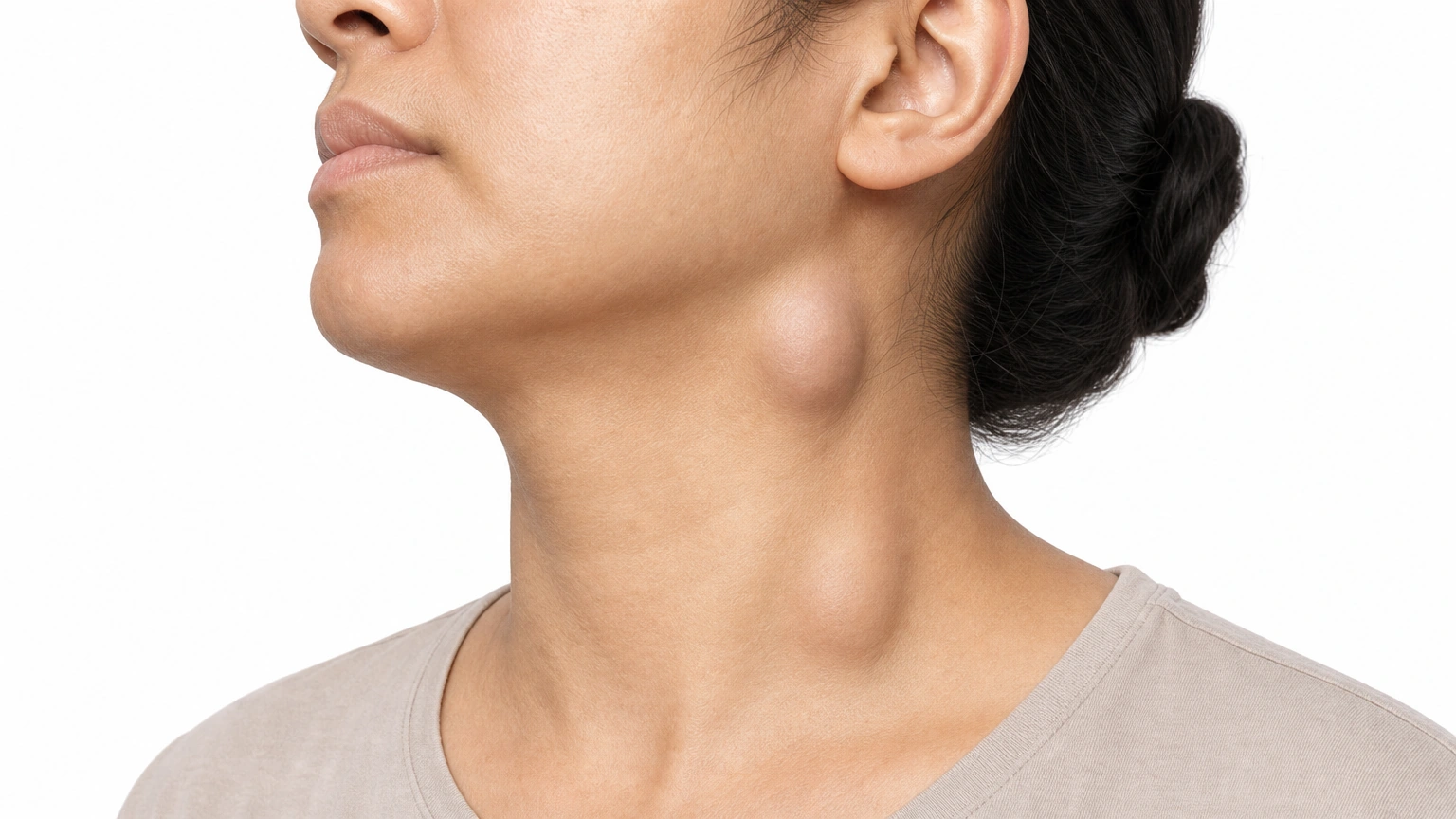
AI-generated educational illustration of Lipoma: 1. Lipoma — Card Image. Not a clinical photograph.AI-generated educational illustration: Discrete oval swellings along the side of the adult neck, representing enlarged cervical lymph nodes.

Key differences

The same eight facts on every condition comparison.

Usual age
Adults
Any age
Where
Trunk, shoulders, arms
Neck, armpits, groin
Main sign
Soft, rubbery, movable lump
Rubbery lump under the skin
Itch or pain
Painless
Often tender
Contagious
No
Depends on the cause
Long term
Harmless; grows slowly
Shrinks in weeks
Scars
Removal leaves a scar
No
Who gets it
Adults 40–60
Anyone with an infection nearby

What is it?

Lipoma
Swollen Lymph Node
What is it?
  • What it is
    A benign lump formed from fat cells beneath the skin.
  • What it is
    An enlarged lymph node is a response to infection or other immune activity, not a skin cyst.

What it looks like

Lipoma

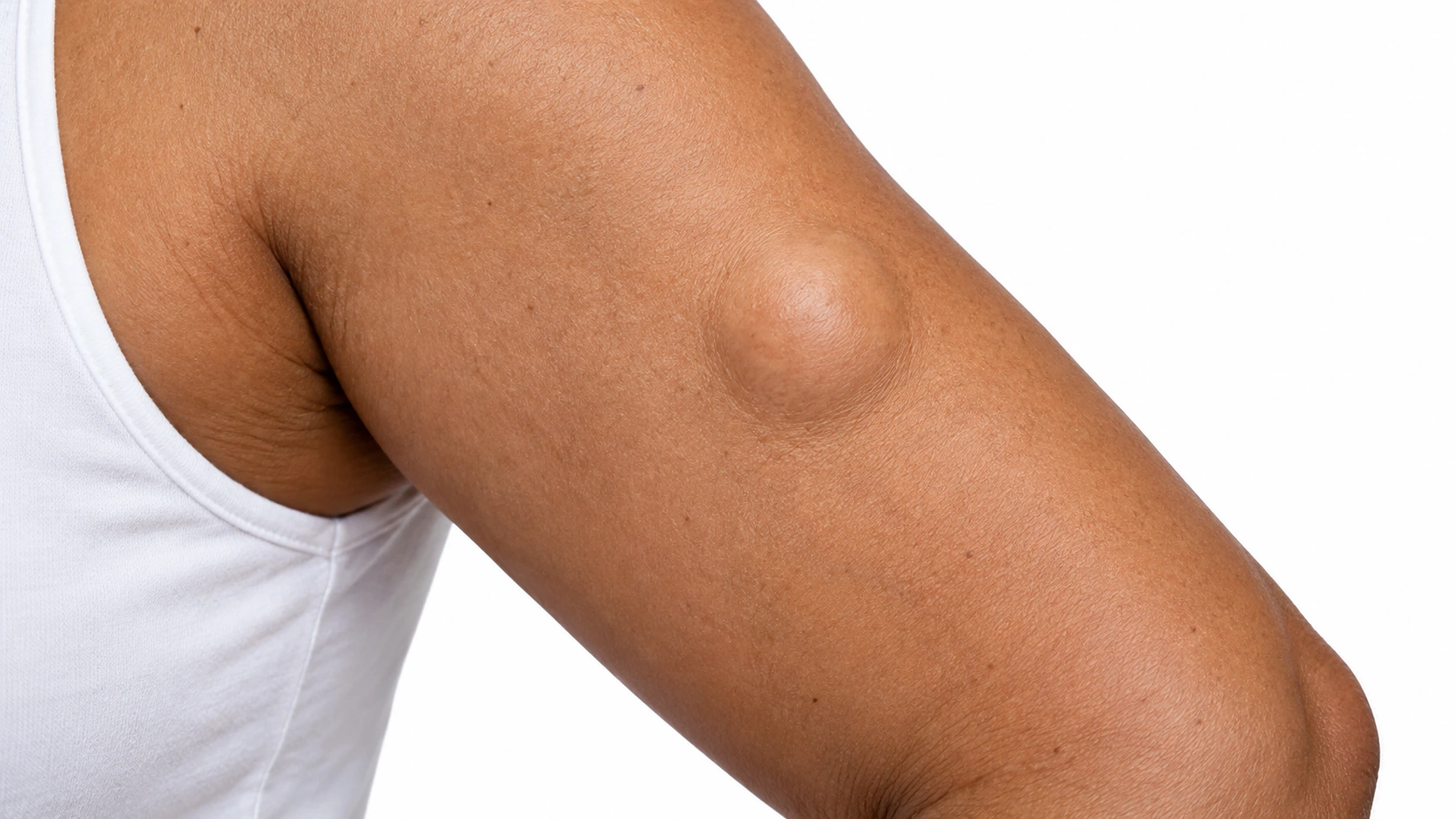
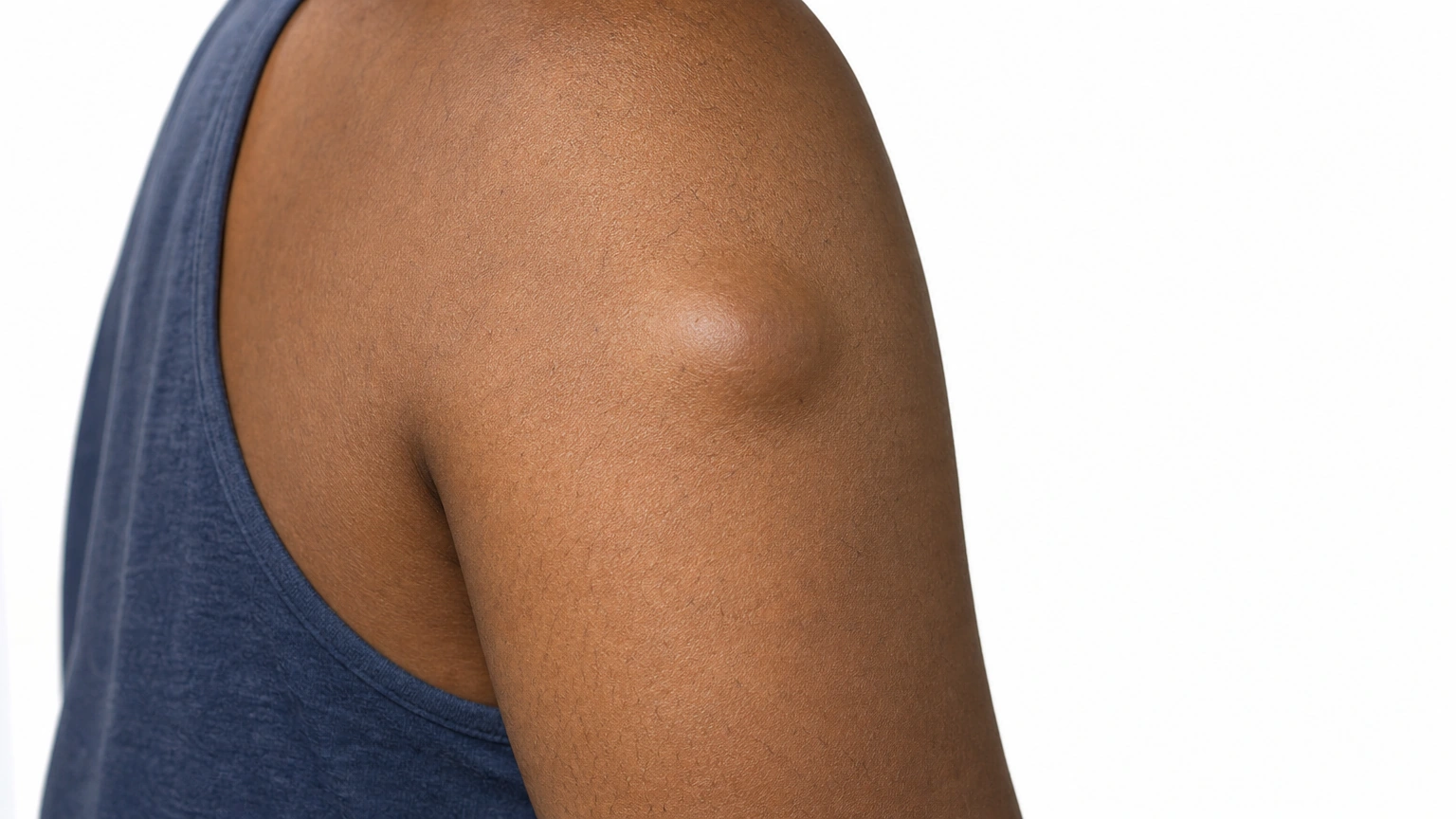
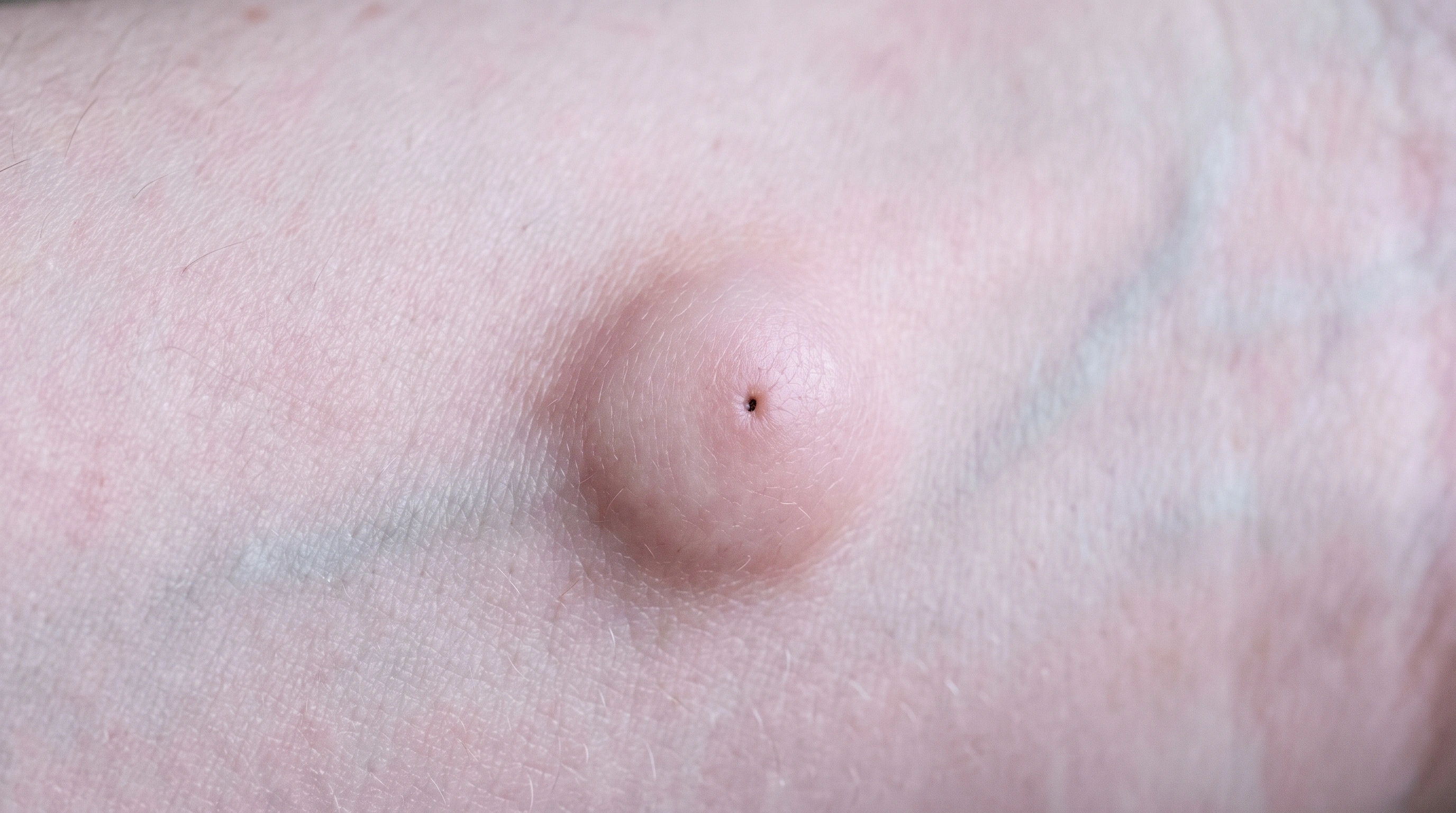
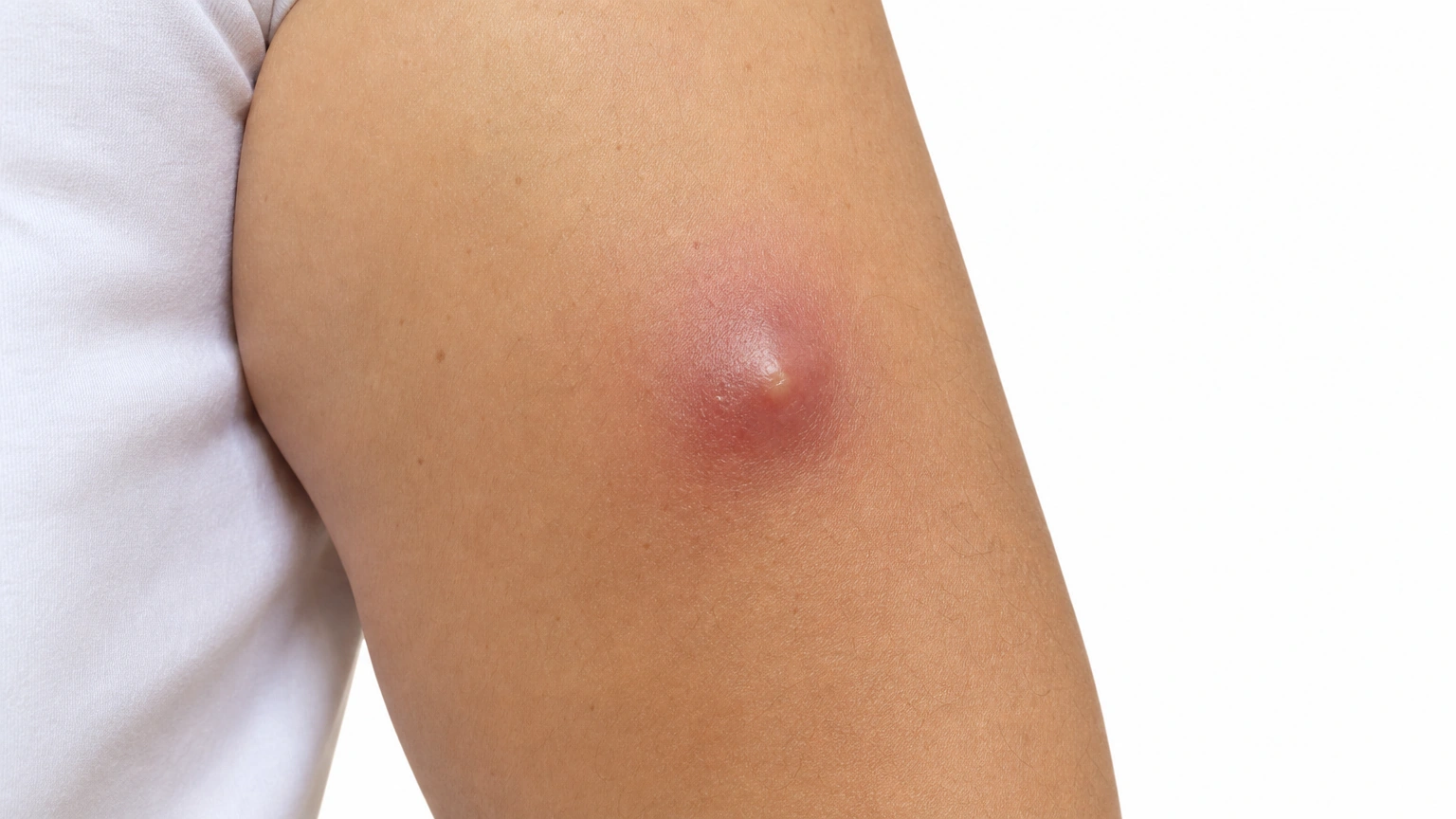
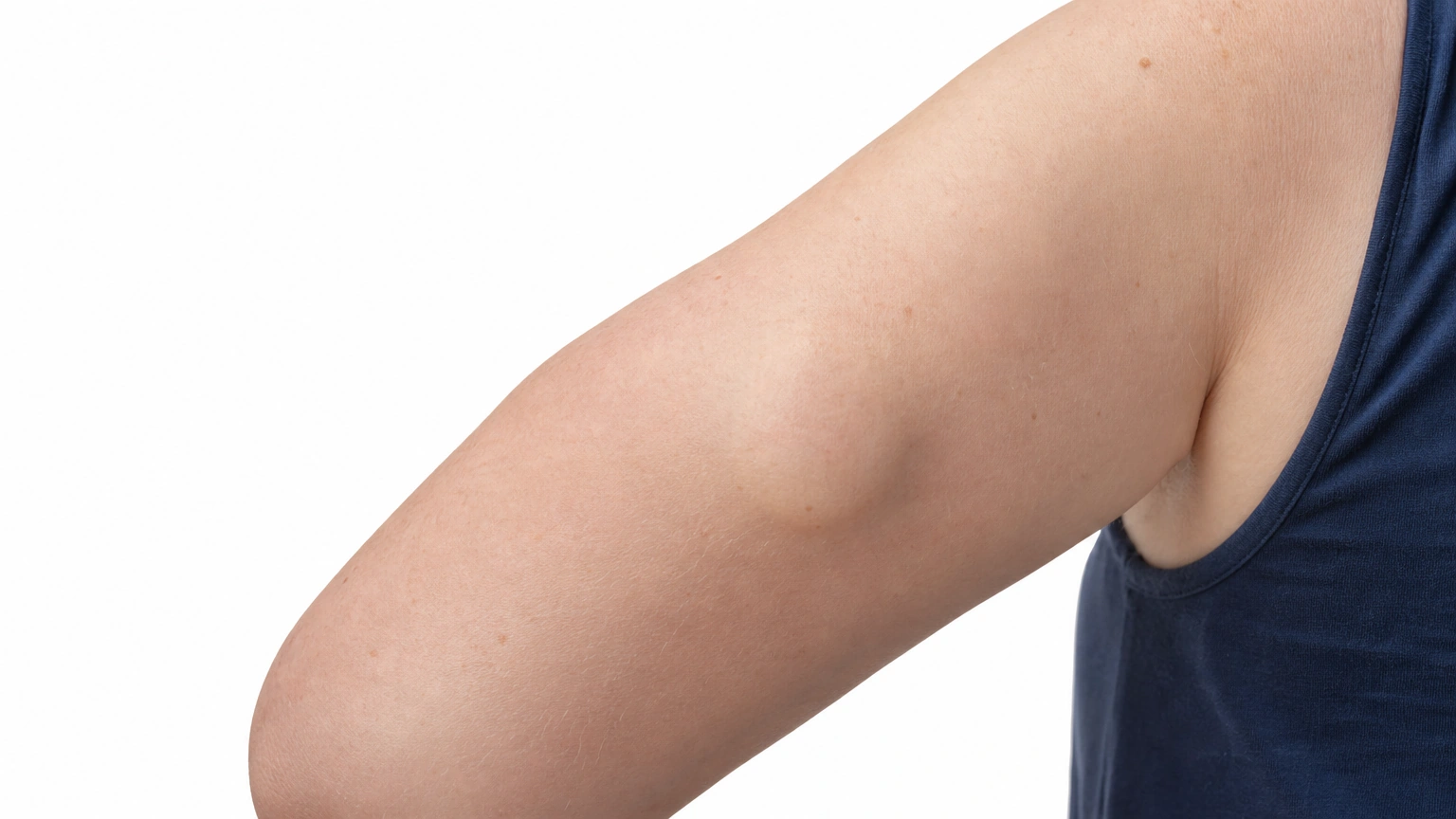
An upper arm with a smooth dome-shaped lump and no visible surface opening.

Lipoma The upper arm has a rounded bulge beneath an intact skin surface.
Swollen Lymph Node

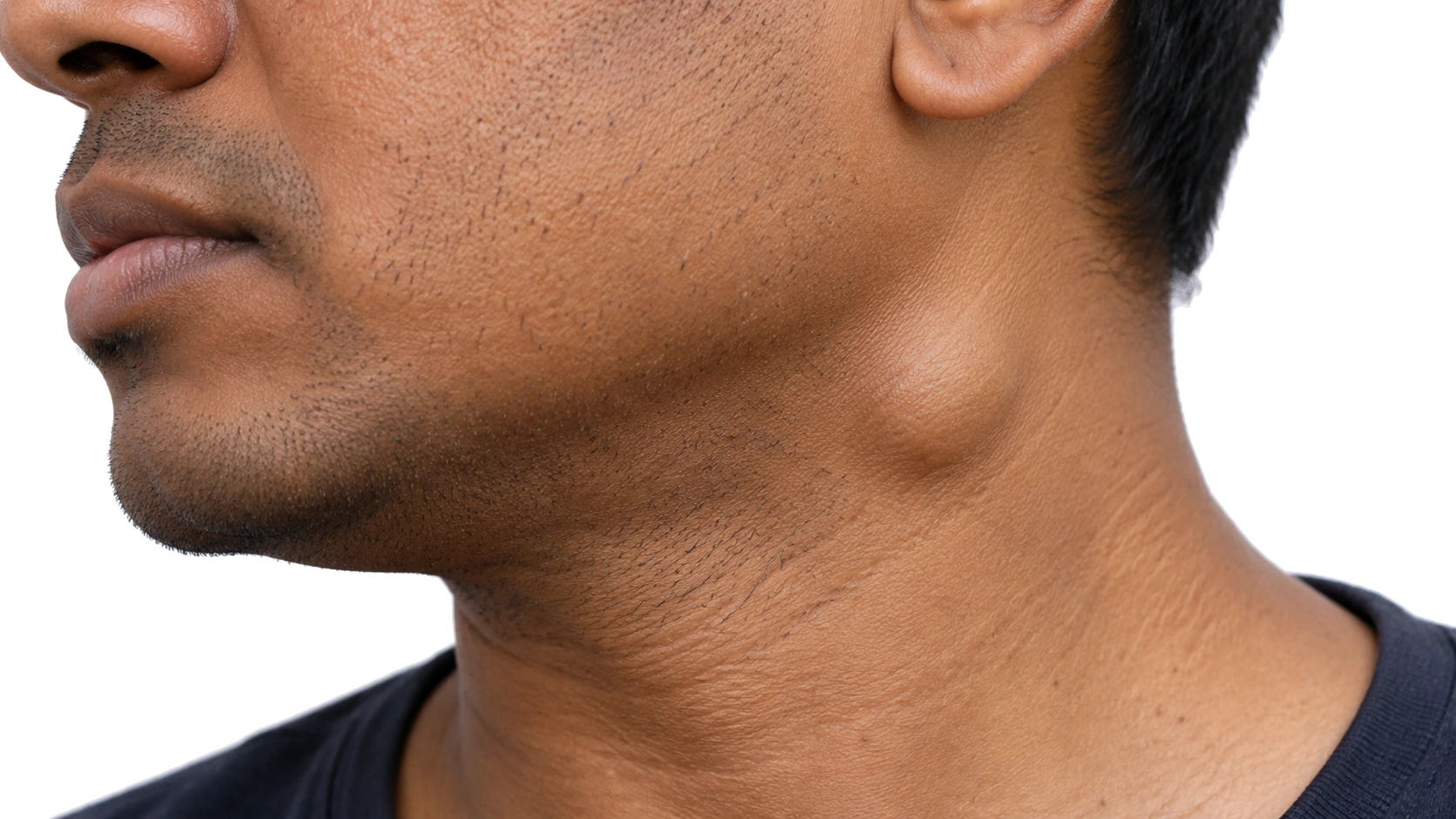
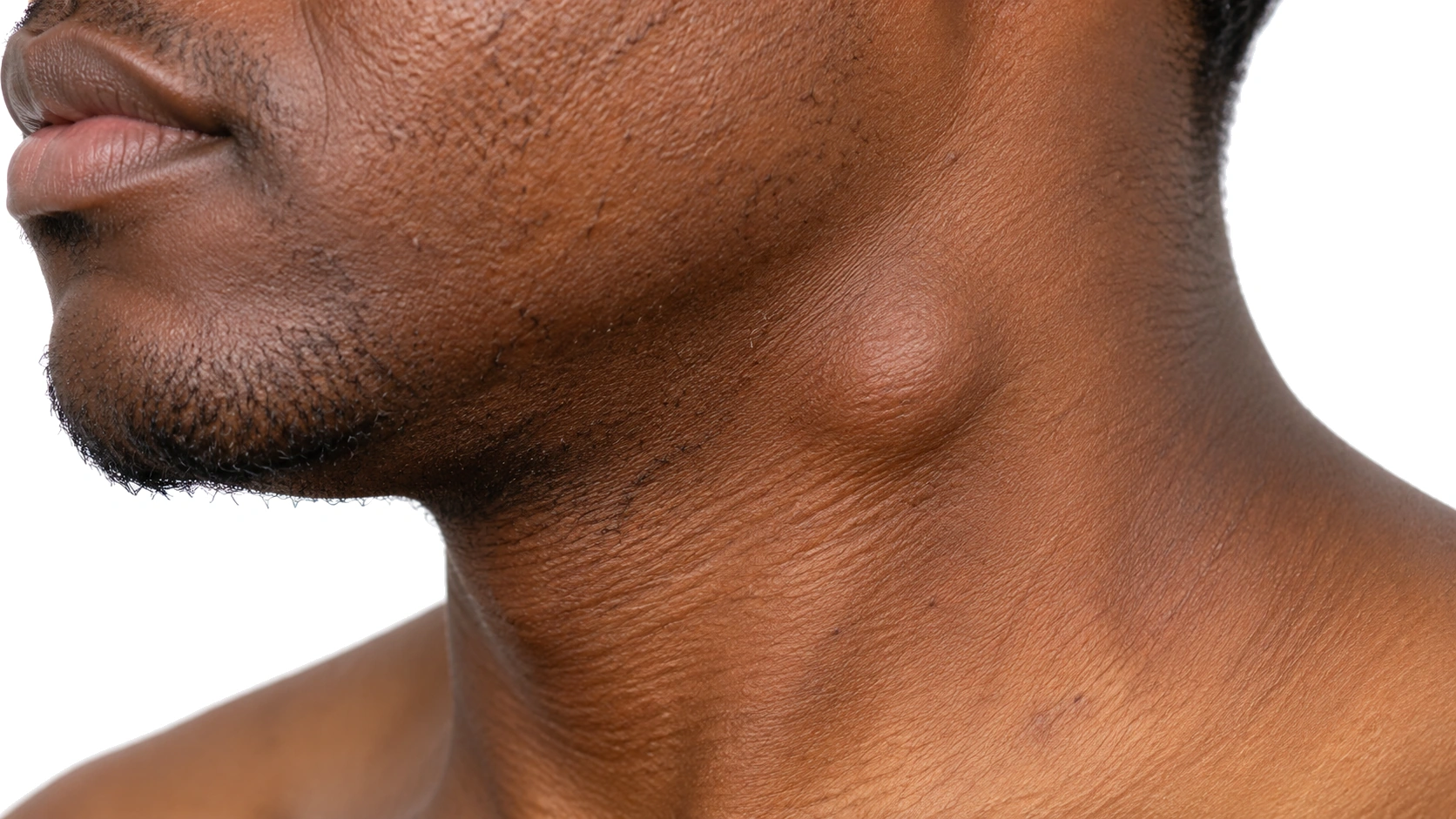
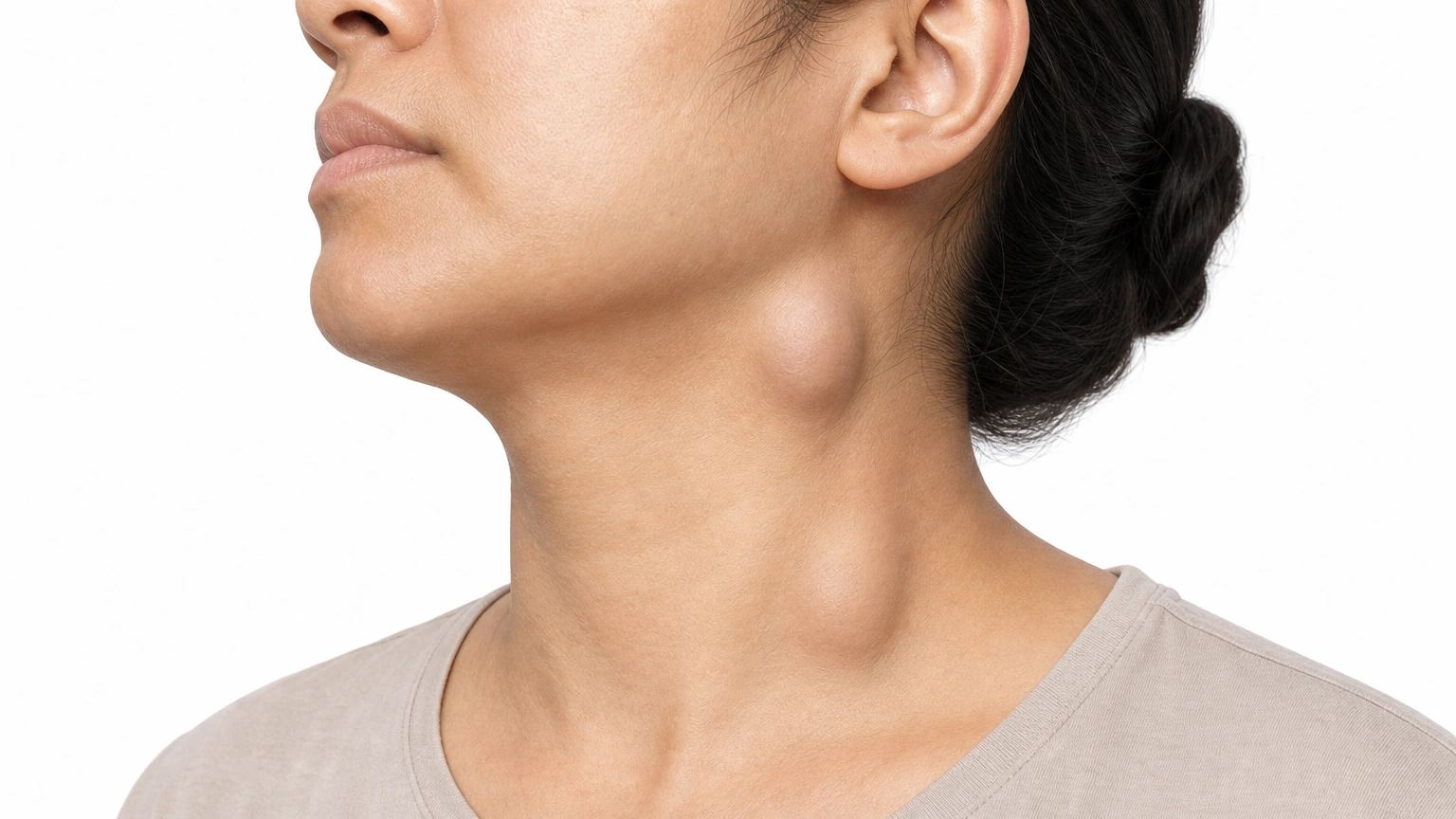
A head in profile with a rounded bulge on the side of the upper neck.

Swollen Lymph Node A rounded swelling changes the contour below the jaw.
Skin tones
Lipoma on light skin.
Lipoma on medium skin.
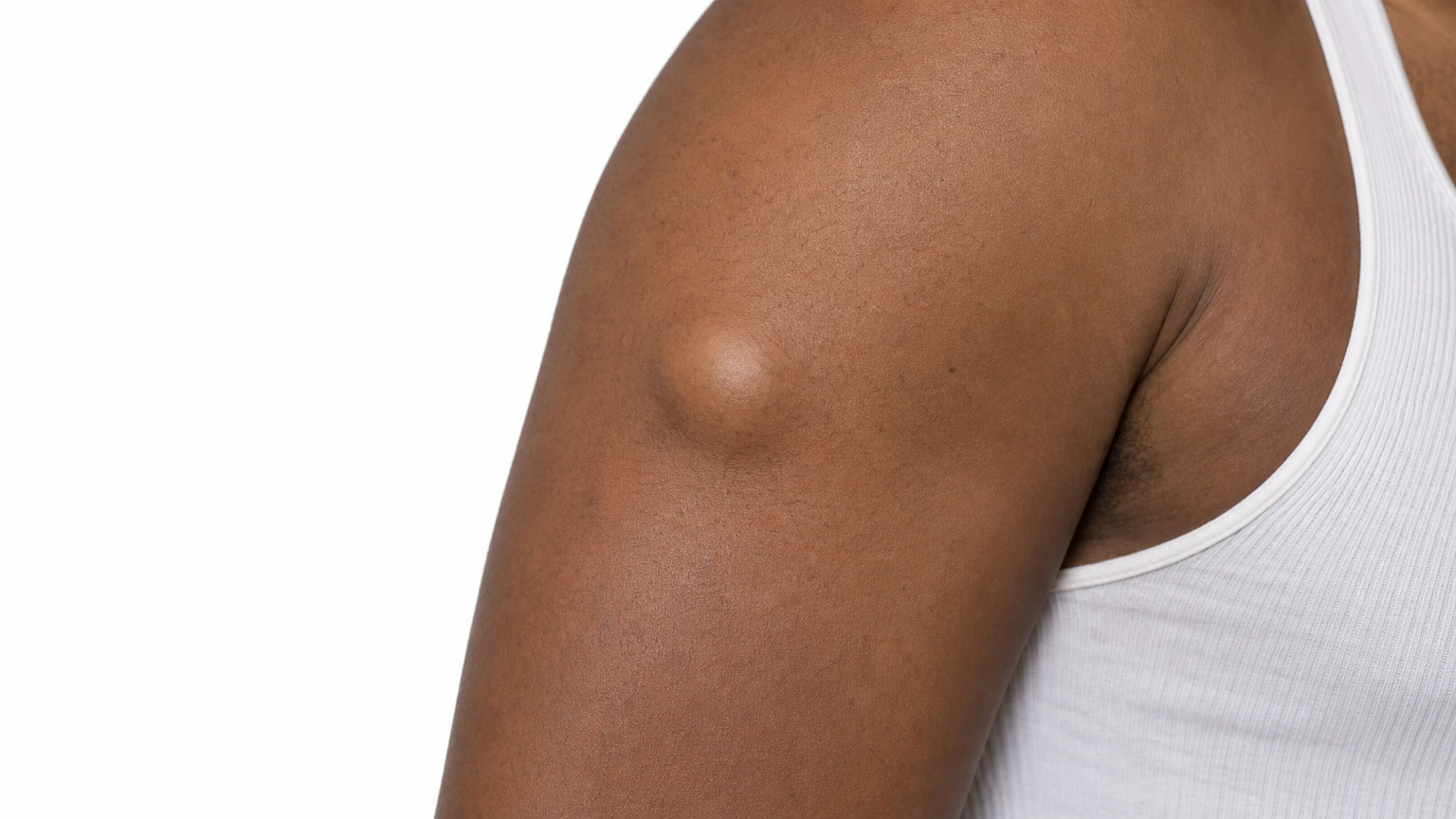
Lipoma on brown skin.
Lipoma on deep skin.
Swollen Lymph Node.
Swollen Lymph Node.
Swollen Lymph Node.
Swollen Lymph Node.
In the skin

Mature fat cells form a localized benign growth beneath the skin. The collection usually creates a soft lump rather than a change confined to the surface.

Immune cells accumulate in a lymph node in response to infection, inflammation or another process. The underlying cause determines whether enlargement is a temporary reaction or needs further investigation.

When it usually starts

010203040506070+

Lipoma. Most commonly recognised in adults.

Swollen Lymph Node. Can occur at any age.

Causes and triggers

Causes

A local collection of mature fat cells forms a benign tumour.

Immune cells accumulate within a node; the cause determines whether further investigation is needed.

Risk factors
Adult age, Family tendency in some people
Nearby infection, Inflammatory disease, Other systemic causes
Trigger
● Lipoma
● Swollen Lymph Node
No established short-term flare trigger
Not a typical trigger
Not listed
Infection
Not listed
Can contribute

Daily Care

Lipoma
Swollen Lymph Node
Daily care

Habits that help

  • Leave a stable, clinician-confirmed benign lesion alone
    It may not need treatment if it is comfortable and not changing.
  • Reduce rubbing from clothing, shaving or hair tools
    Repeated injury can make a harmless lesion sore or cause bleeding.
  • Notice meaningful changes without repeatedly squeezing it
    Arrange examination for rapid growth, persistent bleeding or a change in appearance.
  • Arrange review if a lump becomes painful, firm or fixed
    A presumed lipoma should not be repeatedly massaged or treated with fat-dissolving home remedies.

Avoid

  • Avoid: Cutting, burning, freezing or acid removal at home
    Home removal can cause infection, scarring and delay the correct diagnosis.

Habits that help

  • Rest and drink enough fluids during an acute illness
    Support recovery while the cause of the swelling is being assessed.
  • Note when the lump appeared and any associated symptoms
    Fever, sore throat, skin infection and recent illness are useful details.
  • Check for change without repeatedly pressing the node
    Frequent squeezing can make the area more tender.
  • Keep the recommended review appointment
    Nodes that persist, enlarge or feel hard or fixed need assessment.
  • Seek prompt advice for unexplained swelling with night sweats or weight loss
    Breathing or swallowing difficulty requires urgent help.
  • Discuss cause-specific assessment
    Treatment depends on the reason for enlargement; persistent or concerning nodes may need tests.

Avoid

  • Avoid: Massaging, puncturing or trying to drain the lump
    A swollen lymph node is not a pimple or cyst to empty.

Treatment differences

Evidence labels come from each condition’s own treatment list.

Treatment
● Lipoma
● Swollen Lymph Node
Treatment approach
—

Treatment depends on the reason the node is enlarged. Persistent or concerning nodes may need examination and tests; do not puncture, massage or try to drain them as if they were cysts.

Procedures

Excision

Listed

Pain, growth or diagnostic uncertainty may justify removal or tissue assessment.

None listed

Outlook

Long term

A confirmed lipoma is usually harmless and may remain stable or grow slowly. It can be removed if needed and recurrence after complete excision is uncommon; a rapidly changing or painful lump needs reassessment.

Nodes enlarged by a short-lived infection often shrink as the illness resolves. Persistent, enlarging, hard or fixed nodes, or swelling with weight loss or night sweats, needs assessment.

Complications

Possible complications

A secure diagnosis matters because other lesions can look similar.

Hard, fixed, enlarging or persistent nodes and systemic symptoms require assessment.

When to get help

When to get help

Have a rapidly growing, deep, firm, fixed or painful lump assessed rather than assuming it is a lipoma.

Seek care if enlarging, hard or fixed, above the collarbone, persistent or accompanied by night sweats or weight loss; breathing or swallowing trouble needs urgent care.

Common questions

Lipoma:What is Lipoma?

A benign lump formed from fat cells beneath the skin.

Lipoma:What can I do day to day?

Avoid picking or home removal. Protect exposed skin from the sun.

Lipoma:When should I get medical advice?

Have a rapidly growing, deep, firm, fixed or painful lump assessed rather than assuming it is a lipoma.

Swollen Lymph Node:What is Swollen Lymph Node?

An enlarged lymph node is a response to infection or other immune activity, not a skin cyst.

Swollen Lymph Node:What can I do day to day?

Avoid repeatedly squeezing the lump and monitor associated infection symptoms.

Swollen Lymph Node:When should I get medical advice?

Seek care if enlarging, hard or fixed, above the collarbone, persistent or accompanied by night sweats or weight loss; breathing or swallowing trouble needs urgent care.

Sources
Sources and further reading

  1. Lipoma
  2. Swollen glands
Dermapedia on YouTube