It is injected into a lesion.
An intralesional steroid calms local inflammation or scarring.
Cortisone Injection: A tiny shot of diluted steroid into one inflamed acne cyst. It flattens that spot in a few days. It treats the bump, not the acne.
Scar Revision: The whole set of procedures used to make an existing scar less noticeable — cutting it out and closing it more neatly, flattening it, releasing it, or resurfacing it. No procedure erases a scar. Revision trades the scar you have for one you would rather live with.
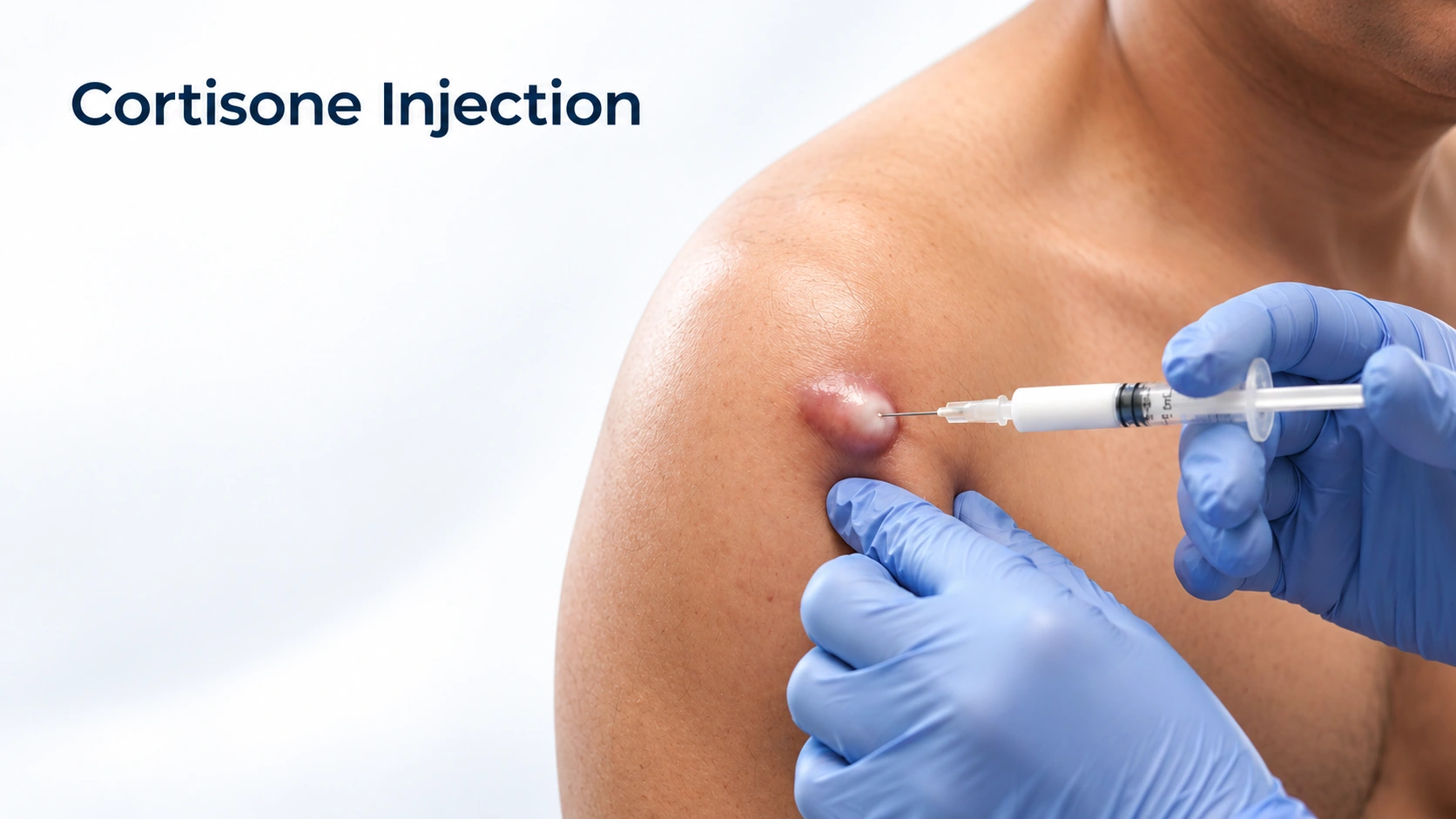
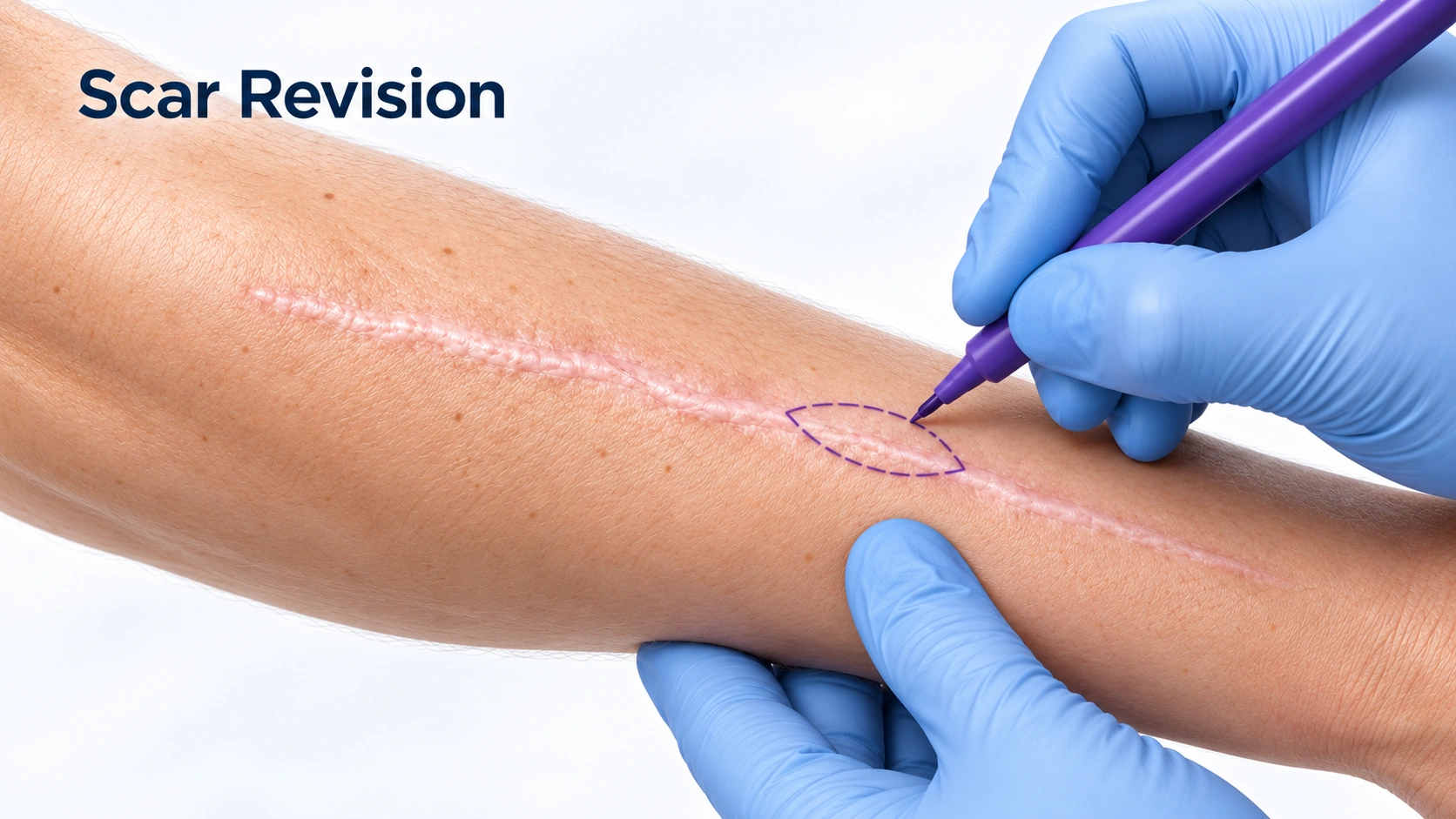
Choose for one painful acne cyst that needs to flatten fast, or for keloids and patchy hair loss.
Choose to trade a scar you dislike for a neater one — no procedure erases a scar.
Can you have both?
Cortisone injections are often used after scar revision to keep raised scars and keloids from coming back.
An intralesional steroid calms local inflammation or scarring.
It is not a systemic steroid treatment.
Infected or uncertain lesions should not be injected.
Skin thinning, fat loss and pigment change may persist.
It aims to improve appearance, comfort or movement.
Surgery, injections and resurfacing may be combined.
It modifies scar tissue rather than restoring unscarred skin.
Excision alone can cause a larger recurrence.

Flattens a painful cyst within days.
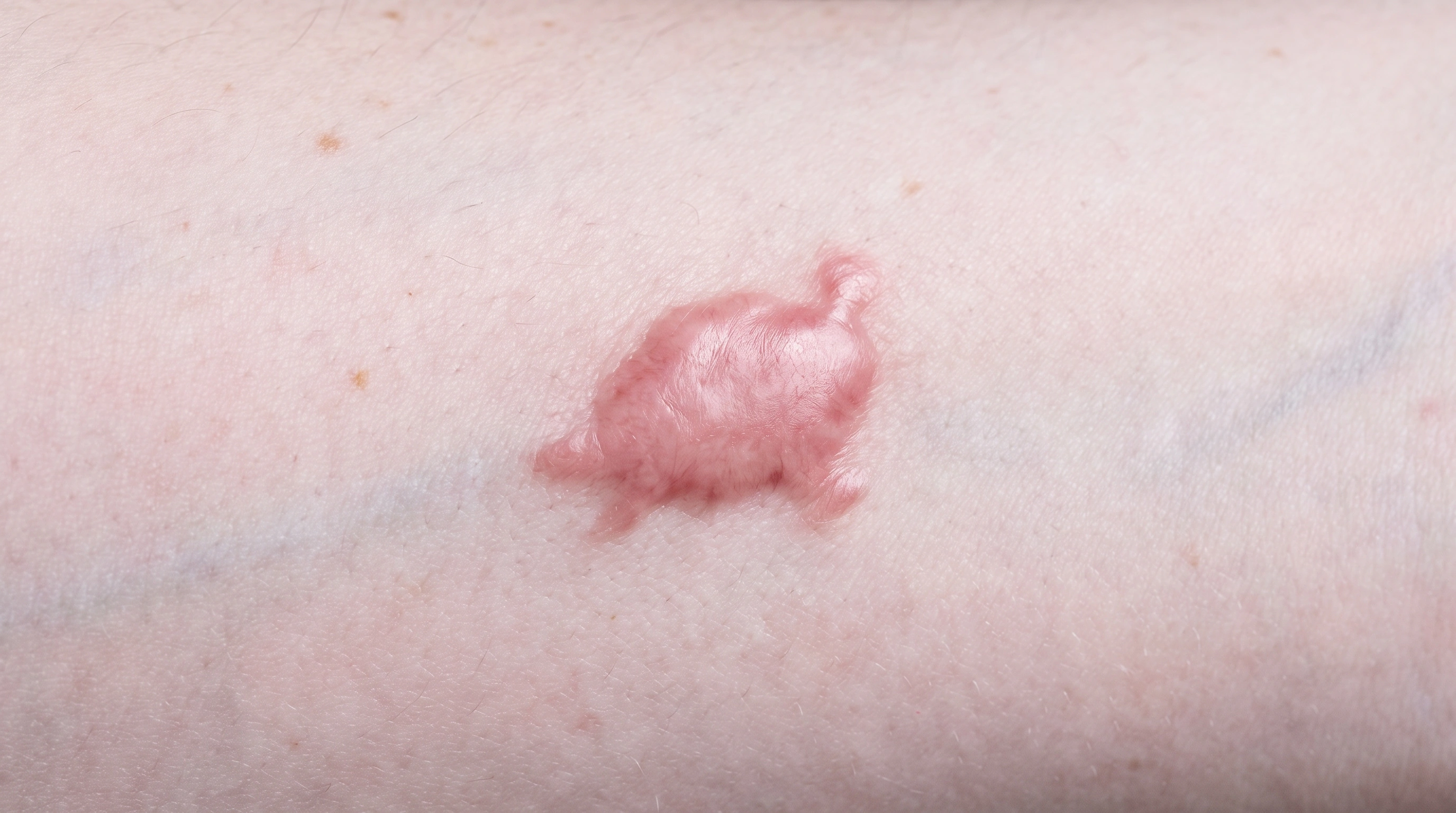
Softens and flattens raised scars.
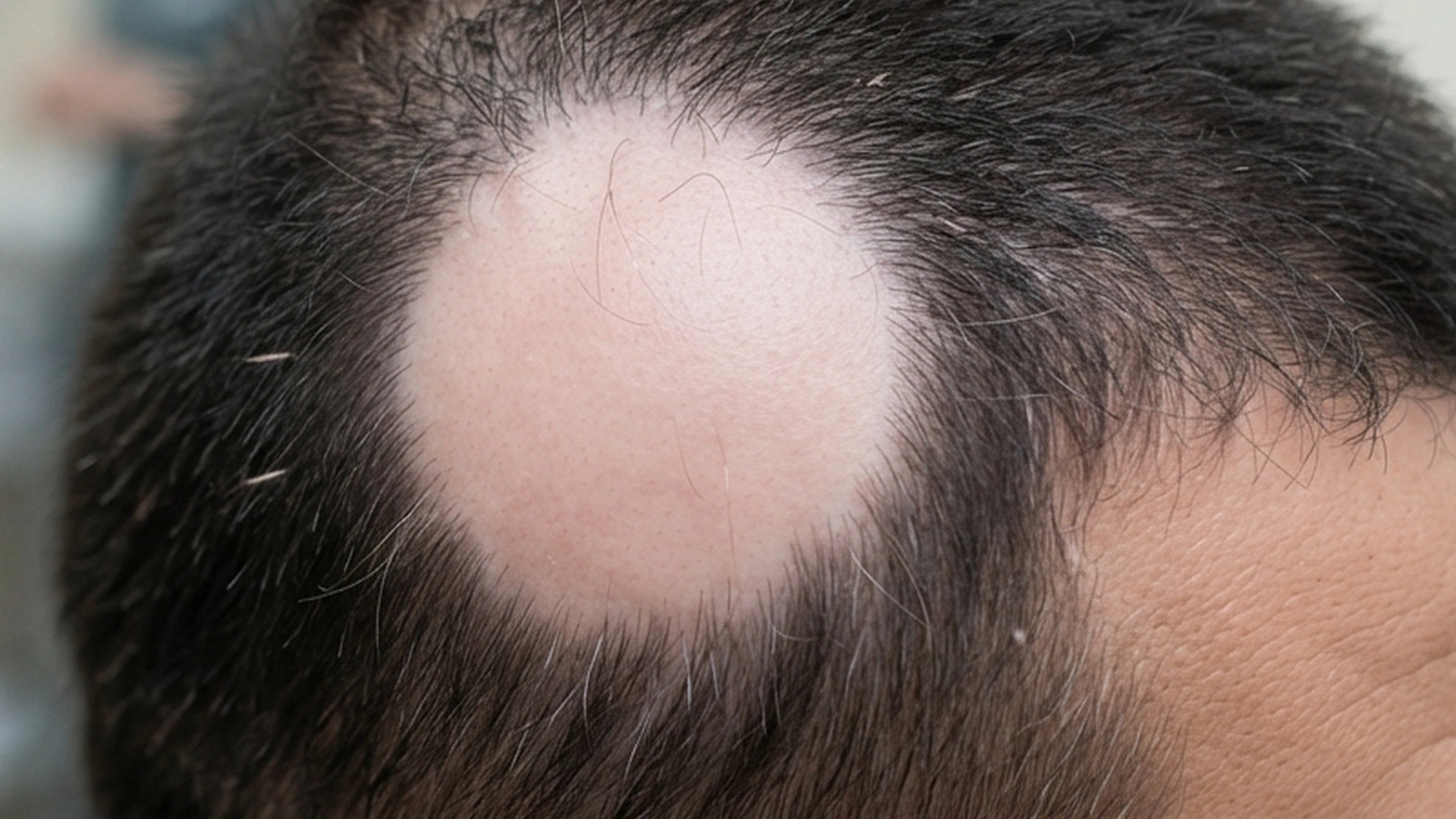
Regrows hair in patches.
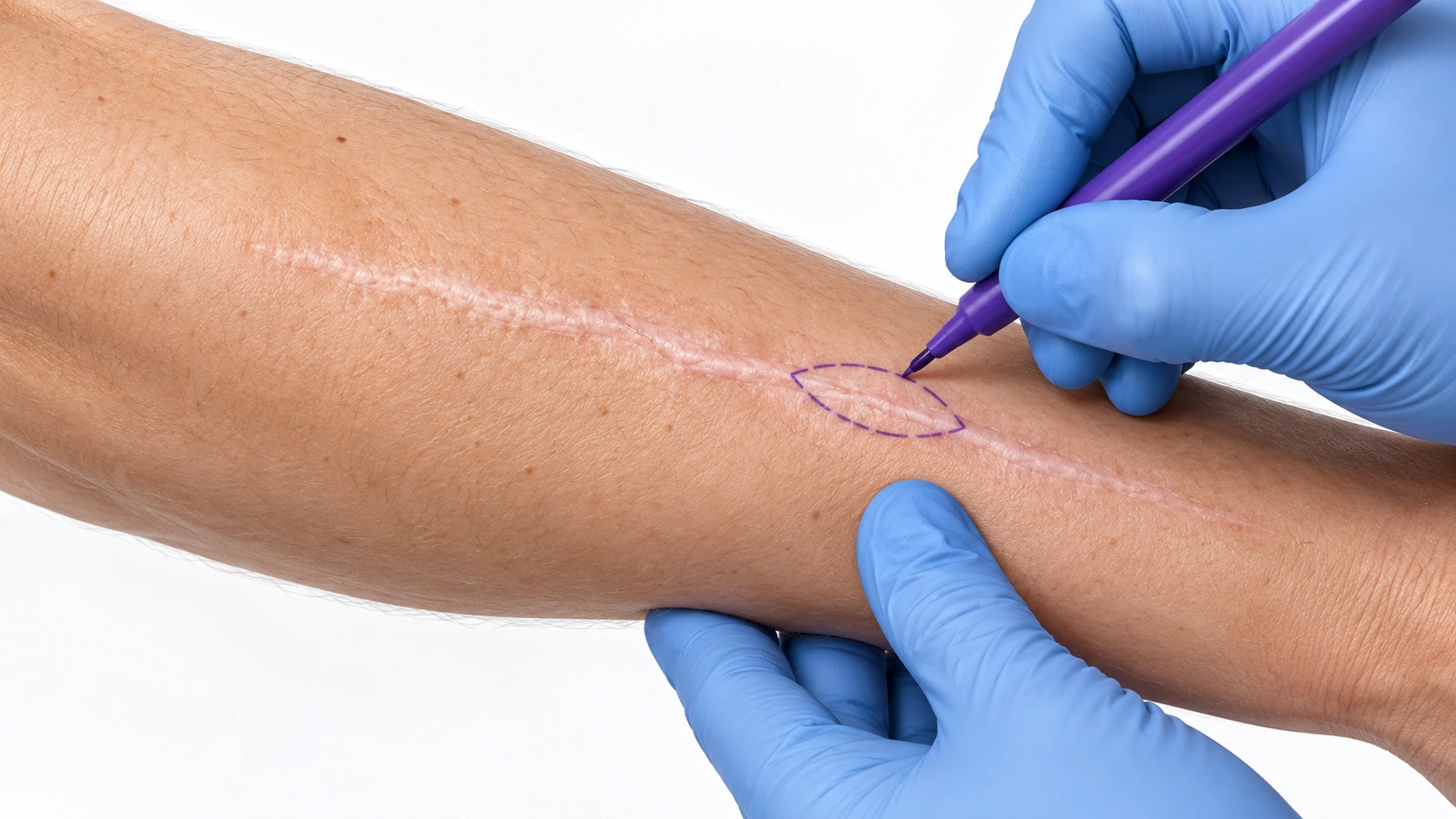
Improves width, texture and color.
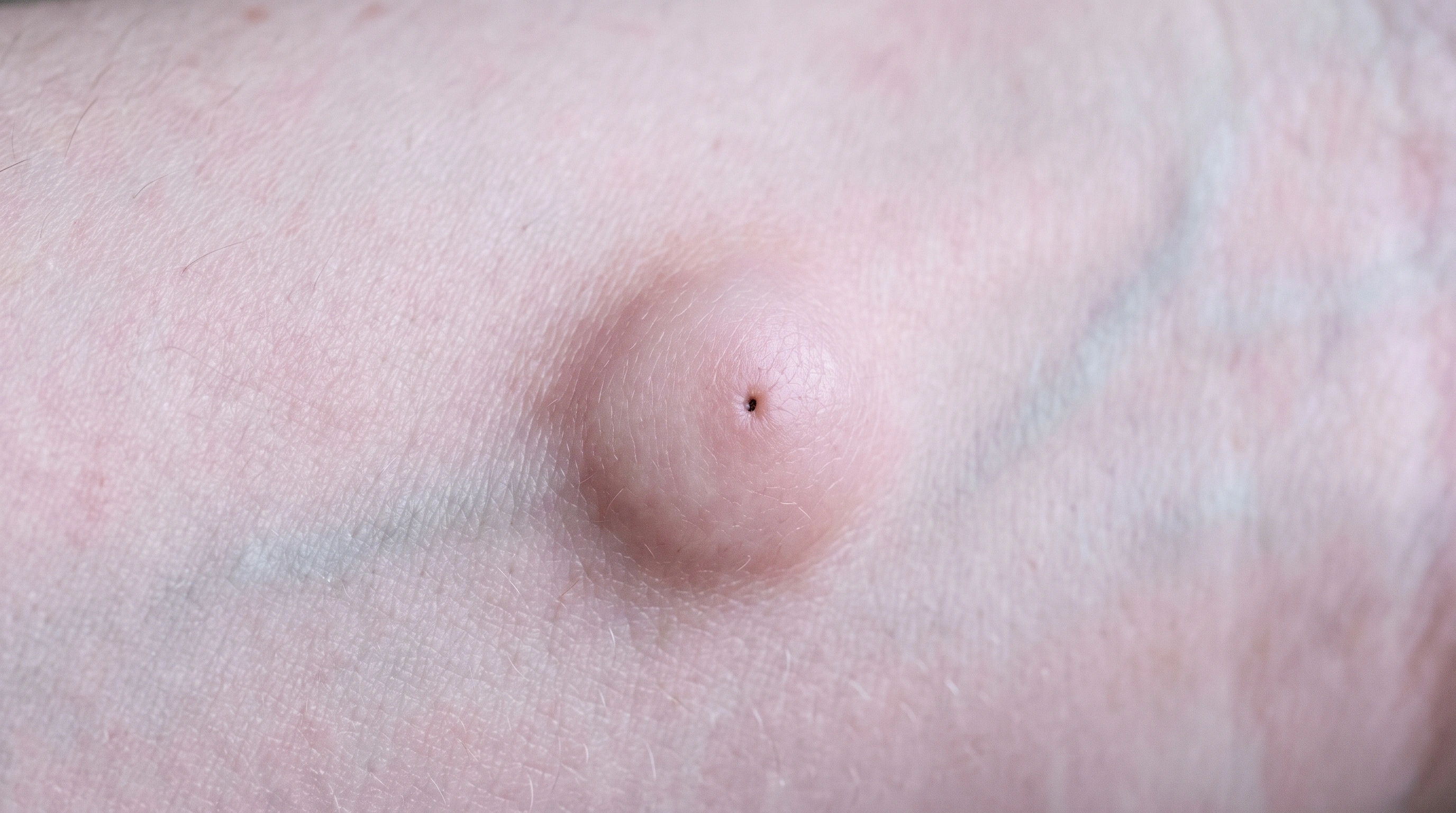
Calms an inflamed cyst.
Combined with injections to prevent return.
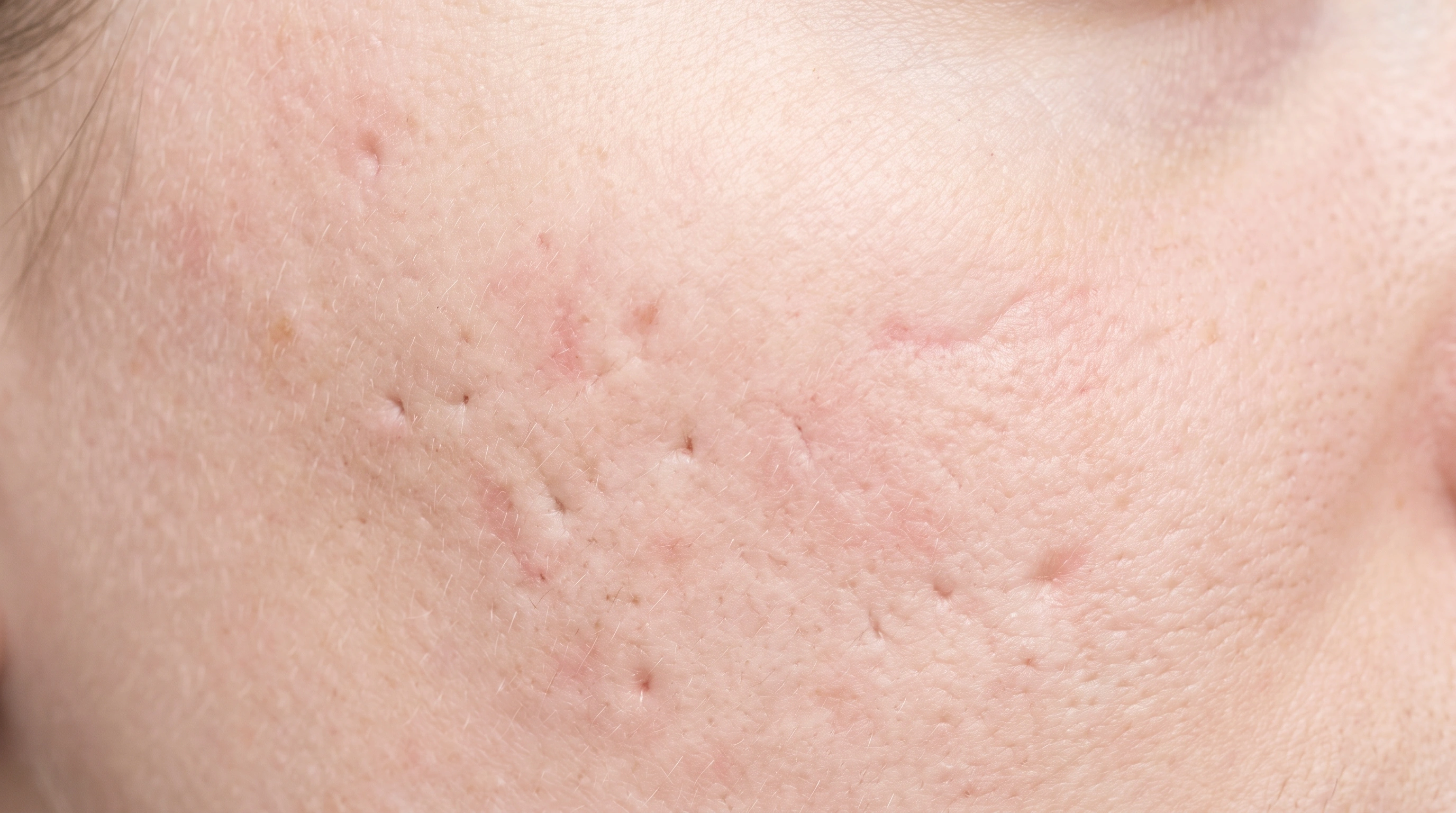
Punch excision for deep scars.
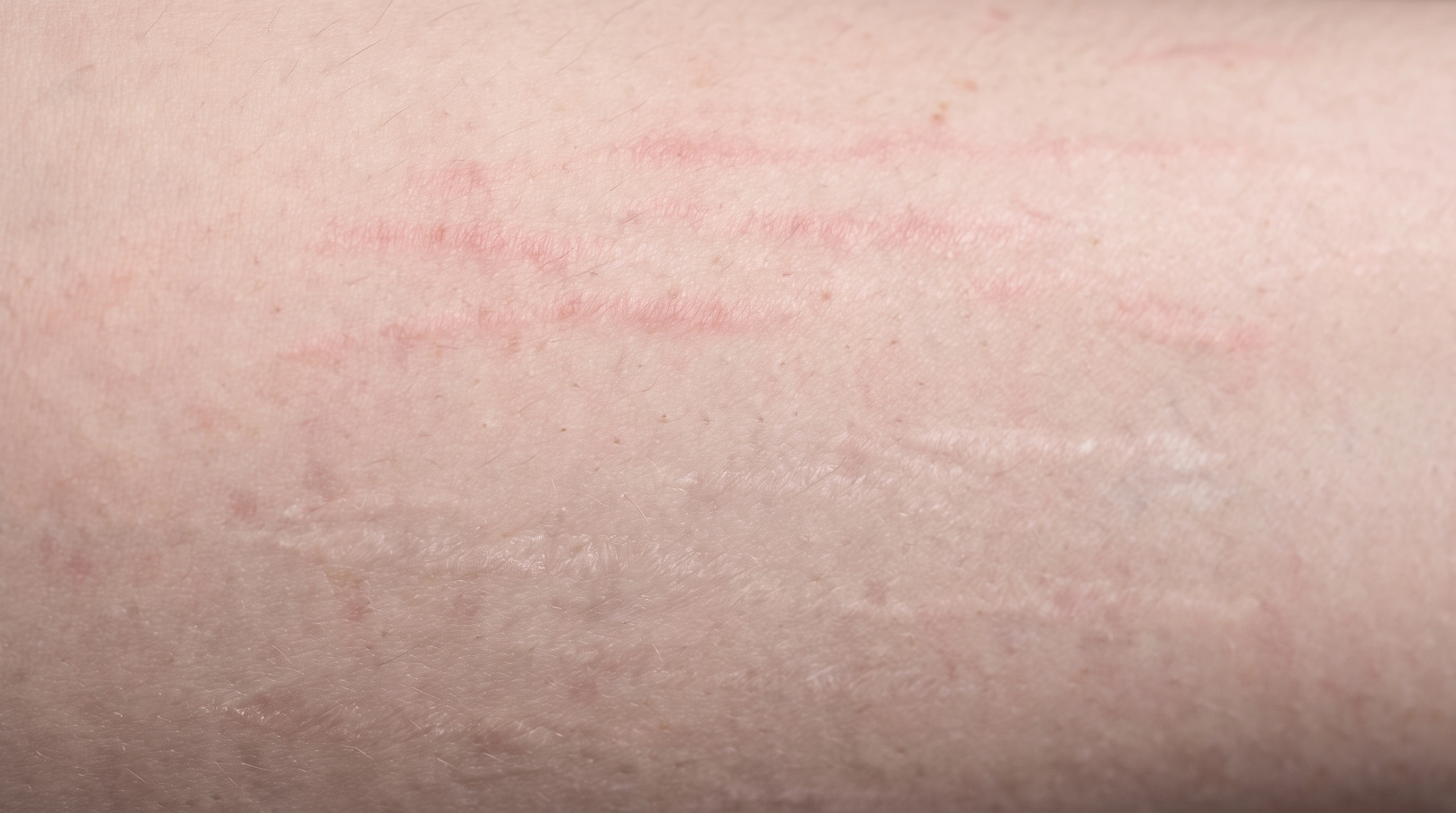
Usually treated with lasers or needling.
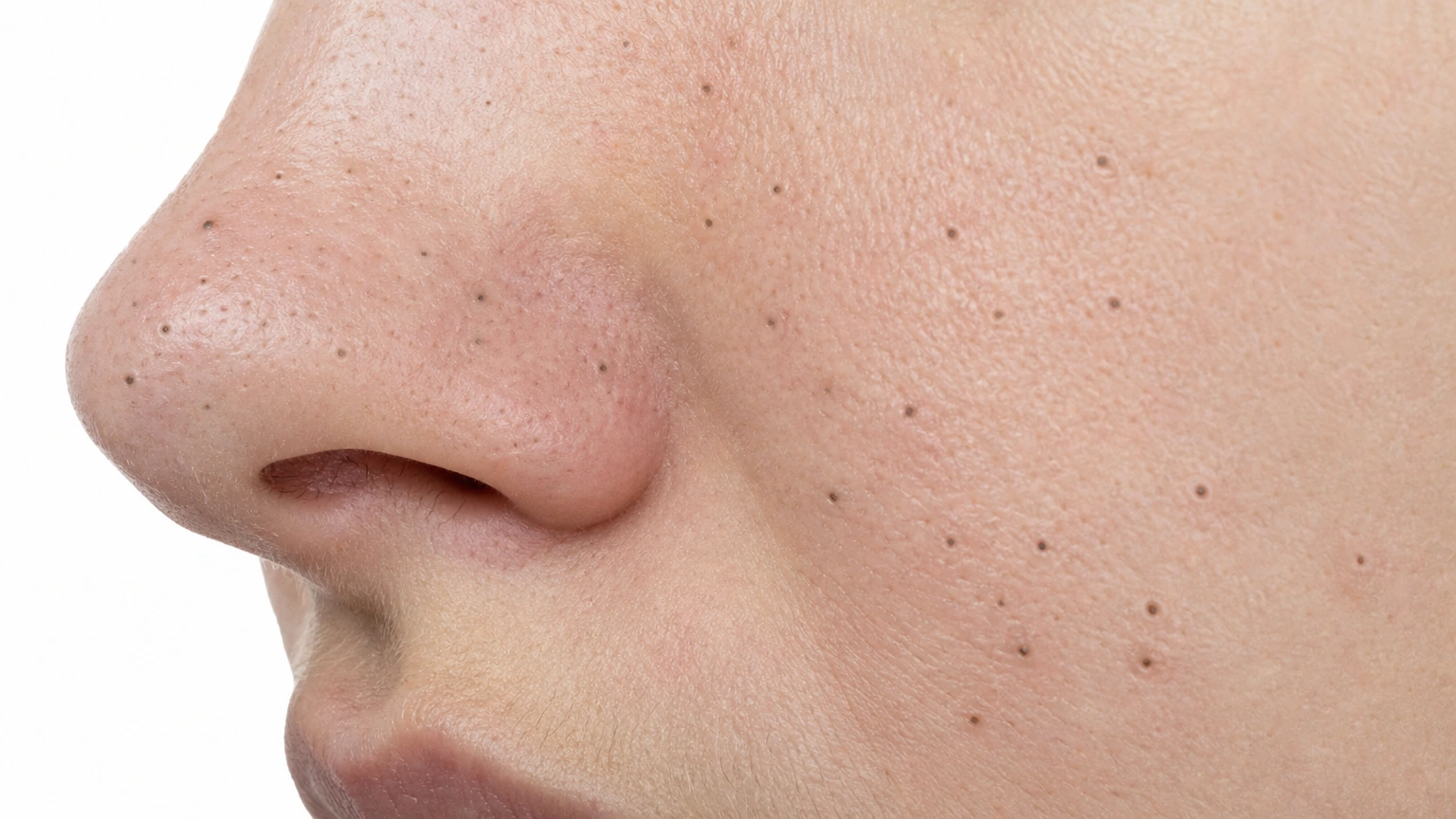
Not for clogged pores.
Can cause dents in skin.
The specific lesion, scar or affected patch determines the treatment site; there is no fixed body distribution.
The specific lesion, scar or affected patch determines the treatment site; there is no fixed body distribution.


Medicine is placed in a lesion: A clinician injects an appropriate corticosteroid preparation. Inflammatory signaling decreases: The steroid reduces local immune and inflammatory activity. The lesion may soften or flatten: Response depends on the condition, dose, and placement.
Schematic illustration. Technique and response vary. This explains a mechanism and does not specify treatment settings.
The scar is assessed: Its shape, location, and tension guide the surgical plan. Tissue is revised or rearranged: A surgeon changes the scar and carefully closes the wound. A new scar matures: Appearance may improve, but scar tissue remains.
Schematic illustration. Technique and response vary. This explains a mechanism and does not specify treatment settings.
6 to 12 months: Waiting: Surgeons want 6 to 12 months of natural settling first.
Sun: Keep the scar out of the sun and use SPF 30 or higher.
2 weeks before: Smoking and vaping: Stop both at least two weeks before and after surgery.
Do not pick: Do not pick, squeeze or heat the spot.
Clean skin: Wash your face and skip makeup on the area.
What to bring: Old photos: Photographs from before the injury, if you have them.
The provider checks that the spot is an inflamed acne cyst and not a boil.
The scar is photographed and examined relaxed and stretched.
The skin is wiped with alcohol.
A very fine needle goes just into the bump and a small amount of fluid goes in, under 10 seconds per spot. The sting is sharp for a few seconds, worse if the cyst is already tender, but most people rate it lower than they expect. Numbing does not help much — the needle stick is the whole procedure.
A steroid injection takes minutes and meets real resistance.
Surgical revision cuts the scar out as a narrow ellipse and closes it in layers, usually 30 to 90 minutes. A Z-plasty swaps small flaps to change direction. Punch excision removes a small round scar. Laser or microneedling takes 20 to 45 minutes. Expect pressure, not sharpness.
A tiny red dot, sometimes a small raised bleb that flattens within an hour.
Tape over the line, wound care instructions, and a date for stitch removal — 5 to 7 days on the face, 10 to 14 days on the body.
Days 1 to 2: The bump softens and the ache fades.
First 2 weeks: Swollen, bruised and tender.
First few days: A pinprick mark, sometimes a small bruise, fading over a few days.
Days 3 to 7: Most cysts are flat.
Weeks 2 to 8: The new line turns pink, firm and slightly raised — normal healing, not failure.
Months 3 to 18: Redness fades and the ridge softens from month 3 to 6, with massage and silicone doing the work.
24–48 hours for a cyst
Over 6–12 months
Treats only that spot
Permanent
Roughly $50 to $250 per office visit in the US, usually billed as an office visit plus a procedure charge rather than per spot.
In the US this varies more than almost any other dermatology procedure, because "scar revision" covers a five-minute injection and a ninety-minute operation.
Insurance often covers it, since acne cysts count as medical rather than cosmetic.
Insurance often pays when a scar limits movement or vision, interferes with function, or follows cancer surgery or an injury.
Softening begins within 24 to 48 hours and most spots are flat by day three to five. That figure traces back to one small 1983 trial — it matches what dermatologists see but has never been tested at scale. The mark left behind takes weeks longer, and the injection does not speed that up.
It can. A shallow depression happens when the dose is too strong, so a lower concentration is the main protection. It is uncommon — most dermatologists see it in well under one patient in a hundred — and it often fills in over several months. But it is not reliably temporary. About half the clinicians who do see it report it lasting more than six months, and occasionally it is permanent. That is why you ask what concentration is being used.
Yes, the most common reason people ask. Aim for three to five days ahead so the swelling has time to drop. A same-day injection rarely looks better by that evening.
No. It treats only the spot it is injected into. Preventing the next cyst needs a daily treatment plan, and the guidelines call this an add-on.
Yes. The risk is a lighter patch at the site, more noticeable and slower to fade on deeper skin tones. A lower concentration reduces it, so ask.
Not in the United States, strictly speaking. The FDA labeling lists intralesional use for keloids, alopecia areata, discoid lupus and others. Acne is not on it. Off-label use for an acne cyst is routine, legal and recommended by the American Academy of Dermatology, but almost nobody says it out loud. In the UK, NICE withdrew its recommendation in 2026 after UK-licensed triamcinolone injections stopped being available — a supply and licensing decision, not a safety one.
No. Every treatment replaces the scar with a different one — flatter, narrower, paler, or running in a less obvious direction. Often a large improvement, not removal.
Usually 6 to 12 months, because most scars keep improving on their own in that time. Scars that limit movement and raised scars still growing are treated sooner.
A hypertrophic scar is raised but stays within the original wound borders and often flattens over a year or two. A keloid grows beyond them, keeps going, and does not settle by itself. Keloids come back after surgery much more often, so they are usually injected rather than cut.
Some of them. Rolling scars respond to subcision, needling and laser; deep icepick scars often need punch excision or a targeted acid technique; boxcar scars sit in between. Expect a course and partial improvement, not one operation.
Sometimes — when the scar restricts movement or vision, causes symptoms, or follows cancer surgery or trauma. Revision for appearance is cosmetic. Ask the office to check with your insurer before you book.
Yes, but the order changes. Injections, silicone and pressure come first, elective surgery on high-risk sites is approached carefully, and if a keloid is removed, something is always done alongside to control the healing. Tell the provider at the first visit.