It is injected into a lesion.
An intralesional steroid calms local inflammation or scarring.
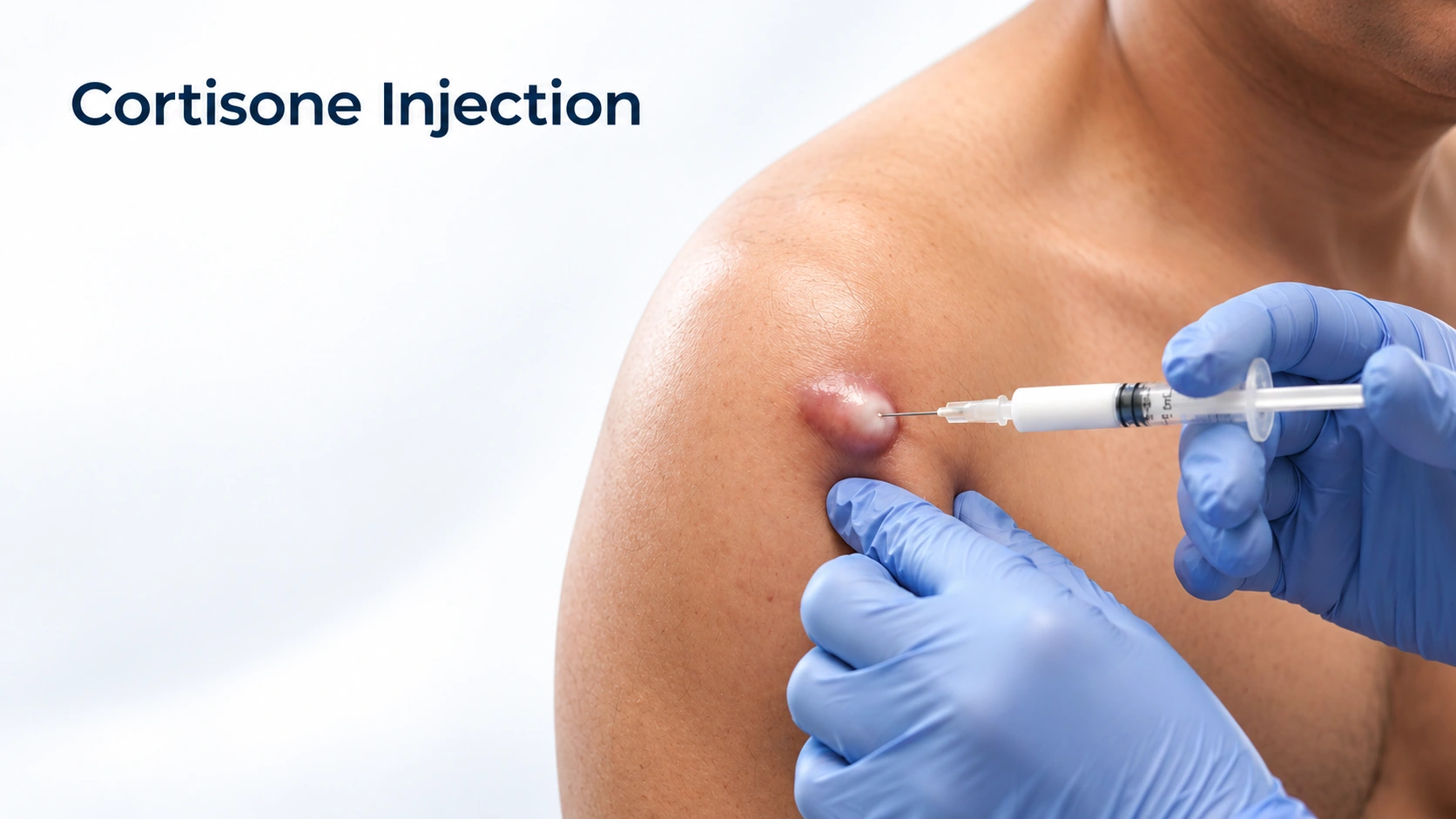
Cortisone Injection: A tiny shot of diluted steroid into one inflamed acne cyst. It flattens that spot in a few days. It treats the bump, not the acne.
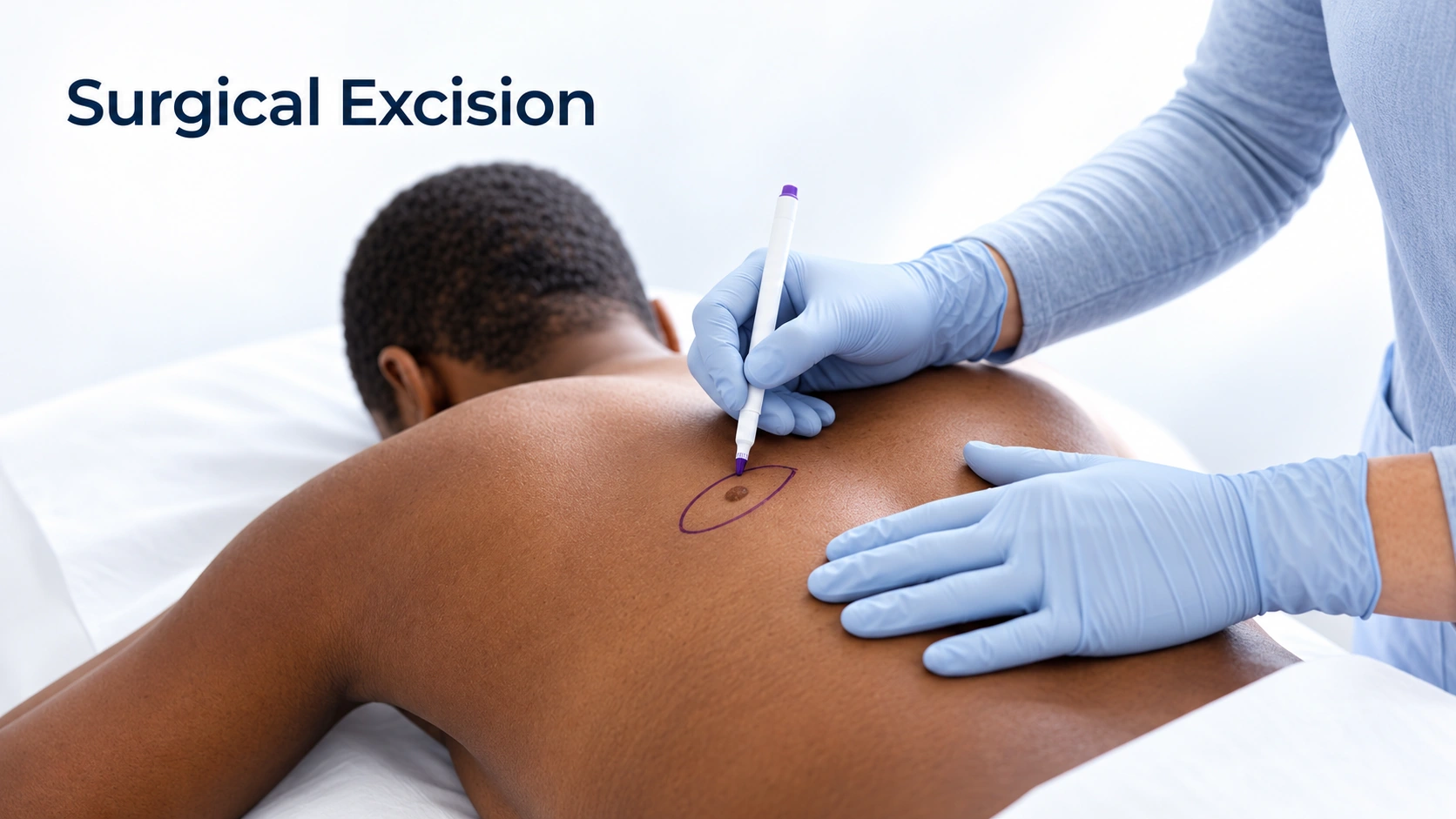
Cyst Removal: An office procedure to take a skin cyst out. Draining one empties it for a while. Removing the sac is what stops it coming back, and an inflamed cyst is usually settled down first rather than cut out on the spot.

Choose for one painful acne cyst that needs to flatten fast, or for keloids and patchy hair loss.
Choose to remove a cyst for good — ideally once it's calm, not while inflamed.
Can you have both?
A cortisone injection is often used first to calm an inflamed cyst. Removal is then done a few weeks later once it has settled.
An intralesional steroid calms local inflammation or scarring.
It is not a systemic steroid treatment.
Infected or uncertain lesions should not be injected.
Skin thinning, fat loss and pigment change may persist.
The aim is to remove the wall as well as its contents.
Drainage relieves pressure but is not definitive.
Infection may need treatment before excision.
Hard or changing lumps should not be assumed to be cysts.

Flattens a painful cyst within days.
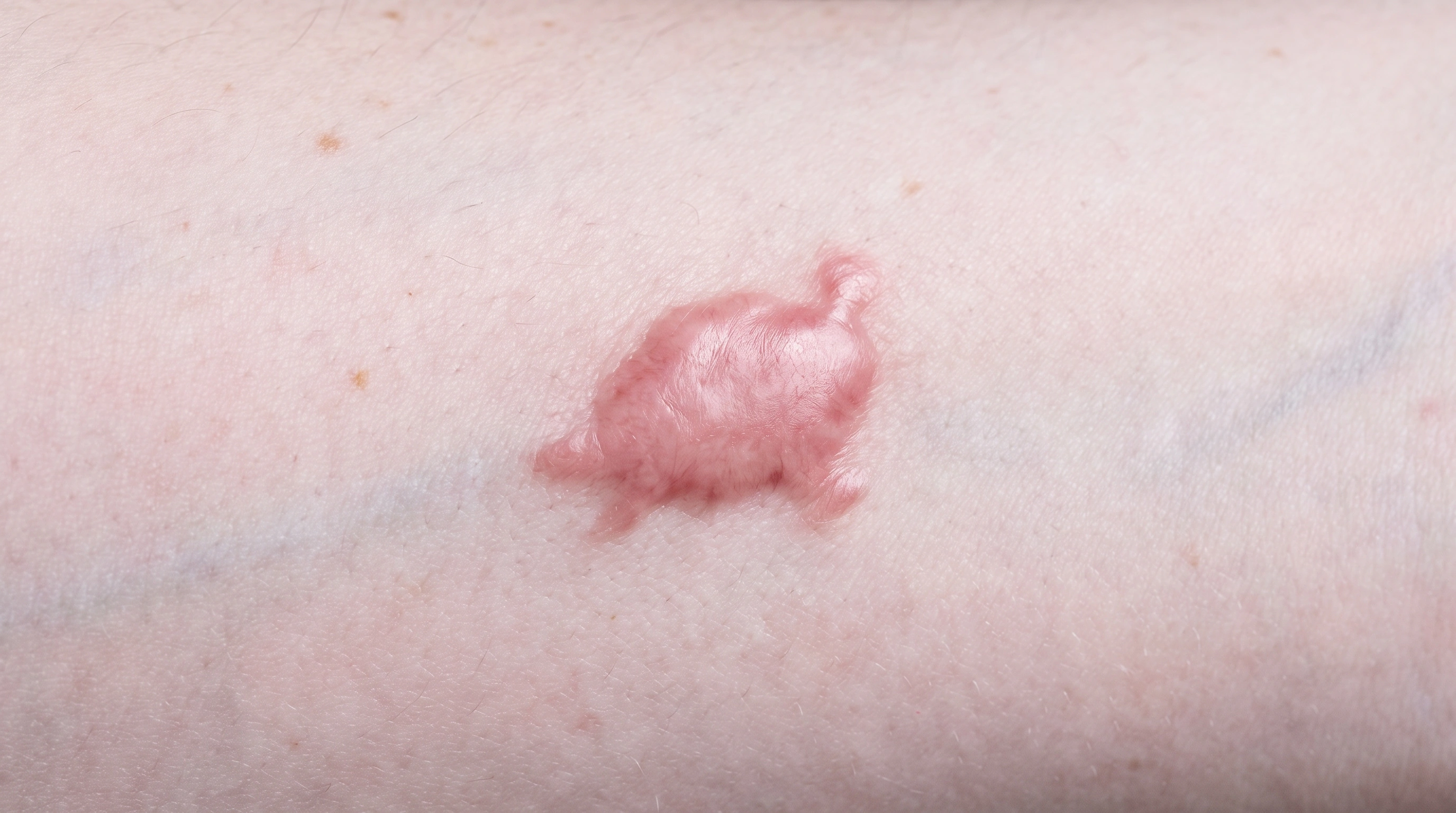
Softens and flattens raised scars.
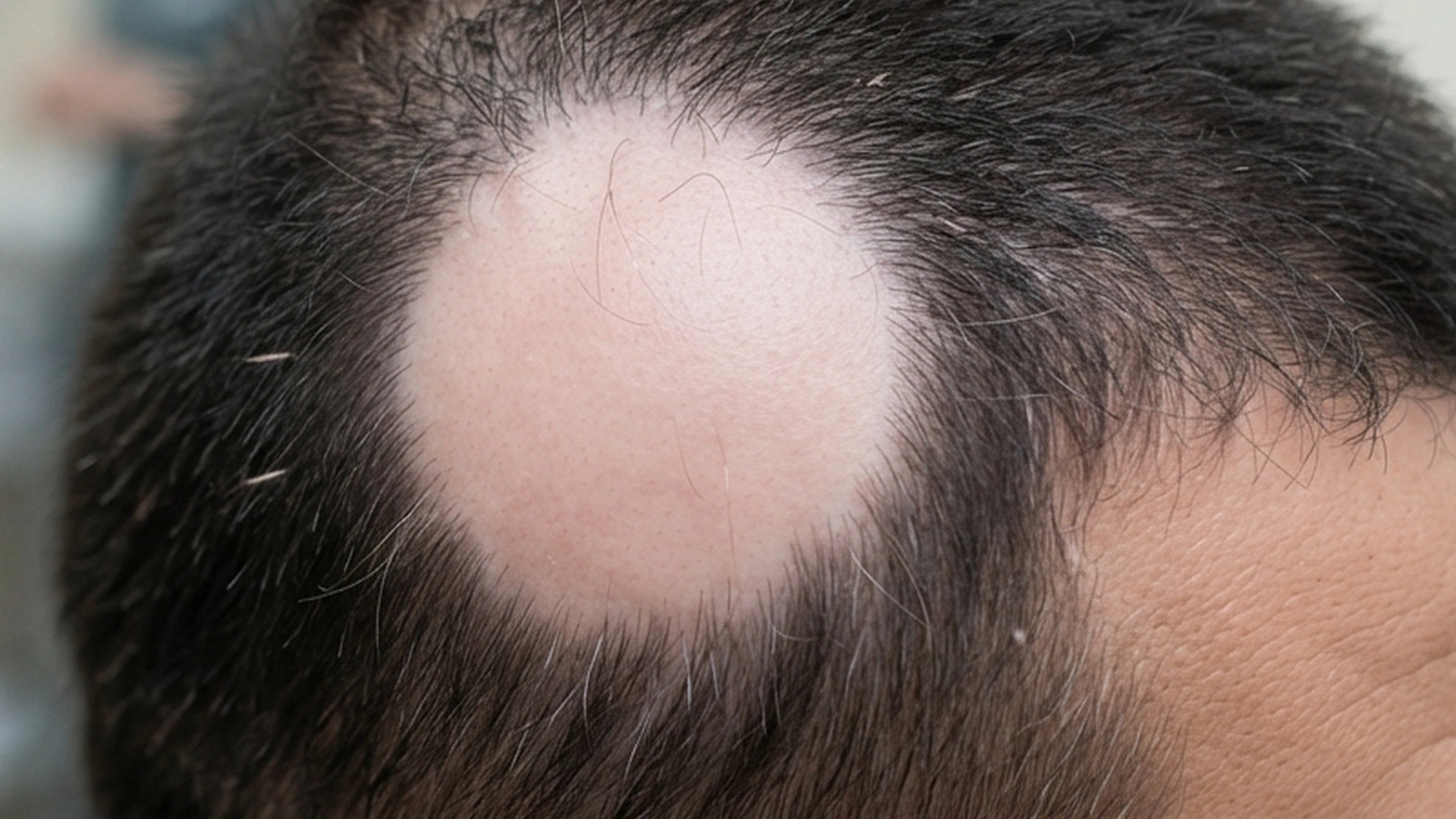
Regrows hair in patches.
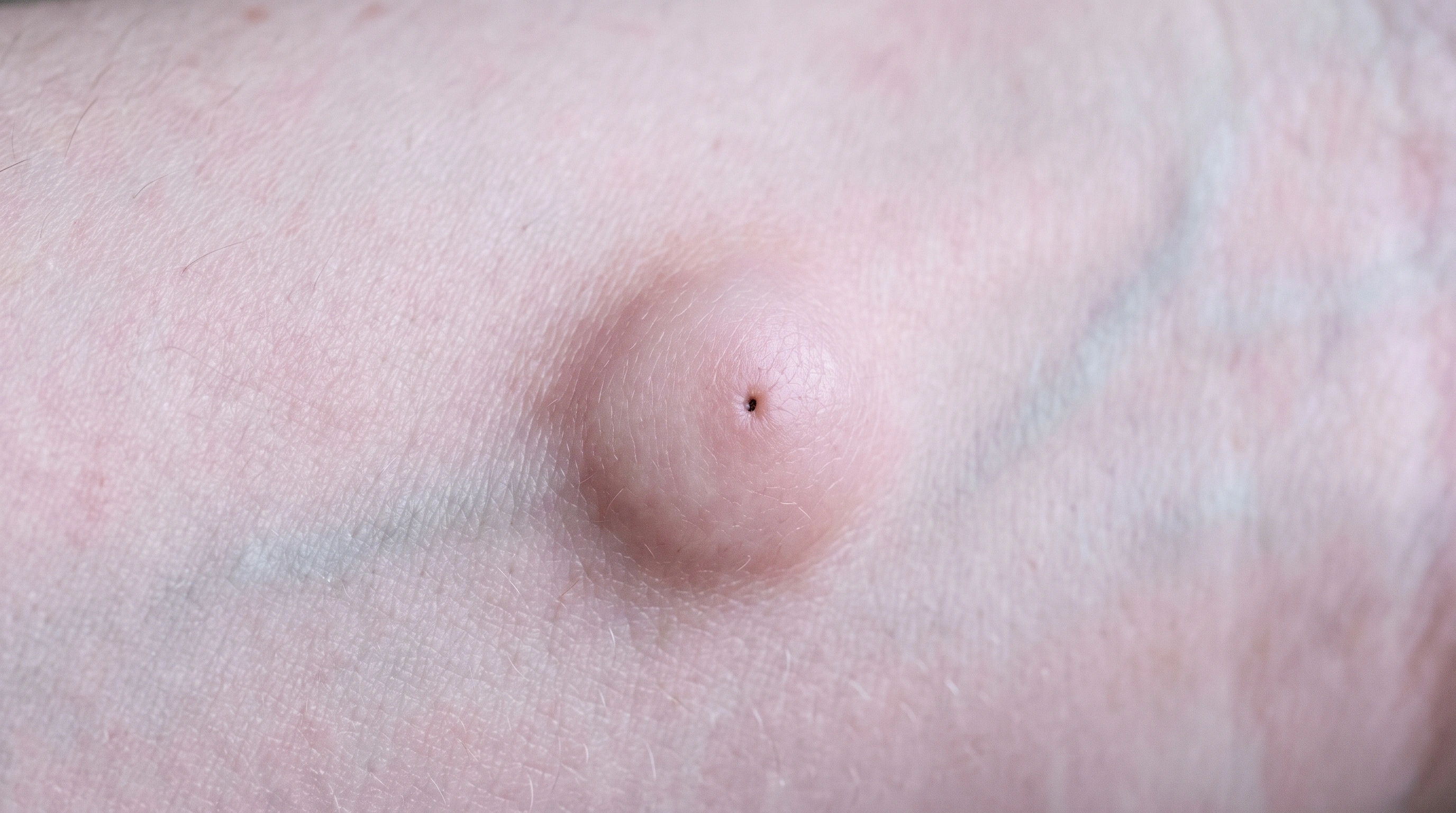
Removes the sac to prevent return.
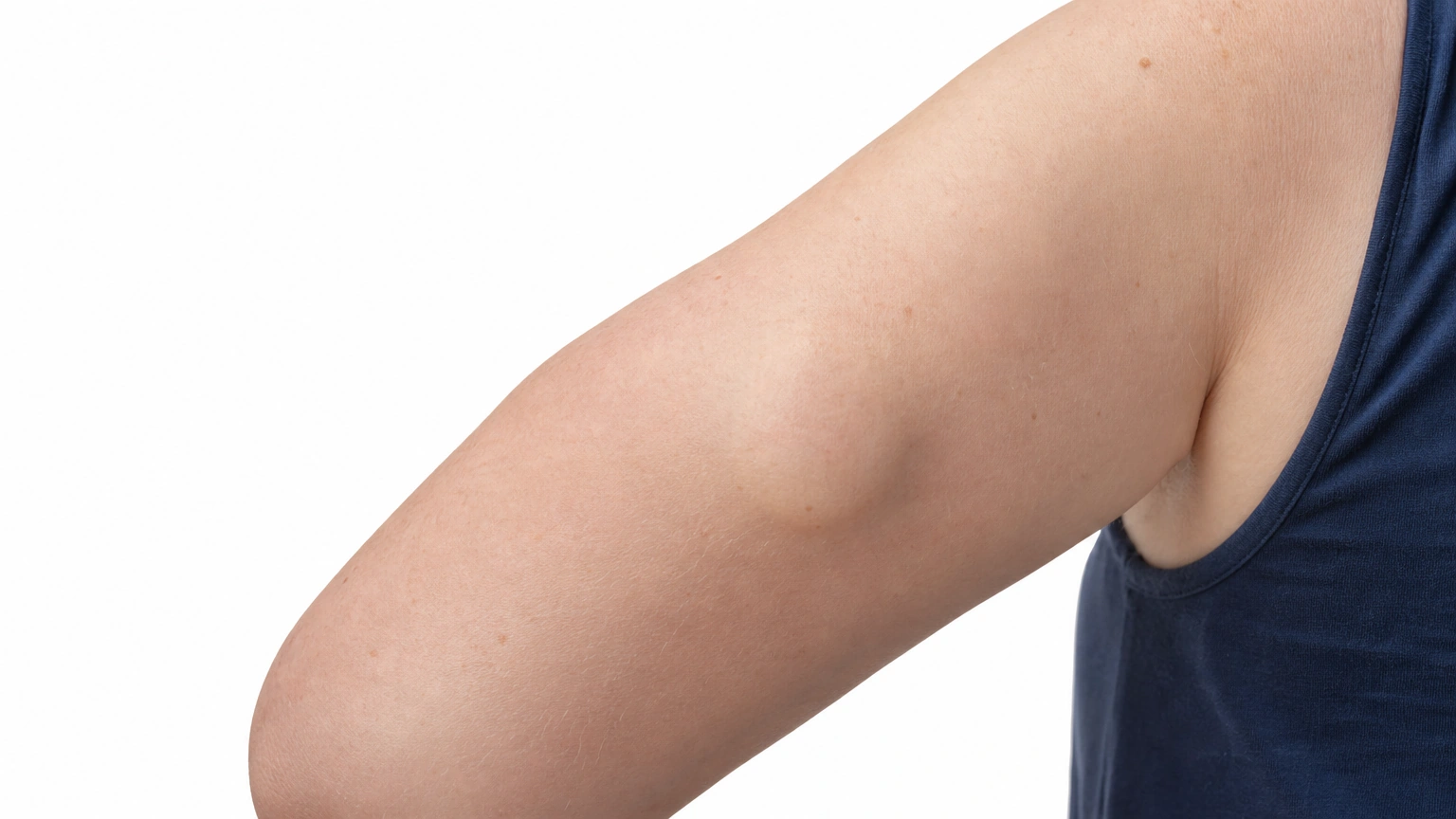
Cuts out soft fatty lumps.
Calms an inflamed cyst.
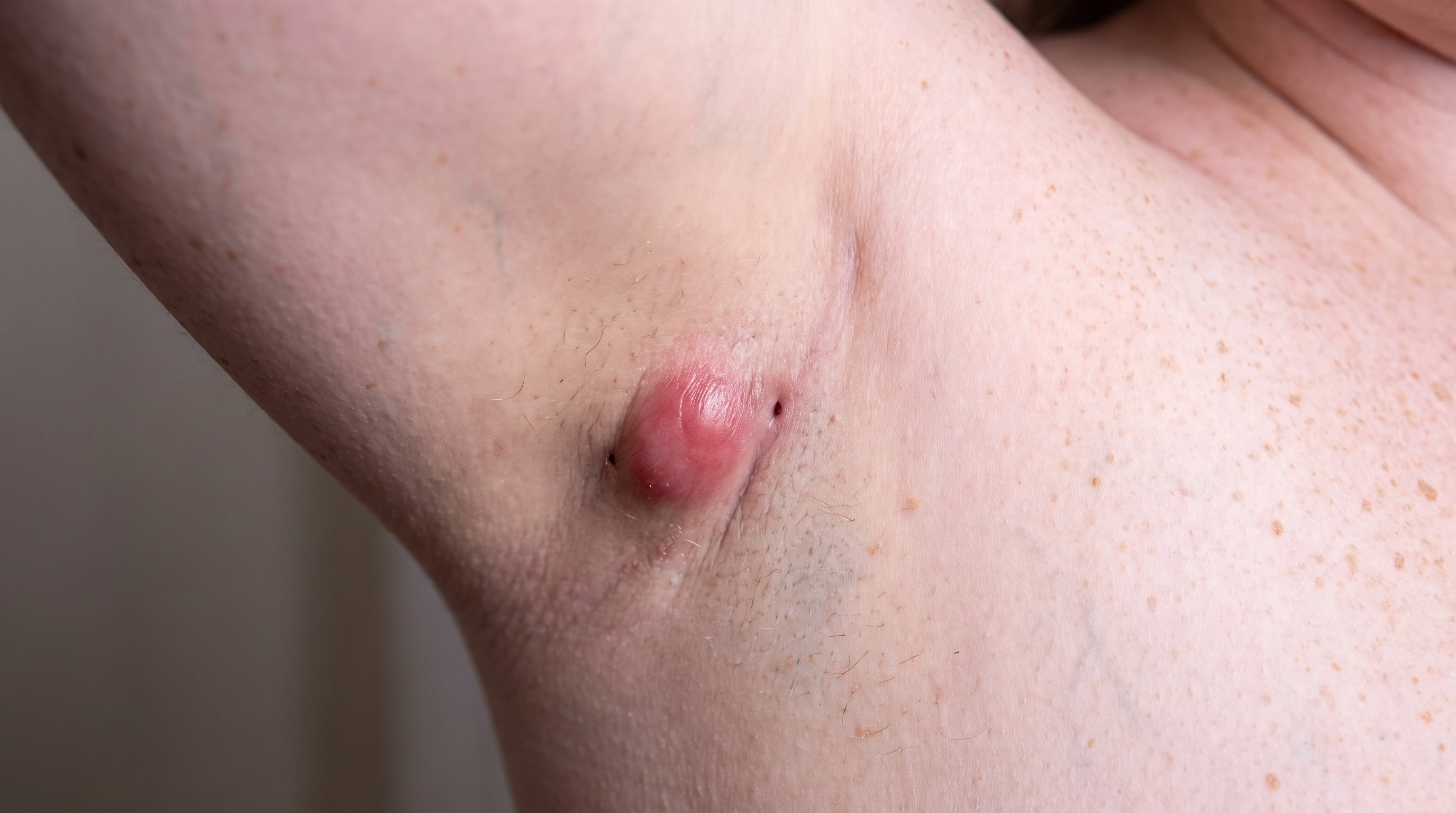
Lumps return without wider surgery.
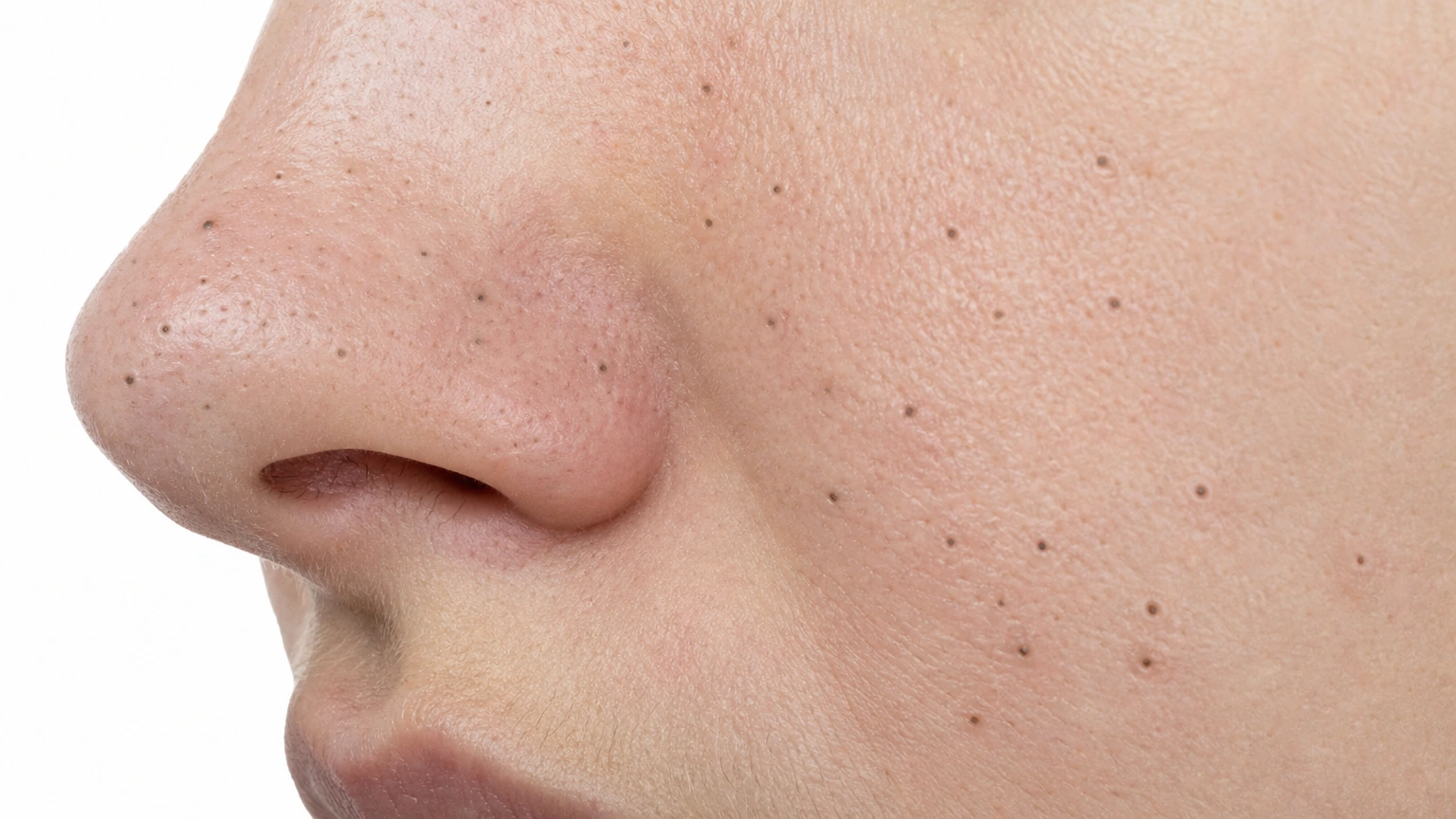
Not for clogged pores.
Acne cysts need medical treatment.
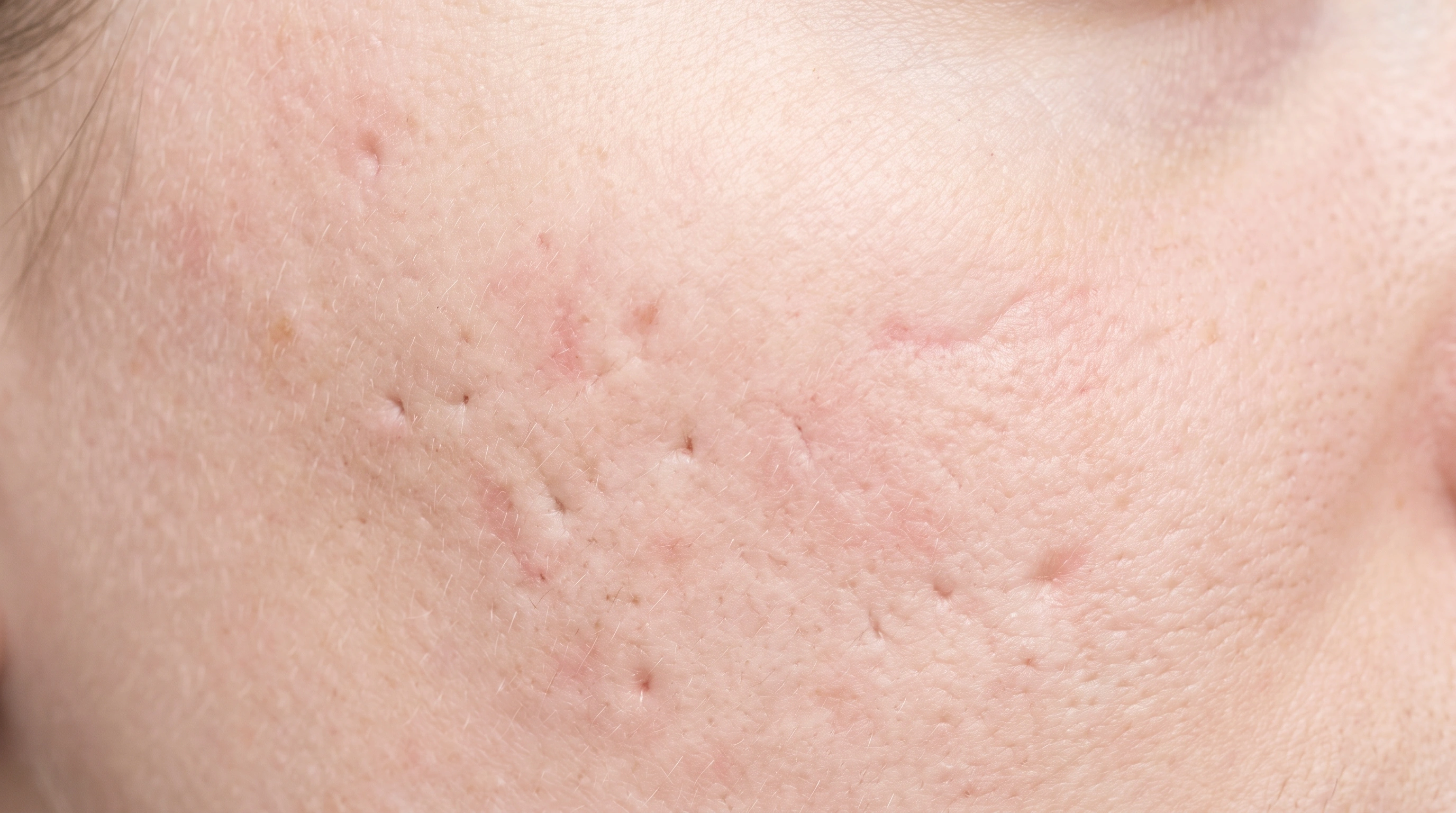
Can cause dents in skin.
The specific lesion, scar or affected patch determines the treatment site; there is no fixed body distribution.
The specific lesion, scar or affected patch determines the treatment site; there is no fixed body distribution.


Medicine is placed in a lesion: A clinician injects an appropriate corticosteroid preparation. Inflammatory signaling decreases: The steroid reduces local immune and inflammatory activity. The lesion may soften or flatten: Response depends on the condition, dose, and placement.
Schematic illustration. Technique and response vary. This explains a mechanism and does not specify treatment settings.
The cyst is assessed: Diagnosis and inflammation guide the removal plan. The cyst wall is addressed: A clinician removes the sac when appropriate. The wound heals: Complete lining removal reduces recurrence; a scar remains.
Schematic illustration. Technique and response vary. This explains a mechanism and does not specify treatment settings.
Do not pick: Do not pick, squeeze or heat the spot.
A few days before: Do not squeeze: Squeezing or picking inflames the cyst and can get the procedure postponed.
Clean skin: Wash your face and skip makeup on the area.
What to wear: Clothing that gives easy access to the area.
The provider checks that the spot is an inflamed acne cyst and not a boil.
The lump is examined, sometimes photographed, and marked in the position that shows it best.
The skin is wiped with alcohol.
A very fine needle goes just into the bump and a small amount of fluid goes in, under 10 seconds per spot. The sting is sharp for a few seconds, worse if the cyst is already tender, but most people rate it lower than they expect. Numbing does not help much — the needle stick is the whole procedure.
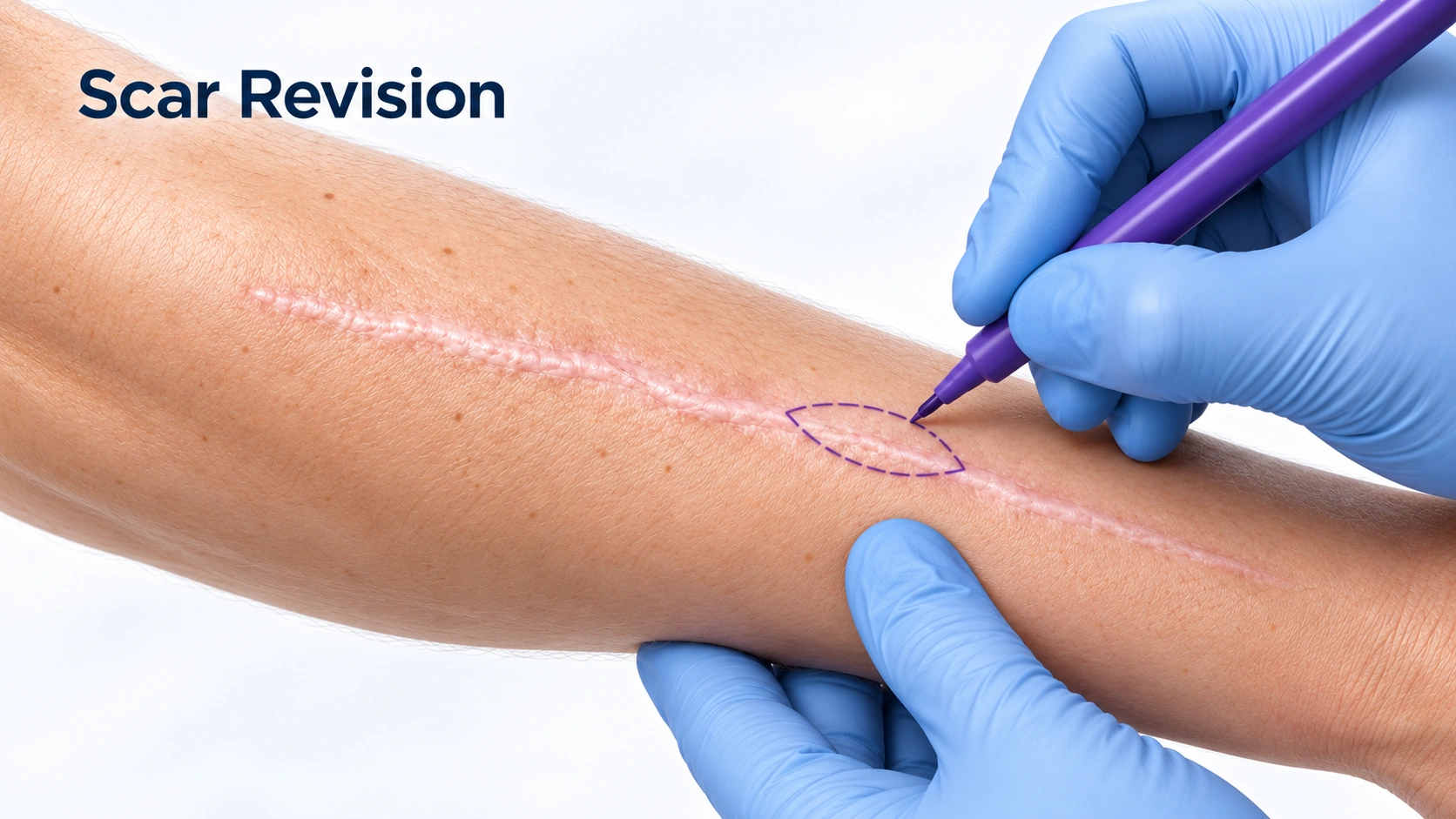
The skin is cleaned and a cut made over the cyst, often a narrow ellipse taking in the surface pore.
The sac is teased free and lifted out, whole or emptied first, and stitches close it, sometimes in two layers. Numbing to dressing is about 20 to 30 minutes. Expect pressure and tugging, not sharpness. Say so if anything feels sharp.
A tiny red dot, sometimes a small raised bleb that flattens within an hour.
A dressing goes on and you go home.
Days 1 to 2: The bump softens and the ache fades.
Days 1 to 3: Keep the dressing dry.
First few days: A pinprick mark, sometimes a small bruise, fading over a few days.
Days 3 to 7: Most cysts are flat.
Days 5 to 14: Face stitches come out around day 5 to 7, body or back stitches around day 10 to 14.
Weeks 2 to 6: The scar gets firmer, lumpier and pinker before it improves — healing tissue, not the cyst returning.
24–48 hours for a cyst
Immediately
Treats only that spot
Permanent if the whole sac is removed
Roughly $50 to $250 per office visit in the US, usually billed as an office visit plus a procedure charge rather than per spot.
In the US, removing a straightforward cyst is usually a few hundred dollars in a dermatology or family practice office; larger cysts, facial cysts and hospital settings cost more.
Insurance often covers it, since acne cysts count as medical rather than cosmetic.
Insurance frequently covers removal when the cyst is symptomatic — painful, inflamed, infected, growing or catching on clothing — and documented as such.
Softening begins within 24 to 48 hours and most spots are flat by day three to five. That figure traces back to one small 1983 trial — it matches what dermatologists see but has never been tested at scale. The mark left behind takes weeks longer, and the injection does not speed that up.
It can. A shallow depression happens when the dose is too strong, so a lower concentration is the main protection. It is uncommon — most dermatologists see it in well under one patient in a hundred — and it often fills in over several months. But it is not reliably temporary. About half the clinicians who do see it report it lasting more than six months, and occasionally it is permanent. That is why you ask what concentration is being used.
Yes, the most common reason people ask. Aim for three to five days ahead so the swelling has time to drop. A same-day injection rarely looks better by that evening.
No. It treats only the spot it is injected into. Preventing the next cyst needs a daily treatment plan, and the guidelines call this an add-on.
Yes. The risk is a lighter patch at the site, more noticeable and slower to fade on deeper skin tones. A lower concentration reduces it, so ask.
Not in the United States, strictly speaking. The FDA labeling lists intralesional use for keloids, alopecia areata, discoid lupus and others. Acne is not on it. Off-label use for an acne cyst is routine, legal and recommended by the American Academy of Dermatology, but almost nobody says it out loud. In the UK, NICE withdrew its recommendation in 2026 after UK-licensed triamcinolone injections stopped being available — a supply and licensing decision, not a safety one.
Draining empties the contents but leaves the sac wall, and the wall keeps producing what fills it. Removing the wall ends it. A cyst drained several times is a good candidate for planned removal once quiet.
The numbing injection stings for under a minute. After that, pressure and pulling but not sharpness, and more anesthetic can be added any time. Expect a dull ache for a day or two.
Yes. Every removal leaves a line, usually longer than the lump looked, because the skin has to open enough to lift the sac out whole. Where it sits and how it is closed decide how noticeable it stays.
It can, but most providers avoid it. Inflamed tissue numbs poorly, bleeds more, tears the wall into fragments easy to leave behind, and heals into a wider scar. The plan is usually to settle it now and remove it in a few weeks or months.
Often, and it is reasonable to ask. It confirms what the lump was, which matters because not everything that feels like a cyst is one.
Frequently, when the cyst is painful, inflamed, infected, growing or catching on clothing, and that is documented. Removal only for how it looks is usually cosmetic and out of pocket. Ask the office to check before the visit.