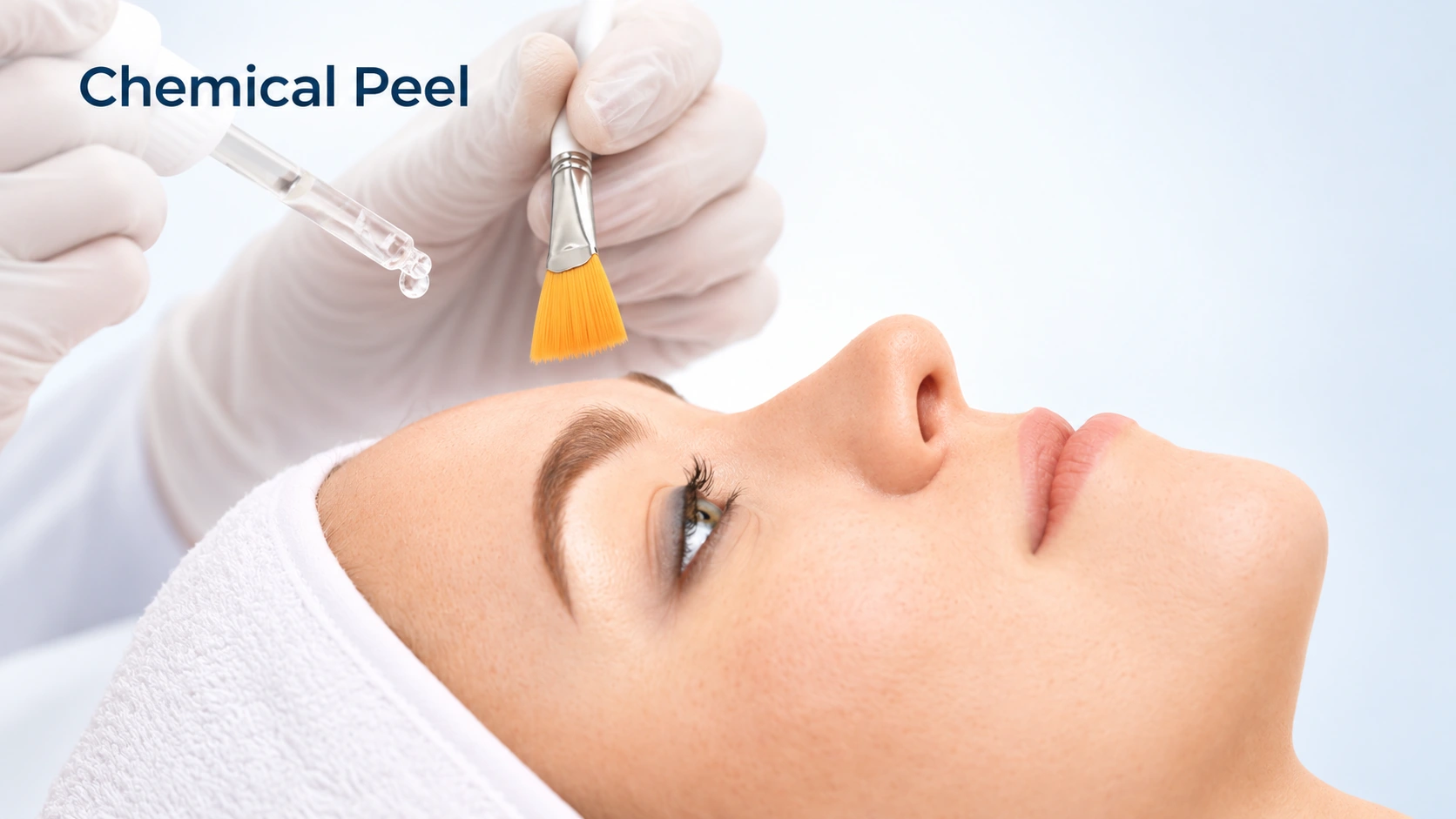
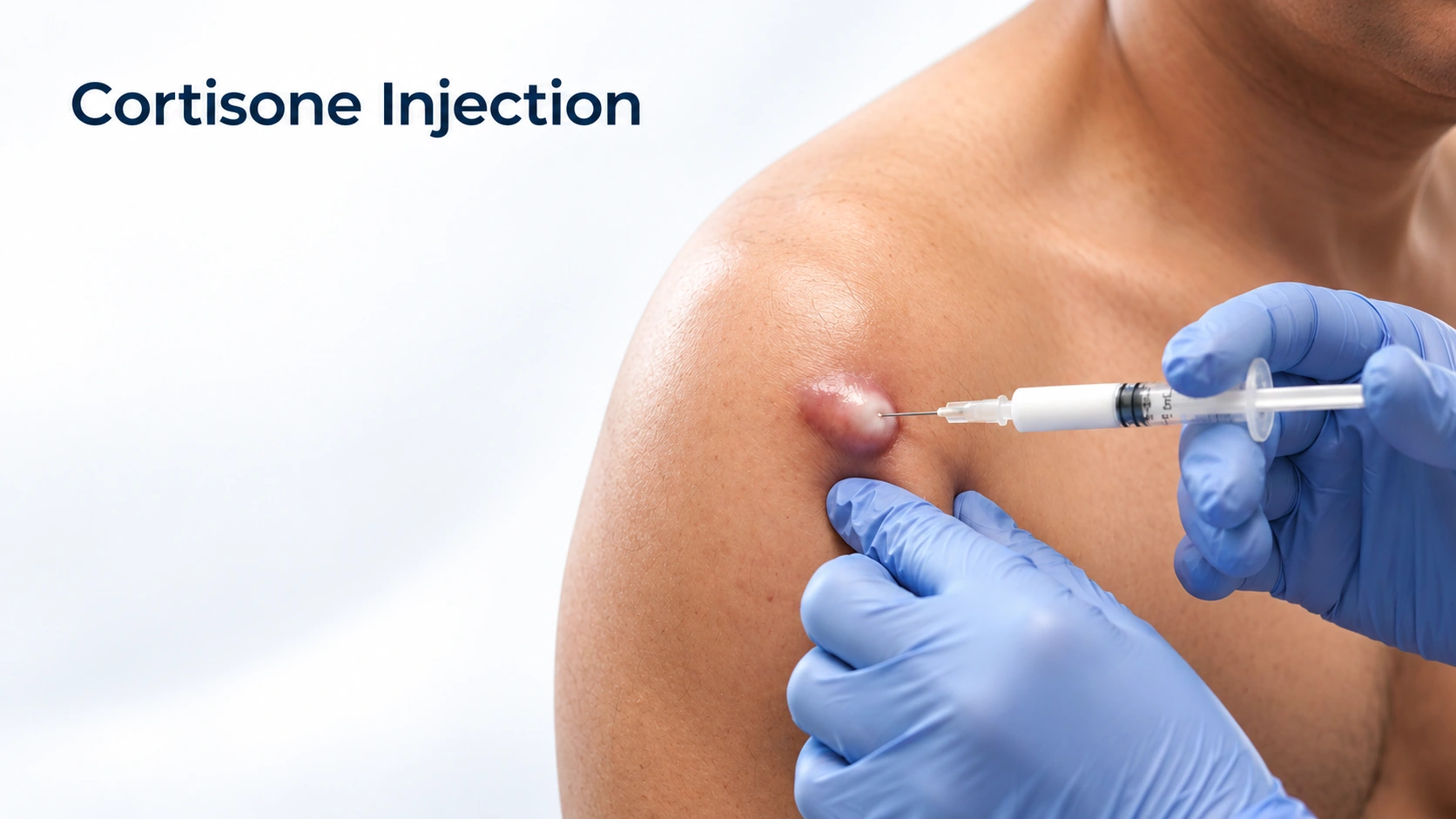
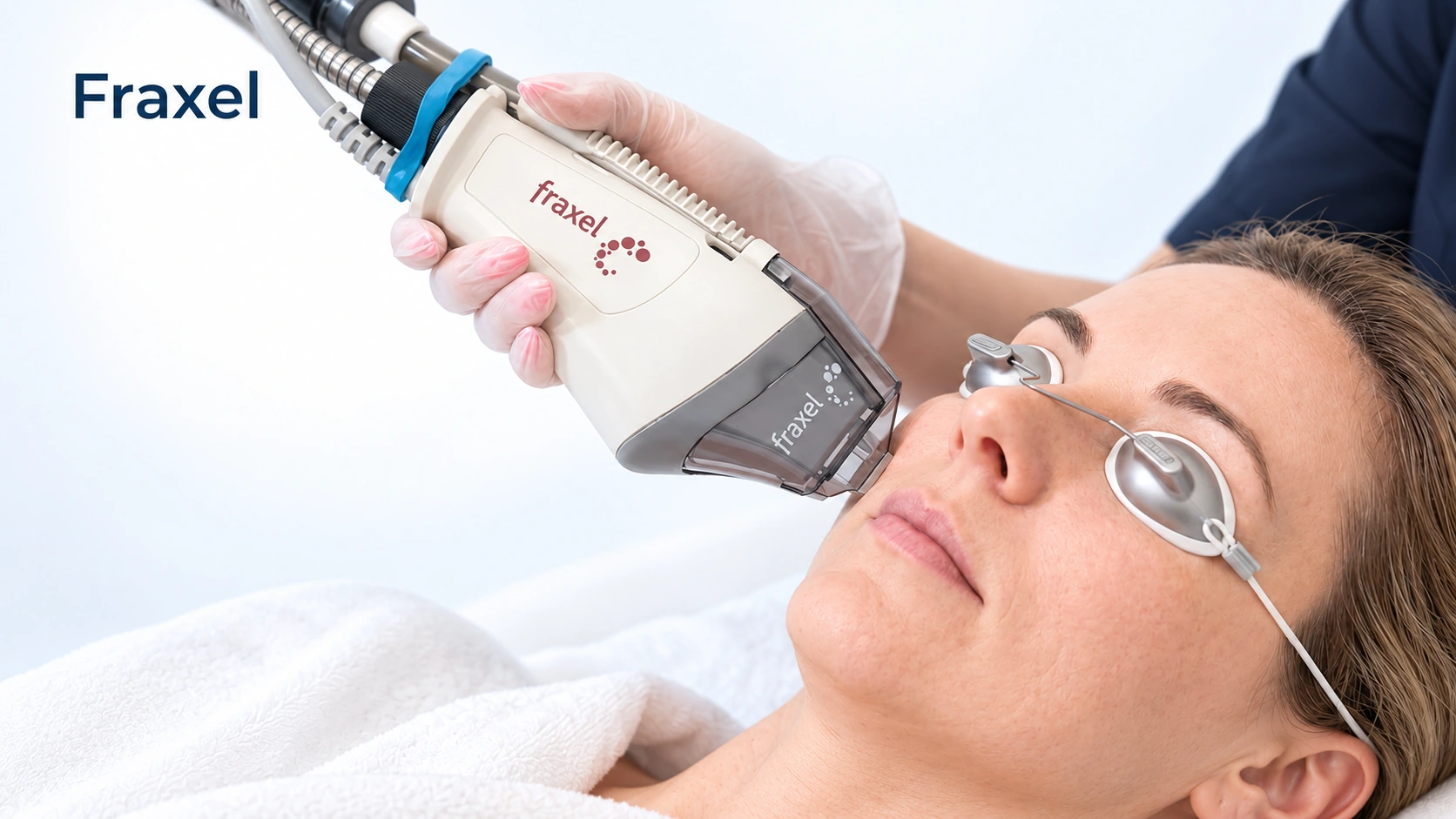
It creates controlled punctures.
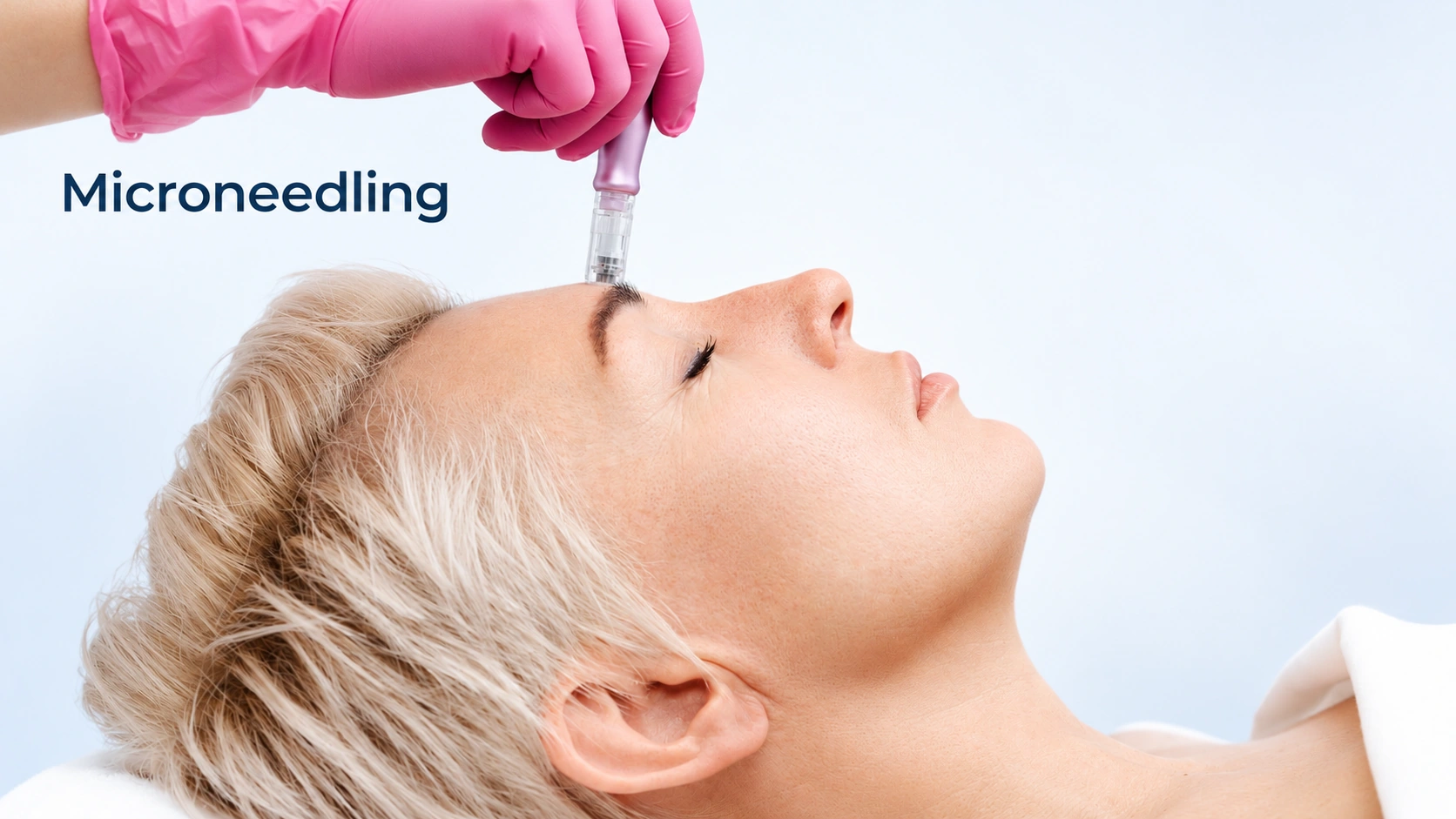
Fine needles puncture the skin in a controlled way.
Microneedling: A pen or roller of fine needles makes thousands of tiny controlled punctures in the skin, which sets off healing and new collagen. It is used mainly for indented acne scars and rough texture. It makes them shallower over a course of sessions, not gone.
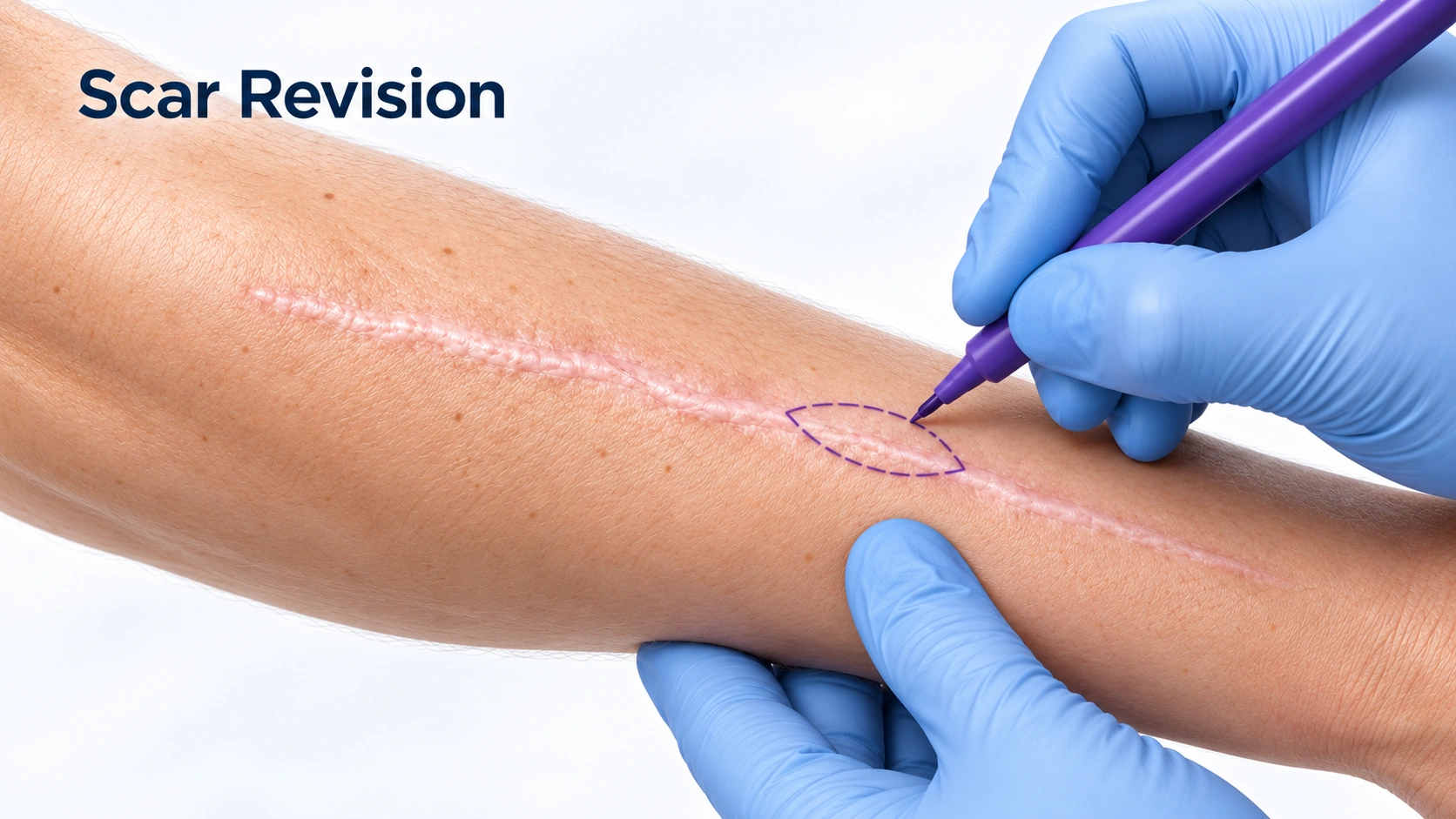
Scar Revision: The whole set of procedures used to make an existing scar less noticeable — cutting it out and closing it more neatly, flattening it, releasing it, or resurfacing it. No procedure erases a scar. Revision trades the scar you have for one you would rather live with.

Choose for indented acne scars and rough texture with little downtime and low pigment risk — shallower, not gone.
Choose to trade a scar you dislike for a neater one — no procedure erases a scar.
Can you have both?
Microneedling is often used 6 to 8 weeks after scar revision surgery to blend the new scar.
Fine needles puncture the skin in a controlled way.
Results depend on device, depth and technique.
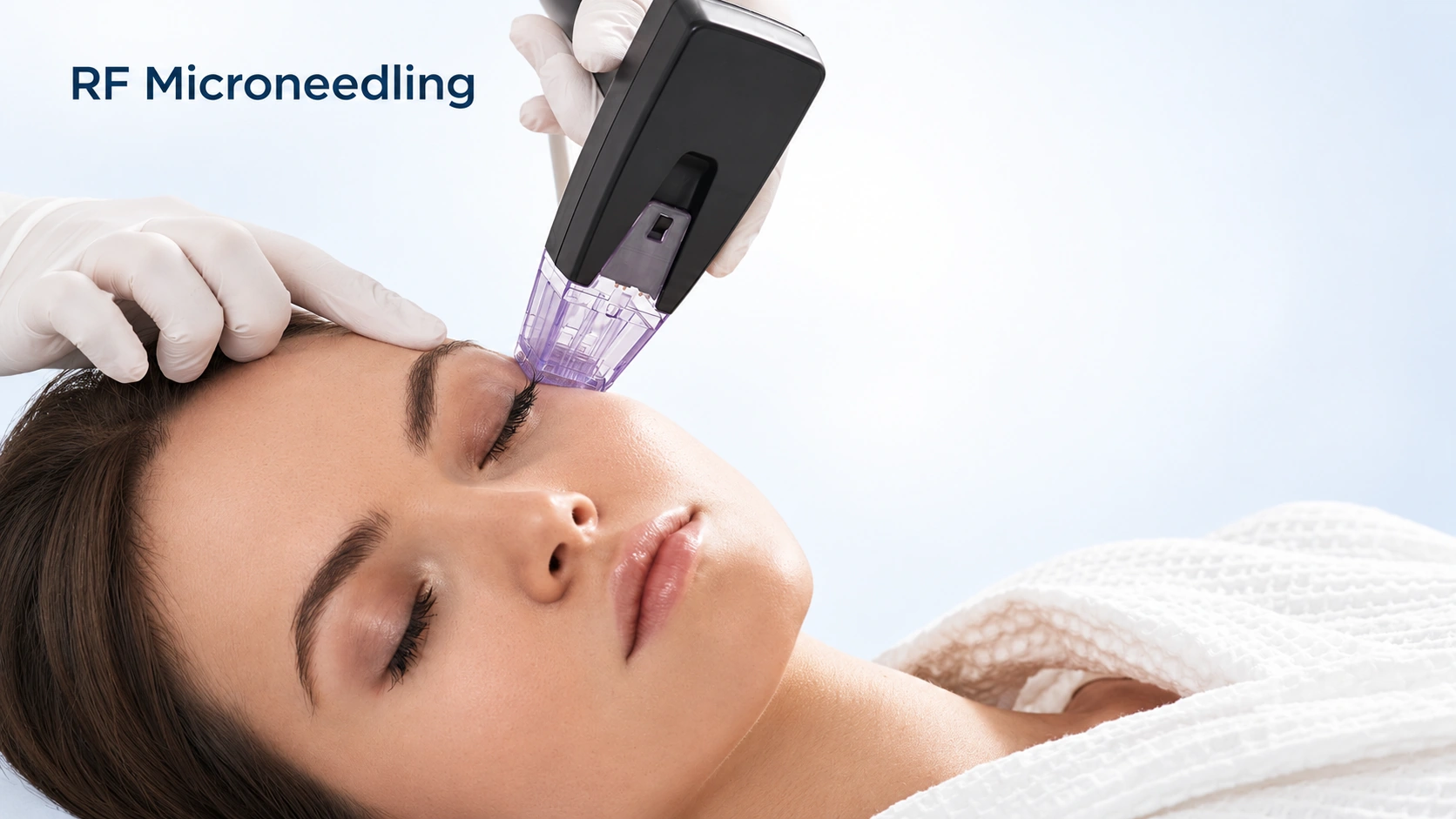
No radiofrequency energy is involved.
Devices are not cleared for use with every serum or blood product.
It aims to improve appearance, comfort or movement.
Surgery, injections and resurfacing may be combined.
It modifies scar tissue rather than restoring unscarred skin.
Excision alone can cause a larger recurrence.

Improves rolling and boxcar scars.
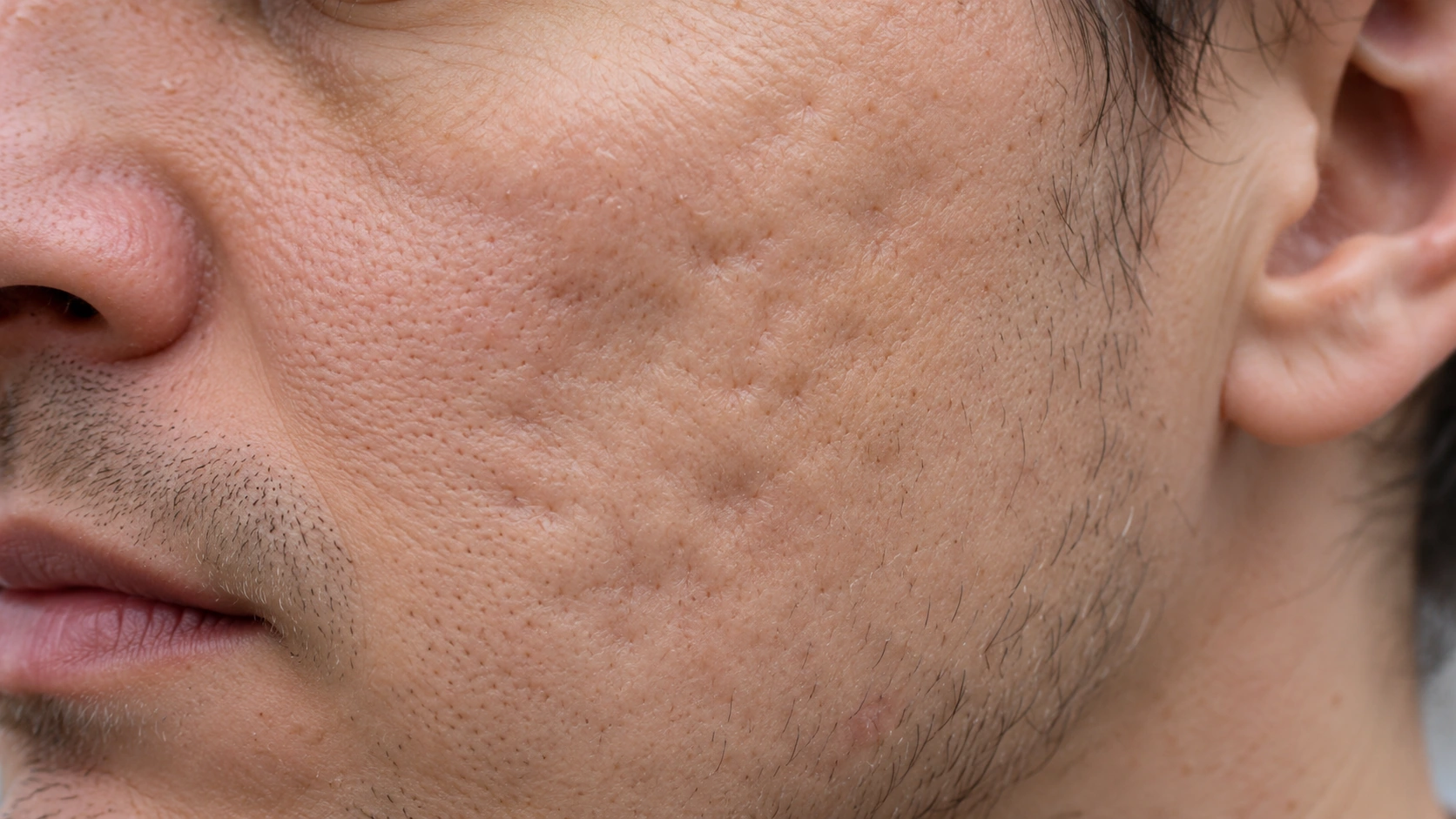
Good results with a series.
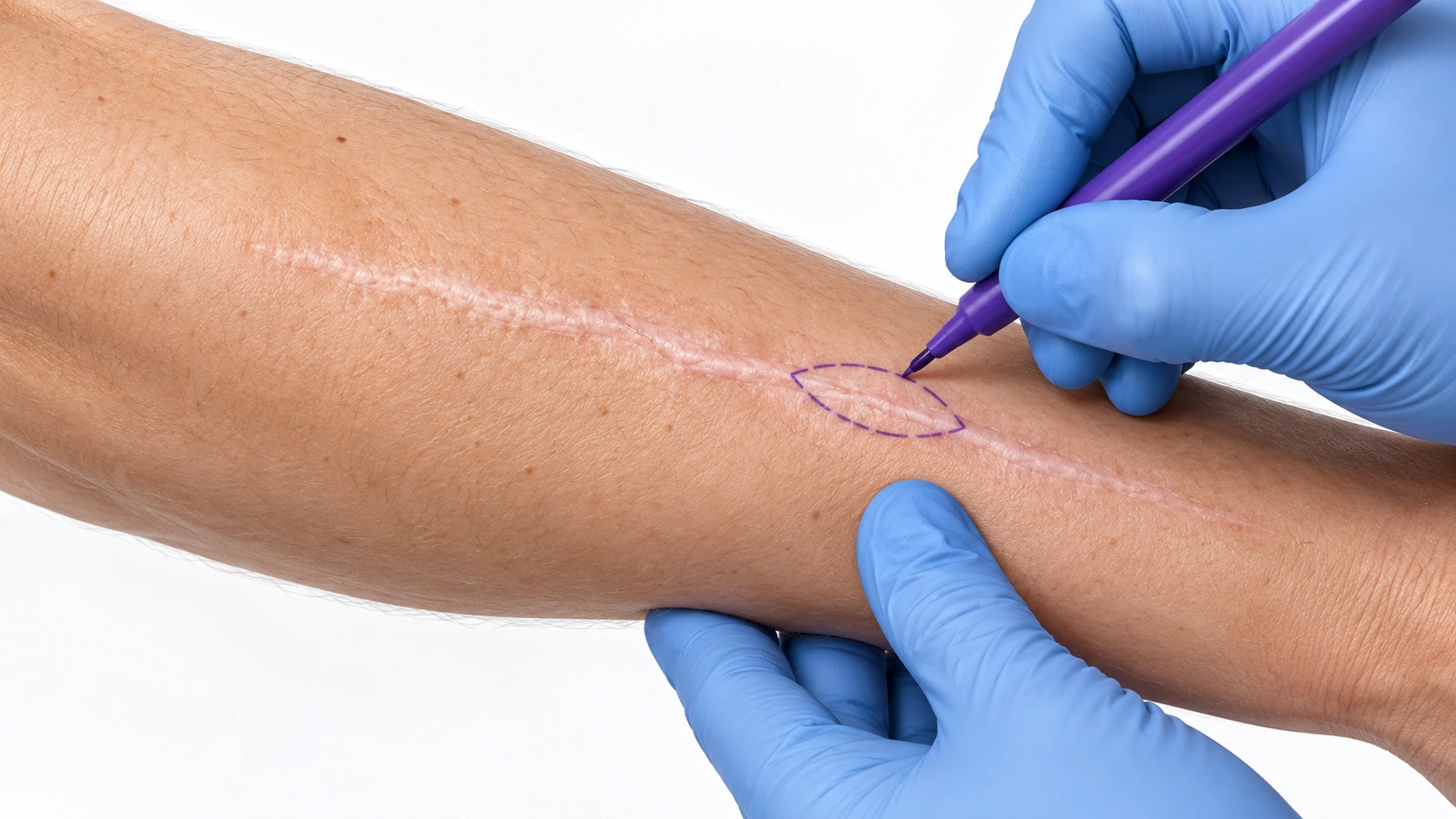
Improves width, texture and color.
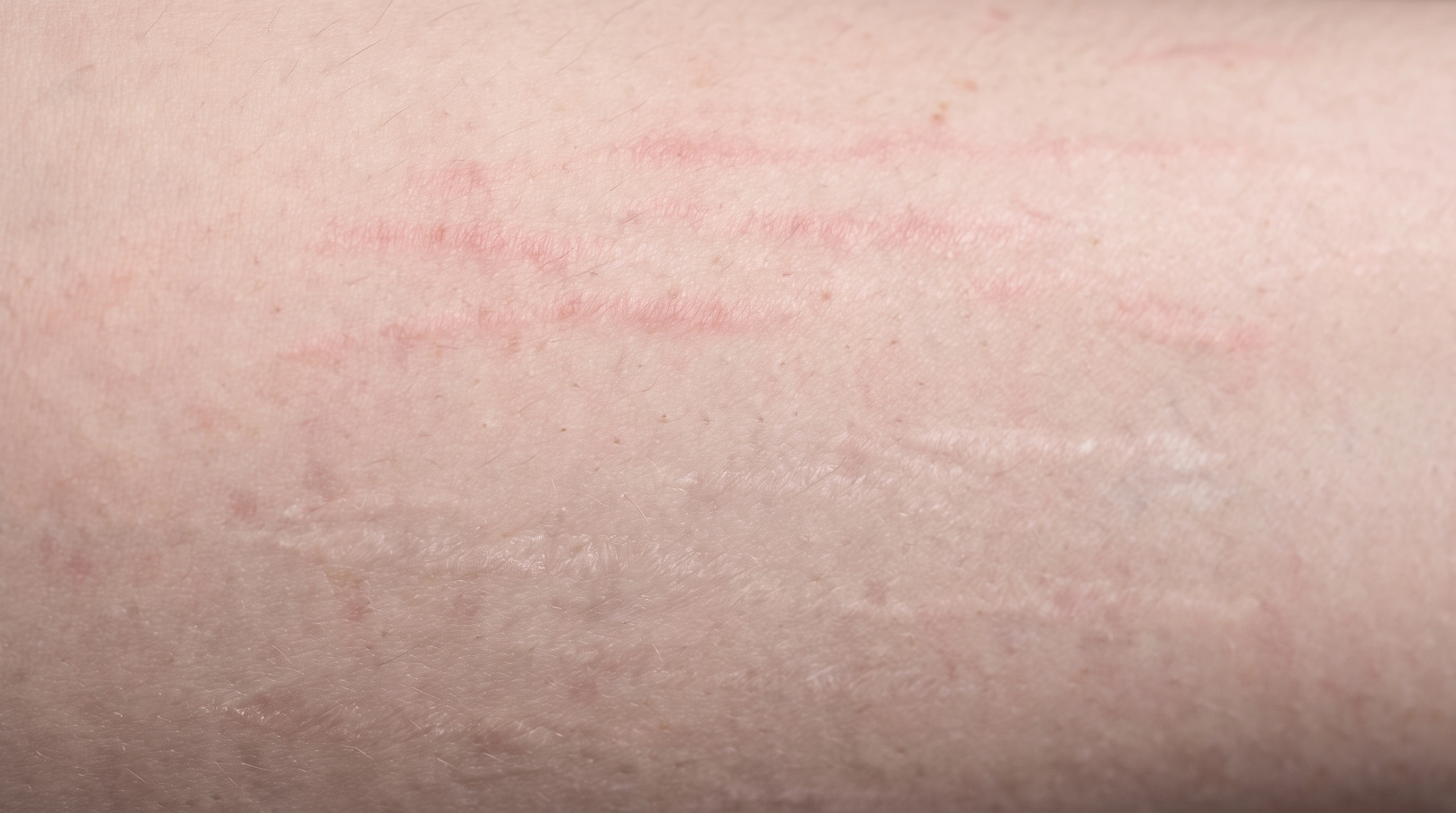
Softens older marks.

Improves texture.
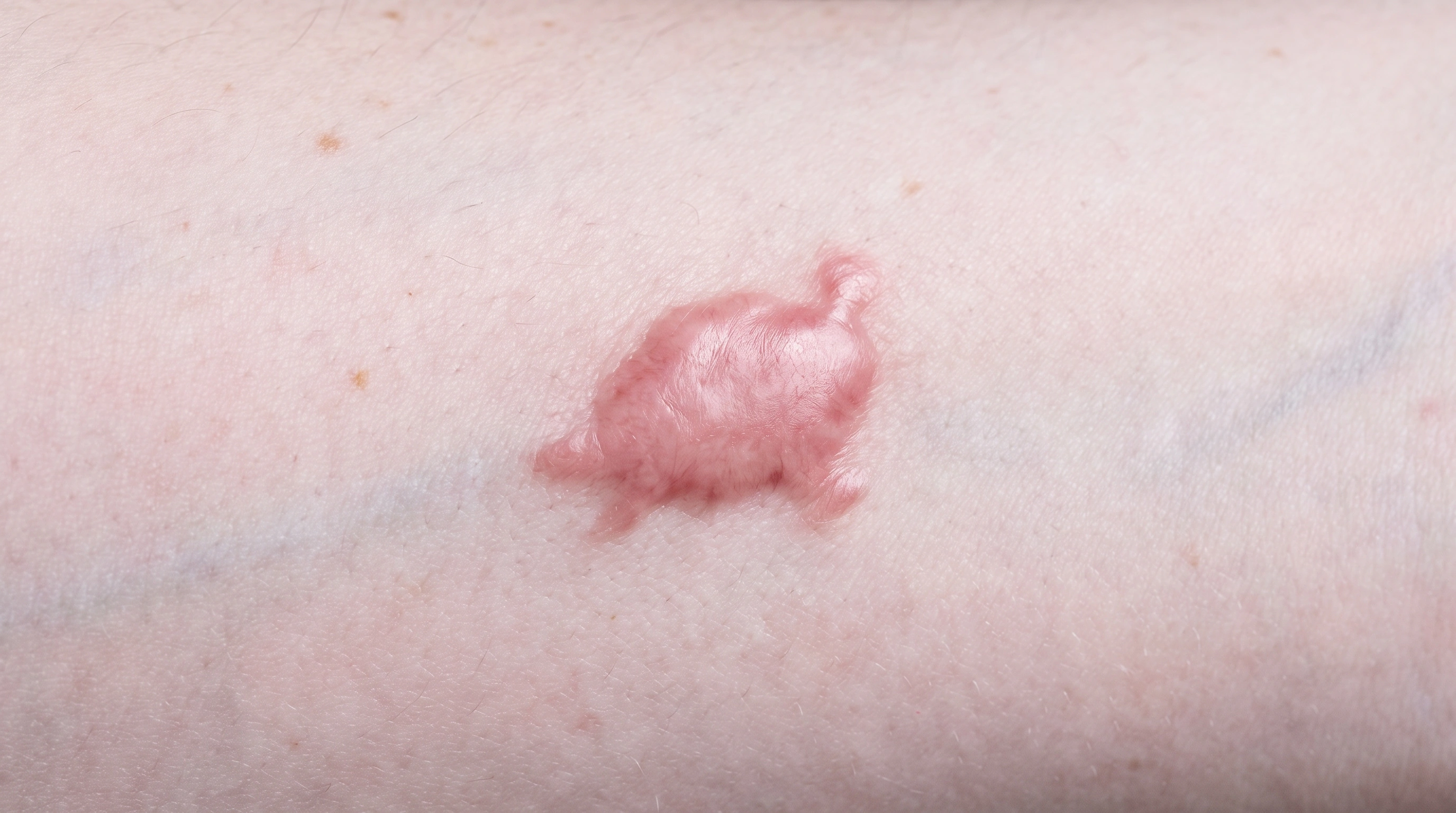
Combined with injections to prevent return.
Punch excision for deep scars.
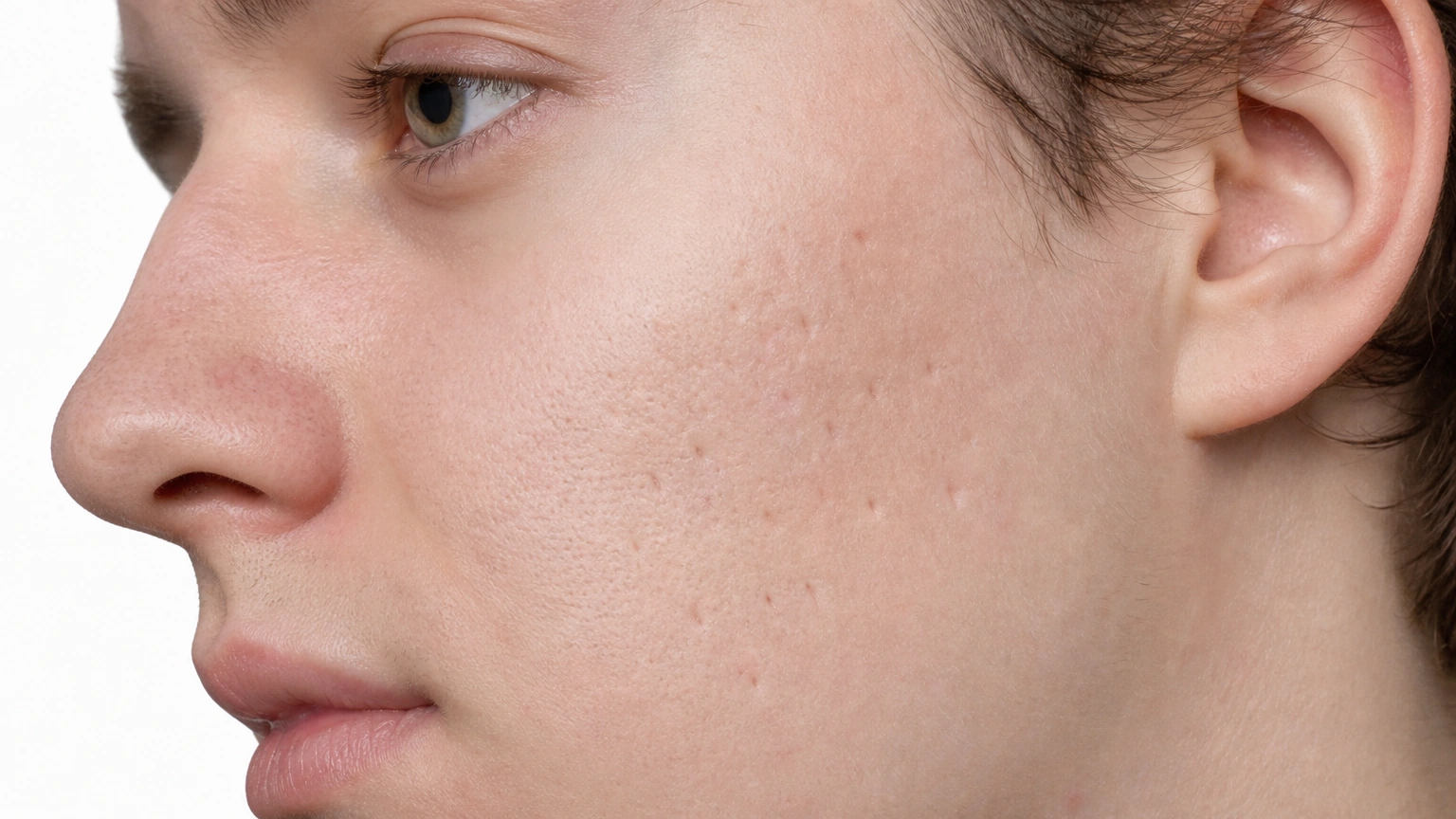
Too deep for needling alone.
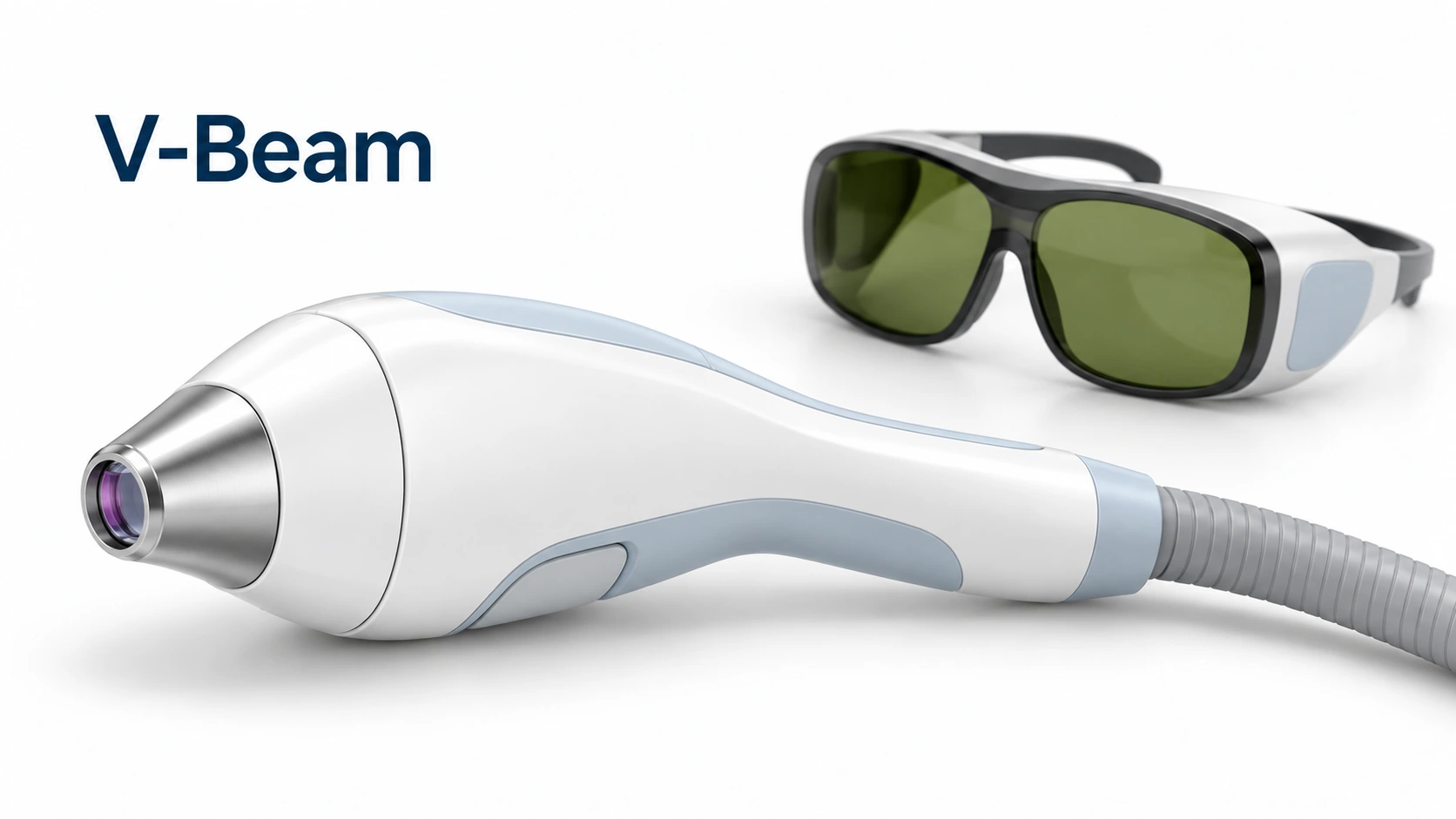
Usually treated with lasers or needling.

Can spread active breakouts.
Face; the selected area depends on the concern and treatment plan.
The specific lesion, scar or affected patch determines the treatment site; there is no fixed body distribution.


Fine needles create tiny punctures: A device makes controlled channels in selected skin. Healing signals are released: The tissue response activates repair processes. Collagen remodels gradually: Healing may improve selected scars and skin texture.
Schematic illustration. Technique and response vary. This explains a mechanism and does not specify treatment settings.
The scar is assessed: Its shape, location, and tension guide the surgical plan. Tissue is revised or rearranged: A surgeon changes the scar and carefully closes the wound. A new scar matures: Appearance may improve, but scar tissue remains.
Schematic illustration. Technique and response vary. This explains a mechanism and does not specify treatment settings.
6 to 12 months: Waiting: Surgeons want 6 to 12 months of natural settling first.
Pigment cream: On deeper skin tones, some providers start a pigment-blocking cream a few weeks ahead.
Sun: Keep the scar out of the sun and use SPF 30 or higher.
2 weeks before: Smoking and vaping: Stop both at least two weeks before and after surgery.
Actives and hair removal: Do not arrive tanned or sunburned.
Actives and hair removal: Stop retinoids (tretinoin, adapalene, retinol), benzoyl peroxide and acids 3 to 5 days before.
Actives and hair removal: No waxing, threading or hair removal creams.
Clean skin: Come with a clean face and no makeup, and plan not to wear any that day.
Clean skin: If you have active pustules or an infection in the area, move the session.
What to bring: Old photos: Photographs from before the injury, if you have them.
Skin is checked and photographed, and you confirm what you have stopped using.
The scar is photographed and examined relaxed and stretched.
The pen is passed over the skin in overlapping passes, one area at a time, with sterile gel or saline as a glide.
It sounds like a small vibrating motor and takes 20 to 30 minutes for a full face. Pinpoint bleeding is normal at deeper settings over scars. With good numbing it is uncomfortable rather than painful, a scratchy dragging with pressure.
A steroid injection takes minutes and meets real resistance.
Surgical revision cuts the scar out as a narrow ellipse and closes it in layers, usually 30 to 90 minutes. A Z-plasty swaps small flaps to change direction. Punch excision removes a small round scar. Laser or microneedling takes 20 to 45 minutes. Expect pressure, not sharpness.
Skin is bright red, warm and tight, like a strong sunburn, sometimes with faint tracking lines and dots of dried blood.
Tape over the line, wound care instructions, and a date for stitch removal — 5 to 7 days on the face, 10 to 14 days on the body.
Days 1 to 5: Redness turns pink and swelling settles, most noticeably around the eyes the first morning.
First 2 weeks: Swollen, bruised and tender.
Weeks 1 to 4: Skin looks normal and nothing appears to be happening.
Weeks 2 to 8: The new line turns pink, firm and slightly raised — normal healing, not failure.
Months 2 to 6: Texture keeps improving after the visible healing finishes, which is why the photograph that matters is taken months later, not the week after.
Months 3 to 18: Redness fades and the ridge softens from month 3 to 6, with massage and silicone doing the work.
1–3 months after each session
Over 6–12 months
Years for scars
Permanent
In the US a full-face session usually runs about $200 to $700, with medical offices at the higher end and packages of three to six cheaper per session.
In the US this varies more than almost any other dermatology procedure, because "scar revision" covers a five-minute injection and a ninety-minute operation.
Insurance does not cover microneedling for acne scars, since it is classed as cosmetic.
Insurance often pays when a scar limits movement or vision, interferes with function, or follows cancer surgery or an injury.
No. It makes indented scars shallower and less noticeable over three to six sessions. Rolling and shallow boxcar scars respond best, icepick scars respond poorly, and improvement is partial in every study. That is worth having; complete clearance is not what this treatment does.
Three to six for scarring, four to six weeks apart, then a wait. Texture keeps improving for three to six months after the last session, so do not judge the outcome before then.
With numbing cream on for 30 to 45 minutes it is uncomfortable rather than painful, a scratchy pressure rather than a sharp pain. The forehead, nose and jawline are the worst part, and deeper settings over scars are sharper.
One of the better options, because there is no heat or light for melanin to absorb. Dark marks are still possible if the settings are aggressive or the skin sees sun afterward, and they fade over months. Choose someone who treats deeper skin tones routinely.
Anything at 0.5 mm or deeper is a medical depth and should not be used at home. Needles blunt, home rollers cannot be properly sterilized, and serums through fresh channels have caused lasting lumps of inflammation. Rollers at 0.2 to 0.3 mm are mostly harmless and mostly useless.
Platelet-rich plasma is your own blood, spun down and applied or injected during the session. The evidence that it improves scar results is mixed, and it often doubles the price. A course without it is a reasonable course.
No. Every treatment replaces the scar with a different one — flatter, narrower, paler, or running in a less obvious direction. Often a large improvement, not removal.
Usually 6 to 12 months, because most scars keep improving on their own in that time. Scars that limit movement and raised scars still growing are treated sooner.
A hypertrophic scar is raised but stays within the original wound borders and often flattens over a year or two. A keloid grows beyond them, keeps going, and does not settle by itself. Keloids come back after surgery much more often, so they are usually injected rather than cut.
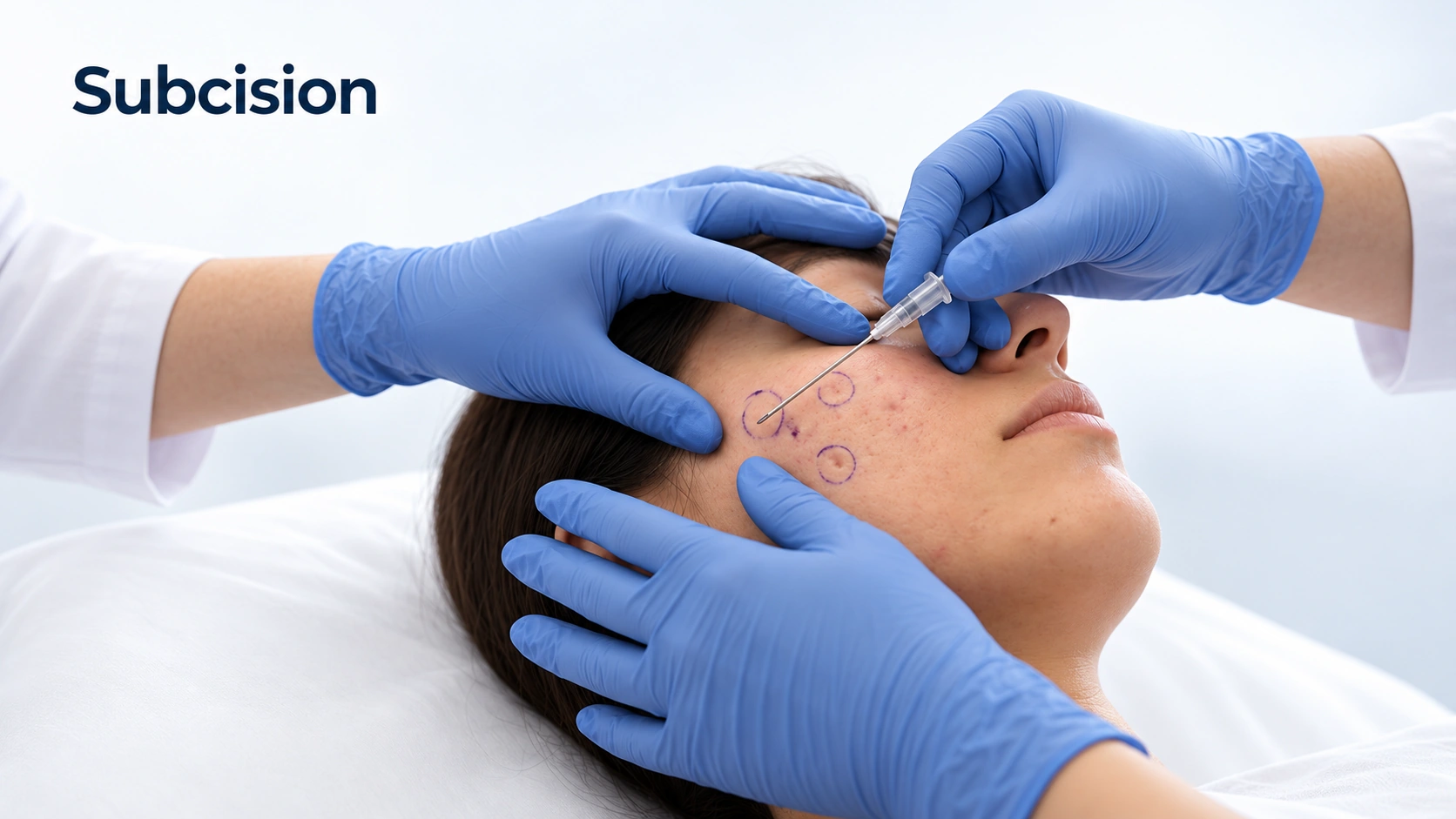
Some of them. Rolling scars respond to subcision, needling and laser; deep icepick scars often need punch excision or a targeted acid technique; boxcar scars sit in between. Expect a course and partial improvement, not one operation.
Sometimes — when the scar restricts movement or vision, causes symptoms, or follows cancer surgery or trauma. Revision for appearance is cosmetic. Ask the office to check with your insurer before you book.
Yes, but the order changes. Injections, silicone and pressure come first, elective surgery on high-risk sites is approached carefully, and if a keloid is removed, something is always done alongside to control the healing. Tell the provider at the first visit.