Palmoplantar Psoriasis vs Tinea Manuum

Psoriasis affecting the palms or soles, where thick scale and cracking can be disabling. A fungal infection of the hand, often associated with athlete’s foot.
Research updated 2026-10-23
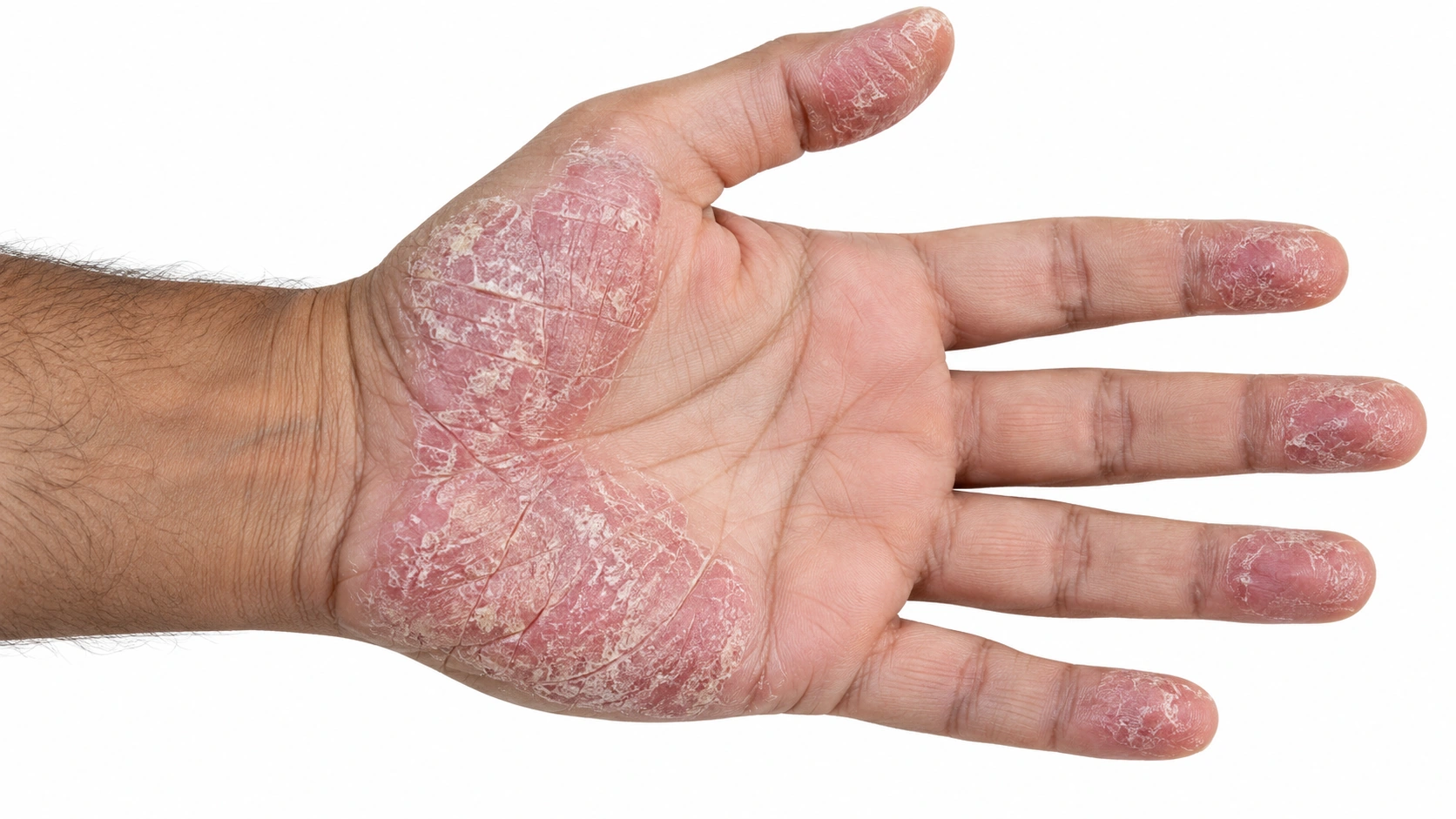
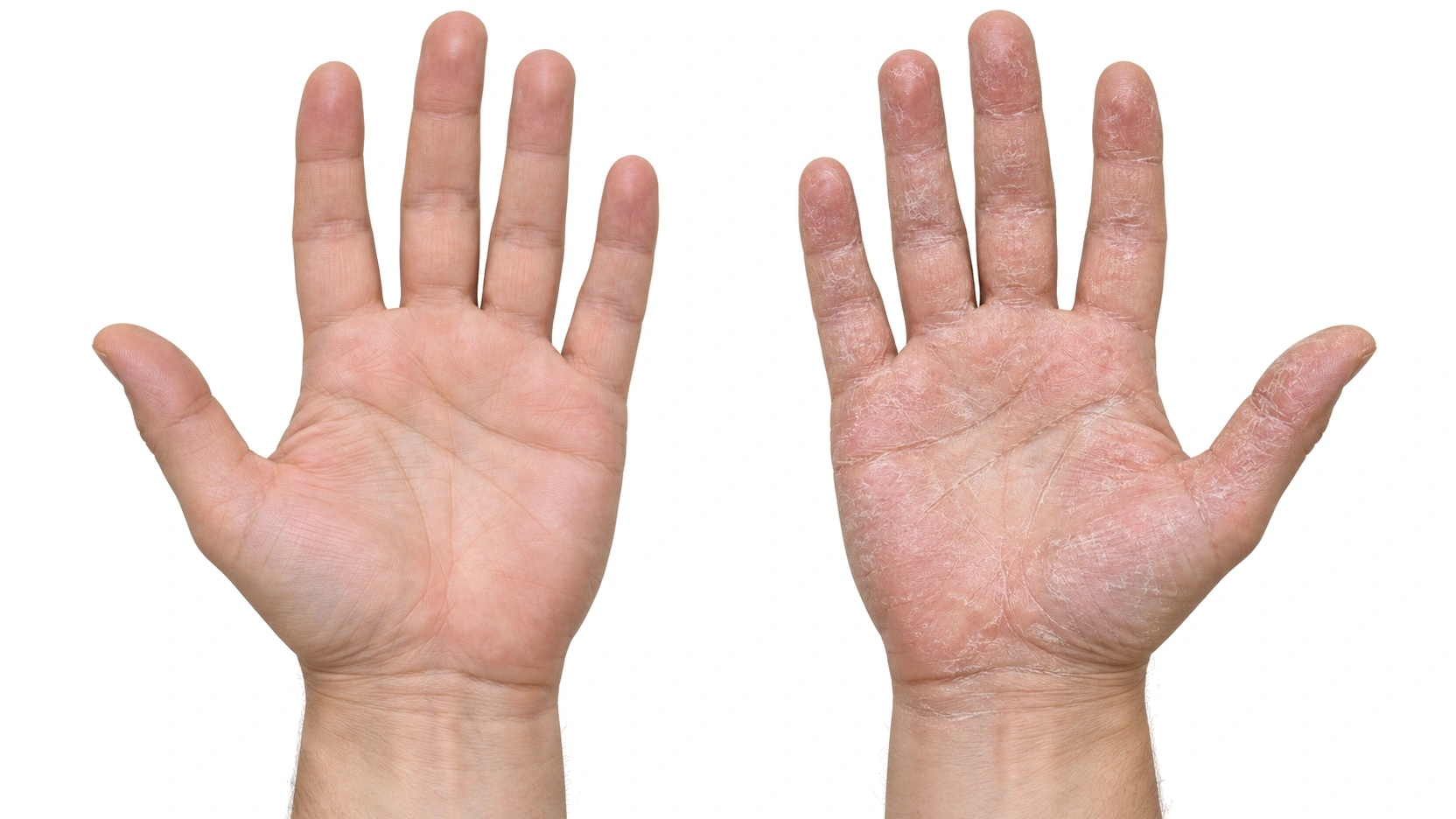
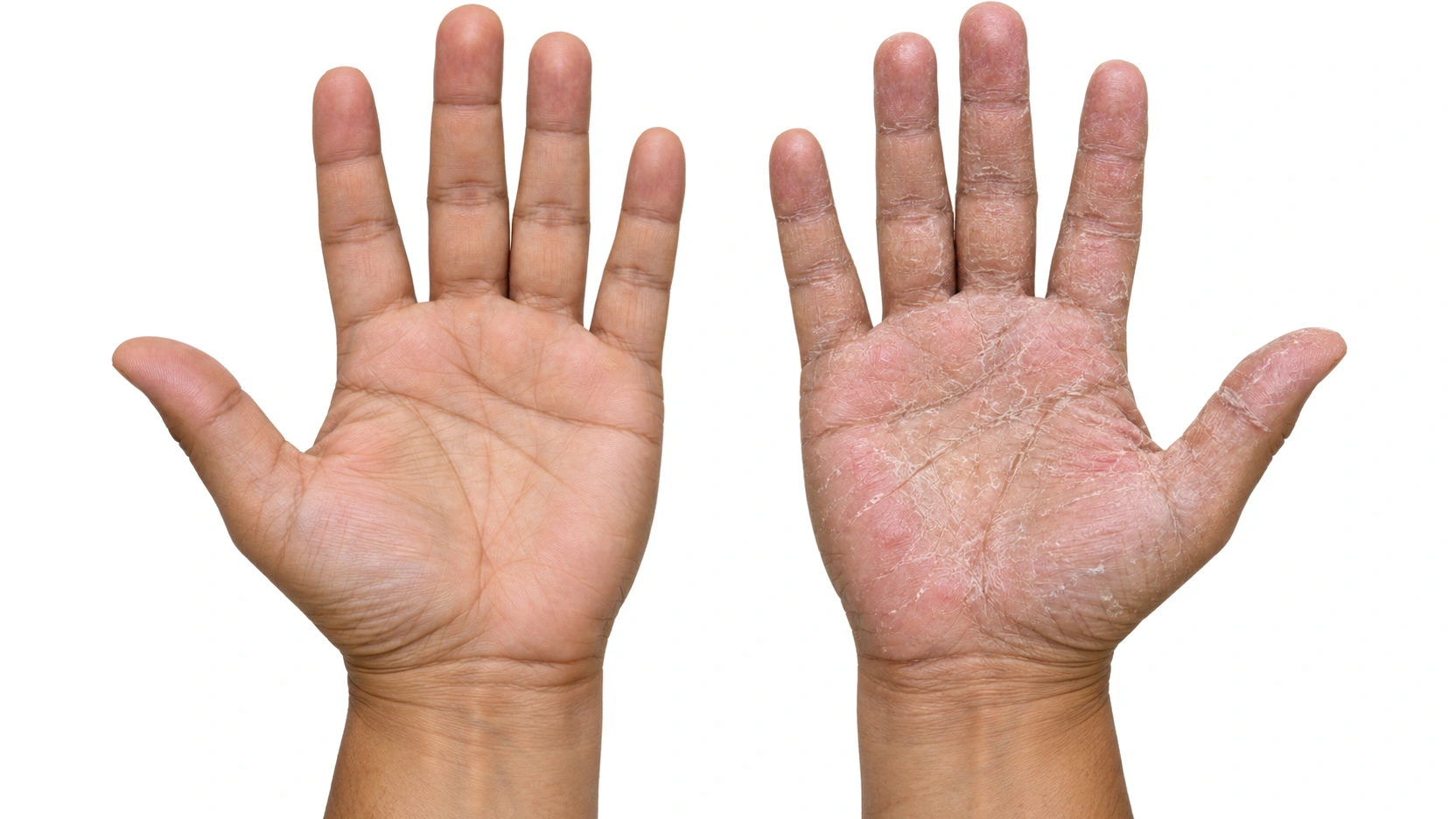
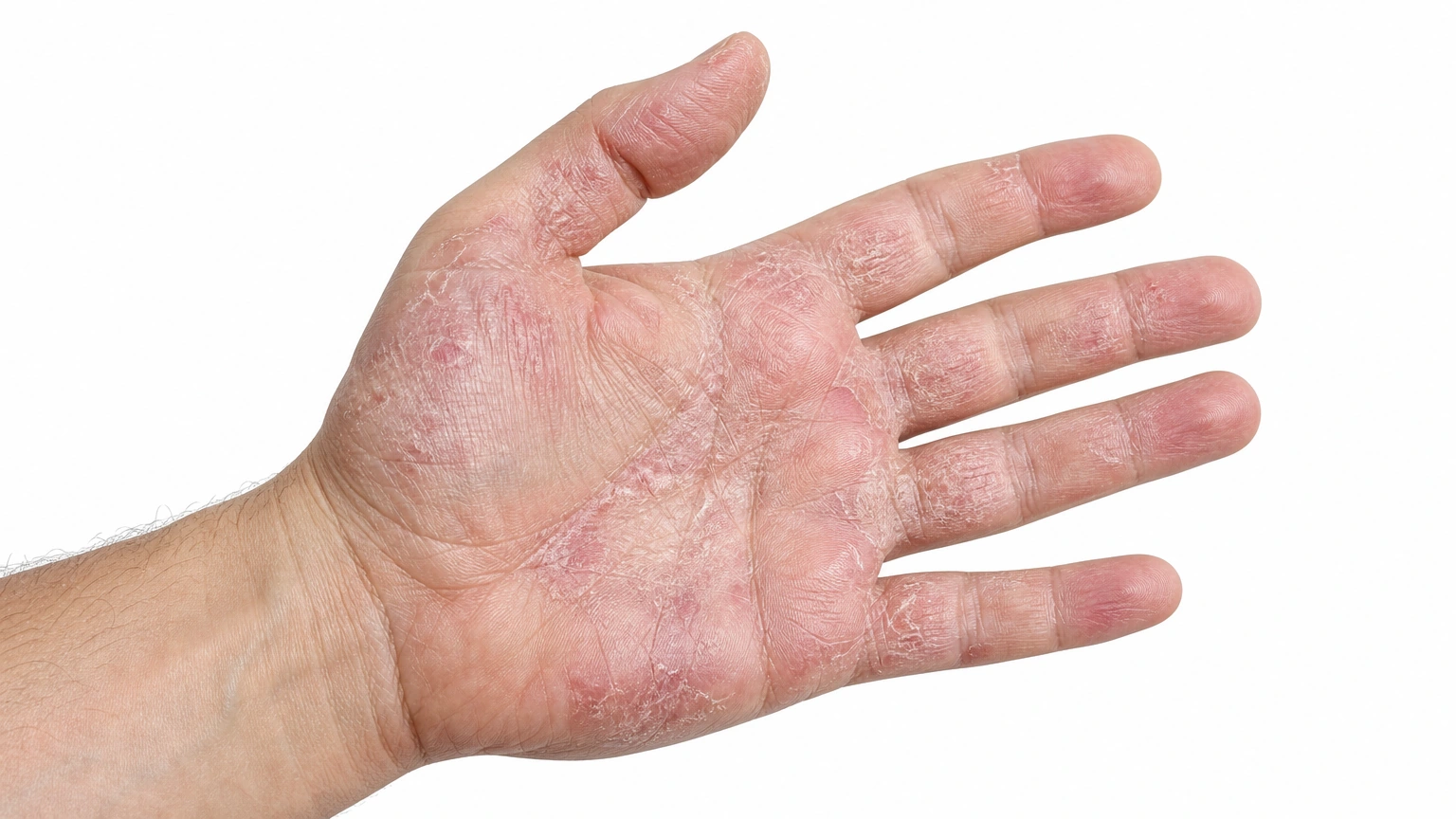
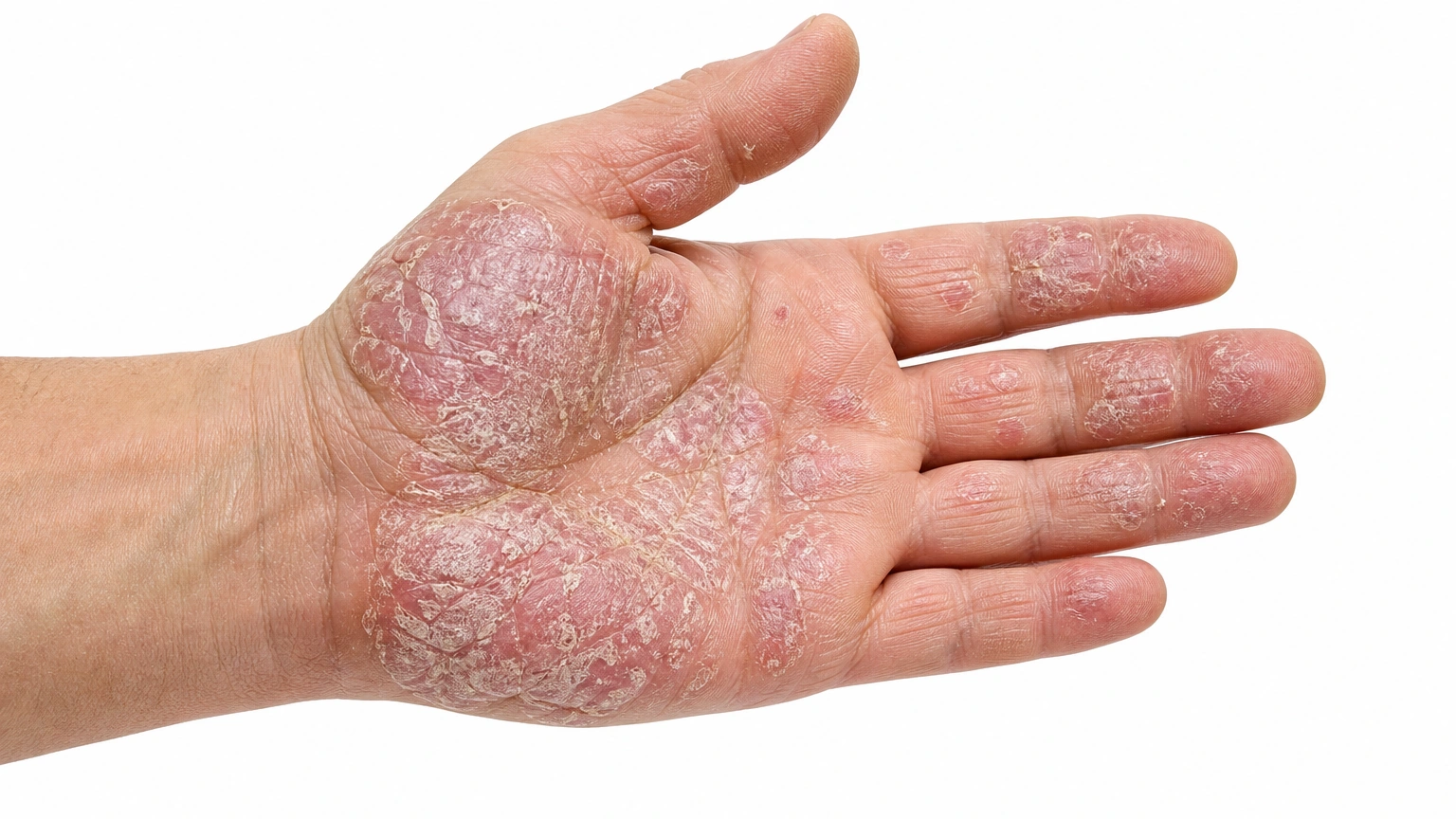
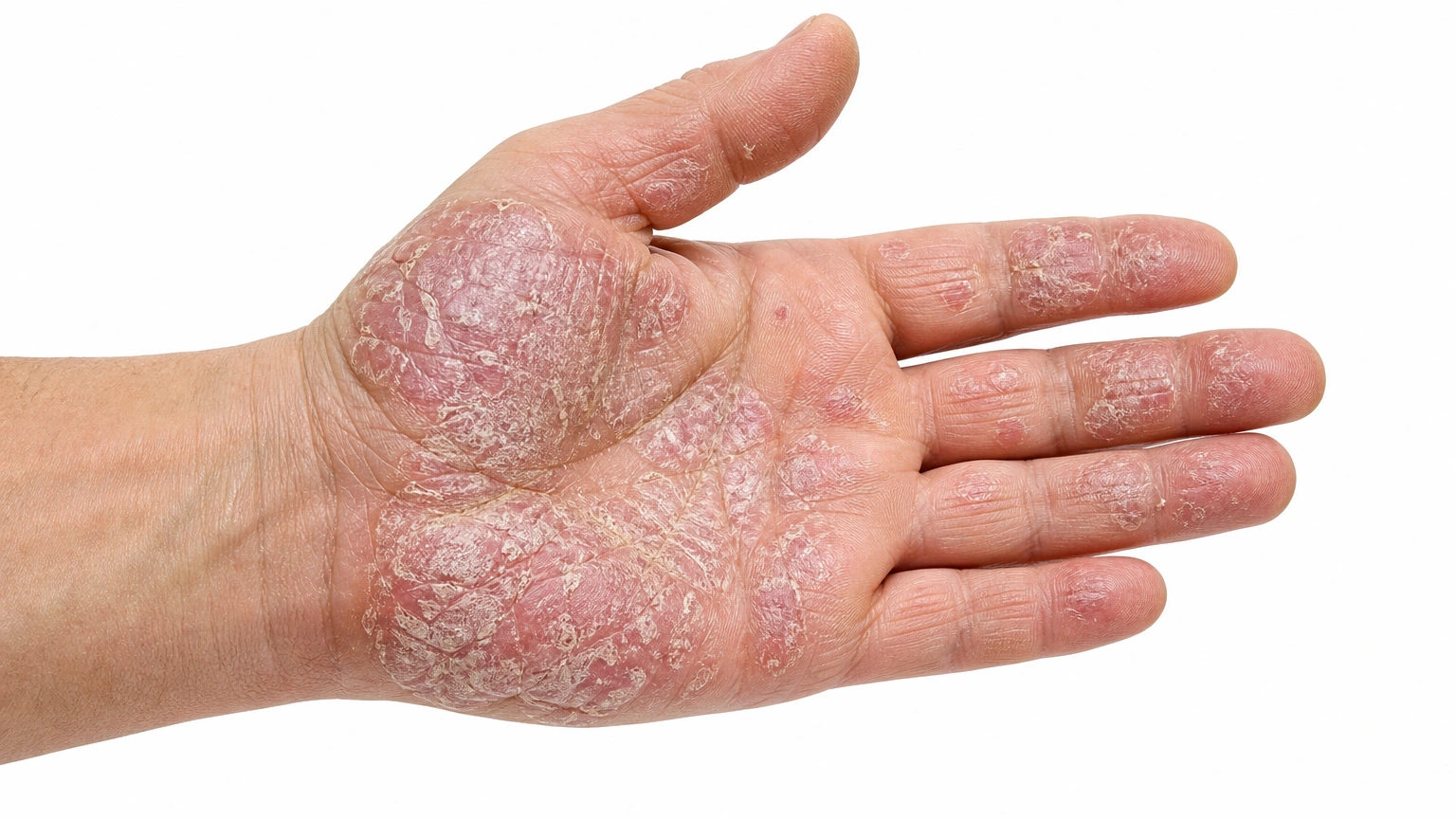
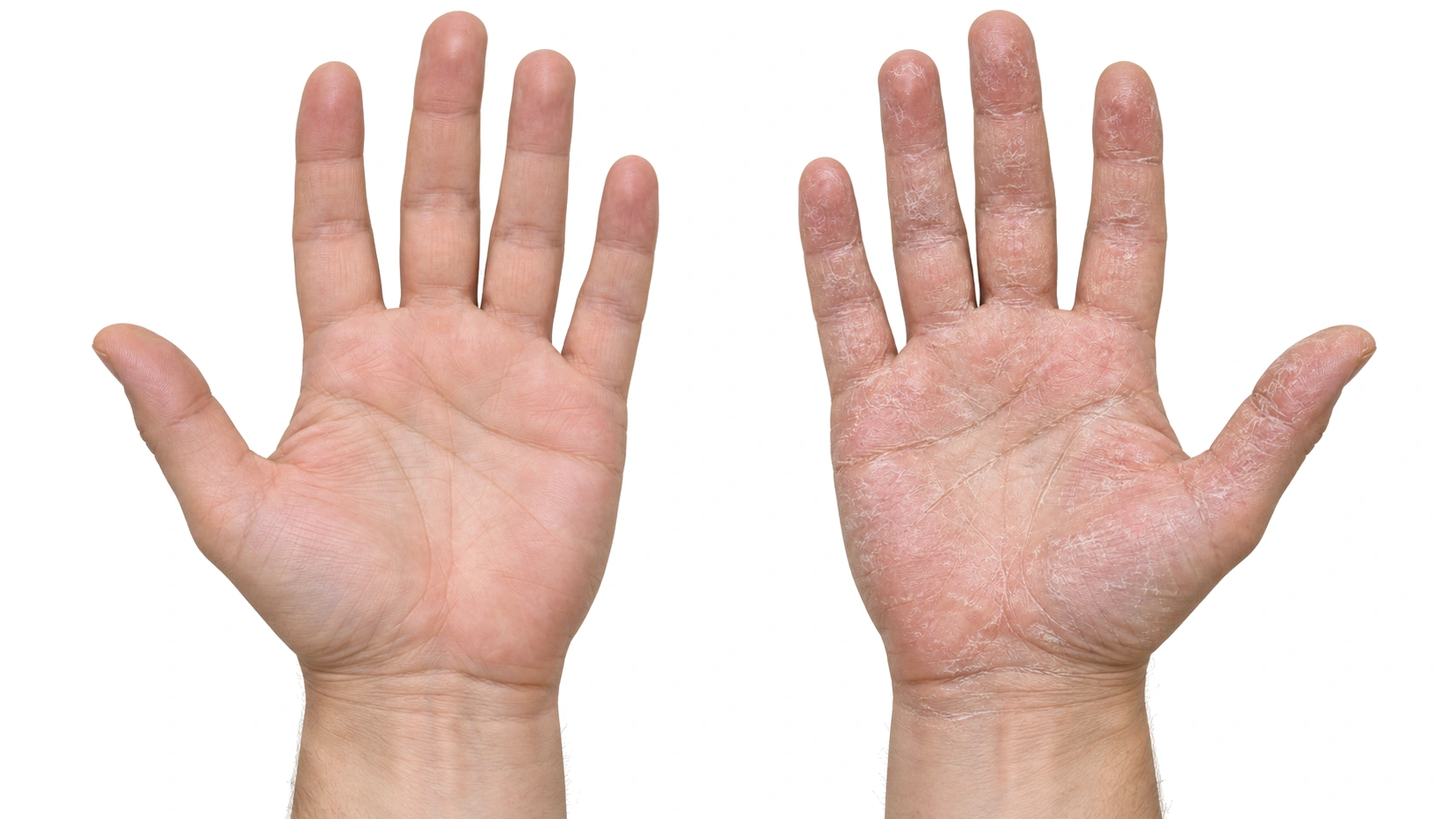
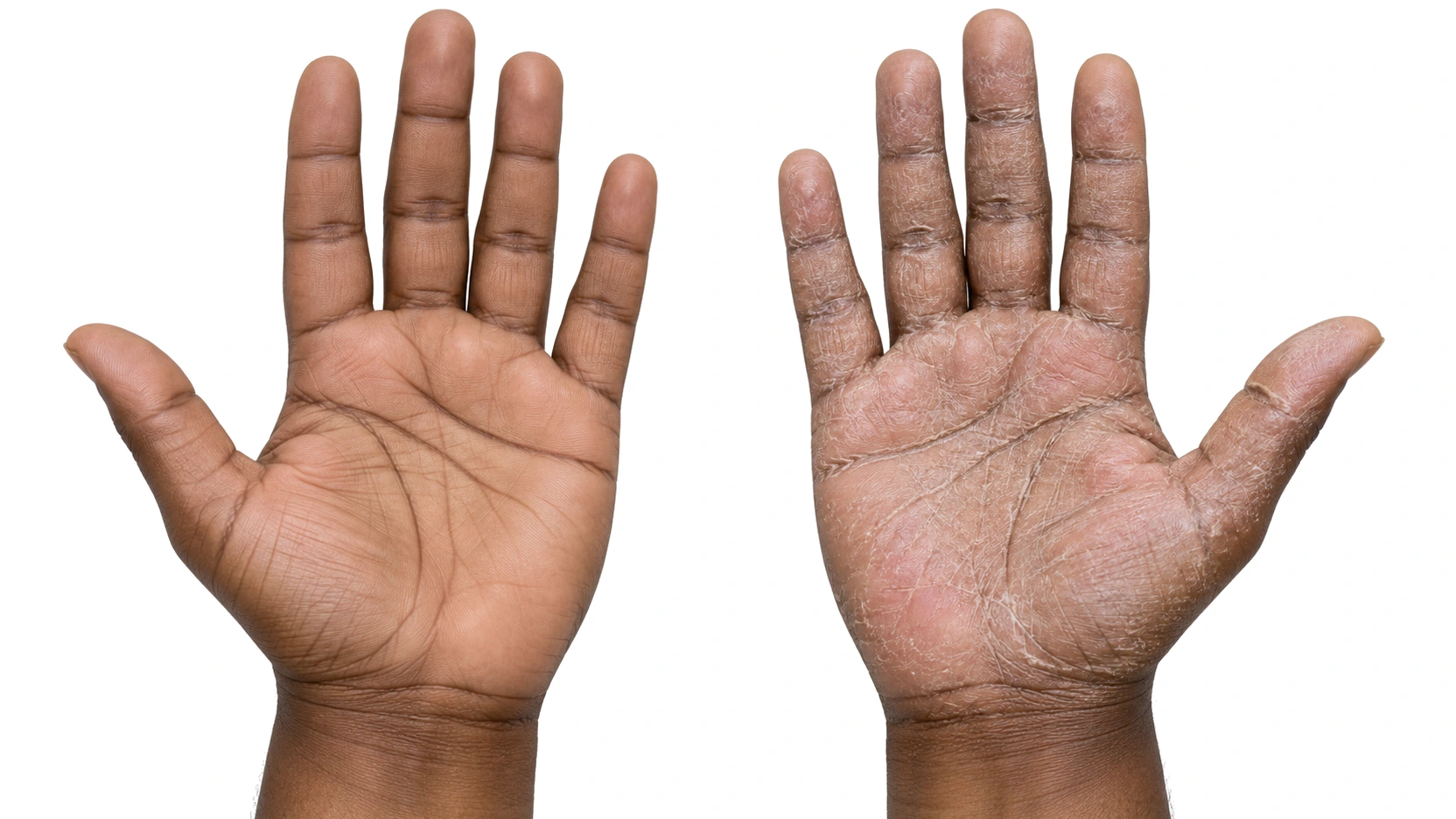
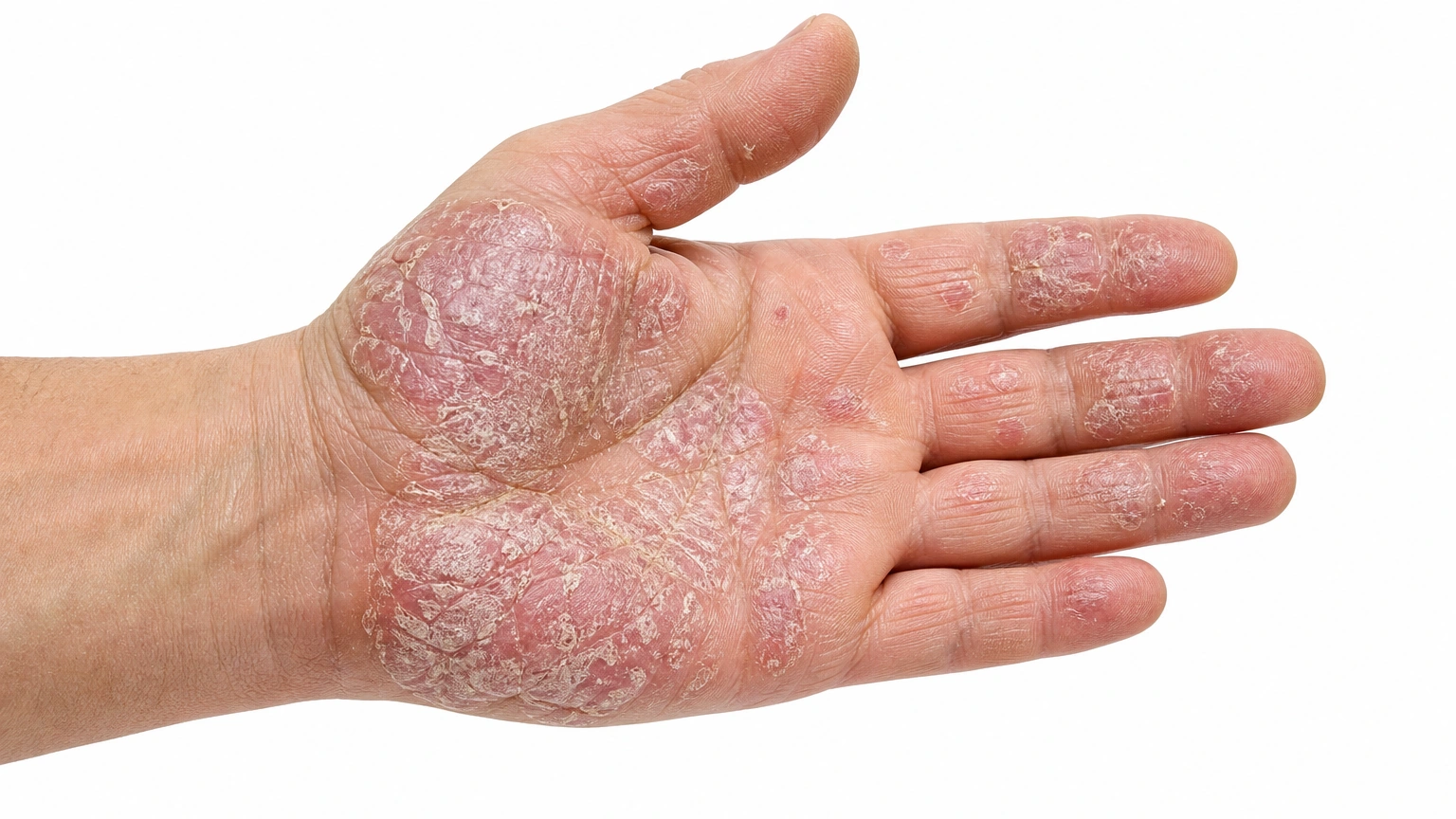
AI-generated educational illustration: Thick sharply defined scaly plaques across the palm and fingers, representing palmoplantar psoriasis.Both palms shown side by side, with diffuse fine scaling on only one hand.

Key differences

The same eight facts on every condition comparison.

Usual age
Adults
Adults
Where
Palms and soles
Usually one palm
Main sign
Thick scale and cracks
Dry scale in palm creases
Itch or pain
Painful cracks
Mild itch
Contagious
No
Yes
Long term
Long-term, flares
Clears with antifungals
Scars
No
No
Who gets it
People with psoriasis; smokers
People with athlete's foot

What is it?

Palmoplantar Psoriasis
Tinea Manuum
What is it?
  • What it is
    Psoriasis affecting the palms or soles, where thick scale and cracking can be disabling.
  • What it is
    A fungal infection of the hand, often associated with athlete’s foot.

What it looks like

Palmoplantar Psoriasis

An open hand with broad pink plaques, thick white scale, and surface cracks.

Palmoplantar Psoriasis Red patches and heavy scale cover much of the palm and parts of the fingers.
Tinea Manuum

An open hand with diffuse pinkness, flaky white scale, and rough skin on the palm.

Tinea Manuum Dry white scale covers broad areas of the palm and fingers.
Skin tones
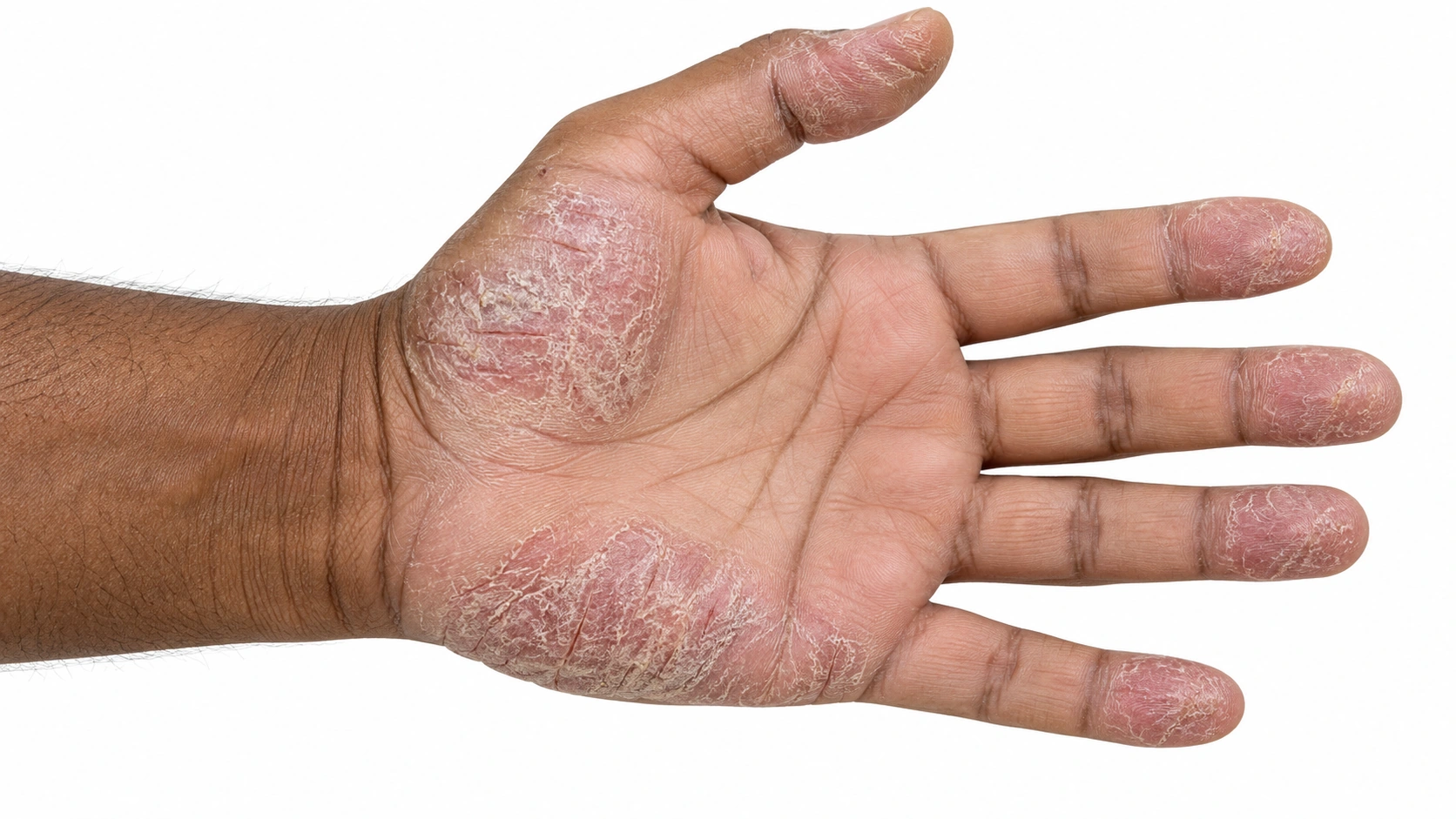
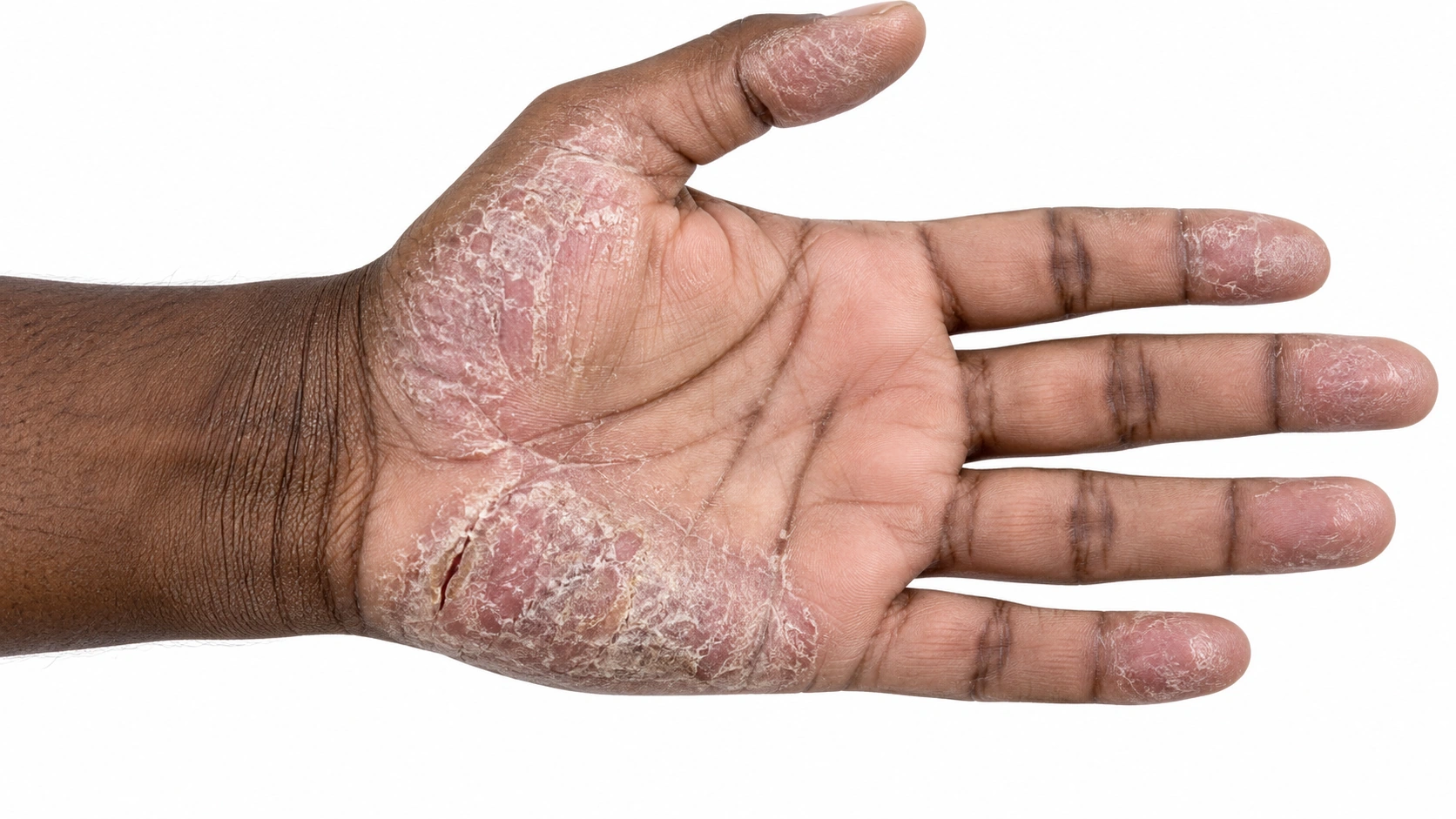
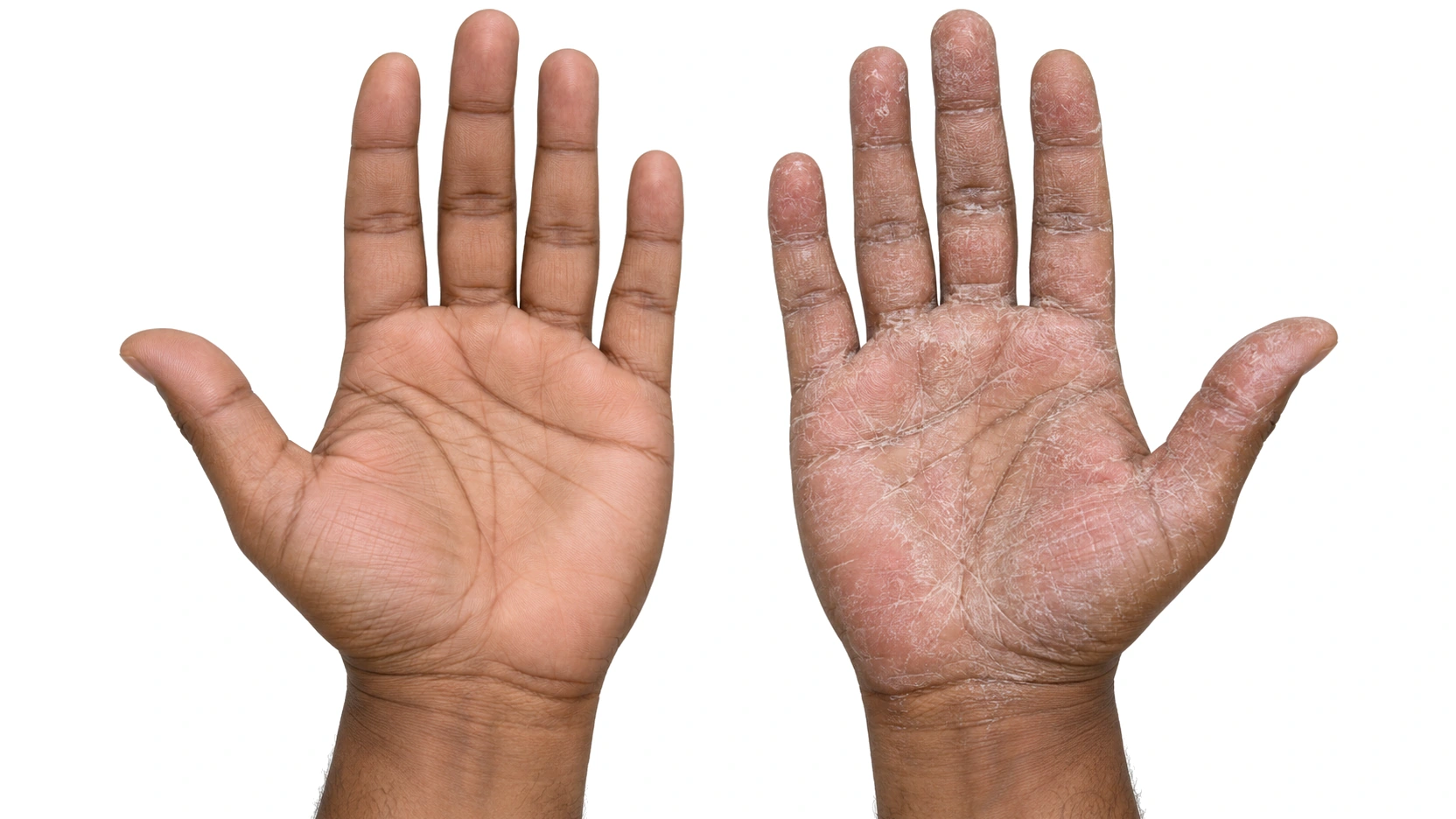
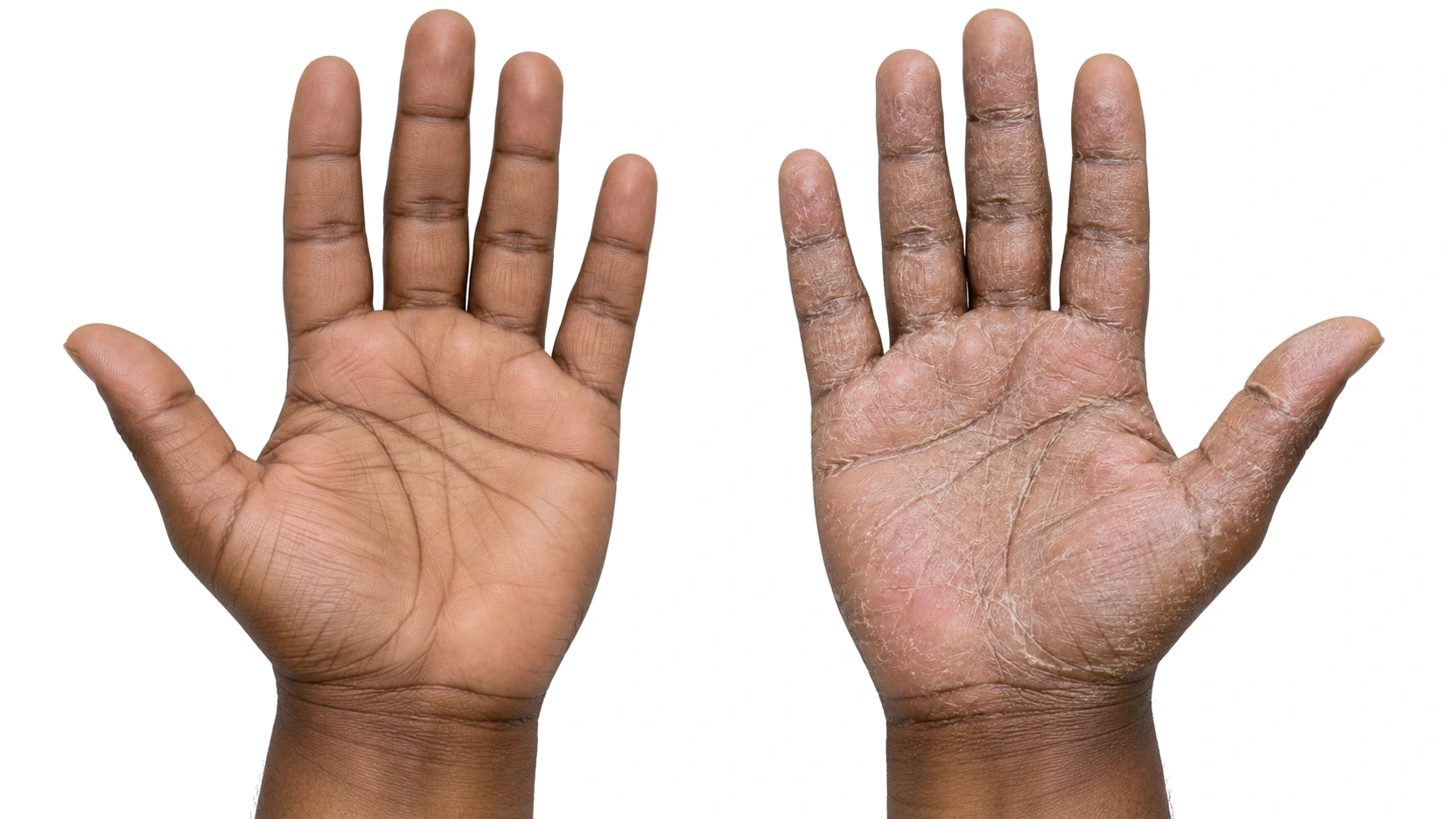
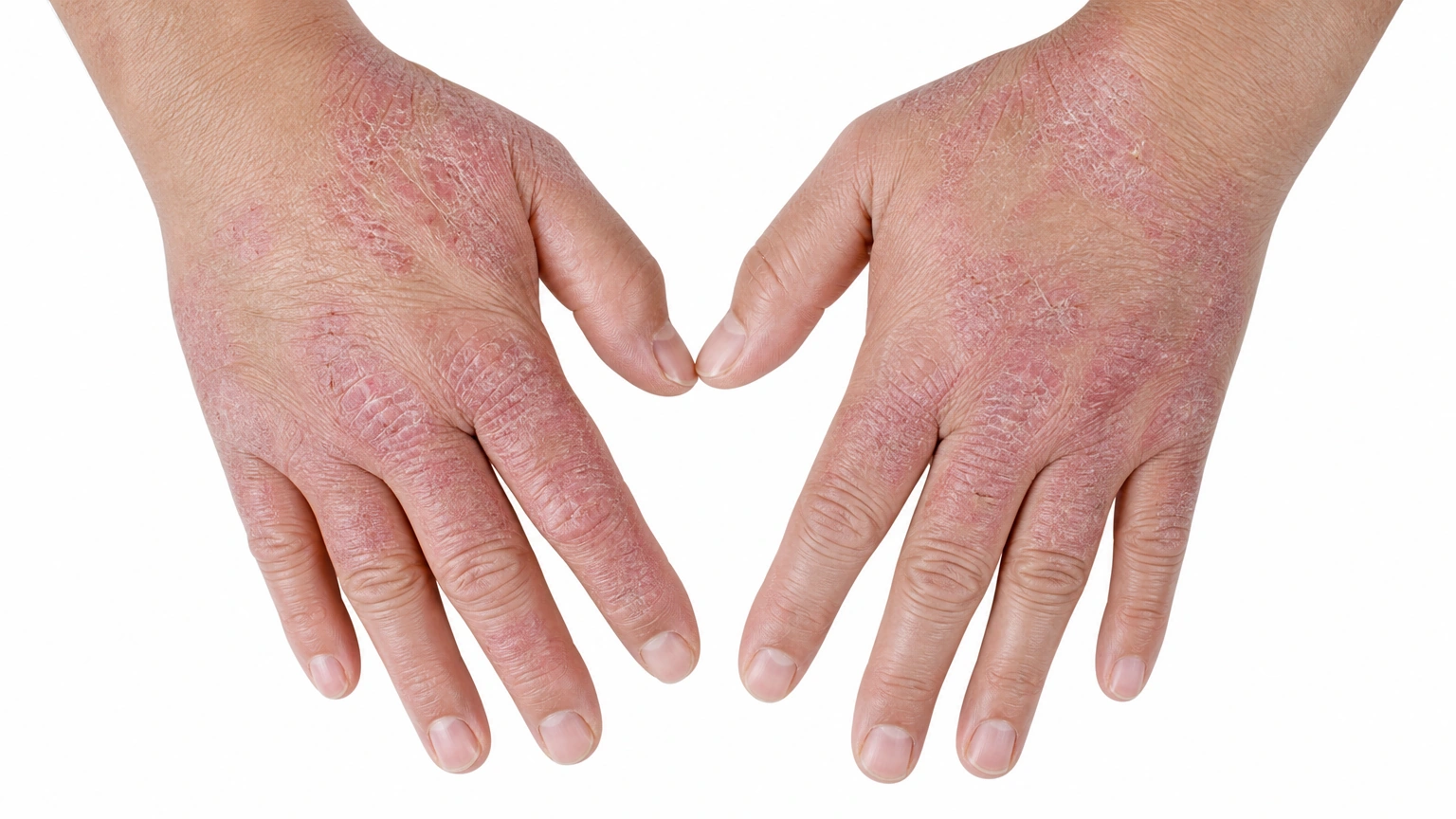
Palmoplantar Psoriasis on light skin.
Palmoplantar Psoriasis.
Both palms shown side by side, with diffuse fine scaling on only one hand.
In the skin

Immune inflammation speeds skin-cell production on the palms or soles. Cells accumulate in thickened patches that may develop scale or cracks.

Dermatophyte fungi infect the keratin of the outer hand skin. Local inflammation and altered shedding can cause scale or thickening, sometimes without a classic ring-shaped edge.

When it usually starts

010203040506070+

Palmoplantar Psoriasis. Can start at any age, with different patterns at different life stages.

Tinea Manuum. Can occur at any age; assess for infection on the feet.

Causes and triggers

Causes

Immune inflammation speeds skin-cell turnover; psoriasis is not contagious.

Dermatophyte fungi infect keratin-containing skin or hair.

Risk factors
Family tendency, Immune susceptibility
Contact with an infected person or animal, Fungal infection elsewhere
Trigger
● Palmoplantar Psoriasis
● Tinea Manuum
Friction
Can contribute
Not listed
Skin injury
Can contribute
Not listed
Fungal exposure
Not listed
Can contribute
Sharing contaminated items
Not listed
Can contribute

Daily Care

Palmoplantar Psoriasis
Tinea Manuum
Daily care

Habits that help

  • Moisturize regularly with a plain fragrance-free product
    Apply after washing and when skin feels dry or tight.
  • Keep washing gentle and water lukewarm
    Use a non-soap cleanser and pat dry rather than rubbing.
  • Protect sore skin from friction and minor injury
    Comfortable clothing and gentle handling reduce avoidable irritation.
  • Keep a manageable record of flares and symptoms
    Note new medicines, infections or joint symptoms to discuss at review.
  • Protect painful cracks and reduce pressure on palms and soles
    Use suitable dressings, cushioned footwear and task-appropriate gloves; do not cut thick scale with a blade.
  • Follow the palmoplantar psoriasis care plan
    Use thick emollient, protect fissures and reduce repeated friction. Treatment must account for thick skin.

Avoid

  • Avoid: Picking scale or scratching plaques
    Injury can worsen psoriasis and create breaks in the skin.
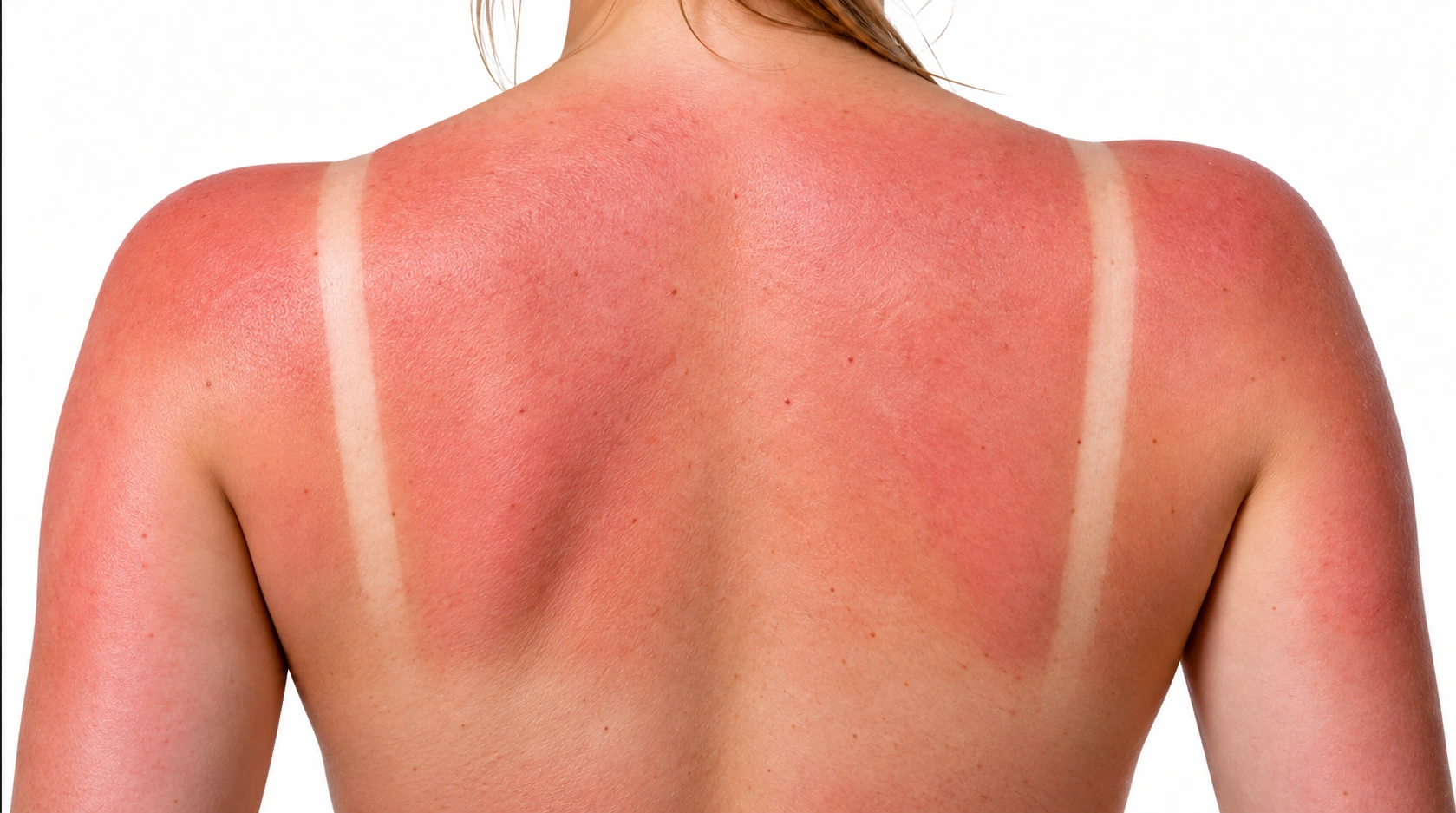
  • Avoid: Unsupervised tanning or harsh home exfoliation
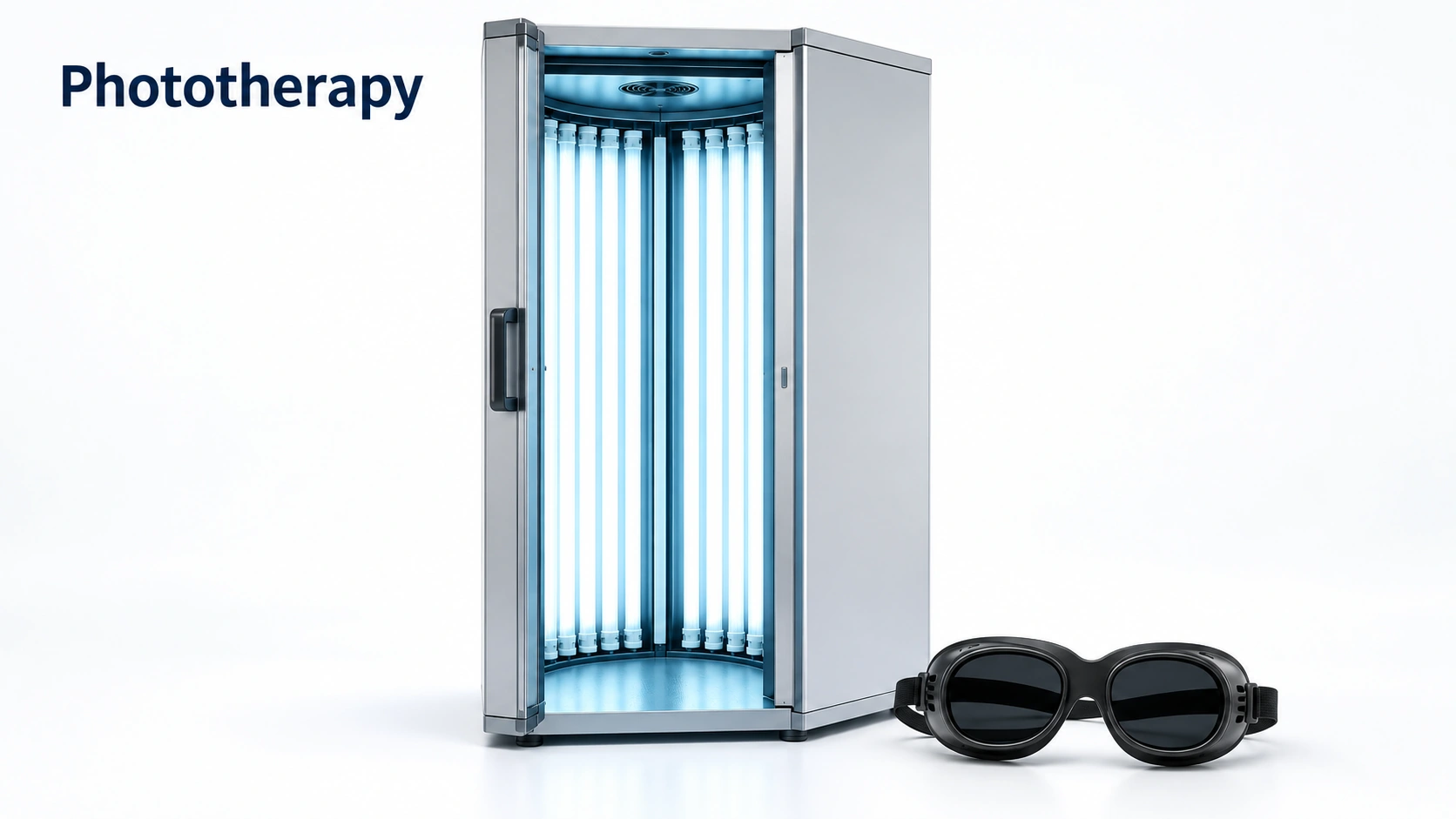
    Sunburn and irritation can trigger worsening; prescribed phototherapy is different from tanning.

Habits that help

  • Keep the affected area gently clean and dry
    Pat rather than rub and change clothing or headwear that stays damp.
  • Keep towels, combs, brushes and razors for your own use
    Wash shared fabrics and clean personal tools to reduce spread.
  • Wash hands after touching affected skin
    Avoid scratching or moving fungal material to other areas.
  • Complete the prescribed antifungal plan
    Symptoms may improve before infection has fully cleared.
  • Check for infection on the feet and nails too
    Untreated fungal disease elsewhere can repeatedly reseed the hands.
  • Follow the tinea manuum care plan
    Avoid sharing towels, combs or razors. Keep the area clean and follow the full treatment course.

Avoid

  • Avoid: Steroid cream alone on a suspected fungal rash
    It can hide the appearance and allow infection to spread.
  • Avoid: Relying on hygiene alone to clear the infection
    Persistent disease needs the correct diagnosis and antifungal treatment.

Treatment differences

Evidence labels come from each condition’s own treatment list.

Treatment
● Palmoplantar Psoriasis
● Tinea Manuum
Over-the-counter

Urea moisturizer

Listed

Can soften thick dry scale; avoid irritating open fissures.
Existing educational treatment illustration: Spinosad

Terbinafine cream

Listed

A topical antifungal option for localised dermatophyte skin infection; follow the product course and avoid eyes.

Prescription topicals

Potent topical corticosteroid

Listed

Thick palm or sole psoriasis may need a carefully supervised course and escalation if function is impaired.

None listed
Prescription pills
None listed

Oral antifungal assessment

Listed

Widespread or persistent infection may require a prescription after confirming the diagnosis.

Outlook

Long term

Palm and sole psoriasis can be persistent and may flare again after improvement. Treatment aims to reduce thickening, cracks and pain while preserving hand and foot function.

Hand ringworm usually improves with appropriate antifungal treatment. Infection may return if another source, such as the feet or nails, remains untreated; an uncertain or persistent rash needs testing.

Complications

Possible complications

Psoriasis can accompany inflammatory joint disease. Report persistent joint stiffness or swelling.

An untreated infection can spread to contacts or other sites; inflamed hair infection can scar.

When to get help

When to get help

Seek care for painful cracks, widespread flares, joint symptoms or uncertain diagnosis.

Seek assessment if the diagnosis is uncertain; painful swollen scalp or beard lesions need prompt care.

Common questions

Palmoplantar Psoriasis:What is Palmoplantar Psoriasis?

Psoriasis affecting the palms or soles, where thick scale and cracking can be disabling.

Palmoplantar Psoriasis:What can I do day to day?

Use thick emollient, protect fissures and reduce repeated friction. Treatment must account for thick skin.

Palmoplantar Psoriasis:When should I get medical advice?

Seek care for painful cracks, widespread flares, joint symptoms or uncertain diagnosis.

Tinea Manuum:What is Tinea Manuum?

A fungal infection of the hand, often associated with athlete’s foot.

Tinea Manuum:What can I do day to day?

Avoid sharing towels, combs or razors. Keep the area clean and follow the full treatment course.

Tinea Manuum:When should I get medical advice?

Seek assessment if the diagnosis is uncertain; painful swollen scalp or beard lesions need prompt care.

Sources
Sources and further reading

  1. Psoriasis of the palms and soles
  2. Tinea manuum
Dermapedia on YouTube