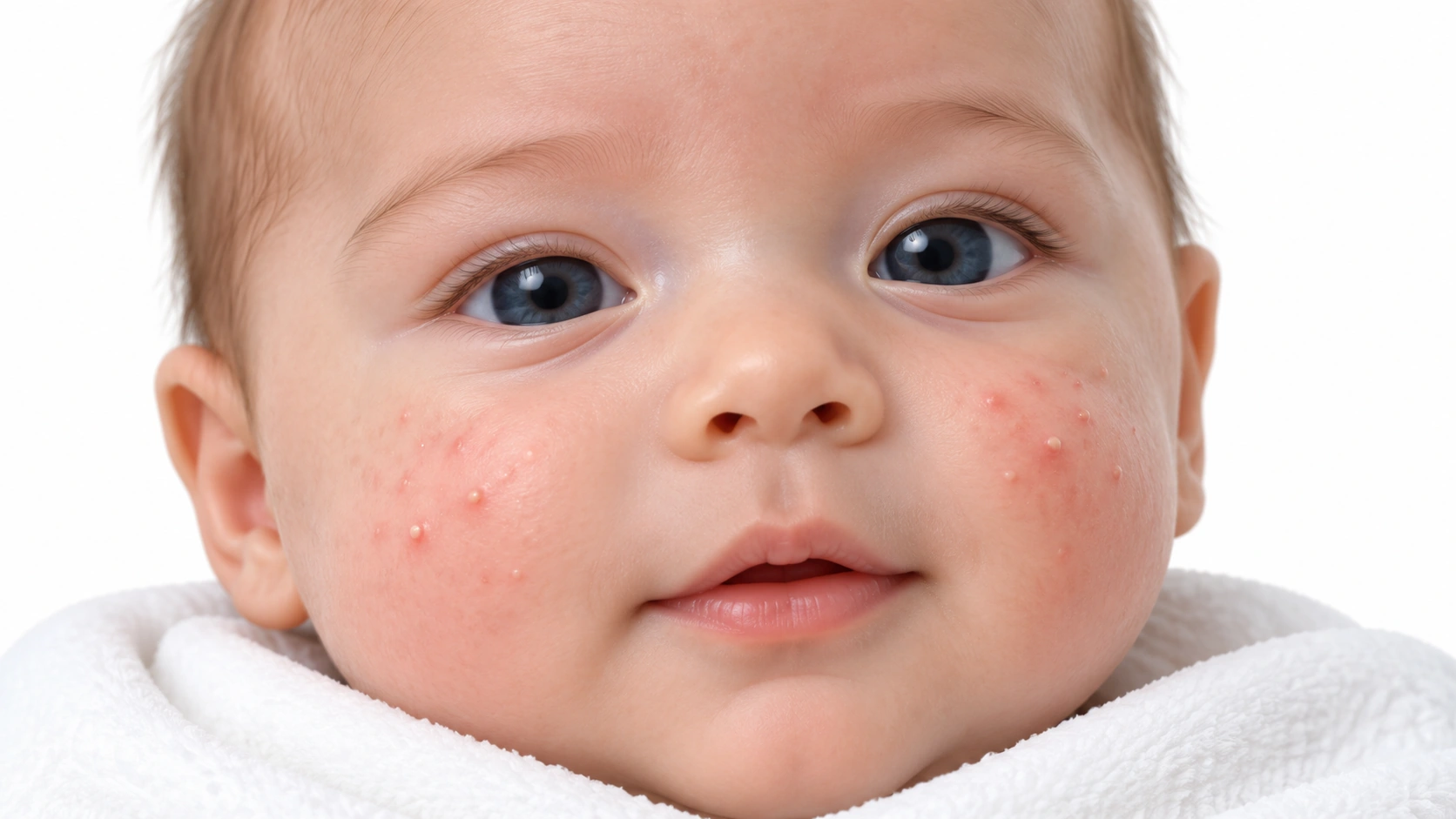
Hand Eczema vs Tinea Manuum

Inflamed hand skin caused by irritation, allergy, eczema tendency or a combination. A fungal infection of the hand, often associated with athlete’s foot.
Research updated 2026-10-23
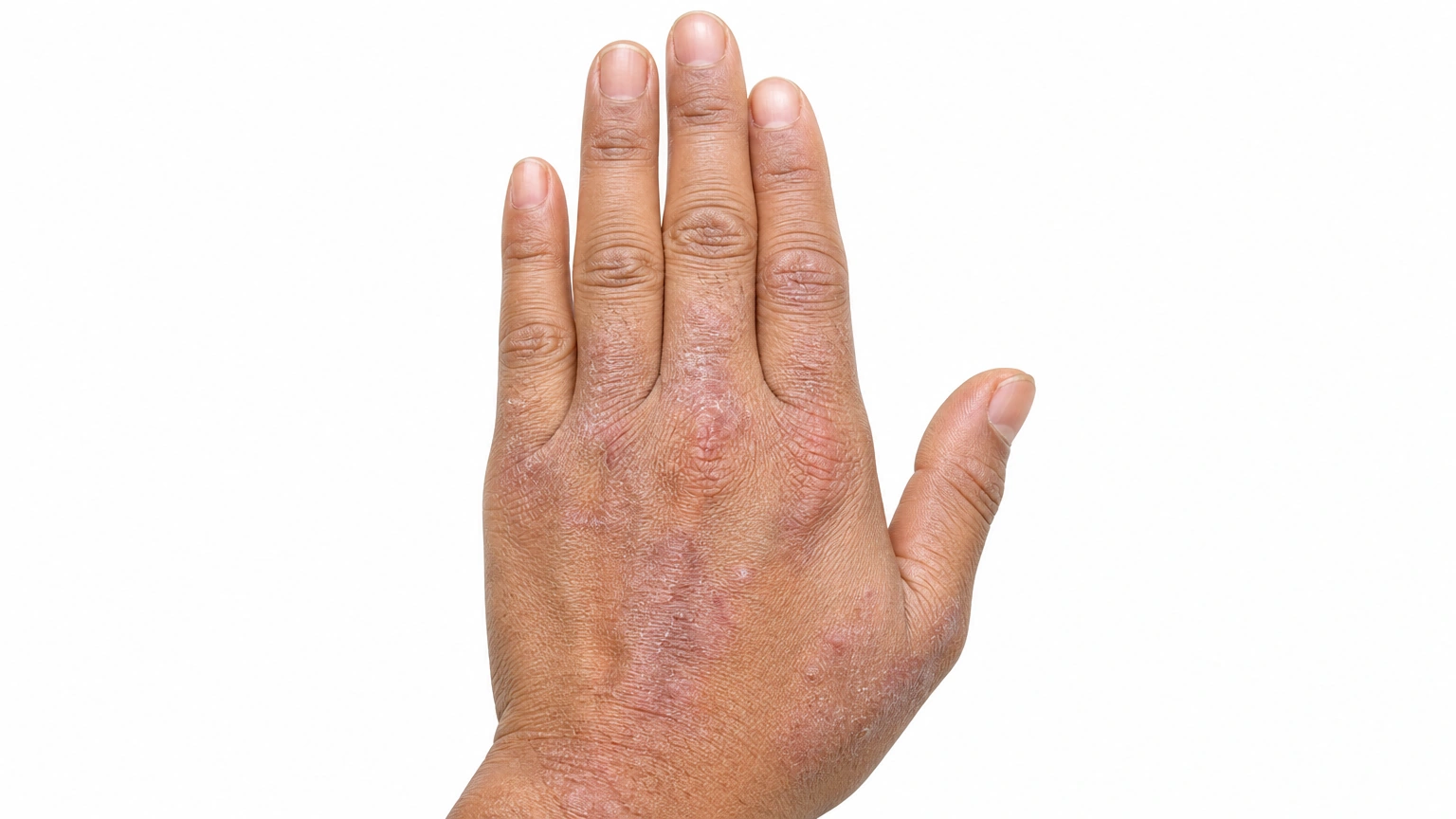
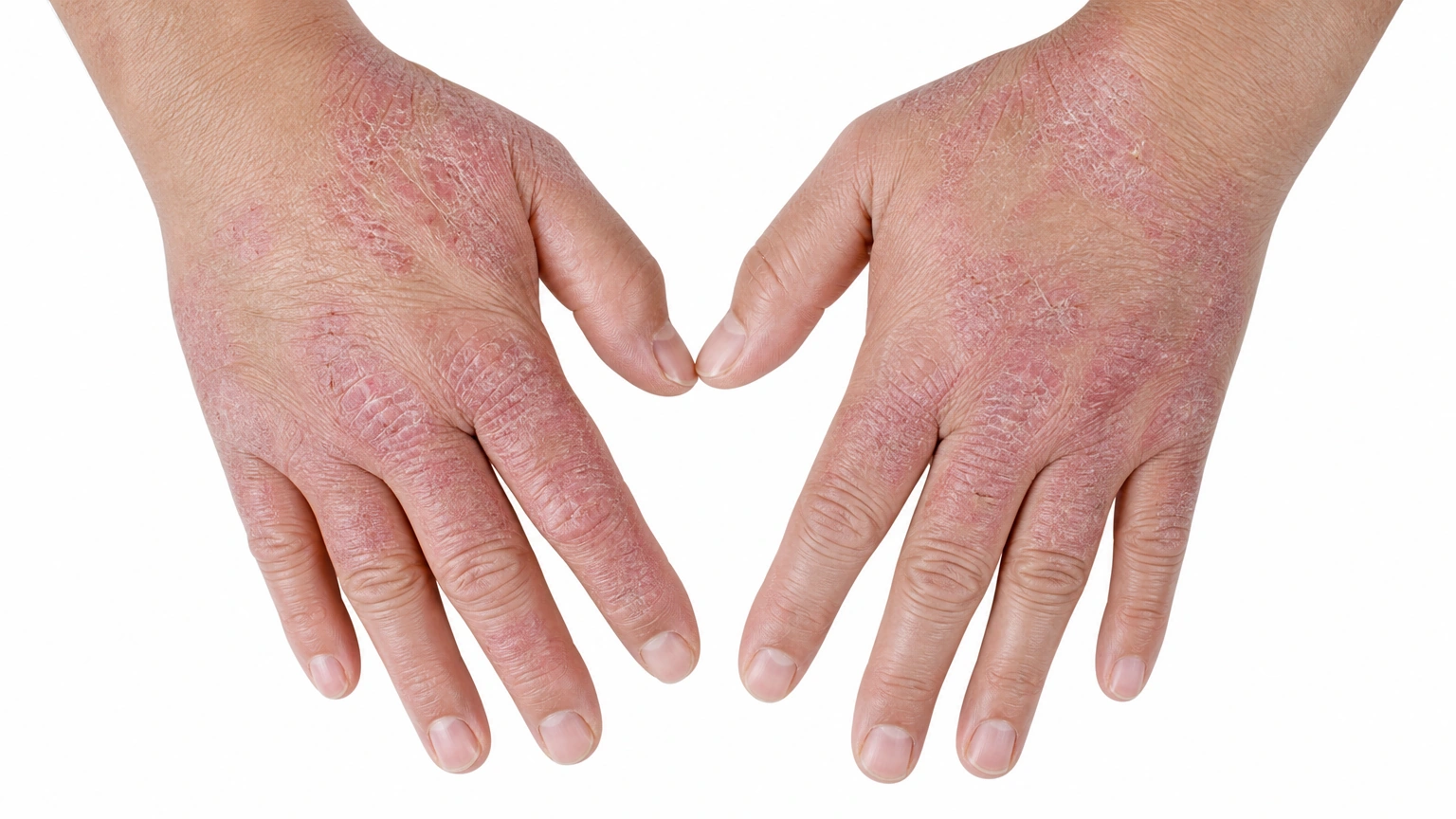
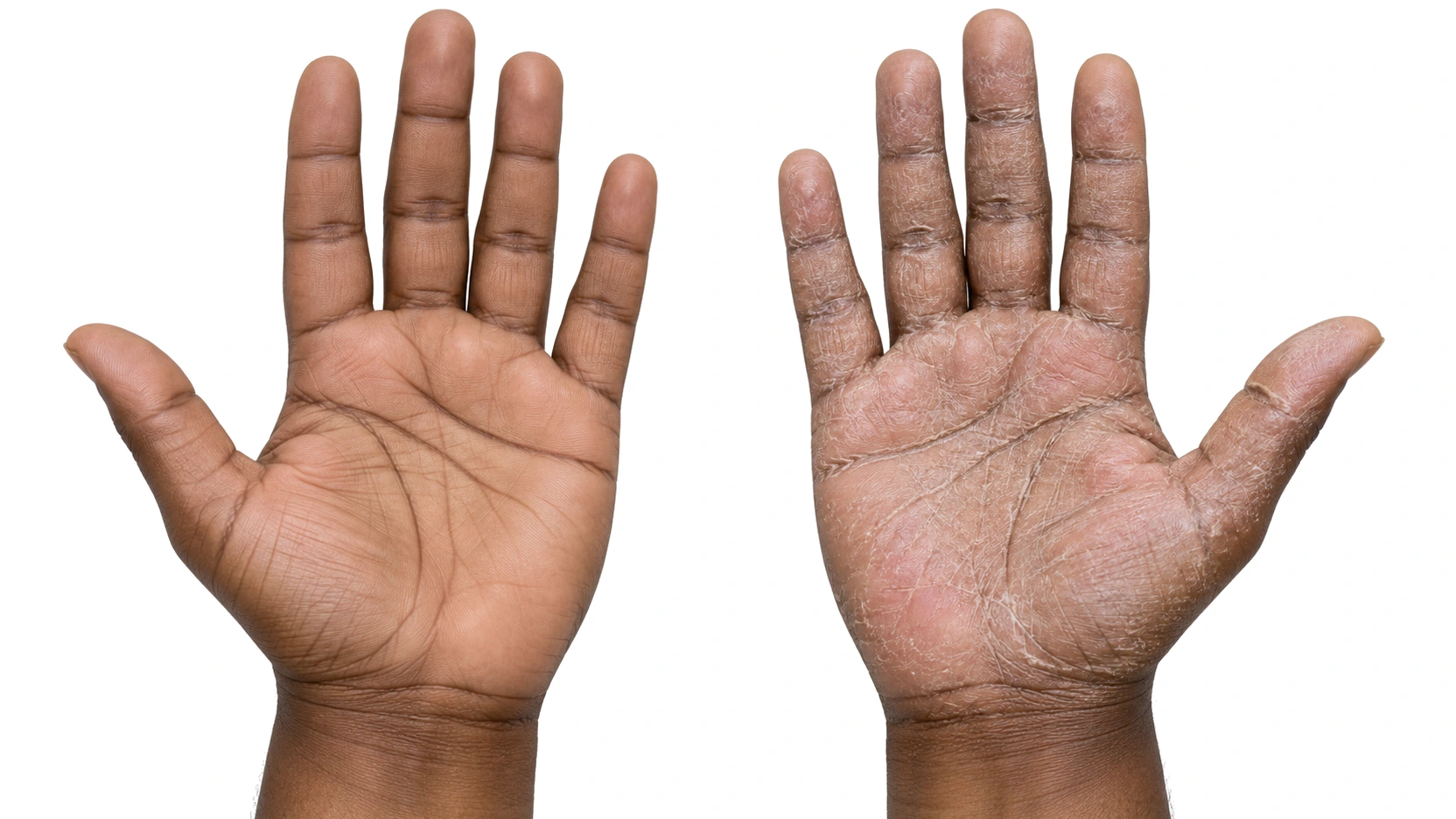
AI-generated educational illustration: Back of adult hands with dry pink-red scaly eczematous patches, mild fine superficial fissures, no bleeding.Both palms shown side by side, with diffuse fine scaling on only one hand.

Key differences

The same eight facts on every condition comparison.

Usual age
Any age
Adults
Where
Fingers, palms, backs of hands
Usually one palm
Main sign
Dry, cracked, red or blistered hands
Dry scale in palm creases
Itch or pain
Itchy, sore
Mild itch
Contagious
No
Yes
Long term
Long-lasting; flares with wet work
Clears with antifungals
Scars
No
No
Who gets it
Wet-work jobs, eczema history
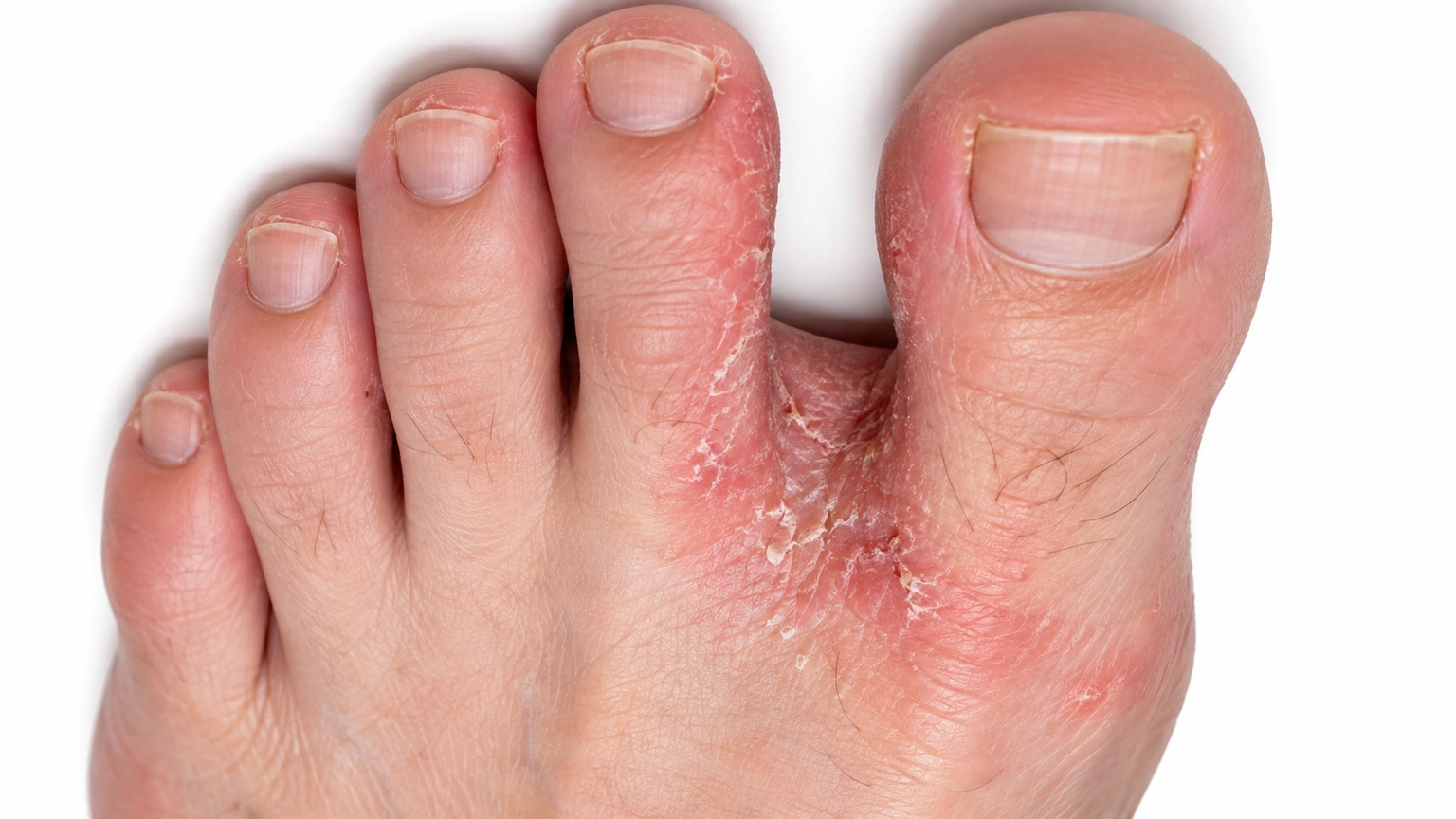
People with athlete's foot

What is it?

Hand Eczema
Tinea Manuum
What is it?
  • What it is
    Inflamed hand skin caused by irritation, allergy, eczema tendency or a combination.
  • What it is
    A fungal infection of the hand, often associated with athlete’s foot.

What it looks like

Hand Eczema

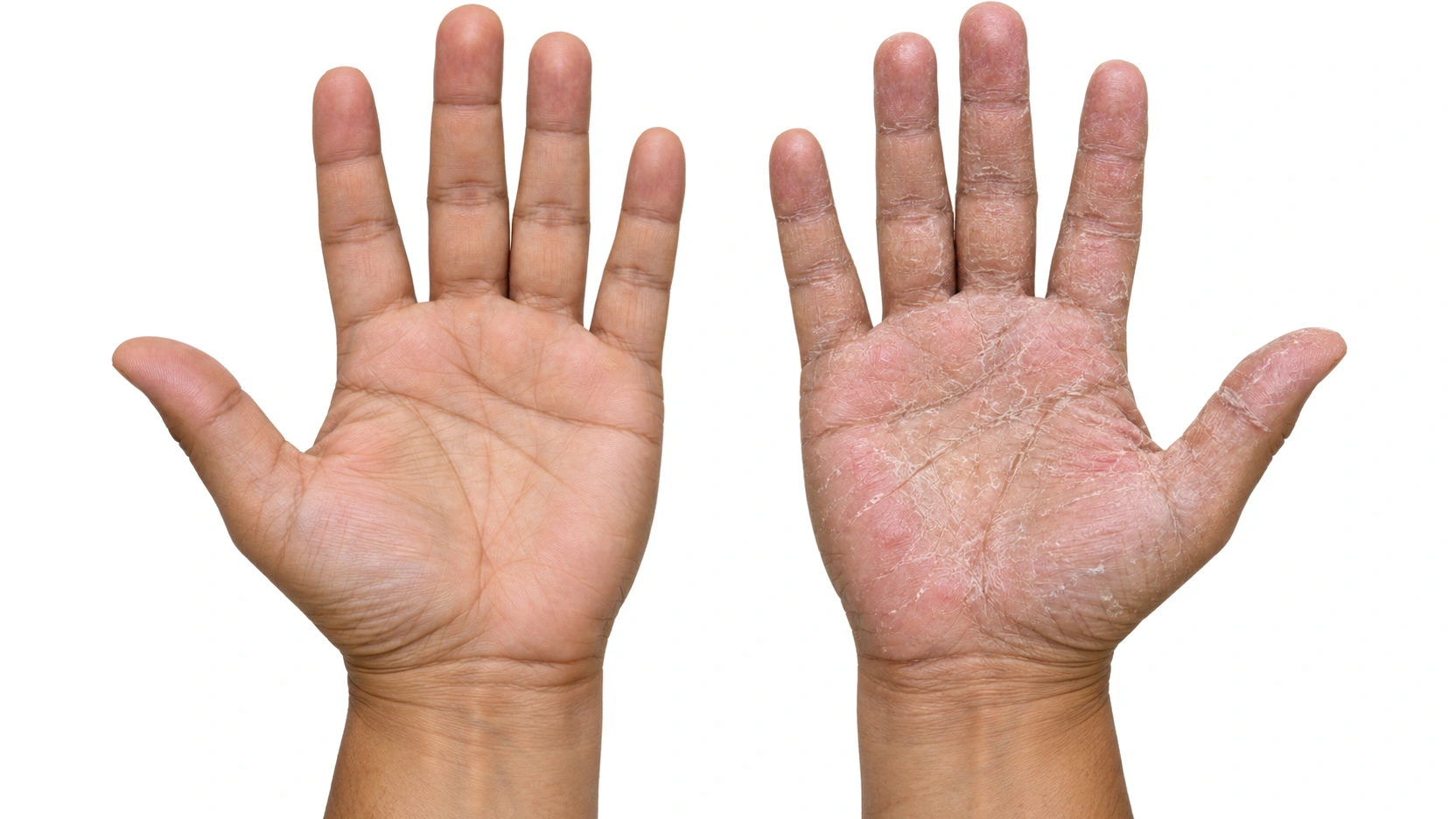
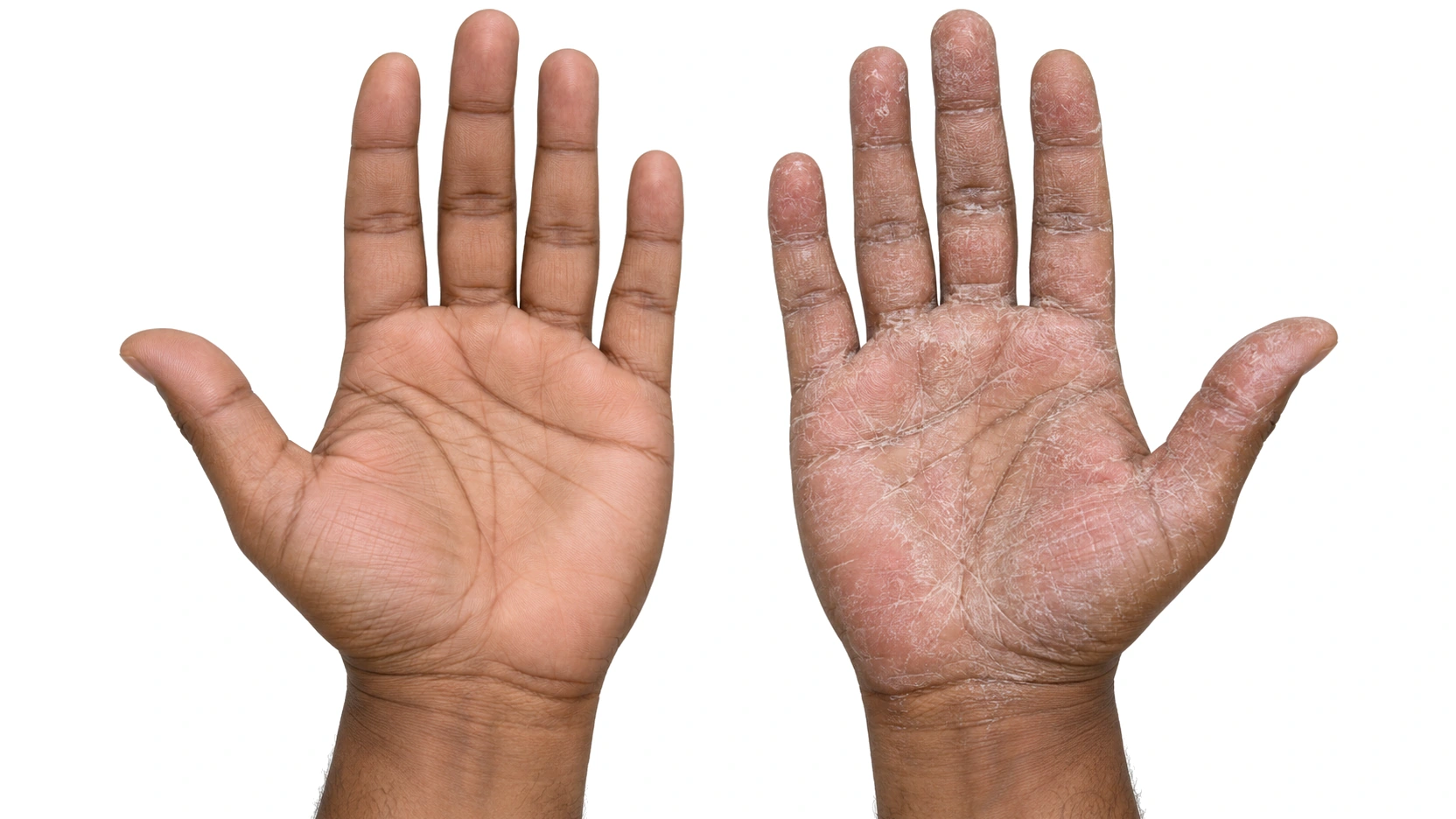
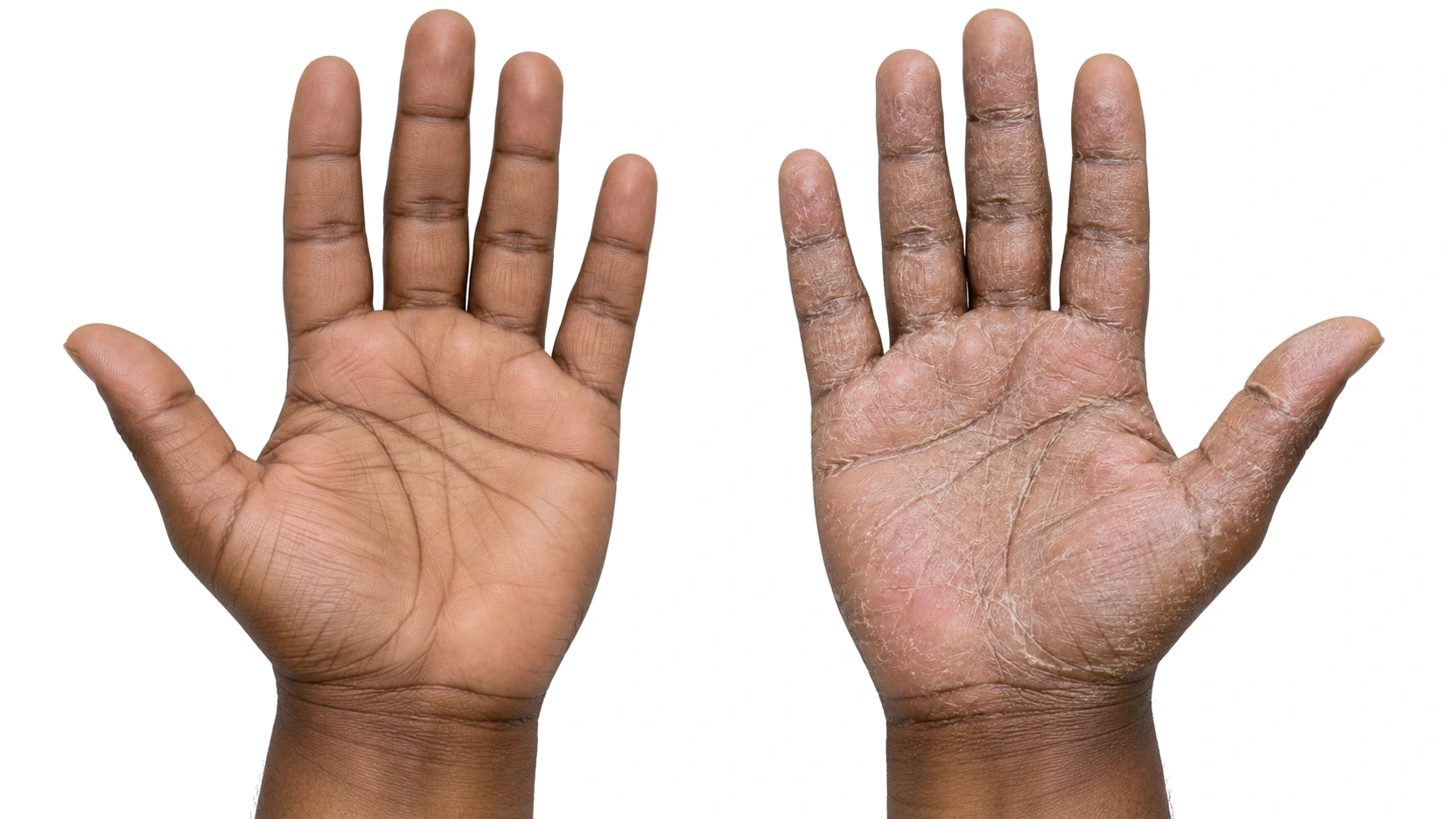
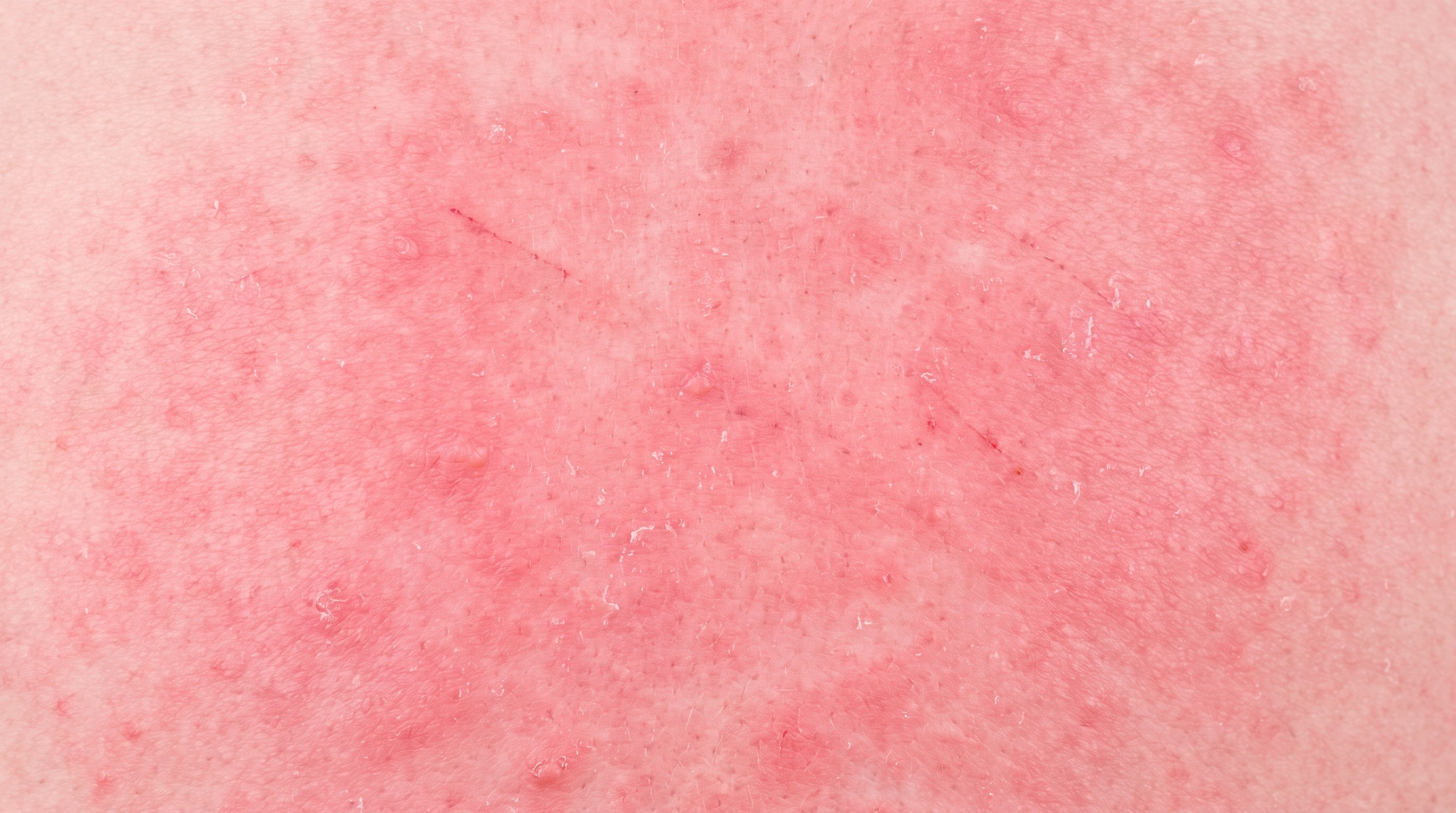
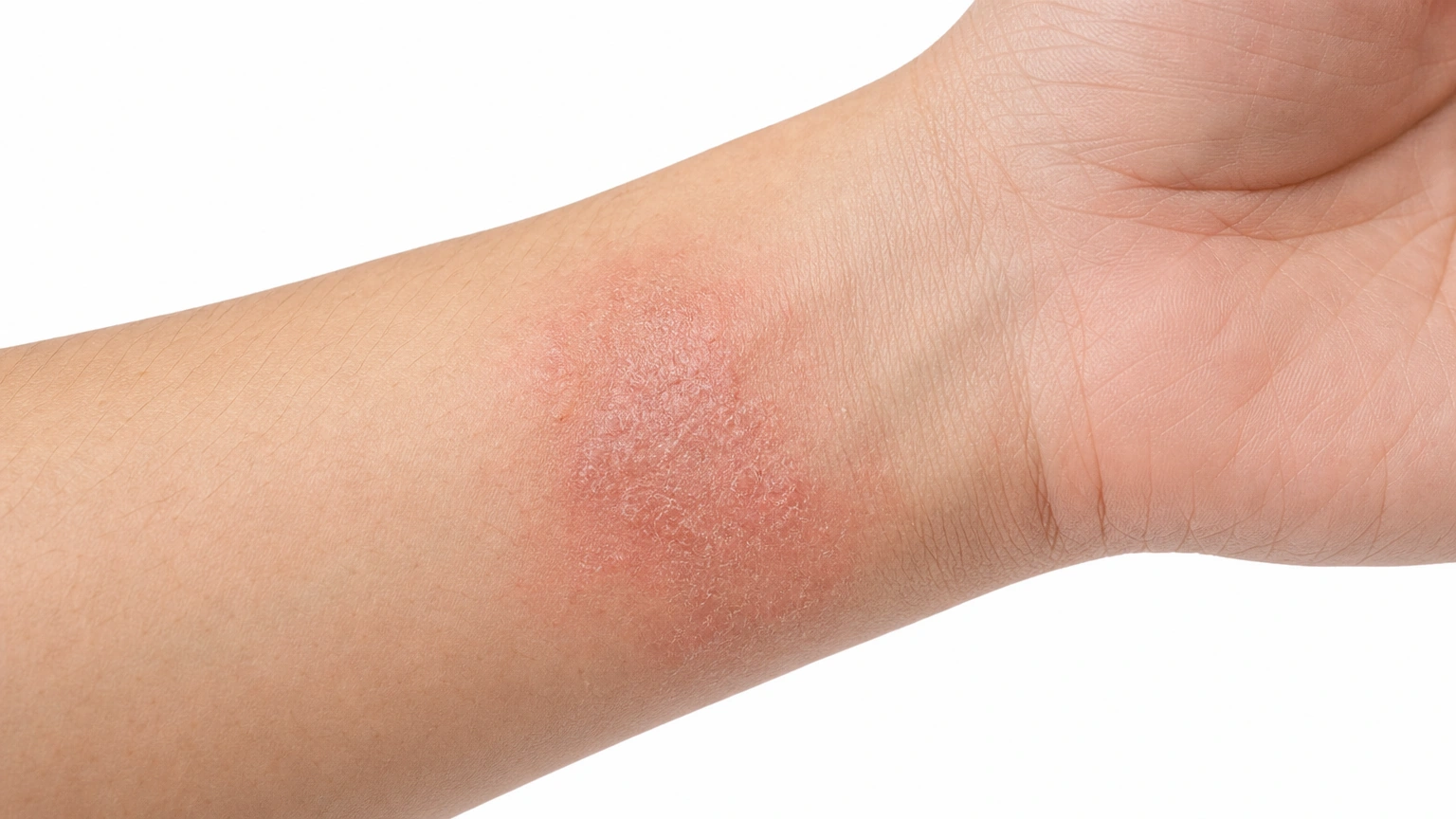
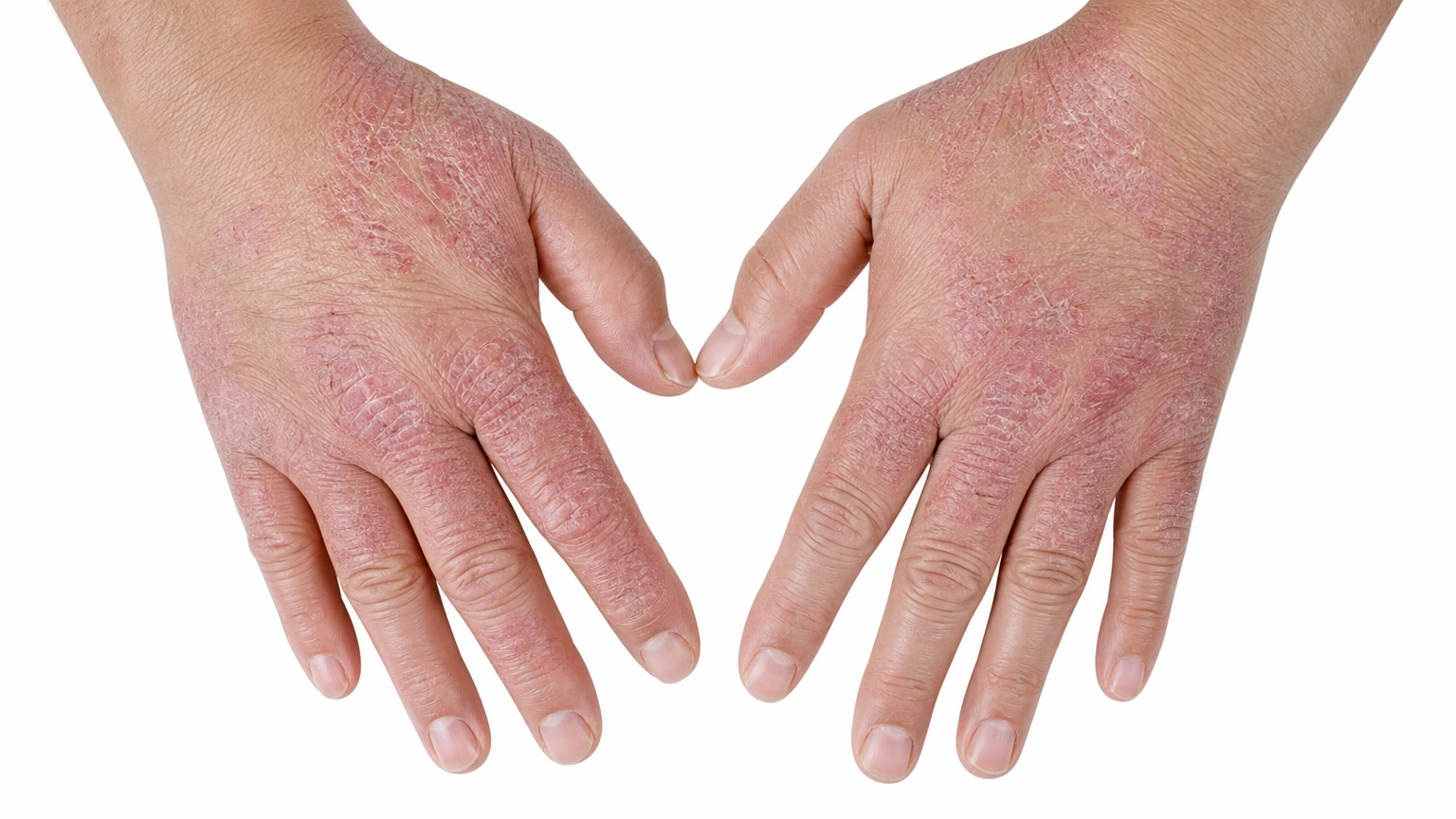
Both hands viewed from above with pink scaly patches and dry cracked skin.

Hand Eczema Redness, scale, and small cracks extend across the backs of the hands.
Tinea Manuum

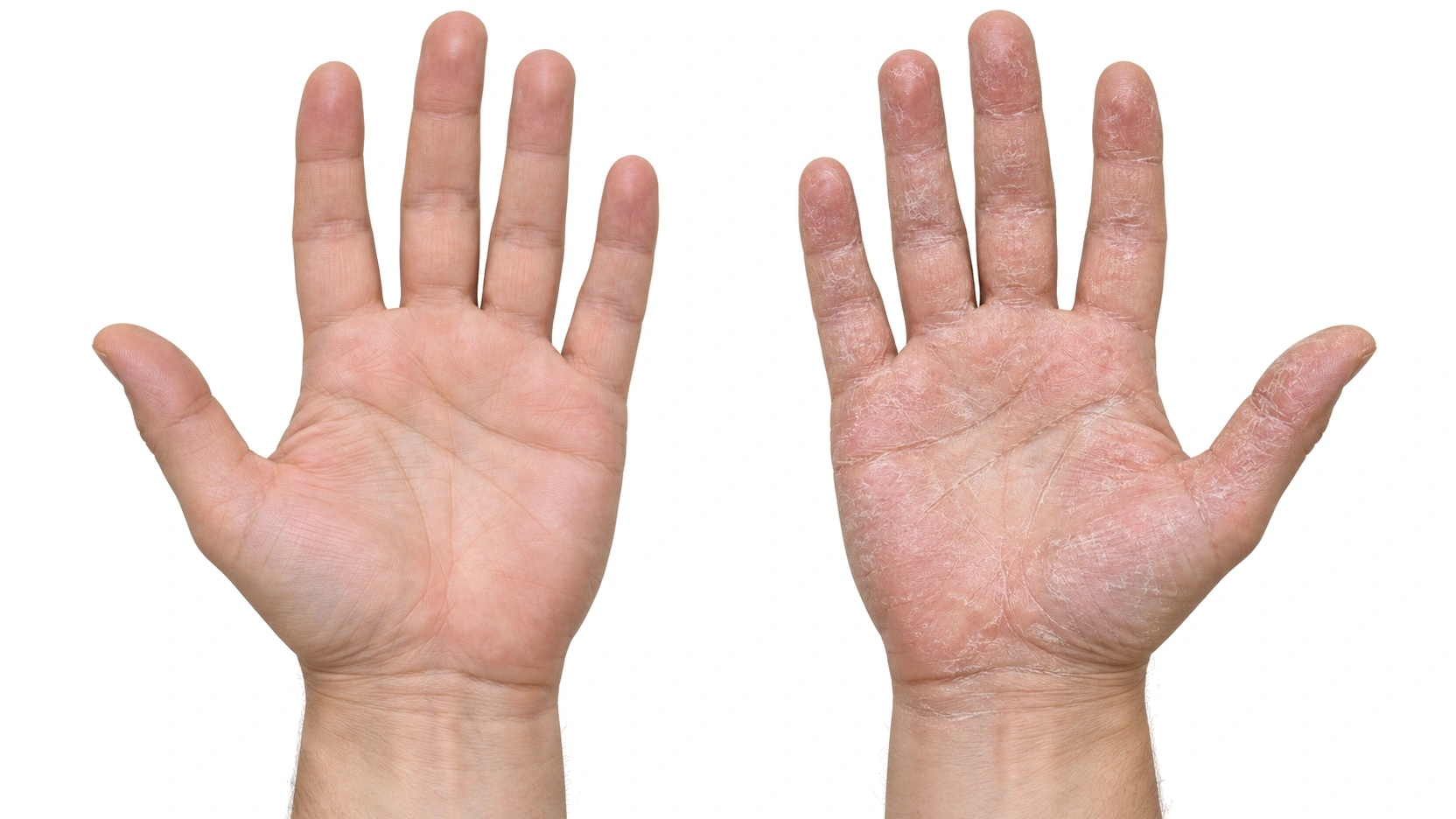
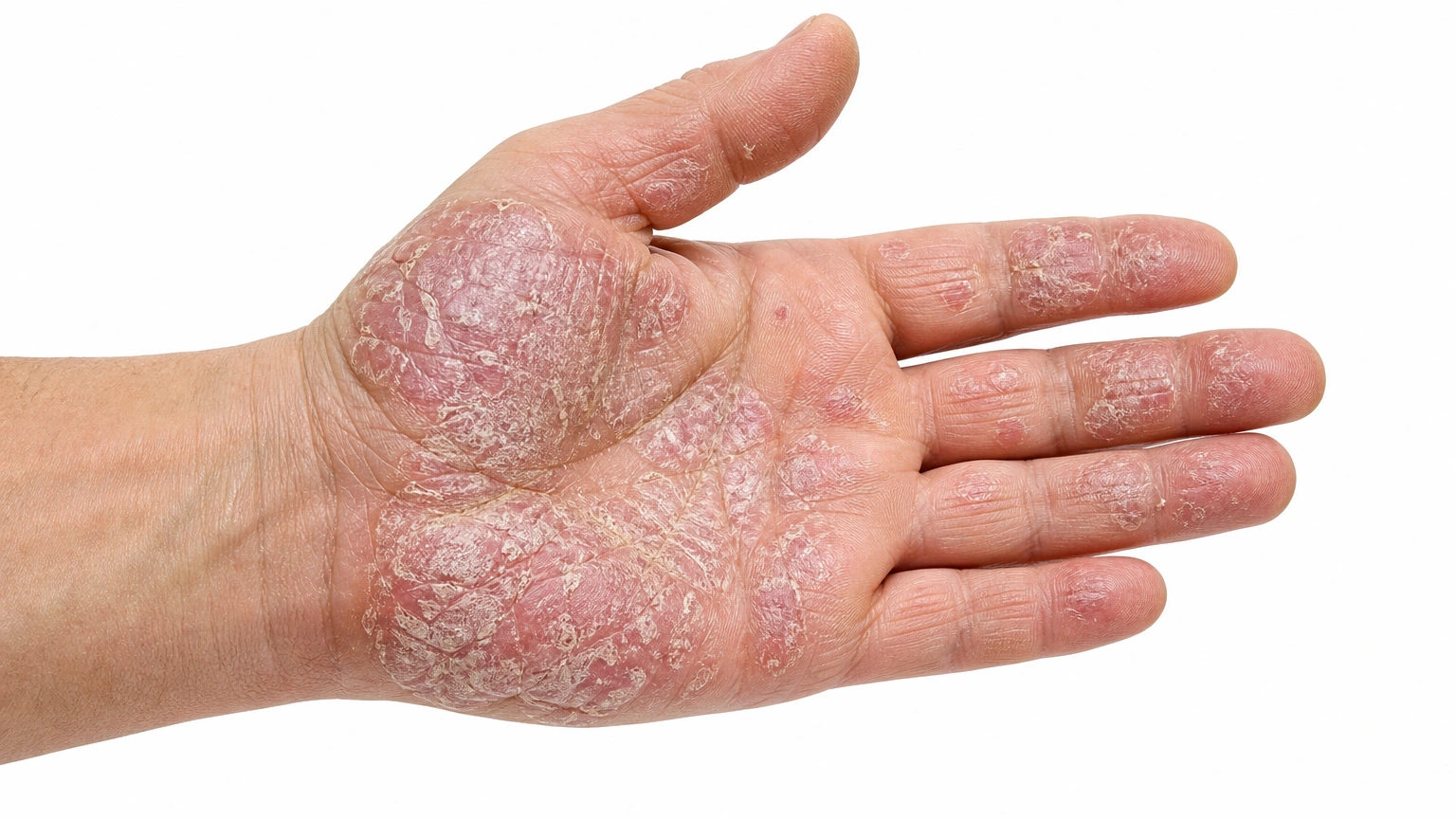
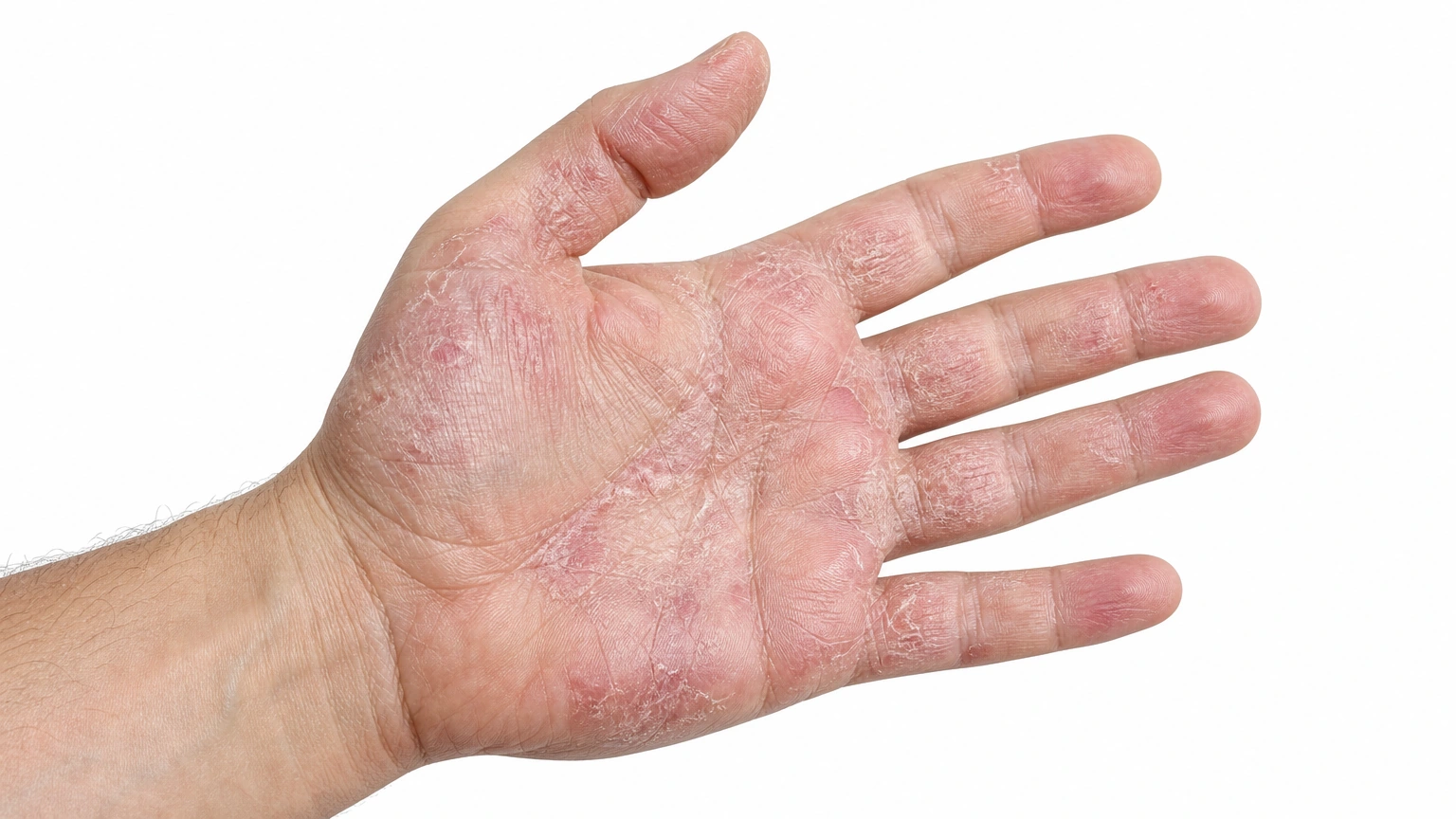
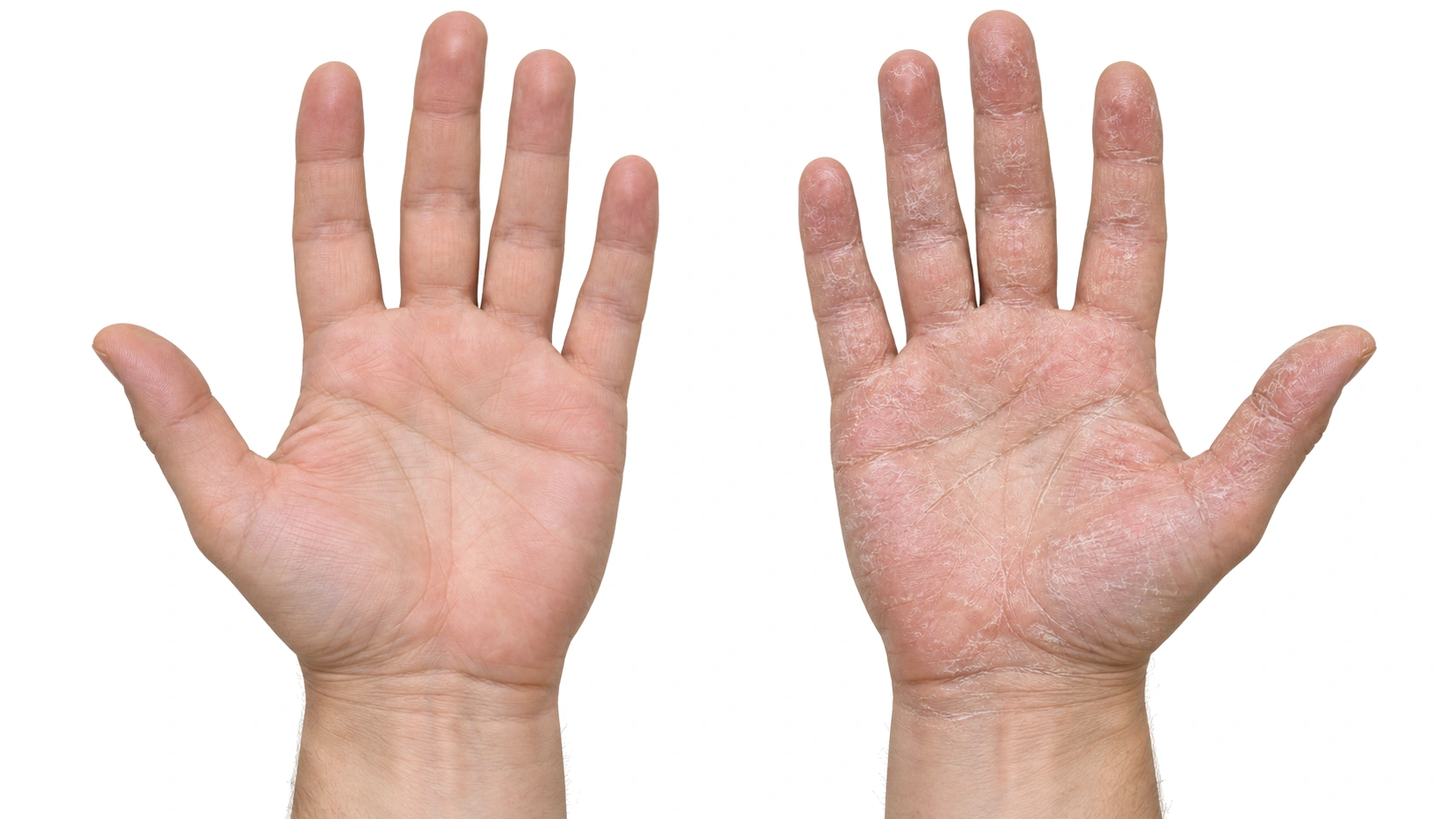
An open hand with diffuse pinkness, flaky white scale, and rough skin on the palm.

Tinea Manuum Dry white scale covers broad areas of the palm and fingers.
Skin tones
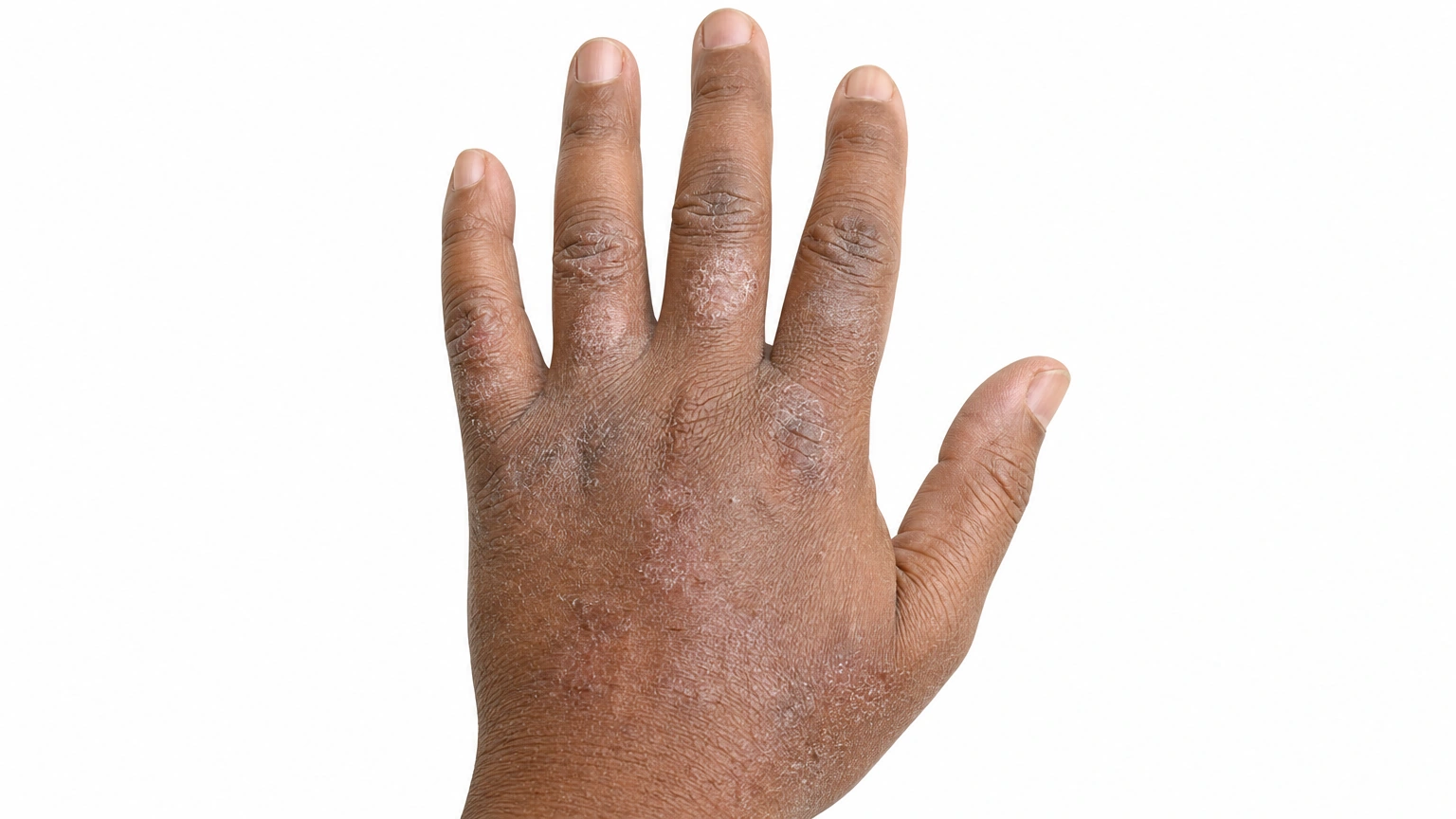
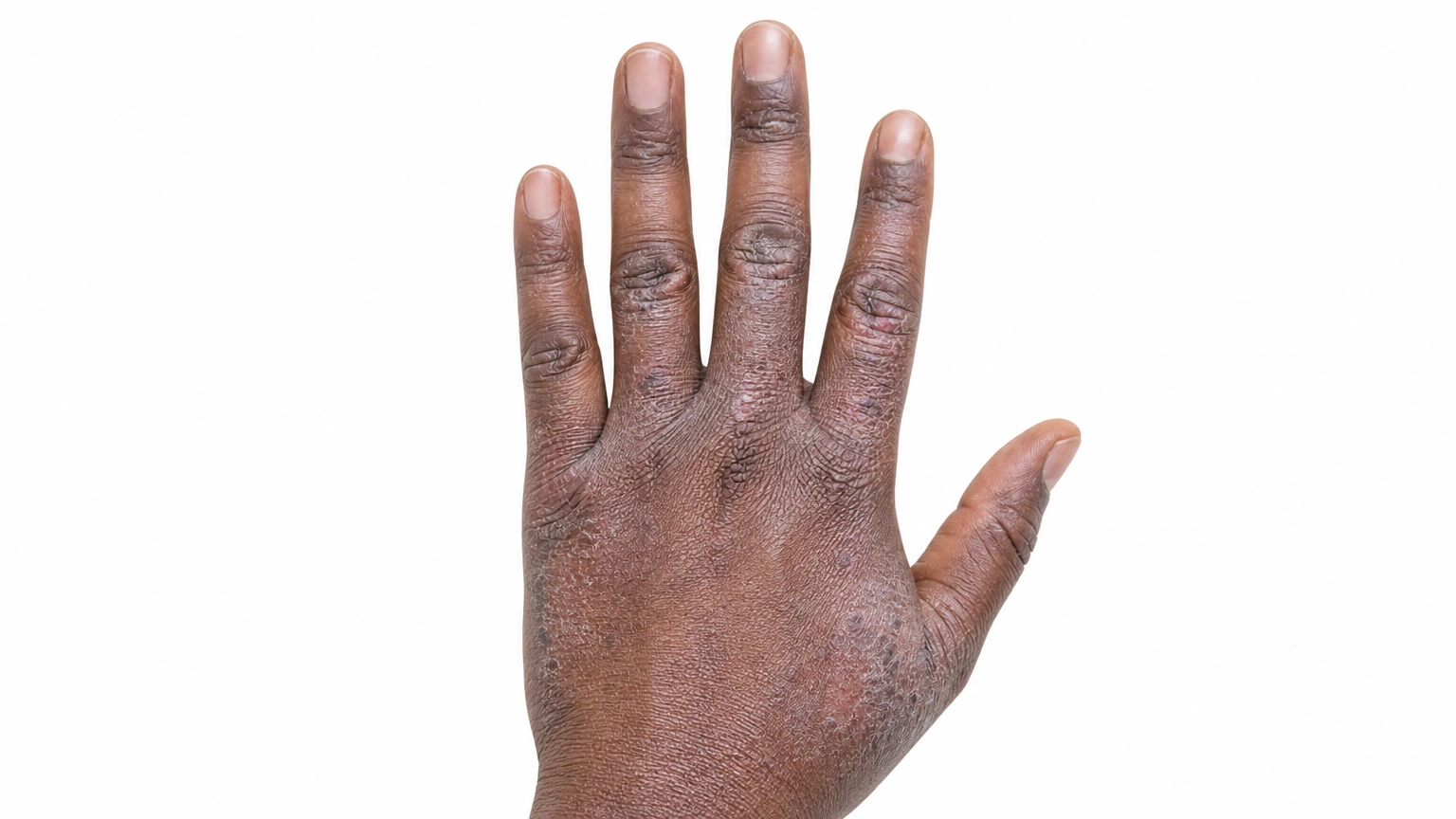
Back of adult hands with dry pink-red scaly eczematous patches, mild fine superficial fissures, no bleeding.
Hand Eczema on medium skin.
Hand Eczema on brown skin.
Hand Eczema on deep skin.
Both palms shown side by side, with diffuse fine scaling on only one hand.
In the skin

Barrier damage and immune inflammation affect skin on the hands. Repeated irritation and contact allergy can overlap and sustain the rash.

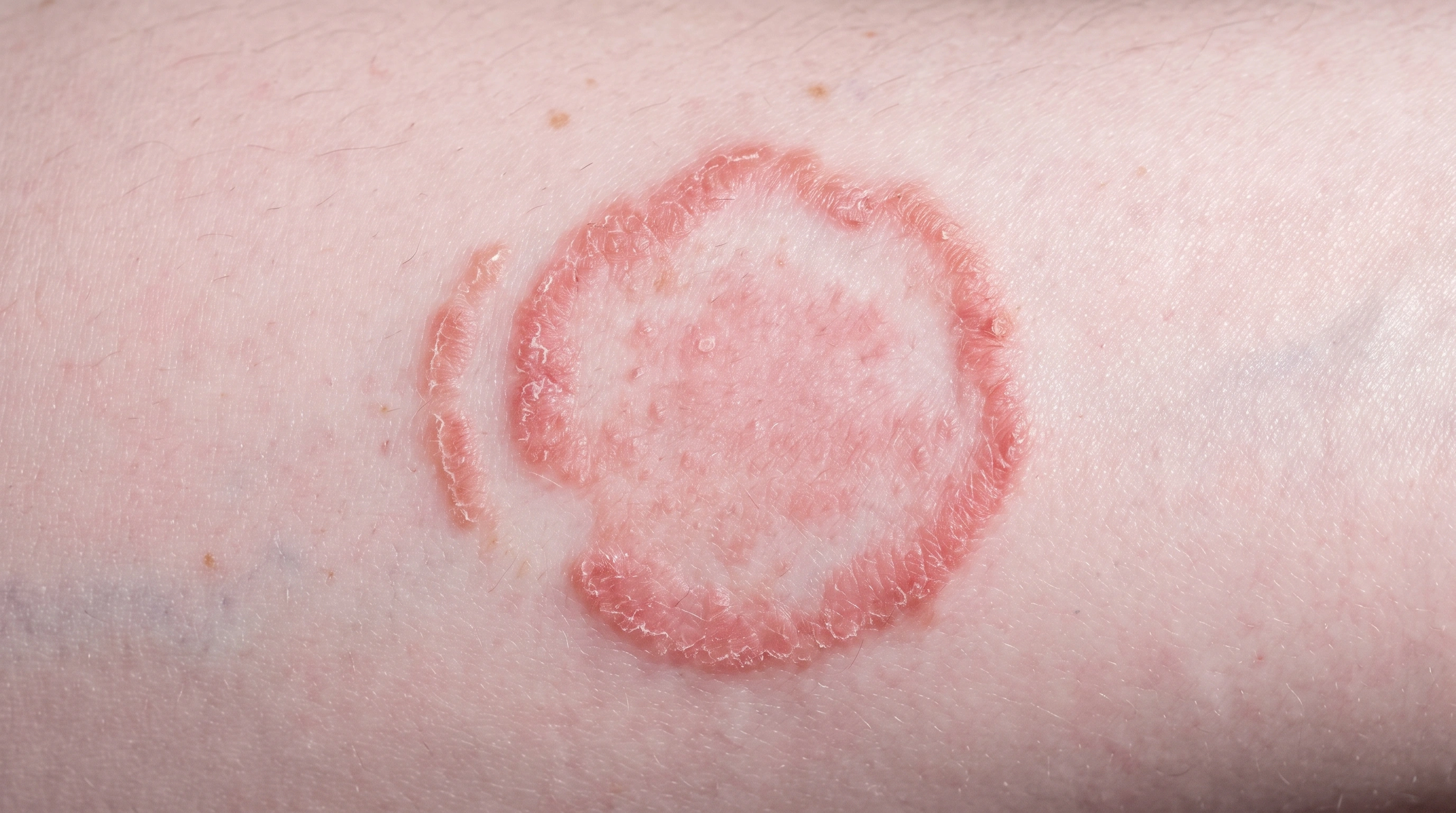
Dermatophyte fungi infect the keratin of the outer hand skin. Local inflammation and altered shedding can cause scale or thickening, sometimes without a classic ring-shaped edge.

When it usually starts

010203040506070+

Hand Eczema. Can start at any age after relevant exposures or barrier damage.

Tinea Manuum. Can occur at any age; assess for infection on the feet.

Causes and triggers

Causes

Barrier damage and inflammation can overlap with contact allergy.

Dermatophyte fungi infect keratin-containing skin or hair.

Risk factors
Repeated wet work, Irritating products, Eczema tendency
Contact with an infected person or animal, Fungal infection elsewhere
Trigger
● Hand Eczema
● Tinea Manuum
Detergents
Can contribute
Not listed
Friction
Can contribute
Not listed
Repeated wetting
Can contribute
Not listed
Fungal exposure
Not listed
Can contribute
Sharing contaminated items
Not listed
Can contribute

Daily Care

Hand Eczema
Tinea Manuum
Daily care

Habits that help

  • Apply fragrance-free moisturizer often and after washing
    Use a plain cream or ointment that does not sting.
  • Wash with lukewarm water and a mild cleanser
    Pat dry gently and keep necessary hand hygiene without unnecessary repeated washing.
  • Protect skin during wet work and cleaning
    Use suitable protective gloves; cotton liners and breaks help prevent trapped sweat.
  • Use a cool damp compress for short-term itch relief
    Keep nails short and protect sore skin from rubbing.
  • Take rings off during washing and dry beneath them
    Trapped water and cleanser can prolong irritation; moisturize again once hands are dry.

Avoid

  • Avoid: Fragrance, harsh detergents and known triggers
    Read labels rather than assuming a natural or unscented product is safe.
  • Avoid: Picking, scratching or deliberately popping blisters
    Broken skin increases pain and infection risk.

Habits that help

  • Keep the affected area gently clean and dry
    Pat rather than rub and change clothing or headwear that stays damp.
  • Keep towels, combs, brushes and razors for your own use
    Wash shared fabrics and clean personal tools to reduce spread.
  • Wash hands after touching affected skin
    Avoid scratching or moving fungal material to other areas.
  • Complete the prescribed antifungal plan
    Symptoms may improve before infection has fully cleared.
  • Check for infection on the feet and nails too
    Untreated fungal disease elsewhere can repeatedly reseed the hands.
  • Follow the tinea manuum care plan
    Avoid sharing towels, combs or razors. Keep the area clean and follow the full treatment course.

Avoid

  • Avoid: Steroid cream alone on a suspected fungal rash
    It can hide the appearance and allow infection to spread.
  • Avoid: Relying on hygiene alone to clear the infection
    Persistent disease needs the correct diagnosis and antifungal treatment.

Treatment differences

Evidence labels come from each condition’s own treatment list.

Treatment
● Hand Eczema
● Tinea Manuum
Over-the-counter
None listed
Existing educational treatment illustration: Spinosad

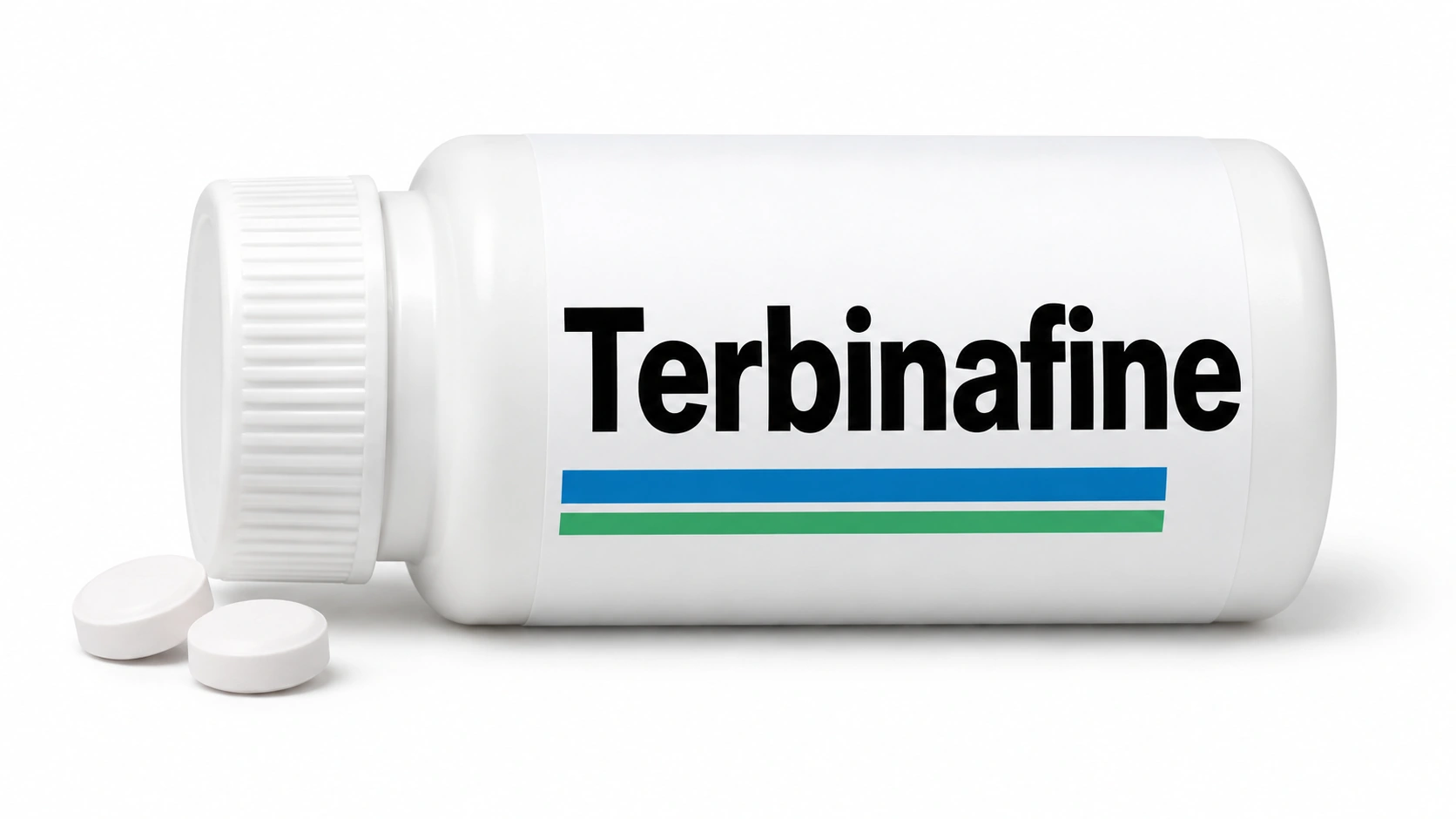
Terbinafine cream

Listed

A topical antifungal option for localised dermatophyte skin infection; follow the product course and avoid eyes.

Prescription topicals

Site-appropriate topical corticosteroid

Listed

Treats active eczema for a clinician-directed course; strength depends on site and age.

None listed
Prescription pills
None listed

Oral antifungal assessment

Listed

Widespread or persistent infection may require a prescription after confirming the diagnosis.

Outlook

Long term

Hand eczema can improve with treatment but often recurs with wet work, irritants or allergens. Barrier protection and prevention remain important after the visible rash settles.

Hand ringworm usually improves with appropriate antifungal treatment. Infection may return if another source, such as the feet or nails, remains untreated; an uncertain or persistent rash needs testing.

Complications

Possible complications

Cracked skin may become infected; repeated exposure can make the rash persistent.

An untreated infection can spread to contacts or other sites; inflamed hair infection can scar.

When to get help

When to get help

Seek care for persistent rash, painful cracks or possible infection.

Seek assessment if the diagnosis is uncertain; painful swollen scalp or beard lesions need prompt care.

Common questions

Hand Eczema:What is Hand Eczema?

Inflamed hand skin caused by irritation, allergy, eczema tendency or a combination.

Hand Eczema:What can I do day to day?

Use emollient after washing, gentle cleanser and suitable protective gloves. Keep gloves dry inside.

Hand Eczema:When should I get medical advice?

Seek care for persistent rash, painful cracks or possible infection.

Tinea Manuum:What is Tinea Manuum?

A fungal infection of the hand, often associated with athlete’s foot.

Tinea Manuum:What can I do day to day?

Avoid sharing towels, combs or razors. Keep the area clean and follow the full treatment course.

Tinea Manuum:When should I get medical advice?

Seek assessment if the diagnosis is uncertain; painful swollen scalp or beard lesions need prompt care.

Sources
Sources and further reading

  1. Hand dermatitis
  2. Tinea manuum
Dermapedia on YouTube