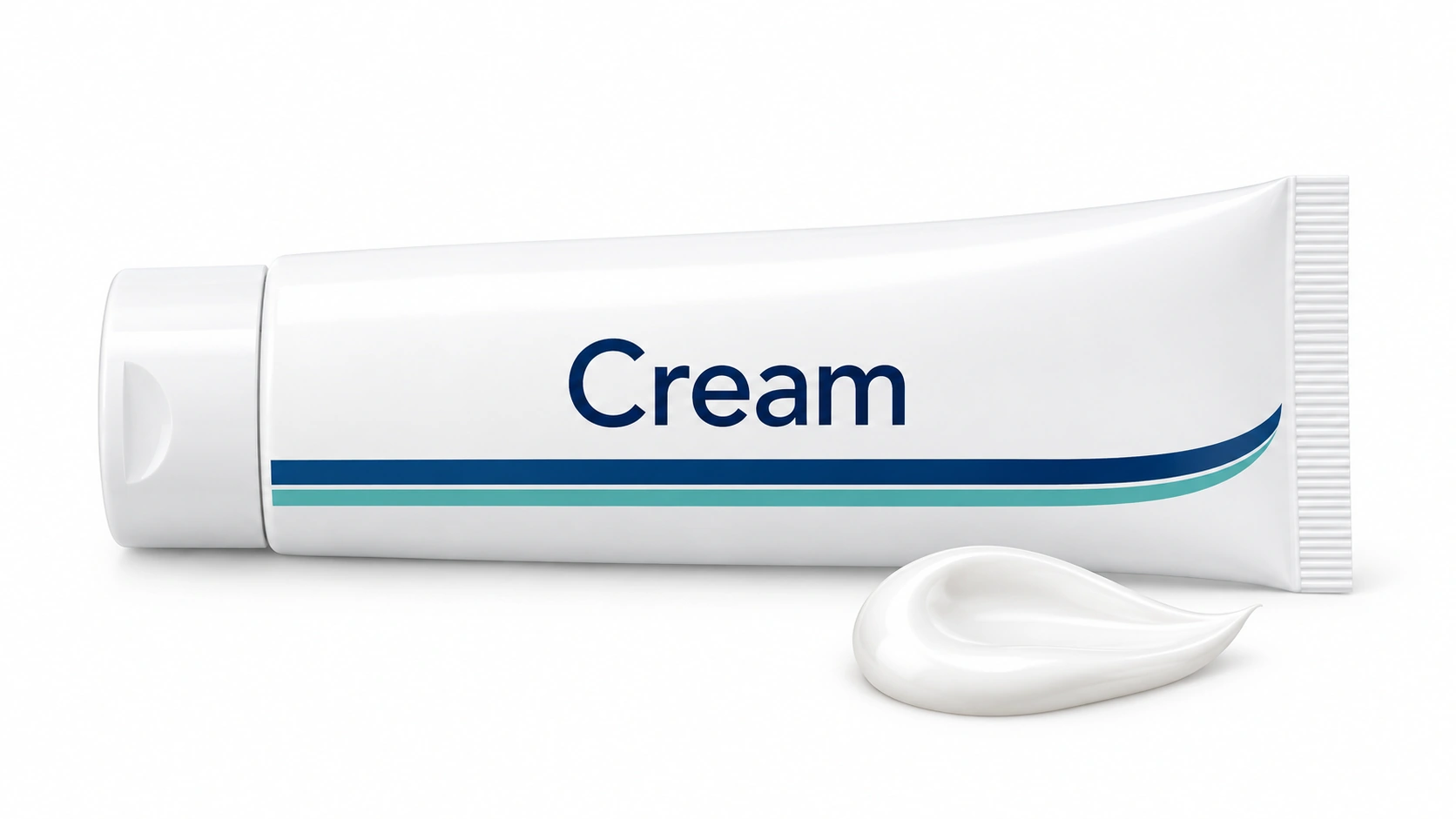
Terbinafine cream
ListedA topical antifungal option for localised dermatophyte skin infection; follow the product course and avoid eyes.
A fungal infection of the hand, often associated with athlete’s foot. Dry skin is skin that has lost the oils and water it needs to stay soft and sealed. It looks dull or flaky, feels tight, and often itches. Most of it improves within a couple of weeks with a change in washing habits and a good moisturizer, though stubborn cases sometimes point to another condition underneath.
The same eight facts on every condition comparison.
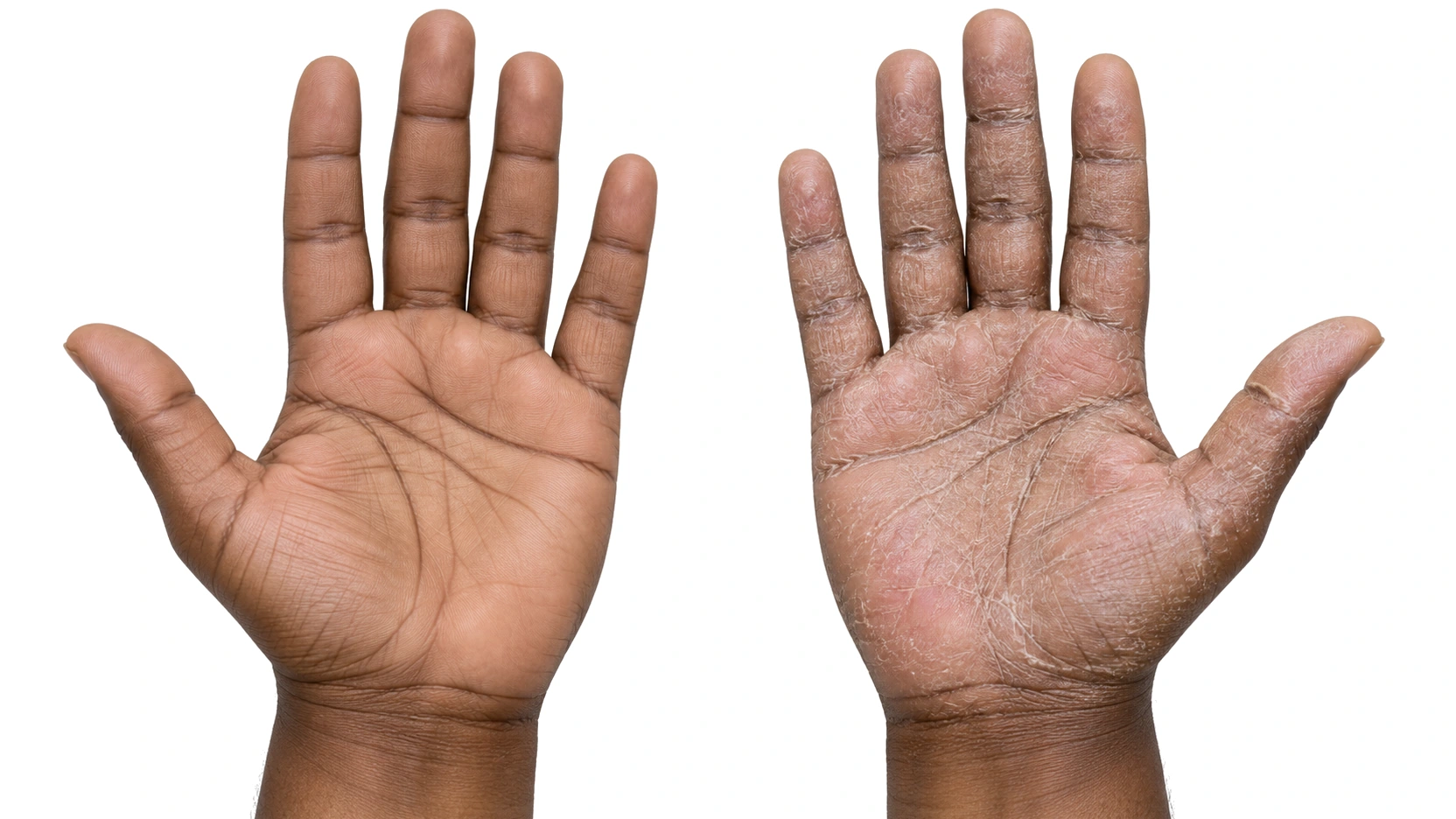
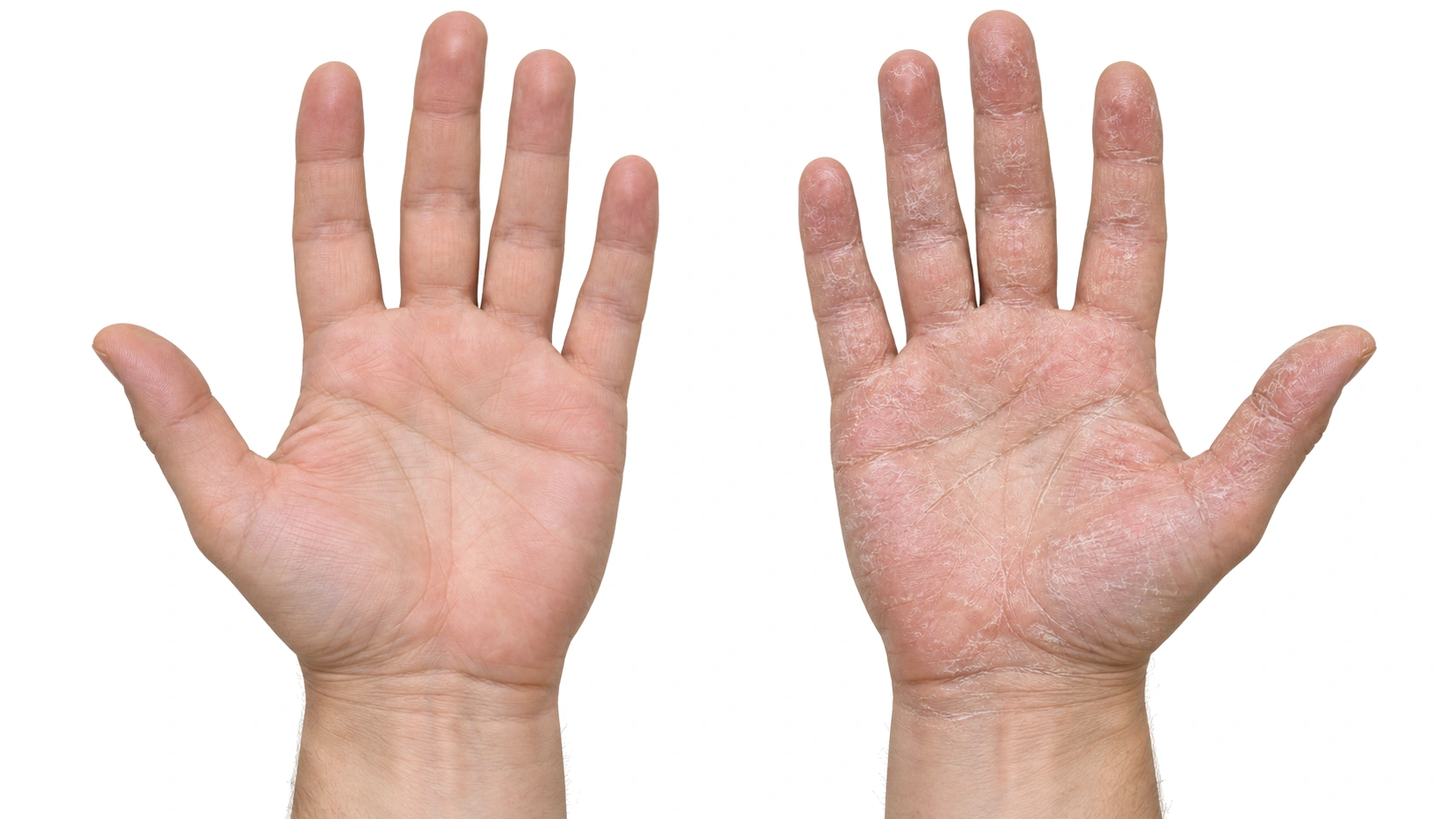
Tinea Manuum Dry white scale covers broad areas of the palm and fingers.
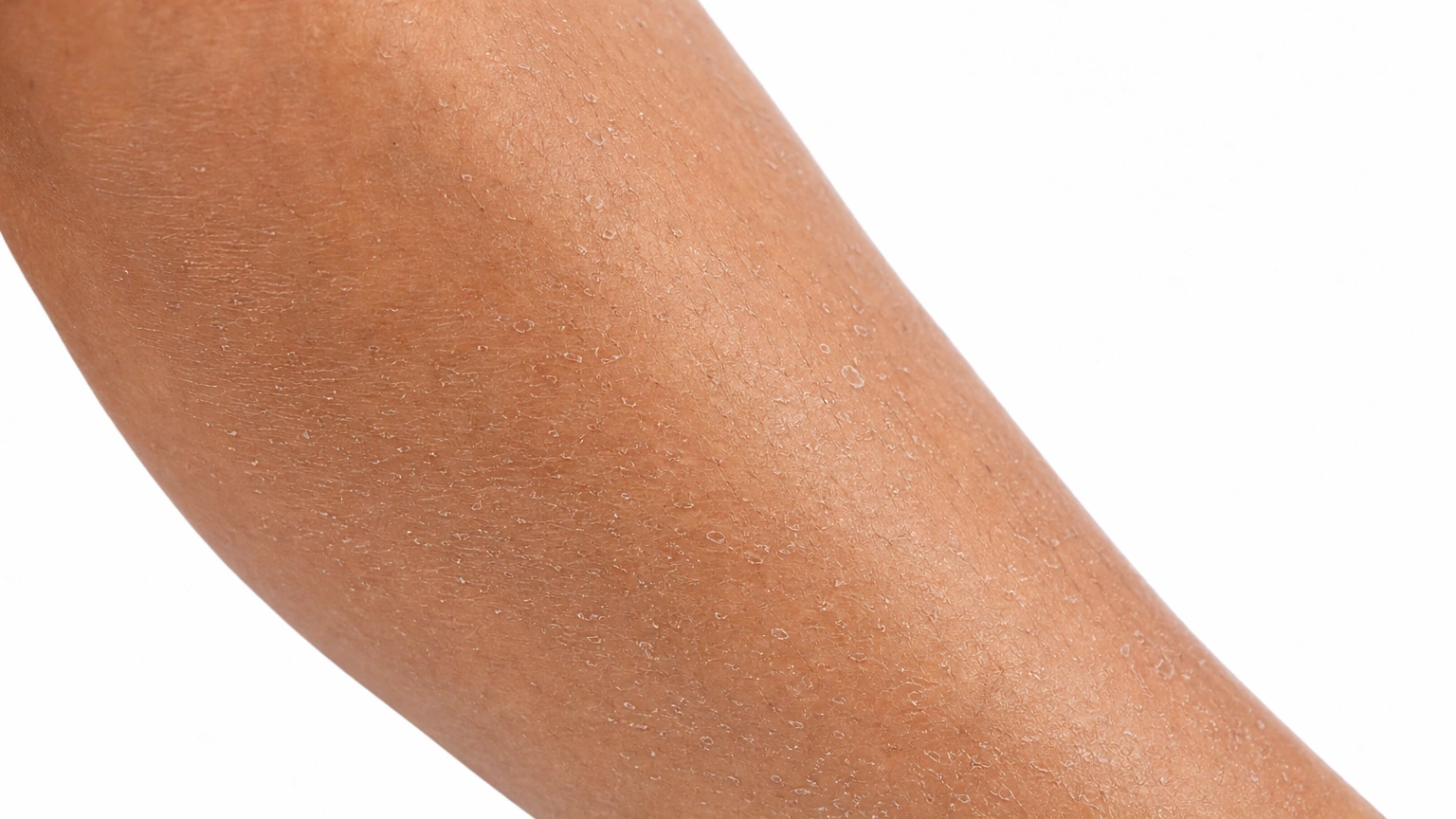
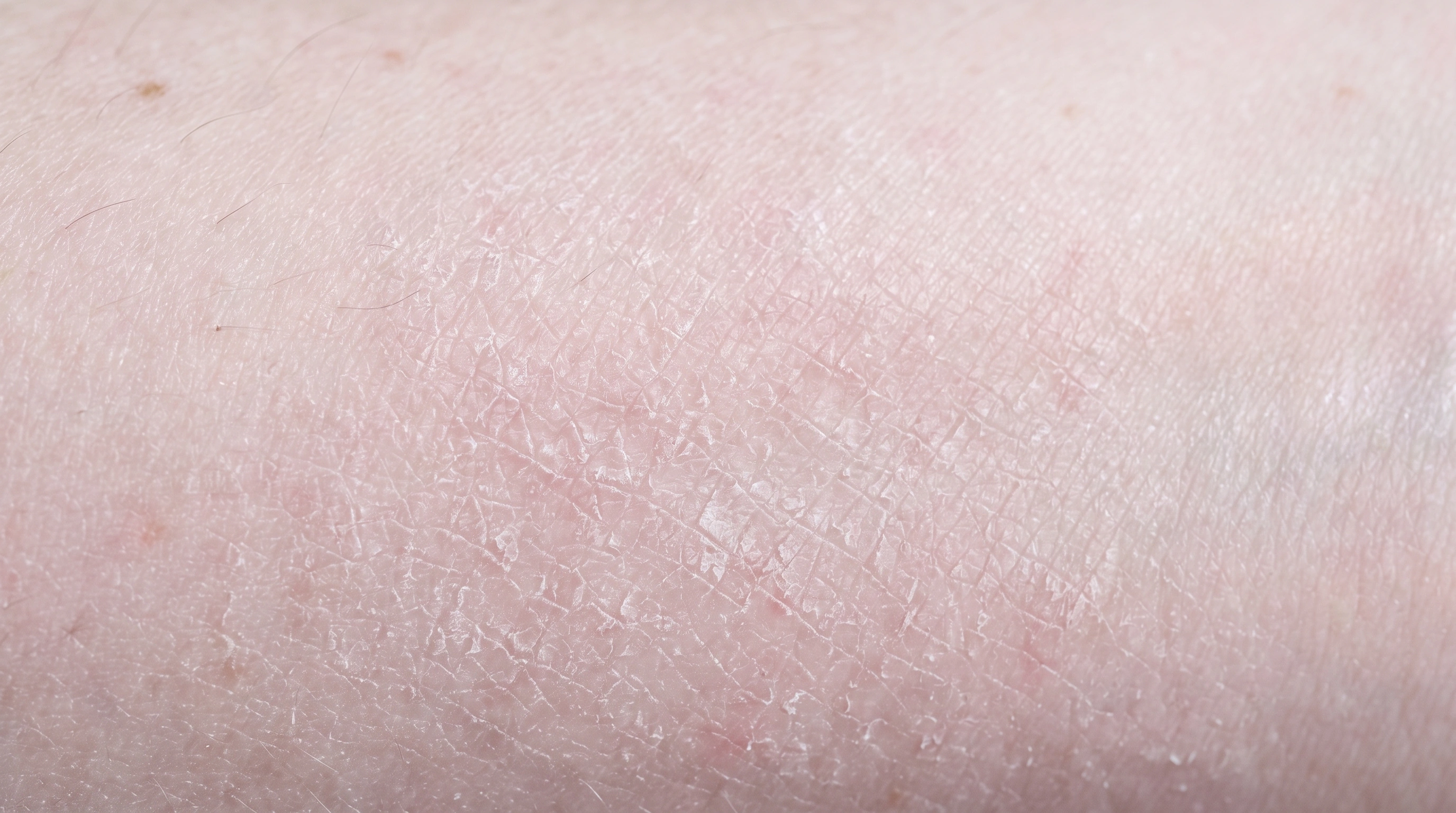
Flaky skin Fine white flakes.
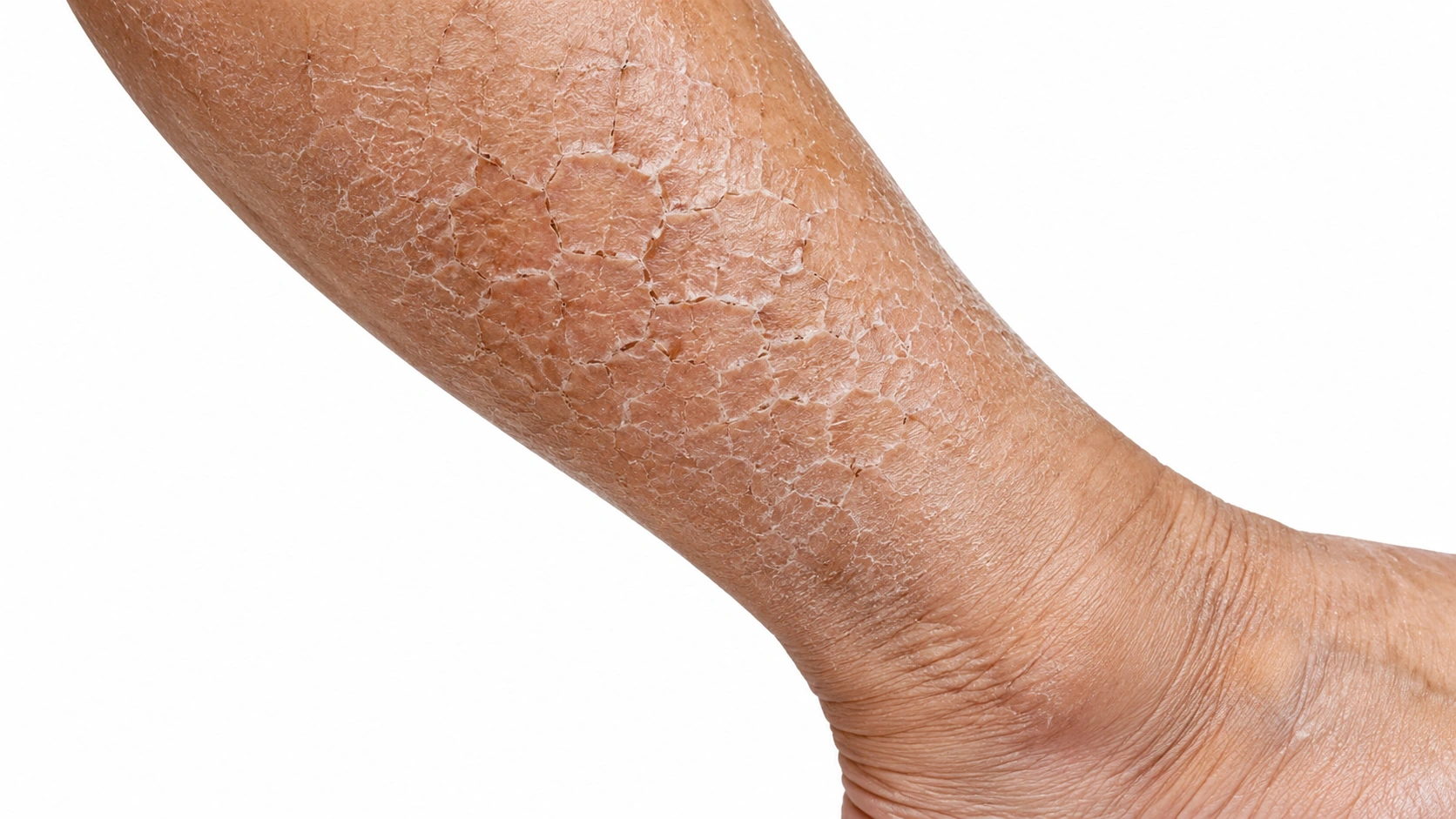
Cracked skin Crazy-paving cracks.

Rough hands Dry, tight, chapped skin.
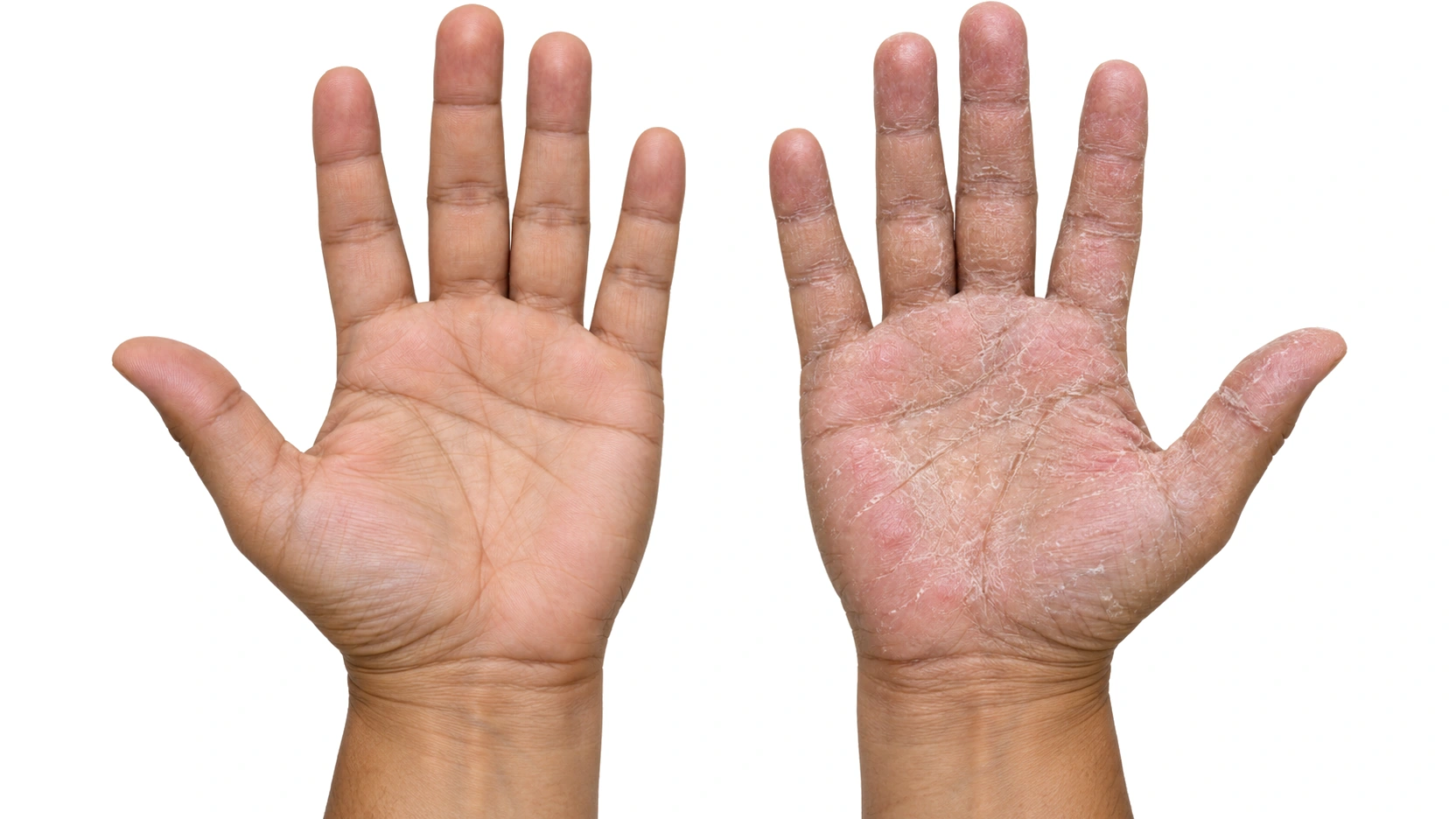
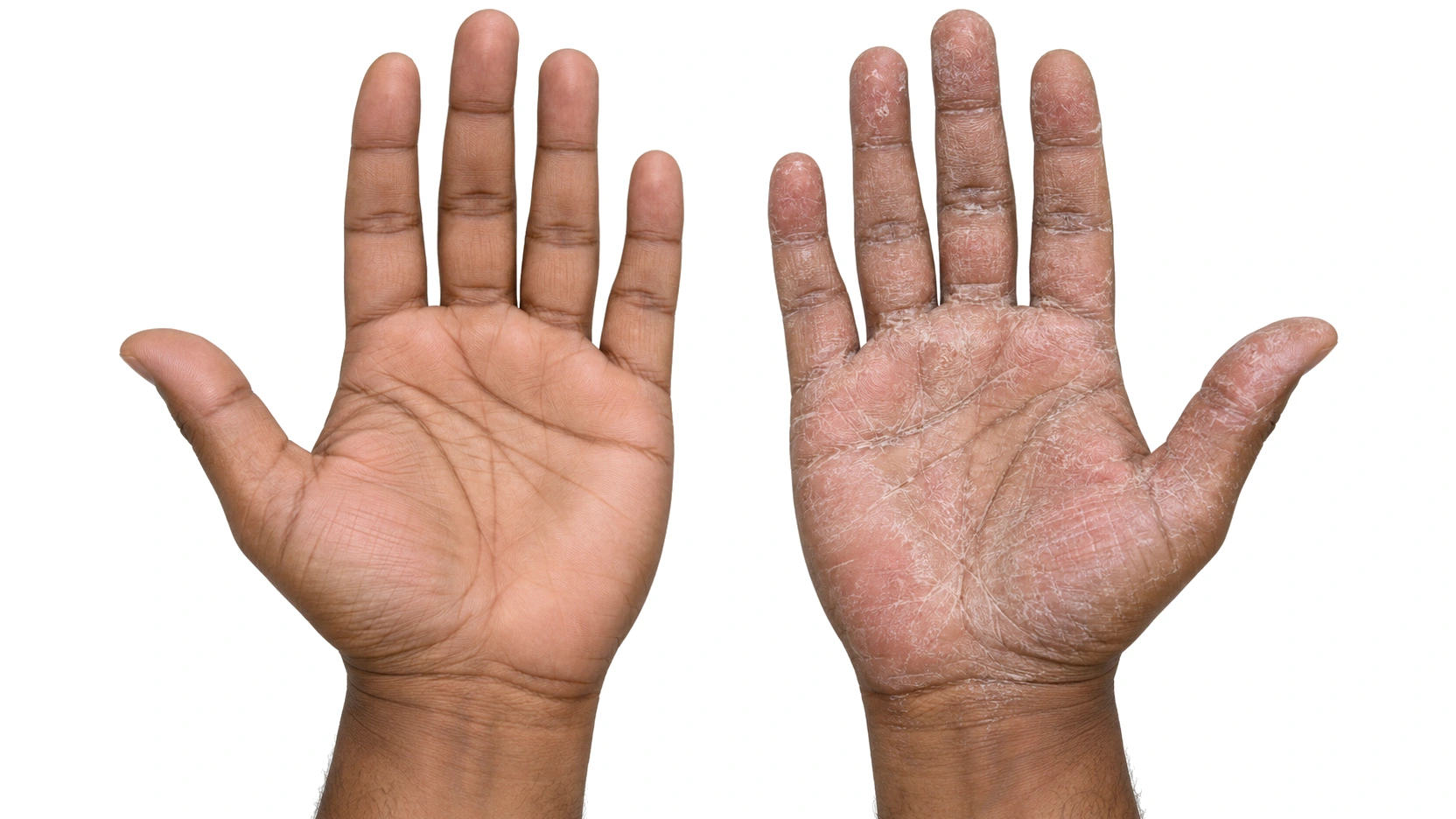
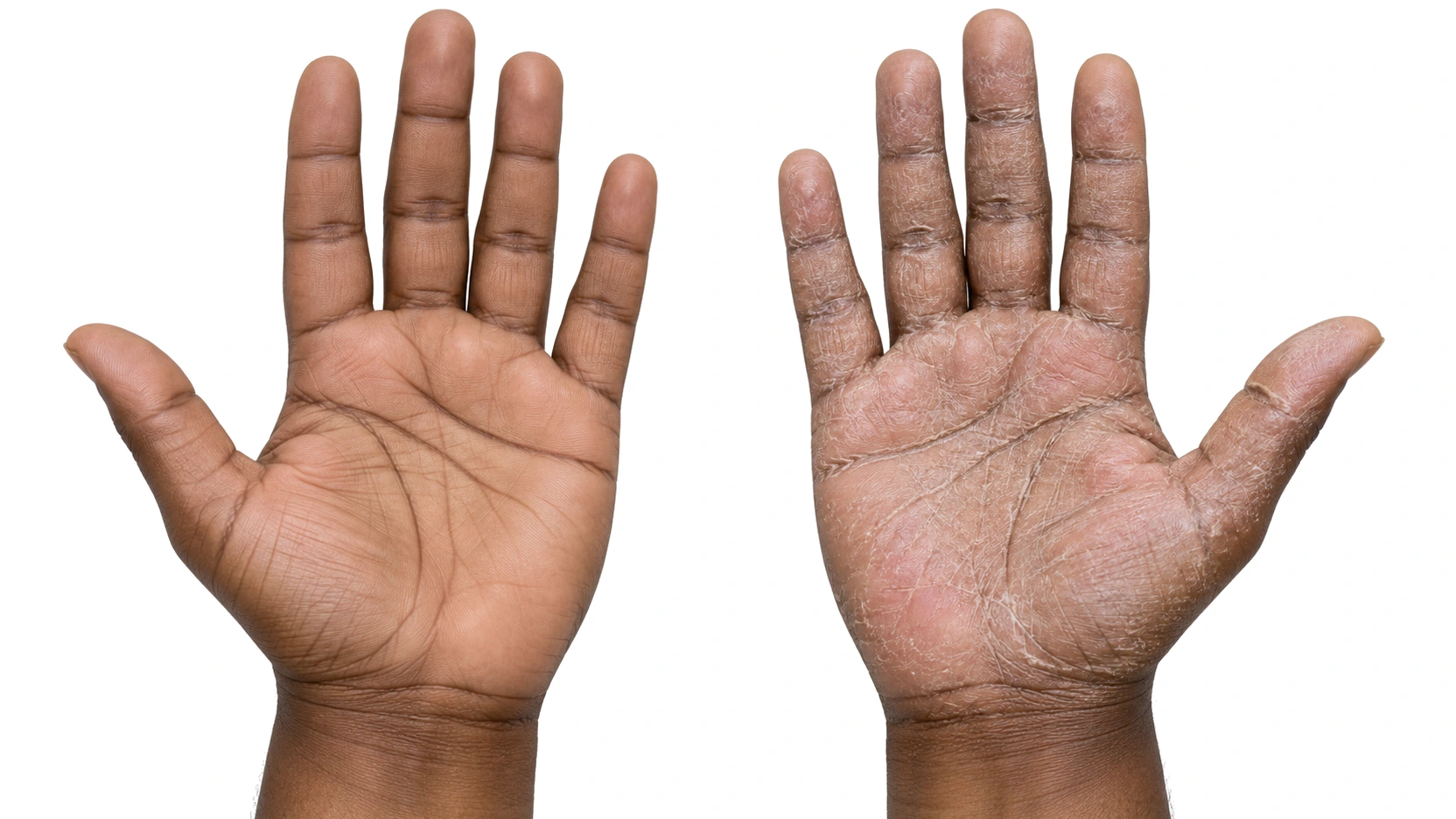
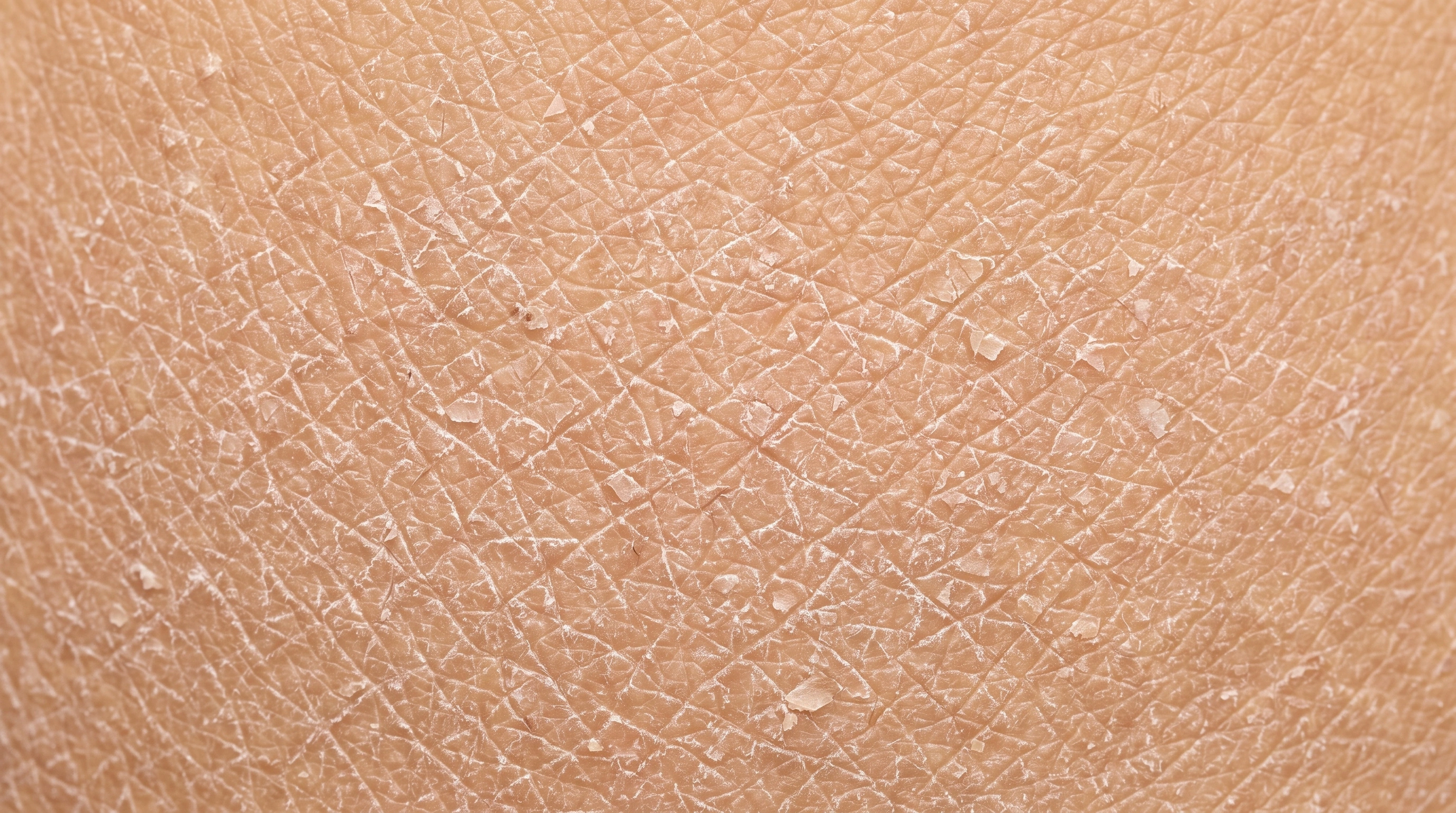
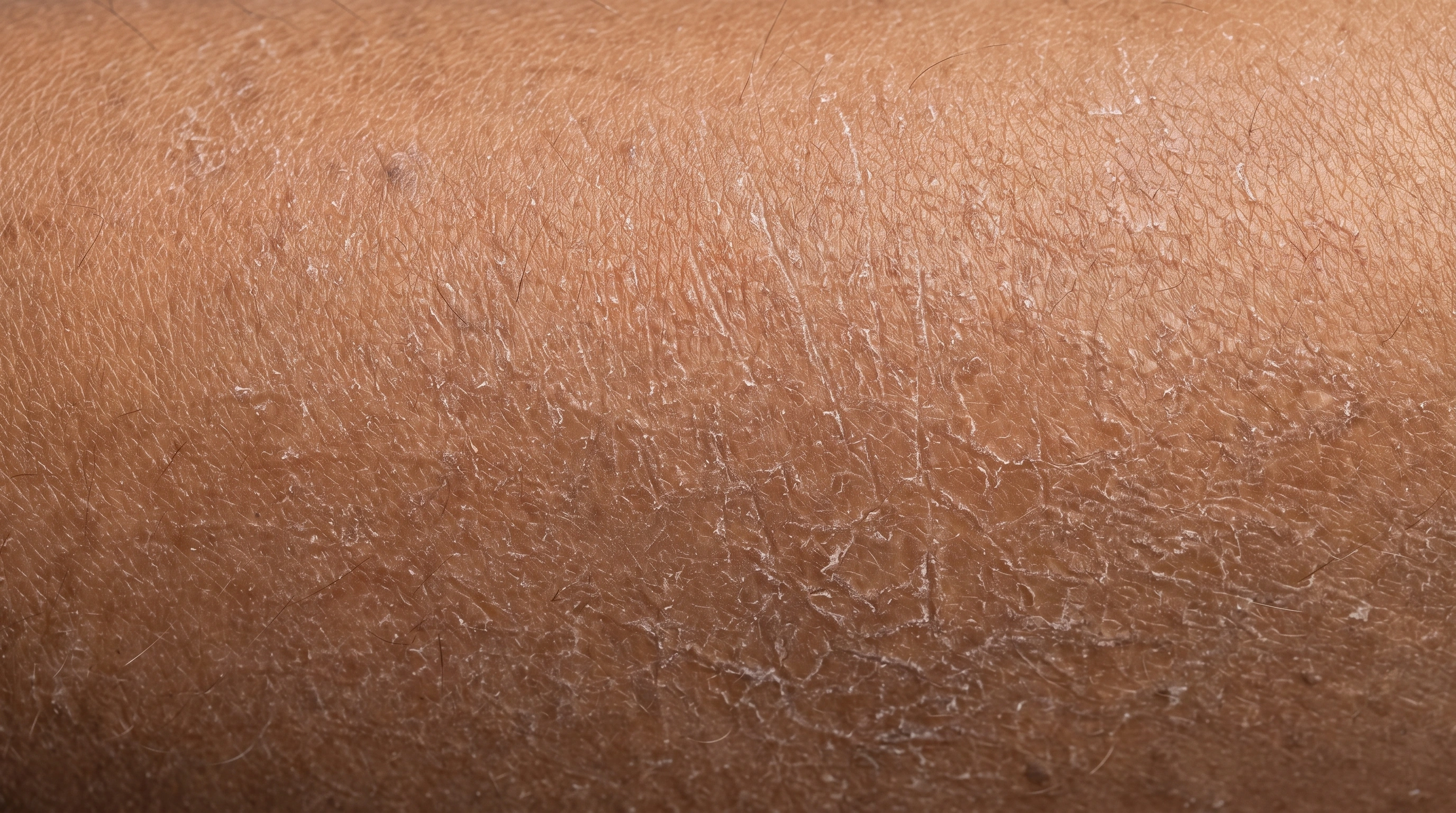
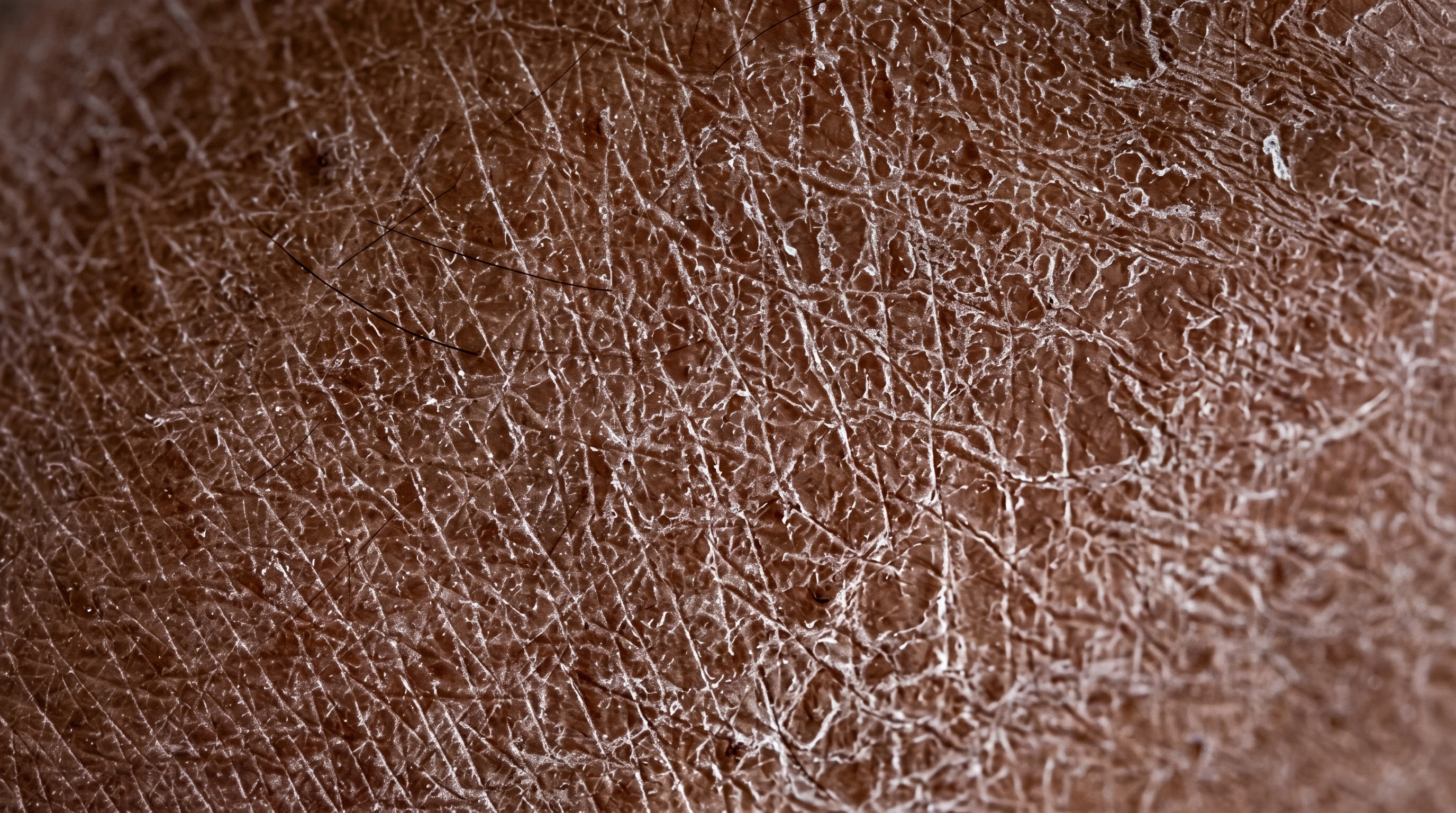

Dermatophyte fungi infect the keratin of the outer hand skin. Local inflammation and altered shedding can cause scale or thickening, sometimes without a classic ring-shaped edge.
The outer skin does not retain enough water when its barrier becomes less effective. Changes in skin fats and moisture reduce flexibility and can lead to roughness, flaking or cracks.
Tinea Manuum. Can occur at any age; assess for infection on the feet.
Dry Skin. Can occur at any age and becomes more common in older adults.
Dermatophyte fungi infect keratin-containing skin or hair.
Dry skin happens when the skin loses water faster than it can hold it, usually because its outer barrier is weakened.
Some people inherit a weaker barrier, often linked to eczema.
Evidence labels come from each condition’s own treatment list.
A topical antifungal option for localised dermatophyte skin infection; follow the product course and avoid eyes.
A cream or ointment from a tub, not a lotion from a pump — lotions are mostly water and evaporate. Put it on damp skin within three minutes of the shower, and again before bed. Timing matters more than which one you buy, and several of the most effective are inexpensive drugstore creams. Give any of them two weeks before deciding.
A few days of over-the-counter steroid cream can break the itch-scratch cycle when dry skin has turned red and itchy and moisturizer alone is not holding it. Use it twice a day for no more than a week, on the itchy patches only, with the moisturizer continuing around it. If you need it repeatedly, that is a reason to be seen rather than to keep buying it.
The best choice for thick, scaly skin on heels, shins and elbows, because it softens and dissolves the scale as well as holding water. Ten to twenty percent for general dryness, forty percent for hard heel skin. It is the alternative to scrubbing, which removes the barrier along with the flakes. It stings on cracked or broken skin, so heal the cracks first.
The most effective sealer there is, cutting water loss from the outer layer by more than any other single ingredient. It works best as the last step over a cream, and under cotton gloves or socks overnight it does more for cracked hands and heels in three nights than a cream does in three weeks. It is greasy, which is the only real objection to it.
Ceramides are part of the fatty glue that dry skin has lost, so a cream containing them replaces the actual missing material rather than just covering it. They are the ingredient with the most evidence behind them for rebuilding the barrier over weeks, and they are the reason certain inexpensive drugstore creams are recommended so often. They are slow rather than dramatic, and they belong in your everyday cream.
Pulls water into the outer layer and holds it there, which is why almost every good moisturizer has it high on the list. It works best paired with something that seals, such as petrolatum or dimethicone, because water drawn in with nothing over the top simply leaves again. In very dry indoor air, glycerin alone is not enough.
Loosens stuck-together flakes chemically and draws water in at the same time, so it suits rough, bumpy dryness on the arms and legs. It is gentler than urea on large areas but stings more on cracks and on freshly shaved skin. Use it two or three times a week alongside a plain cream, not instead of one.
A lukewarm oatmeal bath gives modest but genuine relief from the itch, and it is gentle enough for broken and cracked skin, which most itch treatments are not. Ten to fifteen minutes, then straight into a cream on damp skin. It settles the itch for a few hours; it does not repair the barrier that caused it.
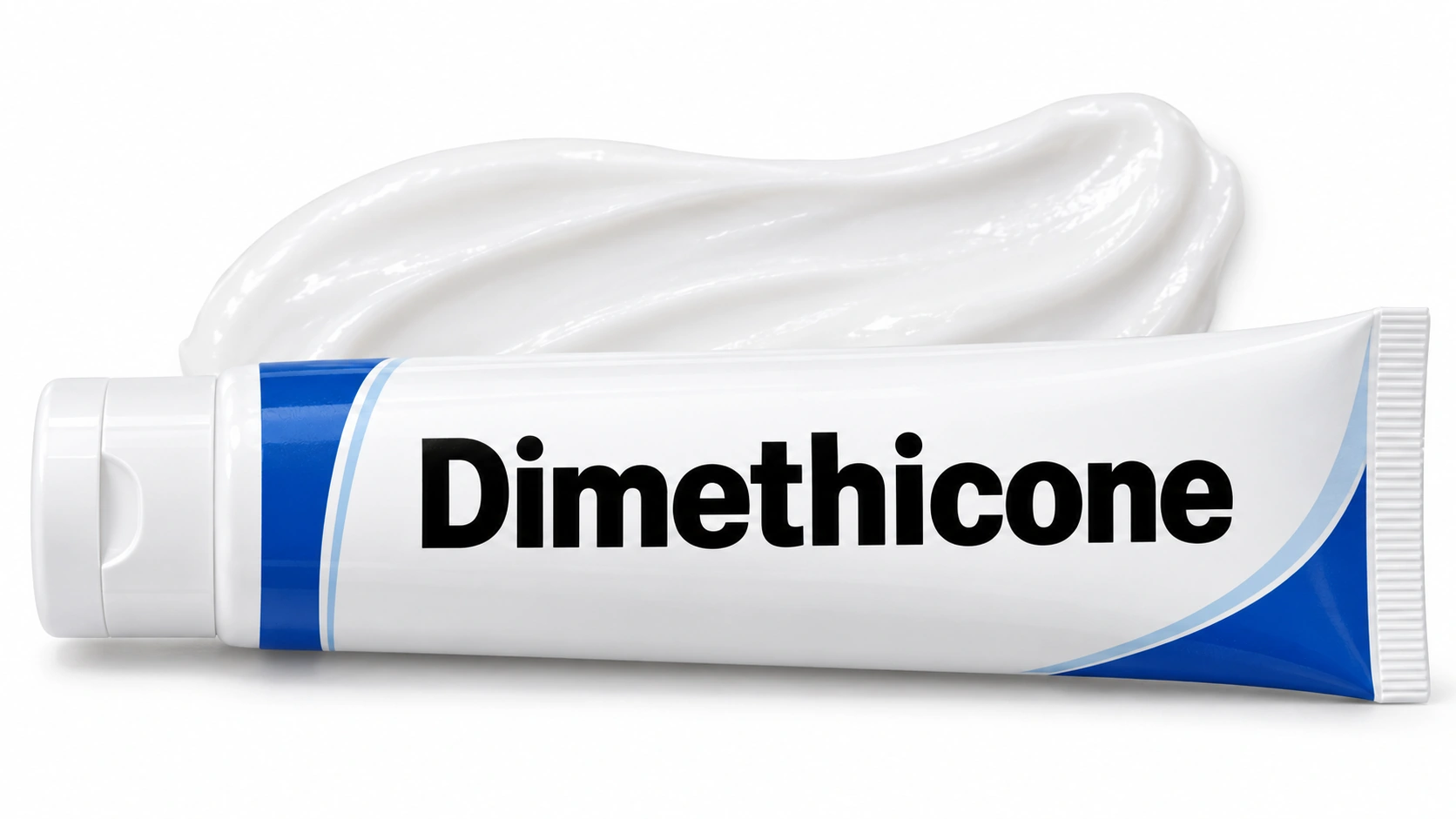
A silicone that forms a breathable seal over the skin, so it holds water in without the greasiness of petrolatum. That makes it the practical option for hands during the day and for anywhere clothes have to go straight back on. It seals but replaces nothing, so it works best in a cream that also contains ceramides or glycerin.
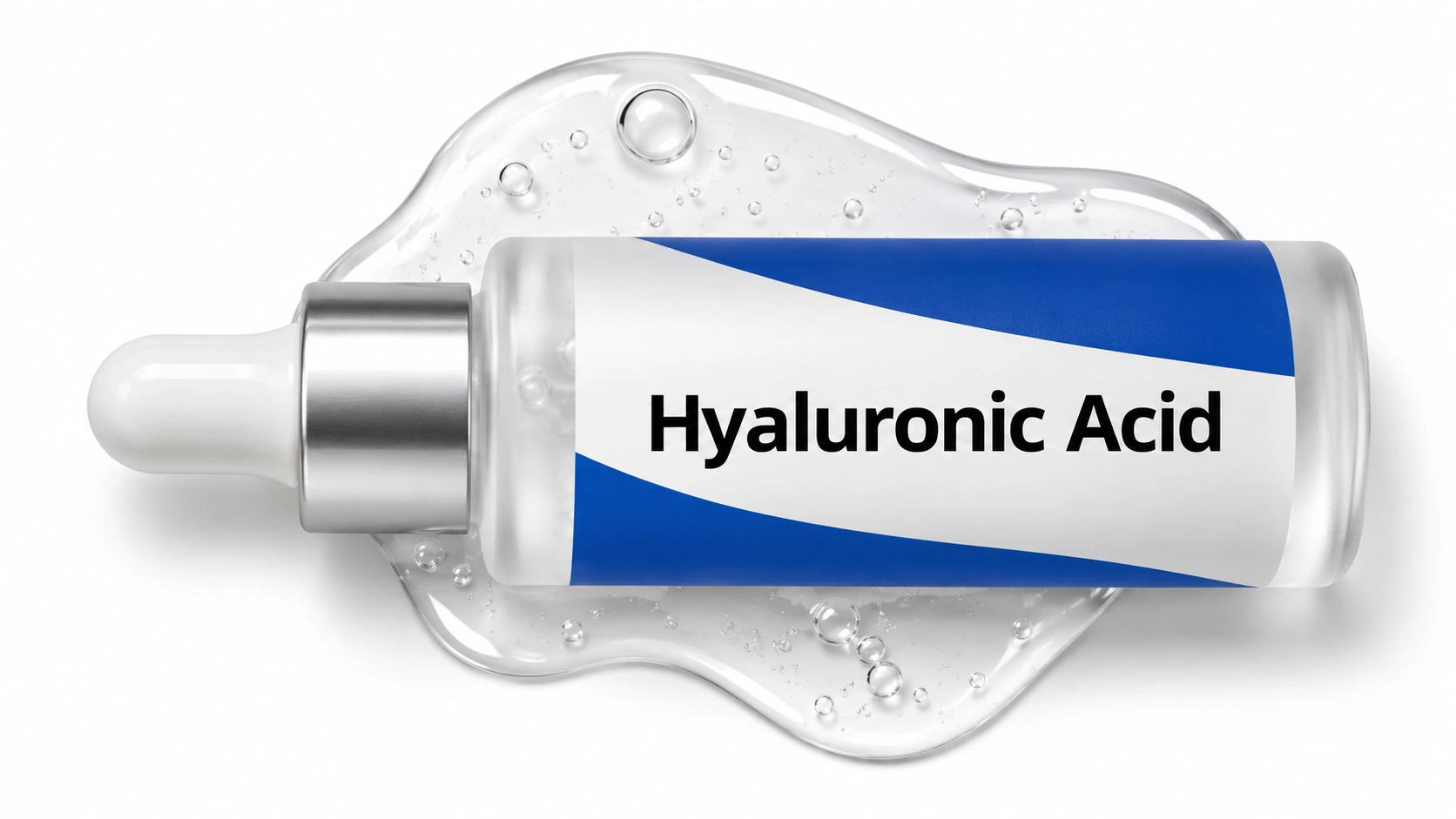
Holds a great deal of water, which makes skin look plumper straight away, but it seals nothing. In dry indoor air or a cold winter it can pull water up out of the deeper skin and let it evaporate, leaving the surface tighter than before. It is only useful here applied to damp skin with a cream over the top.
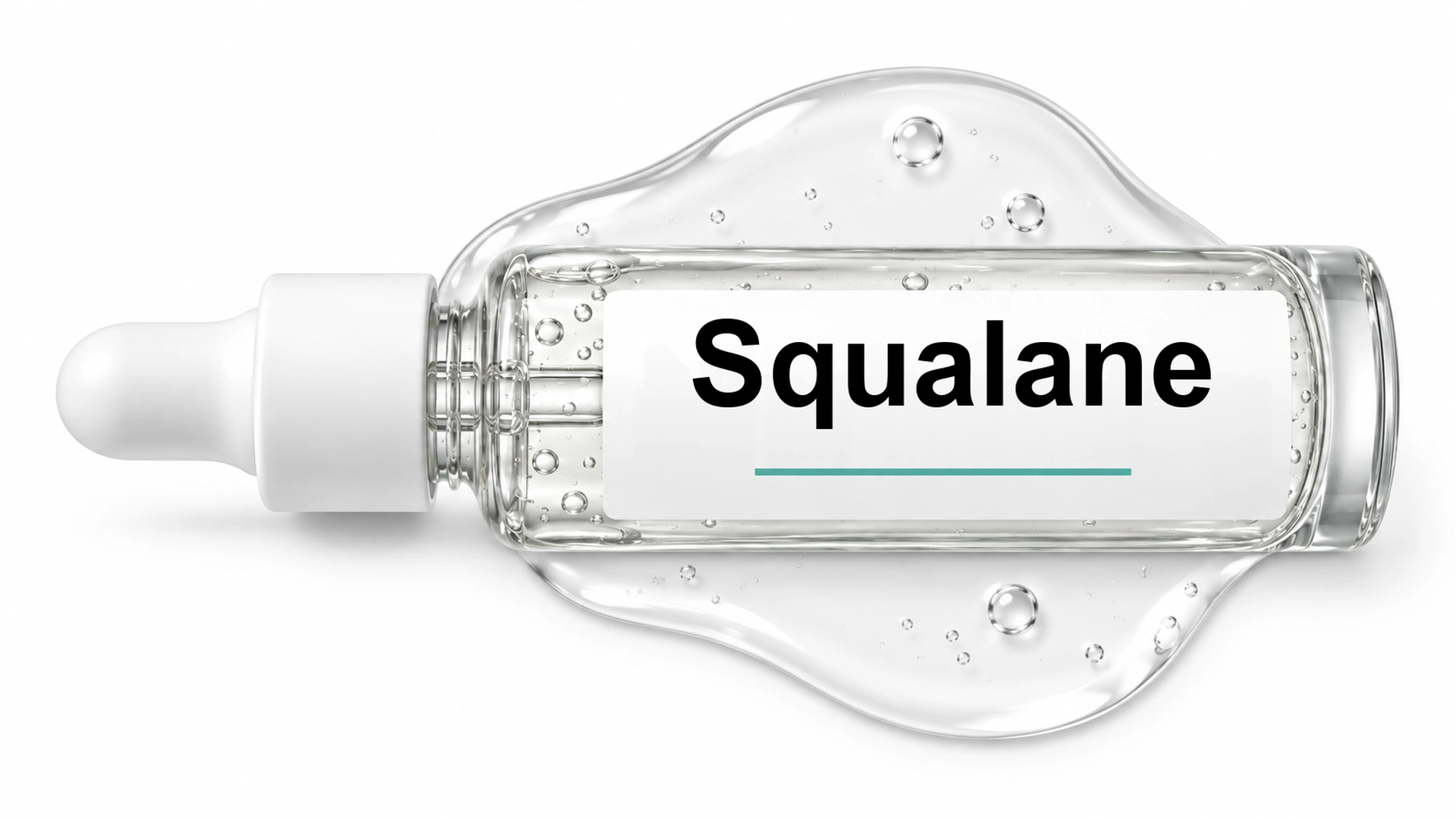
A light oil that is close to one the skin makes itself, so it sits comfortably on the face and rarely causes spots. It softens and adds a little seal. It replaces very little of what dry skin has actually lost, so it works as a finishing layer over a ceramide cream rather than as the moisturizer itself.
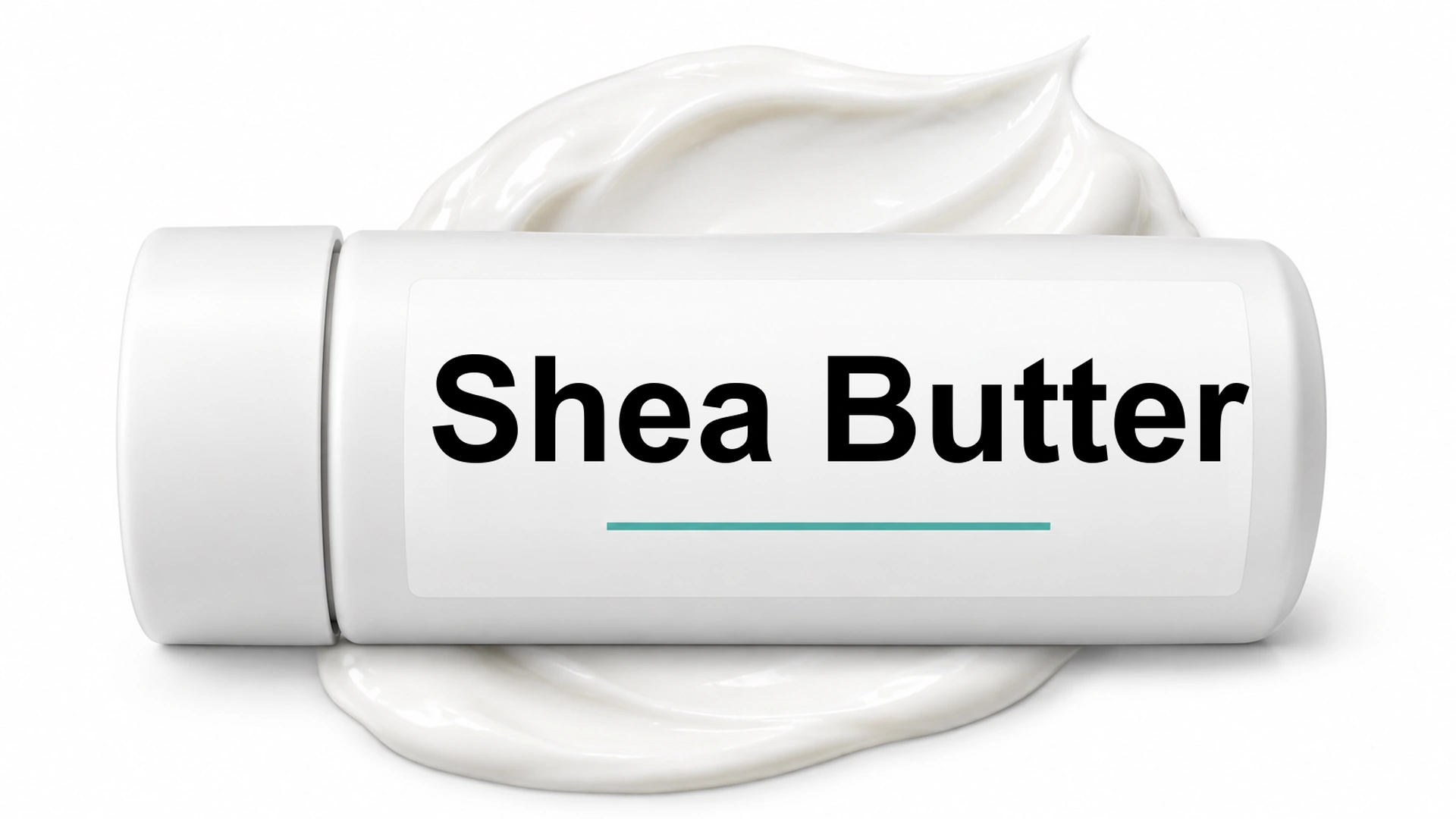
Rich and pleasant on ashy shins and elbows, and thick enough to stay where it is put. It seals reasonably well and replaces some fatty acids, but it does not contain the ceramides the barrier is short of. Unrefined versions carry a natural scent that can irritate cracked skin, so a fragrance-free formulation is the safer pick.
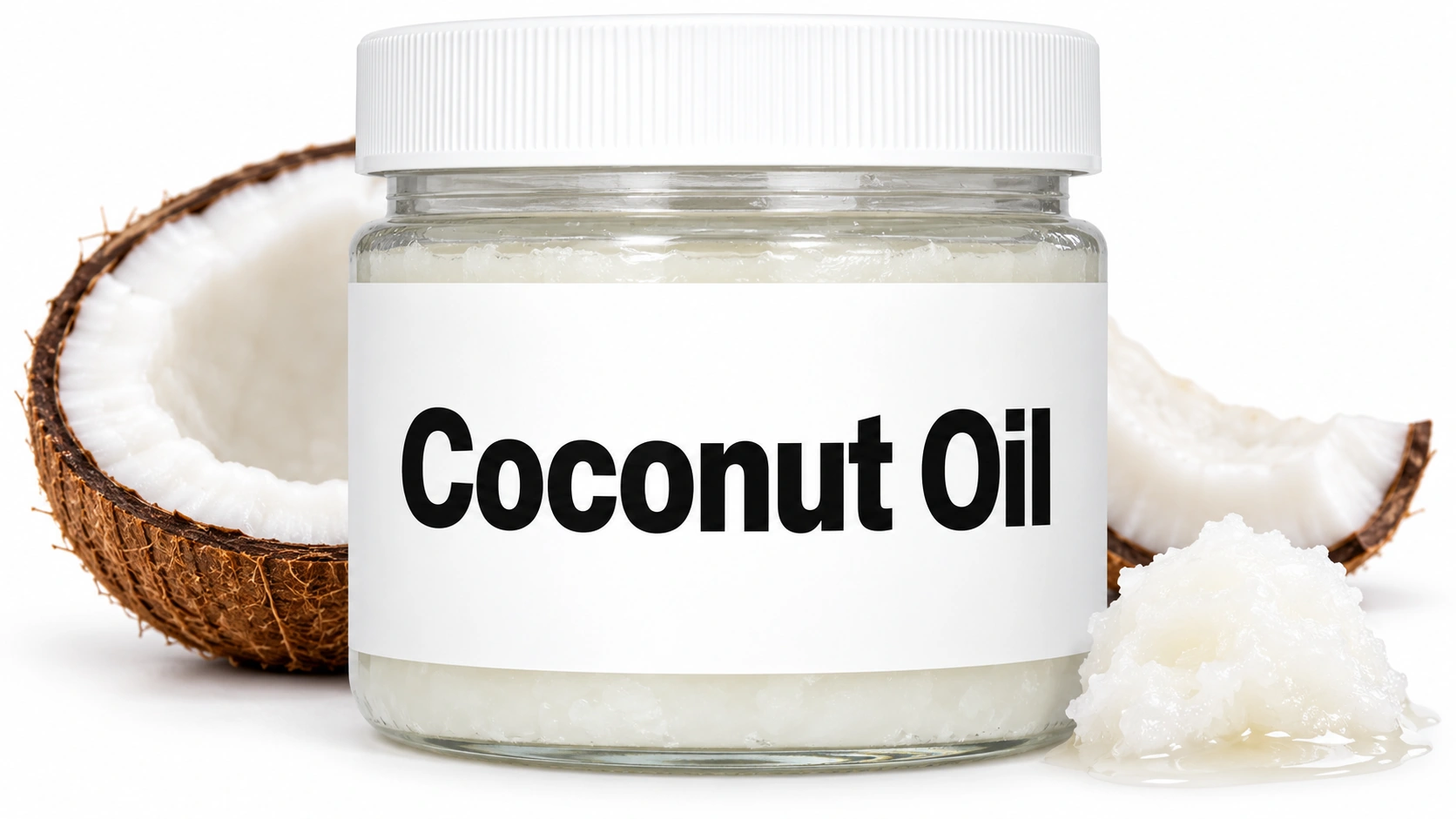
It seals reasonably and it feels good, and that is most of what it does. It replaces very little of what the skin lost, it clogs pores in some people, and on the face and back it can cause spots. If you like it, use it over a cream rather than instead of one — it is a lid, not a repair.
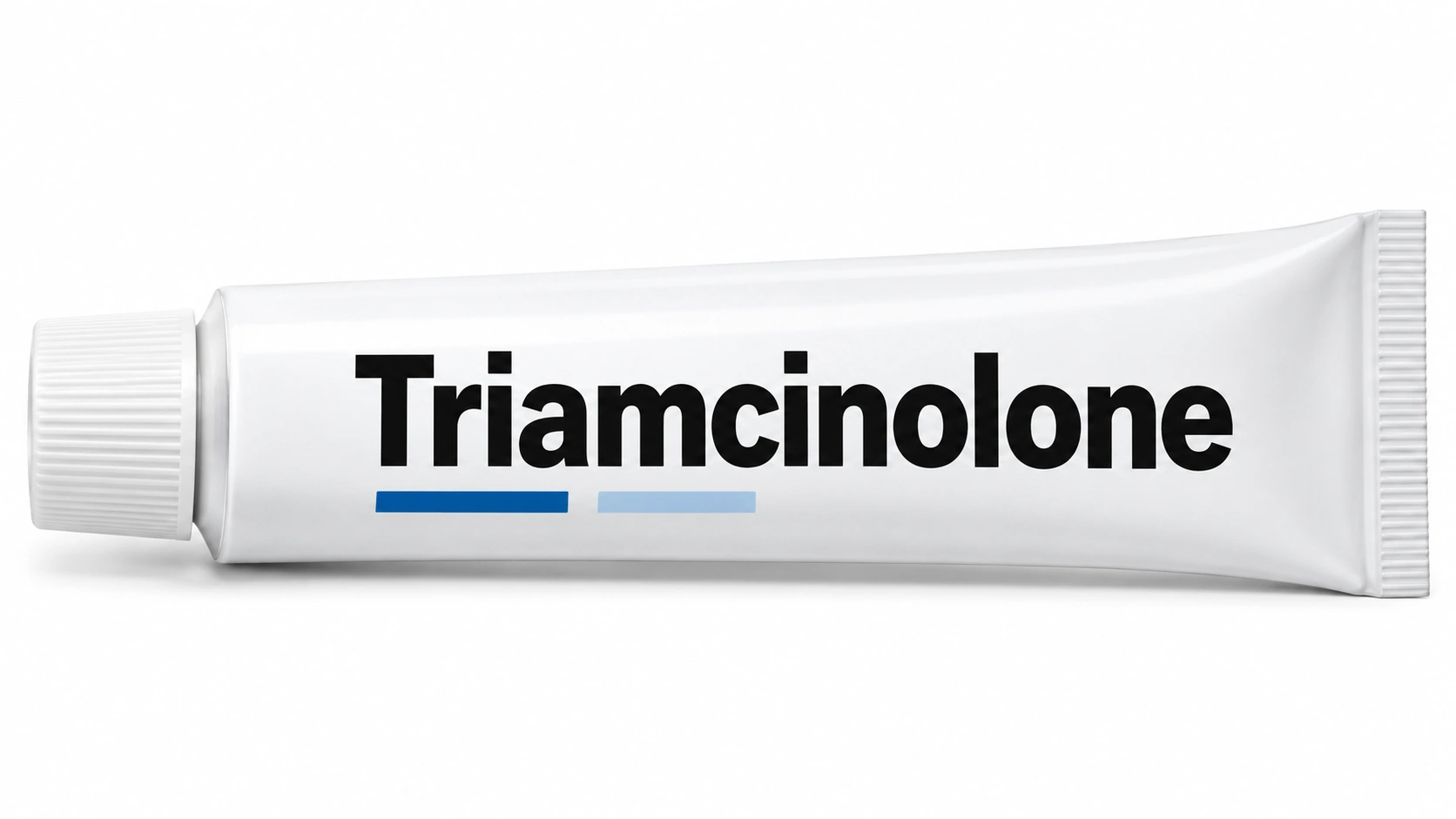
A mid-strength steroid ointment for dry skin that has tipped into inflammation — the red-cracked plates of asteatotic eczema on the shins, or thickened patches that are being scratched nightly. Two weeks usually settles it, and the moisturizer carries on underneath and afterward. It is not for plain dryness, and it is not for open cracks or anything that might be infected.
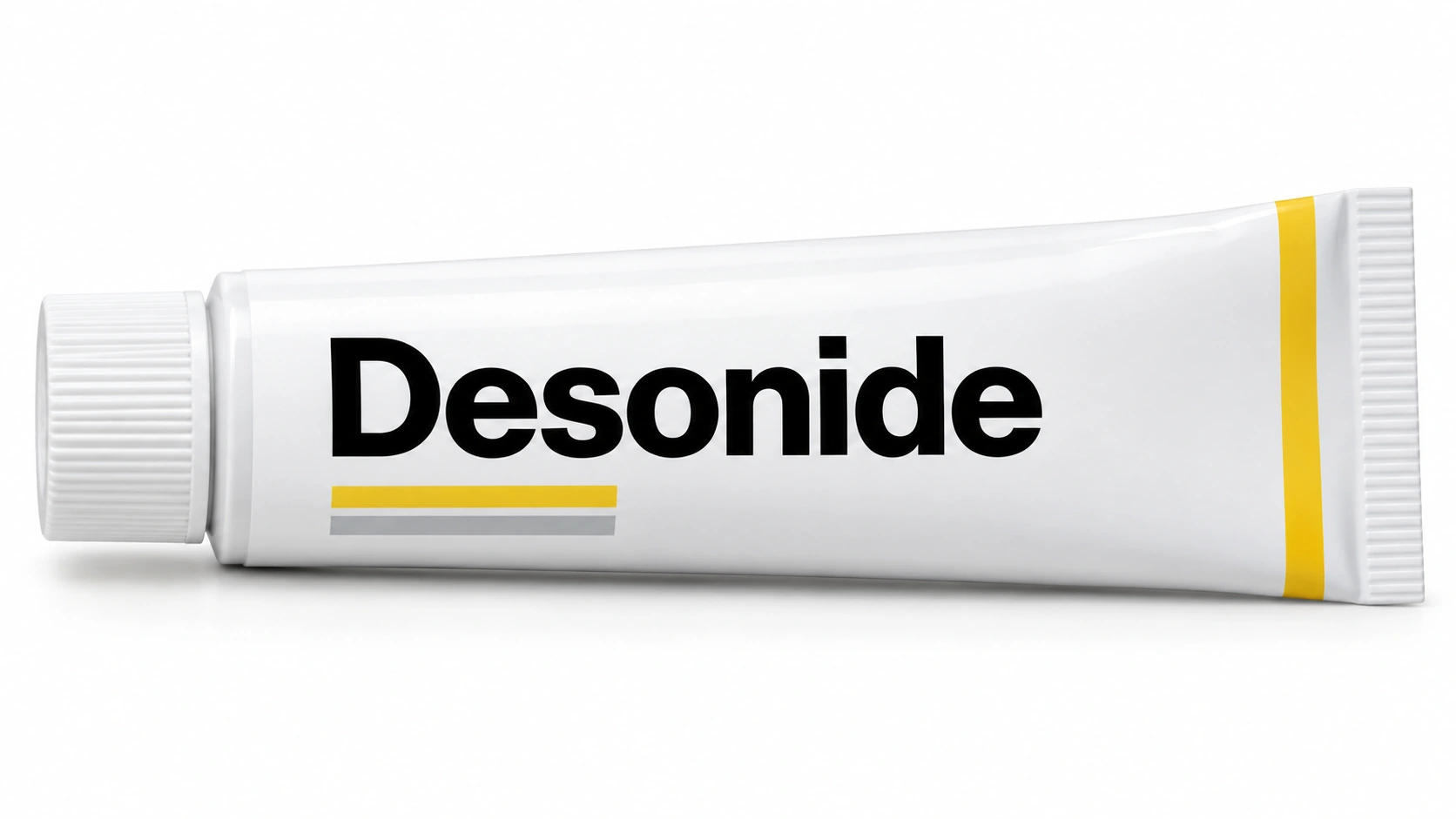
A gentler steroid used where the skin is thin or the person is small — the face, the eyelids, the neck, the folds, and children. It suits a child whose dry skin is itchy enough to wake them, alongside a heavy ointment. Short courses only, and the aim is always to get back to moisturizer alone.
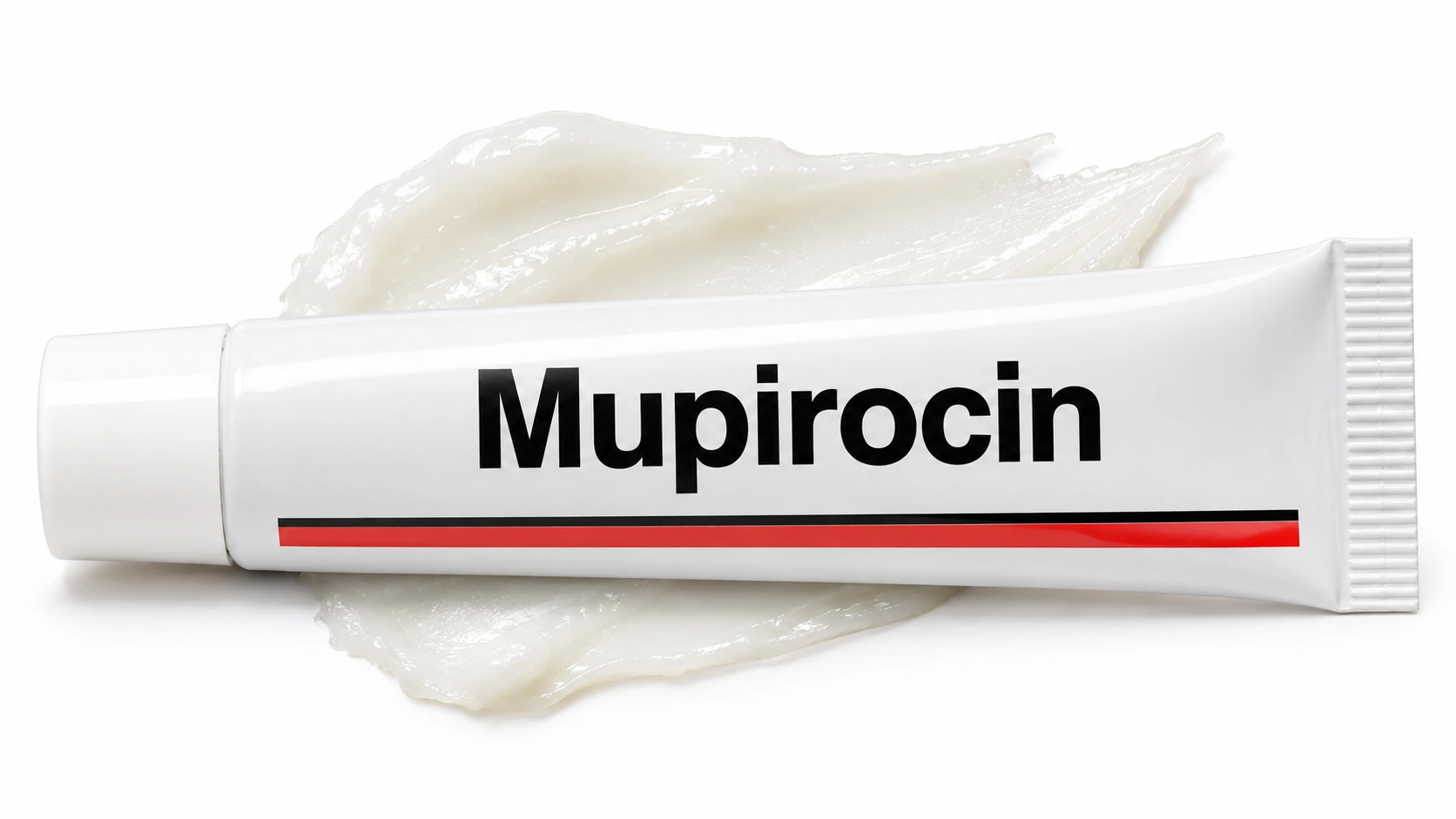
An antibiotic ointment for a single cracked fingertip or heel that has become yellow-crusted and sore. It treats the infection sitting in the crack, not the dryness that opened it, so the cream and the ointment both continue. If redness is spreading up the limb, this is not enough and antibiotic tablets are needed instead.
Widespread or persistent infection may require a prescription after confirming the diagnosis.
Hand ringworm usually improves with appropriate antifungal treatment. Infection may return if another source, such as the feet or nails, remains untreated; an uncertain or persistent rash needs testing.
Dry skin slides predictably if nothing changes, and reverses predictably once it does. Most people notice a difference within days, flaking settles in one to two weeks, and cracks on hands and heels take several weeks. The pattern is seasonal - maintenance, not a course.
An untreated infection can spread to contacts or other sites; inflamed hair infection can scar.
The surface breaks up
The skin breaks into a fine network of cracks. On the shins this can become the red-bordered, cracked-porcelain pattern of asteatotic eczema. Cracks here can be deep and painful.
Needs treatment
A crack breaks the skin. Yellow crust, spreading redness, warmth, swelling or pus mean a bacterial infection needing treatment.
Seek assessment if the diagnosis is uncertain; painful swollen scalp or beard lesions need prompt care.
Seek help if dryness persists despite moisturizers, itch disrupts sleep or the skin cracks and becomes infected. Sudden widespread dryness may need assessment for another cause.
A fungal infection of the hand, often associated with athlete’s foot.
Avoid sharing towels, combs or razors. Keep the area clean and follow the full treatment course.
Seek assessment if the diagnosis is uncertain; painful swollen scalp or beard lesions need prompt care.
Not in any way you will notice, unless you are genuinely dehydrated. The water content of the outer layer depends on how well it seals itself, not on how much you drink. Fix the seal - shorter warm showers, a gentle cleanser, a cream on damp skin.
No single best one, and the ones with most evidence are usually inexpensive. Look for a fragrance-free cream in a tub with ceramides and glycerin, plus petrolatum or dimethicone. Applying it to damp skin twice a day for two weeks matters more than which one.
Several things line up in the evening. Body temperature rises, a warm shower has just stripped the skin, nothing distracts you, and scratching in your sleep goes unchecked. Moisturizing before bed, a cool bedroom and a humidifier all help.
No, though they overlap. Dry skin is a state the skin is in. Eczema is a condition where the skin is inherently leaky and inflamed, with itchy, poorly defined patches that come and go, usually from childhood and often with asthma or hay fever. Dry skin that keeps turning red or weeping in the same places is worth a look.
Not with a scrub. Scrubbing removes the barrier with the flakes and the dryness returns worse. For thick scale on heels, shins or elbows, a cream with urea or lactic acid softens it.
Usually not. But an underactive thyroid, kidney disease, diabetes and some medicines cause it, and generalized itch without a rash occasionally reflects a problem elsewhere. Worth checking is dryness or itch that starts suddenly in an adult, covers the body, disturbs sleep, or comes with fatigue or weight change.
Sources