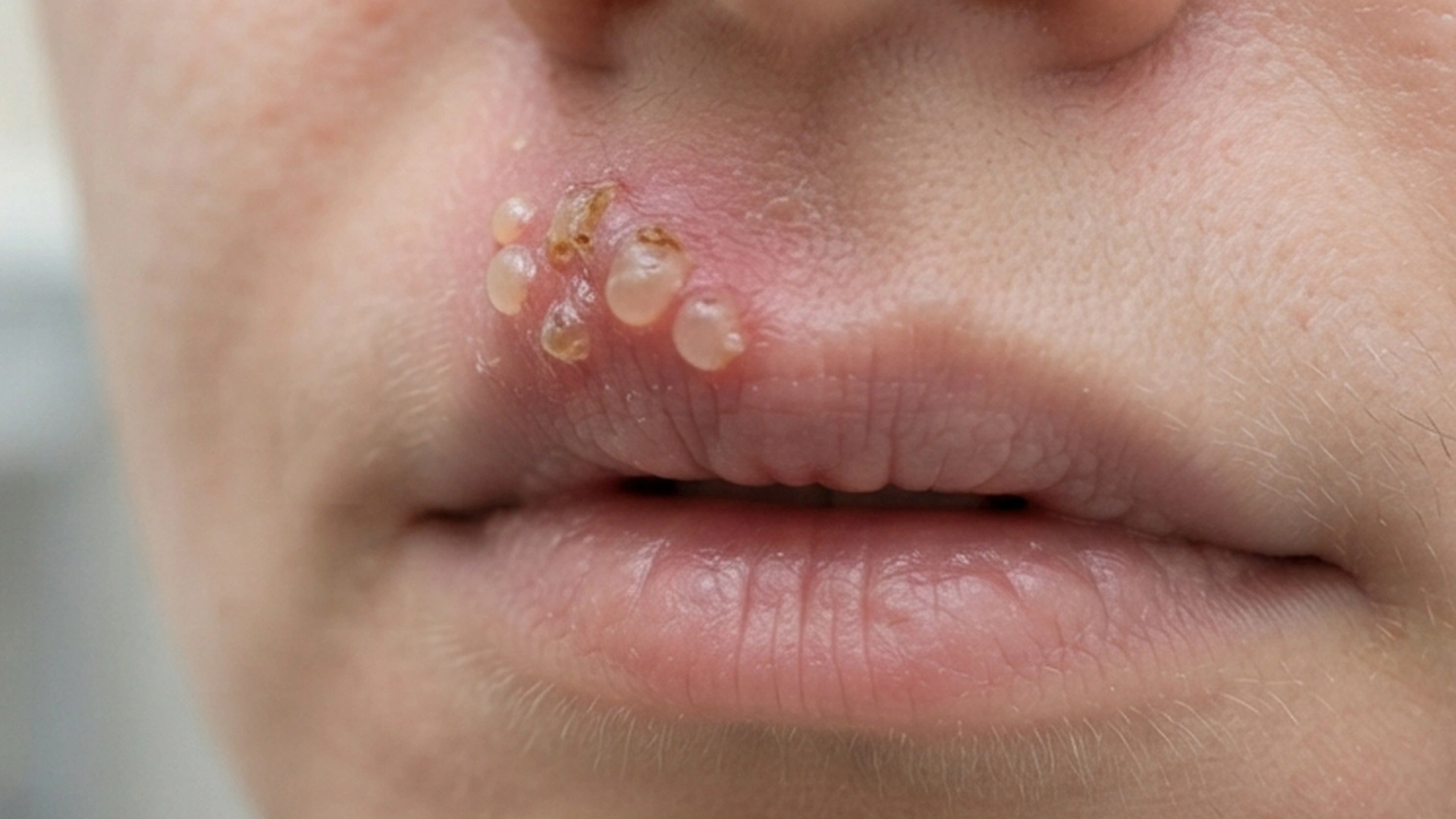
Rosacea (Eyes) vs Allergic Conjunctivitis

Ocular rosacea is inflammation affecting the eyelids and eye surface, with or without obvious facial rosacea. An allergic reaction affecting the eye surface, usually with prominent itch.
Research updated 2026-10-23
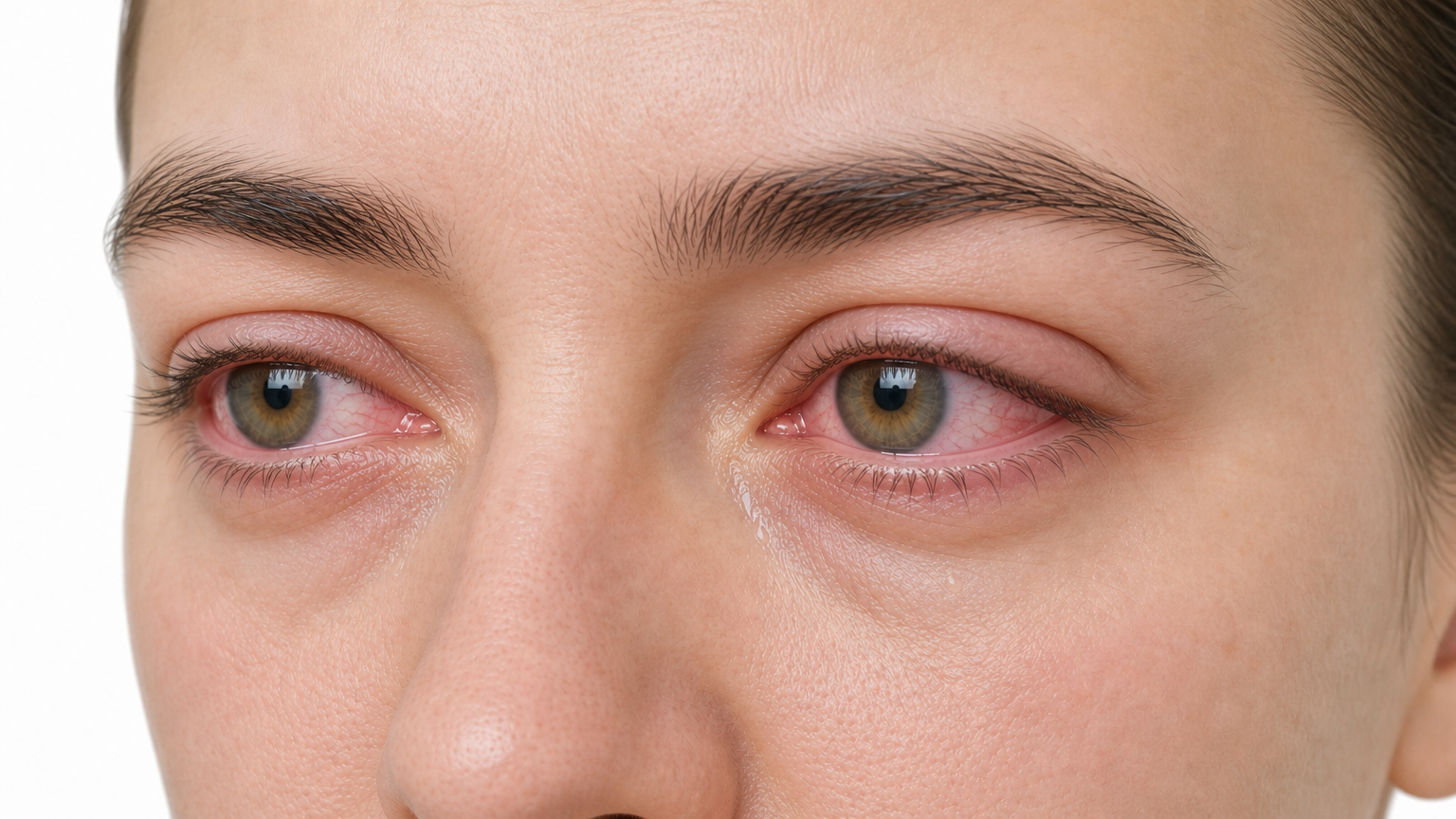
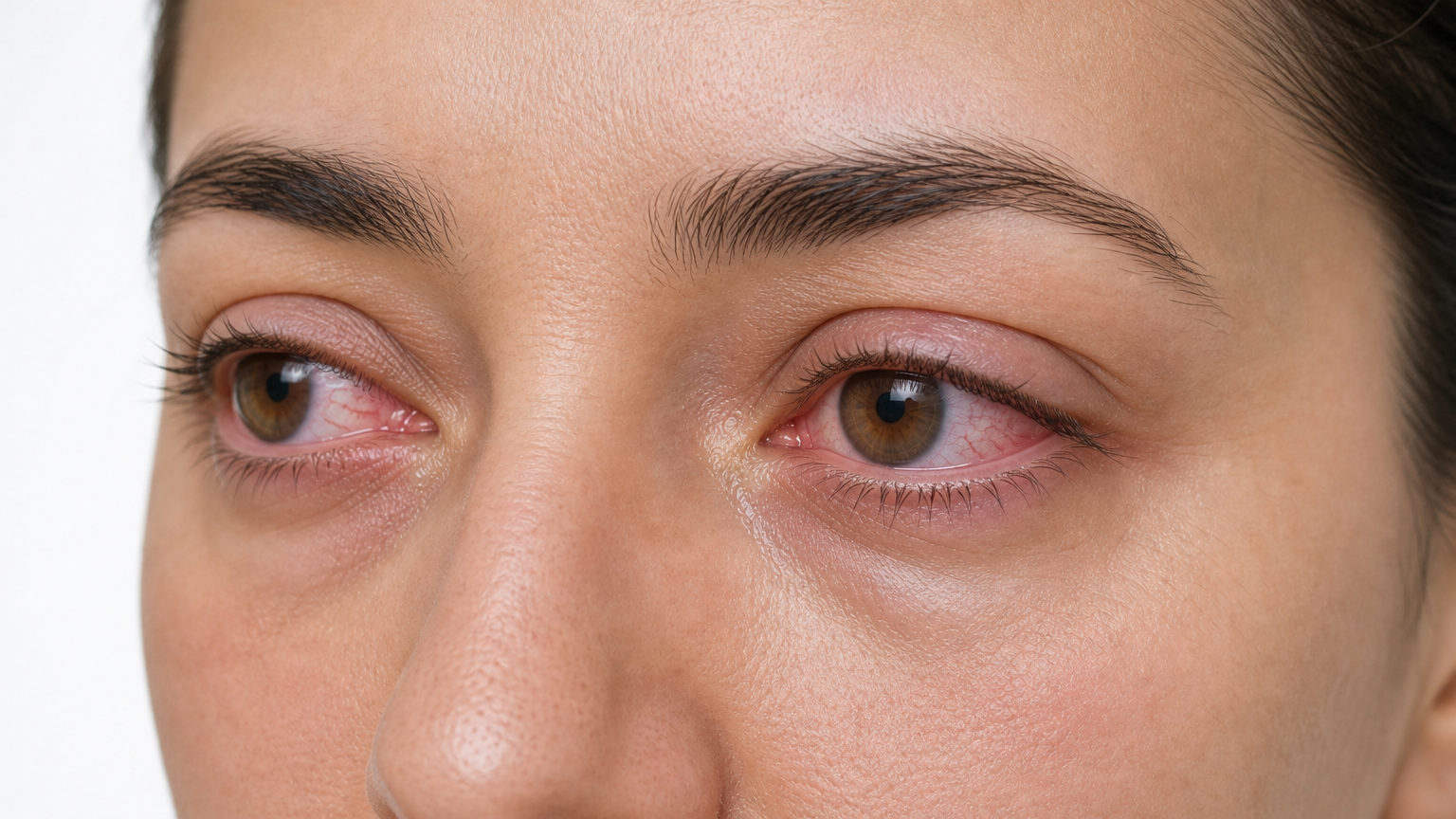
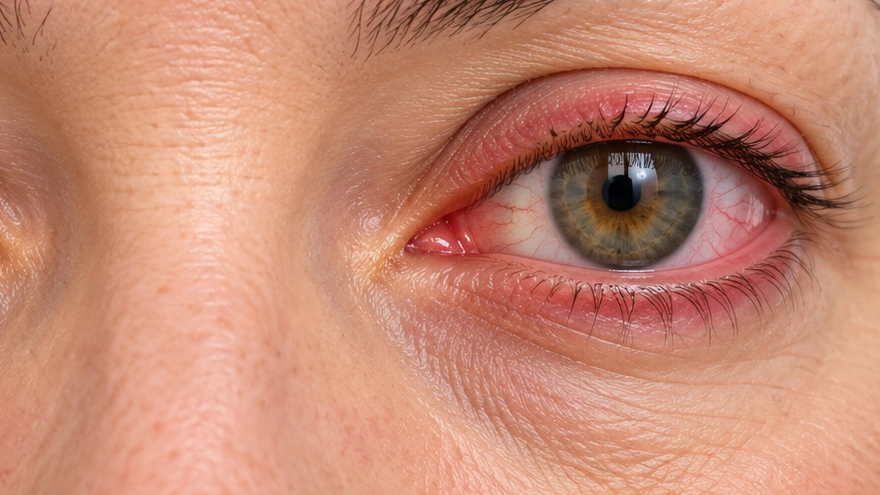
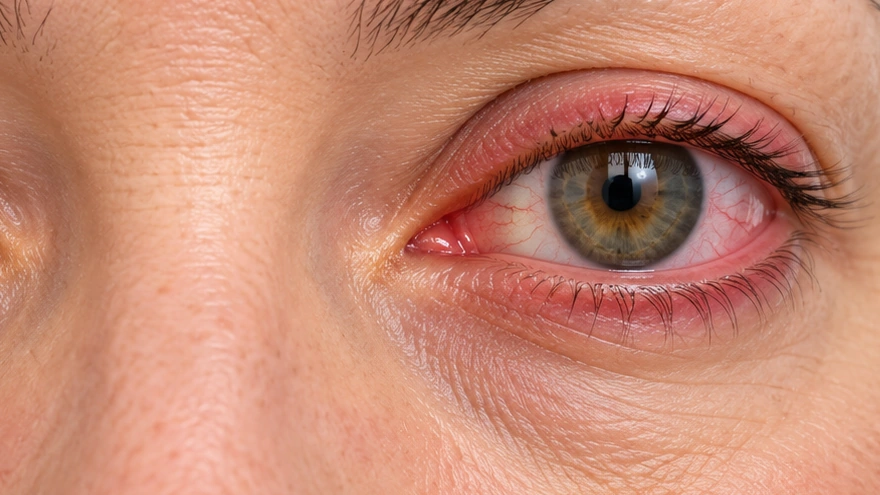
Rosacea (Eyes).AI-generated educational illustration: Both adult eyes mildly red and watery with slight eyelid puffiness, no yellow pus or lash-margin crusting. Not a clinical photograph.

Key differences

The same eight facts on every condition comparison.
Usual age
30 to 60
Any age
Where
Eyelids and eyes
Both eyes
Main sign
Gritty, red, dry eyes
Itchy, watery, red eyes
Itch or pain
Burning, gritty
Very itchy
Contagious
No
No
Long term
Long-term, flares
Seasonal or with exposure
Scars
Rarely, on the eye surface
No
Who gets it
Many people with rosacea
People with allergies

What is it?

Rosacea (Eyes)
Allergic Conjunctivitis
What is it?
  • What it is
    Ocular rosacea is inflammation affecting the eyelids and eye surface, with or without obvious facial rosacea.
  • What it is
    An allergic reaction affecting the eye surface, usually with prominent itch.

What it looks like

Rosacea (Eyes)

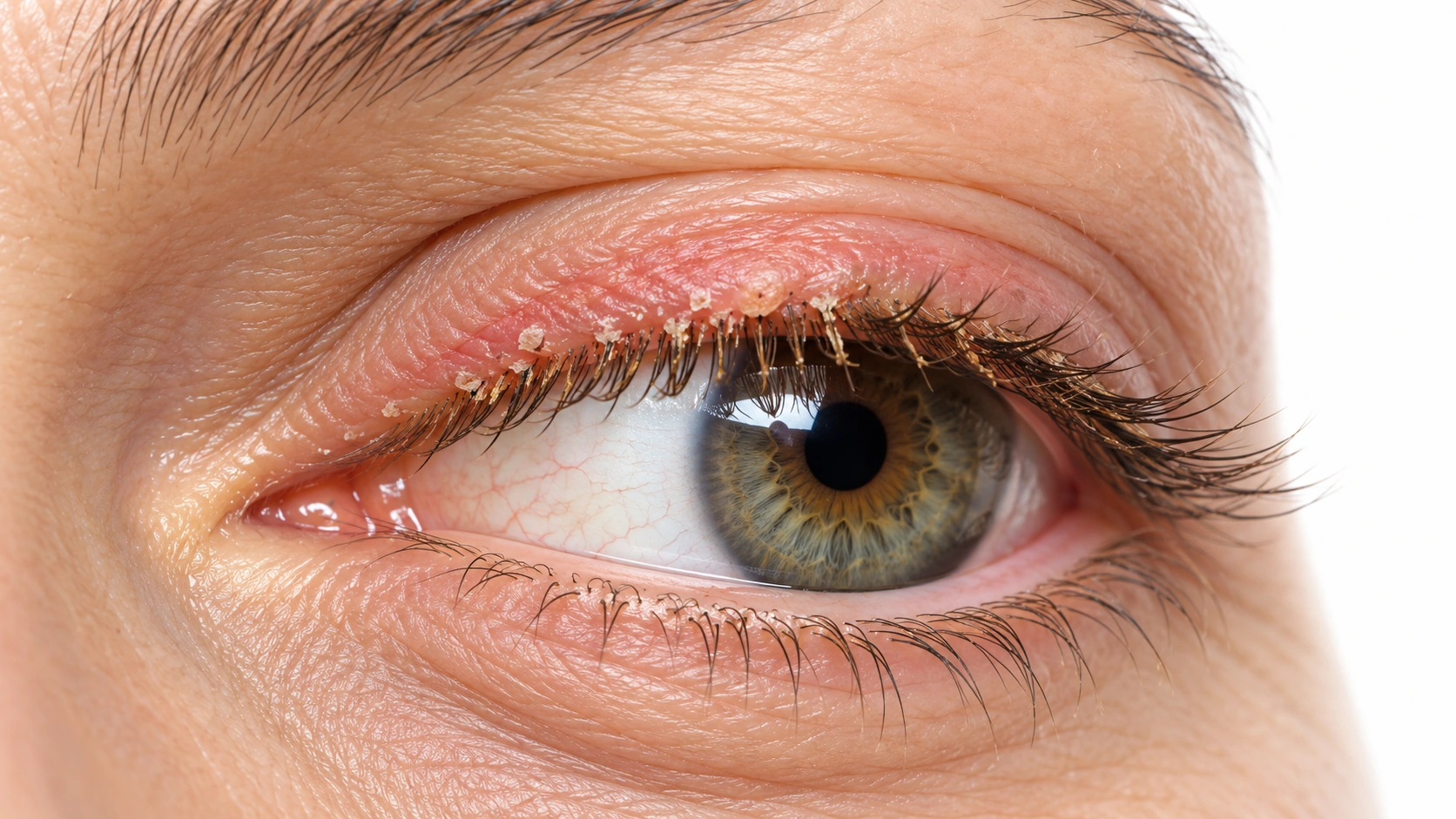
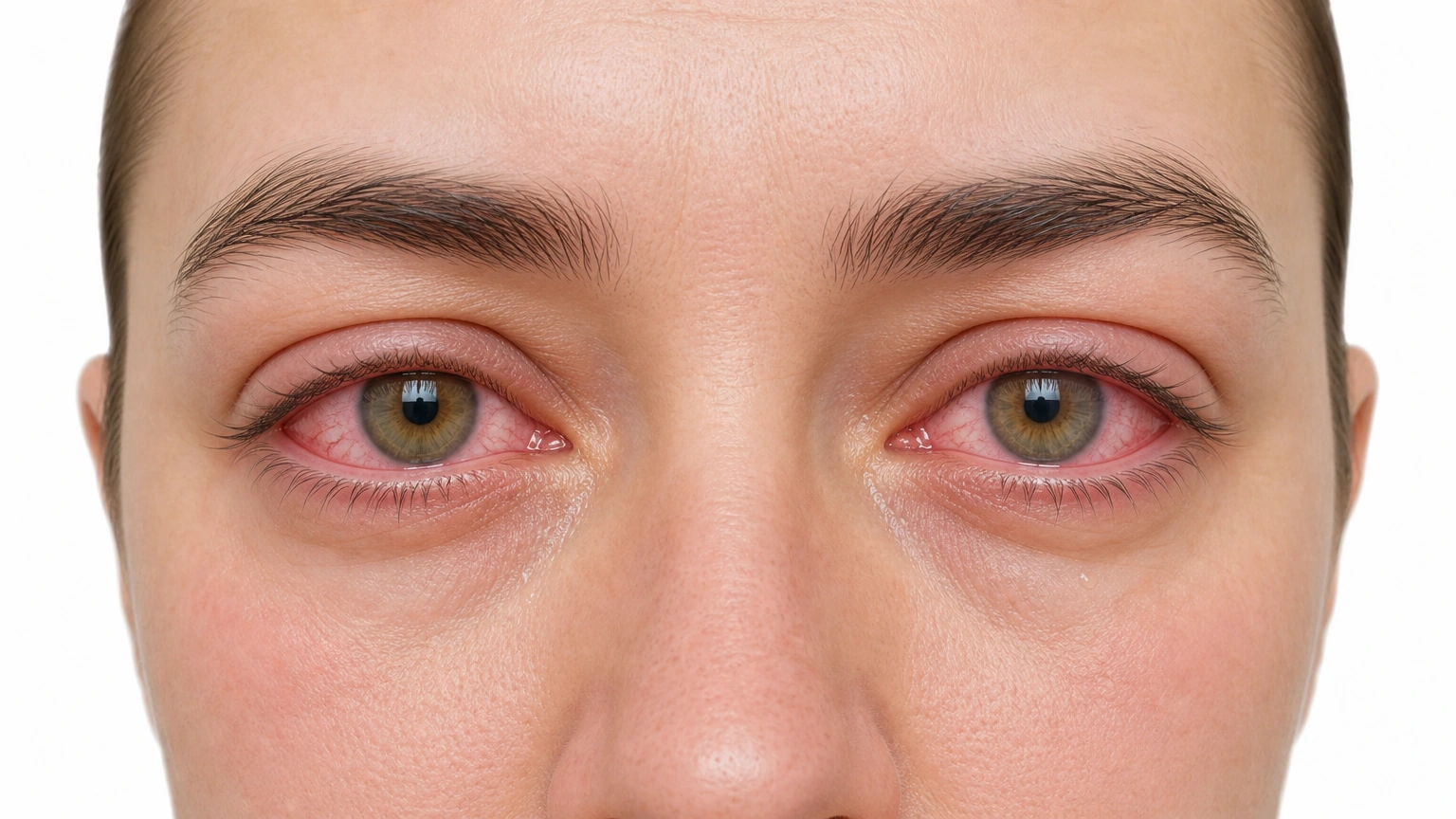
Both eyes with red eyelid margins and pinkness across the visible eye surfaces.

Rosacea (Eyes) The eyelid edges and exposed eye surfaces look reddened.

Allergic Conjunctivitis

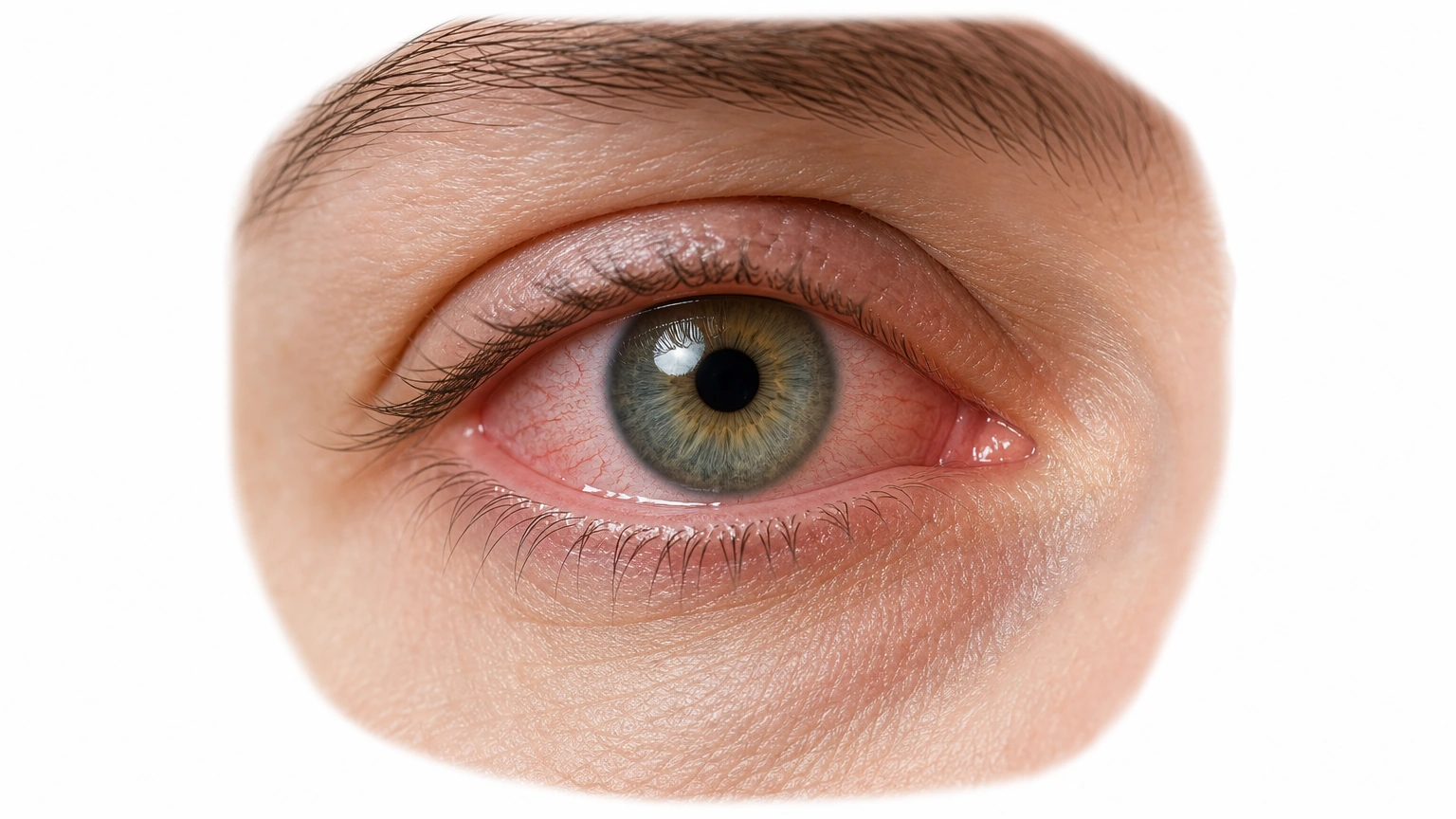
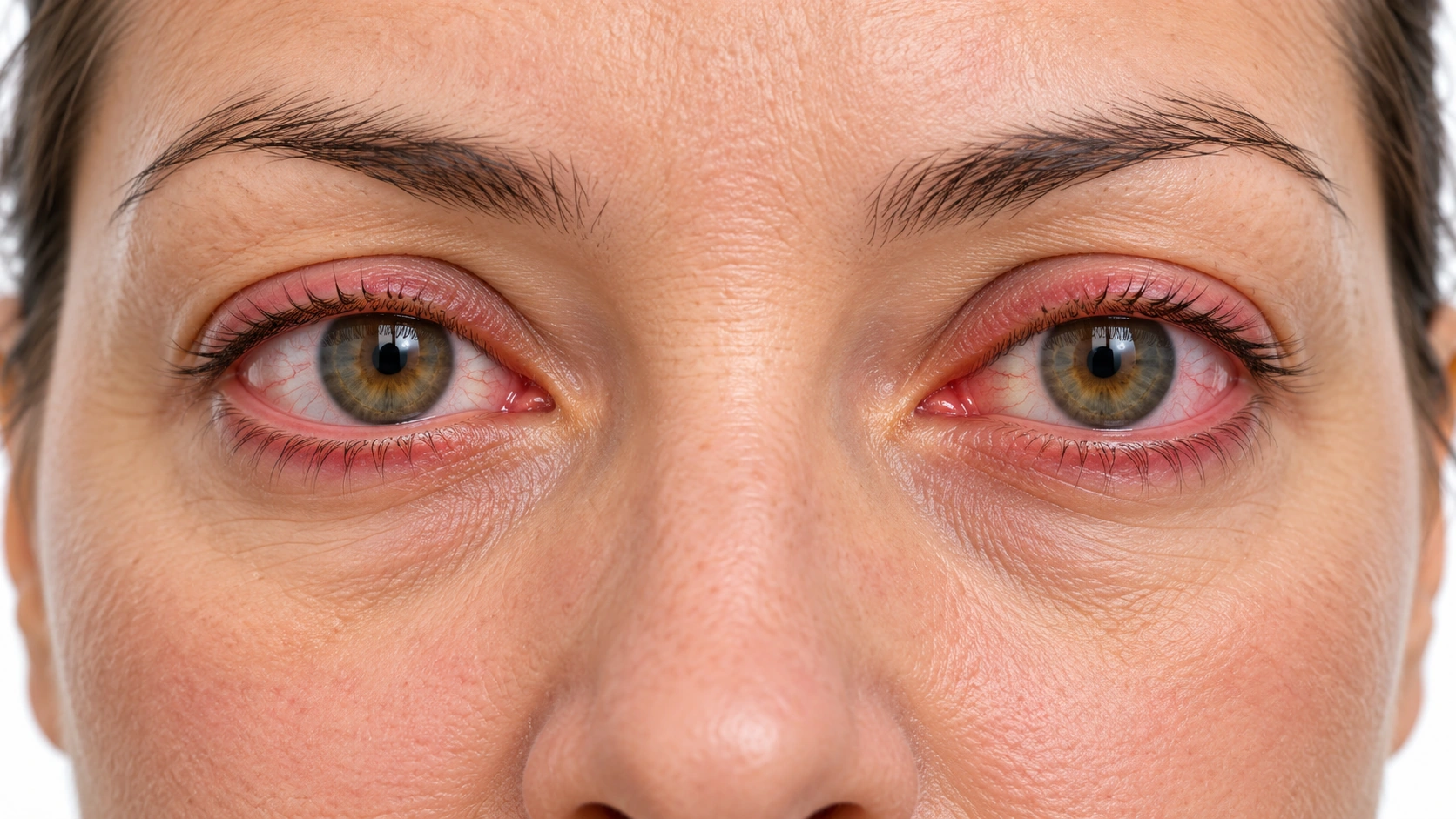
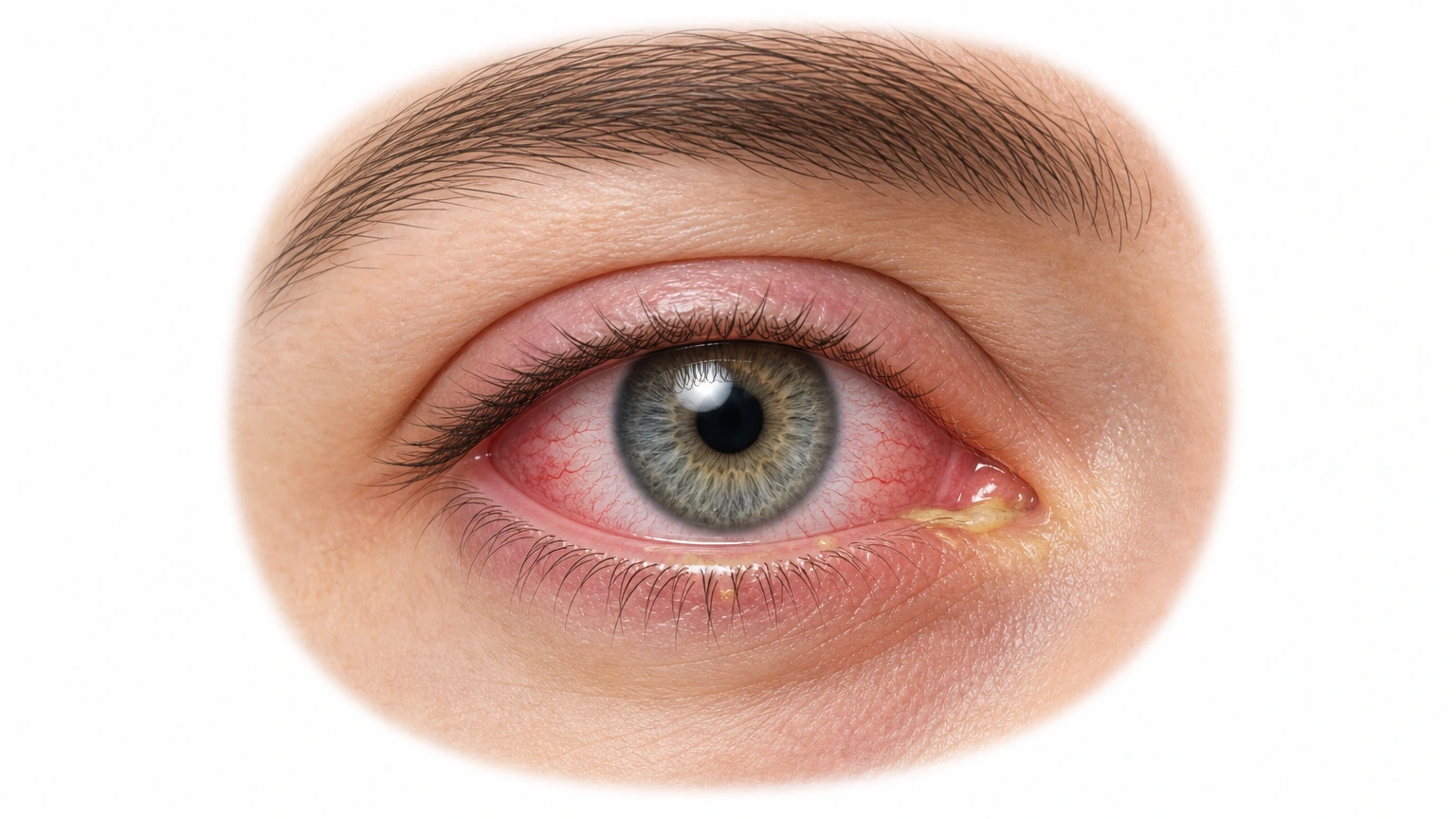
A face viewed straight on with pink eye surfaces and reddened upper and lower eyelids.

Allergic Conjunctivitis Both eyes and their surrounding eyelid edges look pink and irritated.
Skin tones
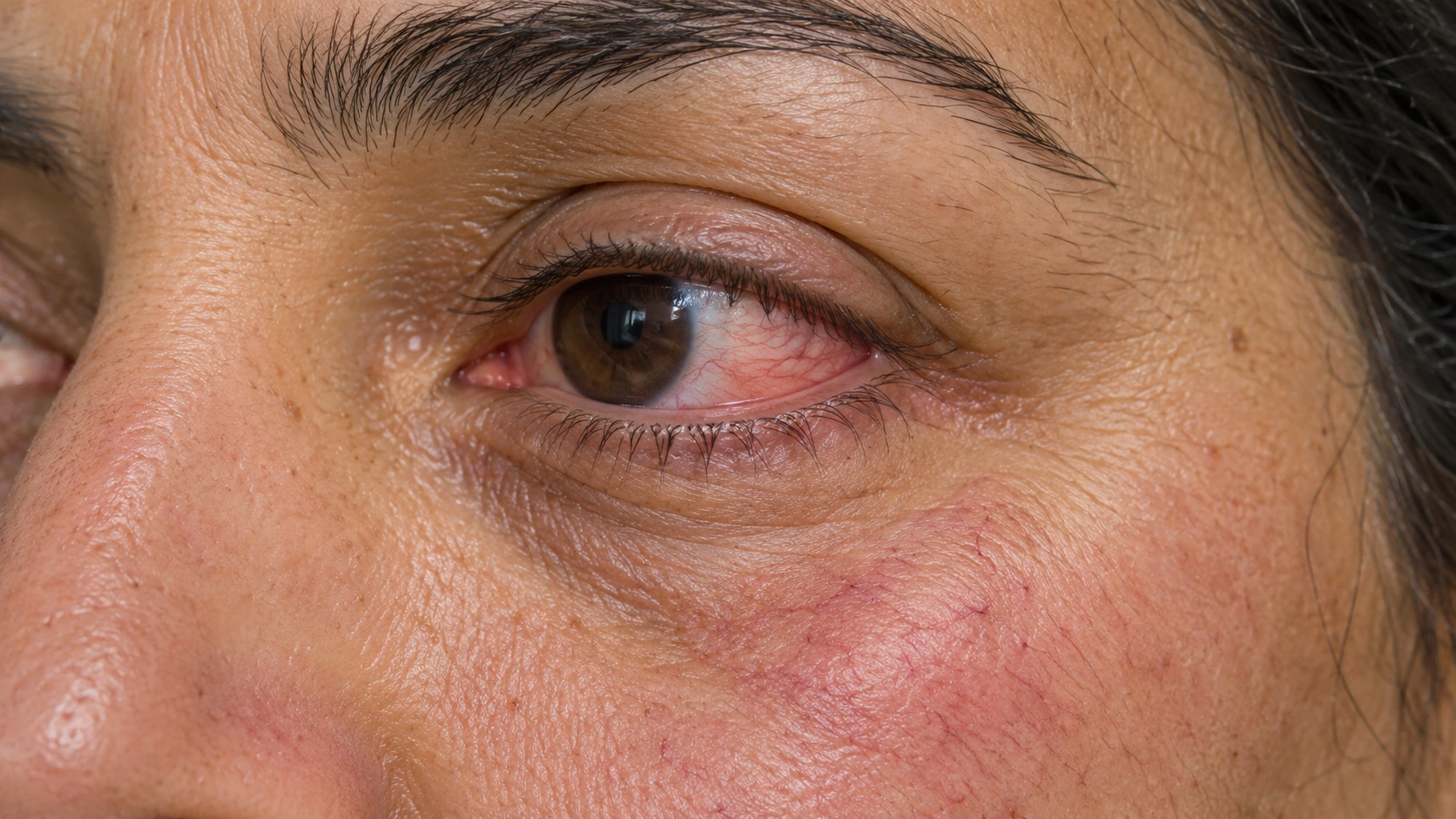
Rosacea (Eyes).
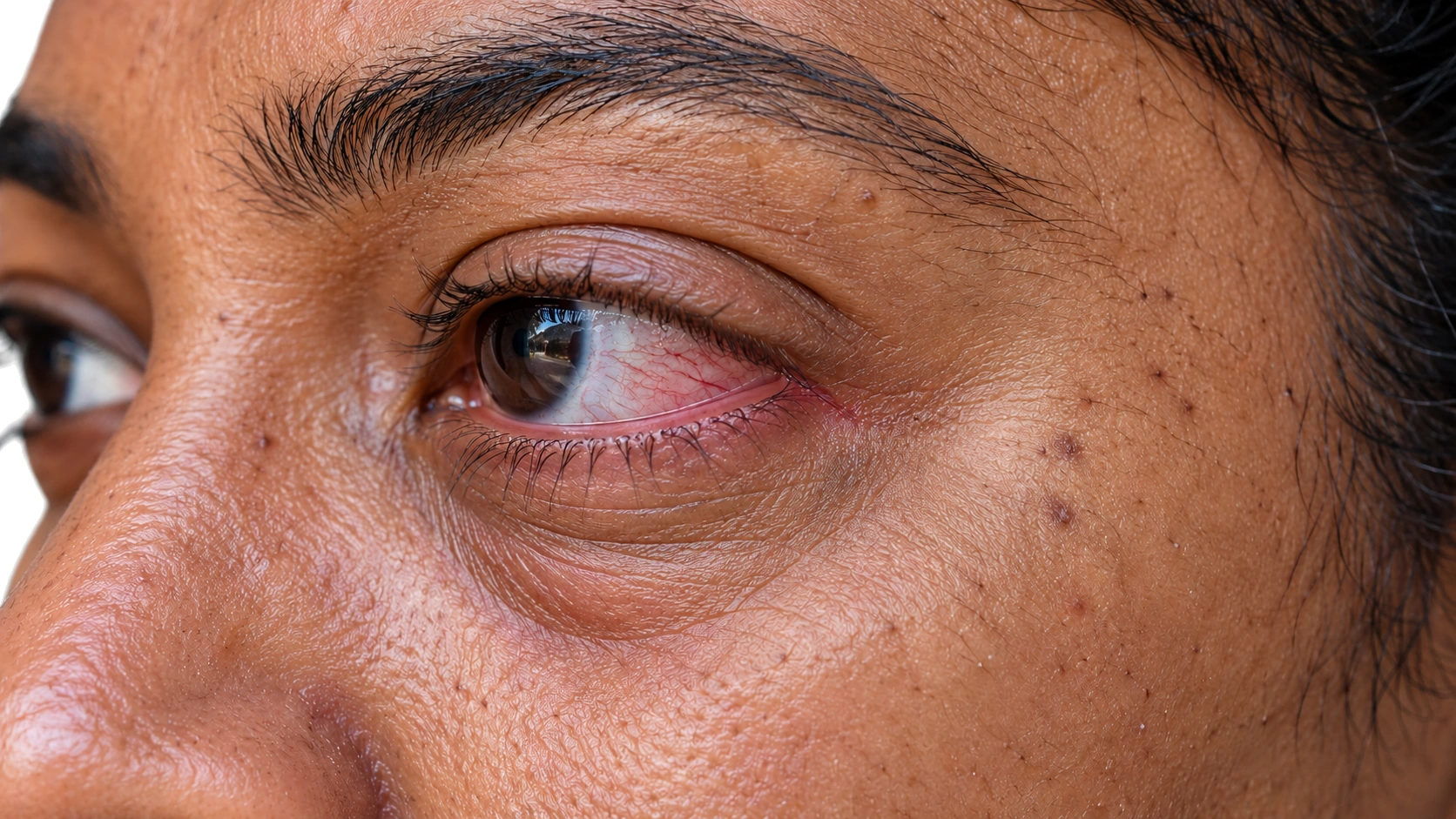
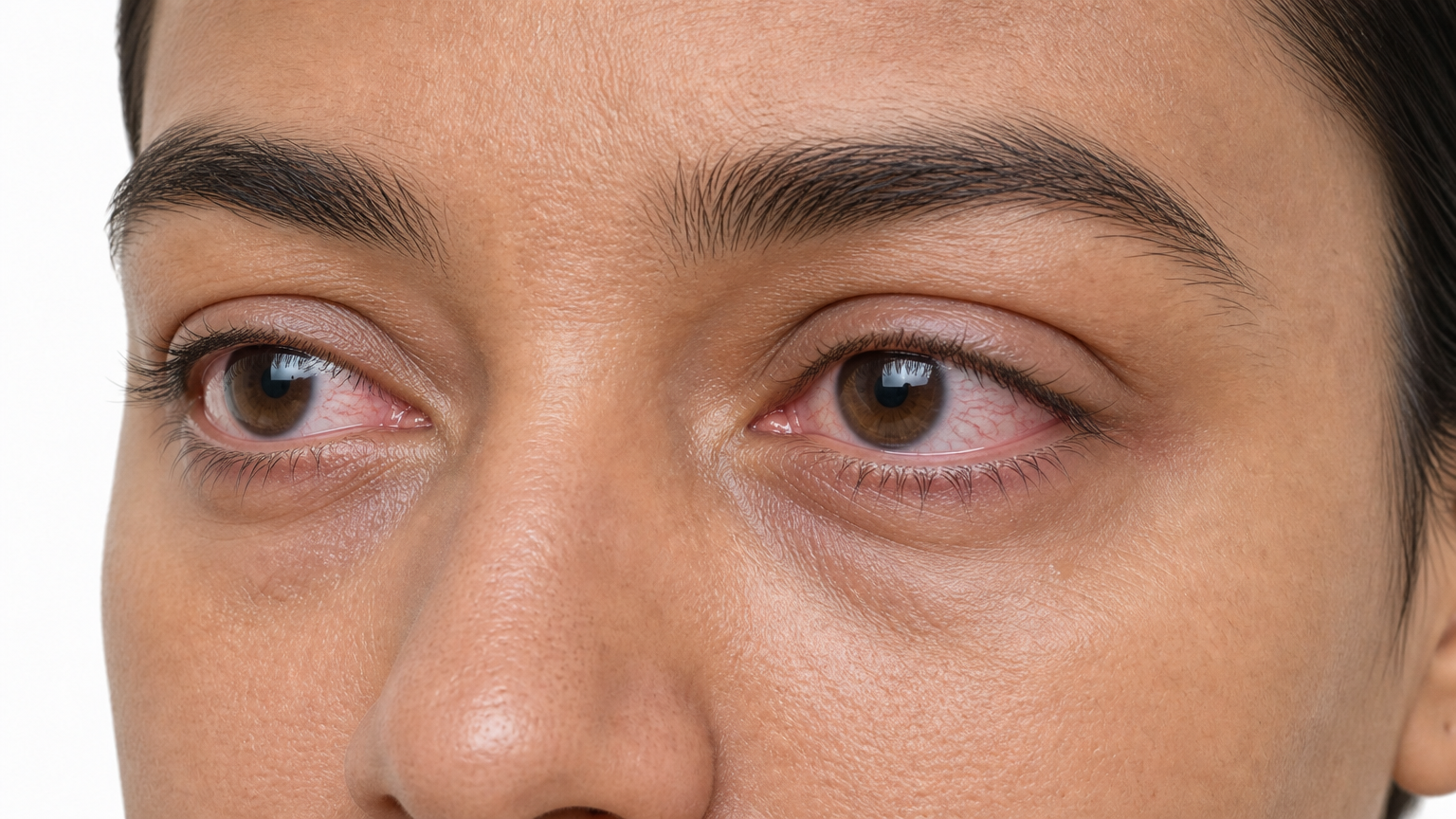
Rosacea (Eyes).
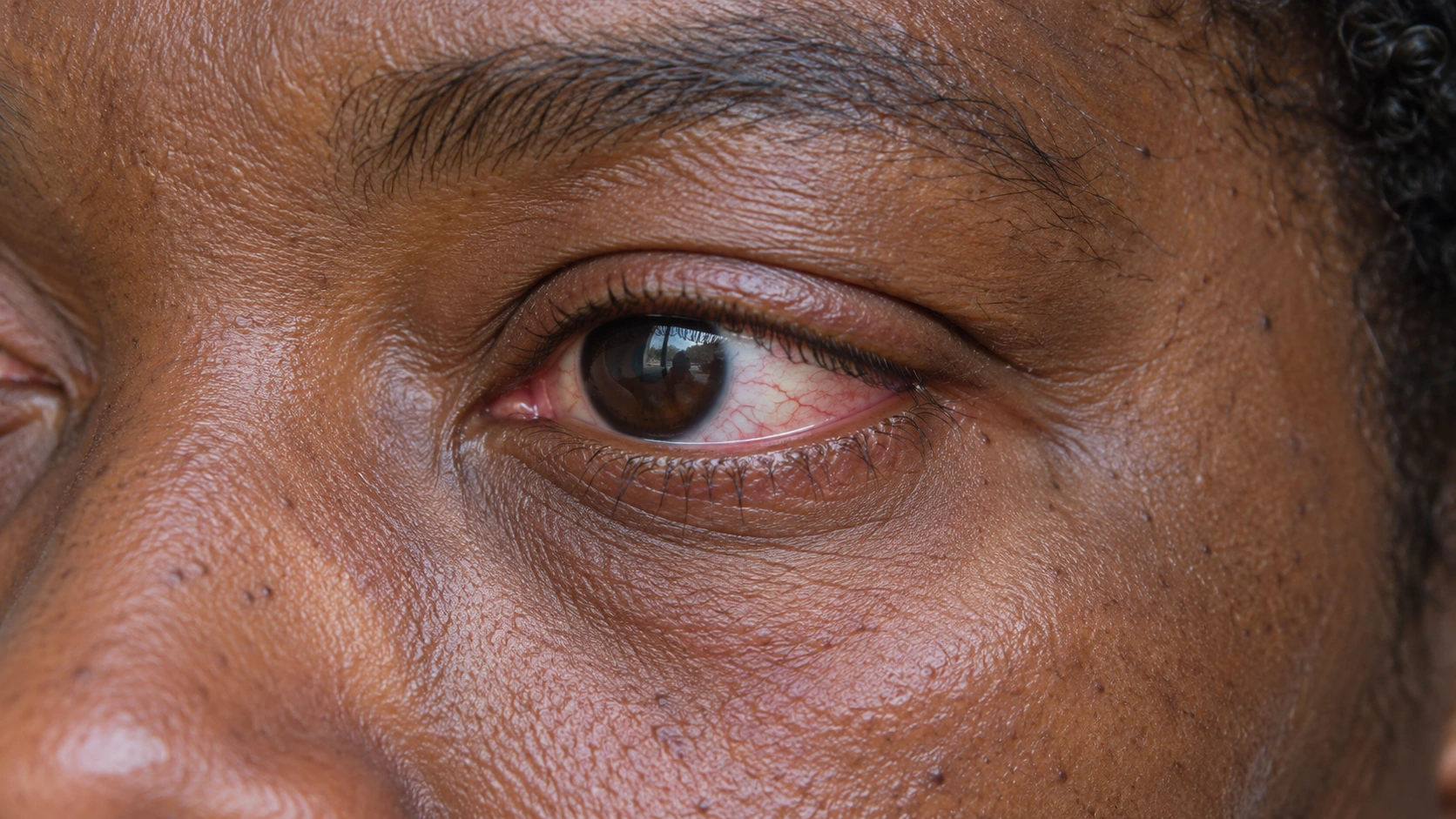
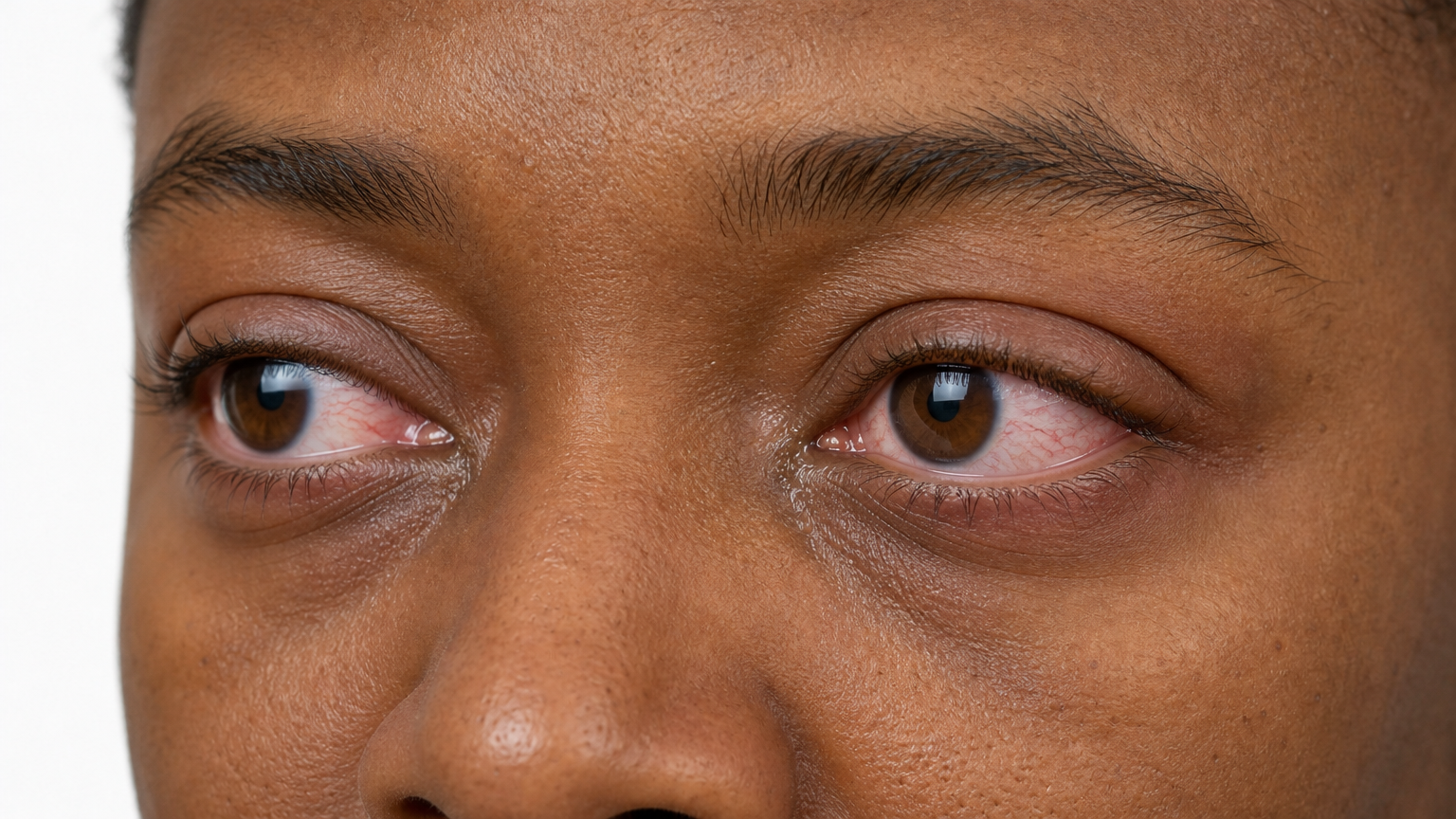
Rosacea (Eyes).
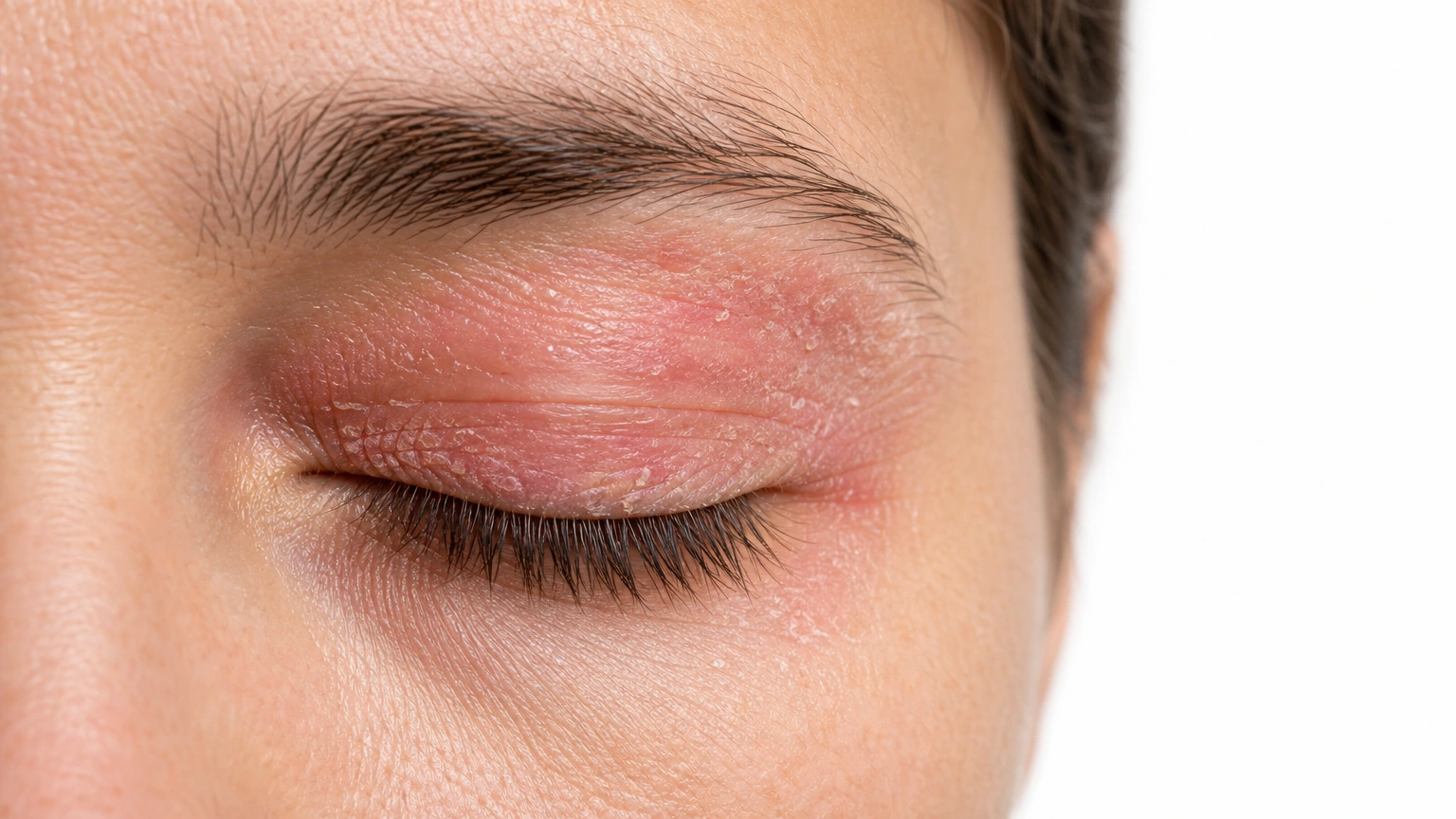
Rosacea (Eyes).
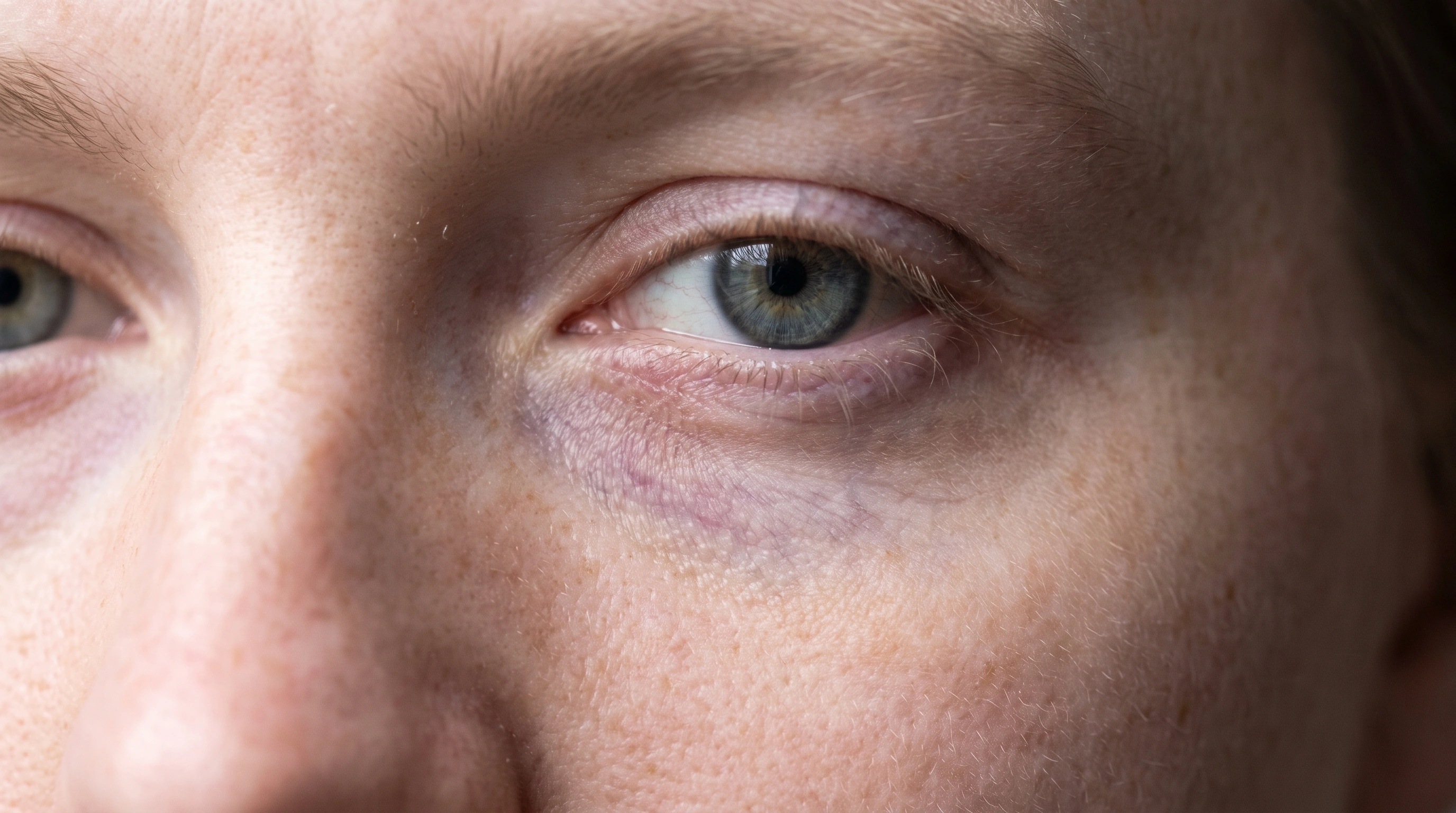
both eyes with diffuse conjunctival redness, clear tearing and mildly puffy lids, with the face turned slightly to its own right on light skin.
both eyes with diffuse conjunctival redness, clear tearing and mildly puffy lids, with the face turned slightly to its own right on medium skin.
both eyes with diffuse conjunctival redness, clear tearing and mildly puffy lids, with the face turned slightly to its own right on brown skin.
both eyes with diffuse conjunctival redness, clear tearing and mildly puffy lids, with the face turned slightly to its own right on deep skin.
In the skin

Inflammation can affect the eyelids and their oil glands. Altered oil secretion destabilizes the tear film and contributes to irritation of the eye surface.

An allergen triggers an immune reaction in the conjunctiva. Inflammatory signals then cause itching, redness and swelling of the eye surface.

When it usually starts

010203040506070+

Rosacea (Eyes). Can occur at different ages; eye symptoms may precede facial changes.

Allergic Conjunctivitis. Can occur at different ages depending on the cause.

Causes and triggers

Causes

Inflammation and dysfunction of eyelid oil glands disturb the tear film.

Allergen exposure triggers an immune reaction in the conjunctiva.

Risk factors
Rosacea, Eyelid gland dysfunction
Hay fever, Allergy tendency
Trigger
● Rosacea (Eyes)
● Allergic Conjunctivitis
Dry environments
Can contribute
Not listed
Heat
Can contribute
Not listed
Pollen
Not listed
Can contribute
Animal dander
Not listed
Can contribute
Dust mites
Not listed
Can contribute

Daily Care

Rosacea (Eyes)
Allergic Conjunctivitis
Daily care

Habits that help

  • Use a warm compress on closed eyelids as advised
    Comfortably warm, not hot, compresses help loosen crusts and support oil-gland function.
  • Clean the lash line gently using the agreed lid-hygiene method
    Wash hands first and use a clean pad or cloth for each eye.
  • Keep up lid care even between flares
    A consistent routine is often more useful than vigorous occasional cleaning.
  • Take screen breaks and reduce airflow across the eyes
    Dryness may worsen with infrequent blinking, wind or air-conditioning.
  • Seek prompt eye assessment for pain, light sensitivity or blurred vision
    These symptoms need examination and should not be managed with lid hygiene alone.

Avoid

  • Avoid: Eye rubbing, irritating makeup and uncomfortable contact lenses
    Use glasses during active irritation and discuss when lenses can be resumed.

Habits that help

  • Wash hands before touching the eyes or using drops
    Avoid touching the bottle tip to the eye or lashes.
  • Use a clean cool compress for discomfort
    Use a separate clean pad for each eye.
  • Clean discharge gently with a fresh damp pad
    Do not reuse a soiled cloth or rub the surface of the eye.
  • Pause contact lenses and eye makeup while symptoms are active
    Ask when it is safe to resume lenses and whether equipment needs replacing.
  • Seek prompt assessment for pain, light sensitivity or vision change
    These symptoms are not typical of simple allergy or uncomplicated conjunctivitis.
  • Reduce exposure to your known allergens
    Keep windows closed during high pollen periods if helpful and avoid rubbing itchy eyes.

Avoid

  • Avoid: Sharing eye drops, cosmetics, towels or pillows
    This is especially important when infection is possible.

Treatment differences

Evidence labels come from each condition’s own treatment list.

Treatment
● Rosacea (Eyes)
● Allergic Conjunctivitis
Prescription topicals
None listed

Eye-specific allergy drops

Listed

Antihistamine or mast-cell stabiliser eye drops may help. Steroid eye drops require eye-clinician supervision.

Prescription pills

Eye-clinician treatment

Listed

Persistent or more severe disease may need prescription treatment such as doxycycline in appropriate patients.

None listed

Outlook

Long term

Ocular rosacea can flare repeatedly and may need long-term eyelid care and treatment. Eye pain, light sensitivity or a change in vision needs urgent assessment because the cornea can be affected.

Symptoms can improve when the allergen exposure is reduced and suitable treatment is used. They may return seasonally or with further exposure; pain or vision changes is not typical simple allergy and needs assessment.

Complications

Possible complications

Corneal involvement can threaten sight; symptoms should not be dismissed as cosmetic redness.

It can accompany allergic rhinitis; pain or vision change is not typical simple allergy.

When to get help

When to get help

Get urgent eye assessment for pain, light sensitivity or blurred vision.

Eye pain, light sensitivity, vision change or severe swelling needs urgent assessment. A red eye in a contact-lens wearer also needs prompt care.

Common questions

Rosacea (Eyes):What is Rosacea (Eyes)?

Ocular rosacea is inflammation affecting the eyelids and eye surface, with or without obvious facial rosacea.

Rosacea (Eyes):What can I do day to day?

Use clinician-advised lid hygiene and warm compresses. Avoid rubbing the eyes.

Rosacea (Eyes):When should I get medical advice?

Get urgent eye assessment for pain, light sensitivity or blurred vision.

Allergic Conjunctivitis:What is Allergic Conjunctivitis?

An allergic reaction affecting the eye surface, usually with prominent itch.

Allergic Conjunctivitis:What can I do day to day?

Avoid known triggers, use cool compresses and avoid rubbing.

Allergic Conjunctivitis:When should I get medical advice?

Eye pain, light sensitivity, vision change or severe swelling needs urgent assessment. A red eye in a contact-lens wearer also needs prompt care.

Sources
Sources and further reading

  1. Ocular rosacea
  2. Pink Eye
Dermapedia on YouTube