Site-appropriate topical corticosteroid
ListedTreats active eczema for a clinician-directed course; strength depends on site and age.
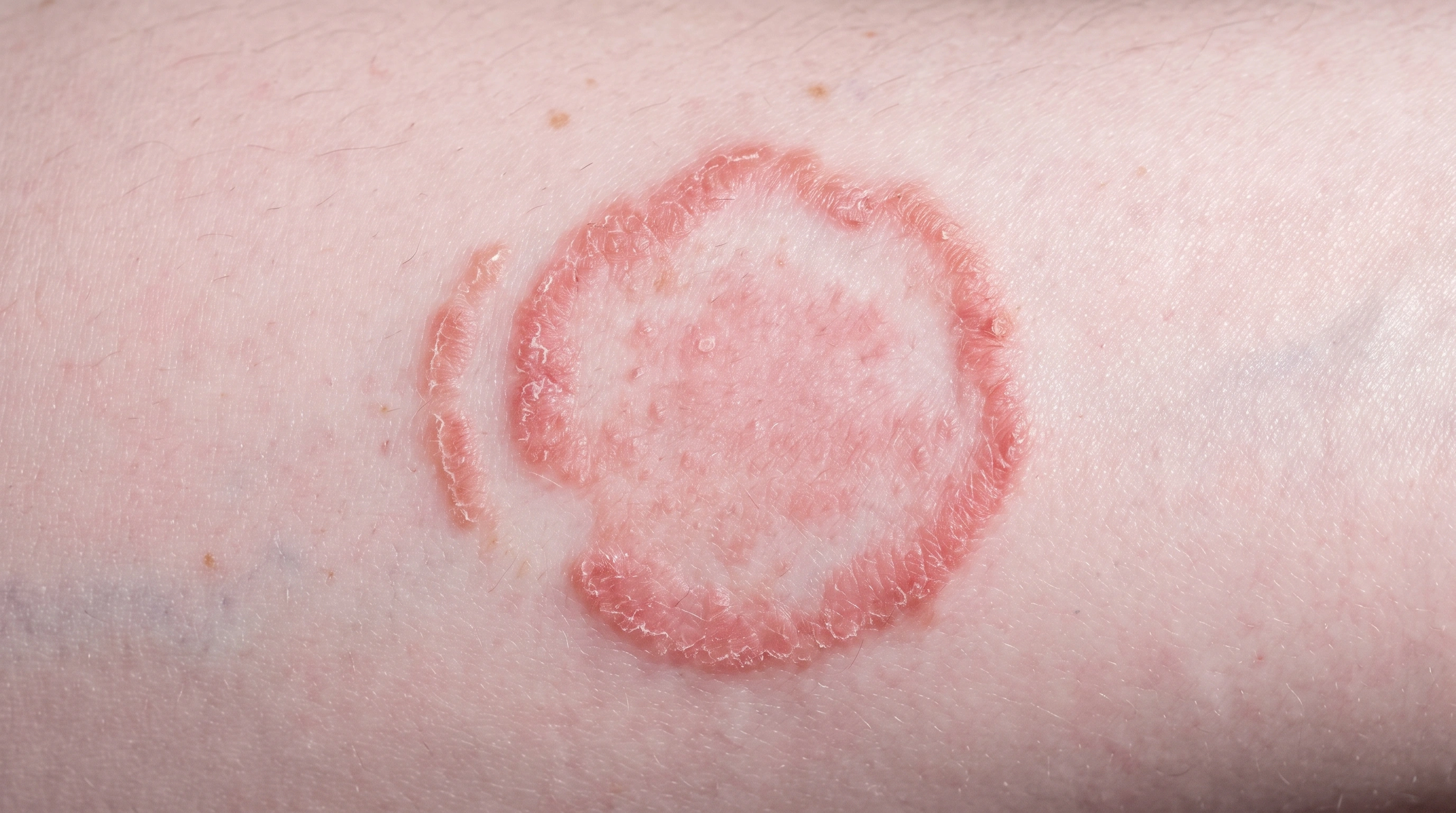
An itchy eczema rash caused by a delayed immune reaction to a substance touching the skin. Eczema caused by direct damage to the skin barrier rather than a specific allergy.
The same eight facts on every condition comparison.
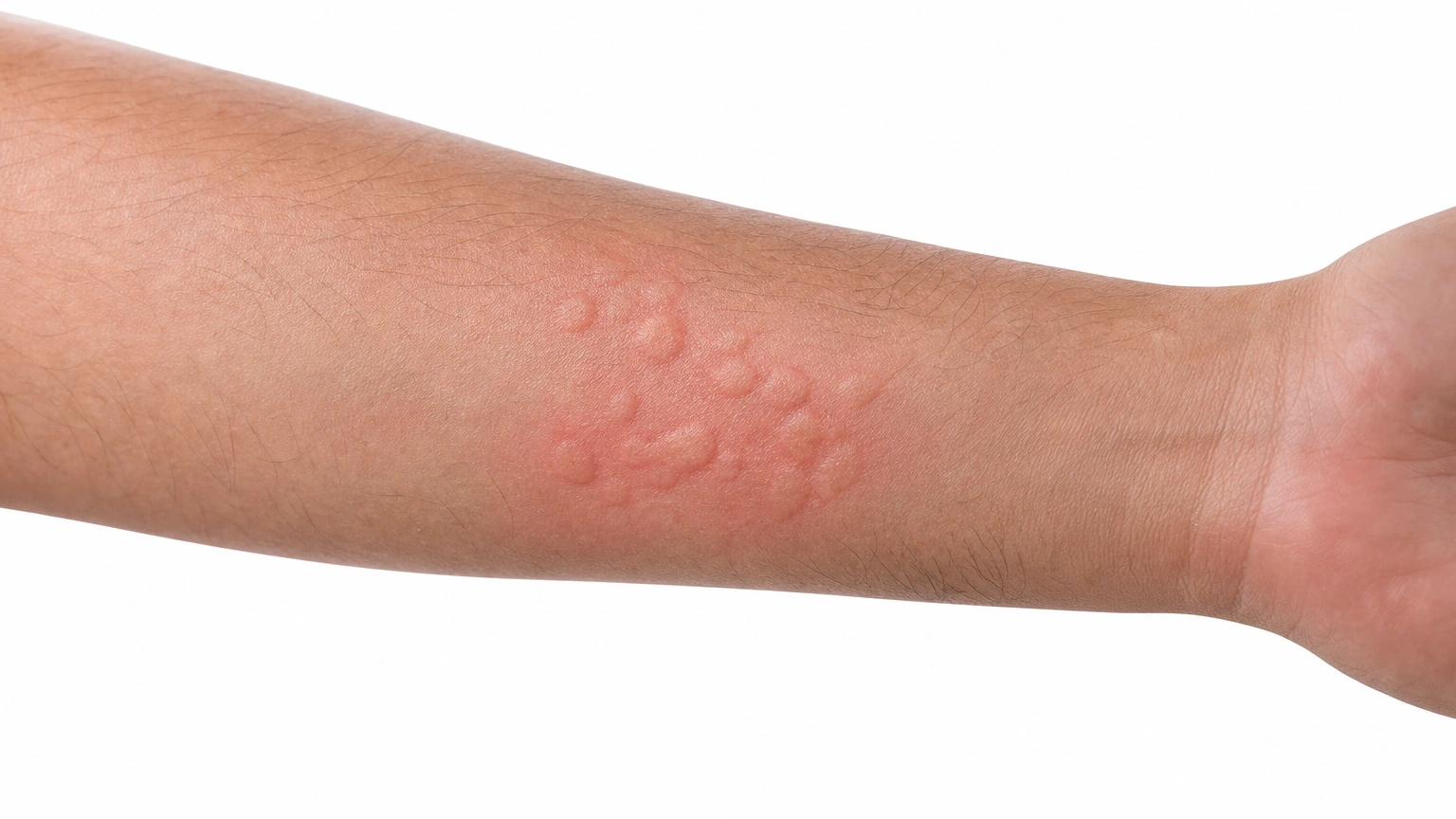
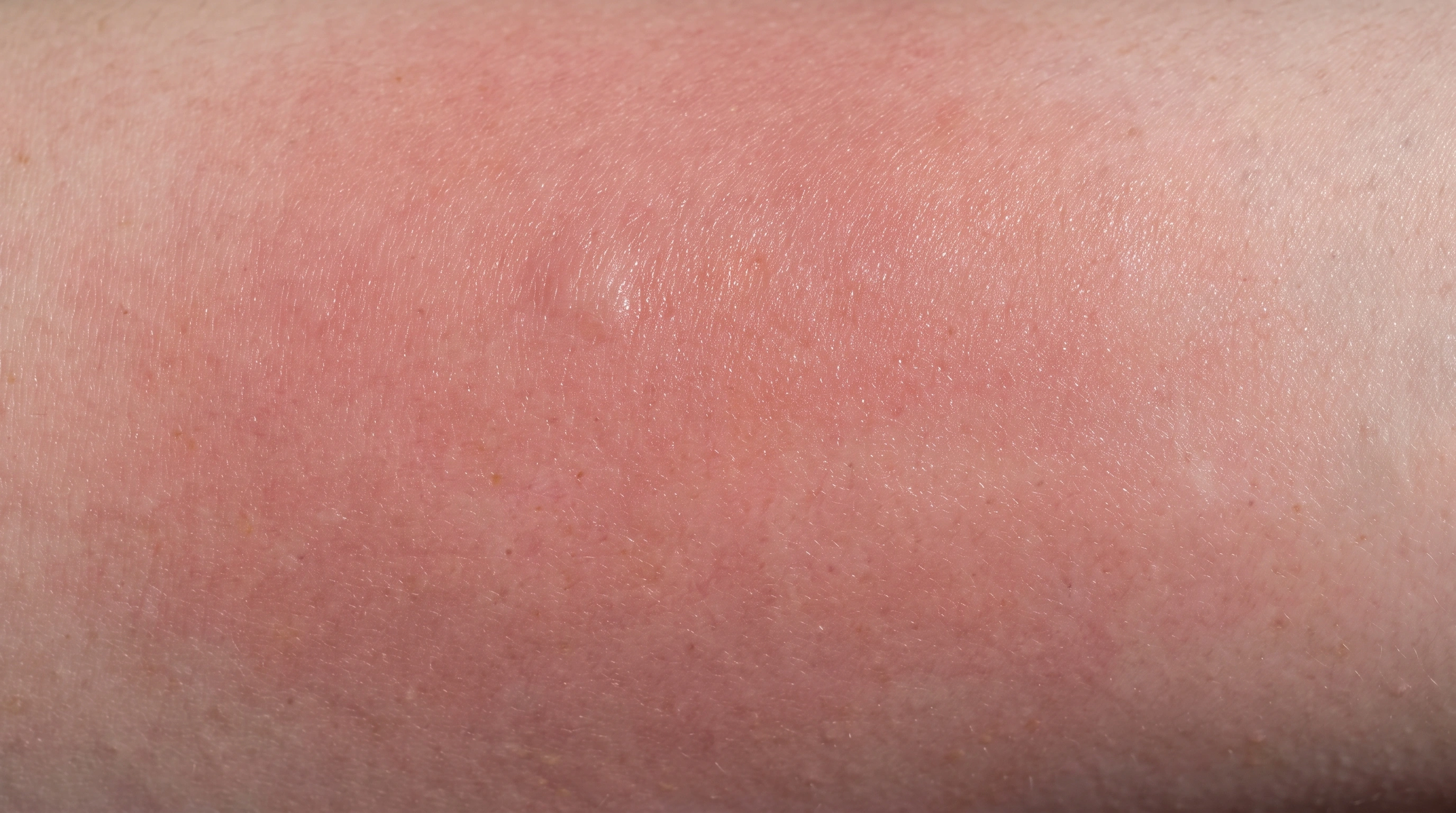
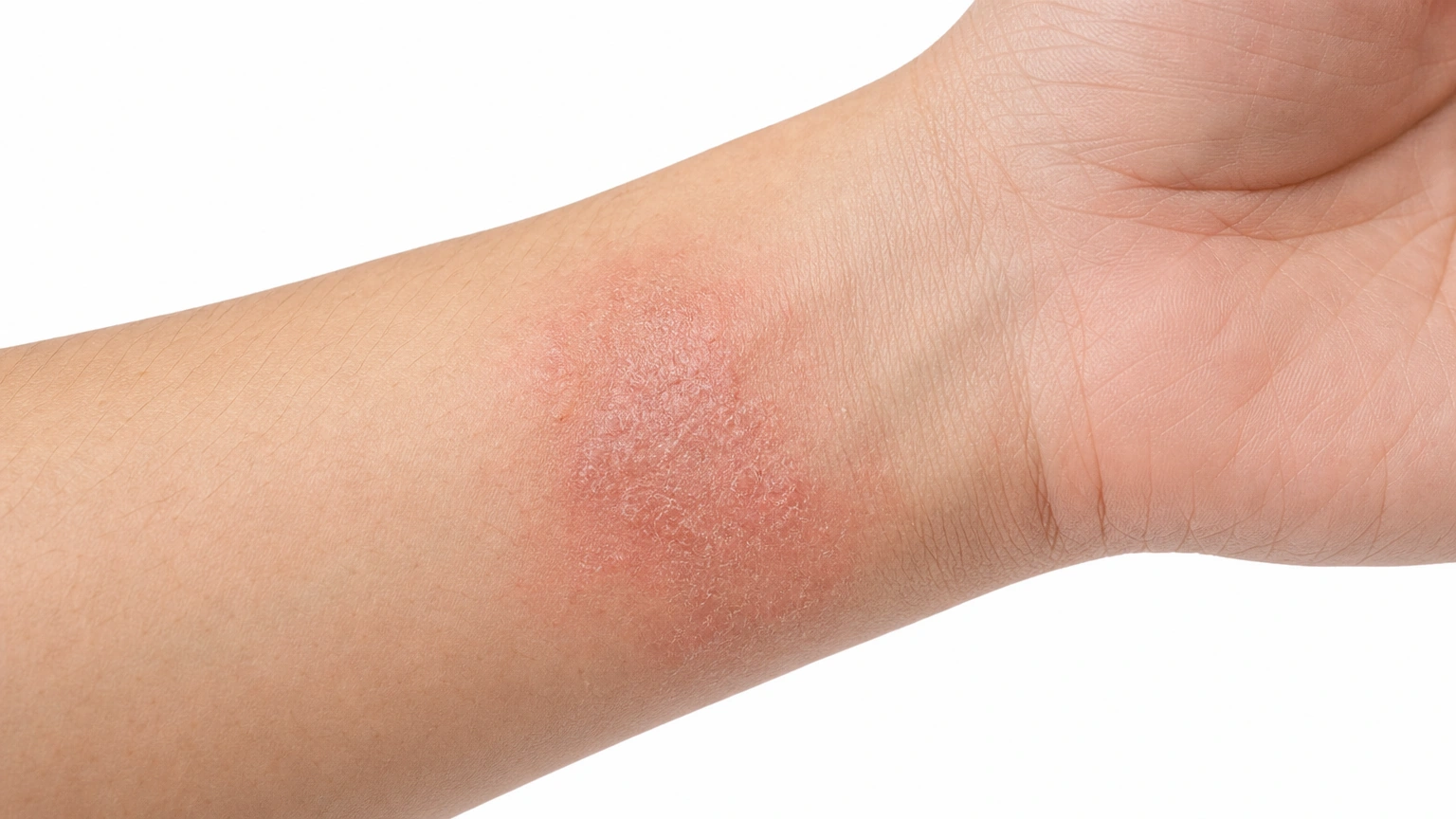
Allergic Contact Dermatitis A localized patch of redness contrasts with the surrounding skin.
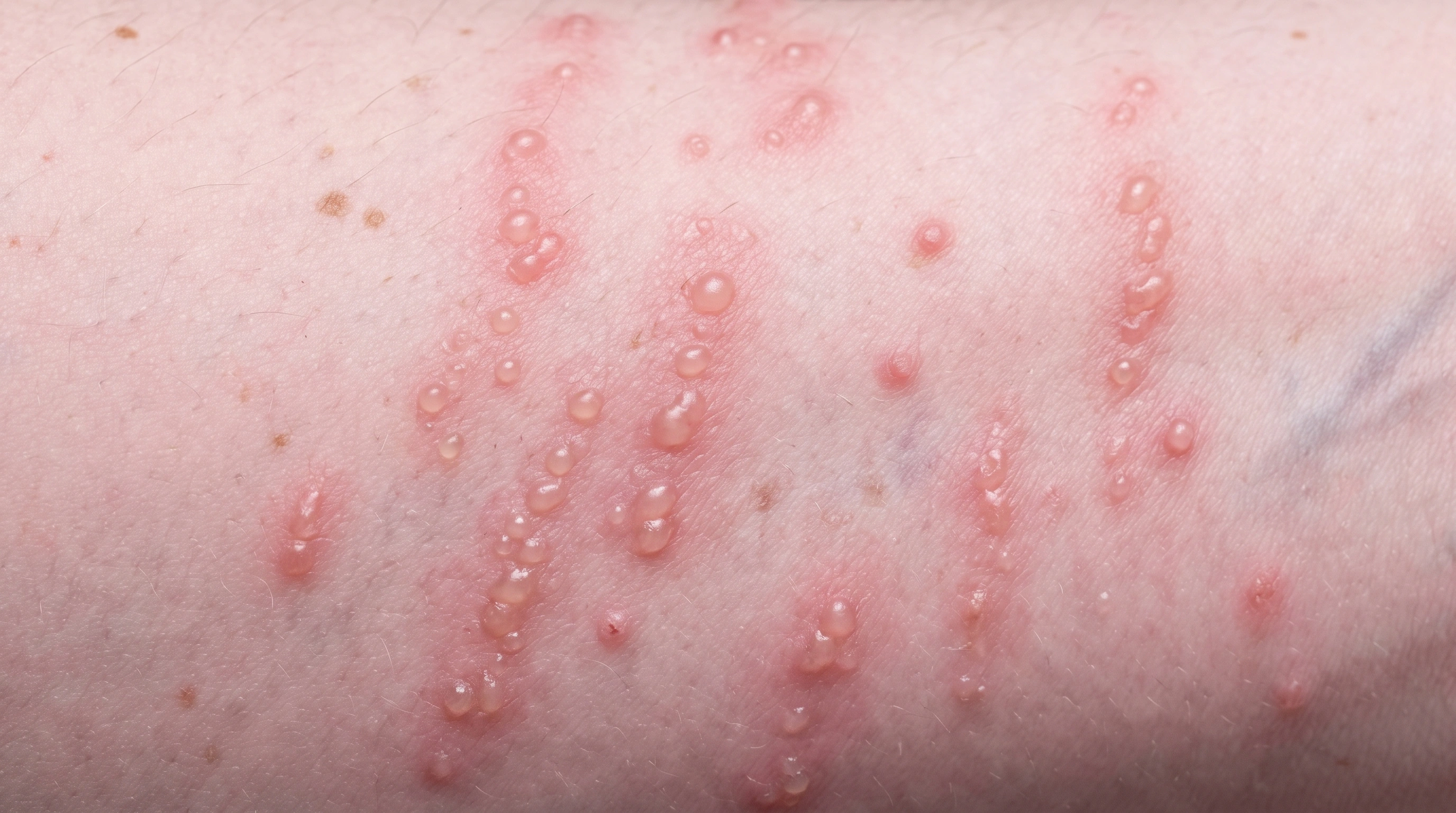
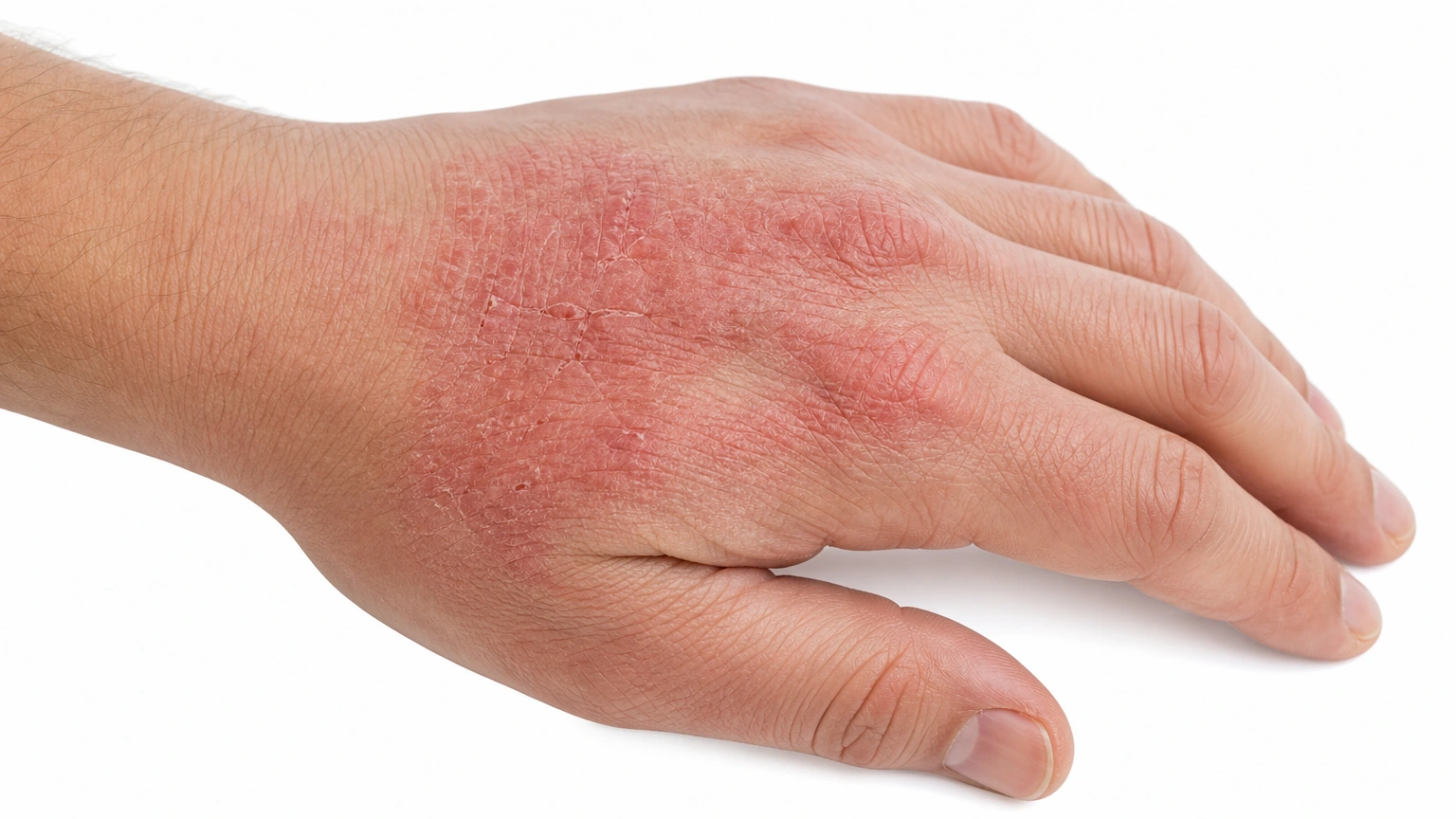
Irritant Contact Dermatitis Redness and fine scale extend across the back of the hand.
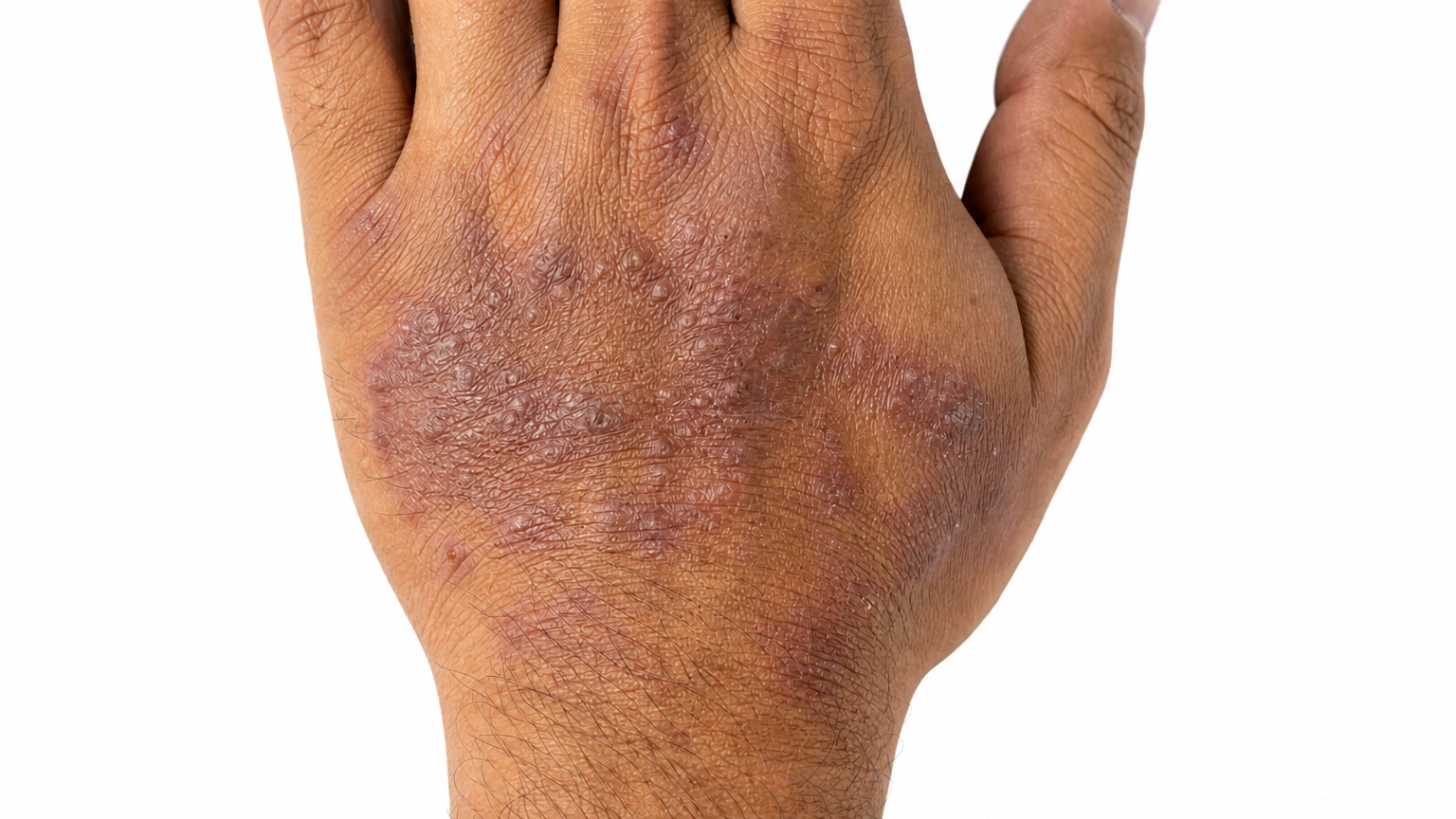
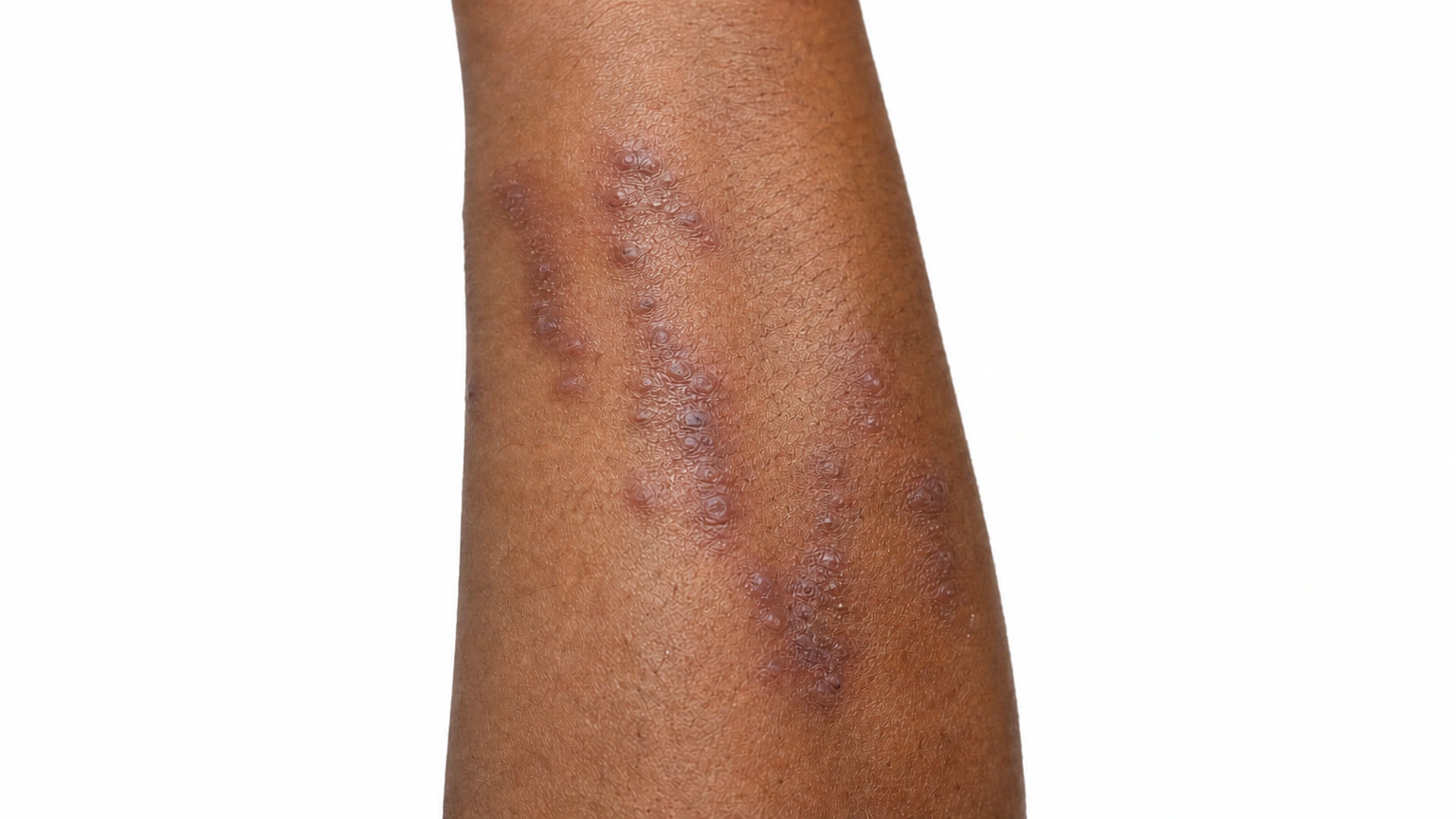
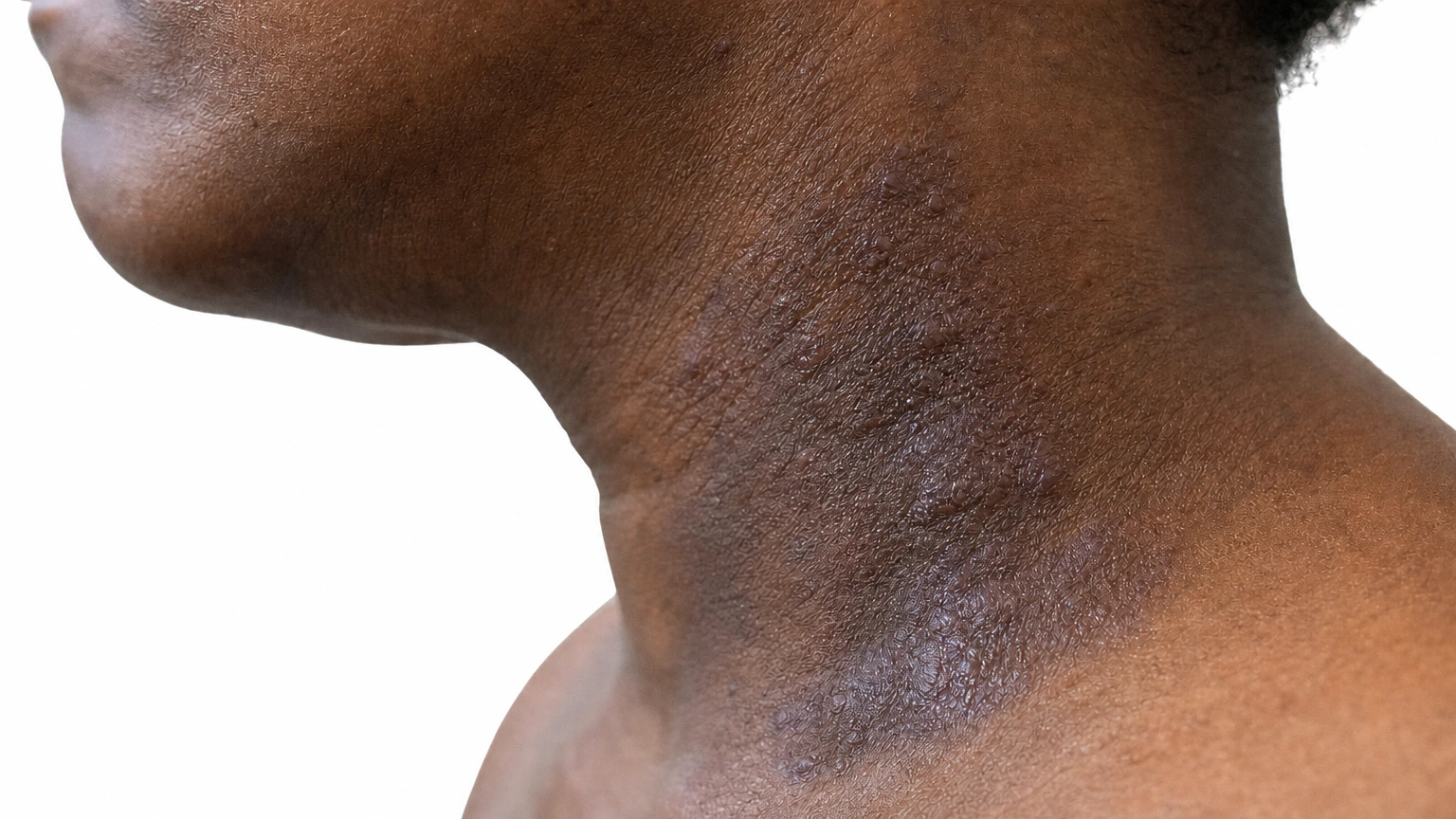
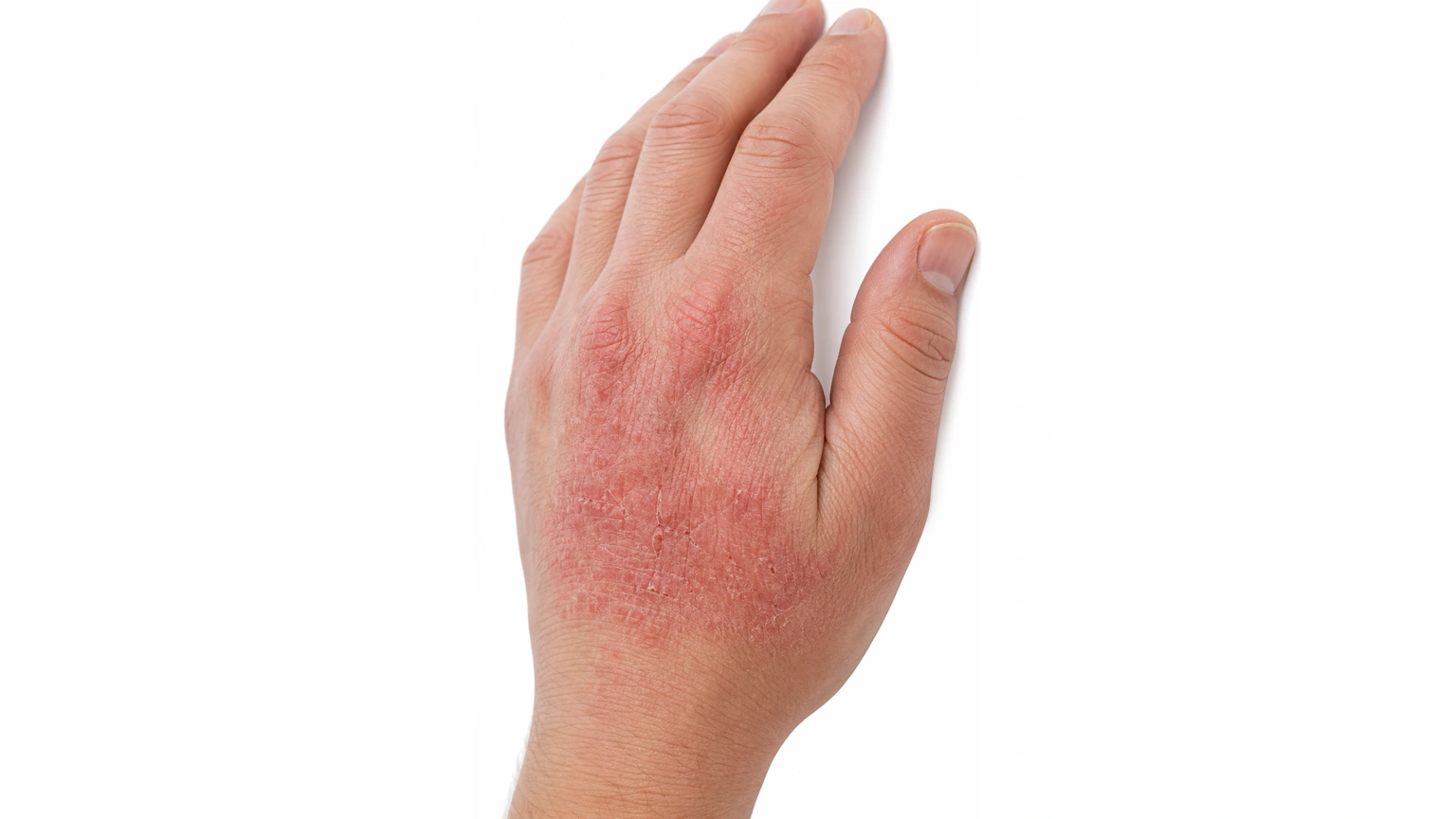
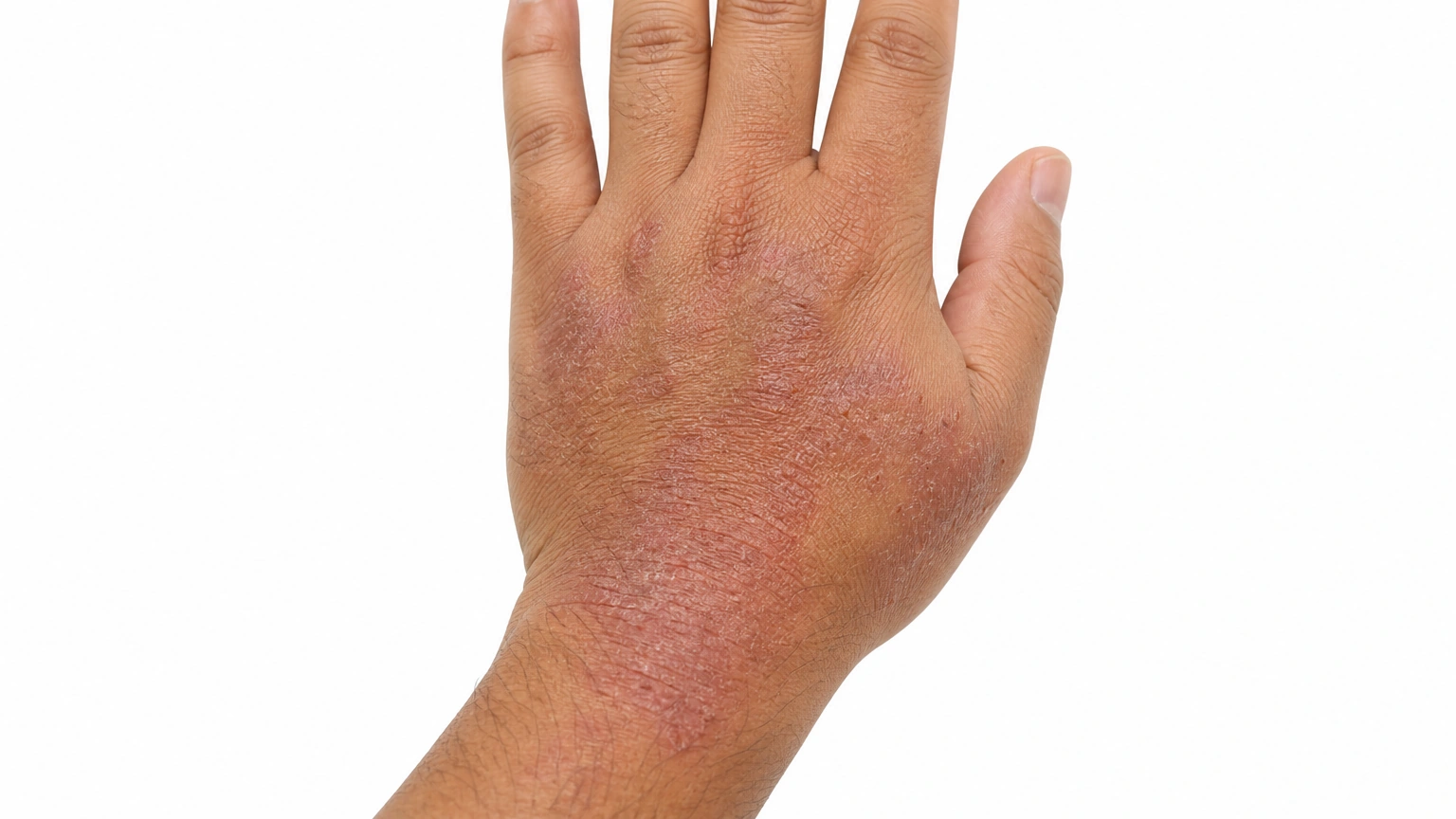
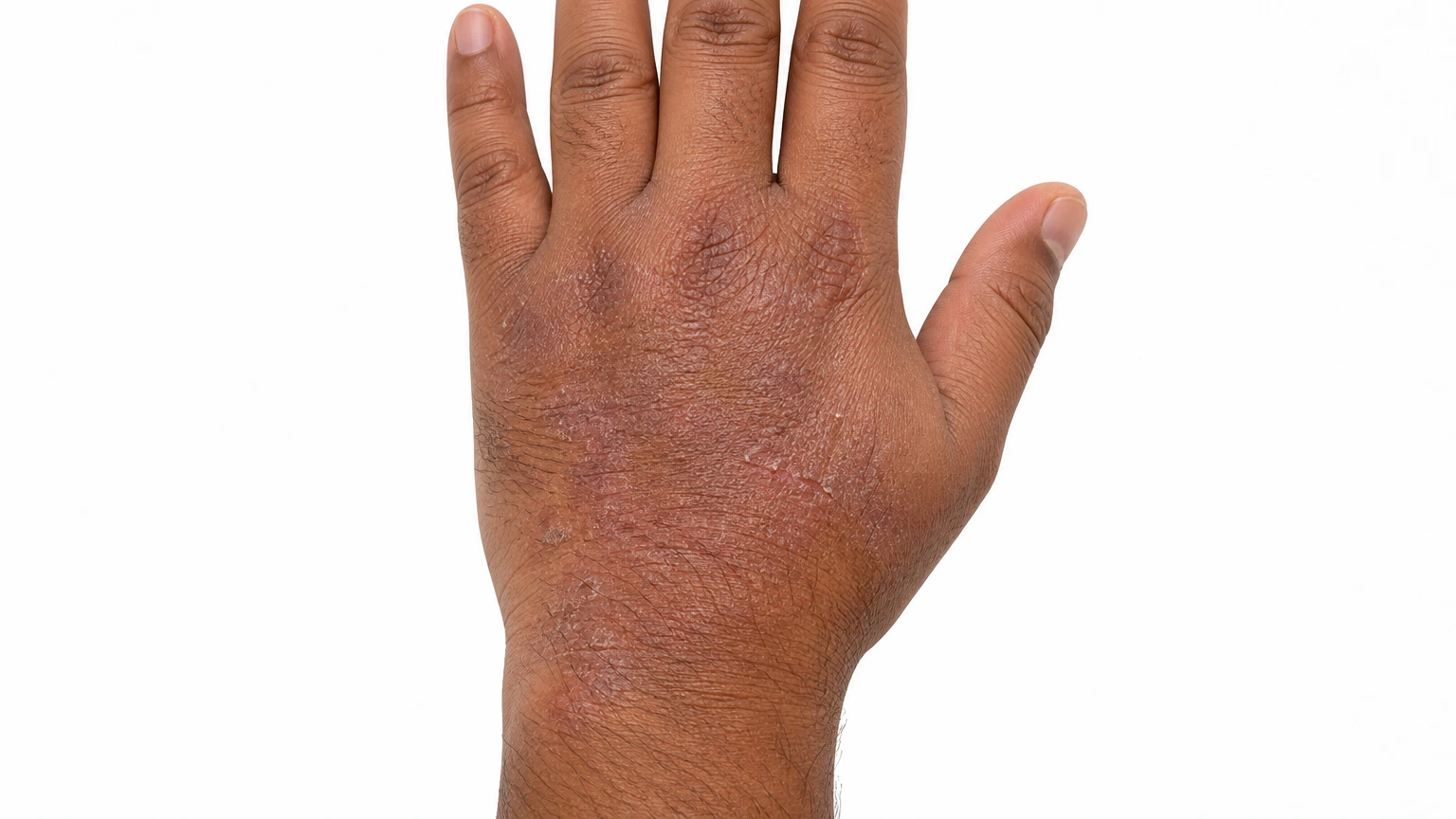
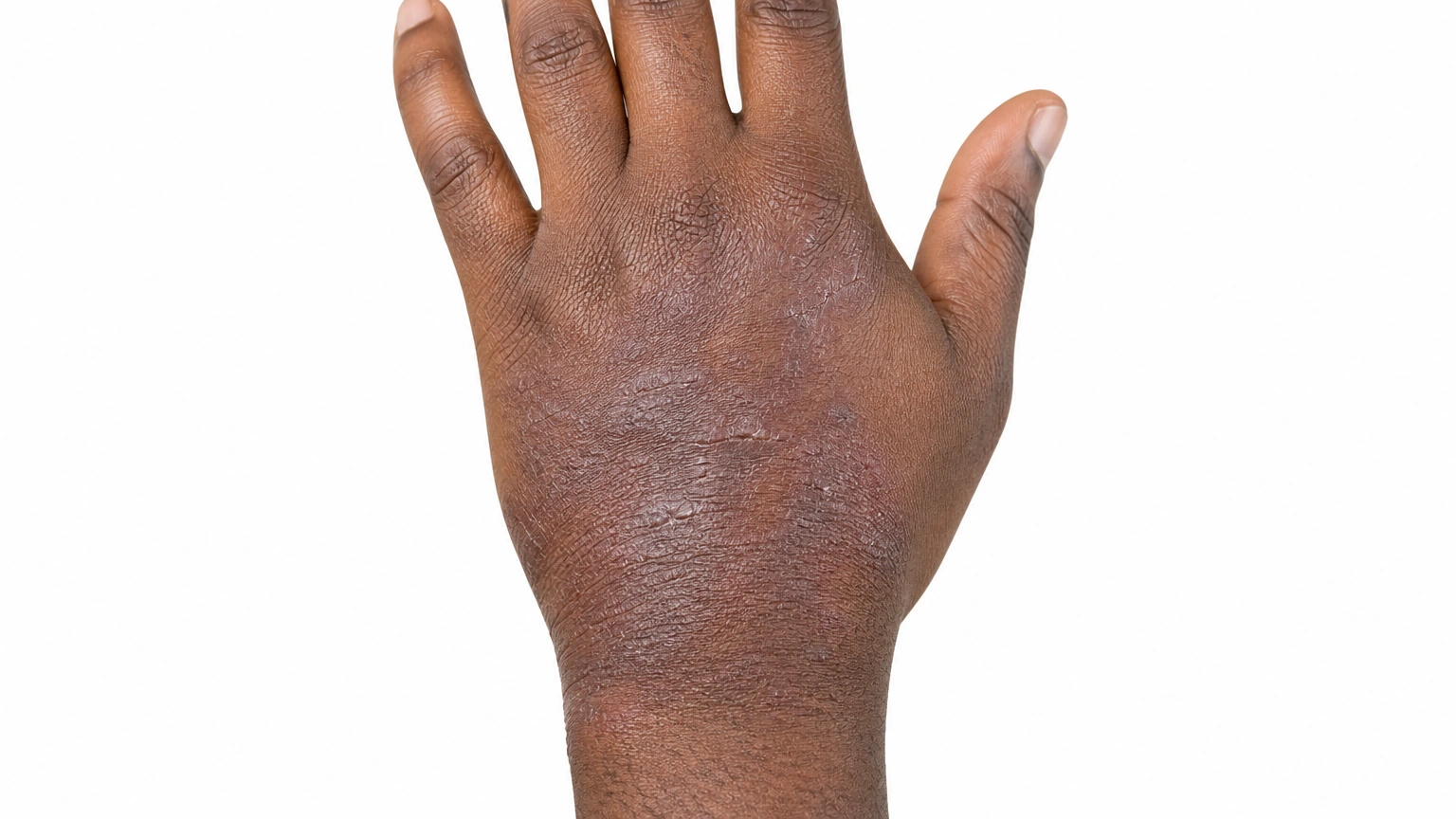
A sensitized immune system reacts to an allergen that touches the skin. The delayed inflammatory response produces a rash at or around areas of exposure.
Water, chemicals or friction damage the skin barrier faster than it can repair. The resulting inflammation does not require prior allergic sensitization.
Allergic Contact Dermatitis. Can start at any age after relevant exposures or barrier damage.
Irritant Contact Dermatitis. Can start at any age after relevant exposures or barrier damage.
An immune reaction develops after sensitisation; patch testing can help identify the allergen.
Water, chemicals or friction damage the skin faster than it can repair.
Evidence labels come from each condition’s own treatment list.
Treats active eczema for a clinician-directed course; strength depends on site and age.
Treats active eczema for a clinician-directed course; strength depends on site and age.
The rash usually improves after contact with the allergen stops, although recovery is not immediate. The allergy can persist for life, making future avoidance important.
Mild irritation can improve after exposure stops, but chronic hand dermatitis may take longer to recover. Continued protection is important because repeat exposure can restart the inflammation.
Cracked skin may become infected; repeated exposure can make the rash persistent.
Cracked skin may become infected; repeated exposure can make the rash persistent.
Seek care for persistent rash, painful cracks or possible infection.
Seek care for persistent rash, painful cracks or possible infection.
An itchy eczema rash caused by a delayed immune reaction to a substance touching the skin.
Identify and avoid the confirmed allergen; use bland moisturizer. A clinician may recommend patch testing.
Seek care for persistent rash, painful cracks or possible infection.
Eczema caused by direct damage to the skin barrier rather than a specific allergy.
Use bland fragrance-free moisturizer and avoid the suspected irritant. Protect skin from repeated wetting.
Seek care for persistent rash, painful cracks or possible infection.
Sources