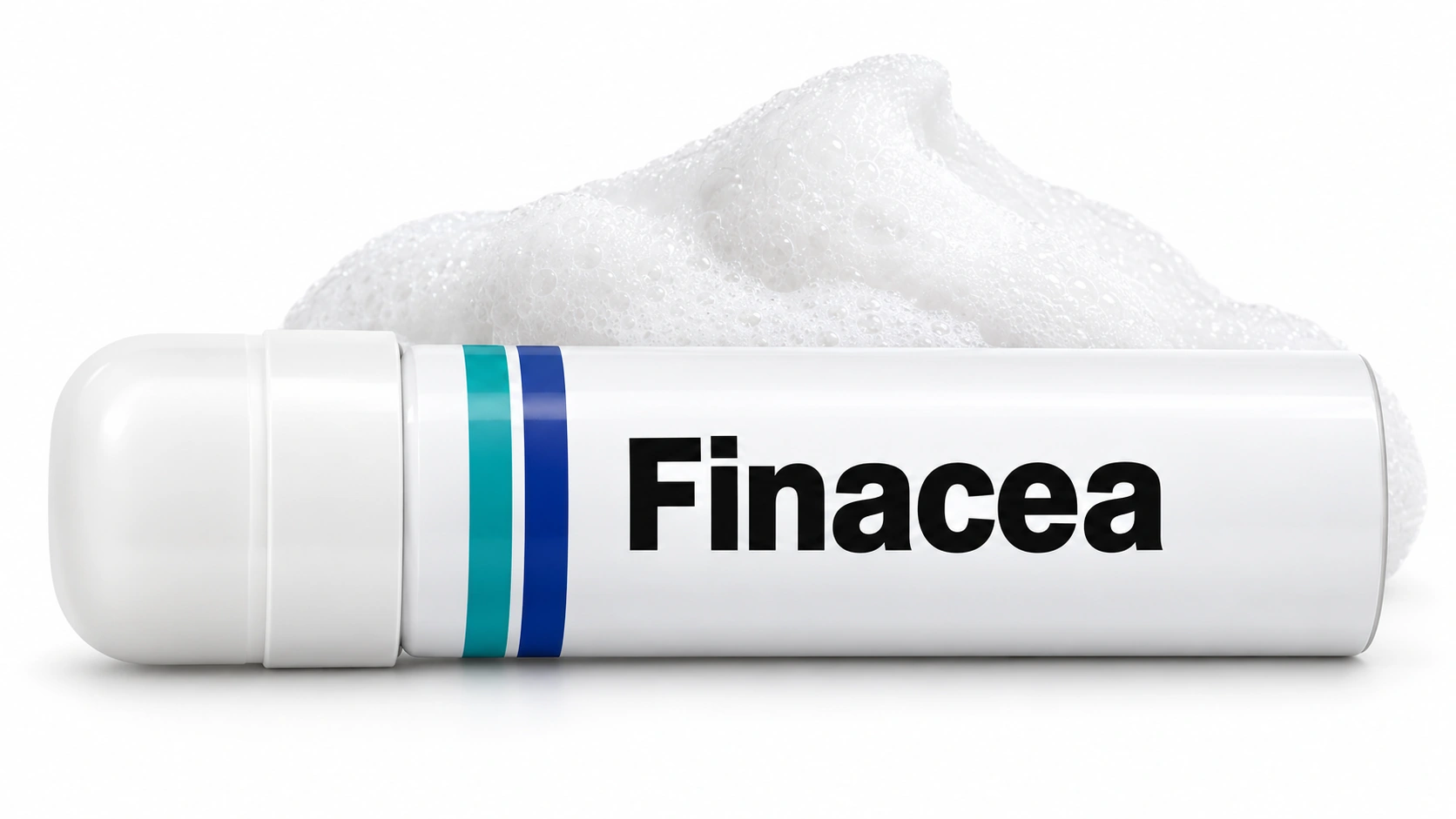
Rosacea
Reduces bumps and pimples.
MetroGel: A long-standing prescription gel or cream for the bumps and pustules of rosacea. It calms inflammation rather than treating an infection. Mirvaso: A gel that narrows facial blood vessels to fade redness for about half a day. It treats color only, it does nothing for bumps, and in some people the redness returns worse as it wears off.
Choose for rosacea bumps and pustules as a gentle, inexpensive long-standing cream.
Choose to fade rosacea redness for a day or an event — it treats color only, not bumps.
Can you take them together?
They treat different parts of rosacea: MetroGel for bumps, Mirvaso for redness. Apply MetroGel first and let it dry.
Compare uses by strength of evidence. Evidence level describes confidence in a benefit, not its size.
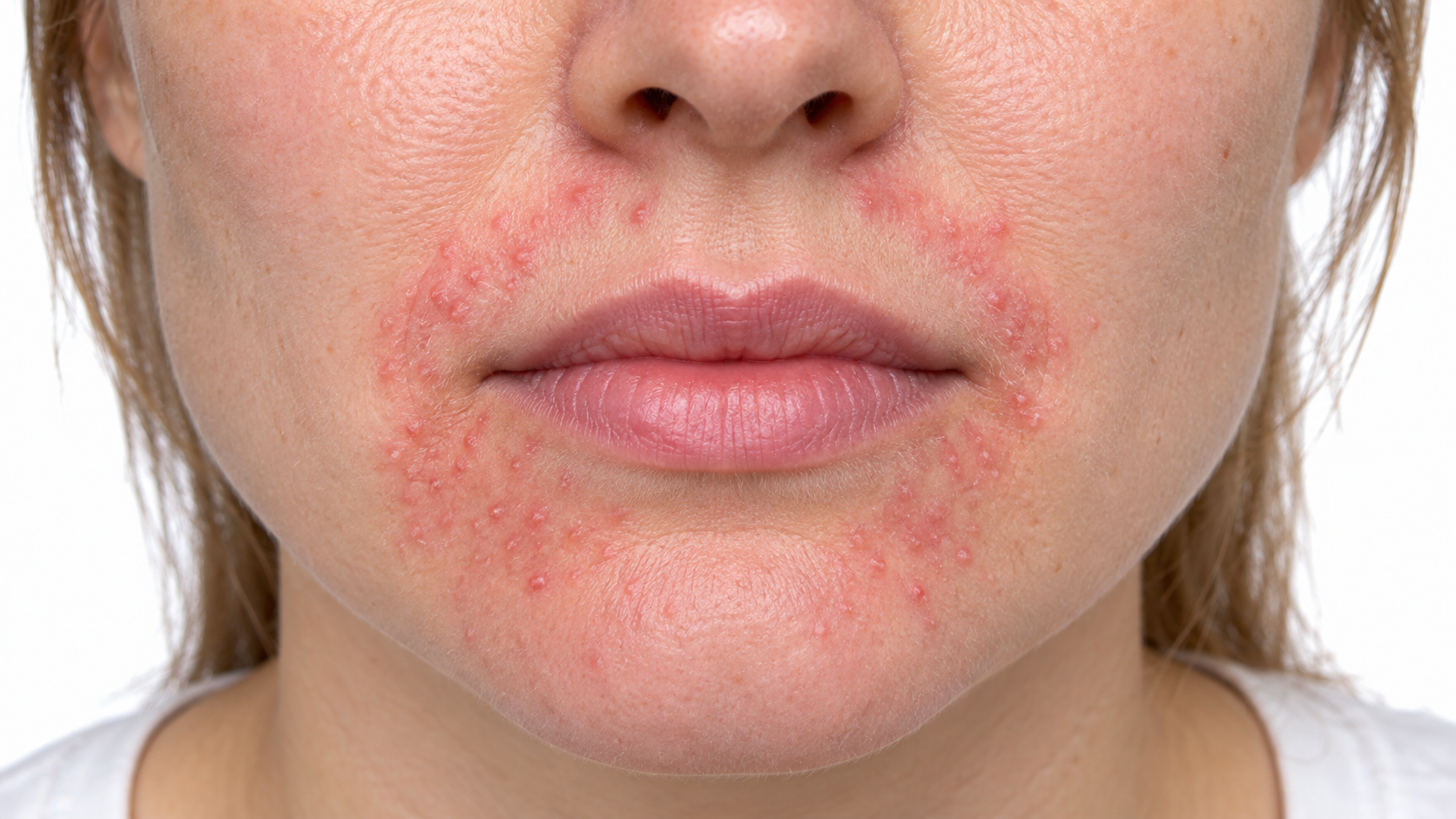

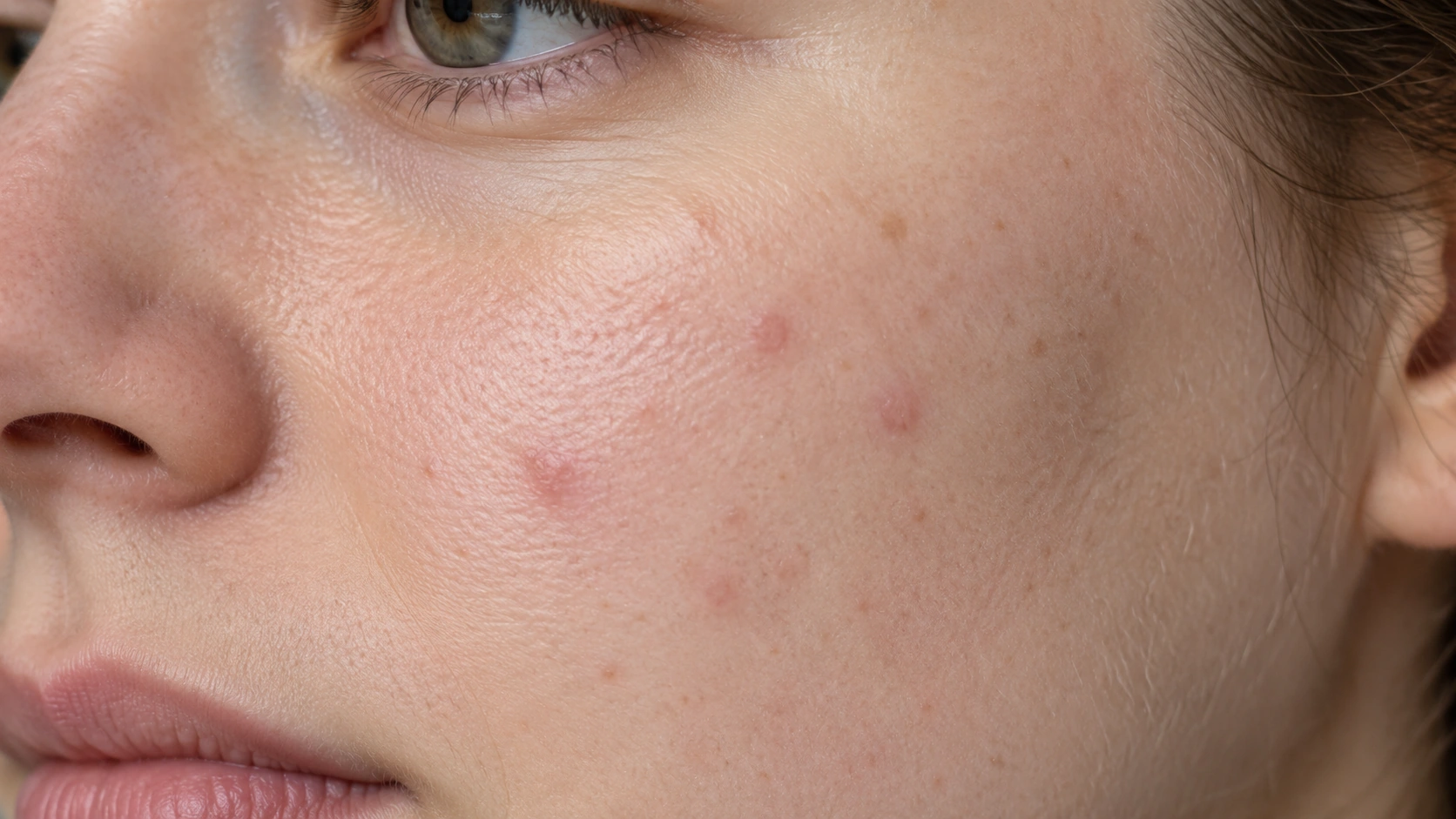
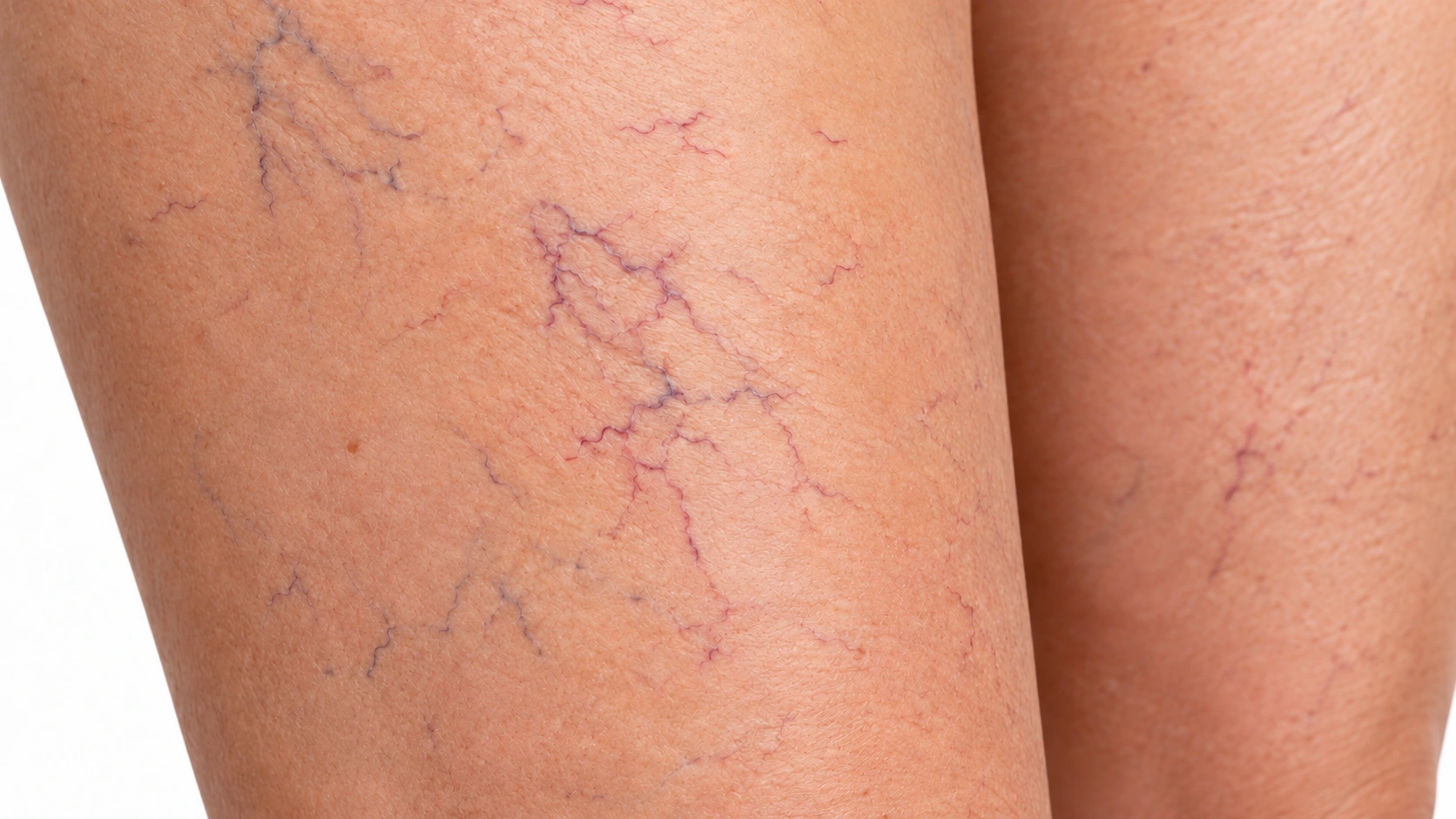

May reduce inflammatory oxidants: Can limit reactive oxygen released by immune cells. Helps calm inflammation: Reduces the inflammatory activity around skin lesions. Reduces bumps and pimples: Rosacea spots gradually become less active.
The rosacea mechanism is not fully established. Reactive-oxygen effects derive from experimental systems and are presented as a proposed explanation; this does not imply killing Demodex or treating all redness.
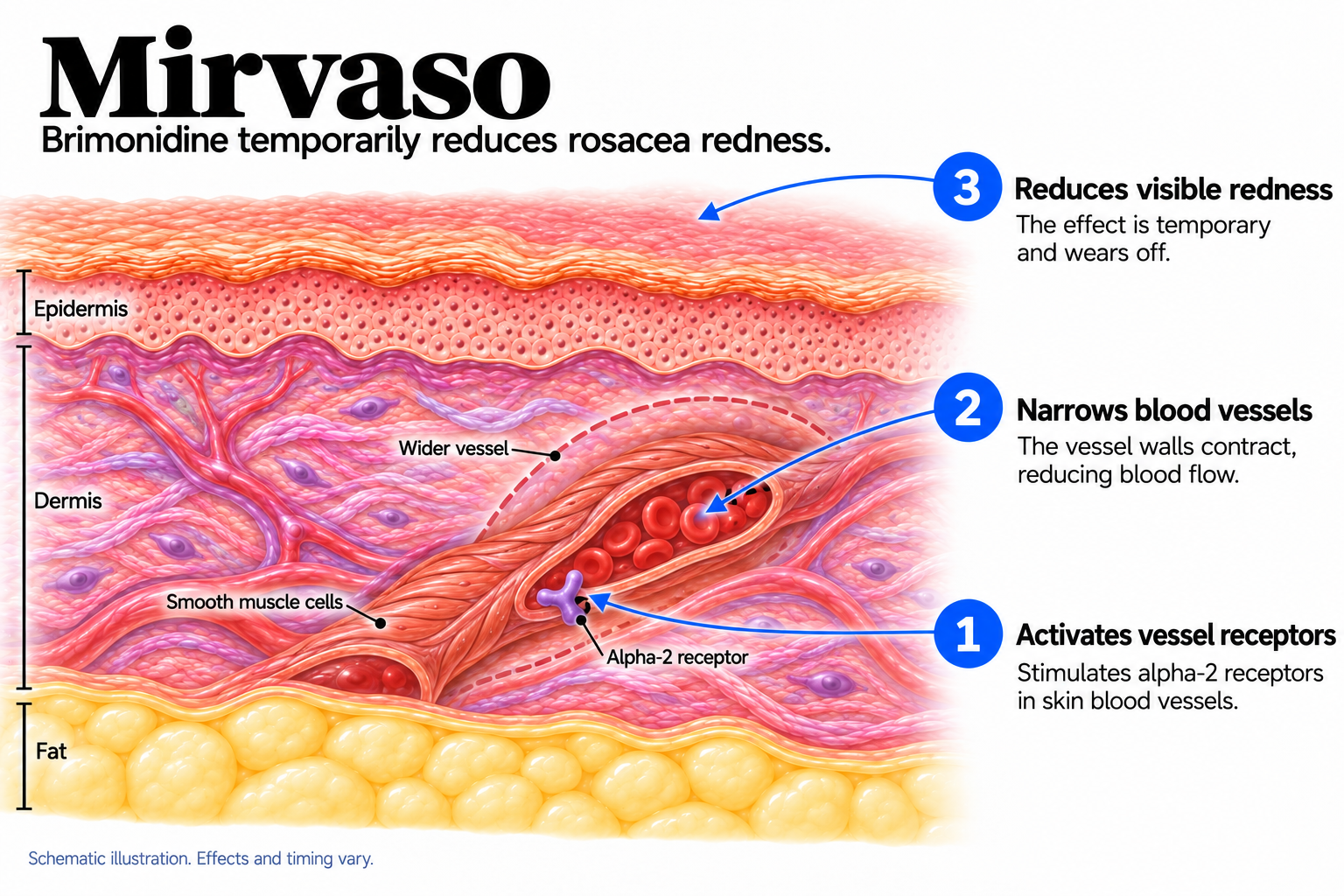
Activates vessel receptors: Stimulates alpha-2 receptors in skin blood vessels. Narrows blood vessels: The vessel walls contract, reducing blood flow. Reduces visible redness: The effect is temporary and wears off.
Brimonidine is a relatively selective alpha-2 agonist. This explains temporary vasoconstriction, not permanent removal of blood vessels or cure of rosacea.
When to Apply: A thin layer over the whole affected area, not dabbed on individual spots. Twice a day for 0.75%, once a day for 1%. Apply to clean dry skin and let it settle before moisturizer or sunscreen.
How to Start: Straight in at full frequency — this is one of the gentler prescription topicals. If your skin is very reactive, use it once daily for a week first.
If It Irritates: Mild stinging or dryness in the first week is usually the base, not the drug. Moisturizer underneath settles it, and switching from gel to cream helps most people.
If It’s Not Working: Give it eight to twelve weeks. If bumps keep coming, the next step is usually azelaic acid or ivermectin, or a low-dose oral treatment. If redness or visible vessels are the problem, this drug was never going to fix them.
When to Apply: Once a day on clean dry skin, timed for when you most want the redness down. A pea-sized amount for the whole face, divided between forehead, nose, chin and cheeks and spread thinly. Makeup and sunscreen go on once it has dried.
How to Start: Test one small area, such as one cheek, for several days first. That is the cheapest way to find out whether you get rebound. Use less than a pea-sized amount, and never more than once a day.
If It Irritates: Burning, stinging or itching where you applied it is common early and often settles. If redness worsens, or comes back stronger as the gel wears off, stop and speak to your doctor. Rebound does not settle by pushing through it.
If It's Not Working: There is one strength, and more gel is not the answer. The next steps are oxymetazoline cream, which works on a different receptor, or laser and light treatment, which treats the vessels themselves.
No blood tests and no routine monitoring. Almost none of the drug reaches the bloodstream from the skin, so the cautions on metronidazole tablets do not transfer.
Monitoring means a review at eight to twelve weeks to decide whether it is doing enough, then occasional check-ins if you stay on it for years. Long-term use is normal here.
Watch for rosacea in the eyes. A facial gel does not treat it, so mention gritty, burning or persistently dry eyes rather than reaching for drops off the shelf.
No blood tests for ordinary use. What is monitored is what you can see: does the redness fade, does it come back worse, does burning settle.
A small amount is absorbed, so the gel carries the theoretical body-wide effects of its class — low blood pressure, a slow heart rate, drowsiness, dizziness. These are rare on intact skin, but they are why heart disease, low blood pressure, circulatory problems or an existing brimonidine eye drop should be raised before you start.
Review a few weeks in — is this worth continuing.
Approximate windows, not promises.
First few minutesApplying it: A thin layer over the whole affected area, not spot-treating.
Weeks 1 to 3Adjusting: Little visible change. Stinging or dryness, if it happens, shows up and settles here, faster with a moisturizer alongside.
Weeks 3 to 6Working: Fewer new bumps and pustules, and the existing ones look less angry.
Weeks 8 to 12Judge it here: Where the trials measured their main result. Most people see a clear drop in inflamed bumps, and some background redness lifts with them.
Beyond 12 weeksHolding: Continued use holds the result. Stopping is the usual reason rosacea comes back.
First 30 minutesStarting: Redness begins to fade. Some tingling or warmth is normal.
3 to 6 hoursPeak: The face is at its least red. The fixed pink of cheeks, nose and forehead visibly lightens.
9 to 12 hoursWearing off: Color returns, in most people to where it started.
Days 1 to 14Watching for rebound: In a minority, redness comes back worse than it started, sometimes with burning. It can appear on day one or after a week or two.
OngoingNo build-up: It does not accumulate. Day ninety works like day one.
Sorted by what to do about them.
Generic metronidazole gel, cream and lotion are widely available and among the cheaper rosacea prescriptions. Coverage is generally good, and this is often what plans want tried first.
Branded versions and the once-daily 1% products cost more. Since the higher strength has not been shown to clear rosacea better, you are paying for convenience.
If the quoted price seems high, ask about the other forms and strengths — the gap can be large for the same drug.
Brand priced for most of its life, and often not covered, because insurers treat facial redness as cosmetic. Generic brimonidine gel has appeared in some markets, bringing the price down unevenly.
A tube lasts a long time if you stick to the pea-sized rule.
If cost is the barrier, the honest question is whether a treatment lasting twelve hours that does not change the disease is where the budget should go, or whether laser or light treatment is the better buy.
Early change around three to four weeks. Judge it fairly at eight to twelve weeks.
It helps the redness that comes with inflamed bumps. Persistent background redness and visible vessels need different treatments, so be clear about which one bothers you.
The alcohol warning belongs to the tablets, not the gel, since so little is absorbed. Alcohol is a common rosacea trigger in its own right, which is a separate question.
Gel for oilier skin, cream for dry or easily irritated skin, lotion in between. Same drug, so pick on comfort.
Usually yes. It is often paired with azelaic acid, a redness-reducing gel, or low-dose oral treatment. Check the combination with your doctor.
Not forever, but longer than most people expect. Rosacea usually returns within weeks to months of stopping, so treatment often continues at a reduced frequency once the skin settles.
Redness that comes back worse than it started, as the gel wears off or after several days of use, sometimes with burning. A minority of users, but the main reason people stop. It settles within a couple of weeks of stopping.
Use less than you think — a pea-sized amount for the whole face, once a day at most — and test one small area for several days first. Over-application is the pattern most linked to trouble.
No. It is a blood vessel treatment. Bumps and pustules need a separate medicine, and the two are often prescribed together.
It begins around thirty minutes, peaks at three to six hours, and is gone by twelve. It does not accumulate, so daily use is not needed if you want it for occasions.
Yes, once it has dried.
Not really. Those are visible individual vessels; they need laser or light. Brimonidine pales the background around them, which can make them look less obvious.