Rosacea
Low doses reduce bumps.
Doxycycline: An oral antibiotic for moderate to severe inflamed acne. It is meant as a short bridge alongside topical treatment, not a long-term drug. MetroGel: A long-standing prescription gel or cream for the bumps and pustules of rosacea. It calms inflammation rather than treating an infection.
Choose for a short 3–4 month bridge to calm moderate inflamed acne or rosacea while a retinoid and benzoyl peroxide start working.
Choose for rosacea bumps and pustules as a gentle, inexpensive long-standing cream.
Can you take them together?
A common rosacea pairing: low-dose doxycycline from the inside and MetroGel on the skin. MetroGel often continues after doxycycline stops.
Compare uses by strength of evidence. Evidence level describes confidence in a benefit, not its size.

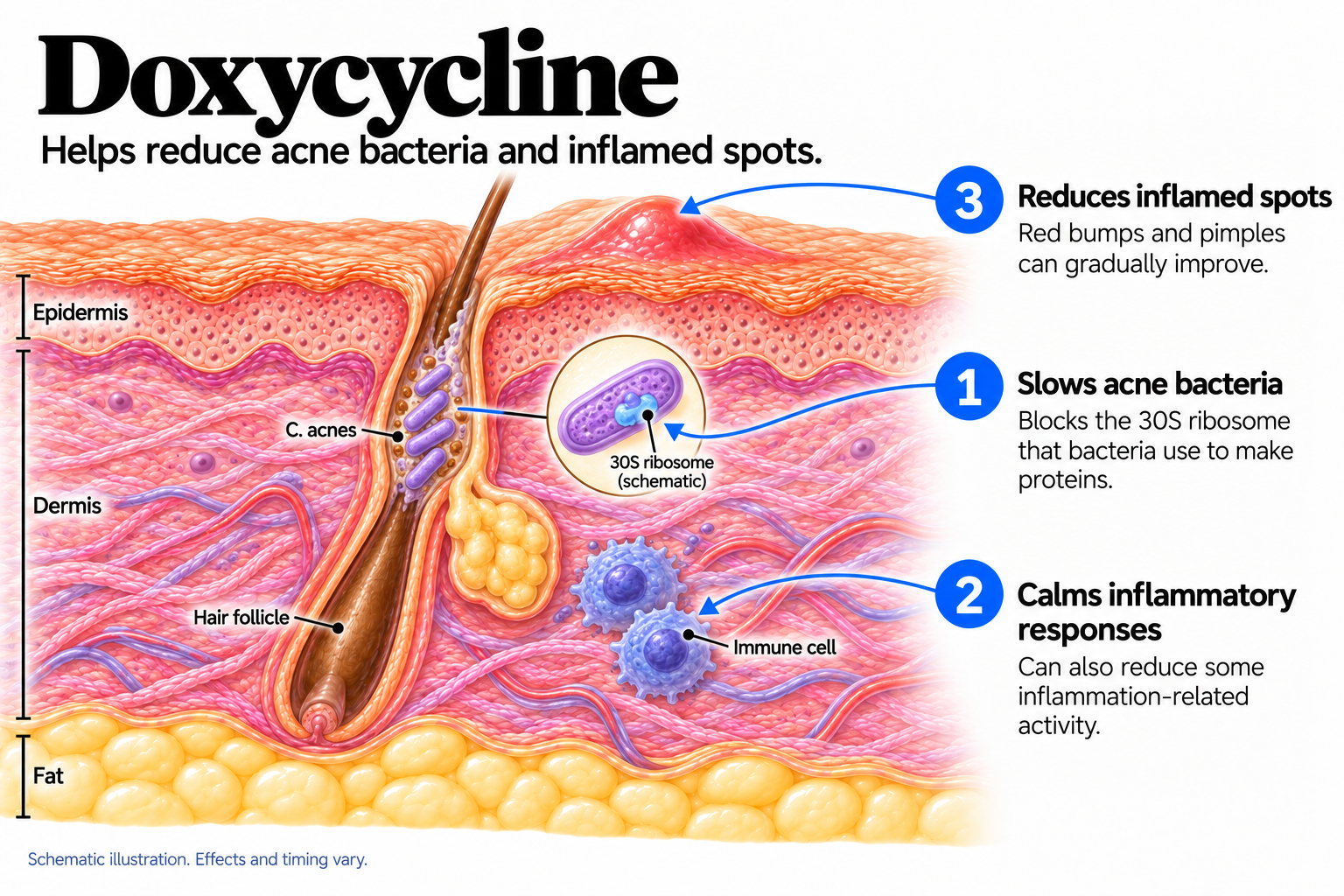
Slows acne bacteria: Blocks the 30S ribosome that bacteria use to make proteins. Calms inflammatory responses: Can also reduce some inflammation-related activity. Reduces inflamed spots: Red bumps and pimples can gradually improve.
Bacterial protein-synthesis inhibition is established. The complete acne mechanism and the contribution of individual antibacterial and anti-inflammatory effects are not fully defined. This does not imply direct exfoliation, oil-gland shrinkage, or treatment of resistant bacteria.

May reduce inflammatory oxidants: Can limit reactive oxygen released by immune cells. Helps calm inflammation: Reduces the inflammatory activity around skin lesions. Reduces bumps and pimples: Rosacea spots gradually become less active.
The rosacea mechanism is not fully established. Reactive-oxygen effects derive from experimental systems and are presented as a proposed explanation; this does not imply killing Demodex or treating all redness.
Dose depends on what your stomach tolerates, not body weight. Kidney or liver problems can lower it.
Starting dose: 50 mg to 100 mg once or twice a day. Some doctors start low to see how your stomach does.
Going up: Raised after a week or two if you tolerate it and the acne has not budged.
Usual dose: Around 100 mg once or twice daily. Low-dose anti-inflammatory regimens use much less.
Total course: Three to four months. Reassess at three months and stop once topical treatment can hold the result.
When to Apply: A thin layer over the whole affected area, not dabbed on individual spots. Twice a day for 0.75%, once a day for 1%. Apply to clean dry skin and let it settle before moisturizer or sunscreen.
How to Start: Straight in at full frequency — this is one of the gentler prescription topicals. If your skin is very reactive, use it once daily for a week first.
If It Irritates: Mild stinging or dryness in the first week is usually the base, not the drug. Moisturizer underneath settles it, and switching from gel to cream helps most people.
If It’s Not Working: Give it eight to twelve weeks. If bumps keep coming, the next step is usually azelaic acid or ivermectin, or a low-dose oral treatment. If redness or visible vessels are the problem, this drug was never going to fix them.
With a full glass of water and with food. Stay upright for 30 minutes afterward, and never right before bed — a tablet stuck in the food pipe can burn the lining. Food cuts the nausea and does not block absorption.
Take it when you remember, unless the next dose is close. Never double up — you will just be nauseated.
No blood tests are needed for a standard acne course in a healthy person. Monitoring is clinical, with a review at about three months.
This is not a drug to stay on for years. What builds is antibiotic resistance — in your skin bacteria and in the rest of your body — along with effects on the gut. Keep oral courses for acne as short as possible, with a topical retinoid running alongside to take over.
No blood tests and no routine monitoring. Almost none of the drug reaches the bloodstream from the skin, so the cautions on metronidazole tablets do not transfer.
Monitoring means a review at eight to twelve weeks to decide whether it is doing enough, then occasional check-ins if you stay on it for years. Long-term use is normal here.
Watch for rosacea in the eyes. A facial gel does not treat it, so mention gritty, burning or persistently dry eyes rather than reaching for drops off the shelf.
Approximate windows, not promises.
Weeks 1 to 2Little change. Any stomach upset shows up now.
Weeks 2 to 6Fewer, less painful inflamed spots. Blackheads do not change.
After 12 weeksIf inflamed acne is no better, continuing will not help. Reassess rather than extend.
First few minutesApplying it: A thin layer over the whole affected area, not spot-treating.
Weeks 1 to 3Adjusting: Little visible change. Stinging or dryness, if it happens, shows up and settles here, faster with a moisturizer alongside.
Weeks 3 to 6Working: Fewer new bumps and pustules, and the existing ones look less angry.
Weeks 8 to 12Judge it here: Where the trials measured their main result. Most people see a clear drop in inflamed bumps, and some background redness lifts with them.
Beyond 12 weeksHolding: Continued use holds the result. Stopping is the usual reason rosacea comes back.
Sorted by what to do about them.
Generic doxycycline is cheap, though prices have swung at times. Branded high-dose and modified-release versions cost far more and rarely work better. Monohydrate and hyclate are both generic — if one upsets your stomach, try the other.
Generic metronidazole gel, cream and lotion are widely available and among the cheaper rosacea prescriptions. Coverage is generally good, and this is often what plans want tried first.
Branded versions and the once-daily 1% products cost more. Since the higher strength has not been shown to clear rosacea better, you are paying for convenience.
If the quoted price seems high, ask about the other forms and strengths — the gap can be large for the same drug.
Three to four months. A year on it means the plan needs revisiting, not refilling.
Occasional drinking is fine. Heavy drinking can lower drug levels.
No. There is no meaningful interaction with combined oral contraceptives. Rifampin is the one that interferes.
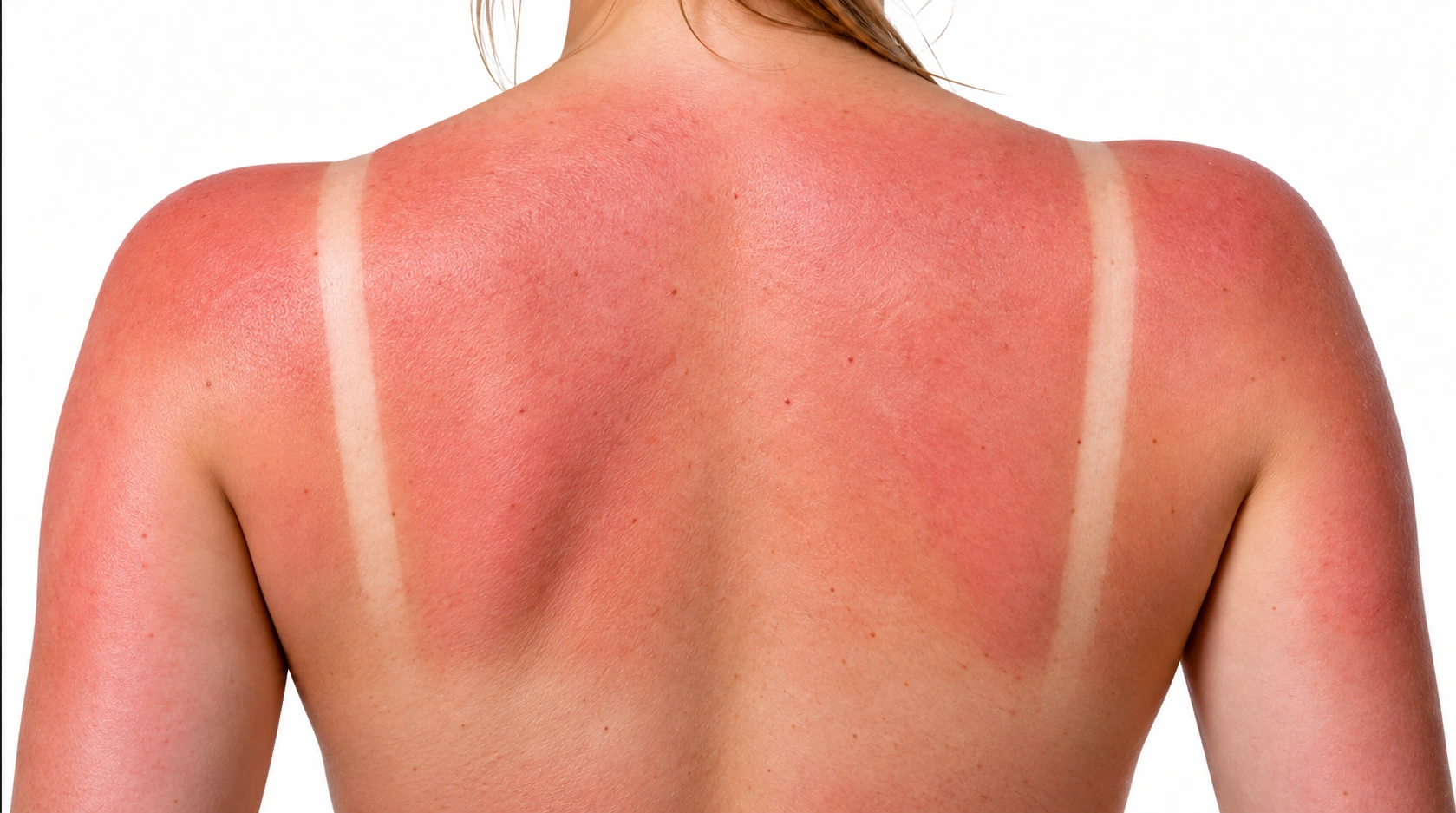
It makes skin much more reactive to ultraviolet light, and reverses after you stop.
No. That combination raises the risk of pressure around the brain.
Early change around three to four weeks. Judge it fairly at eight to twelve weeks.
It helps the redness that comes with inflamed bumps. Persistent background redness and visible vessels need different treatments, so be clear about which one bothers you.
The alcohol warning belongs to the tablets, not the gel, since so little is absorbed. Alcohol is a common rosacea trigger in its own right, which is a separate question.
Gel for oilier skin, cream for dry or easily irritated skin, lotion in between. Same drug, so pick on comfort.
Usually yes. It is often paired with azelaic acid, a redness-reducing gel, or low-dose oral treatment. Check the combination with your doctor.
Not forever, but longer than most people expect. Rosacea usually returns within weeks to months of stopping, so treatment often continues at a reduced frequency once the skin settles.