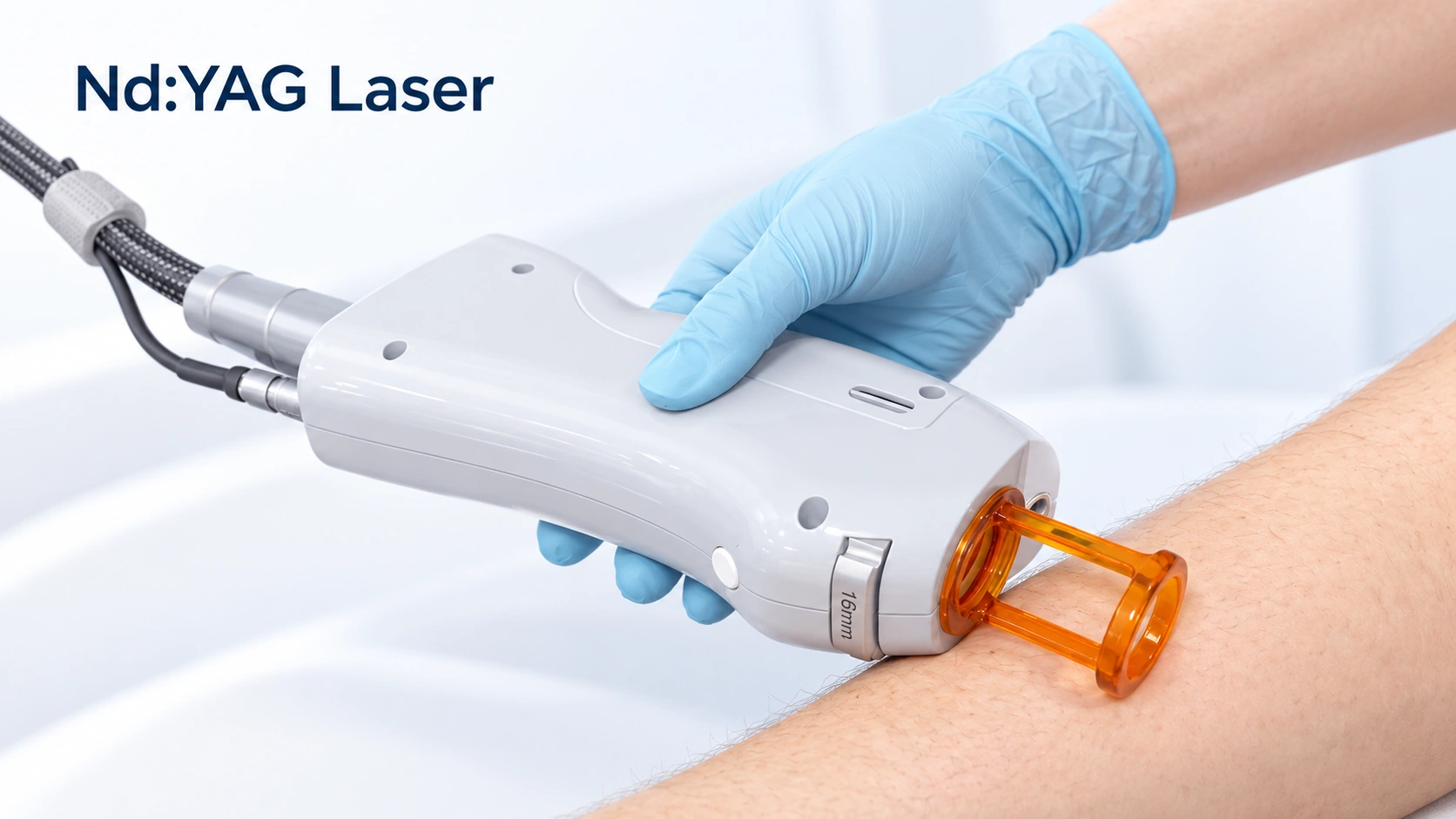
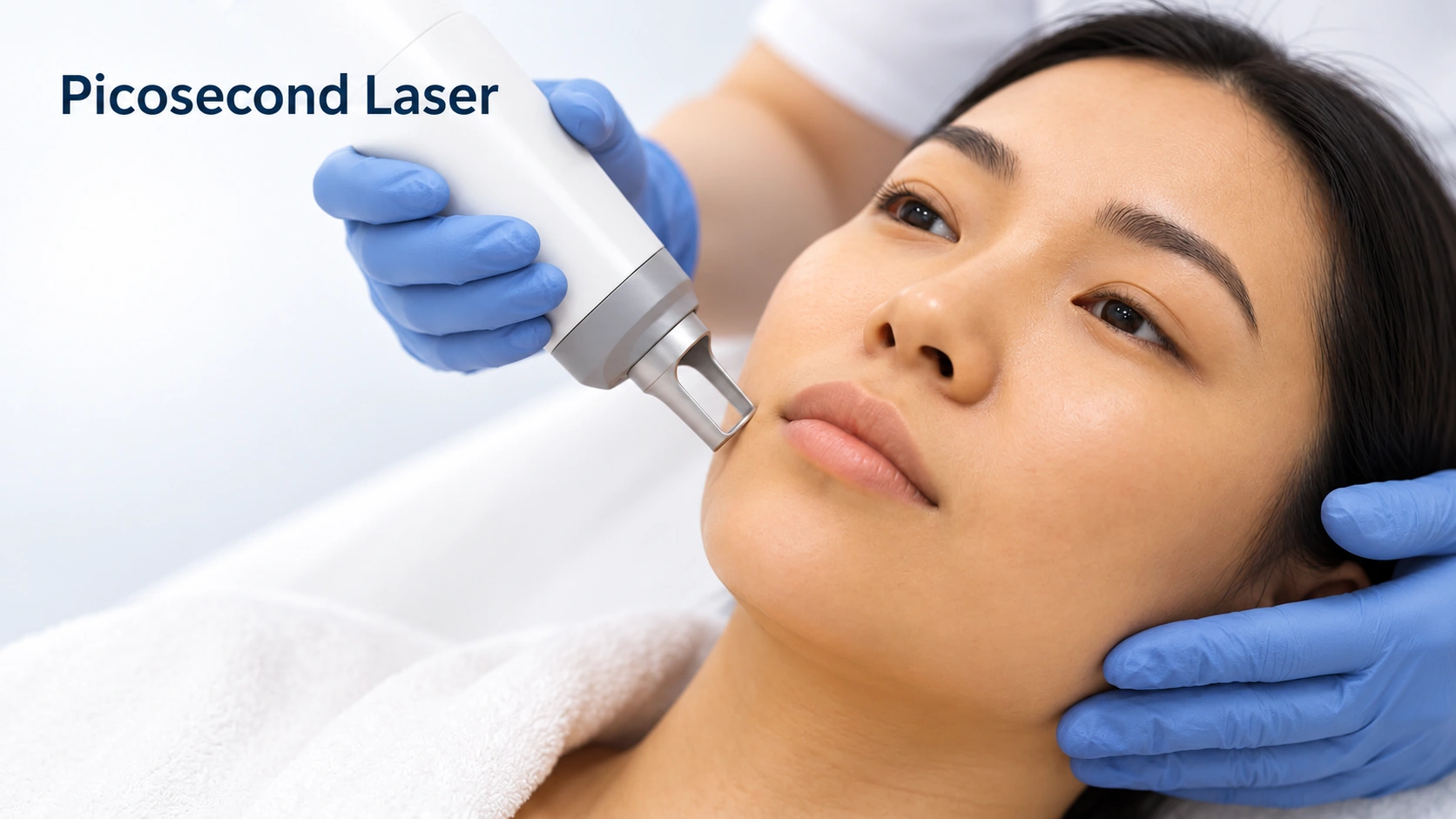
It is broad-spectrum light.
IPL uses filtered pulses across a range of wavelengths, not a laser.
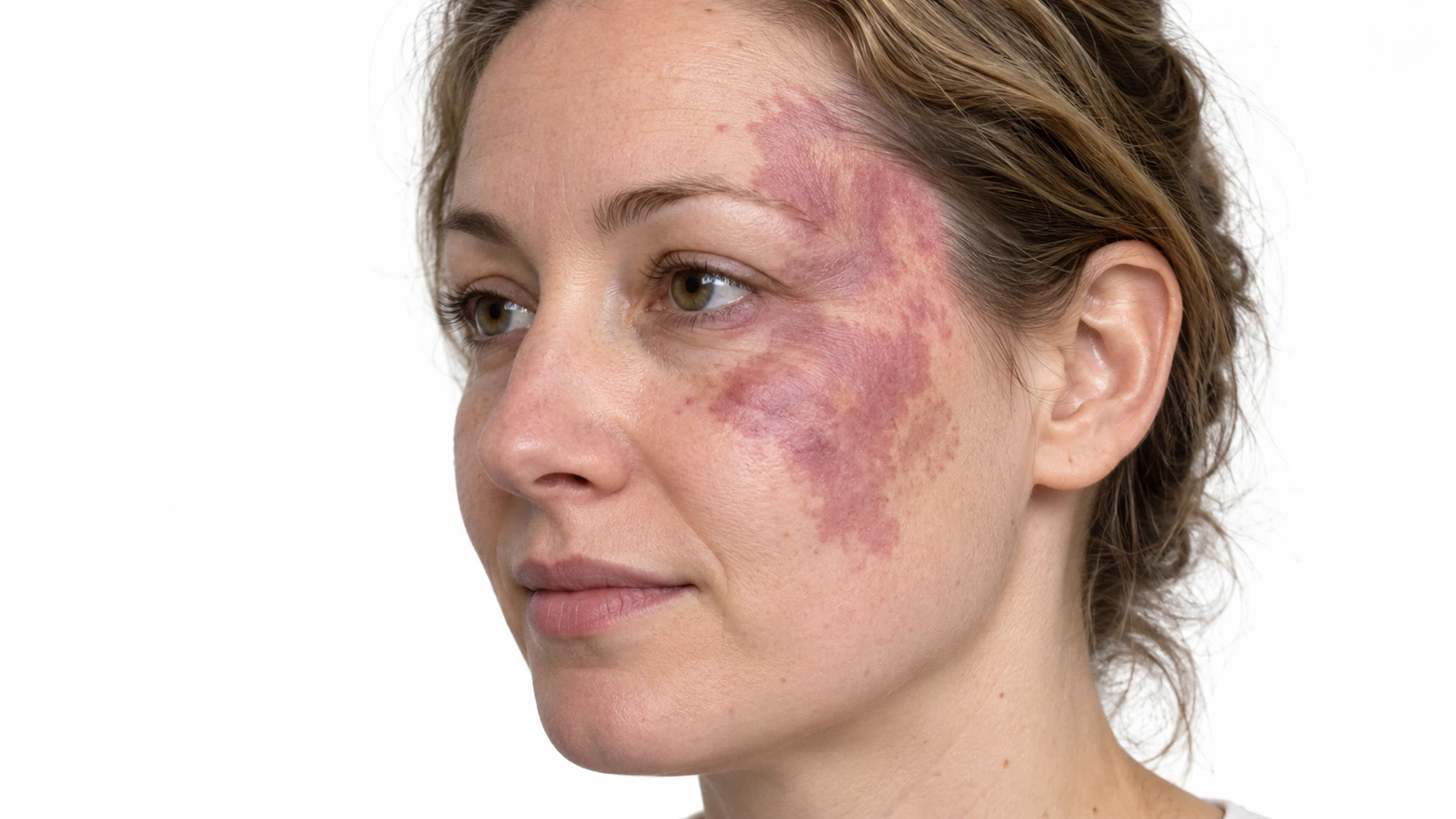
IPL: A broad-spectrum flashlamp, not a laser, used mainly for brown sun spots and facial redness. It is effective for those two problems on lighter skin, and it is not safe on deeper skin tones.
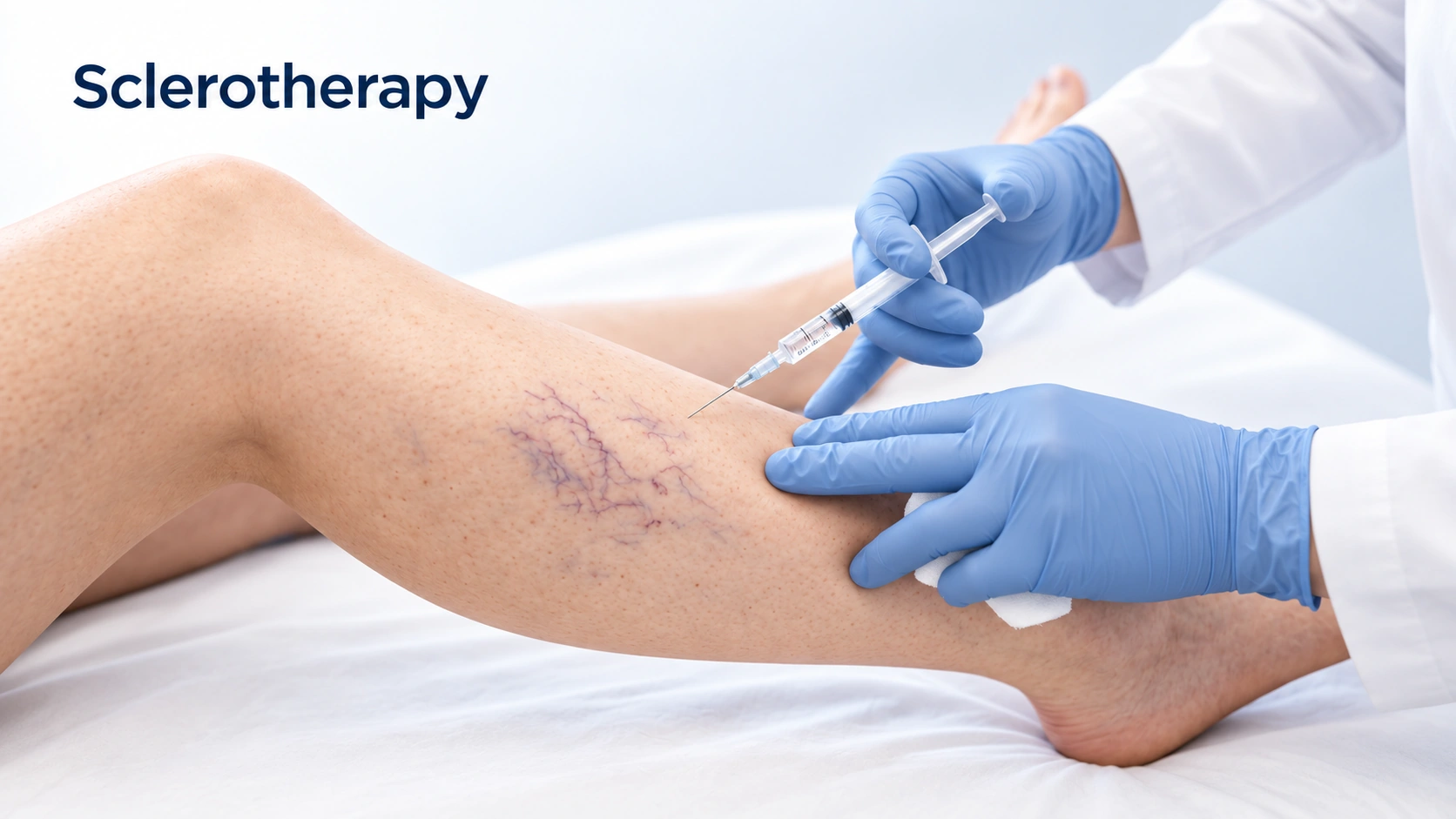
Sclerotherapy: A solution injected with a fine needle into spider veins on the legs, which irritates the vein lining so the vein closes and is absorbed. It takes several sessions, and a brown line often marks the treated vein for months afterward.
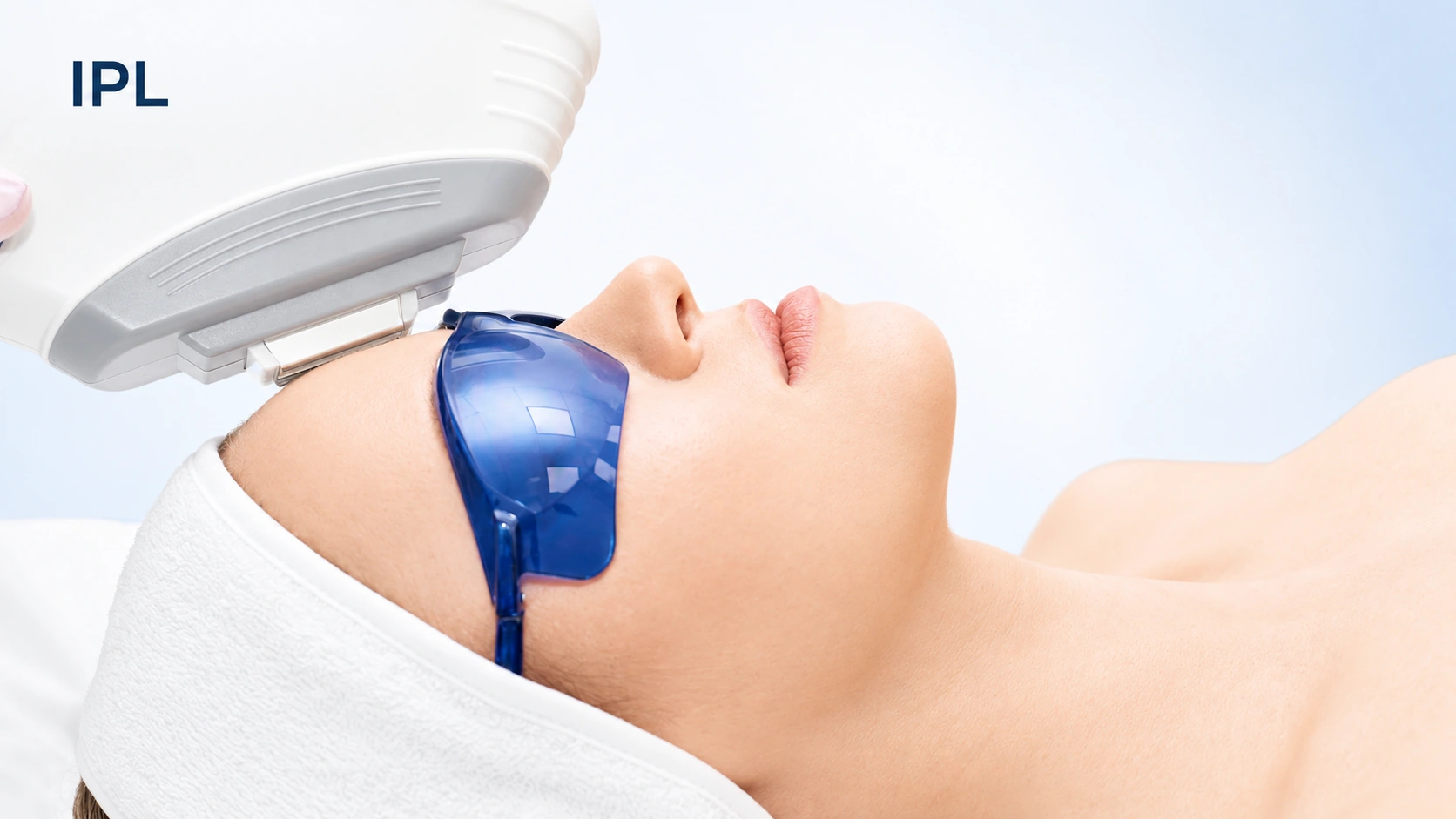
Choose for sun spots and facial redness on lighter skin — it is not safe on deeper skin tones.
Choose for spider veins on the legs — several sessions, and brown marks along treated veins can last months.
Can you have both?
They suit different vessels. Sclerotherapy treats leg veins; IPL treats facial redness and fine facial vessels.
IPL uses filtered pulses across a range of wavelengths, not a laser.
It treats redness, benign pigmentation and unwanted hair.
A brown spot should be assessed before fading.
Tanning, darker skin and medicines raise the risk of burns or pigment change.
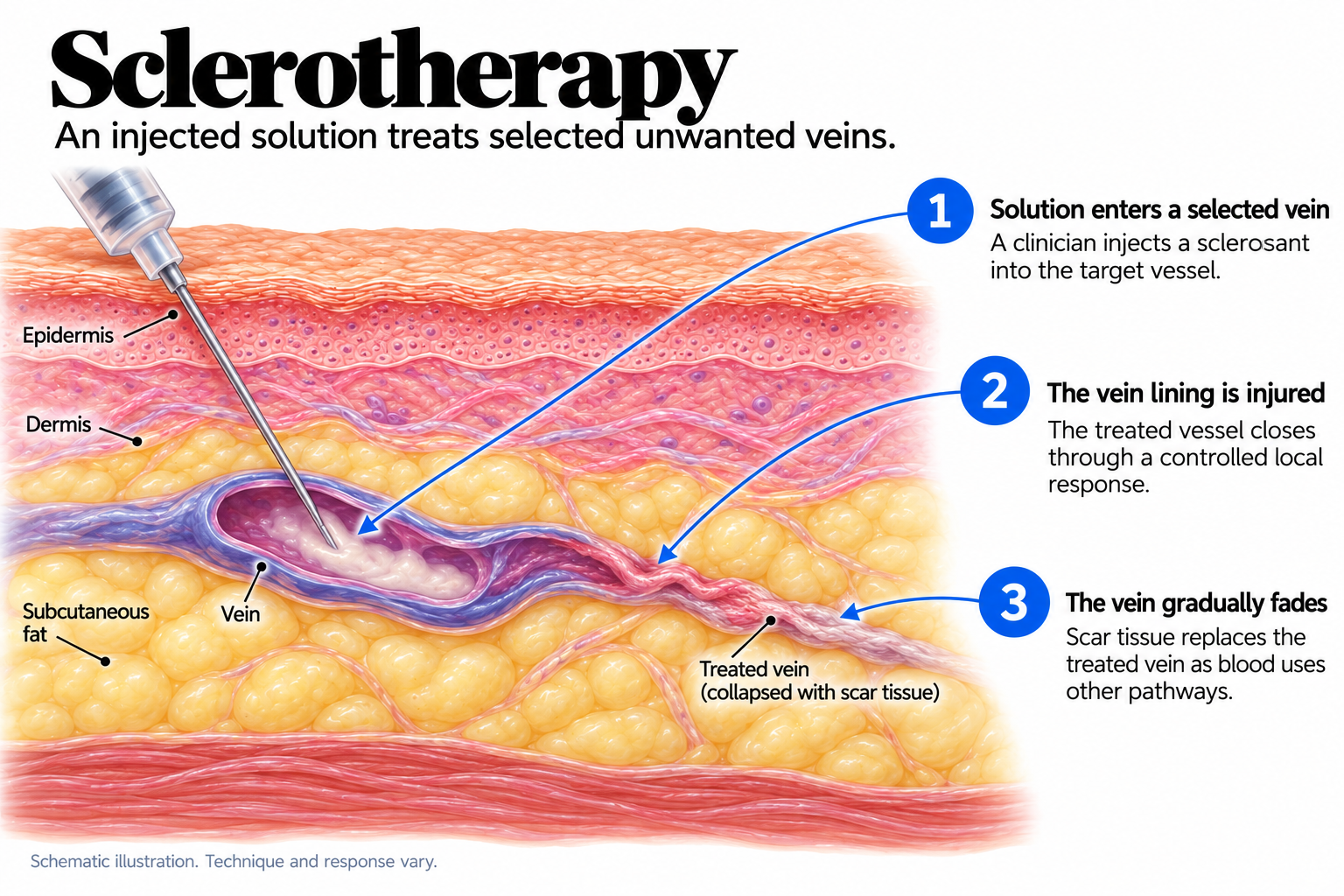
A sclerosant injected into a vein damages its lining.
It is gradually replaced by fibrous tissue.
Small visible veins and underlying reflux are treated differently.
Previous clots, circulation problems and pregnancy should be discussed.

Reduces redness and vessels.
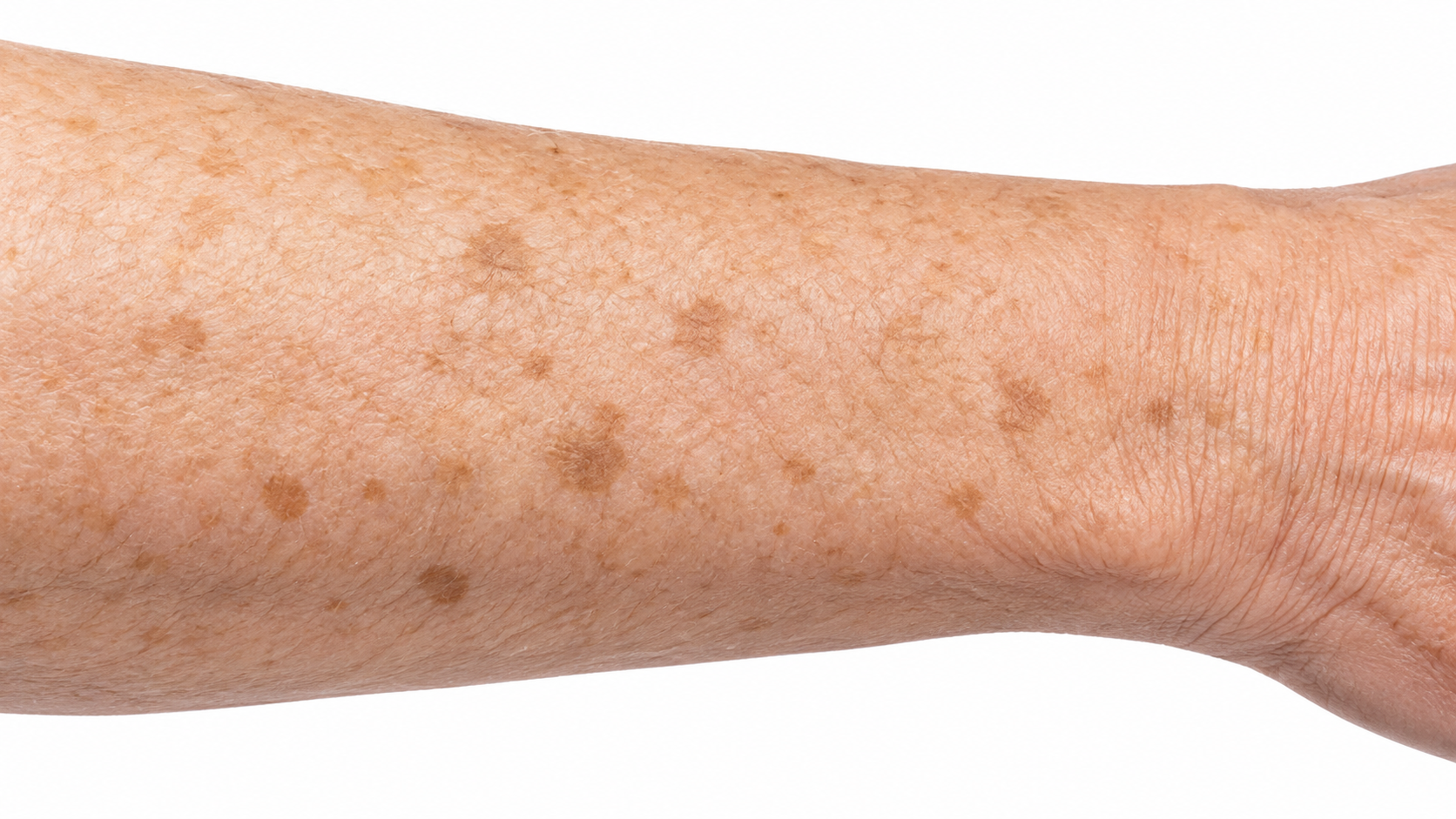
Darkens spots that then flake off.
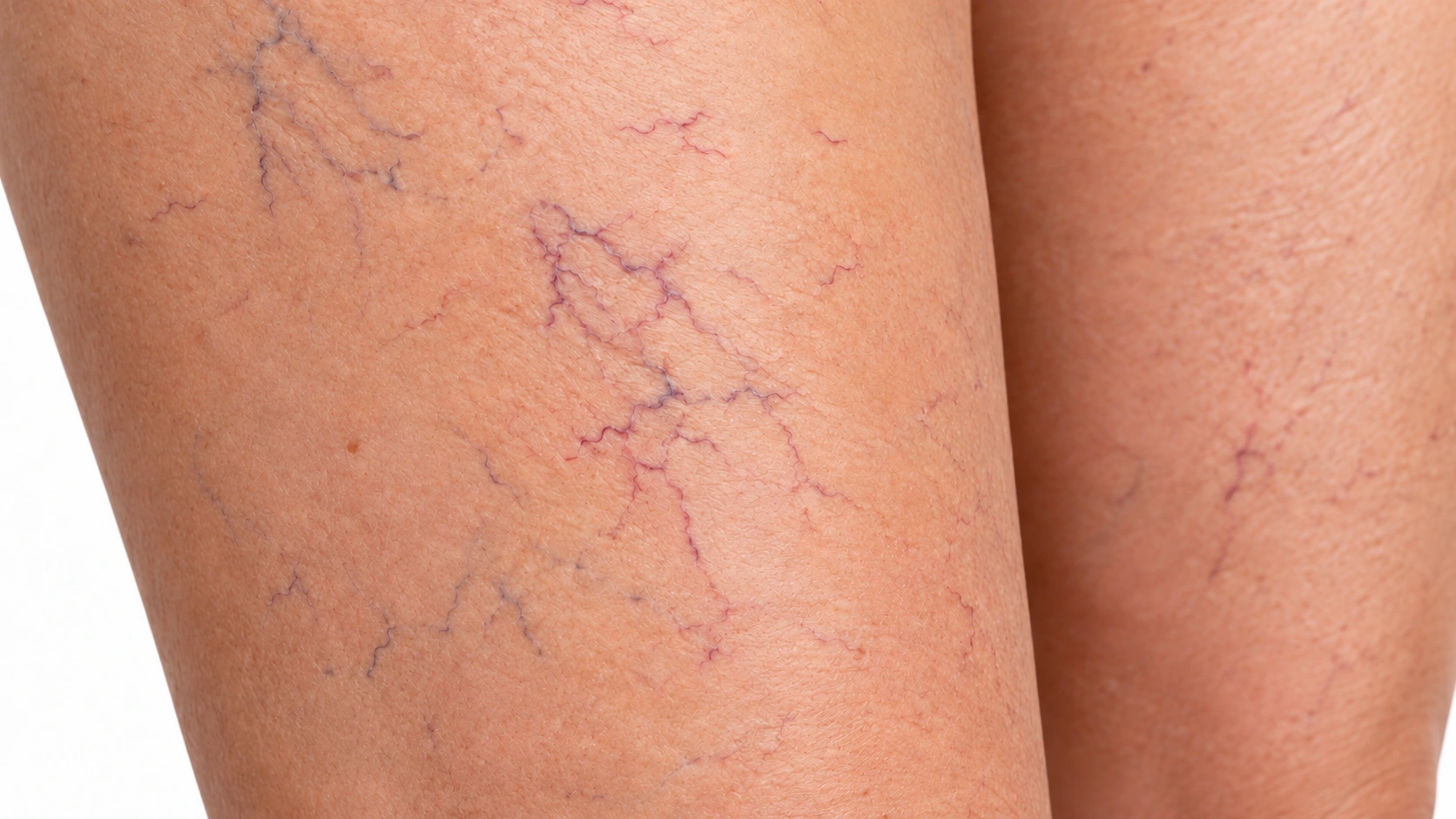
Clears leg veins.
Clears small facial vessels.
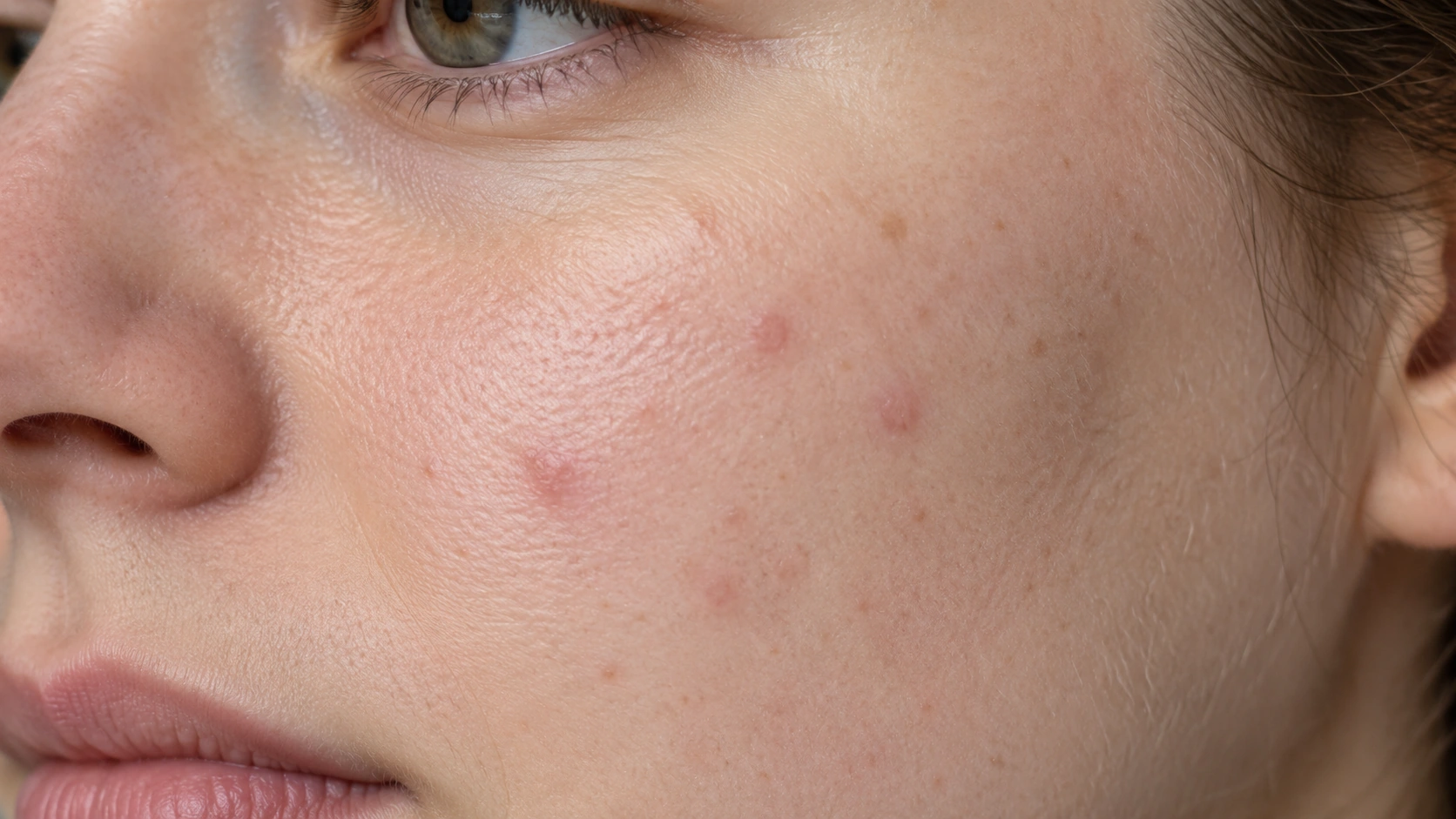
Fades red marks.
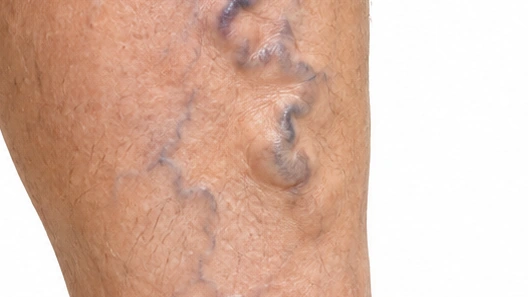
Treats small varicose veins.

Doesn't change texture.
Not used on the face.
Lasers are used instead.

Patches often rebound darker.
Face, neck, chest and hands.
Leg veins.
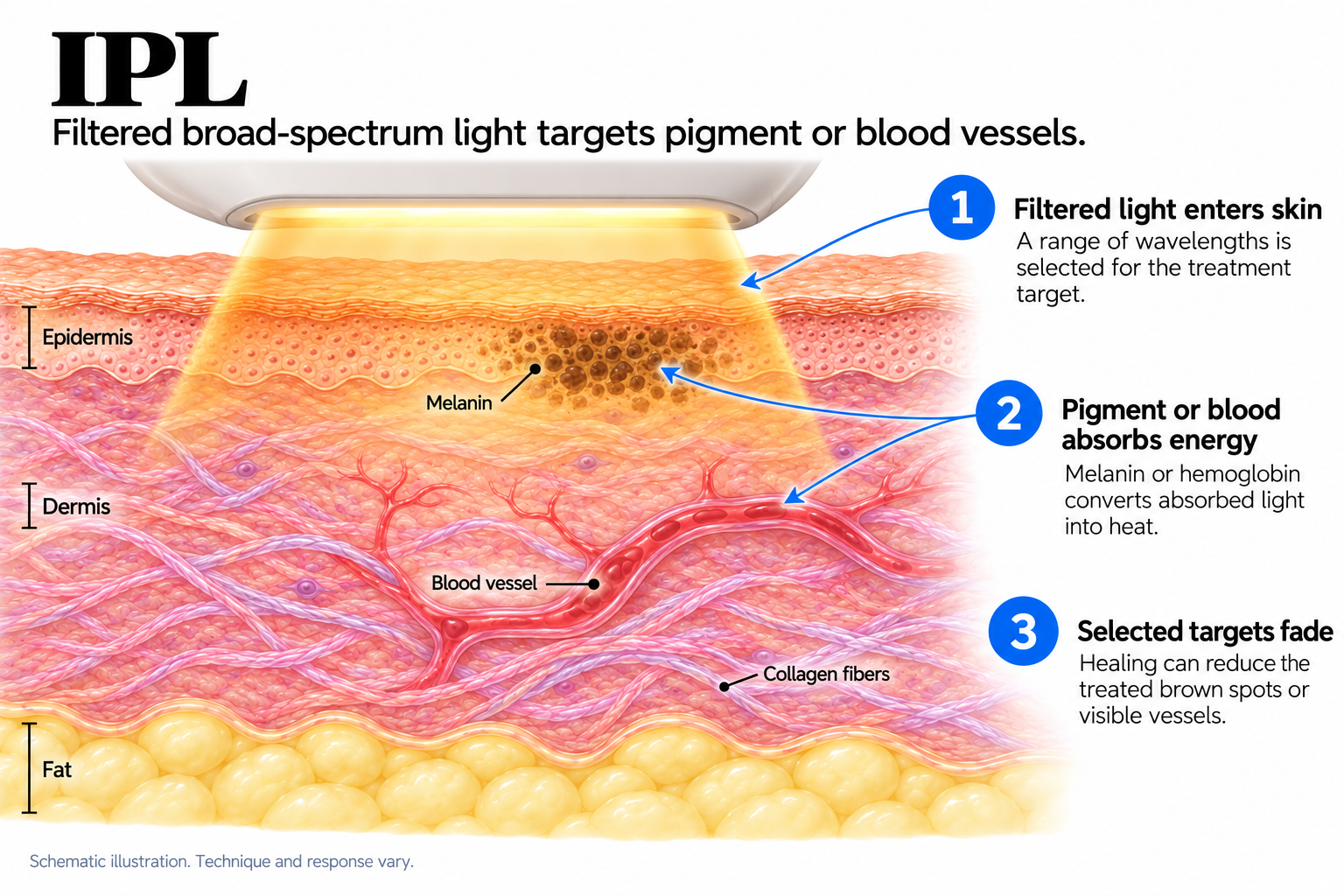
Filtered light enters skin: A range of wavelengths is selected for the treatment target. Pigment or blood absorbs energy: Melanin or hemoglobin converts absorbed light into heat. Selected targets fade: Healing can reduce the treated brown spots or visible vessels.
Schematic illustration. Technique and response vary. This explains a mechanism and does not specify treatment settings.
Solution enters a selected vein: A clinician injects a sclerosant into the target vessel. The vein lining is injured: The treated vessel closes through a controlled local response. The vein gradually fades: Scar tissue replaces the treated vein as blood uses other pathways.
Schematic illustration. Technique and response vary. This explains a mechanism and does not specify treatment settings.
4 weeks before: Sun and tanning: No sun, sunbeds or self-tanner.
2 weeks before: Hair removal: No waxing, threading or hair removal cream.
2 weeks before: Sun: Avoid sun and sunbeds on your legs for a couple of weeks before and after.
3 to 5 days before: Actives and clean skin: Stop retinoids and exfoliating acids.
1 to 2 days before: Shaving: Shave your legs a day or two before, if you shave.
Clean, dry skin: Tape and dressings need clean, dry skin.
What to bring: Stockings and clothes: Buy the compression stockings your provider recommends beforehand.
Skin tone: A good provider will ask, and will decline if IPL is wrong for your skin.
Skin tone: Be direct about your skin tone and how easily you tan.
Skin is cleaned and examined, and the provider checks your skin tone and recent sun.
Your legs are examined standing up, when veins fill, and photographs are usually taken.
Opaque goggles go over your eyes and stay on; that is not optional.
The handpiece is pressed on the skin and fired in overlapping shots. You see a bright flash through closed eyelids. Each pulse feels like a hot rubber band snap, hottest over brown spots and hair, and stops as it ends. A full face takes about 20 minutes.
You lie down, the skin is cleaned, and the provider works along the leg injecting small amounts into each vein, often using magnifying glasses or a vein light.
A session runs about 15 to 45 minutes. Each injection stings for a second or two, sometimes with brief cramping along the vein.
Skin looks pink and feels warm, like mild sunburn.
Stockings or wraps go on before you stand, and you walk for fifteen or twenty minutes.
Days 1 to 2: Redness fades.
Days 1 to 14: Small red welts, itching and mild aching along the treated veins.
Days 3 to 14: Treated spots darken into fine brown flecks like coffee grounds, then flake away, leaving more even skin.
Weeks 2 to 6: Vessels and background redness clear gradually, and keep improving over later sessions.
Weeks 3 to 8: The veins fade and most bruising resolves.
Months 2 to 12: Brown staining fades slowly, and most clears within six to twelve months.
1–2 weeks per session
1–3 months
Months to years; new spots with sun
Treated veins are gone; new ones can appear
In the US a full-face session usually runs about $300 to $600.
In the US a session usually runs about $300 to $600, priced per leg or per block of time rather than per vein.
Insurance does not cover cosmetic pigment or redness treatment.
Ask what a session includes, whether the price covers both legs, and whether a follow-up visit to release trapped blood costs extra.
No. Broadband light is absorbed by all the pigment in its path, including the pigment that gives skin its color. On deeper skin tones that means burns and light or dark patches, and pale patches can be permanent. For pigment, ask about prescription creams and superficial peels. For hair, a 1064 nm Nd:YAG laser.
No. The skin tone chart supplied with home devices exists because the technology injures skin with more pigment, and most are labeled unsuitable for deeper skin tones and tanned skin. Many refuse to fire. The risk is the same as a clinic device, with nobody present to spot a problem early.
Usually not, and it commonly makes melasma worse: better for a few weeks, then darker and wider. If you have brown patches on the cheeks, forehead or upper lip, get a diagnosis before any light-based treatment.
That is what is meant to happen. Treated sun spots darken into fine brown flecks over the first few days, then flake off over one to two weeks. Do not scrub or pick.
Usually three to five for the face, three to four weeks apart, then maintenance once or twice a year. Brown spots improve faster than redness. Hair reduction takes six to ten or more.
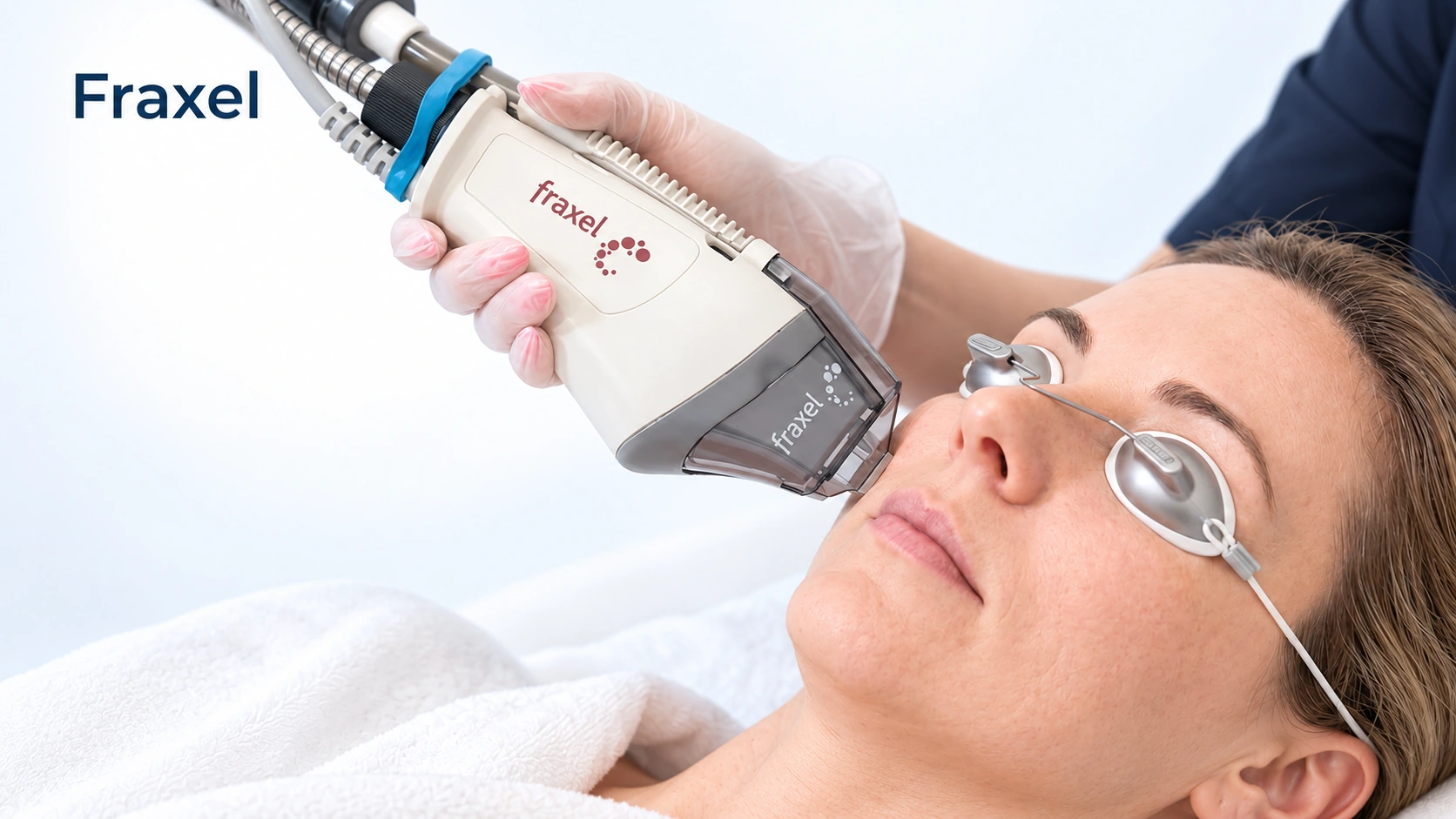
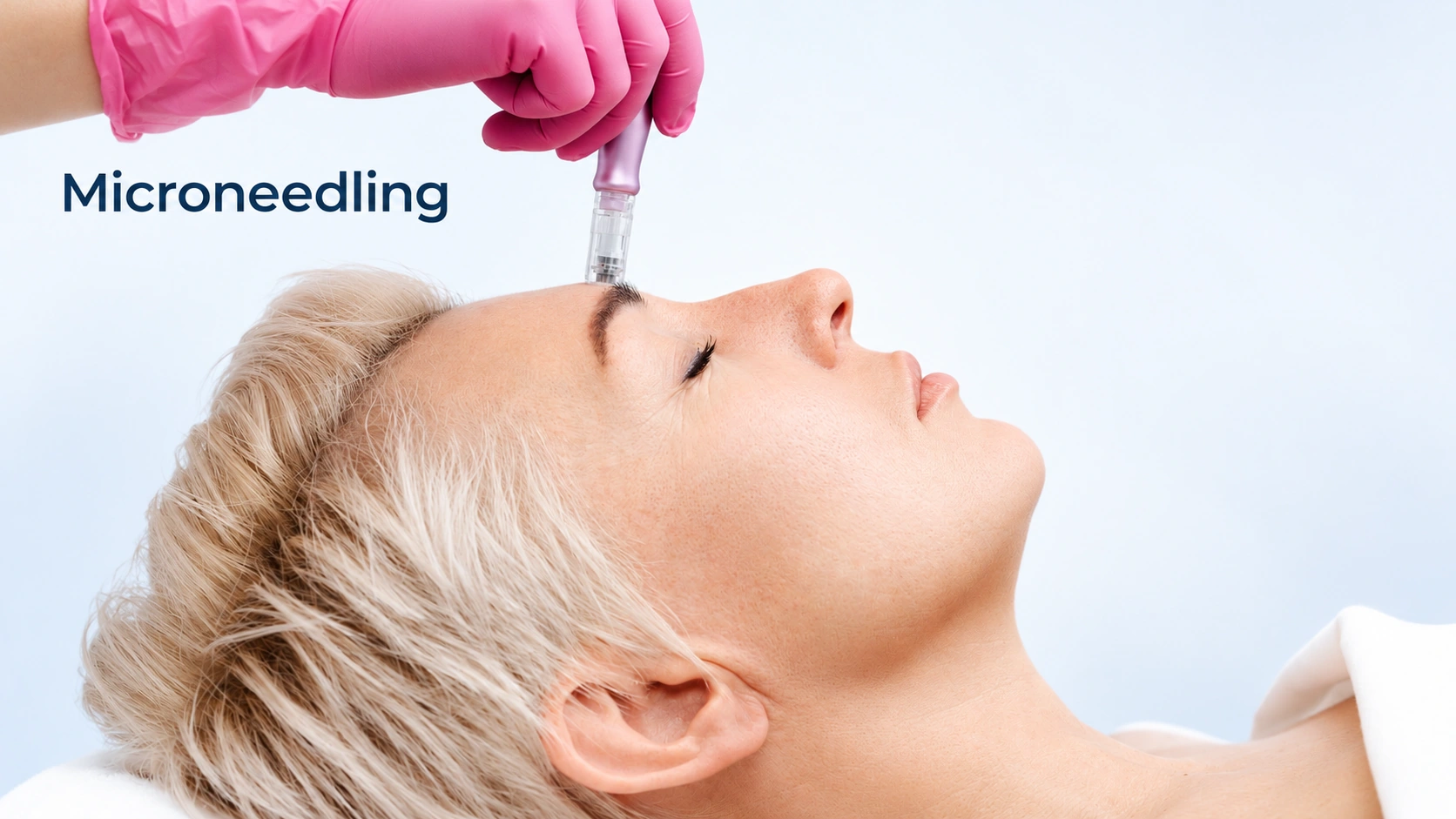
No. IPL works on color: brown pigment and red vessels. Wrinkles, texture, pores and indented scars need a fractional laser or microneedling.
Usually two to four per leg, four to six weeks apart, and stubborn veins sometimes need injecting more than once. Extensive veins need more. Expect a course, plus touch-ups every year or two as new veins appear.
Blood trapped in the closed vein breaks down and leaves iron in the skin. Most fades over six to twelve months, and sun makes it darker and slower to clear. It is more visible and slower to fade on deeper skin tones. If a firm tender lump forms, having it released in the office speeds the fading.
A patch of very fine new red vessels where a vein was treated, usually within a few months. It happens to a minority, often fades on its own over months, and occasionally needs further injections or laser.
No. Ropey bulging veins need a vein specialist, an ultrasound to find the source, and usually a procedure that closes the larger vein with heat, glue or ultrasound-guided foam. Treating the spider veins on top is why some people see them return quickly.
Each injection stings for a second or two, sometimes with brief cramping along the vein. Dozens in a session make it repetitive rather than severe. Afterward, aching and itching for a few days.
Usually yes, for the first week or two. Bruising, raised red lines and brownish streaks are the normal middle stage. Judge the result months after the course finishes.