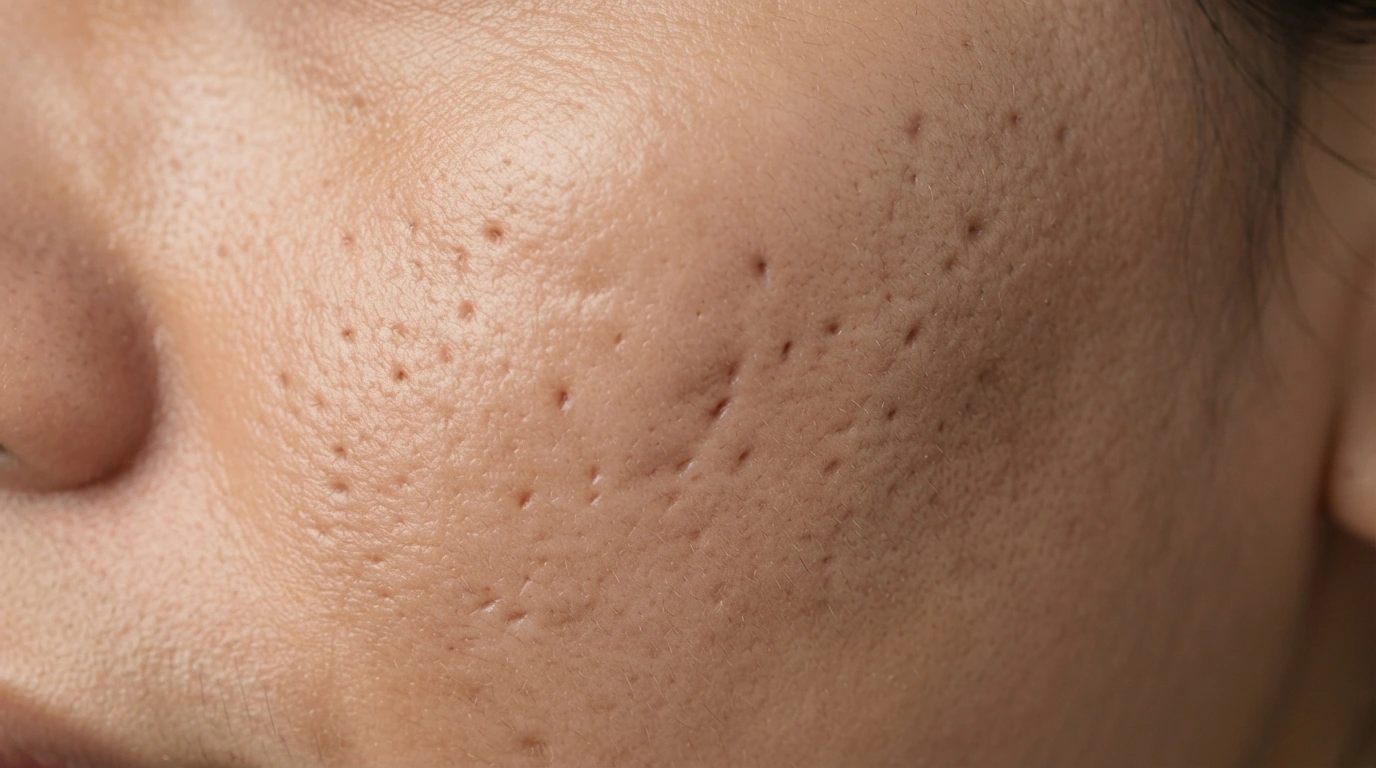
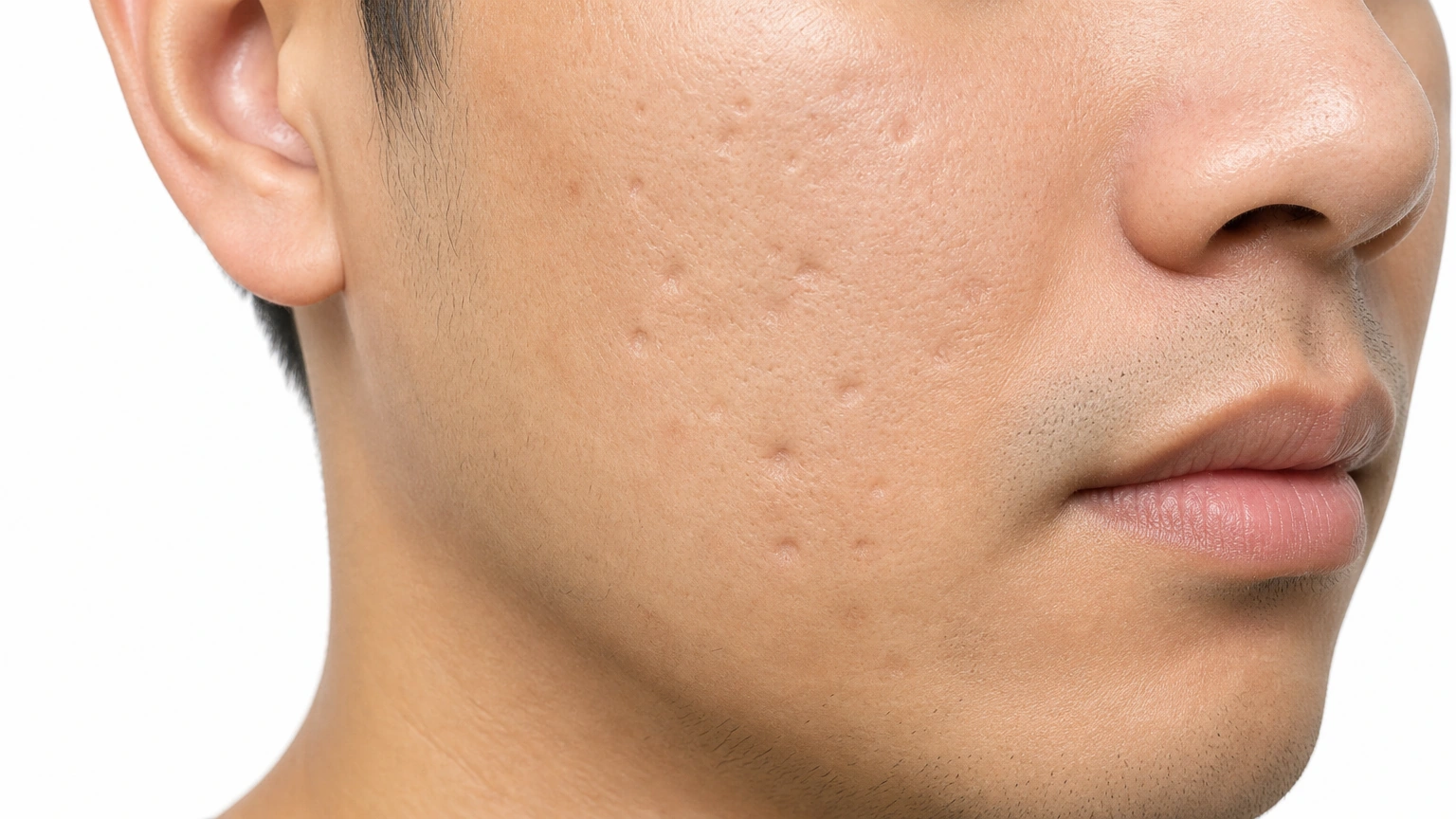
Hypertrophic Scars vs Dermatofibroma

Raised scars that stay within the boundary of the original wound. A common benign fibrous skin nodule.
Research updated 2026-10-23
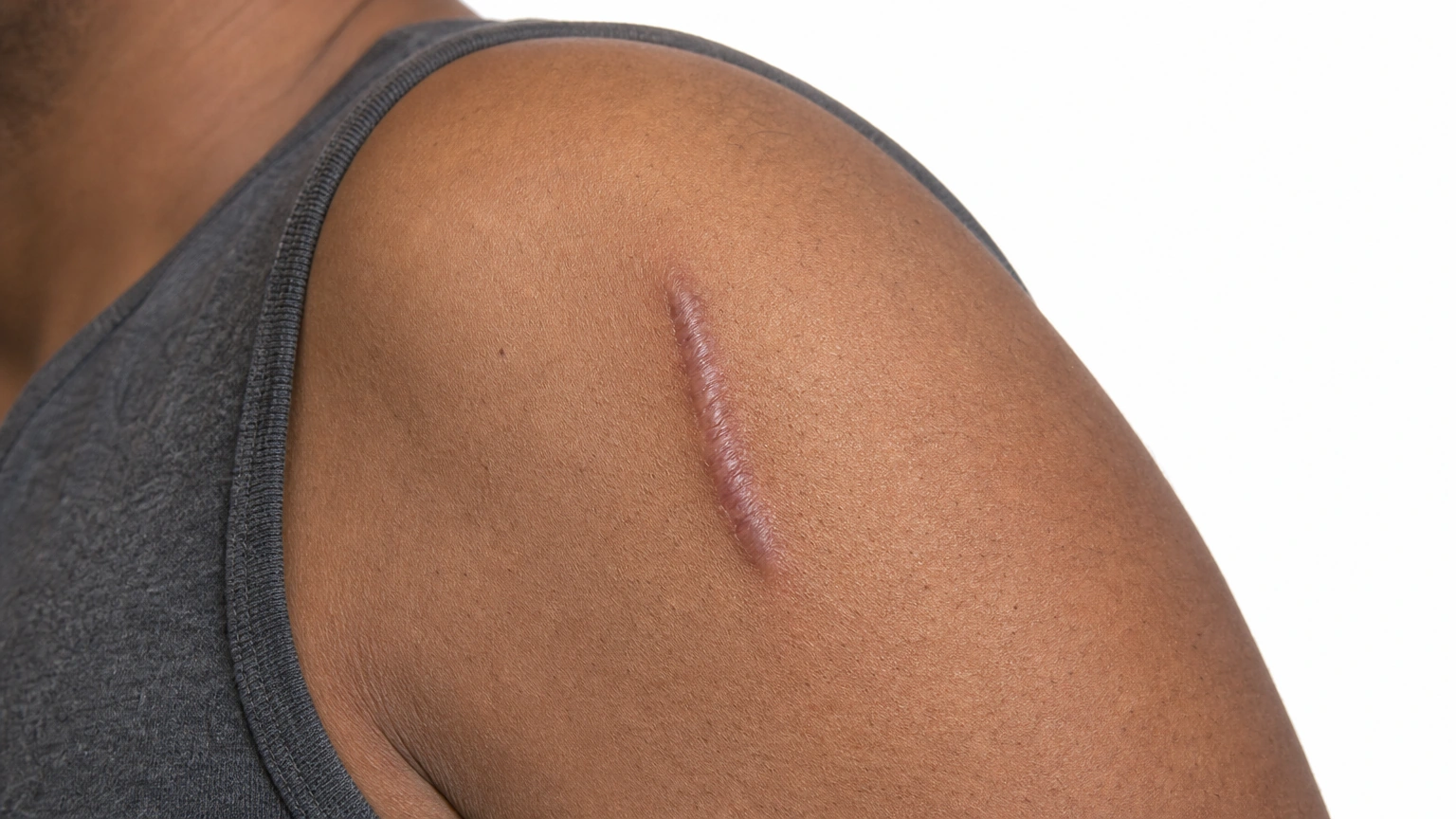
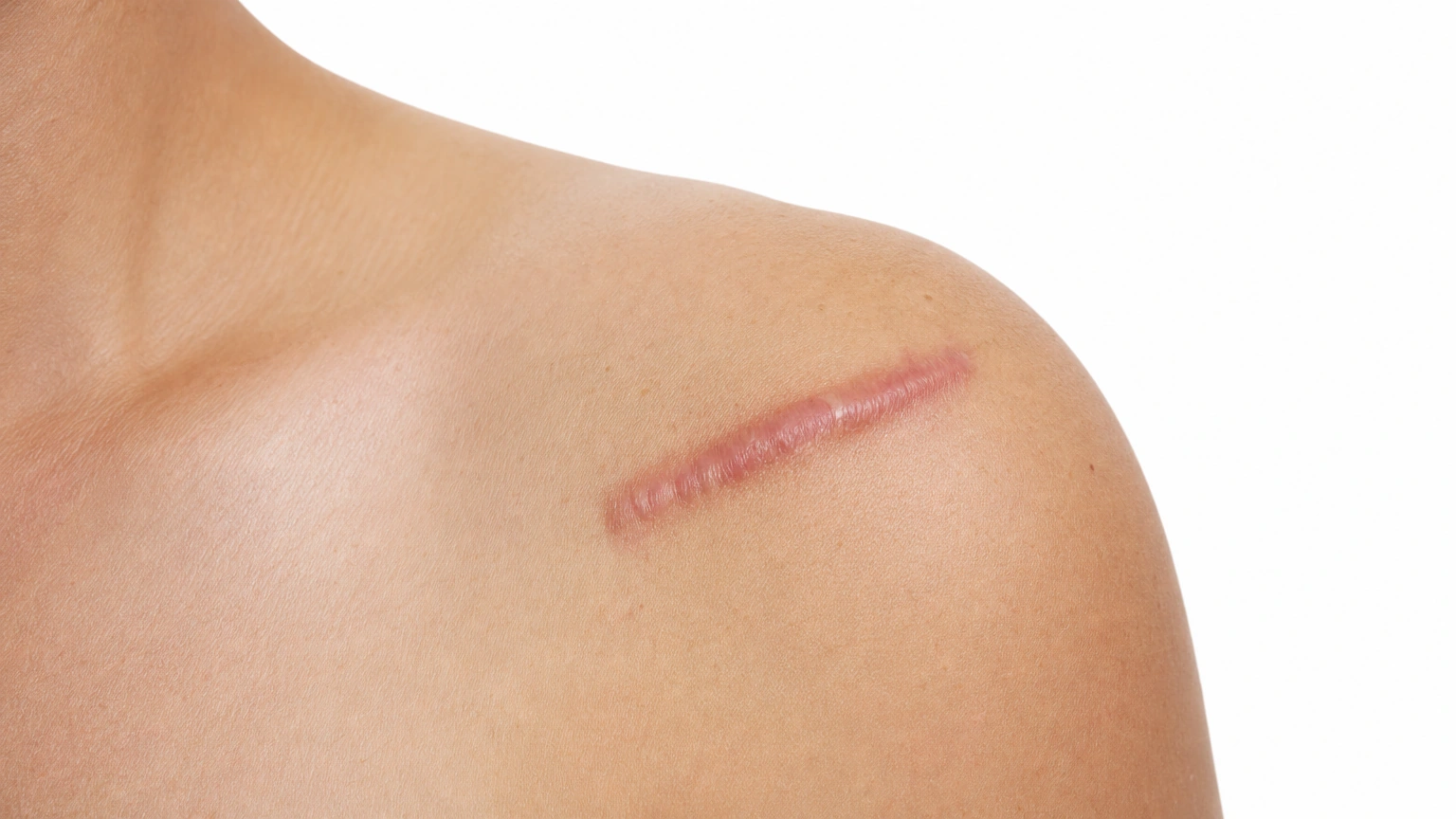
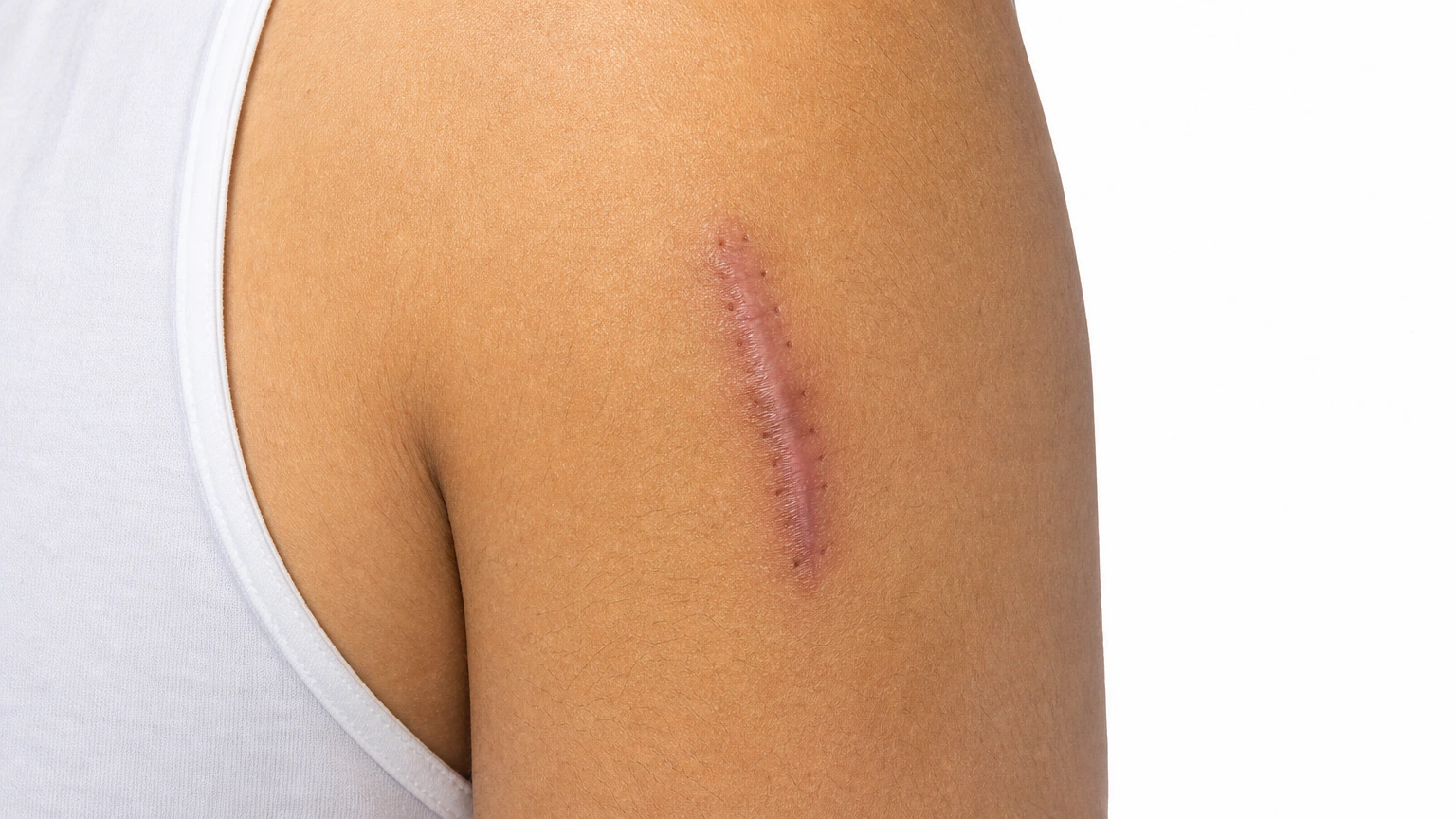
AI-generated educational illustration: Adult shoulder with a firm pink raised linear healed scar confined to the original wound boundary, no open wound.Dermatofibroma

Key differences

The same eight facts on every condition comparison.

Usual age
After a wound or surgery
Adults
Where
Prior wounds, burns, surgery
Limbs, especially lower legs
Main sign
Raised scar within the wound line
Firm bump that dimples when pinched
Itch or pain
Can itch
Sometimes itchy
Contagious
No
No
Long term
Often flattens over 1–2 years
Harmless; stays
Scars
Is a scar
Removal leaves a scar
Who gets it
Wounds under tension; burns
Adults, often after a bite or shave nick

What is it?

Hypertrophic Scars
Dermatofibroma
What is it?
  • What it is
    Raised scars that stay within the boundary of the original wound.
  • What it is
    A common benign fibrous skin nodule.

What it looks like

Hypertrophic Scars

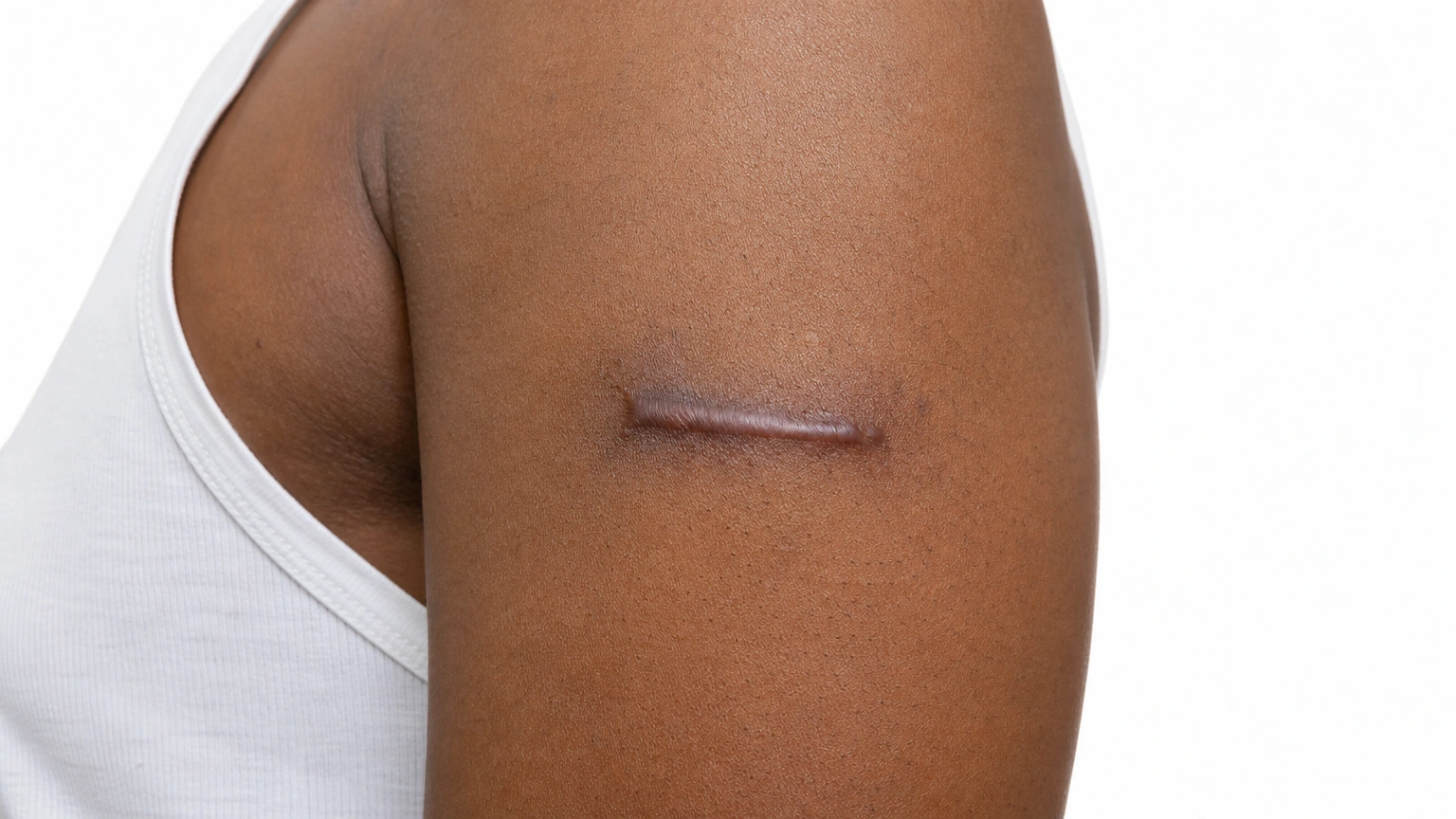
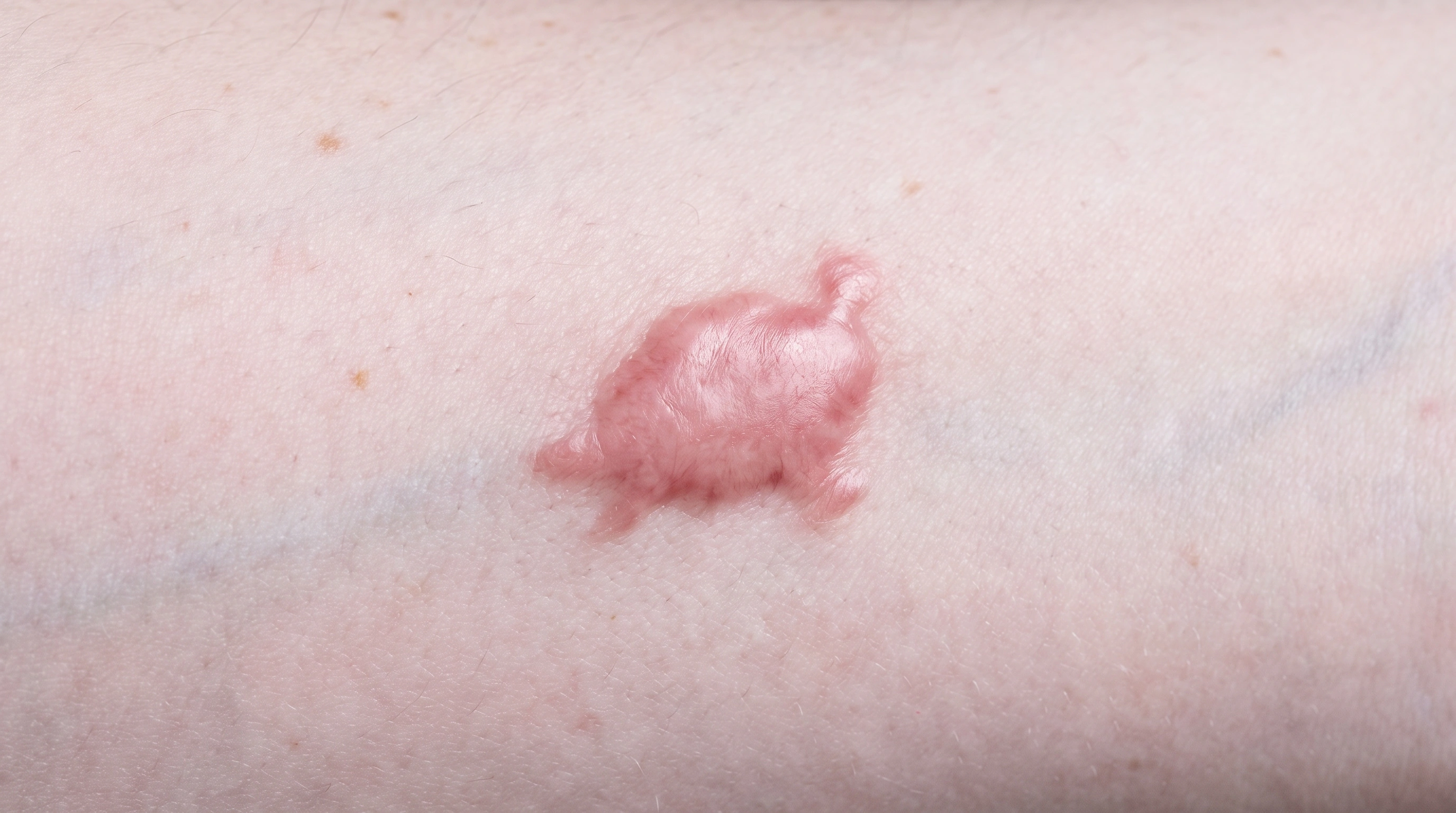
A shoulder with a short raised pink scar and small marks along its edges.

Hypertrophic Scars A narrow pink ridge follows the line of the healed wound.
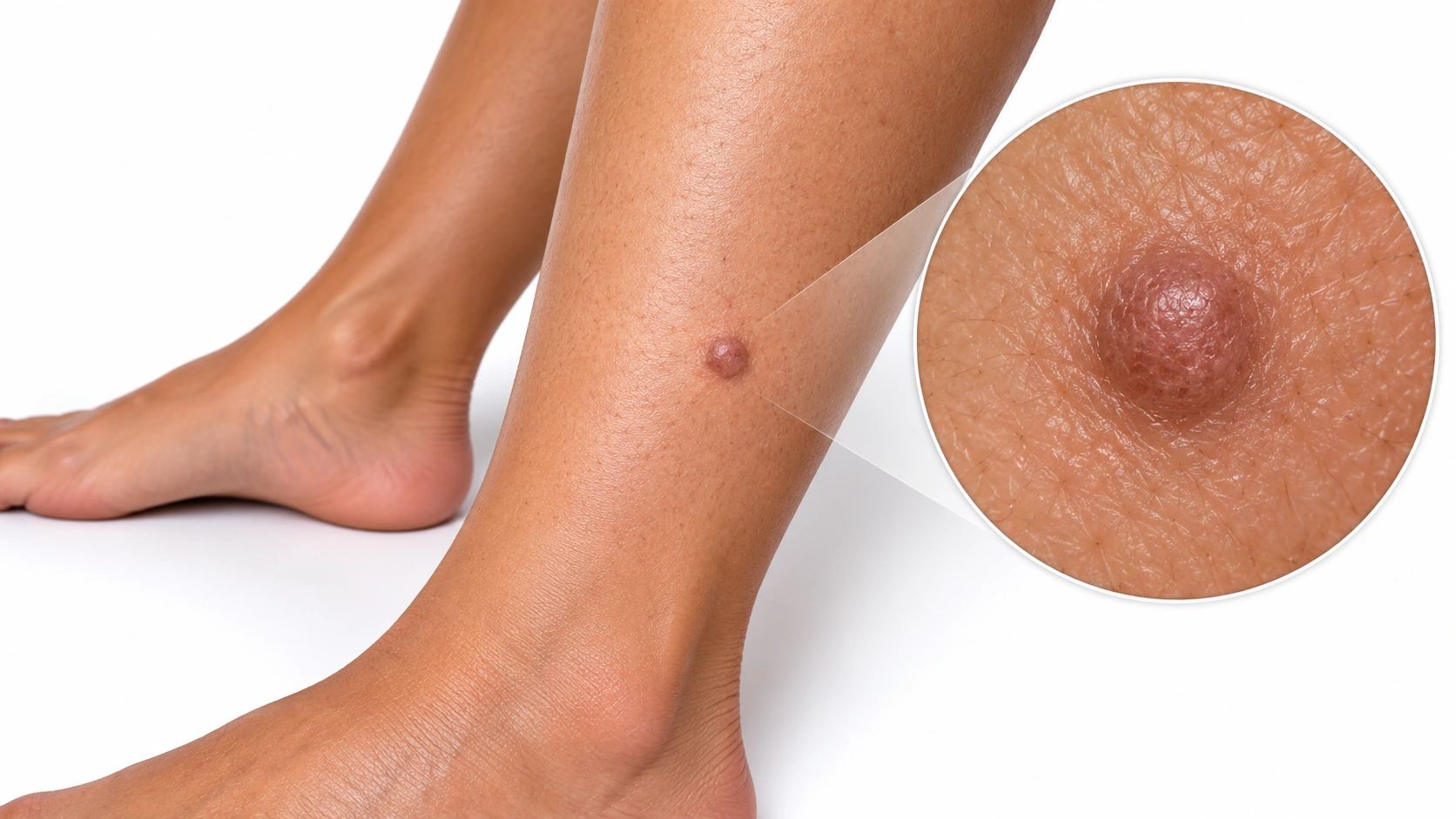
Dermatofibroma

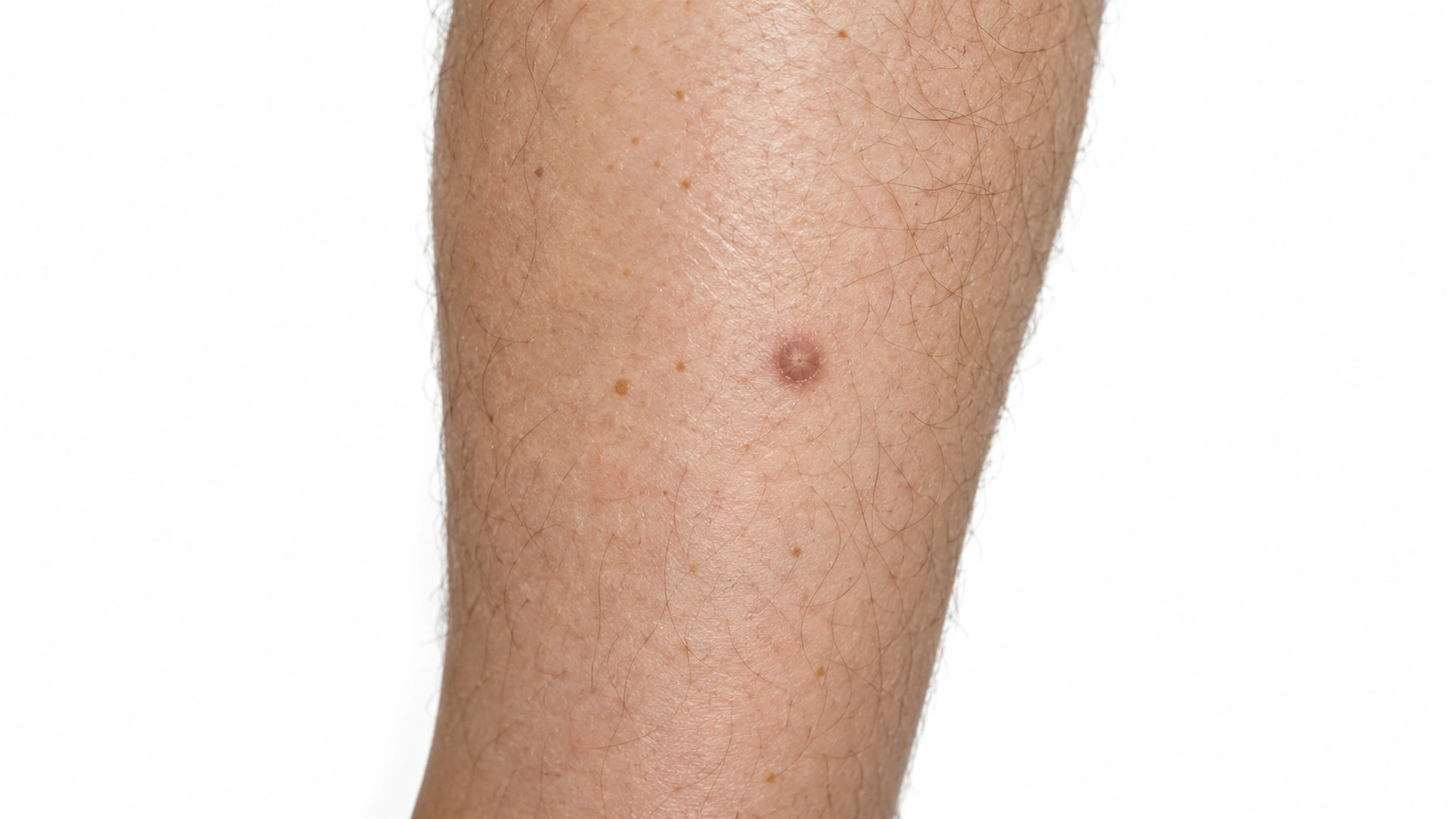
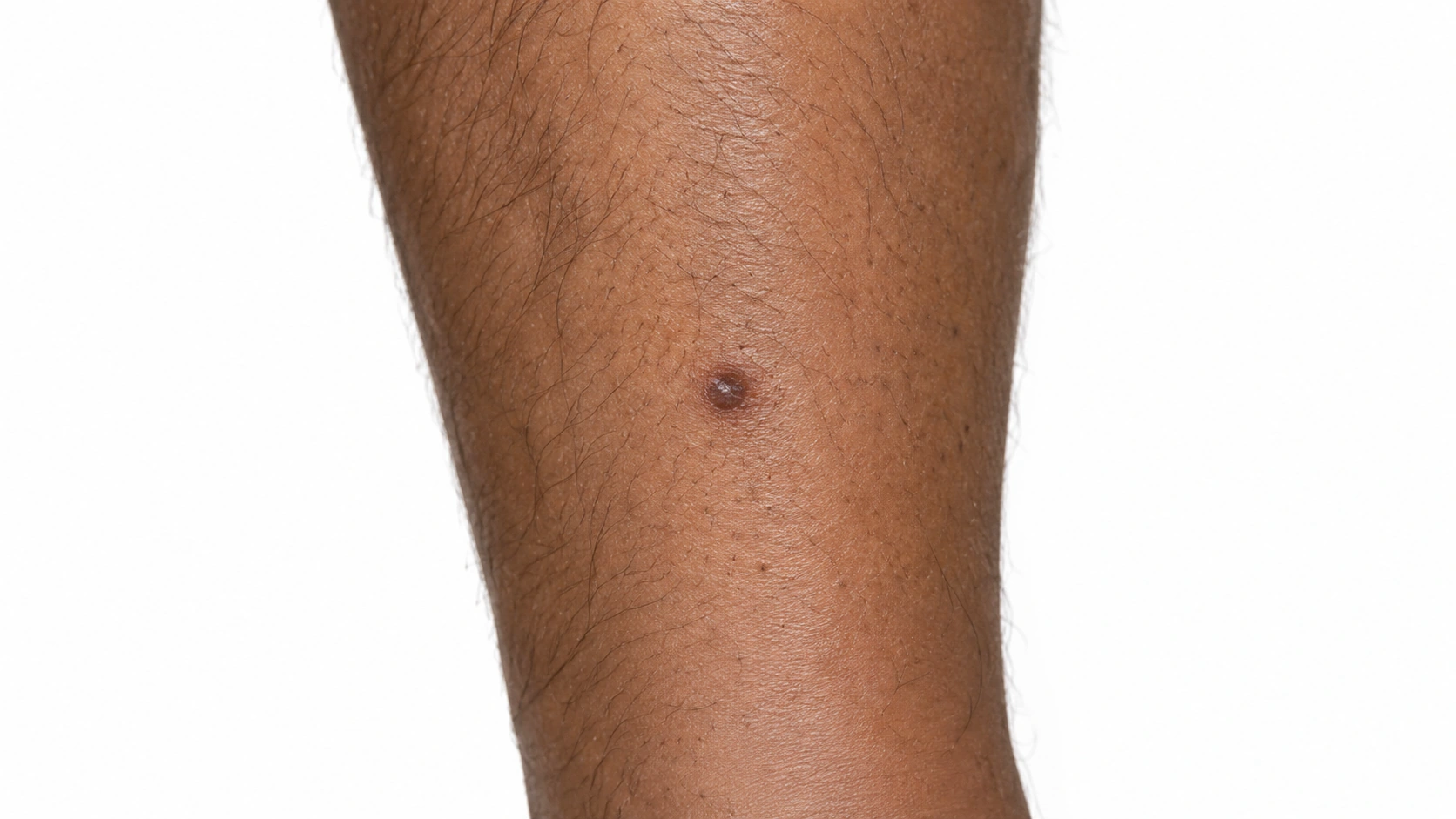
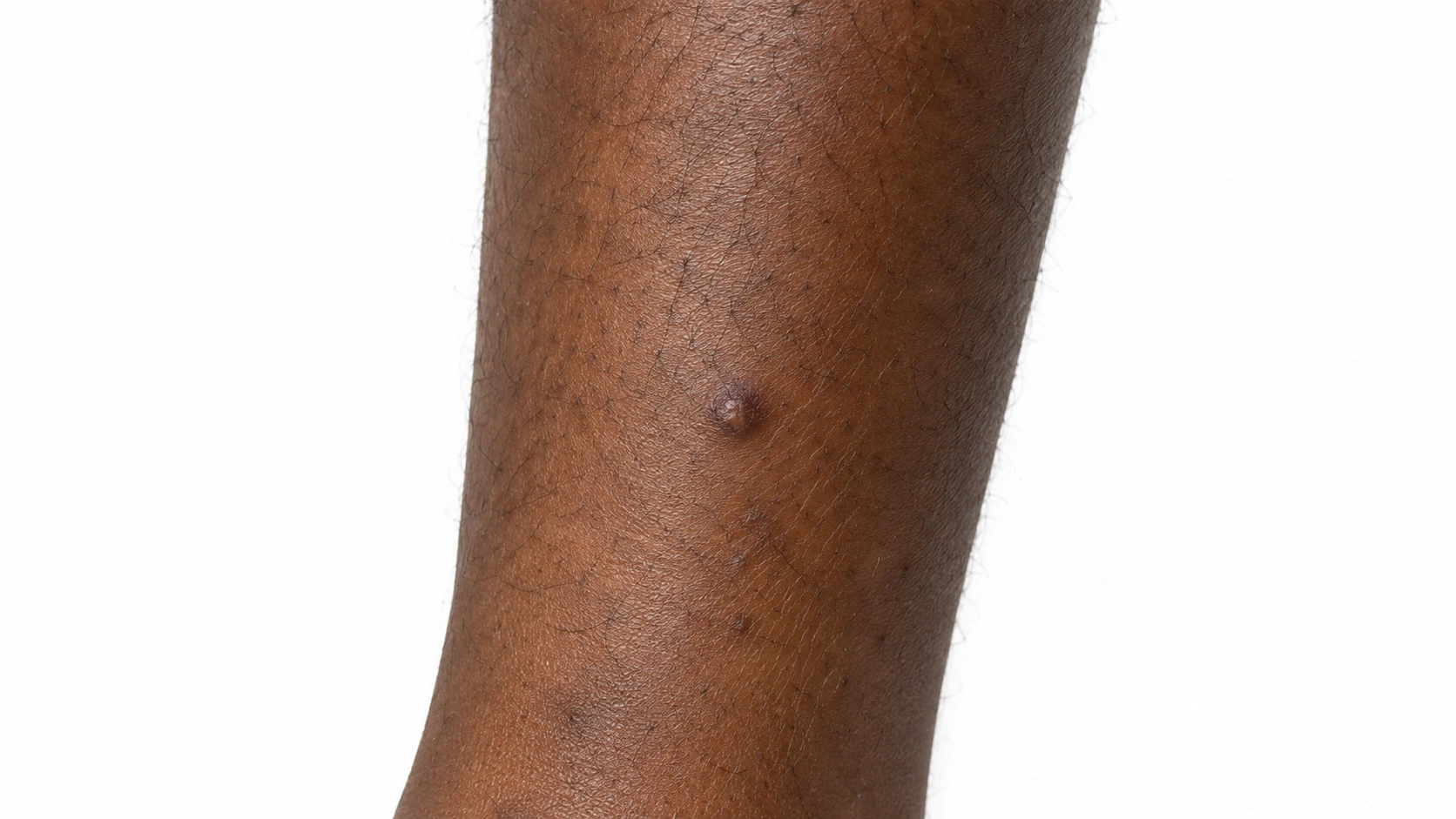
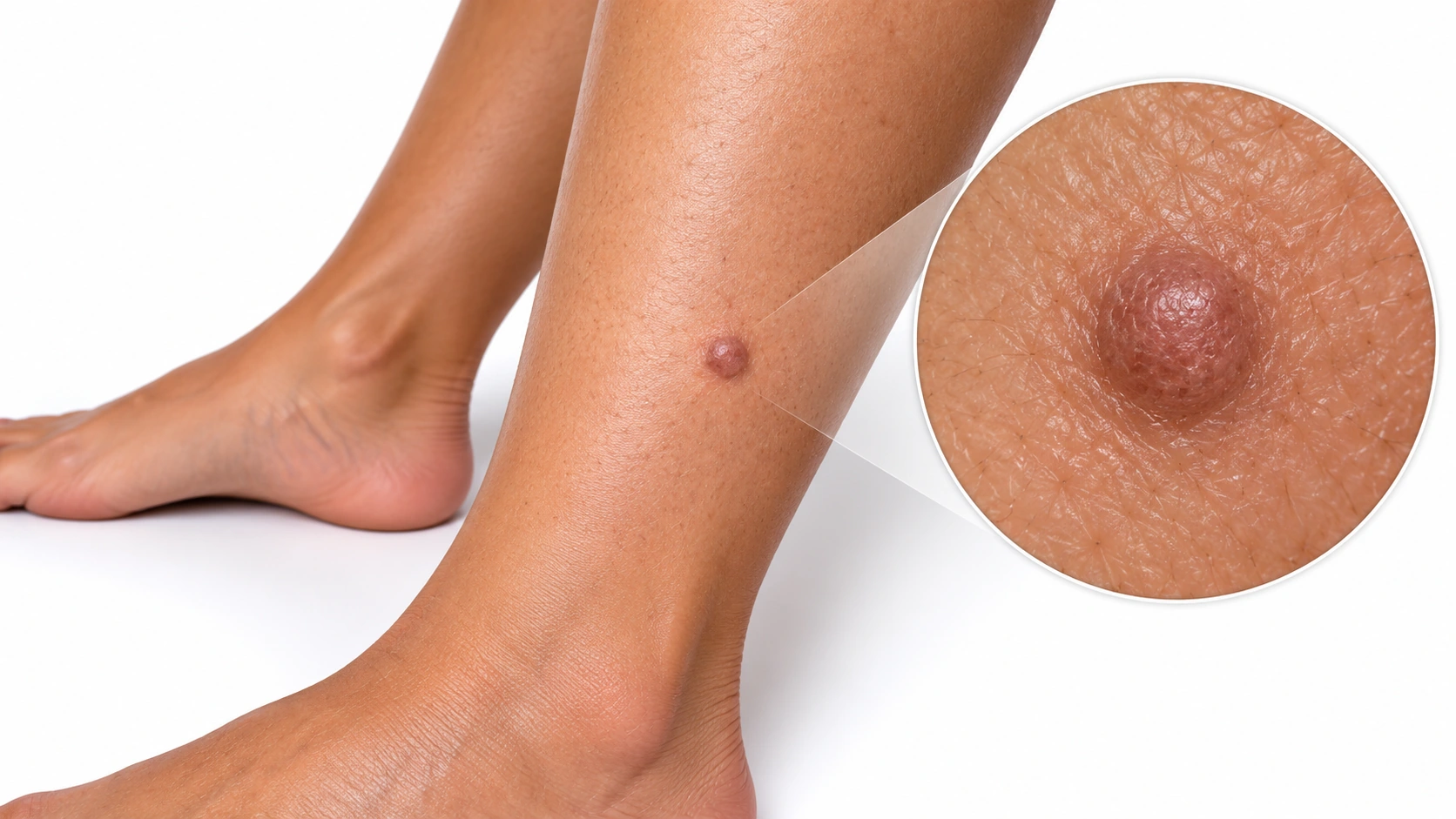
A lower leg with a small brown raised bump and a circular magnified detail.

Dermatofibroma An enlarged inset highlights the bump's shape and surface.
Skin tones
Adult shoulder with a firm pink raised linear healed scar confined to the original wound boundary, no open wound.
Hypertrophic Scars on medium skin.
Hypertrophic Scars on brown skin.
Hypertrophic Scars on deep skin.
A small raised dermatofibroma on the lower leg.
Dermatofibroma on medium skin.
A small raised dermatofibroma on the lower leg.
In the skin

Healing produces excess collagen and a raised scar. Unlike a keloid, the thickening stays within the original wound boundary.

A localized growth of fibrous cells forms a firm skin nodule. The reason the growth develops is often uncertain.

When it usually starts

010203040506070+

Hypertrophic Scars. Develops after relevant injury, inflammation or tissue change; age depends on the cause.

Dermatofibroma. Most often noticed in adults.

Causes and triggers

Causes

Excess collagen accumulates during healing, unlike a keloid which extends beyond the wound.

A local fibrous-cell proliferation forms a stable nodule; the cause is often uncertain.

Risk factors
Prior skin inflammation or injury, Individual healing tendency
Adult age, Sometimes prior minor skin injury
Trigger
● Hypertrophic Scars
● Dermatofibroma
No established short-term flare trigger
Not a typical trigger

Daily Care

Hypertrophic Scars
Dermatofibroma
Daily care

Habits that help

  • Care for the original wound until it has fully closed
    Follow the treating clinician’s dressing and infection-prevention instructions.
  • Protect healed exposed scars from sunlight
    Broad-spectrum sunscreen and clothing help limit persistent color changes.
  • Use moisturizer on healed skin if it feels dry or itchy
    Do not massage an open or fragile wound.
  • Use silicone or pressure treatment only as advised on healed skin
    The choice depends on the scar and should not interfere with wound healing.
  • Seek review if the scar limits movement or keeps growing
    Pain, troublesome itch or functional problems may need additional treatment.

Avoid

  • Avoid: Repeated friction, picking and excess tension across the scar
    Ongoing injury can maintain irritation and thickening.

Habits that help

  • Leave a stable, clinician-confirmed benign lesion alone
    It may not need treatment if it is comfortable and not changing.
  • Reduce rubbing from clothing, shaving or hair tools
    Repeated injury can make a harmless lesion sore or cause bleeding.
  • Notice meaningful changes without repeatedly squeezing it
    Arrange examination for rapid growth, persistent bleeding or a change in appearance.

Avoid

  • Avoid: Cutting, burning, freezing or acid removal at home
    Home removal can cause infection, scarring and delay the correct diagnosis.

Treatment differences

Evidence labels come from each condition’s own treatment list.

Treatment
● Hypertrophic Scars
● Dermatofibroma
Over-the-counter
Silicone gel or sheets

Silicone gel or sheets

Listed

May help a healed raised scar; do not place over an open wound.

None listed
Injections

Intralesional corticosteroid

Listed

Can reduce selected raised scars under clinician supervision; thinning and pigment change are possible.

None listed
Procedures
None listed

Excision

Listed

Pain, growth or diagnostic uncertainty may justify removal or tissue assessment.

Outlook

Long term

Raised scars often soften and flatten over months to years, although some remain noticeable. Treatment may improve symptoms and appearance, but the response and need for repeat treatment vary.

A confirmed dermatofibroma is harmless and often stays for years. Removal is optional when troublesome, leaves a scar and may not prevent recurrence if the lesion is incompletely removed.

Complications

Possible complications

Scars can affect confidence; symptoms and treatment options depend on scar type.

A secure diagnosis matters because other lesions can look similar.

When to get help

When to get help

Have a new growing, bleeding or ulcerated scar-like lesion examined before cosmetic treatment.

Have a new, growing, bleeding, painful or otherwise changing lesion examined.

Common questions

Hypertrophic Scars:What is Hypertrophic Scars?

Raised scars that stay within the boundary of the original wound.

Hypertrophic Scars:What can I do day to day?

Protect from sun, avoid picking and control active inflammation before elective scar procedures.

Hypertrophic Scars:When should I get medical advice?

Have a new growing, bleeding or ulcerated scar-like lesion examined before cosmetic treatment.

Dermatofibroma:What is Dermatofibroma?

A common benign fibrous skin nodule.

Dermatofibroma:What can I do day to day?

Avoid picking or home removal. Protect exposed skin from the sun.

Dermatofibroma:When should I get medical advice?

Have a new, growing, bleeding, painful or otherwise changing lesion examined.

Sources
Sources and further reading

  1. Keloid and hypertrophic scar
  2. Dermatofibroma
Dermapedia on YouTube