Dermatofibroma vs Keloids

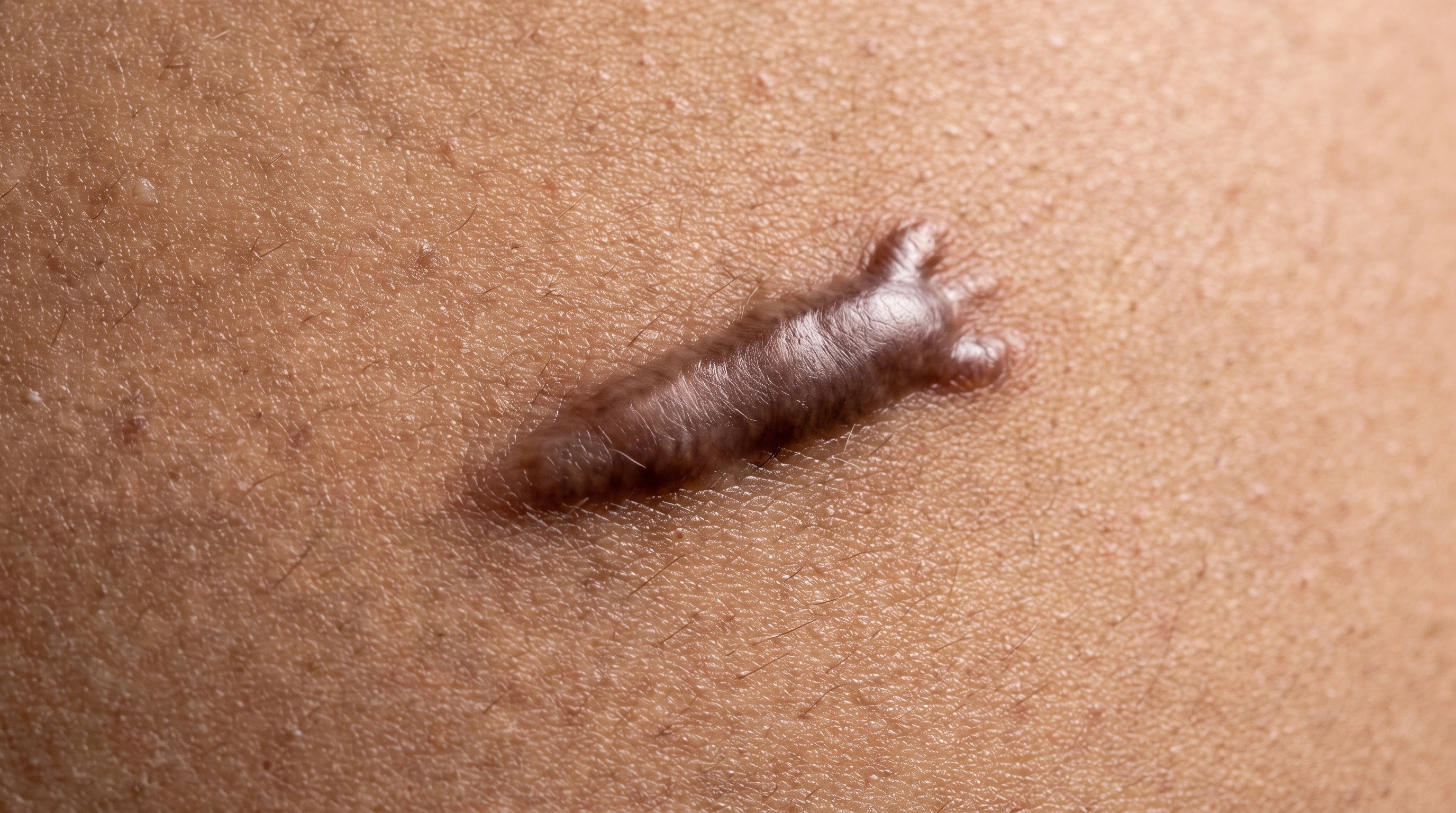
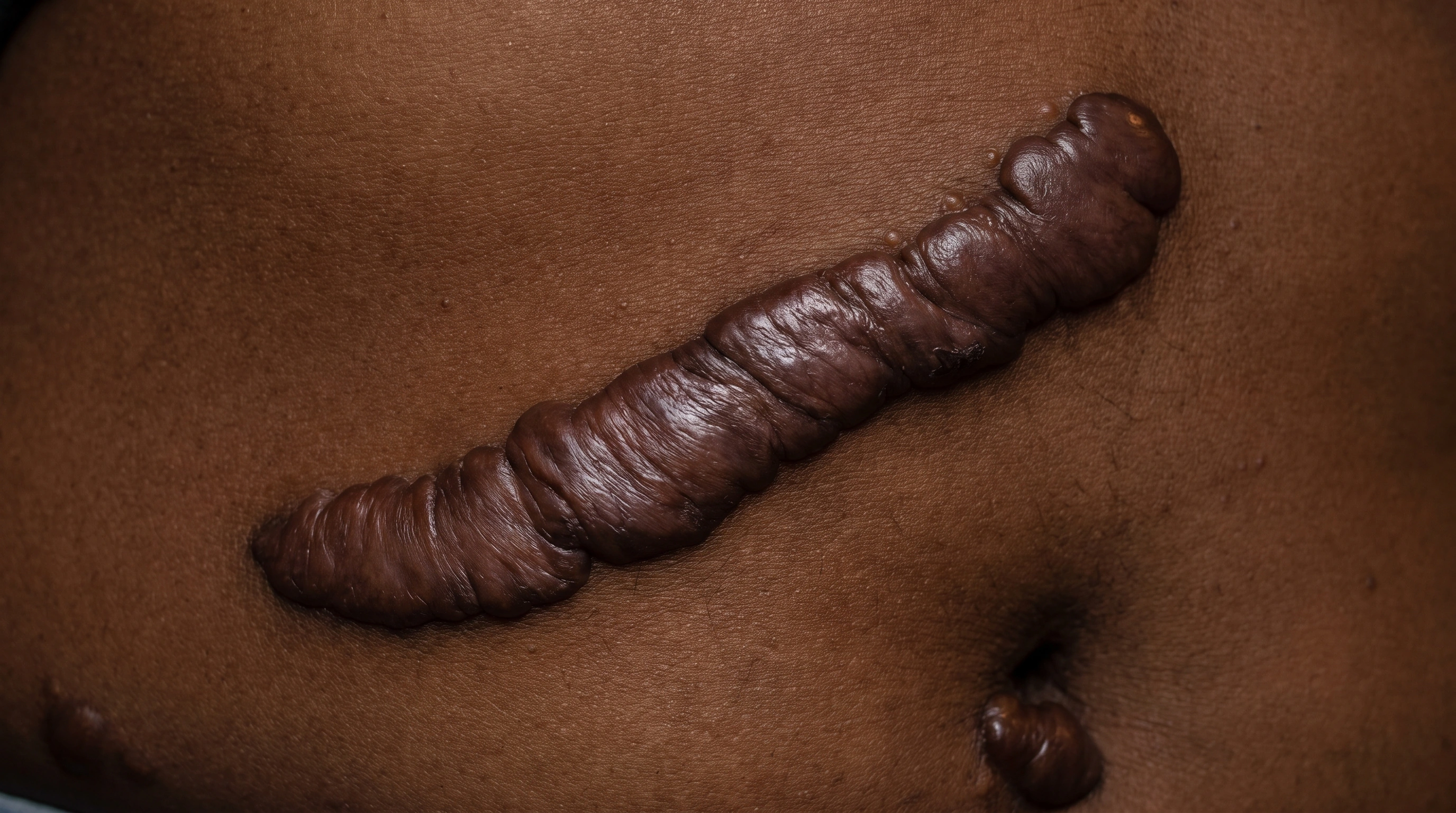
A common benign fibrous skin nodule. A keloid is a scar that keeps growing after the wound has already healed, spreading past the edge of the original injury. Keloids are not cancer, but they can itch, hurt and keep enlarging, and they are far more common on deeper skin tones.

Research updated 2026-10-23
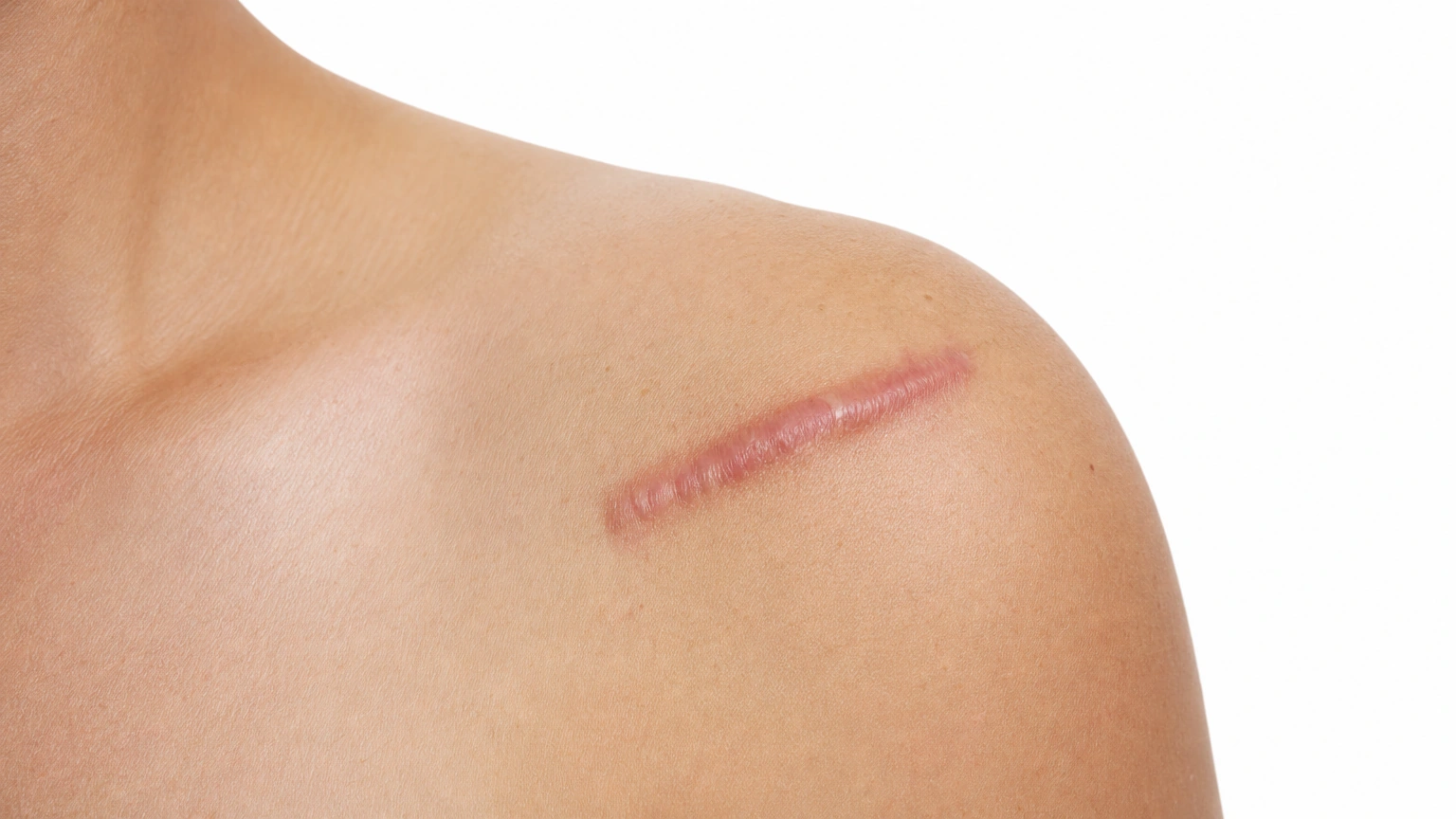
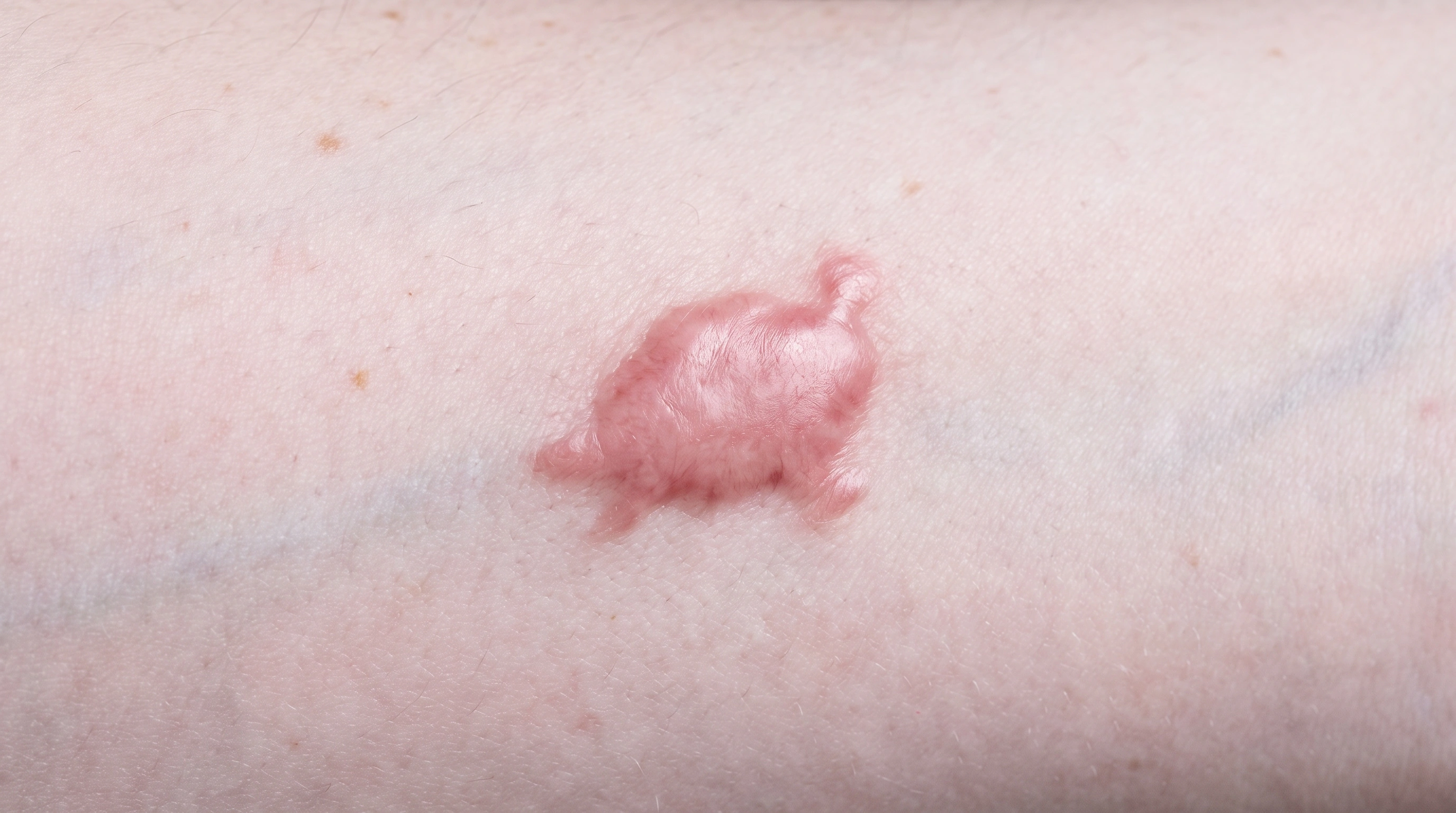
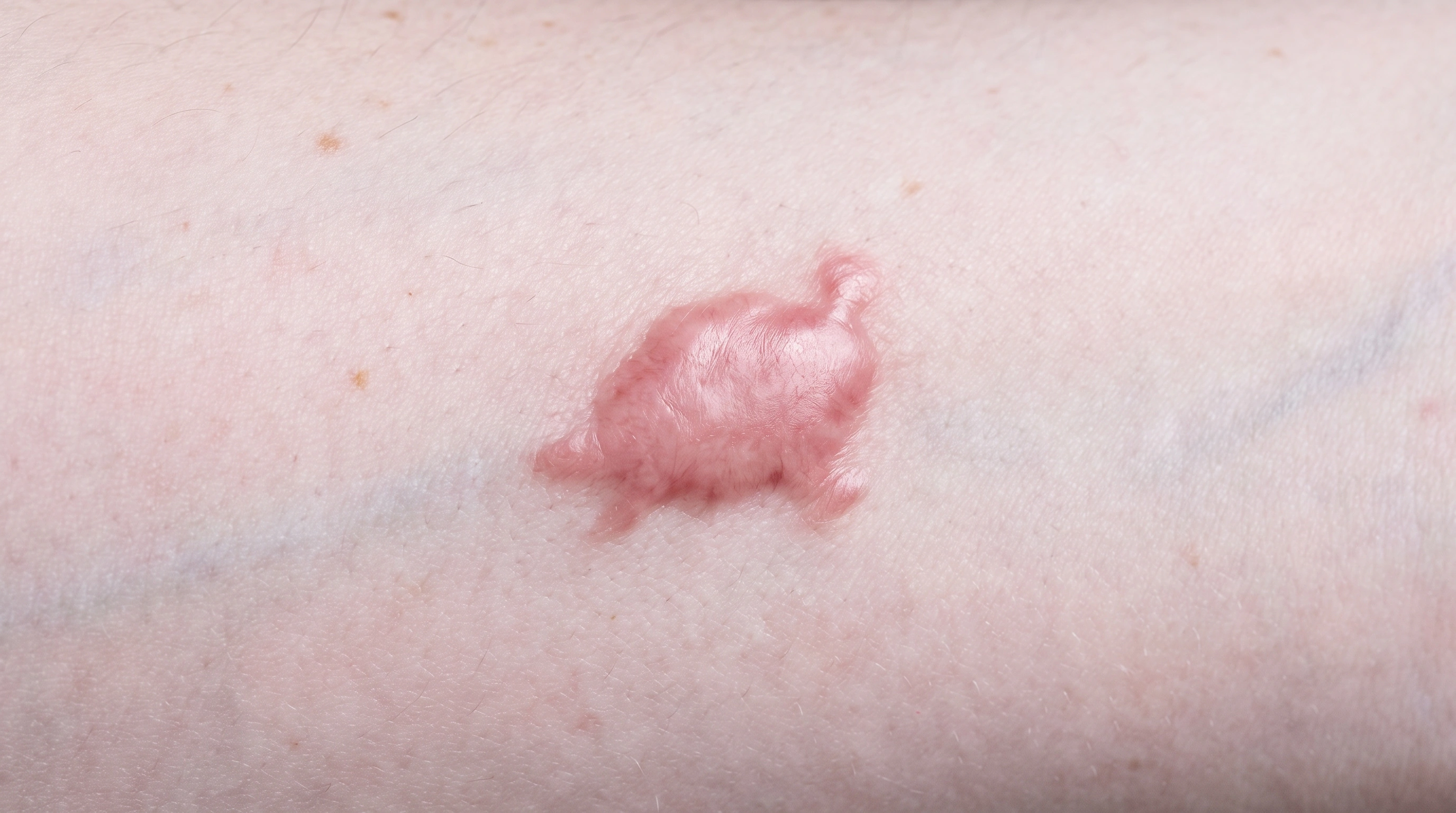
DermatofibromaA raised, smooth, firm scar on the upper chest on light skin. It is shiny pink-red and hairless, and its edges spread well past the small mark it grew from.

Key differences

The same eight facts on every condition comparison.

Usual age
Adults
Teens to young adults
Where
Limbs, especially lower legs
Earlobes, chest, shoulders, jaw
Main sign
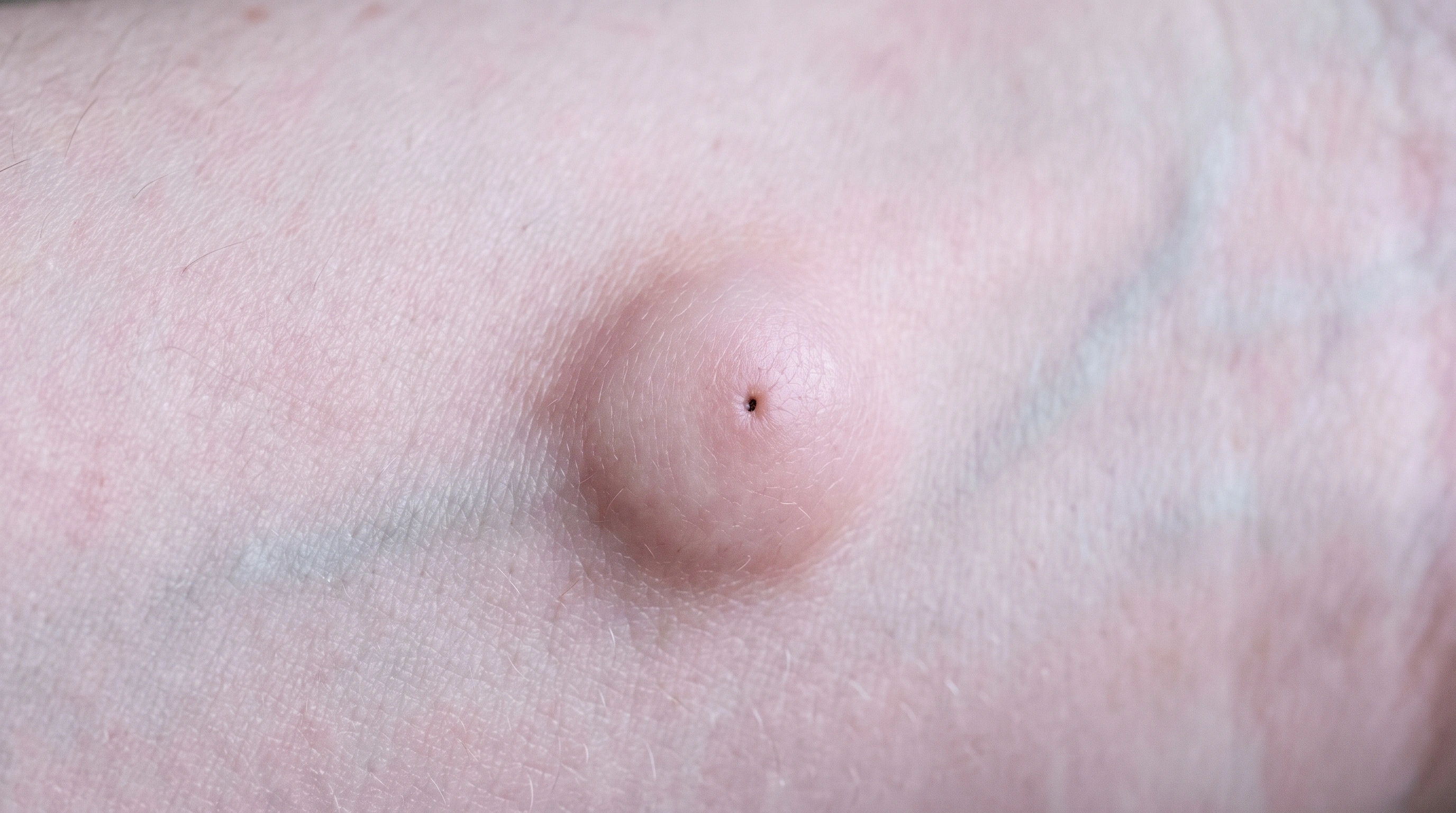
Firm bump that dimples when pinched
Scar that grows past the wound
Itch or pain
Sometimes itchy
Itchy or tender
Contagious
No
No
Long term
Harmless; stays
Persistent; often returns after removal
Scars
Removal leaves a scar
Is a scar
Who gets it
Adults, often after a bite or shave nick
Deeper skin tones; family history

What is it?

Dermatofibroma
Keloids
What is it?
  • What it is
    A common benign fibrous skin nodule.
  • It is an overgrown scar.
    A keloid extends beyond the boundaries of the original skin injury.
  • It can persist.
    Keloids can stay raised, itchy or painful long after the wound heals.
  • It is benign but stubborn.
    Treatment can be difficult and recurrence is common.
  • Not every raised scar is a keloid.
    Unusual or changing growths may need a biopsy.

What it looks like

Dermatofibroma

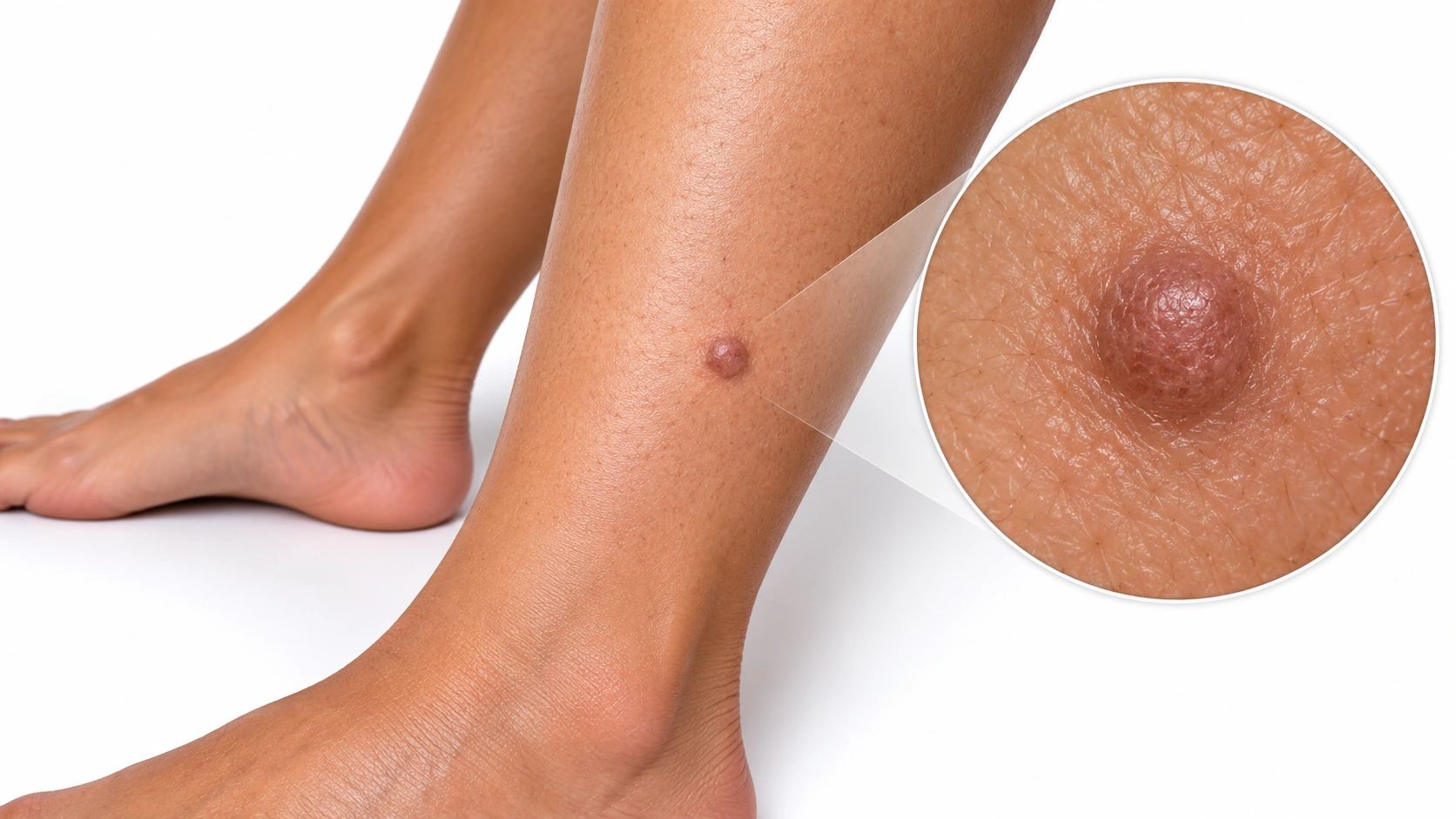
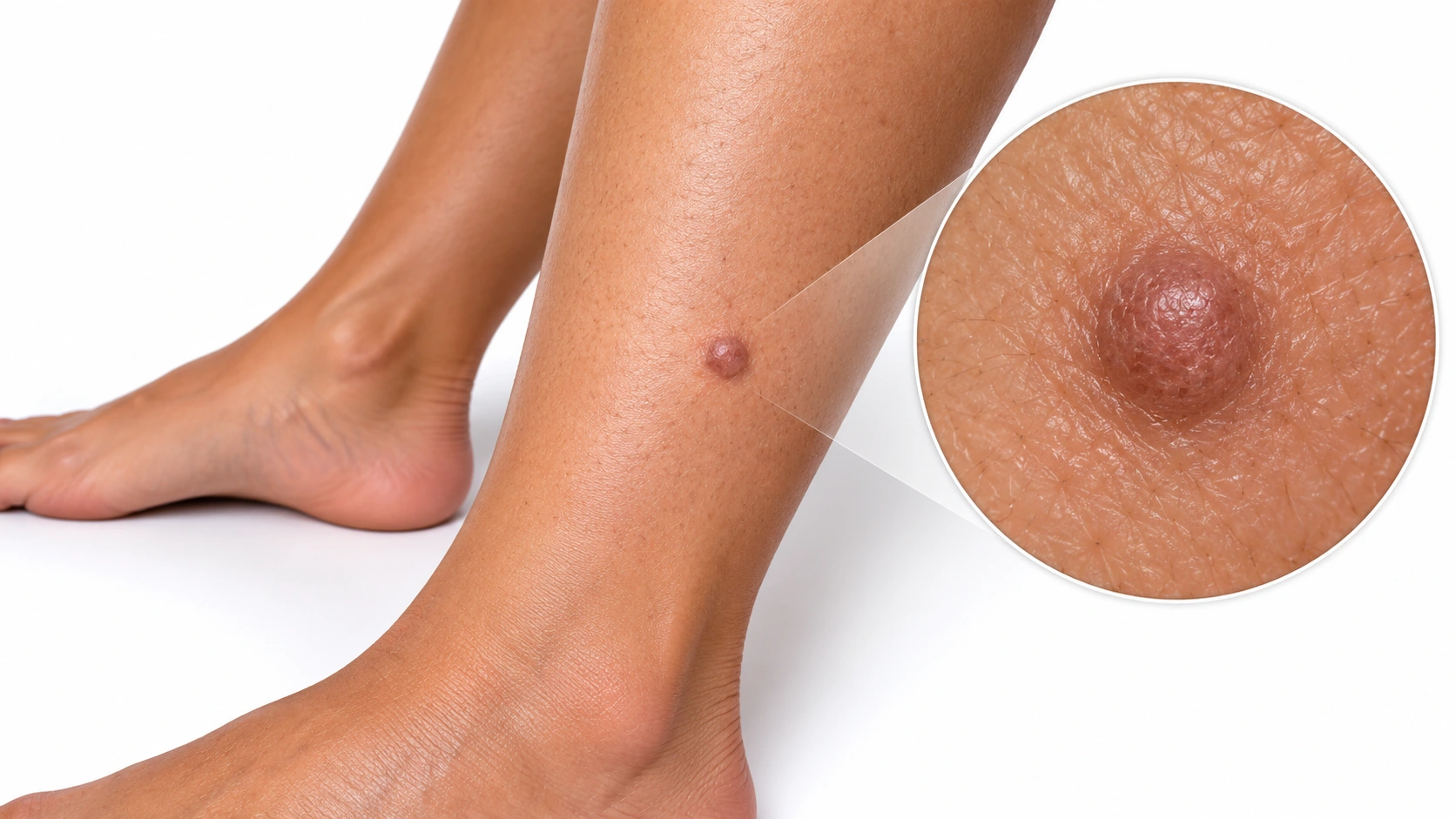
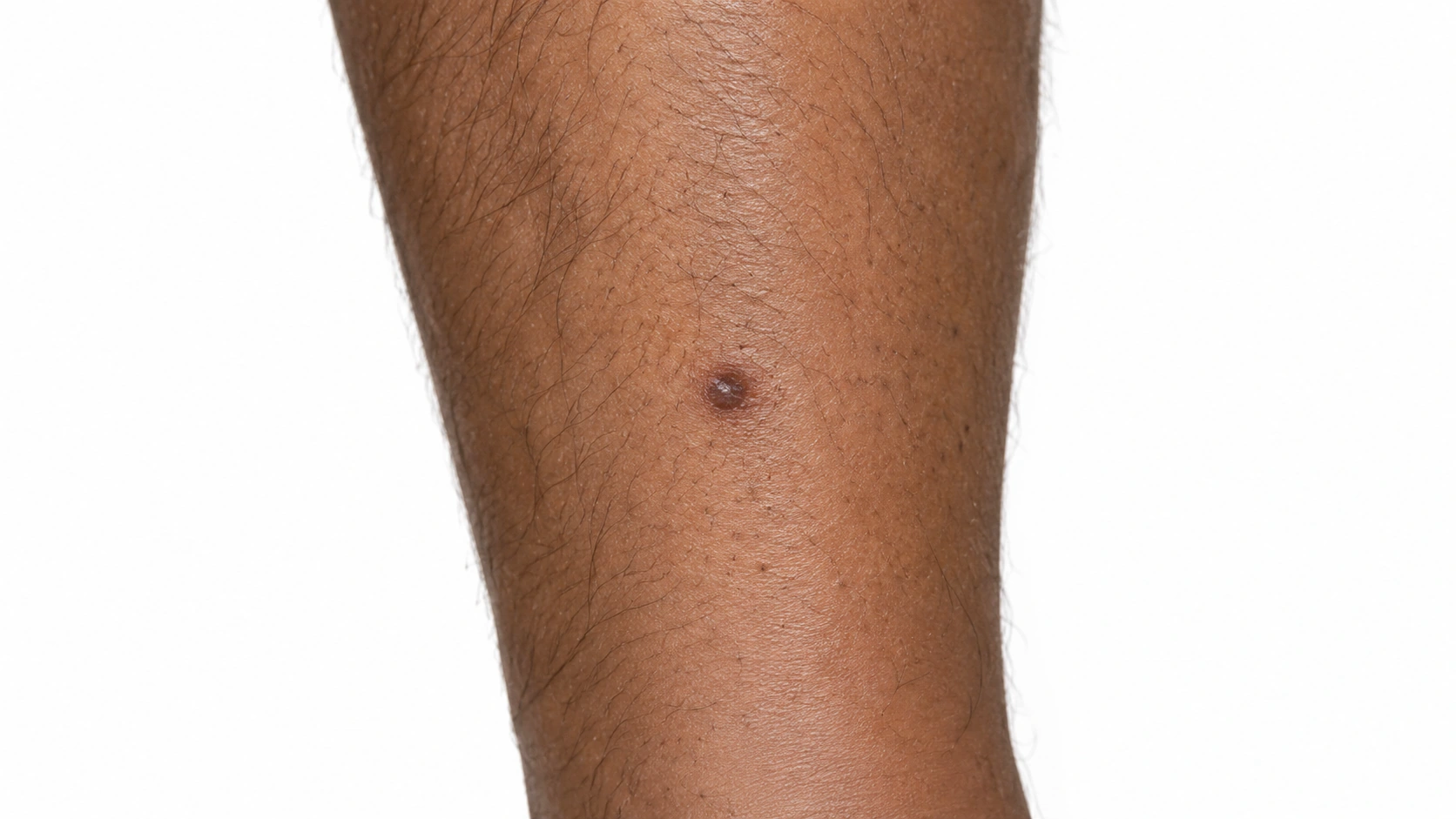
A lower leg with a small brown raised bump and a circular magnified detail.

Dermatofibroma An enlarged inset highlights the bump's shape and surface.

Keloids

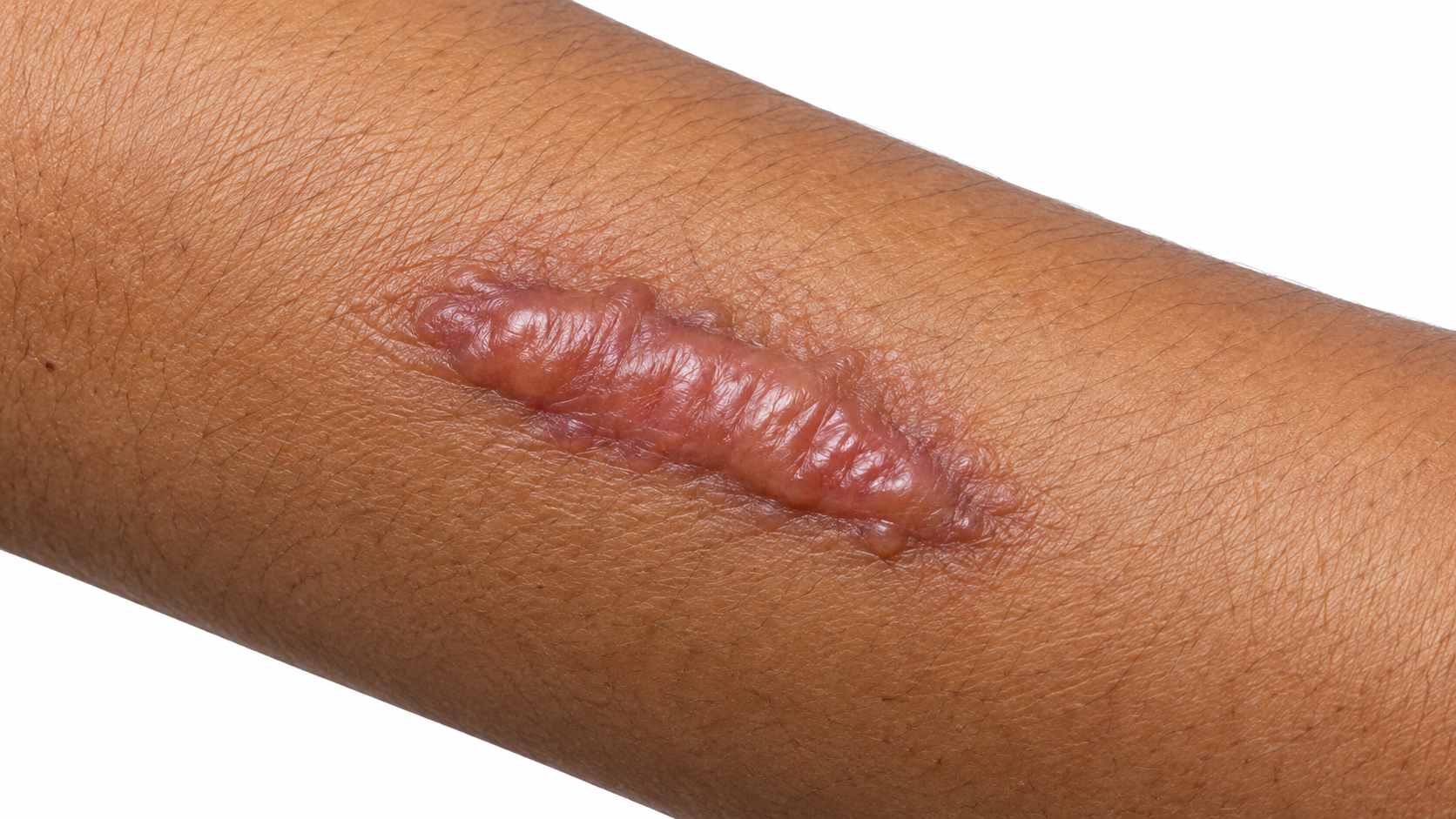
Keloids: Keloid.

Keloid scar Grows past the wound edge; often returns.

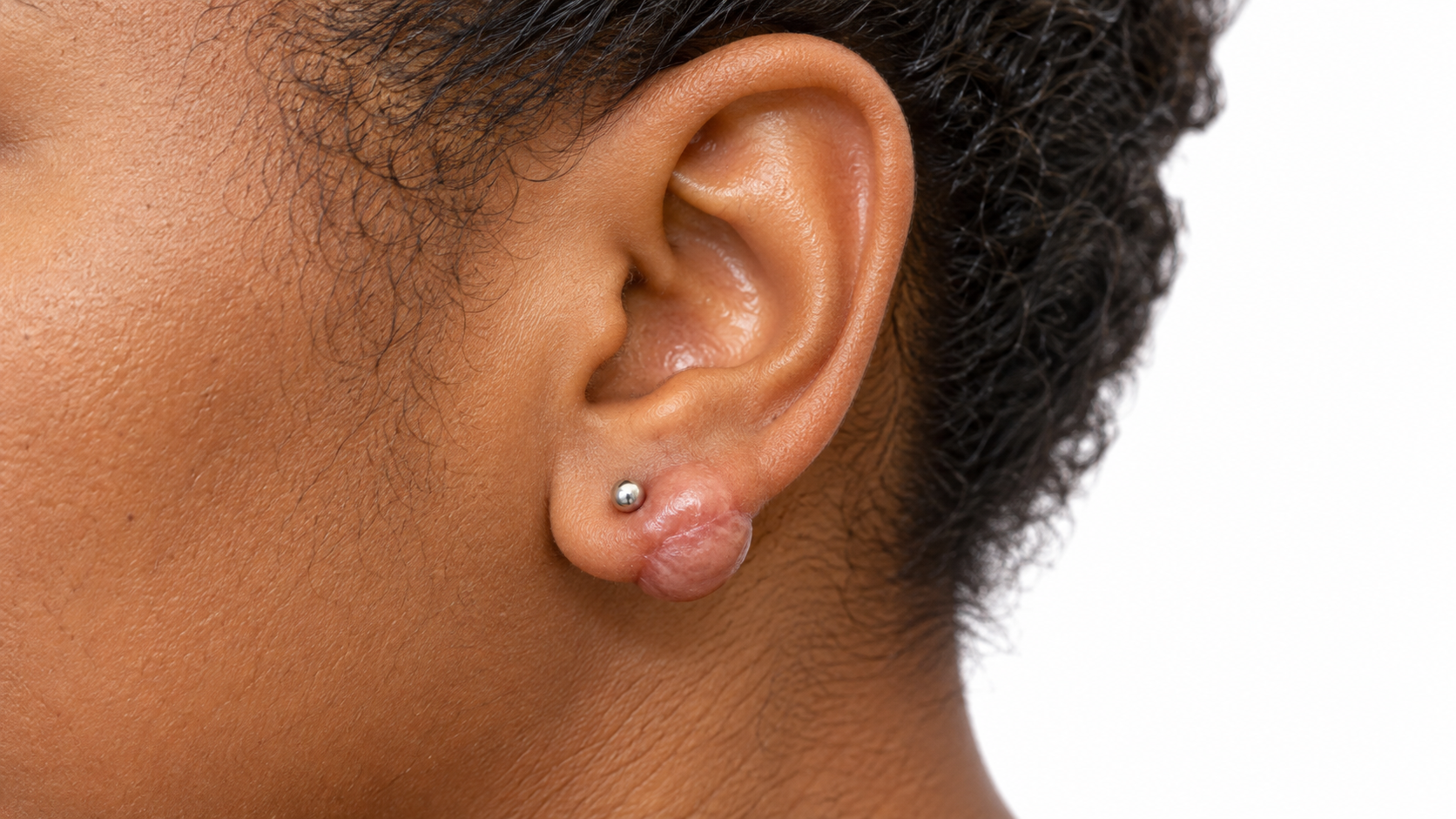
A rounded scar grows around an ear-piercing site.

Earlobe keloid A rounded scar grows around an ear-piercing site.

Keloids: Hypertrophic.

Hypertrophic scar Stays within the wound; may flatten.

Skin tones
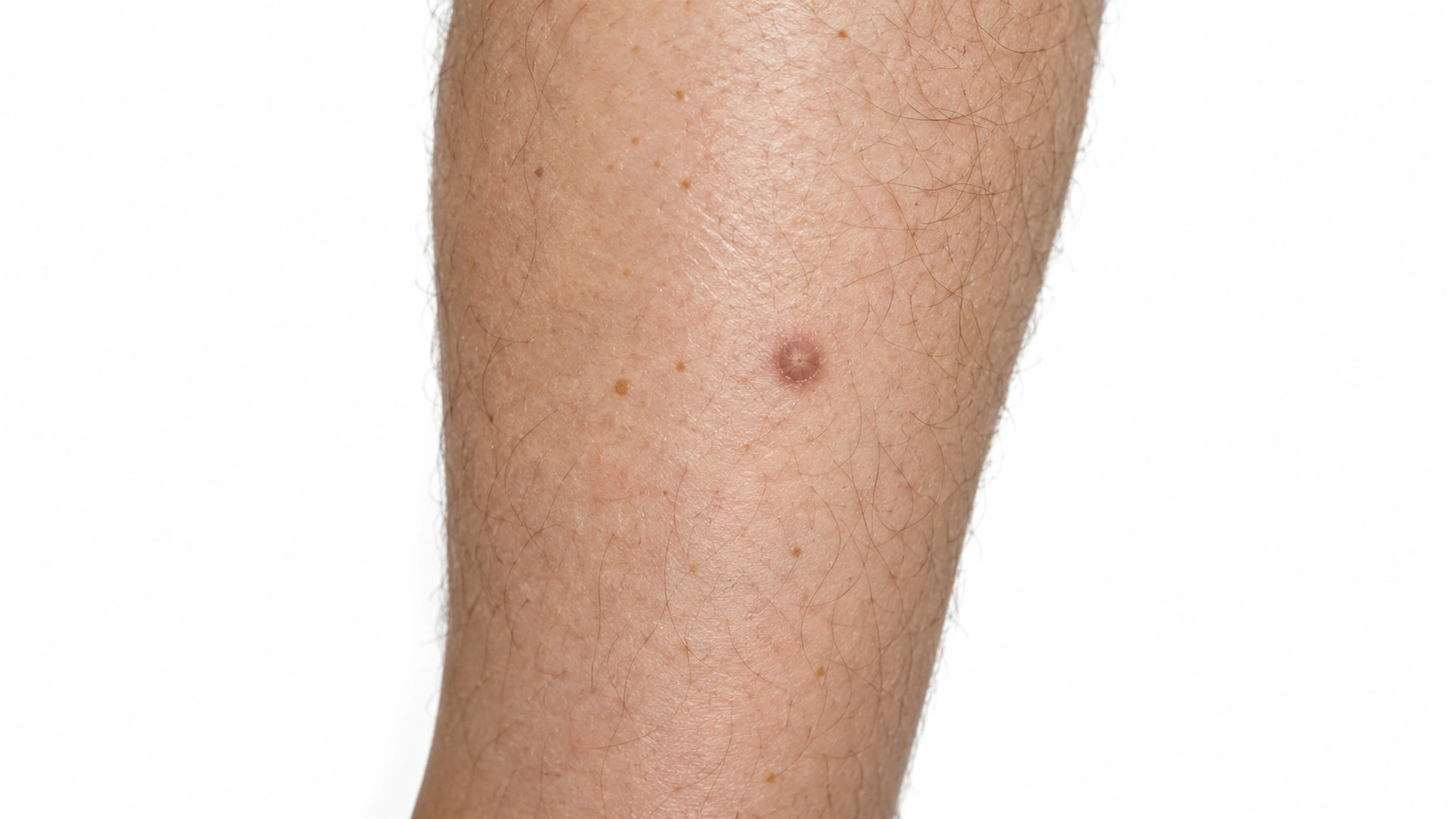
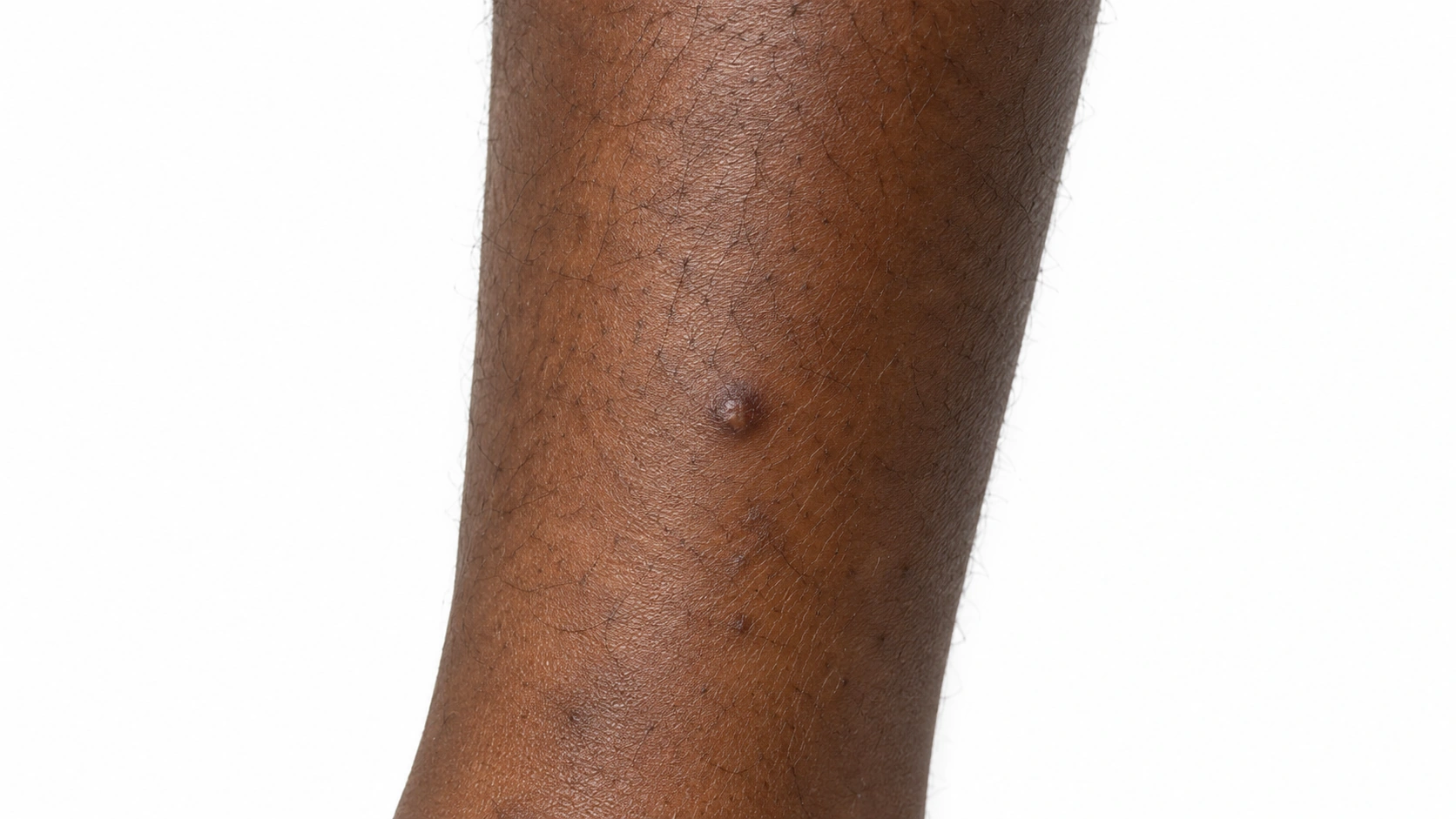
A small raised dermatofibroma on the lower leg.
Dermatofibroma on medium skin.
A small raised dermatofibroma on the lower leg.
A raised, smooth, firm scar on the upper chest on light skin. It is shiny pink-red and hairless, and its edges spread well past the small mark it grew from.
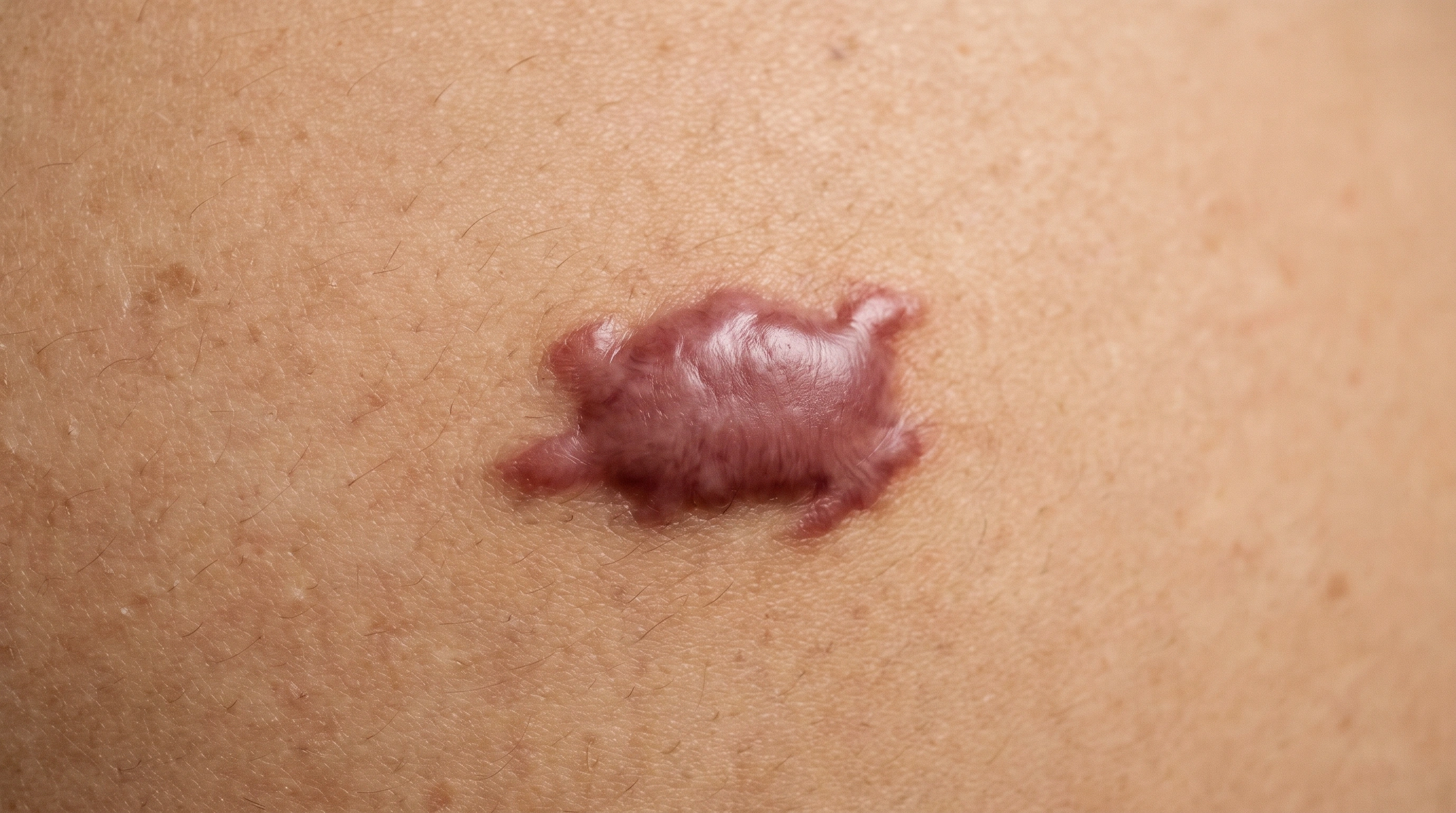
A raised, smooth, firm scar on the upper chest on medium tan skin. It is dusky pink-brown and only slightly different in color from the skin around it, and its edges spread well past the small mark it grew from.
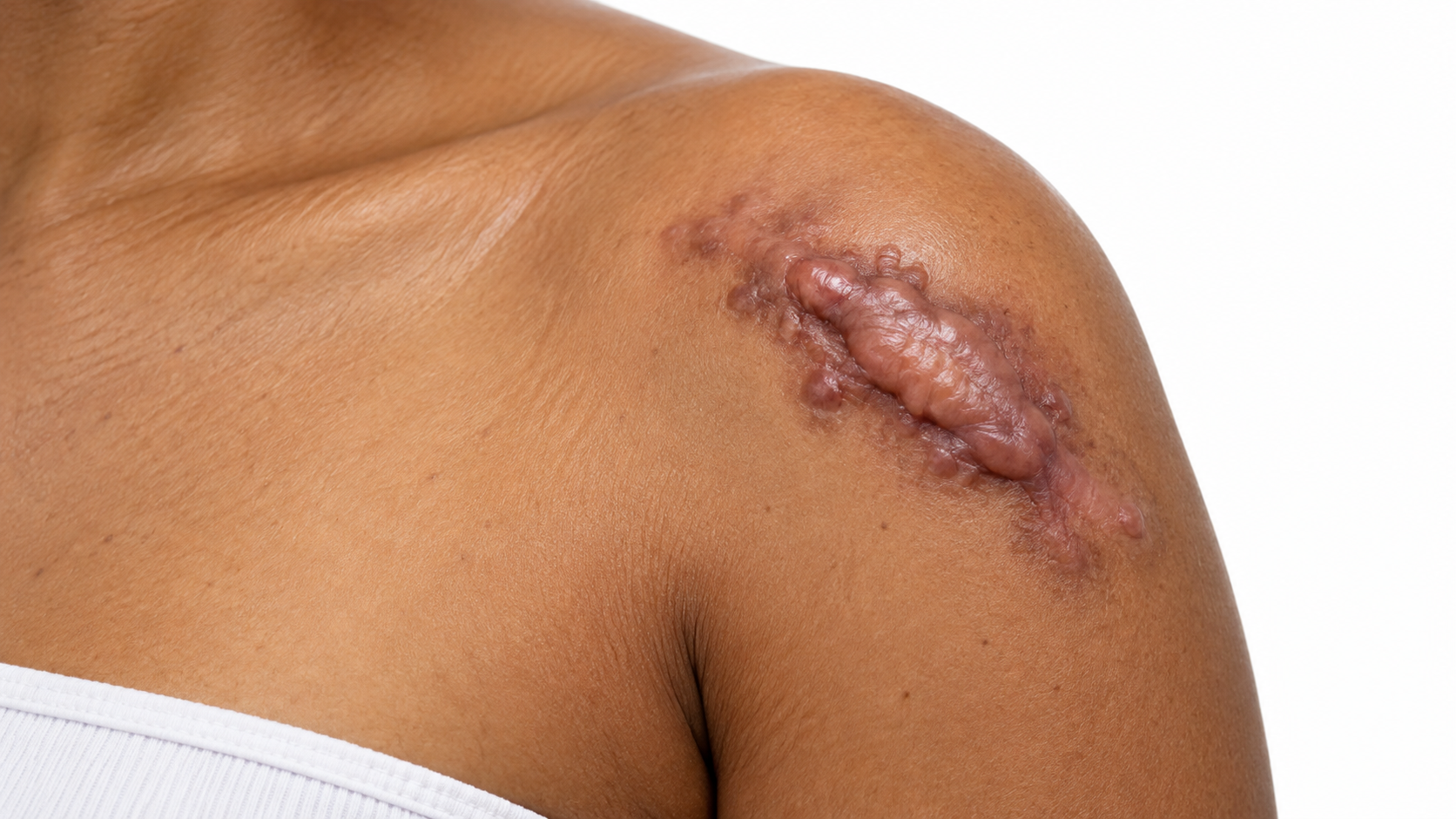
A raised, smooth, firm scar on the upper chest on brown skin. It is brown-purple rather than red, shiny and hairless, and its edges spread well past the small mark it grew from.
A raised, smooth, firm scar on the upper chest on deep brown skin. It is gray-brown and only a little different from the skin around it, shiny and hairless, with edges spreading well past the small mark it grew from and a halo of flat darker marks.
Diagram
Keloids mechanism diagram. Healing signals remain active: Scar-producing cells keep making collagen. Collagen builds up: Dense scar tissue enlarges the area. The scar extends outward: Growth passes the original wound edges.
In the skin

A localized growth of fibrous cells forms a firm skin nodule. The reason the growth develops is often uncertain.

Scar-producing cells keep making collagen after a wound has closed. The resulting dense scar grows beyond the boundaries of the original injury.

When it usually starts

010203040506070+

Dermatofibroma. Most often noticed in adults.

Keloids. Often arise in teenagers and younger adults after a skin injury, piercing or inflamed spot.

Causes and triggers

Causes

A local fibrous-cell proliferation forms a stable nodule; the cause is often uncertain.

Keloids form when the body makes too much collagen while healing a wound. The scar keeps growing past the original injury.

Family tendency

Keloids often run in families and are far more common in people with darker skin.

Risk factors
Adult age, Sometimes prior minor skin injury
Darker skin, Ages 10 to 30, Family history, Pregnancy
Trigger
● Dermatofibroma
● Keloids
No established short-term flare trigger
Not a typical trigger
Not listed
Ear piercing
Not listed
Well established
Surgery
Not listed
Well established
Acne
Not listed
Strong link
Burns
Not listed
Strong link
Vaccinations and tattoos
Not listed
Possible

Daily Care

Dermatofibroma
Keloids
Daily care

Habits that help

  • Leave a stable, clinician-confirmed benign lesion alone
    It may not need treatment if it is comfortable and not changing.
  • Reduce rubbing from clothing, shaving or hair tools
    Repeated injury can make a harmless lesion sore or cause bleeding.
  • Notice meaningful changes without repeatedly squeezing it
    Arrange examination for rapid growth, persistent bleeding or a change in appearance.

Avoid

  • Avoid: Cutting, burning, freezing or acid removal at home
    Home removal can cause infection, scarring and delay the correct diagnosis.

Habits that help

  • Telling every clinician
    Tell clinicians about your keloid history before procedures or piercings.
  • Daily sunscreen over the scar
    Stops the marks around it from deepening.
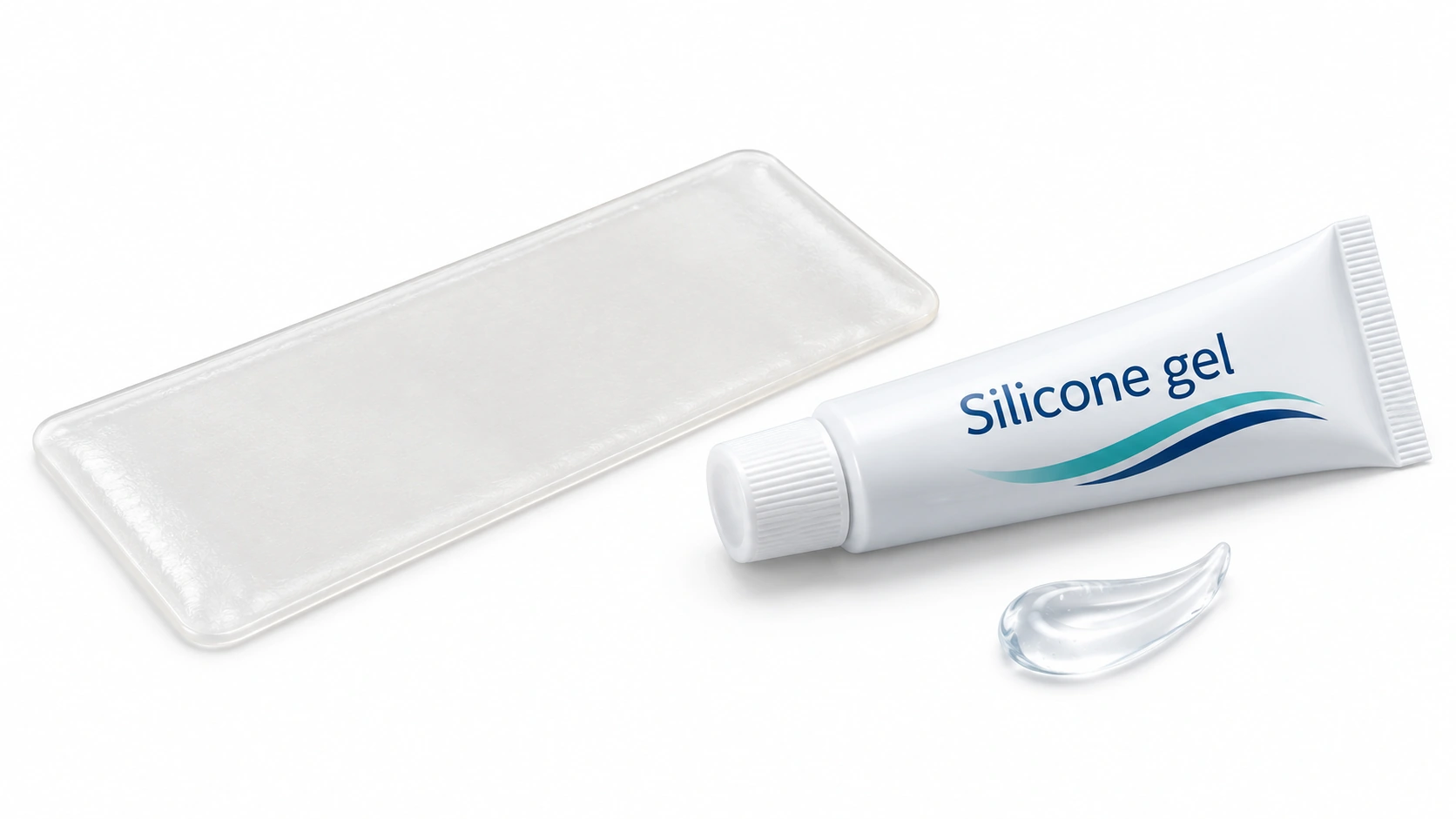
  • Silicone sheets or gel
    The best-supported option without a prescription.
  • Pressure earrings after treatment
    Worn for months, they cut recurrence.
  • Treating the acne or folliculitis
    Controlling inflammation stops new keloids.
  • Discuss a combined treatment plan before keloid removal
    Surgery plus injections or radiation limits recurrence.
  • Adding another injected medicine
    Triamcinolone is often combined with 5-fluorouracil.
  • Silicone or paper tape on a new scar
    Taping cuts tension for the first months.
  • Discuss recurrence prevention before keloid surgery
    It comes back most times, often bigger.

Avoid

  • Avoid: Any new injury to high-risk skin
    Piercings, tattoos and mole removals each start one.
  • Avoid: Re-piercing a keloided earlobe
    The surest way to make it bigger.
  • Avoid: Shaving that causes ingrown hairs
    Repeated bumps build into keloidal scarring.
  • Avoid: Picking, squeezing or scratching
    Restarts the inflammation.
  • Avoid: Tension across the scar
    Mechanical stress drives more growth.
  • Avoid: Rubbing from clothing or straps
    Backpack, bra and helmet straps irritate it.
  • Avoid: Untreated inflamed acne
    Every deep spot is a wound in the riskiest skin.
  • Avoid: Waiting to see if it settles
    Old, hard keloids improve less.
  • Avoid: Stopping treatment once it flattens
    Keloids re-thicken if you abandon the course.
  • Avoid: Delayed healing or wound infection
    The longer it stays inflamed, the more the scar overshoots.

Treatment differences

Evidence labels come from each condition’s own treatment list.

Treatment
● Dermatofibroma
● Keloids
Over-the-counter
None listed
Silicone sheets and gel.

Silicone sheets and gel

Moderate evidence

The best-supported thing you can buy for keloids without a prescription. Worn or applied over the scar for most of the day, over months, it softens and flattens it and eases the itch. It works best on new scars and on preventing one after a wound, and it will not clear a hard, old keloid on its own.
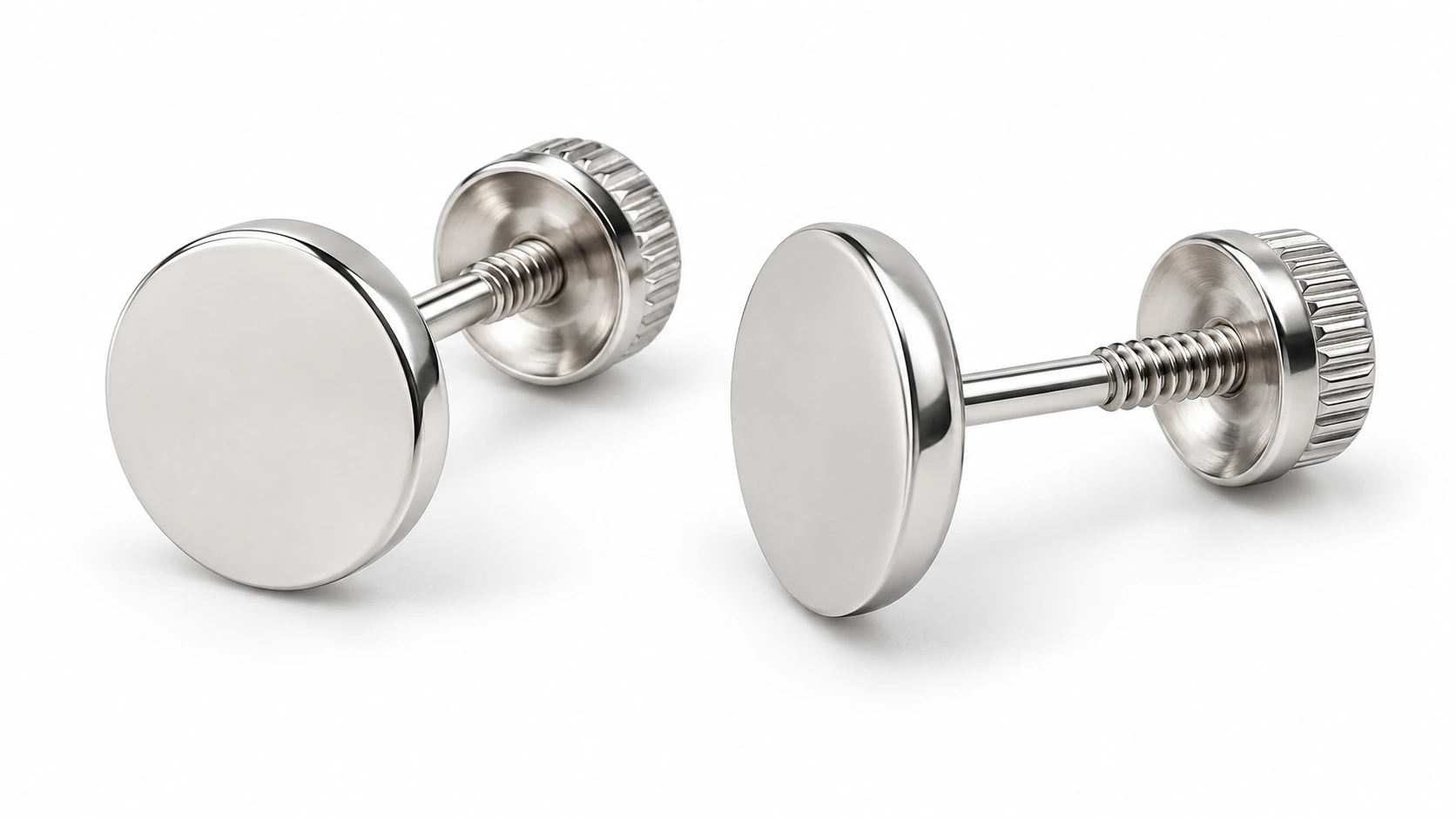
Pressure earrings.

Pressure earrings

Moderate evidence

Clip-on discs that squeeze an earlobe keloid from both sides, used mainly after a keloid has been injected or removed. They have to be worn for many hours a day for months to cut the chance of it coming back. They are uncomfortable at first, and stopping early is the usual reason they fail.

Silicone or paper tape on new scars.

Silicone or paper tape on new scars

Limited evidence

Taping a fresh scar takes some of the pull off it while it is healing, which matters most on the chest and shoulders where tension keeps a keloid growing. It is used for the first few months after a wound closes. It is prevention rather than treatment, and it does nothing for a keloid that is already established.

Illustration: Generic gel tube and clear gel.

Onion extract gel

Limited evidence

Widely sold as a scar gel, and the studies behind it are small and mostly unconvincing for keloids. Some people find it makes the scar feel more comfortable, which is not nothing. If you are choosing one product to buy, silicone is the better use of the money.

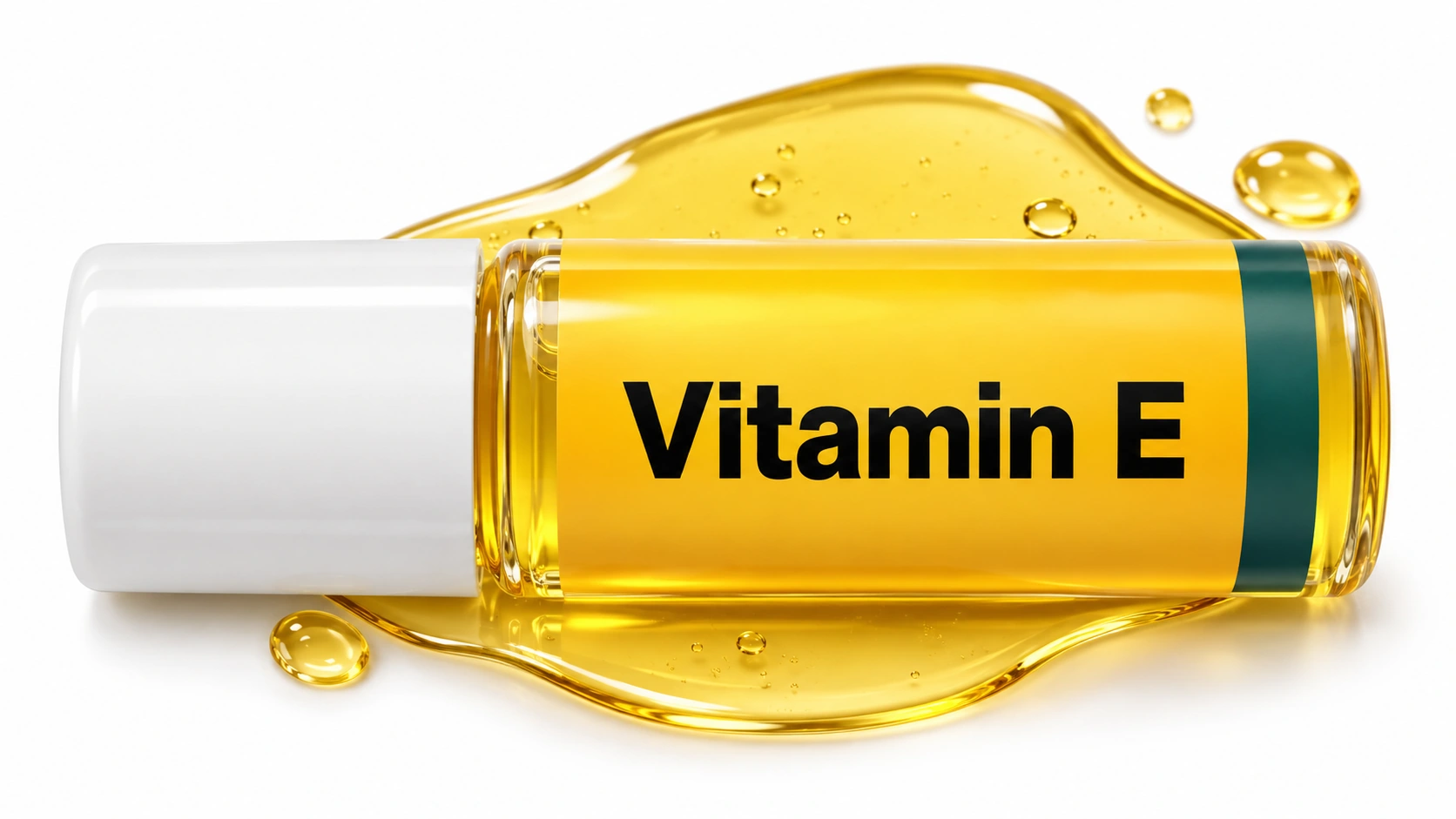
Vitamin E

Avoid

Rubbing vitamin E oil on a keloid is one of the most common pieces of advice given, and it has not been shown to flatten one. In some people it also causes an itchy rash where it is applied. It is not a reason to delay treatment that works.

Prescription topicals
None listed
Clobetasol — Header Image

Clobetasol

Limited evidence

Clobetasol Propionate. A strong steroid ointment put on the keloid and covered overnight, usually to take the edge off itching between injection appointments. Covering it is what gets any of it through thick scar tissue. It will not flatten a keloid on its own, and long spells of use thin the normal skin around the scar.

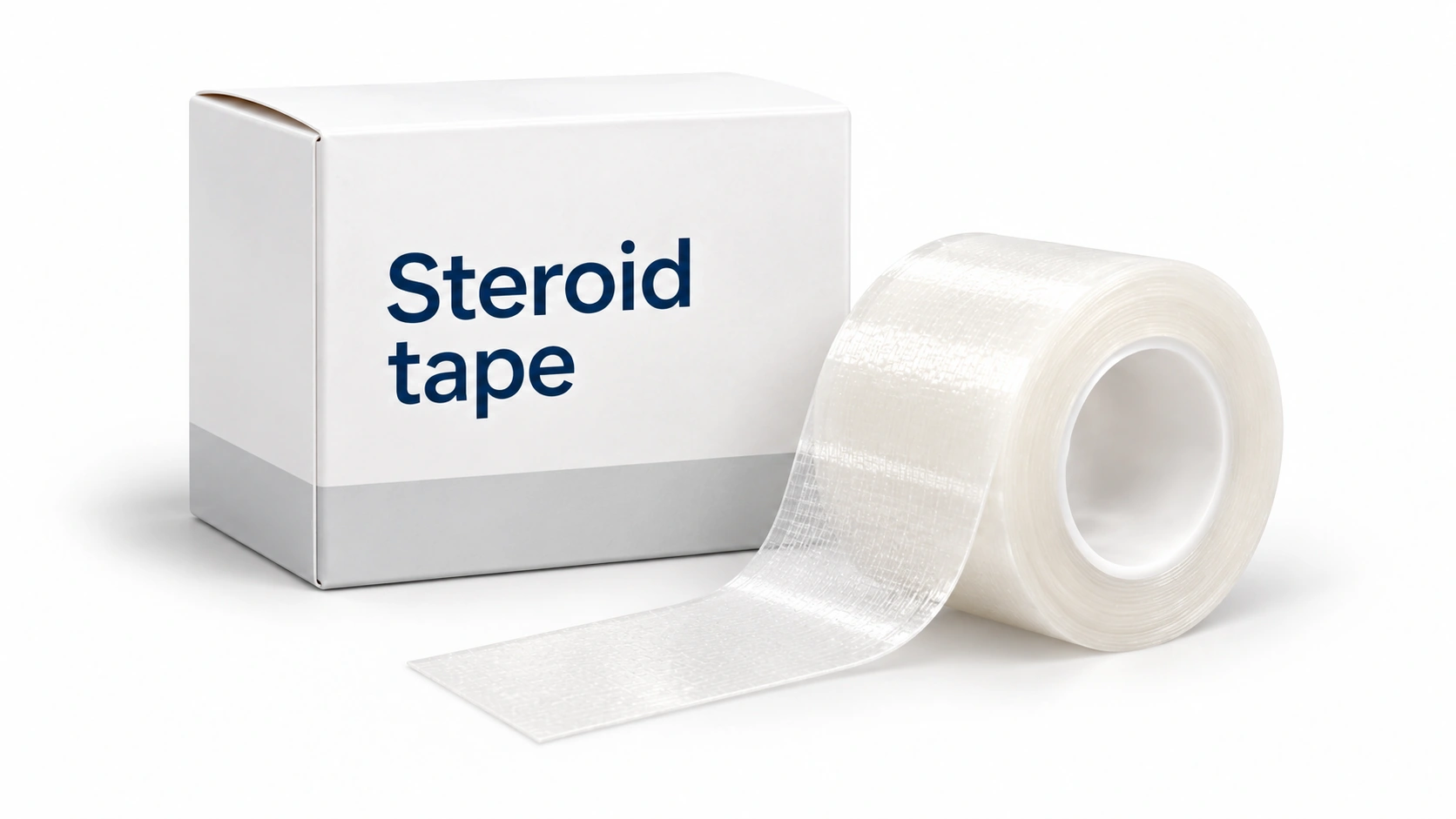
An illustrative roll of translucent medicated tape with a carton labeled Steroid tape.

Steroid-impregnated tape

Limited evidence

A thin tape with steroid built into it, cut to the size of the scar and worn most of the day. It gives steady low-dose treatment plus a little pressure, and it suits small keloids and people who want to stretch the gap between injections. It is fiddly on hairy skin and can irritate the skin at the edges.

Injections
None listed
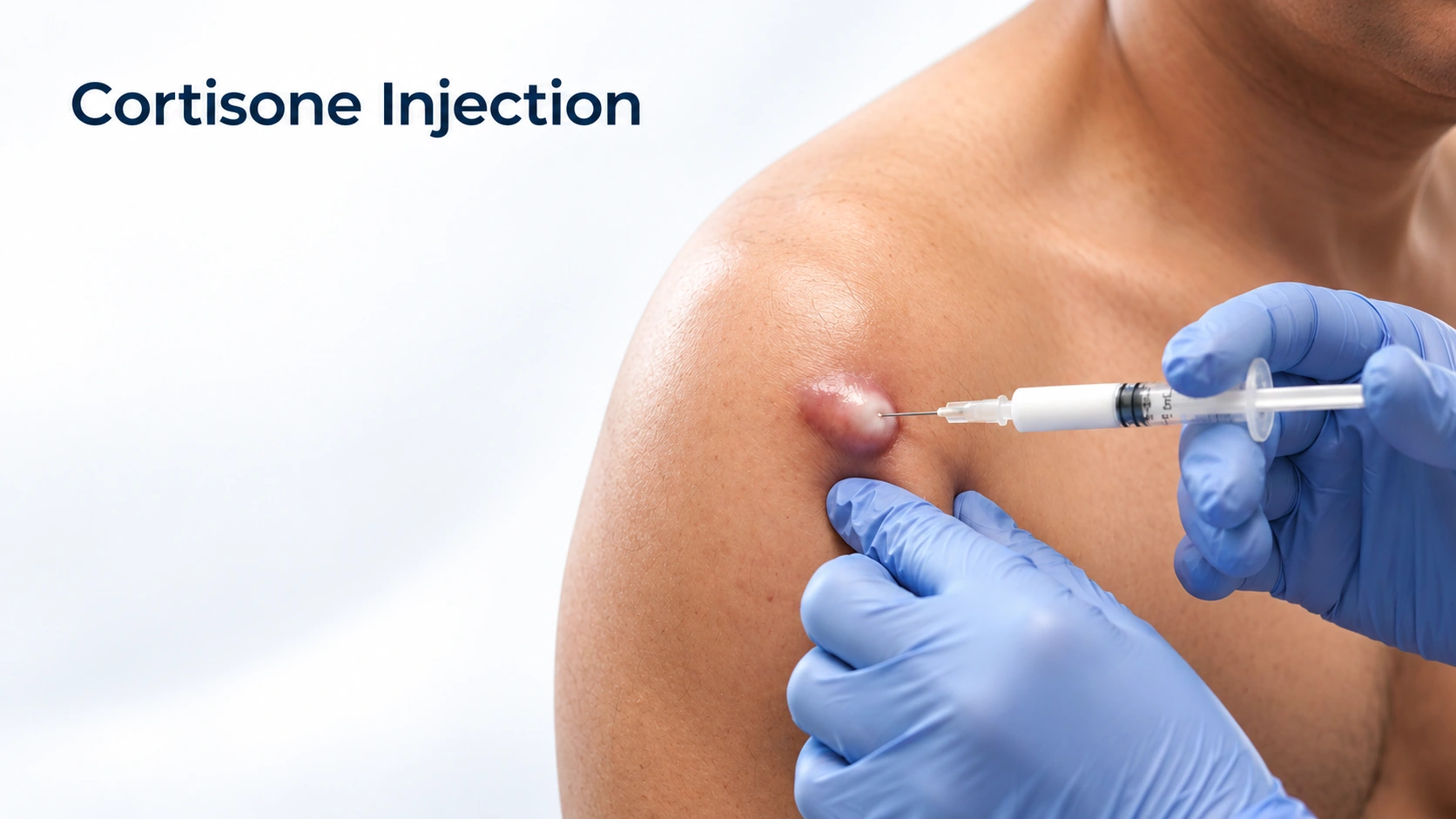
Editorial illustration for Cortisone Injection, based on the entry’s treatment or equipment reference.

Cortisone Injection

Strong evidence

Triamcinolone Acetonide. The standard first treatment for a keloid: steroid injected directly into the scar, usually every four to six weeks. It calms the long-running inflammation and slows the cells making collagen, so itch and pain settle first and flattening follows over months. The main trade-off is a pale, thinned patch where it was given, which shows more on deeper skin tones.

5-fluorouracil injection

5-fluorouracil injection

Moderate evidence

A second medicine mixed with the steroid, or given on its own, when a keloid is stubborn or keeps returning. It targets the collagen-making cells directly, and combining it with triamcinolone works better than steroid alone in most studies. It stings more, and it can leave the surface sore or ulcerated for a short time.

Bleomycin Injection

Bleomycin Injection

Limited evidence

Bleomycin injection. A chemotherapy drug used in tiny amounts inside the scar for keloids that have not responded to steroid and 5-fluorouracil. Small studies show it can flatten them. It is not widely offered, and dark spotting of the skin over the injection site is common, so it is a later option rather than an early one.

Procedures

Excision if indicated

Listed

Pain, growth or diagnostic uncertainty may justify removal or tissue assessment.

Radiation after excision

Radiation after excision

Moderate evidence

A short course of low-dose radiation given within a day or two of removing a keloid, to stop the scar tissue rebuilding. For keloids that have already come back after surgery, it lowers the chance of another recurrence considerably. It is only available at some centers, and the long-term risks are discussed carefully before it is used, particularly in younger people.

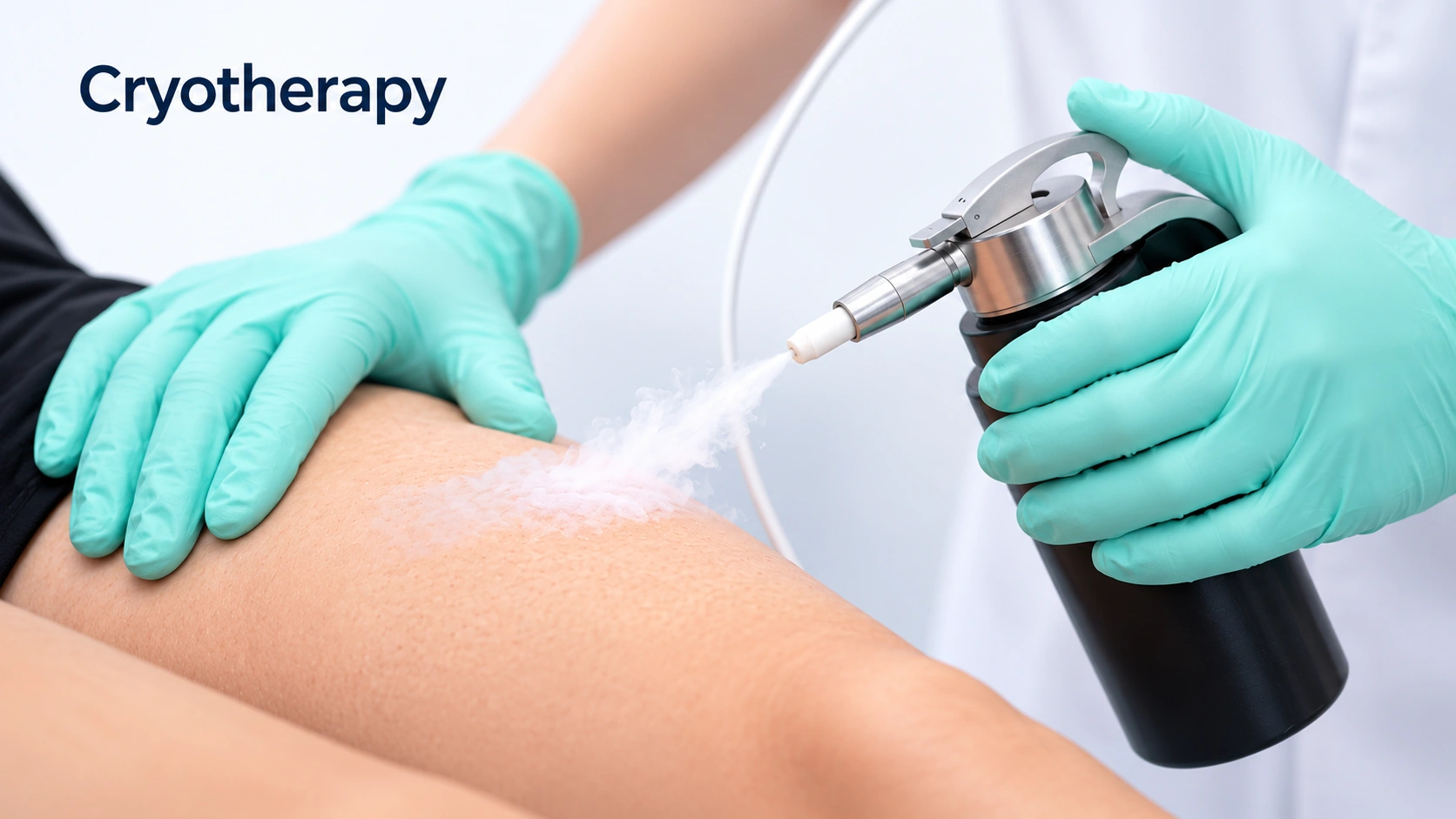
Editorial illustration for Cryotherapy, based on the entry’s treatment or equipment reference.

Cryotherapy

Moderate evidence

Freezing can soften and flatten smaller keloids, and is sometimes used just before an injection to make the scar easier to inject. The problem is that freezing destroys pigment cells and often leaves a permanent white patch. On deeper skin tones, where most keloids occur, many dermatologists use it cautiously or not at all.

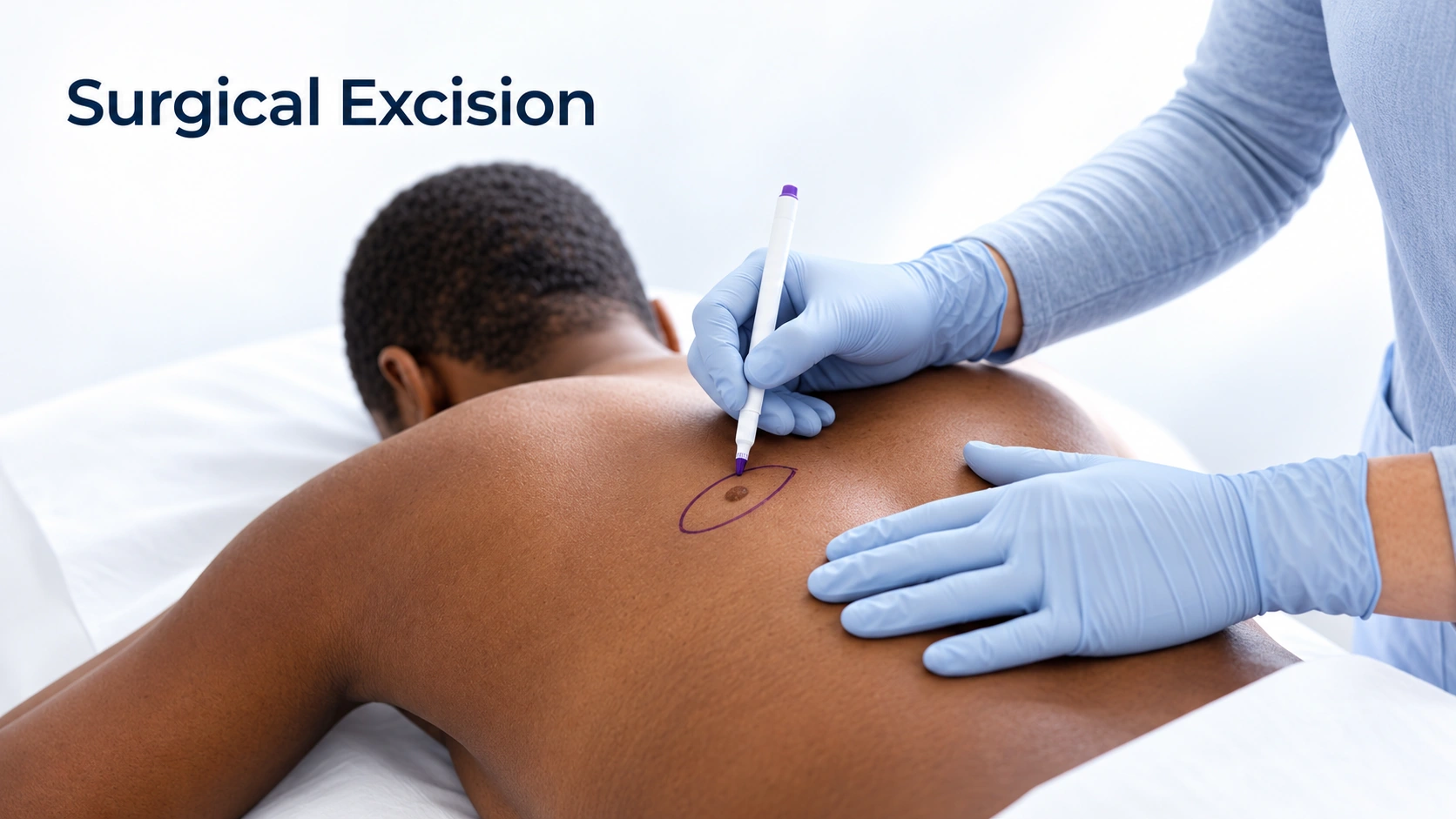
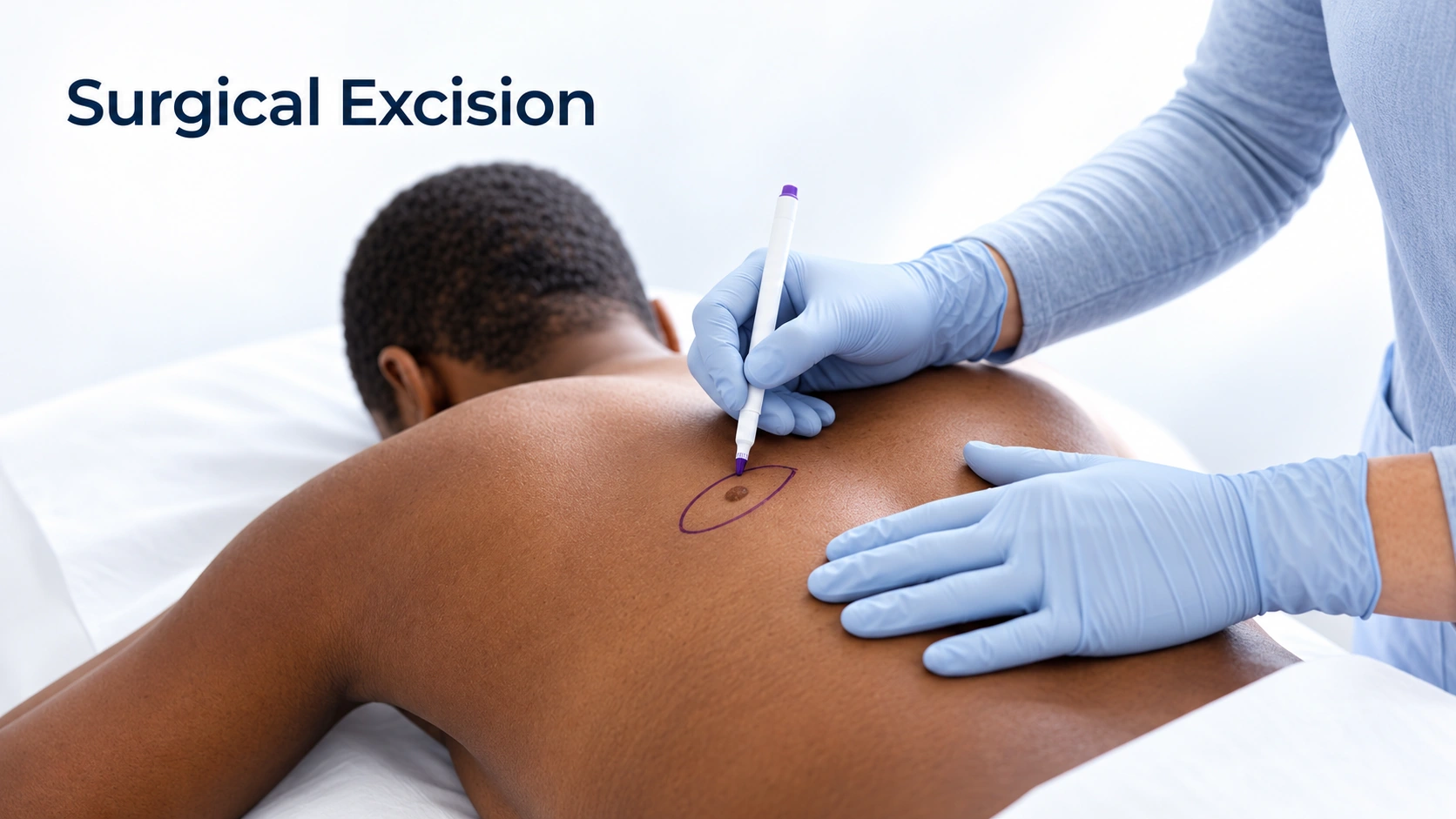
Editorial illustration for Surgical Excision, based on the entry’s treatment or equipment reference.

Surgical Excision

Limited evidence

Cutting the keloid out works only as part of a plan. On its own it comes back in the large majority of cases, often bigger, so it is paired with injections at the time of surgery, pressure afterwards, or radiation. It is most useful for a big earlobe keloid or one that is limiting movement, where nothing else will get it flat.

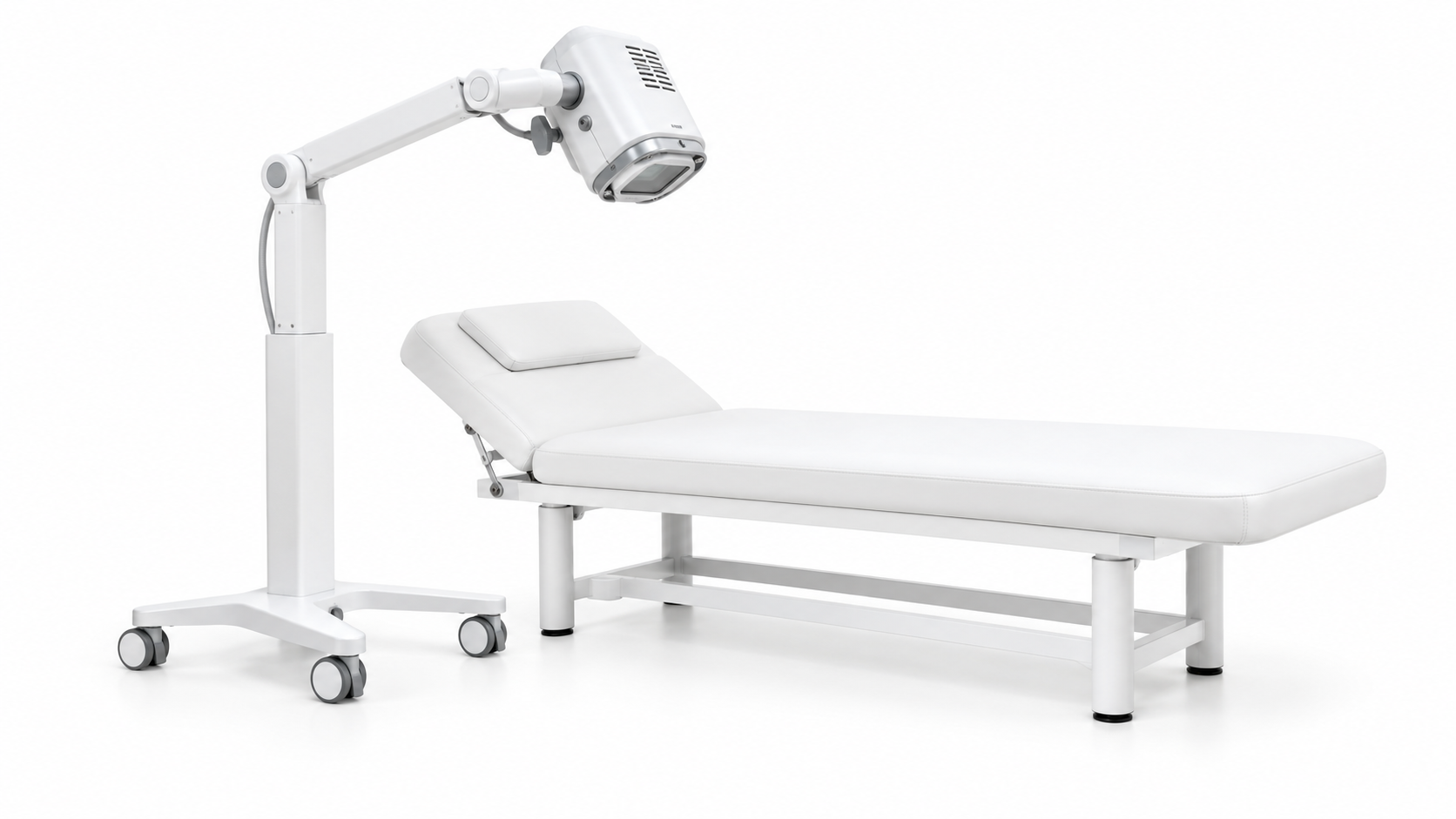
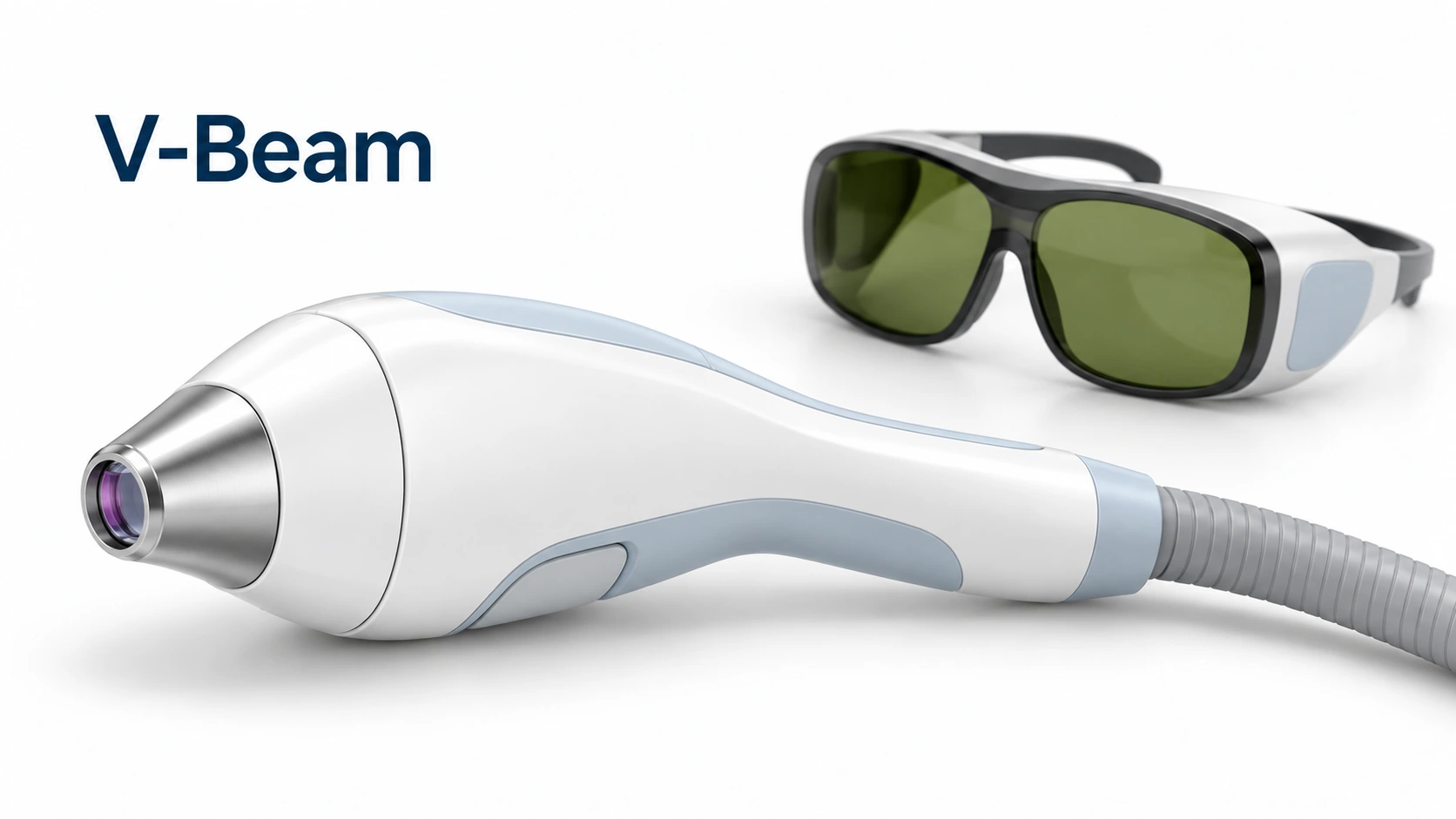
V-Beam

Limited evidence

A laser aimed at the blood vessels in the scar. It helps with the redness, and some people find it softer and less itchy afterwards, so it is used alongside injections rather than instead of them. It does not flatten a thick keloid, and settings have to be chosen carefully on deeper skin tones to avoid pigment change.

Outlook

Long term

A confirmed dermatofibroma is harmless and often stays for years. Removal is optional when troublesome, leaves a scar and may not prevent recurrence if the lesion is incompletely removed.

Keloids follow a slow pattern, and the first months are when treatment helps most. Nothing looks unusual early, so the change often arrives months after the wound closed.

Complications

Possible complications

A secure diagnosis matters because other lesions can look similar.

  • Coming back larger after surgery
  • Itch, pain and tightness
  • Pale, thinned skin after injections
More details

Coming back larger after surgery
A keloid cut out on its own comes back in most people, and often larger than the one that was removed, because the operation is another wound in the same high-risk skin. Surgery is still used, but as part of a plan with injections, pressure or radiation afterwards. If someone offers to simply cut it off, ask what will be done to stop it returning.

Itch, pain and tightness
Keloids frequently itch, sting or ache, and one sitting over a joint, the chest or an ear can feel tight and limit movement. For most people this, not the look of it, is the reason to get it treated. Itch and pain usually settle before the scar flattens, so treatment often feels worthwhile well before it looks it.

Pale, thinned skin after injections
Steroid injections can leave a pale, slightly sunken patch where they were given, and on deeper skin tones that lightening shows more and can last a long time. It often improves over months. Raise it before the first injection so the dose and technique are chosen with it in mind.

When to get help

When to get help

Have a new, growing, bleeding, painful or otherwise changing lesion examined.

Seek assessment for a growing, painful or itchy scar, or any lump whose diagnosis is uncertain. Discuss scarring risk before elective skin procedures.

Common questions

Dermatofibroma:What is Dermatofibroma?

A common benign fibrous skin nodule.

Dermatofibroma:What can I do day to day?

Avoid picking or home removal. Protect exposed skin from the sun.

Dermatofibroma:When should I get medical advice?

Have a new, growing, bleeding, painful or otherwise changing lesion examined.

Keloids:Will my keloid ever go away completely?

Realistically, no. The goal is flat, soft and no longer itchy or painful, which leaves a flat mark rather than normal skin. Most improve a great deal; very few disappear.

Keloids:Can I get my ears pierced again if I have had a keloid?

It is a real risk worth discussing rather than deciding alone. Re-piercing through or next to a keloid often makes it bigger. If you go ahead, some dermatologists treat around the piercing preventively and add pressure earrings. Going back to the same studio with no plan is the version that goes badly.

Keloids:Why did I get one on my chest but not on my leg?

Site matters as much as skin. The chest, shoulders, earlobes, jawline and back of the neck are high risk, partly because that skin is under constant tension and movement. The same injury heals flat on the leg and keloids on the sternum.

Keloids:Do steroid injections hurt, and how many will I need?

They sting, and a firm keloid makes it uncomfortable, but it takes seconds. Most people need several, usually every four to six weeks, and the number depends on size, site and how long it has been there. Itching and pain improve first, flattening later.

Keloids:Will the injection lighten my skin?

It can. A pale, slightly sunken patch at the injection site is a recognized side effect, more noticeable on deeper skin tones, and it often improves over months. Raise it before the first injection.

Keloids:I have a keloid and I need surgery for something unrelated. What should I do?

Tell the surgeon before the operation, not afterward. It changes where the incision goes, how it is closed, whether the wound is taped, and whether preventive injections are given. Ask what will be done differently because of your keloid history.

Sources

Sources and further reading

  1. Dermatofibroma
  2. DermNet
Dermapedia on YouTube