Adapalene
ListedHelps prevent new comedones; improvement is gradual. Avoid retinoids during pregnancy.
Acne in which blackheads and whiteheads are the main lesions.
The same eight facts on every condition comparison.
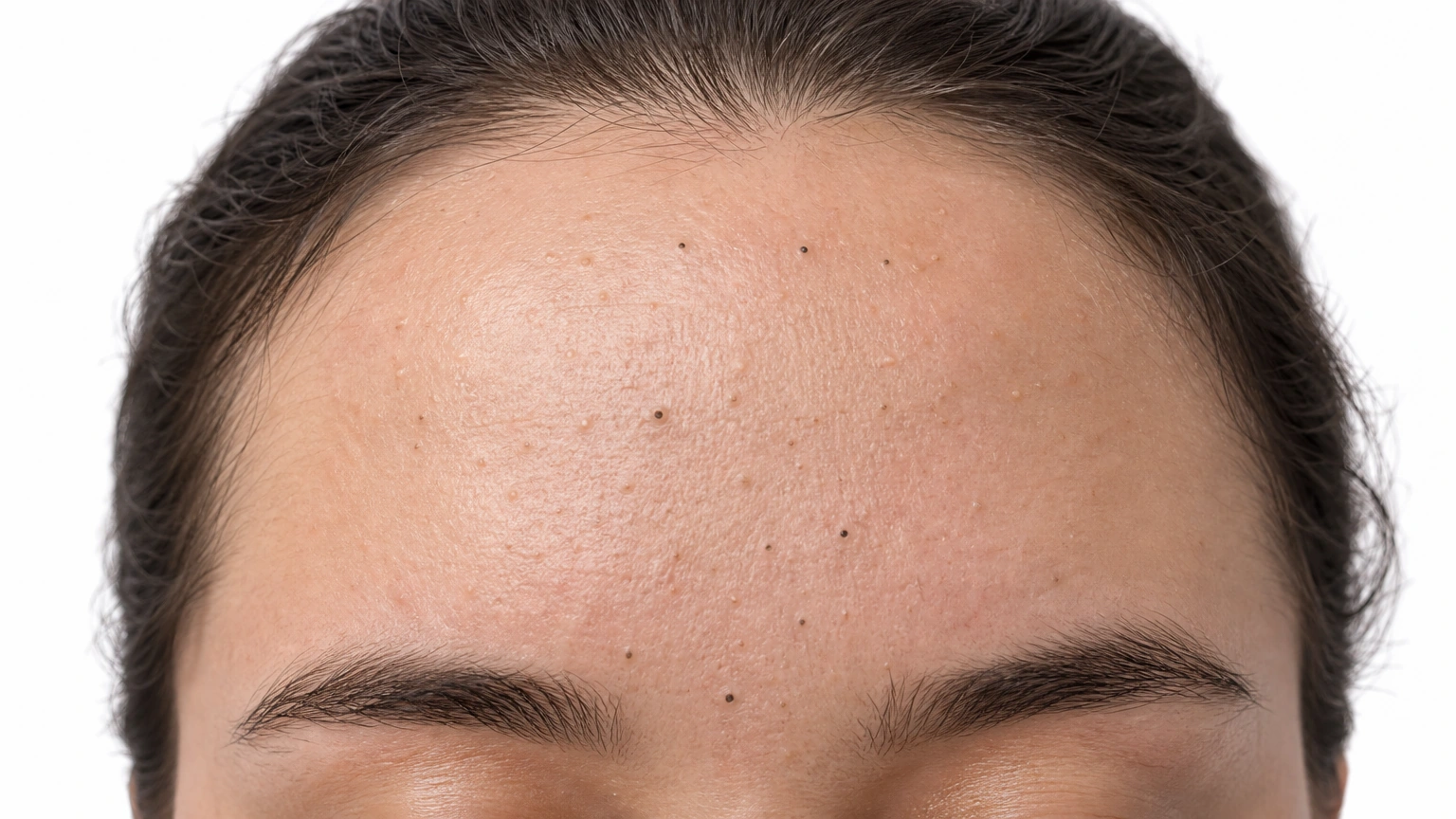
Comedonal Acne The forehead has a mixture of pale raised bumps and tiny dark dots.
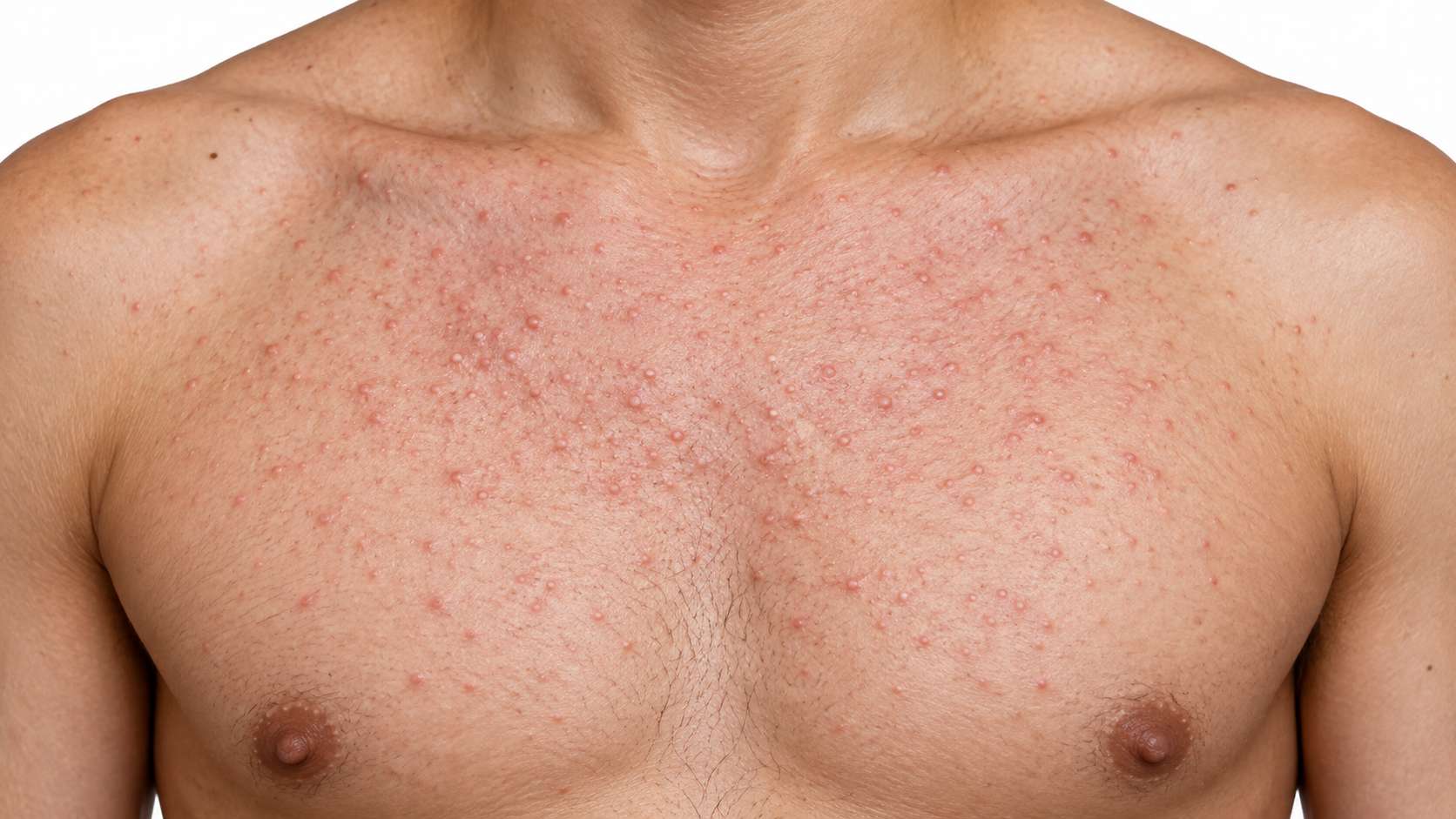
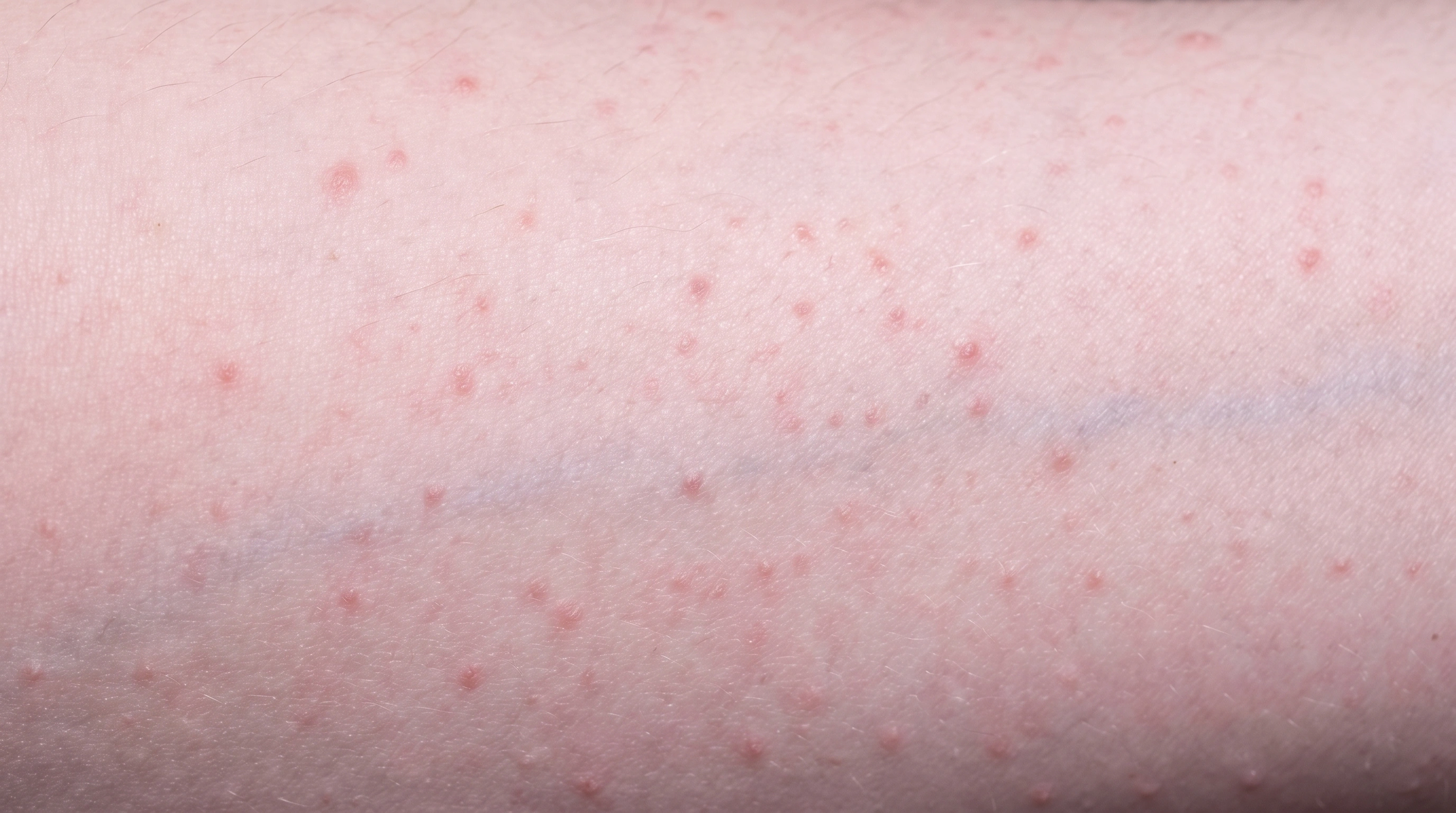
Uniform bumps Small bumps all the same size.
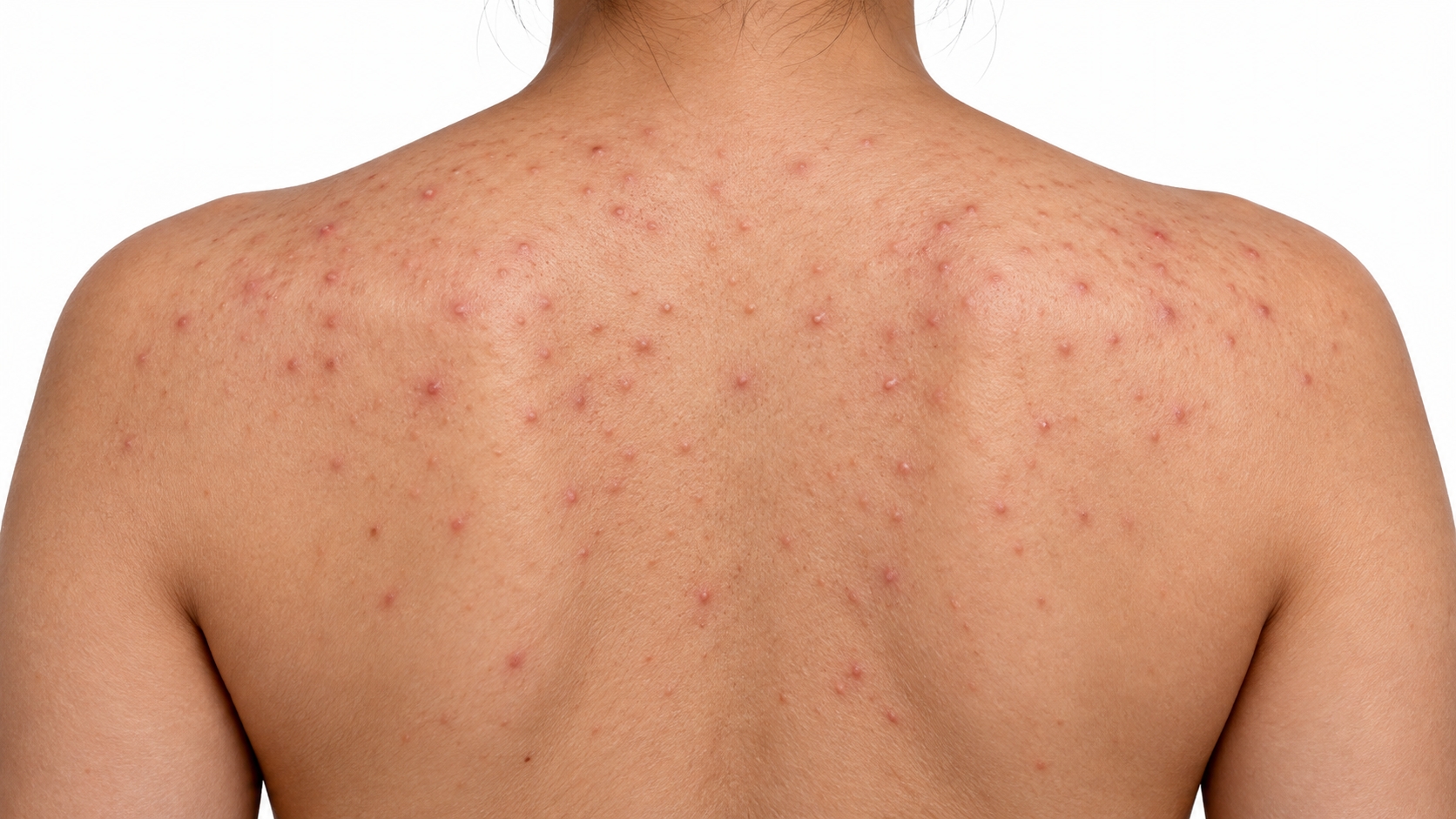
Upper back A common site.

Forehead Clusters along the hairline.
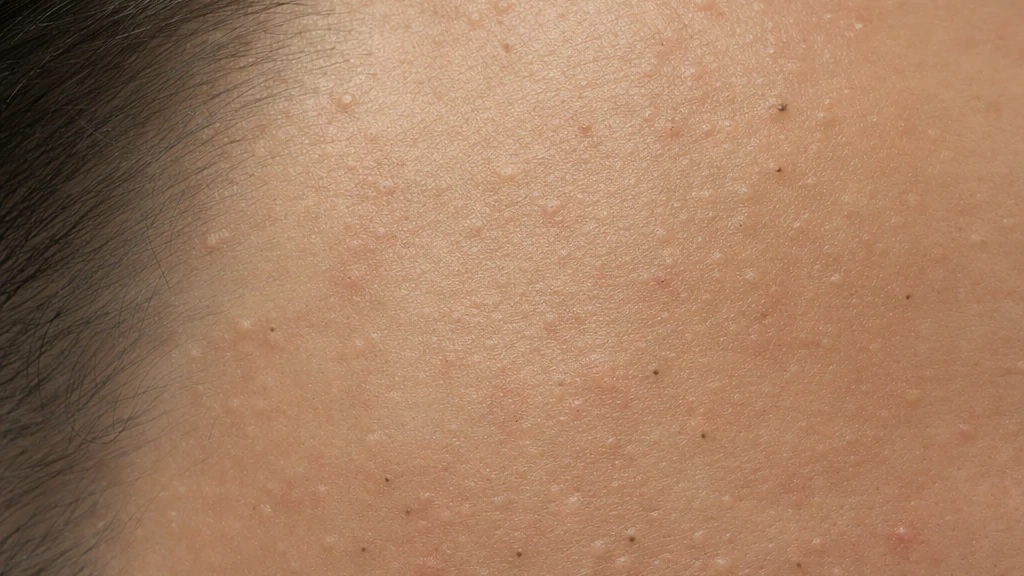
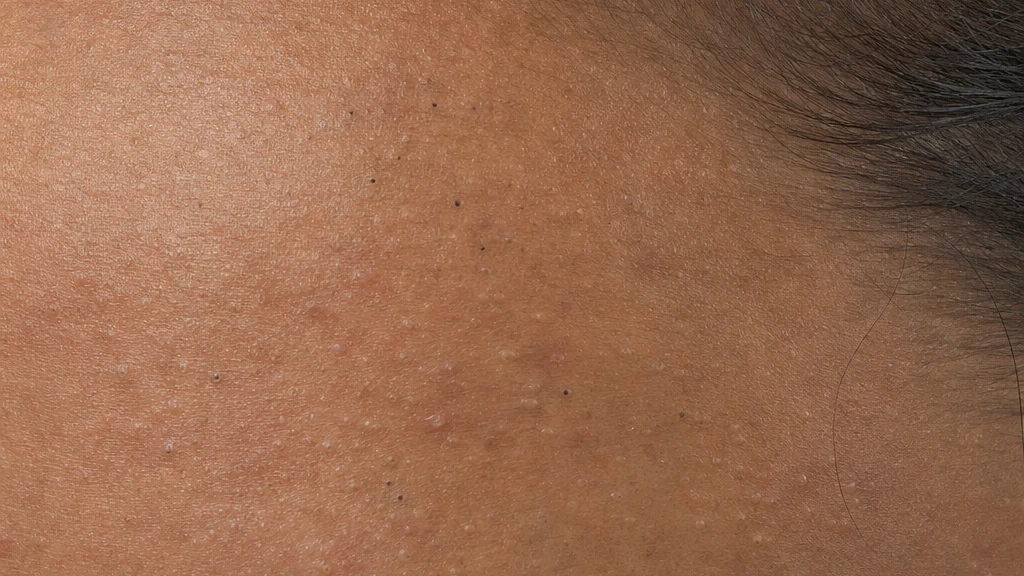
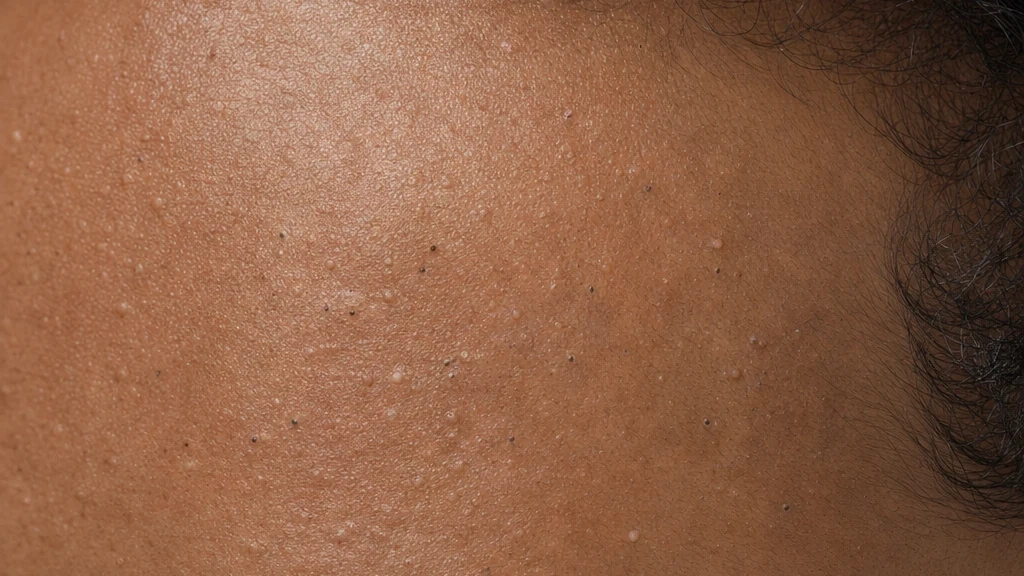
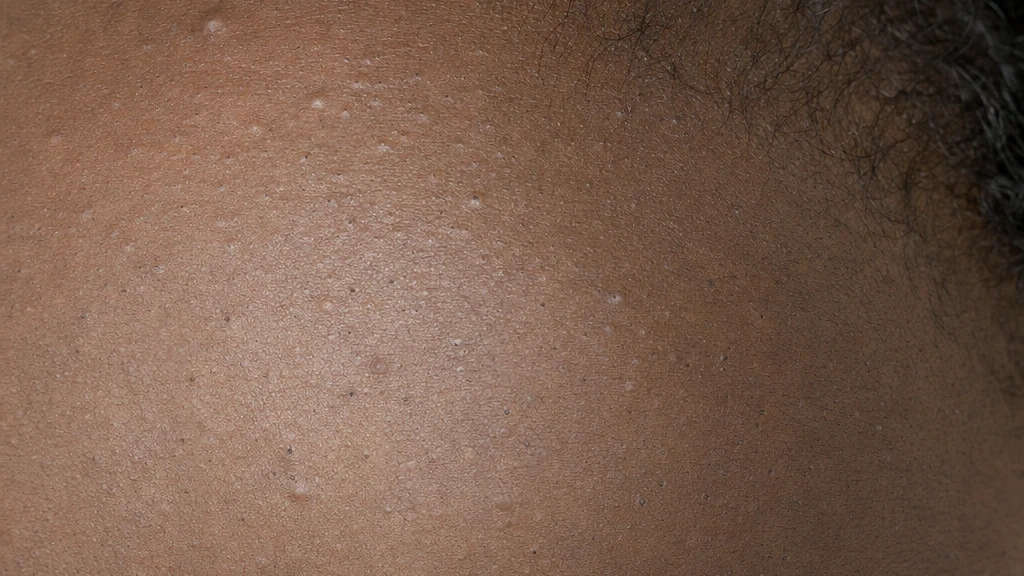
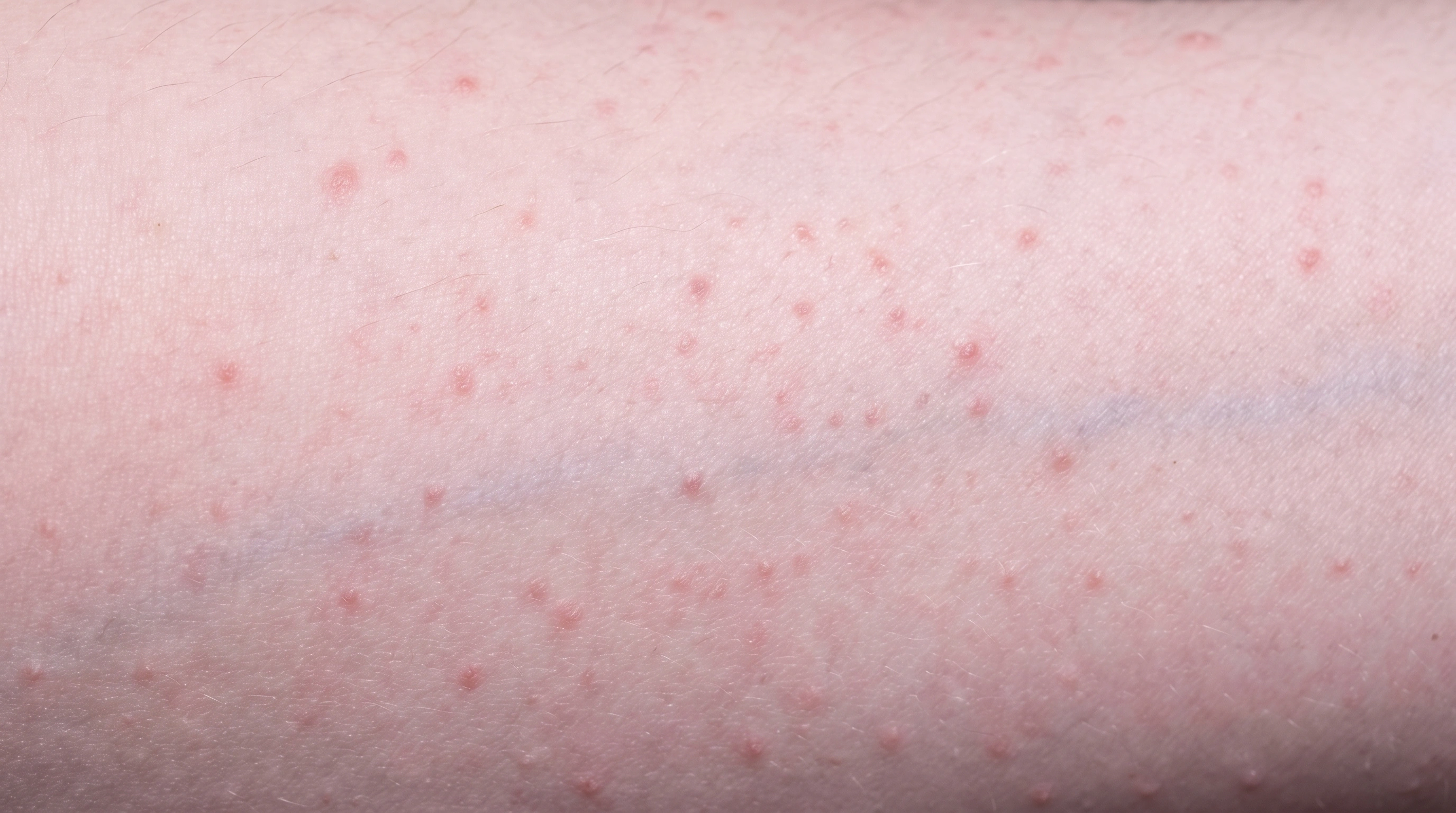
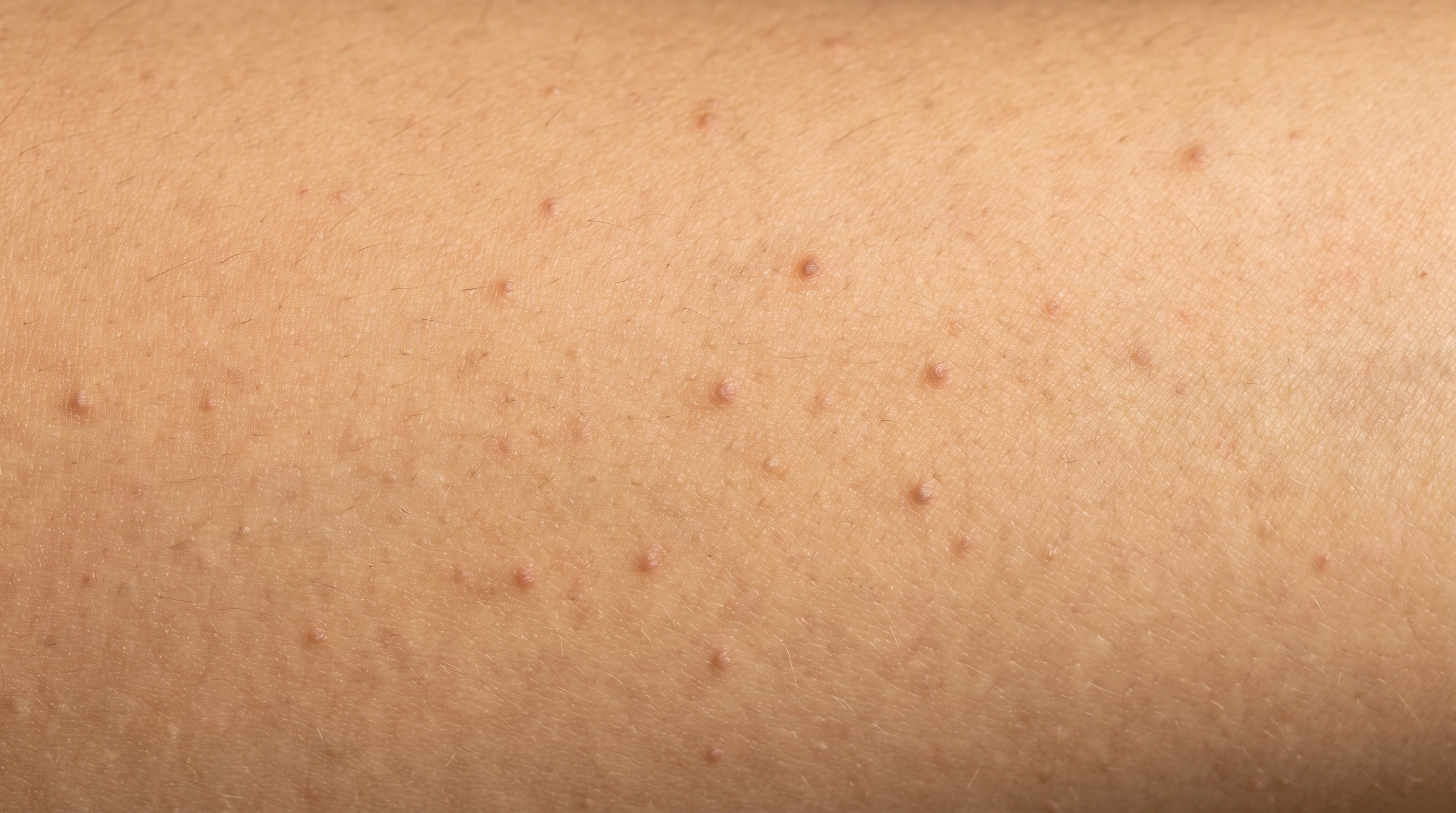
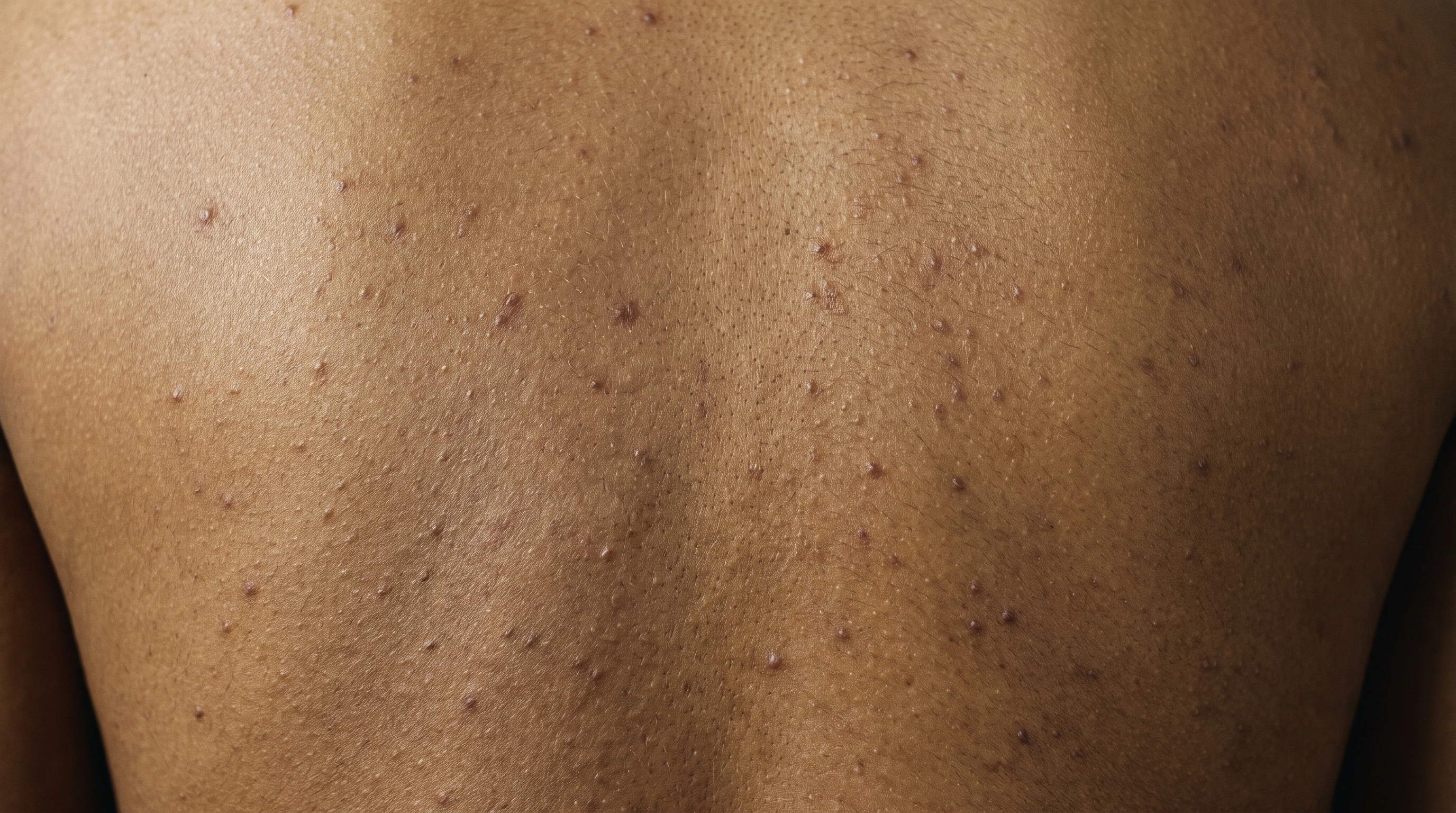
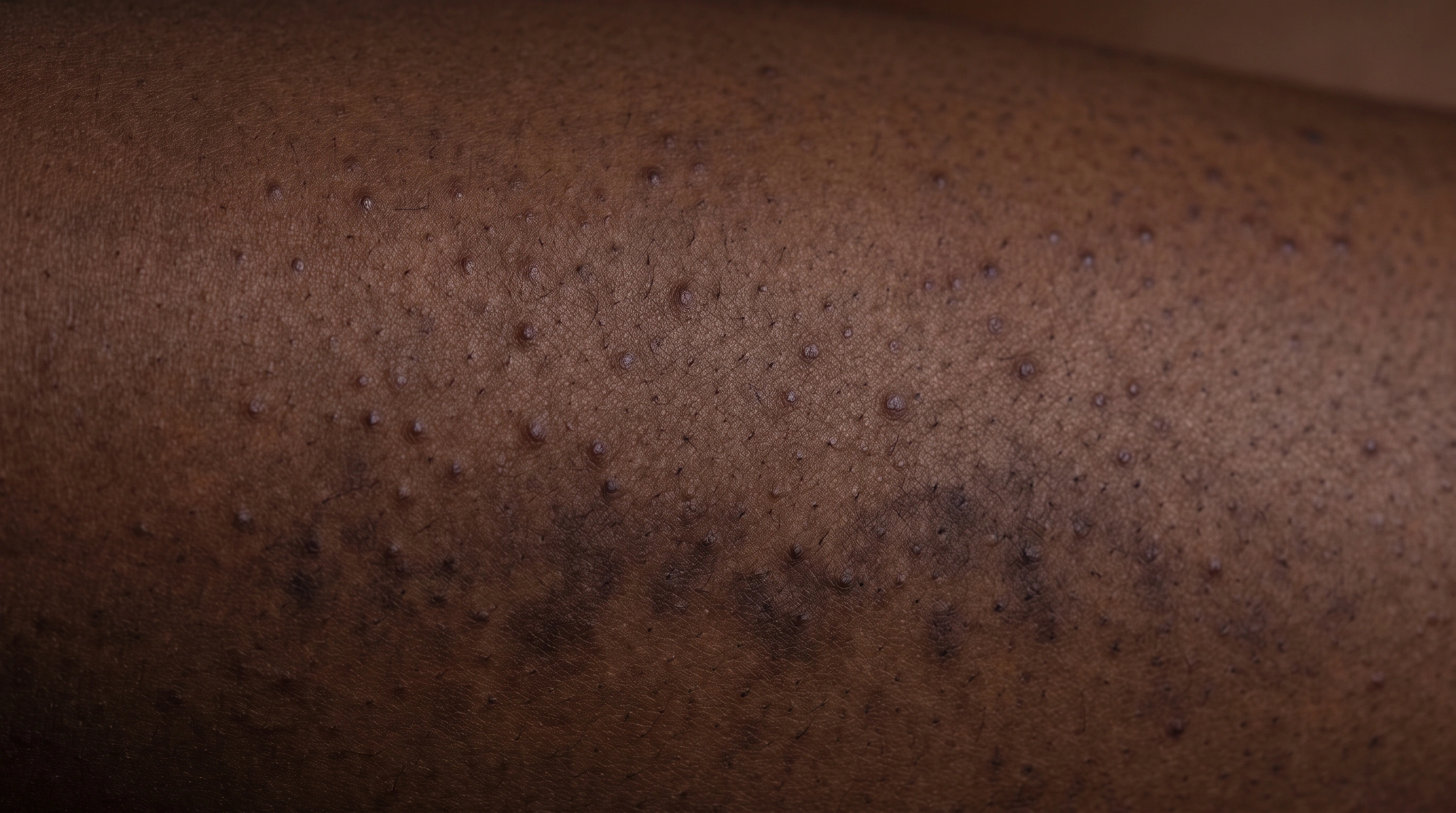

Oil and shed skin cells block hair follicles with relatively little visible inflammation. An open plug forms a blackhead, while a covered plug forms a whitehead.
Malassezia yeast can overgrow inside hair follicles and trigger inflammation. This produces similar-looking itchy bumps and differs from the plugged pores that form blackheads and whiteheads.
Comedonal Acne. Often begins around puberty; adult acne can persist or start later.
Fungal Acne. Fungal Acne Often teens and young adults Malassezia folliculitis is more common in adolescents and young adults, but it can occur at other ages. A new rash after heat, sweating, antibiotics or immune suppression can be a useful clue; timing cannot confirm the diagnosis.
Oil and shed skin cells block hair follicles; inflammation can develop around them.
Fungal acne is caused by an overgrowth of Malassezia yeast inside hair follicles. The yeast normally lives on skin but grows too much in warm, oily, sweaty conditions.
An overgrowth of normally present Malassezia yeast within follicles, followed by inflammation. Malassezia normally lives on skin. Finding surface yeast or noticing itch alone does not confirm that it is causing the rash.
This is not usually considered an inherited disorder. Oily skin and other individual factors can influence susceptibility.
Evidence labels come from each condition’s own treatment list.
Helps prevent new comedones; improvement is gradual. Avoid retinoids during pregnancy.
Can help clear surface plugs; stop if it causes persistent irritation.
It works by clearing blocked pores, and this is not a blocked-pore condition, so it does not act on the yeast. Some people find a wash mildly helpful for the texture. It will not clear the bumps, and scrubs and brushes usually make an irritated chest and back angrier.
The main over-the-counter treatment, used as a body wash rather than for hair. Lather it over the chest, back, shoulders and hairline in the shower and leave it on several minutes before rinsing, daily for two to four weeks. Rinsing it straight off is the most common reason it seems not to work.
An anti-dandruff shampoo used the same way, lathered on the affected areas and left several minutes. A reasonable alternative if ketoconazole irritates or is hard to find. It can be drying and can discolor light-colored hair, so keep it on the body.
The gentlest of the three anti-dandruff washes, and the easiest to keep using long term. It is a good choice for maintenance once the bumps have cleared, once or twice a week through the hot months. It is usually a little weaker than ketoconazole for clearing an active crop.
A sulfur wash or soap has some activity against this yeast and is an option if the antifungal shampoos are not tolerated. The evidence in fungal acne specifically is thin. It smells and can be drying on the chest and back.
It has some effect on Malassezia, which is why a few people improve partially on it and then stall. It is not the right tool here, and used as a wash it can leave the chest and back dry and irritated. If it half-works, that is a hint to switch to an antifungal wash rather than to use more of it.
Widely suggested online for fungal acne and not well studied in it. It irritates inflamed skin easily, and it is a common cause of allergic reactions on the chest and back. A proven antifungal wash costs about the same and is available without a prescription.
A retinoid works on blocked pores, and there is no plug to clear here, so it does not treat the yeast. It is often already in use because the bumps were assumed to be acne. It can stay if you also have genuine acne, but it is not what clears this.
Ketoconazole 2% cream. The prescription strength, used as a cream on limited areas such as the jawline, forehead or hairline, or as a shampoo on the body. It is the usual next step when the over-the-counter 1% wash has not been enough. A cream is impractical for a whole back, which is where the wash or tablets take over.
Clotrimazole cream. An older antifungal cream, applied twice a day to small patches. It works against this yeast and is inexpensive and widely available. Like any cream, it only suits areas you can realistically cover, so it is a jawline and hairline option rather than a chest and back one.
Ciclopirox cream or shampoo. Another antifungal option, used when ketoconazole has irritated the skin or has not worked. There is less published evidence in Malassezia folliculitis specifically than for ketoconazole. It is used the same way, with the shampoo left on for several minutes.
A topical antibiotic reduces the bacteria that compete with the yeast, so at best it does nothing here and at worst the bumps get denser. Skin that gets worse rather than better on an acne antibiotic is one of the strongest clues that this is fungal acne.
The tablet most often used for stubborn or widespread cases, usually for one to three weeks. It clears extensive chest and back involvement far more reliably than a wash can. It interacts with a long list of other medicines, so the prescriber checks what else you take first.
The other antifungal tablet used here, often as a weekly dose for a few weeks. It suits people who cannot take itraconazole. Tablets clear the yeast but do not change the heat, sweat and occlusion that brought it on, so a maintenance wash is usually continued afterwards.
The antifungal tablet used for nail and foot infections, and it is a poor choice here. Malassezia is not reliably killed by it at the doses used by mouth. If an antifungal tablet is being considered, itraconazole or fluconazole are the ones with evidence in this condition.
An antibiotic prescribed for acne is one of the most reliable ways to make this worse, because it clears the bacteria that hold the yeast in check. A crop of itchy bumps appearing a few weeks into or after a course is a classic history. It is not a treatment for fungal acne.
Blocked pores can improve with consistent treatment, but recurrence is common. Maintenance may be needed; increasing irritation does not make acne clear faster.
Fungal acne appears over a short period rather than gradually, and the right treatment works quickly. It comes back if the conditions return.
Inflamed acne can leave dark marks or permanent scars and affect confidence.
The bumps multiply but stay small
They stay small rather than growing. The itch bothers most people more than the bumps.
Arrange care for painful deep lumps, scarring, or acne that persists despite a consistent treatment plan.
<span class="trigger-dash">—</span>
Seek help for a persistent itchy, uniform rash, repeated relapses, or bumps that have not improved with acne treatment. A skin sample may help distinguish causes.
Fever, spreading painful redness, or rapidly worsening bumps need prompt assessment, especially if your immune system is suppressed.
Acne in which blackheads and whiteheads are the main lesions.
Use a gentle cleanser, non-comedogenic moisturizer and sunscreen. Do not squeeze or scrub spots.
Arrange care for painful deep lumps, scarring, or acne that persists despite a consistent treatment plan.
Three things separate them. Fungal acne itches; acne usually does not. Fungal acne has no blackheads or whiteheads. And the bumps are all the same small size, in a sheet across the chest, shoulders, upper back and hairline, not a mix of sizes on the face. A start after antibiotics, steroids or a hot sweaty stretch adds to the case.
Yes, often. Many people have ordinary acne on the face and Malassezia folliculitis on the chest and back, treated in parallel. A routine aimed only at acne leaves half the problem untouched.
No. The yeast already lives on almost everyone's skin. Nobody gave it to you and you cannot pass it on.
The idea rests on something real — this yeast cannot make its own fats and takes them from its surroundings. But the ingredient lists online are more confident than the evidence. Avoid heavy oils, butters and occlusive products on the affected areas while it is active, and treat the yeast directly rather than rebuilding a routine.
Because the conditions return — heat, sweat and occlusion, usually every summer. That is not treatment failure. Most people who stay clear use the antifungal wash once or twice a week through the warm months.
Scars are uncommon. Flat dark marks are very common, and because the bumps arrive in large numbers they cover a wide area and take months to fade, particularly on deeper skin tones. Not scratching and treating early reduce them most, and daily sunscreen helps them fade faster.
Sources
