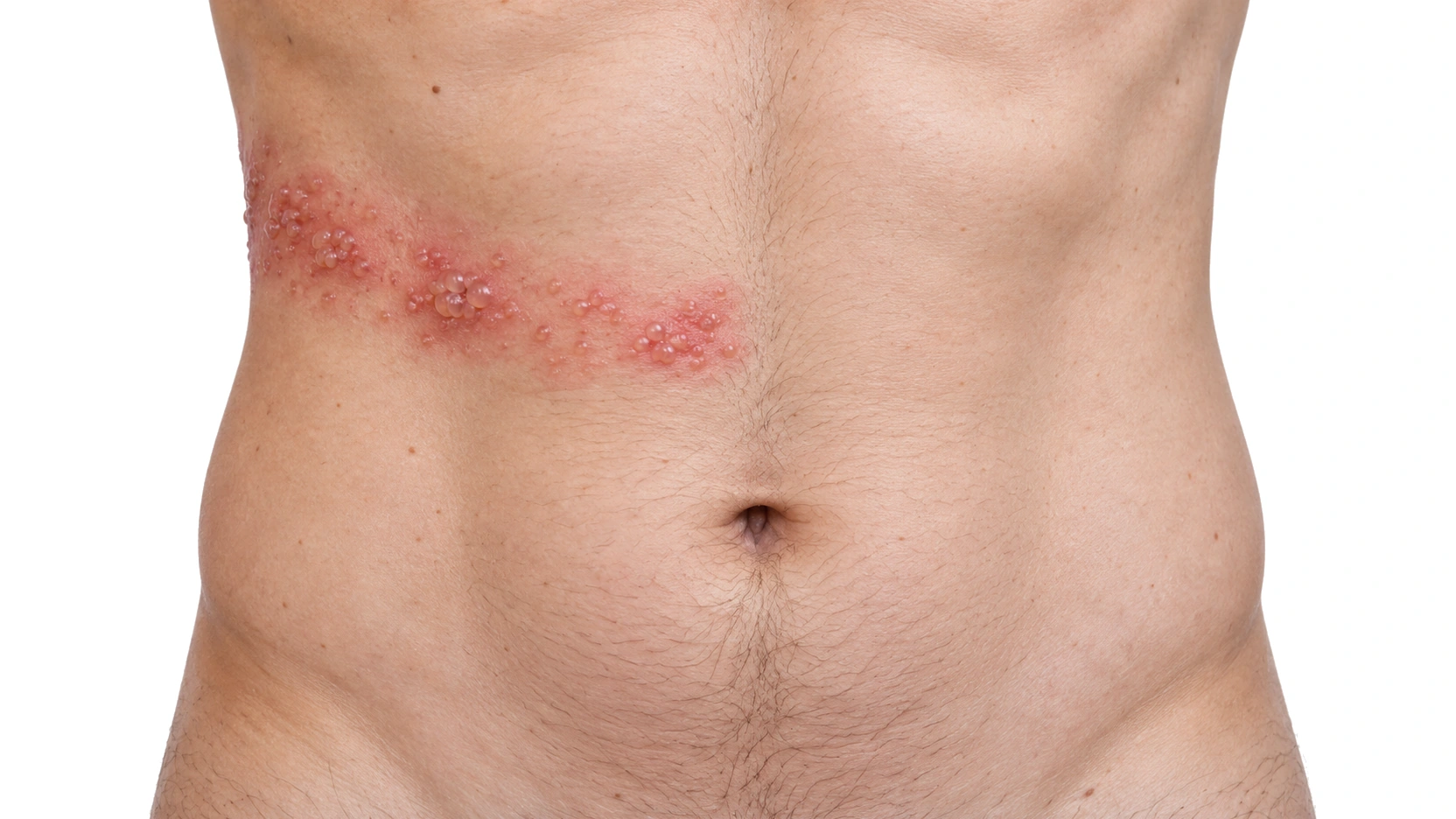
Fordyce Spots vs Cold Sores
Visible normal oil glands that appear as small pale or yellowish spots. Cold sores are small clusters of blisters on or around the lip, caused by the herpes simplex virus. The virus stays in the body for life, but episodes get shorter when treatment starts early, and for most people they become less frequent over the years.
Key differences
The same eight facts on every condition comparison.
What is it?
- What it is
Visible normal oil glands that appear as small pale or yellowish spots.
- They are caused by herpes simplex.
The virus stays latent for life after the first exposure. - They recur in the same place.
Reactivation produces small blisters near the lip border. - A first infection can differ.
It may cause painful mouth and gum inflammation with fever. - Unusual sores need review.
A persistent ulcer should be reassessed, not treated repeatedly.
What it looks like
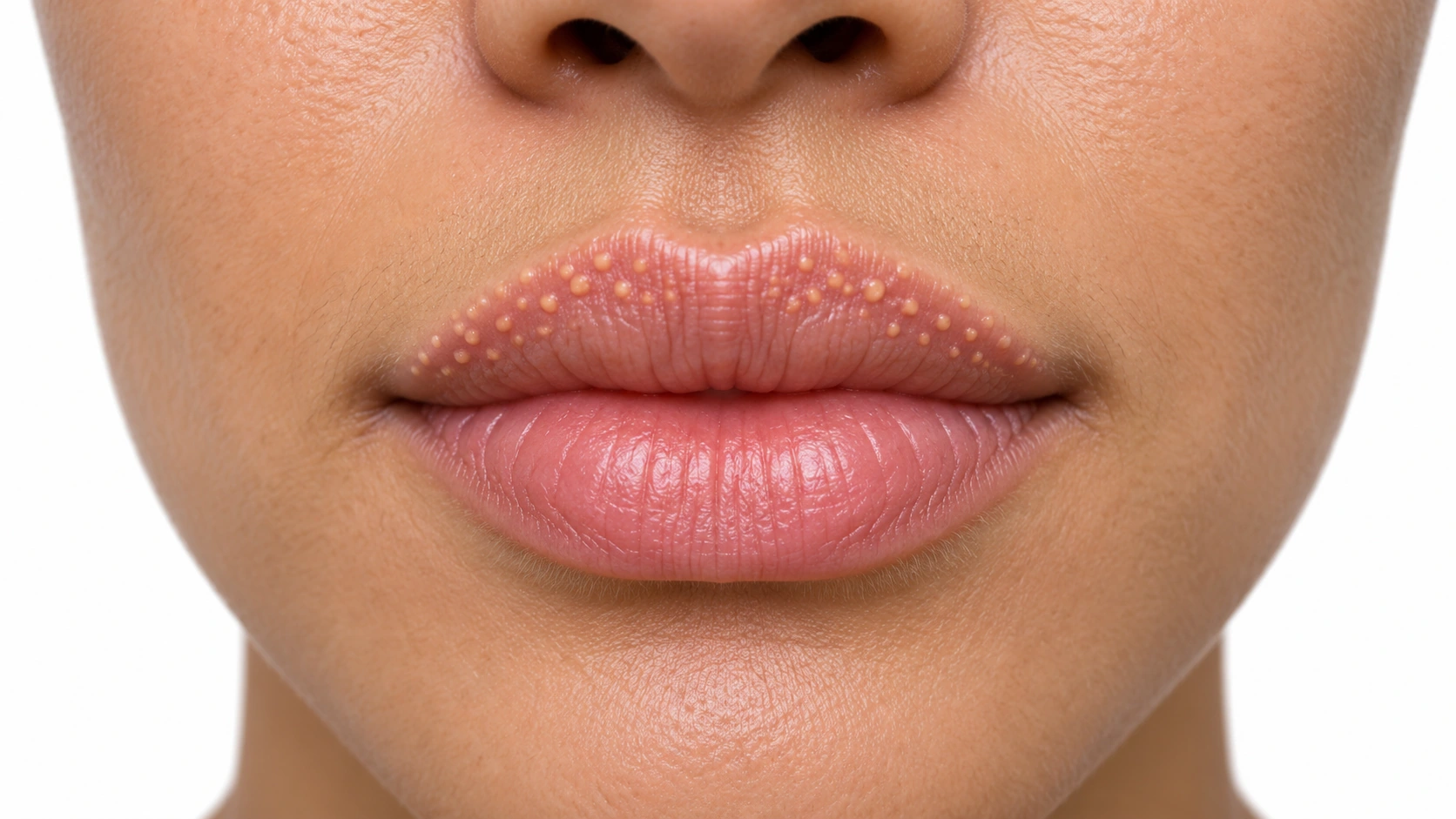
Fordyce Spots
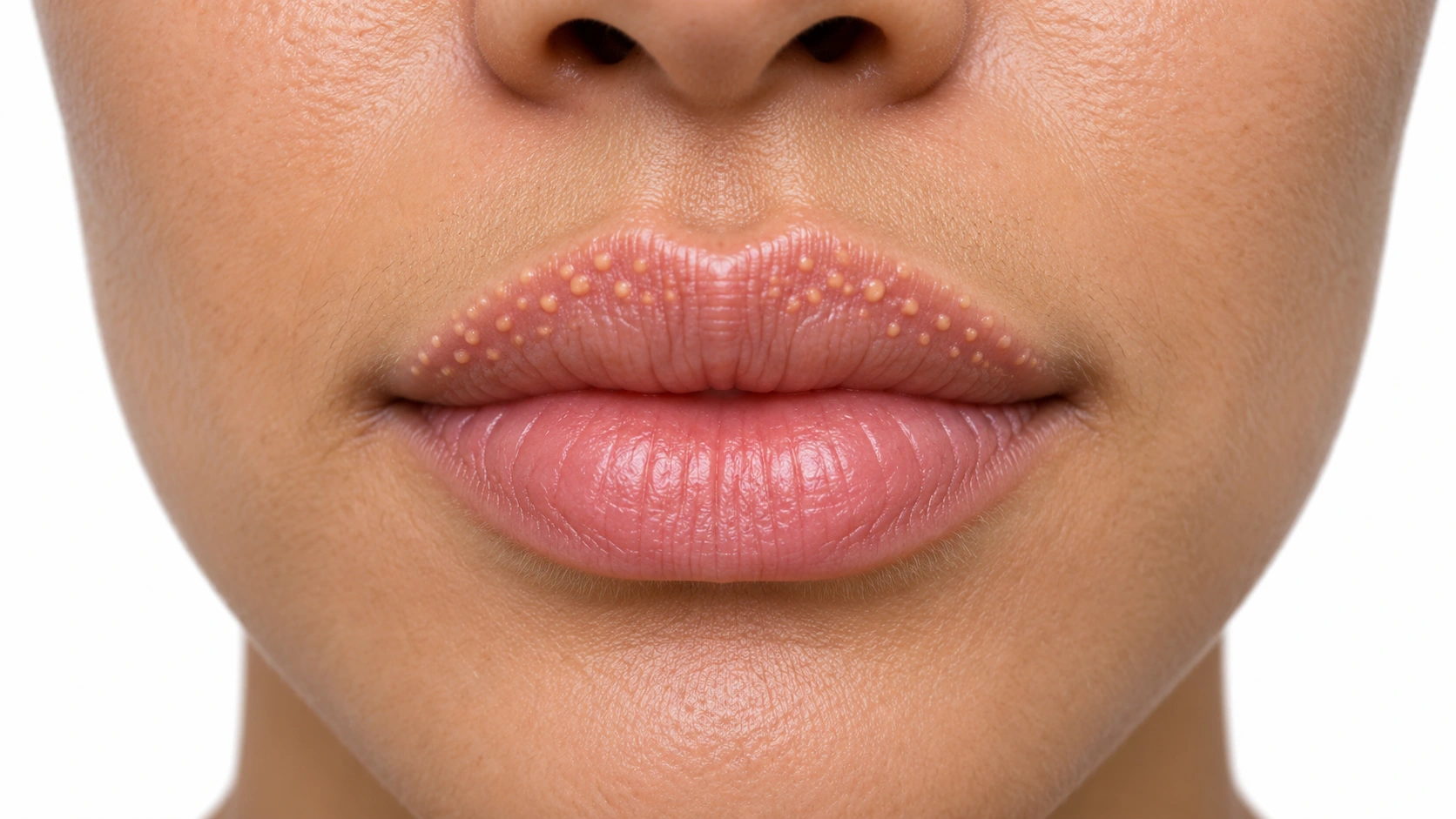
Fordyce Spots Small yellow-white dots line the upper lip surface.
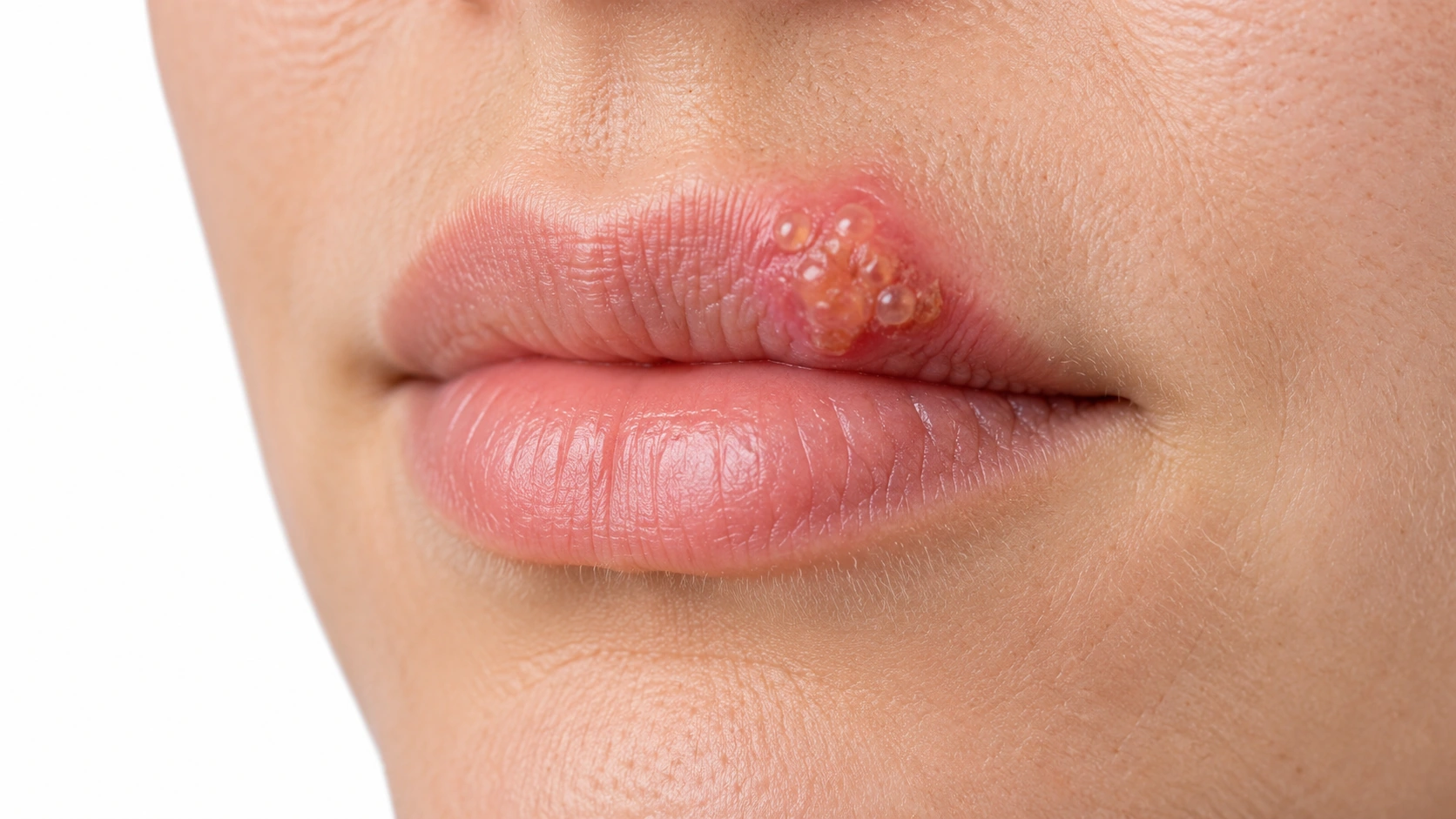
Cold Sores
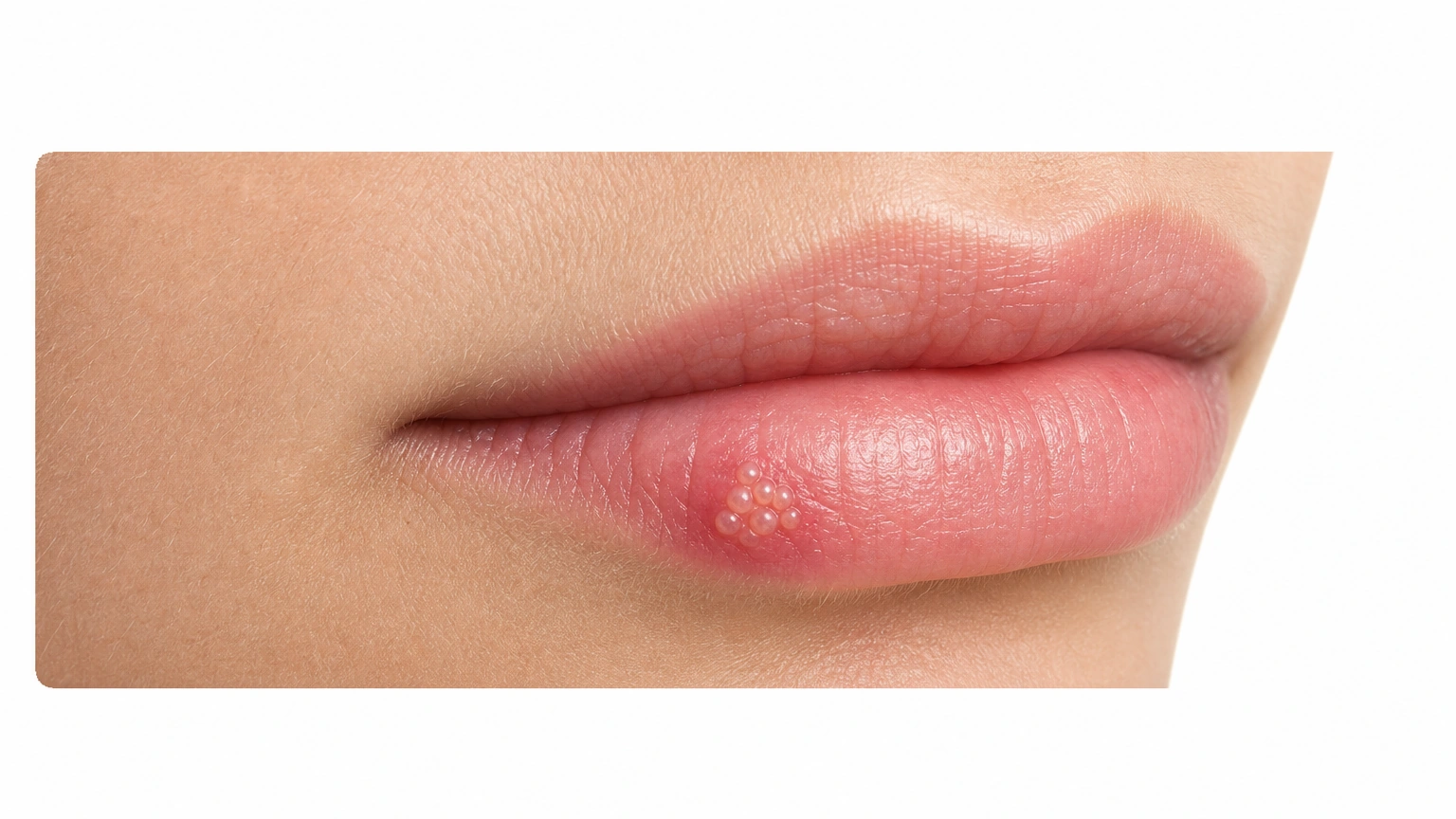
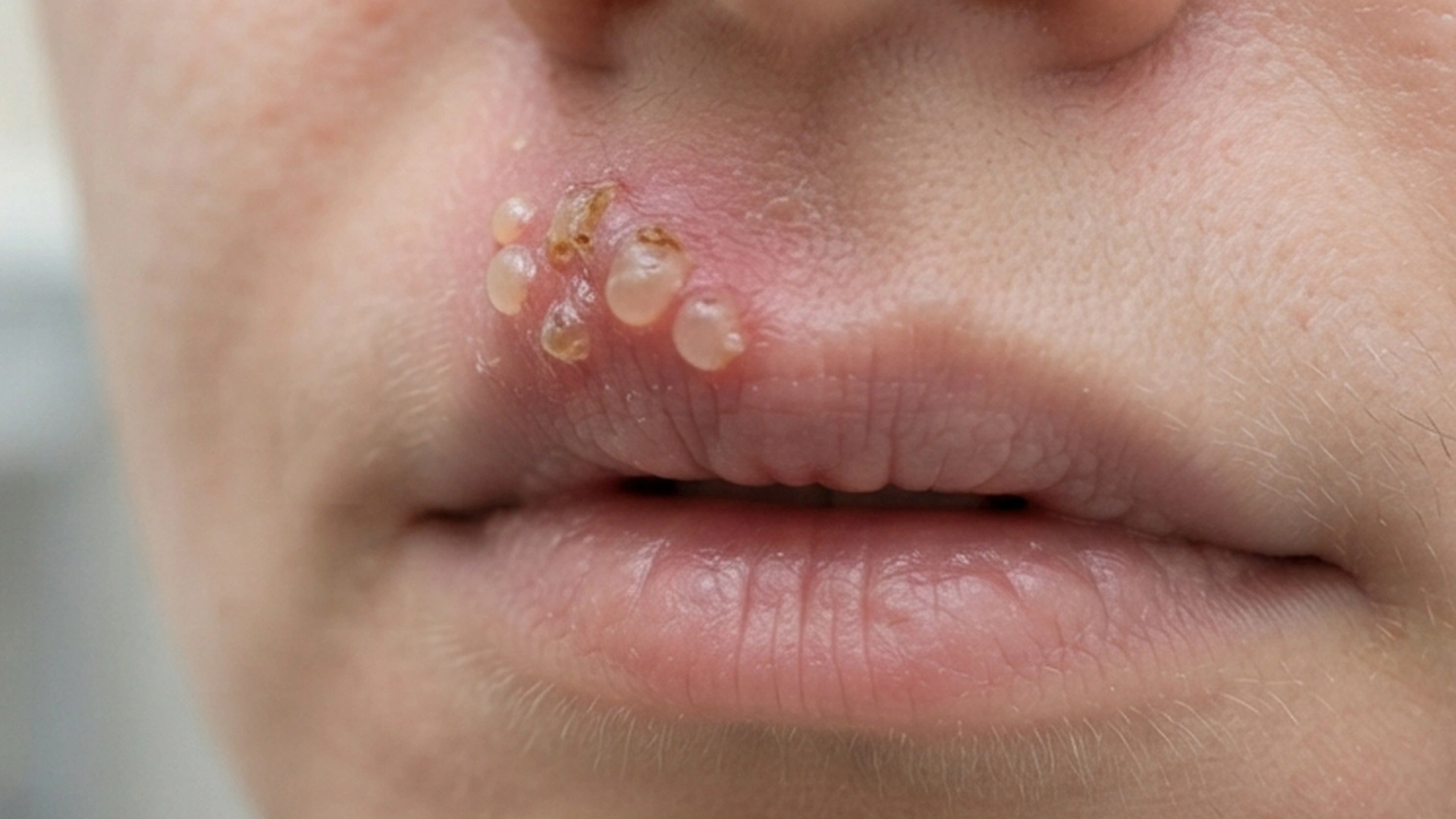
Blister cluster Small blisters on the lip edge.
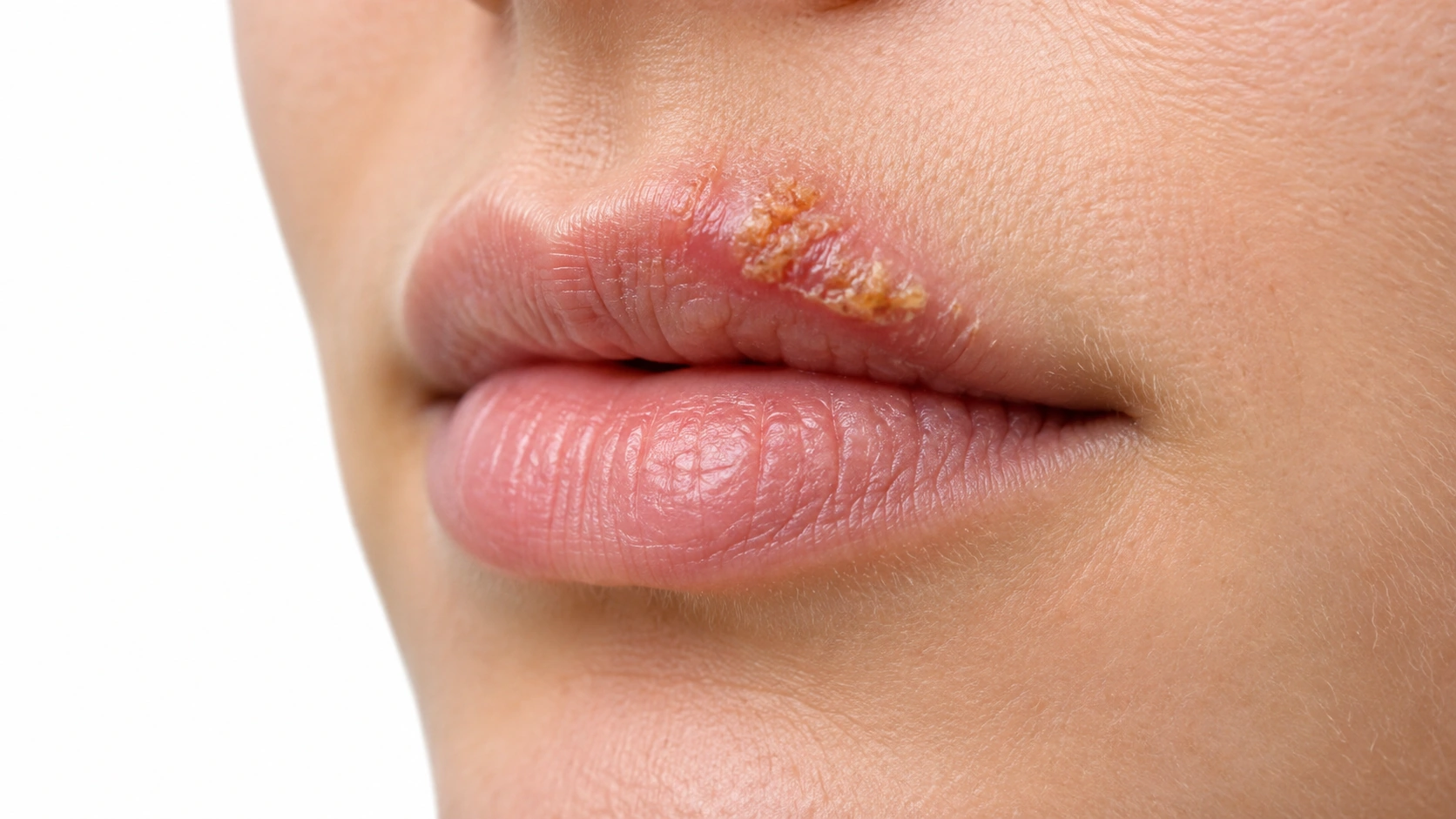
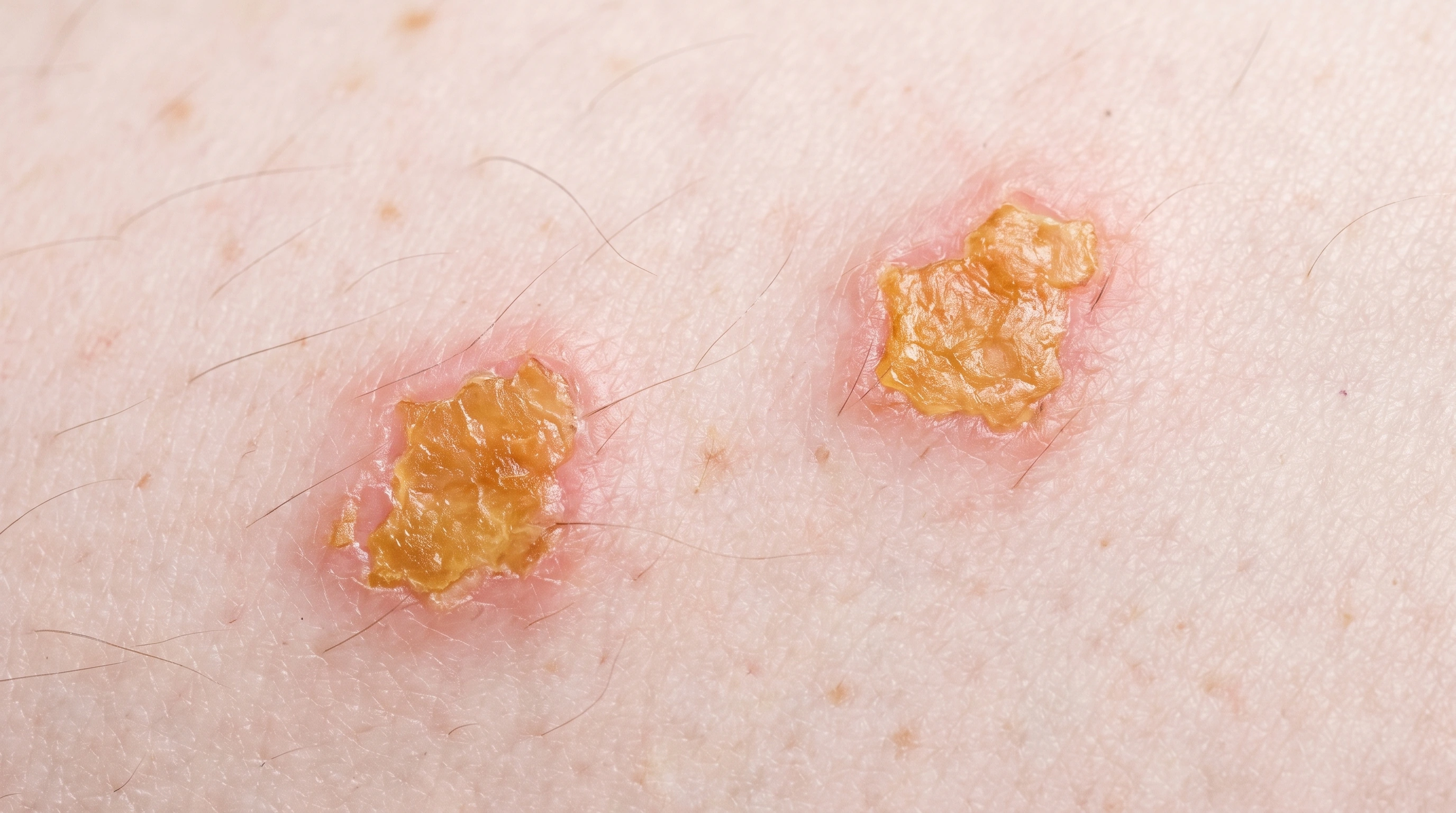
Crusting Yellow crust as it heals.
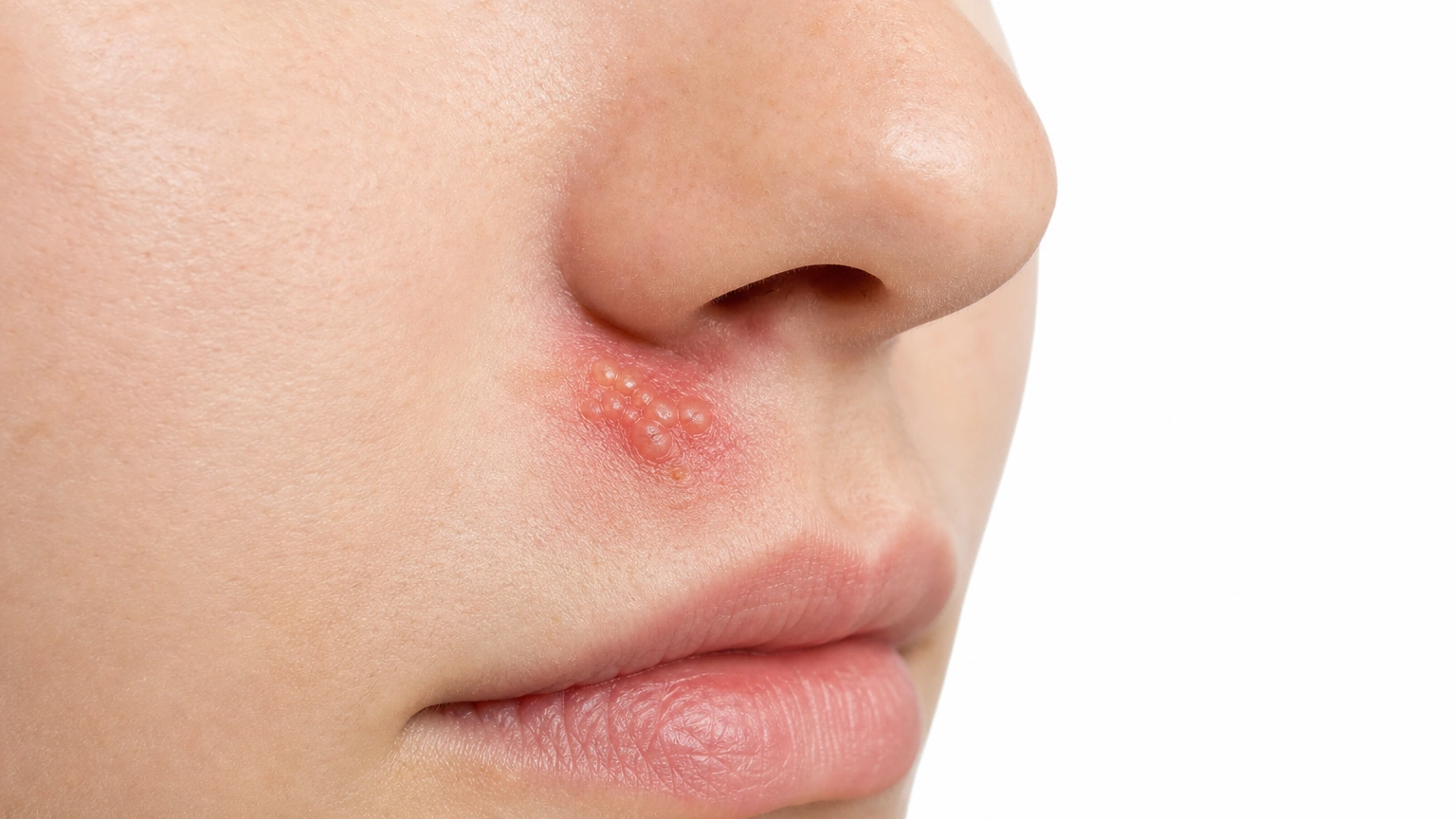
Near the nose Can appear around the nostrils.

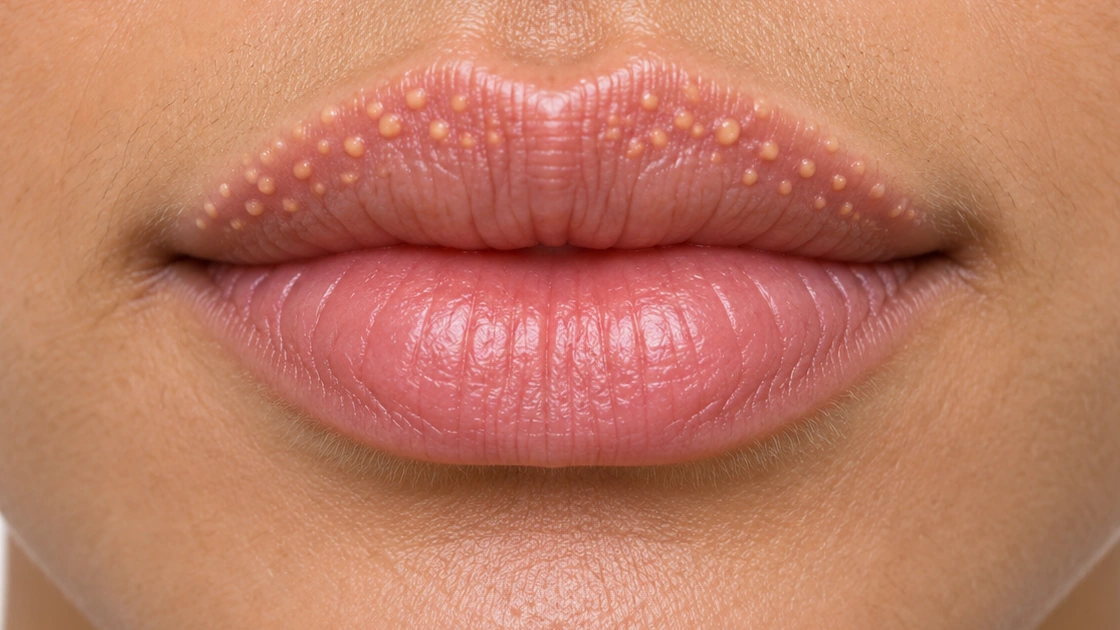
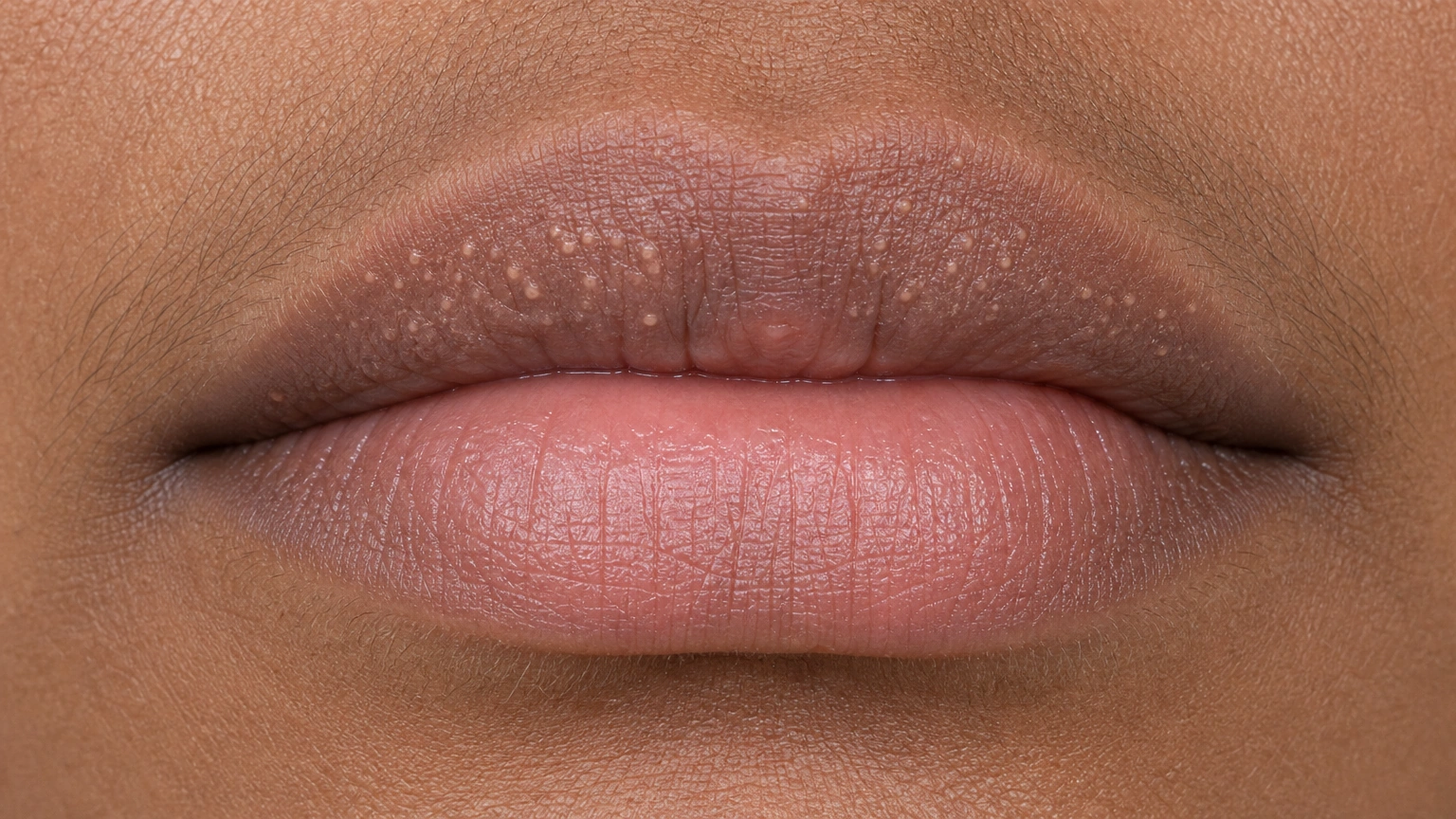
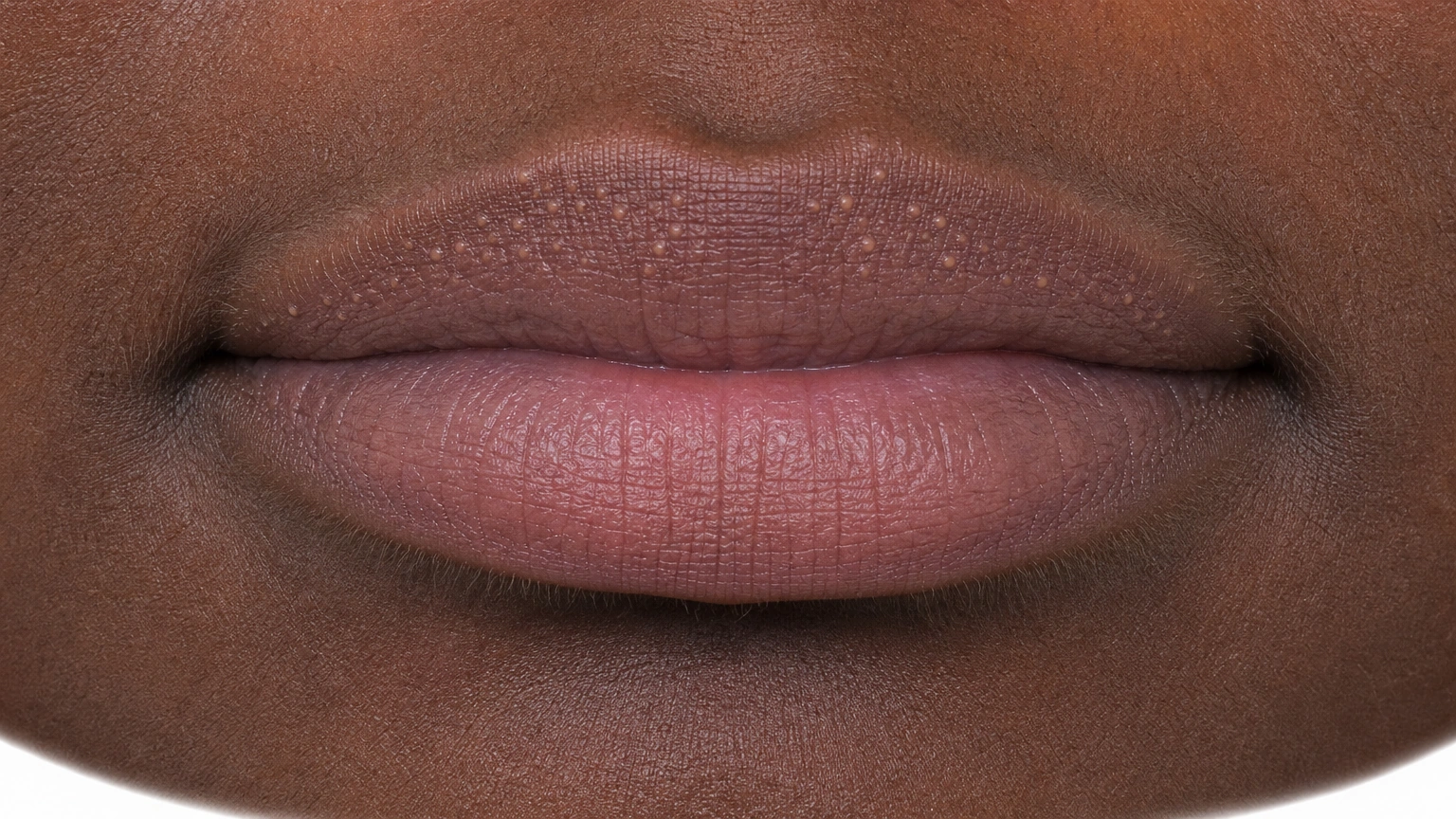
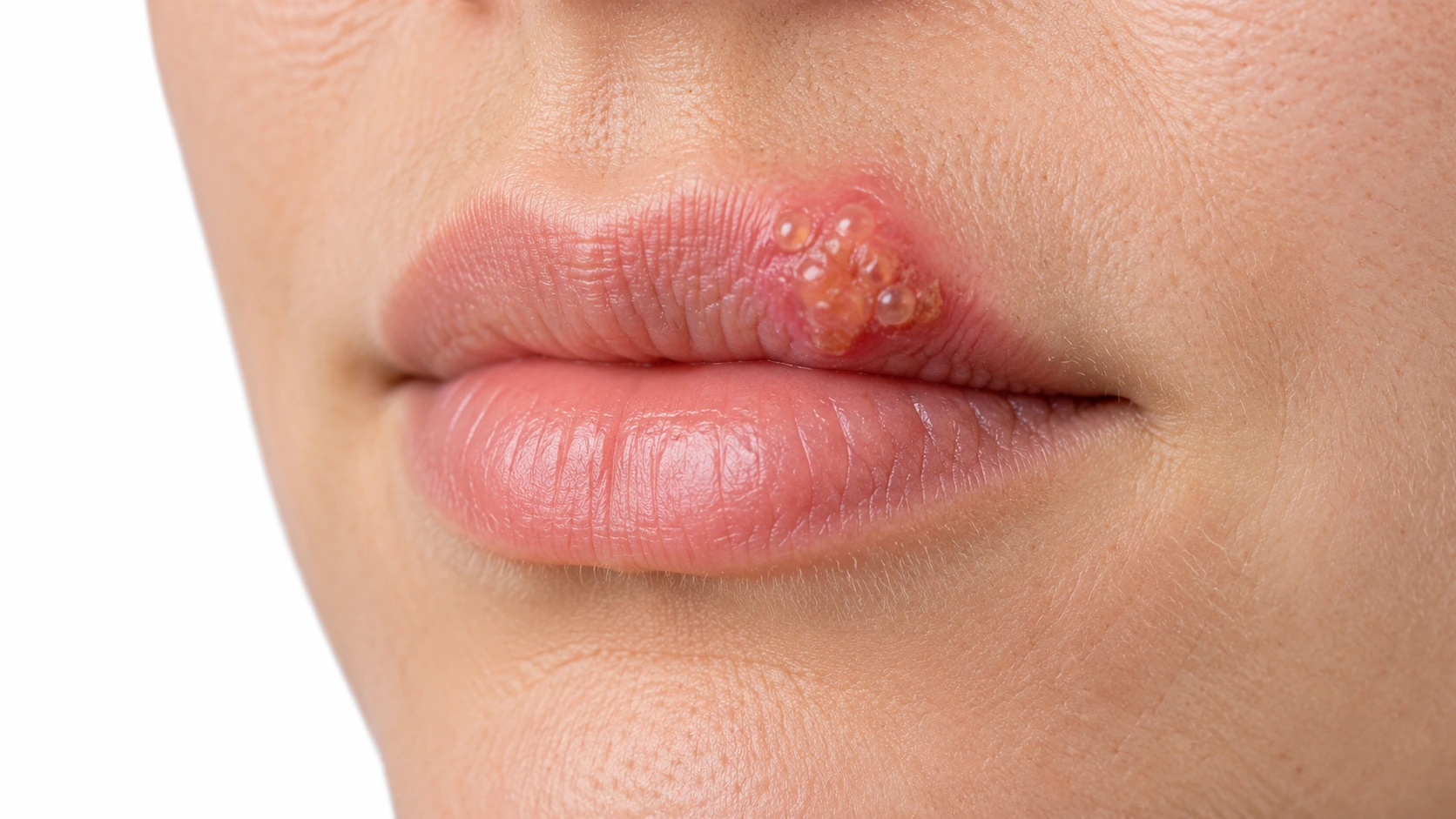
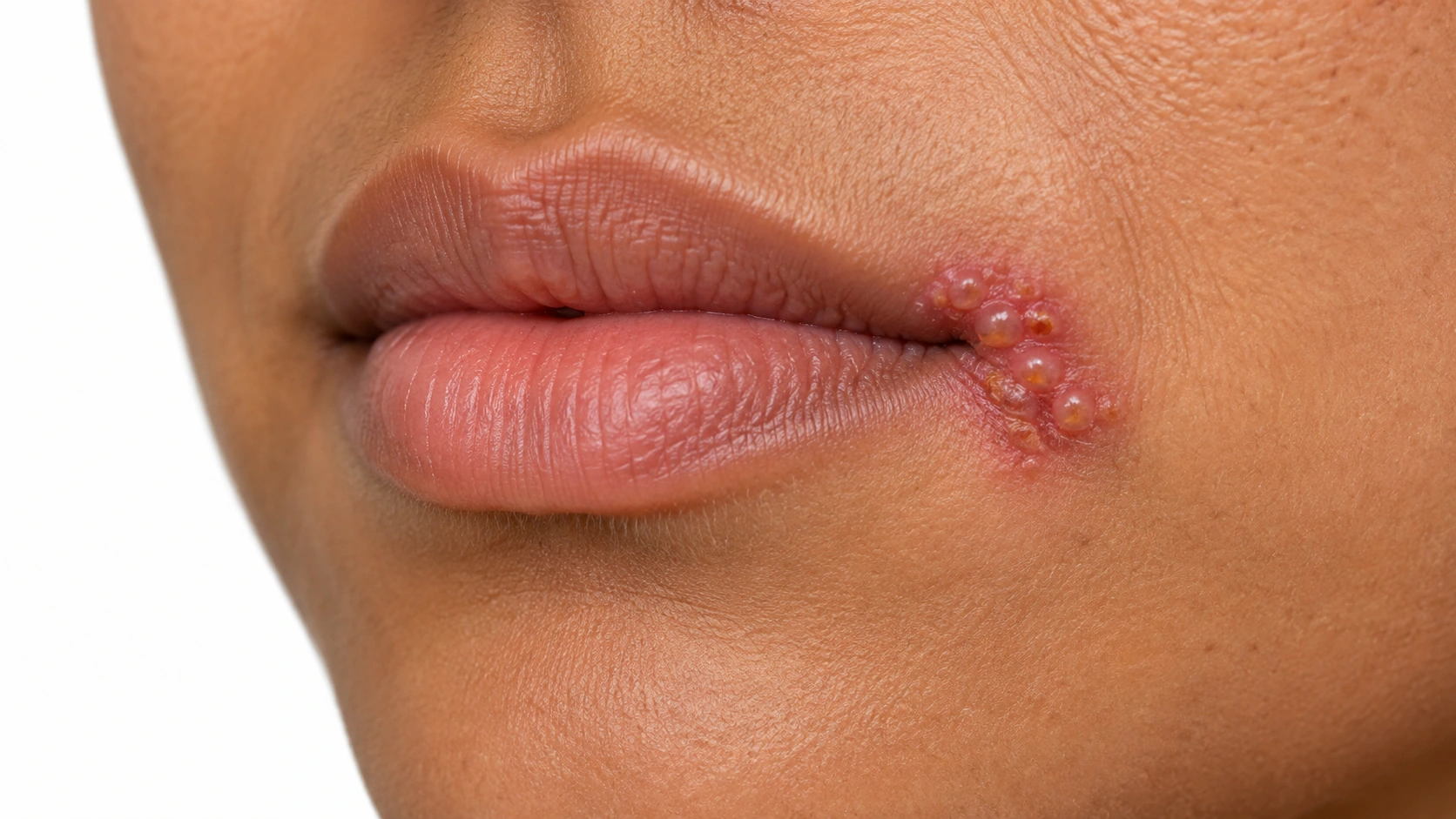
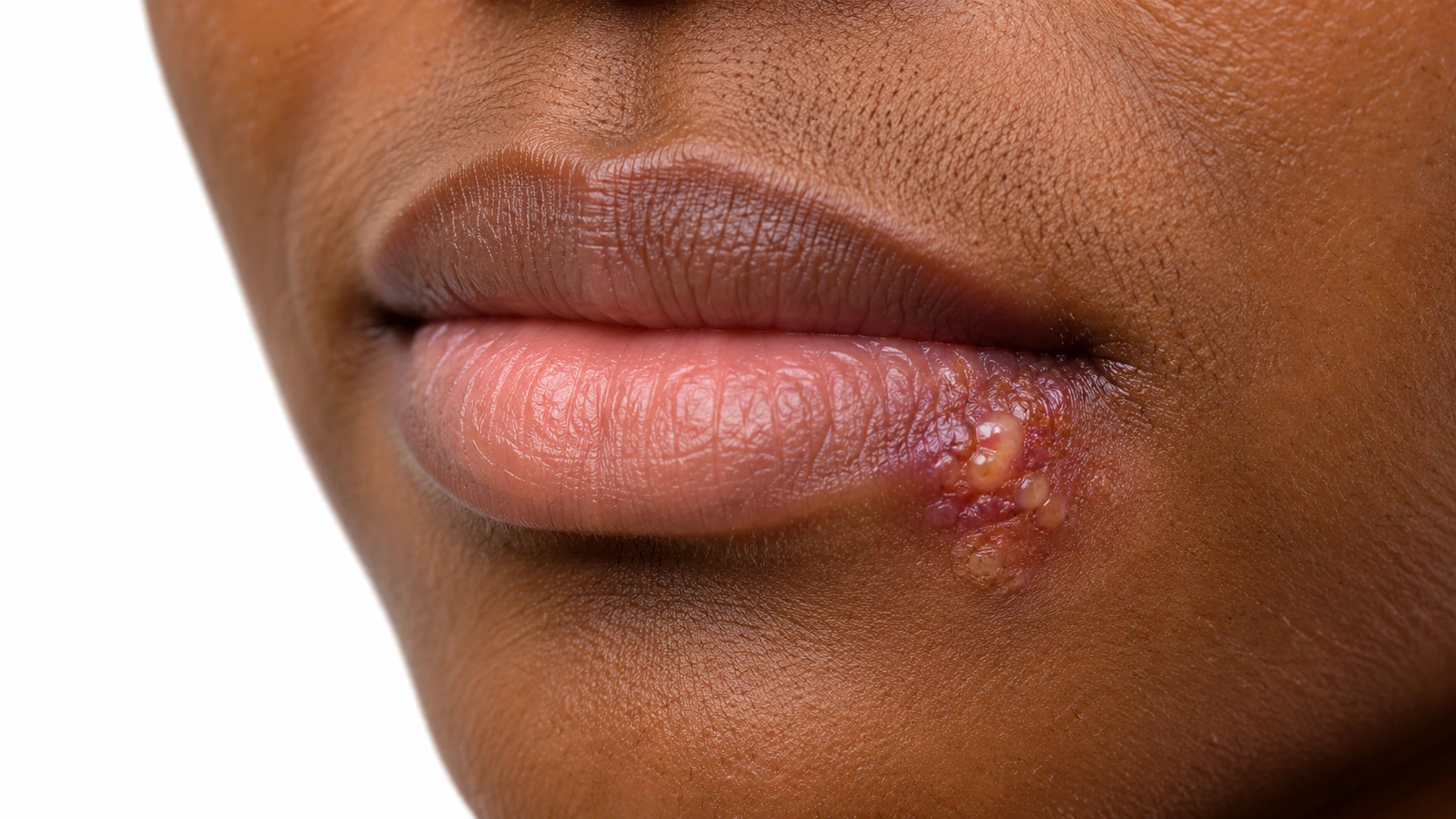
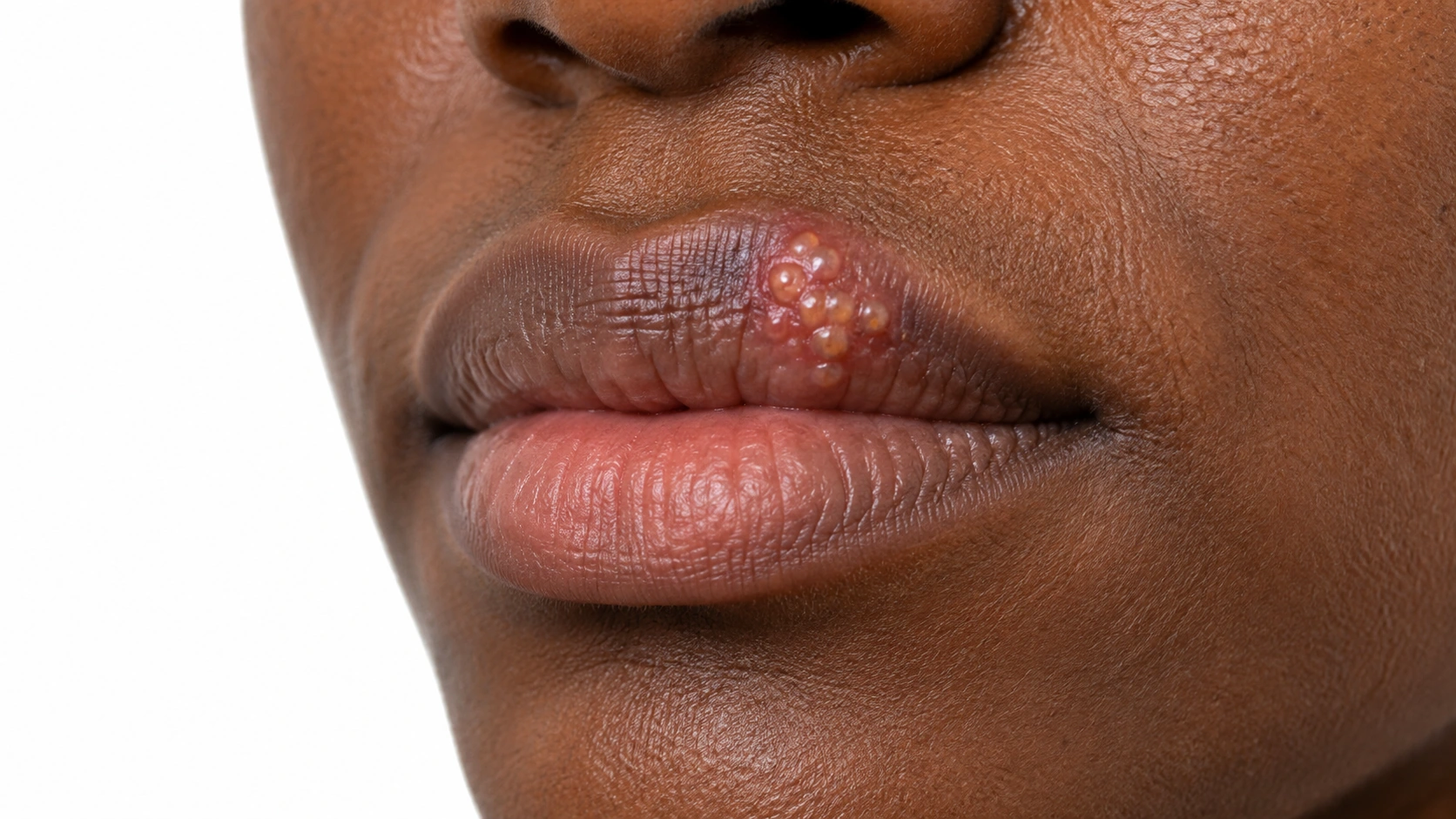
Normal oil glands become visible where they are not associated with a hair follicle. They are a harmless anatomical variation rather than an infection.
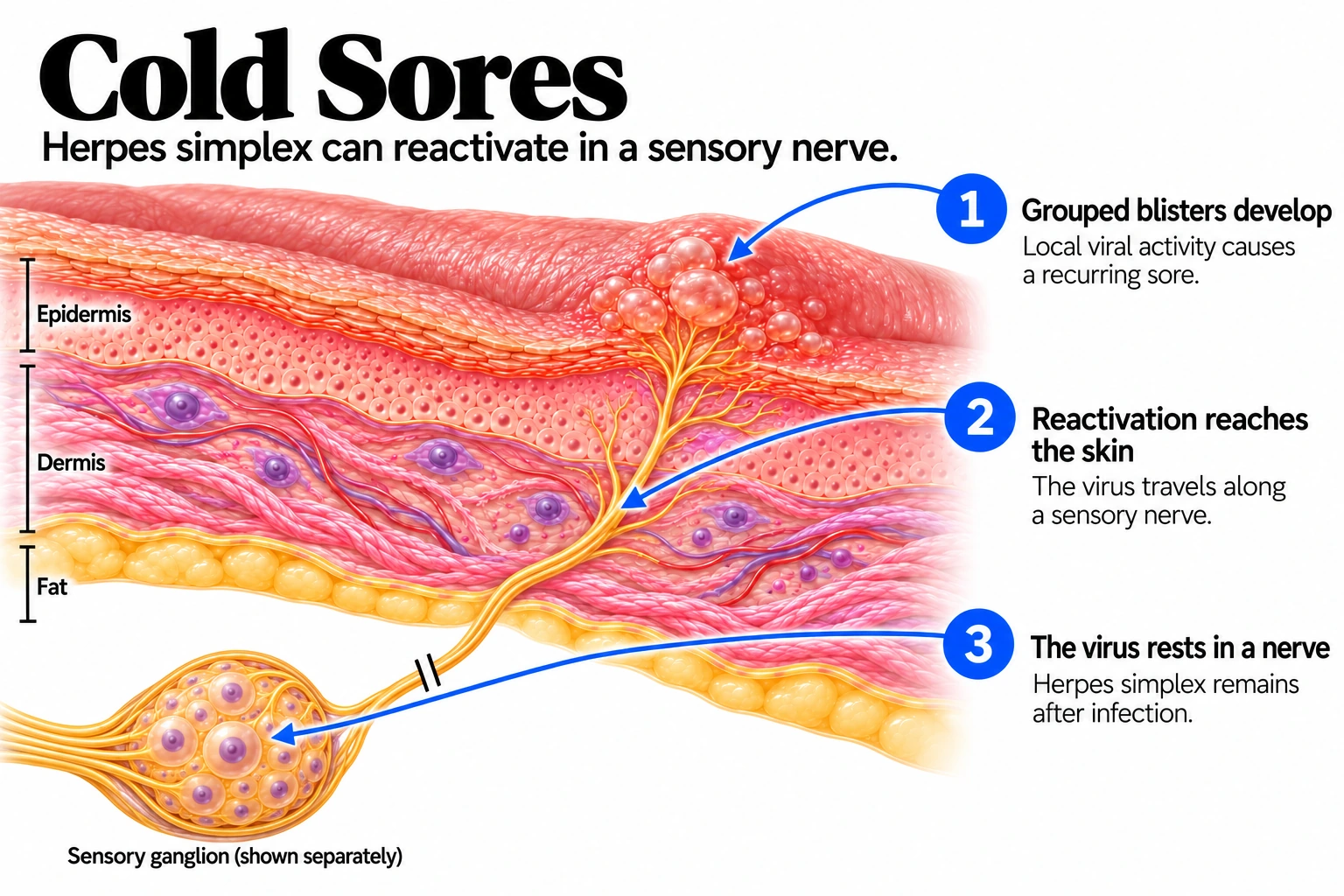
Herpes simplex virus remains in sensory nerves after the initial infection. Reactivation brings the virus back to nearby skin, where local viral activity can produce grouped blisters.
When it usually starts
Fordyce Spots. Often becomes noticeable around puberty or early adult life.
Cold Sores. The first infection often occurs early in life; recurrent episodes can occur at any age afterward.
Causes and triggers
A harmless normal anatomical variant, rather than an infection.
Cold sores are caused by the herpes simplex virus. After the first infection, the virus stays in nerves and can reactivate.
- Kissing — Well established
- Sharing cups, razors and lip balm — Strong link
Daily Care
Habits that help
- Leave clinician-confirmed normal bumps alone
They are normal variants and usually need no treatment. - Wash gently without scrubbing
Routine hygiene is enough; stronger cleansing does not remove the glands or papules. - Reduce friction if the skin becomes irritated
Choose comfortable clothing and stop products that sting. - Ask for assessment if the diagnosis is uncertain
New, changing, painful or ulcerated bumps should not be assumed to be a normal variant.
Avoid
- Avoid: Squeezing, picking, wart acids or home removal
These can cause burns, infection, pigment changes and scars.
Habits that help
- A lip balm with SPF, used daily
Prevention if your episodes follow sun. - Leave the crust alone
Picking slows healing. - Plain petrolatum ointment over the sore
Keeps the crust from splitting. - Hand washing and not sharing
Worth it around newborns and anyone with eczema. - Cool compresses
Use a cool, damp cloth for temporary comfort; it does not shorten the episode. - Start an agreed cold-sore antiviral plan at the first warning symptoms
Tablets in the warning stage shorten the episode. - Docosanol cream, over the counter
Shortens an episode modestly. - Daily suppressive antiviral treatment
For six or more episodes a year. - Use the agreed early-treatment plan rather than waiting for a full cold-sore blister
An agreed antiviral plan may work best at the warning stage. Later symptoms can still need review and treatment.
Avoid
- Avoid: Strong sun on the lips
The most predictable trigger. - Avoid: Being run down
Fever, flu or a heavy cold keeps the immune system busy. - Avoid: Stress and short sleep
Both make reactivation more likely. - Avoid: Picking the crust
Restarts healing and leaves a longer mark. - Avoid: Touching the sore and then your eye
Herpes simplex in the eye does real damage. - Avoid: Sharing during an episode
Lip balm, drinks, utensils, towels. - Avoid: Kissing while a sore is open
Especially near a newborn or anyone with eczema. - Avoid: Injury to the lip
Dental work, waxing, fillers, laser. - Avoid: Letting the area dry out and crack
A split crust heals slower. - Avoid: Steroid cream on its own
A steroid cream calms the redness and swelling, which looks like improvement, while leaving the virus free to spread further. It also changes the appearance enough to make the sore hard to recognize later. There is a combination cream that pairs a steroid with an antiviral, but a steroid alone on a cold sore is a step backwards.
Treatment differences
Confirmed Fordyce spots need no medical treatment. Cosmetic procedures can carry risks of pigment change and scarring; do not squeeze them or apply wart-removal products.
Outlook
Fordyce spots are normal visible oil glands and often persist. They do not need treatment; cosmetic removal can cause pigment changes or scars and does not prevent all new spots.
Most episodes run a week to ten days. People settle into a rhythm - one or two a year, or several, and some have one episode and never another. Frequency drops with age.
Complications
These are not sexually transmitted and do not require treatment when diagnosis is secure.
Herpes can occasionally spread to the eye or extensively through eczema-affected skin. Eye pain, widespread painful blisters, or exposure of a newborn requires prompt medical advice.
When to get help
Have new, painful, ulcerated or changing genital bumps examined to confirm the diagnosis.
Seek care for severe, frequent or persistent episodes. Eye pain or redness, widespread blisters with eczema, or illness in a newborn needs urgent assessment.
Common questions
Fordyce Spots:What is Fordyce Spots?
Visible normal oil glands that appear as small pale or yellowish spots.
Fordyce Spots:What can I do day to day?
Leave the bumps alone; do not squeeze, burn or use wart-removal acids.
Fordyce Spots:When should I get medical advice?
Have new, painful, ulcerated or changing genital bumps examined to confirm the diagnosis.
Cold Sores:How did I get this?
Almost certainly in childhood, from ordinary contact with someone who carried the virus - a kiss, a shared cup or spoon. Most people have no memory of it, because the first infection often causes nothing. It is not about hygiene or anything you did.
Cold Sores:How long am I contagious?
Most easily passed on from when blisters appear until the sore has fully crusted - roughly the first four to five days. Small amounts are shed when nothing is visible. Precautions matter most around newborns, eczema and anyone immune-suppressed.
Cold Sores:Why do I always get it in exactly the same place?
Because the virus lives in one nerve, which supplies one small patch of skin. When it reactivates it travels down to that patch. Some people have two or three usual spots.
Cold Sores:Will it ever go away for good?
The virus stays in the body permanently, so there is no cure. But episodes usually become less frequent over the years, and daily suppressive treatment can reduce them a great deal. Plenty of people effectively stop having them.
Cold Sores:Is it safe to kiss my baby?
Not while you have an active sore. Herpes simplex is dangerous in newborns in a way it is not in older children or adults. Do not kiss the baby, wash your hands before handling them, and cover the sore. If a newborn develops blisters or a fever, or becomes unusually sleepy or floppy, that is an emergency.
Cold Sores:Does the treatment work if I start it late?
Less well. Antiviral tablets stop the virus multiplying, and by the time blisters are out most of that has happened. Still worth taking for a severe episode, but the benefit is in the first 24 hours.
Sources
Sources and further reading
Keep exploring.
Cold Sores
Cold Sores vs Impetigo

Cold Sores vs Allergic Contact on Lips

Cold Sores vs Canker Sores
Cold Sores vs Cracked Mouth Corners
Cold Sores vs Pimple on the Lip
Shingles vs Cold Sores

Fordyce Spots vs Milia
Genital Warts vs Fordyce Spots
Eczema
Petrolatum