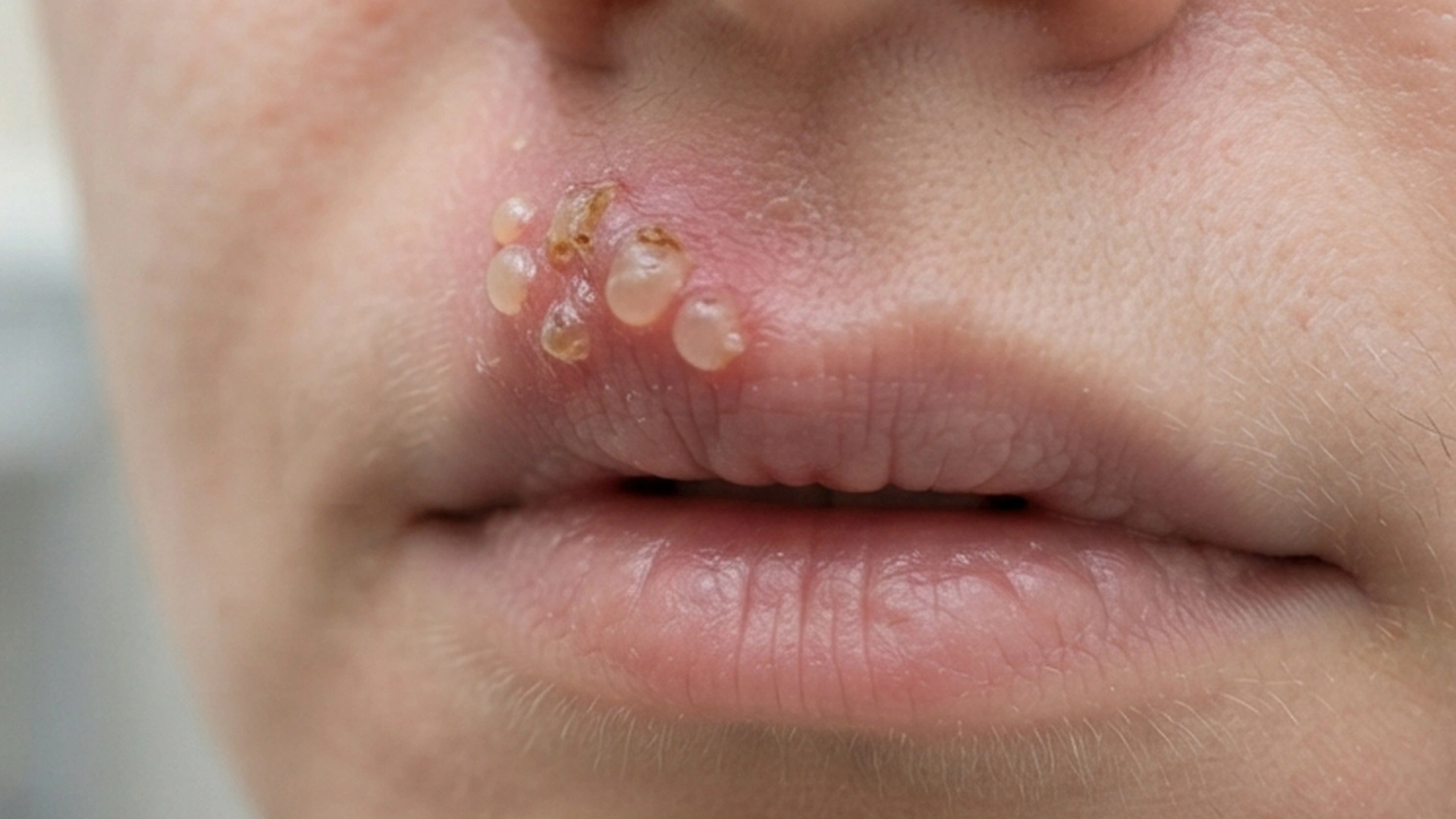
Fordyce Spots vs Milia
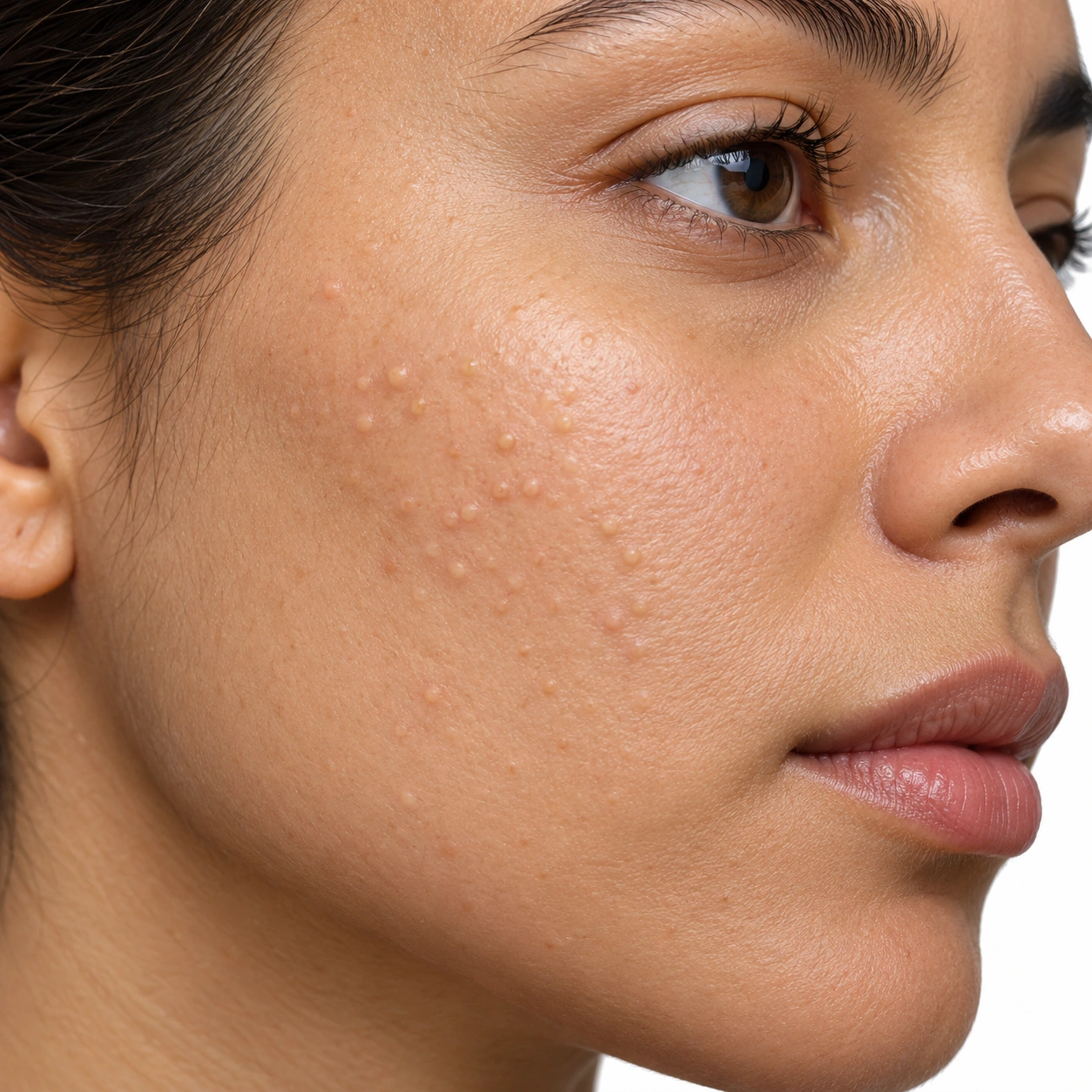
Visible normal oil glands that appear as small pale or yellowish spots. Milia are tiny, firm white bumps that sit just under the surface of the skin, most often around the eyes. Each one is a small pocket of trapped keratin with no opening, which is why squeezing does nothing and why a professional can remove one in seconds.

Key differences
The same eight facts on every condition comparison.
What is it?
- What it is
Visible normal oil glands that appear as small pale or yellowish spots.
- They are tiny cysts.
Milia contain keratin just beneath the skin surface. - They look like white bumps.
They are firm and pearly, often on the eyelids or cheeks. - They are harmless.
Milia are different from acne whiteheads. - Unusual bumps need a check.
Inflamed, widespread or persistent bumps may need assessment.
What it looks like
Fordyce Spots
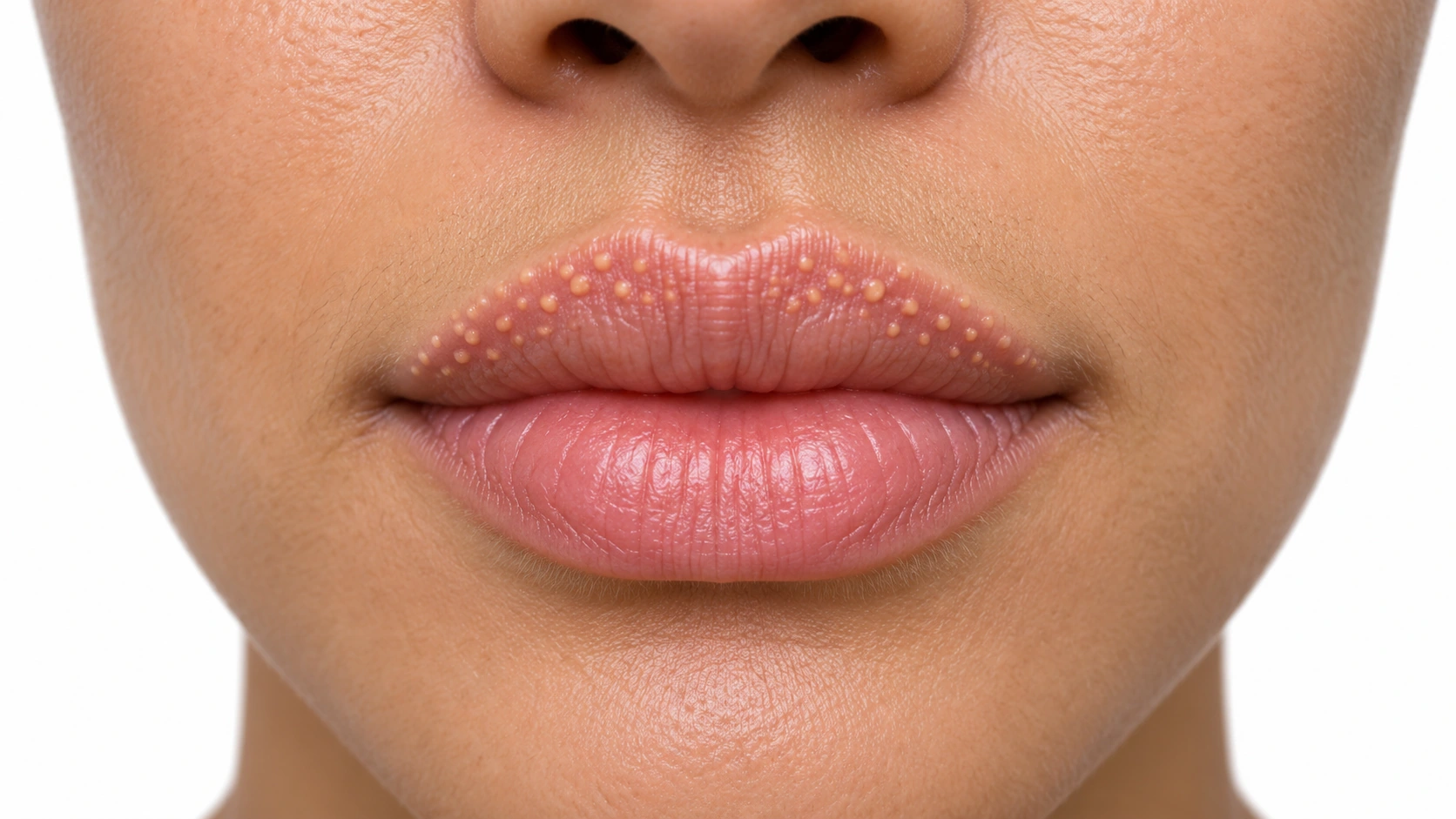
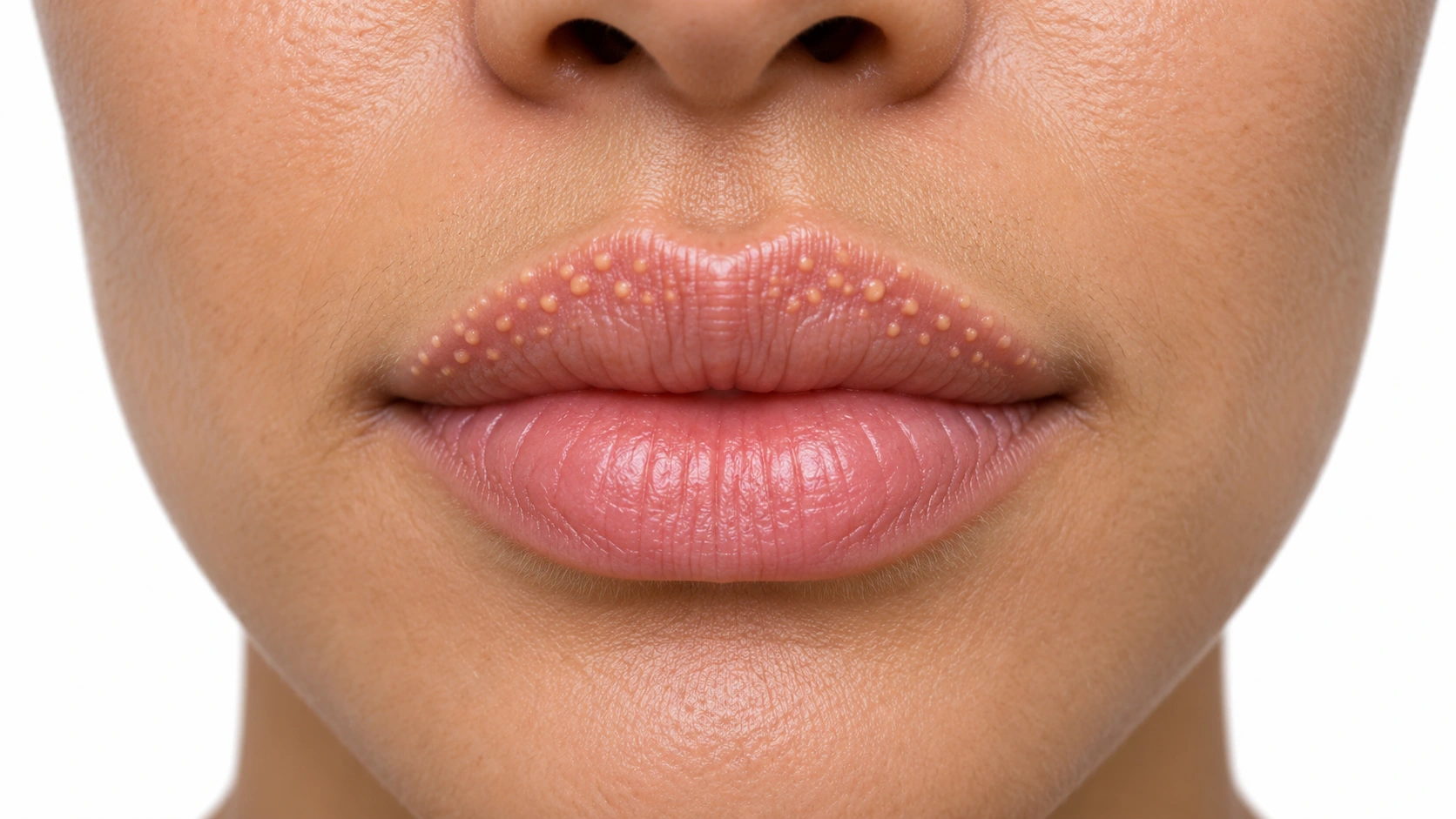
Fordyce Spots Small yellow-white dots line the upper lip surface.
Milia

Primary milia Form on their own, often around the eyes.
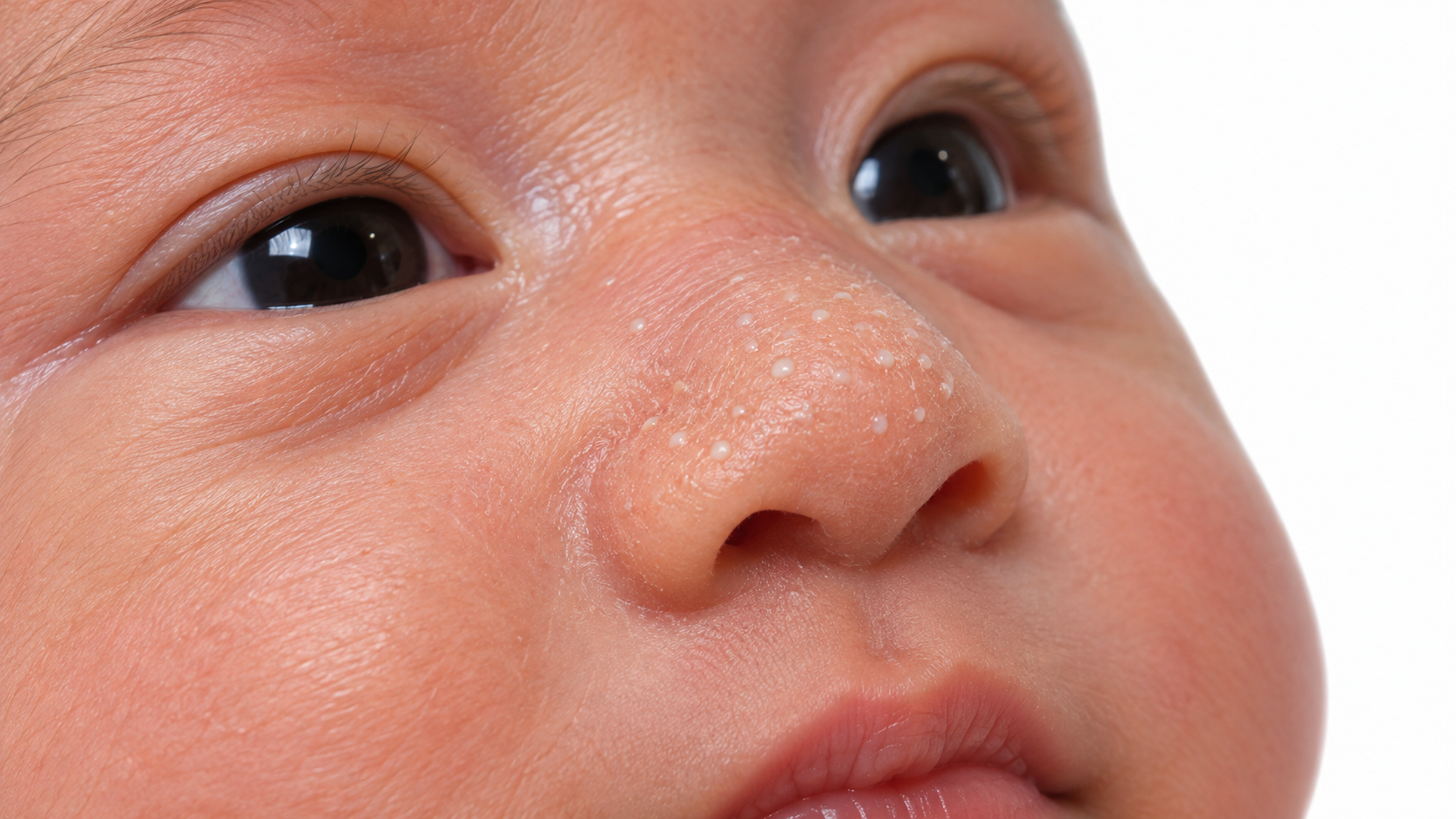
Newborn milia Tiny white bumps cluster across the nose and cheeks.
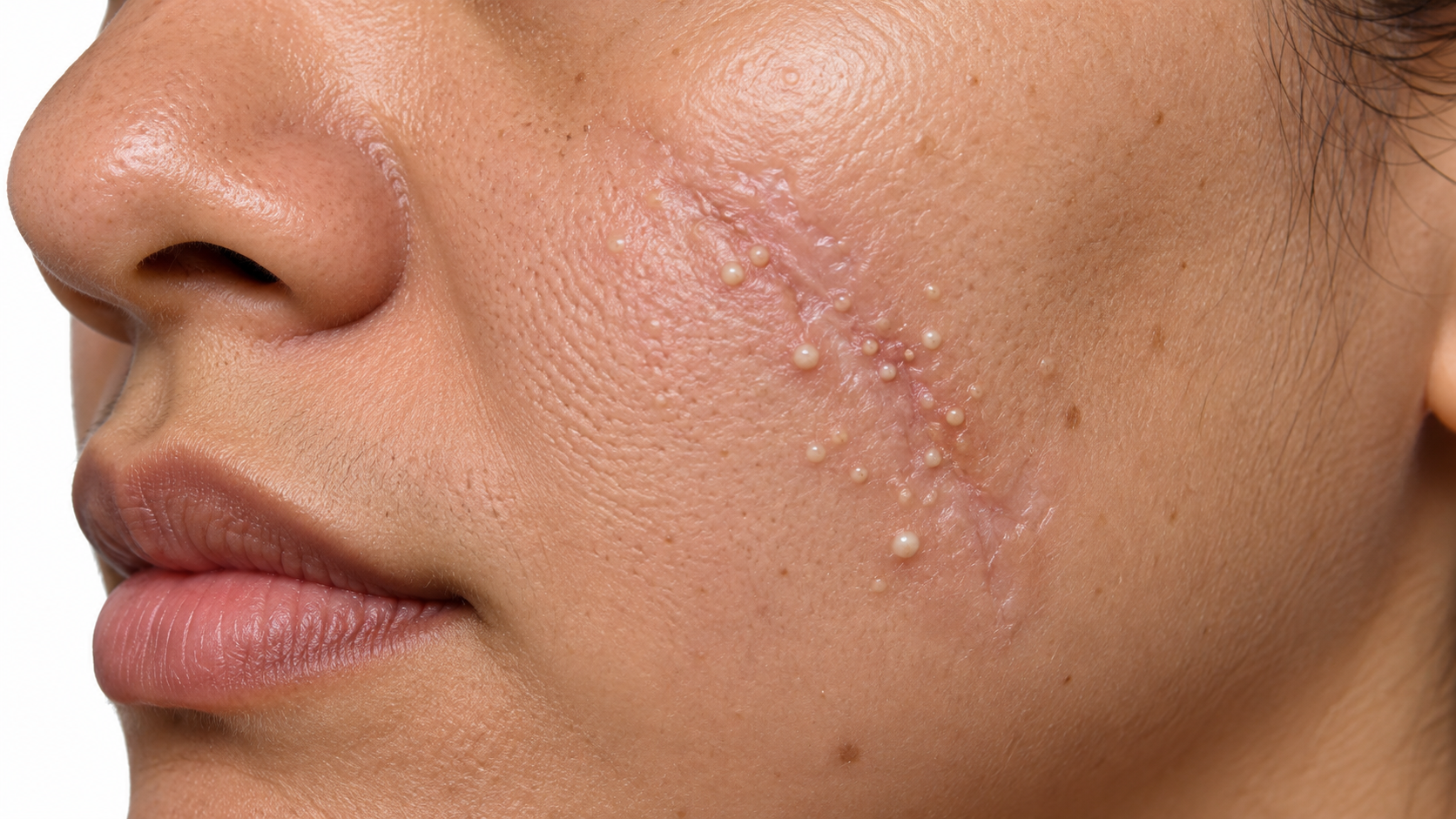
Secondary milia Form after burns, blisters or heavy creams.
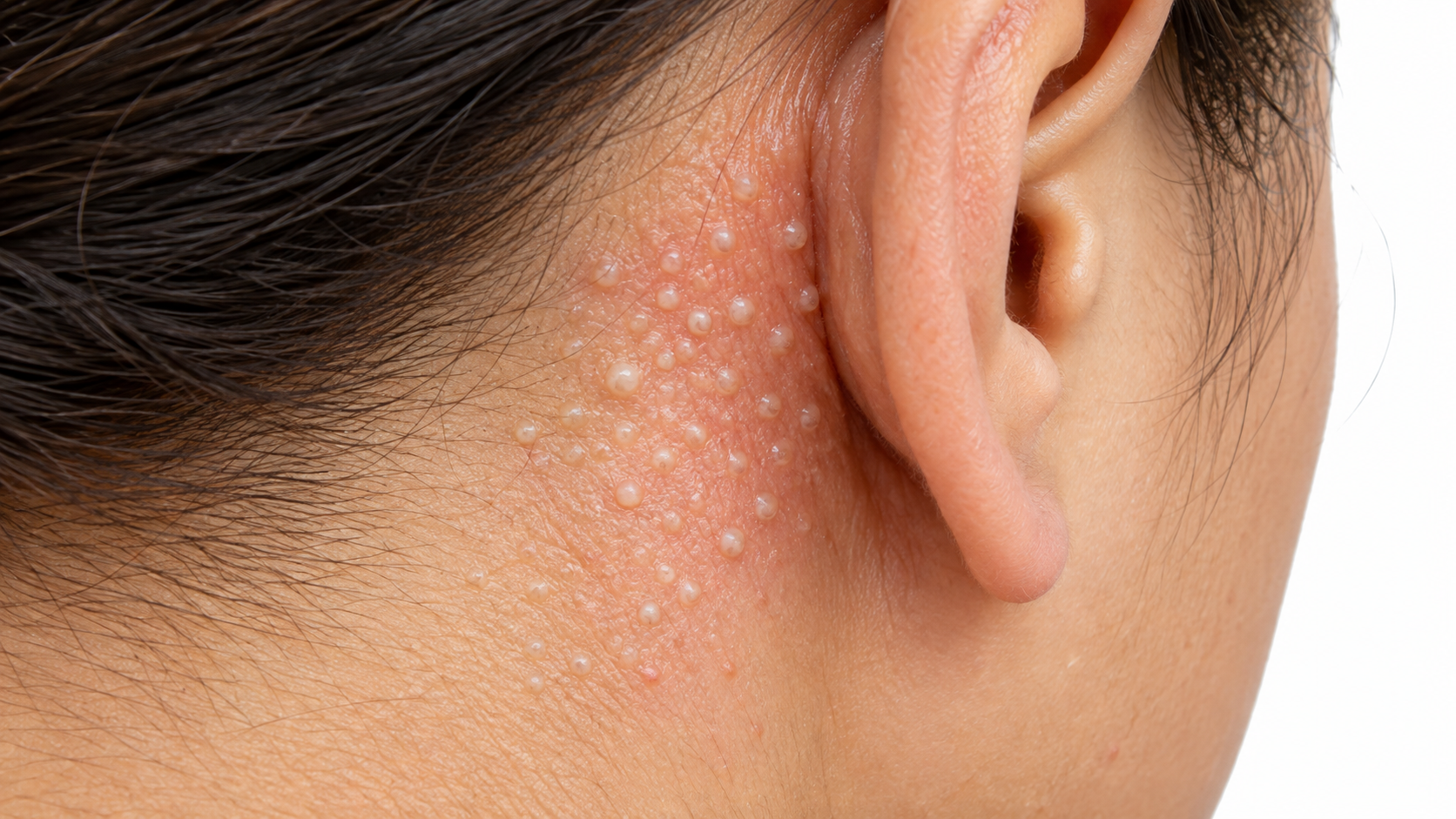
Milia en plaque Many milia on a raised patch; rare.
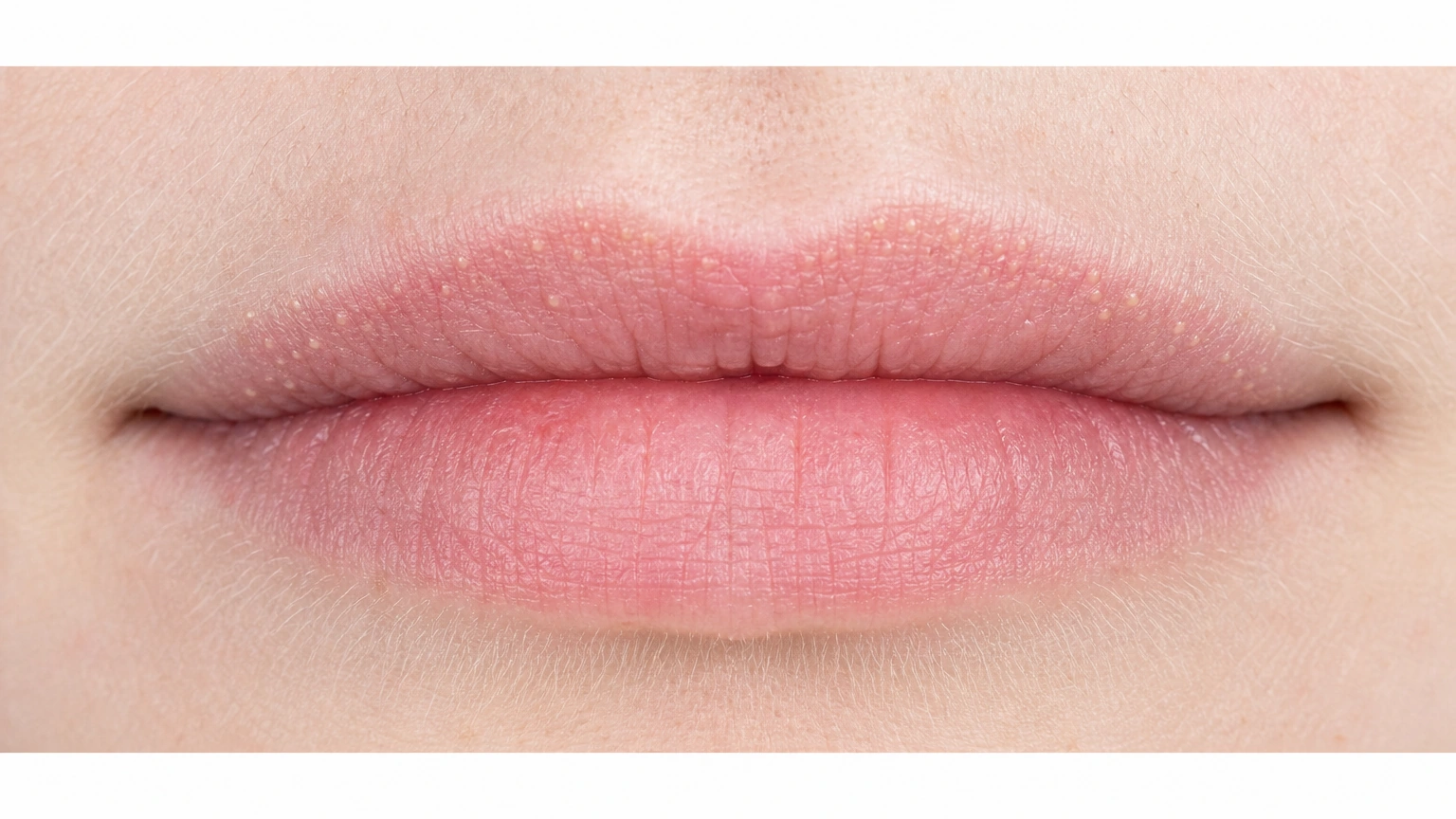
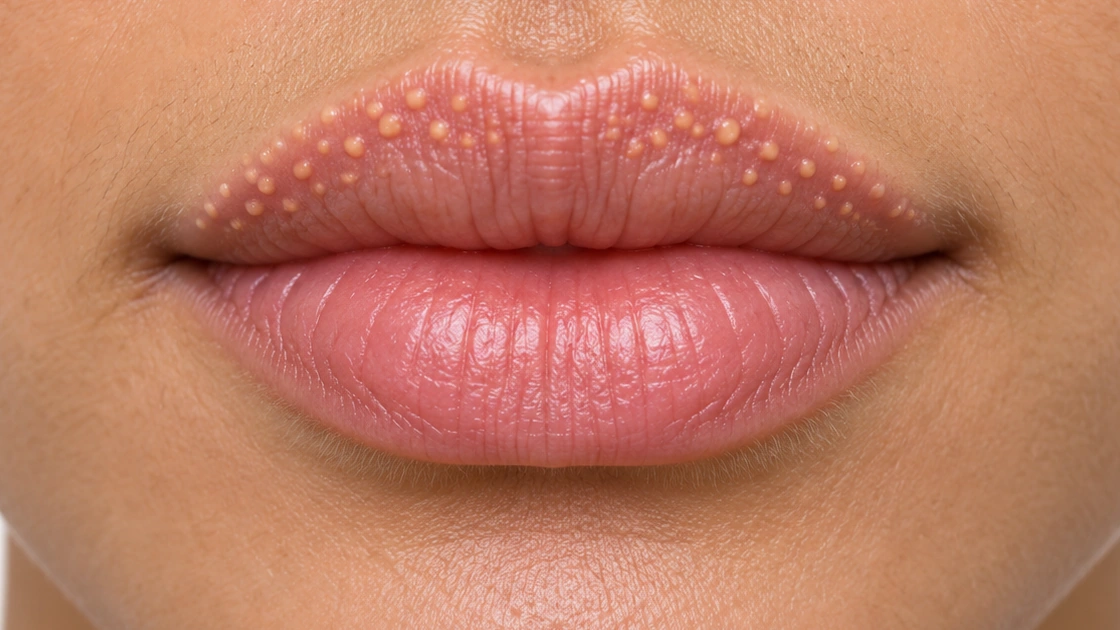
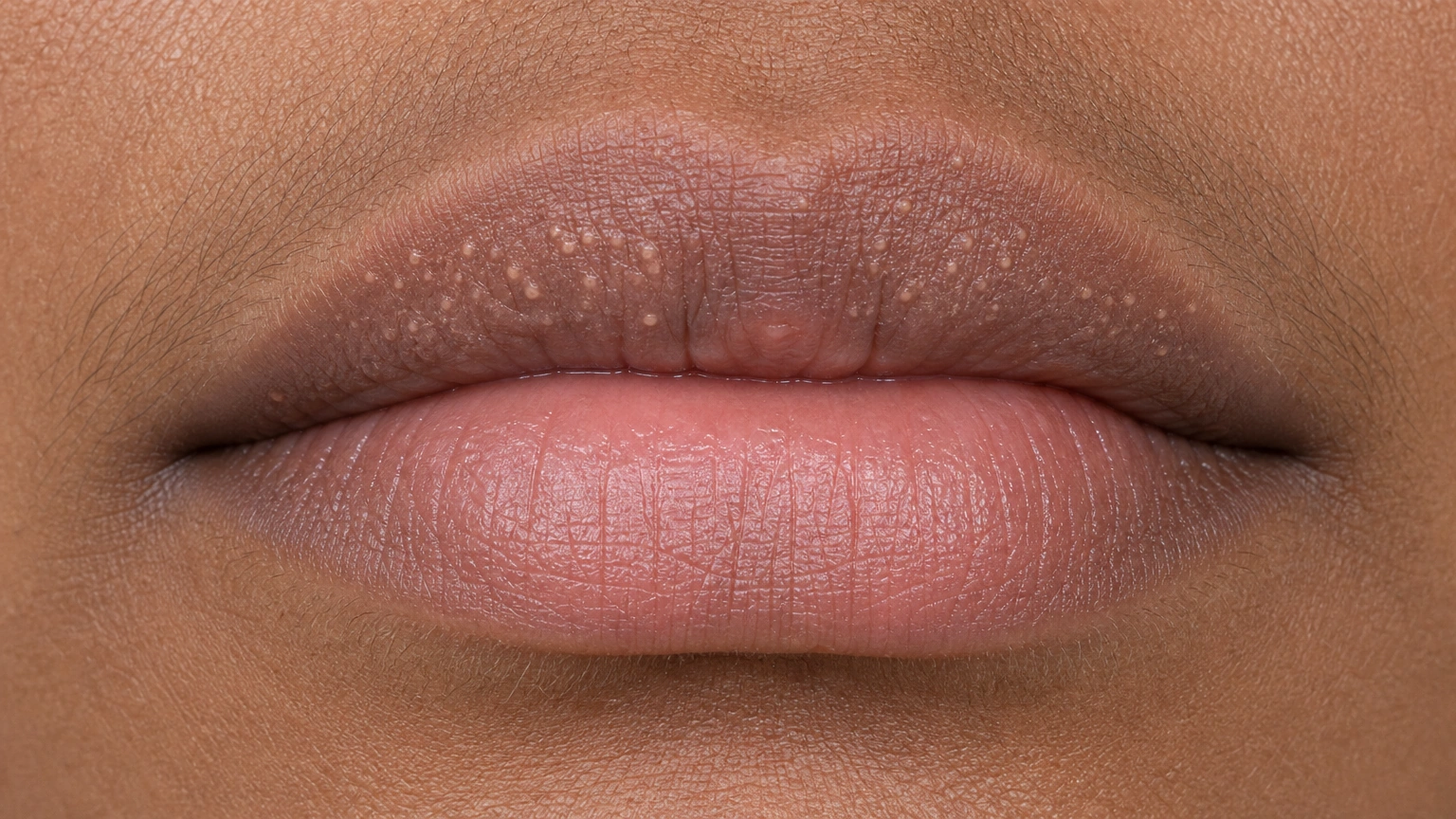
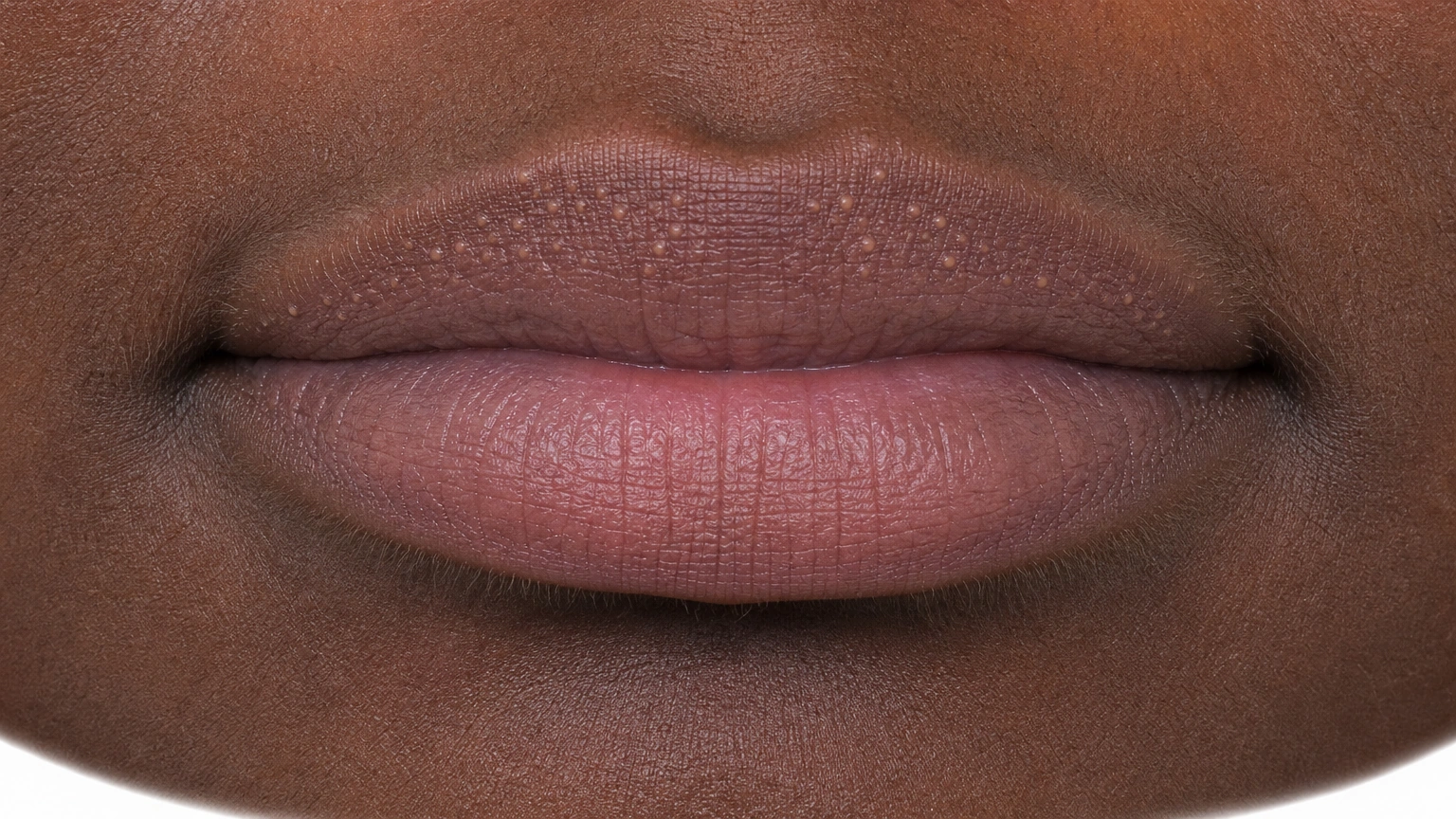
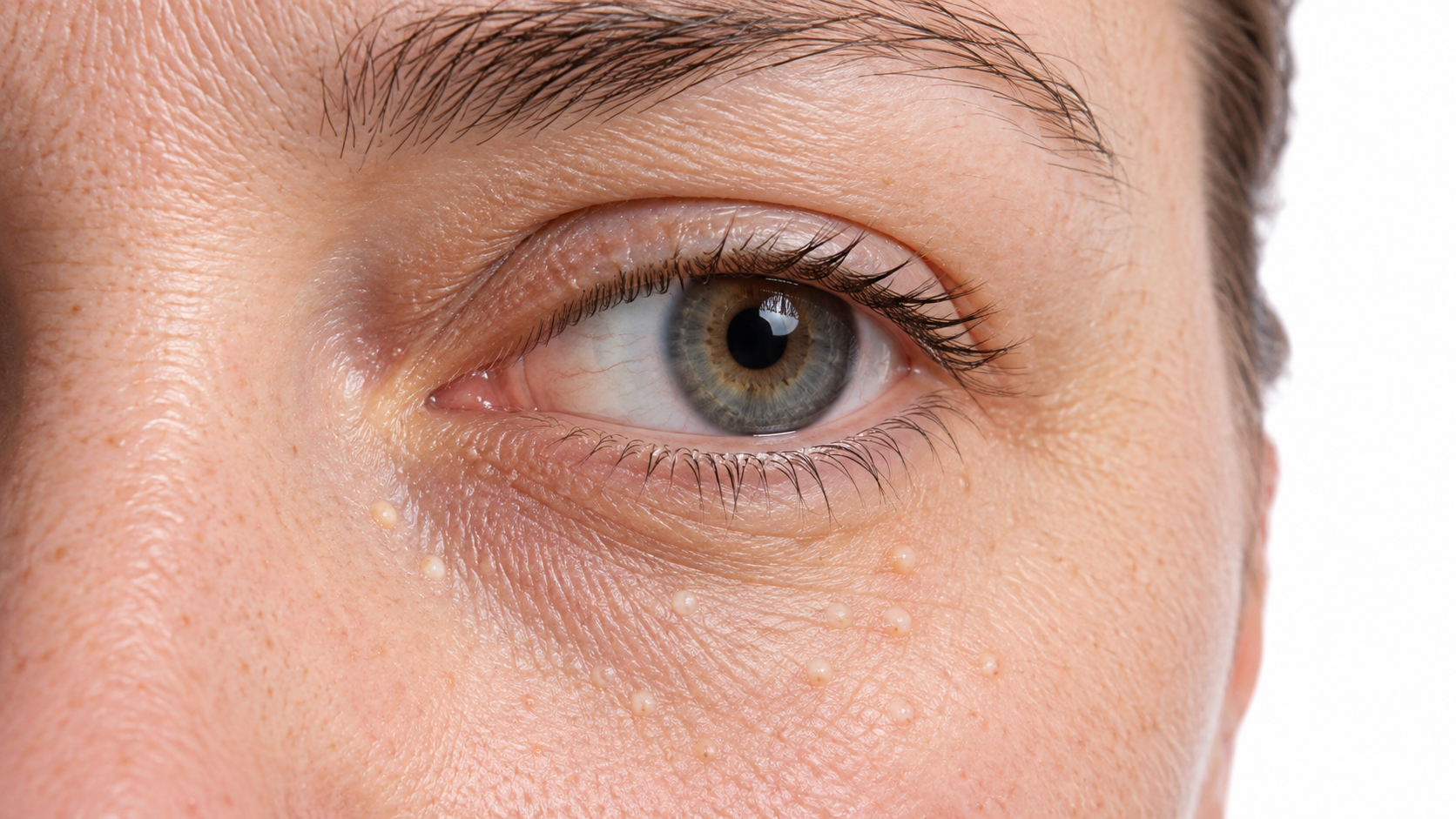
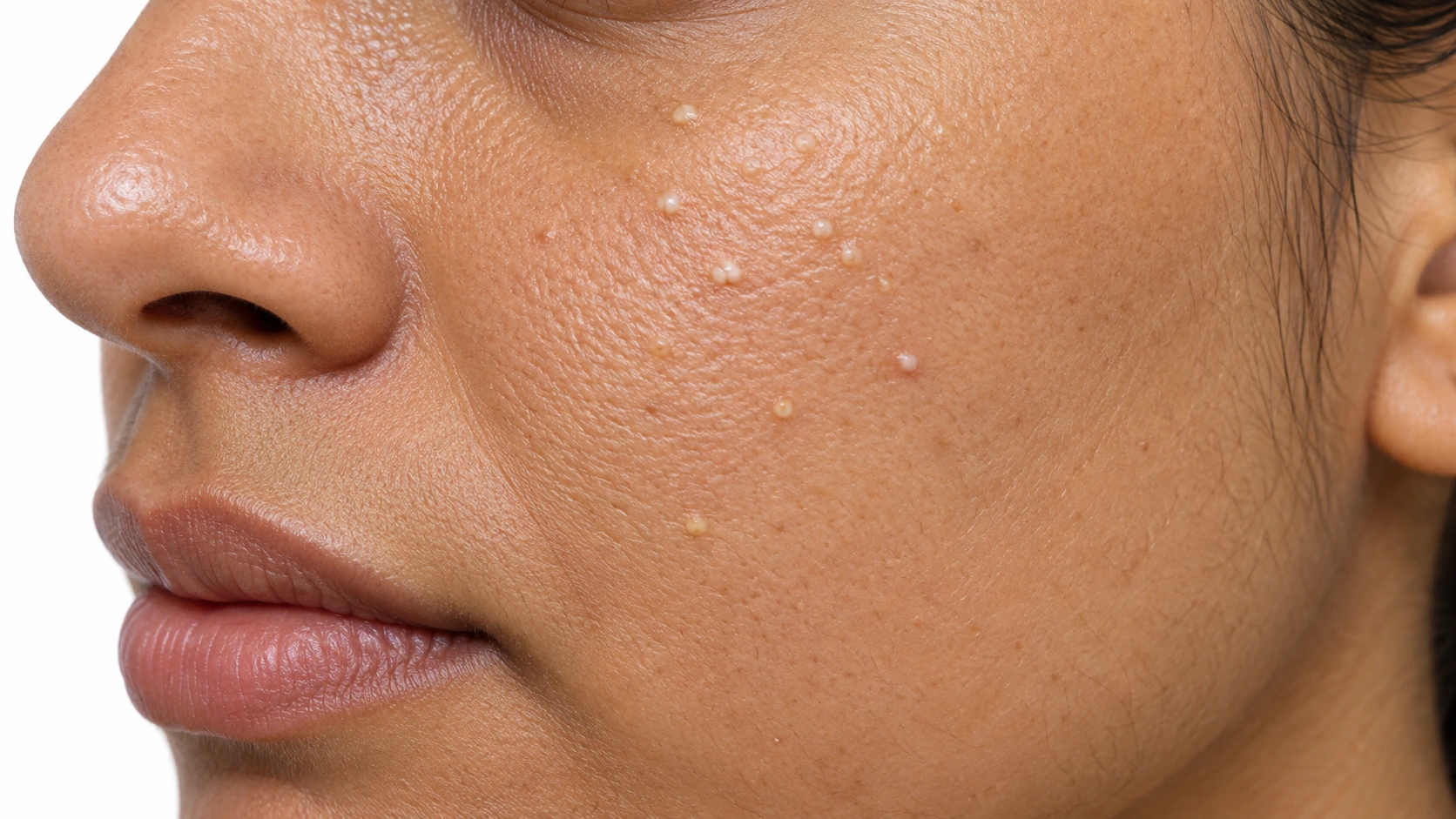
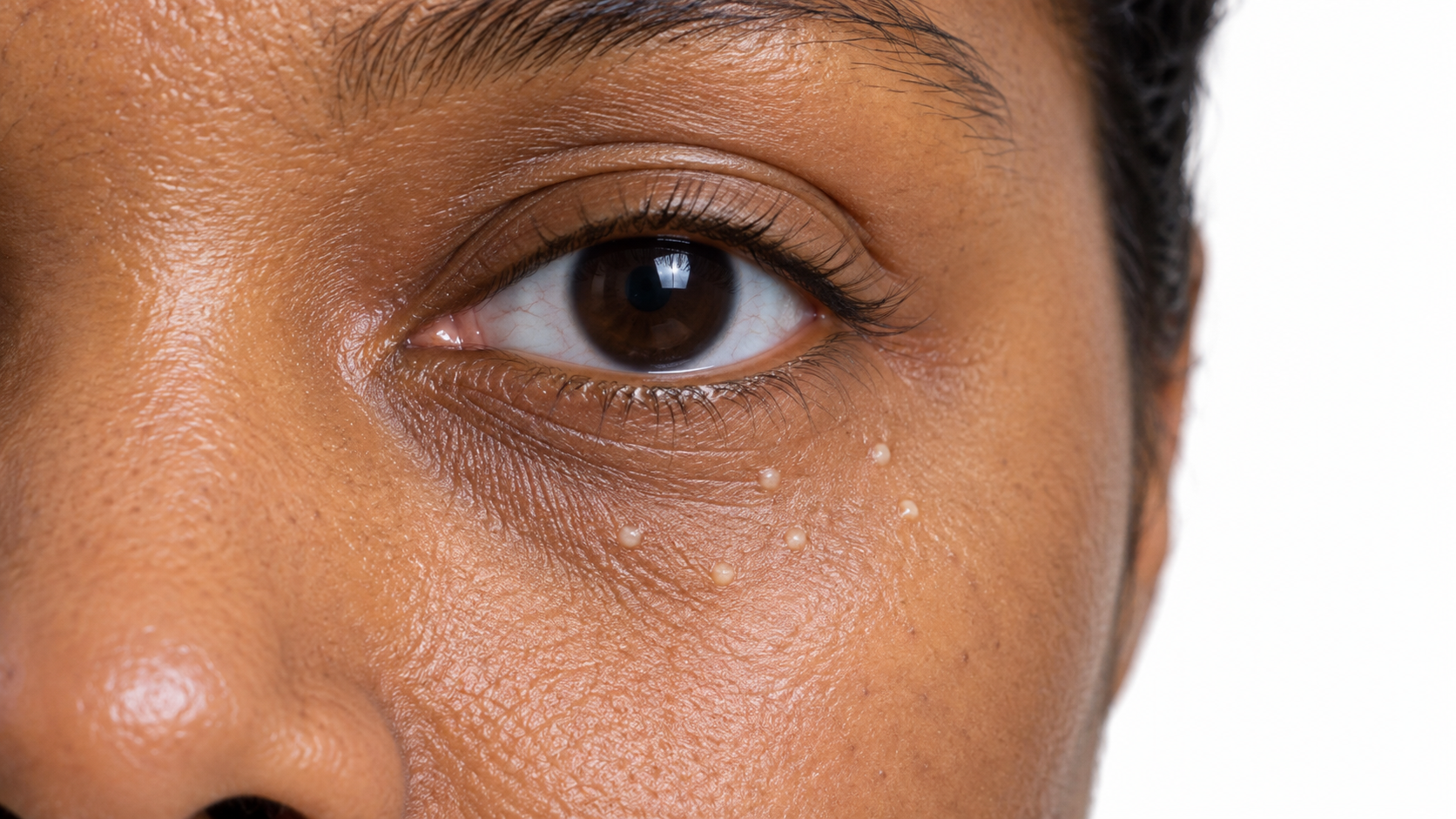
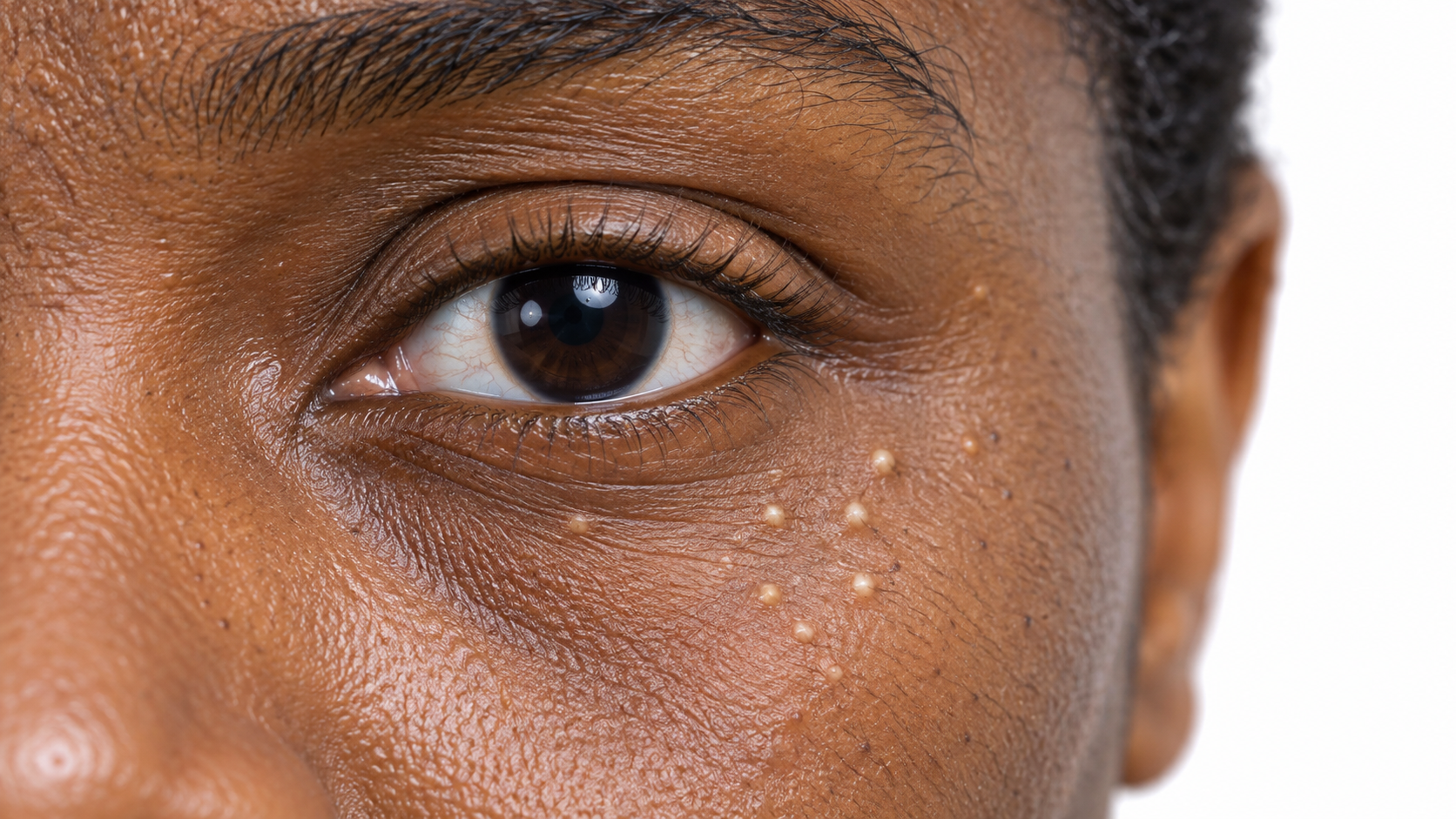

Normal oil glands become visible where they are not associated with a hair follicle. They are a harmless anatomical variation rather than an infection.
Milia are tiny cysts that trap keratin, a normal skin protein, just beneath the surface. The enclosed keratin makes a firm pale bump rather than an inflamed acne spot.
When it usually starts
Fordyce Spots. Often becomes noticeable around puberty or early adult life.
Milia. Can occur at any age and are especially common in newborns.
Causes and triggers
A harmless normal anatomical variant, rather than an infection.
Milia form when keratin, a skin protein, gets trapped in a tiny pocket just under the surface. They can appear on their own or after skin damage.
Daily Care
Habits that help
- Leave clinician-confirmed normal bumps alone
They are normal variants and usually need no treatment. - Wash gently without scrubbing
Routine hygiene is enough; stronger cleansing does not remove the glands or papules. - Reduce friction if the skin becomes irritated
Choose comfortable clothing and stop products that sting. - Ask for assessment if the diagnosis is uncertain
New, changing, painful or ulcerated bumps should not be assumed to be a normal variant.
Avoid
- Avoid: Squeezing, picking, wart acids or home removal
These can cause burns, infection, pigment changes and scars.
Habits that help
- A lighter product around the eyes
Low cost, low risk, uncertain benefit. - Daily sunscreen
Keeps any mark after extraction from darkening. - Professional extraction
A tiny nick lifts the pearl out whole. - A gentle chemical exfoliant
Salicylic or low-strength glycolic acid keeps ducts clearer. - Treating the cause in secondary milia
Stops new ones forming; extraction alone does not.
Avoid
- Avoid: Squeezing them
No opening — pressure only bruises and marks the skin. - Avoid: Picking with fingernails
Risks infection, a scar or a dark mark. - Avoid: Using a needle on yourself at home
Unsterile and hard to aim near the eye. - Avoid: Scrubs, brushes and grainy exfoliants
Abrading the surface cannot reach the sac. - Avoid: Pore strips and extraction tools
Nothing to grip — there is no opening. - Avoid: Repeated injury to the same area
Each healing episode can seal off another fragment. - Avoid: Aggressive resurfacing
Deep peels, dermabrasion and ablative lasers are triggers. - Avoid: Heavy occlusive balms in one spot
Worth changing if milia keep forming there. - Avoid: Waiting for cleansers to fix it
Cleansing cannot reach a sealed sac.
Treatment differences
Confirmed Fordyce spots need no medical treatment. Cosmetic procedures can carry risks of pigment change and scarring; do not squeeze them or apply wart-removal products.
Outlook
Fordyce spots are normal visible oil glands and often persist. They do not need treatment; cosmetic removal can cause pigment changes or scars and does not prevent all new spots.
The course depends almost entirely on age: in a newborn the bumps clear themselves, and in an adult they sit still. Milia that follow an injury or procedure appear one to two months after the skin healed and often clear over several months, though they can be extracted sooner.
Complications
These are not sexually transmitted and do not require treatment when diagnosis is secure.
- Gone from that spot for good
More details
Gone from that spot for good
An emptied milium does not return there. New ones can form nearby — a new bump, not a recurrence.
When to get help
Have new, painful, ulcerated or changing genital bumps examined to confirm the diagnosis.
Ask a clinician about persistent or troublesome bumps, especially near the eyes. Avoid trying to pierce or extract them yourself.
Common questions
Fordyce Spots:What is Fordyce Spots?
Visible normal oil glands that appear as small pale or yellowish spots.
Fordyce Spots:What can I do day to day?
Leave the bumps alone; do not squeeze, burn or use wart-removal acids.
Fordyce Spots:When should I get medical advice?
Have new, painful, ulcerated or changing genital bumps examined to confirm the diagnosis.
Milia:Why will they not pop?
Because there is no pore. A milium is a sealed sac of keratin under intact skin, so nothing has a route out. Pressure sends the contents sideways into the tissue, which is how bruising and dark marks happen. Open the roof first and it comes out.
Milia:Can I get rid of them at home?
You can reduce how many new ones form, with a retinoid at night over two to three months. You cannot reliably remove the ones you have, and please do not try with a needle - eyelid skin is thin, the aim is difficult, and the usual result is a mark that outlasts the bump.
Milia:Does extraction hurt or leave a scar?
A brief scratch rather than real pain; most people need no anesthetic. One small nick and light pressure heals in a few days without a scar. Repeated digging at the same spot is what leaves marks.
Milia:Will they come back?
The one removed does not return. New ones can form elsewhere, especially if you are prone to them or something is triggering them — a blistering condition, a resurfacing procedure, steroid cream. That is a new bump, not a recurrence.
Milia:My newborn has white bumps on the nose. What should I do?
Nothing. Newborn milia are common and clear within a few weeks as the ducts finish maturing. No creams, no rubbing, no special washing. If they are still there after a couple of months, or the baby has widespread bumps with fragile or blistering skin, have them looked at.
Milia:I got them after a laser treatment. Is that normal?
Yes. Milia are a recognized consequence of laser resurfacing, dermabrasion and deep peels, usually a month or two after the skin heals. They often settle over several months, and can be extracted any time if they bother you.
Sources
Sources and further reading
Keep exploring.
Milia
Acne Papules vs Milia

Acne vs Milia

Baby Acne vs Milia
Flat Warts vs Milia
Milia vs Molluscum Contagiosum
Milia vs Sebaceous Hyperplasia
Milia vs Skin Tag
Xanthelasma vs Milia
Comedonal Acne vs Milia
Whiteheads vs Milia