It is a blistering agent.
Cantharidin is applied to selected lesions by a clinician.
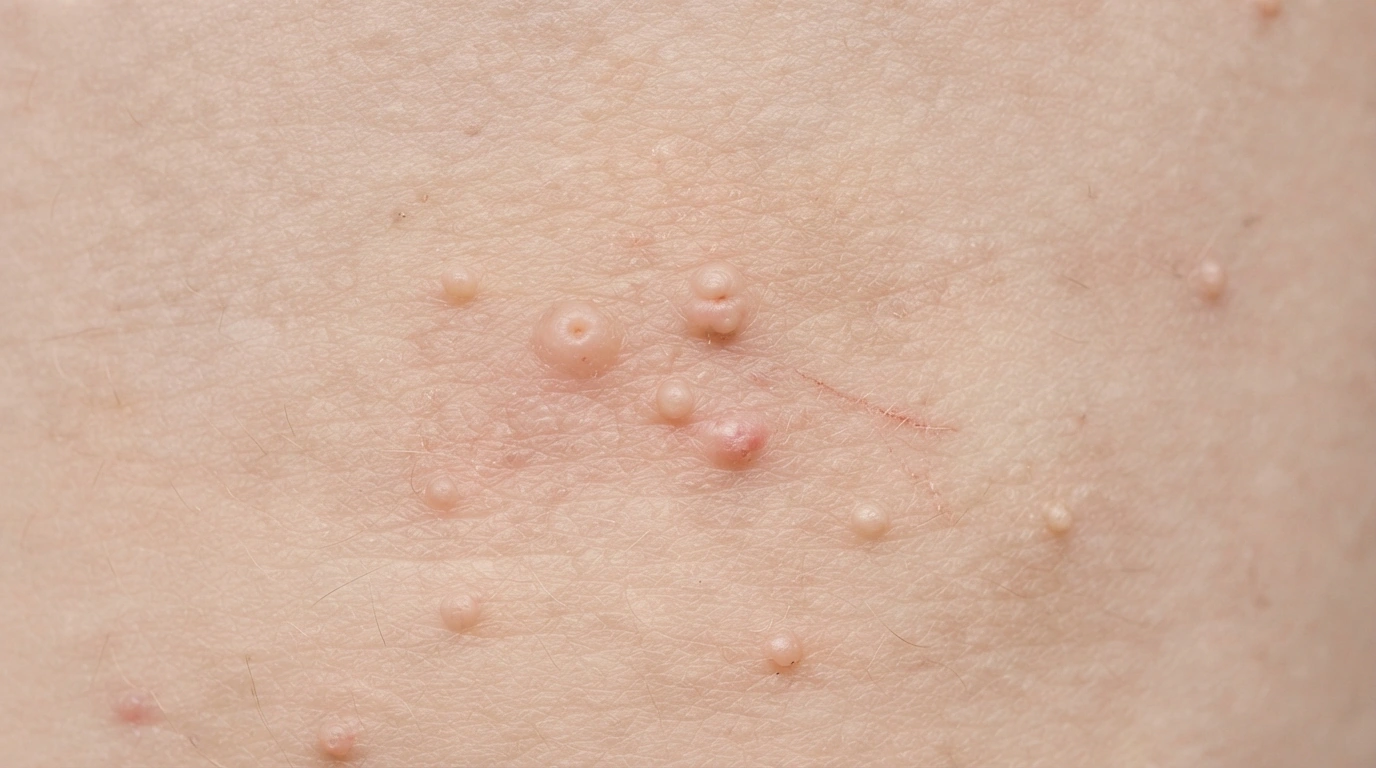
Cantharidin: A liquid made from a blister beetle extract, painted onto molluscum bumps or warts in the office and washed off at home at a set time. It causes a small, controlled blister that lifts the lesion off. Putting it on does not hurt, which is why it suits young children. The blister that follows can.
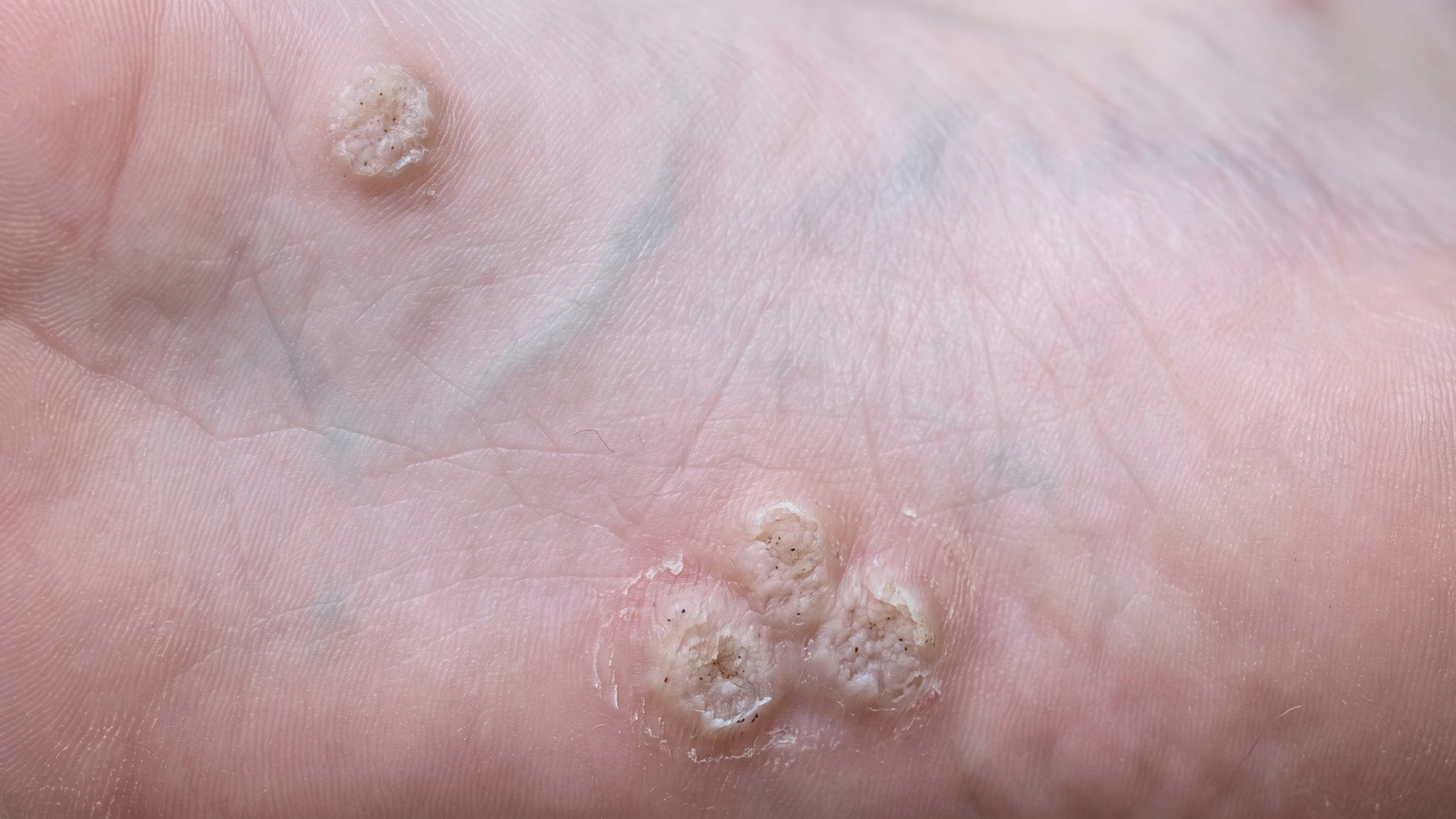
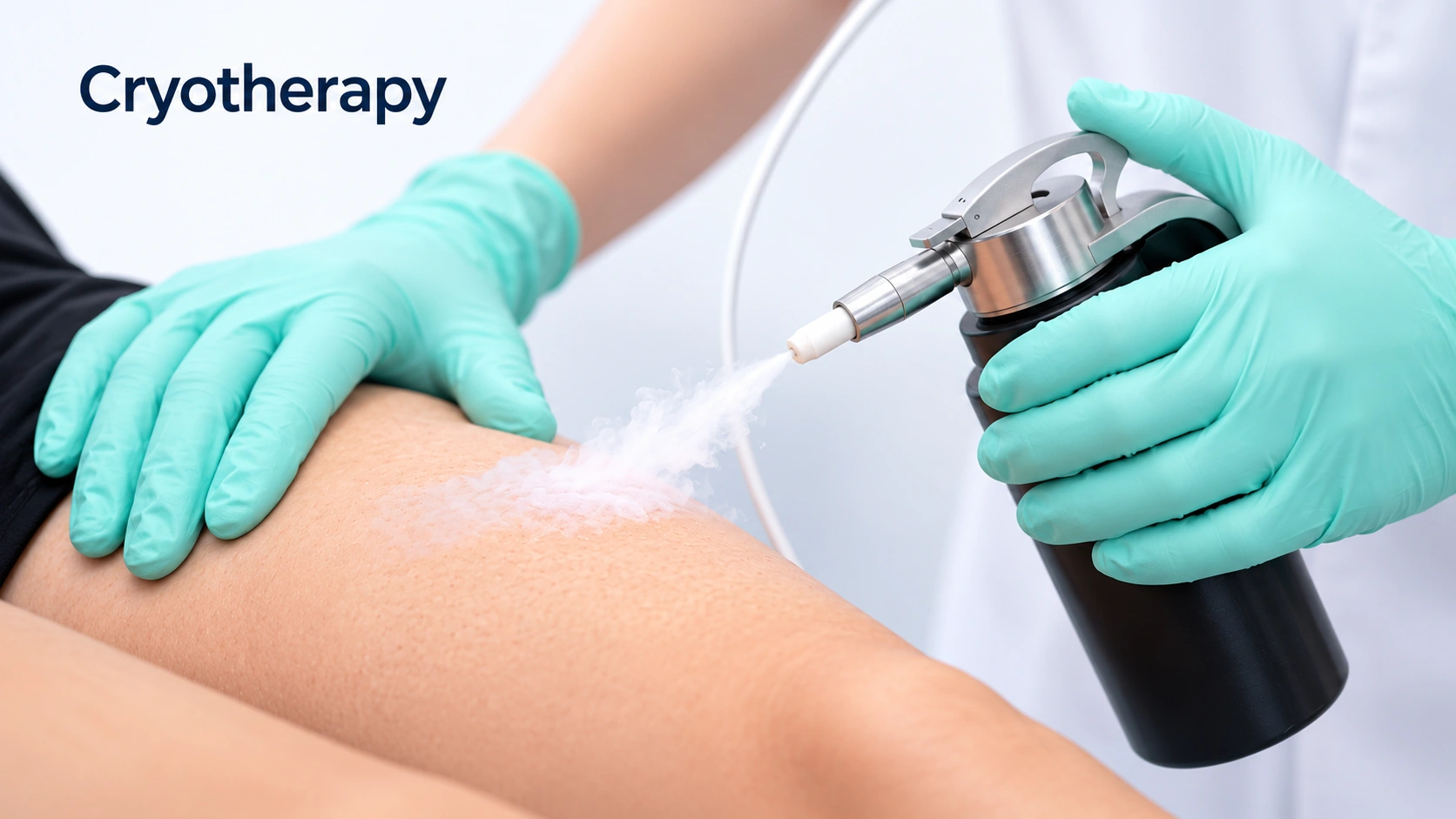
Cryotherapy: Liquid nitrogen is sprayed or dabbed onto a spot to freeze and destroy it. It is a standard treatment for warts, precancerous sun spots and some harmless growths. It commonly leaves a pale mark that does not fully come back.

Choose for molluscum or warts in young children who won't tolerate freezing or scraping — painless to apply.
Choose for quick removal of warts, sun-damage spots or harmless growths — accepting a possible pale mark.
Can you have both?
Both treat warts and molluscum. Cantharidin is painless to apply and suits children; cryotherapy freezes the spot. One is usually chosen per spot.
Cantharidin is applied to selected lesions by a clinician.
YCANTH is approved in the US for molluscum from age two.
It is not a wart-removal liquid for home use.
It must be kept away from the mouth and eyes.
Liquid nitrogen destroys selected tissue through freezing and thawing.
It is used for benign or precancerous spots.
Nothing remains for microscopic examination.
A diagnosis is needed first.
Approved for molluscum.
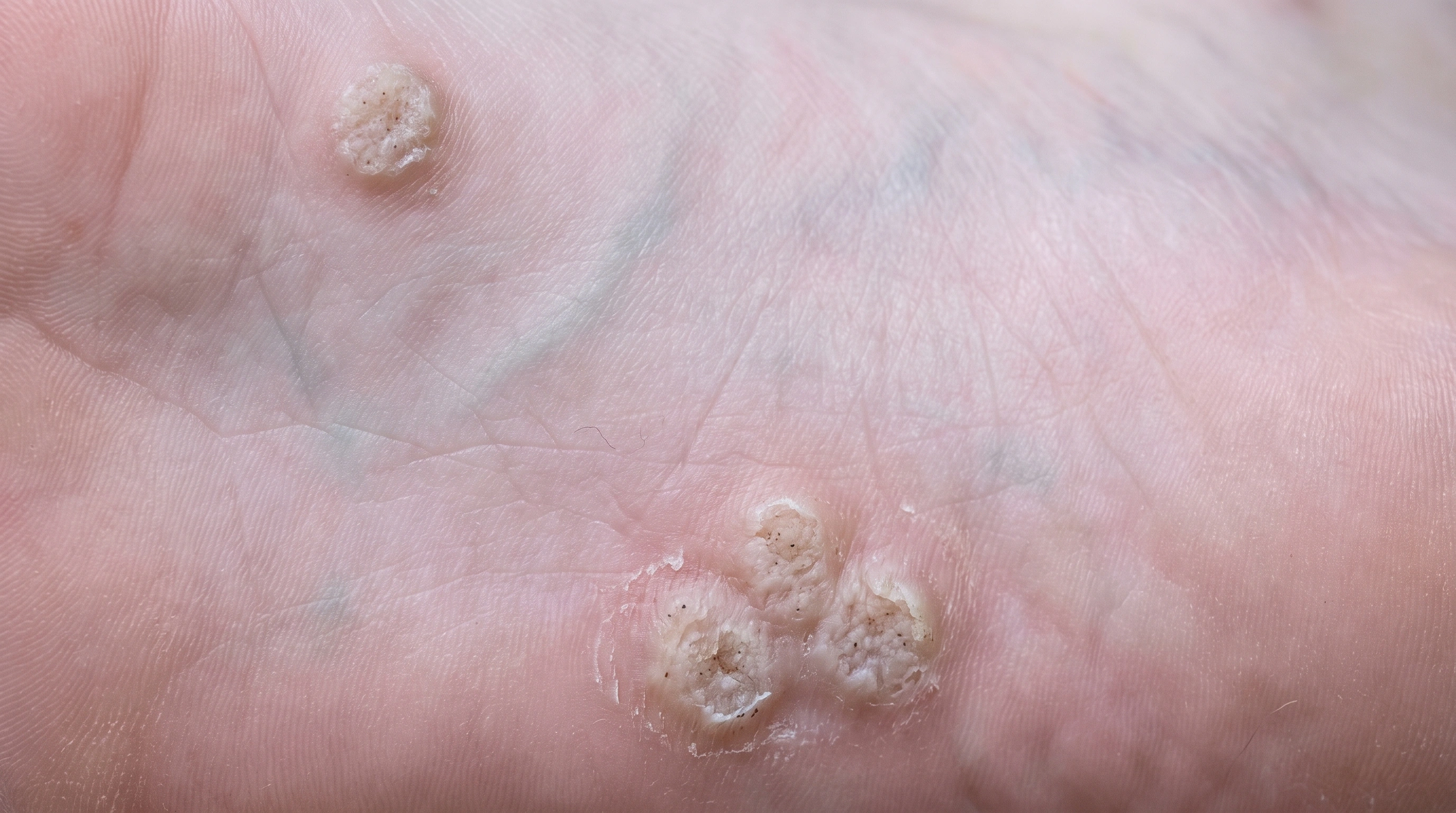
A first-line treatment.
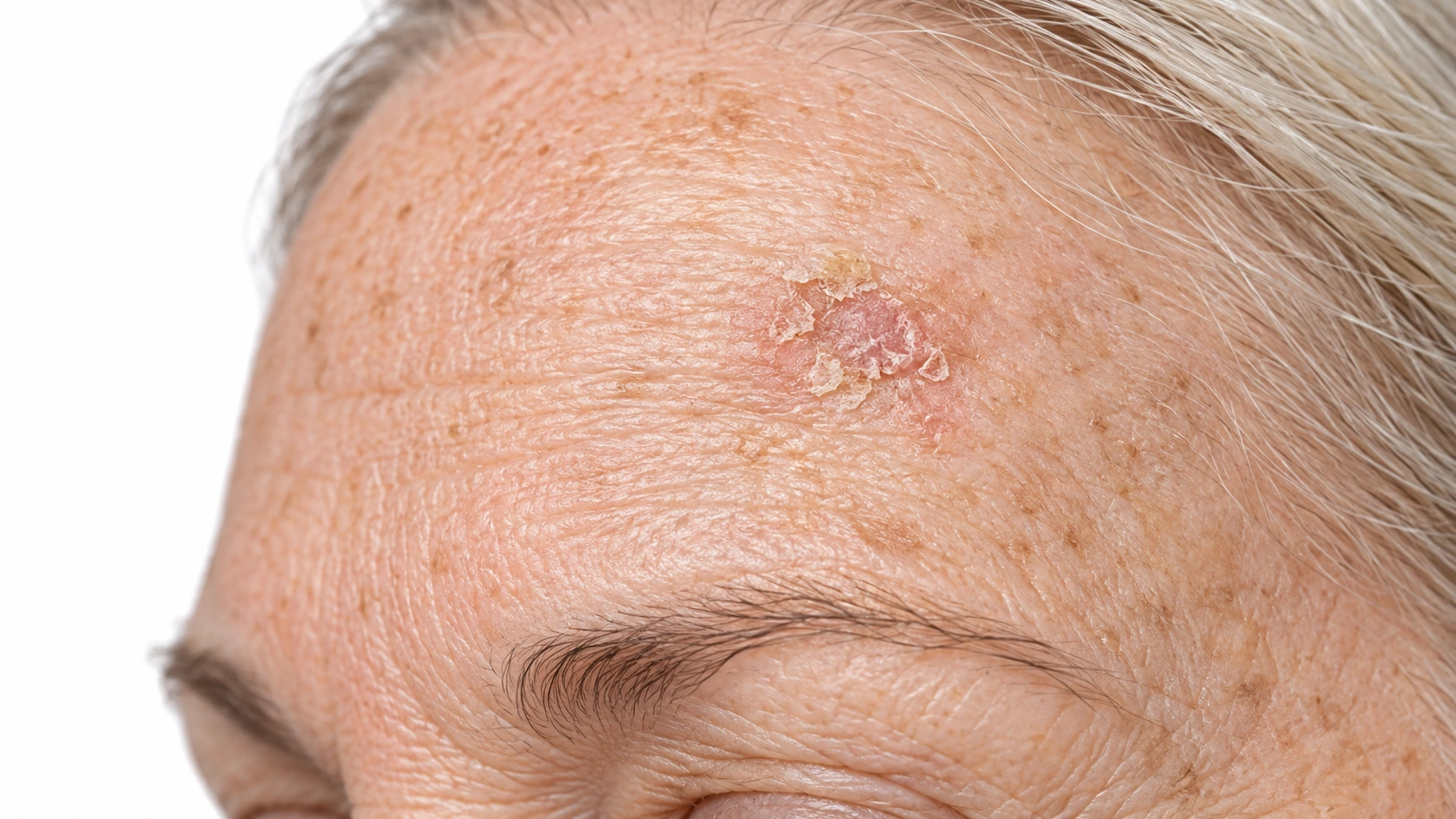
Clears precancers.
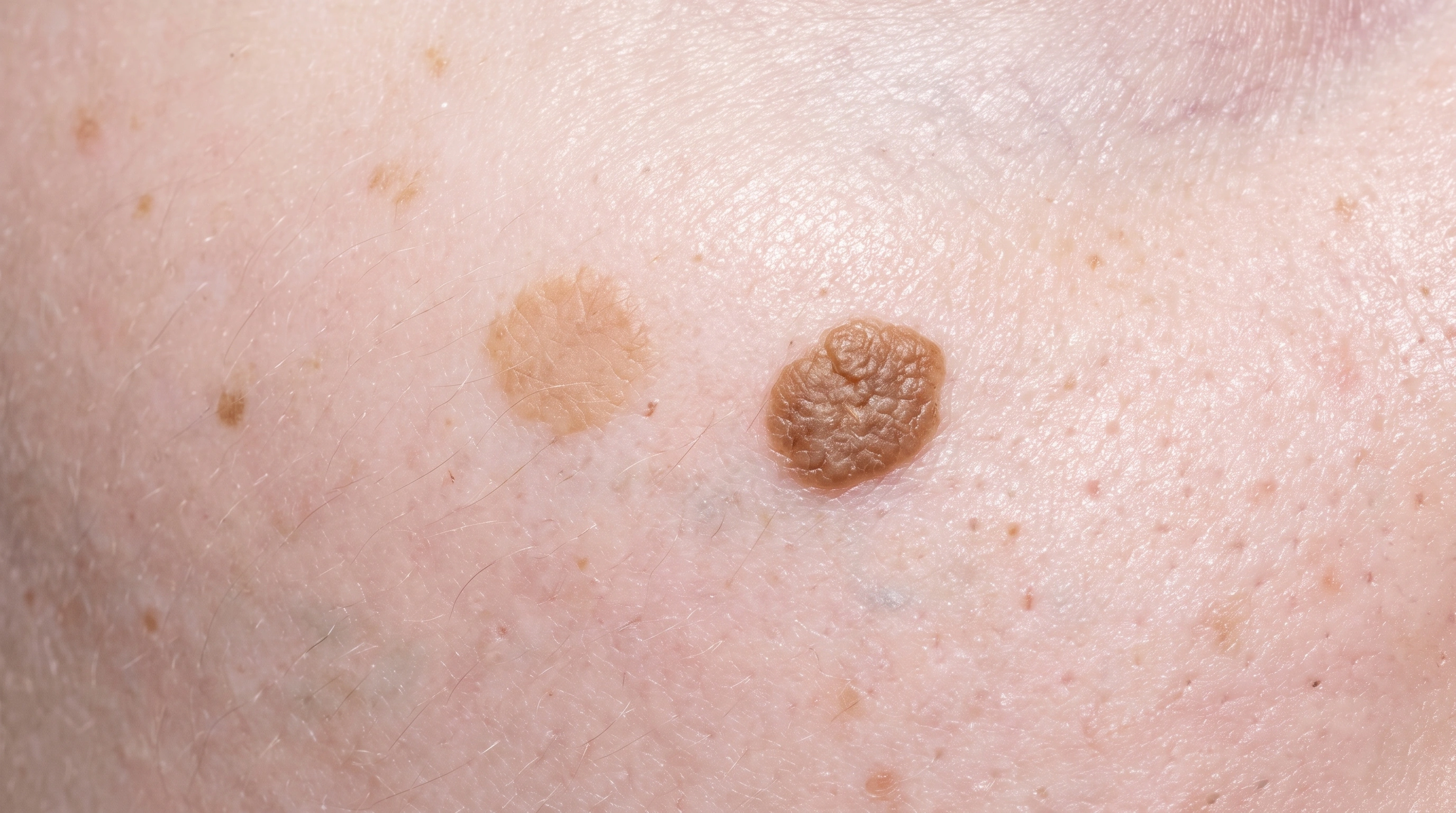
Removes growths.
Lifts warts off.
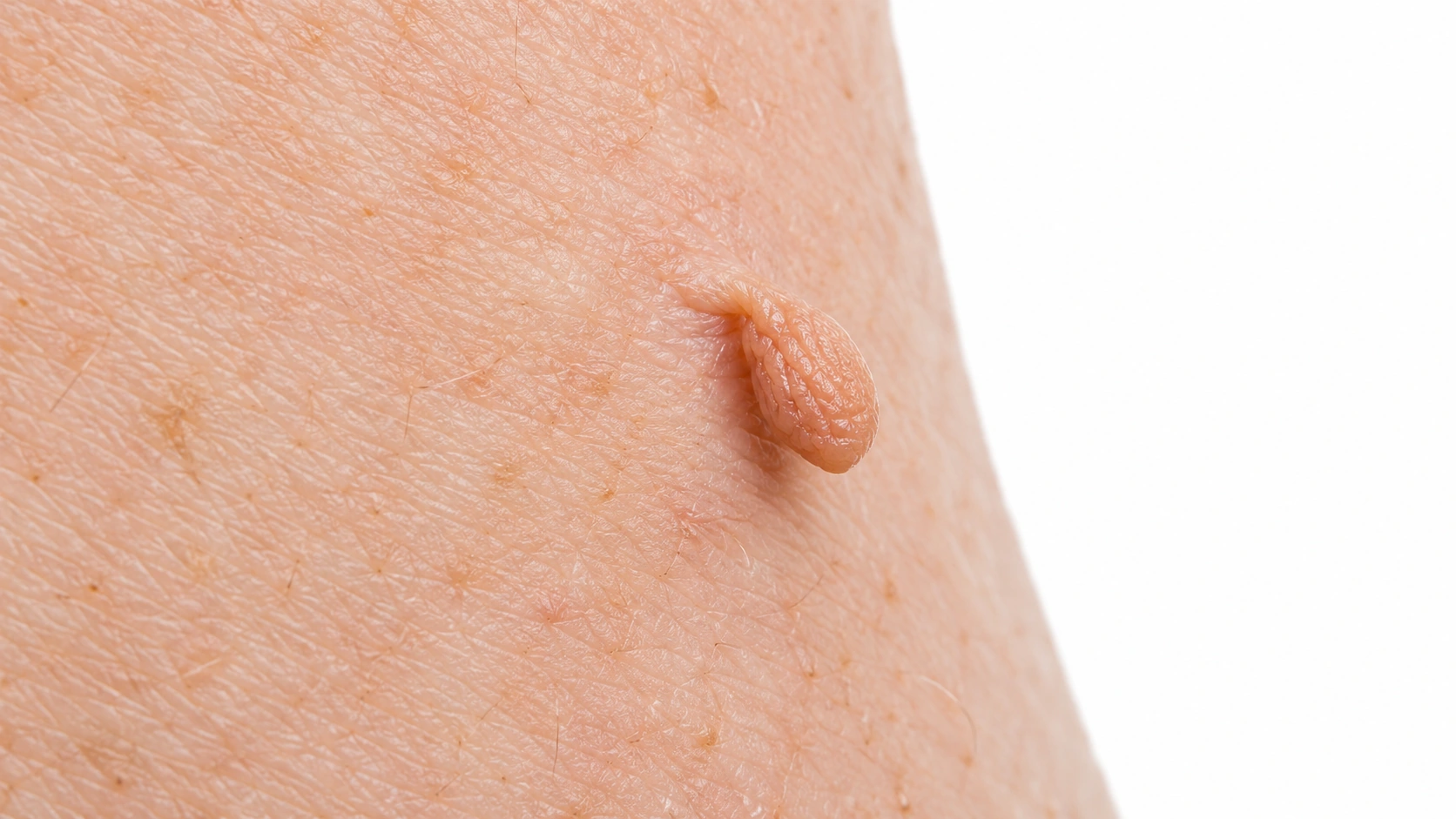
Freezes small tags.
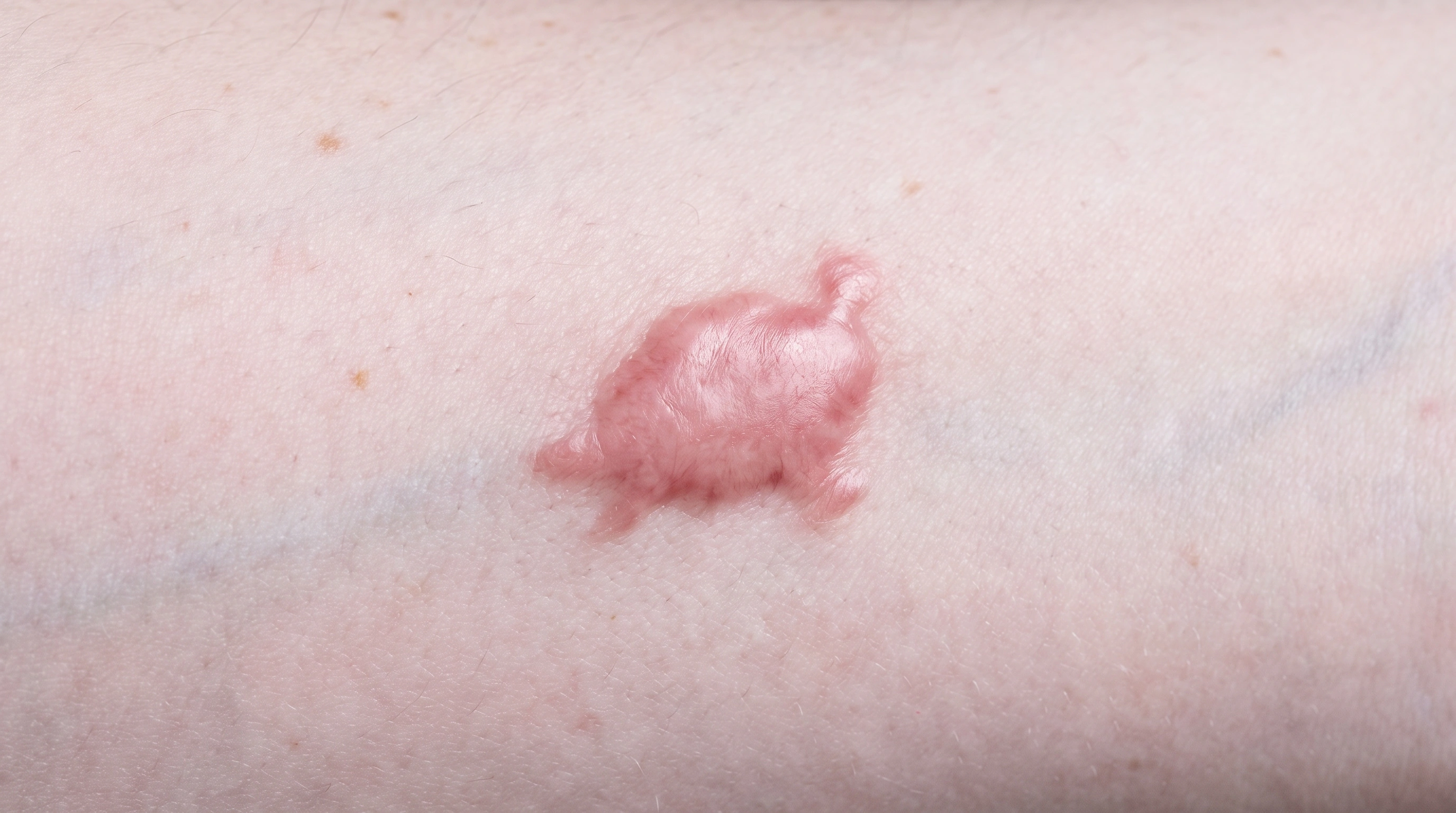
Injections work better.
Not used for tags.
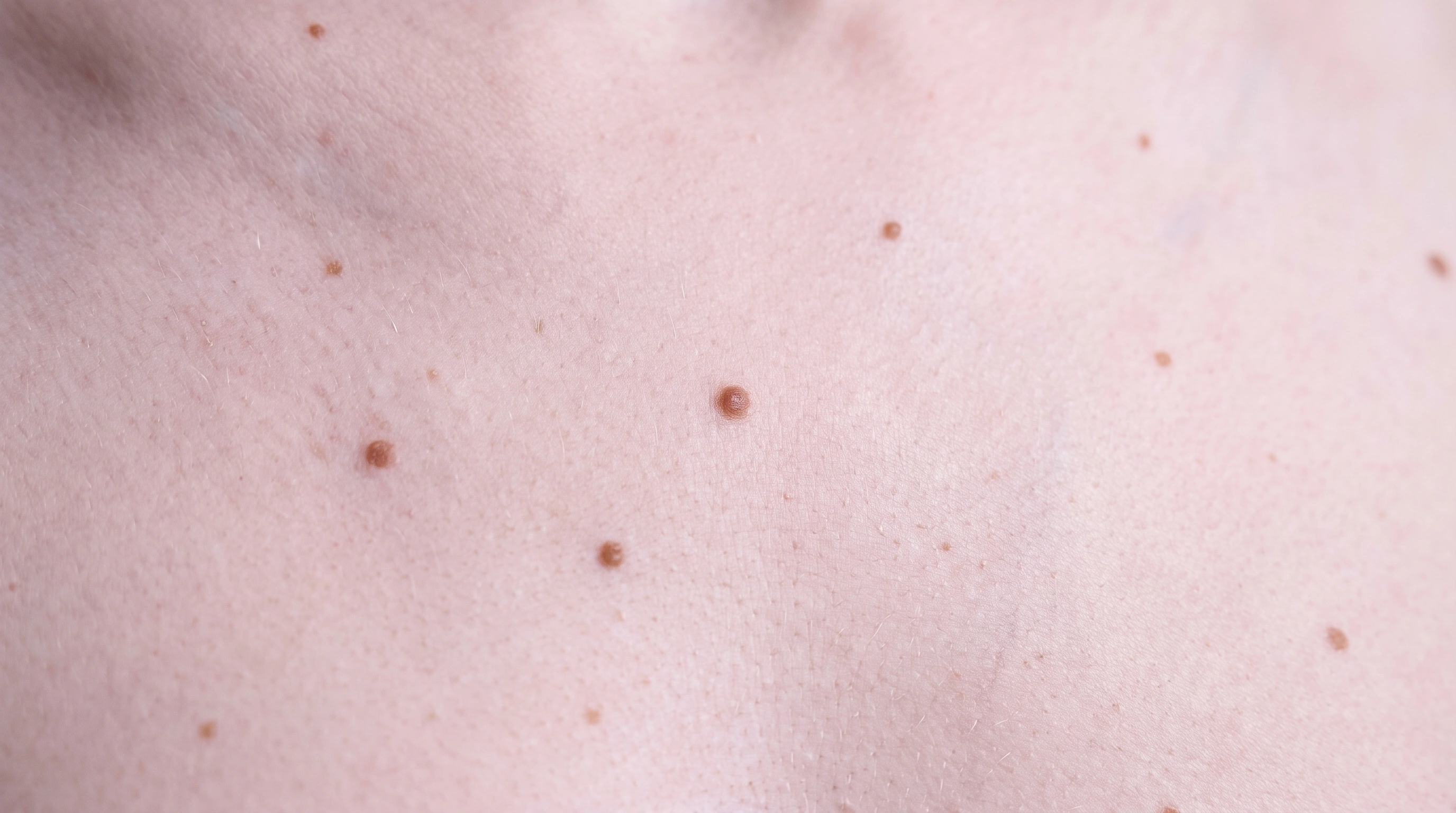
Not for moles.
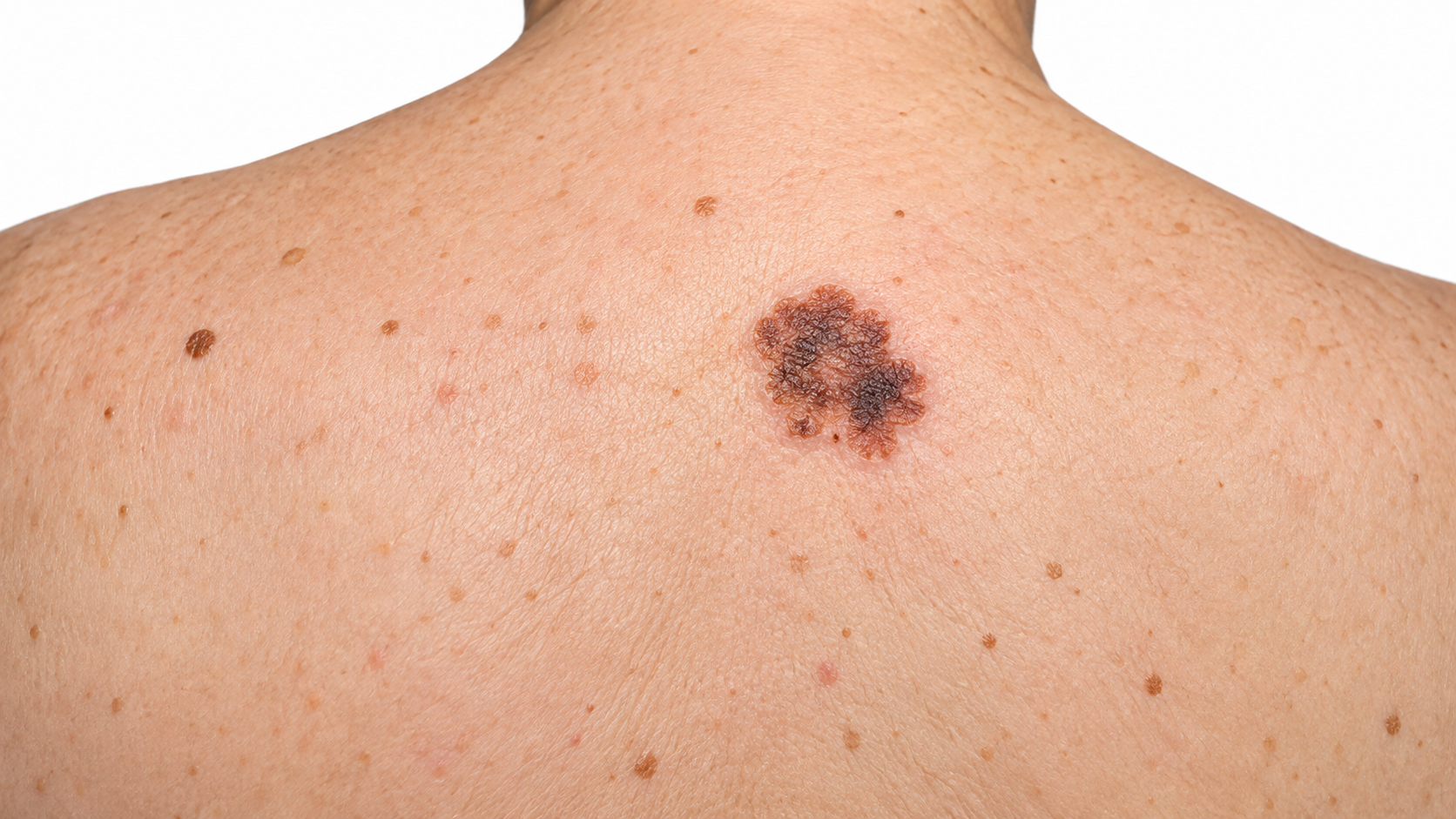
Needs excision.
The specific lesion, scar or affected patch determines the treatment site; there is no fixed body distribution.
The specific lesion, scar or affected patch determines the treatment site; there is no fixed body distribution.
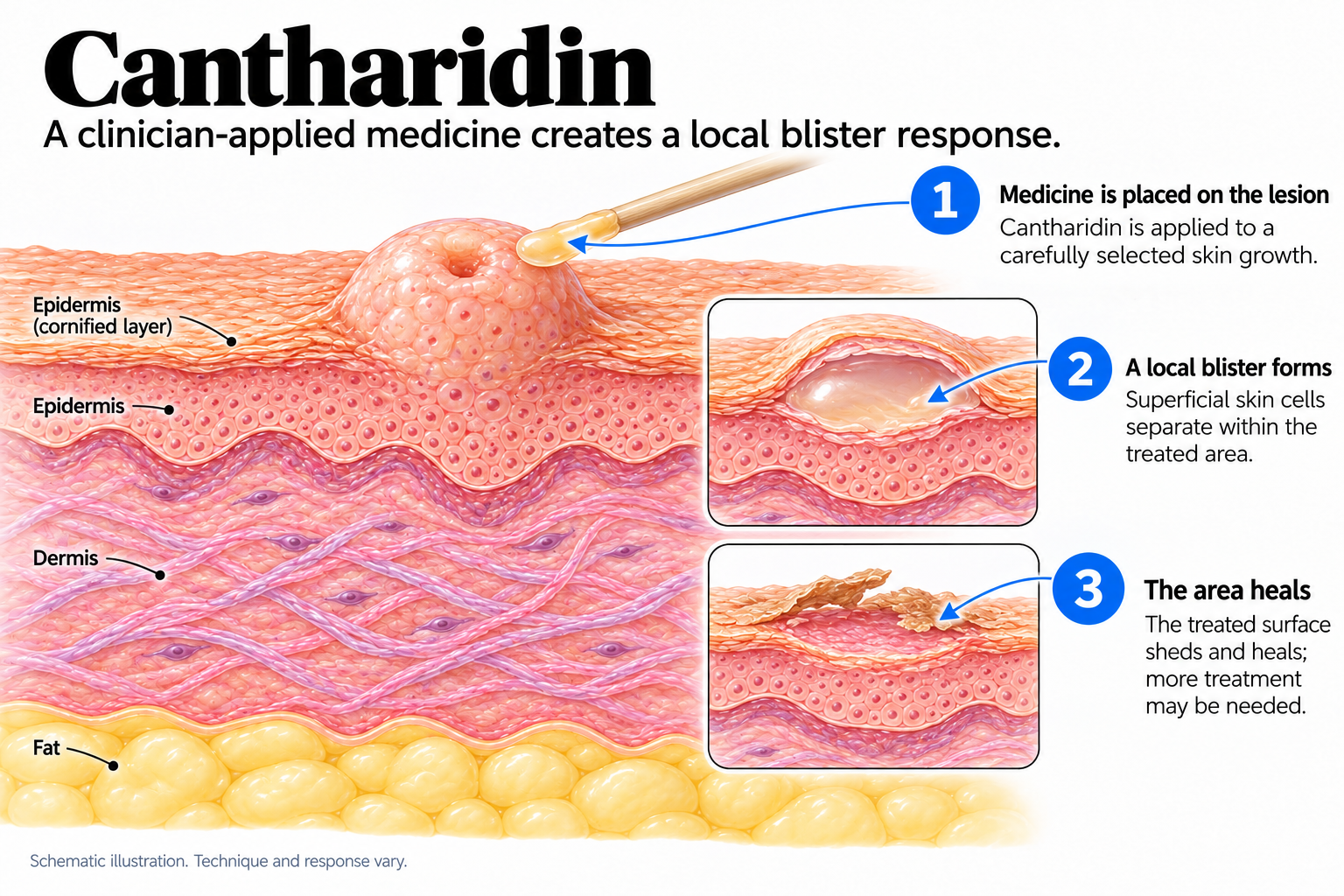

Medicine is placed on the lesion: Cantharidin is applied to a carefully selected skin growth. A local blister forms: Superficial skin cells separate within the treated area. The area heals: The treated surface sheds and heals; more treatment may be needed.
Schematic illustration. Technique and response vary. This explains a mechanism and does not specify treatment settings.
A selected lesion is frozen: A clinician applies liquid nitrogen to the treatment area. Cold injures the tissue: A controlled freeze-thaw response damages the target. The treated area sheds and heals: A blister or crust may form; repeat treatment can be needed.
Schematic illustration. Technique and response vary. This explains a mechanism and does not specify treatment settings.
Before you book: Plan ahead: Work out when the wash-off falls and whether you will be near soap and water.
A few days before: Actives: Skip salicylic acid, retinoids and strong exfoliants on the area.
A few days before: Thick warts: Soaking and filing the wart with a pumice stone or emery board helps the freeze reach the wart, not the callus on top.
Ask your provider: Several spots: If more than one spot is planned, ask to start with one and see how the skin heals.
Clean skin: Clean, dry skin.
The lesions are counted and the provider decides how many to treat today.
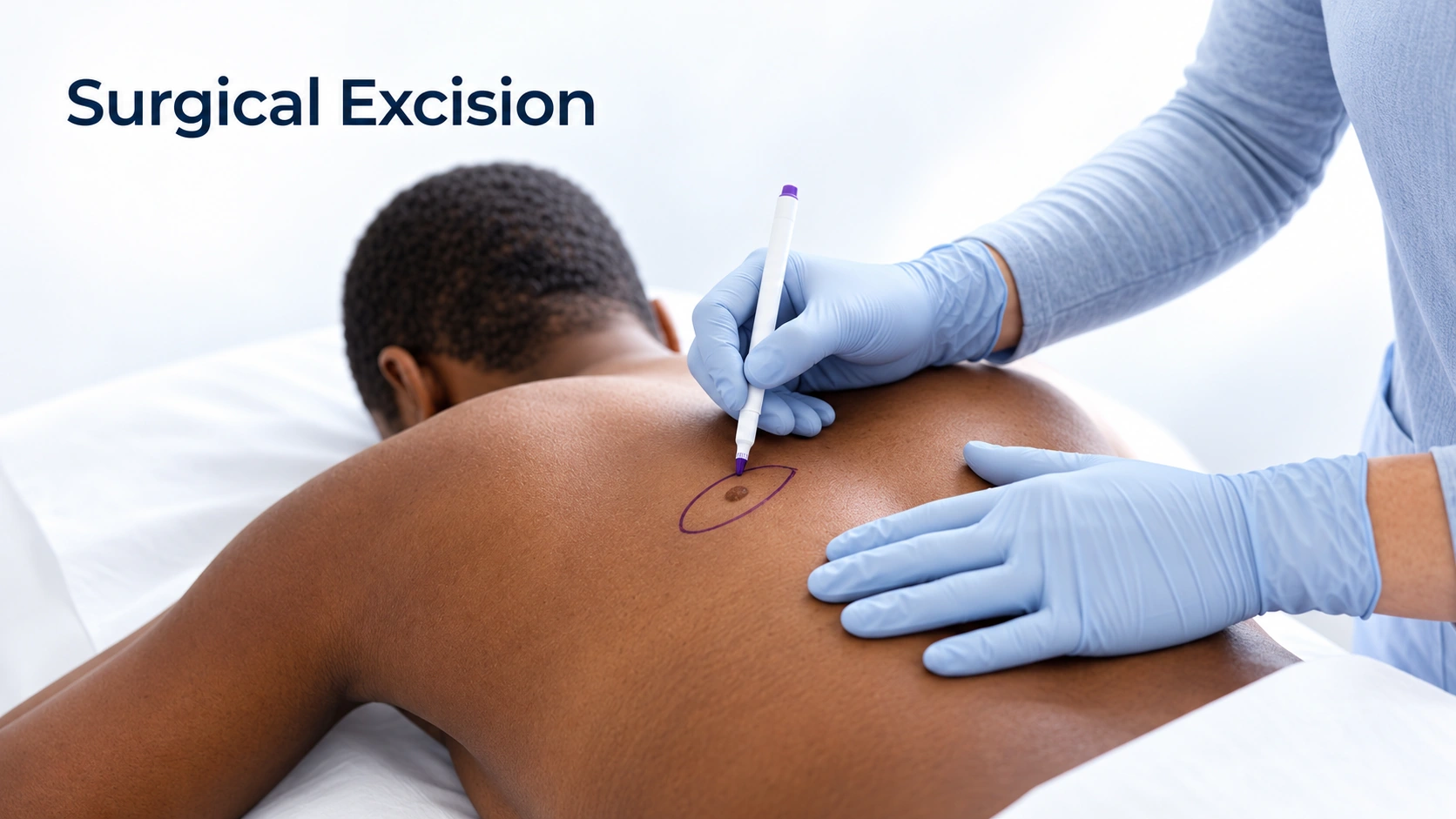
The spot is examined first — the most important part of the visit.
Liquid is dabbed onto each bump with a wooden applicator, touching only the lesion, and air dries for a minute or two.
Some providers tape a wart afterward, which makes it stronger and changes the contact time, so ask. Several lesions take 5 to 15 minutes. You feel nothing during the visit; the discomfort comes hours later as the blister forms.
Liquid nitrogen is sprayed or dabbed on until a white frozen halo covers the spot and a small margin.
A sun spot takes seconds; a wart takes longer and is usually thawed and frozen again the same visit. It burns and stings, peaking as the skin thaws, then aches for a few hours. Fingertips, toes, soles and ears are sorest. Brief and unpleasant, not severe.
You go home with the liquid still on the skin.
Red, swollen and tender, sometimes blistering within the hour.
The spots look unchanged and you feel nothing.
Hours 4 to 24: A clear or cloudy blister rises over each treated bump.
Days 1 to 3: A clear or blood-filled blister is expected, not a sign anything went wrong.
Days 4 to 14: The blister dries into a dark crust with the growth on top, and lifts off on its own over one to two weeks.
Weeks 1 to 2: The crust separates and takes the lesion with it, leaving pink, brown or pale new skin.
Weeks 2 to 8: New skin is pink and delicate.
1–2 weeks per treatment
1–3 weeks
Treated bumps don't return
Permanent for growths; warts may need repeats
The answer depends on which product is used.
Cosmetic prices vary a lot and are usually quoted per lesion or per visit, cheaper per spot when several are done at once.
The FDA-approved product is considerably more expensive, and what you pay depends on your insurance and how it is billed.
In the US, freezing warts and precancerous sun spots is billed as medical treatment, so you pay your copay or whatever the deductible has not covered.
Not when it is applied — nothing sharp touches the skin and no numbing is needed, which is why it suits young children. Hours later a blister forms and can be sore or itchy for a day or two.
Exactly as long as you are told. Contact times differ between the compounded solution and the FDA-approved product, and between molluscum and warts. Longer just makes a bigger, more painful blister.
Usually not. The skin splits above the rebuilding layer, so most spots heal without a scar. What lasts weeks to months is a flat brown, pink or pale mark — pigment, not scar tissue. Picking early is what turns a mark into a scar.
Because the virus is still there. Cantharidin removes the bumps it is painted on, but molluscum keeps making new ones until the immune system recognizes it, which takes months. Hence repeating every few weeks.
No. Cantharidin is not applied to the face, eyelids, or mucous membranes such as the lips or genital skin, because a blister there is painful and risky. Ask what suits those locations.
No. It clears on its own. Treatment is usually chosen when bumps are spreading quickly, itching, sore, in an awkward place, or affecting a child's activities.
Often. Pigment cells die at milder cold than the growth, so most effective freezes take some color out. Some returns over months; a good part does not. The mark is usually a little wider than the spot and stands out far more on deeper skin tones — worth discussing before you agree.
No. Freezing destroys the tissue without a diagnosis, so a skin cancer can heal over at the surface while it keeps growing underneath. Anything pigmented, new or changing gets examined and sampled, and moles that need removing are cut out and sent to a laboratory. Same for at-home freezing and mole removal pens.
A sharp burning sting for ten to thirty seconds during the freeze and the thaw, then an ache for a few hours. Fingers, toes, soles and ears are worst. Brief and genuinely unpleasant rather than severe, and ordinary painkillers are enough.
Normal, and it is how the treatment works — the skin separates and lifts the growth off with the blister roof. Leave it alone and cover it. If it is large, tense and painful, the clinic can drain it, which beats tearing the roof off yourself.
Usually several, every two to four weeks. Many clear over three to six treatments, some need more, and some never respond. Salicylic acid at home in between improves the odds. If nothing has changed after three or four sessions, ask about a different approach.
No. They use a propellant gas much warmer than liquid nitrogen and harder to aim, so they are weaker on thick and plantar warts. They can still blister and leave a pale mark. Not for the face, and never on a mole or an unexamined spot.