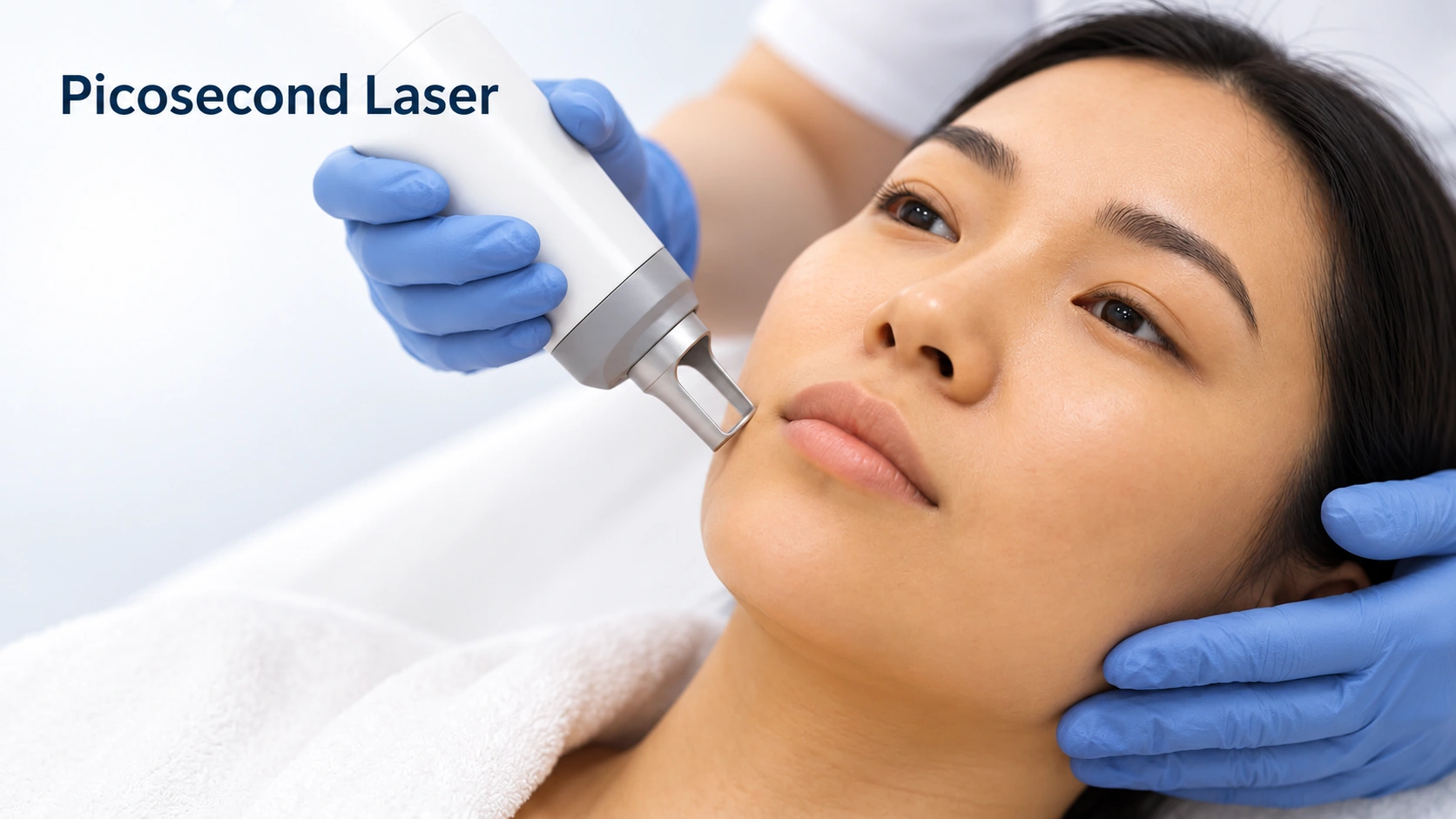
It is a botulinum toxin.
Botox is the brand name for onabotulinumtoxinA, given by a trained clinician.
Botox: An injection that temporarily weakens specific facial muscles, so the lines those muscles make soften. It wears off in about three to four months. It does not fill, lift, or improve the quality of the skin.
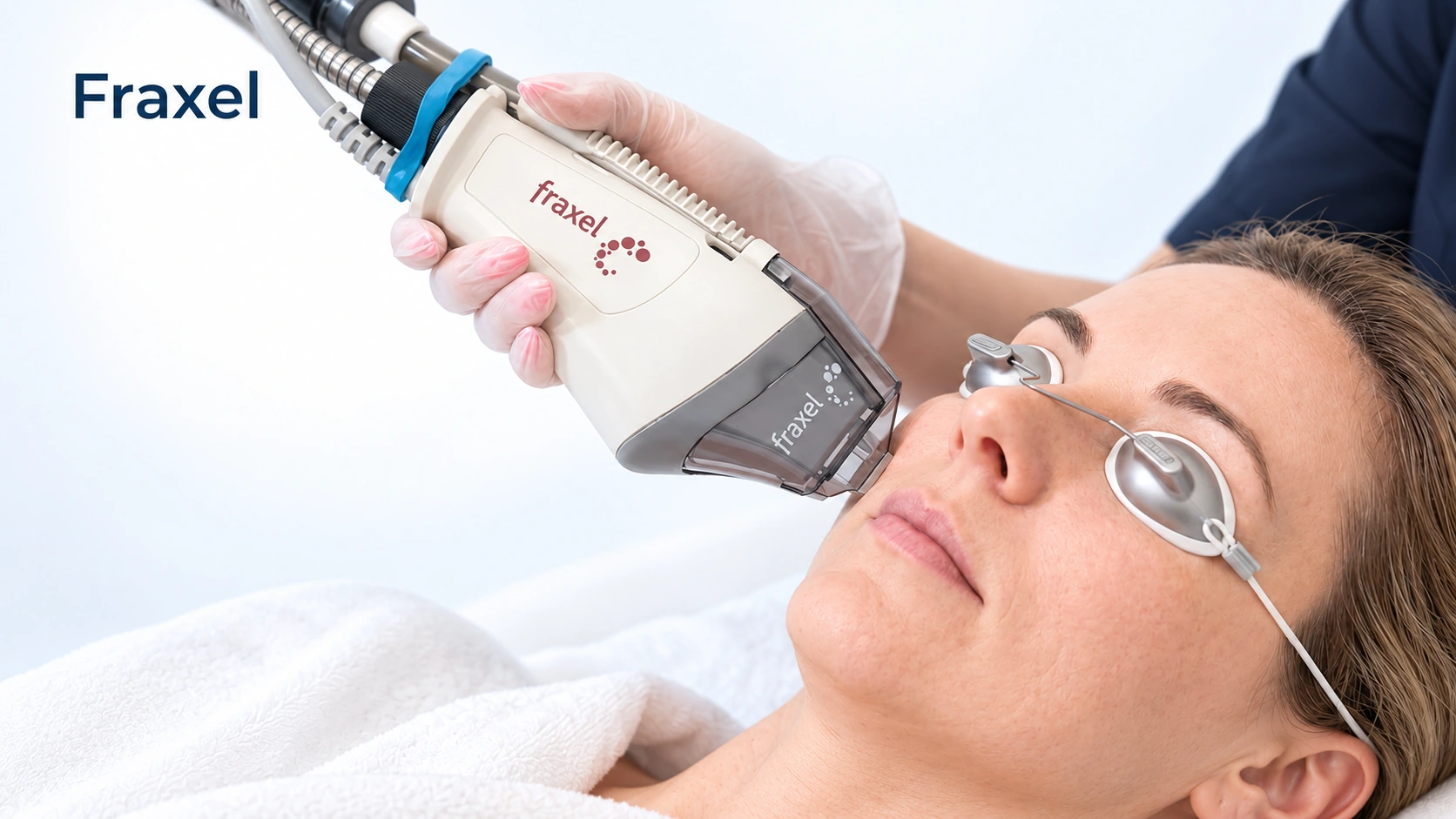
Fractional CO2 Laser: An ablative laser that vaporizes thousands of microscopic columns of skin, leaving untouched skin between them to heal from. It is the most effective in-office treatment for indented acne scars, and the one with the most downtime and the highest pigment risk.


Choose for lines that appear when you move — frowning, squinting or raising your brows.
Choose for the biggest single improvement in indented acne scars or deep sun damage, accepting the most downtime and pigment risk.
Can you have both?
Often used together: CO2 resurfaces wrinkled skin and Botox stops the lines from re-forming as it heals. Botox is usually done 1 to 2 weeks before the laser.
Botox is the brand name for onabotulinumtoxinA, given by a trained clinician.
Its effect on muscle activity is temporary.
It does not add volume.
Neuromuscular disease, swallowing problems, pregnancy and previous toxin treatment should be discussed.
It creates microscopic columns of injury in the skin.
Skin between the columns supports recovery.
It is stronger than a facial but less than fully ablative resurfacing.
Pigment, keloid, herpes and isotretinoin history need assessment.

Smooths frown lines and crow's feet.
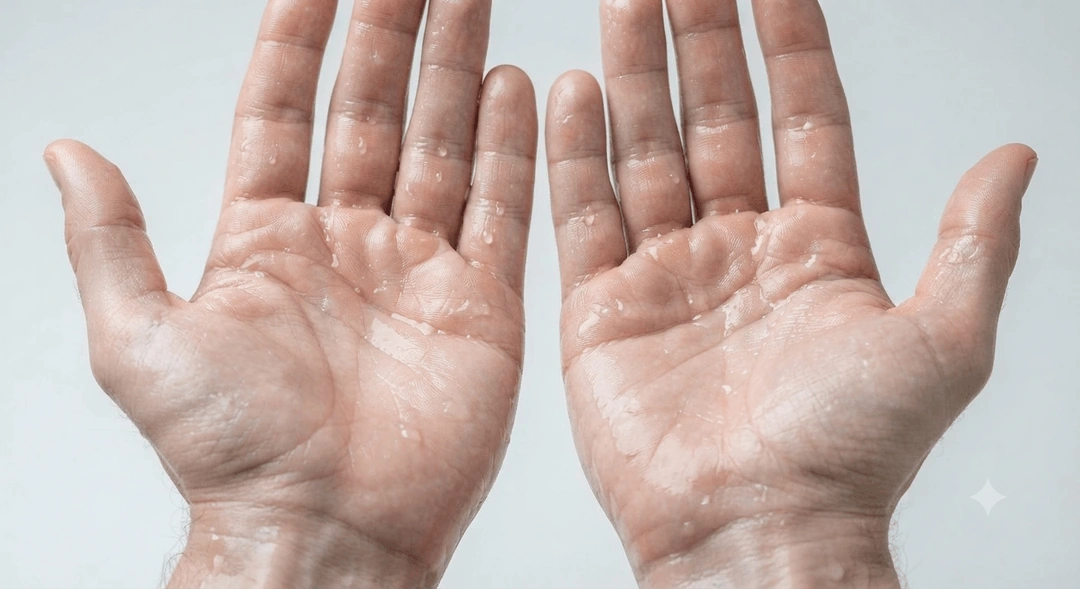
Stops underarm sweating for months.

Major improvement in many scar types.
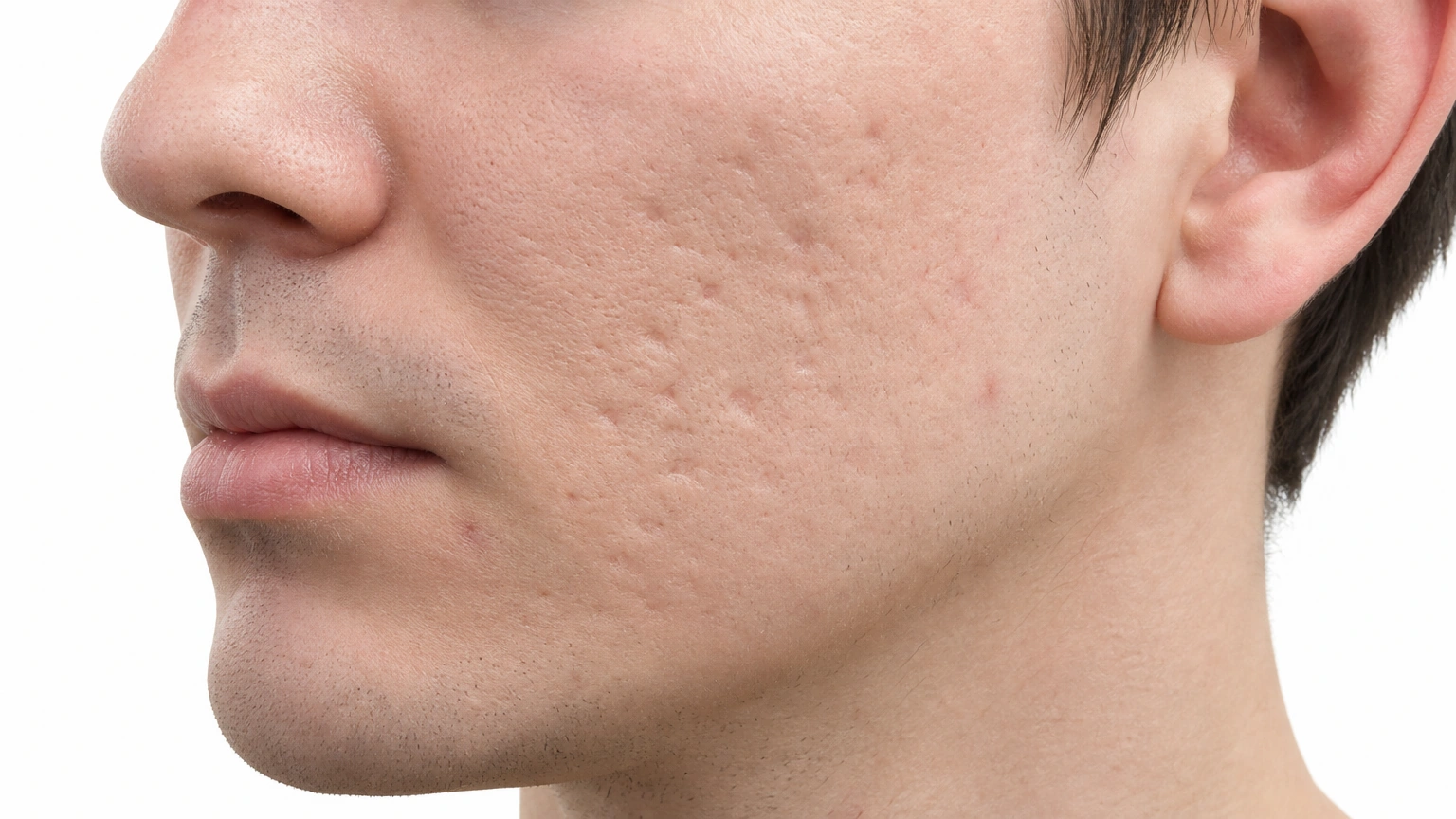
Smooths wide scars.
Tightens and smooths.
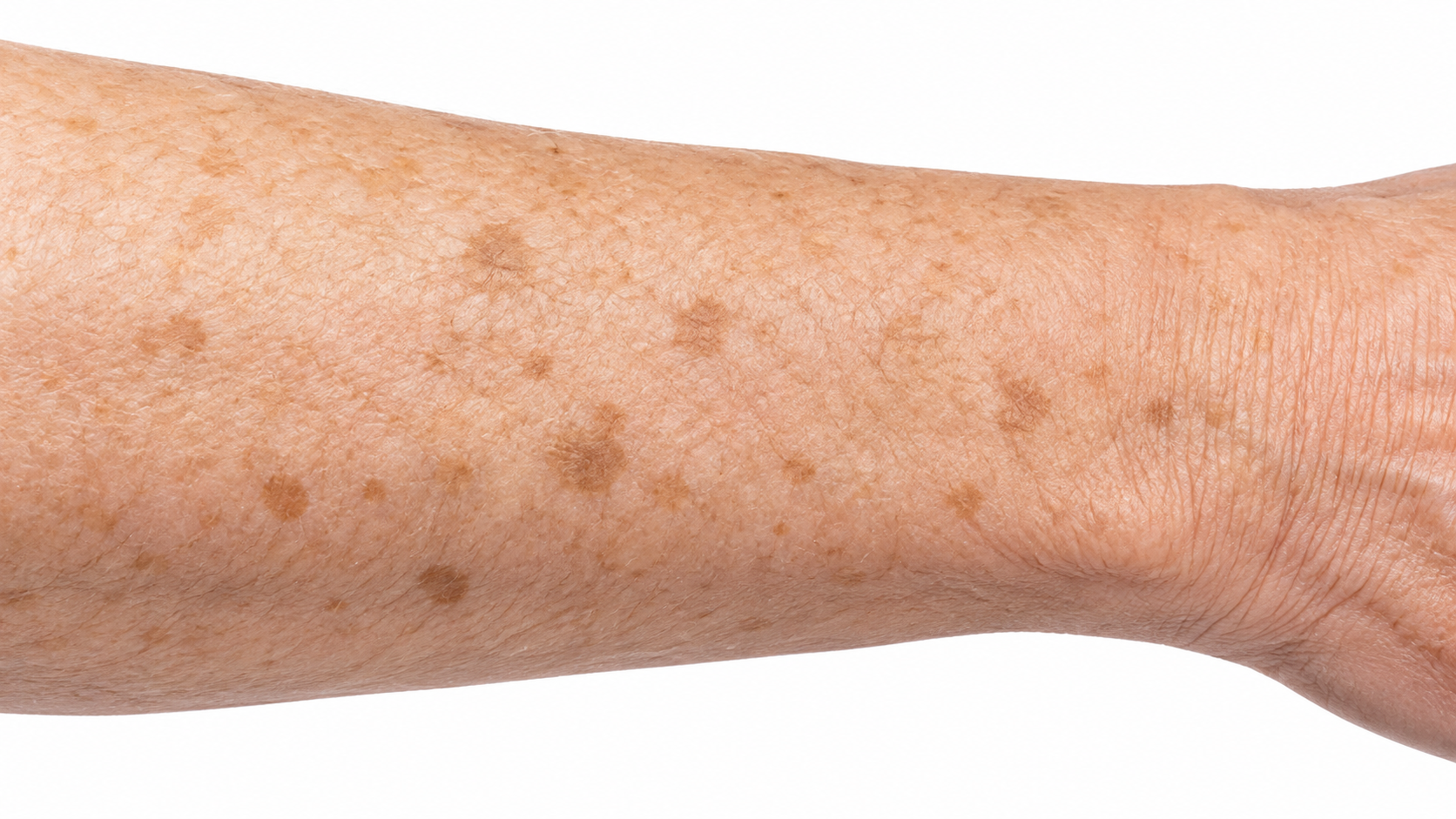
Clears sun damage.

Small studies show less flushing.
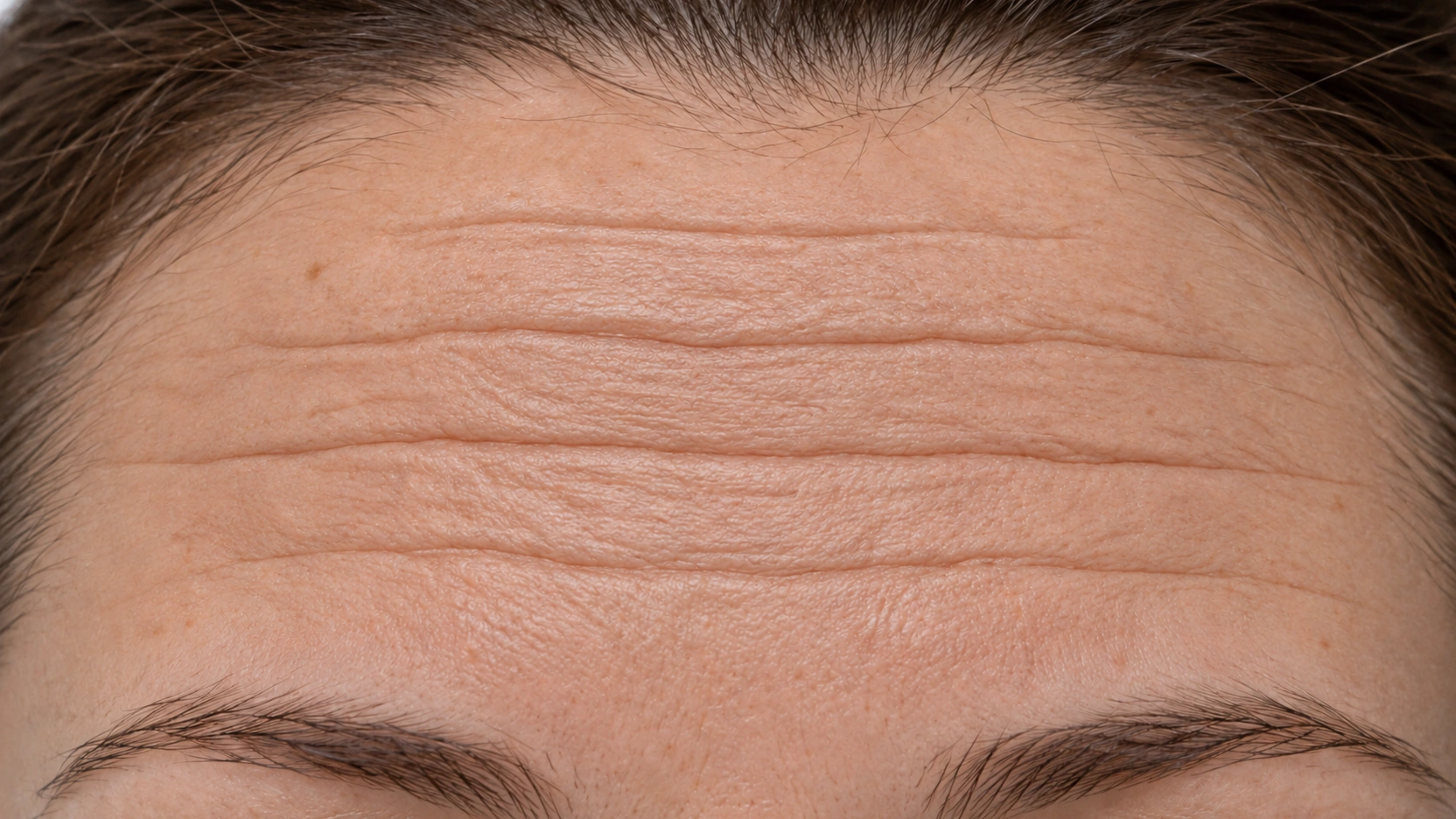
Lines at rest may need filler.
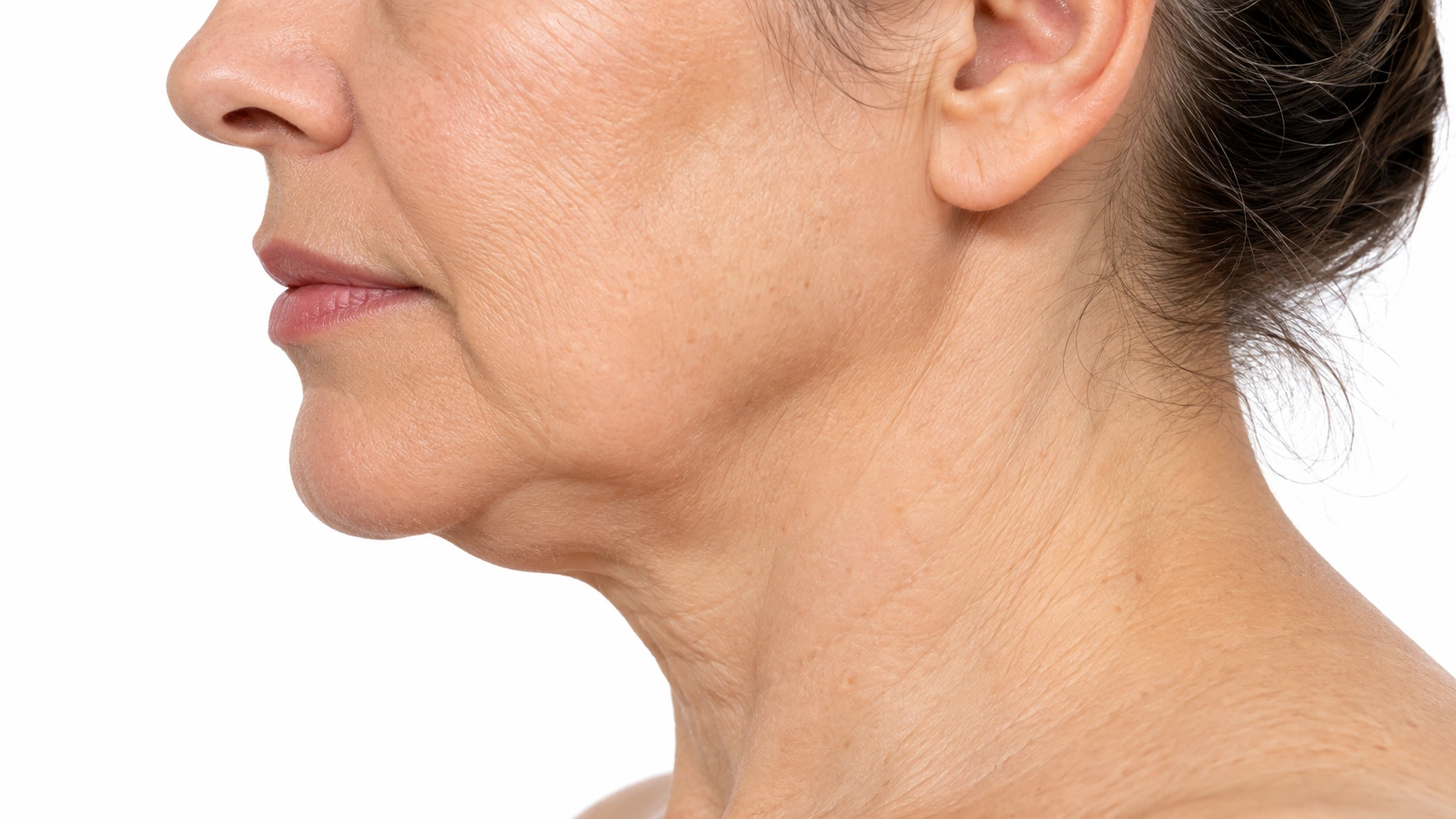
Doesn't lift loose skin.
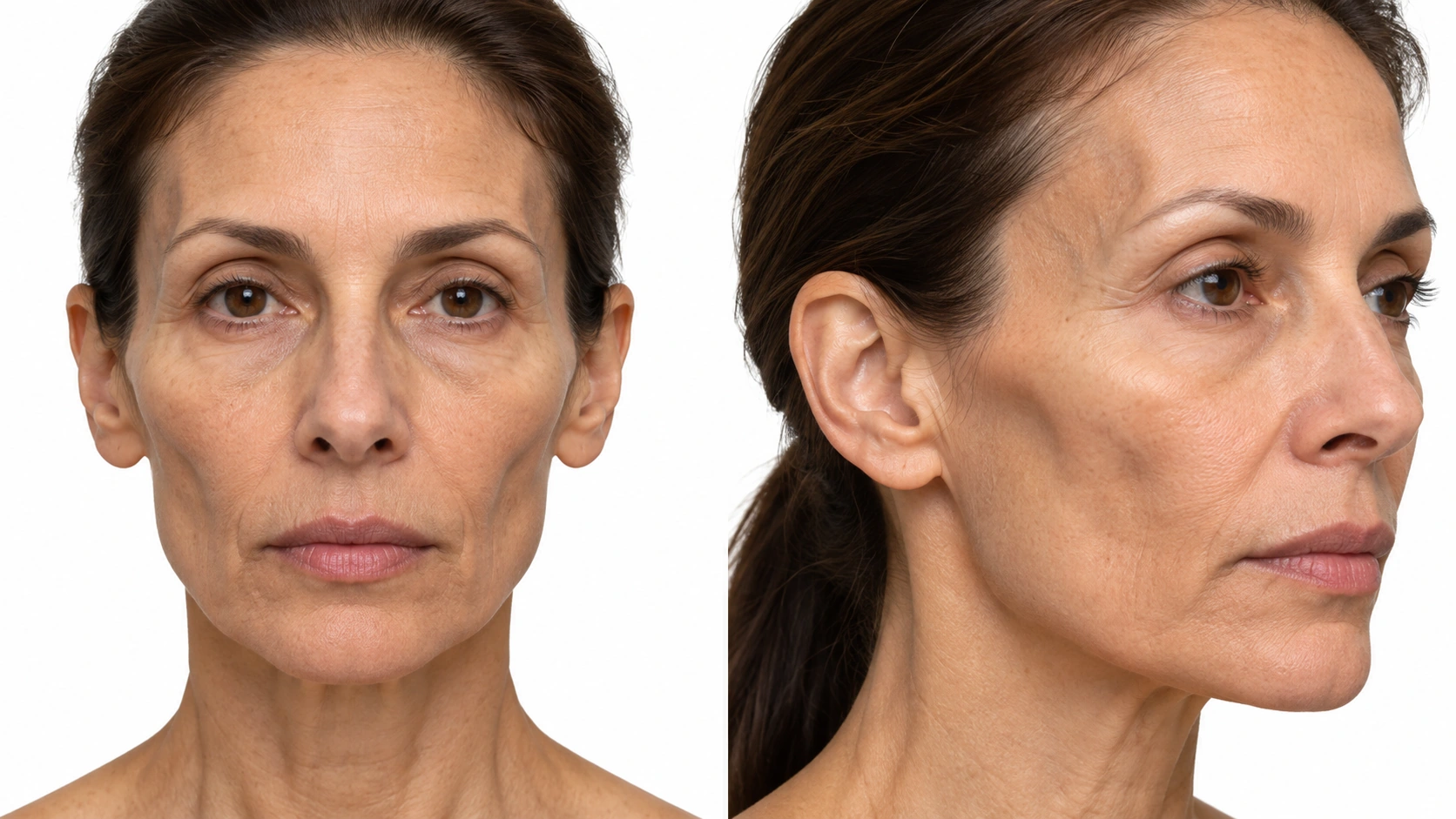
Doesn't add volume.

High risk of darkening.
Can worsen redness.
Forehead, between the brows, crow’s feet and underarms.
Face; the selected area depends on the concern and treatment plan.
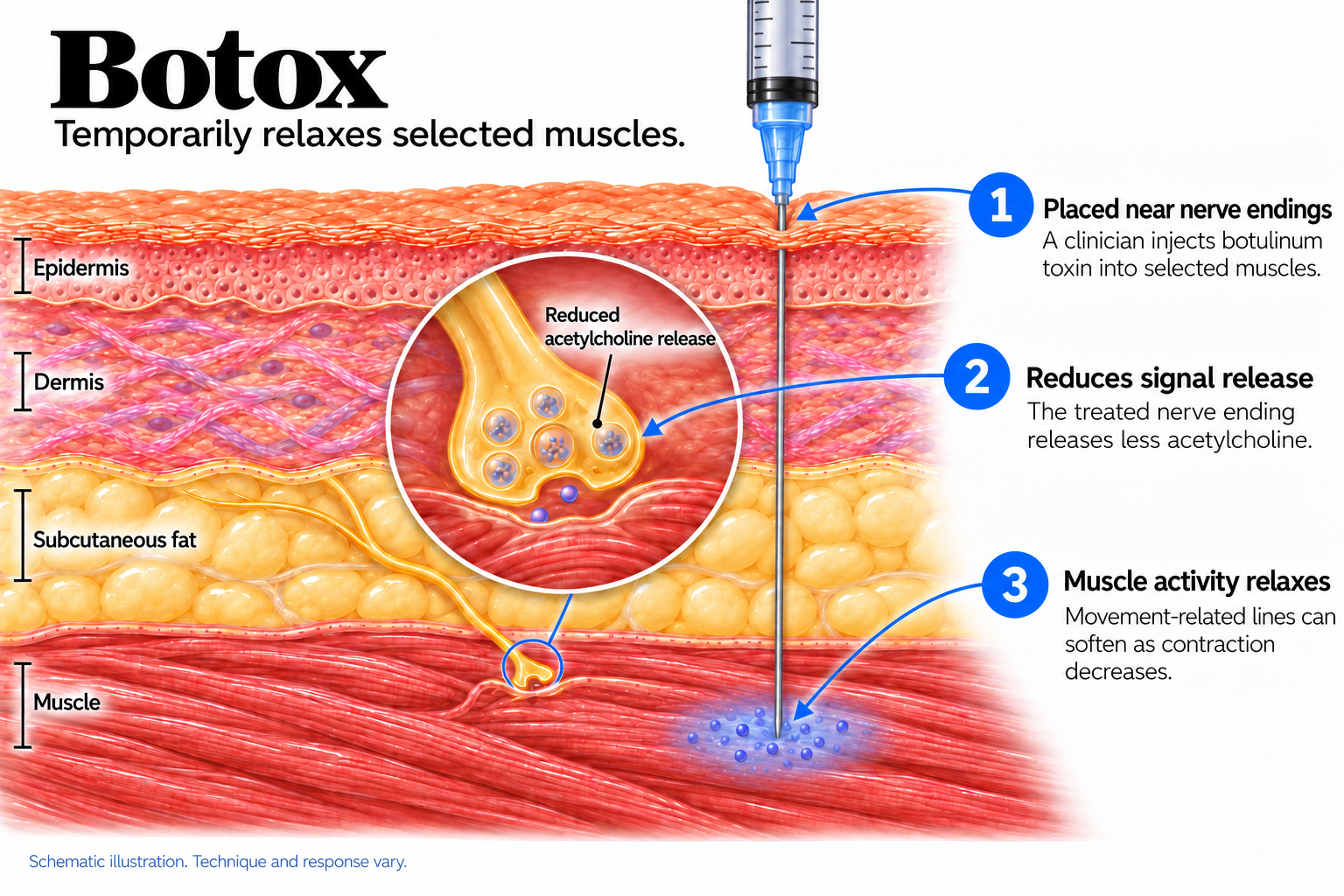

Placed near nerve endings: A clinician injects botulinum toxin into selected muscles. Reduces signal release: The treated nerve ending releases less acetylcholine. Muscle activity relaxes: Movement-related lines can soften as contraction decreases.
Schematic illustration. Technique and response vary. This explains a mechanism and does not specify treatment settings.
Creates tiny treatment channels: Laser energy absorbed by water removes narrow columns of tissue. Untreated skin supports healing: Skin between the channels helps the surface repair. Collagen remodels over time: Repair can improve selected scars, lines, and texture.
Schematic illustration. Technique and response vary. This explains a mechanism and does not specify treatment settings.
Planning: Timing: Allow at least 2 weeks before an important event; results settle in 10–14 days and bruises may last a week.
Sun and pigment cream: No sun, and do not arrive tanned.
Sun and pigment cream: On deeper skin tones a pigment-blocking cream usually starts two to four weeks ahead.
Plan ahead: Time off and supplies: Book the time off, arrange a driver if sedation is planned, buy plain petrolatum and a gentle cleanser, and plan a week at home.
Preparation: Medicines and alcohol: Ask about fish oil, vitamin E and ibuprofen; avoid alcohol for 24 hours.
A few days before: Bruising and alcohol: Never stop a prescribed blood thinner on your own.
Actives and smoking: Stop retinoids, benzoyl peroxide and acids.
1 to 2 days before: Antiviral tablets: Antiviral tablets start a day or two before and continue for several days after, since an outbreak in healing skin can scar.
What to bring: Arrive with a clean face, reference photos and clear treatment goals.
You say what bothers you while the injector watches your face move.
Skin is examined and photographed.
The skin is cleaned, then small injections go into the chosen muscles, a few in each area.
The visit runs 10 to 20 minutes. Each point is a sharp sting, then it is over — most people rate it below a blood test. The forehead and between the brows are the most sensitive.
The handpiece is passed or stamped over each zone.
Expect rapid clicking, a burning smell, and a smoke evacuator running. Heat builds fast and feels hot rather than sharp. A full face takes 30 to 60 minutes, genuinely painful without proper anesthesia. The burning carries on for an hour or two.
Small raised bumps like insect bites settle within about 20 to 30 minutes.
Skin is deep red, hot, swollen and weeping clear fluid, with a fine grid pattern visible.
Days 1 to 3: A few people bruise, usually near the eyes.
Days 1 to 3: Swelling peaks on the first or second morning and can partly close the eyes.
Days 3 to 5: Movement feels different — heavy, or a muscle that will not quite fire.
Days 10 to 14: The true result.
Days 3 to 14: The skin turns bronze or grid-patterned brown, then flakes and sheets off, showing bright pink skin.
Week 3 to Month 12: Redness fades slowly, a month on light settings and three months or longer on aggressive ones.
Starts in 3–5 days, full at 2 weeks
1–3 months, improving to 6
3–4 months
Years
In the US it is priced per unit or per area.
A full-face session in the US usually runs $1,000 to $3,000, varying by city, device, depth, and whether sedation or an operating room is involved.
Insurance does not cover cosmetic use.
Insurance does not cover resurfacing for acne scars, which is classed as cosmetic.
Three to four months for most people and areas. The jaw muscle and underarm sweating last longer. Fading is gradual, so movement returns over a few weeks.
A sharp sting for a second or two per injection, several times. Most people find it easier than expected and skip numbing.
Only if the dose says so. Amount and placement decide how much movement you keep, and a lighter dose at a first appointment is reasonable. You can add more at two weeks; you cannot take any away.
There is no antidote, so it has to wear off over weeks to a few months. Some problems can be balanced with a few extra units elsewhere, which is why starting conservatively is safer.
Decades of medical use at doses far larger than cosmetic ones, with no pattern of lasting harm. The main reported change is treated muscles getting somewhat weaker over years, which is the intended effect.
That depends on the muscle and the face, not a standard number. As a rough reference, frown lines between the brows are commonly treated with about 20 units of one common brand. Units are not comparable between brands, so ask which product is used.
Five to ten days at home. Swelling and oozing days one to three, bronzing and sloughing days three to seven, and by day seven to ten the surface has closed and mineral makeup is usually allowed. Redness then fades over weeks to a few months.
It improves them substantially, more than any other single treatment, but it does not remove them. Rolling and boxcar scars respond best, icepick scars least, and mixed scarring usually needs subcision or TCA CROSS too.
Experienced providers do it using lower density, longer intervals, and pigment creams before and after. Dark marks are common and fade over months. The rare risk of permanent pigment loss is why many people with deeper skin tones choose microneedling instead.
One to three, 6 to 12 weeks apart, judged six months after the last one.
Yes, without proper anesthesia. Numbing cream alone is not enough for a full face, so nerve blocks, injected anesthetic or oral sedation are standard, and burning continues for an hour or two afterward.
Only with months of margin. Skin looks worse before it looks better, and redness can last one to three months. Six months ahead is a reasonable minimum.