It is a botulinum toxin.
Botox is the brand name for onabotulinumtoxinA, given by a trained clinician.
Botox: An injection that temporarily weakens specific facial muscles, so the lines those muscles make soften. It wears off in about three to four months. It does not fill, lift, or improve the quality of the skin.
Chemical Peel: An acid solution applied in the office to shed the top layers of skin. Superficial peels clear pores and fade brown marks; medium peels reach texture and deeper sun damage. It does not fix indented scars.


Choose for lines that appear when you move — frowning, squinting or raising your brows.
Choose for brown marks, clogged pores or dull, sun-aged texture — not for indented scars.
Can you have both?
A common pairing: Botox relaxes expression lines while a peel improves texture and tone. Have the peel first or wait about 2 weeks after Botox.
Botox is the brand name for onabotulinumtoxinA, given by a trained clinician.
Its effect on muscle activity is temporary.
It does not add volume.
Neuromuscular disease, swallowing problems, pregnancy and previous toxin treatment should be discussed.
A chemical agent creates a controlled skin injury.
Superficial, medium and deep peels differ in recovery and risk.
A peel is not defined by ingredient or percentage alone.
Phenol peels carry serious systemic risks.

Smooths frown lines and crow's feet.
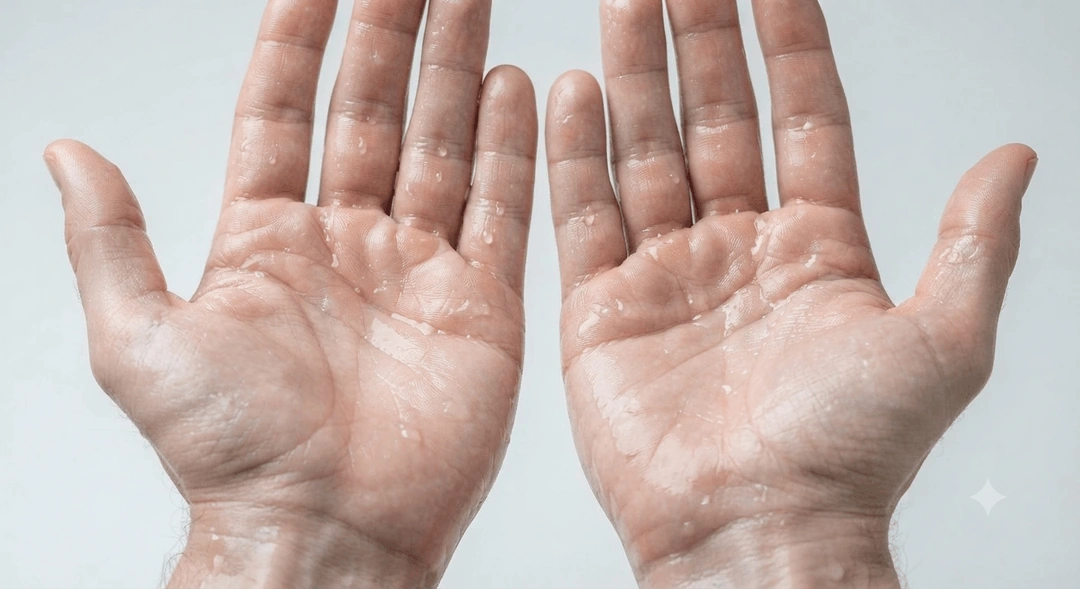
Stops underarm sweating for months.

Light peels help alongside creams.

Clears clogged pores.
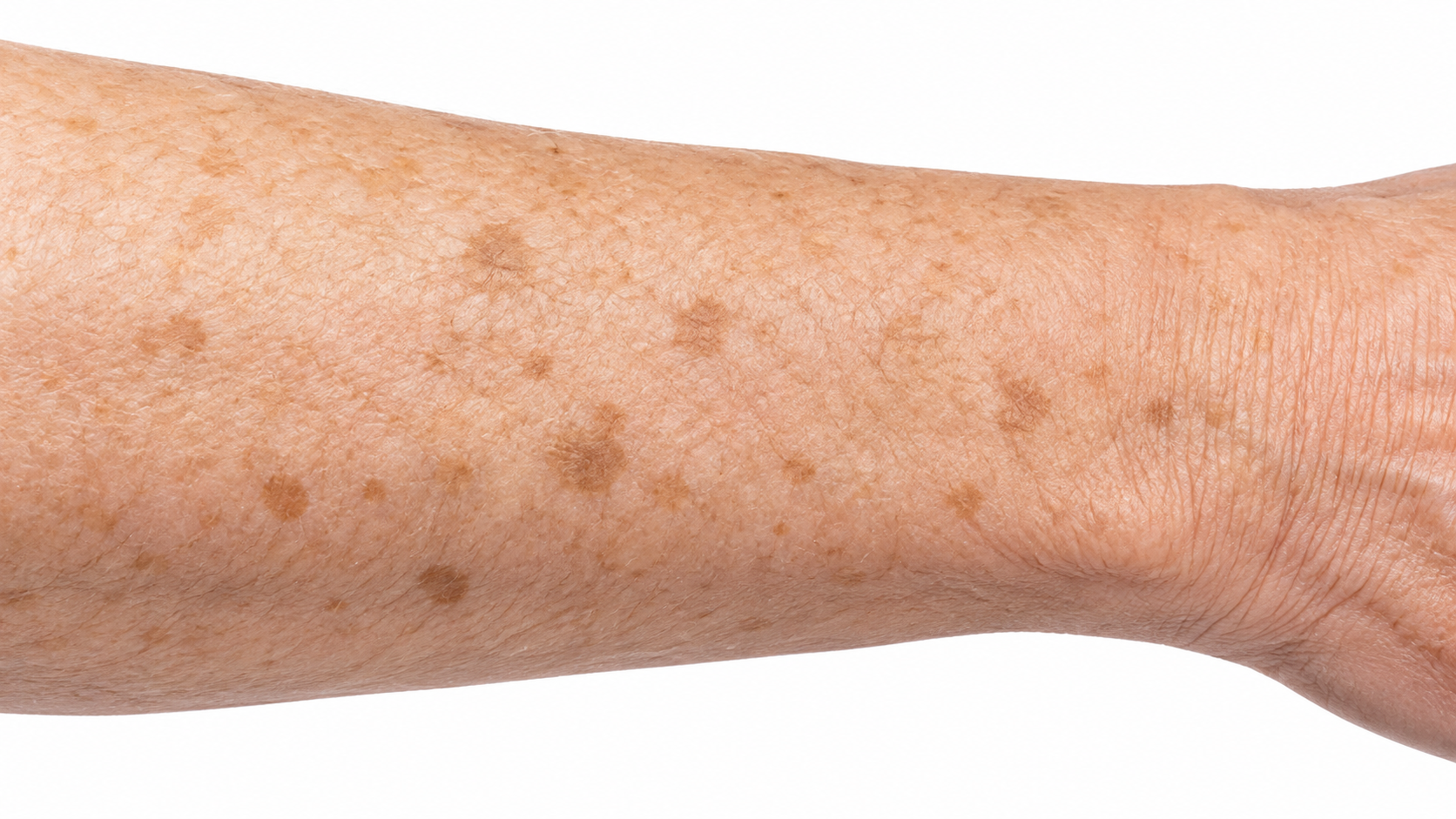
Fades spots.
Deeper peels smooth lines.

Small studies show less flushing.
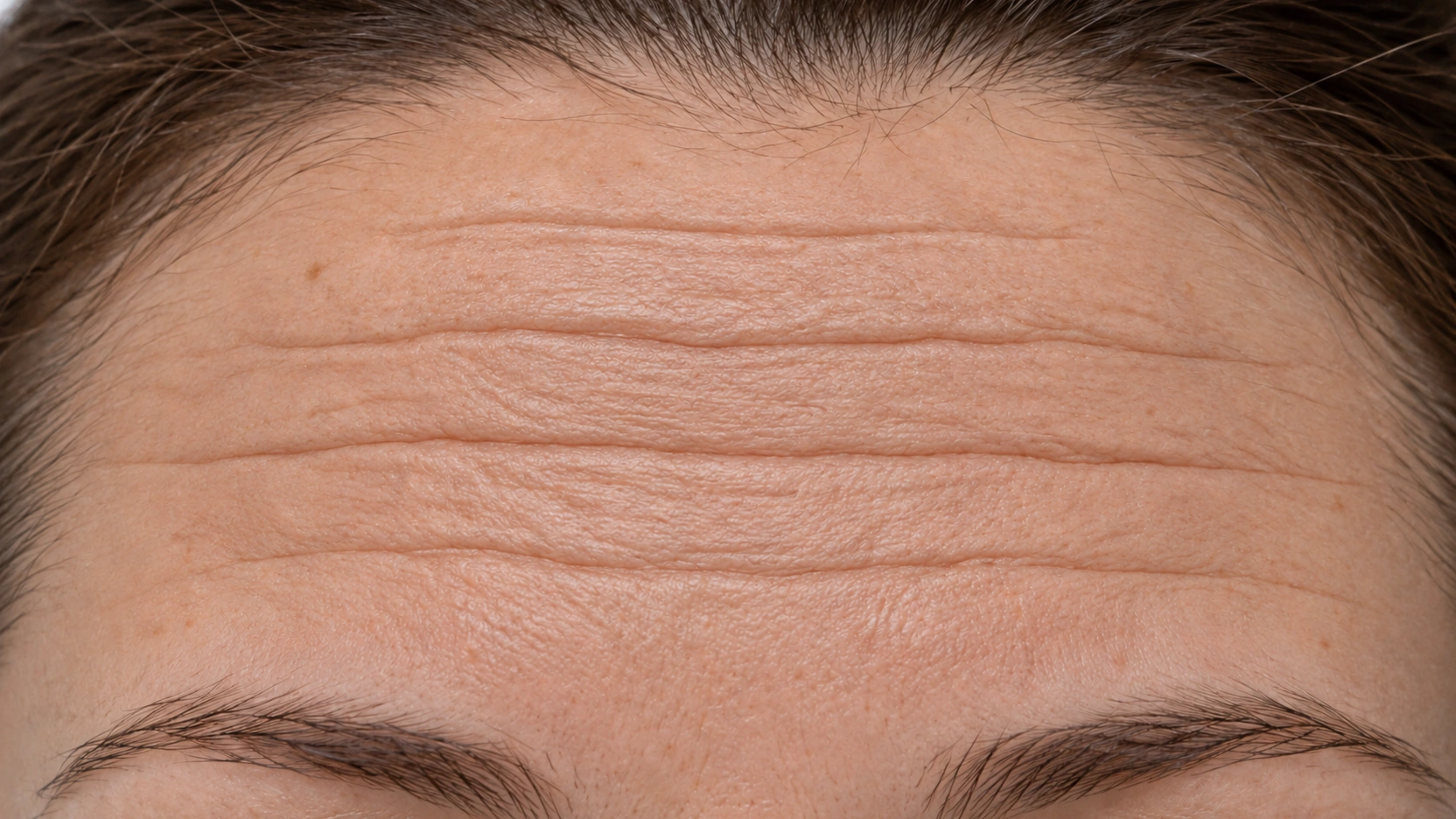
Lines at rest may need filler.
Light peels can't reach deep lines.
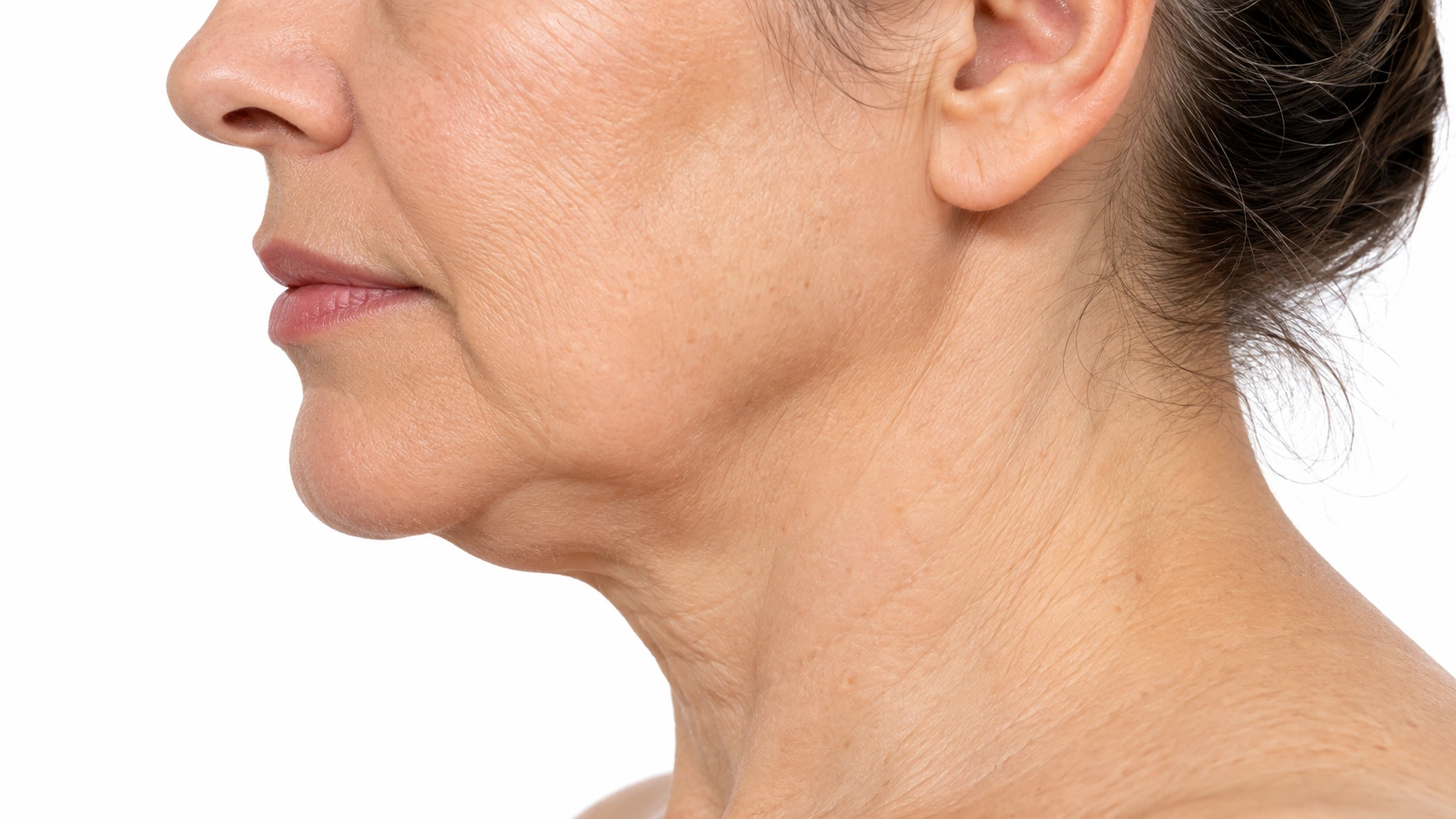
Doesn't lift loose skin.
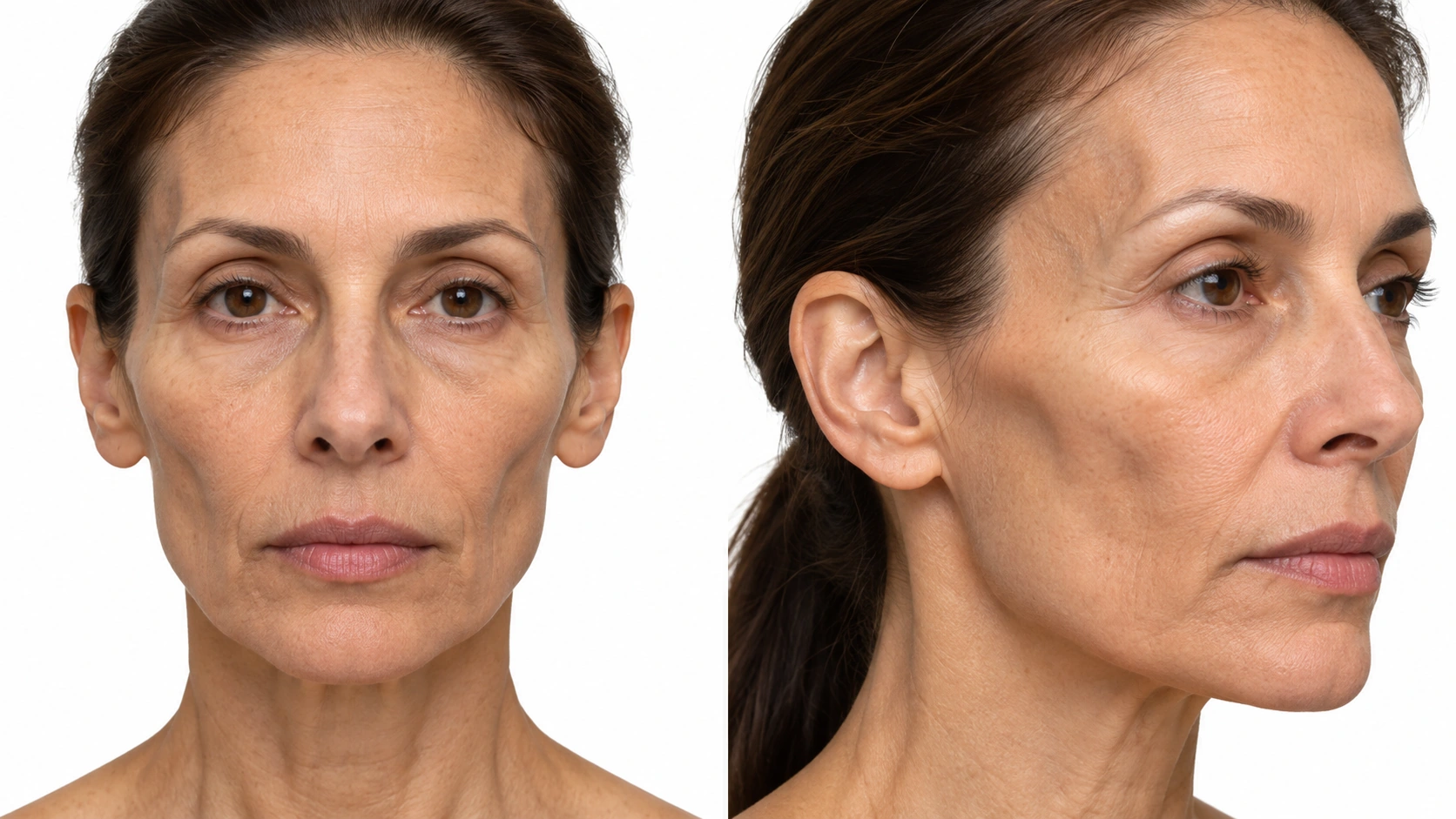
Doesn't add volume.
Very irritating.
Forehead, between the brows, crow’s feet and underarms.
Face; the selected area depends on the concern and treatment plan.
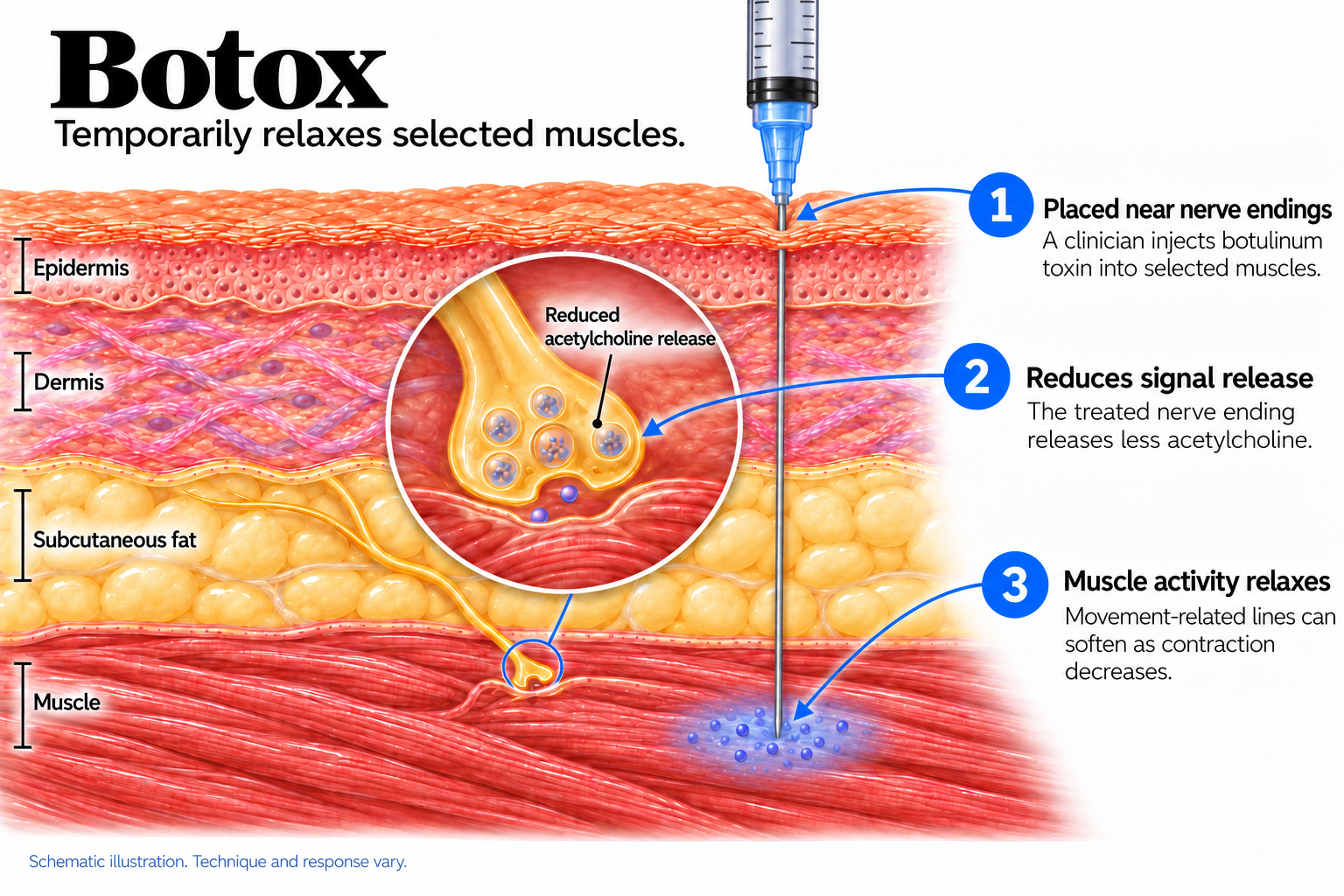

Placed near nerve endings: A clinician injects botulinum toxin into selected muscles. Reduces signal release: The treated nerve ending releases less acetylcholine. Muscle activity relaxes: Movement-related lines can soften as contraction decreases.
Schematic illustration. Technique and response vary. This explains a mechanism and does not specify treatment settings.
The agent and depth are selected: The clinician matches the peel to the skin and concern. Controlled chemical injury occurs: The chosen agent acts on the planned skin layers. Skin heals and renews: Results and recovery depend on the peel depth and technique.
Schematic illustration. Technique and response vary. This explains a mechanism and does not specify treatment settings.
Planning: Timing: Allow at least 2 weeks before an important event; results settle in 10–14 days and bruises may last a week.
2 weeks before: Sun and tanning: No tanning, no sunburn.
4 weeks before: Pigment cream: On deeper skin tones, a pigment-blocking cream first cuts the risk of dark patches.
Preparation: Medicines and alcohol: Ask about fish oil, vitamin E and ibuprofen; avoid alcohol for 24 hours.
A few days before: Bruising and alcohol: Never stop a prescribed blood thinner on your own.
Actives and hair removal: Stop retinoids, benzoyl peroxide and acids 3 to 5 days before.
Actives and hair removal: No waxing, threading or hair removal creams.
What to bring: Arrive with a clean face, reference photos and clear treatment goals.
You say what bothers you while the injector watches your face move.
Skin is checked, photos taken, and you confirm what you have stopped using.
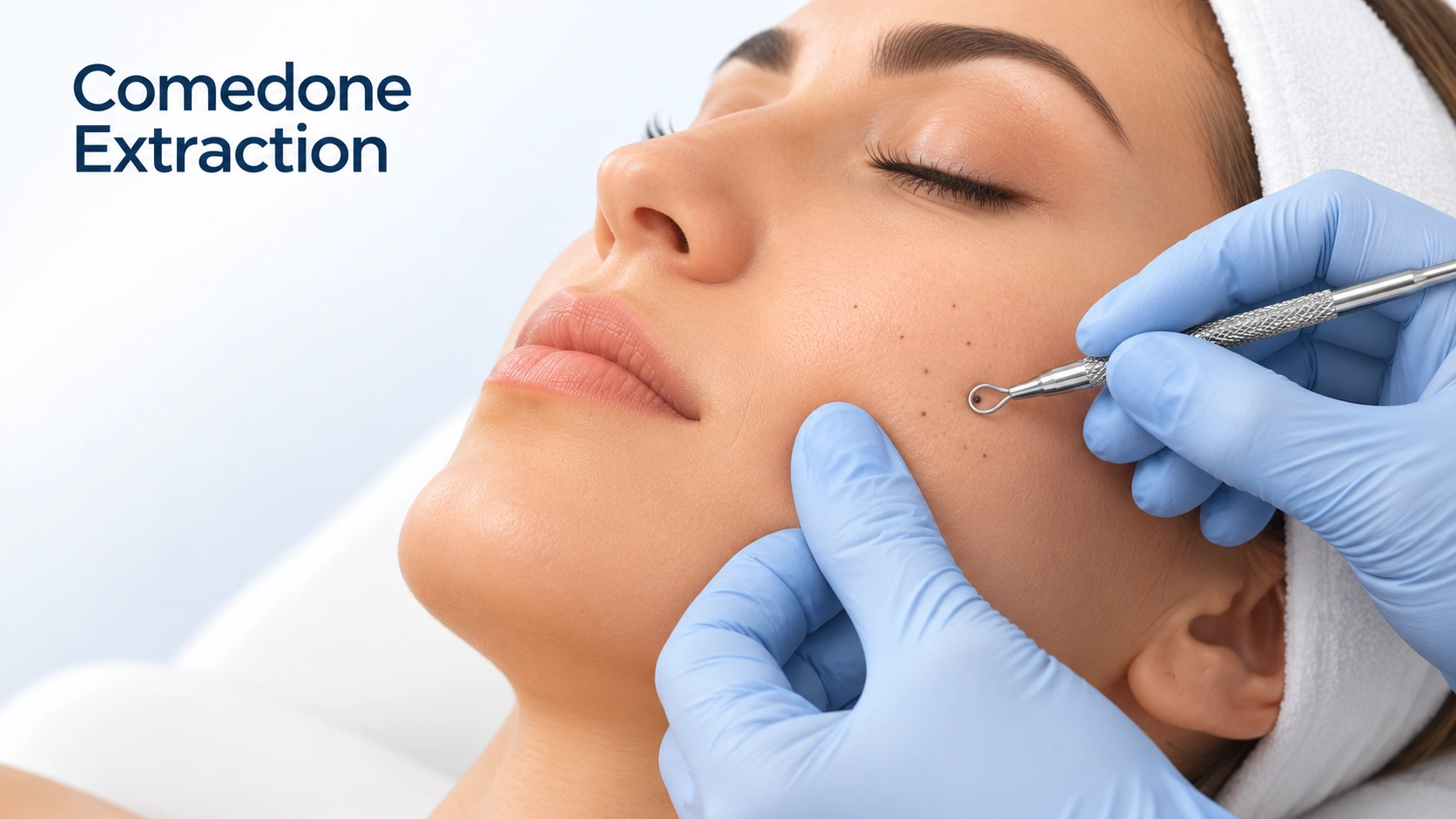
The skin is cleaned, then small injections go into the chosen muscles, a few in each area.
The visit runs 10 to 20 minutes. Each point is a sharp sting, then it is over — most people rate it below a blood test. The forehead and between the brows are the most sensitive.
Skin is cleaned and degreased, eyes and lips protected, acid brushed on in layers.
It stings and builds over 2 to 5 minutes, then gets neutralized. The visit takes 20 to 30 minutes. A light peel burns briefly and most people tolerate it; a medium peel is genuinely uncomfortable, and the burning can last an hour.
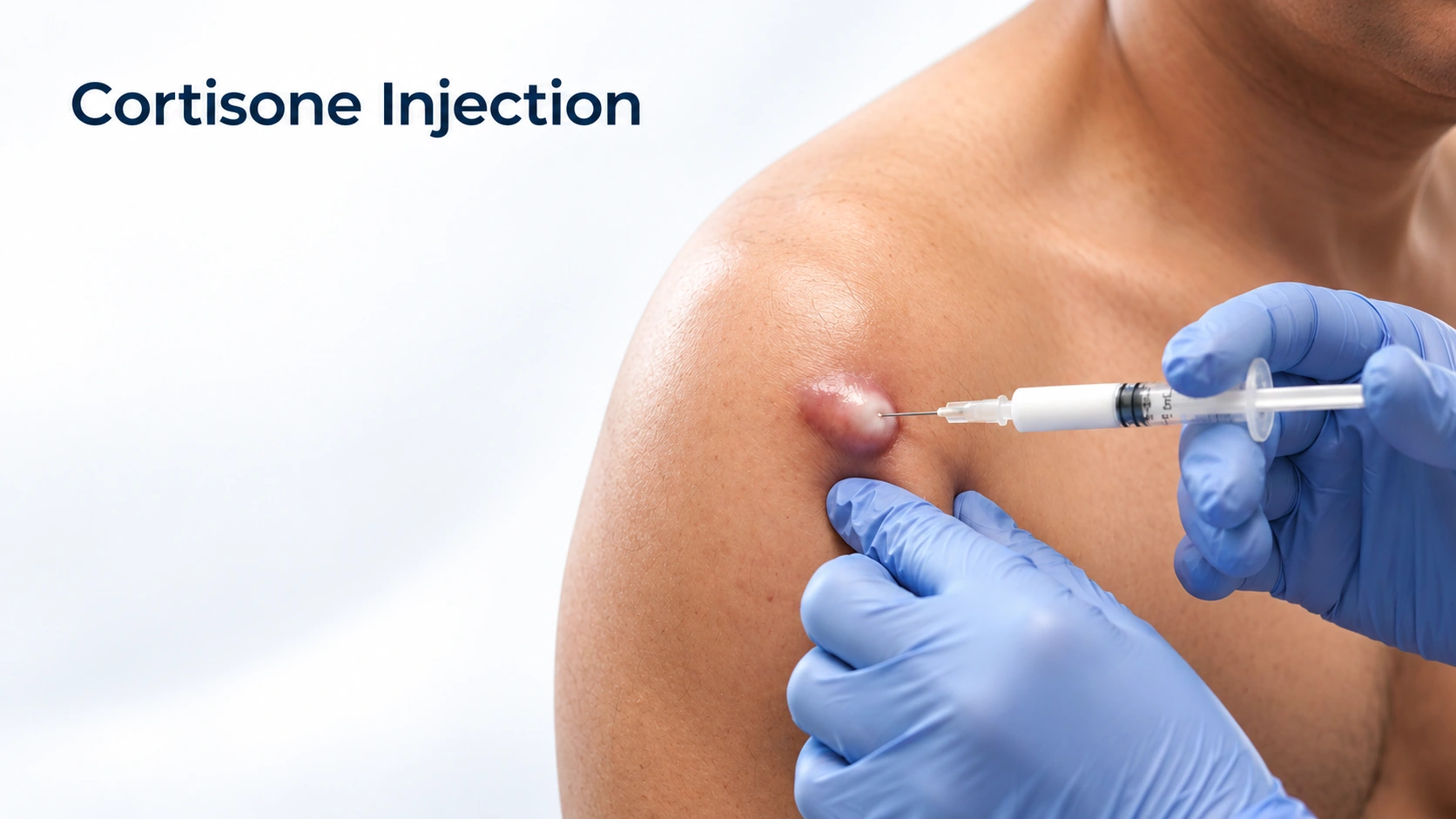
Small raised bumps like insect bites settle within about 20 to 30 minutes.
Pink, tight skin, sometimes with mild swelling and stinging for a few hours.
Days 1 to 3: A few people bruise, usually near the eyes.
Days 1 to 3: Skin darkens slightly, dry and rough.
Days 3 to 5: Movement feels different — heavy, or a muscle that will not quite fire.
Days 10 to 14: The true result.
Days 4 to 7: Light peels finish flaking.
Weeks 1 to 2: Some people break out for a week or two as clogged pores clear.
Starts in 3–5 days, full at 2 weeks
1–2 weeks after each peel
3–4 months
Months with good skincare
In the US it is priced per unit or per area.
A superficial salicylic or glycolic peel runs about $100 to $300 a session in the US, a medium-depth peel about $400 to $900.
Insurance does not cover cosmetic use.
Insurance rarely covers peels for acne or post-acne marks — they count as cosmetic.
Three to four months for most people and areas. The jaw muscle and underarm sweating last longer. Fading is gradual, so movement returns over a few weeks.
A sharp sting for a second or two per injection, several times. Most people find it easier than expected and skip numbing.
Only if the dose says so. Amount and placement decide how much movement you keep, and a lighter dose at a first appointment is reasonable. You can add more at two weeks; you cannot take any away.
There is no antidote, so it has to wear off over weeks to a few months. Some problems can be balanced with a few extra units elsewhere, which is why starting conservatively is safer.
Decades of medical use at doses far larger than cosmetic ones, with no pattern of lasting harm. The main reported change is treated muscles getting somewhat weaker over years, which is the intended effect.
That depends on the muscle and the face, not a standard number. As a rough reference, frown lines between the brows are commonly treated with about 20 units of one common brand. Units are not comparable between brands, so ask which product is used.
Not for indented scars. Peels fade the flat brown or red marks left after a spot — people call those scars, but they are discoloration. Depressed scars need microneedling, lasers, subcision, or filler.
Salicylic acid, usually — oil-soluble, so it works inside the pore. Glycolic acid suits surface dullness and pigment. Some providers combine them, or use a salicylic-mandelic blend on deeper skin tones.
4 to 6 sessions, 2 to 4 weeks apart, then maintenance. One peel gives a temporary glow.
Superficial salicylic and glycolic peels are, with good data behind them. Deeper peels can leave a lasting dark or light patch. Depth, not the acid, matters.
Often not much, and that is fine. Sheeting does not mean it worked; mild flaking does not mean it did not.