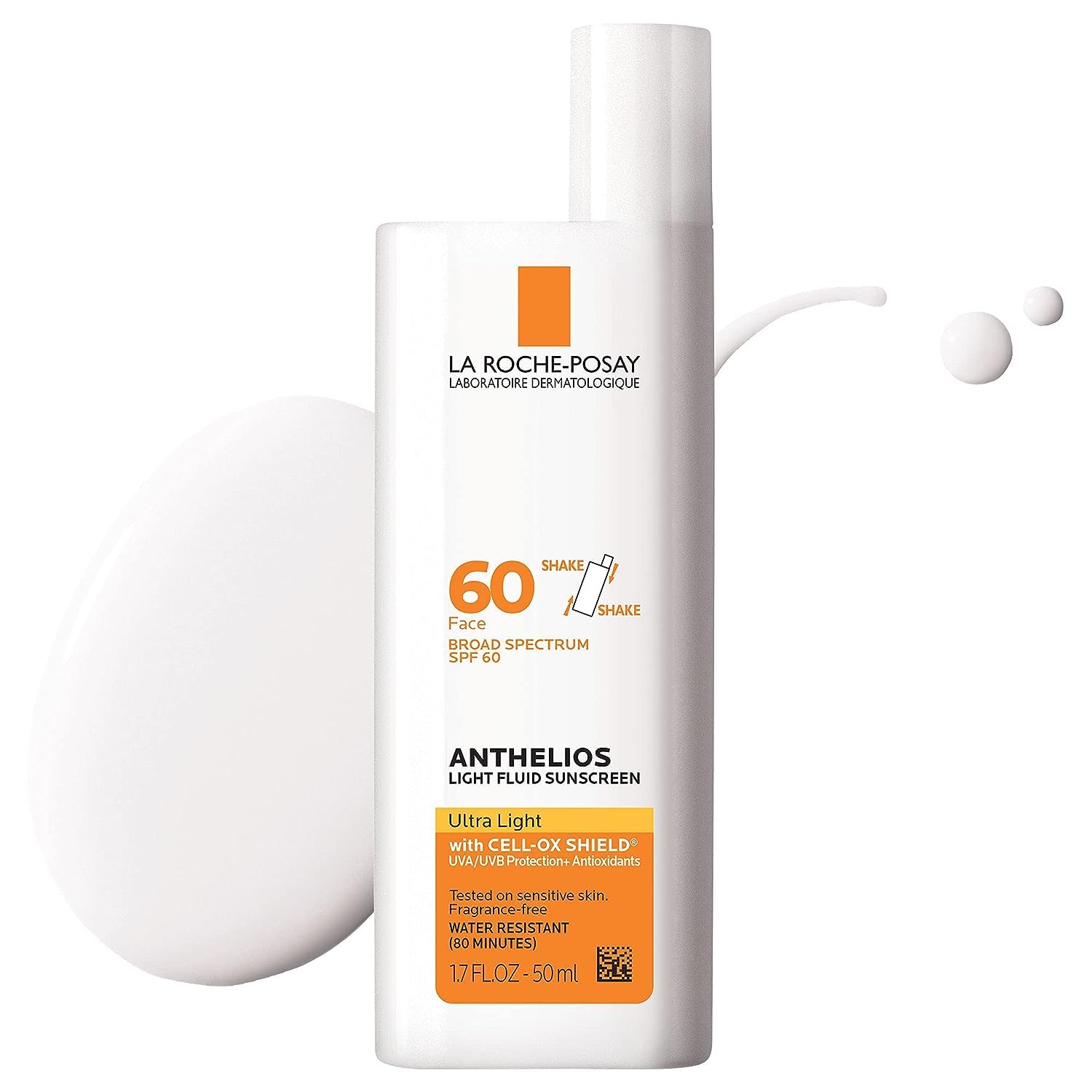
La Roche-Posay Anthelios Light Fluid Facial Sunscreen
A chemical sunscreen so light it disappears. SPF 60, oxybenzone-free, and one of the few high-SPF facial sunscreens that leaves no cast.
Reviewed by Dr. Schwarz, MD · Dermatologist
A dermatologist’s take
Recommend.
The sunscreen I recommend when a mineral formula leaves a cast. Its filters absorb ultraviolet light rather than sitting on the surface, so it disappears on every skin tone. Check the box says fluid — the Ultra Light Spray is a different product. Keep it off the eyelid margin; it stings.
Pros
- No added fragrance
- Good fit for oily skin
Cons
- Can sting the eyes
Skin fit
Who is it best for?
Oily Skin
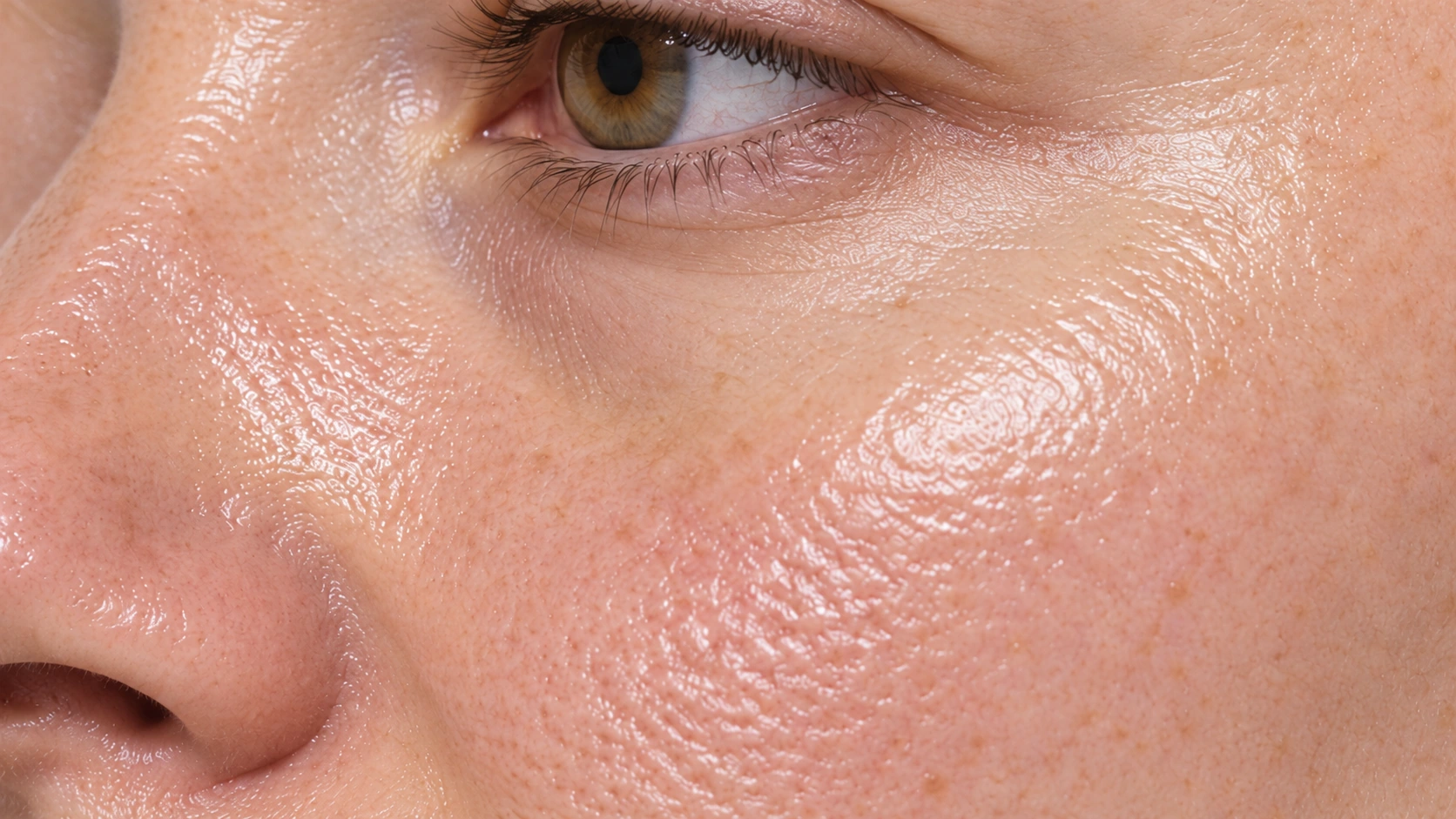
Good fitOily skin skips sunscreen because it feels like grease on grease. This dries to a flat matte finish and adds no oil of its own.
Sensitive Skin
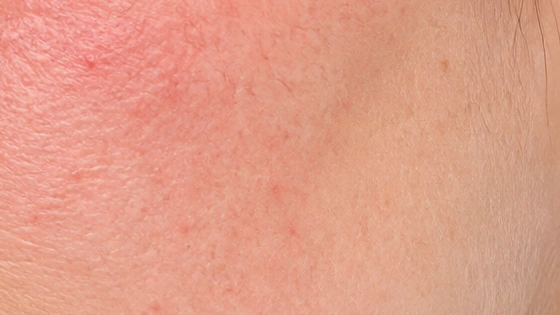
Okay fitFragrance-free and built without oxybenzone. Organic filters can still migrate and sting as you sweat, so keep it off the eyelid margin.
If chemical filters sting every time, take the Anthelios Mineral.

Melasma
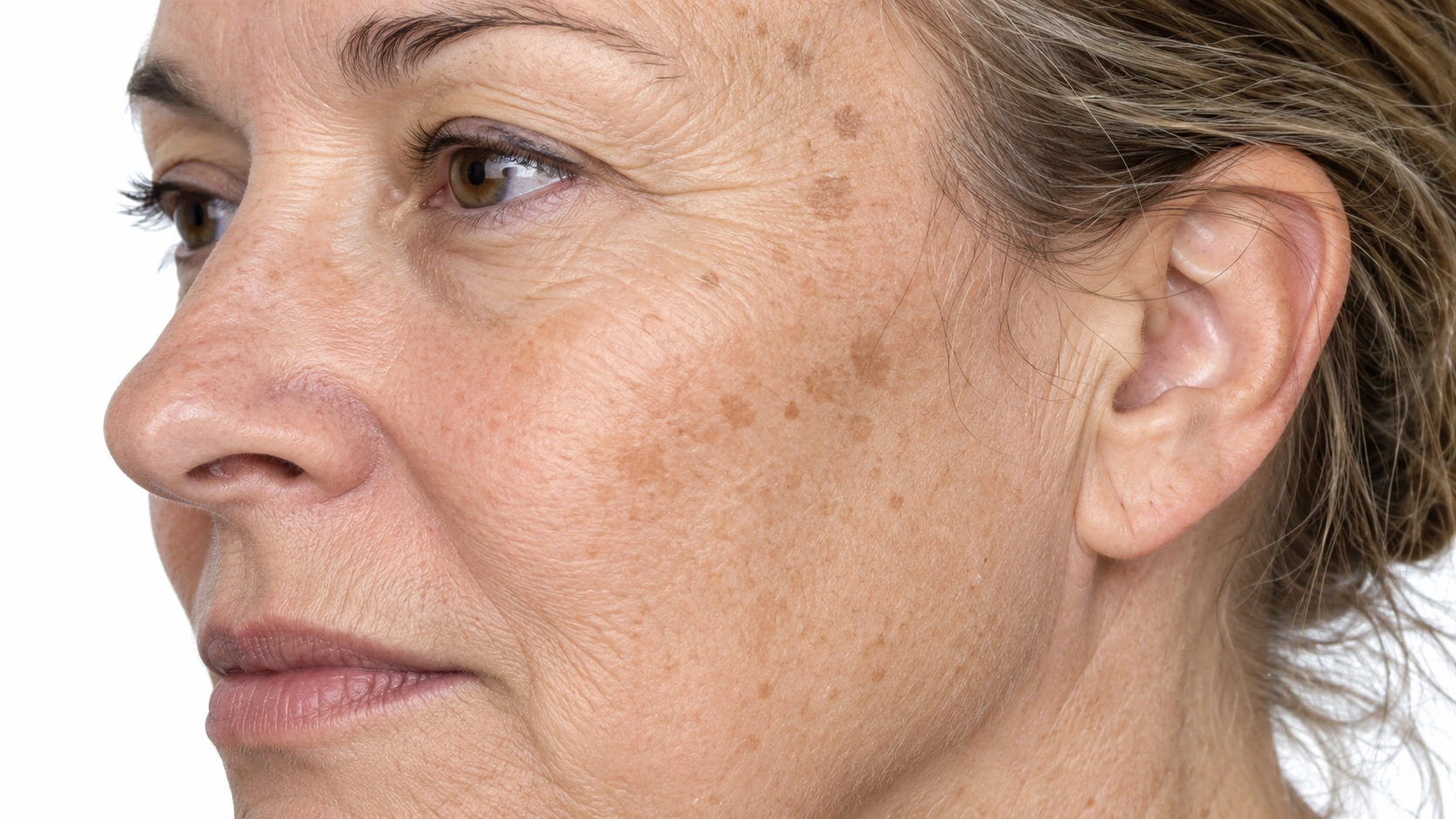
Okay fitMelasma comes back with light exposure, so daily high protection does as much as what you put on the patch. SPF 60 with avobenzone covers the long ultraviolet A wavelengths that keep pigment cells on.
Sun Damage
Okay fitUltraviolet A passes through cloud and window glass all year and reaches the layer where collagen sits. A sunscreen light enough for an ordinary indoor day beats a heavier one saved for the beach.

Dry Skin
Poor fitThis dries down matte and adds almost no moisture. Dry skin needs a moisturizer underneath.
Feel & smell
What does it feel like?
Lotion
A runny fluid rather than a cream. It spreads like water, sinks in within seconds, and dries to a flat matte finish with no white cast on any skin tone.
Makeup goes over it without pilling once dry, which takes under a minute. Fragrance-free. It migrates as you sweat and can sting the eyes, the usual complaint with organic filters. This one is thin enough to travel.
UV filters
UV filter type
- Mineral
- Hybrid
- Chemical
Uses chemical (organic) UV filters.
Filter type describes the formula, not its protection level.
Inside the formula
What do the main ingredients do?


More ingredient roles
How this formula works.
Ultraviolet light damages skin across two ranges. Ultraviolet B is the short wavelength that burns the surface. Ultraviolet A is longer, reaches the deeper layer where collagen sits, and drives photoaging and pigment. Sunscreen has to cover both. Mineral filters scatter light off a layer of white powder, which is why they cast gray on deeper skin tones. Organic filters absorb it into the molecule, so nothing sits on the surface.
Full clinical explanation
Ultraviolet light damages skin across two ranges. Ultraviolet B is the short wavelength that burns the surface. Ultraviolet A is longer, reaches the deeper layer where collagen sits, and drives photoaging and pigment. Sunscreen has to cover both. Mineral filters scatter light off a layer of white powder, which is why they cast gray on deeper skin tones. Organic filters absorb it into the molecule, so nothing sits on the surface.
This one uses four organic filters and no minerals. Avobenzone handles ultraviolet A. Homosalate, octisalate and octocrylene handle ultraviolet B, and octocrylene also stabilizes avobenzone, which breaks down in sunlight on its own.
The reason to care is the base, not the filters. High-SPF sunscreens are usually thick, people apply too little of a thick sunscreen, and that cuts their protection. This one vanishes, so the label dose is one you might realistically apply.
Full ingredient list · 26 ingredients
Active ingredients: Avobenzone 2.7% Homosalate 9.6% Octisalate 2.9% Octocrylene 5.4% Oxybenzone 3.5% Inactive ingredients: water, dimethicone, isopropyl lauroyl sarcosinate, glycerin, styrene/acrylates copolymer, isotridecyl isononanoate, polyurethane-35, caprylyl methicone, octyldodecanol, phenoxyethanol, propylene glycol, caprylyl glycol, sodium stearoyl glutamate, polysorbate 61, glyceryl stearate, PEG-8 laurate, dimethiconol, octyldodecyl xyloside, PEG-12 dimethicone, p-anisic acid, stearyl alcohol, disodium EDTA, tocopherol, diethylhexyl syringylidenemalonate, cassia alata leaf extract, maltodextrin
All ingredient roles
Dimethicone
A silicone that smooths the surface and adds to the protective film.
Glycerin
A small humectant. It moves into the outer layer of skin and holds water there.
Phenoxyethanol
The preservative. It stops bacteria and mold from growing in the product.
Disodium EDTA
Binds minerals in the water so the preservative works better and the formula stays stable.
Tocopherol
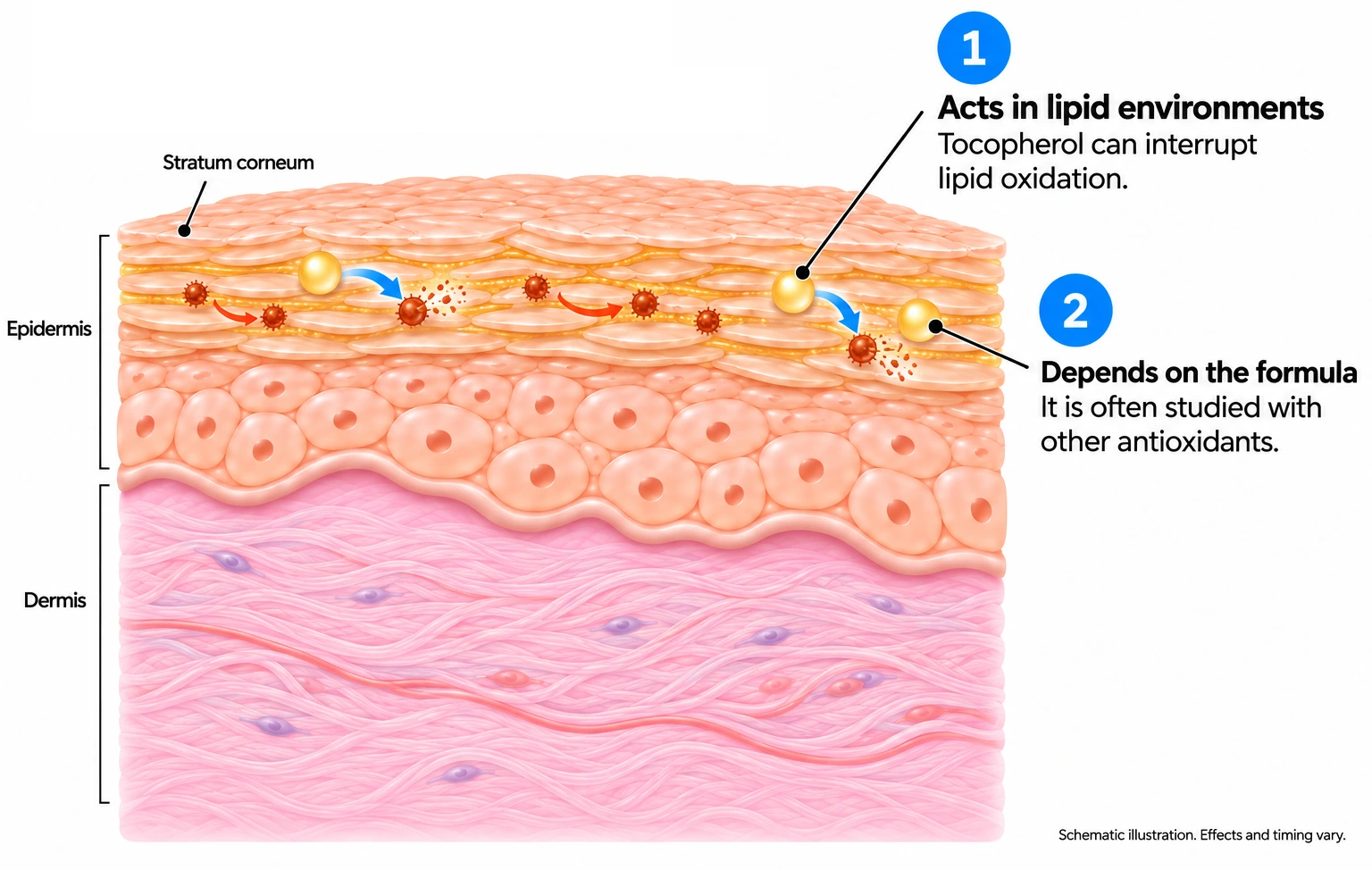
Vitamin E, an antioxidant. Here it mainly keeps the oils in the product from going rancid.
Use & results
How to use it.
How much
A quarter teaspoon for the face. It looks like far too much in a fluid. Use it anyway — the label SPF assumes it.
Where
Face, ears, neck and hairline. Keep it off the eyelid margin; it moves when you sweat.
Reapply
Every two hours outdoors, and after sweating or swimming. Store it out of the heat — octocrylene breaks down faster when hot.
What to expect
Nothing you can see. Sunscreen prevents damage; the payoff is the pigment and lines you never develop.
Price spectrum
Where does the price fall?
Paying more doesn’t guarantee better results. A good buy is a formula with the right ingredients, strength and texture for your skin. Use price per ounce to compare cost, then weigh it against the pros and cons above.
The product line
Which La Roche-Posay product should you choose?
La Roche-Posay has several distinct ranges: Toleriane, Effaclar and Anthelios cover different cleansing, treatment and sun-protection needs. Compare the actual formula rather than relying on the family name. A gentler cleanser and a stronger treatment product are doing different jobs.
Anthelios Light Fluid SPF 60
All chemical: avobenzone, homosalate, octisalate and octocrylene. The lightest texture in the range, no cast on any skin tone.

Anthelios Melt-In Milk SPF 60
Also chemical, in a rich lotion built for the body.

Anthelios Tinted Sunscreen SPF 50
A sheer tinted fluid. Worth it if sunscreen has ever left you looking gray.

Anthelios Mineral Ultra-Light Face Sunscreen
All mineral, for skin that reacts to chemical filters. Light for a mineral sunscreen, but not invisible.
More about the lineup
Anthelios is a shelf of sunscreens, not one product. The choice comes down to which filters you get on with and how heavy a texture you will wear every day.
Alternatives
If it didn’t work for you
La Roche-Posay Anthelios Mineral Ultra-Light Face Sunscreen
The mineral version from the same line, for skin that stings with chemical filters. It absorbs well, but expect a cast on deeper skin tones.
Read the review →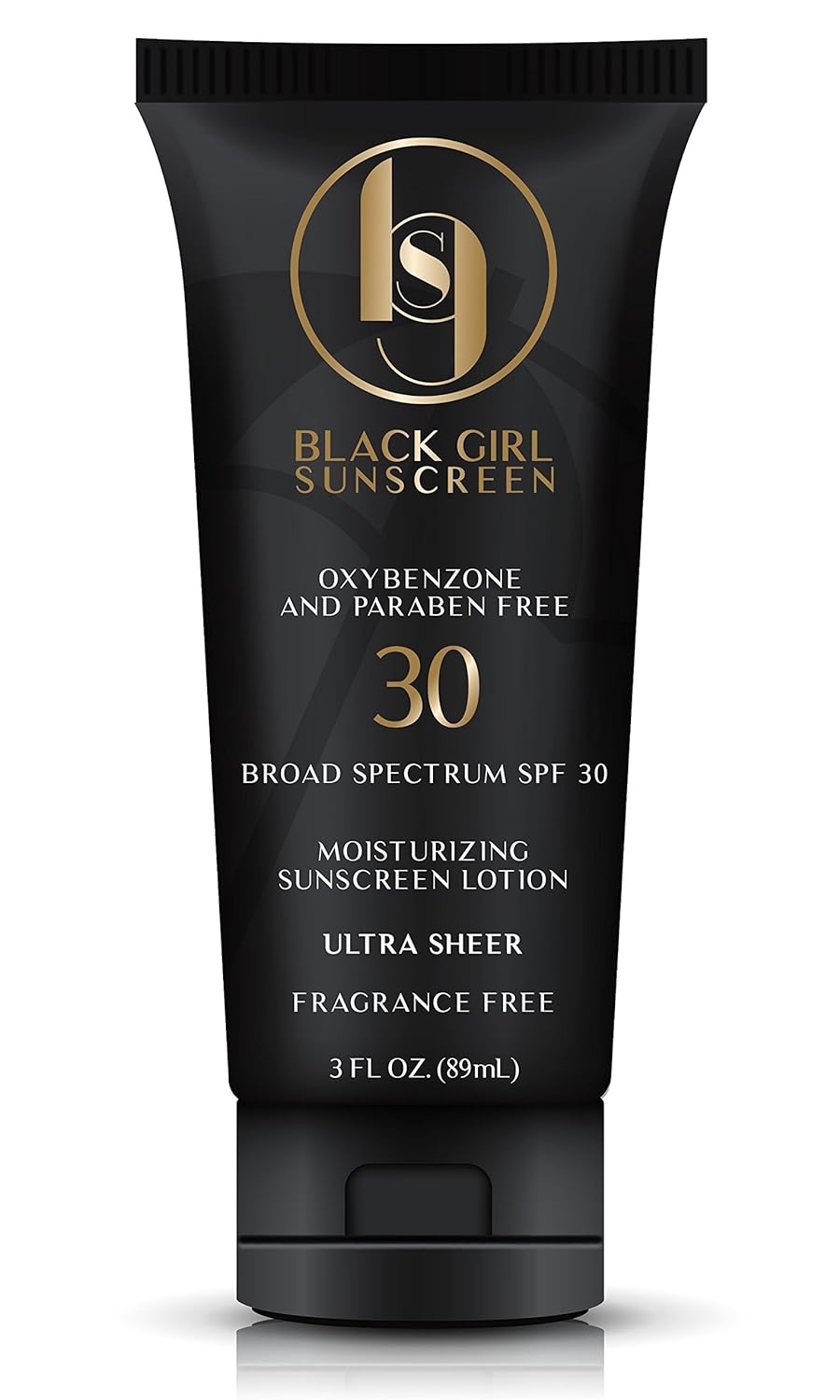
Black Girl Sunscreen
Another all-chemical lotion built to leave no cast, at $16 to $19. Richer, so it suits dry skin more than oily.
Read the review →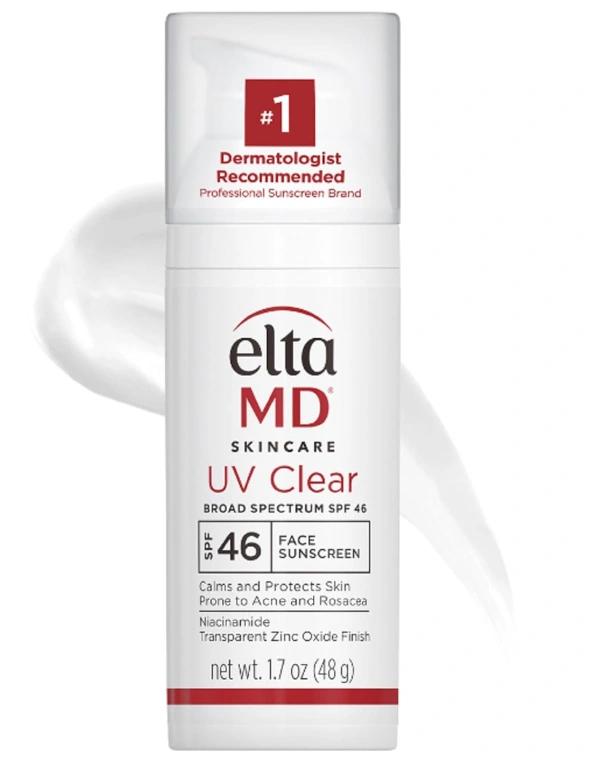
EltaMD UV Clear
A hybrid with 5% niacinamide in an oil-free base, for skin that breaks out or flushes. EltaMD say it does cast on deeper skin tones.
Read the review →Questions
Before you buy
Is La Roche-Posay Anthelios Light Fluid Facial Sunscreen mineral or chemical?
Chemical.
Will La Roche-Posay Anthelios Light Fluid Facial Sunscreen leave a white cast?
No, on any skin tone.
Does La Roche-Posay Anthelios Light Fluid Facial Sunscreen contain oxybenzone?
No. A similar-sounding spray is a different product, so check the label.
Is La Roche-Posay Anthelios Light Fluid Facial Sunscreen water resistant?
Yes, for 80 minutes.
Is La Roche-Posay Anthelios Light Fluid Facial Sunscreen fragrance-free?
Yes.
What SPF is La Roche-Posay Anthelios Light Fluid Facial Sunscreen?
SPF 60.
Sources
Sources and further reading
- Effect of Sunscreen Application Under Maximal Use Conditions on Plasma Concentration of Sunscreen Active Ingredients: A Randomized Clinical Trial
- Effect of Sunscreen Application on Plasma Concentration of Sunscreen Active Ingredients: A Randomized Clinical Trial
- Sunscreen: How to Help Protect Your Skin from the Sun
- Sunscreen FAQs (American Academy of Dermatology)
- The Trouble With Sunscreen Chemicals (EWG)
- Sunscreen filter classification
Keep exploring
Keep exploring.
La Roche-Posay Anthelios Mineral Ultra-Light Face Sunscreen
EltaMD UV Clear
Black Girl Sunscreen
Dry Skin
Melasma

La Roche-Posay Anthelios Sunscreen SPF 70
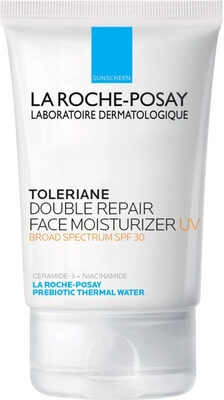
La Roche-Posay Toleriane UV Moisturizer

ROUND LAB Birch Juice Moisturizing Sunscreen

Cetaphil Mineral Stick

Heliocare

Women's UPF 50+ Clothing