PRODUCT REVIEW
Black Girl Sunscreen
A chemical sunscreen built around one goal — no white cast on deeper skin tones. It solves that. The eye-stinging complaint is real.
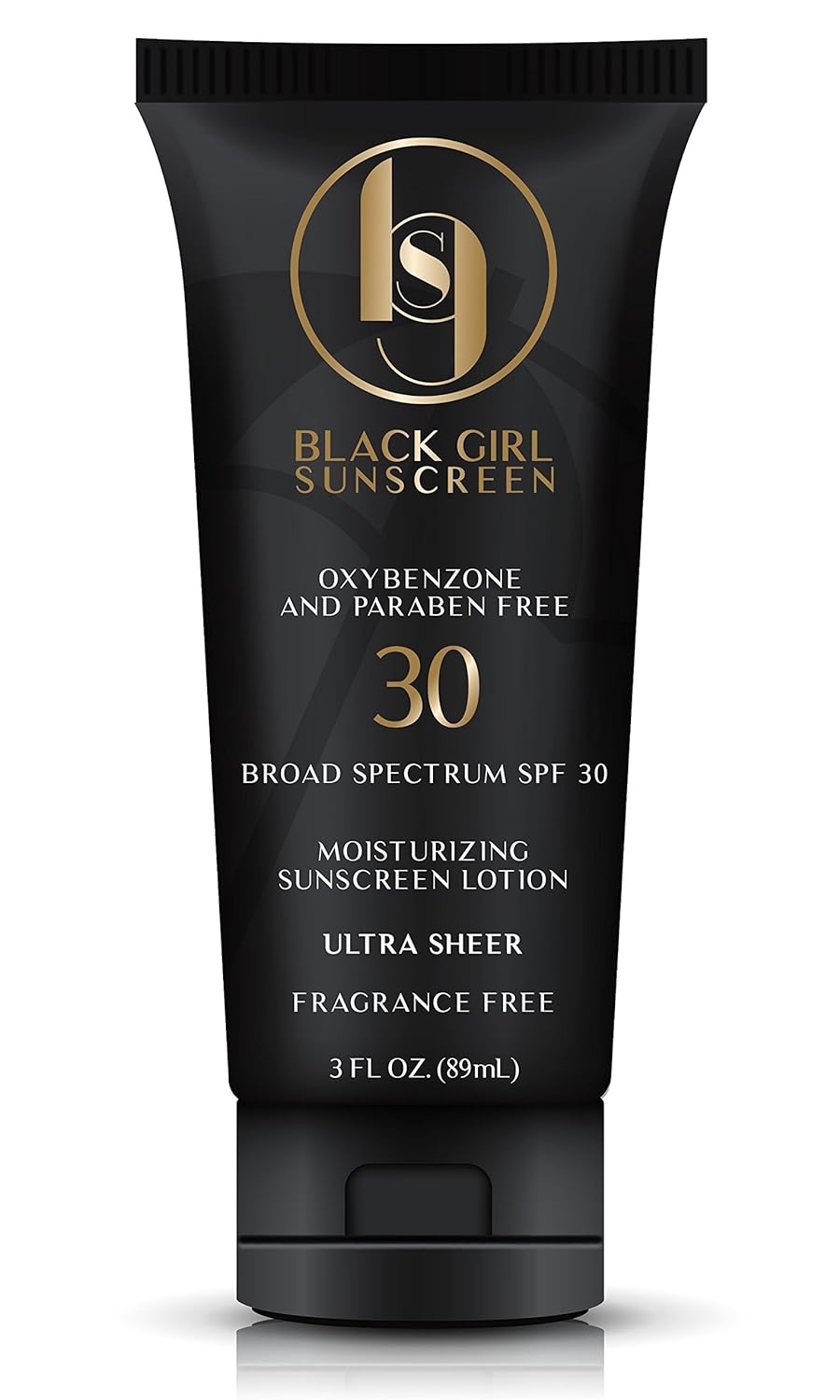
Key facts
Black Girl Sunscreen at a glance.
Avobenzone 3%, homosalate 10%, octisalate 5%, octocrylene 2.75% (SPF 30)
Key active
Moisturizing lotion
Texture
Deep and melanin-rich skin tones; normal to dry skin
Best for
$16–19
Approximate price
Fragrance free
Fragrance
3 oz
Size
$18.99
Price
Sunscreen
Type
What is it?
Top things to know about Black Girl Sunscreen
- Black Girl Sunscreen is an SPF 30 lotion for face and body, about $16 to $19. It is a daily sunscreen that doubles as a moisturizer.
- The filters are avobenzone 3 percent, homosalate 10 percent, octisalate 5 percent and octocrylene 2.75 percent — all organic filters, which absorb ultraviolet light rather than sitting on the surface and scattering it. Under them is a rich base of shea butter, avocado, jojoba and sunflower oils, which is why it rubs in clear on every skin tone and feels like a moisturizer going on.
A good daily SPF 30 for deeper skin tones. Its filters absorb ultraviolet light instead of sitting on the surface, so nothing turns skin gray. Rich enough to stand in for a morning moisturizer on dry skin. Keep it off the eyelid margin; it stings. If you prefer mineral filters, this is not it.
— Dr. Schwarz
Skin fit
Is it right for your skin?
Hyperpigmentation
Ultraviolet light keeps pigment cells producing, so nothing for dark patches holds without daily sunscreen. This leaves no gray cast on deeper skin tones, which removes the usual reason people skip it.
Melasma
Melasma is driven by light and heat as well as hormones, and returns quickly without daily cover. Avobenzone handles the long ultraviolet A wavelengths that keep pigment cells switched on. SPF 30 is a daily floor — the everyday option, not the beach one.
Sun Damage
Ultraviolet A reaches the collagen layer and breaks it down year after year, including through window glass. This is comfortable enough to wear on an ordinary day, which is the only kind that gets used.
Dry Skin
The shea butter and plant oil base can stand in for a morning moisturizer on dry skin. On oily skin it feels greasy.
Texture
What it feels like on skin.
Lotion
A rich, moisturizing lotion that spreads easily and rubs in clear on every skin tone, with no gray or ashy cast at all. It leaves a soft, slightly dewy finish — comfortable on dry skin, greasy on oily skin, and makeup slides on it. It has a noticeable plant-oil smell even though no fragrance is added. It stings the eyes, more so as you sweat, so keep it off the lash line and eyelid margin.
Alternatives
If this isn’t the right product for you
La Roche-Posay Anthelios Light Fluid Facial Sunscreen
Another all-chemical formula with no cast on any skin tone, at SPF 60. Lighter and matte, so it suits oily skin better.
La Roche-Posay Anthelios Sunscreen SPF 70
Fully chemical, so no white cast, with niacinamide for uneven tone. It can migrate and sting, so keep it off the lash line.
La Roche-Posay Toleriane UV Moisturizer
Chemical filters in a ceramide moisturizer base, so no cast, around $26 for 3.4 oz. SPF 30 is a daily floor, not a beach product.
Ingredients · Interactive
What’s in it, and where each ingredient works.
Full ingredient list · 25 ingredients, in label order. Click one.
A thickener that gives the product its texture.
Binds minerals in the water so the preservative works better and the formula stays stable.
Helps the preservative work and softens the feel of the product.
The preservative. It stops bacteria and mold from growing in the product.
The base the other ingredients are dissolved in. Most of it evaporates soon after the product goes on.
How to use it
How to use it.
How to apply it
- How muchAbout a quarter teaspoon for the face. Almost everyone underapplies, and half the dose gives far less than half the SPF.
- WhereFace, ears, the sides and back of the neck, and the hairline. Keep it off the eyelid margin; it migrates and stings.
- ReapplyEvery two hours in the sun, and after sweating or swimming. The base SPF 30 lotion has no water-resistance claim.
What to expect
- What to expectNothing visible. Sunscreen prevents damage rather than repairing it. The payoff is the marks and lines you do not get later.
Questions
Common questions.
Is Black Girl Sunscreen mineral or chemical?
Chemical, with no mineral filters.
Will Black Girl Sunscreen leave a white cast?
No. It is built to avoid one on deeper skin tones.
Does Black Girl Sunscreen sting the eyes?
It can. Keep it off the eyelid margin.
Does Black Girl Sunscreen contain oxybenzone?
No.
Is Black Girl Sunscreen fragrance-free?
No added fragrance on the label, though the plant oils give it a light scent.
What SPF is Black Girl Sunscreen?
SPF 30.
References
Sources.
- 1. The efficacy and safety of sunscreen use for the prevention of skin cancer (https://www.cmaj.ca/content/192/50/E1802) — Peer-reviewed review explaining how sunscreens work and their efficacy/safety, supporting the claim that organic (chemical) filters absorb UV radiation and that sunscreen use is effective and safe. Link
- 2. Sunscreen & Your Skin (https://www.skincancer.org/skin-cancer-prevention/sun-protection/sunscreen/) — Reputable clinical source stating chemical filters (e.g., avobenzone, octisalate) absorb UV 'like a sponge' while physical/mineral filters (zinc oxide, titanium dioxide) reflect and scatter UV, supporting the mechanism claim that chemical filters absorb rather than sit on and scatter light. Link
- 3. Sunscreen: How to Help Protect Your Skin from the Sun (https://www.fda.gov/drugs/understanding-over-counter-medicines/sunscreen-how-help-protect-your-skin-sun) — FDA consumer page confirming avobenzone and other listed compounds are FDA-recognized OTC sunscreen active ingredients and that sunscreen works by absorbing or reflecting UV radiation. Link