
Vitiligo vs Pityriasis Alba

Vitiligo is a condition where the immune system destroys the cells that give skin its color, leaving smooth white patches. It is not painful, not contagious and not caused by anything you did, and treatment can bring color back to many patches if it is given long enough. A mild eczema pattern leaving pale, slightly dry patches, usually in children.

Research updated 2026-10-23
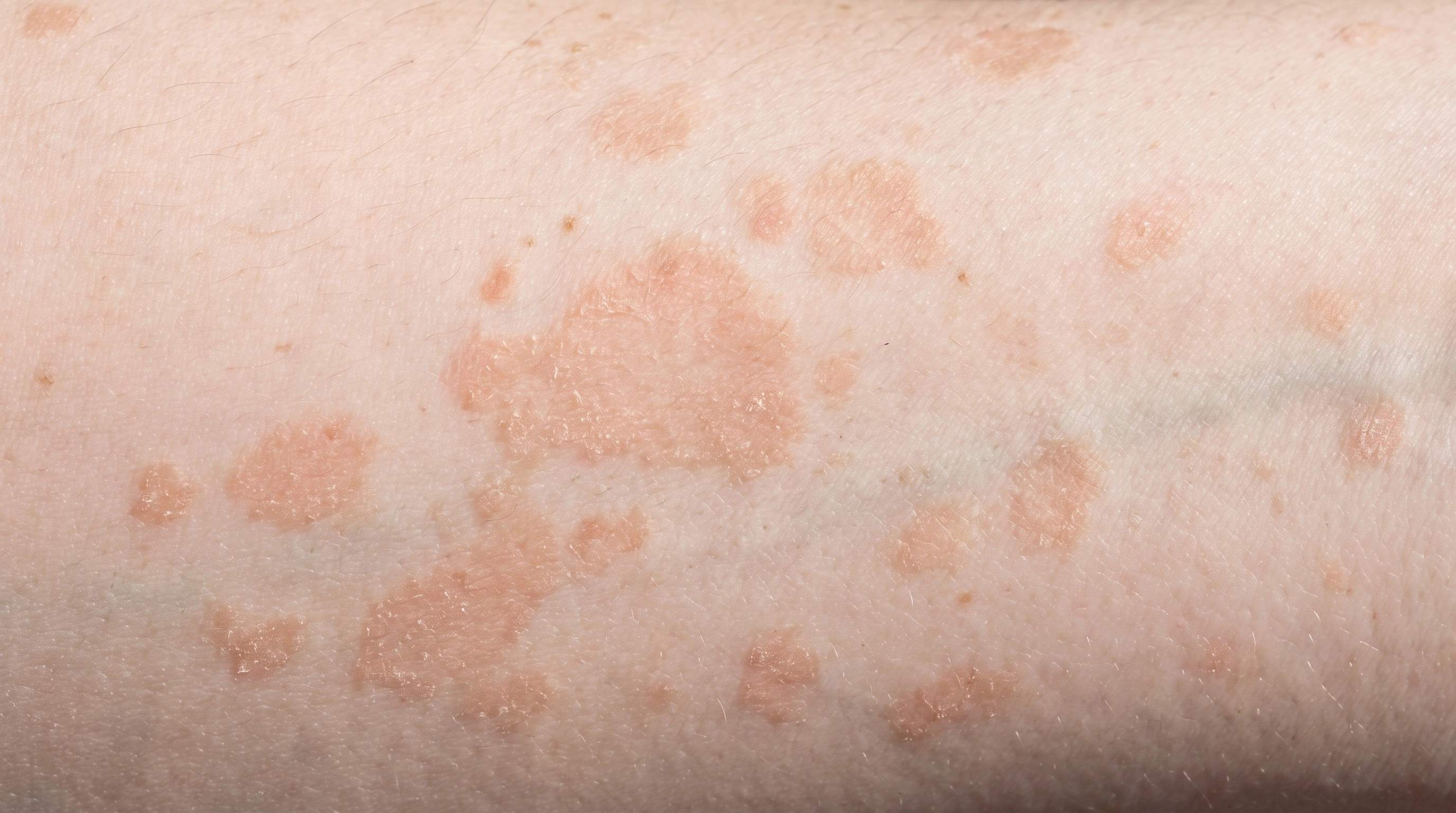
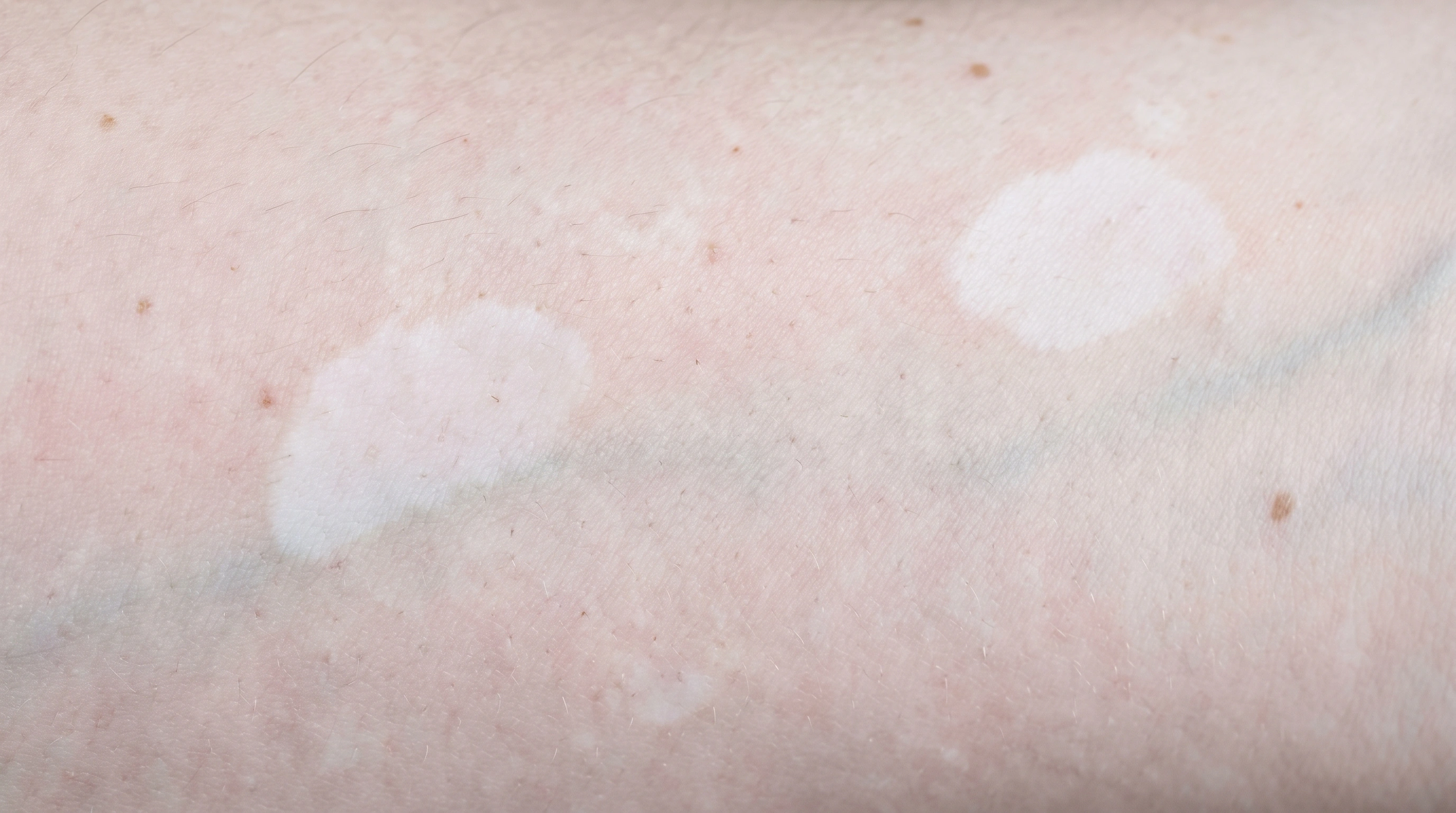
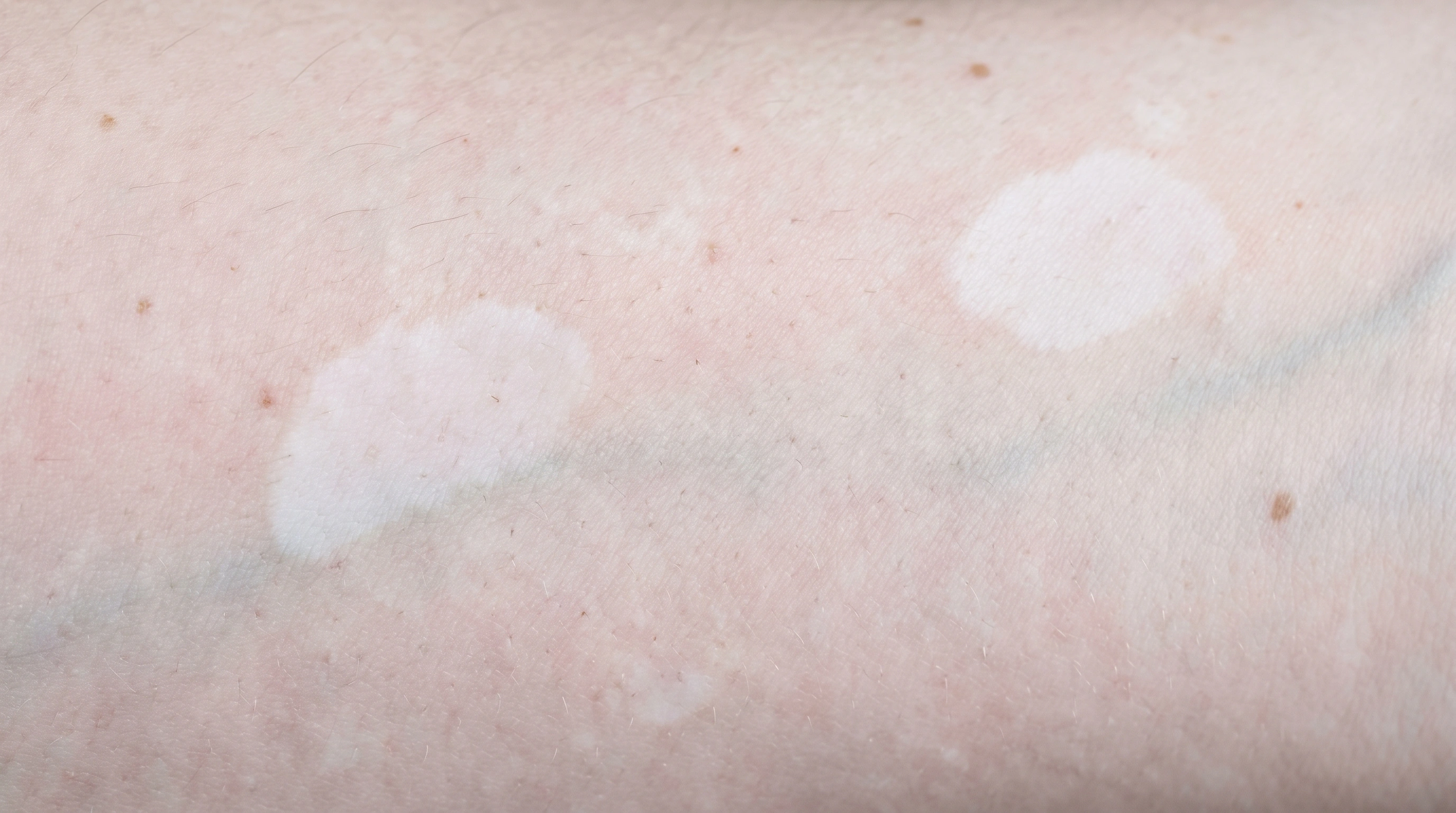
The front of a forearm on fair skin. Two pale patches with sharp edges sit against lightly tanned skin, and the difference between the patch and the skin around it is subtle.Pityriasis Alba.

Key differences

The same eight facts on every condition comparison.

Usual age
Before 30
3 to 16
Where
Face, hands, folds, around openings
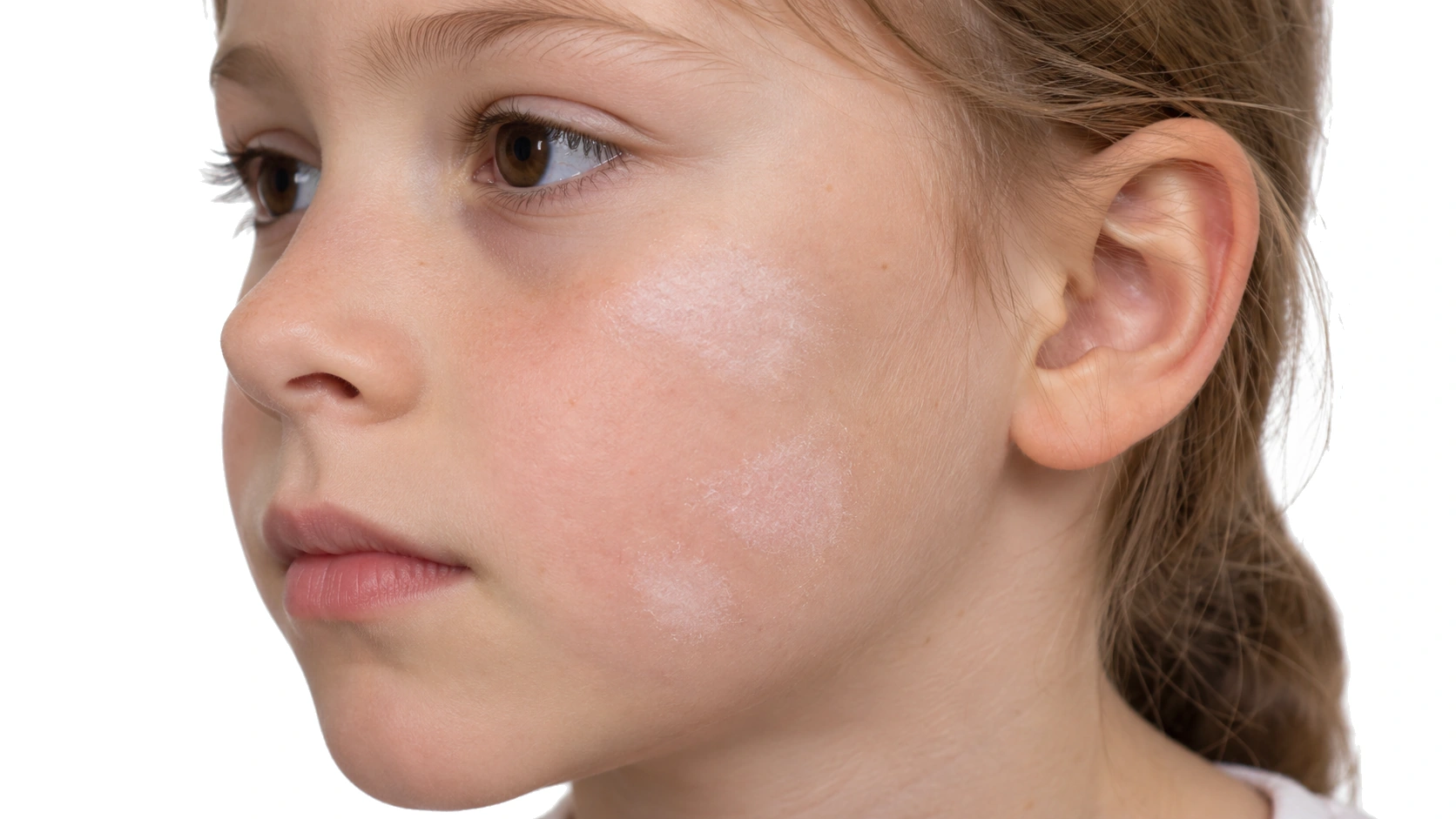
Cheeks, chin, upper arms
Main sign
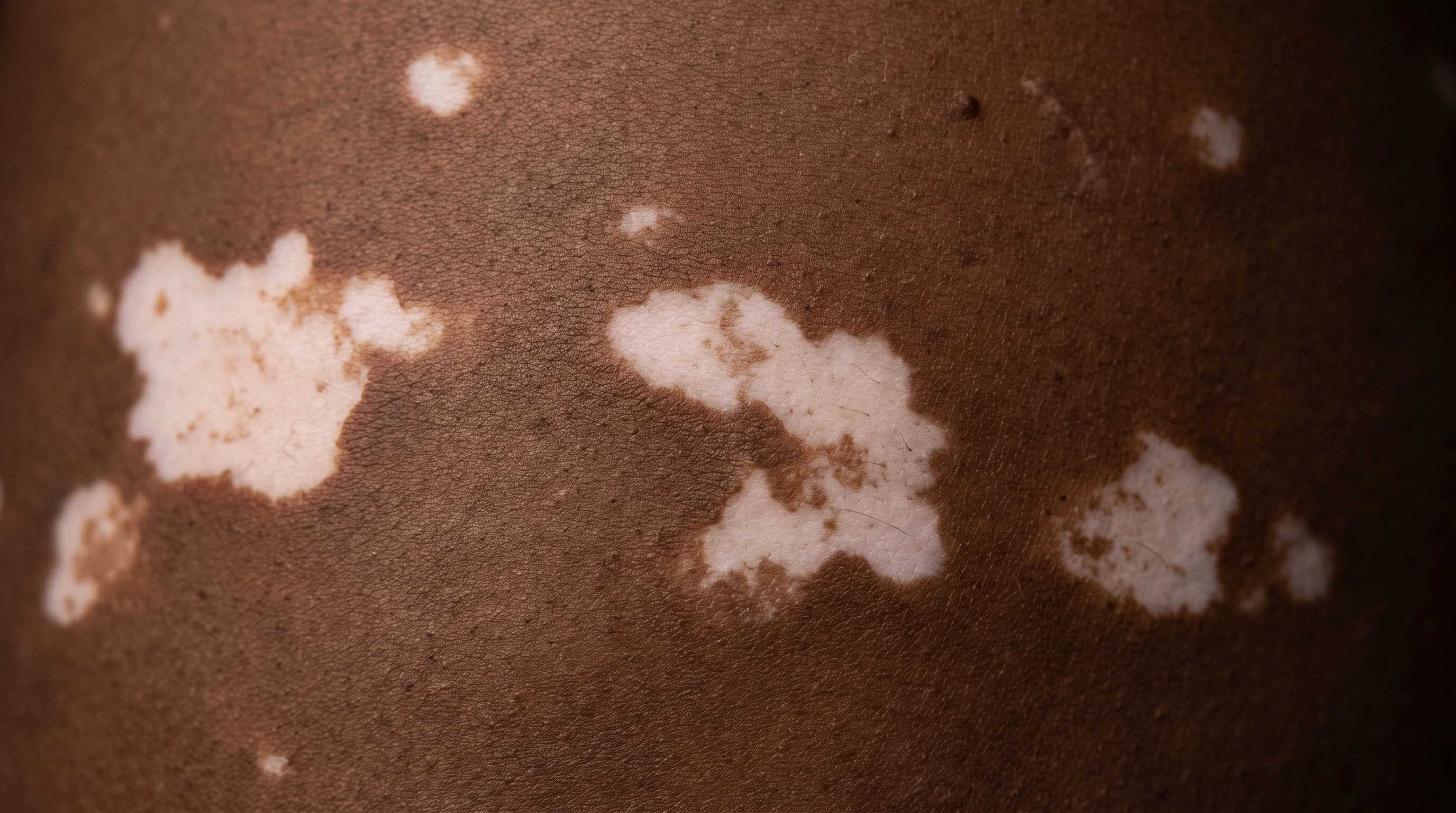
Smooth chalk-white patches
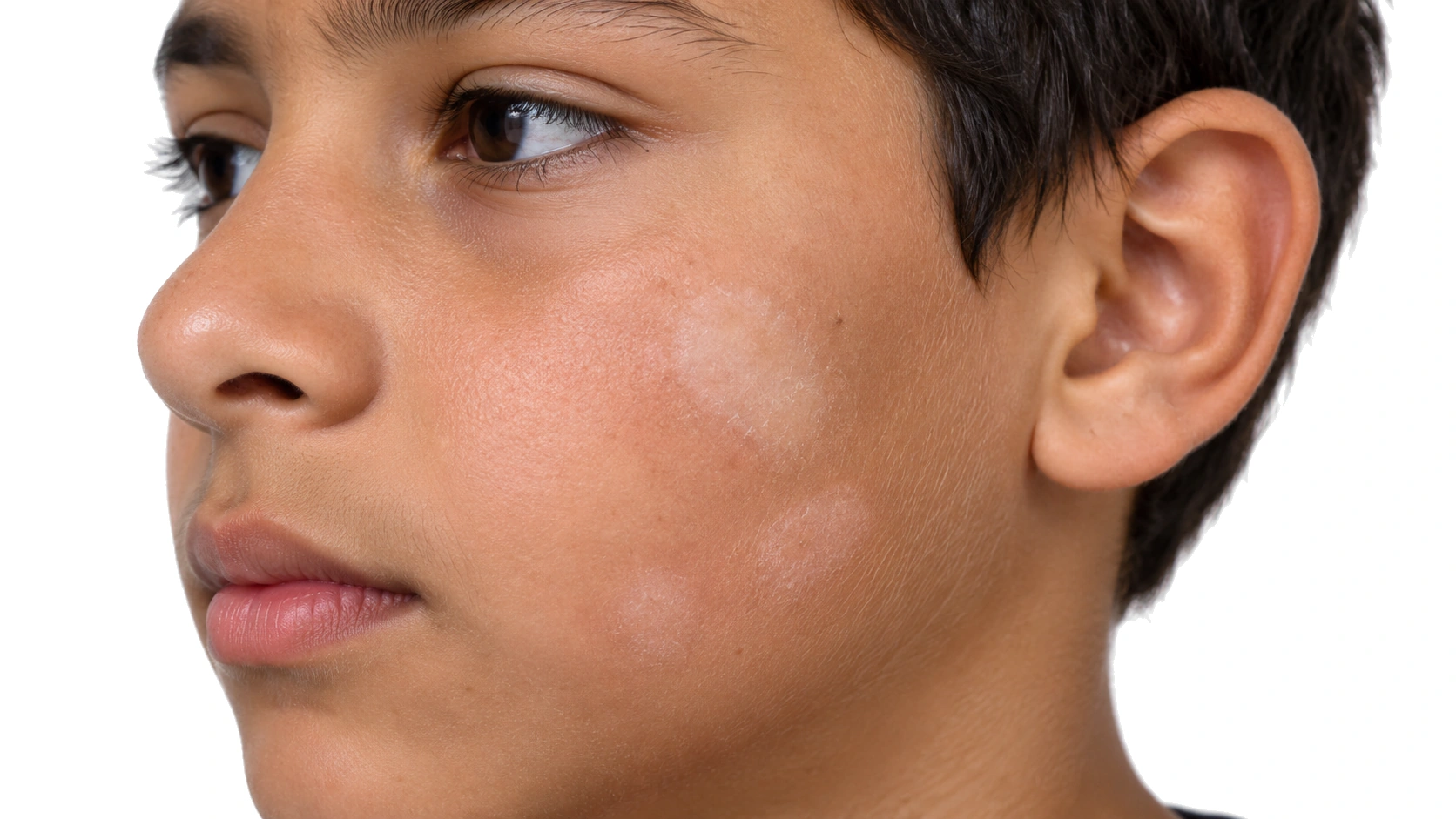
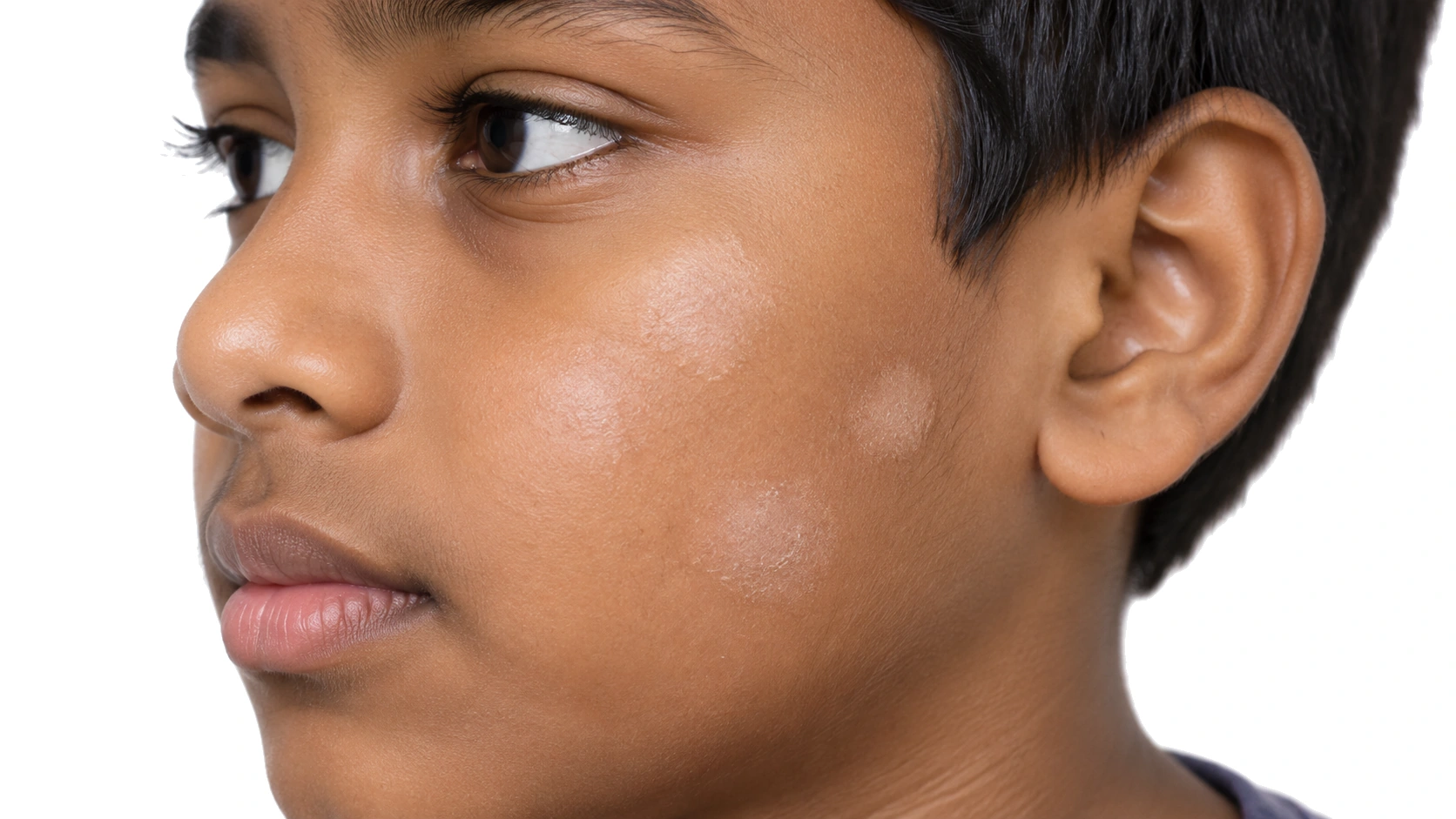
Pale, slightly dry patches
Itch or pain
Neither
Mild itch at most
Contagious
No
No
Long term
Long-term; can repigment
Fades over months
Scars
No
No
Who gets it
About 1 in 100; all skin tones
Children; eczema-prone skin

What is it?

Vitiligo
Pityriasis Alba
What is it?
  • It causes loss of pigment.
    Defined white patches form when melanocytes are lost or stop working.
  • It is often autoimmune.
    Nonsegmental vitiligo commonly involves autoimmune mechanisms.
  • Hair can turn white.
    White hairs may grow within a patch.
  • Its impact is real.
    The emotional effect can be significant regardless of how much skin is involved.
  • What it is
    A mild eczema pattern leaving pale, slightly dry patches, usually in children.

What it looks like

Vitiligo

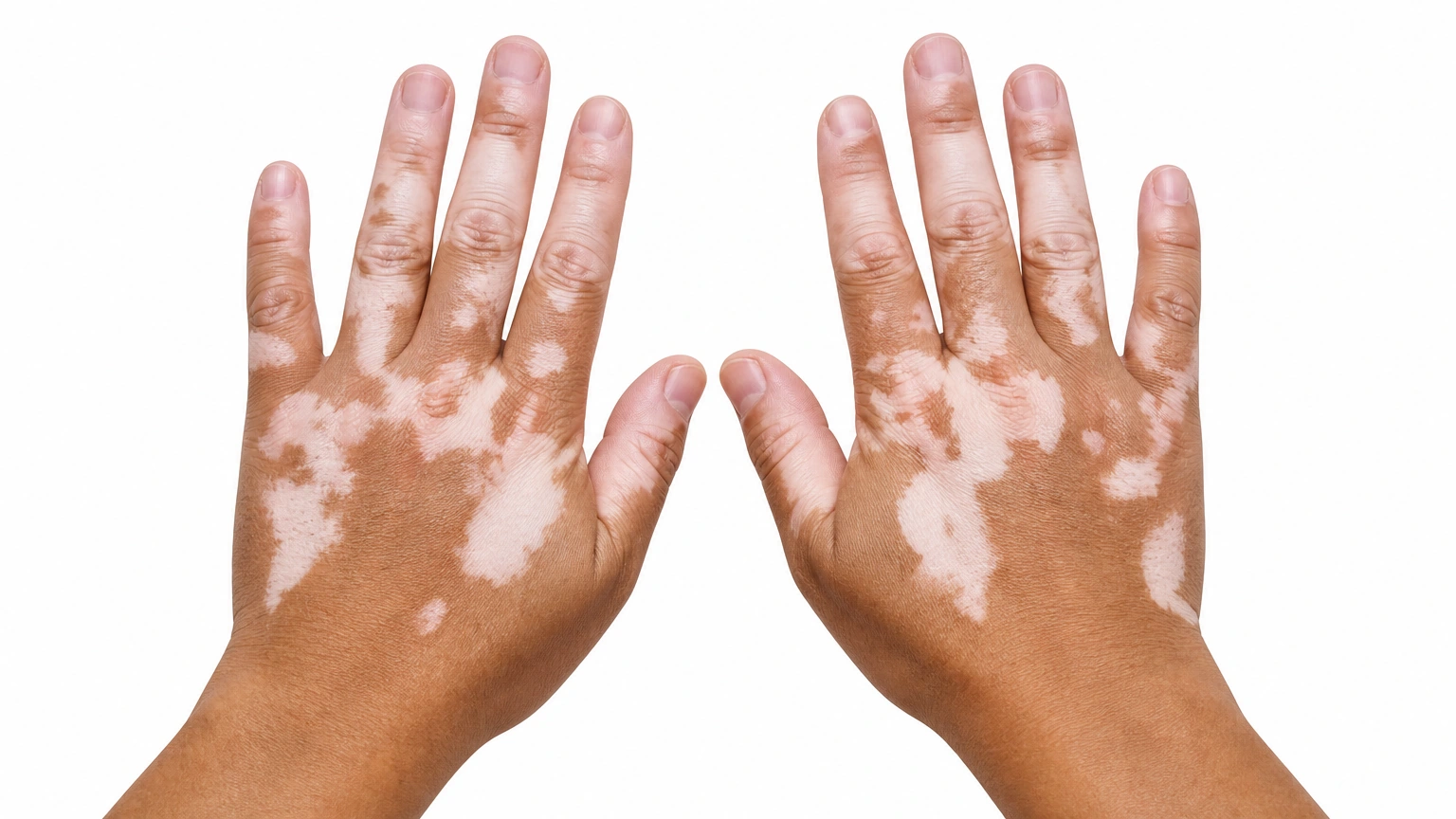
Similar irregular depigmented patches on both hands, representing non-segmental vitiligo.

Non-segmental vitiligo Patches on both sides; most common.

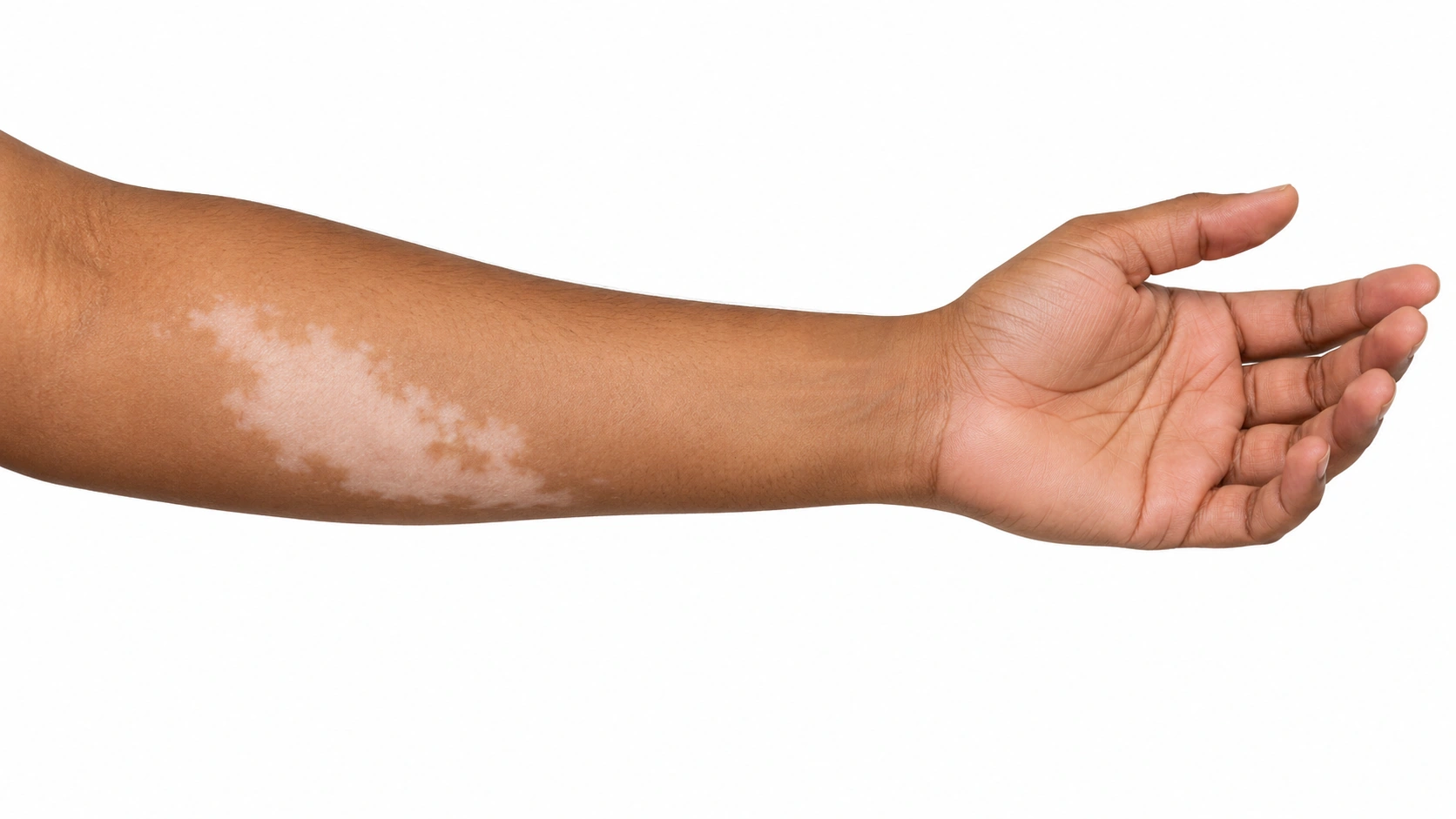
Representative image of segmental depigmentation. It is not a diagnostic reference or an exact depiction of every subtype, stage or location.

Segmental vitiligo One side or one area only.

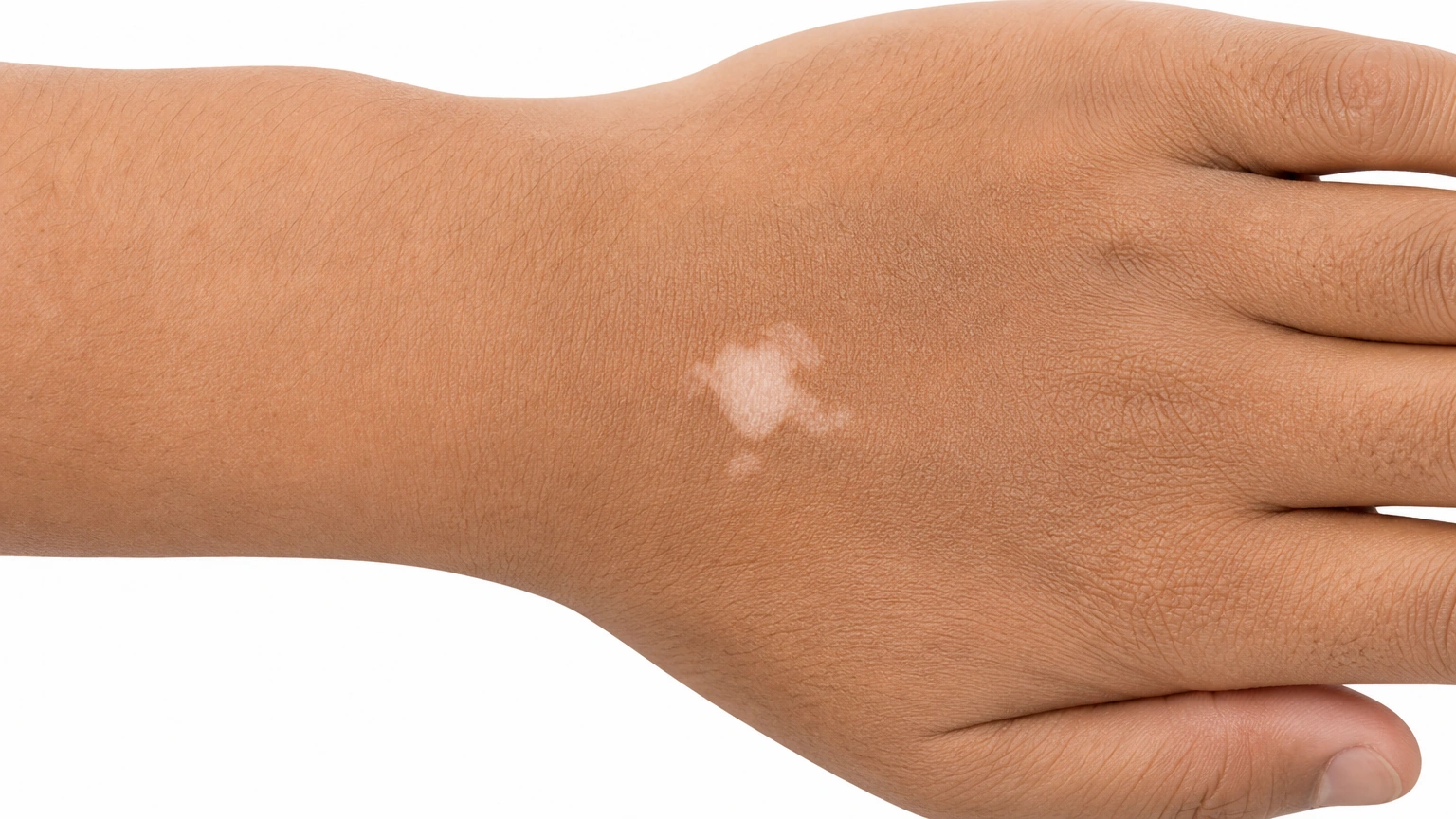
A focal depigmented white patch on the back of the hand, representing vitiligo.

Focal vitiligo A few patches in one area.

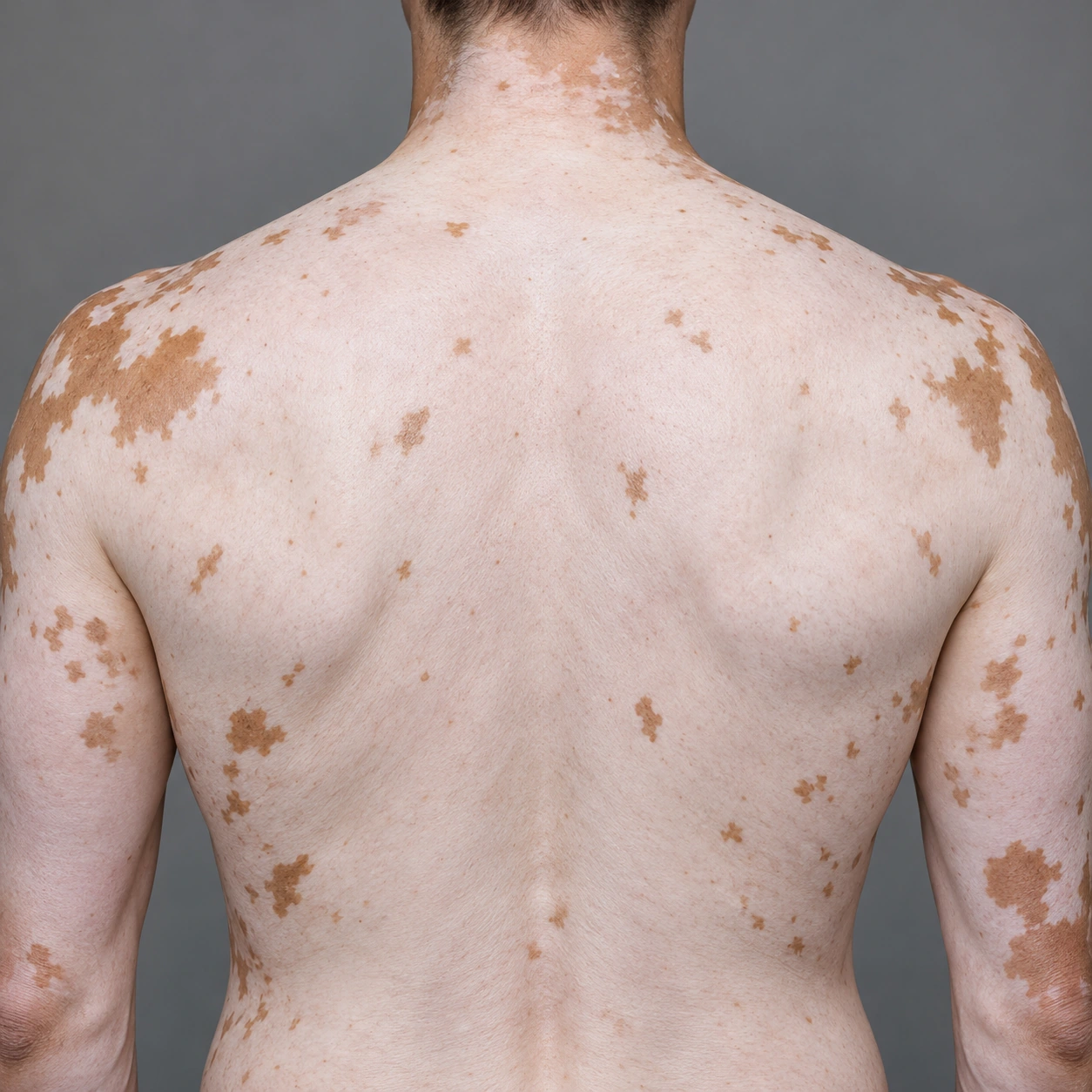
Generated image: Widespread vitiligo covering most of the skin. Not a patient photograph.

Universal vitiligo Generated illustration. Most of the body.

Pityriasis Alba

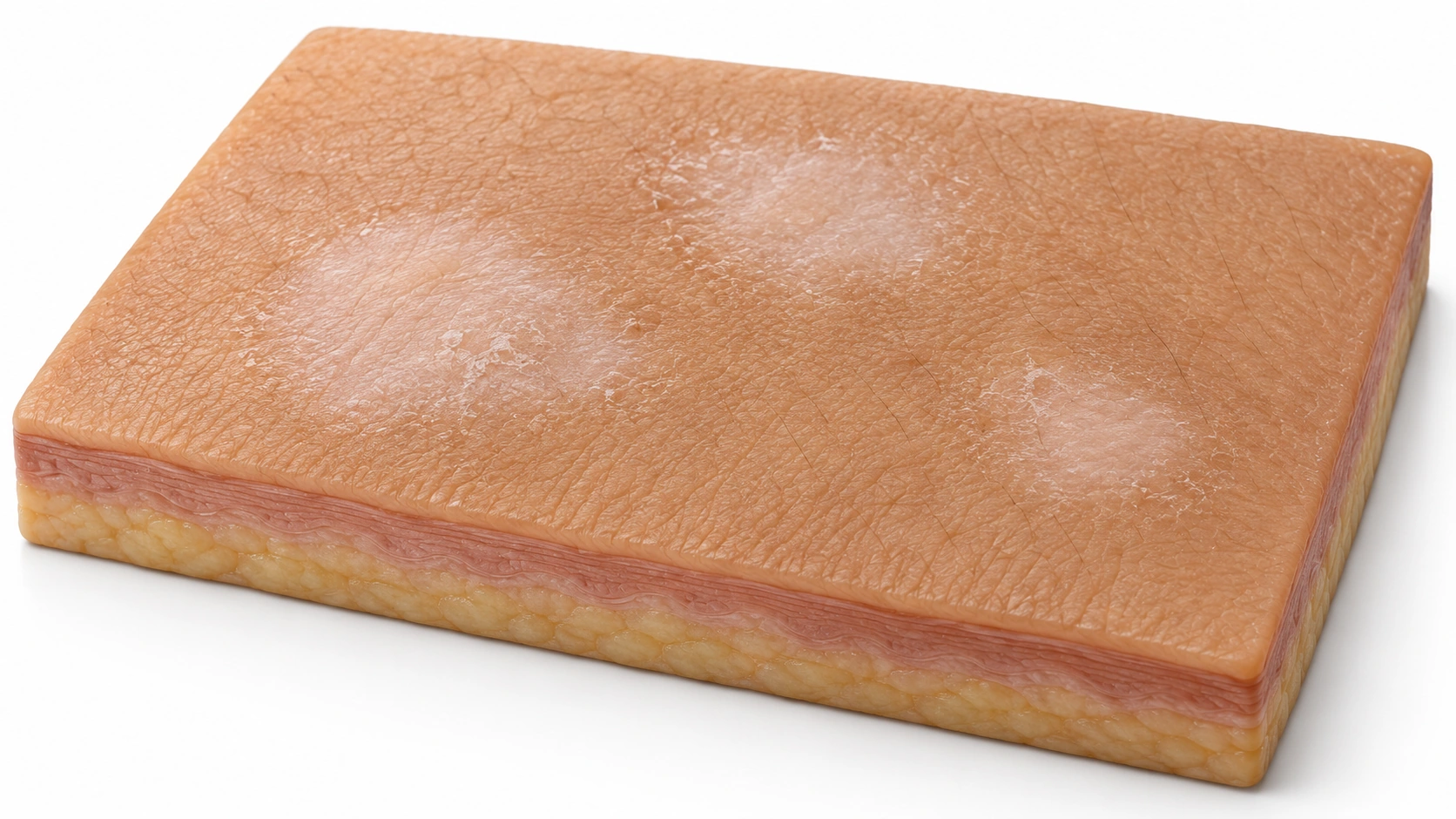
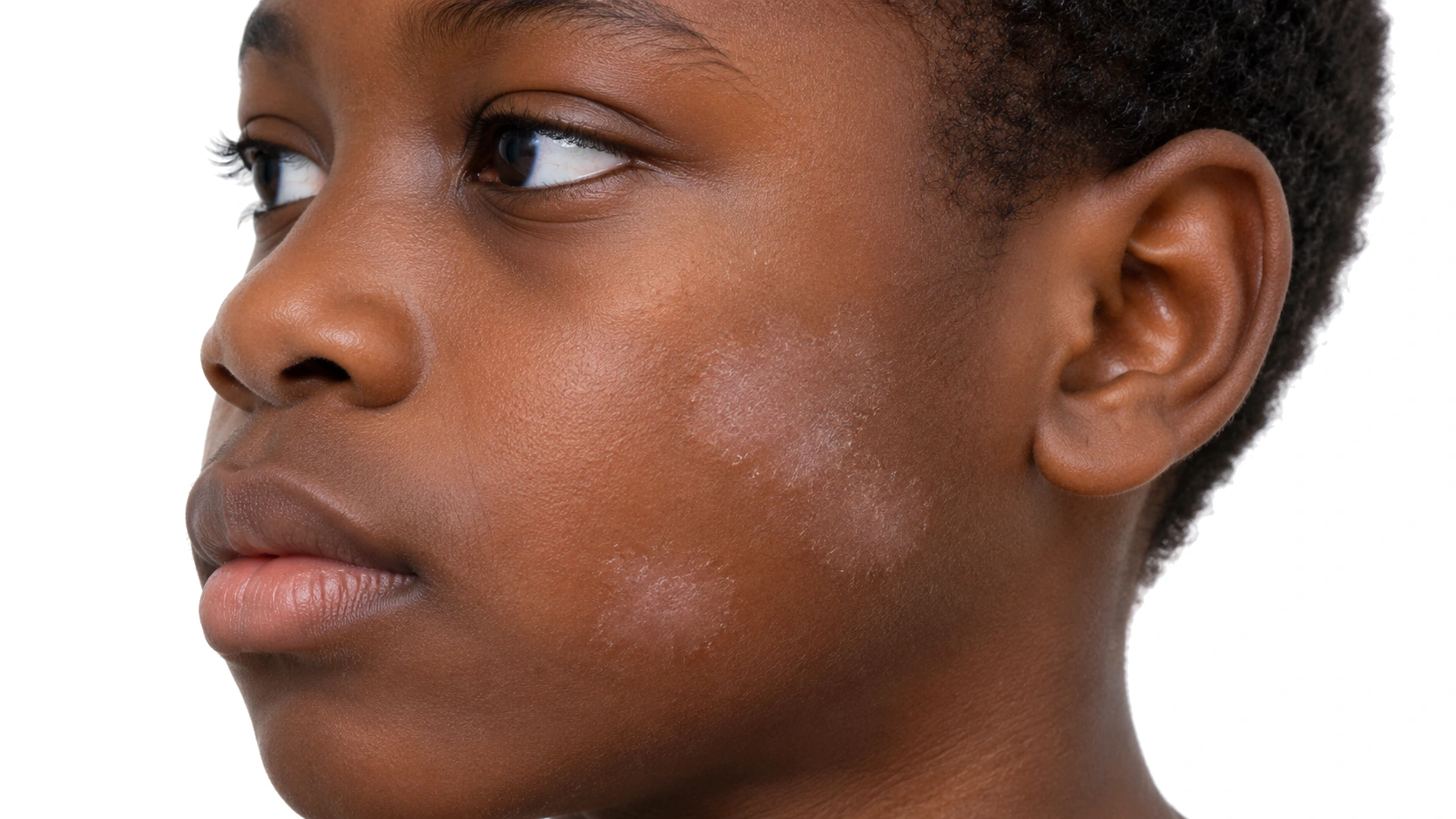
A skin model showing three pale patches with indistinct edges.

Pityriasis Alba Several lighter patches blend gradually into the surrounding skin.

Skin tones
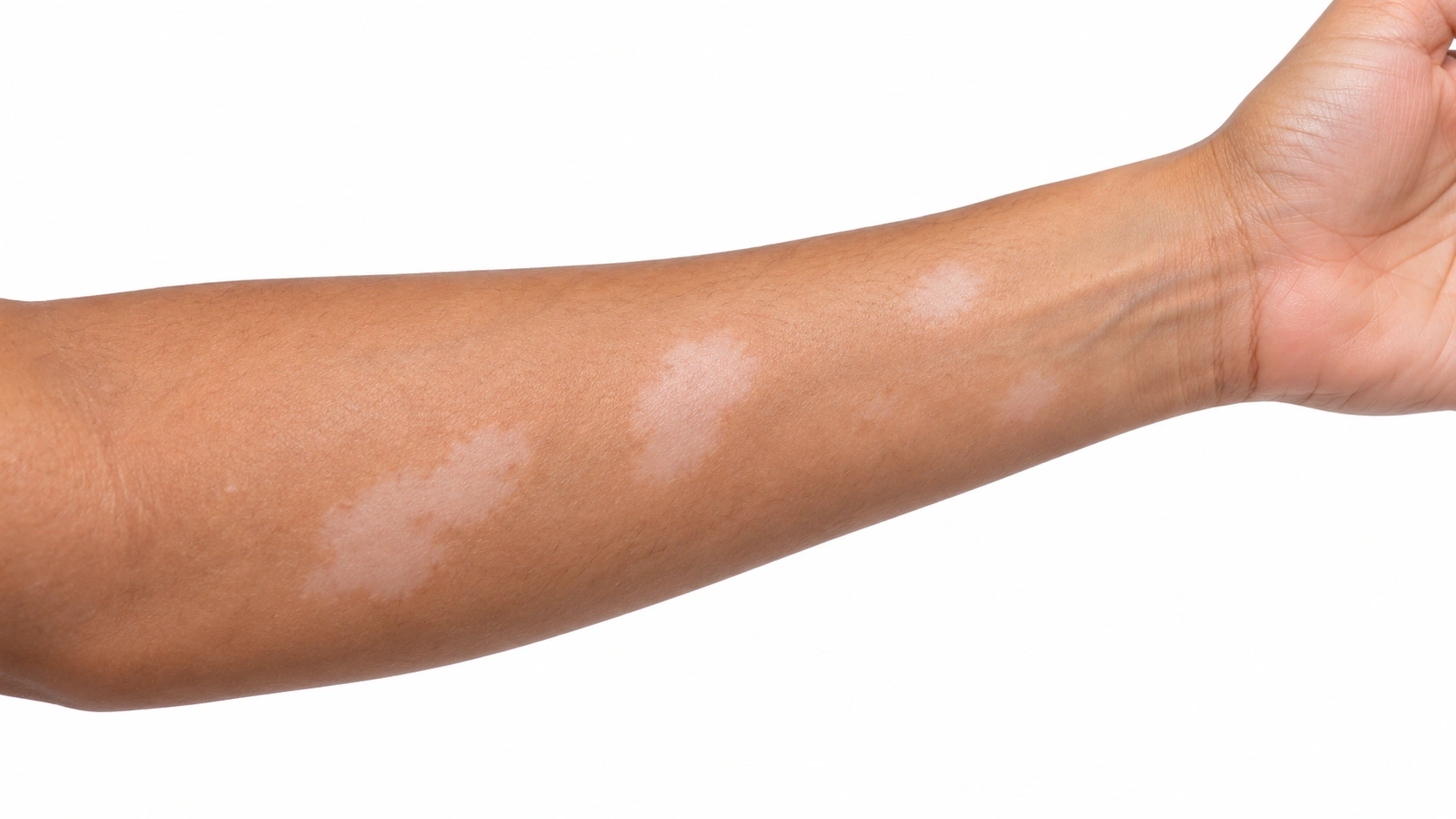
The front of a forearm on fair skin. Two pale patches with sharp edges sit against lightly tanned skin, and the difference between the patch and the skin around it is subtle.
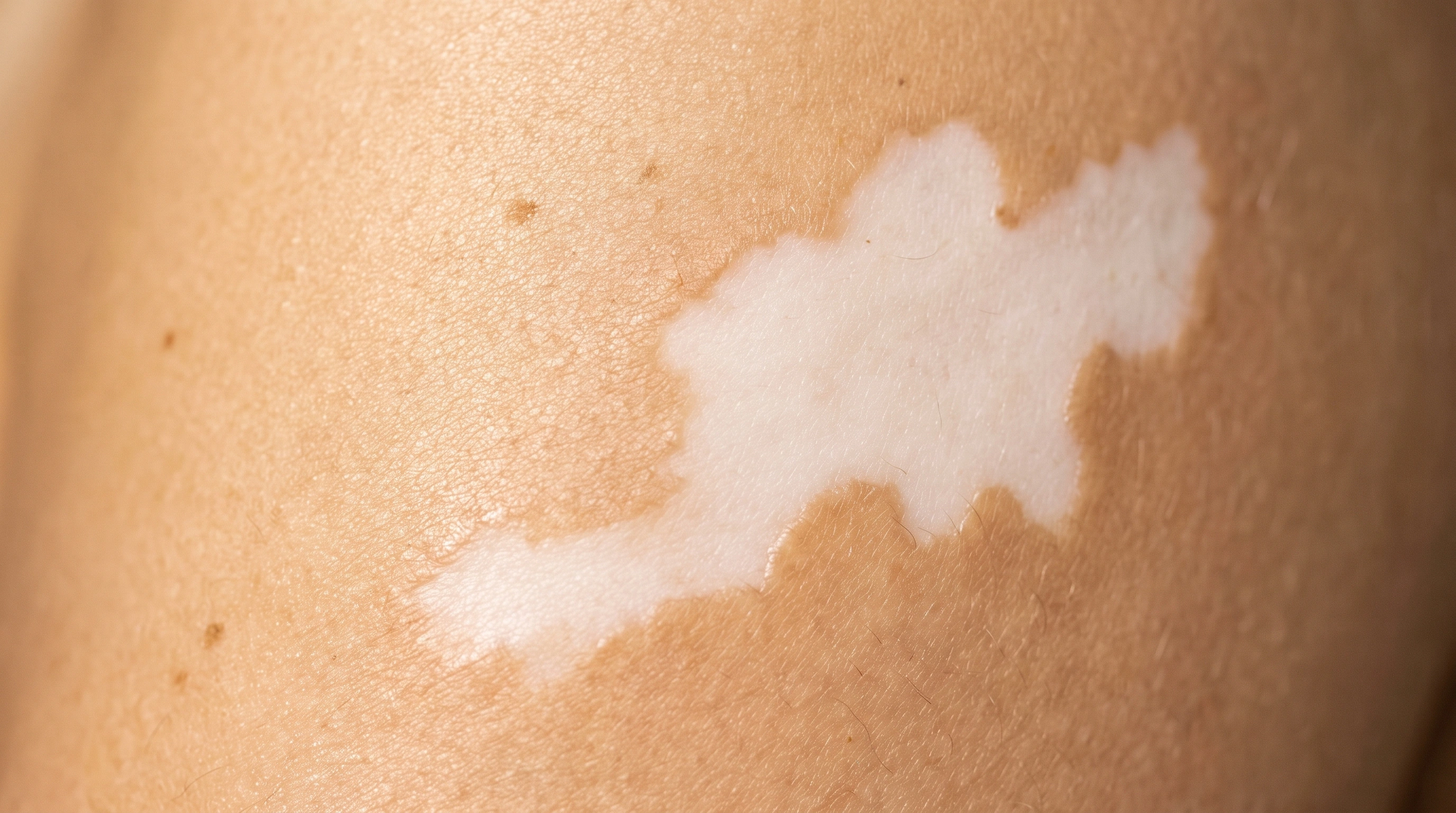
The area around the mouth and chin on medium olive skin. A white patch with a sharp, scalloped border sits above the upper lip and runs onto the chin, with no scale or roughness inside it.
The backs of the fingers and knuckles of one hand on brown skin. Sharp-edged milk white patches cover the knuckles and the sides of two fingers, standing out strongly against the surrounding brown skin.
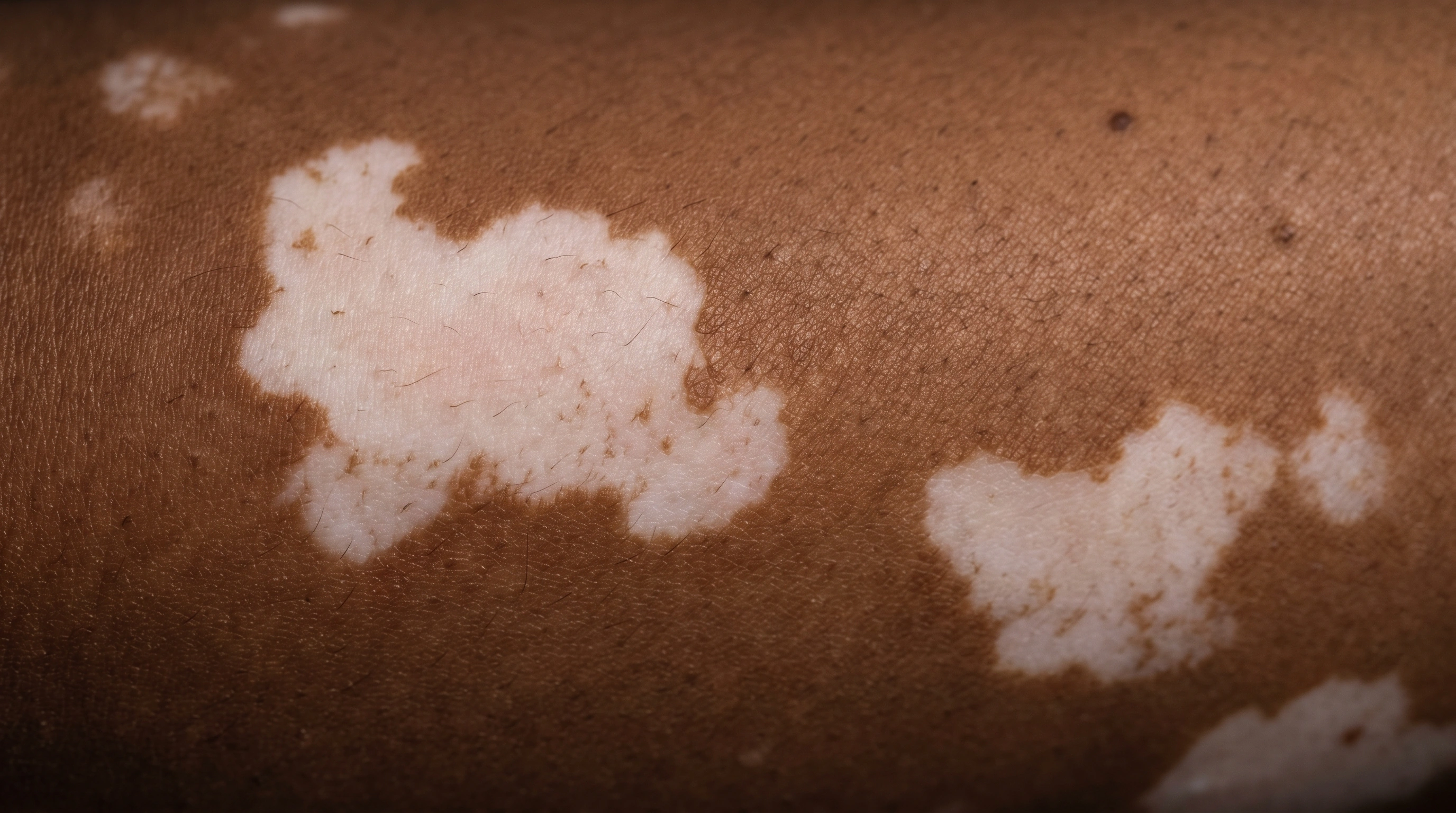
A white vitiligo patch on the forearm of deep brown skin, with dozens of small dark brown dots appearing inside it around the hair openings and a rim of returning color at the edge.
Pityriasis Alba.
Pityriasis Alba.
Pityriasis Alba.
Pityriasis Alba.
Diagram
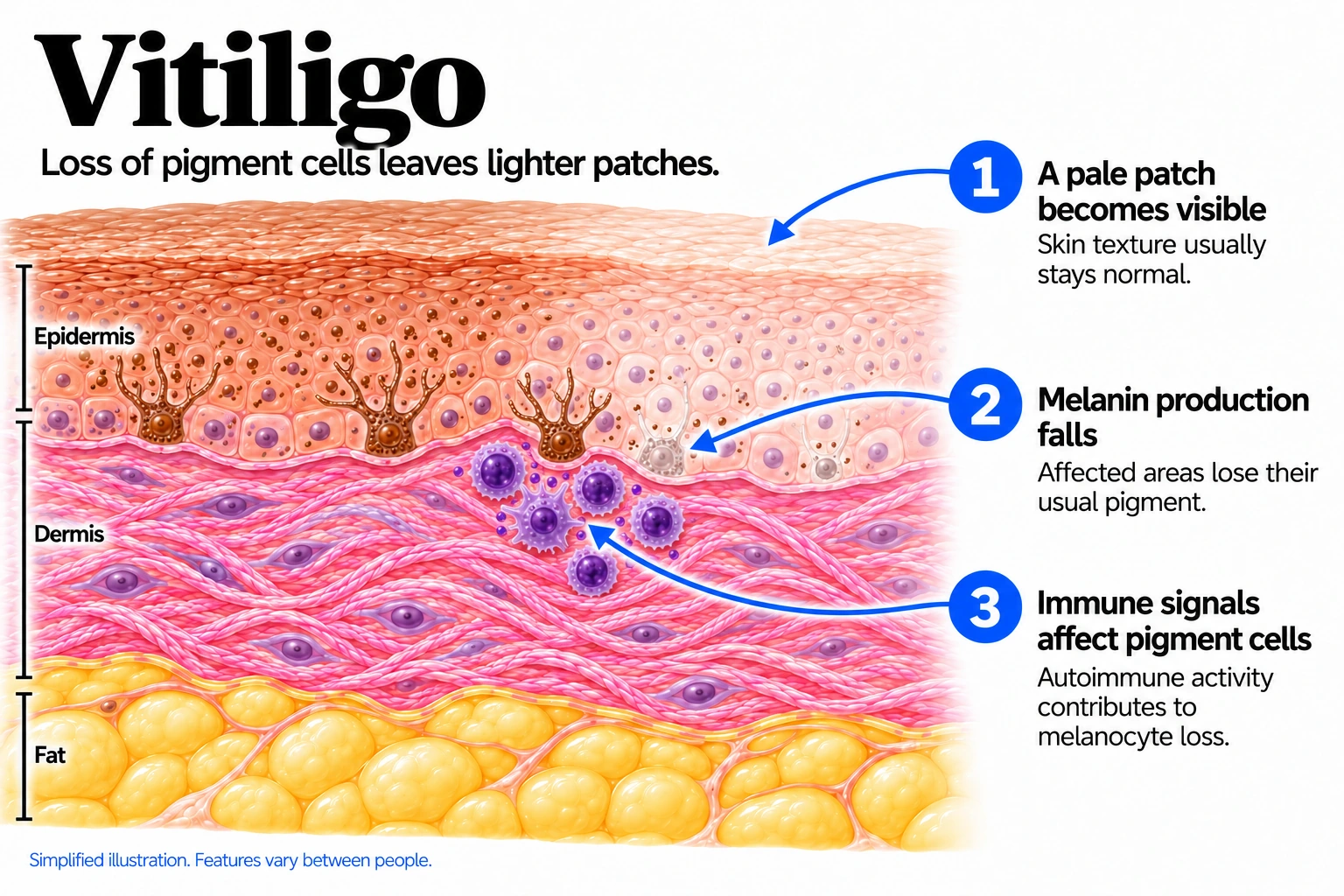
Vitiligo mechanism diagram. A pale patch becomes visible: Skin texture usually stays normal. Melanin production falls: Affected areas lose their usual pigment. Immune signals affect pigment cells: Autoimmune activity contributes to melanocyte loss.
In the skin

Immune activity contributes to the loss of pigment-producing cells in affected skin. With less melanin, pale patches become visible while the skin's texture usually remains normal.

Mild skin inflammation temporarily reduces visible pigment in affected patches. The lighter areas can remain visible after the irritation has settled.

When it usually starts

010203040506070+

Vitiligo. Can begin at any age, commonly before early adulthood.

Pityriasis Alba. Most often noticed in childhood or adolescence.

Causes and triggers

Causes

Vitiligo is an autoimmune condition. The immune system attacks the pigment cells in patches of skin, leaving them white.

Mild inflammation temporarily reduces visible pigment.

Family tendency

About 1 in 5 people with vitiligo have a relative with it.

Risk factors
Family history, Thyroid disease, Other autoimmune conditions
Dry skin, Eczema tendency
Trigger
● Vitiligo
● Pityriasis Alba
Skin injury
Strong link
Not listed
Severe sunburn
Possible
Not listed
Stress
Possible
Not listed
Chemicals like some hair dyes
Possible
Not listed
Dryness
Not listed
Can contribute
Sun tanning increases contrast
Not listed
Can contribute

Daily Care

Vitiligo
Pityriasis Alba
Daily care

Habits that help

  • Daily sunscreen on exposed patches
    Prevents triggering burns and limits the contrast.
  • Camouflage and self-tanner
    Changes nothing underneath, but makes daily life easier meanwhile.
  • Topical calcineurin inhibitors
    Tacrolimus and pimecrolimus calm the same attack without thinning skin.
  • Ruxolitinib cream
    A prescription JAK inhibitor cream approved to restore pigment, used for months.
  • Narrowband UVB light therapy
    The mainstay for widespread vitiligo, two or three sessions a week.
  • Combining light therapy with a cream
    Repigments more skin than either alone.
  • Checking the thyroid
    Thyroid disease is common alongside vitiligo and often silent.

Avoid

  • Avoid: Injuring the skin
    Cuts, burns, tight straps, surgery and tattoos bring out new patches at that exact spot.
  • Avoid: Sunburn
    An injury and a chemical stress at once, and depigmented skin burns faster.
  • Avoid: Constant friction and pressure
    Belt lines, bra straps, watch bands, rubbing shoes.
  • Avoid: Certain chemicals
    Some phenol and catechol compounds destroy pigment cells directly, including in some lightening creams.
  • Avoid: Physical or emotional stress
    It does not cause vitiligo, but it can make an existing tendency act up.
  • Avoid: Stopping treatment when color returns
    Without maintenance, many repigmented patches lose color again.
  • Avoid: Waiting to be seen
    Patches white for years respond much less well than fresh ones.

Habits that help

  • Moisturize dry patches regularly
    A plain fragrance-free cream can reduce scaling and dryness.
  • Use broad-spectrum SPF 30 or higher on exposed skin
    Reducing tanning of surrounding skin makes the pale patches less noticeable.
  • Wash with lukewarm water and a gentle cleanser
    Avoid stripping dry or eczema-prone skin.
  • Give the color time to recover
    Confirmed pityriasis alba often fades slowly; normal color may take months to return.

Avoid

  • Avoid: Scrubbing or bleaching the pale patches
    These methods do not restore pigment and can cause further irritation.

Treatment differences

Evidence labels come from each condition’s own treatment list.

Treatment
● Vitiligo
● Pityriasis Alba
Filter by type
Vitiligo type

Select one or more.

All types
Over-the-counter
Illustration: Generic oral tablet bottle and tablets.

Antioxidant supplements

Limited evidence

Ginkgo biloba and polypodium leucotomos extract are the two most often asked about. Small studies suggest they may slow spread a little or add slightly to light therapy, but the trials are small and the results are inconsistent. They are not a treatment on their own, and no supplement has been shown to bring color back.
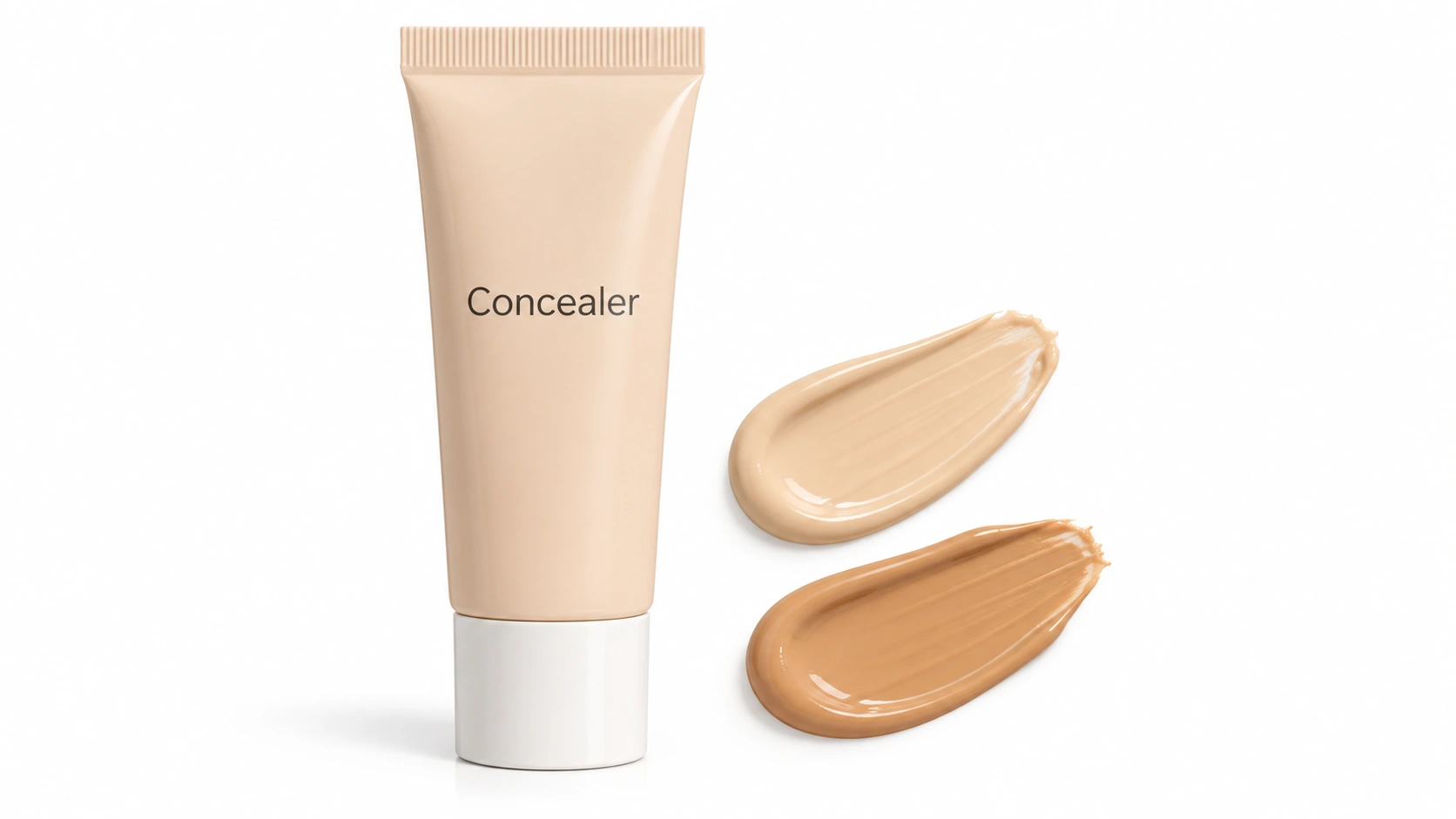
Existing illustration of Camouflage makeup.

Camouflage makeup and self-tanner

Listed

Cover creams made for skin conditions, and self-tanning lotions containing dihydroxyacetone, color the surface of a white patch for a few days at a time. They change nothing underneath and they do not interfere with treatment. For many people they make daily life easier during the year or more that repigmentation takes.

None listed
Prescription topicals
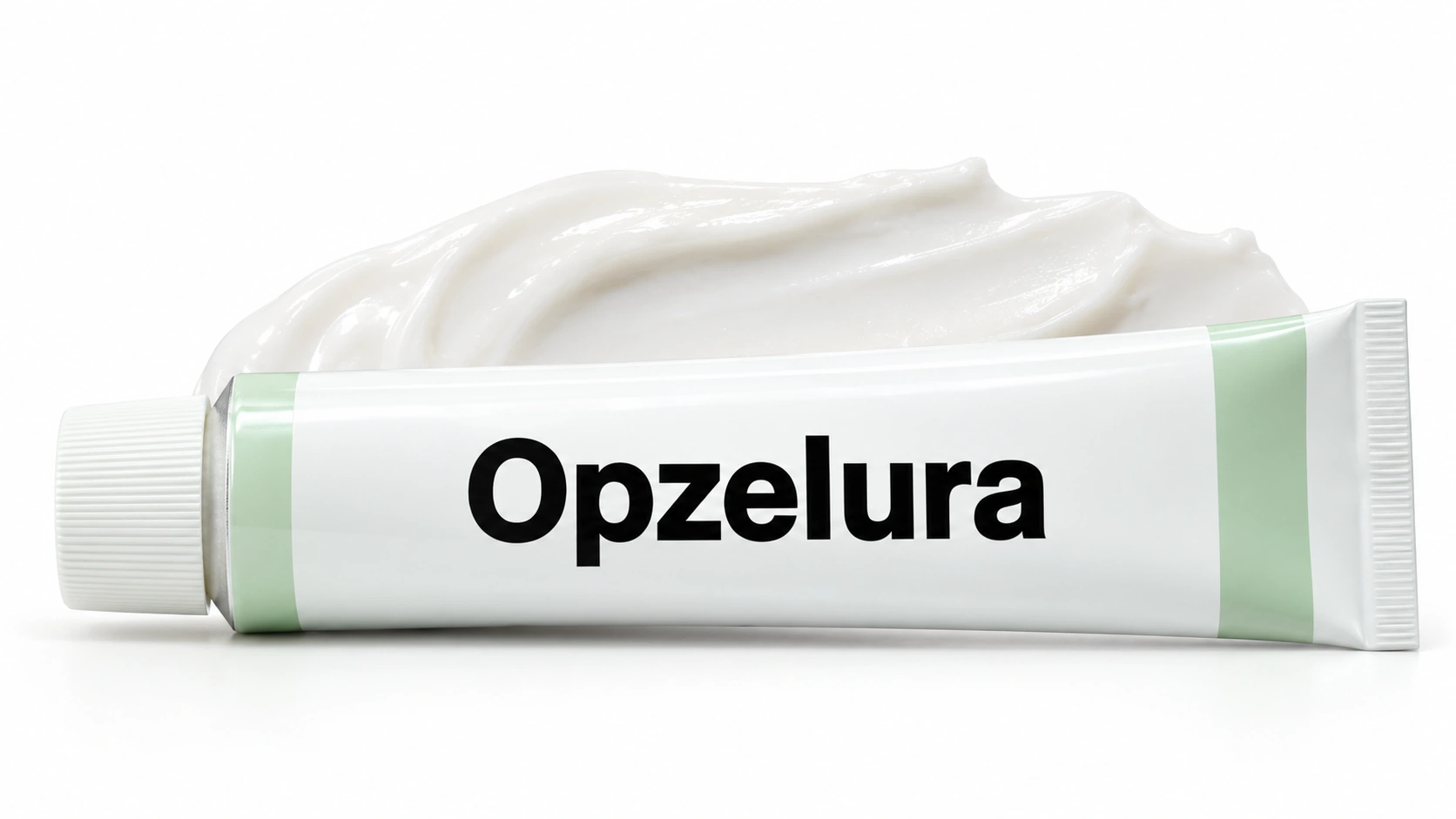
Opzelura shown in recognizable white topical cream squeeze tube with muted green bands.

Opzelura

Strong evidence

A JAK inhibitor cream approved specifically to restore pigment in vitiligo, applied twice a day. In trials about a third of people had most of the color back on the face by six months, and results keep improving past a year. It is slow, it is expensive, and color can be lost again if it is stopped, so it is usually continued about twice a week afterwards.

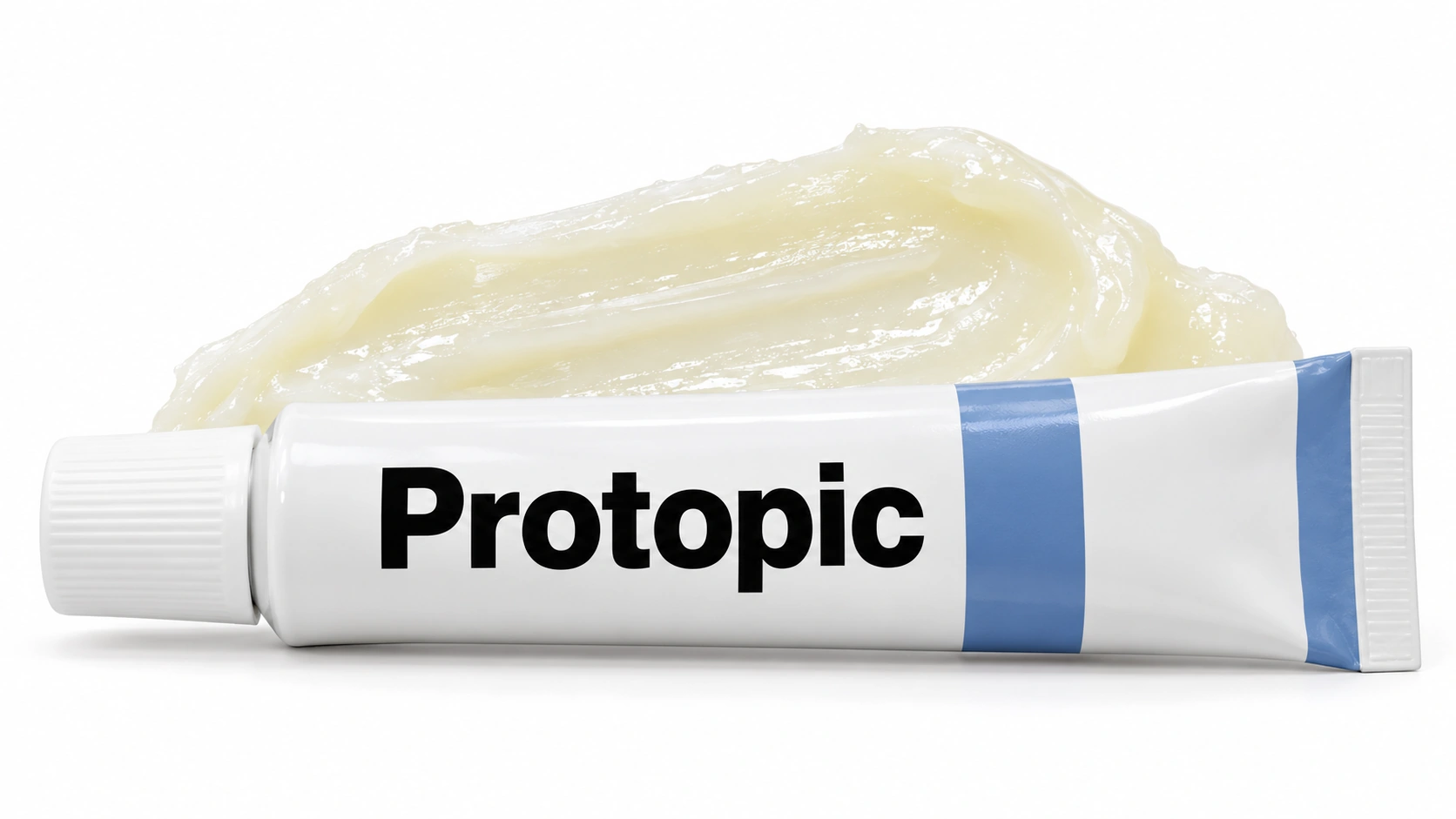
Protopic — Header Image

Protopic

Moderate evidence

The usual choice for vitiligo on the face, eyelids, neck and skin folds, because it quiets the immune attack without thinning the skin, so it can be used in those places for months. It stings or feels warm for the first week or two in some people. It works best on the face and much less well on hands and feet.

Clobetasol — Header Image

Clobetasol

Moderate evidence

Clobetasol Propionate. A strong steroid cream, the standard first treatment for a small number of patches on the body. It is used in courses with breaks, often a few weeks on and a few weeks off, because continuous use thins the skin and leaves stretch marks. It is not used on the face or eyelids, where tacrolimus is chosen instead.

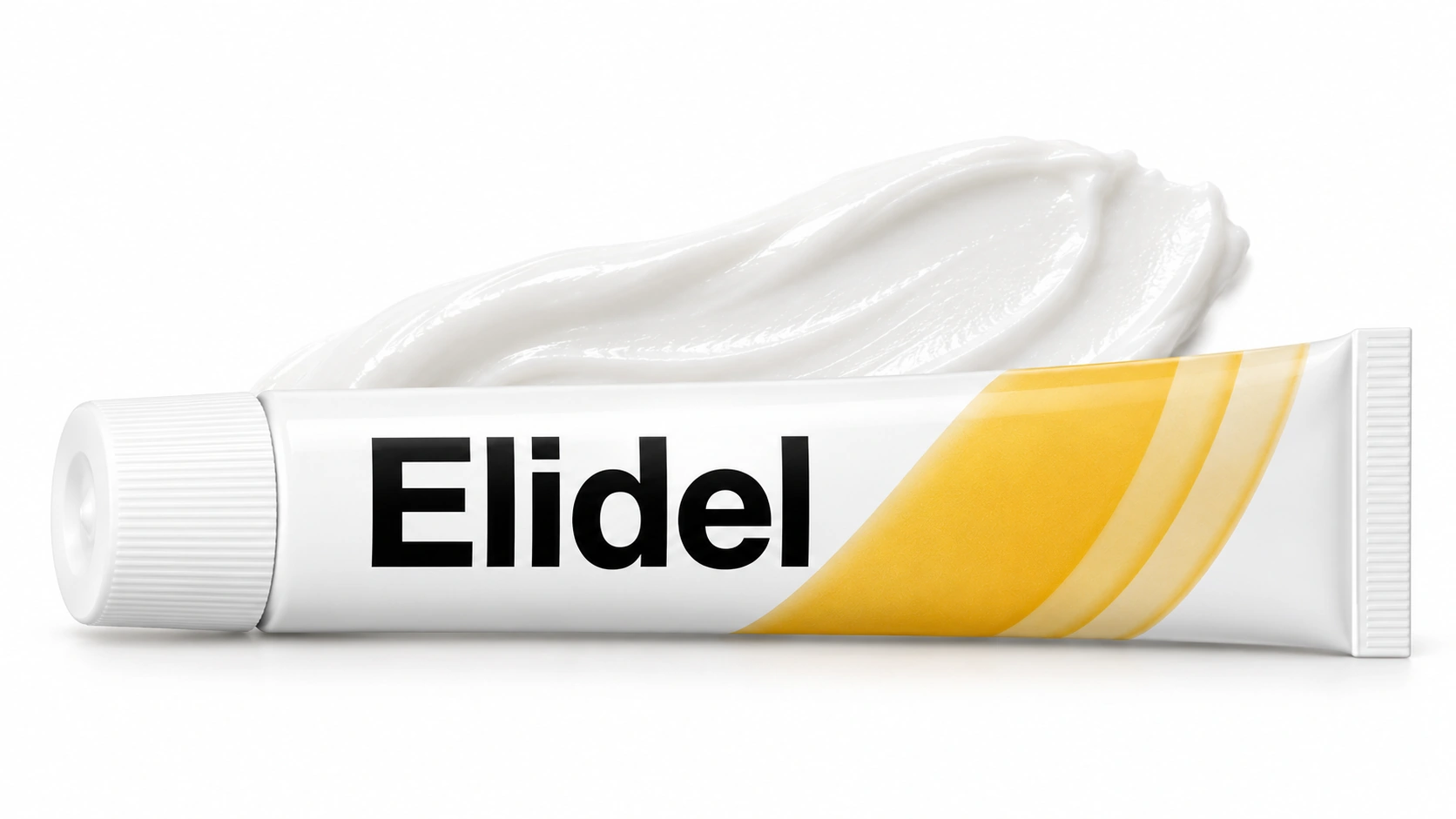
16:9 hero for Elidel. Never cropped: the tone strip and the corner logo depend on the full frame.

Elidel

Moderate evidence

A gentler relative of tacrolimus, used on the same delicate areas and often preferred for children or for people who find tacrolimus too stinging. It works the same way on the immune attack. It is generally a little less effective than tacrolimus for vitiligo.

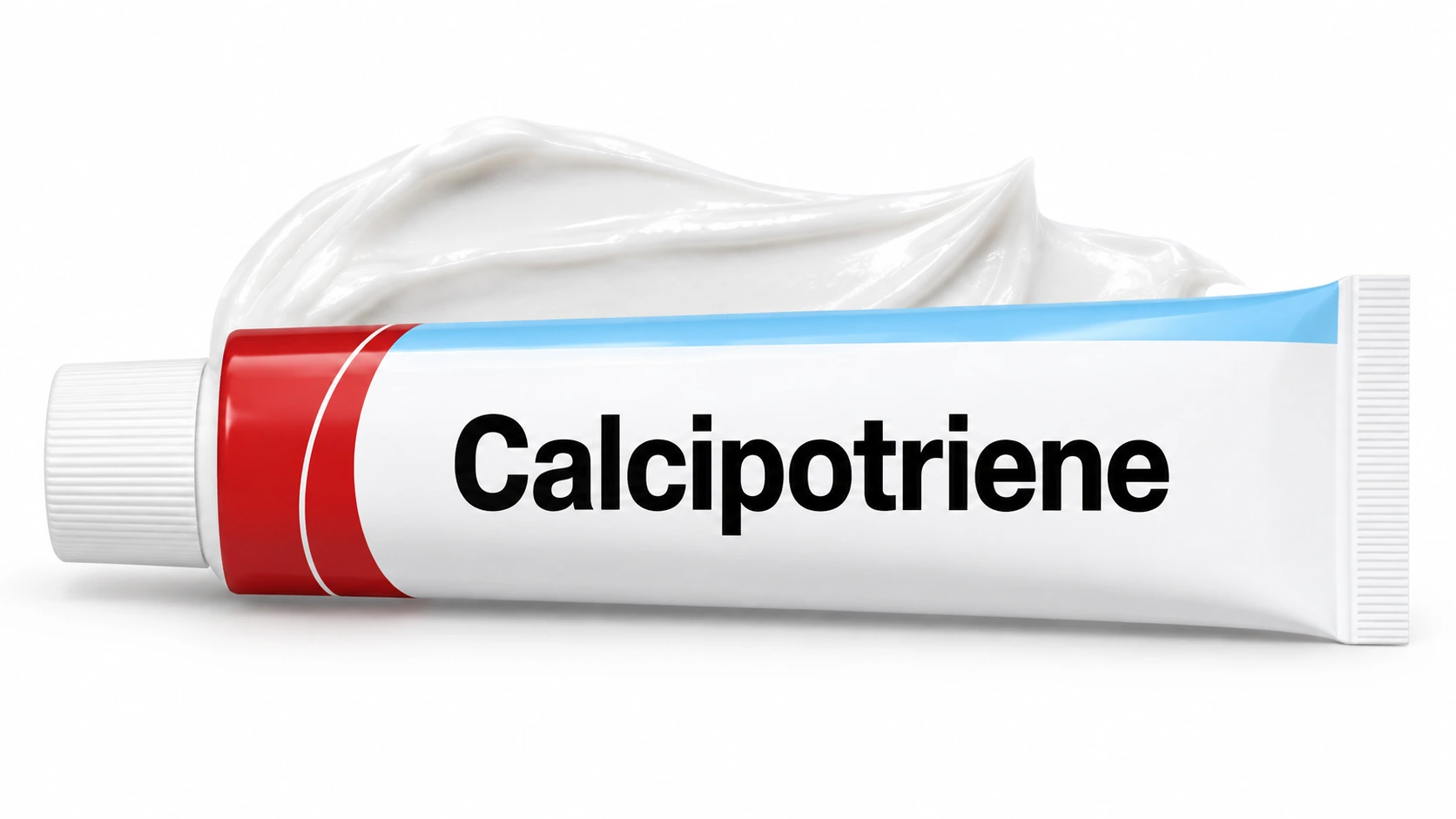
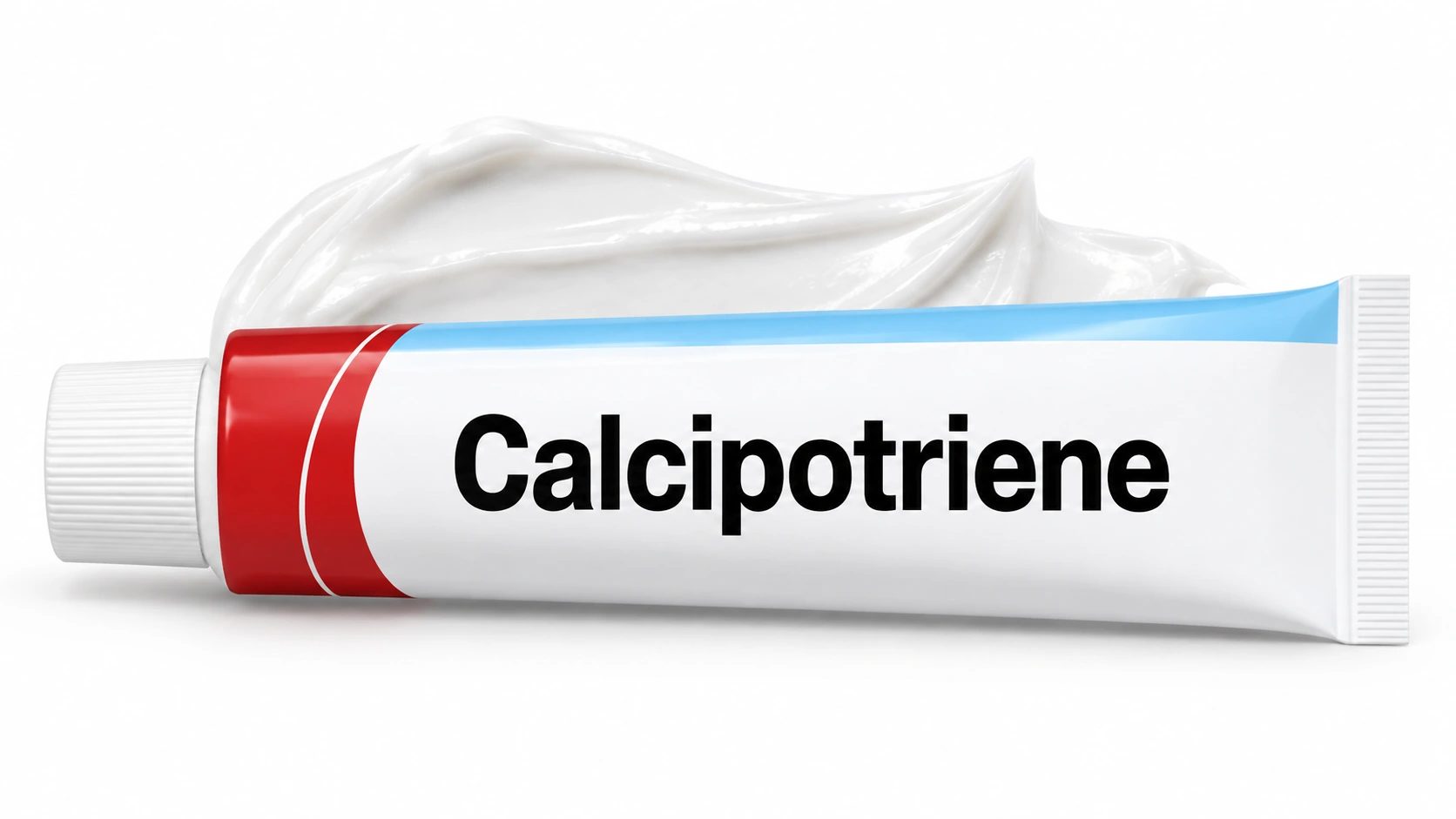
Calcipotriene — Header Image

Calcipotriene

Limited evidence

A vitamin D cream sometimes added to a steroid or to light therapy, on the idea that it helps pigment cells return. On its own it does very little for vitiligo. Its value is as a partner treatment, and the evidence for even that is mixed.

Photo needed: A white cream tube on a white background, with a plain white label reading Monobenzone and a blue swoosh beneath it.

"Bleaching" cream

Listed

Monobenzone cream removes the pigment that is left, so the skin ends up one even color. It is only considered when vitiligo already covers most of the body and repigmenting is not realistic. The change is permanent and cannot be reversed, and the skin afterwards has no protection from the sun at all, so it is a decision taken slowly and never as a first step.

Mild anti-inflammatory treatment

Listed

An itchy inflamed patch may benefit from a brief clinician-advised low-potency treatment.

Prescription pills
Existing representative illustration of Rinvoq medicine packaging and tablets.

Oral JAK inhibitors

Moderate evidence

Tablets in the same family as ruxolitinib cream. Trials show real repigmentation, particularly when they are combined with light therapy, and they are the most active area of vitiligo research right now. They are not yet standard treatment for vitiligo, and they carry more risk than a cream, so they are used through a specialist or a trial.

Prednisone — Header Image

Prednisone

Limited evidence

Prednisone in short pulses. Low-dose steroid tablets taken on two days a week for a few months are used for one purpose in vitiligo: to stop pigment loss that is spreading quickly. It is a brake, not a way to bring color back, so it is paired with a cream or light therapy. Blood sugar, blood pressure and mood are watched while it is running.

None listed
Procedures
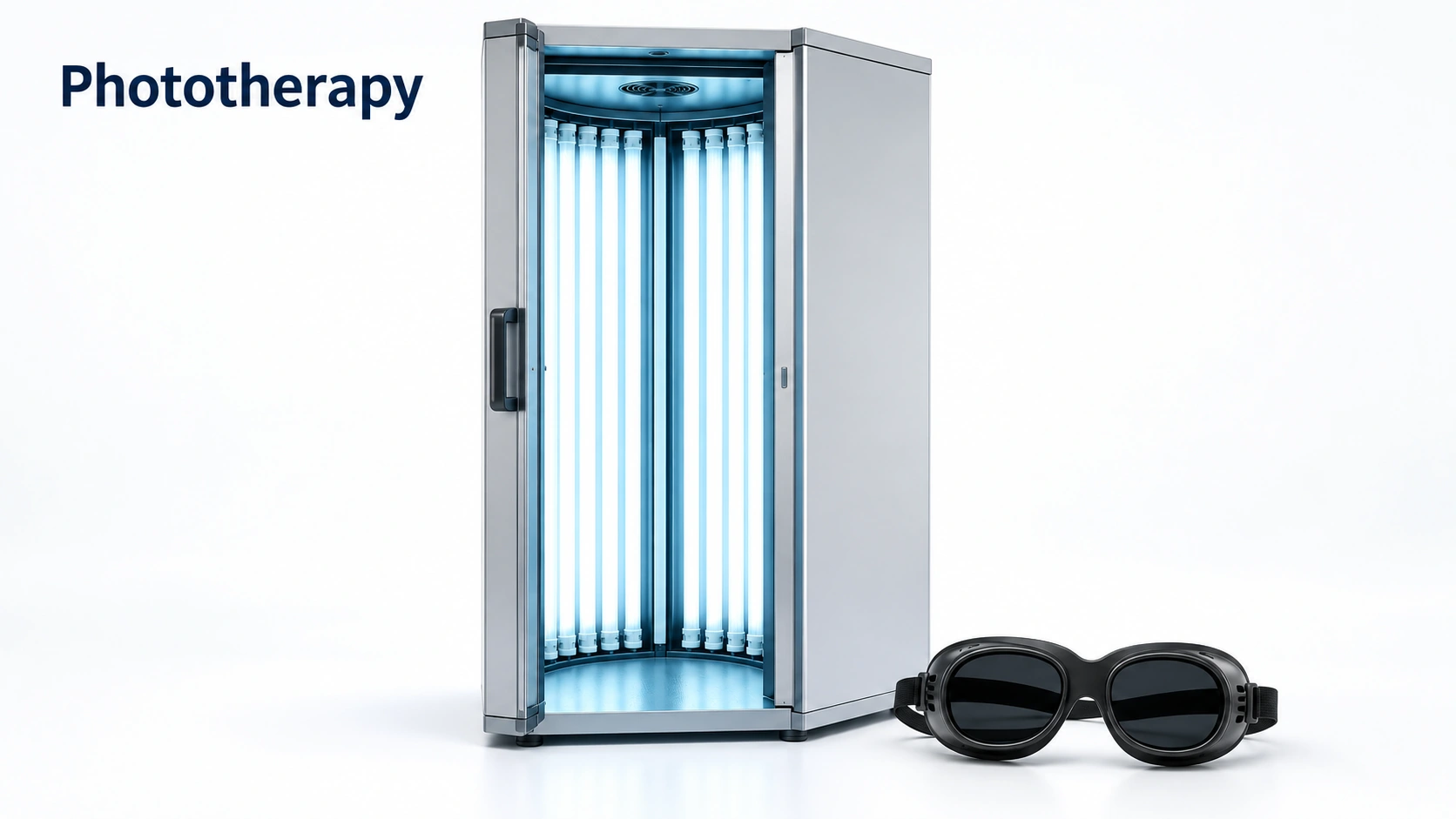
Editorial illustration for Phototherapy, based on the entry’s treatment or equipment reference.

Phototherapy

Strong evidence

Narrowband UVB, two or three sessions a week in a cabinet at the clinic, is the mainstay for vitiligo that covers more than a few small patches. It calms the immune attack and coaxes pigment cells out of the hair openings. Expect three to six months before the face shows change and a year or more for a full course, and better results when it is combined with a cream.

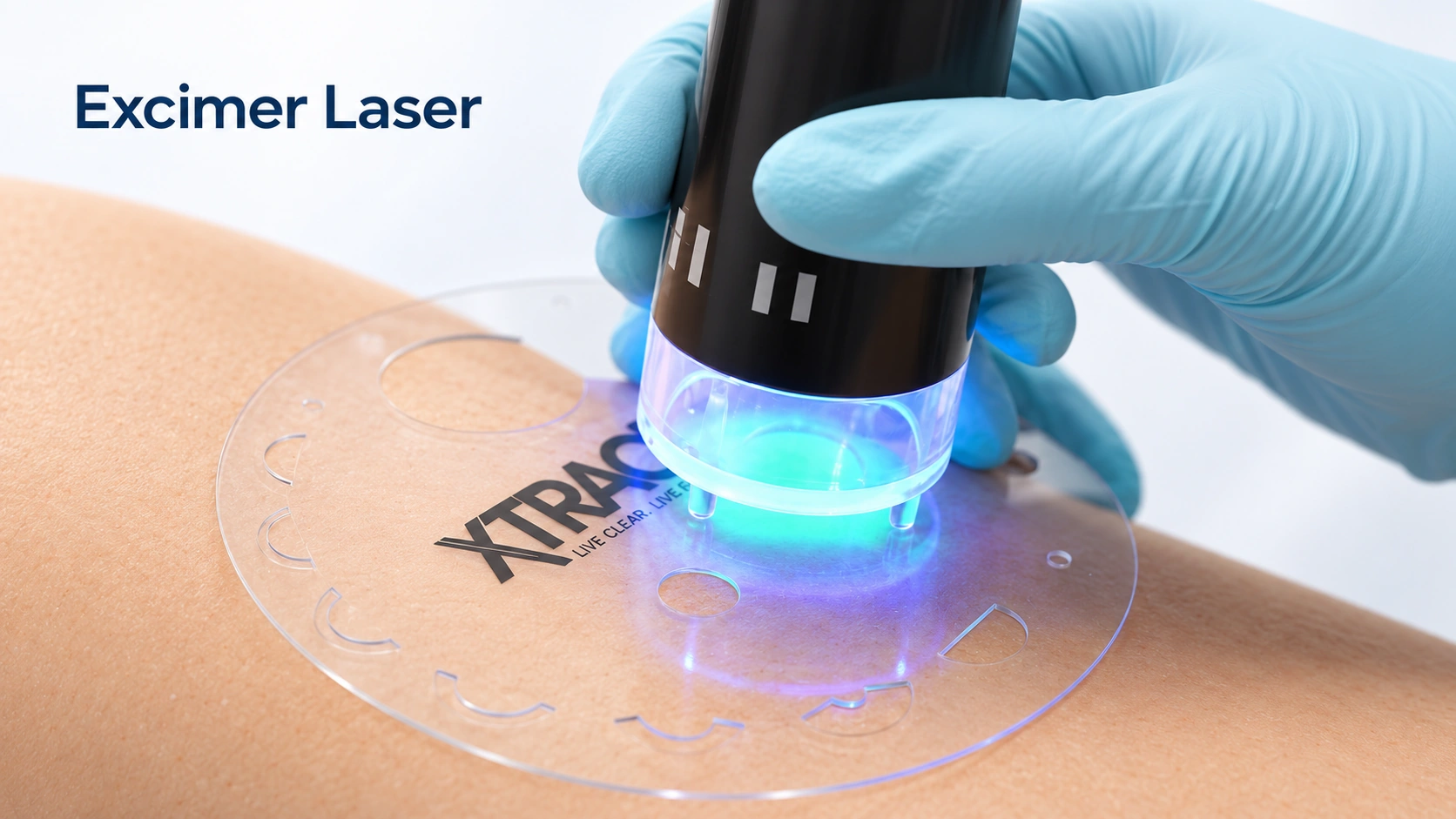
Editorial illustration for Excimer Laser, based on the entry’s treatment or equipment reference.

Excimer Laser

Moderate evidence

The same wavelength as narrowband UVB delivered through a handpiece, so it treats one patch and leaves the skin around it alone. It suits a small number of patches, especially on the face, and it is the practical option for children who cannot stand still in a cabinet. Sessions are usually twice a week, and it is not used for widespread vitiligo.

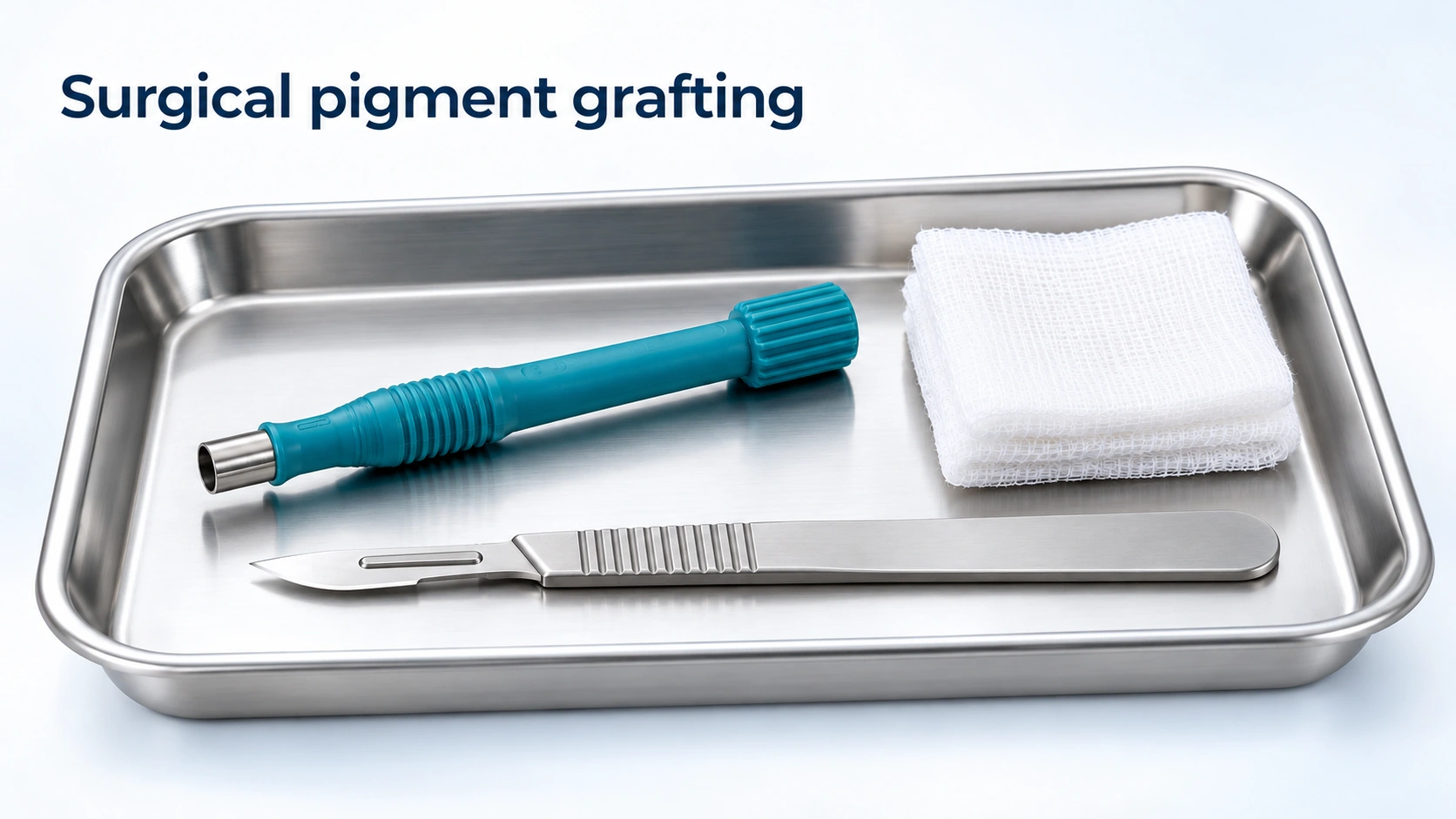
Editorial illustration for Surgical pigment grafting, based on the entry’s treatment or equipment reference.

Surgical pigment grafting

Moderate evidence

Pigment cells are taken from normal skin and moved into a white patch, either as tiny grafts or as a cell suspension. It is the best option for segmental vitiligo and for patches that have been completely stable for a year or more, including patches where the hair has gone white. It is never done while vitiligo is spreading, because the graft is attacked in turn.

None listed

Outlook

Long term

Vitiligo is unpredictable, which is one of the hardest things about it. Non-segmental vitiligo, the common type, moves in waves — an active spell, a long still period, then another. Segmental vitiligo spreads within one area on one side over roughly six months to two years, then stops for good.

The patches usually recover their normal color gradually over months, sometimes taking a few years. Dryness may improve before the color difference disappears; the patches do not usually scar.

Complications

Possible complications
  • Sunburn inside the patches
  • Thyroid and other autoimmune disease
  • The weight of being looked at
More details

Sunburn inside the patches
Skin inside a vitiligo patch has no melanin at all, so it burns quickly and can burn badly while the skin around it is fine. A burn is also an injury, and injuries can bring out new patches, so a bad burn can make things worse in two ways at once. Daily broad-spectrum sunscreen on exposed patches prevents it, and it counts as treatment rather than an extra.

Thyroid and other autoimmune disease
The same immune tendency that causes vitiligo makes other autoimmune conditions more likely, and thyroid disease is the common one. It is often silent for a long time, which is why a thyroid blood test is standard at the first visit and is sometimes repeated later. Type 1 diabetes, pernicious anemia and alopecia areata also appear more often than average.

The weight of being looked at
Vitiligo does not make you unwell, but it is visible, and being looked at all day is tiring. Anxiety, low mood and avoiding ordinary things are common, and they are worse where the contrast is greater or the patches are on the face and hands. This counts as a medical reason to treat, not a cosmetic one, and it is worth saying out loud at the appointment.

It is not contagious; skin colour usually returns gradually.

When to get help

When to get help

Seek assessment of new white patches or spreading pigment loss. Discuss associated symptoms, sun protection and whether targeted autoimmune screening is appropriate.

Have sharply white, spreading or persistently scaly patches checked to confirm the cause.

Common questions

Vitiligo:Will my color ever come back?

Often, at least partly. Face, neck and trunk repigment well for a substantial proportion of people. Hands, fingers, feet and lips do poorly, and patches where the hair has gone white usually do not refill, because the pigment cells that restock a patch live in the hair openings. Nobody can promise a result, which is why photographs at the start are worth taking.

Vitiligo:How long does treatment take?

Longer than almost anyone expects. The first visible change on the face usually takes about three to six months, and a full course often runs a year or more. Judging a treatment at week six is judging it before it has done anything.

Vitiligo:Is vitiligo dangerous?

Not to your body. It does not shorten life, damage organs or turn into anything else. Two points matter: depigmented skin burns easily, and autoimmune conditions such as thyroid disease are more common alongside it, which is why blood tests are usually done.

Vitiligo:Will it spread over my whole body?

Most likely not. Vitiligo moves in waves, and losing pigment over almost the entire body is uncommon. Nothing predicts the course from the first patch, which is why active spread is treated promptly.

Vitiligo:Can my children get it?

Higher than average, but still low. Vitiligo runs in families through a group of immune genes rather than one, so most children of a parent with vitiligo never develop it.

Vitiligo:Does stress cause vitiligo?

No — the underlying immune tendency is genetic. But major stress, illness or surgery frequently lines up with the start of an active spell. Managing stress is worth doing for its own sake, and it is not a substitute for treatment.

Pityriasis Alba:What is Pityriasis Alba?

A mild eczema pattern leaving pale, slightly dry patches, usually in children.

Pityriasis Alba:What can I do day to day?

Moisturize and use sunscreen to limit contrast with surrounding skin.

Pityriasis Alba:When should I get medical advice?

Have sharply white, spreading or persistently scaly patches checked to confirm the cause.

Sources

Sources and further reading

  1. DermNet
  2. Pityriasis alba
Dermapedia on YouTube