Psoriasis vs Pityriasis Rosea
An overactive immune system tells skin cells to grow many times faster than normal — building raised, scaly plaques that come and go. A usually temporary eruption of oval scaly patches, sometimes beginning with one larger herald patch.

Key differences
The same eight facts on every condition comparison.
Usual age
15 to 35, or 50 to 60
10 to 35
Where
Elbows, knees, scalp, lower back
Trunk and upper arms
Main sign
Raised plaques with silvery scale
Herald patch, then oval scaly patches
Itch or pain
Often itchy
Mild itch
Contagious
No
Not really
Long term
Lifelong, flares
Clears in 6 to 12 weeks
Scars
No
No
Who gets it
About 2 to 3 in 100; runs in families
Teens and young adults
What is it?
Psoriasis
Pityriasis Rosea
What is it?
- It is an immune-driven disease.
Immune signals speed up the production of skin cells. - Cells build into plaques.
They accumulate into well-defined, scaly patches instead of shedding normally. - It is more than surface scale.
Scrubbing off scale does not treat the underlying process. - It can affect nails and joints.
Nail changes and joint swelling or morning stiffness warrant assessment.
- What it is
A usually temporary eruption of oval scaly patches, sometimes beginning with one larger herald patch.
What it looks like
Psoriasis
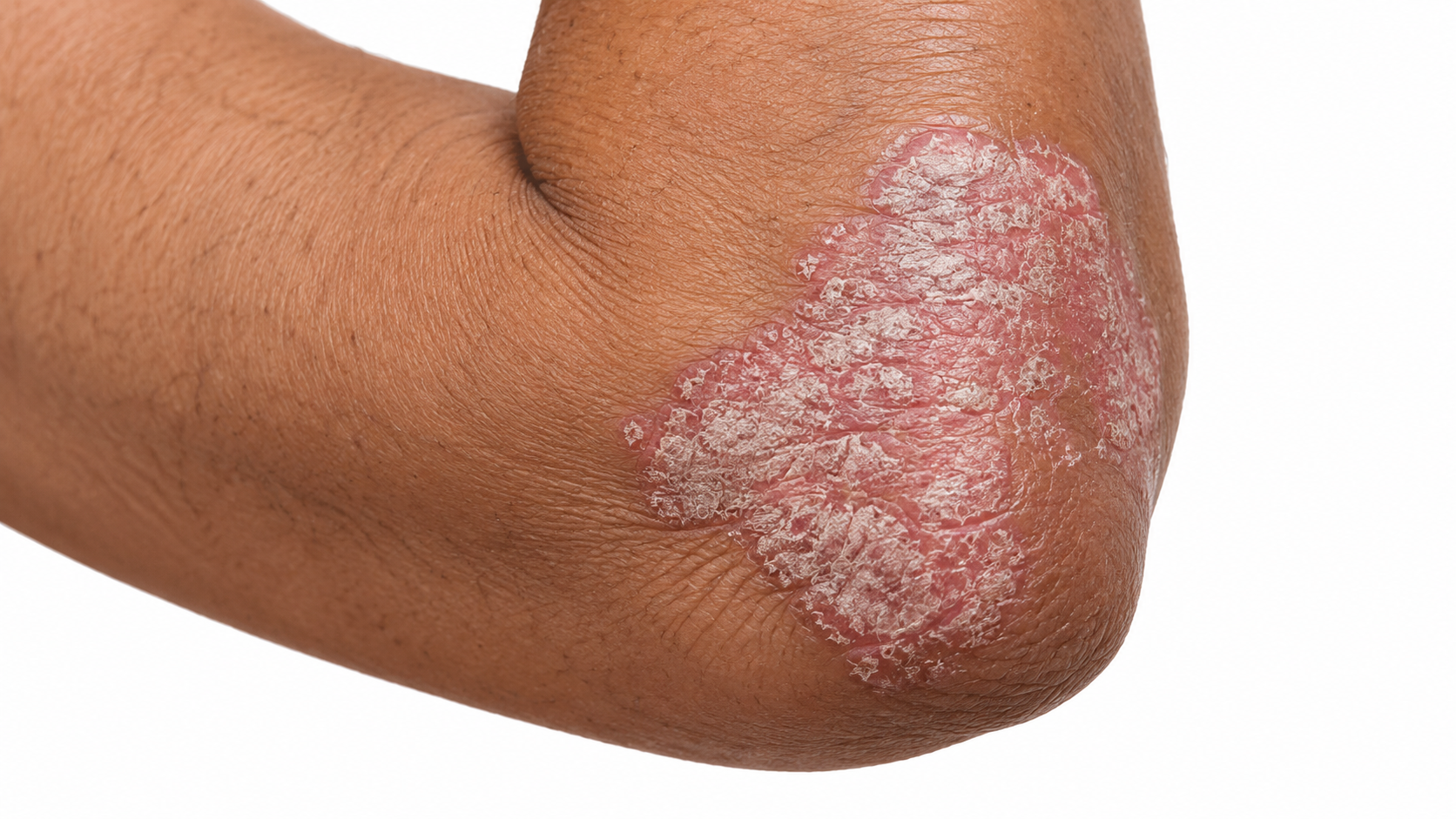
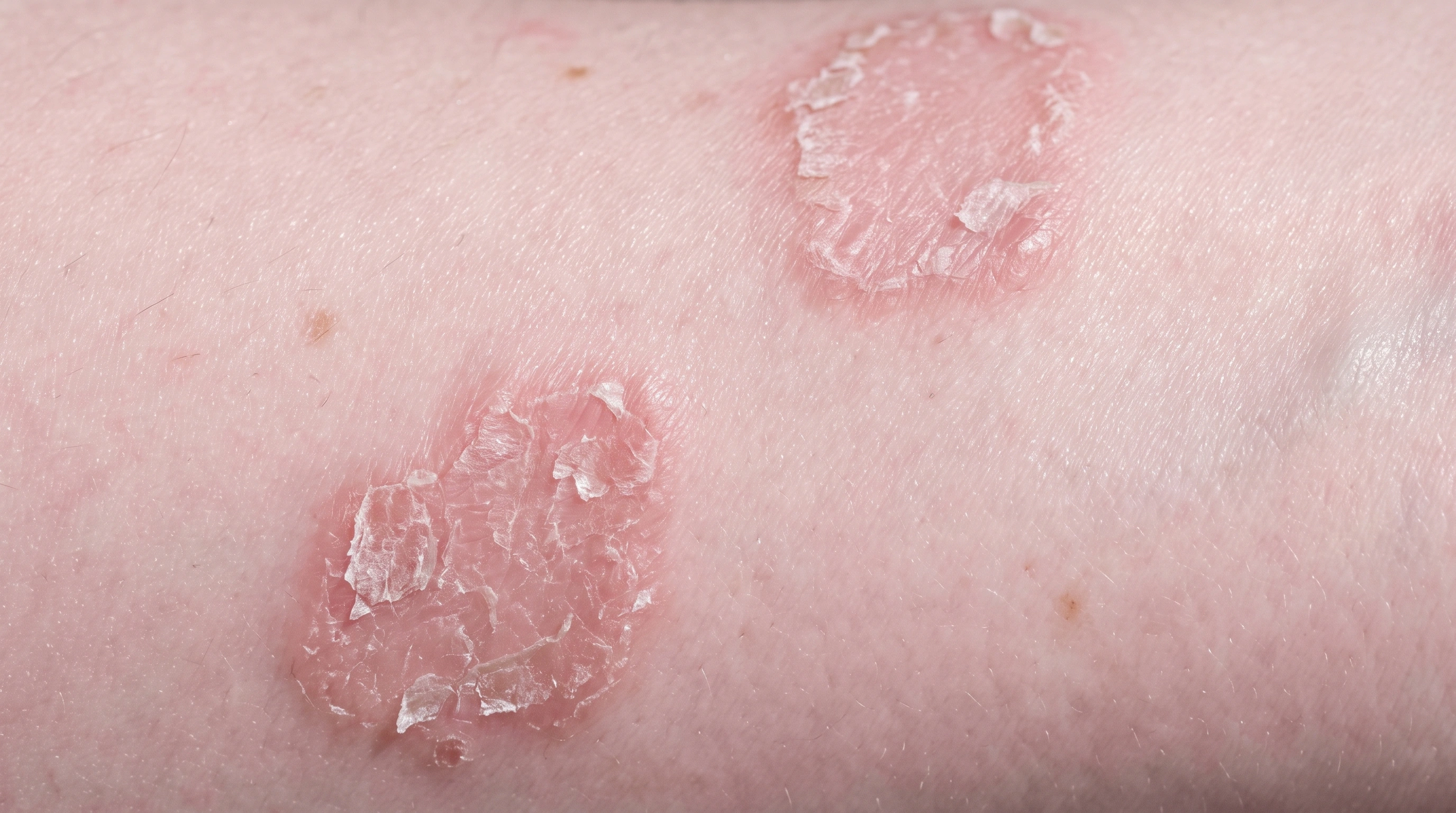
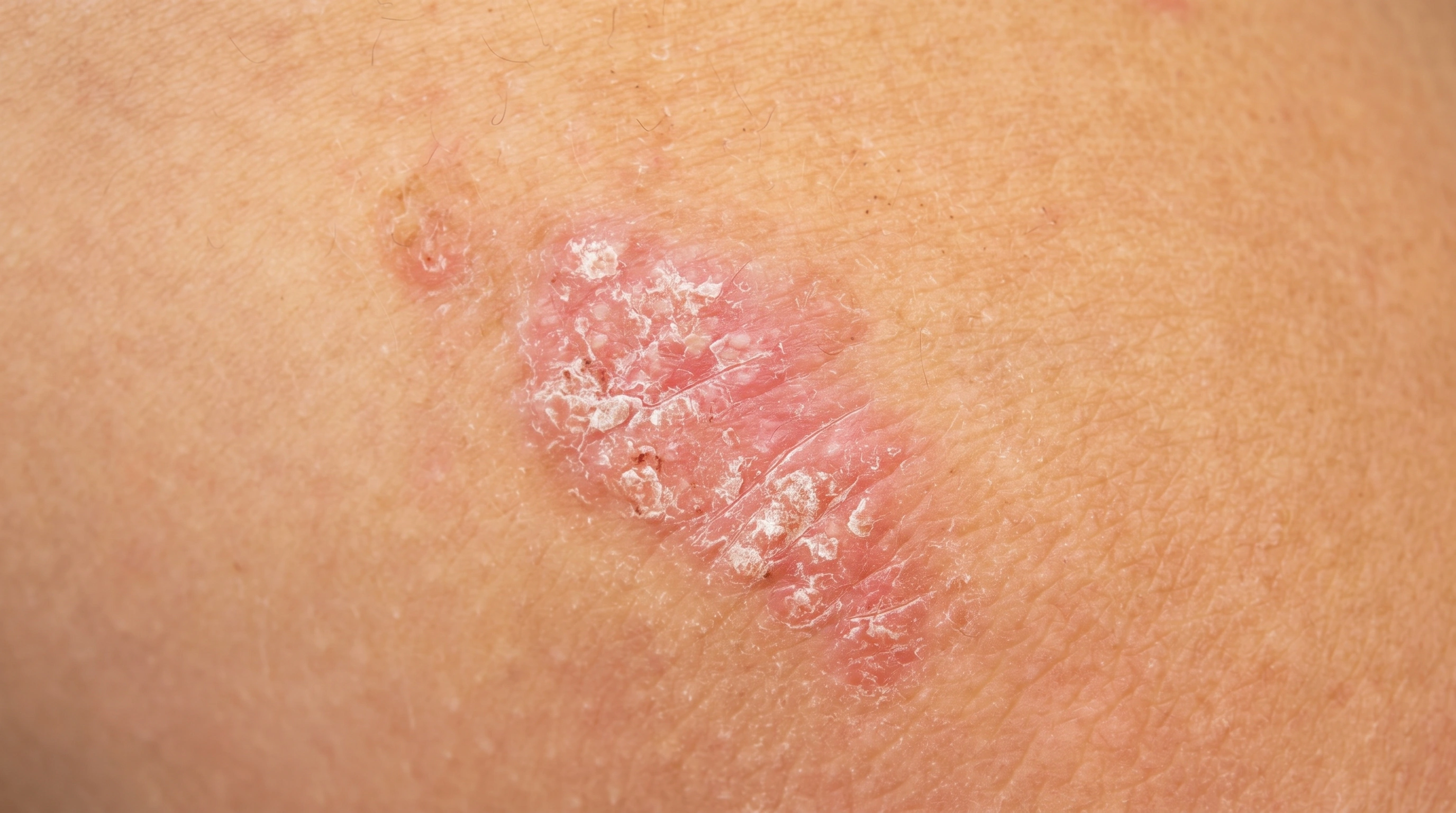
Plaque psoriasis The most common type, about 80–90% of cases.

Silvery scale Silvery-white scale covers the plaque surface.
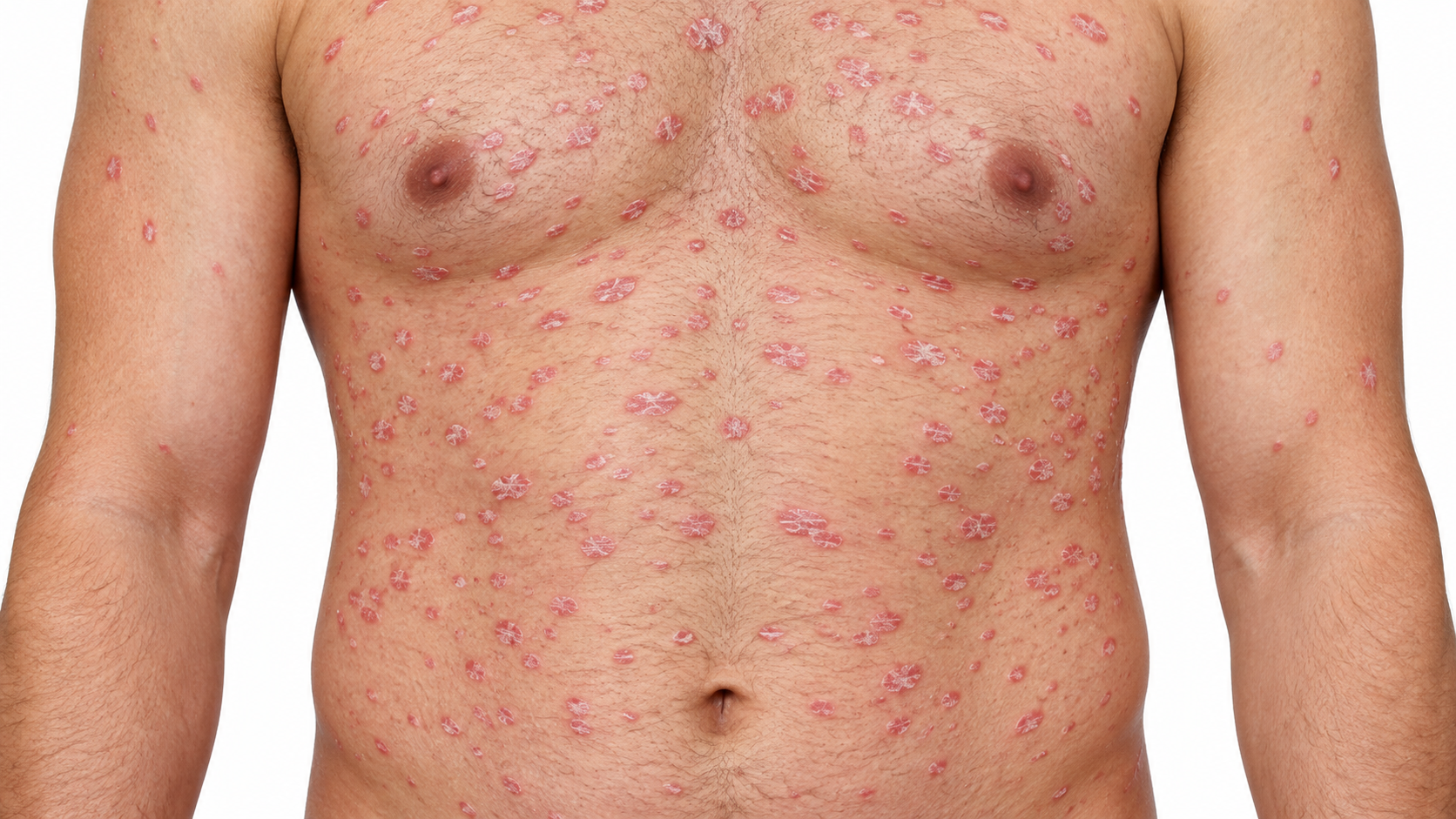
Guttate psoriasis Small drop-shaped spots, often after strep throat.
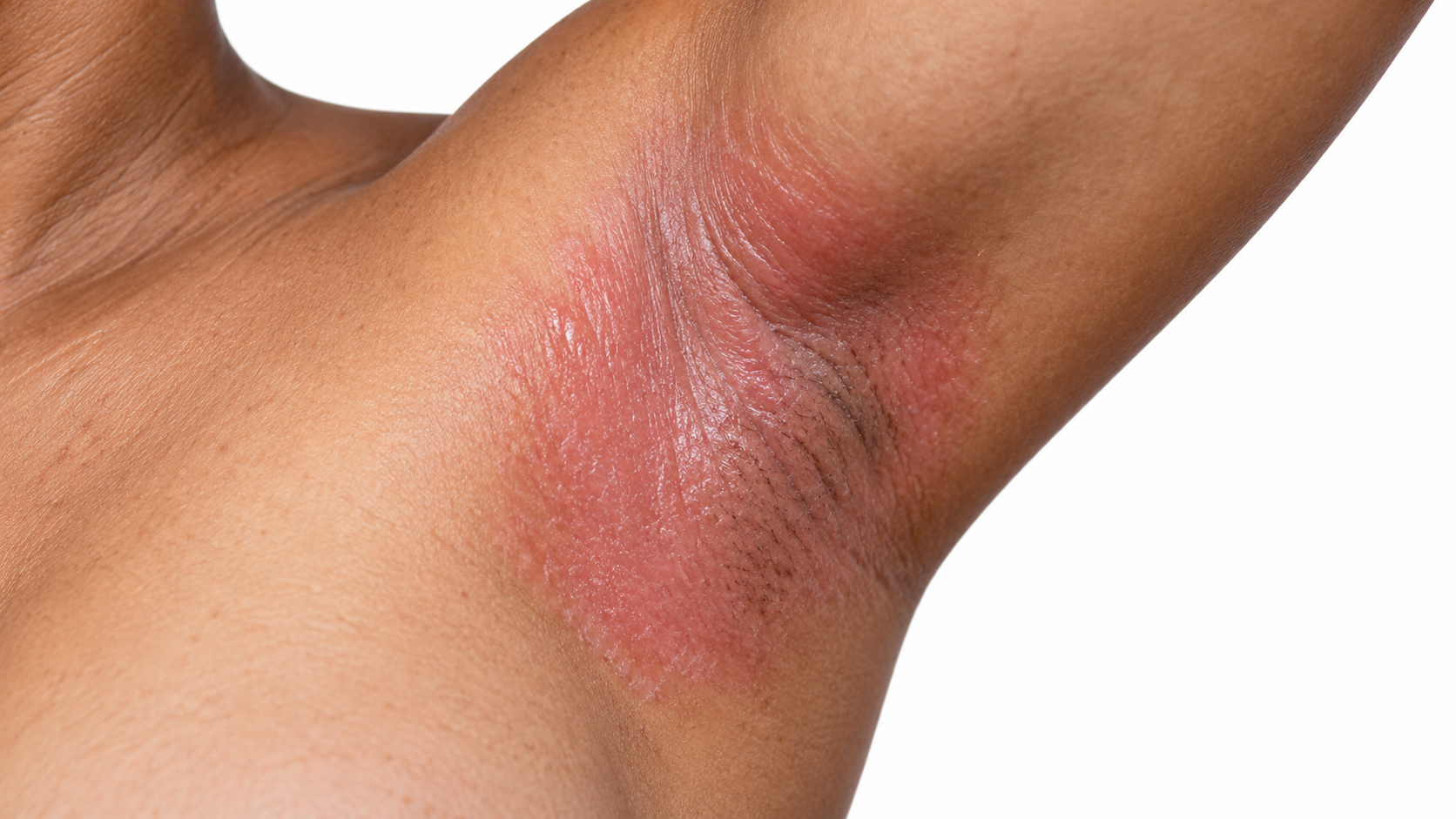
Inverse psoriasis Smooth red patches in skin folds, without scale.
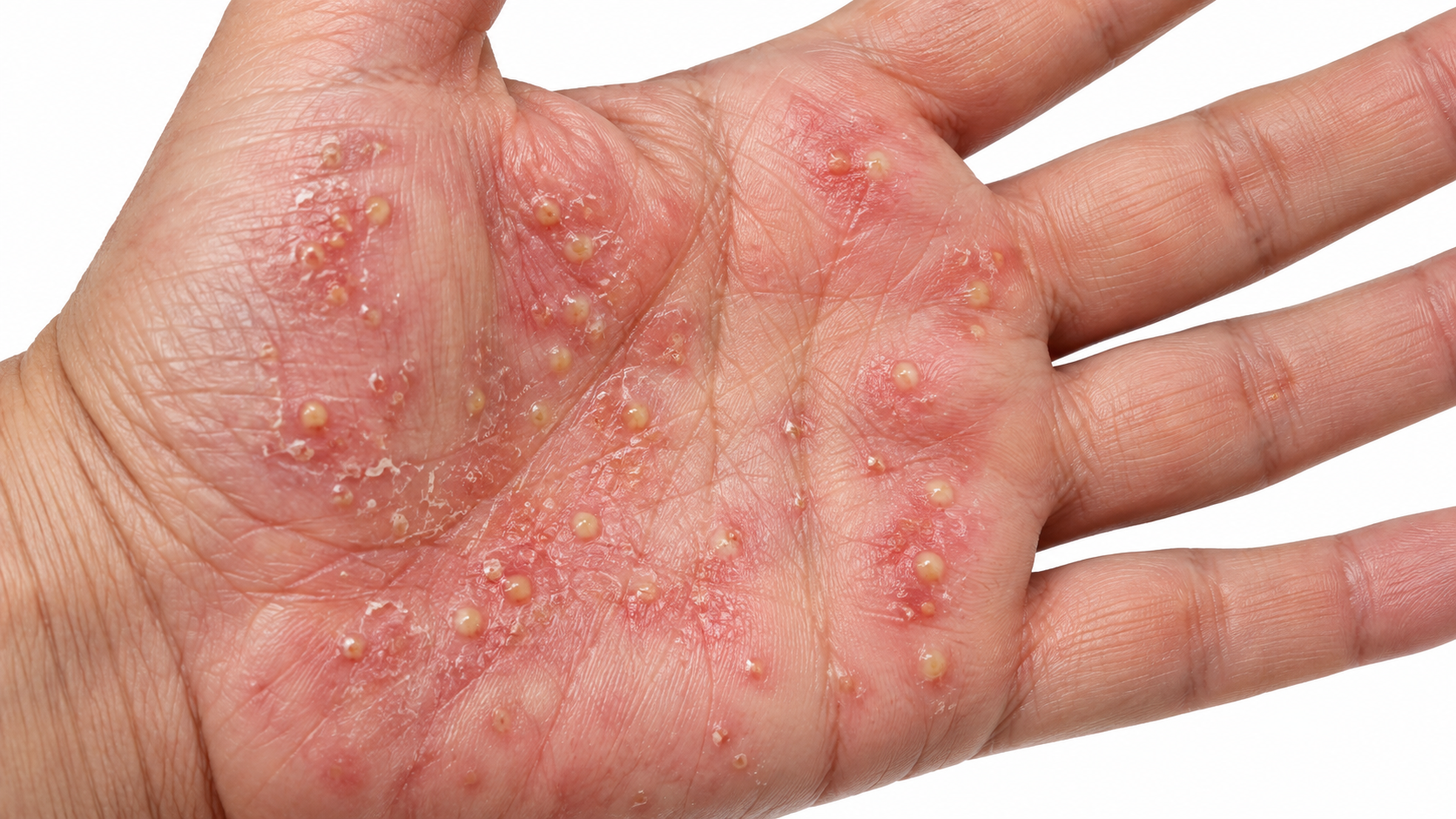
Pustular psoriasis Pus-filled bumps on red skin, often hands and feet.
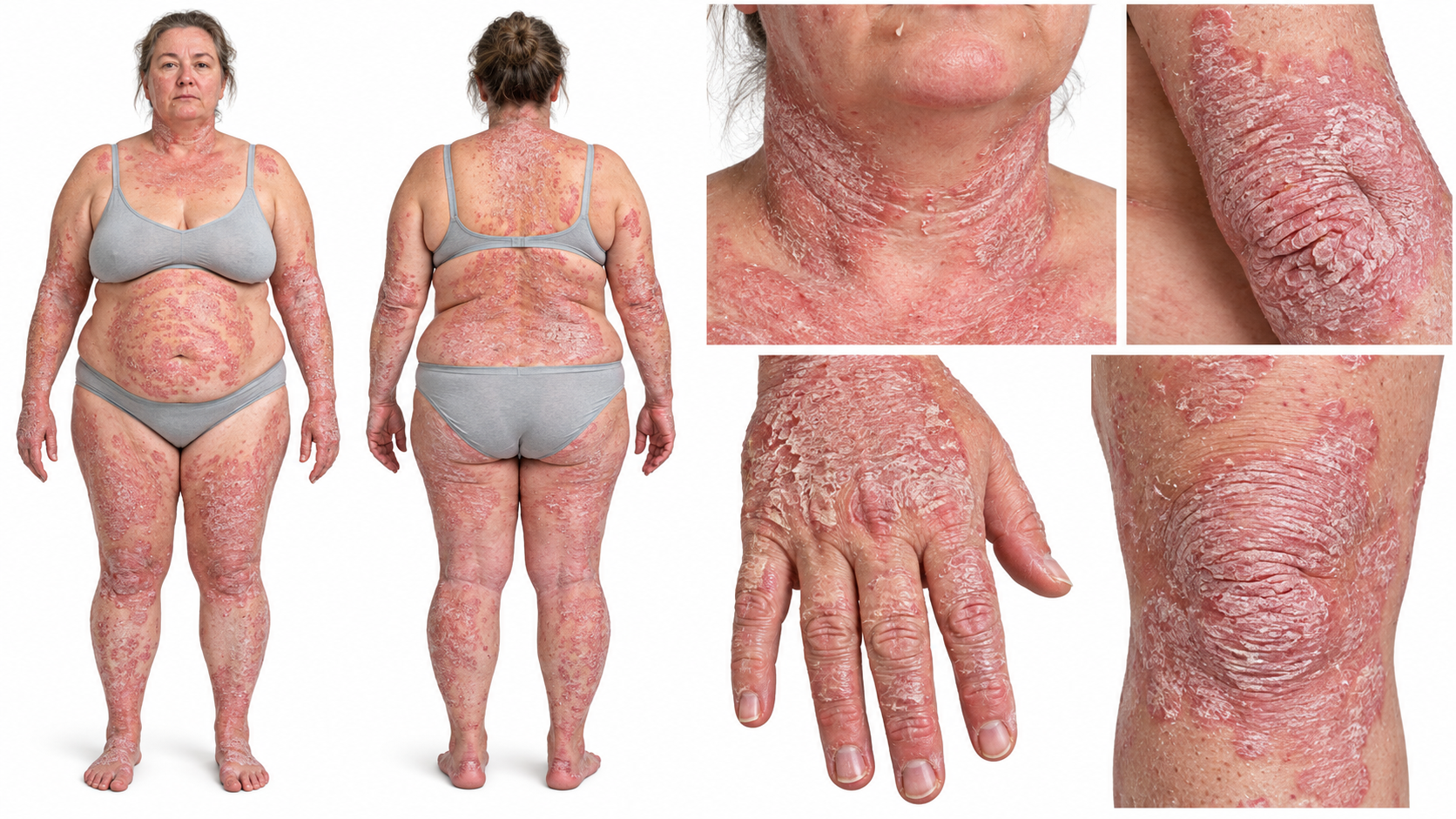
Erythrodermic psoriasis Rare, widespread redness that needs urgent care.
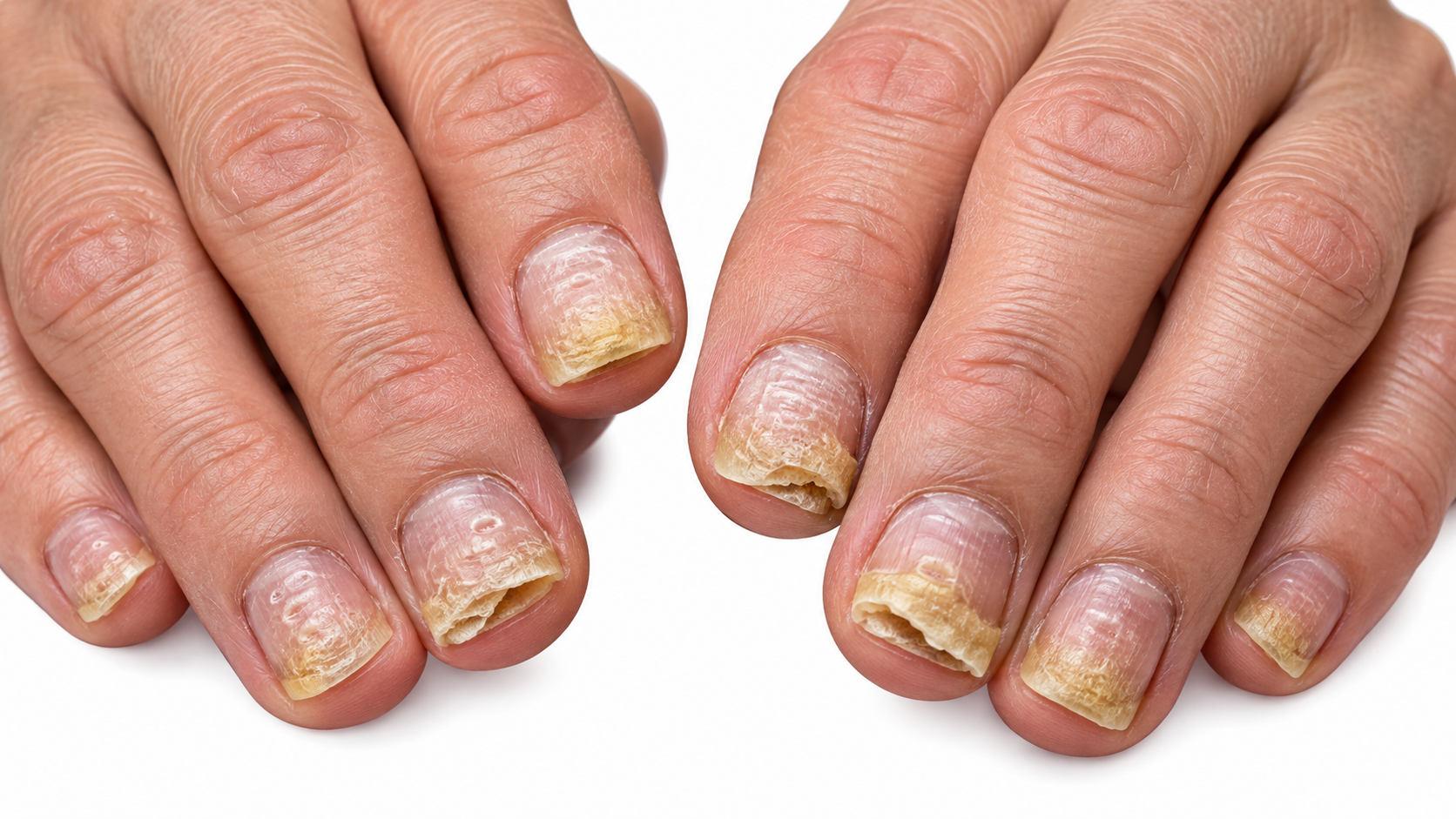
Nail psoriasis Pitting, thickening and lifting of the nails.
Pityriasis Rosea
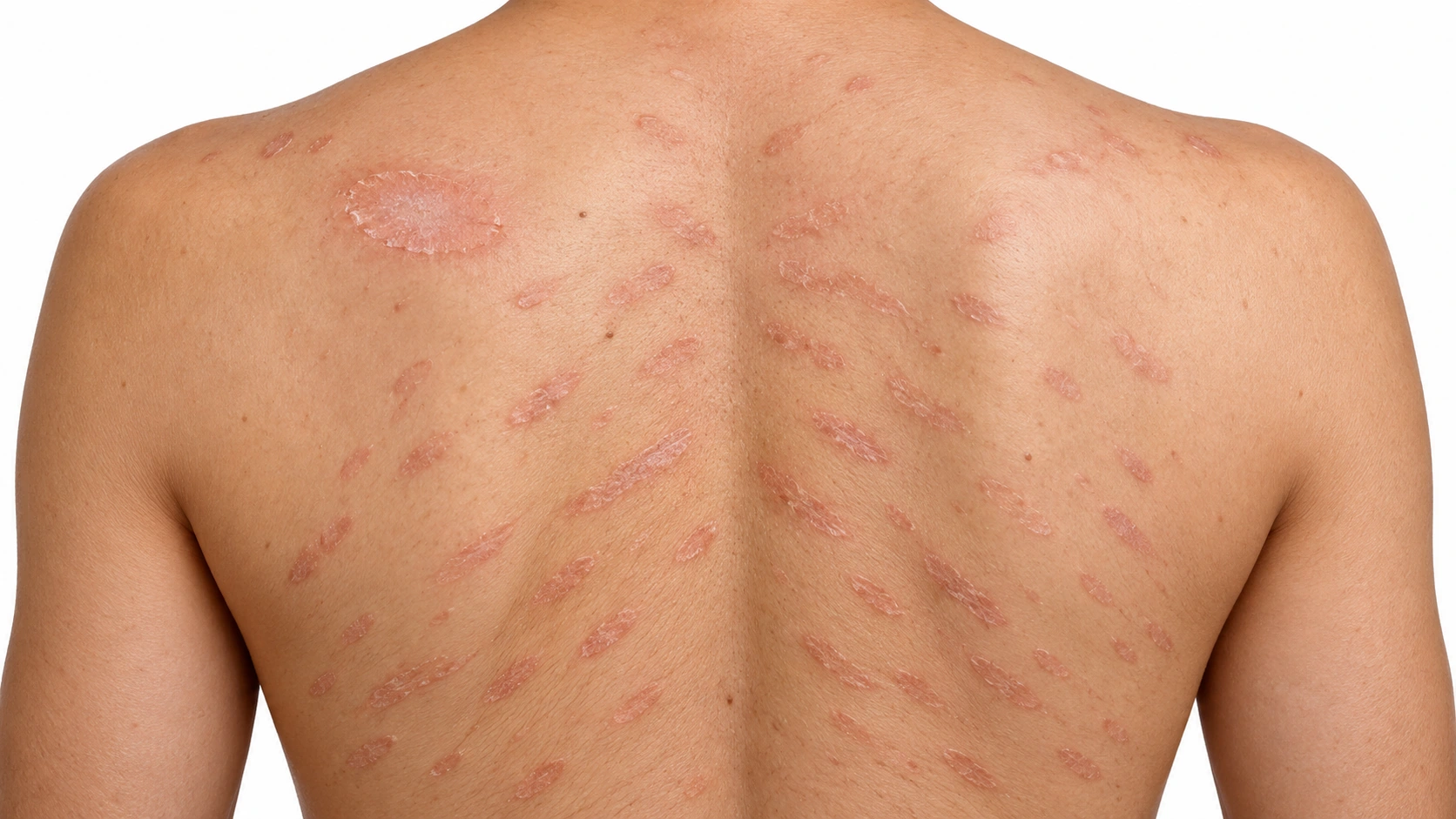
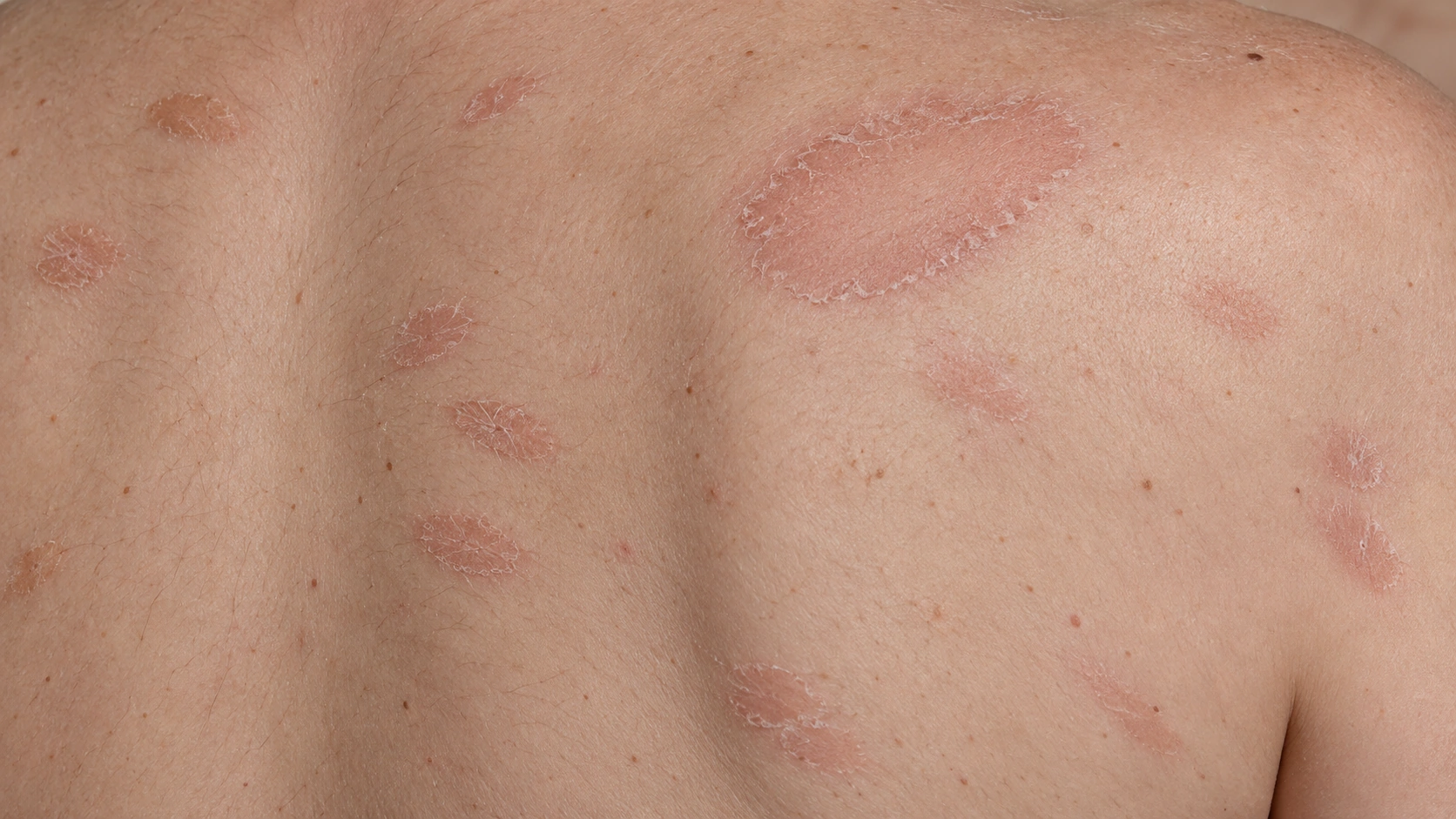
Larger patch and smaller spots A larger patch sits among several smaller pink marks.
Branching back pattern Oval patches follow sloping lines across the back in a branching pattern.
Skin tones
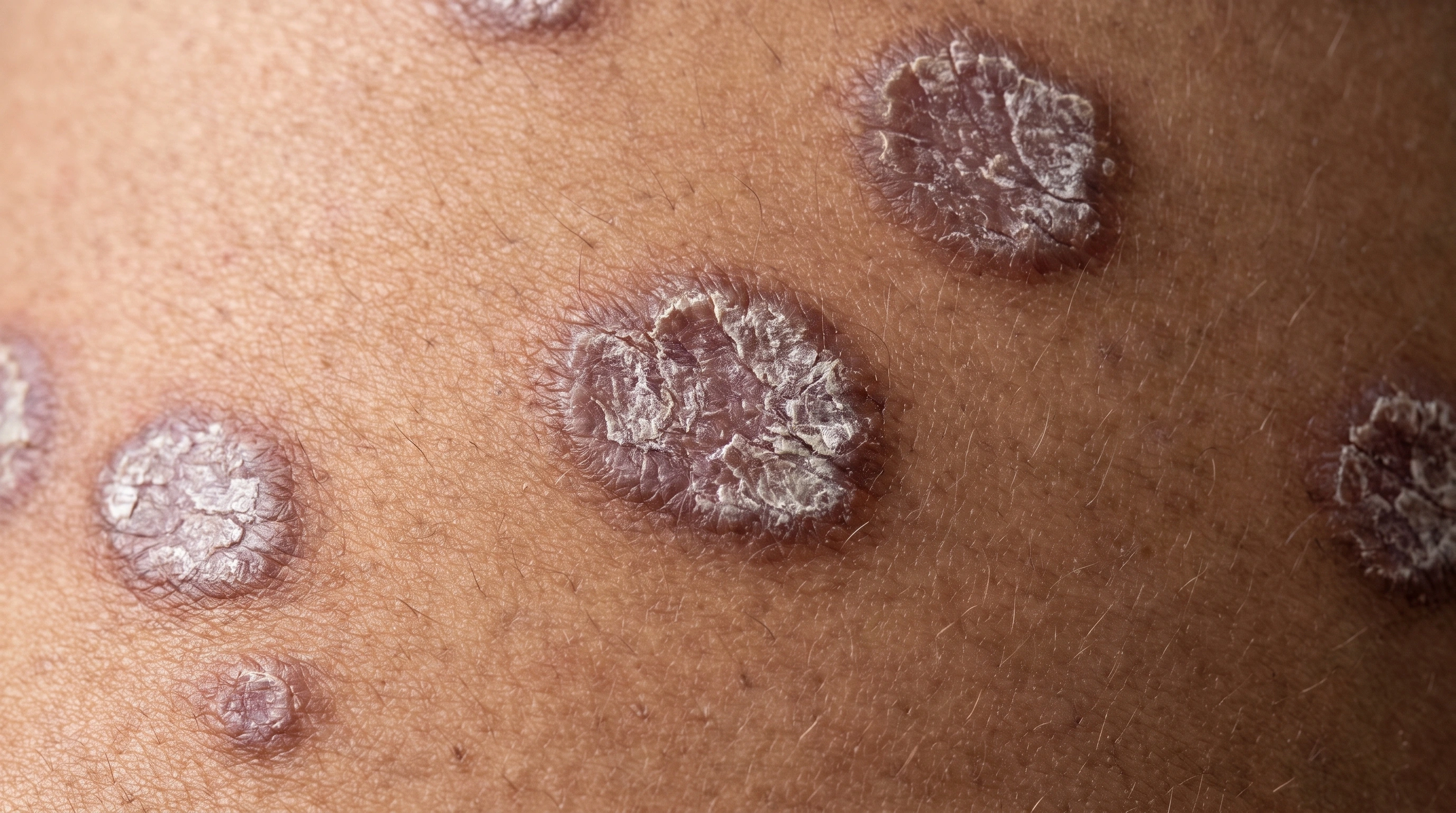
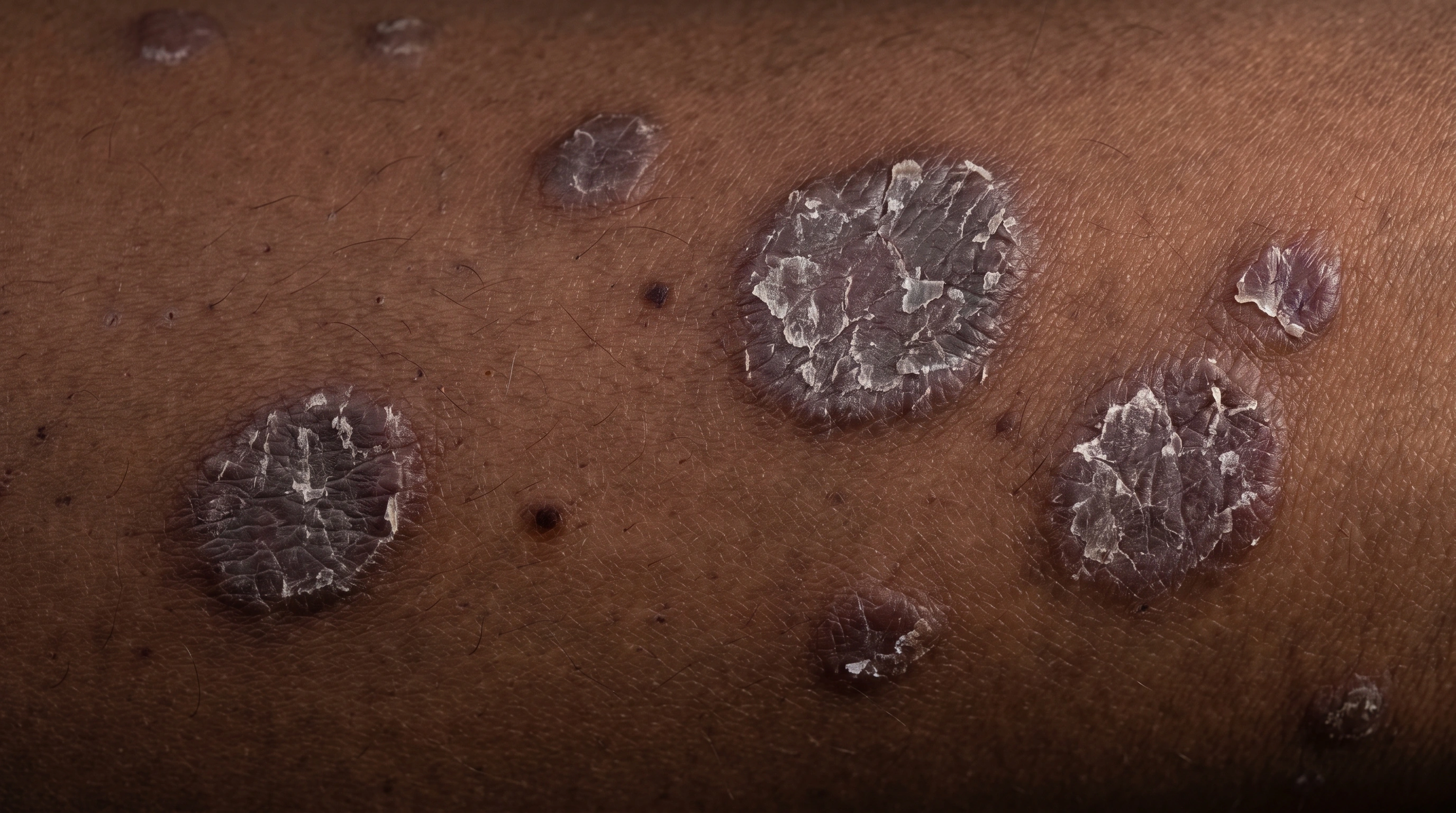
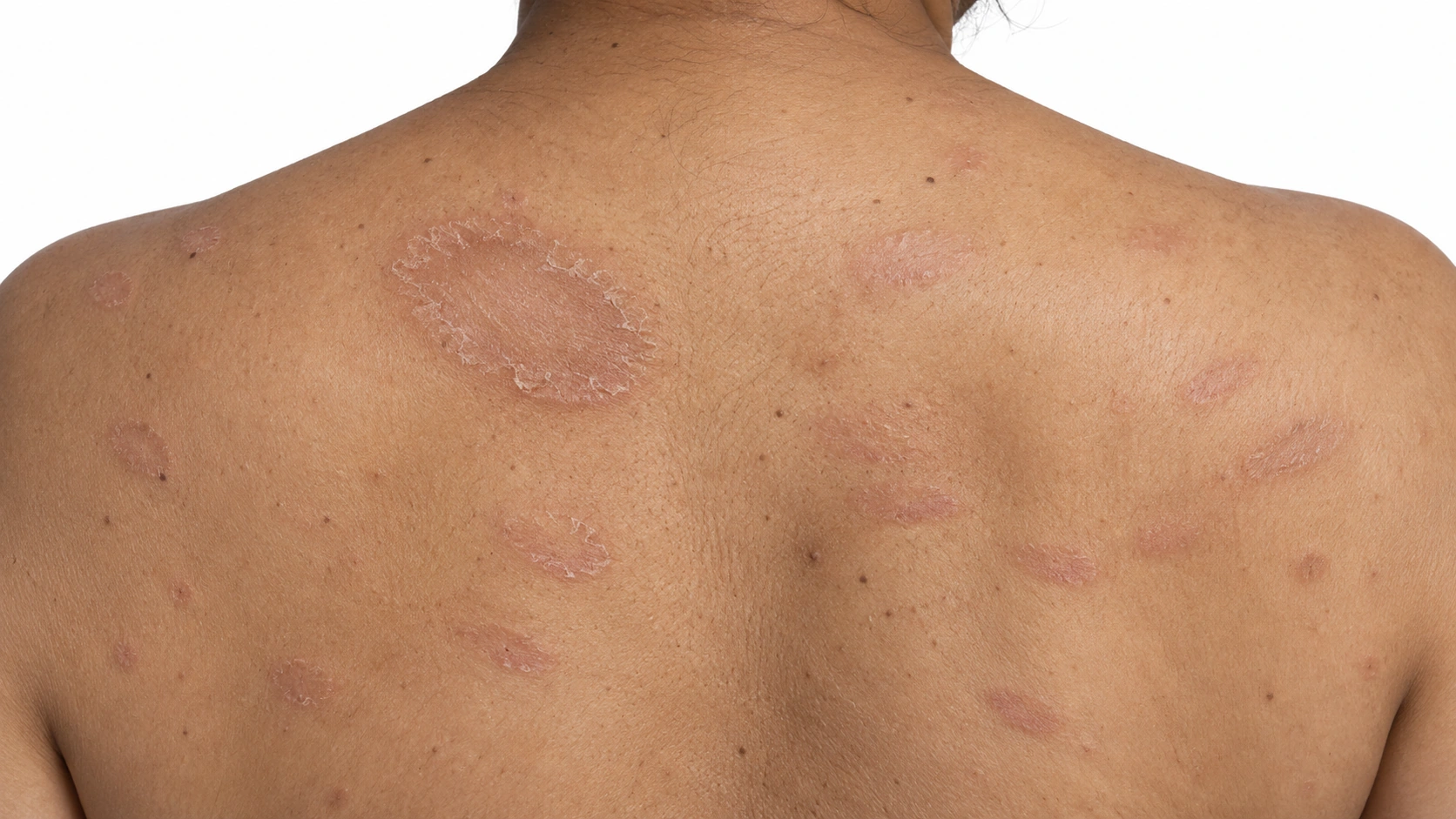
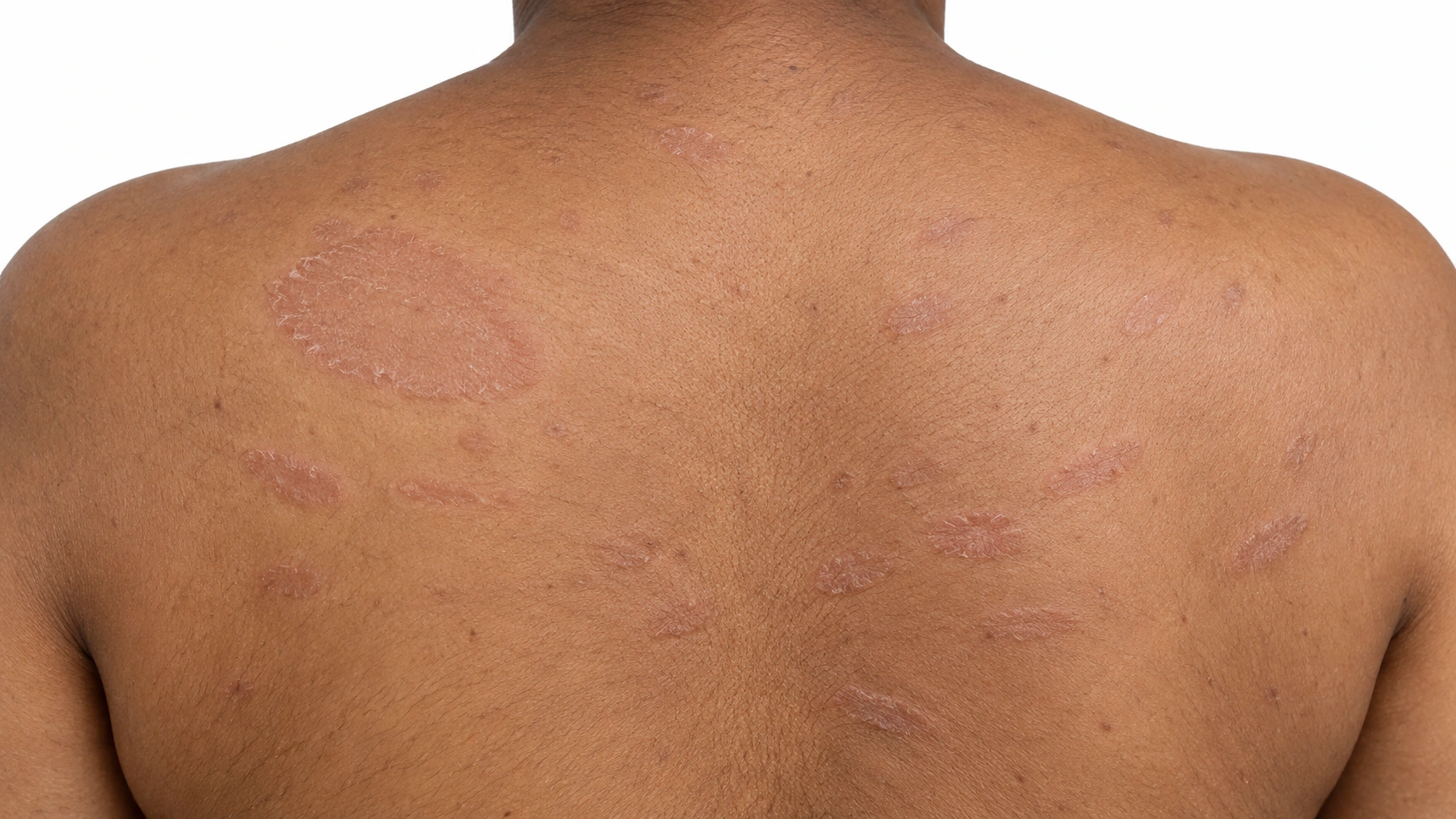
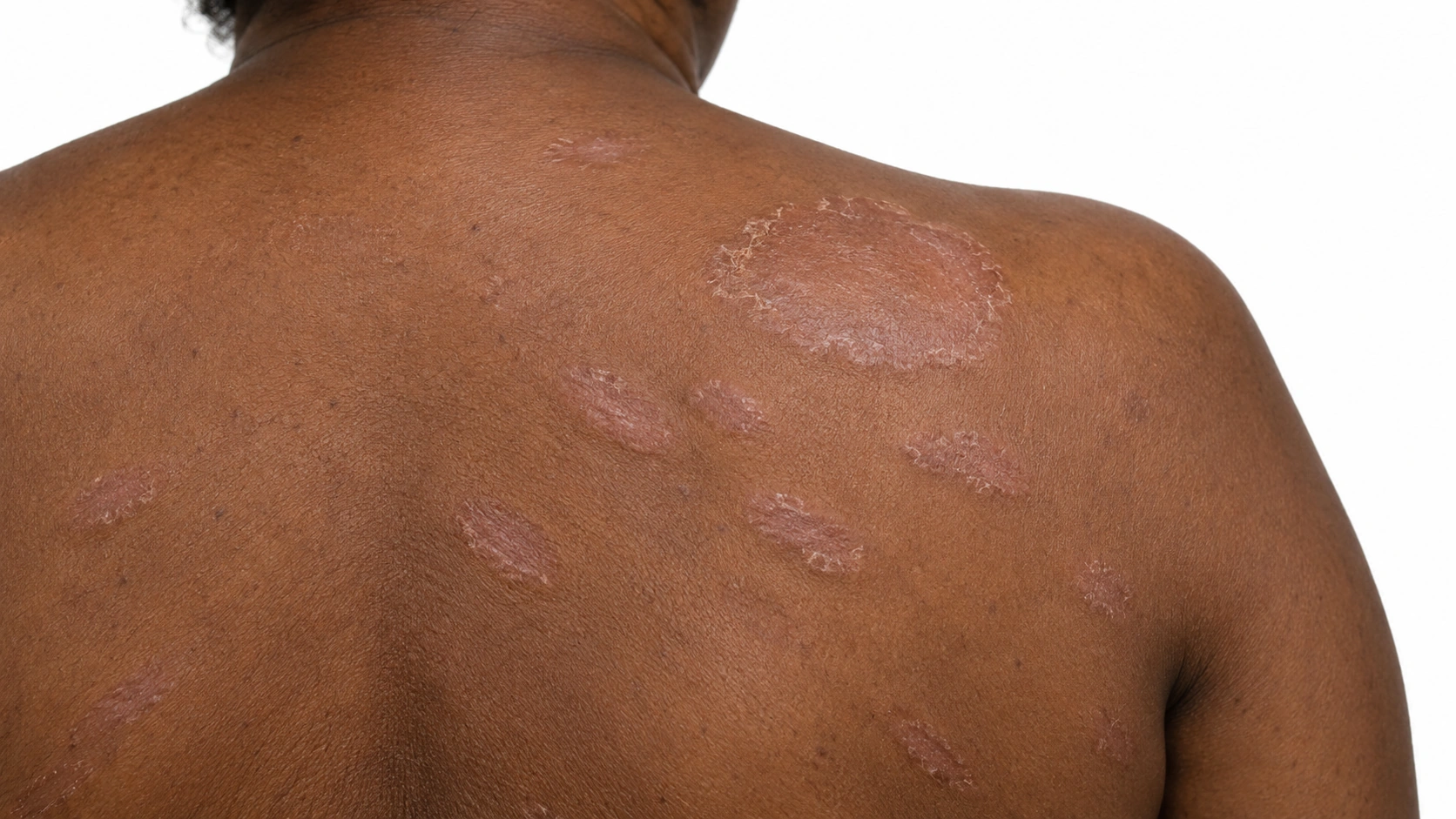
Diagram
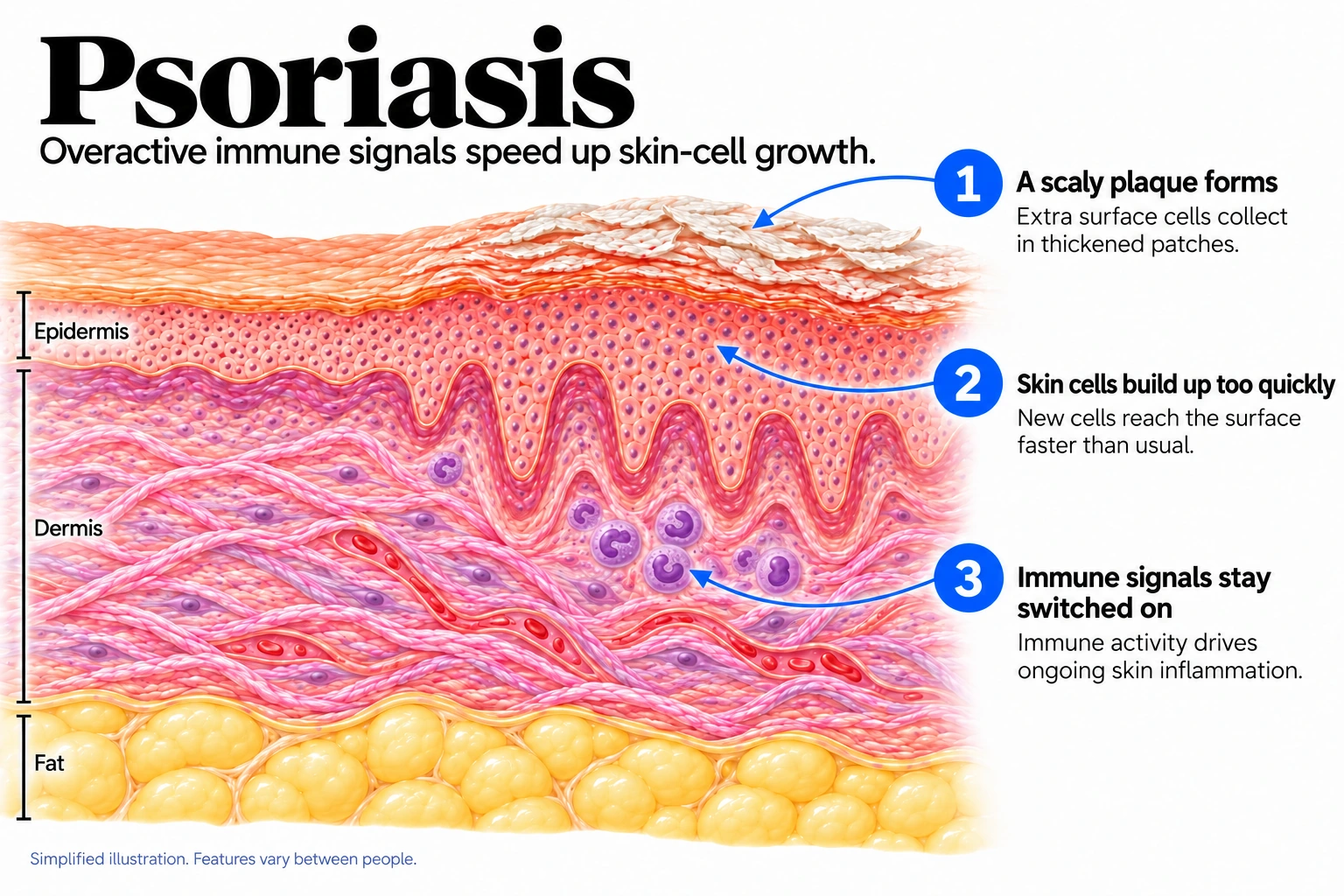
In the skin
Overactive immune signals make skin cells multiply faster than they can shed normally. The extra cells build into thick, scaly plaques over inflamed skin.
An inflammatory skin eruption develops for reasons that are not fully understood. A viral association is suspected, but the exact cause remains uncertain.
When it usually starts
010203040506070+
Psoriasis. Can begin at any age; onset commonly occurs in younger adults or later adult life.
Pityriasis Rosea. Most often affects adolescents and young adults.
Causes and triggers
Causes
Psoriasis happens when the immune system overreacts and speeds up skin growth. Genes set up the tendency, risk factors raise the odds, and triggers set off each flare.
The exact cause is uncertain; a viral association is suspected.
Family tendency
About 1 in 3 people have a close relative with psoriasis. HLA-C*06:02 is the best-known gene, but many genes play a small part.
Risk factors
Obesity, Smoking, Heavy drinking, HIV
Adolescence or young adulthood
Trigger
● Psoriasis
● Pityriasis Rosea
Stress
Well established
Not listed
Strep throat
Well established
Not listed
Skin injury
Well established
Not listed
Some medicines
Strong link
Not listed
Stopping steroids
Strong link
Not listed
Cold, dry weather
Possible
Not listed
No established short-term flare trigger
Not listed
Not a typical trigger
Daily Care
Psoriasis
Pityriasis Rosea
Daily care
A gentle routine supports your skin alongside your treatment plan.
Habits that help
- Leave scale alone
Avoid picking or rubbing irritated skin. - Make time to unwind
Build a manageable stress break into your day. - Notice your patterns
Keep brief notes on flares and possible triggers. - Moisturizing
Help with dryness and discomfort.
Habits that help
- Moisturize dry or itchy areas with a plain cream
Fragrance-free products are less likely to sting inflamed skin. - Keep baths and showers brief and lukewarm
Gentle washing is usually more comfortable than hot water and scrubbing. - Wear loose, breathable clothing
Reduce overheating and friction if they worsen itch. - Use a cool damp cloth for itch relief
Keep nails short and avoid scratching the rash. - Arrange review if the diagnosis is uncertain or you are pregnant
A similar-looking rash may need testing, and pregnancy changes the assessment.
Avoid
- Avoid: Deliberate tanning or burning to clear the rash
Sunburn adds skin injury; discuss any light treatment with a clinician.
Treatment differences
Evidence labels come from each condition’s own treatment list.
Treatment
● Psoriasis
● Pityriasis Rosea
Filter by type
All types
Over-the-counter
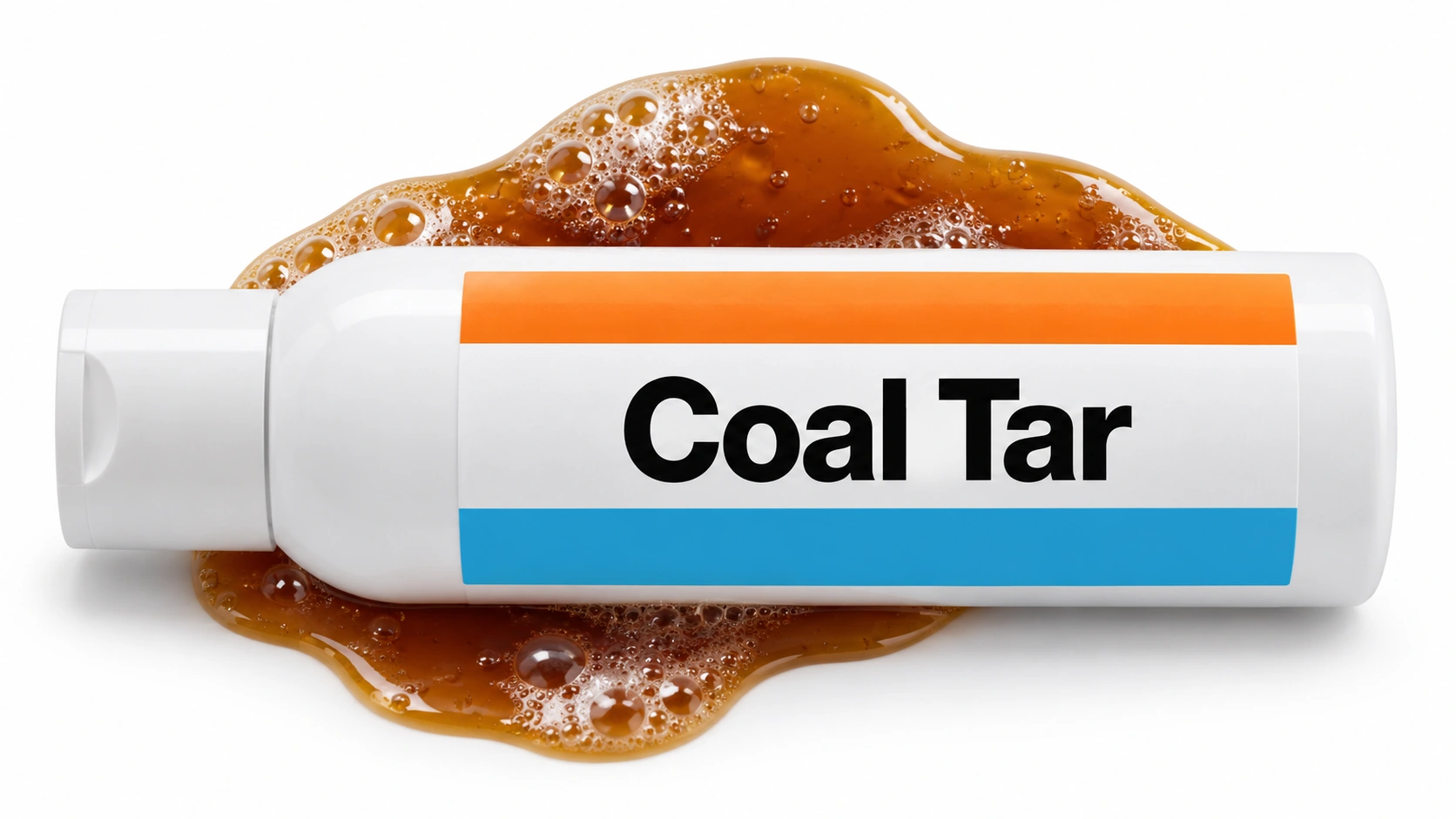
None listed
Prescription topicals

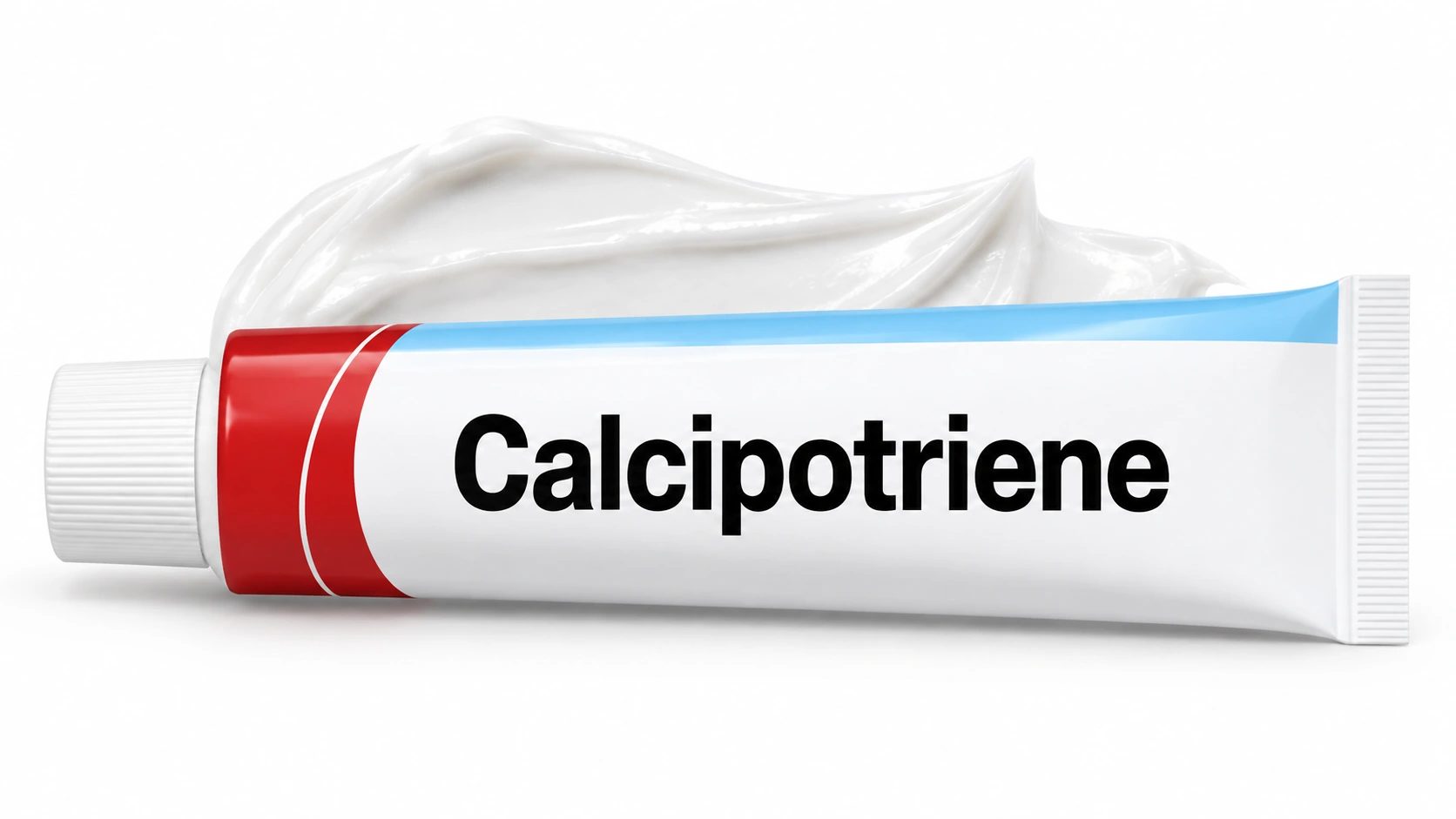
Symptom-directed treatment
ListedA clinician may recommend an appropriate topical anti-inflammatory if itch is troublesome.
Prescription pills

None listed
Injections
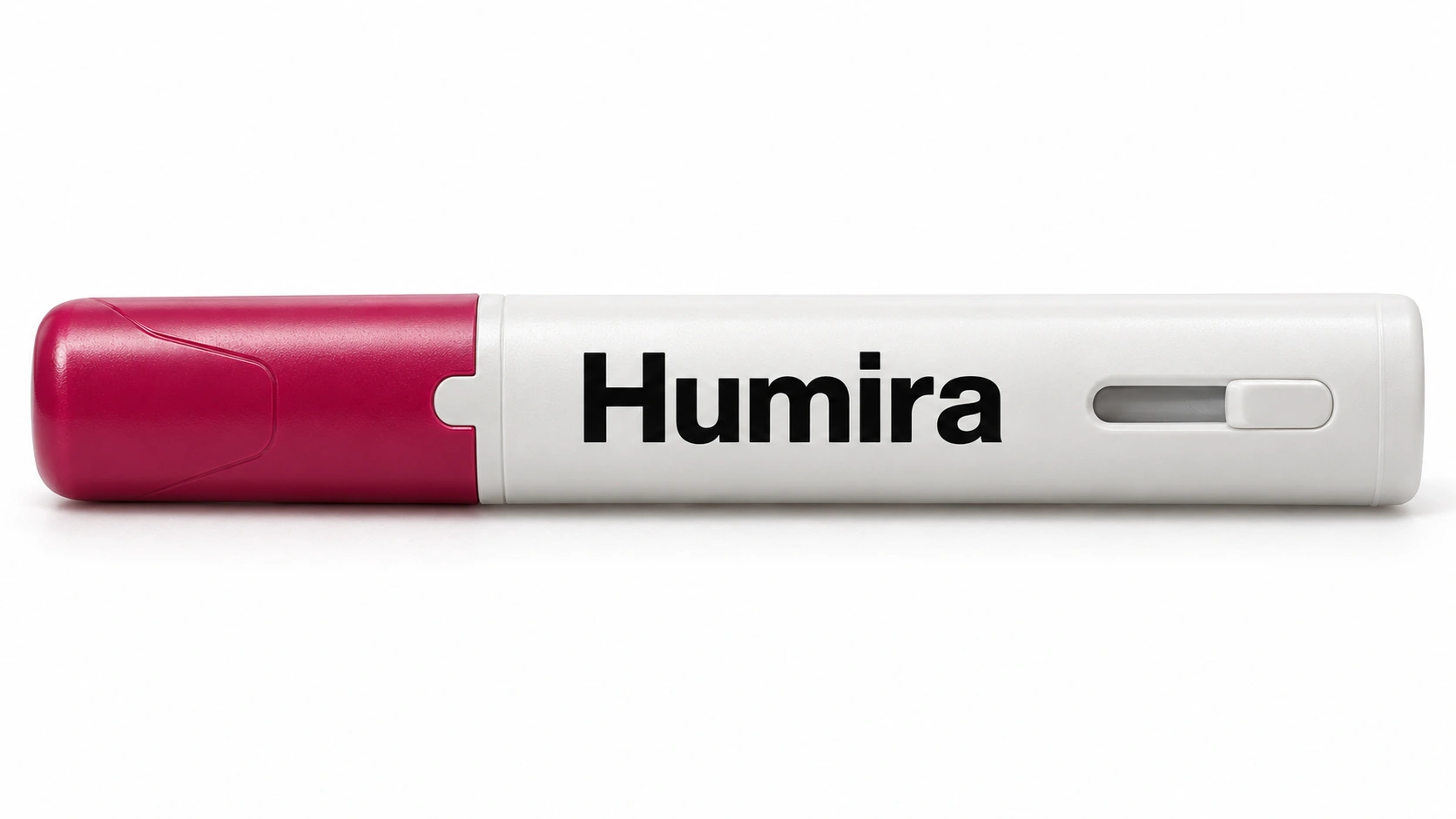
None listed
Procedures
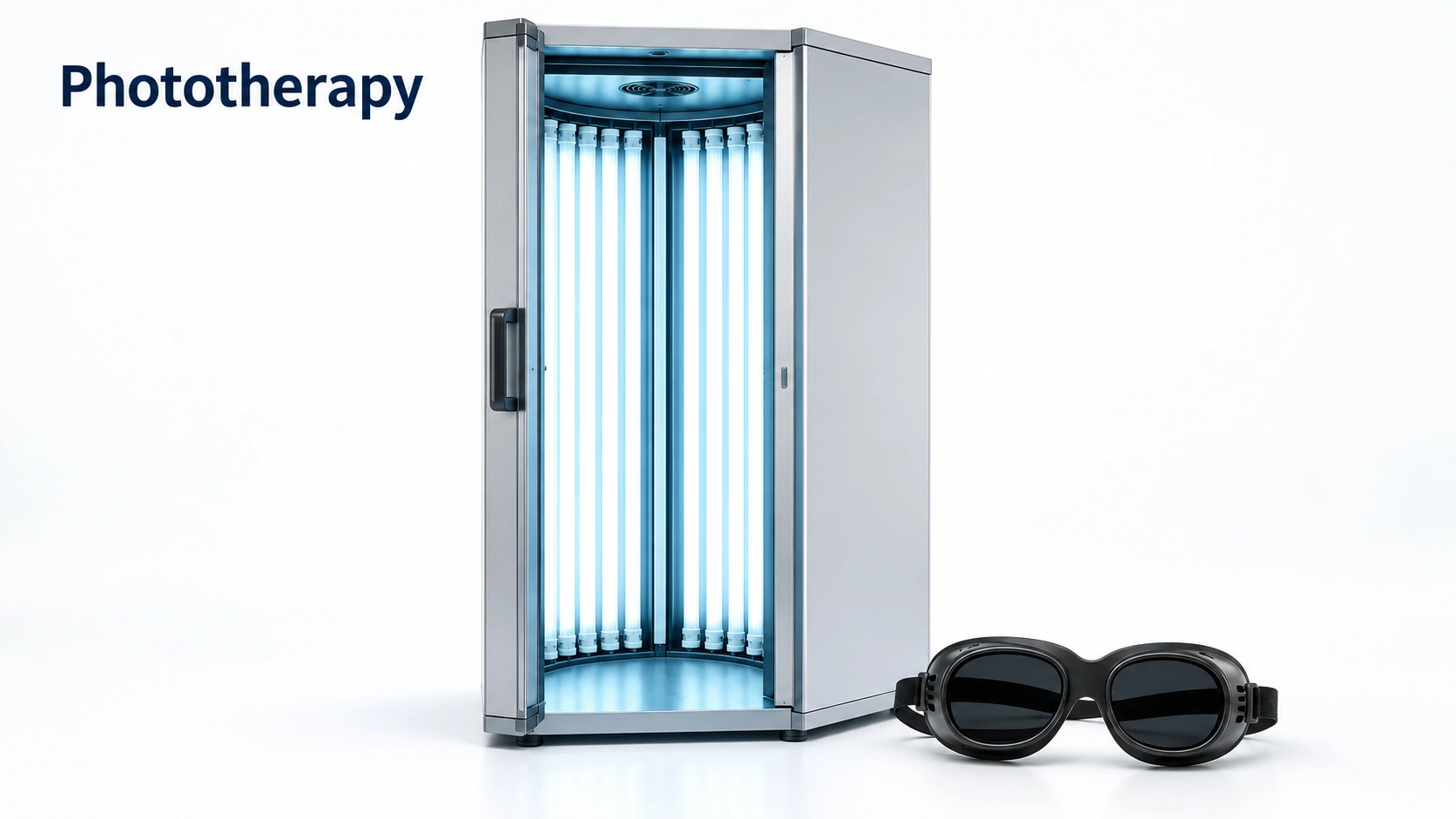
Phototherapy
Strong evidenceNarrowband UVB is a prescribed ultraviolet light treatment for psoriasis.
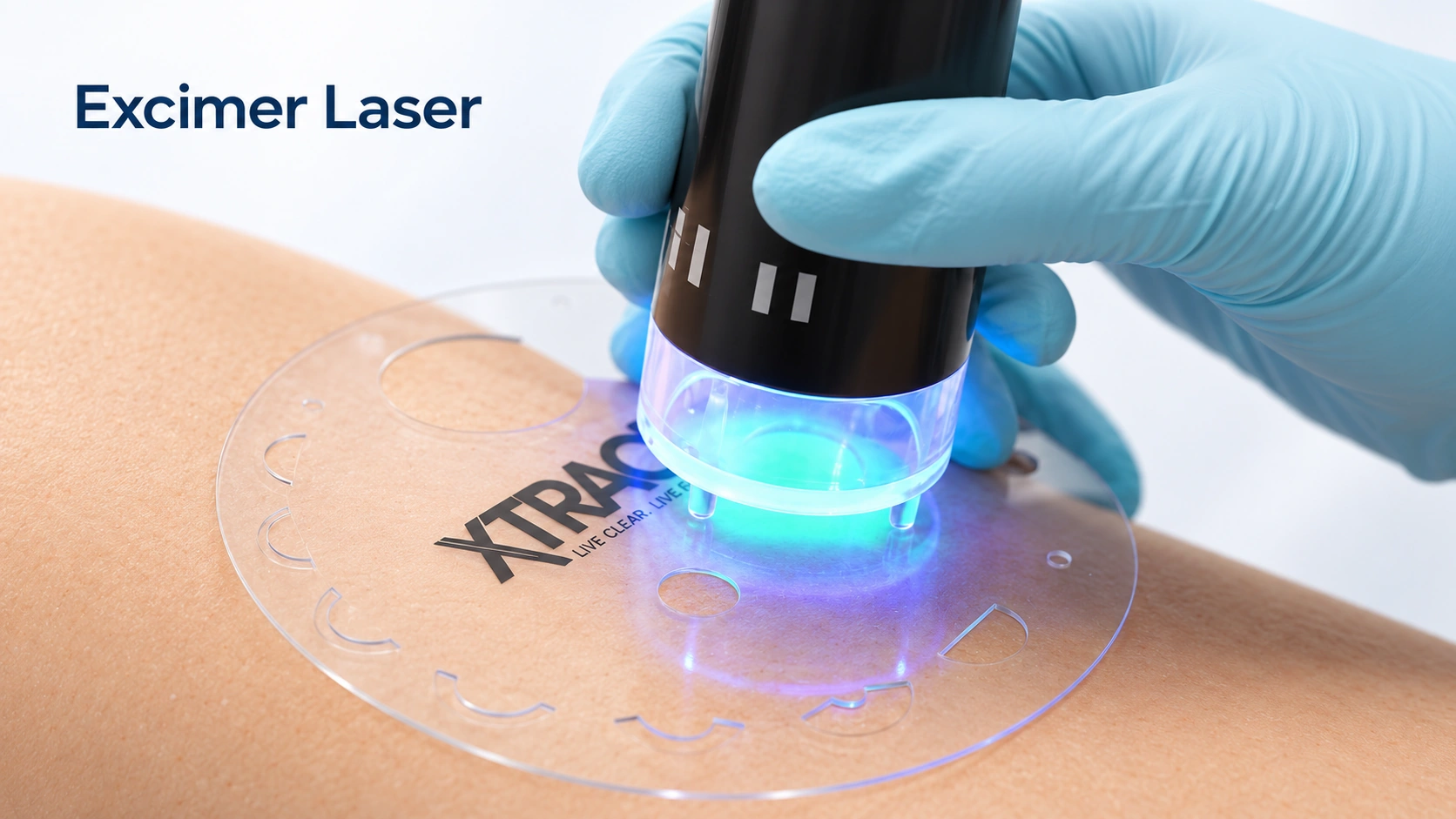
None listed
Outlook
Long term
Psoriasis commonly alternates between flares and quieter periods. Treatment can control symptoms, but the tendency remains. Maintenance and follow-up are tailored to the areas affected, treatment response and any new skin, nail or joint symptoms.
The rash usually clears on its own in about 6–10 weeks. Color changes can last longer, particularly after inflammation; another episode is uncommon.
Complications
Possible complications
Psoriasis is associated with other health conditions. These are possibilities to be aware of, not things everyone will develop.
- Psoriatic arthritis
- Heart disease
- Metabolic syndrome
- Depression & anxiety
- Inflammatory bowel disease
- Eye inflammation
More details
Psoriatic arthritis
Joint pain, stiffness, or swelling can be signs. Tell your doctor about new joint symptoms.
Heart disease
Cardiovascular risk is higher, especially with severe psoriasis. Discuss your overall heart health.
Metabolic syndrome
High blood pressure, blood sugar, and cholesterol are among the related health concerns.
Depression & anxiety
The emotional effects deserve care too. Tell your care team how psoriasis affects your life.
Inflammatory bowel disease
Crohn’s disease and ulcerative colitis are associated conditions.
Eye inflammation
Uveitis can occur. A painful red eye or changes in vision need prompt medical attention.
Pigment changes may persist after the rash. Pregnancy warrants discussion with a clinician.
When to get help
When to get help
Seek assessment for persistent plaques, nail changes or joint pain and stiffness. Widespread painful redness, fever or rapidly spreading pustules need urgent care.
Seek assessment for a first unexplained rash, pregnancy, mouth or genital lesions, or an unwell feeling.
Common questions
Psoriasis:Is psoriasis curable?
No, but that is less discouraging than it used to be. It is lifelong and comes and goes, and nothing removes it permanently. What has changed is control — with modern treatment, a large share of people with moderate to severe psoriasis reach clear or nearly clear skin and keep it there for years.
Psoriasis:Is it contagious?
Not at all. You cannot pass psoriasis to anyone by touch, by sharing a towel or a bed, or in a pool. It is your own immune system acting on your skin. The misunderstanding is often harder to live with than the plaques.
Psoriasis:Will I get psoriatic arthritis?
Around one in three people with psoriasis does, usually years after the skin is affected, occasionally before. There is no way to predict it, so know the symptoms — joint pain and swelling, a whole finger or toe swelling up, heel or lower back pain, and morning stiffness over thirty minutes. Report those early; joint damage cannot be undone.
Psoriasis:Are biologics safe?
Well studied and, for most people, well tolerated. They block one specific immune signal rather than suppressing the immune system broadly, which is why they work so well. There is a real but modest increase in some infections. Tuberculosis and hepatitis screening comes first, and monitoring continues. Decide from a conversation about your own risks, not a general verdict.
Psoriasis:Does diet matter?
Less than the internet suggests, more than not at all. What has decent support is losing weight if you carry extra — that improves psoriasis on its own and makes some treatments work better — and cutting back on alcohol. Gluten-free eating helps only the small group with celiac disease too. No diet clears psoriasis.
Psoriasis:Can I stop treatment when my skin is clear?
Usually not, and this is the commonest reason people end up back where they started. Clear skin means the treatment is doing its job, and most plaques return within weeks to months of stopping. Treatment can often be stepped down instead — a decision for your dermatologist, not you alone.
Pityriasis Rosea:What is Pityriasis Rosea?
A usually temporary eruption of oval scaly patches, sometimes beginning with one larger herald patch.
Pityriasis Rosea:What can I do day to day?
Use gentle washing and moisturizer; avoid overheating if it worsens itch.
Pityriasis Rosea:When should I get medical advice?
Seek assessment for a first unexplained rash, pregnancy, mouth or genital lesions, or an unwell feeling.
Sources