It is broad-spectrum light.
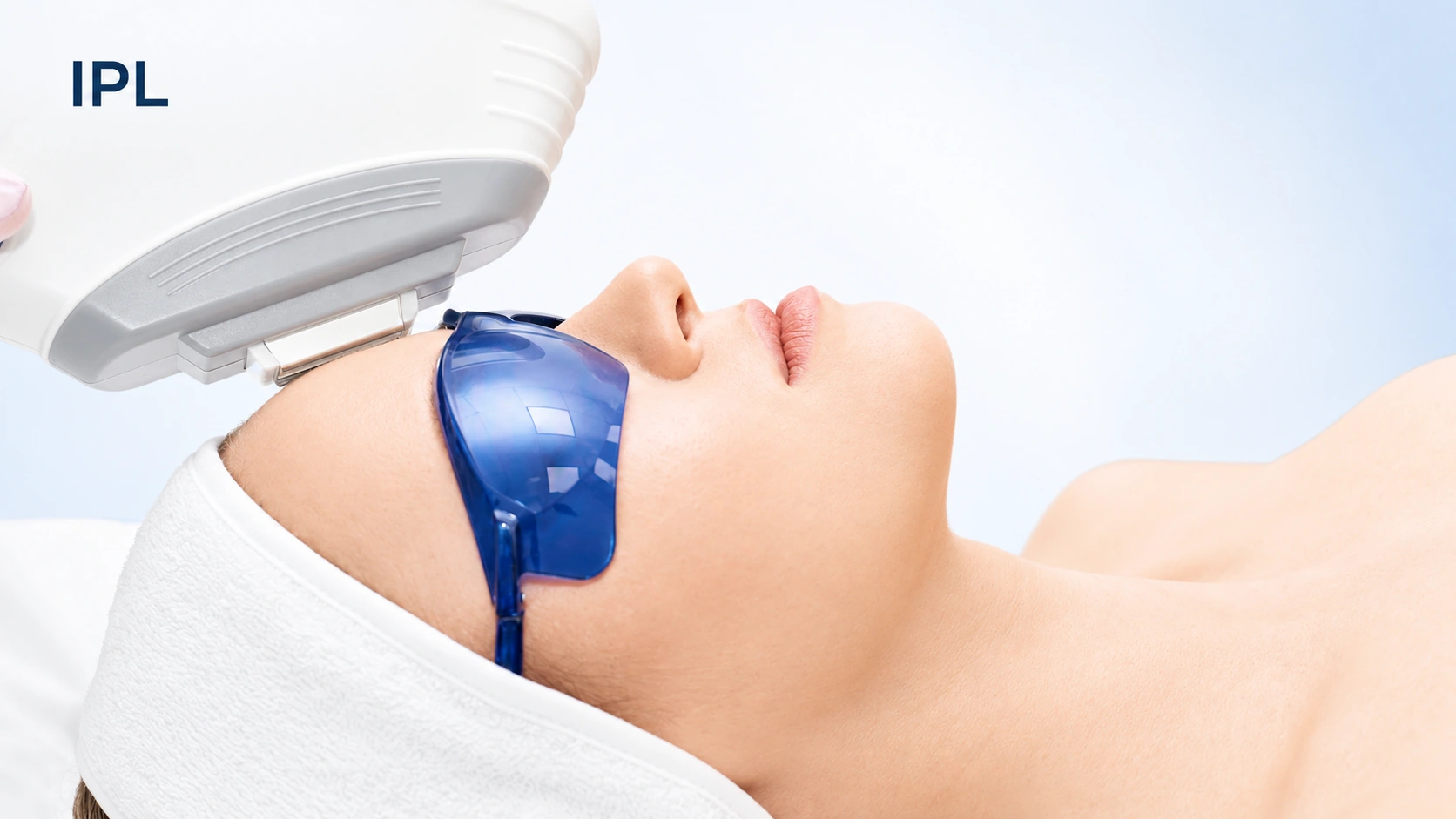
IPL uses filtered pulses across a range of wavelengths, not a laser.
IPL: A broad-spectrum flashlamp, not a laser, used mainly for brown sun spots and facial redness. It is effective for those two problems on lighter skin, and it is not safe on deeper skin tones.
V-Beam: A laser tuned to the color of blood. It fades facial redness, broken vessels, rosacea flushing, port-wine stain birthmarks and some red scars. The thing to plan around is whether your settings will bruise the skin or not.
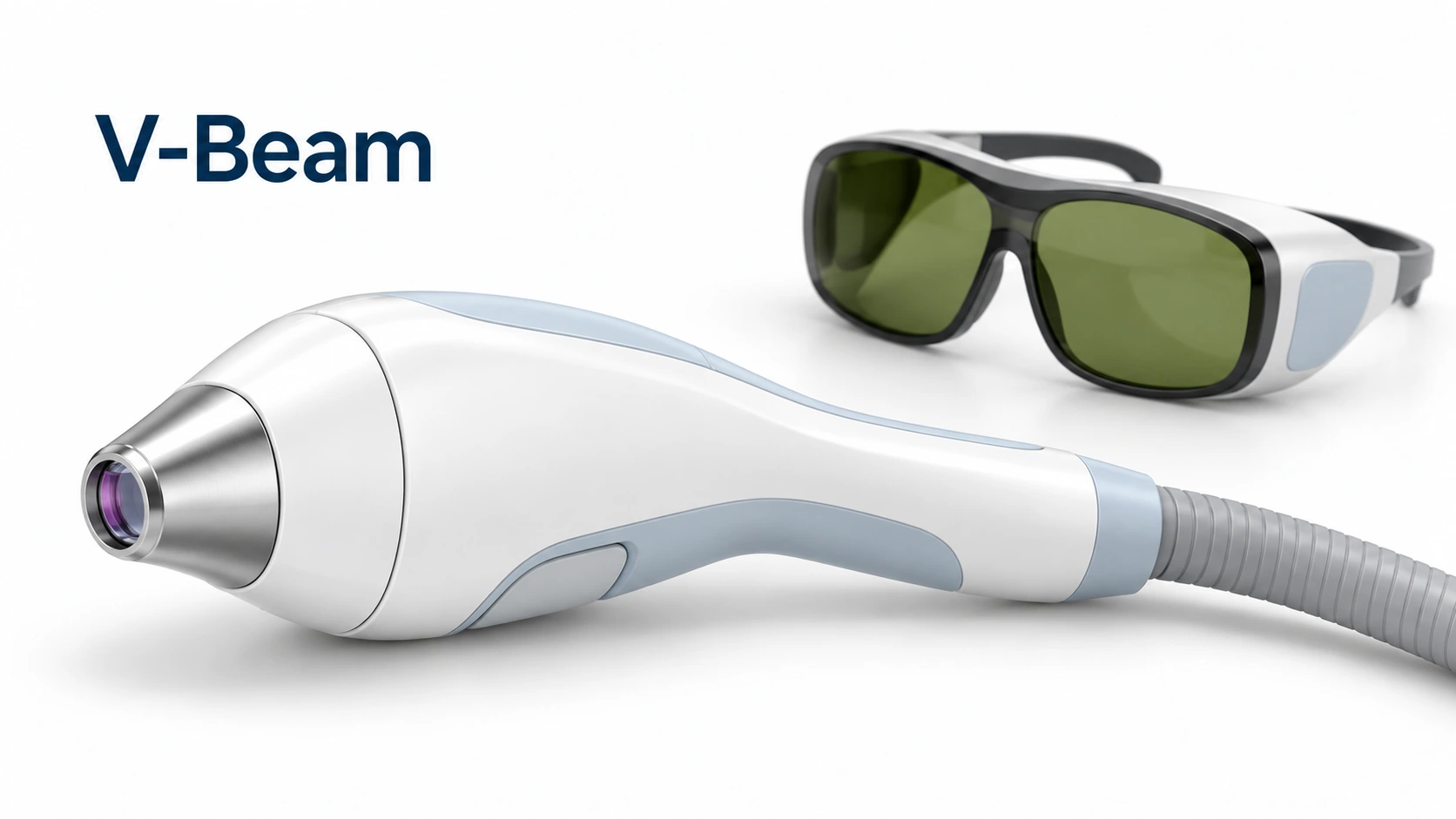
Choose for sun spots and facial redness on lighter skin — it is not safe on deeper skin tones.
Choose for facial redness, broken vessels, port-wine stains or red scars — plan around whether your settings will bruise.
Can you have both?
Both treat facial redness and vessels. V-Beam targets vessels more precisely; IPL also helps brown spots. One is chosen per session.
IPL uses filtered pulses across a range of wavelengths, not a laser.
It treats redness, benign pigmentation and unwanted hair.
A brown spot should be assessed before fading.
Tanning, darker skin and medicines raise the risk of burns or pigment change.
Brief pulses of visible light are absorbed by hemoglobin in blood vessels.
It is used for vascular lesions, persistent redness and some red scars.
The diagnosis should be confirmed first.
Prior pigment changes, scarring and tanning affect safety.

Reduces redness and vessels.
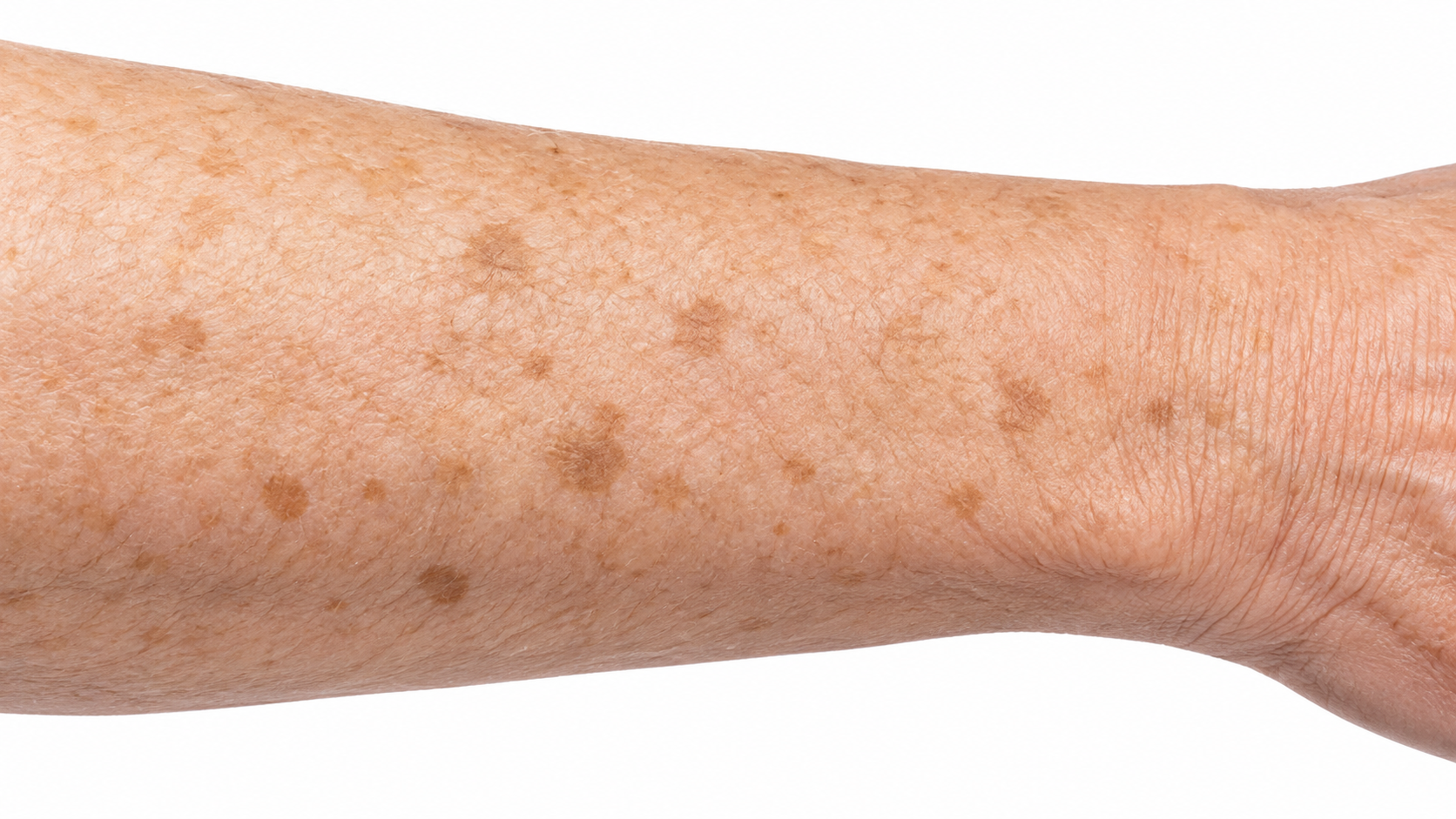
Darkens spots that then flake off.
Reduces redness and vessels.
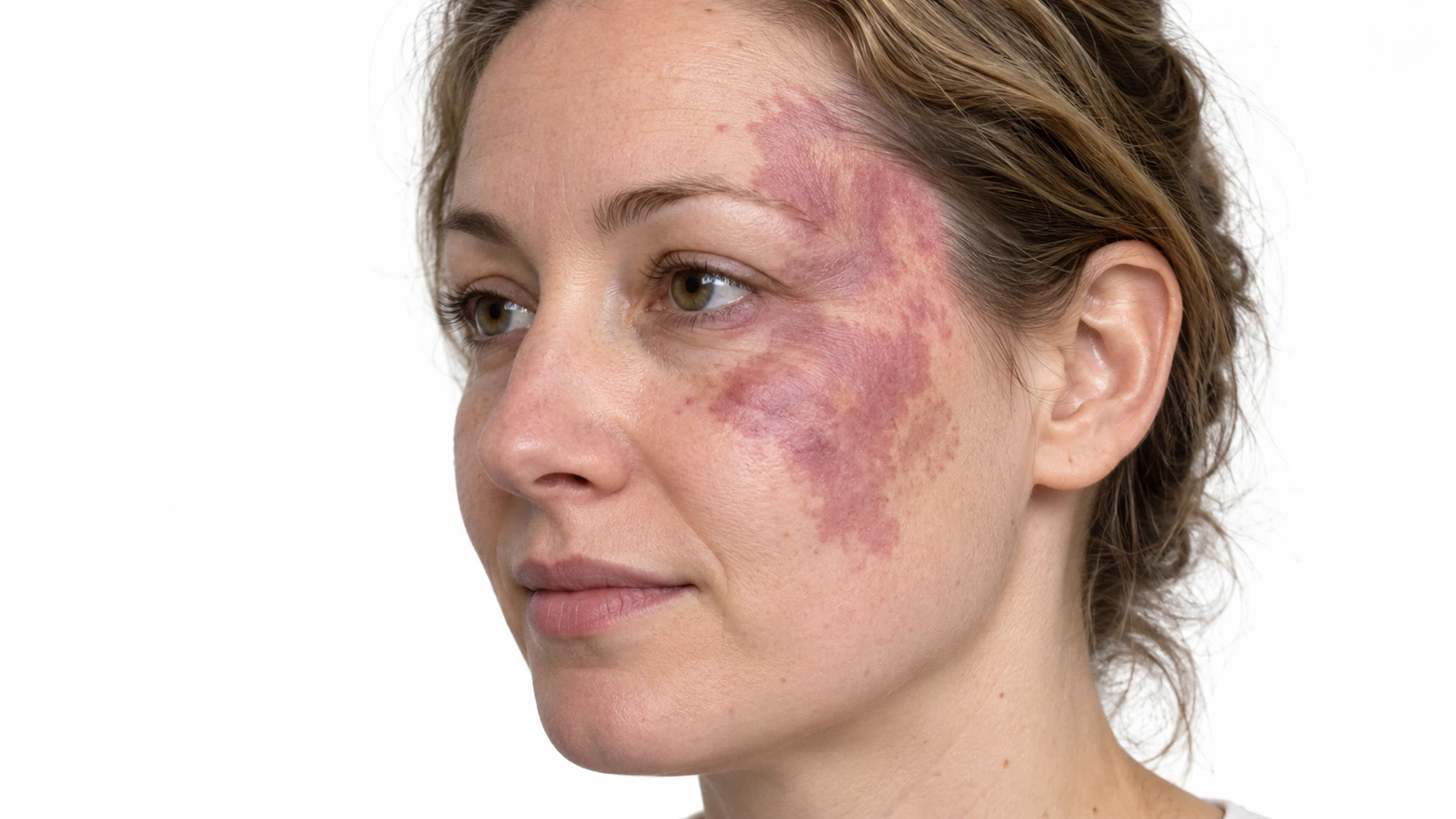
The standard treatment.
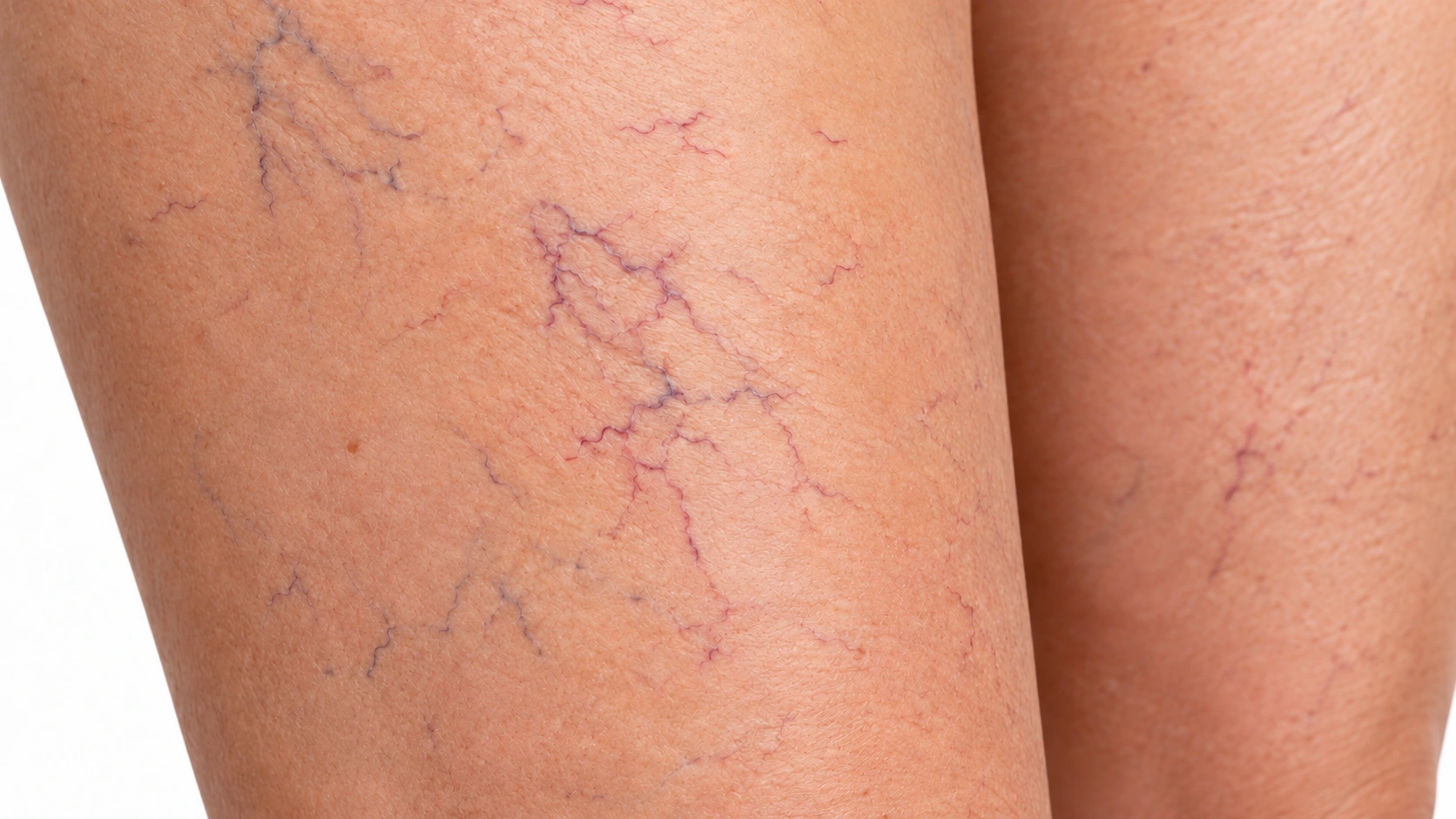
Clears facial vessels.
Clears small facial vessels.
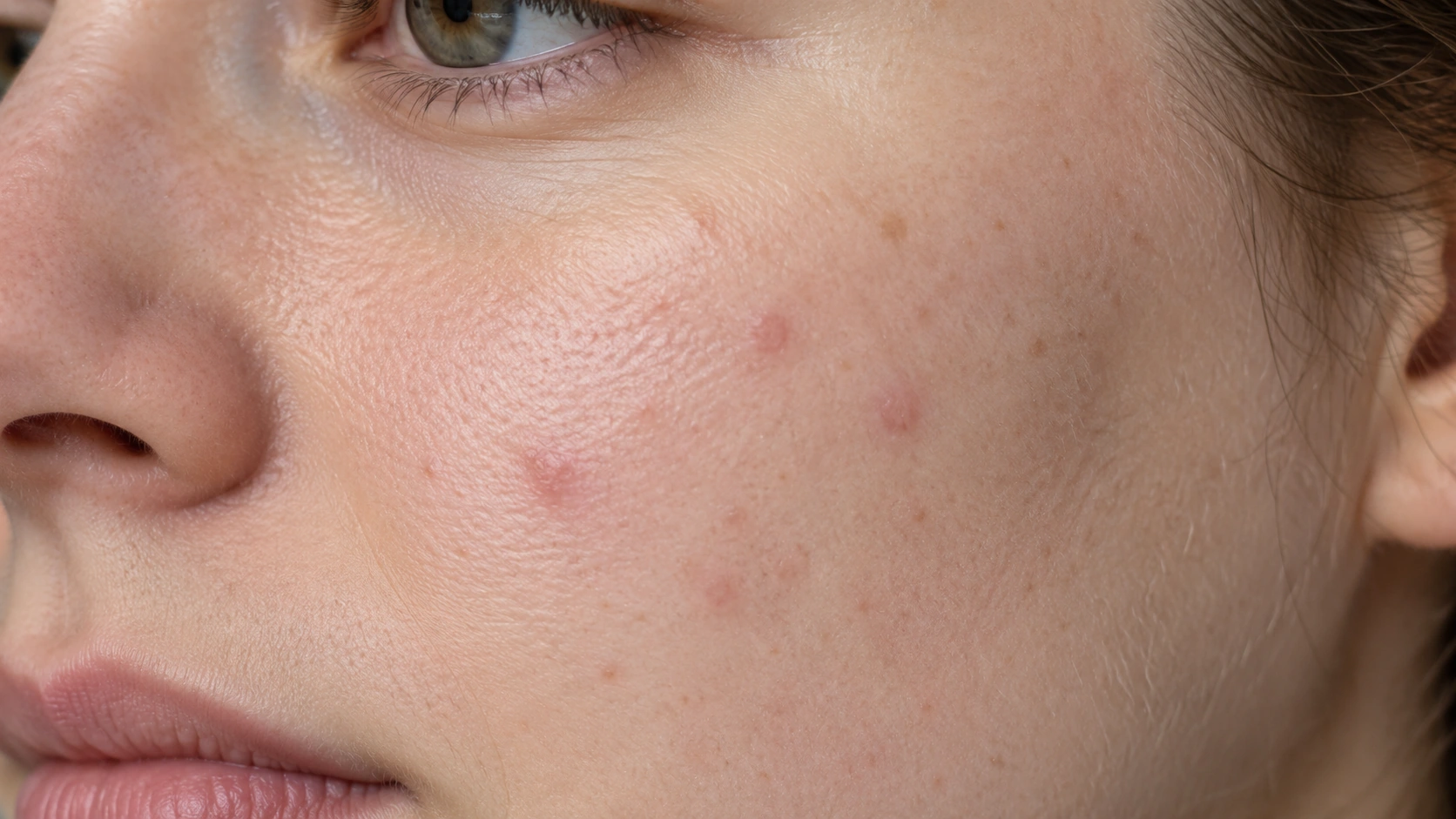
Fades red marks.
Fades red marks.
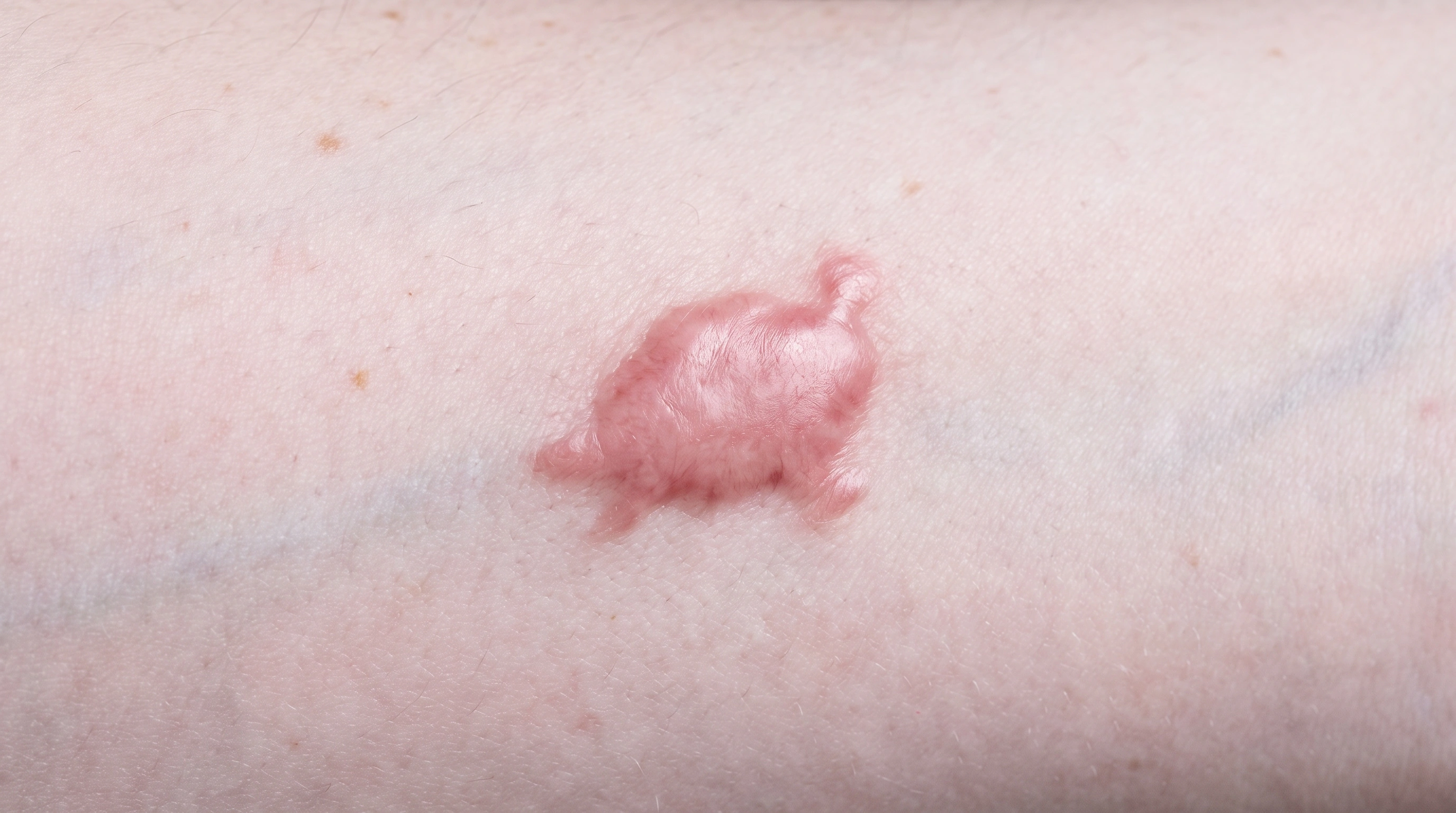
Reduces redness and itch.
Other lasers work better.

Doesn't change texture.

Doesn't target pigment.
Patches often rebound darker.
Face, neck, chest and hands.
Face, neck and chest; the selected vessels or lesions determine the treatment field.
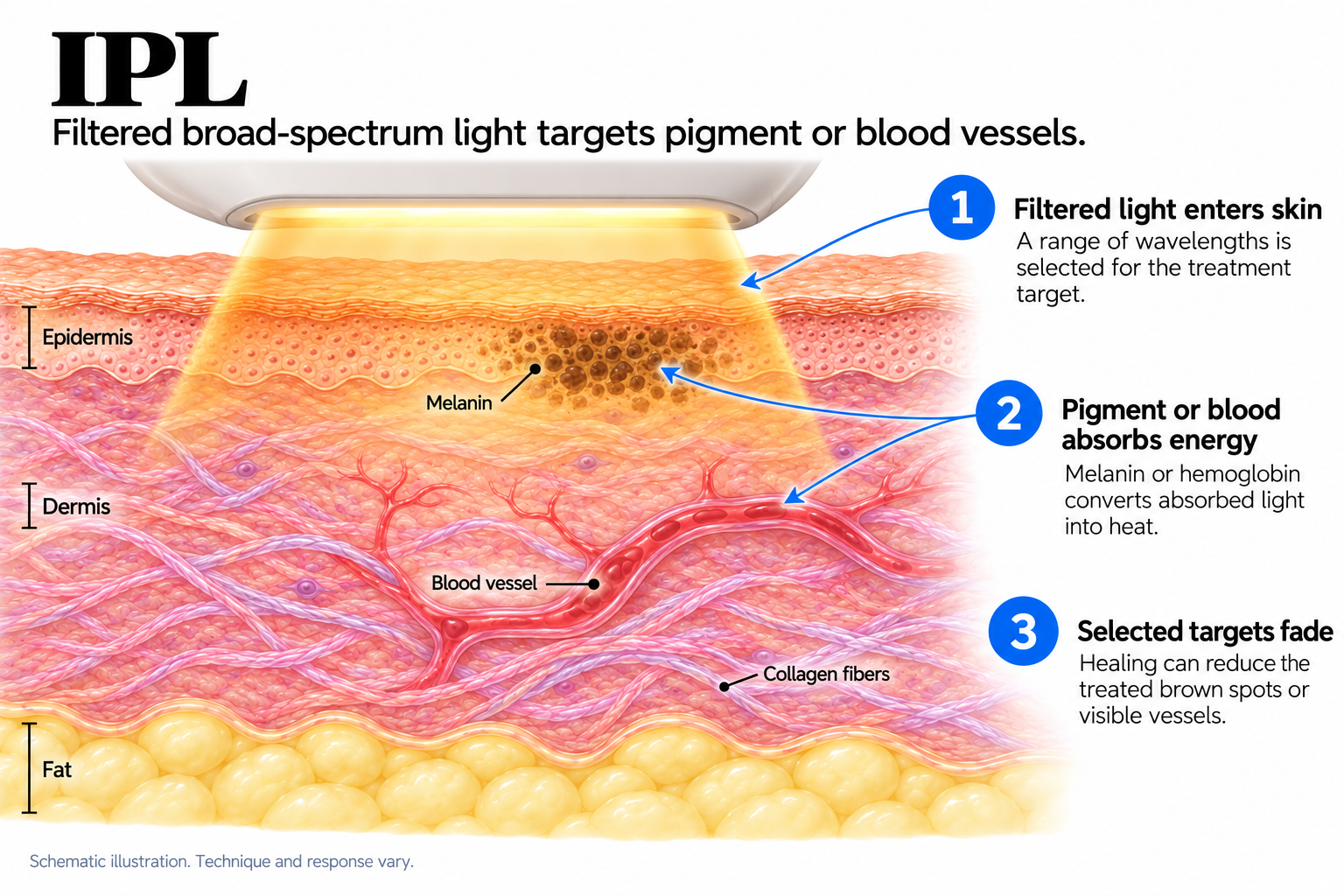
Filtered light enters skin: A range of wavelengths is selected for the treatment target. Pigment or blood absorbs energy: Melanin or hemoglobin converts absorbed light into heat. Selected targets fade: Healing can reduce the treated brown spots or visible vessels.
Schematic illustration. Technique and response vary. This explains a mechanism and does not specify treatment settings.
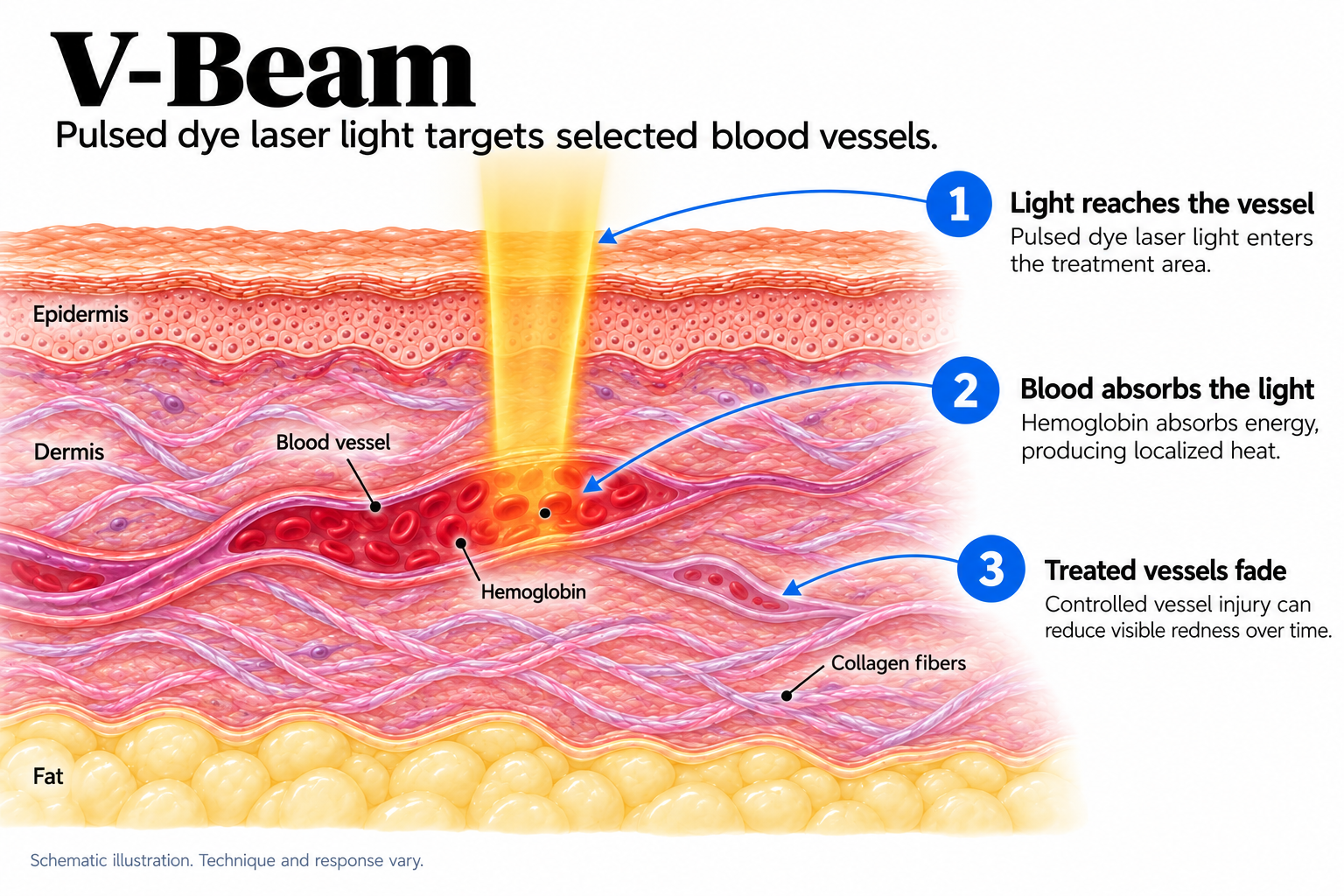
Light reaches the vessel: Pulsed dye laser light enters the treatment area. Blood absorbs the light: Hemoglobin absorbs energy, producing localized heat. Treated vessels fade: Controlled vessel injury can reduce visible redness over time.
Schematic illustration. Technique and response vary. This explains a mechanism and does not specify treatment settings.
4 weeks before: Sun and tanning: No sun, sunbeds or self-tanner.
2 weeks before: Hair removal: No waxing, threading or hair removal cream.
4 weeks before: Sun and tanning: Avoid sun, sunbeds and self-tanner on the area.
Before you book: Events: If bruising would be a problem, say so before the first pulse — it changes the settings.
3 to 5 days before: Actives and clean skin: Stop retinoids and exfoliating acids.
Actives and hair removal: Stop retinoids, benzoyl peroxide and exfoliating acids 3 to 5 days before.
Actives and hair removal: Stop waxing, threading and hair removal creams.
Clean skin: Clean skin, no makeup.
Skin tone: A good provider will ask, and will decline if IPL is wrong for your skin.
Skin tone: Be direct about your skin tone and how easily you tan.
Skin is cleaned and examined, and the provider checks your skin tone and recent sun.
Skin is cleaned and photos usually taken.
Opaque goggles go over your eyes and stay on; that is not optional.
The handpiece is pressed on the skin and fired in overlapping shots. You see a bright flash through closed eyelids. Each pulse feels like a hot rubber band snap, hottest over brown spots and hair, and stops as it ends. A full face takes about 20 minutes.
You wear opaque eye shields, with metal shields under the eyelid near the eye.
The handpiece fires overlapping pulses, each preceded by cold gas, with a snapping sound and a smell of cold. Nose and cheeks take a few minutes, a full face 10 to 20 minutes. Each pulse is like a hot rubber band snapped on the skin: sharp, brief, worst on the nose and upper lip.
Skin looks pink and feels warm, like mild sunburn.
Warm, red and slightly swollen, like mild sunburn.
Days 1 to 2: Redness fades.
Days 1 to 3: Swelling is worst the morning after and settles over two to three days, with cheeks and under-eyes puffing most.
Days 3 to 14: Treated spots darken into fine brown flecks like coffee grounds, then flake away, leaving more even skin.
Days 3 to 14: Purple turns brown, then green, then yellow, then goes.
Weeks 2 to 6: Vessels and background redness clear gradually, and keep improving over later sessions.
Weeks 2 to 8: Once the bruise clears, the change from the session becomes visible.
1–2 weeks per session
1–4 weeks per session
Months to years; new spots with sun
Months to years; new vessels can form
In the US a full-face session usually runs about $300 to $600.
In the US, a pulsed dye laser session for the face usually runs $300 to $700, and small single-area treatments such as one cherry angioma or a few nose vessels can be less.
Insurance does not cover cosmetic pigment or redness treatment.
Insurance almost never covers laser treatment of rosacea redness or facial vessels — it is classified as cosmetic.
No. Broadband light is absorbed by all the pigment in its path, including the pigment that gives skin its color. On deeper skin tones that means burns and light or dark patches, and pale patches can be permanent. For pigment, ask about prescription creams and superficial peels. For hair, a 1064 nm Nd:YAG laser.
No. The skin tone chart supplied with home devices exists because the technology injures skin with more pigment, and most are labeled unsuitable for deeper skin tones and tanned skin. Many refuse to fire. The risk is the same as a clinic device, with nobody present to spot a problem early.
Usually not, and it commonly makes melasma worse: better for a few weeks, then darker and wider. If you have brown patches on the cheeks, forehead or upper lip, get a diagnosis before any light-based treatment.
That is what is meant to happen. Treated sun spots darken into fine brown flecks over the first few days, then flake off over one to two weeks. Do not scrub or pick.
Usually three to five for the face, three to four weeks apart, then maintenance once or twice a year. Brown spots improve faster than redness. Hair reduction takes six to ten or more.
No. IPL works on color: brown pigment and red vessels. Wrinkles, texture, pores and indented scars need a fractional laser or microneedling.
Only if the laser is set to give you one. Purpuric settings burst the vessel and leave a purple bruise for 7 to 14 days, and generally clear more per session. Non-purpuric settings leave you pink and slightly swollen for a day or two and need more sessions. Decide before the first pulse.
It treats part of it. Visible vessels and the background flush respond well. The bumps and pus spots do not, and those need creams or tablets. Most people with rosacea use both.
For facial redness, usually 3 to 5, spaced 4 to 8 weeks apart, then a top-up every year or two. A few isolated broken vessels may need only one or two. Port-wine stains take many more, over years.
It is used on deeper skin tones, with lower energy, longer pulses and more cooling, often with a test spot first. The risk of a light or dark patch is higher than on fair skin, so many providers choose a 1064 nm Nd:YAG instead, because that wavelength is absorbed much less by pigment.
Usually, gradually. The laser clears the vessels that are there; it does not stop new ones forming or change the rosacea underneath. Most people return for maintenance every one to two years, and sunscreen and prescription creams stretch that out.
No. This wavelength is aimed at blood, not pigment. Melasma can even be provoked by heat and light, so if pigment is your main concern this is the wrong device.