Head Lice vs Scalp Folliculitis

Head lice are small insects that live on the scalp and glue their eggs to the hair. They spread through head-to-head contact, they do not carry disease, and they have nothing to do with how clean anyone is. Treatment clears them, but it almost always has to be repeated. Inflammation of scalp hair follicles producing itchy or tender spots.

Research updated 2026-10-23
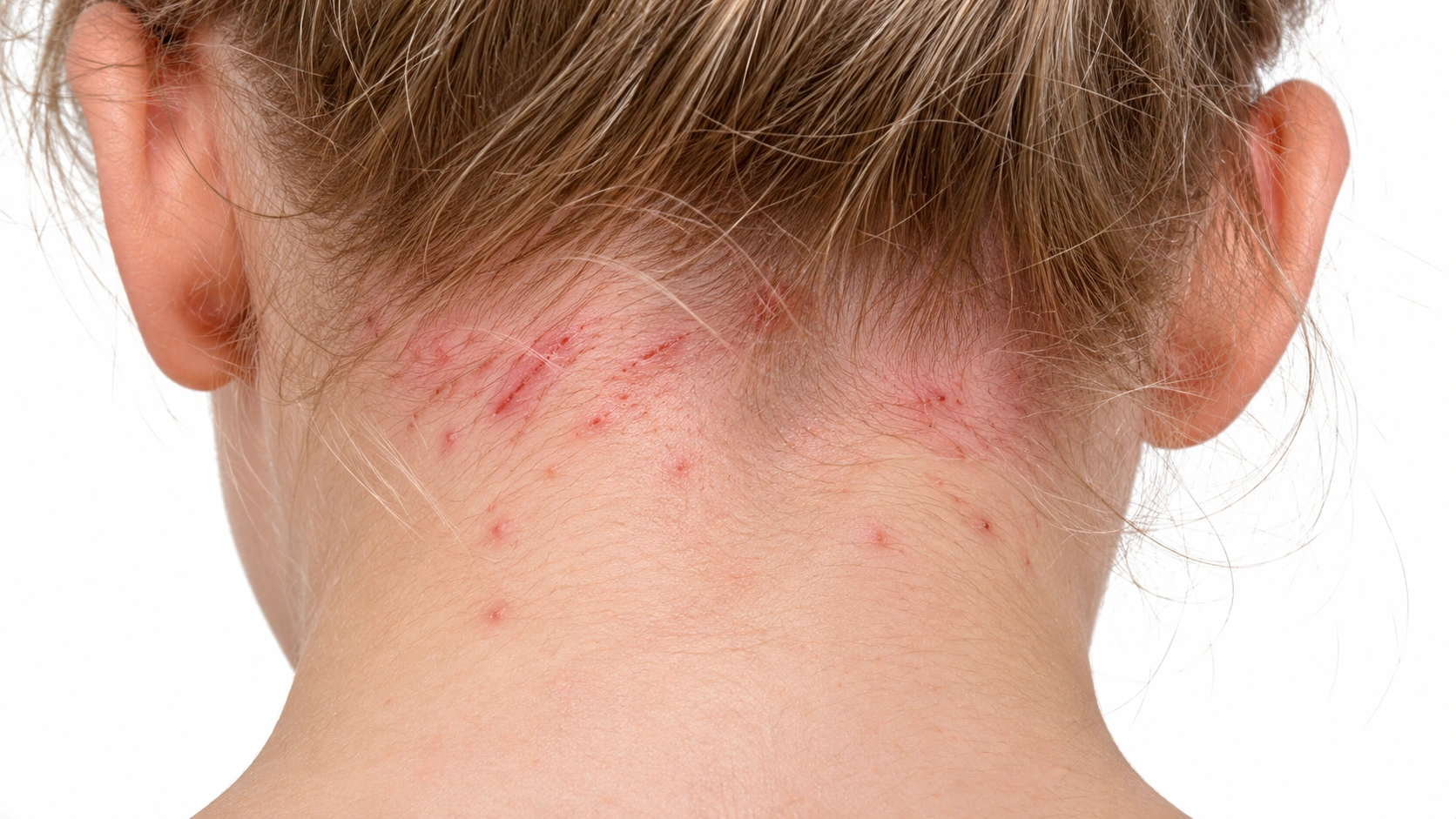
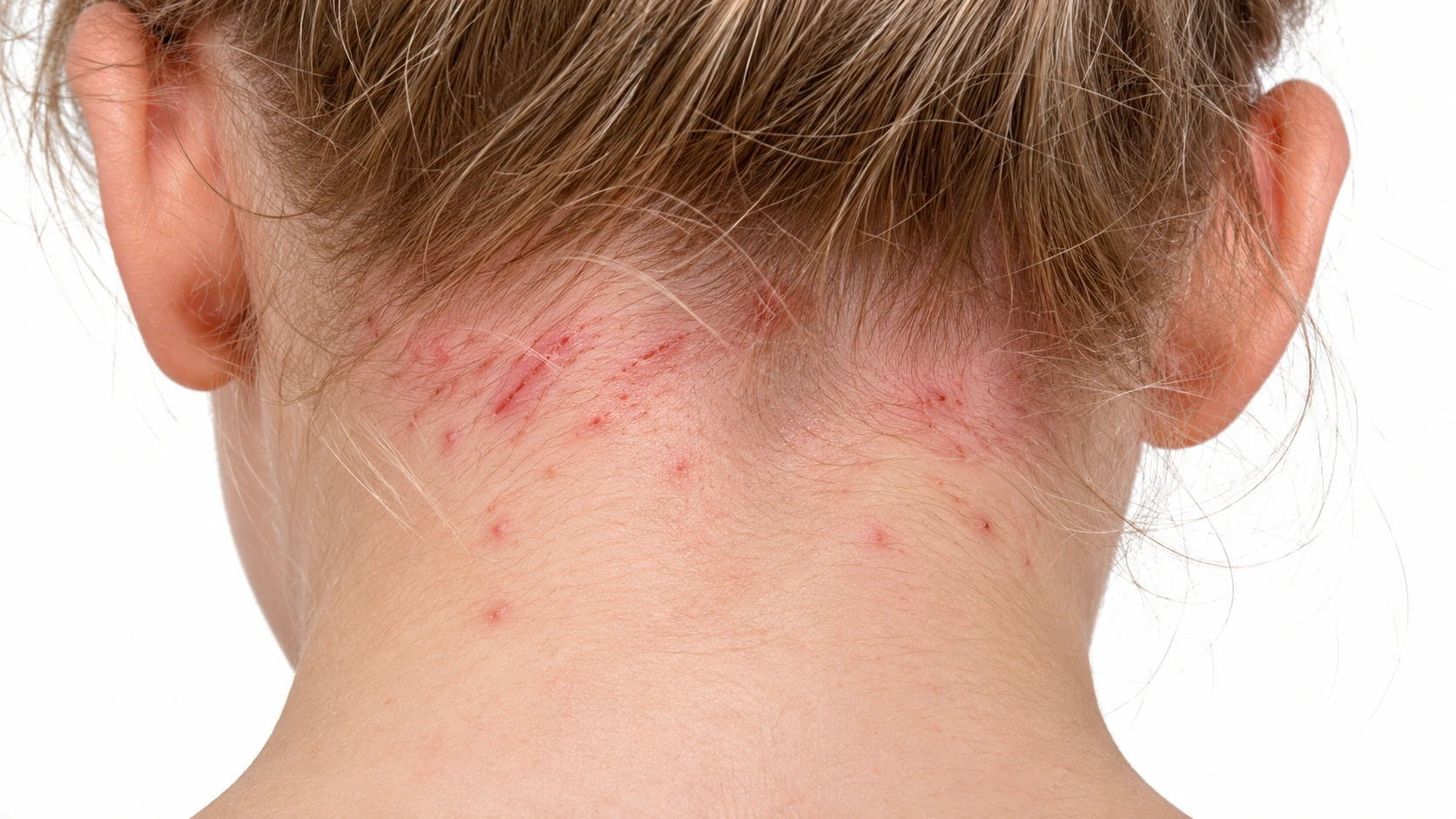
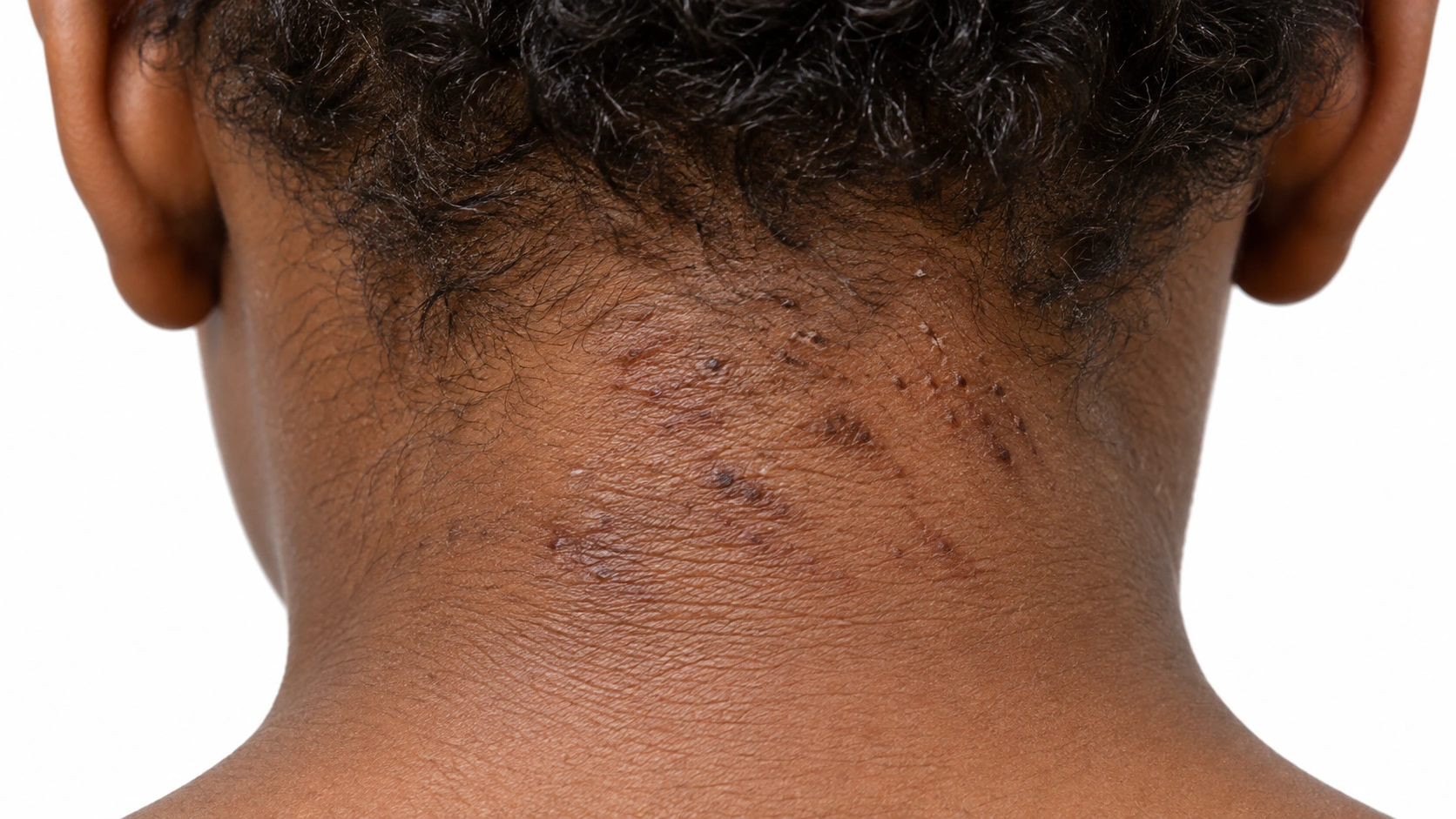
Pink scratch marks and irritated bumps at the nape on light skin.Scalp Folliculitis

Key differences

The same eight facts on every condition comparison.

Usual age
School-age children
Adults
Where
Scalp, behind ears, nape
Scalp and hairline
Main sign
Lice and eggs glued to hair
Small spots at hair roots
Itch or pain
Itchy
Itchy or tender
Contagious
Yes, head-to-head
Rarely
Long term
Clears with treatment
Often comes back
Scars
No
Sometimes
Who gets it
Children and their contacts
Adults; oily scalp

What is it?

Head Lice
Scalp Folliculitis
What is it?
  • Lice live on the scalp.
    They feed on the scalp and attach eggs to hair shafts.
  • Itching can come late.
    It is a reaction to bites and may not start straight away.
  • Inspection comes first.
    A fine-toothed comb in good light confirms lice before treatment.
  • Empty cases are not failure.
    Hatched egg cases stay attached as hair grows.
  • What it is
    Inflammation of scalp hair follicles producing itchy or tender spots.

What it looks like

Head Lice

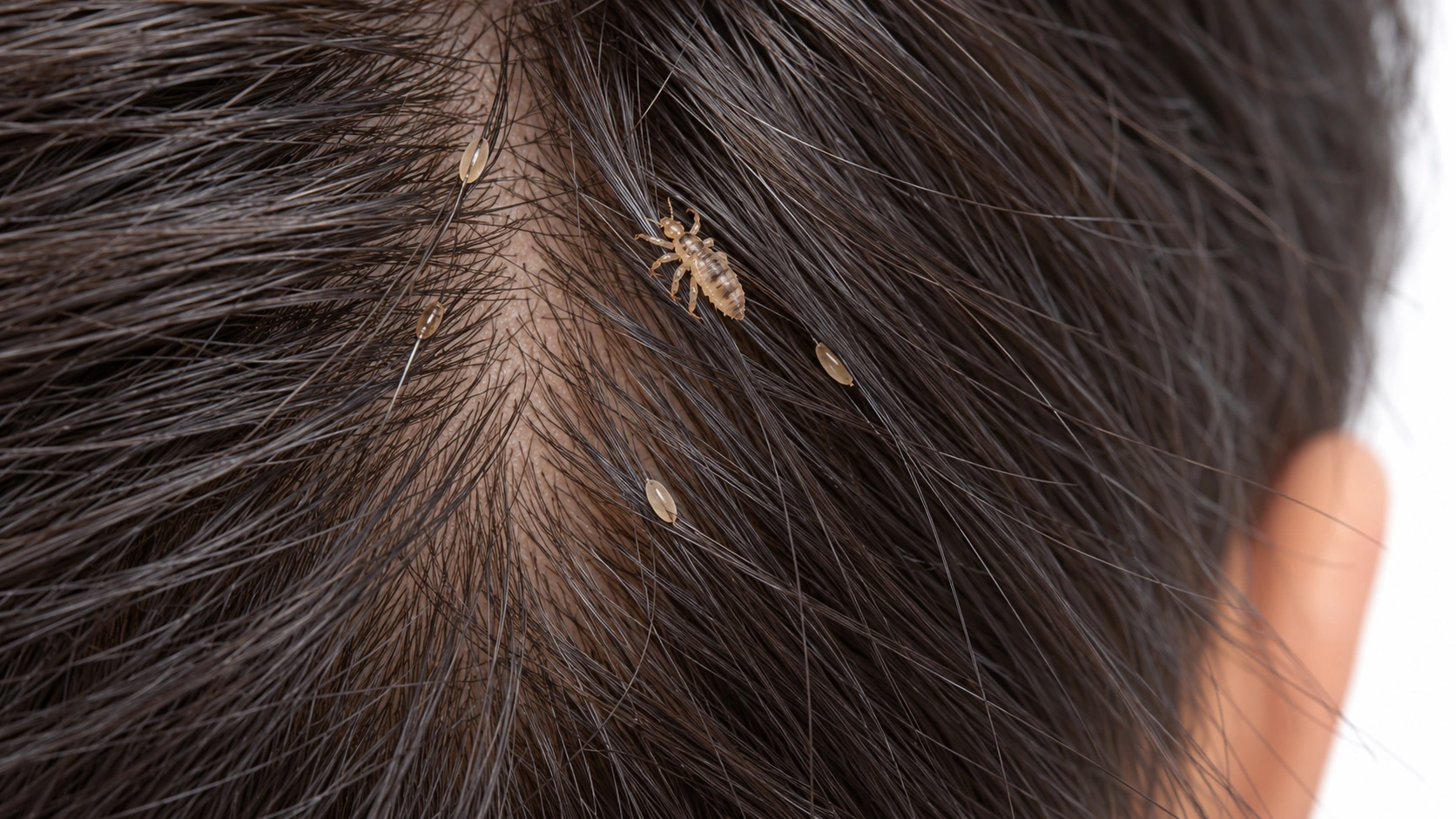
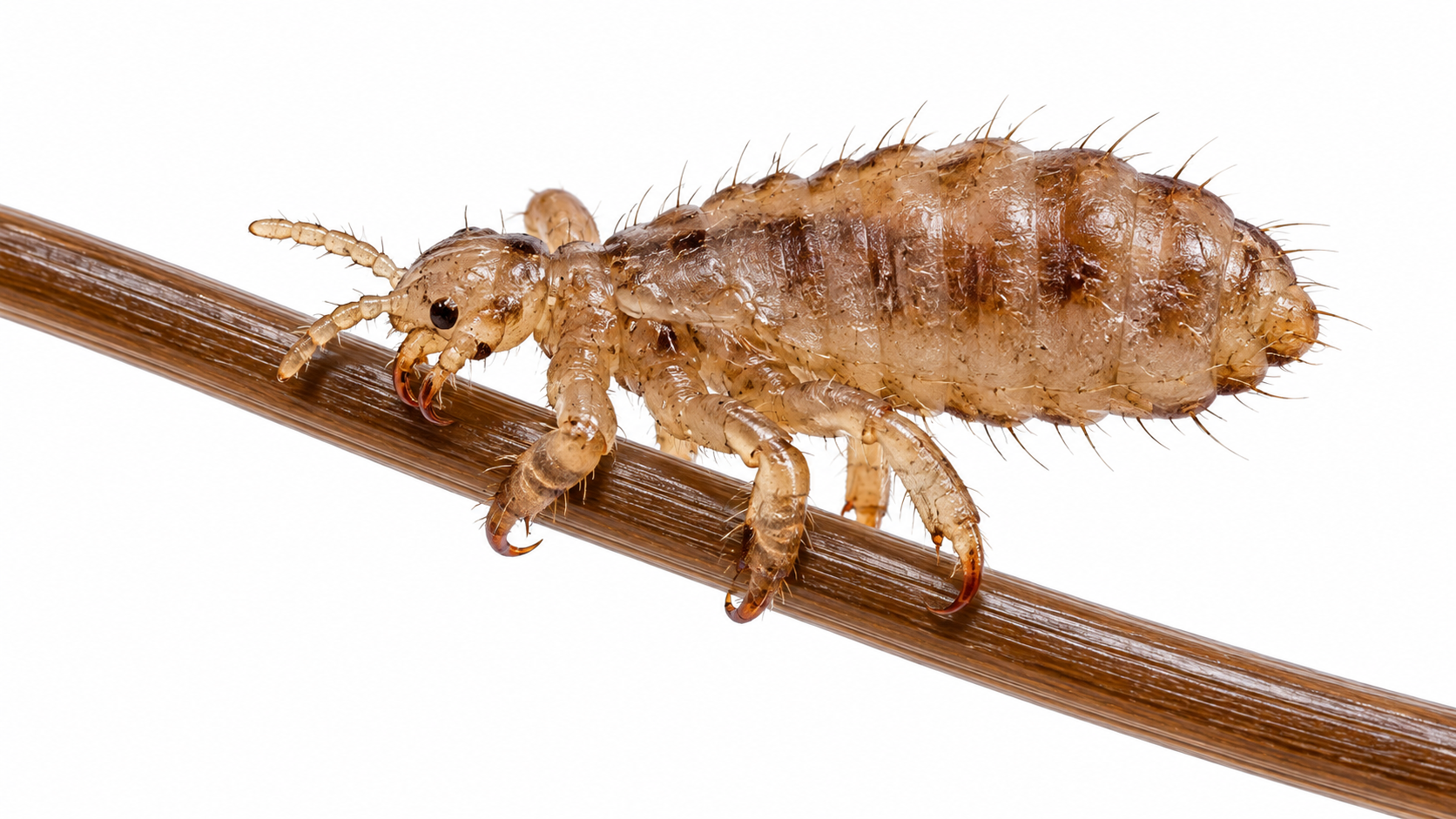
Head Lice: Adult lice.

Adult lice Tan to gray insects about 2–3 mm long.

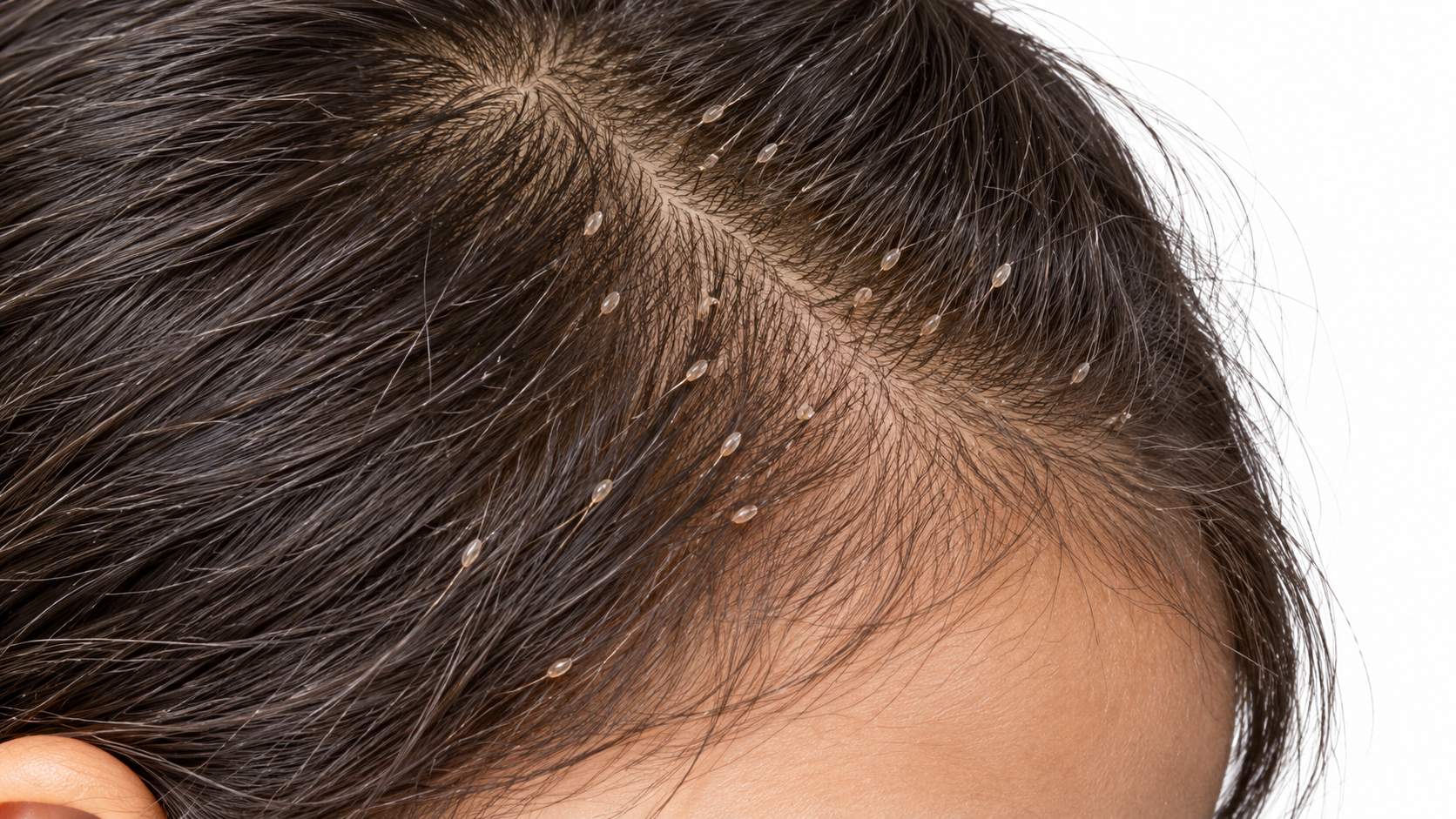
Head Lice: Nits on the hair.

Nits on the hair Oval eggs glued close to the scalp.

Head Lice: Scratch marks.

Scratch marks Red bumps behind the ears and on the neck.

Scalp Folliculitis

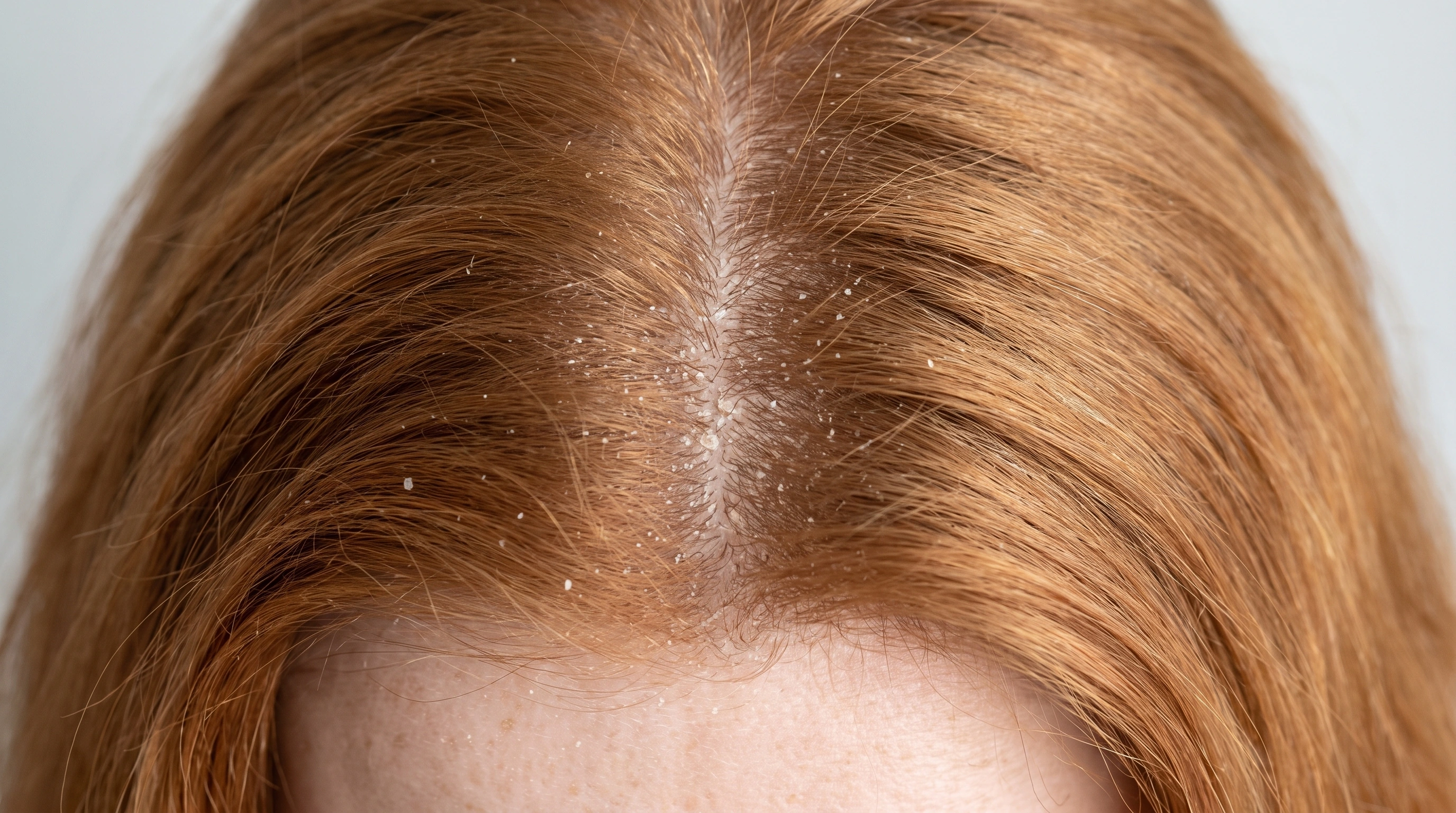
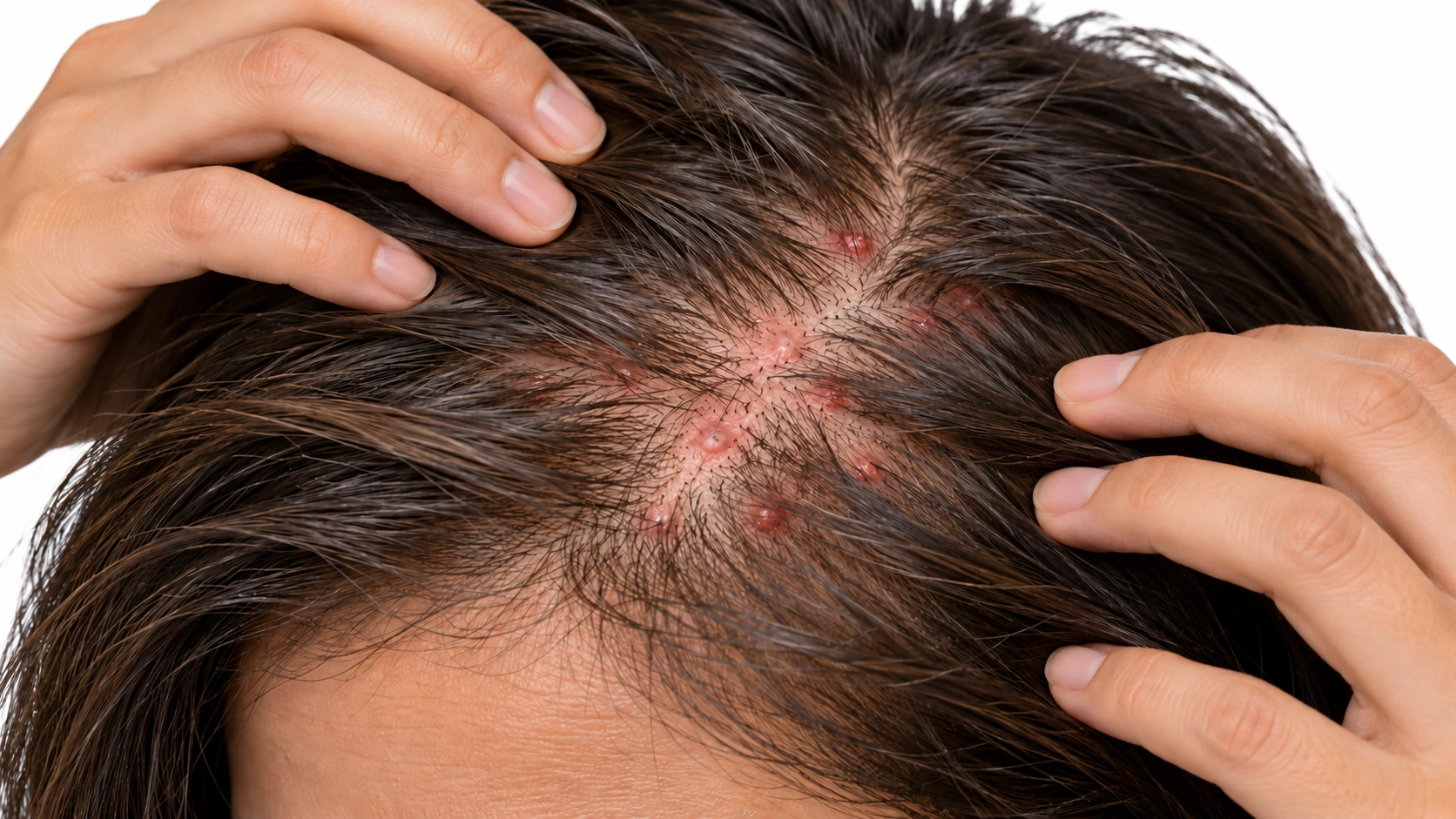
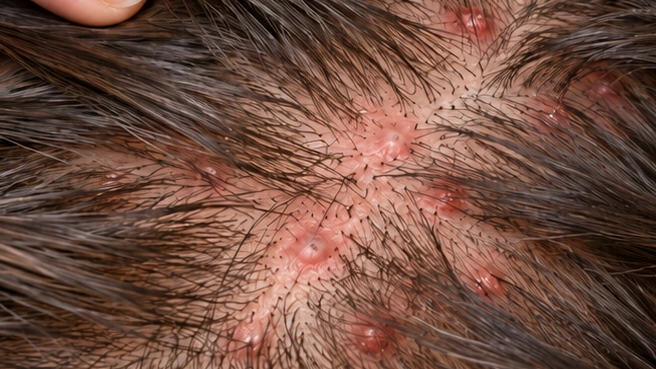
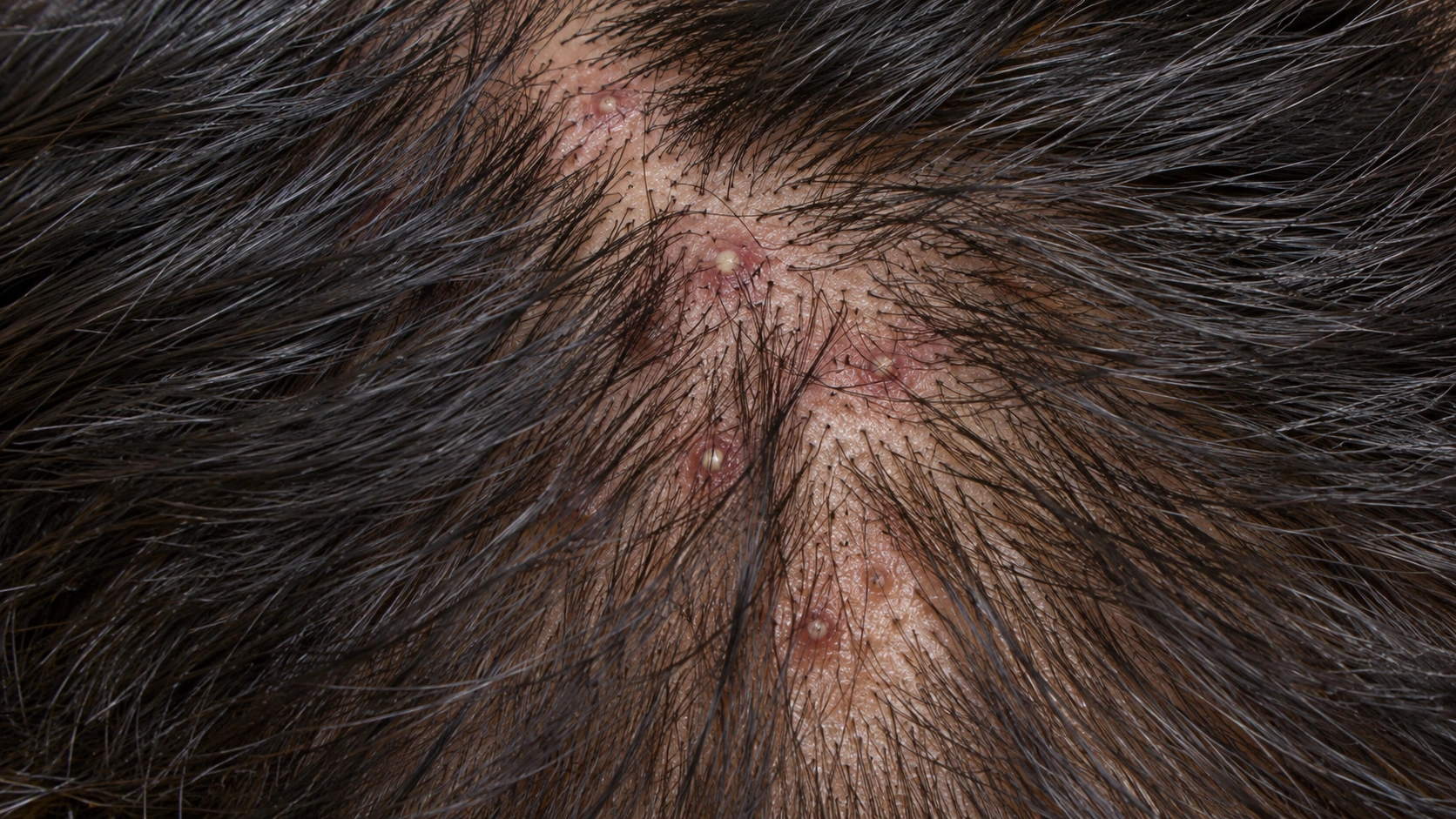
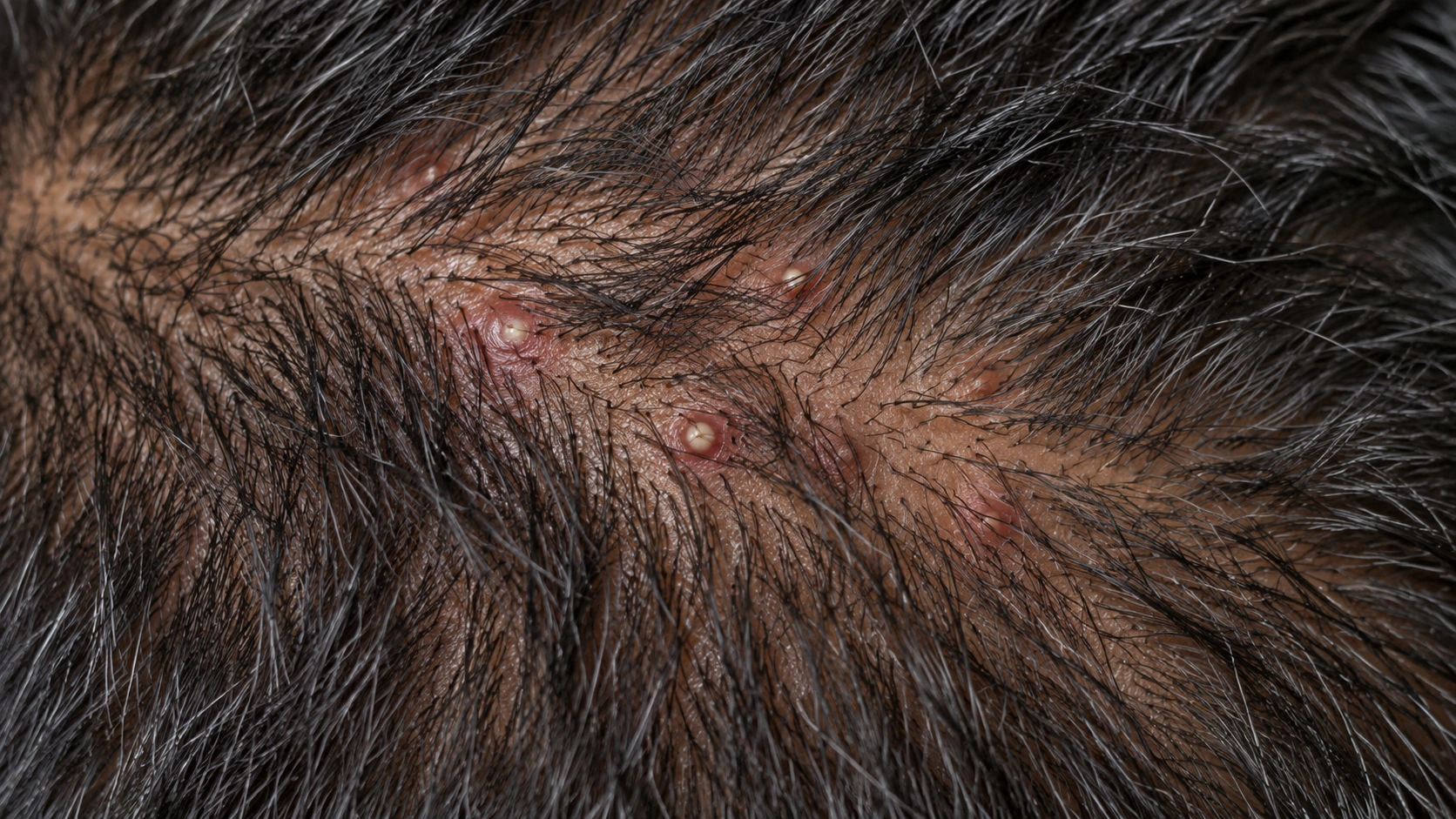
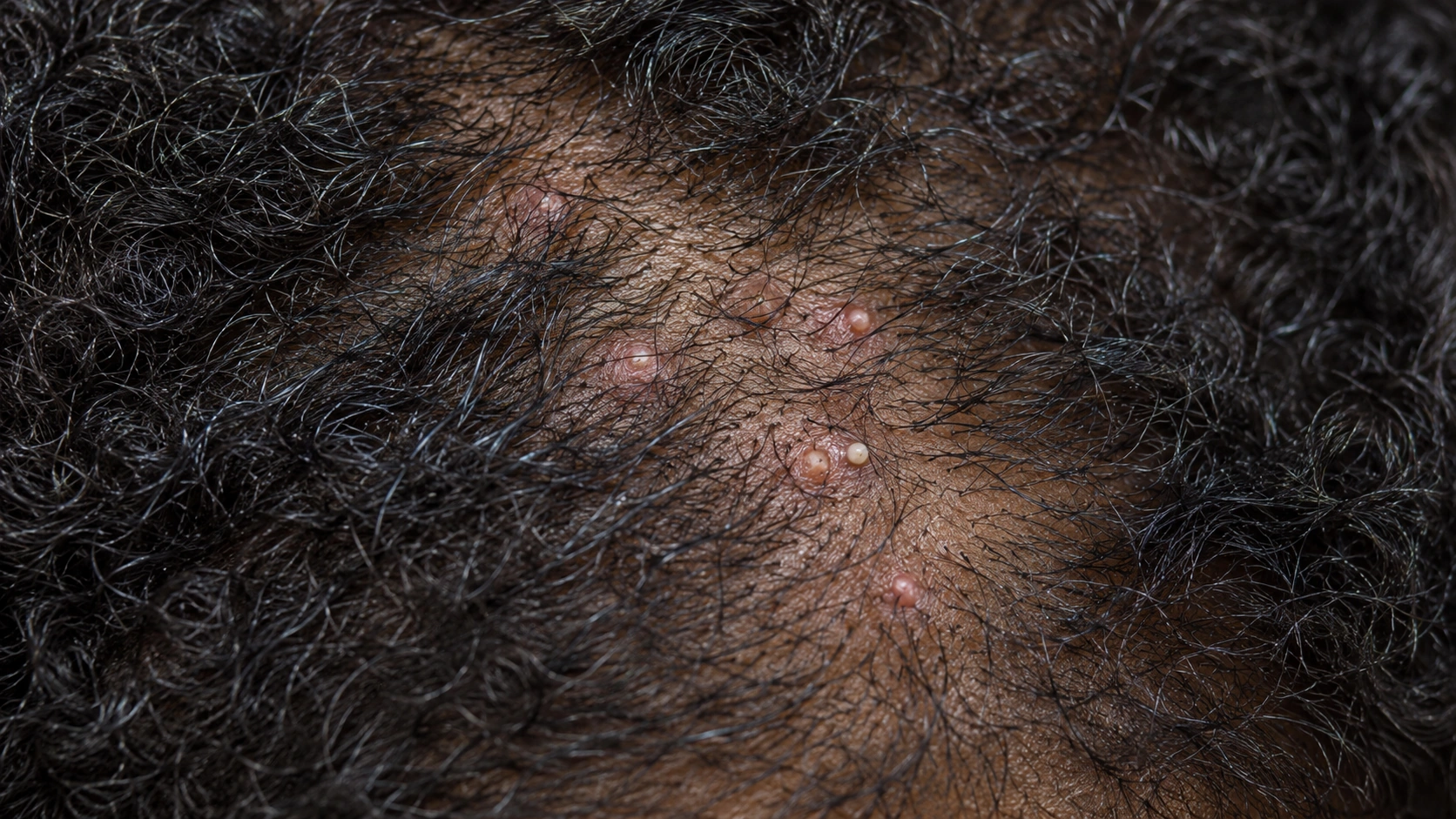
Parted hair revealing clusters of red bumps on the scalp.

Scalp Folliculitis Small inflamed bumps are visible on the exposed scalp.

Skin tones
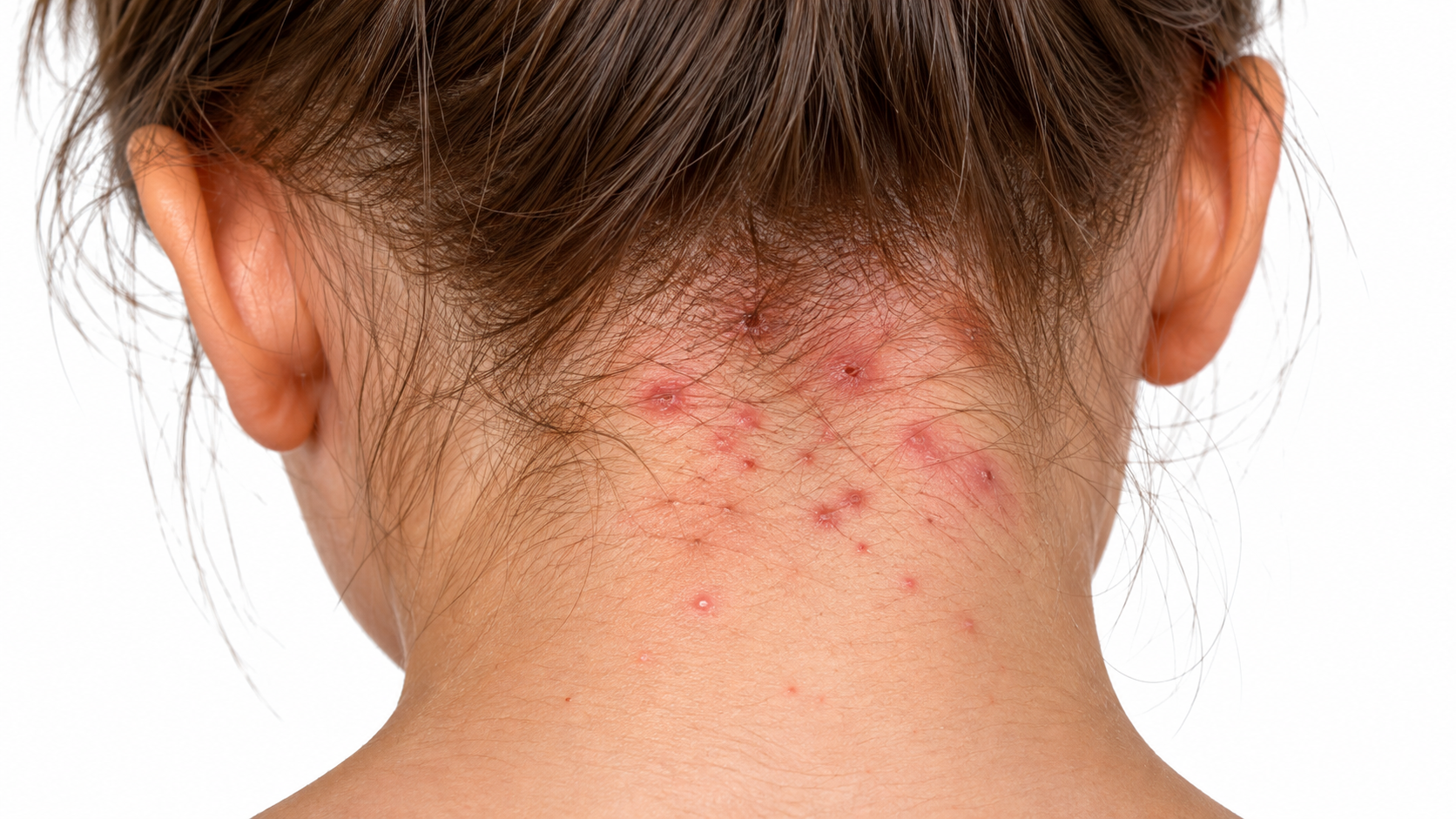
Pink scratch marks and irritated bumps at the nape on light skin.
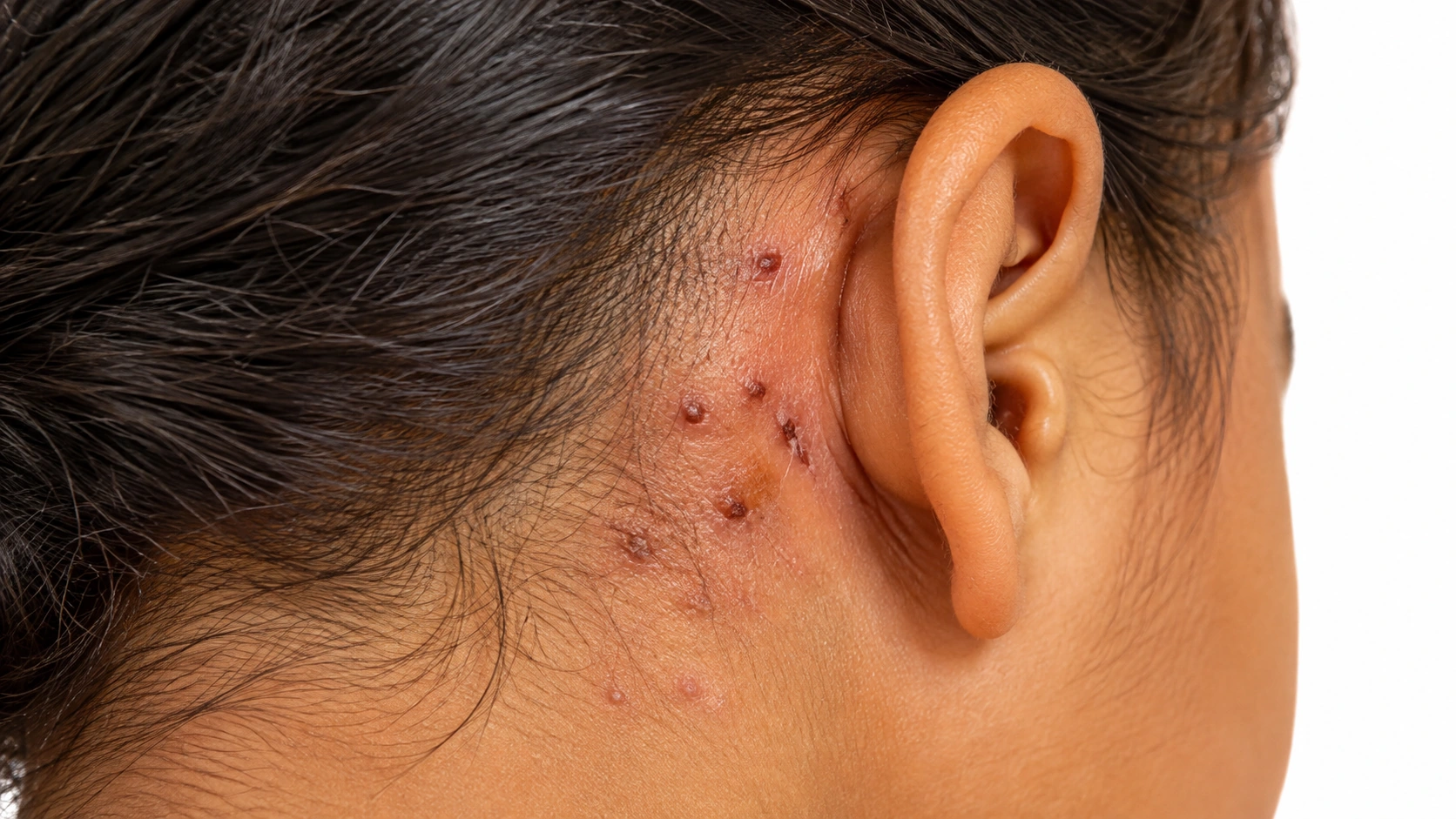
Scratched reddish-brown bumps behind the ear on medium skin.
scratch marks and small bumps at the nape on brown skin, representing head-lice irritation.
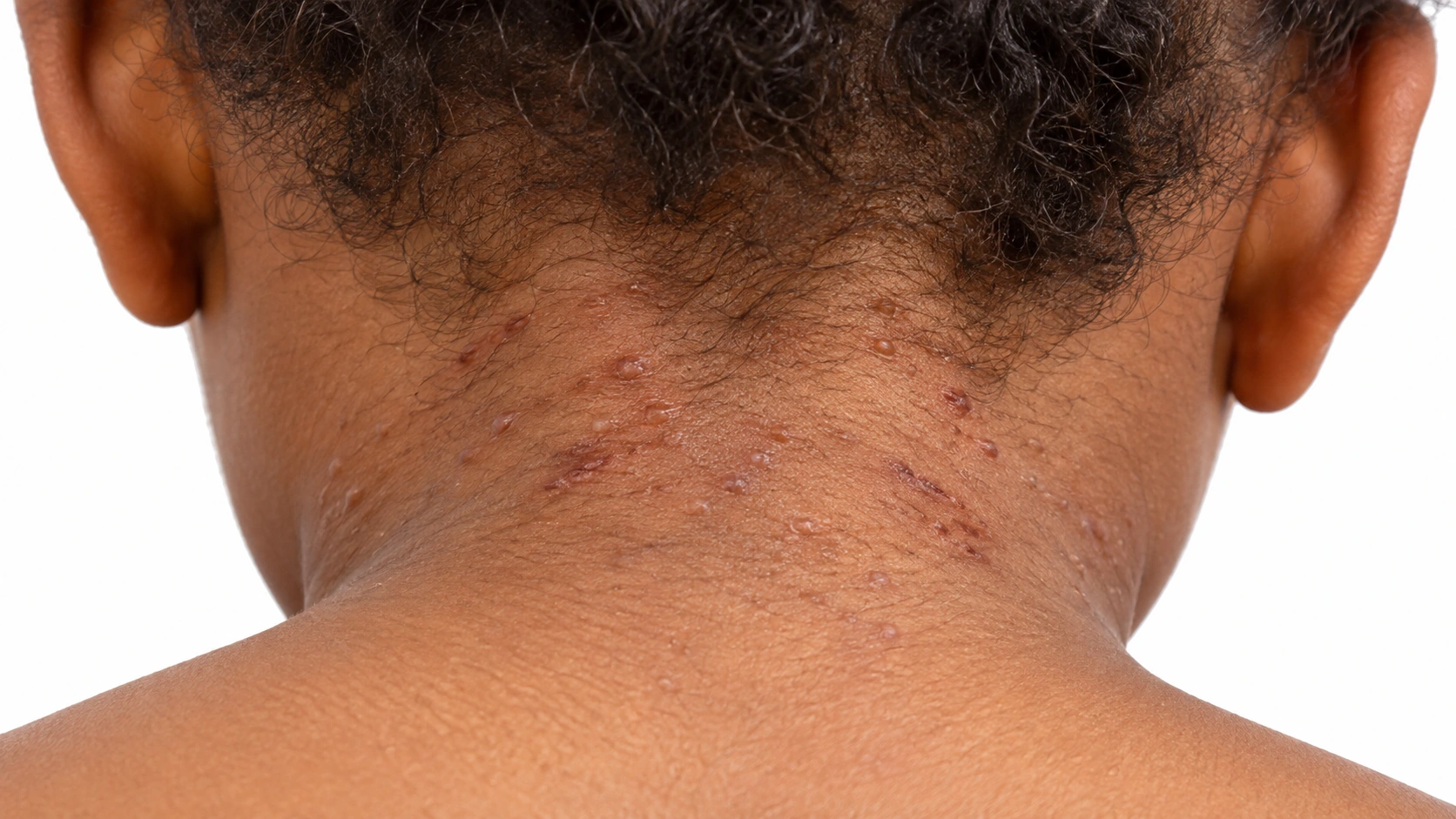
dark scratch marks and small irritated bumps at the nape on deep brown skin.
Scalp Folliculitis on light skin.
Scalp Folliculitis.
Scalp Folliculitis.
Scalp Folliculitis.
Diagram
Head Lice mechanism diagram. Lice move between hairs: Close head contact commonly spreads them. Eggs cling to hair shafts: Nits are cemented near the scalp. Bites can cause itching: The skin reacts to louse saliva.
In the skin

Head lice live among scalp hairs, feed on blood and attach their eggs to hair shafts. The body's reaction to their saliva causes itching, which may take time to develop after a first infestation.

Inflammation develops around follicles in the scalp. Bacteria, yeast, physical irritation or other contributors can be involved.

When it usually starts

010203040506070+

Head Lice. Most common in school-age children; close contacts of any age can be affected.

Scalp Folliculitis. Can occur at different ages after a relevant exposure or follicular inflammation.

Causes and triggers

Causes

Head lice are tiny insects that live only on the human scalp. They can't jump or fly, so they spread by crawling from one head to another.

Follicular inflammation can involve bacteria, yeast or other contributors.

Risk factors
Ages 3 to 11, Long hair, Close-contact play, Shared household
Oily or occlusive products, Microbial overgrowth
How it spreads
  • Head-to-head contact — Well established
  • Sleepovers and shared beds — Strong link
  • Shared hats, combs and brushes — Possible
Trigger
● Head Lice
● Scalp Folliculitis
Occlusion
Not listed
Can contribute
Scratching
Not listed
Can contribute

Daily Care

Head Lice
Scalp Folliculitis
Daily care

Habits that help

  • Check every household member
    Check household members for live lice on the same day.
  • Tell the school and close families
    The most effective way to stop the cycle.
  • Wash recent bedding and hair items
    Hot water and high heat, last two days.
  • Skip the deep clean of the house
    Lice die within a day or two off a scalp.
  • Keep long hair tied back
    A small measure, and an easy one.
  • An over-the-counter treatment
    Permethrin or pyrethrin, exactly as the leaflet says.
  • Treat the itch while it settles
    A gentle shampoo, antihistamine at night if needed.
  • Check again after the second treatment
    Look for live moving lice, not nits.
  • Apply lice medicine to wet or dry hair exactly as that product instructs
    Different lice products have different instructions. Follow the stated hair preparation, amount, contact time and repeat schedule.
  • Ask about another lice treatment if live lice persist after correct use
    Persistent live lice can reflect resistance, incorrect use or reinfestation; ask a clinician or pharmacist before repeating courses.

Avoid

  • Avoid: Not checking everyone at home
    One untreated head reseeds the rest.
  • Avoid: Scratching
    Breaks the skin at the nape, lets infection in, leaves lasting marks.
  • Avoid: Sharing hats, brushes and combs
    Headbands and headphones too.
  • Avoid: Hiding it
    A group of children can pass it around for a term.
  • Avoid: Kerosene, gasoline or bleach
    Dangerous — burns, poisoning and fires have resulted.
  • Avoid: Skipping the second treatment
    Most products do not kill eggs.
  • Avoid: Conditioner just before treatment
    It coats the hair and blunts some products.
  • Avoid: Treating on nits alone
    Empty shells stay glued on for months.
  • Avoid: Washing the hair too soon after
    Some treatments keep working a day or two.
  • Avoid: Lindane
    An old prescription shampoo that is no longer recommended for head lice. It is less effective than the current options and has caused seizures when overused or used on broken skin. It is included here only because people still come across it — there is no situation now where it is the right choice.

Habits that help

  • Wash the scalp with a mild shampoo
    Rinse thoroughly and adjust frequency to sweat, oil and comfort.
  • Clean combs, clippers and headwear regularly
    Avoid sharing tools that contact affected skin.
  • Reduce heavy oils and close-fitting headwear if they worsen bumps
    Friction and occlusion can aggravate an irritated scalp.
  • Leave pustules and crusts alone
    Keep nails short to reduce damage from unconscious scratching.
  • Seek review for pain, scarring or persistent hair loss
    Recurrent scalp bumps may need a specific diagnosis and prescription treatment.

Avoid

  • Avoid: Squeezing spots or shaving across inflamed bumps
    This can worsen irritation and spread infection.

Treatment differences

Evidence labels come from each condition’s own treatment list.

Treatment
● Head Lice
● Scalp Folliculitis
Over-the-counter
Permethrin — Header Image

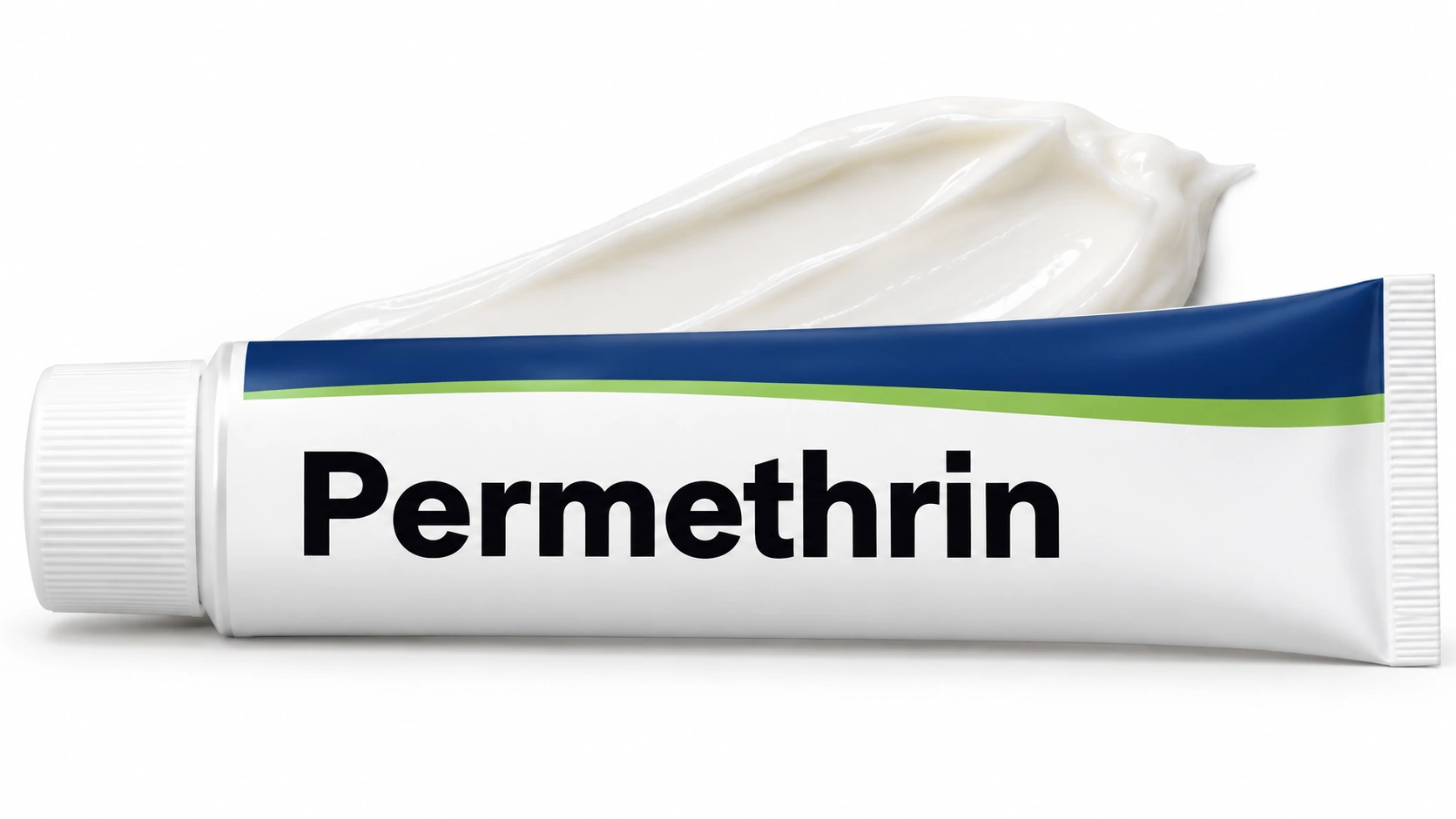
Permethrin

Moderate evidence

The usual first treatment, applied to dry hair, left the stated time and rinsed, then repeated in seven to ten days because it does not reliably kill eggs. Where lice are not resistant it works well. Resistance to it is now common in many areas, so if two proper courses fail, the answer is a different medicine, not a third round.
Educational still life: shampoo.

Pyrethrin shampoo

Moderate evidence

The other older over-the-counter option, from chrysanthemum extract, used the same way with a repeat in seven to ten days. It kills fewer eggs than permethrin does and lice are commonly resistant to it. It is avoided in anyone with a ragweed or chrysanthemum allergy.

Three cream tubes on white: Nurture Valley Barrier Cream, Secura Dimethicone Protectant and Medline Remedy Moisturize

Dimethicone

Strong evidence

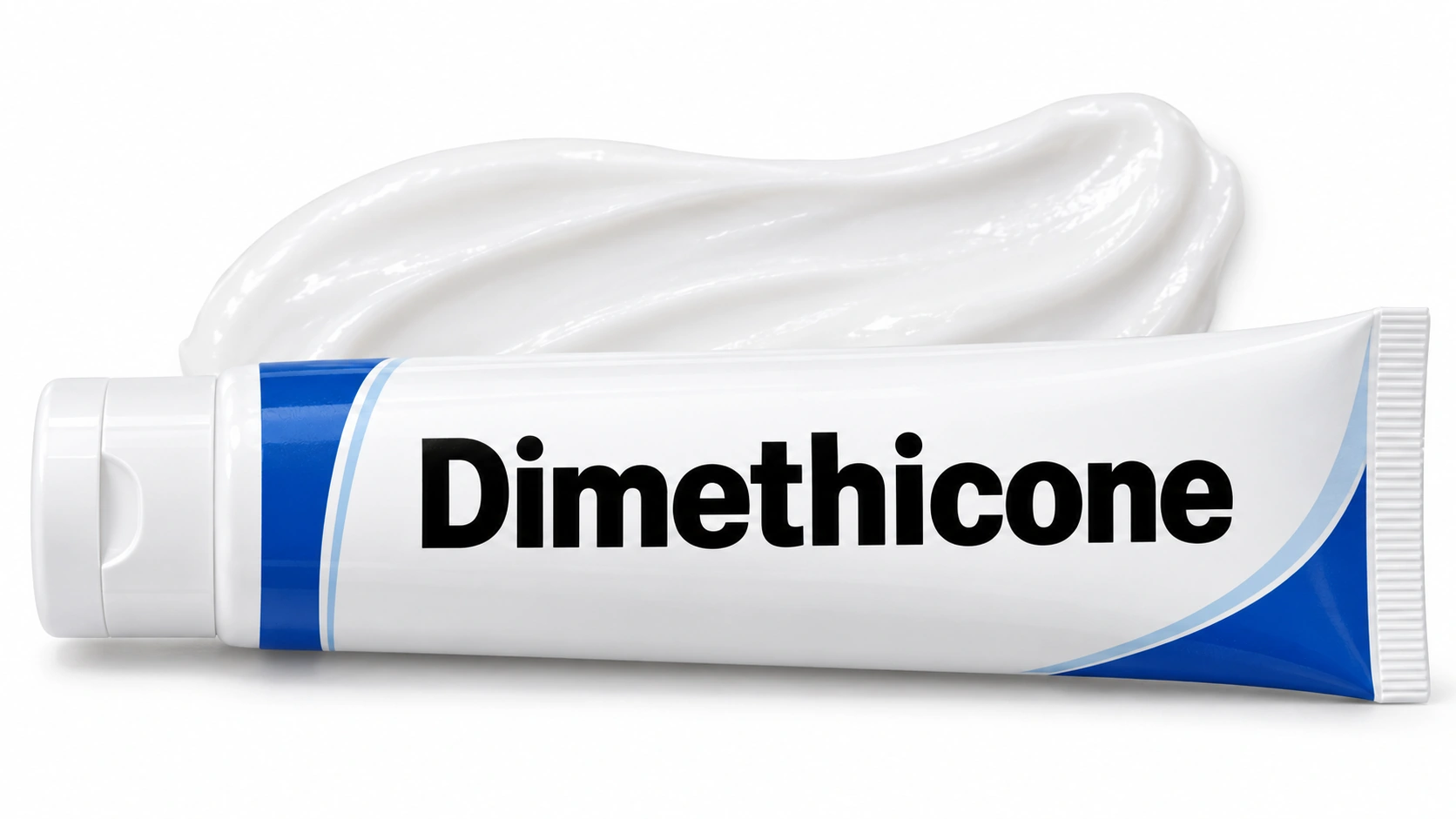
A silicone lotion that coats and suffocates the lice rather than poisoning them, so resistance is not an issue with it. It is left on for the stated time — often several hours or overnight — and repeated a week later. It is a good option for a child who has already failed permethrin, and it is gentle on the scalp.

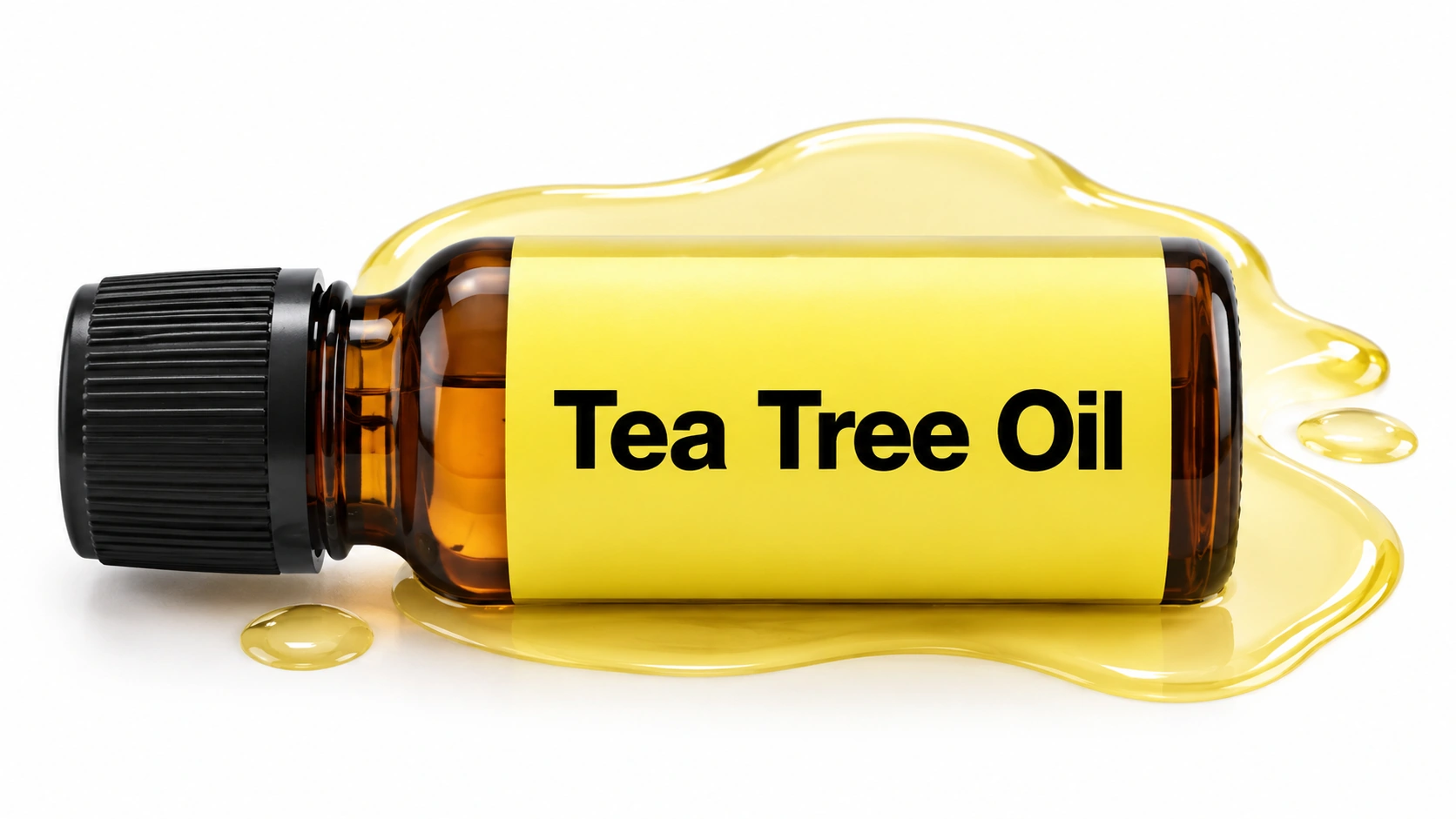
Five dark glass tea tree essential oil bottles with glass droppers and one green box on white

Tea Tree Oil

Limited evidence

Sold in several natural lice products and not shown to clear an infestation reliably. It irritates the scalp of a child who is already scratching, and it is a common cause of allergic reactions. If the older products have stopped working, a prescription treatment is a better answer than an essential oil.

None listed
Prescription topicals

Ivermectin Lotion

Strong evidence

Ivermectin lotion 0.5%. A single ten-minute application to dry hair, and usually no repeat is needed, because it kills the young lice as they hatch. That makes it a good choice for families who have already skipped or fumbled a second application. It is one of the main options when permethrin has failed.

Spinosad

Strong evidence

Spinosad suspension. A ten-minute application to dry hair that kills both lice and most eggs, so a second treatment is often unnecessary. High cure rates in studies against permethrin-resistant lice. Cost and availability are the usual limits rather than how well it works.

Malathion

Moderate evidence

Malathion lotion. An older prescription lotion that kills lice and many eggs, applied to dry hair and left on for the stated time. It works where permethrin has failed. It smells strongly, it is flammable while wet so no hairdryers, flames or cigarettes near it, and it is not used in young children.

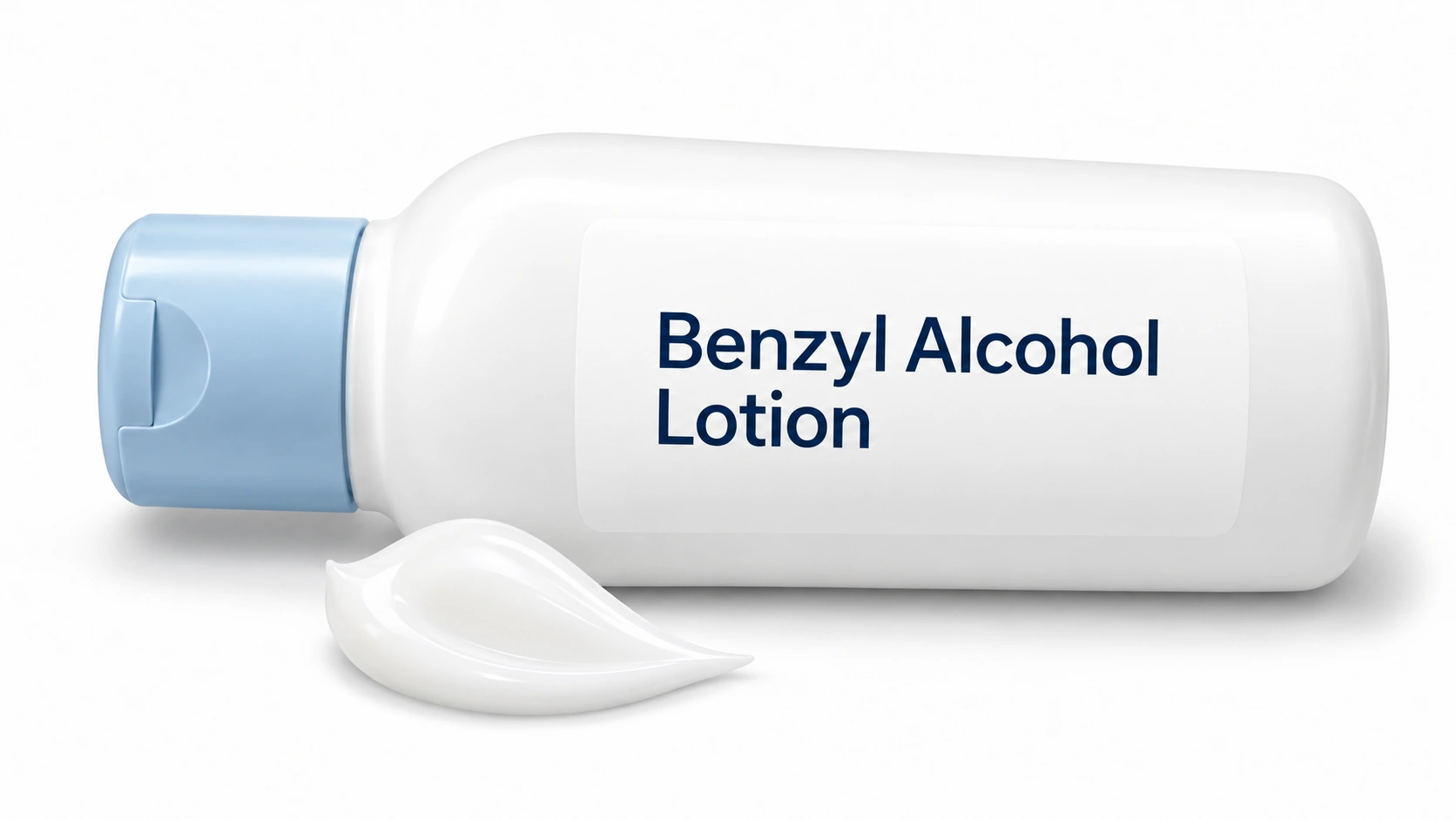
An illustrative bottle labeled Benzyl Alcohol Lotion beside a lotion swatch.

Benzyl Alcohol Lotion

Moderate evidence

Benzyl alcohol lotion. It works by blocking the breathing holes of the lice rather than poisoning them, so resistance is not expected. It does not kill eggs, so the repeat in seven days is essential. It can sting and irritate the scalp, which matters if the skin is already scratched.

Cause-specific prescription treatment

Listed

A clinician can choose antibacterial, antifungal or anti-inflammatory treatment after assessing the pattern.

Prescription pills
Illustration: Generic oral tablet bottle and tablets.

Oral Ivermectin

Strong evidence

Ivermectin tablets. A tablet taken as two doses about a week apart, used when repeated topical treatments have failed or when applying a lotion to the whole scalp is not practical. It is effective in that situation. It is not used in small children or in pregnancy, so the prescriber checks weight and circumstances first.

None listed

Outlook

Long term

Left alone, head lice do not clear. They cause no lasting damage; the problems come from scratching, and occasionally infection on top.

Treatment can settle inflamed follicles, but some forms recur and need maintenance. Painful deep lesions, scarring or hair loss need assessment because the course differs between scalp disorders.

Complications

Possible complications
  • Infected scalp and neck
  • Weeks of broken sleep and worry
More details

Infected scalp and neck
Scratching breaks the skin, and bacteria can get in on top. The signs are redness and swelling that spreads, weeping or honey-colored crusts at the nape and behind the ears, and tender glands in the neck. It is the main reason a case of lice ever needs antibiotics, and it needs to be seen. Treating the lice properly and settling the itch early is what prevents it.

Weeks of broken sleep and worry
The lasting harm from head lice is rarely medical. It is the itching that keeps a child awake, weeks of repeat treatments and combing, missed school where old exclusion policies are still used, and the embarrassment that makes families treat it in secret. Telling the school and the other families is the single most effective thing for ending the cycle, and it is the step people most want to skip.

Scratching can cause crusting and secondary infection.

When to get help

When to get help

Ask a pharmacist or clinician if you cannot confirm live lice, treatment fails, or scratching causes sores or infection.

Seek care for painful deep lesions, scarring, hair loss or persistent disease.

Common questions

Head Lice:How did my child get them?

Almost certainly direct head-to-head contact with another child — playing on the floor, a sleepover, photographs head to head. Not the house, the pets or anyone's hair. By the time you find them the contact was weeks ago.

Head Lice:Does my child have to stay home from school?

Major pediatric and public health bodies advise against sending children home for lice. By the time they are found they have usually been there for weeks, and lice do not spread easily in a classroom. Tell the school, start treatment, and in most places the child stays. Check your school's policy — some are stricter than the guidance.

Head Lice:Do I have to get every nit out?

No. It makes future checks easier and reassures everyone, but empty shells are harmless and grow out. What matters is that no live lice remain. Combing with conditioner and a metal comb beats picking them out dry.

Head Lice:Why is my child still itching after treatment?

Because the itch is an allergic reaction, not the lice, and takes one to two weeks to settle after the last louse is gone. The scalp has also been scratched and treated with something drying. Itching alone is not a reason to treat again. Finding a live louse is.

Head Lice:Do I need to treat everyone in the family?

Check everyone the same day and treat the ones with live lice. Some doctors also treat anyone who shares a bed, even with no live lice found, because that contact is so close. Treating the whole household regardless is not recommended.

Head Lice:Why did the treatment not work?

In order of likelihood: the second application was skipped, the product was misused, someone else in the house was not treated, reinfection came from the same friend or classroom, or the lice are resistant. Only the last is a reason to change medicine, so work through the other four first.

Scalp Folliculitis:What is Scalp Folliculitis?

Inflammation of scalp hair follicles producing itchy or tender spots.

Scalp Folliculitis:What can I do day to day?

Use gentle shampoo, avoid heavy oily products and do not pick the spots.

Scalp Folliculitis:When should I get medical advice?

Seek care for painful deep lesions, scarring, hair loss or persistent disease.

Sources

Sources and further reading

  1. DermNet
  2. Scalp folliculitis
Dermapedia on YouTube